


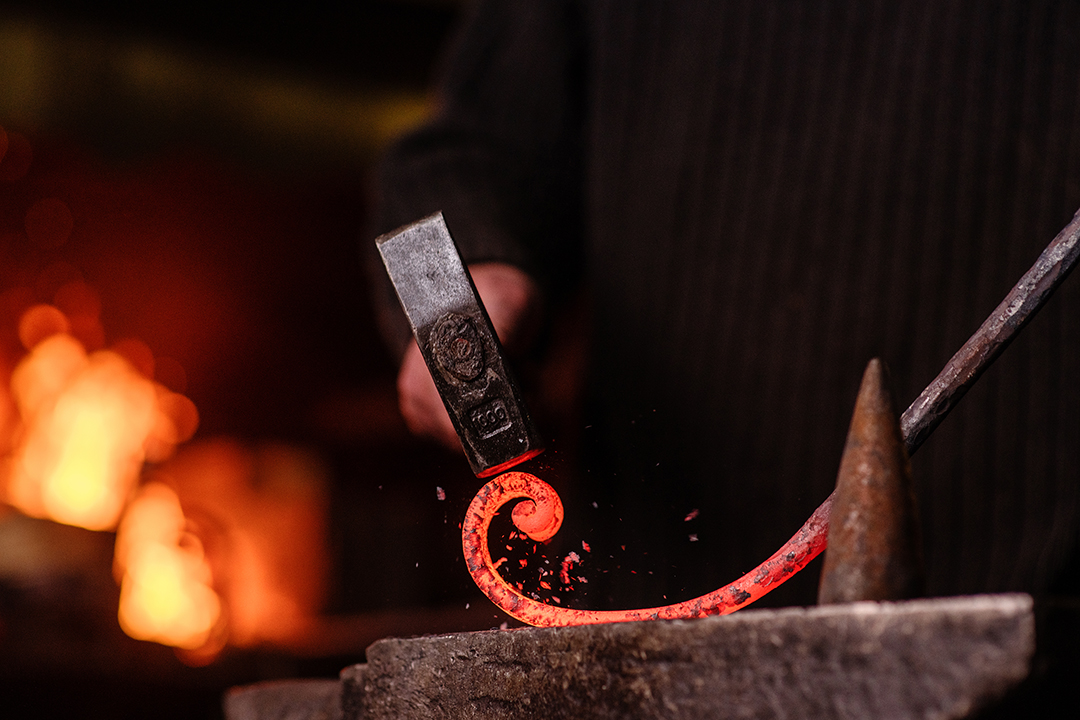

Non Nuoc Stone Carving Village: Travel Guide, Things to Do & How to Get There
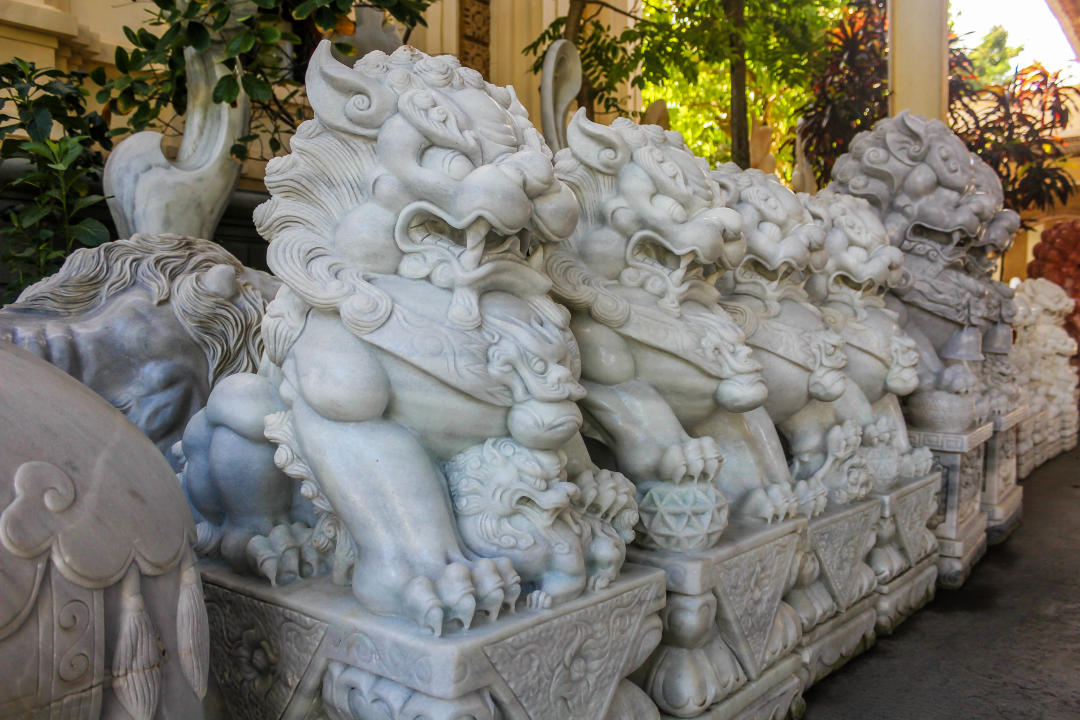
Non Nuoc Stone Carving Village is a testament to centuries of artistry nestled at the foot of Da Nang’s famous Marble Mountains. For over 300 years, this village has been the beating heart of traditional Vietnamese stone masonry, where generations of artisans have transformed raw blocks of marble, onyx, and jade into breathtaking works of art. More than just a place to shop for souvenirs, it’s a living museum where you can witness ancient techniques and feel the cultural pulse of Central Vietnam. In this complete GTrip guide, we'll walk you through its fascinating history, must-see artworks, how to get there, and insider tips to make your visit unforgettable. We’ve covered every detail to ensure this is the only guide you’ll need for your adventure to this remarkable craft village.
An overview of Non Nuoc Stone Carving Village in Da Nang City
- Location: At the foot of Marble Mountain, Ngu Hanh Son Ward (formerly Hoa Hai Ward, Ngu Hanh Son District), Da Nang City
- Opening hours: Sunrise to sunset
- Entrance fee: Free
- Best time to visit: Early September to early October
Nestled right at the base of the iconic Marble Mountains, Non Nuoc Stone Carving Village is one of Da Nang’s most authentic cultural gems. For centuries, skilled artisans here have transformed local marble and granite into breathtaking sculptures, statues, and decorative pieces using time-honored hand techniques. Today, you’ll still see families working side by side, chisels tapping rhythmically while modern tools help shape larger works. It’s a living craft village where tradition meets everyday creativity, and almost every major pagoda, park, and riverside spot in Da Nang proudly displays Non Nuoc’s craftsmanship.
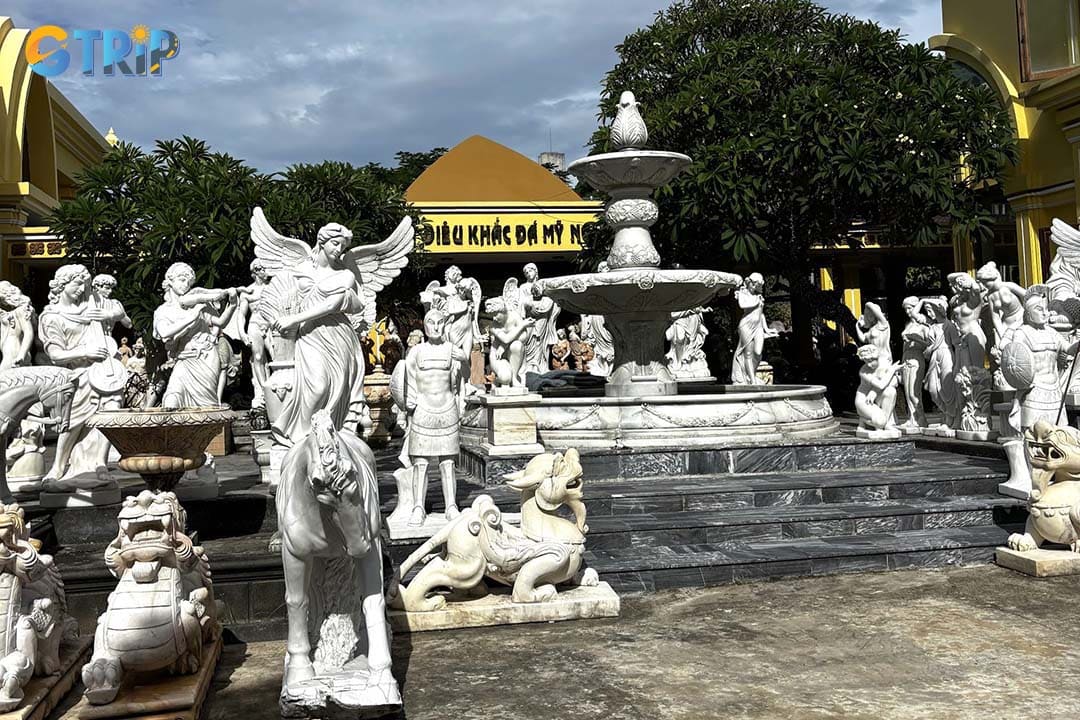
Non Nuoc Stone Carving Village is a centuries-old craft community where skilled artisans transform marble and granite into intricate sculptures
What makes Non Nuoc Stone Carving Village unique?
While Vietnam has many craft villages, Non Nuoc stands apart as a true "land of stone". It’s not a re-creation for tourists but a living, breathing community where the craft is a way of life. This 300-year-old legacy has imbued the village with an authenticity that is rare and captivating, making it a must-visit for anyone interested in culture, art, and history.
- An ancient and continuous legacy: The village traces its origins back to the late 17th century, making it one of the oldest and most enduring craft villages in Vietnam. The skills you see today are the result of centuries of refinement.
- A direct connection to a natural wonder: The village was born from its proximity to the Marble Mountains. For generations, artisans sourced their raw materials directly from these five sacred hills, creating a deep, geological connection between the art and its environment.
- Incredible artistic diversity: The range of products is staggering. You will find a wide range of sculptures, such as statues of Buddha, mythical beasts like dragons and phoenixes, and decorative household items. This includes everything from massive garden statues destined for international export to delicate, pocket-sized souvenirs.
- Generational workshops and family secrets: The craft is a family affair. Skills are not taught in formal schools but are passed down from father to son, mother to daughter. Each family workshop has its own subtle techniques and "secrets" for achieving a particular finish or detail.
- Live demonstrations and an immersive experience: Unlike a static museum, Non Nuoc allows you to see the entire artistic process unfold before your eyes. You can walk from one workshop to the next, observing a raw boulder being transformed into a polished masterpiece.
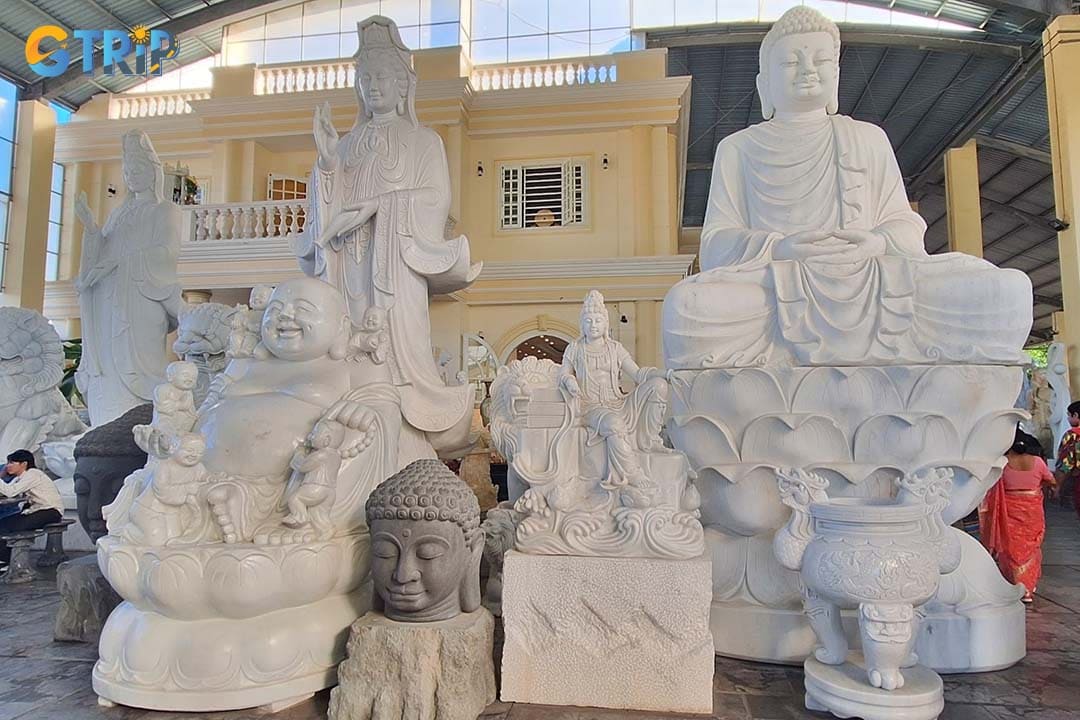
Unlike many tourist-oriented craft villages, Non Nuoc, at the base of the Marble Mountains, remains a living 300-year-old “land of stone”
History of the Non Nuoc Stone Carving Village
The history of Non Nuoc Stone Carving Village reflects the deep connection between local craftsmanship, natural resources, and Vietnam’s cultural heritage. Over centuries, the village has evolved from a small artisan settlement into one of the country’s most important traditional craft centers.
| Period | Timeframe | Key events | Significance |
|---|---|---|---|
| Origins | First half of the 17th century | Huynh Ba Quat from Thanh Hoa settled near the Marble Mountains and discovered high-quality marble, laying the foundation for Non Nuoc stone carving. | Laid the foundation for the Non Nuoc stone carving tradition |
| Formation of the craft village | Late 17th - early 18th century | The trade was passed down through generations and gradually formed a traditional craft community. | Established a traditional craft community |
| Early development | 17th - 18th centuries | Villagers carved household items like mortars and tombstones while still relying mainly on farming and fishing. | Reflected the close link between the craft and daily life |
| Period of prosperity | Early 19th century (Nguyen Dynasty) | Rising demand from royal constructions in Hue elevated stone carving into a respected and profitable main profession. | Stone carving became the main livelihood and a high-value profession |
| Cultural significance | 19th century | Royal figures and scholars commissioned cave inscriptions, enriching the artistic and historical value of the Marble Mountains. | Enhanced the artistic and historical value of the Marble Mountains |
| Material identity | Over time | Artisans identified distinct marble colors from each mountain, shaping a unique identity for Non Nuoc sculptures. | Created a unique material identity for Non Nuoc sculptures |
| Landscape changes | Before 1990 | Extensive mining altered the mountains, notably dividing Fire Mountain into Yin and Yang sections. | Caused lasting changes to the Marble Mountains landscape |
| Conservation phase | 1990 | Mining was banned to protect the site, marking a shift toward heritage preservation and imported materials. | Marked a shift toward heritage preservation |
| Heritage recognition | 2014 | Non Nuoc stone carving was officially recognized as Vietnam’s National Intangible Cultural Heritage. | Officially acknowledged its cultural and historical importance |
| Present day | Today | Hundreds of workshops, many run by multi-generational families, continue the craft while serving as a cultural attraction. | Functions as both a living craft village and a popular tourist attraction |
Things to do at Non Nuoc Stone Carving Village
A visit to Non Nuoc is a multi-sensory experience. It’s a chance to admire world-class art, learn about rich cultural traditions, witness incredible skill, and even find the perfect memento of your trip to Da Nang.
1. Admire masterpieces of high artistic value
The entire village feels like an open-air gallery, where every workshop proudly displays its finished creations. As you stroll through the streets, you can admire thousands of stone works that showcase the remarkable skill of local artisans. Each piece reveals how craftsmen skillfully highlight the natural patterns of the marble, such as serene Buddha statues with intricate details, sleek modern sculptures with polished surfaces. You will find imposing garden lions, small decorative items, all reflecting generations of dedication and artistry.
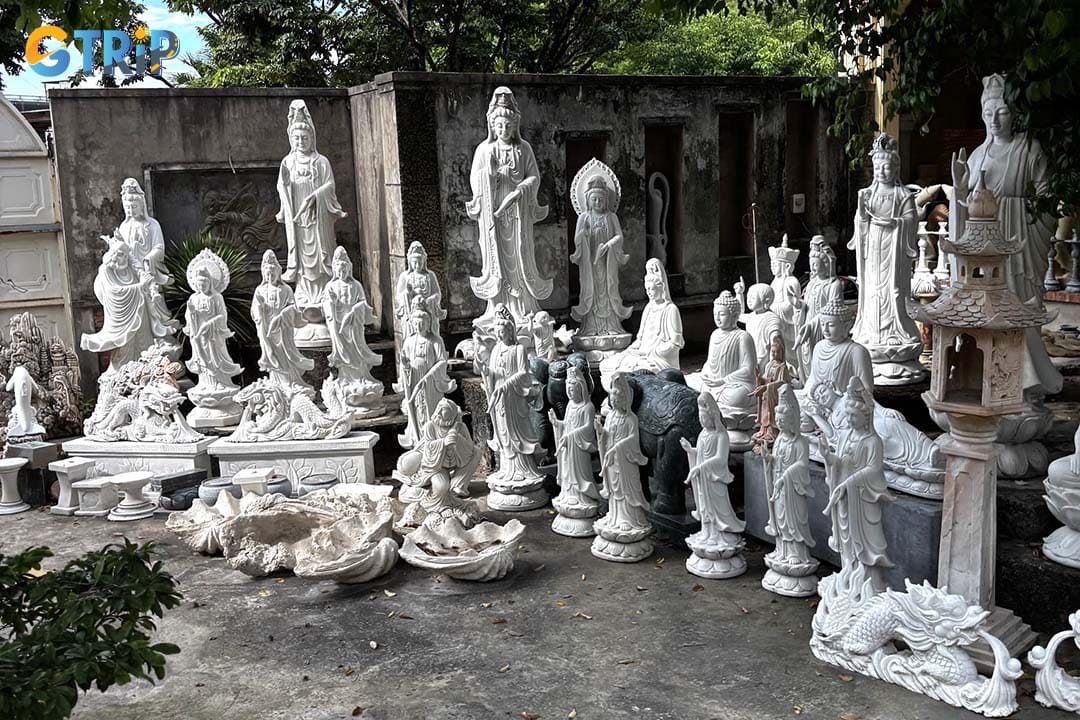
The village unfolds like an open-air gallery, where workshops display intricately carved Buddha statues, polished modern sculptures, and imposing garden lions
2. Explore ancient Champa and Vietnamese culture
The sculptures in Non Nuoc serve as a visual library of cultural history. The village stands on the land of the former Champa Kingdom, and this influence is profoundly felt in the art. You can find statues of Hindu and Buddhist deities and symbols central to Champa culture art, such as the Linga and Yoni, mythical bird-god Garuda, and celestial dancers. These exist alongside iconic Vietnamese mythical creatures, including the powerful dragon, the wise turtle, the elegant phoenix, and the mythical lion-dog known as the Nghe. Each piece tells a story, offering a unique opportunity to understand the region’s spiritual and mythological fusion.
3. Shop for unique stone products
If you're looking to buy marble souvenirs in Da Nang, this is the ultimate destination. The variety is endless, catering to every budget and taste. For travelers, small, portable items are perfect. You can find beautiful stone handicrafts like marble bracelets, necklaces, small animal figurines, chess sets, and decorative seals. For those looking for larger pieces, the workshops take commissions for life-sized statues and religious altars, marble furniture, and fountains. You can find products made from a wide variety of materials, including white marble, black marble, pink marble, green onyx, and vibrant jade.
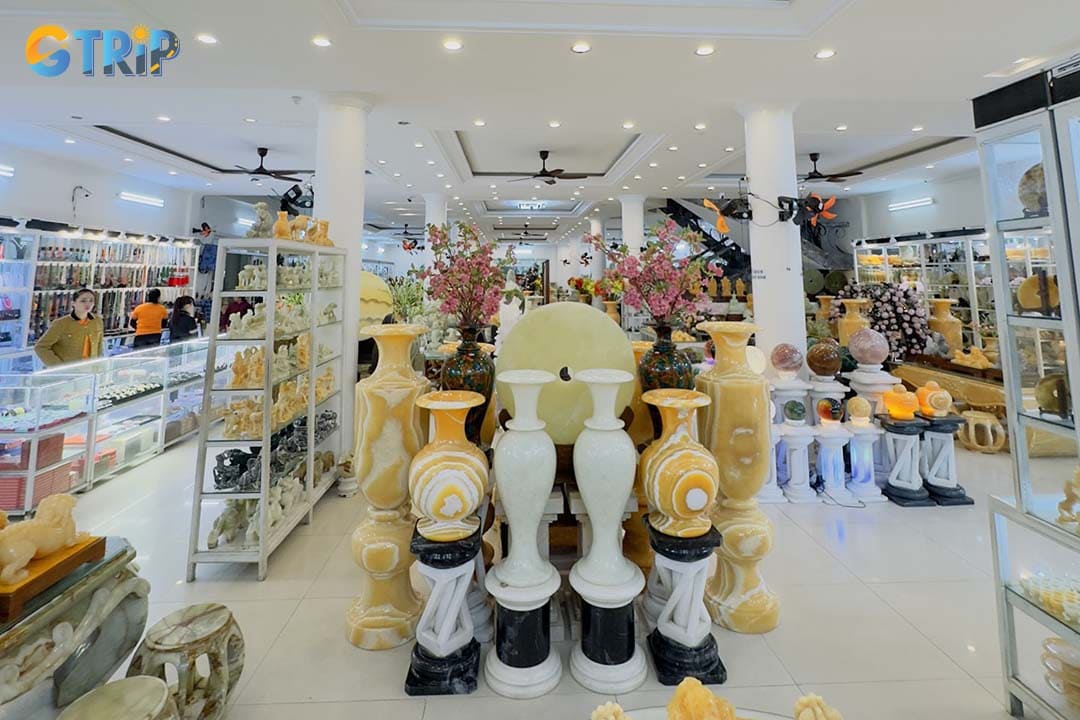
After exploring the Non Nuoc Stone Carving Village, you can shop for unique stone products there
4. Enjoy local Da Nang specialties
After exploring the village, you’ll have worked up an appetite. Luckily, the area around Non Nuoc and the Marble Mountains is full of fantastic local eateries. This is the perfect chance to refuel and sample some authentic Da Nang local food. Look for small restaurants serving regional specialties like mi quang (turmeric noodles with pork, shrimp, and herbs), banh xeo (crispy Vietnamese pancakes). Capping off your cultural exploration with a delicious meal is the perfect way to complete the experience.
How to get to Non Nuoc Stone Carving Village
Non Nuoc Stone Carving Village is located near the Marble Mountains, making it accessible from several key points in Da Nang and nearby Hoi An. Depending on your starting location, you can choose between motorcycles, taxis, Grab, buses, or private cars. Here’s a breakdown of travel options from each main point:
From Da Nang City center
Traveling from Da Nang City center is straightforward, with multiple convenient options.
- Motorcycle: Flexible and popular, follow Ngu Hanh Son St → turn left onto Non Nuoc St. Parking available near shops
- Taxi: Fare 150,000 - 200,000 VND (~$5.74 - 7.66), travel time ~10 - 15 mins
- Grab: Fare 40,000 - 70,000 VND (~$1.53 - 2.68), travel time ~10 - 15 mins
- Bus: Routes 1 or 4, ticket 7,000 VND (~$0.27), travel time ~30 - 40 mins
- Private car / Car rental: Travel time 15 - 20 mins, rental with driver 1,200,000 - 1,500,000 VND/day (~$45.96 - 57.48/day)
From Da Nang International Airport
From the airport, reaching Non Nuoc Village is simple, with options suitable for travelers with luggage or those preferring self-drive.
- Taxi/Grab: Fare 200,000 - 250,000 VND (~$7.66 - 9.58), travel time ~25 - 30 mins
- Private car: Self-driving or with driver, 600,000 - 1,500,000 VND/day (~$23.0 - 57.48/day)
- Motorbike rental: For experienced riders, route via Le Van Hien St → Truong Sa St → Huyen Tran Cong Chua St
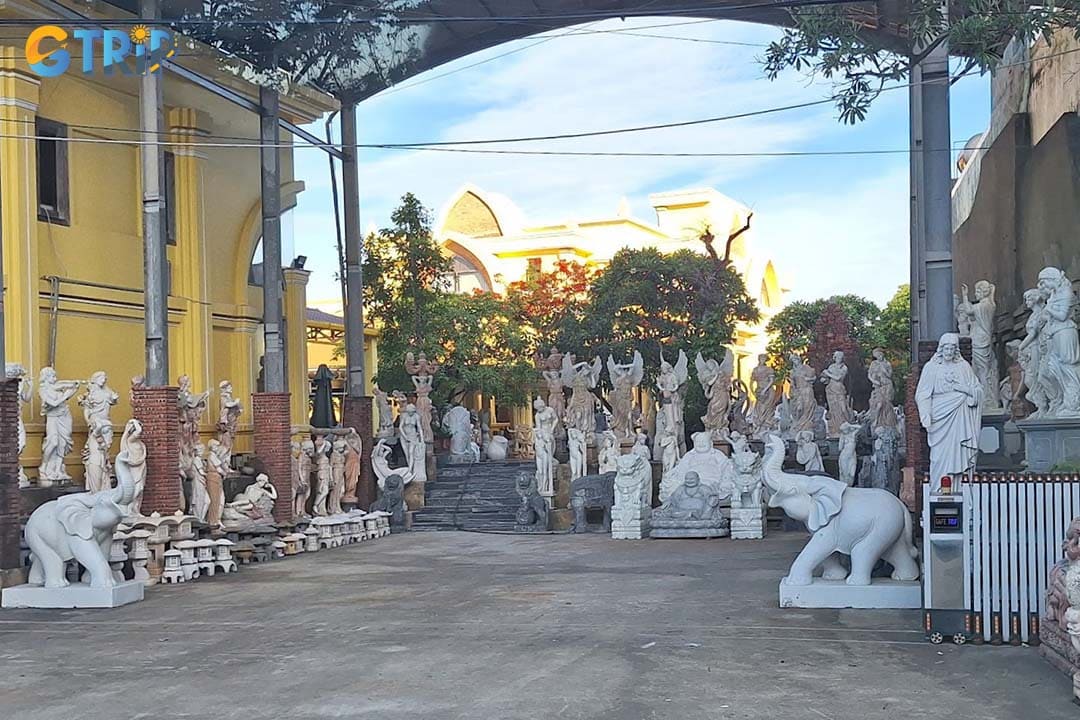
Non Nuoc Stone Carving Village is located near the Marble Mountains so it is easily accessible from many places
From Hoi An Ancient Town
Traveling from Hoi An is popular for day trips. The scenic coastal road provides a pleasant journey by car or motorbike.
- Motorbike: Coastal route Lac Long Quan St → Truong Sa St → turn right at Huyen Tran Cong Chua St
- Taxi / Private car: Roundtrip 600,000 VND ($23.0) with 2-hour waiting option, travel time ~30 mins
- Biking: Ideal for adventurous travelers, safety precautions recommended
Transportation options
No matter where you start, multiple transport options allow you to customize your trip according to time, comfort, and budget.
- Motorcycle rental: Popular and flexible, approx. 100,000 - 200,000 VND/day (~$3.83 - 7.66/day)
- Taxi / Grab: Convenient, fares vary by route (see above)
- Bus: Affordable option, ticket 7,000 VND ($0.27)
- Private car: Self-drive or with driver, 600,000 - 1,500,000 VND/day (~$23.0 - 57.48/day)
Notes: Obey traffic rules, park at designated lots, and take care on narrow alleys within the village
Nearby attractions to the Non Nuoc Stone Carving Village Da Nang
Right next to Non Nuoc Stone Carving Village, the Marble Mountains rise as one of Da Nang’s most iconic landmarks. This cluster of five limestone hills hides caves, pagodas, and panoramic viewpoints that perfectly complement your stone-carving village visit.
Attractions within Water Mountain, Marble Mountains
The Marble Mountains (Ngu Hanh Son) are packed with sacred caves, ancient pagodas, and breathtaking lookouts, all reachable by stairs or elevator. Here are the must-see spots inside Water Mountain (Thuy Son), the only hill open to visitors.
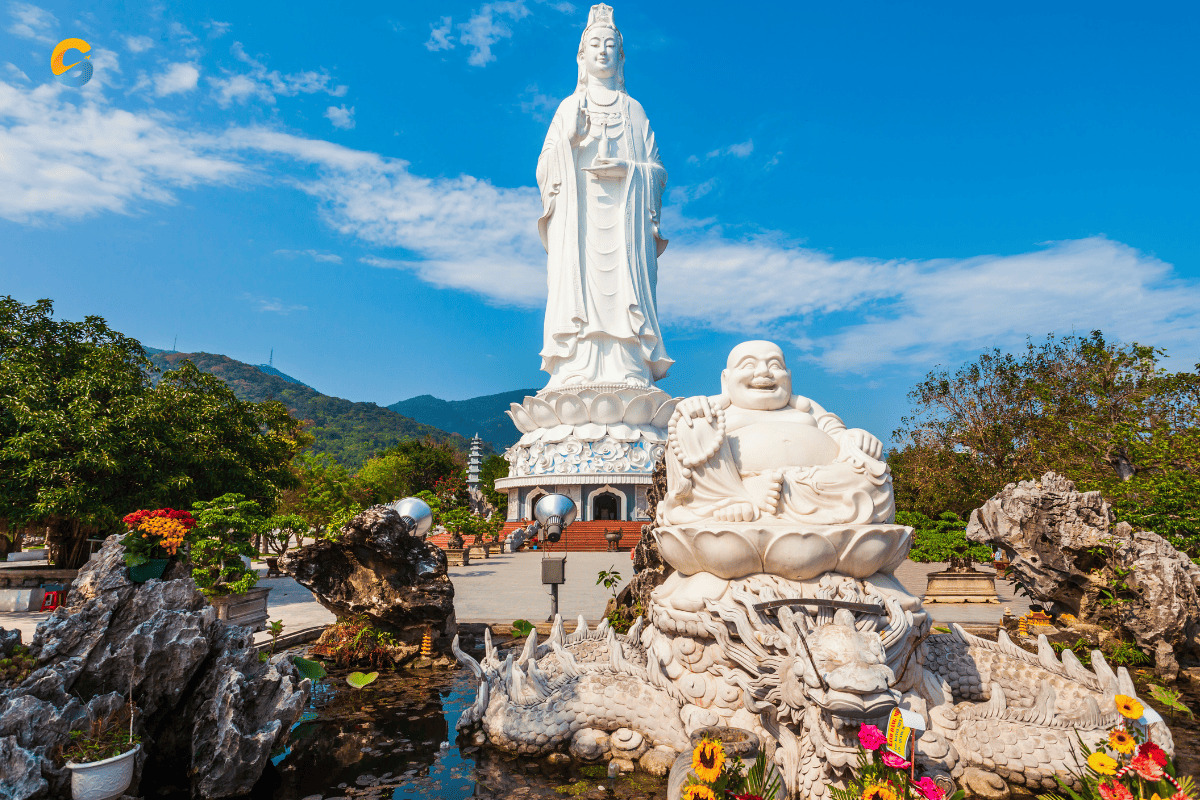
- Non Nuoc Pagoda (Linh Ung Pagoda): Stunning seaside temple with a towering Lady Buddha statue overlooking the coast
- Tam Thai Pagoda: Seven-story pagoda offering peaceful vibes and incredible 360° views from the top
- Huyen Khong Cave: Mystical cavern with natural light shafts, Buddhist altars, and a serene spiritual atmosphere
- Am Phu Cave: “Hell Cave” featuring dramatic stalactites and underworld-themed sculptures
- Heaven Gate: Iconic stone entrance leading to breathtaking mountain and ocean panoramas
- Xa Loi Tower: Tall stupa surrounded by quiet gardens, perfect for reflection
- Vong Giang Dai (River Watching Pavilion): Scenic spot gazing toward the Han River and city skyline
- Vong Hai Dai (Ocean Watching Pavilion): Elevated platform with sweeping East Sea views
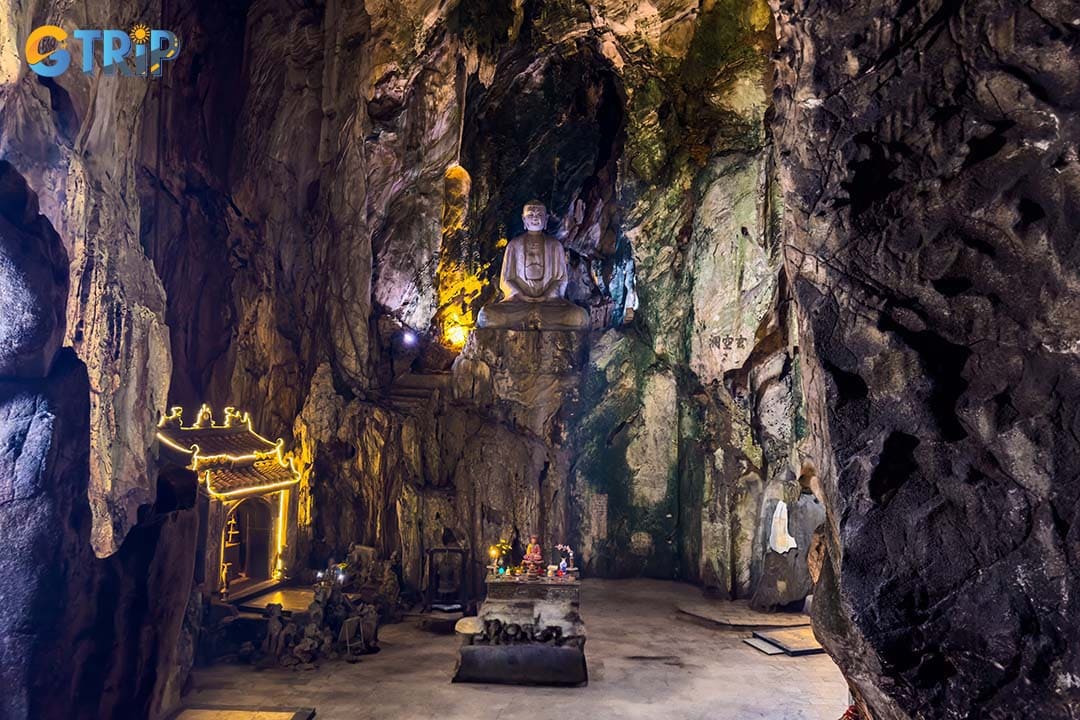
Marble Mountains are famous for sacred caves, ancient pagodas, and breathtaking lookouts
Attractions near the Marble Mountains
After exploring the caves and pagodas, you’re just minutes from some of Central Vietnam’s loveliest beaches and cultural gems. These nearby spots are perfect for relaxing, swimming, or continuing your day trip.
- Non Nuoc Beach (1 km): Just a short distance away, this quiet stretch of fine sand is perfect for relaxing after exploring the Marble Mountains. Its gentle waves and open space make it ideal for a refreshing swim or a peaceful break by the sea.
- Son Thuy Beach (2 km): This laid-back local beach offers a calmer atmosphere with fewer crowds. It is a great spot to enjoy the coastal scenery and experience a more authentic seaside setting.
- Tan Tra Beach (3 km): Known for its tranquil shoreline, Tan Tra Beach is perfect for unhurried sunset walks. The peaceful surroundings create a soothing escape from the city’s busy pace.
- My Khe Beach (6 km): Recognized as one of Asia’s most beautiful beaches, My Khe impresses with its soft white sand and clear blue water. It is lively yet spacious, offering swimming, water sports, and beachfront dining.
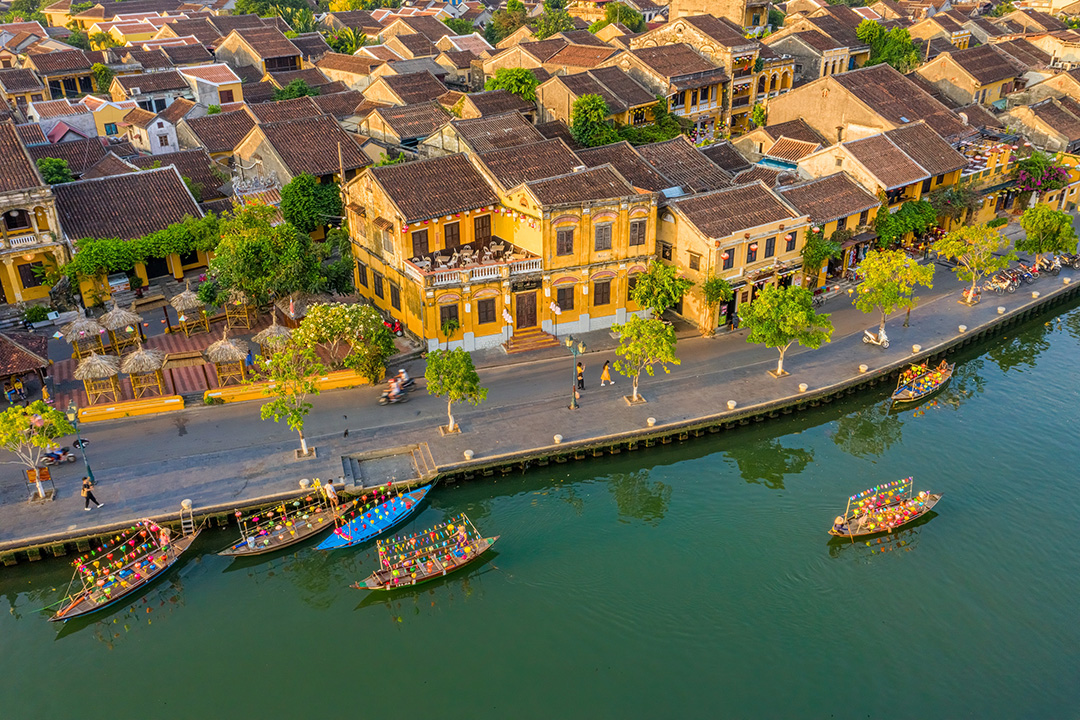
- Hoi An Ancient Town (30 km): About a 30-kilometer drive away, this UNESCO World Heritage site is an excellent addition to a Marble Mountains day trip. Its lantern-lit streets, historic houses, and riverside charm provide a rich cultural contrast to the coastal landscape.
Pro tip: Start early at the Marble Mountains to beat the heat and crowds, then cool off at Non Nuoc Beach or head straight to Hoi An for lantern-lit streets in the evening.

After exploring the Non Nuoc Stone Carving Village, you can visit beautiful nearby beaches for a relaxing and fresh time
Practical tips for visitors
To make the most of your visit to the Non Nuoc Stone Carving Village, keep these insider tips in mind.
- Bargain with a smile: Bargaining is a normal and expected part of the shopping culture here. As a starting point, you can offer around 50-70% of the initial asking price and negotiate politely from there. Always maintain a friendly and respectful attitude.
- Check for quality: While most products are of high quality, it's wise to inspect items closely before purchasing. Look for any cracks, chips, or imperfections, and check the quality of the polish and detail work.
- Ask about international shipping: If you fall in love with a large statue or piece of furniture, don't worry. Most shops offer reliable international shipping services. Be sure to get a clear, written quote that includes the cost of the item, crating, shipping, and insurance.
- Wear comfortable shoes and clothing: You will be doing a lot of walking, so comfortable footwear is essential. Lightweight, breathable clothing is recommended, especially during the hot season.
- Bring sun protection and water: The village is mostly outdoors and offers limited shade. A hat, sunglasses, sunscreen, and a bottle of water are highly recommended to stay comfortable.
- Show respect: Remember that these are active workplaces. Always ask for permission before taking close-up photos of artisans or their private workshop spaces. A friendly smile and gesture are usually all that’s needed.
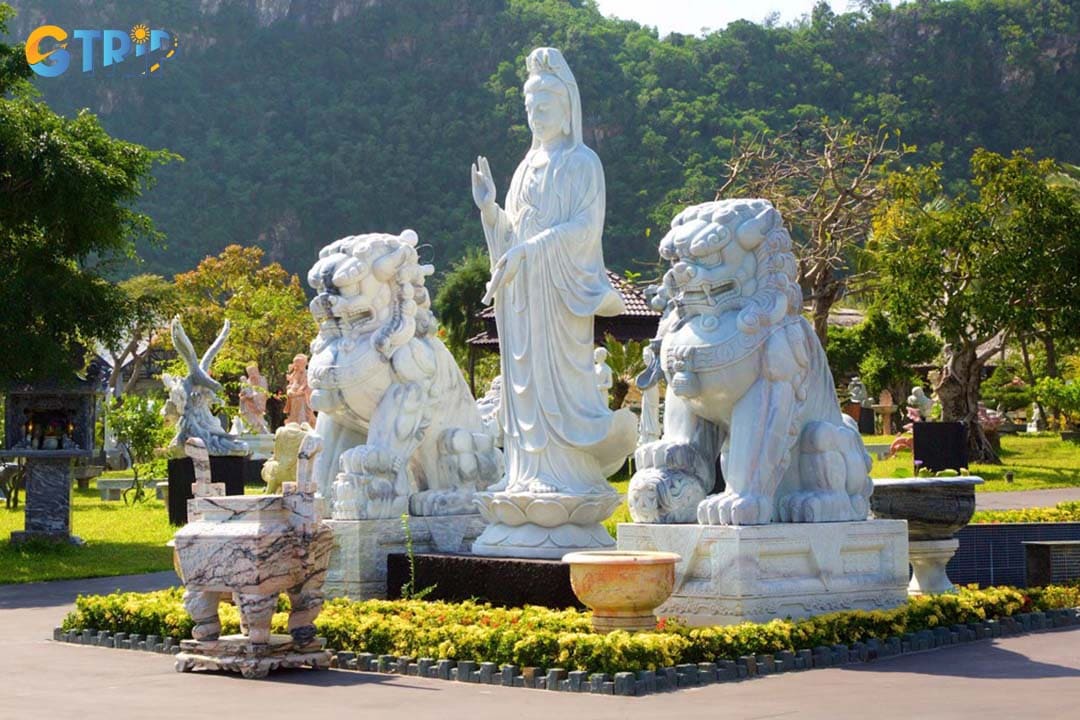
Remember practical tips to have a wonderful trip to Non Nuoc Stone Carving Village
The Non Nuoc Stone Carving Village is so much more than a market. It is the soul of a centuries-old tradition captured in stone. It’s a place where history, culture, and artistry converge, offering visitors a unique window into the heart of Vietnamese craftsmanship. You'll leave with beautiful memories and with a profound appreciation for the dedication and skill that have kept this incredible art form alive for generations. Ready to witness this incredible artistry for yourself? GTrip offers a range of Da Nang tours and travel resources to help you plan the perfect adventure, from exploring the famous Marble Mountains to visiting the historic Non Nuoc Stone Carving Village and beyond. Explore our guides and discover all the wonders that Central Vietnam has to offer.