

Tuesday, October 27, 2026
The Da Nang Museum of Cham Sculpture is not just a museum. It's a time capsule holding the soul of a lost kingdom. Nestled in the heart of Da Nang, this remarkable institution houses the world's most extensive collection of Cham art. It offers a profound glimpse into the rich history, intricate religion, and artistic mastery of the Champa people. For any traveler seeking to understand the deep cultural roots of Central Vietnam, a visit here is non-negotiable. In this GTrip guide, we’ll walk you through everything you need to know to make your visit unforgettable. You will explore its fascinating history and must-see masterpieces, practical details like ticket prices, opening hours, and insider tips. Prepare to be captivated by the silent stories etched in sandstone, preserved for over a century within these hallowed halls.
Table of Content
- Overview of the Da Nang Museum of Cham Sculpture
- What makes the Da Nang Museum of Cham Sculpture a must-visit?
- History and development of the Da Nang Museum of Cham Sculpture
- Navigating the exhibitions in the Da Nang Museum of Cham Sculpture
- Top 6 things to see and do at the Da Nang Museum of Cham Sculpture
- 1. Explore the world’s largest collection of Cham sculptures
- 2. Walk through region-based exhibition galleries
- 3. Admire the museum’s French colonial-inspired architecture
- 4. See Vietnam's national treasures up close
- 5. Learn about Cham history and Hindu-Buddhist influences
- 6. Join a guided tour or use the audio guide for deeper insight
- How to get to the Da Nang Museum of Cham Sculpture
- Nearby attractions to the Da Nang Museum of Cham Sculpture
- Practical tips for a great visit
Overview of the Da Nang Museum of Cham Sculpture
Before diving into the intricate details of the collection, let's cover the essential information you'll need for your visit. The museum's strategic location, clear pricing, and consistent hours make it an easy and rewarding addition to any Da Nang itinerary. It serves as the perfect starting point for understanding the significance of other Cham sites in the region, like the famous My Son Sanctuary.
Where is the Da Nang Museum of Cham Sculpture?
Address: 02 Hai Thang Chin Street, Hai Chau Ward, Da Nang City
Perfectly positioned for convenience, the Da Nang Museum of Cham Sculpture is located in the vibrant Hai Chau Ward, the central urban heart of Da Nang. Its prime location places it right at the foot of the iconic Dragon Bridge, with the scenic Han River flowing nearby. This makes it incredibly easy to reach from most hotels, even you stay in the city center or along the famous My Khe Beach. Its accessibility means you can easily combine a visit with a riverside stroll or an evening excursion to watch the Dragon Bridge breathe fire.
Opening hours and entrance fee
The Da Nang Museum of Cham Sculpture is accessible to visitors every day of the year, making it a reliable destination for your travel plans. The admission fee is a small price to pay for access to a world-class collection of ancient art and national treasures. We recommend visiting on a weekday morning to enjoy the galleries with fewer crowds, allowing for a more contemplative and personal experience with the artifacts. Your ticket grants you access to all permanent exhibition rooms and the beautifully landscaped grounds.
- Opening hours: 7:00 AM - 5:00 PM daily (including holidays)
- Admission fee: 60,000 VND for adult, 10,000 VND for children
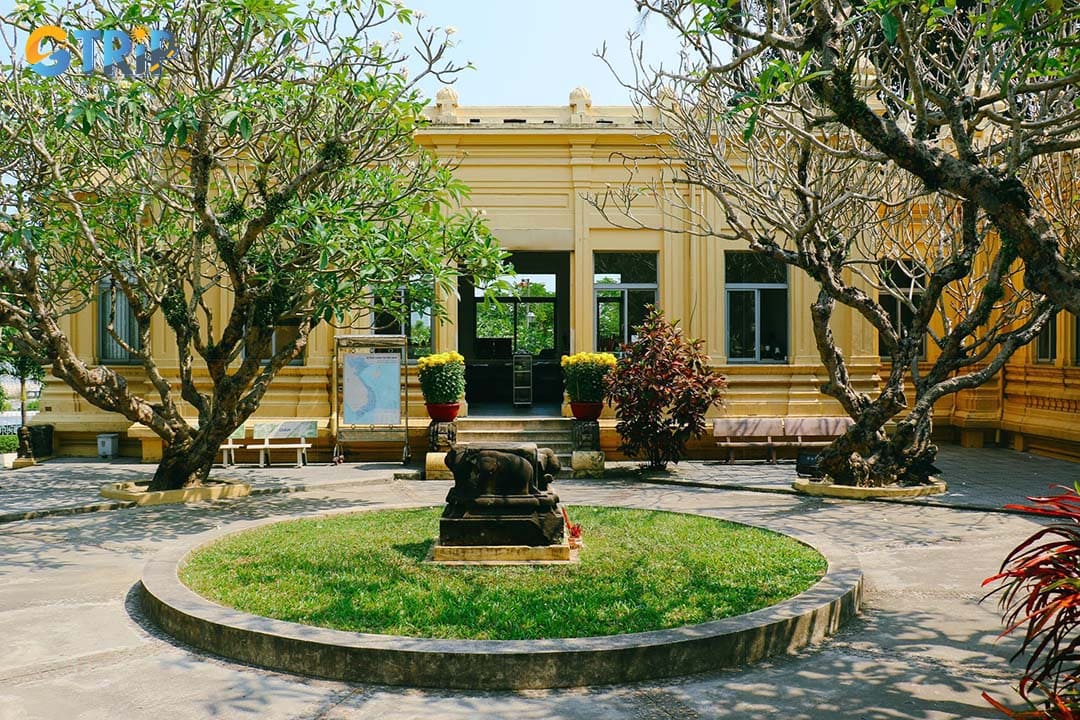
The Da Nang Museum of Cham Sculpture is a living time capsule that preserves the soul of the ancient Champa Kingdom
What makes the Da Nang Museum of Cham Sculpture a must-visit?
While Da Nang is famous for its beaches and bridges, the Cham Museum offers a unique and profound experience that enriches any visit. It stands out as an essential cultural destination for several compelling reasons.
- An unrivaled collection of Cham sculptures: This is, without exaggeration, the most important repository of Cham artifacts on the planet. Spread across over 2,000 square meters of exhibition space, the museum displays approximately 300 stunning sandstone and terracotta sculptures. These pieces, dating from the 7th to the 15th centuries, were recovered from Cham temples and towers scattered across Central and Southern Vietnam.
- A distinctive and historically significant architectural style: The museum building itself is a work of art. Designed by French architects in the early 20th century, its style is a masterful blend of elegant French colonial design and elements inspired by traditional Cham temples. The open-air galleries, arched windows, and flowing corridors were designed to harmonize with the tropical climate and the nature of the artifacts they house.
- Home to official national treasures: The collection is so significant that several of its pieces have been officially recognized by the Vietnamese government as "National Treasures". These are artifacts of extreme rarity and cultural importance. Seeing these masterpieces in person, such as the serene Tara Bodhisattva, is a privilege and a highlight for any art or history enthusiast.
- Well-curated thematic and regional exhibition spaces: The museum isn't just a random collection of statues. It is thoughtfully organized by the regions where the artifacts were excavated, such as My Son, Tra Kieu, and Dong Duong. This layout allows visitors to trace the evolution of Cham art, observing how it changed across different periods and principalities of the Champa Kingdom.
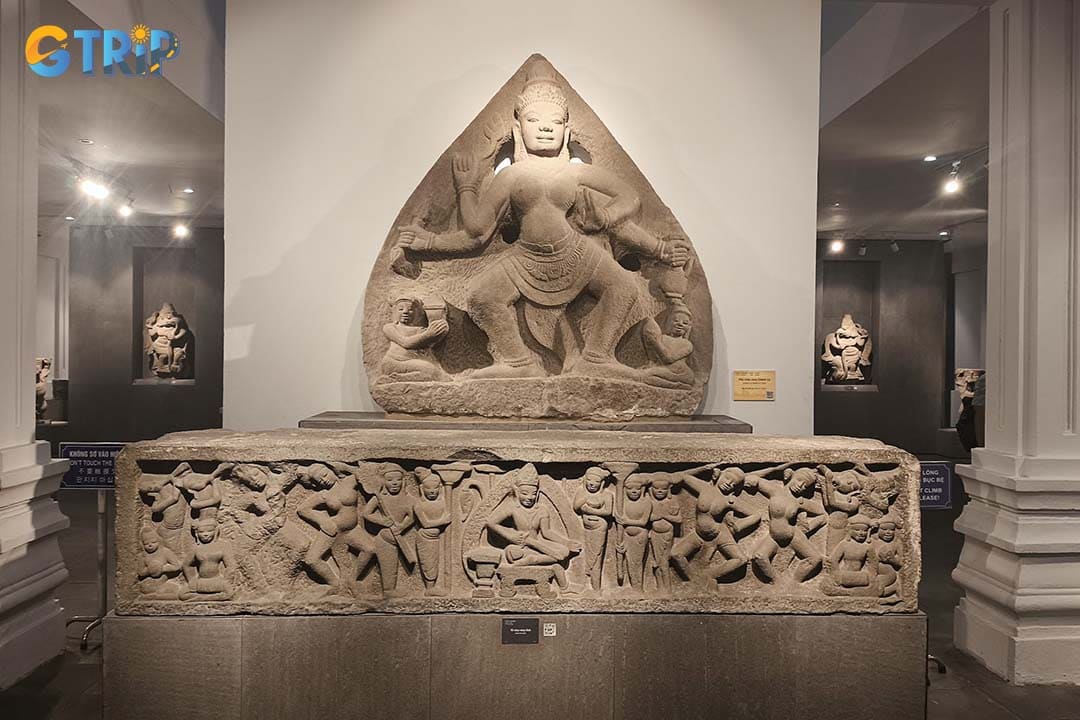
The Cham Museum stands out as a must-visit cultural landmark thanks to its unrivaled collection of ancient Cham sculptures

History and development of the Da Nang Museum of Cham Sculpture
The story of the museum is as fascinating as the collection it holds. Its origins lie in the late 19th century with the work of French archaeologists and scholars from the Ecole francaise d'Extreme - Orient (EFEO). Recognizing the immense artistic and historical value of the Cham artifacts being unearthed across the region, they advocated for a dedicated space to preserve and display them. What began as a small open-air sculpture garden has grown into a world-renowned institution, surviving wars and major expansions to become a vital cultural landmark today. This century-long commitment to preservation has saved a priceless part of Vietnam's heritage from being lost to time.
The museum's evolution can be tracked through these key milestones:
| Year | Key milestone |
|---|---|
| 1915 | Construction of the museum, then called the Musee Henri Parmentier, officially began. |
| 1916 | The main structure, designed by French architects Delaval and Auclair, was largely completed. |
| 1919 | The museum opened to the public for the first time. |
| 1930s | The first major expansion took place due to a growing number of excavated artifacts. The visitor route was reorganized by regional themes, a layout that remains today. |
| 2002 | A second expansion added new exhibition areas, storage facilities, restoration workshops, and research and administrative offices. |
| 2011 | The Museum of Cham Sculpture was officially recognized as a Grade I museum in Vietnam, highlighting its national importance. |
| 2016 | Da Nang City funded a major renovation and upgrade of the museum’s buildings and galleries while preserving its original architectural style. |
Navigating the exhibitions in the Da Nang Museum of Cham Sculpture
One of the most brilliant aspects of the museum is its logical and educational layout. The galleries are not arranged randomly but are organized according to the specific archaeological sites where the sculptures were discovered. This geographical arrangement allows you to embark on a journey through the different artistic styles and periods of the Champa Kingdom. As you move from one room to the next, you are literally walking through the history and geography of this ancient civilization. This thoughtful curation transforms your visit from a simple viewing into a compelling narrative experience.
- Tra Kieu exhibition room: Showcases artifacts from Tra Kieu, the former capital of the Champa Kingdom, highlighting early Cham culture and religious art.
- My Son exhibition room: Displays sculptures and relics from the My Son Sanctuary, reflecting Cham Hindu architecture and spiritual beliefs.
- Indochina exhibition room: Features artifacts representing cultural exchanges and artistic influences across the Indochina region.
- Thap Mam exhibition room: Presents Thap Mam-style sculptures, known for their bold forms and distinctive Cham artistic evolution.
- Quang Binh, Quang Tri & Thua Thien-Hue exhibition room: Exhibits Cham relics discovered in central Vietnam, illustrating regional variations of Cham art.
- Da Nang exhibition room: Highlights important archaeological finds and sculptures uncovered in and around Da Nang.
- Quang Nam exhibition room: Focuses on Cham artifacts from Quang Nam Province, home to major Cham sites such as My Son and Tra Kieu.
- Quang Ngai exhibition room: Displays relics from Quang Ngai, reflecting the spread of Cham culture along Vietnam’s central coast.
- Binh Dinh - Kon Tum exhibition room: Showcases artifacts from the Champa cultural heartland during later periods, especially the Thap Mam era.
- Stone carving exhibition room: Features stone reliefs and carvings that demonstrate Cham sculpting techniques and craftsmanship.
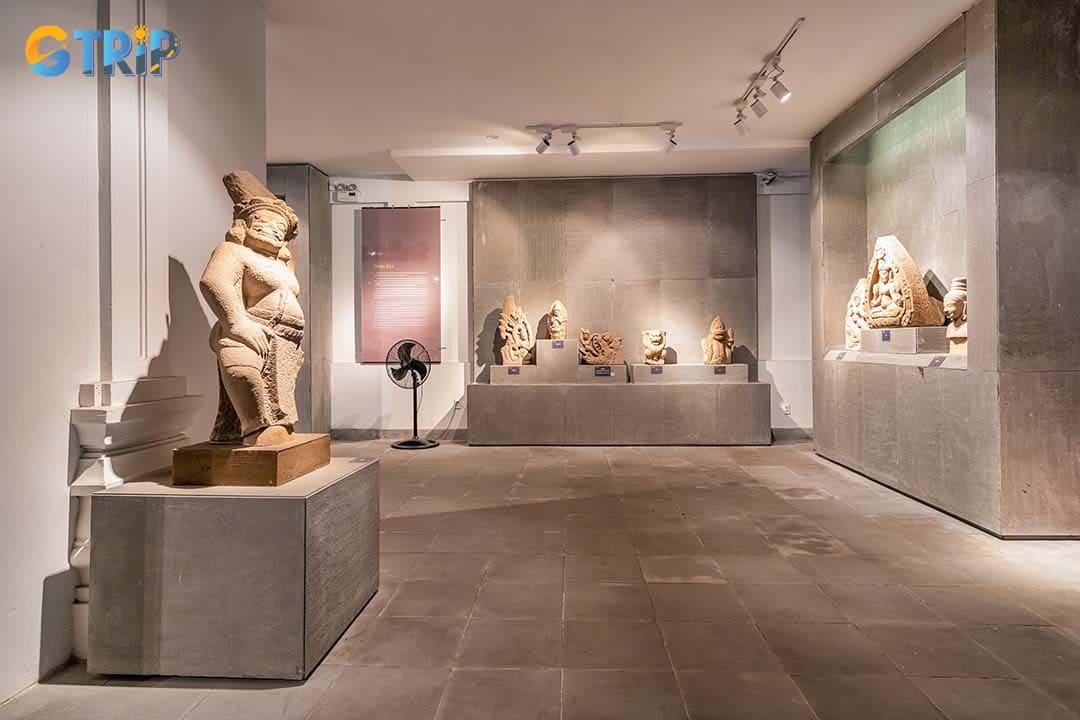
One of the museum’s greatest strengths is its thoughtful, site-based layout, which guides visitors through the geography and artistic evolution of the Champa Kingdom
Top 6 things to see and do at the Da Nang Museum of Cham Sculpture
With so much history packed into one place, it can be helpful to have a focus. Here are the top six experiences to prioritize during your visit to ensure you capture the essence of this incredible museum.
1. Explore the world’s largest collection of Cham sculptures
This is the primary reason for your visit. Take your time wandering through the galleries and admiring the incredible craftsmanship. The collection primarily consists of works carved from sandstone, with some terracotta pieces. These artifacts, dating from the 7th to the 15th centuries, depict a rich pantheon of Hindu and Buddhist deities. Look for powerful representations of Shiva, the preserver Vishnu, the elephant-headed Ganesha, and the celestial dancer Apsara. Each sculpture tells a story of faith, power, and the daily life of the Cham people.
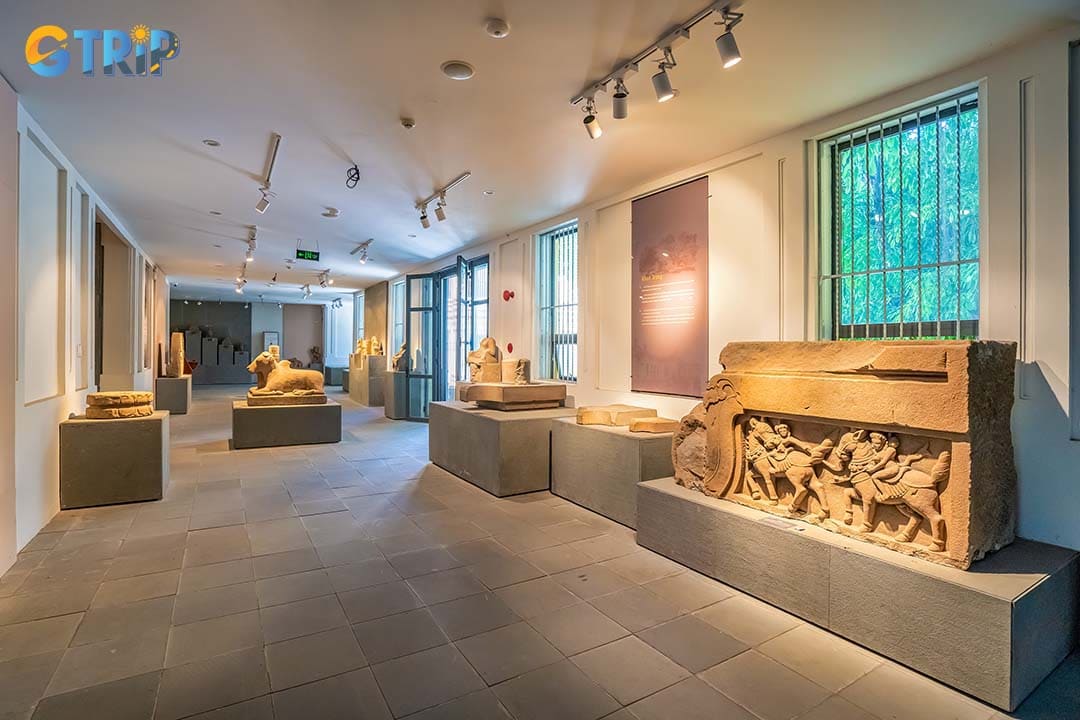
This is the heart of the visit, where you can slowly explore sandstone and terracotta masterpieces from the 7th to 15th centuries, depicting Hindu and Buddhist deities
2. Walk through region-based exhibition galleries
Embrace the museum's deliberate layout. Start your journey in the Tra Kieu gallery to see the early, refined works, then proceed to the My Son room to witness the pinnacle of Cham religious art. Continue through the powerfully expressive style of the Dong Duong gallery. By following this regional and chronological path, you can actively trace the development of artistic styles. This narrative journey is far more engaging than simply looking at isolated statues.
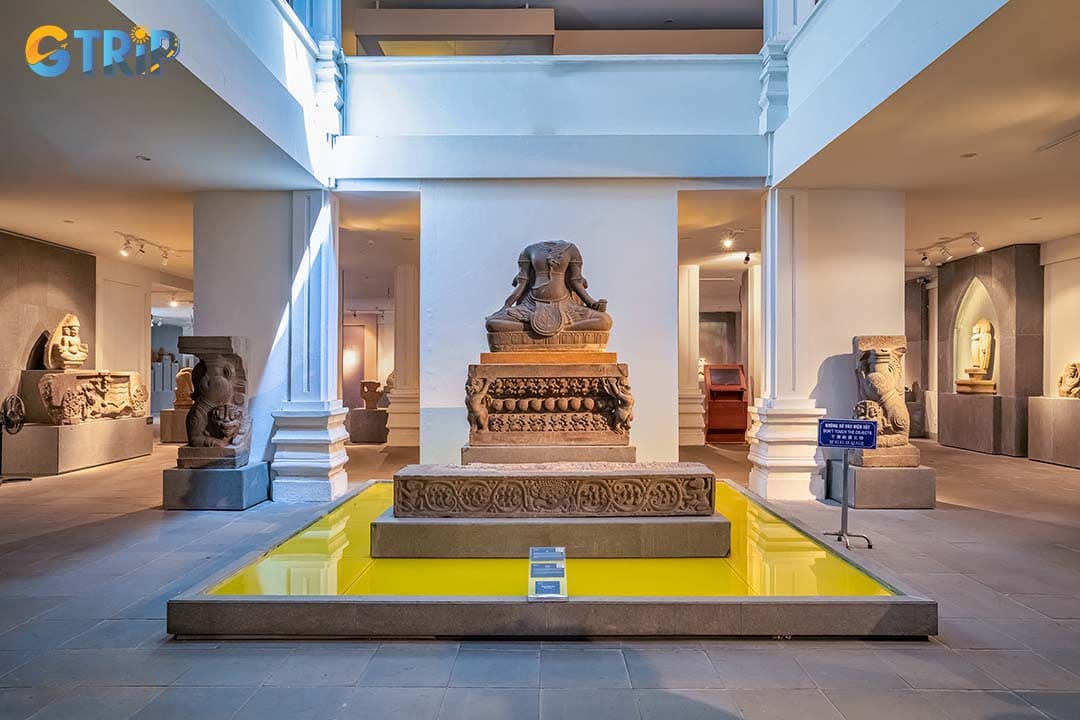
Embrace the museum’s thoughtful layout to follow the chronological and artistic evolution of Cham culture as a coherent and engaging story
3. Admire the museum’s French colonial-inspired architecture
Don't just look at the art, look at the building that houses it. The museum's architecture is a destination in itself. Notice how the French architects designed the structure with high ceilings, arched windows, and open-air corridors. This design is elegant and also highly functional. It allows natural light to illuminate the sculptures beautifully and promotes airflow, creating a pleasant, airy atmosphere that feels both like a grand European museum and a tropical pavilion.
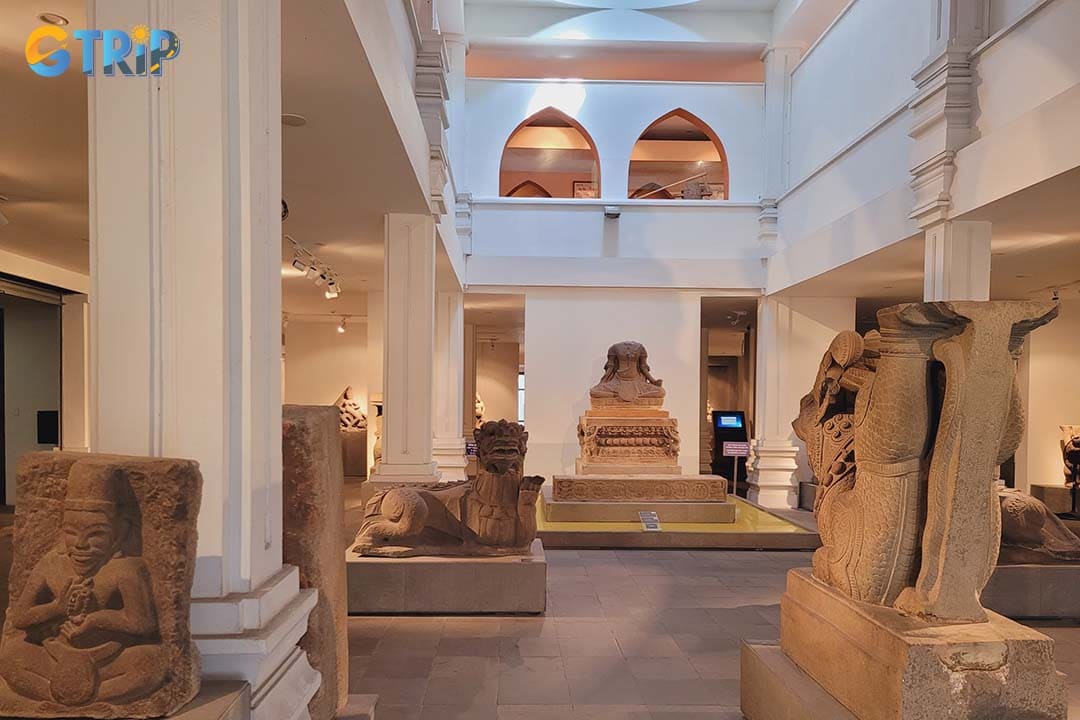
Appreciate the museum itself, where elegant French colonial architecture with high ceilings, arched windows, and open-air corridors uses natural light and airflow
4. See Vietnam's national treasures up close
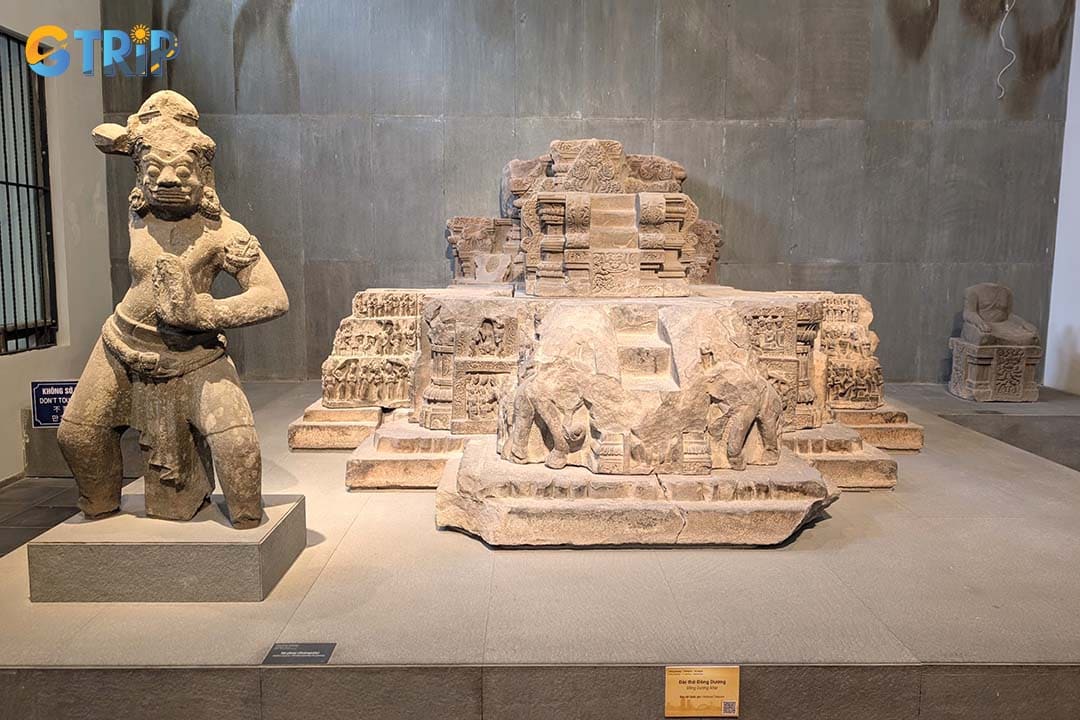
Seek out the artworks designated as Vietnam's "National Treasures". This is a formal title bestowed upon artifacts of exceptional cultural, historical, and aesthetic value. One of the most famous is the Tara Bodhisattva, a masterpiece of bronze work from the 9th century. Discovered in Dong Duong, this statue is considered one of the finest examples of Cham bronze casting in existence. Its serene expression and exquisite detail are mesmerizing. Standing before it is a chance to connect with an object of immense national pride and historical significance.
Make sure to see the National Treasures, especially the 9th-century Tara Bodhisattva, a stunning bronze masterpiece from Dong Duong
5. Learn about Cham history and Hindu-Buddhist influences
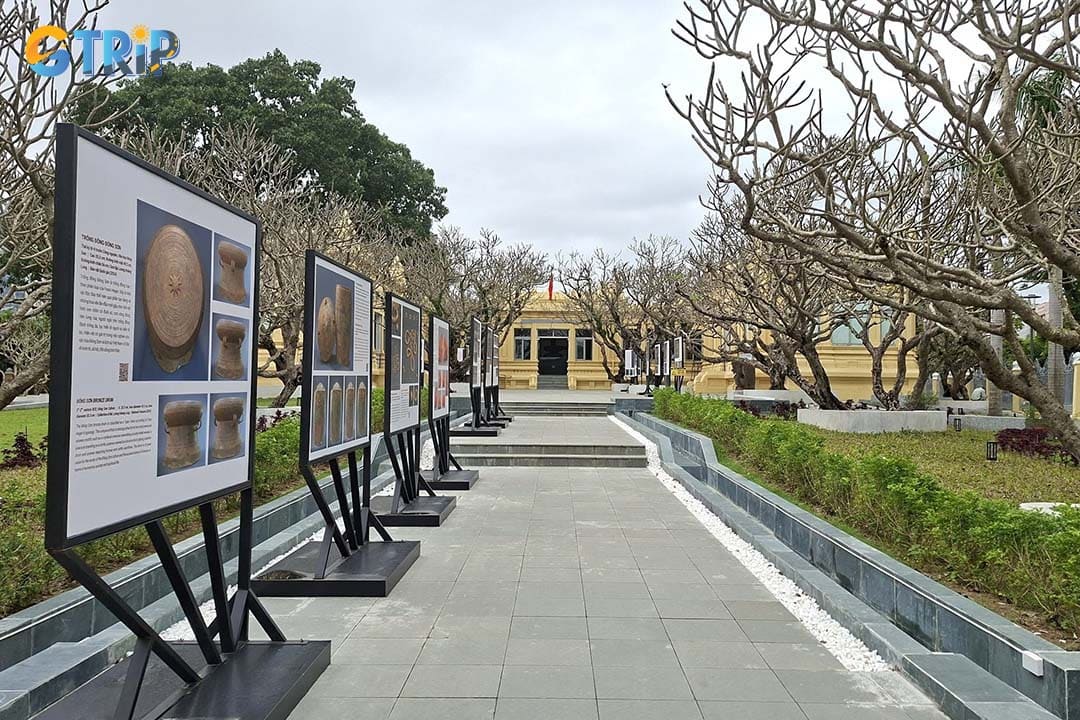
The beauty of the sculptures is only half the story. Take time to read the well-written information panels in each room (available in Vietnamese and English). The art is a direct reflection of the Champa Kingdom's spiritual life. It was a fascinating syncretism of indigenous beliefs, Indian Hinduism (particularly Shaivism), and Mahayana Buddhism. The sculptures are not just decorative. They are religious texts in stone, telling epic mythological stories of gods, demons, and the quest for enlightenment.
Read the bilingual information panels to understand how the sculptures reflect the Champa Kingdom’s spiritual world
6. Join a guided tour or use the audio guide for deeper insight
To truly unlock the secrets behind these ancient stones, consider enhancing your visit. The museum offers guided tours, which can provide a wealth of context and narrative that you might miss on your own. Alternatively, you can rent an audio guide at the entrance. The audio guide allows you to explore at your own pace while listening to detailed explanations of key artworks, their symbolism, and the history of the sites where they were found. This is the best way to transform your visit from a visual tour into a deep educational experience.
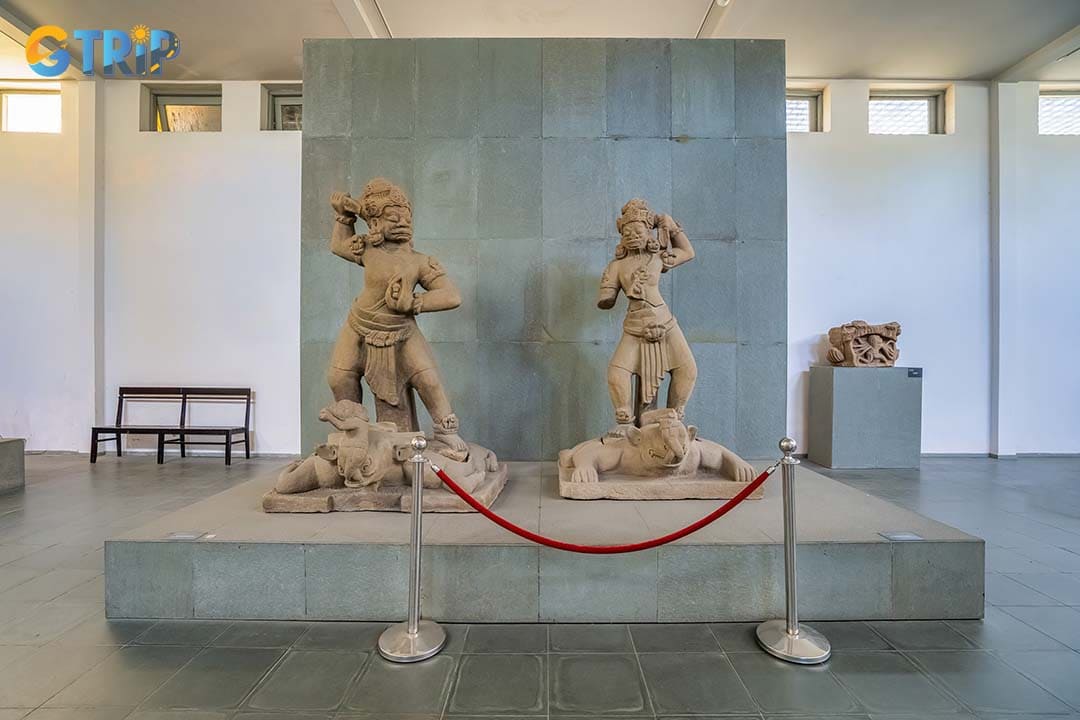
To deepen your experience, join a guided tour or use the audio guide to gain valuable insight into the artworks, their symbolism, and the history
How to get to the Da Nang Museum of Cham Sculpture
Reaching this cultural landmark is straightforward, thanks to Da Nang's excellent and affordable transportation options. Here are the most common ways to get there:
- By taxi or ride-hailing app (Grab, Xanh SM, Be): This is the most convenient and hassle-free method. A trip from most hotels in the city center or the My Khe Beach area will typically cost between 50,000 and 100,000 VND and take about 10-15 minutes. Just type "Museum of Cham Sculpture" into the app.
- By motorbike: For those who have rented a scooter for independent exploring, riding to the museum is a great option. There is designated parking available for motorbikes, usually for a very small fee.
- By bicycle/On foot: If you are staying in the surrounding Hai Chau Ward, the museum is easily reachable on foot or by bicycle. A morning walk or ride along the Han River culminating at the museum is a fantastic way to start your day.
- By public bus: Da Nang has a public bus system, and several routes pass near the museum. This is the most budget-friendly option, though it may take longer and require some pre-planning to identify the correct route and stop.
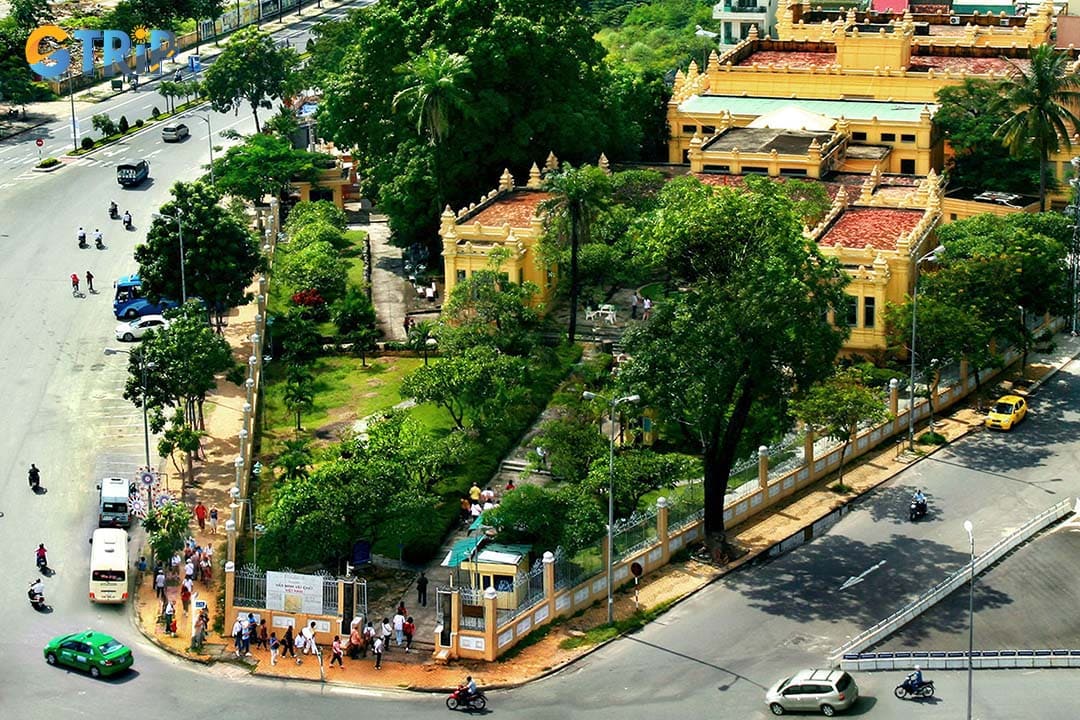
You can reach the Da Nang Museum of Cham Sculpture by many means of transportation
Nearby attractions to the Da Nang Museum of Cham Sculpture
Thanks to its central location, the museum is a perfect anchor for a half-day or full-day of sightseeing in Da Nang. After immersing yourself in ancient history, you can easily explore some of the city's modern and cultural highlights.
- Dragon Bridge: Just a few steps from the museum, this world-famous bridge is a modern architectural marvel. If you visit on a weekend, be sure to return at 9 PM to watch the dragon head breathe fire and water.
- Han River Bridge: Da Nang's first swing bridge is another iconic landmark. A leisurely stroll along the riverfront promenade offers great views of the city skyline.
- Con Market (Cho Con): A 5-minute drive from the museum, this is one of Da Nang’s most authentic local markets. Dive into its bustling food court to sample an incredible array of local specialties and street food at cheap prices.
- Da Nang Cathedral (Pink Church): This charming, candy-pink cathedral, built by the French in 1923, is one of the most unique and photogenic architectural sites in the city. It's only a short walk or taxi ride away.
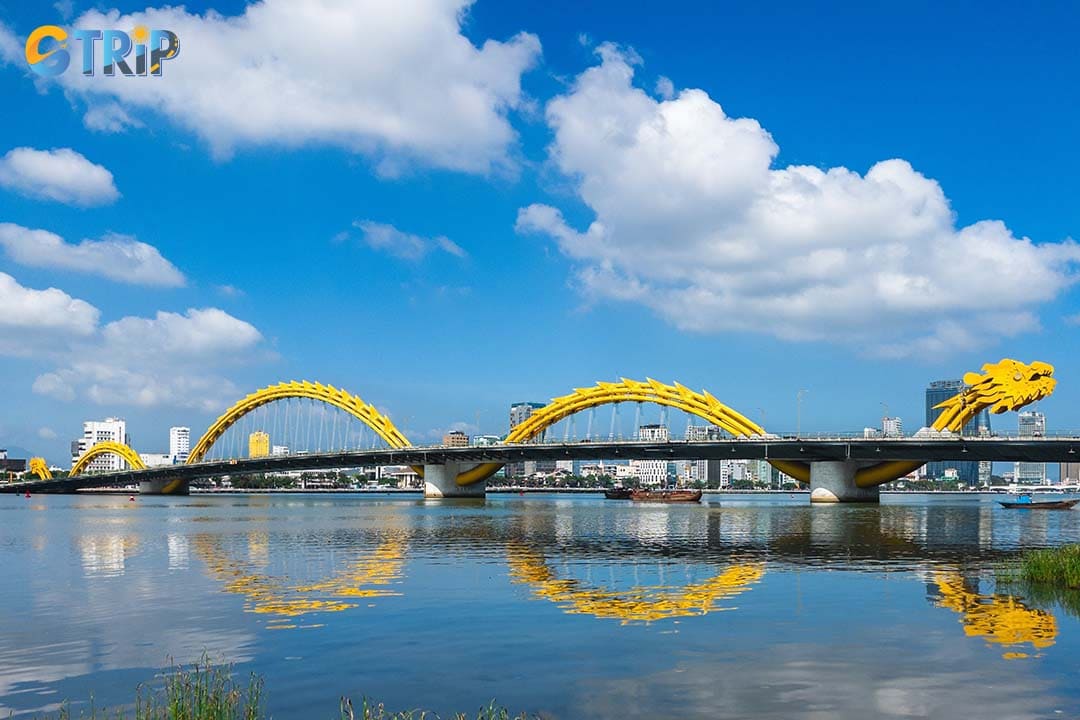
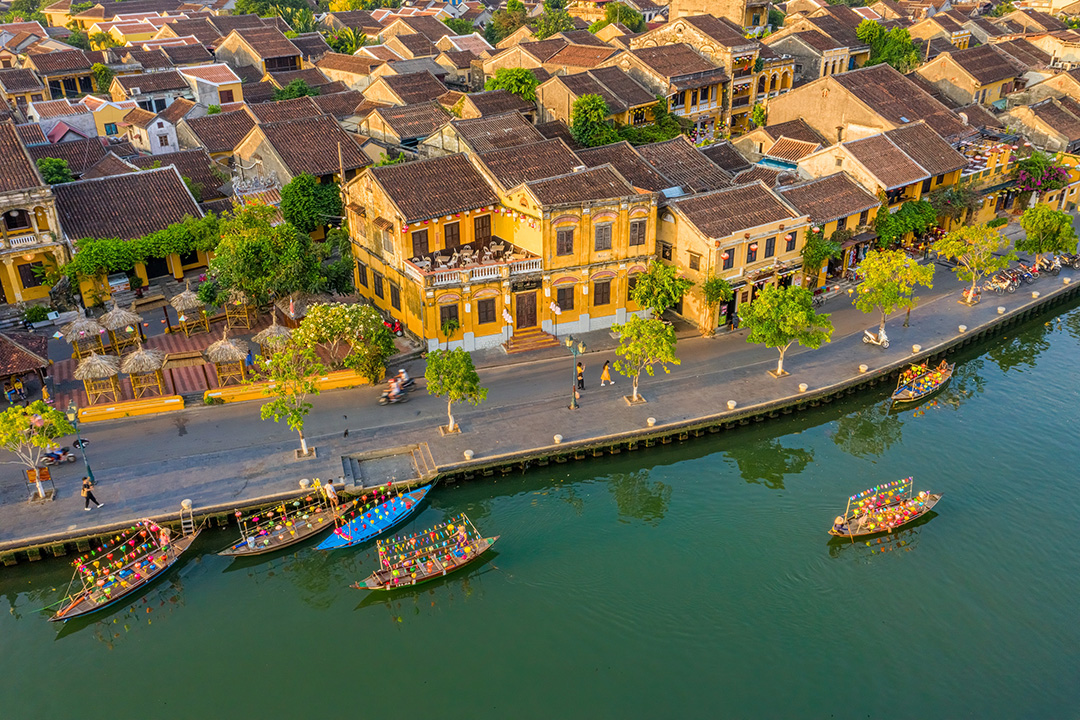
The famous Dragon Bridge is just a few steps from the museum
Practical tips for a great visit
To make your experience as smooth and enjoyable as possible, keep these simple tips in mind:
- Allow enough time: Don't rush. To properly appreciate the main galleries and see the highlights, we recommend setting aside at least 1.5 to 2 hours for your visit.
- Dress respectfully: While it is a museum and not an active place of worship, the artifacts are of immense cultural and religious importance. It’s a good practice to dress modestly, covering shoulders and knees as a sign of respect.
- Stay hydrated: The museum’s open-air design, while beautiful, means some galleries can get warm, especially during Da Nang's hot season. Bring a bottle of water to stay hydrated as you explore.
- Photography: Photography without flash is generally permitted inside the galleries. Be mindful not to use a flash, as it can damage the ancient artifacts. Always be respectful of other visitors and the serene atmosphere of the museum.
- Check for special exhibitions: Visit the museum's official website before your trip to see if there are any temporary special exhibitions or cultural events scheduled.
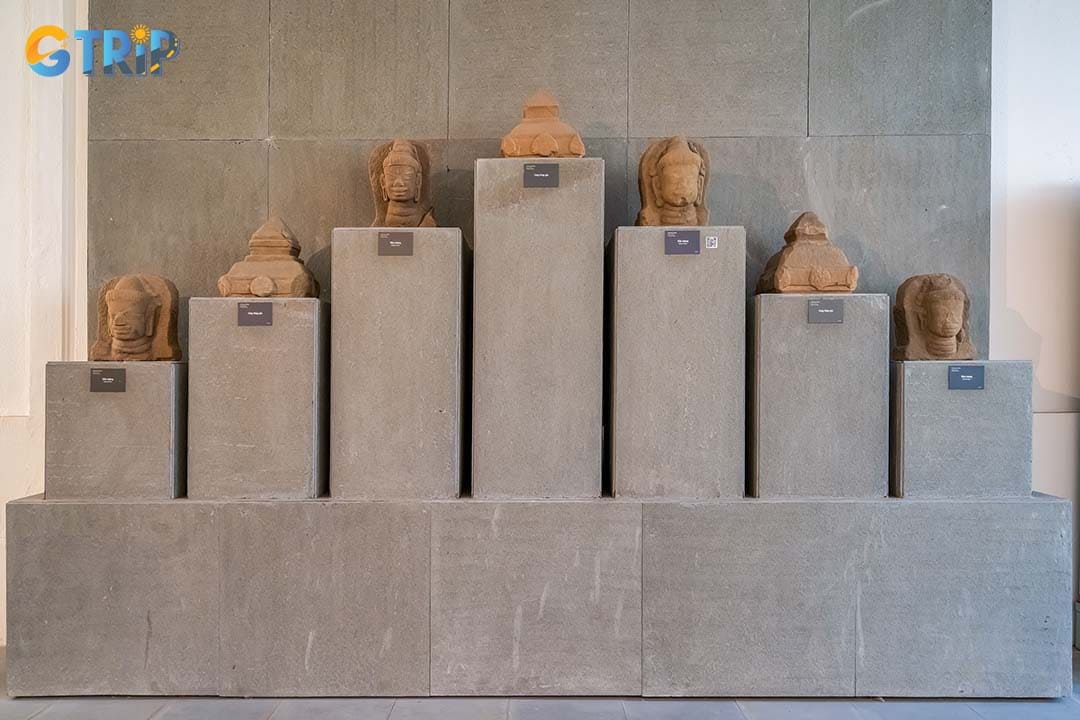
Remember the practical tips to have a wonderful trip to Da Nang Museum of Cham Sculpture
The Da Nang Museum of Cham Sculpture offers a unique window into a powerful civilization that once flourished along Vietnam’s coast, blending history, art, and quiet beauty in one remarkable space. It’s an enriching stop on any Central Vietnam itinerary especially when paired with well-planned Da Nang tours to explore the city more deeply. Ready to step back in time? Let GTrip guide the rest of your journey.
Custom Your Journey

Other Attractions
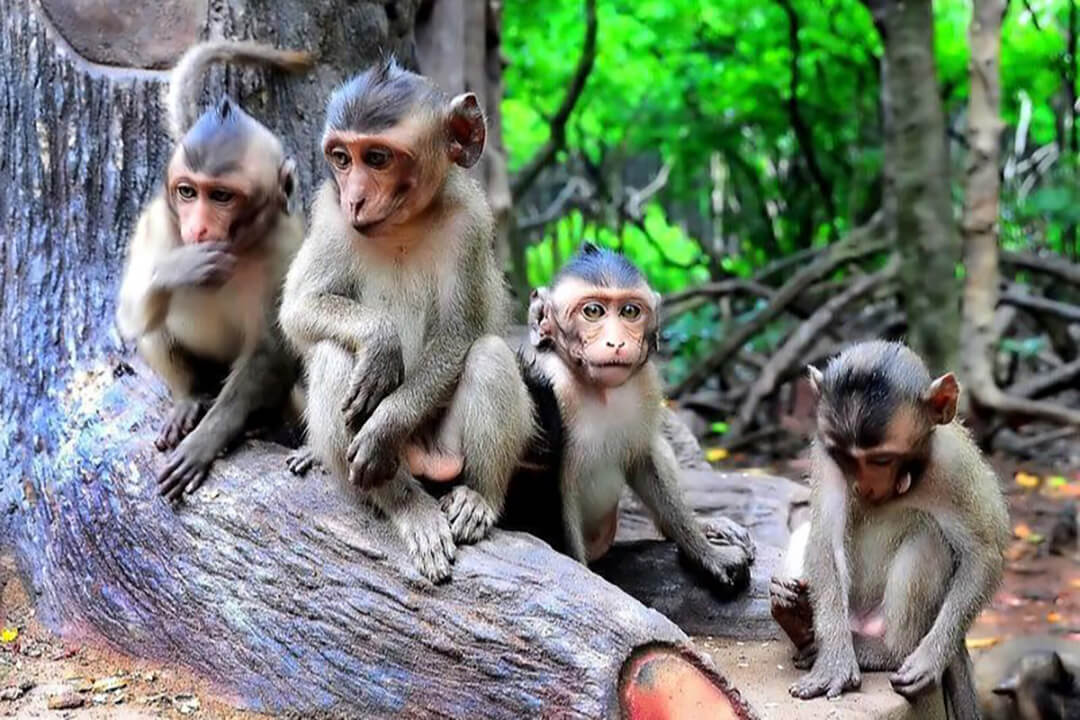
Can Gio Monkey Island in Ho Chi Minh City: Tickets, Things to Do & Travel Guide
Can Gio Monkey Island
Can Gio Monkey Island in Ho Chi Minh City offers a refreshing escape from the city’s buzzing motorbike chaos. Just a short distance from the center, Can Gio welcomes you with lush mangrove forests, winding waterways, and a fascinating history. Here, you can meet playful long-tailed macaques, drift through tranquil channels, and explore remnants of a wartime guerrilla base.
Can Gio Monkey Island in Ho Chi Minh City: Tickets, Things to Do & Travel Guide
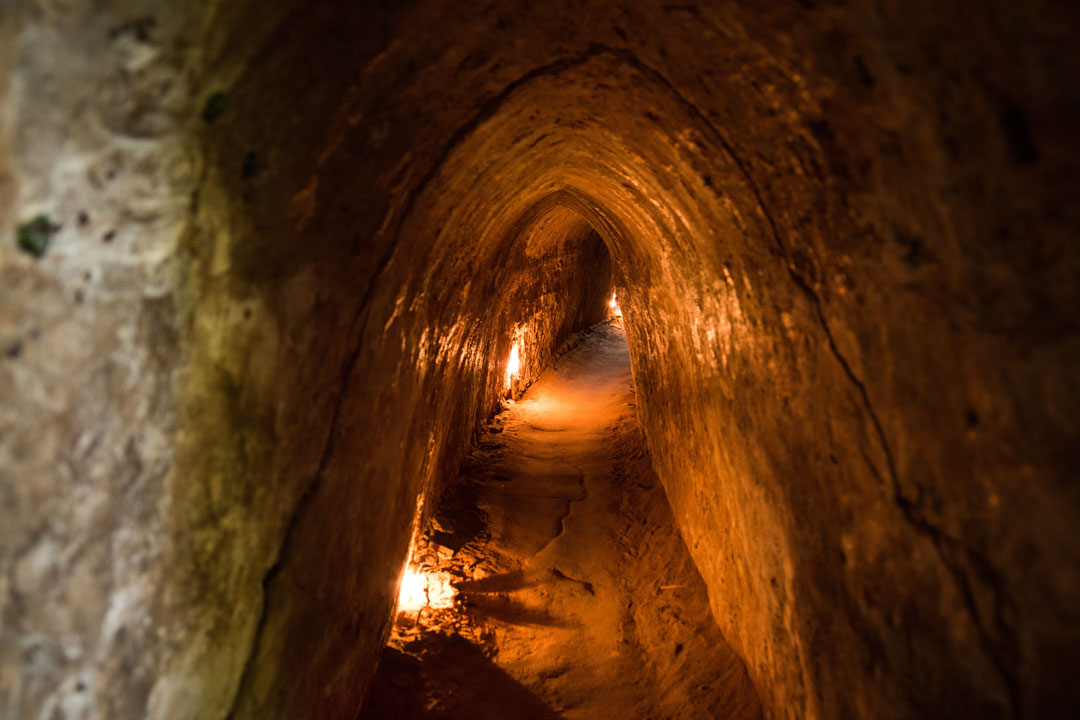
Cu Chi Tunnels: History, Architecture, Things To Do & Travel Guide
Cu Chi Tunnels
The Cu Chi Tunnels, located at TL15, Phu Hiep, Cu Chi District, Ho Chi Minh City, are a vast underground network of strategic passages, shelters, supply routes, and defensive traps.
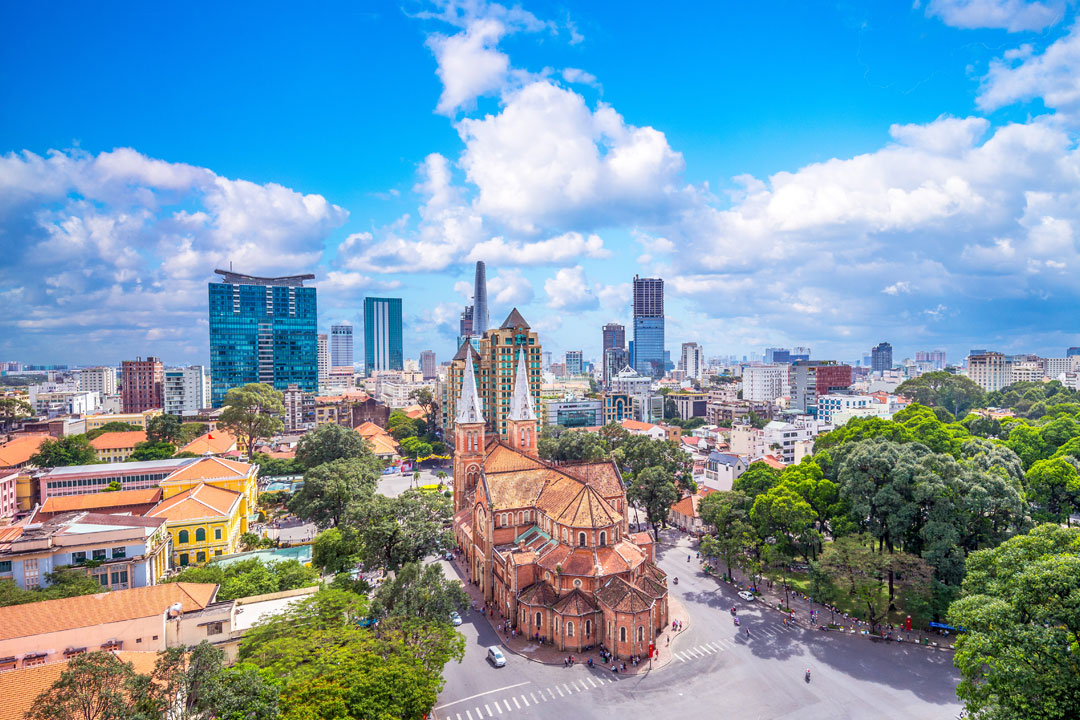
Ho Chi Minh City
Ho Chi Minh City, known as the "Pearl of the Far East," attracts both domestic and foreign tourists with its unique and diverse destinations.
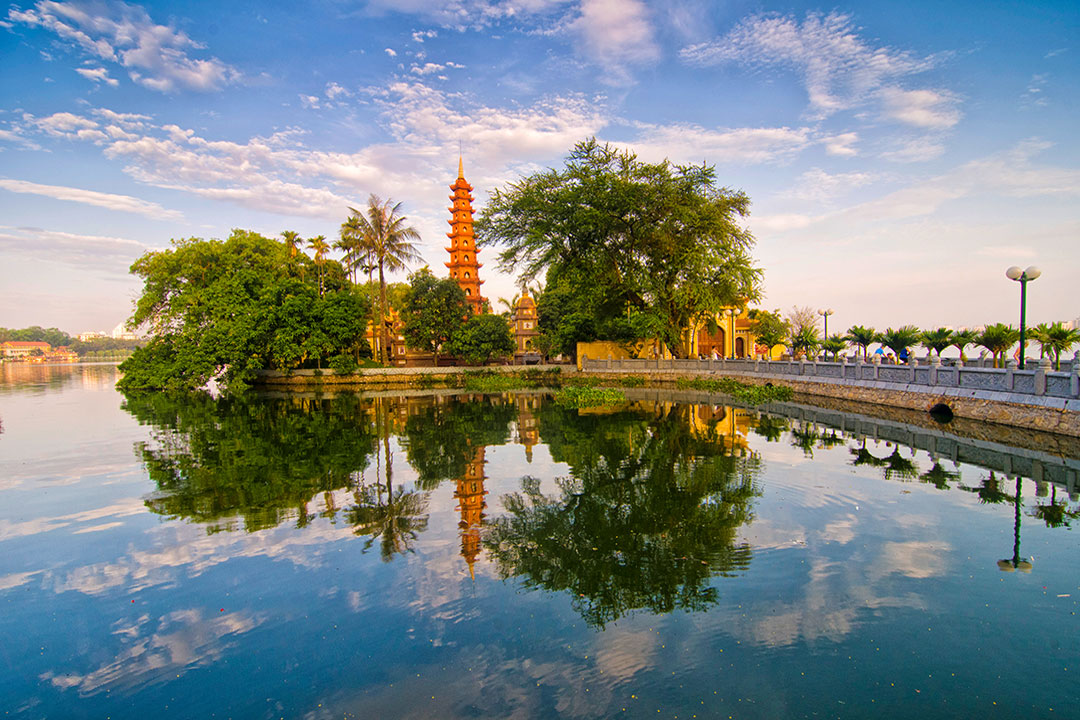
Tran Quoc Pagoda: History, Architecture, Significance & Travel Guide
Tran Quoc Pagoda
Nestled on the tranquil shores of West Lake, Tran Quoc Pagoda is the oldest Buddhist temple in Hanoi, with a history spanning over 1,500 years. Built in the 6th century under Emperor Ly Nam De, this sacred site reflects Vietnam’s Buddhist evolution while preserving its spiritual and architectural grandeur.