

Thursday, October 15, 2026
The Museum of folklore, officially known as the Museum of Folk Culture, is an unmissable cultural jewel nestled in the heart of Hoi An's UNESCO World Heritage-listed Ancient Town. While Hoi An is famed for its golden-hued streets and glowing lanterns, this museum offers a much deeper dive, a journey into the soul of central Vietnam's heritage. It is a place where the stories, crafts, and traditions of generations are preserved within the walls of one of the town's most magnificent ancient houses. As your trusted travel experts at GTrip, we’ve created this comprehensive guide to give you everything you need to know. We’ll explore what makes this museum so special, its fascinating history, its captivating exhibits, and all the practical details to ensure your visit is as enriching and seamless as possible.
Table of Content
- Overview of the Museum of Folklore
- History & Architecture of the Museum of Folklore
- Exhibits and cultural significance at the Museum of Folklore
- Things to do at the Museum of Folklore
- How to get to the Museum of Folklore
- Nearby attractions to the Museum of Folklore
- Practical tips for visitors when visiting the museum
Overview of the Museum of Folklore
To help you plan your visit and better understand what to expect, here is essential information about the Museum of Folklore in Hoi An
Where is the Museum of Folklore?
Address: 33 Nguyen Thai Hoc Street & 62 Bach Dang Street, Hoi An Ward (formerly Minh An Ward, Hoi An), Da Nang City
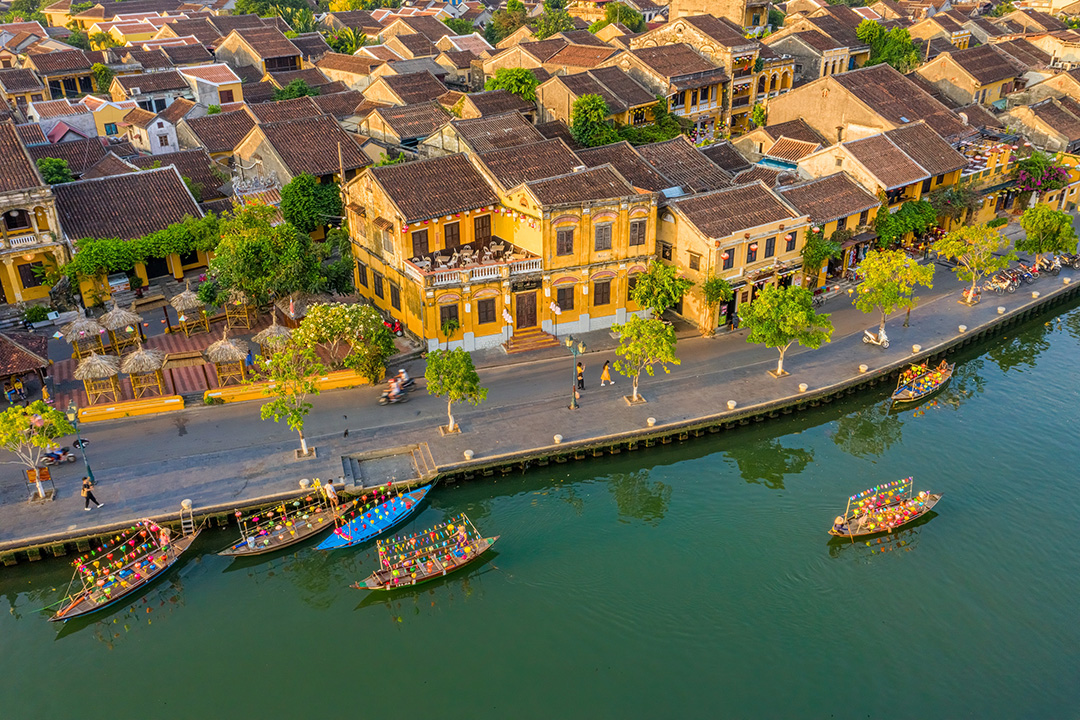
This dual-access setup means you can easily incorporate it into a stroll along the Thu Bon River or while exploring the main heritage loop. The museum boasts a prime location right in the center of Hoi An's historic core, with a unique feature that sets it apart from many other heritage sites. It has two separate entrances, allowing access from two of the Old Town's most important streets. The main entrance is located on a bustling street known for its architecture and shops, while the rear entrance opens directly onto the serene, picturesque riverside.
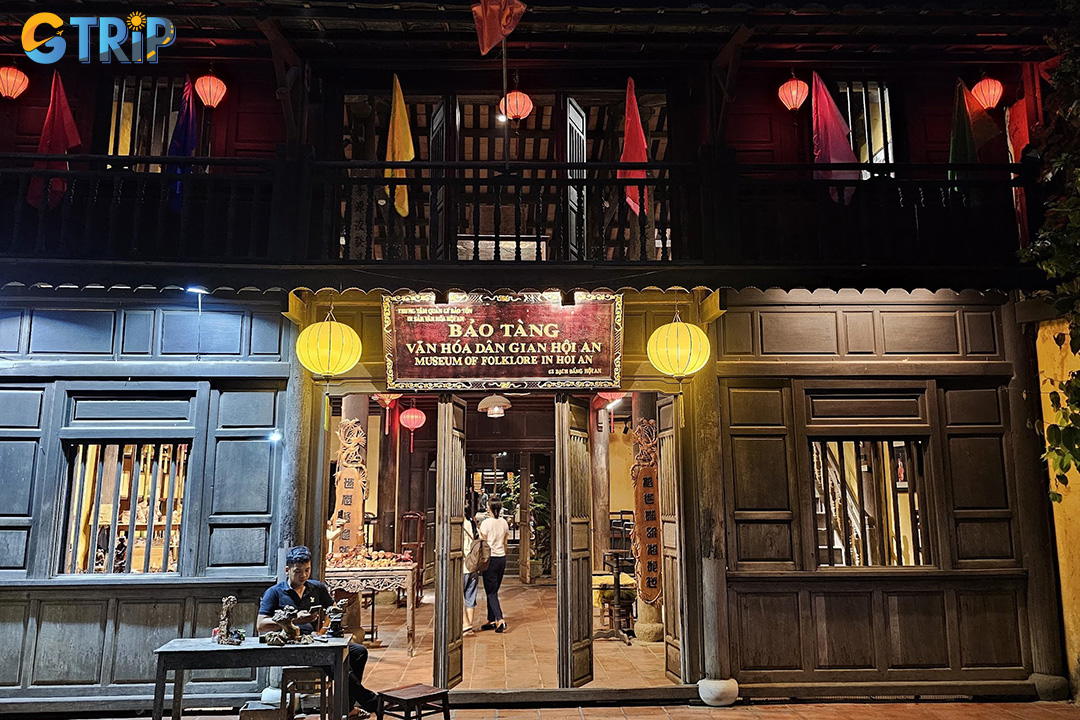
The museum features dual entrances connecting the bustling heritage streets with the peaceful Thu Bon riverside, making it easy to include in your walking tour
Opening hours and entrance fee
- Opening hours: 7:00 AM - 9:00 PM every day (closed on the 20th day of each month)
- Entrance fee: 120,000 VND for foreign adult & children above 15 years old
The museum is accessible throughout the day, seven days a week, making it easy to fit into any itinerary. The official hours are 7:00 AM - 9:00 PM every day. However, it's worth noting that some heritage sites in Hoi An. The museum may occasionally close for maintenance on the 20th of the month, so a quick local check is always a good idea if your visit falls on that date.
The entrance fee is 120,000 VND for foreign adults, but it's important to understand this isn't a standalone ticket. To enter, you must purchase the Hoi An Old Town ticket. This combo ticket is a fantastic value, granting access to any five of the 21 designated heritage sites, which include other museums, historic assembly halls, and ancient houses. You can purchase this ticket at official booths conveniently located at the main entry points to the Old Town.
What makes the Museum of Folklore unique?
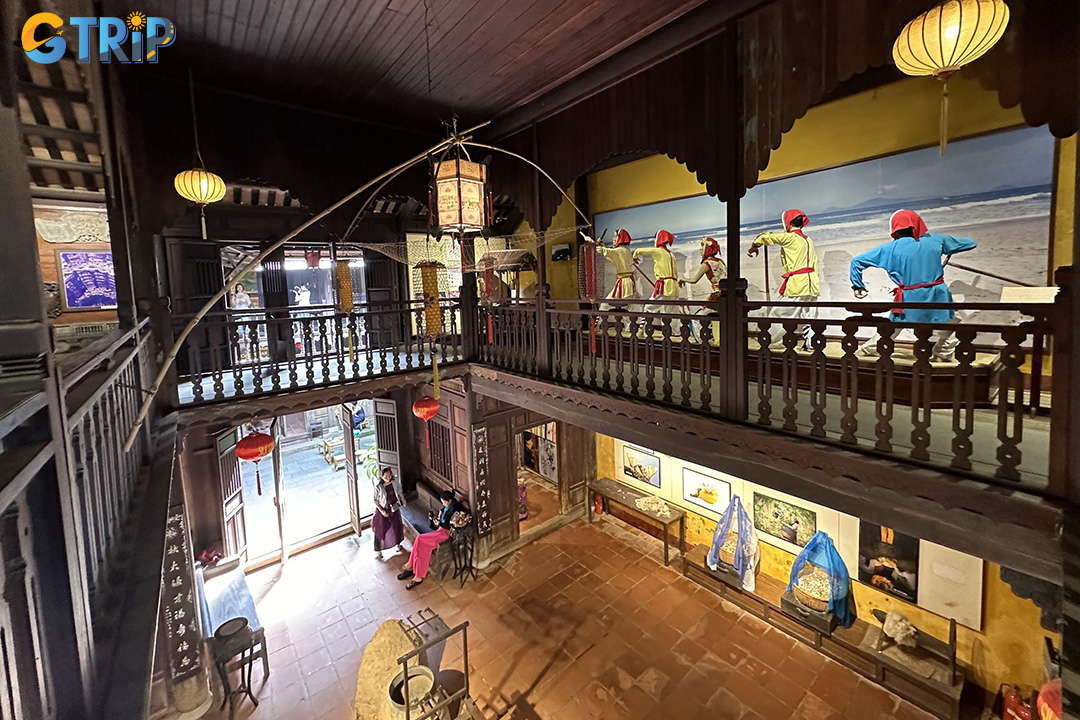
Unlike many small thematic museums in Hoi An, the Museum of Folk Culture combines architecture, artifacts, and living traditions in one large heritage house.
- Housed in one of the biggest ancient wooden houses in the Old Town (57m long, 9m wide)
- Displays nearly 500 artifacts across multiple cultural themes
- Highlights both tangible and intangible heritage
- Focuses on performing arts, craft villages, and daily life
- Offers occasional live demonstrations such as silk weaving and lantern making
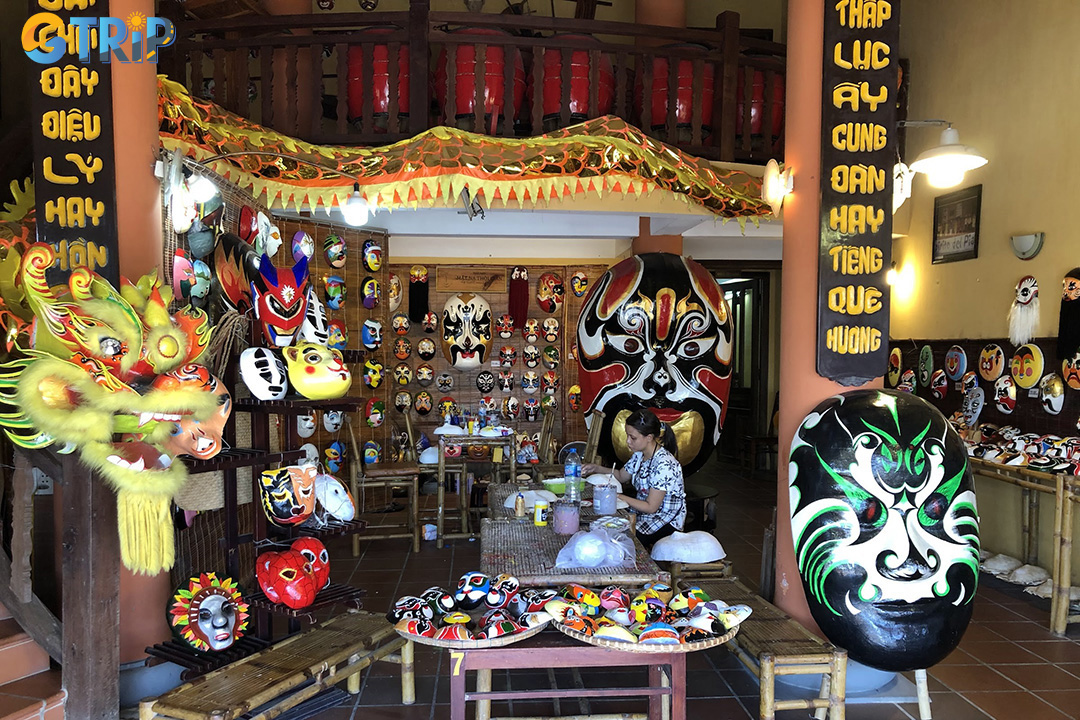
Museum of Folk Culture showcases nearly 500 artifacts and living traditions, highlighting performing arts, craft villages and occasional hands-on demonstrations
History & Architecture of the Museum of Folklore
To better appreciate the exhibits, it helps to understand the building’s past and architectural significance. The museum itself is part of the story.


History of the museum
Long before it became a repository of cultural treasures, the building at 33 Nguyen Thai Hoc was a bustling commercial and residential hub. Originally constructed in the 19th century, it was a classic Chinese merchant shophouse known by its trading name, "Hoang Hiep". Like many historic houses, it functioned as a ground-floor business space with an upper-floor family residence, benefiting from Hoi An’s busy port trade.
As Hoi An transitioned from a commercial powerhouse to a cultural heritage destination, the city's leaders recognized the importance of preserving its most significant structures. In the late 1990s, the Hoi An City authorities acquired the Hoang Hiep shophouse with the vision of transforming it into a public cultural space. After a meticulous and sensitive renovation process that respected the building’s original character, the Museum of Folk Culture was officially inaugurated on March 24, 2005.
Built in the 19th century as the Hoang Hiep merchant house, it was later restored and transformed into the Museum of Folklore
Architecture of the museum
The building is a classic Hoi An “tube house”, a long, narrow design built to connect the street and river. However, its scale is anything but typical. At an extraordinary 57 meters long and 9 meters wide, it is among the grandest tube houses in Hoi An, showcasing the wealth of the merchant class that once dominated the city.
The structure is comprised of two floors, connected by a series of steep wooden staircases that are themselves a testament to traditional carpentry. The entire building is made primarily of resilient ironwood, whose dark, polished surfaces have withstood centuries of humidity and use. The genius of its design lies in its longitudinal layout, which is divided into three main halls. These halls are separated by two open-air internal courtyards. This brilliant feature, known as "sky wells", allows natural light and fresh air to permeate the deep interior of the house, preventing dampness and creating a serene, garden-like atmosphere within.
Connecting the upper sections across these courtyards are "bridge house" structures, allowing for a continuous flow through the second floor. From these upper walkways, you can look down into the courtyards or admire the intricate timber framework of the roof. The architecture blends Chinese structural elements with Vietnamese spatial design suited to the tropical climate. It is a living artifact, perfectly embodying the cultural fusion that defines Hoi An.
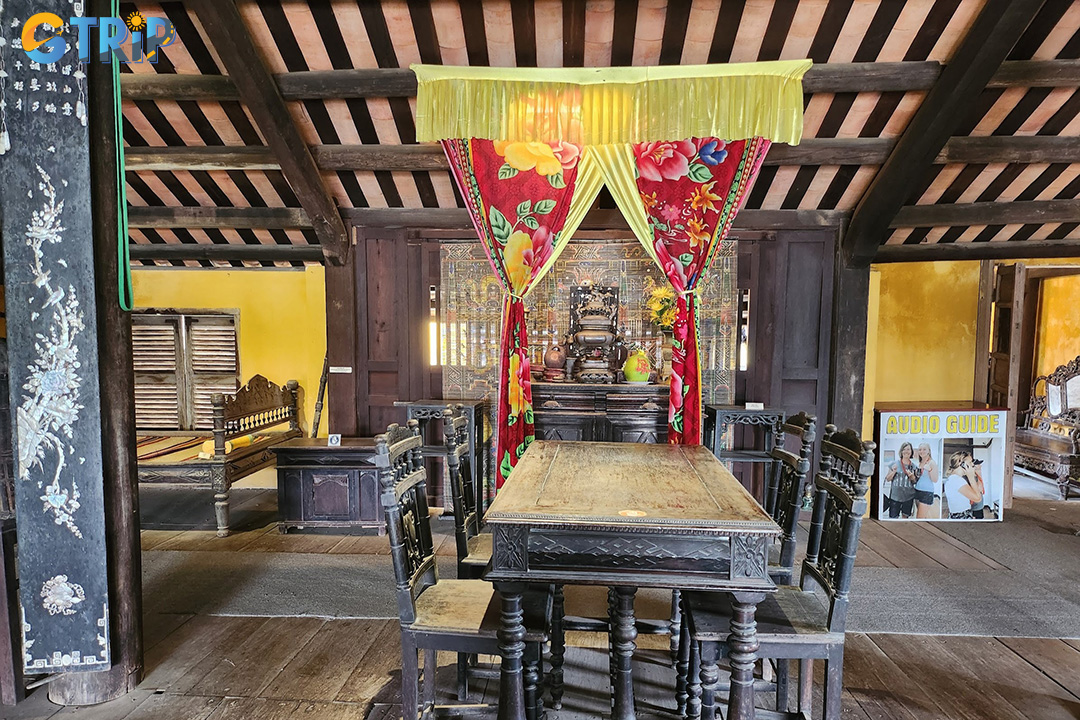
A 57-meter ironwood tube house with open-air courtyards, blending Chinese and Vietnamese design and reflecting Hoi An’s merchant heritage
Exhibits and cultural significance at the Museum of Folklore
The Museum of Folklore in Hoi An houses nearly 500 artifacts displayed across four main themes: folk visual arts, performing arts, traditional craft villages, and daily life. Housed in a 900 m² ancient wooden house, the museum showcases the cultural heritage of central Vietnam, with more artifacts reserved for future displays.
Entering from Nguyen Thai Hoc Street, visitors are introduced to silk-making, one of Hoi An’s most important historical industries. From the 15th to 19th centuries, Hoi An was a major Southeast Asian trading port where silk and textiles were widely exchanged. Today, the town remains famous for its tailoring tradition, with hundreds of shops crafting custom-made clothing for visitors.
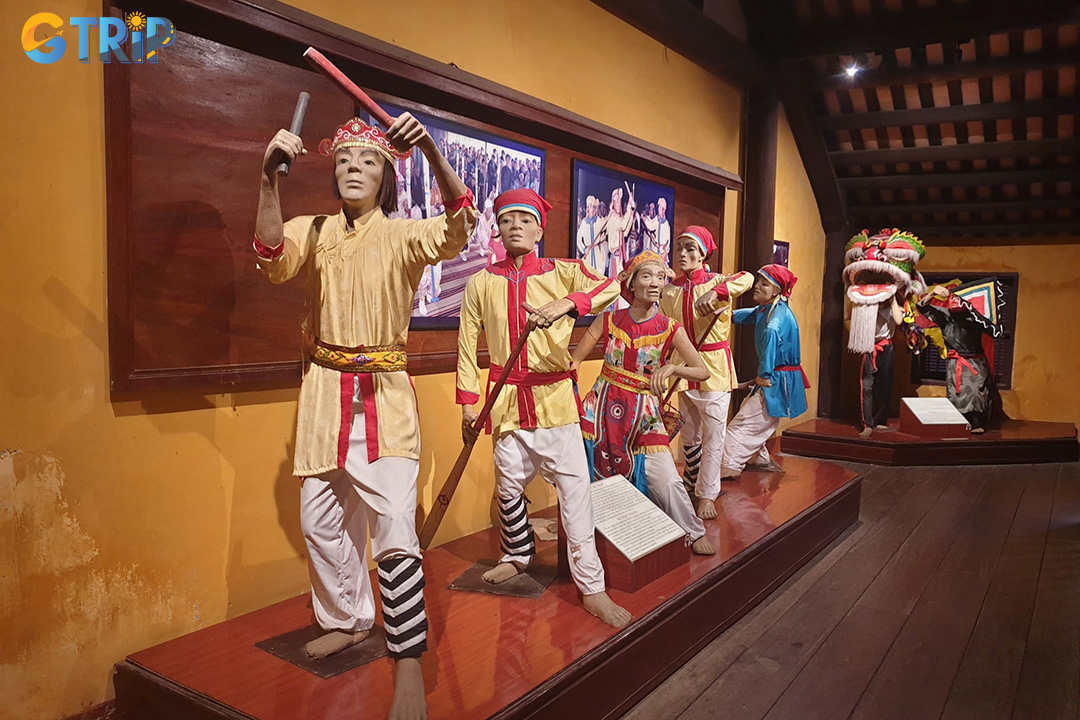
The museum also highlights traditional performing arts such as the Heavenly Dog Dance, Ba Trao singing, and Bai Choi. The Heavenly Dog (or Unicorn) Dance is performed during the Mid-Autumn Festival to honor ancestors and ward off evil spirits. Ba Trao singing is a ceremonial performance by fishermen during whale and fishing festivals, featuring rhythmic rowing movements and live music. Bai Choi, a traditional singing card game popular during Lunar New Year, was recognized by UNESCO in 2017 as an Intangible Cultural Heritage of Humanity.
Another section showcases traditional livelihoods and craft villages. Thanh Ha Pottery Village preserves centuries-old ceramics, while Kim Bong Carpentry Village is famed for its traditional boatbuilding and wood carving. Tailoring, rooted in the ancient Maritime Silk Road trade, remains one of the town’s most vibrant crafts today.
The final theme focuses on daily life and community culture. Visitors can explore recreated traditional house spaces for cooking, worshipping, and family gatherings, as well as displays of Vietnamese, Chinese, and Japanese costumes. The museum also highlights local wedding customs and features lantern-making and mask-painting exhibits with occasional hands-on workshops.
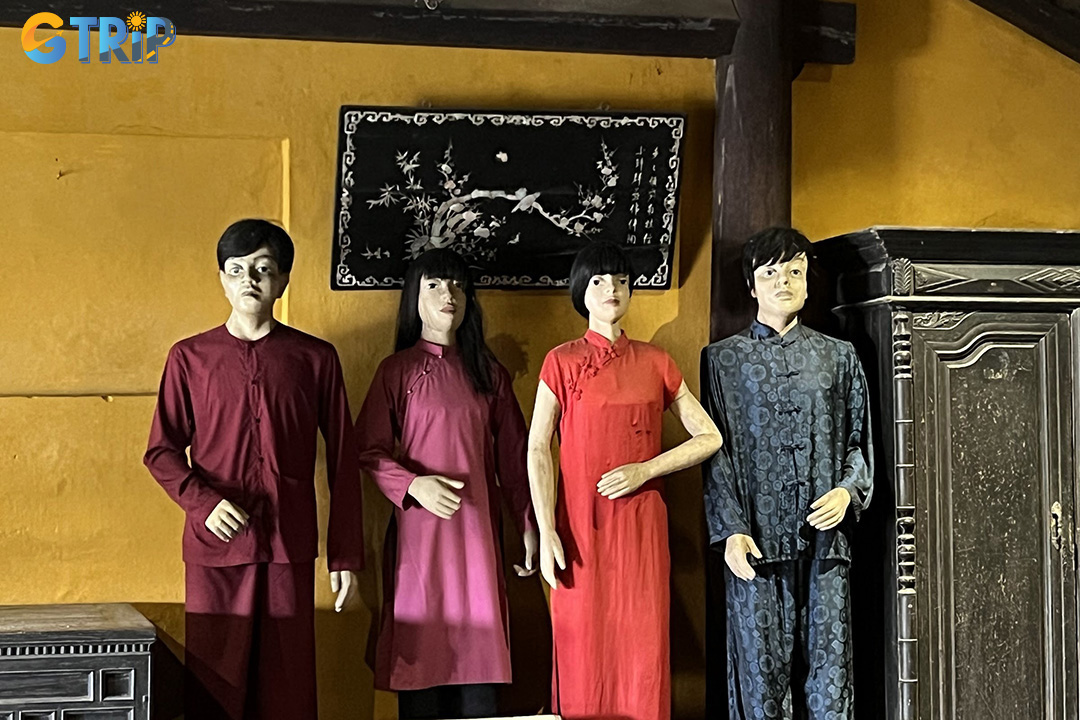
The Museum of Folklore showcases nearly 500 artifacts across themes of arts, crafts, performing traditions, and daily life
Things to do at the Museum of Folklore
A visit here is far more than looking at displays, it's an invitation to step into Hoi An's cultural heartbeat through hands-on exploration and quiet reflection. Here’s how to make the most of your time.
Explore the full two-floor exhibition
Give yourself the gift of time. Instead of rushing, wander slowly through all three main halls and across the two connecting courtyards. The museum's layout encourages a natural flow, with larger, more robust artifacts like looms and agricultural tools typically displayed on the ground floor and more delicate items. To fully appreciate the details and read the informative panels, allow at least 45-60 minutes for your visit. This will give you enough time to absorb the atmosphere without feeling hurried.
Learn through dioramas, panels, and Bai Choi insights
The museum excels at making complex traditions understandable and engaging for all visitors. Look for the charming dioramas that depict scenes from village life or festival performances. The well-written information panels, available in English and Vietnamese, provide fascinating context for the artifacts. Don't miss the multimedia displays explaining the rules and melodies of Bai Choi. These elements make Hoi An’s intangible heritage engaging and easy to understand, even without seeing a live performance.
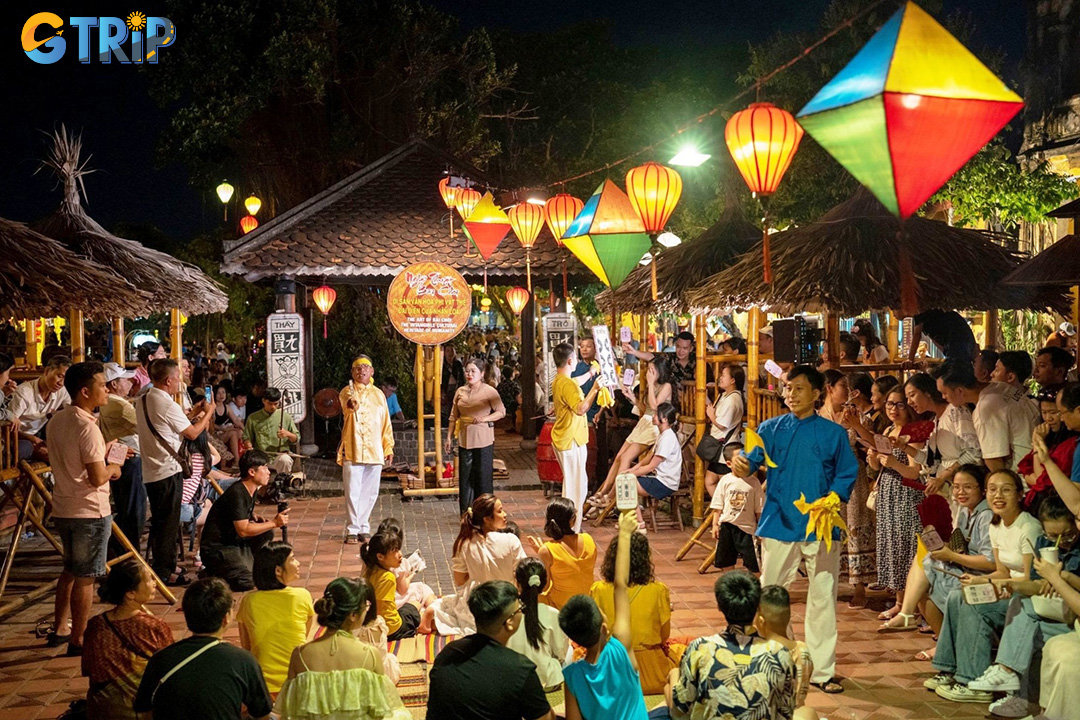
Through detailed dioramas and multimedia displays, the museum makes Hoi An’s rich intangible heritage engaging, accessible, and easy to understand for all visitors
Observe traditional craft displays and demonstrations
Keep an eye out for the static yet deeply evocative craft displays. You’ll find a traditional silk loom set up as if the weaver just stepped away, stacks of bamboo frames waiting to be transformed into lanterns, and pottery tools from Thanh Ha Pottery Village. If you're lucky, you might even witness a live demonstration. Occasionally, the museum invites artisans to practice their craft on-site, offering a rare and exciting opportunity to see the culture in motion. Watching a weaver's hands fly across the threads brings the exhibit to life in a way no text panel ever could.
Photograph the stunning heritage architecture
The building itself is one of the main attractions, so have your camera ready. It’s a photographer’s dream, filled with beautiful textures and dramatic lighting. Focus on capturing the interplay of light and shadow on the dark, polished wood beams. The internal courtyards offer stunning frames, with lush greenery contrasting against the aged timber. The view from the riverside entrance on Bach Dang Street, looking out onto the Thu Bon River, is another classic shot. For the best natural lighting, plan your visit during the morning or late-afternoon golden hour, when soft, warm light streams through the courtyards and windows.
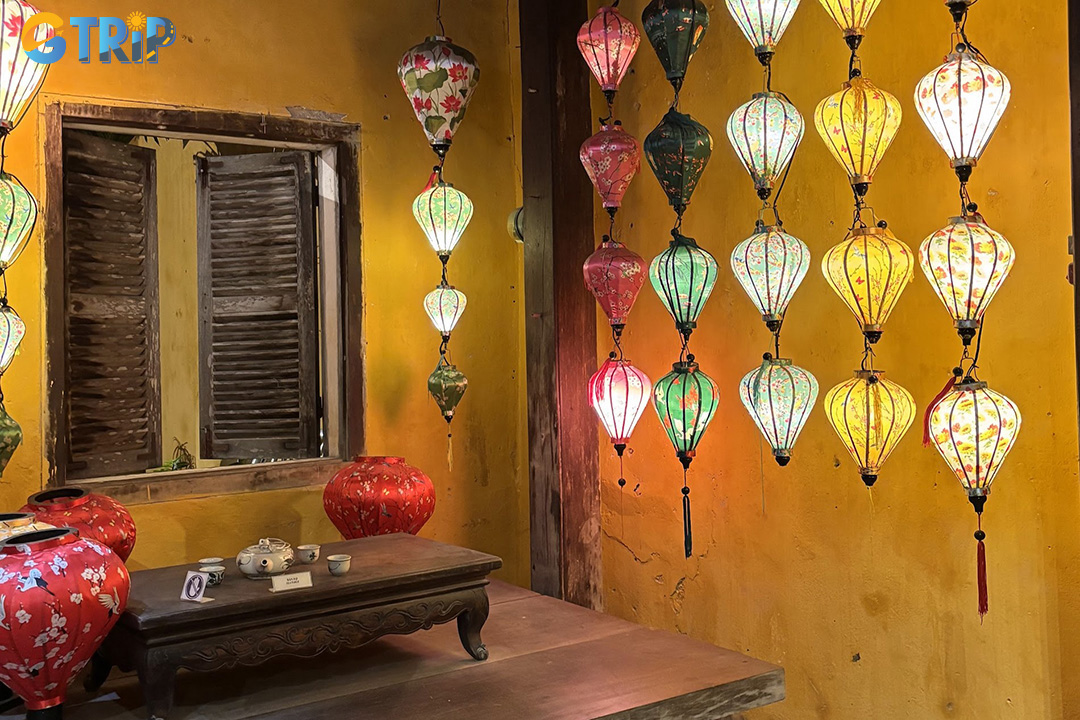
The museum’s historic wooden architecture, and riverside views create stunning photo opportunities, especially during the soft golden light of morning or late afternoon
How to get to the Museum of Folklore
Because the museum is located within the pedestrian-only zone of the Old Town, travel options vary depending on your starting point. Below are the most common routes.
From around Hoi An
If you are staying inside the Old Town, walking is the most convenient option.
- Distance: 300m-1km
- Time: 5-15 minutes
- Route: Follow Nguyen Thai Hoc Street or Bach Dang riverside
From Da Nang International Airport
From Da Nang International Airport, the museum is approximately 30 km away.
- Distance: ~30 km
- Time: 45-60 minutes
- Route: Vo Nguyen Giap → Lac Long Quan → Hai Ba Trung → Old Town
- Best option: Private car or taxi
From Da Nang City center
Traveling from central Da Nang is straightforward by road.
- Distance: ~28-30 km
- Time: 45-50 minutes
- Route: Coastal road or National Highway 1A
- Best option: Car, motorbike, or shuttle bus
Transportation options
Once you're in Hoi An, getting to the museum is straightforward, but remember the Old Town's pedestrian hours (typically 9:00 AM-11:00 AM and 3:00 PM-9:30 PM).
- Walking: The ideal method if you're inside or near the Old Town.
- Bicycle: A great, leisurely option. You can ride freely outside the restricted pedestrian hours and can easily park nearby.
- Motorbike: You can’t ride inside the pedestrian zone during restricted hours. Park your bike at a designated lot, such as the one near Hoi An Central Market, for a small fee (typically 5,000-10,000 VND).
- Taxi/Private car: These vehicles must drop you off at the edge of the pedestrian zone. A common drop-off point is the intersection of Tran Hung Dao and Nguyen Hue, from which it's a short 5-10 minute walk.
- Cyclo: For a classic Hoi An experience, hire a cyclo. The driver can take you on a scenic tour around the Old Town and drop you right at the museum's entrance.
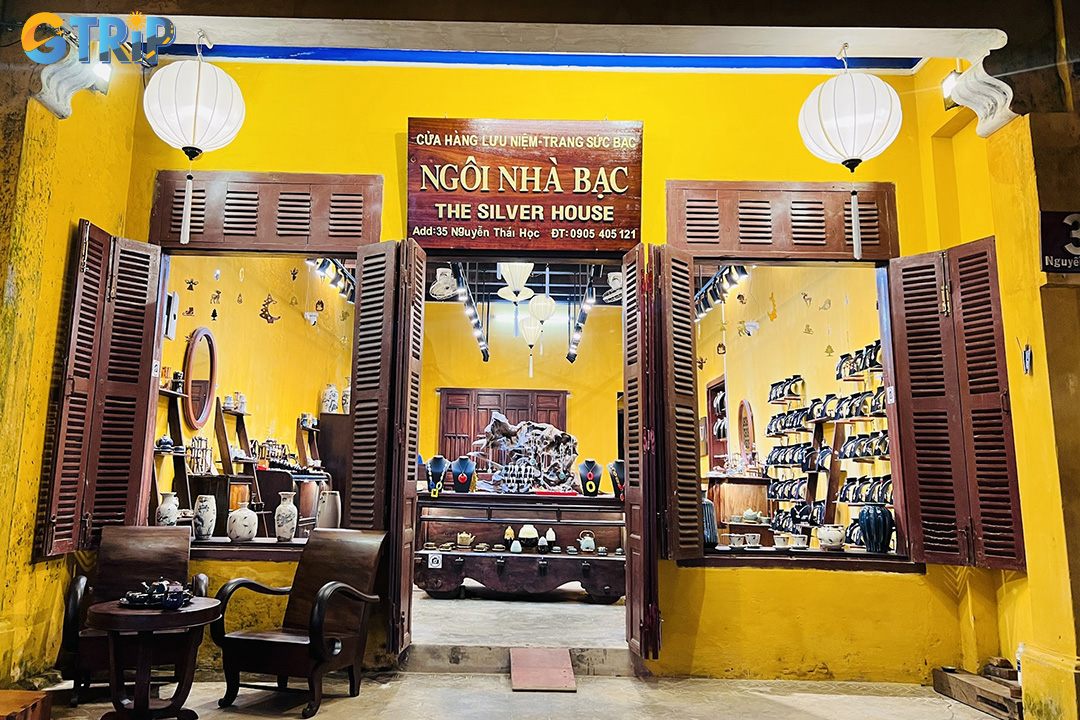
The museum is easily reached on foot, by bicycle, or via drop-off at the zone’s edge, with options like cyclo rides adding a classic local touch
Nearby attractions to the Museum of Folklore
The museum’s central location makes it the perfect anchor for a day of exploring Hoi An's most famous heritage sites. All of these landmarks are an easy and pleasant walk away, allowing you to seamlessly continue your cultural journey.
- Japanese Covered Bridge: The iconic symbol of Hoi An, this 18th-century bridge is a must-see for its unique architecture and historical significance. It beautifully reflects the cultural exchange between Japanese and Vietnamese communities during the town’s trading era.
- Cantonese Assembly Hall: One of the most ornate and impressive assembly halls, featuring stunning dragon sculptures and a tranquil garden. It stands as a testament to the influence of the Chinese merchant community in Hoi An.
- Tan Ky Ancient House: A beautifully preserved merchant's house that has been in the same family for over seven generations, showcasing a blend of architectural styles. Its original furnishings and layout offer insight into the lifestyle of wealthy traders in the past.
- Phung Hung Old House: Located very close to the Japanese Bridge, this two-story house is another exceptional example of Hoi An's traditional architecture. The structure harmoniously combines Vietnamese, Chinese, and Japanese design elements.
- Quan Cong Temple: A richly decorated temple dedicated to a revered Chinese general, known for its vibrant colors and intricate details. It remains an active place of worship and a symbol of loyalty and righteousness.
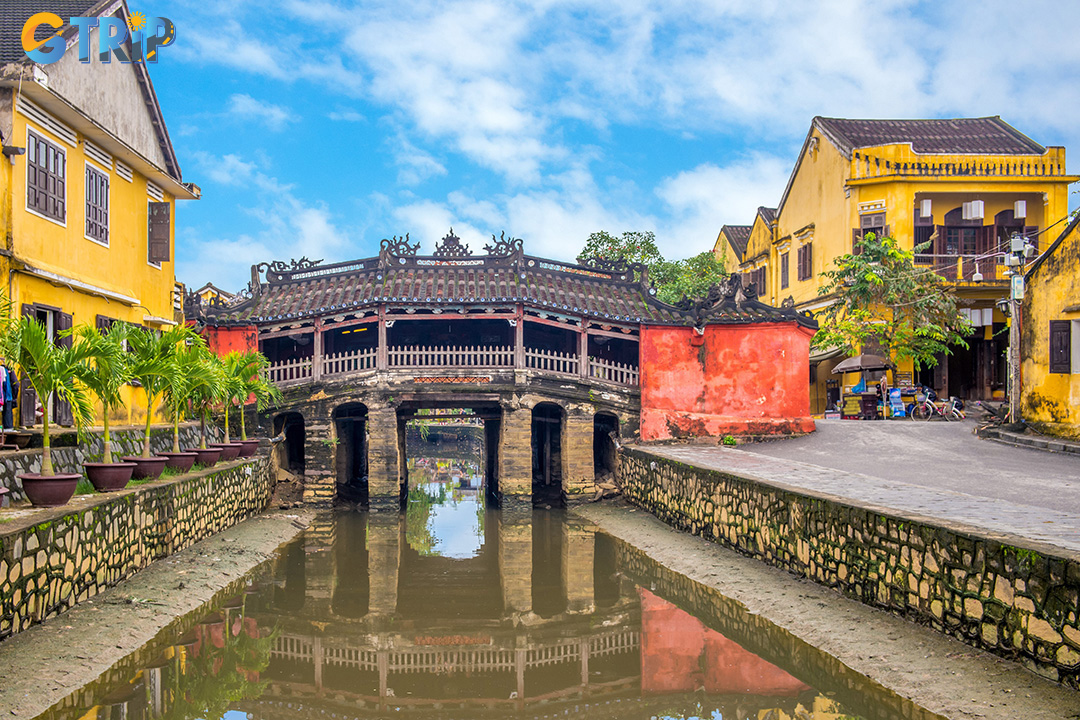
The museum is an ideal starting point for exploring nearby landmarks like the Japanese Covered Bridge and historic merchant houses on foot
Practical tips for visitors when visiting the museum
To ensure a smooth and enjoyable visit, keep these simple tips in mind. They will help you navigate the practicalities so you can focus on the incredible culture and history on display.
- Buy the combo ticket: This is the only way to gain entry and provides the best value, as it allows you access to four other heritage sites of your choice.
- Wear comfortable shoes: You will be doing a fair amount of walking through the Old Town and within the museum itself, which includes climbing steep, traditional wooden stairs.
- Be respectful: Remember this is a precious heritage site. Please refrain from touching the artifacts, use soft voices, and be mindful of other visitors.
- Check the time: Be aware of the Old Town's pedestrian-only hours, as they will affect vehicle access and how you get to and from the area.
- Bring a camera: The museum's architecture, courtyards, and exhibits are incredibly photogenic. Don't miss the chance to capture its unique beauty.
Plan by purchasing the combo ticket, wearing comfortable shoes, respecting the heritage space, and bringing a camera to fully enjoy your museum visit
The Museum of Folklore is more than just a collection of old objects, it's a vibrant narrative of a community's soul. It's where the echoes of fishermen’s songs, the scent of aged wood, and the spirit of master artisans come together to tell the story of Hoi An. By preserving both the tangible artifacts and the intangible traditions that define this region, the museum offers a window into a world that is at once historic and ever-present. It provides context to the colorful streets outside its doors, enriching your understanding and appreciation of this magical town. Let GTrip - Vietnam Travel Agency guide you through the heart of Hoi An and turn your cultural exploration into a truly unforgettable journey.
Custom Your Journey

Other Attractions

Can Gio Monkey Island in Ho Chi Minh City: Tickets, Things to Do & Travel Guide
Can Gio Monkey Island
Can Gio Monkey Island in Ho Chi Minh City offers a refreshing escape from the city’s buzzing motorbike chaos. Just a short distance from the center, Can Gio welcomes you with lush mangrove forests, winding waterways, and a fascinating history. Here, you can meet playful long-tailed macaques, drift through tranquil channels, and explore remnants of a wartime guerrilla base.
Can Gio Monkey Island in Ho Chi Minh City: Tickets, Things to Do & Travel Guide
Cu Chi Tunnels: History, Architecture, Things To Do & Travel Guide
Cu Chi Tunnels
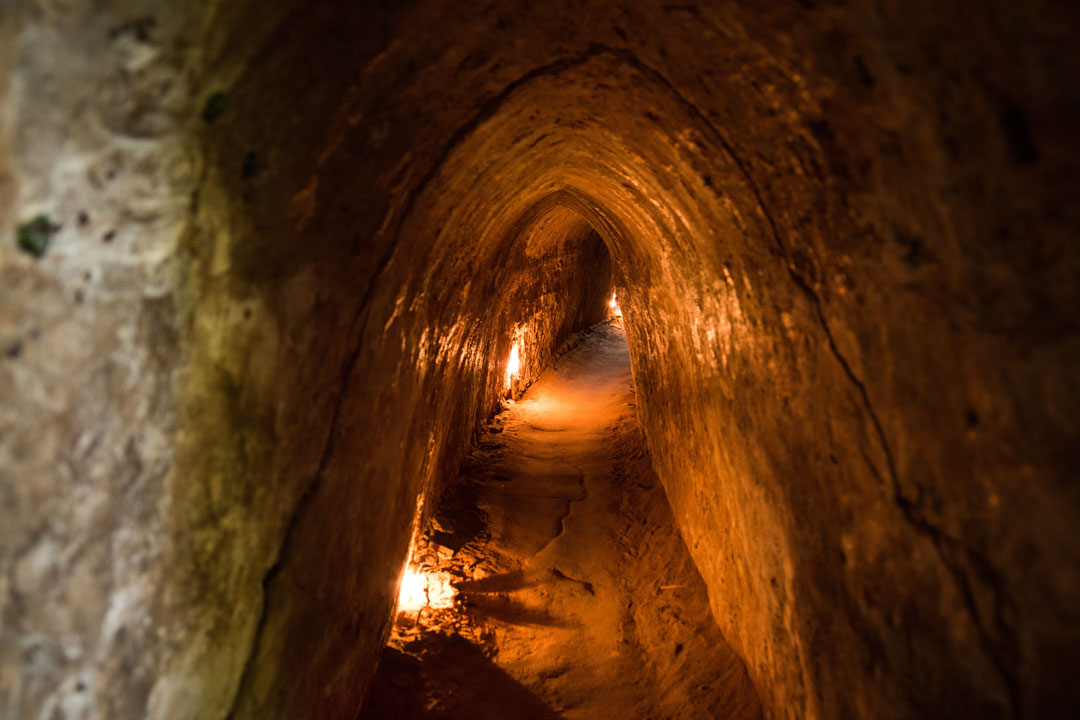
The Cu Chi Tunnels, located at TL15, Phu Hiep, Cu Chi District, Ho Chi Minh City, are a vast underground network of strategic passages, shelters, supply routes, and defensive traps.
Ho Chi Minh City
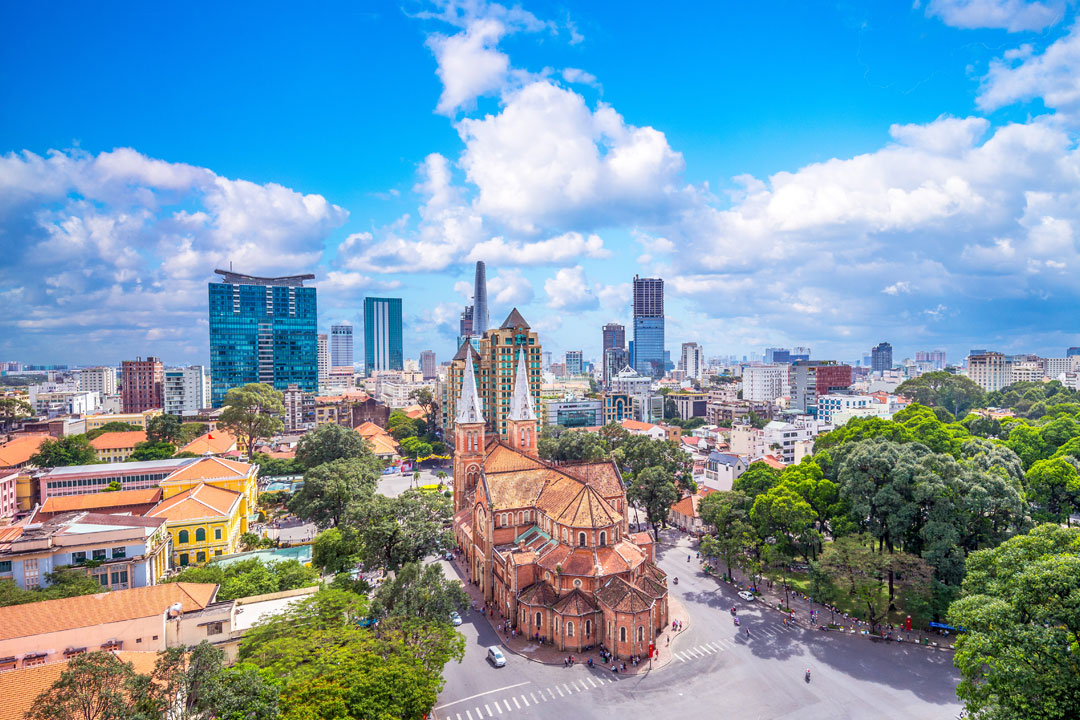
Ho Chi Minh City, known as the "Pearl of the Far East," attracts both domestic and foreign tourists with its unique and diverse destinations.
Tran Quoc Pagoda: History, Architecture, Significance & Travel Guide
Tran Quoc Pagoda
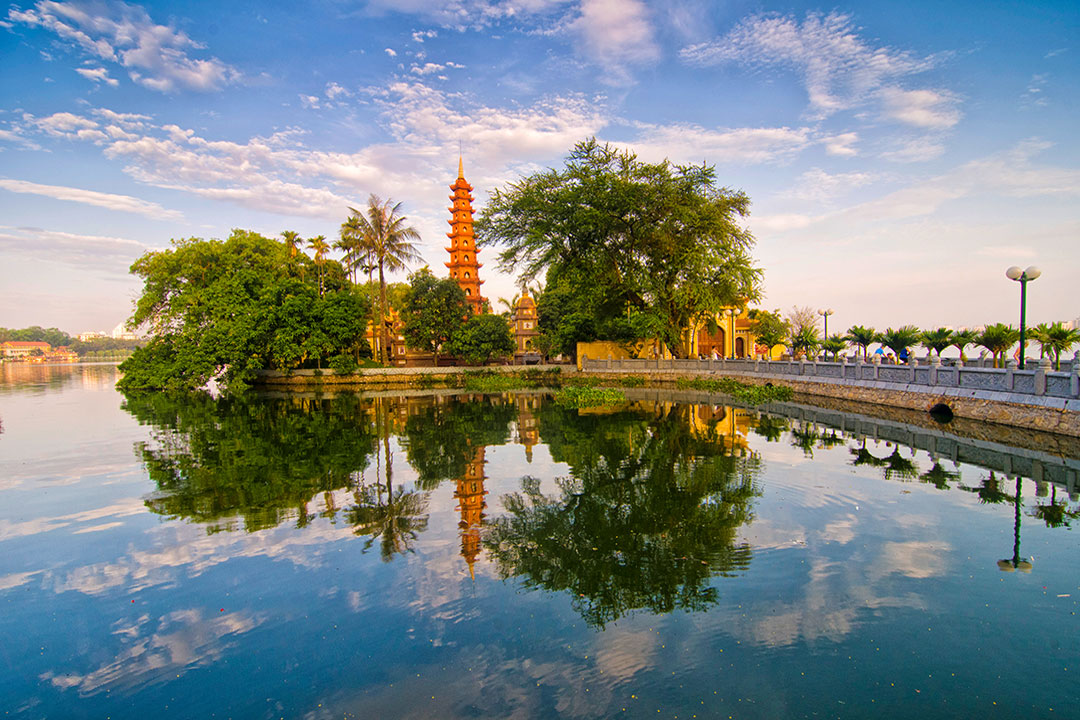
Nestled on the tranquil shores of West Lake, Tran Quoc Pagoda is the oldest Buddhist temple in Hanoi, with a history spanning over 1,500 years. Built in the 6th century under Emperor Ly Nam De, this sacred site reflects Vietnam’s Buddhist evolution while preserving its spiritual and architectural grandeur.