

Monday, October 19, 2026
Tran Phu Street in Hoi An is more than just a road. It’s the lively heart of the UNESCO-listed Hoi An Ancient Town. This historic artery, lined with iconic yellow-walled shophouses and flickering silk lanterns, transports you back in time to Hoi An's golden era as a bustling 17th-century trading port. Walking its length is a journey through history, culture, and unforgettable sensory experiences. Tran Phu Street offers a treasure trove of discoveries. In this ultimate GTrip guide, we'll explore its rich history, uncover the best attractions, detail how to get there, and provide essential tips. This is the only guide you'll need to unlock the magic of Hoi An's most famous street.
Table of Content
- Overview of Tran Phu Street in Hoi An
- History of Tran Phu Street in Hoi An
- Things to do at Tran Phu Street in Hoi An
- 1. Explore the Japanese Covered Bridge (Chua Cau)
- 2. Visit the historic Chinese assembly halls & temples
- 3. Step back in time at the well-preserved old houses
- 4. Discover local history at the heritage museums
- 5. Enjoy stunning views from a balcony cafe
- 6. Take a boat ride along the Hoai River
- 7. Shop for lanterns and bespoke tailored clothes
- 8. Experience the bustling atmosphere of Hoi An Market
- How to get to Tran Phu Street in Hoi An?
- Other attractions in Hoi An Ancient Town
- Practical tips for visitors
Overview of Tran Phu Street in Hoi An
- Location: Hoi An Ancient Town, Hoi An Ward (formerly Minh An Ward, Hoi An City, Quang Nam Province), Da Nang City
- Opening hours: All day
- Entrance fee: Free
- Best time to visit: Early morning to avoid crowds, or evening to experience the magical lantern-lit atmosphere
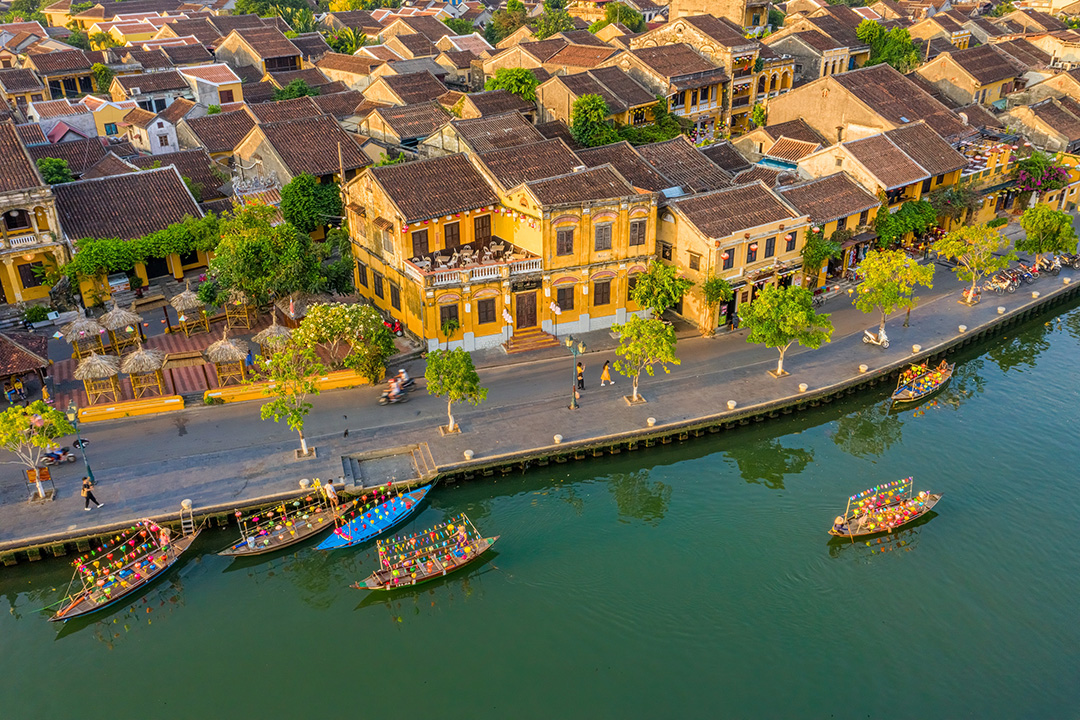
Running through the heart of Hoi An Ancient Town, Tran Phu Street captures the spirit of this former trading port in its most vivid form. In 2024, it was ranked 45th among the world’s 71 most beautiful streets as an acknowledgment of its timeless charm and global appeal. Lined with centuries-old Vietnamese, Chinese, and Japanese architecture, the street now hosts a vibrant mix of tailor shops, artisan boutiques, galleries, and cozy cafes, creating a scene that feels both historic and full of life.
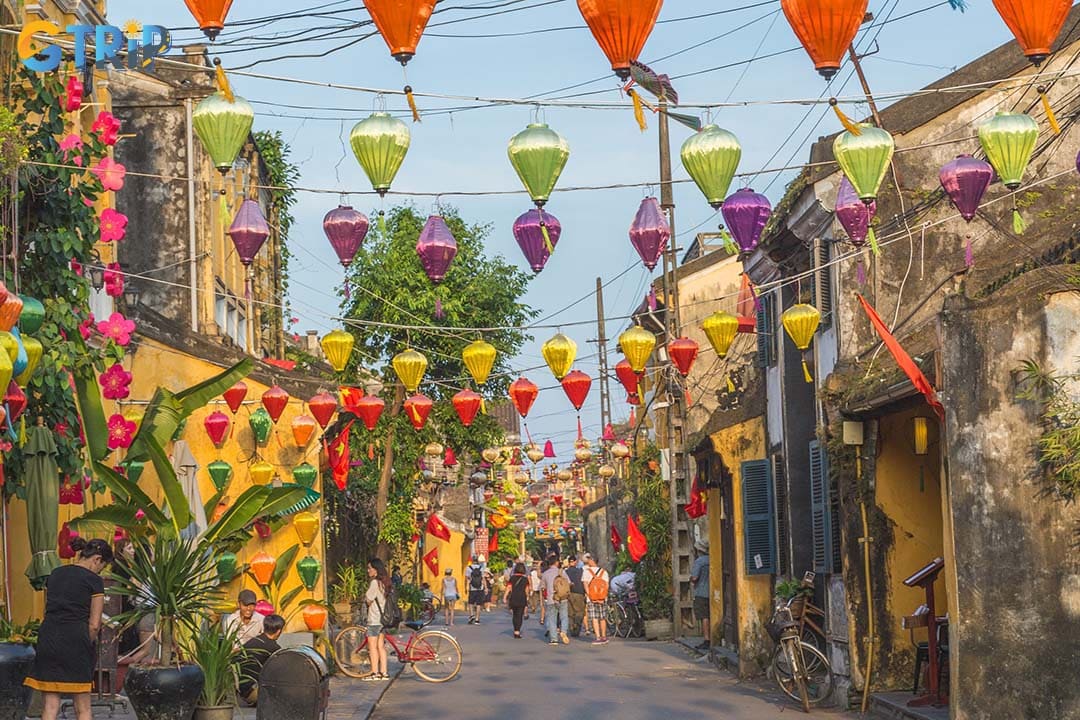
Tran Phu Street in Hoi An was ranked 45th among the world’s 71 most beautiful streets
History of Tran Phu Street in Hoi An
The history of Tran Phu Street is inextricably linked to the rise and fall of Hoi An itself. Dating back to the 15th century, it is the oldest road in the ancient town. During the 16th and 17th centuries, when Hoi An (then known as Faifo) flourished as a bustling international trading port, this street served as the ultimate commercial and cultural epicenter. Interestingly, Tran Phu Street originally ran directly along the banks of the Thu Bon River. It was only in later centuries, as alluvial soil gradually expanded the riverbank, that the parallel streets of Nguyen Thai Hoc and Bach Dang were formed to the south.
Because it was the original trading quarter, Tran Phu today boasts the highest density of heritage buildings in all of Hoi An. Historically, a small creek divided the street, prompting the Japanese community to build a bridge connecting their western settlement with the Chinese quarter on the east. That structure, the iconic Japanese Covered Bridge still marks the street's western end. Along this vibrant thoroughfare, wealthy merchants constructed magnificent shophouses and assembly halls, leaving behind a beautifully preserved fusion of Vietnamese, Japanese, and Chinese architectures.
As the political and cultural landscape of Vietnam shifted over the centuries, the street’s identity evolved with it. It was originally referred to locally as Duong Nhat Ban (Japanese Street). During the French colonial era, it was officially named Rue du Pont Japonais (Japanese Bridge Road). In the mid-20th century, it bore the name of Cuong De, a royal nationalist revolutionary. Finally, after the Vietnam War, the road was renamed Tran Phu in honor of the first General Secretary of the Communist Party of Vietnam.
Despite these changes, the soul of the street remains intact. The historic timber buildings that once served as bustling trading posts for silk, exotic spices, and fine ceramics have gracefully transitioned into art galleries, bespoke tailor shops, and charming restaurants. Thanks to meticulous preservation efforts recognized by UNESCO, walking down Tran Phu Street today feels like stepping directly into a vibrant, bygone era.
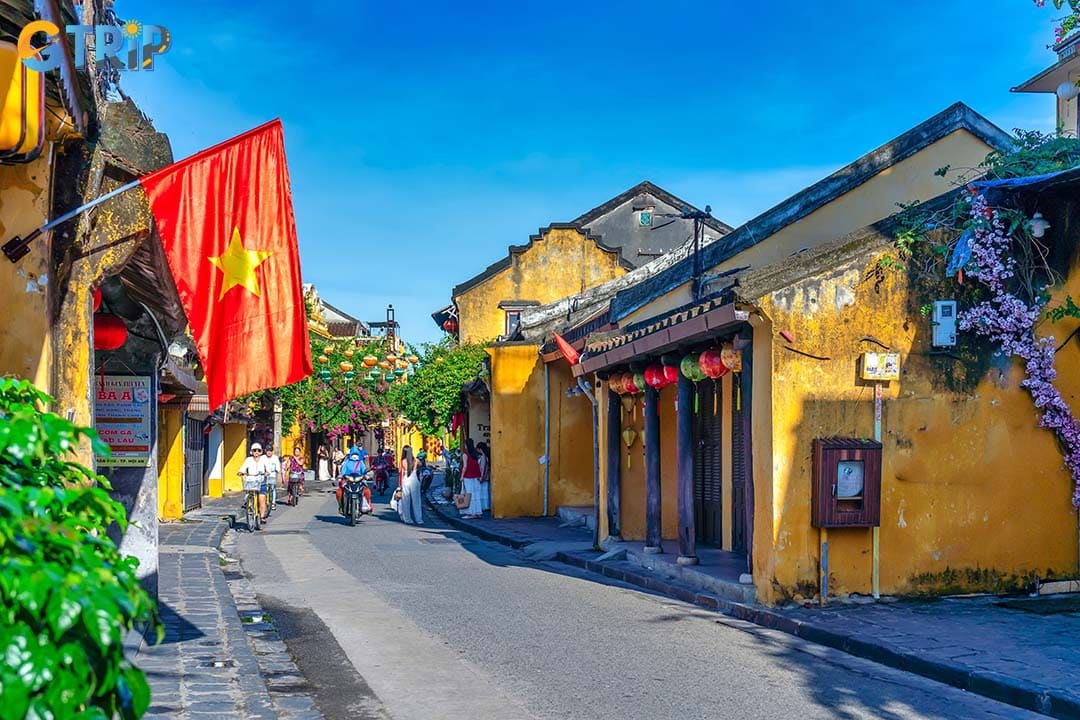
In history, Tran Phu Street played an important role as the ultimate commercial and cultural epicenter
Things to do at Tran Phu Street in Hoi An
Tran Phu Street, about 1 kilometer long, runs through the heart of Hoi An Ancient Town. It is a top spot to experience the monthly lantern festival and explore historical sites. Stroll along and discover:
1. Explore the Japanese Covered Bridge (Chua Cau)
No visit to Hoi An is complete without seeing the Japanese Covered Bridge, or Chua Cau. Located at the western end of Tran Phu Street where it meets Nguyen Thi Minh Khai Street, this bridge is the undisputed symbol of the city. Built in the early 17th century by the Japanese community to connect with the Chinese quarter, its design is a marvel of traditional architecture. Uniquely, a small temple dedicated to the northern deity Tran Vo Bac De is located inside the bridge, making it a place of both passage and worship. The bridge is adorned with intricate carvings and statues of a dog and a monkey at opposing ends, said to guard the bridge and symbolize the years construction began and ended.
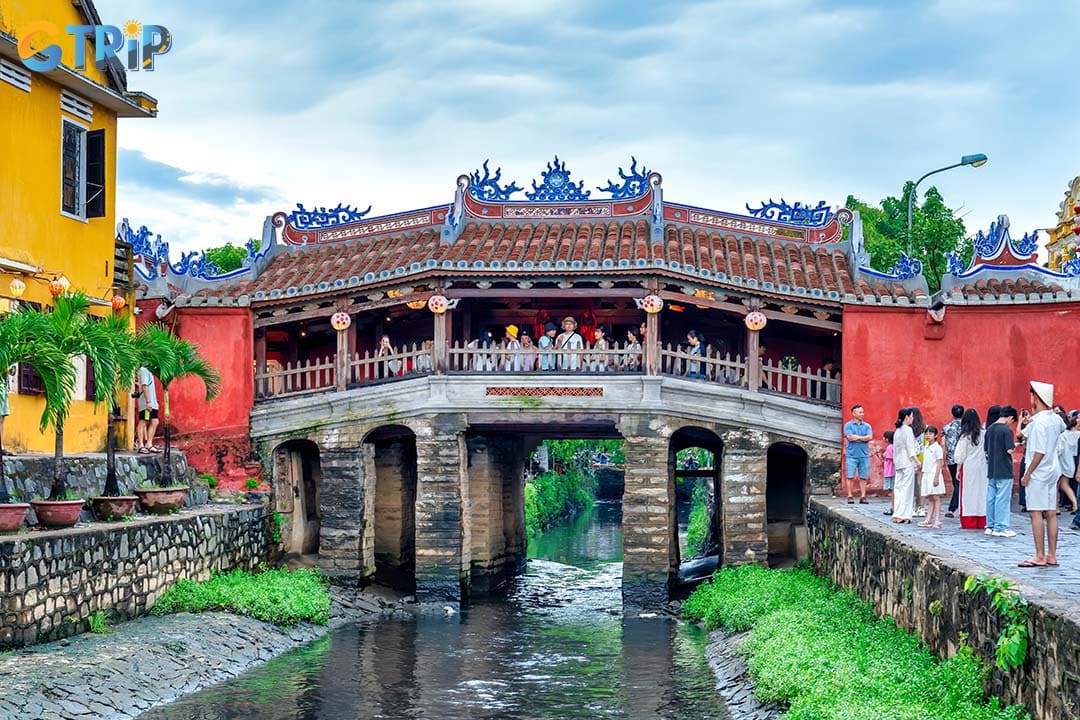
Japanese Covered Bridge on Tran Phu Street in Hoi An is one of the most popular attractions in the town
2. Visit the historic Chinese assembly halls & temples
Tran Phu Street in Hoi An Ancient Town is a living museum of Chinese heritage, lined with beautifully preserved assembly halls built by merchant communities from different provinces. These ornate structures were once vital social, cultural, and trading centers, today they remain some of the most atmospheric and photogenic spots in town.
Key assembly halls and temples to explore:
- Fujian Assembly Hall (No. 46 Tran Phu Street): The most impressive and colorful one - dedicated to Thien Hau (Goddess of the Sea), protector of sailors. Expect triple gates, dragon mosaics, mythical statues, and intricate wooden carvings inside a peaceful courtyard.
- Trung Hoa Assembly Hall (No. 64 Tran Phu Street): The shared “common house” for multiple Chinese groups (Fujian, Cantonese, Teochew, Hainan, Hakka). Thien Hau is the main deity here - a harmonious blend of traditions under one roof.
- Cantonese Assembly Hall (No. 176 Tran Phu Street): Striking dragon-and-carp sculptures greet you at the entrance. Built to honor Quan Cong (Guan Yu), the legendary general of loyalty and justice. Don’t miss the detailed ceramic reliefs inspired by Cantonese opera.
- Hainan Assembly Hall (No. 10 Tran Phu Street): A more solemn memorial to 108 Hainanese merchants tragically killed in 1851. It honors real historical figures as protectors of seafarers and traders, showcasing unique Hainan architectural style.
- Quan Cong Temple Hoi An (No. 24 Tran Phu Street): Right in front of the Central Market - a vibrant, incense-filled temple where all Chinese communities come to worship Quan Cong. Red lanterns, golden statues, and a powerful spiritual vibe.
- Minh Huong Communal House (No. 14 Tran Phu Street): The most important ancestral temple for descendants of Ming-origin Chinese settlers. A quiet, reverent place to honor early ancestors and feel the deep roots of Hoi An’s multicultural story.
Tip: Start from one end of Tran Phu Street and walk slowly toward the Japanese Covered Bridge, you’ll pass nearly all of them on the northern side. Perfect morning or late-afternoon stroll for culture, photos, and a real sense of Hoi An’s trading past.
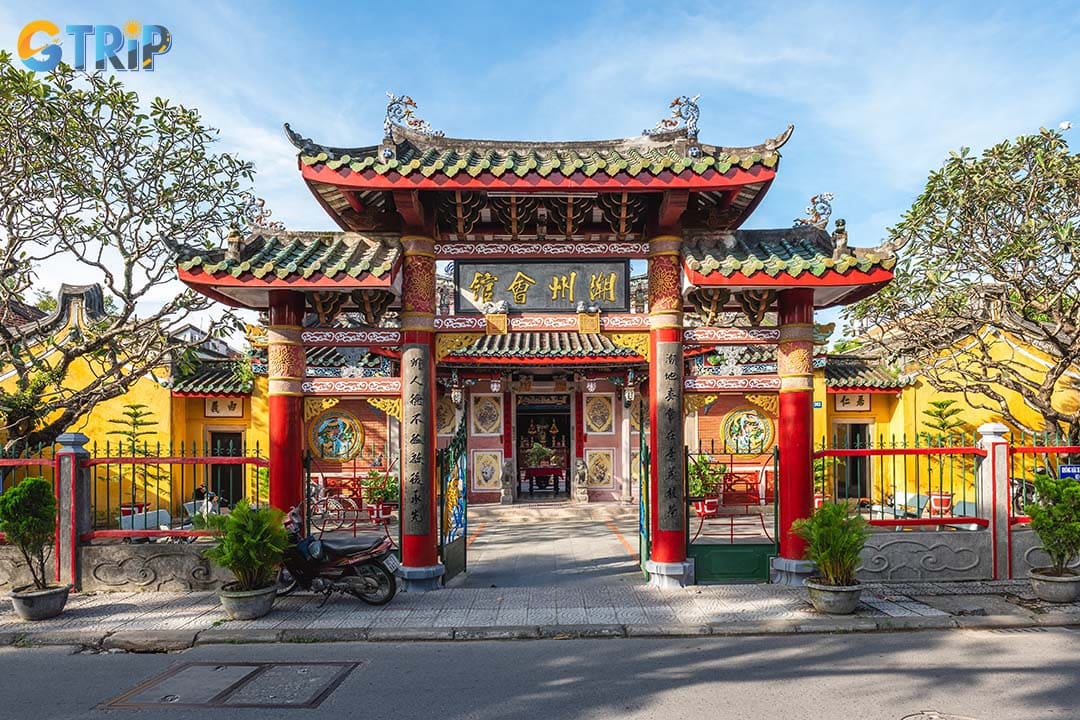
There are many historic Chinese assembly halls & temples on the Tran Phu Street that you can explore


3. Step back in time at the well-preserved old houses
Dozens of well-preserved ancient houses line Tran Phu Street, offering an intimate glimpse into the lives of prosperous merchants from centuries past. Many of these homes are still inhabited by the original families. The most famous examples accessible from the street include the Quan Thang Old House and Duc An Old House.
- Quan Thang Old House (No. 77 Tran Phu Street): A 150-year-old merchant house known for its intricate wood carvings, mother-of-pearl inlay, and traditional courtyard layout.
- Duc An Old House (No. 129 Tran Phu Street): A 180-year-old house known for its simple design and historical role as a former bookstore and patriotic meeting place, offering an authentic glimpse into local life.
4. Discover local history at the heritage museums
For those who want to delve deeper into the town's fascinating past, Tran Phu Street hosts several important museums. These institutions provide valuable context to the architectural marvels you see around you.
- Museum of Local Products (No. 57 Tran Phu Street): Showcases traditional crafts and local specialties, highlighting Hoi An’s cultural and economic life.
- Museum of Trade Ceramics (No. 80 Tran Phu Street): Displays ceramic artifacts from international trade routes, reflecting Hoi An’s role as a historic trading port.
- Museum of Sa Huynh Culture (No. 149 Tran Phu Street): Features ancient relics from the Sa Huynh civilization, offering insight into early inhabitants of the region.
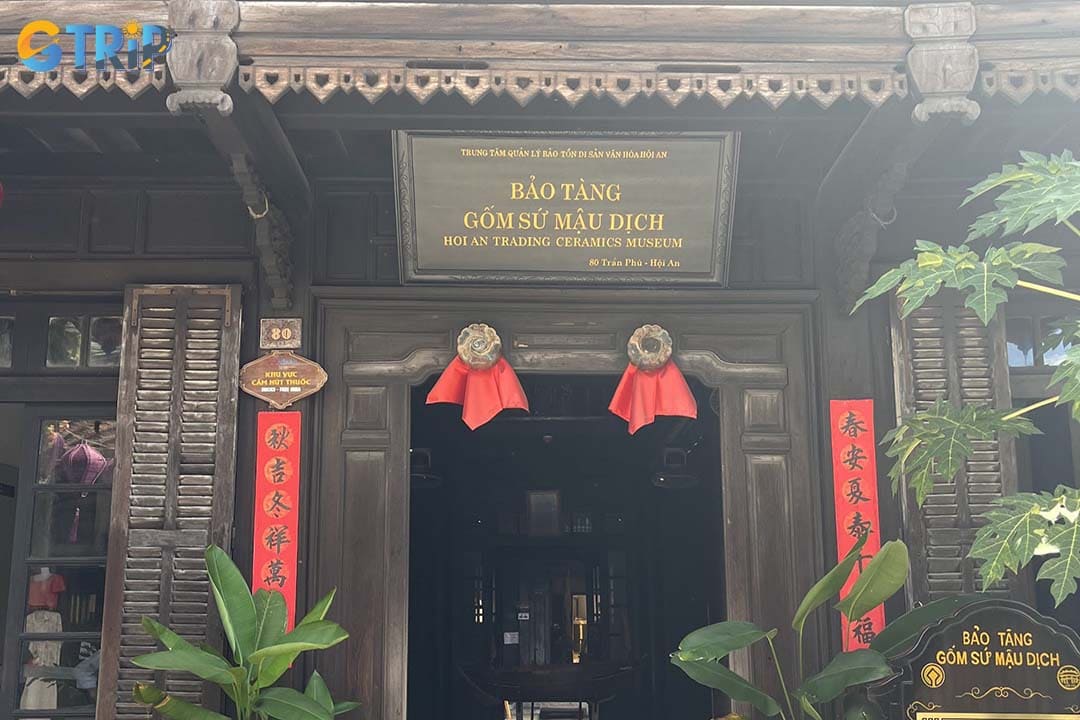
For those who are interested in visiting the museums, there are 3 museums on Tran Phu Street
5. Enjoy stunning views from a balcony cafe
One of the best ways to appreciate the beauty of Tran Phu Street is from above. The street and its surroundings are dotted with charming cafes, many of which feature hidden rooftop terraces offering breathtaking views.
- 92 Station Restaurant & Cafe (92 Tran Phu Street): Another great rooftop option known for its excellent views and relaxed atmosphere, perfect for watching the sunset paint the sky over the Ancient Town. It offers a spacious setting to unwind with a coffee or a cocktail.
- Faifo Cafe (130 Tran Phu Street): Renowned for its stunning rooftop terrace that provides a panoramic view over the ancient town's iconic yellow houses and weathered tiled roofs. It's the quintessential spot for photographers looking to capture the spirit of Hoi An from above.
- Reaching Out Teahouse (131 Tran Phu Street): This is a unique and tranquil haven of silence where guests order using small wooden blocks and communicate through gestures and notes. Staffed by hearing and speech-impaired individuals, it's a beautiful social enterprise offering exquisite teas and coffees in a serene, historic setting.
- Mot (150 Tran Phu Street): Famous for its signature herbal tea served refreshingly cold in a cup adorned with a lotus leaf and flower, Mot is a photogenic and perfect pitstop for a hot day. It's more of a street-side experience than a rooftop view, but it's an essential Tran Phu institution.
6. Take a boat ride along the Hoai River
While Tran Phu Street doesn't directly border the river, it runs parallel to it, and numerous small alleys provide easy access to the bustling waterfront of Bach Dang Street. From there, you can hire a traditional wooden sampan for a boat ride along the Hoai River. This offers a completely different perspective of the Ancient Town, especially in the evening. As dusk settles, the riverside buildings light up, and lanterns cast a warm, magical glow on the water. For a truly unforgettable experience, time your visit with the Hoi An Lantern Festival, held on the 14th day of each lunar month, when thousands of candle-lit paper lanterns are floated down the river.
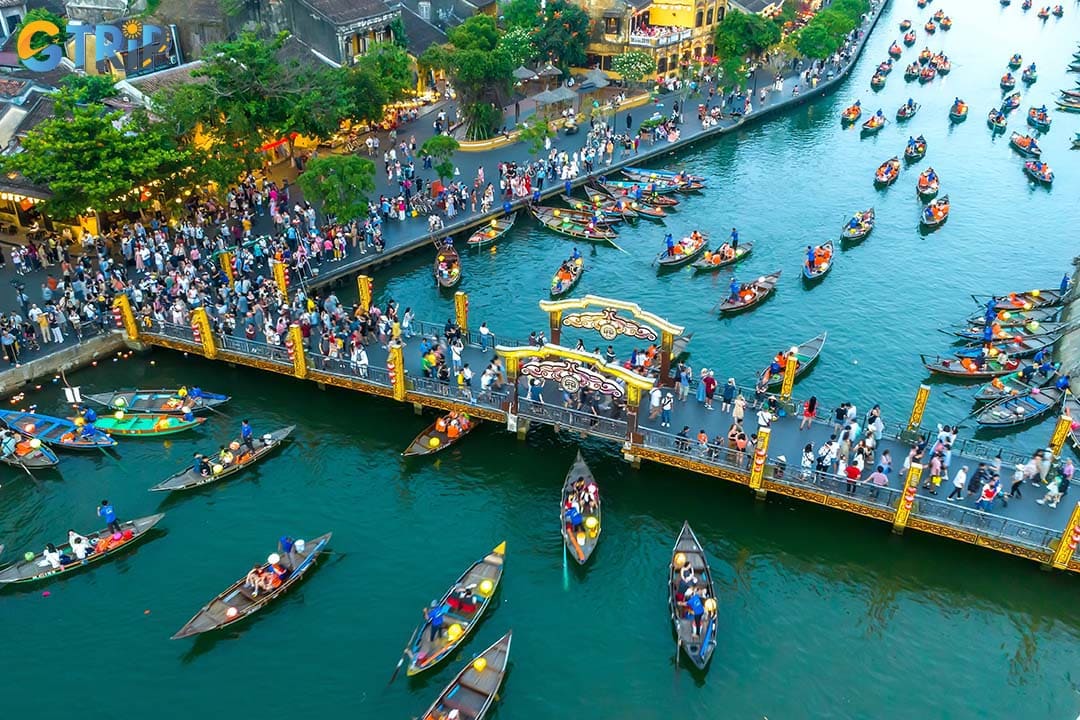
One of the most must-do activities in Hoi An is taking a boat ride on the Hoai River
7. Shop for lanterns and bespoke tailored clothes
Tran Phu Street is one of the best places in Hoi An to shop for iconic souvenirs and custom-made fashion. Colorful lantern shops line the street, offering everything from small decorative pieces to large handcrafted silk lanterns, perfect as gifts or keepsakes.
You’ll also find numerous tailor shops where you can have clothes made to measure in just 24-48 hours. From elegant dresses to sharp suits, the process is quick, affordable, and highly personalized. Many shops display fabric samples right at the entrance, making it easy to browse and choose your style on the spot.
8. Experience the bustling atmosphere of Hoi An Market
At the eastern end of the street, you'll find the Hoi An Central Market, a vibrant, chaotic, and utterly authentic trading hub that has been active for centuries. The market is a feast for the senses, with sections dedicated to fresh produce, aromatic spices, colorful silks, and local handicrafts. The real highlight for many, however, is the indoor food hall. Here, you can pull up a stool at a small stall and savor some of Hoi An’s most famous culinary creations, prepared fresh right in front of you.
- Cao lau: Hoi An's signature noodle dish, featuring thick, chewy noodles, slices of fatty pork, fresh greens, and crispy pork crackling. Legend says the authentic version must be made with water from the ancient Ba Le Well.
- Mi quang: A popular Quang Nam Province noodle dish with wide rice noodles, a small amount of rich turmeric-infused broth, shrimp, pork, a quail egg, and topped with peanuts and a crispy rice cracker.
- Banh beo: Steamed rice cakes served in tiny bowls, topped with a savory mixture of dried shrimp, crispy pork skin, and shallots, served with a sweet and tangy fish sauce.
- Banh trang cuon thit heo: A DIY spring roll where you wrap slices of boiled pork, fresh herbs, and vegetables in a delicate sheet of rice paper before dipping it in a pungent fermented fish sauce.
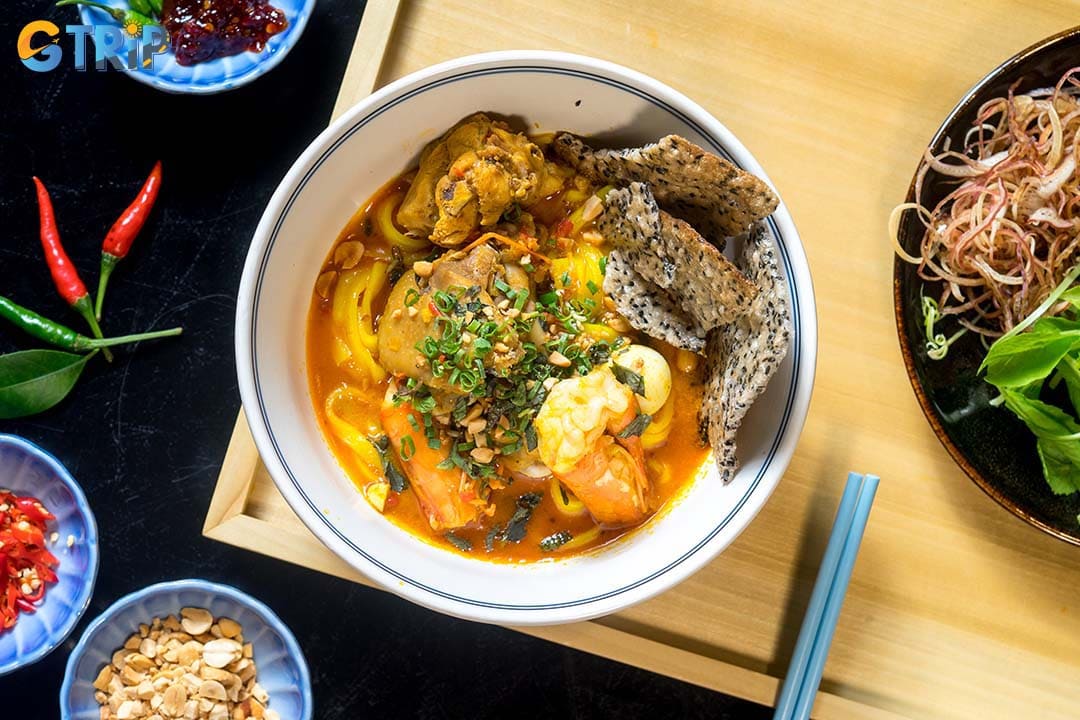
Mi quang is one of the most popular dishes in Hoi An that you should not miss
How to get to Tran Phu Street in Hoi An?
Located in the heart of the Old Town, Tran Phu Street is highly accessible for all visitors. Below is a quick guide on the best routes and transportation options depending on your starting point.
From Da Nang International Airport
Traveling directly from the airport to Tran Phu Street in Hoi An is a straightforward journey, highly convenient for both international and domestic arrivals looking to reach the old town quickly.
- Distance: Approximately 30 kilometers
- Travel time: Around 45 to 60 minutes, depending on traffic
- Routes: Nguyen Van Linh St -> Vo Nguyen Giap coastal road -> Hai Ba Trung St -> walk to Tran Phu St
- Optimal option: A pre-booked private car or minivan is the best choice for a direct, hassle-free transfer, especially if you carry heavy luggage
From Da Nang City center
If you are staying in downtown Da Nang, making a trip to Tran Phu Street is very popular. You will enjoy a beautiful coastal ride before reaching the ancient town.
- Distance: About 28 - 30 kilometers
- Travel time: 45 - 50 minutes
- Routes: Follow Vo Nguyen Giap St or Le Van Hien St straight to Hoi An city center, then park nearby and walk to Tran Phu St
- Optimal option: Riding a motorbike is great for sightseeing, while a taxi or Grab car offers a comfortable, air-conditioned ride
From around Hoi An Ancient Town
Since Tran Phu Street is located right in the heart of Hoi An Old Town, reaching it from nearby central neighborhoods like former Cam Pho, Minh An, and Son Phong Wards is extremely easy.
- Distance: Less than 1.5 kilometers
- Travel time: 5 to 15 minutes
- Routes: Navigate through the Old Town's interconnected alleys and walking streets directly to Tran Phu
- Optimal option: Walking is the best choice. Cycling is also highly popular and convenient as the terrain is flat and easy to navigate
Transportation options
Almost all road vehicles can easily reach the areas surrounding Tran Phu Street, except for public buses, which are unavailable in the town center. If you ride a motorbike, you must park outside the walking zone at Phan Chu Trinh St, Hoang Dieu St, Central Market, or Quan Cong Temple (fee: 5,000-10,000 VND/time).
- Walking: The ideal way to explore the Ancient Town. The pedestrian-only hours make it safe and relaxing to stroll and soak in the atmosphere.
- Bicycle: Highly popular and effortless to cycle around the Old Town.
- Cyclo (Xich Lo): A traditional and relaxing way to see the sights. Let a cyclo driver pedal you slowly through the streets for a unique, leisurely tour.
- Hotel shuttle bus: Many hotels offer free round-trip transfers; check the schedule in advance.
- Motorbike: Convenient, but requires parking at designated lots.
- Taxi/Ride-hailing: Good for trips to/from Da Nang or destinations outside the immediate town center, like An Bang Beach or the vegetable villages.
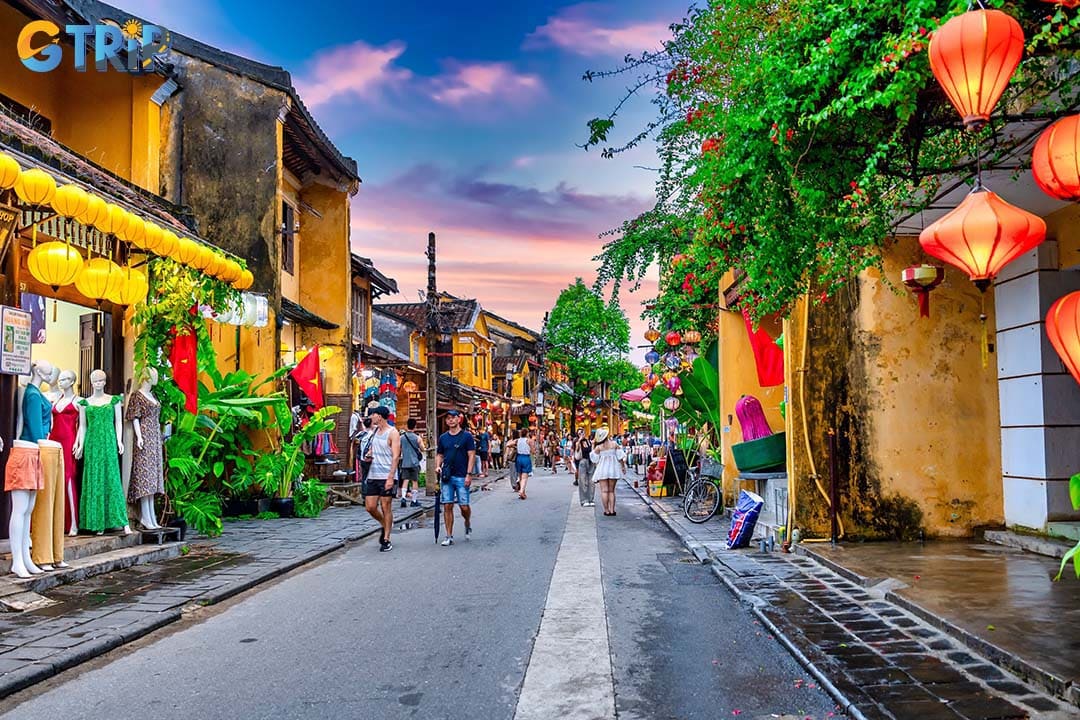
You can easily reach Tran Phu Street in Hoi An from many places
Other attractions in Hoi An Ancient Town
- Hoi An Night Market: Located on Nguyen Hoang Street, just across the An Hoi Bridge. This bustling market comes alive after sunset and is a fantastic place to shop for lanterns, souvenirs, and indulge in a wide variety of delicious street food.
- An Hoi Bridge: This pedestrian bridge connects the main part of the Ancient Town to An Hoi Islet. It's a popular spot for photos, offering beautiful views of the lantern-lit boats on the Hoai River, especially at night.
- Bach Dang Street: Running parallel to Tran Phu Street along the Hoai River, this street is lined with riverside restaurants, trendy bars, and boat docks. It’s the perfect place for a romantic evening stroll and dinner with a view.
- Hoi An Central Market's Food Hall: An authentic culinary paradise where you can sample a wide variety of local Hoi An specialties like Banh Mi, White Rose Dumplings, and more, all at incredibly affordable prices.
- My Son Sanctuary: A UNESCO World Heritage site featuring a cluster of abandoned and partially ruined Hindu temples constructed between the 4th and 14th centuries by the Champa Kingdom.
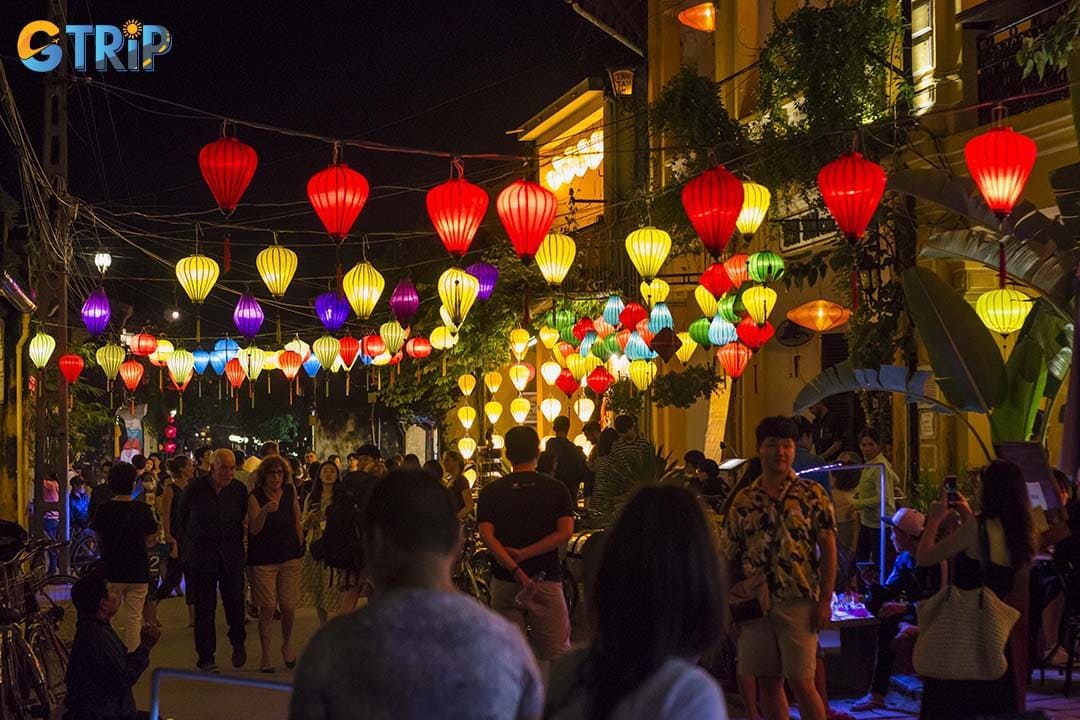
If visiting Tran Phu Street in Hoi An at night, you can spend time exploring the Hoi An Night Market to enjoy the atmosphere
Practical tips for visitors
- Buy an Ancient Town entrance ticket: A single ticket (currently 120,000 VND for international visitors) grants you access to five different heritage sites, including old houses, assembly halls, and museums on Tran Phu Street. The fee directly contributes to the town's ongoing preservation.
- Dress respectfully: When visiting temples, assembly halls, and other places of worship, show respect by covering your shoulders and knees. A light scarf or shawl is useful to carry for this purpose.
- Mind the vehicle-free hours: The town center, including Tran Phu Street, is closed to motorized traffic from 9:00 AM to 11:00 AM and again from 3:00 PM to 9:30 PM. Plan your taxi or Grab drop-offs accordingly.
- Wear comfortable shoes: You will be doing a lot of walking on old cobblestone and uneven pavement. Comfortable walking shoes or sandals are essential for a pleasant experience.
- Bargain politely: When shopping at markets or street stalls, bargaining is part of the local culture. However, always do it with a smile and a respectful attitude.
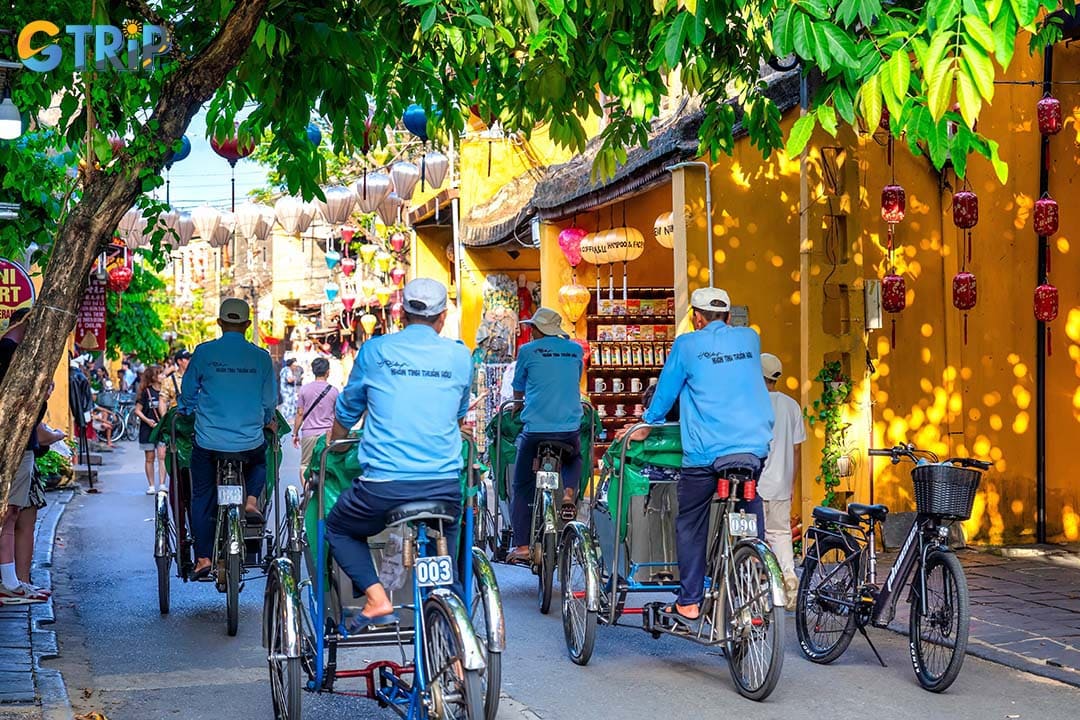
Remember practical tips to have a good trip to Tran Phu Street in Hoi An
In summary, Tran Phu Street in Hoi An is far more than just a thoroughfare. It is the living, breathing soul of Hoi An’s priceless heritage. A journey along its 1 km length is a passage through time, connecting you with centuries of history, culture, and commerce. No trip to Vietnam is truly complete without experiencing the unique and enduring magic of this remarkable street. A walk down Tran Phu Street is not just a tour because it's an essential memory in the making. Let’s discover this amazing street with GTrip.
Custom Your Journey

Other Attractions

Can Gio Monkey Island in Ho Chi Minh City: Tickets, Things to Do & Travel Guide
Can Gio Monkey Island
Can Gio Monkey Island in Ho Chi Minh City offers a refreshing escape from the city’s buzzing motorbike chaos. Just a short distance from the center, Can Gio welcomes you with lush mangrove forests, winding waterways, and a fascinating history. Here, you can meet playful long-tailed macaques, drift through tranquil channels, and explore remnants of a wartime guerrilla base.
Can Gio Monkey Island in Ho Chi Minh City: Tickets, Things to Do & Travel Guide
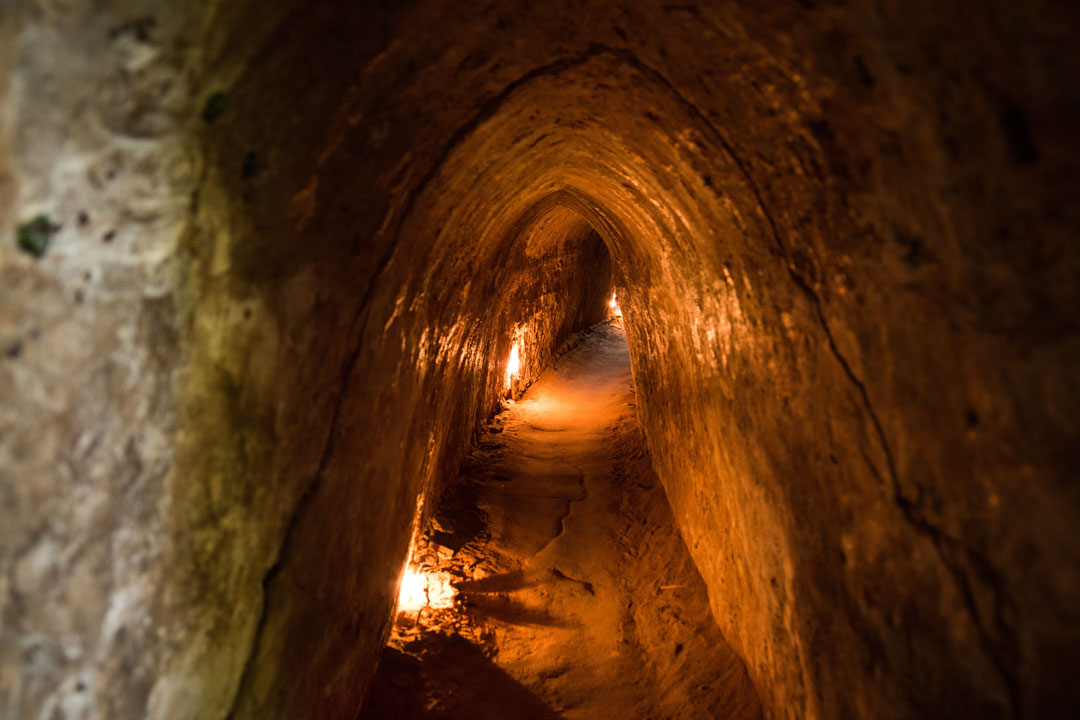
Cu Chi Tunnels: History, Architecture, Things To Do & Travel Guide
Cu Chi Tunnels
The Cu Chi Tunnels, located at TL15, Phu Hiep, Cu Chi District, Ho Chi Minh City, are a vast underground network of strategic passages, shelters, supply routes, and defensive traps.
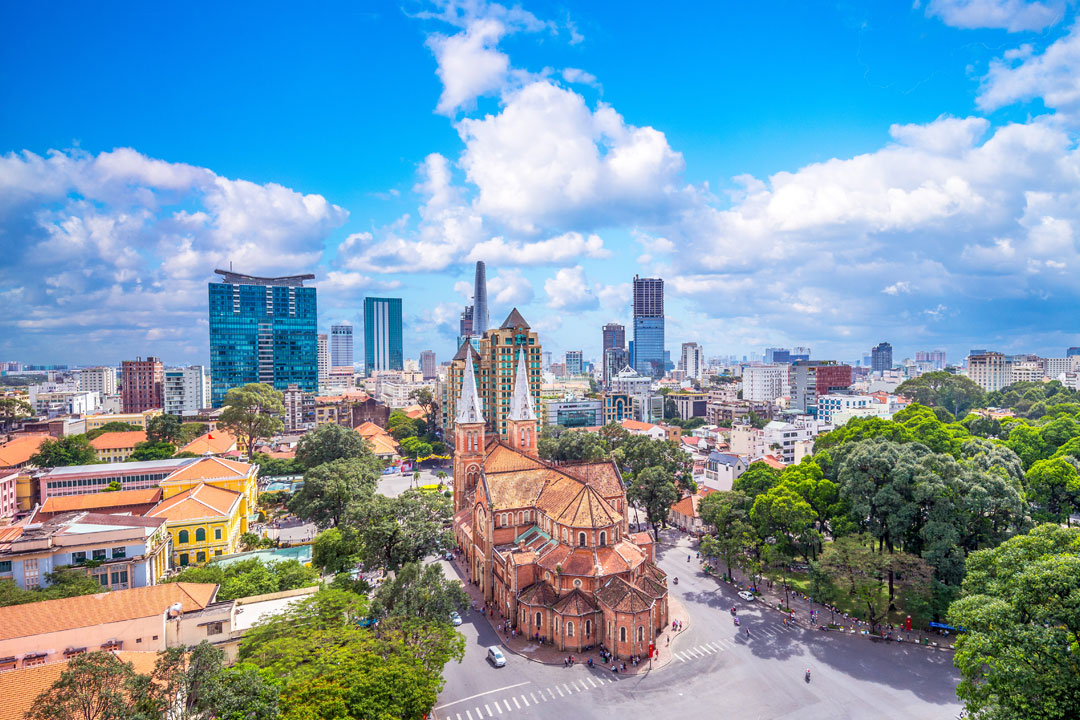
Ho Chi Minh City
Ho Chi Minh City, known as the "Pearl of the Far East," attracts both domestic and foreign tourists with its unique and diverse destinations.
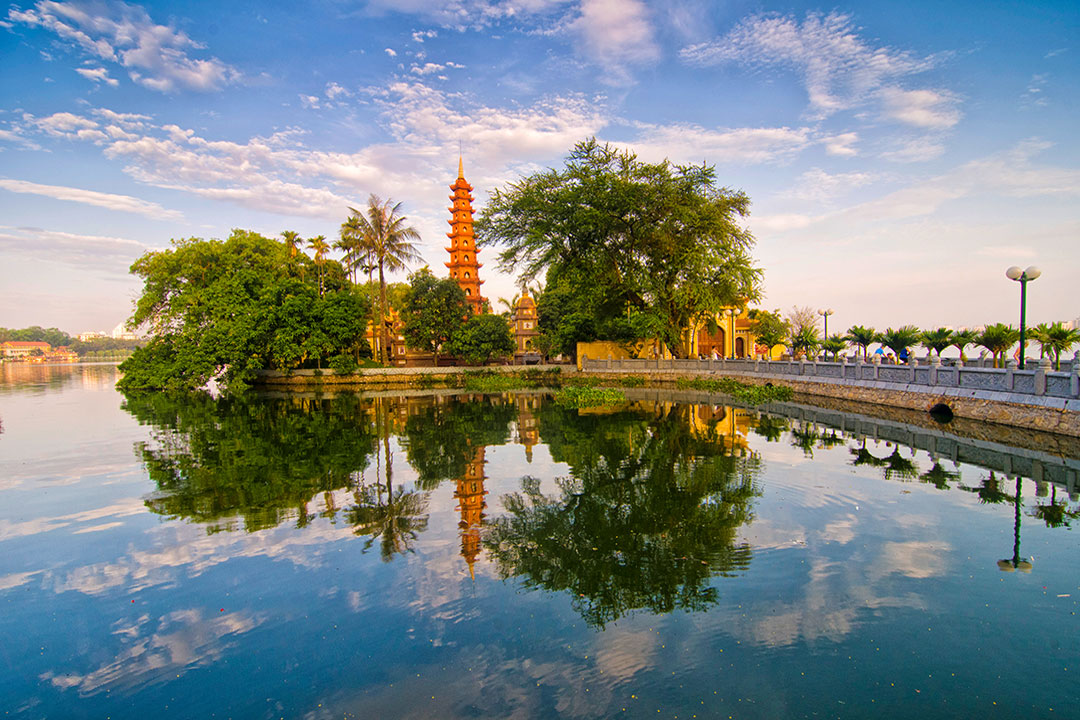
Tran Quoc Pagoda: History, Architecture, Significance & Travel Guide
Tran Quoc Pagoda
Nestled on the tranquil shores of West Lake, Tran Quoc Pagoda is the oldest Buddhist temple in Hanoi, with a history spanning over 1,500 years. Built in the 6th century under Emperor Ly Nam De, this sacred site reflects Vietnam’s Buddhist evolution while preserving its spiritual and architectural grandeur.