


Mar - 07 - 2026
Hoa Nghiem Cave is a peaceful spiritual site hidden within the famous Marble Mountains of Da Nang. While many visitors head straight to the dramatic Huyen Khong Cave, this quieter cavern offers a more intimate atmosphere of stone, faith, and reflection. In this GTrip guide, discover what makes Hoa Nghiem Cave special, how to reach it, and useful tips to make the most of your visit.
An overview of Hoa Nghiem Cave in Da Nang City
- Location: Marble Mountains, 81 Huyen Tran Cong Chua St, Ngu Hanh Son Ward (formerly Hoa Hai ward, Ngu Hanh Son District), Da Nang City
- Opening hours: 7:00 AM - 5:00 PM daily
- Entrance fee: There is no separate ticket for Hoa Nghiem Cave itself. You only need to purchase the main entrance ticket for Water Mountain.
- Adult: 40,000 VND
- Children under 6 years old: Free
- Best time to visit: Early morning (7:00 AM - 9:00 AM)
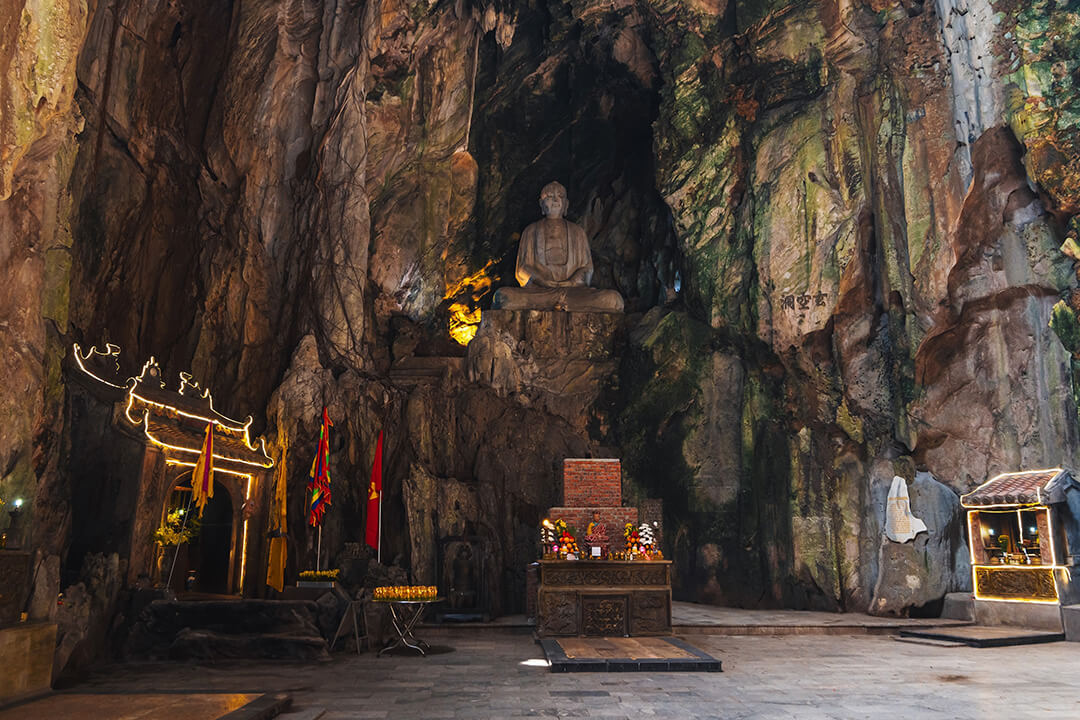
Hoa Nghiem Cave is a serene Buddhist grotto located within Thuy Son (Water Mountain), the largest and most visited of the five Marble Mountains. Unlike the vast, sun-drenched caverns nearby, Hoa Nghiem offers a cooler, more contemplative atmosphere. It serves as a spiritual antechamber, housing a significant statue of the Bodhisattva of Compassion and leading directly into the breathtaking Huyen Khong Cave.
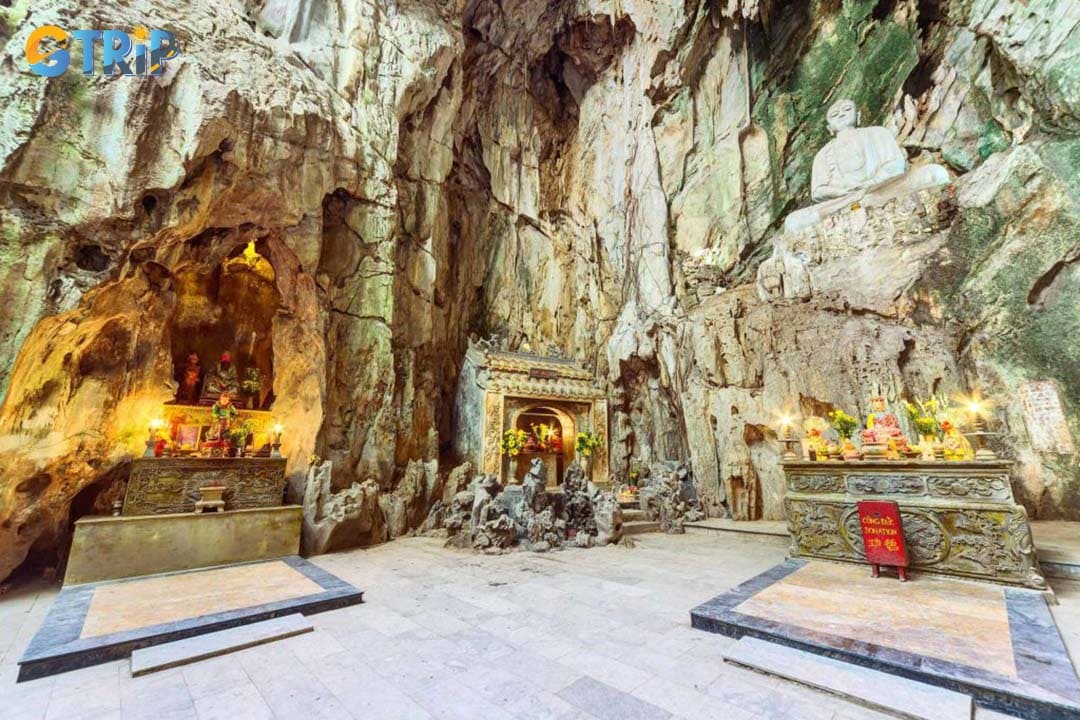
Hoa Nghiem Cave is a peaceful Buddhist grotto inside Thuy Son (Water Mountain), offering a cool, contemplative space with a Bodhisattva of Compassion statue
History of the Hoa Nghiem Cave
Hoa Nghiem Cave, like the entire Marble Mountains complex, has a history deeply intertwined with both Buddhism and the Cham Kingdom. The caves of Ngu Hanh Son were first discovered and used as Hindu sanctuaries by the Champa people centuries ago. When the Vietnamese took control of the region, these sacred sites were repurposed and expanded into Mahayana Buddhist places of worship.
The name "Hoa Nghiem" is a direct reference to the Avatamsaka Sutra (Kinh Hoa Nghiem), one of the most influential texts in Mahayana Buddhism, which describes a cosmos of infinite realms. This name was chosen to reflect the cave's role as a place for enlightenment and understanding the nature of reality. While smaller and less architecturally complex than other pagodas on the mountain, Hoa Nghiem has served for generations as a quiet, preparatory space. It is for monks and pilgrims before they enter the grander Huyen Khong Cave, symbolizing a spiritual transition from the outer world to a deeper state of consciousness.
Hoa Nghiem Cave reflects the Marble Mountains’ layered history, evolving from ancient Cham Hindu sanctuaries into Mahayana Buddhist worship sites
Cultural and spiritual significance of Hoa Nghiem Cave
Hoa Nghiem Cave is far more than just a beautiful rock formation. It is a living place of worship and a symbol of inner peace. Its primary cultural significance lies in its role as a spiritual threshold. For centuries, pilgrims have paused in this dimly lit grotto to center themselves, offer respects, and prepare their minds before stepping into the awe-inspiring vastness of Huyen Khong Cave.
The cave’s atmosphere is one of profound serenity. The cool, still air, the faint scent of burning incense, and the quiet reverence of the space create a powerful contemplative environment. It is home to a prominent statue of Quan The Am Bo Tat (Avalokiteshvara), the Bodhisattva of Compassion, making it a key site for devotees seeking blessings and solace. Visiting Hoa Nghiem Cave offers a moment of genuine tranquility, a chance to disconnect from the outside world and connect with the mountain's deep-rooted spiritual energy.
Things to do at Hoa Nghiem Cave in Da Nang
While compact, Hoa Nghiem Cave is rich with details and experiences that reward the observant visitor. It’s a place to slow down and appreciate the subtle fusion of nature and devotion.
1. Admire the stone-carved Lady Buddha Statue
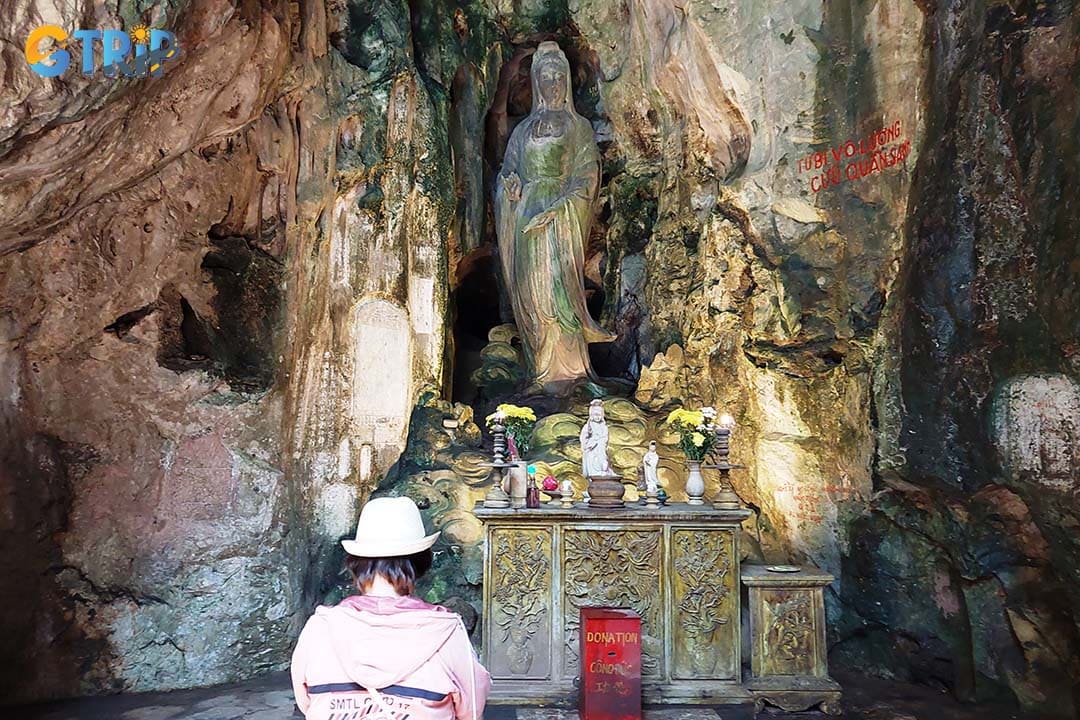
The centerpiece of Hoa Nghiem Cave is a magnificent statue of Quan The Am Bo Tat, known in English as the Bodhisattva of Compassion or Lady Buddha. Carved with incredible skill and artistry directly into the natural stone wall, the statue is approximately 2 meters tall. Its serene expression and compassionate gaze are the focal point of the grotto's spiritual energy. This statue is not merely a piece of art but a sacred object of veneration. Devotees come here to pray for peace, health, and guidance. The craftsmanship is a testament to the artisans of the nearby Non Nuoc Stone Carving Village, who have honed their skills for centuries.
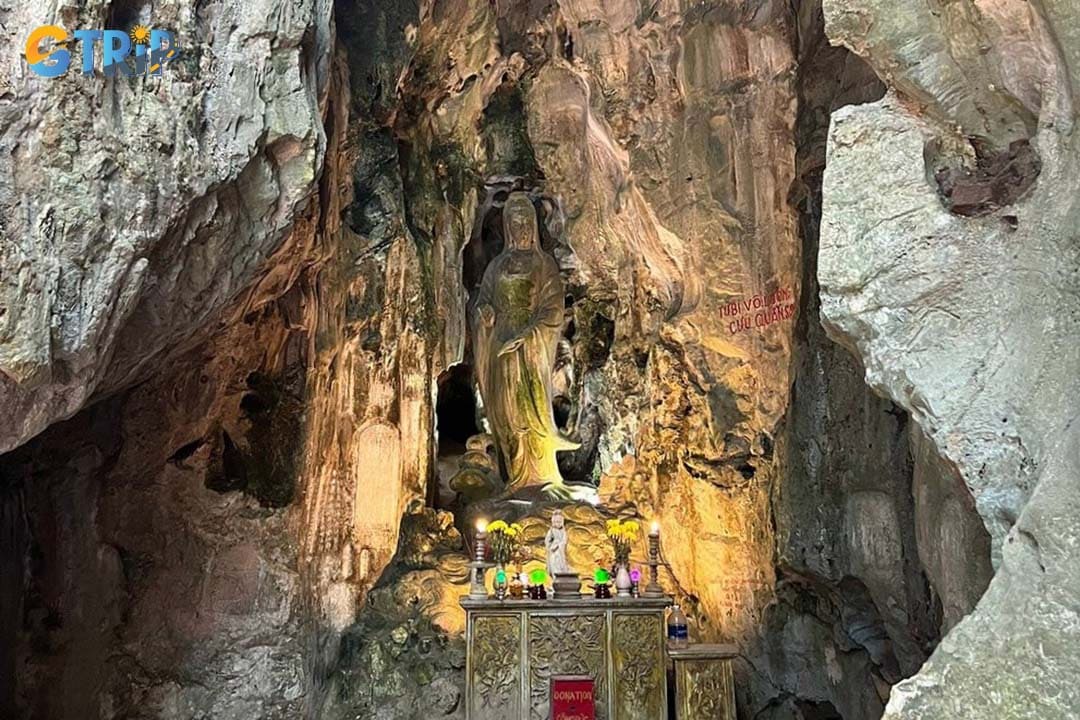
The centerpiece of Hoa Nghiem Cave is a magnificent 2-meter-tall statue of Quan The Am Bo Tat, skillfully carved directly into the natural rock
2. Explore the cave’s spiritual architecture
The beauty of Hoa Nghiem Cave lies in how seamlessly spiritual elements have been integrated into the natural environment. In front of the Lady Buddha statue stands a simple yet elegant altar, where visitors can light incense and make offerings. The surrounding rock walls, smoothed by millennia of natural processes, form the temple's nave and ceiling. Notice how the electric lights have been placed discreetly to illuminate the statue and altar without detracting from the cave's natural, somber atmosphere. This harmonious blend of man-made worship space and raw geology creates a unique and powerful sense of place that is both grounding and spiritually uplifting.
3. Visit the shared entrance with Huyen Khong Cave
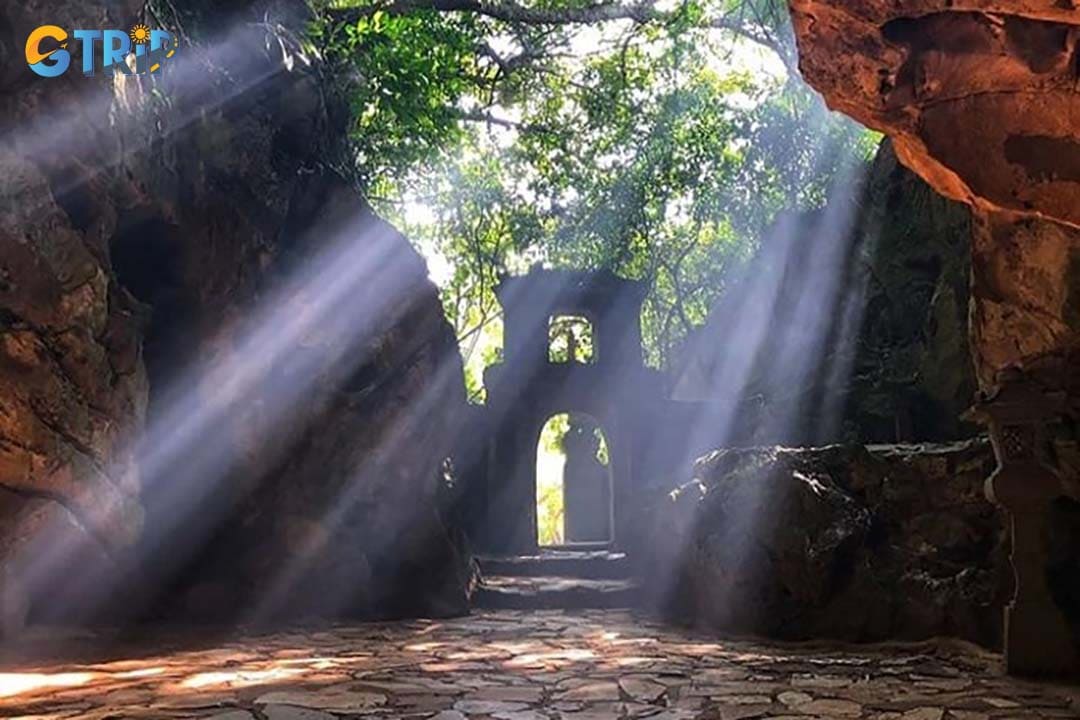
One of the most practical and exciting aspects of Hoa Nghiem Cave is its function as the gateway to the much larger Huyen Khong Cave. This creates a "two-in-one" discovery that enhances the visitor experience. After spending time in the quiet contemplation of Hoa Nghiem, you walk through a short, narrow passage at the back. The transition is dramatic: you move from a small, intimate grotto into one of Vietnam's most spectacular natural caverns, where sunlight streams down from a large opening in the ceiling. GTrip advises all travelers to experience Hoa Nghiem first. Its tranquility serves as the perfect spiritual appetizer before the main course of Huyen Khong's breathtaking grandeur.
4. Take photos of natural rock formations and light beams
For photographers, Hoa Nghiem offers unique opportunities for capturing texture and mood. The cave walls are a tapestry of limestone, marble, and other minerals, with fascinating patterns and textures sculpted by water over eons. The low light requires a steady hand or a camera with good low-light performance. While direct sunbeams don't penetrate Hoa Nghiem itself, the light spilling in from the main entrance and the passage to Huyen Khong creates a beautiful, soft ambient glow. The best photo opportunities often come from framing the Lady Buddha statue against the dark, textured rock or capturing the atmospheric transition as you move toward the Huyen Khong passage.
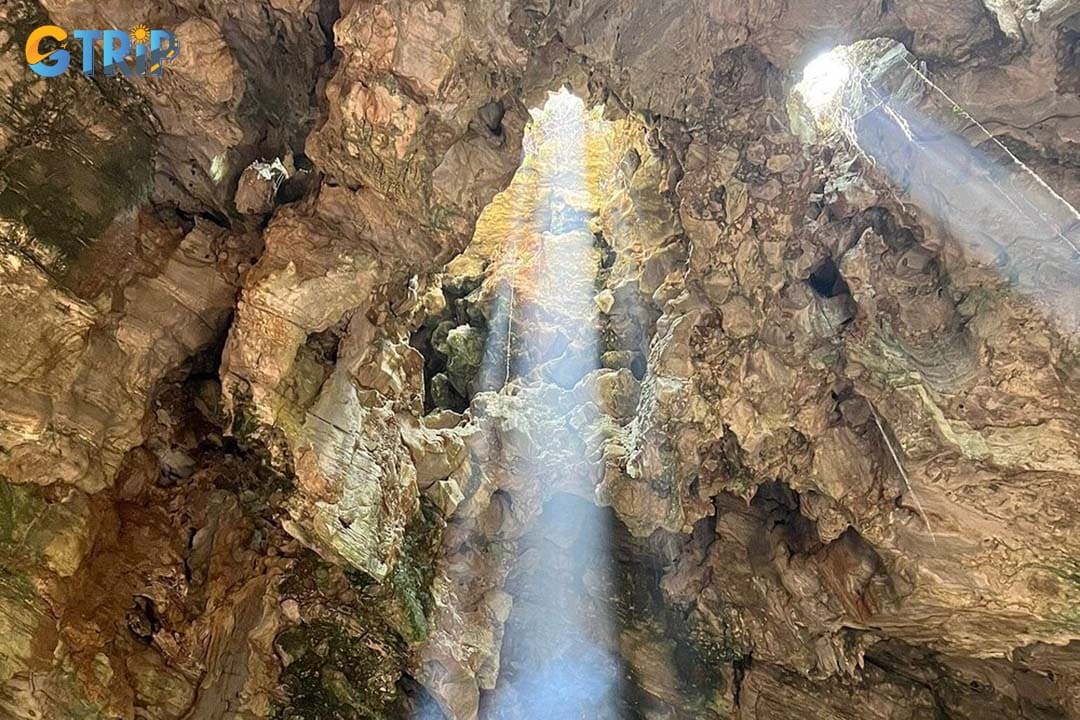
For photographers, Hoa Nghiem Cave is ideal for capturing rich textures and a moody atmosphere
5. Experience the peaceful Buddhist atmosphere
The most impactful experience at Hoa Nghiem Cave is simply being present and absorbing its atmosphere. Step inside and feel the immediate drop in temperature, a welcome relief from the tropical heat outside. Take a deep breath and smell the subtle, sweet scent of incense that perpetually hangs in the air. Listen to the profound silence, occasionally punctuated by the soft drip of water or the distant echo of a temple bell. This sensory immersion is what makes the cave a true sanctuary. It’s an ideal spot to sit for a few minutes, meditate, or simply enjoy a moment of quiet reflection away from the bustling tourist crowds.
6. Learn about Buddhist symbols and inscriptions
While Hoa Nghiem itself has fewer inscriptions than other areas, its entrance is rich with symbolism. The characters inscribed above the main gateway leading into both Hoa Nghiem and Huyen Khong caves read "Huyen Khong Quan". This name signifies a portal to a profound, mysterious void, a core concept in Buddhist and Taoist philosophy. Inside Hoa Nghiem, the symbols are more devotional. The Lady Buddha statue itself is a powerful symbol of universal compassion. The lotus flower motifs often found on altars represent purity and enlightenment. Understanding these simple symbols enriches the visit, transforming it from a simple sightseeing stop into a deeper cultural and spiritual lesson.
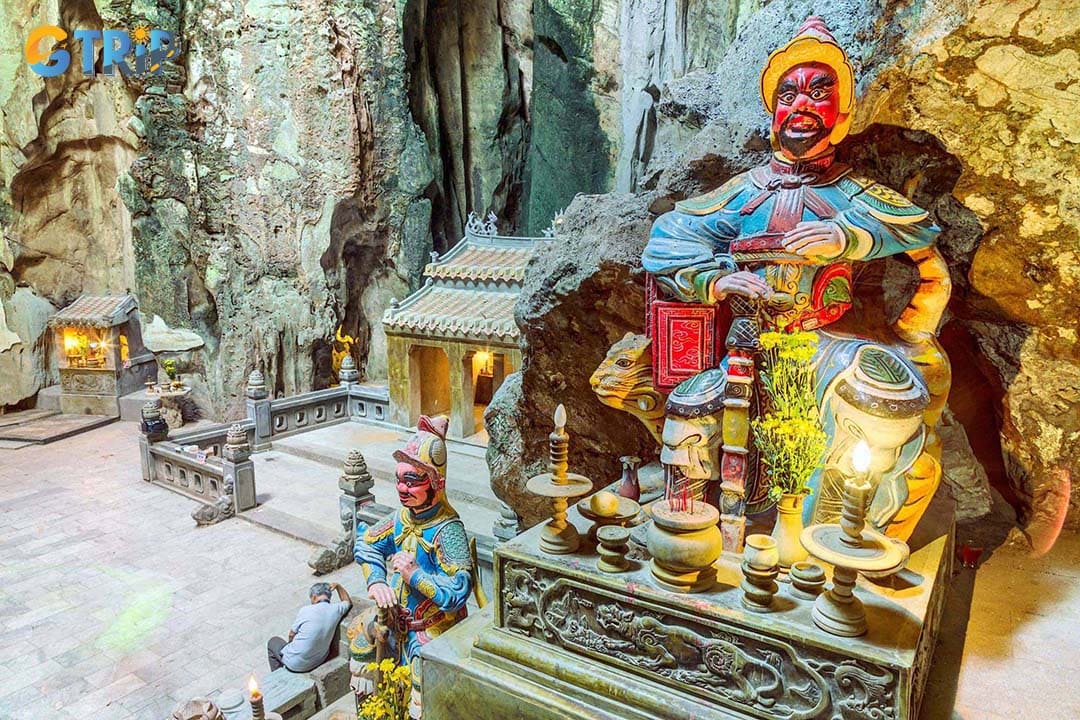
Although Hoa Nghiem Cave has fewer inscriptions than other areas, its entrance is filled with meaningful symbolism
How to get to Hoa Nghiem Cave
Reaching the Marble Mountains, the home of Hoa Nghiem Cave, is remarkably simple from the region's main hubs of Da Nang and Hoi An. The complex is prominently located on the main coastal road connecting the two cities, making it an easy and scenic journey.
From Da Nang City center
Getting to Hoa Nghiem Cave from the heart of Da Nang is a quick and straightforward drive. The distance is approximately 8 km southeast of the city center. The most popular route is to follow the stunning coastal road: Vo Nguyen Giap → Truong Sa → Non Nuoc. An alternative inland route is Le Van Hien → Non Nuoc. Both paths are well-paved and clearly signposted. The journey typically takes about 15 minutes by motorbike or car, offering beautiful views of Da Nang's famous coastline along the way.
From Da Nang International Airport
From Da Nang International Airport (DAD), the Marble Mountains are approximately 10 km away. After exiting the airport, the most efficient route is to head towards the iconic Dragon Bridge via Nguyen Van Linh Street. After crossing the bridge, you'll merge onto the main coastal road, following Vo Nguyen Giap → Truong Sa → Non Nuoc. By taxi, private car, or a ride-hailing service like Grab, the trip takes around 20 - 25 minutes, depending on traffic conditions in the city center.
From Hoi An Ancient Town
If you're traveling from the south, Hoa Nghiem Cave is located about 20 km north of Hoi An Ancient Town. This journey is a traveler's favorite, offering a beautiful coastal drive that showcases the region's stunning beaches. The most direct route follows Lac Long Quan street out of Hoi An, which becomes Truong Sa and then Non Nuoc street as you approach Da Nang. This scenic drive takes roughly 30 - 35 minutes by motorbike or car, making it a perfect day trip from the charming ancient town.
Transportation options
Choosing your mode of transport depends on your budget, group size, and desired level of flexibility.
- Motorbike: This is the most flexible and budget-friendly option, perfect for solo travelers or couples who are confident riders. Rental costs are low, and it allows you to explore the surrounding area, like Non Nuoc Beach, at your leisure.
- Taxi or private car: Comfortable, air-conditioned, and convenient, this option is ideal for families, small groups, or visitors who prefer a hassle-free ride directly to the entrance. Ride-hailing apps like Grab are widely available and offer competitive pricing.
- Public bus: For the most economical journey, take bus route No.1, which runs between Da Nang Central Bus Station and Hoi An. The bus makes a stop directly in front of the Marble Mountains entrance, offering an affordable, albeit slower, option.
- Guided tours or private transfers: For the ultimate stress-free experience, consider a private tour. GTrip offers curated excursions that often include hotel pickup and drop-off, an expert local guide to explain the history and significance, and a well-planned itinerary.
You can take many means of transportation to reach Hoa Nghiem Cave
Getting to Hoa Nghiem Cave Inside the Marble Mountains
Once you arrive at the Marble Mountains complex and purchase your entrance ticket, you need to ascend Water Mountain (Thuy Son) to find the cave. There are two primary ways to do this, each with its own pros and cons.
- Route 1 - The stairway challenge (Via gate 1):. If you enter through gate 1, you will face a climb of 156 stone steps. This path is a journey in itself, winding past ancient stupas and offering glimpses of the landscape below. Choose this route if you enjoy a bit of a workout and want to experience the traditional pilgrim's path up the mountain. Follow the signs for Tam Thai Pagoda. Just before you reach the pagoda's three-gated entrance, you will see a path to your left leading to a small cavern entrance, this is Hoa Nghiem Cave.
- Route 2 - The elevator shortcut (Via gate 2):. For those with mobility concerns or who simply wish to save energy for exploring, the elevator at gate 2 is the best option. The elevator costs an additional 15,000 VND per person for a one-way trip. It whisks you up the side of the mountain in seconds, depositing you near the Linh Ung Pagoda and Xa Loi Tower. From the top of the elevator, turn right and follow the main path. You will pass the Vong Hai Dai (Ocean Watching Pavilion) and walk toward the Tam Thai Pagoda. The entrance to Hoa Nghiem Cave is located on the right side of the path, just as you approach the main courtyard of Huyen Khong Cave.
- GTrip insider tip: Both Hoa Nghiem Cave and the larger Huyen Khong Cave share the same entry passage. You will enter a small, tranquil grotto first, which is Hoa Nghiem Cave. Take your time here before proceeding through the passage at the back, which opens up dramatically into the magnificent Huyen Khong Cave.
Nearby attractions to the Hoa Nghiem Cave Da Nang
Your exploration doesn’t have to end at Hoa Nghiem Cave. It is just one small treasure within the vast and fascinating Marble Mountains complex, which itself is surrounded by many of Da Nang's premier attractions. Use your visit as a launchpad to discover more.
Attractions within Water Mountain, Marble Mountains
- Huyen Khong Cave: The main event, a massive, breathtaking cavern with a ceiling open to the sky. Sunbeams stream down into the cave, creating a magical and spiritual atmosphere.
- Non Nuoc Pagoda (Linh Ung Pagoda in Marble Mountain): An ancient and important pagoda with a serene courtyard and historic stupa. It is a peaceful place to pause and admire traditional Buddhist architecture.
- Tam Thai Pagoda: One of the oldest pagodas in Da Nang, located at the highest point of the main path. From here, you can enjoy quiet surroundings and scenic mountain views.
- Am Phu Cave (Hell Cave): A fascinating, eerie cave depicting the Buddhist stages of hell and heaven. Sculptures and dim lighting create a dramatic and thought-provoking experience.
- Tang Chon Cave: A cave with natural light shafts illuminating a large seated Buddha statue. The soft light gives the space a calm and contemplative feeling.
- Van Thong Cave (Heavenly Way Cave): Features a narrow, vertical chimney-like passage known as the "Road to Heaven". Adventurous visitors can climb through for a unique experience.
- Heaven Gate: A natural rock arch offering a stunning viewpoint of the surrounding area. It is a popular spot for photos and quiet reflection.
- Thuong Thai Peak (Top of Marble Mountains): The highest accessible summit, providing panoramic 360-degree views. On clear days, you can see Da Nang, the sea, and distant mountains.
- Non Nuoc Stone Carving Village: The 400-year-old craft village at the mountain's base, where the statues are made. You can watch artisans at work and browse beautifully carved stone pieces.
- Linh Nham Cave: A small, peaceful grotto home to a revered stalactite statue. It offers a quiet escape away from the main paths.
- Xa Loi Tower: A seven-tiered Buddhist stupa near the elevator, offering fantastic photo opportunities. Climb partway up to enjoy elevated views of the area.
- Vong Giang Dai (River Watching Pavilion): A viewpoint overlooking the Co Co River and rural landscapes. It is especially beautiful at sunset.
- Vong Hai Dai (Ocean Watching Pavilion): A scenic pavilion offering sweeping views of Non Nuoc Beach and the sea. Cool breezes and open vistas make it a relaxing stop.
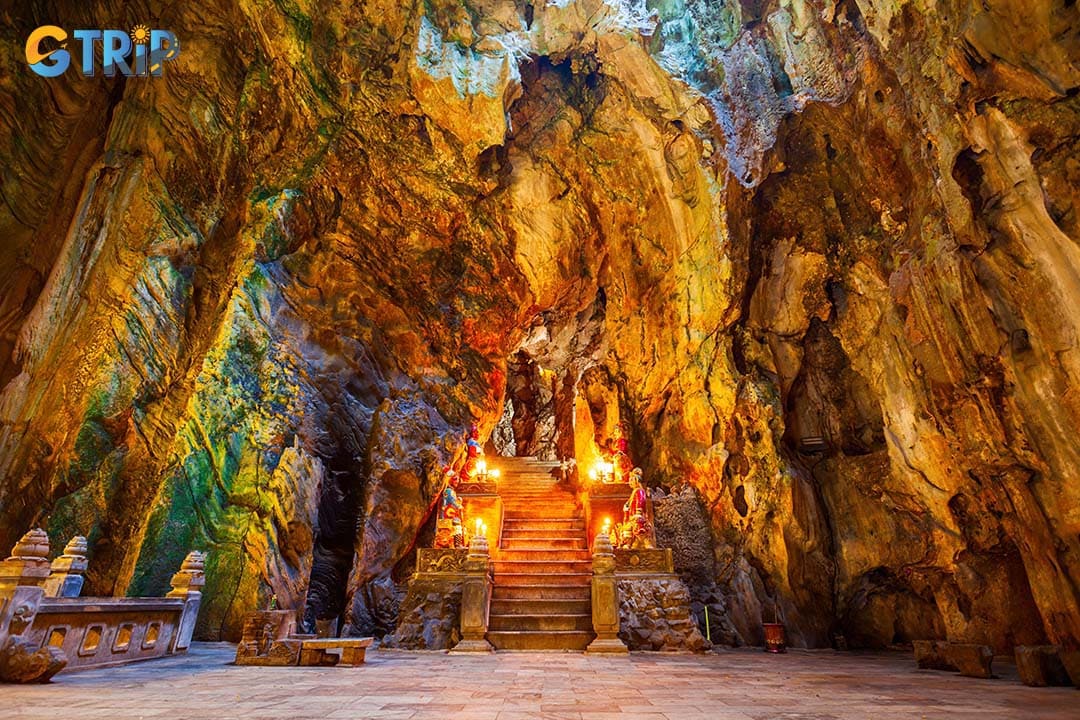
There are many caves in Marble Mountains that you can explore
Attractions near the Marble Mountains
- Non Nuoc Beach (1 km): A pristine, quiet beach perfect for relaxing after your mountain climb. Its soft sand and gentle waves create a calm, uncrowded atmosphere. Early mornings here are especially peaceful, with fishermen heading out to sea.
- Son Thuy Beach (2 km): A beautiful stretch of sand that forms part of Da Nang's world-famous coastline. It is ideal for morning walks and peaceful seaside moments. The shoreline is wide and clean, making it great for photos.
- Tan Tra Beach (3 km): A local favorite known for its seafood restaurants and calm waters. It is a great place to enjoy fresh dishes by the sea. The area feels more local and less touristy.
- K20 Revolutionary Base (4.5 km): A historical site preserving a secret Viet Cong base from the war. It offers insight into local resistance history and underground tunnel systems. Guided visits help explain how the base once operated.
- BRG Golf Course (5 km): A world-class golf resort designed by Greg Norman. The course features oceanfront fairways and challenging layouts. It also offers luxury clubhouses and training facilities.
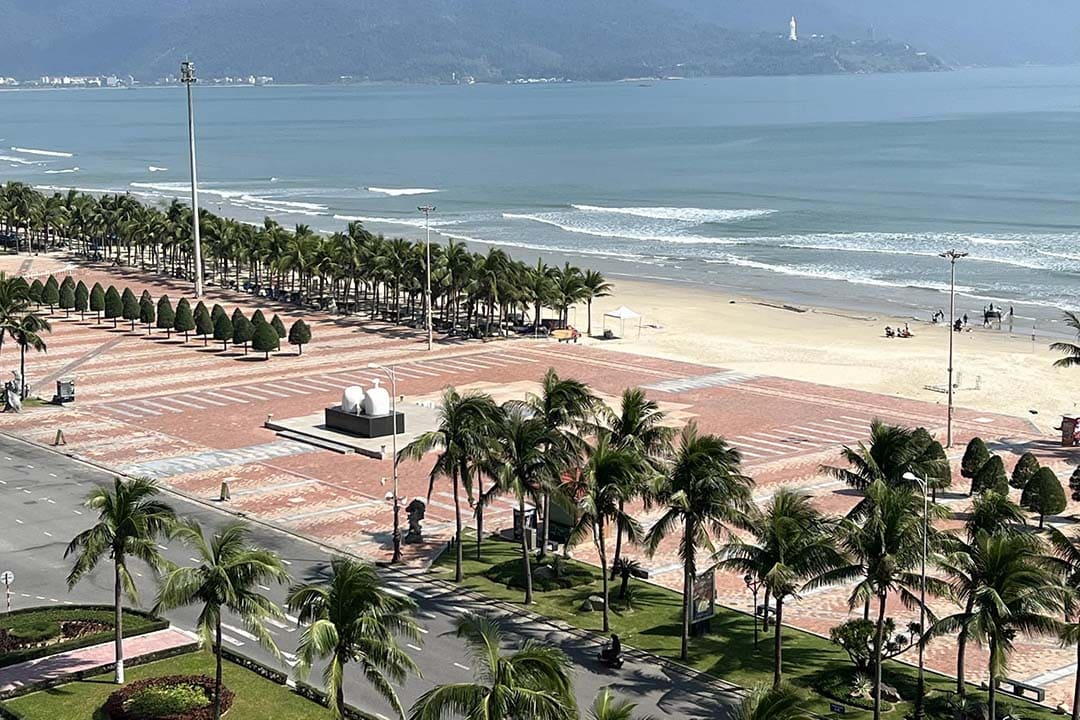
- My Khe Beach (6 km): One of Asia's most famous beaches, bustling with activities and restaurants. It is perfect for swimming, surfing, and sunset watching. Beach bars and cafes line much of the shore.
- Hoi An Ancient Town (20 km): A UNESCO World Heritage site and must-visit destination nearby. The town charms travelers with lantern-lit streets, old houses, and riverside cafes. It is especially magical in the evening when lanterns glow.

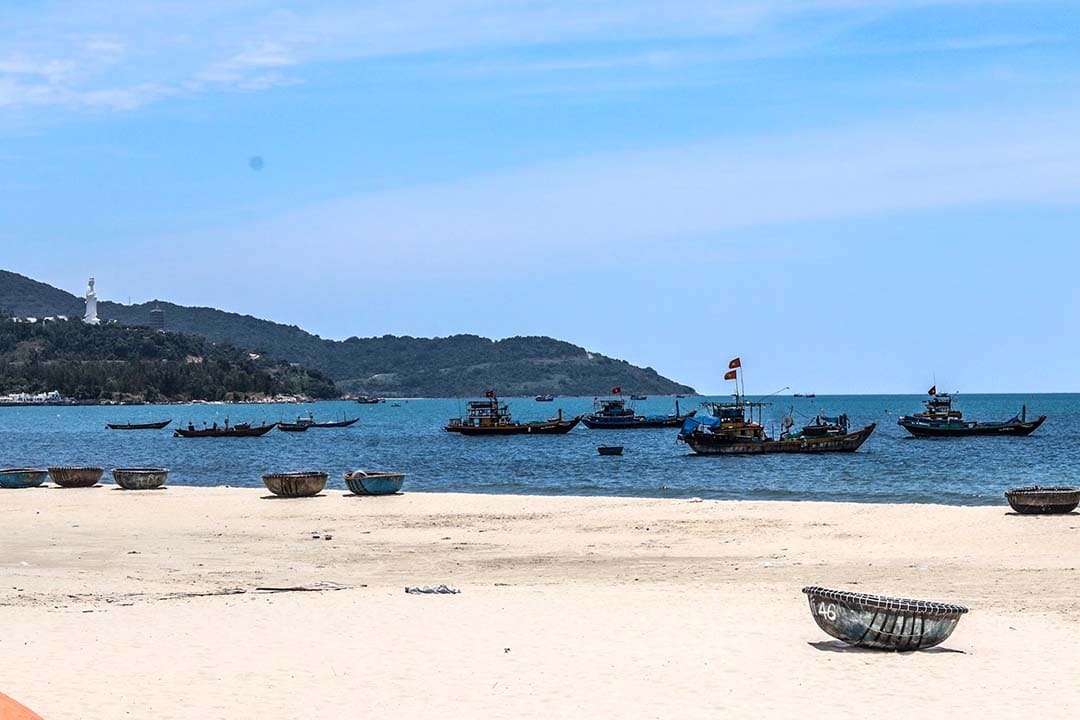
After exploring the Hoa Nghiem Cave, you can visit the beaches to have a relaxing time
Practical tips for visitors
To ensure a smooth, respectful, and enjoyable visit to Hoa Nghiem Cave and the Marble Mountains, keep these essential tips from GTrip in mind.
- Wear appropriate attire: As this is a sacred site with active pagodas, respectful dress is required. Wear clothing that covers your shoulders and knees. T-shirts and long shorts or skirts are ideal.
- Choose comfortable footwear: You will be doing a lot of walking and climbing, often on steep, uneven, and sometimes slippery stone steps. Sturdy, comfortable walking shoes or sneakers are essential.
- Stay hydrated: The Vietnamese climate is hot and humid. Bring a bottle of water to stay hydrated during your climb. There are also vendors selling drinks at the base of the mountain.
- Bring cash: While some larger vendors may accept cards, many smaller ones do not. You will need Vietnamese Dong (VND) in cash for the entrance ticket, the optional elevator fee, incense, and refreshments.
- Be mindful of your surroundings: You are visiting an active place of worship. Speak softly, do not touch sacred objects unless invited, and be respectful of monks and other devotees.
- Plan your time: To fully explore Water Mountain, including Hoa Nghiem Cave and other key sites, you should allow a minimum of 2-3 hours. If you plan to visit Am Phu Cave as well, add another hour.
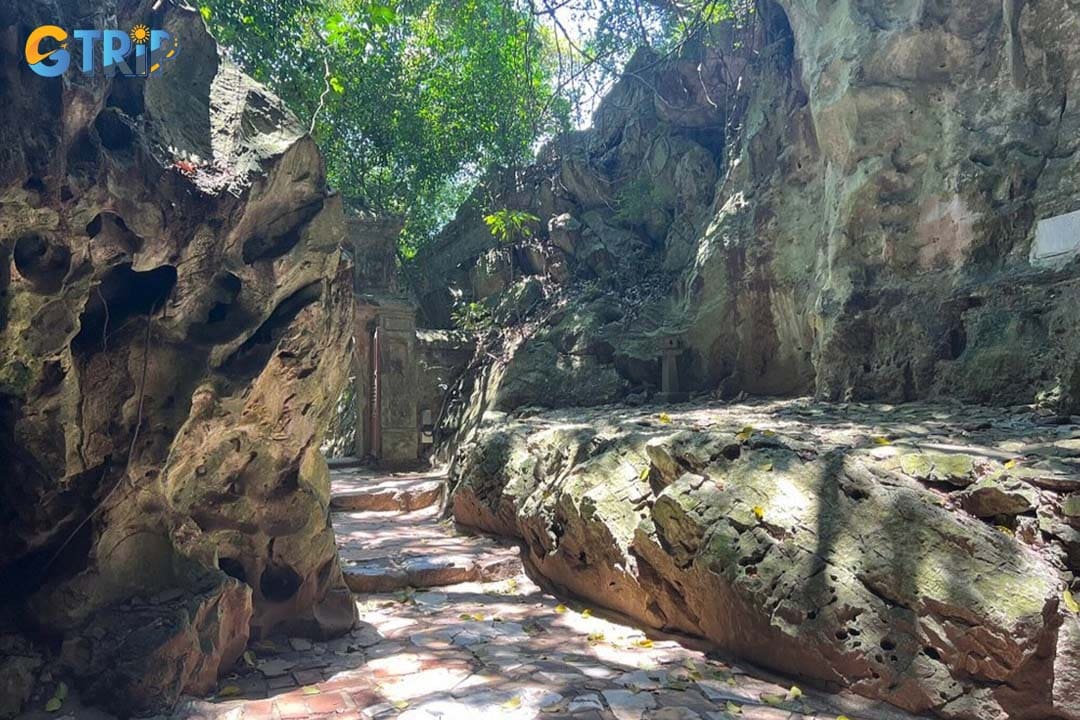
Remember practical tips to have a nice trip to the Hoa Nghiem Cave
Hoa Nghiem Cave is a testament to the fact that the most profound experiences are not always the grandest. This peaceful sanctuary offers a moment of reflection amid the spectacular Marble Mountains and is an unmissable stop in Da Nang. It reminds visitors to slow down and appreciate the quiet beauty hidden off the main path. Explore more GTrip travel guides or join one of our Da Nang tours to experience the best of the city and beyond.