
Wednesday, October 14, 2026
Bai Huong Village is a pristine fishing community nestled on the southeastern shore of Cham Island, representing one of Vietnam's last true hidden gems. A world away from the bustling streets of Hoi An and Da Nang, this tranquil village offers a glimpse into a traditional way of life that has remained untouched by mass tourism. It is a place of raw natural beauty, where the mountains meet the sea and the rhythm of life is dictated by the tides. In this complete travel guide by GTrip, we’ll cover everything you need to know to plan your visit. We will explore how to get there, uncover its unique features, detail the unforgettable things to do, and share practical tips for a perfect and respectful visit to this ecological sanctuary.
Table of Content
- Overview of Bai Huong Village
- What makes Bai Huong Village unique?
- Things to do at Bai Huong Village
- 1. Stroll along the beach and check in at Bai Huong Pier
- 2. Take a boat trip to explore the Swiftlet Cave
- 3. Experience a traditional basket boat ride
- 4. Go kayaking on the sea
- 5. Discover local fishing village life
- 6. Try night fishing and squid fishing
- 7. Visit the Ancestors’ Temple of the Swiftlet Nest Profession
- 8. Visit Ngoc Huong Monastery
- 9. Check in at the Heritage Banyan Tree
- 10. Enjoy local specialties
- How to get to Bai Huong Village?
- Nearby attractions to the Bai Huong Village
- Practical tips for visiting Bai Huong Village
Overview of Bai Huong Village
Bai Huong is an experience. As one of the smaller and more traditional villages on the Cham Islands, it has intentionally preserved its charm and committed to sustainable, community-based tourism. This section provides the essential information you need before you go.
Where is Bai Huong Village?
Location: Hon Lao Island of Cham Islands, Tan Hiep Commune (formerly Hoi An City, Quang Nam Province), Da Nang City
Bai Huong village is located on the southern side of Hon Lao Island, the largest island in the Cham Islands archipelago. The Cham Islands are a cluster of eight small islands situated approximately 15 kilometers off the coast from Cua Dai Port in Hoi An, making it a relatively accessible escape from the popular ancient town and the city of Da Nang.
The village itself occupies a serene bay, nestled at the foot of a lush green mountain and facing the crystal-clear waters of the East Sea. This secluded geographical setting contributes to its peaceful and protected atmosphere, distinguishing it from the main port village on the island.
Opening hours & ticket prices
As a residential community, Bai Huong village has opening hours of 24/7, and you are welcome to visit at any time. There is no direct entrance fee to visit the village itself.
However, all visitors traveling to the Cham Islands must purchase an entrance ticket for the Cham Islands Marine Park. This ticket is bought at the Cua Dai Port departure terminal in Hoi An before you board your boat. The cost is structured as follows:
- Cham Islands entrance fee: 70,000 VND per person
- Ecological fee: 30,000 VND per person
Best time to visit Bai Huong Village
Ideal time: March to September
The best time to visit Bai Huong village and the Cham Islands is during the dry season, which runs from March to September. During these months, the weather is consistently sunny, the humidity is lower, and the seas are calm and clear. These conditions are perfect for all marine activities, such as swimming, snorkeling, and diving in the vibrant coral reefs. The calm water also ensures a smooth and pleasant speedboat journey from the mainland.
It is advisable to avoid visiting from October to February. This period is the rainy season, characterized by rough seas, strong winds, and frequent storms, which can make the boat crossing dangerous or impossible. Many tour operators and local boat services suspend their operations during these months for safety reasons.
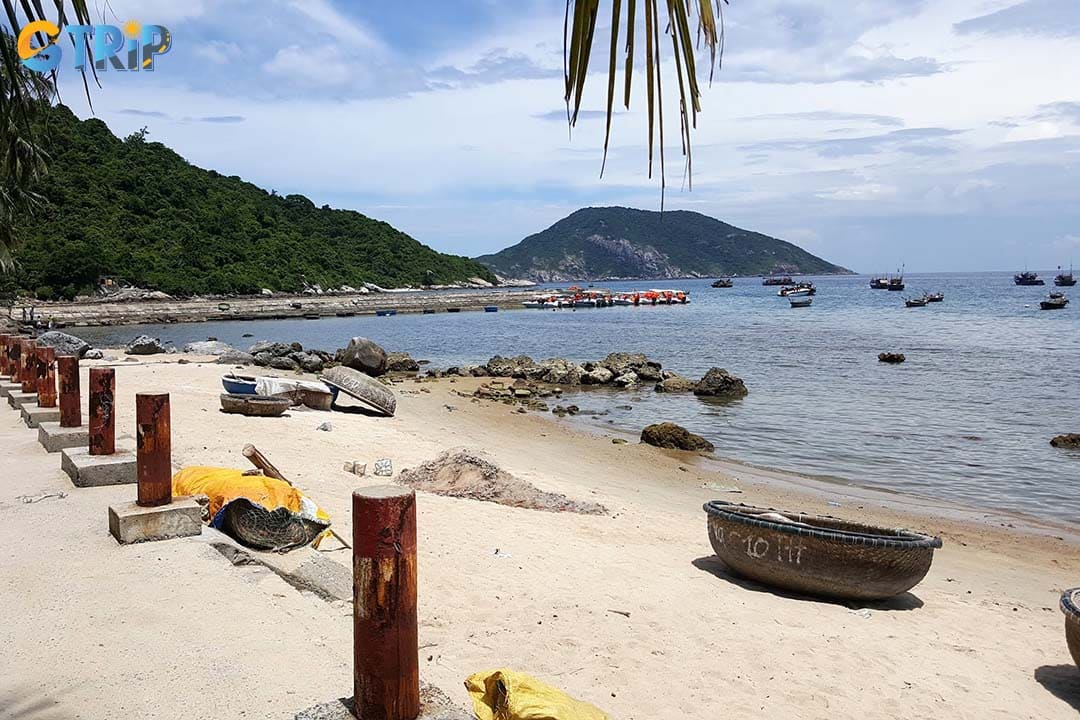
Bai Huong Village is a pristine fishing community nestled on the southeastern shore of Cham Island
What makes Bai Huong Village unique?
Bai Huong village stands out as a pioneering example of an "eco-village" in Vietnam, championing community-based tourism that directly benefits local families while preserving its natural and cultural heritage. Its charm lies in its simplicity and commitment to sustainability.
- Untouched fishing community: Life here revolves around age-old traditions. You will see fishermen mending their nets, colorful wooden boats bobbing in the harbor, and a community living in harmony with the sea.
- Strict environmental protection: The entire Cham Islands archipelago is a "no plastic bag" zone. Bai Huong takes this a step further with its strong community focus on keeping the village and surrounding waters clean.
- A "no motorbike" zone: The absence of motorbikes creates a wonderfully peaceful, quiet, and safe environment. The village is small and easily explored on foot, allowing the sounds of nature and village life to prevail.
- Authentic homestay experiences: Instead of hotels, accommodation is offered in local family homes. This provides visitors an unparalleled opportunity to connect with the local culture, share meals, and experience genuine Vietnamese hospitality.
Things to do at Bai Huong Village
Bai Huong Village offers a mix of nature, culture, and authentic local experiences. There are plenty of activities to enjoy at your own pace.

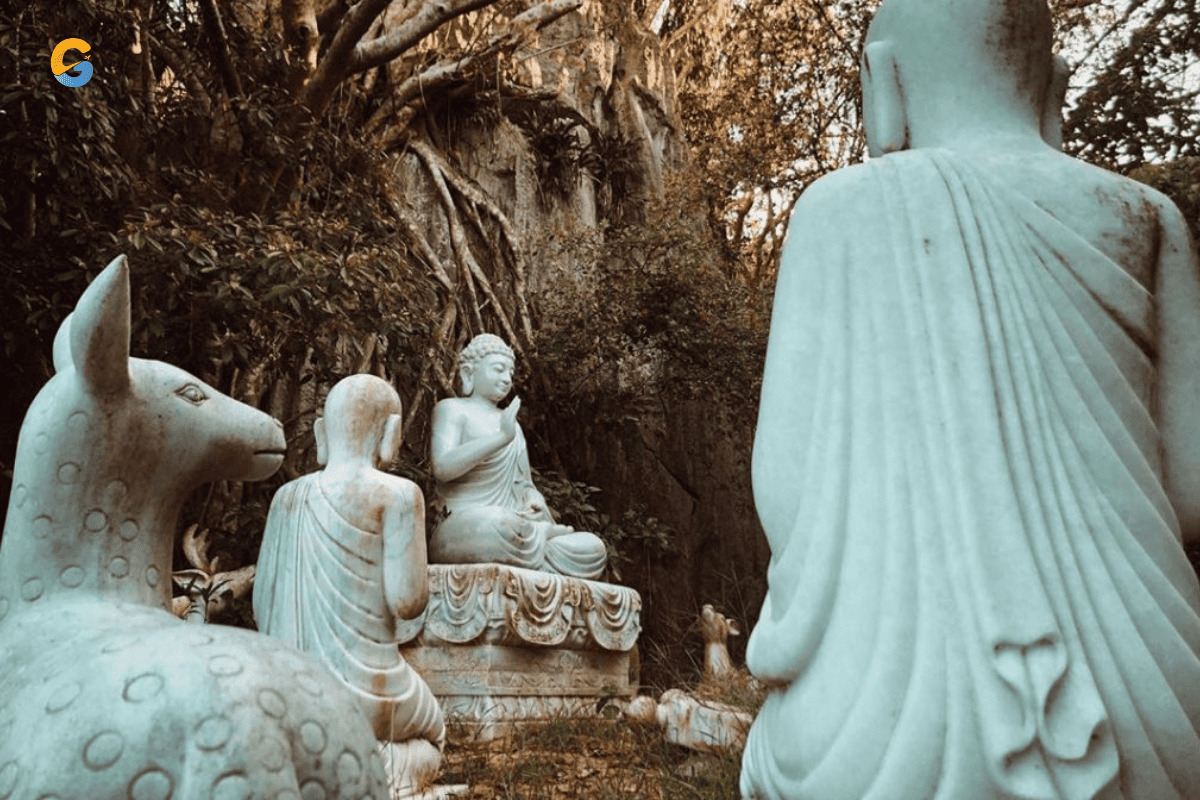
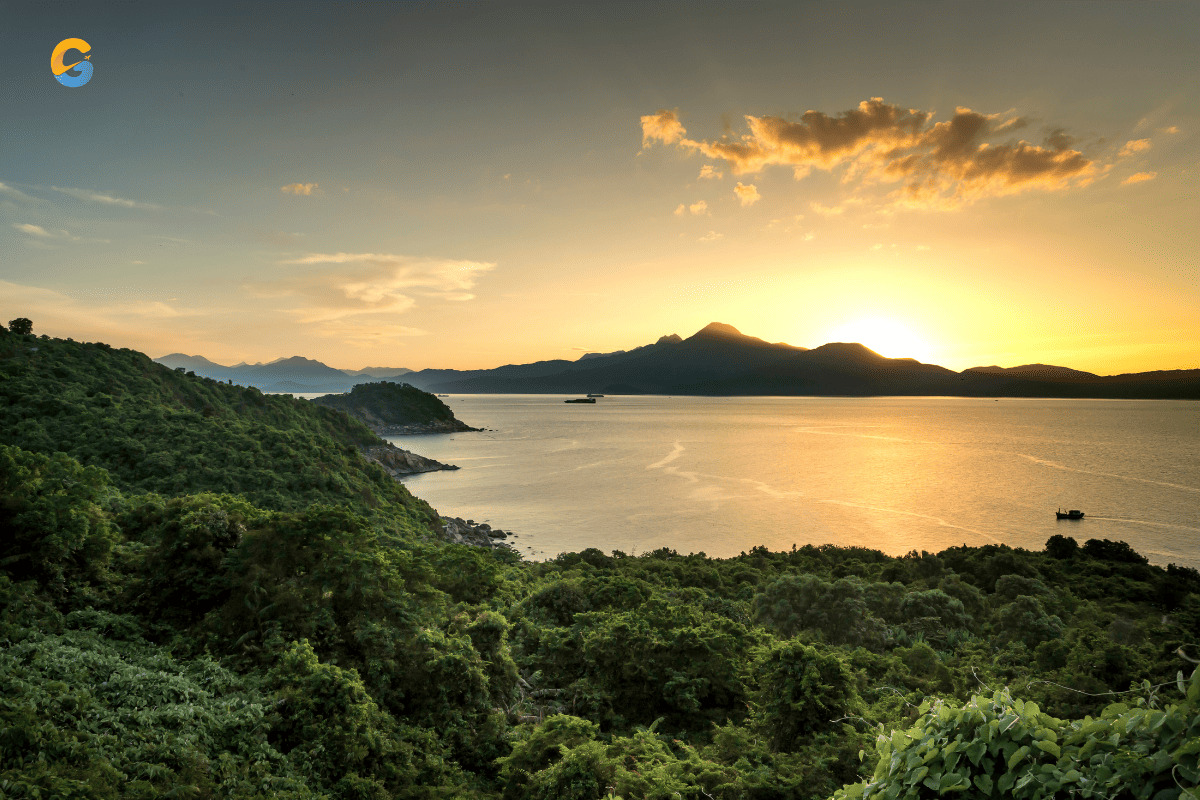
1. Stroll along the beach and check in at Bai Huong Pier
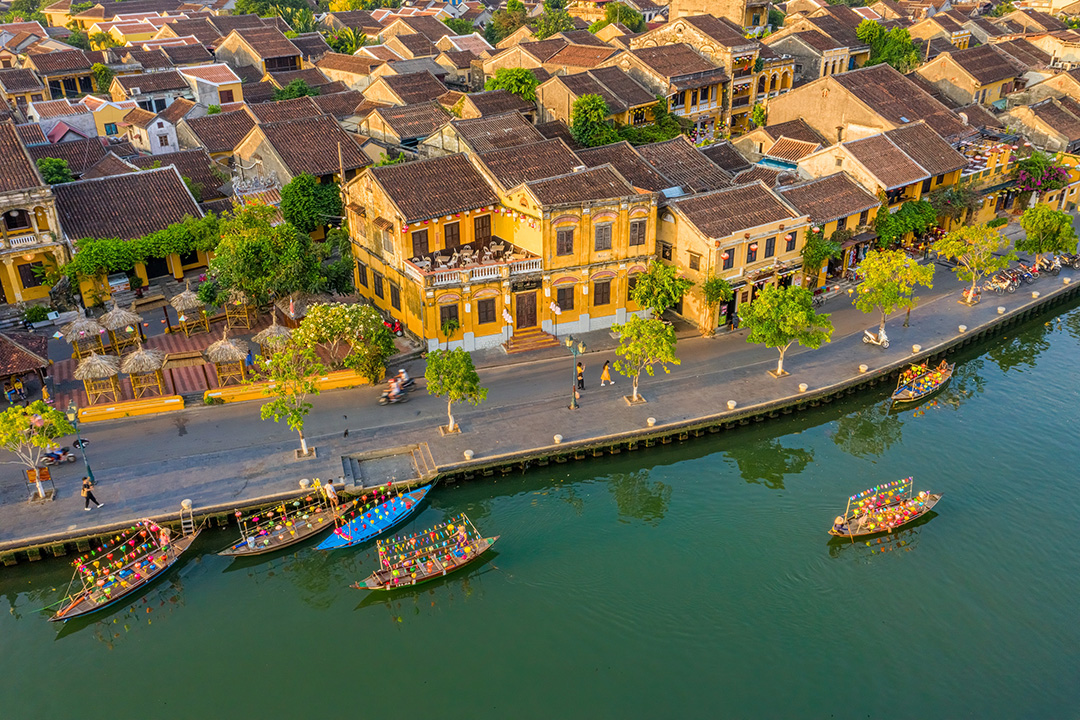
Bai Huong Pier was built in 2008, not only making transportation more convenient but also opening up new tourism opportunities for the local community. Early morning is the best time to visit. You’ll witness fishing boats returning from the sea, bringing in fresh catches of the day. The atmosphere is lively yet peaceful, perfect for photos and for experiencing the authentic rhythm of coastal life.
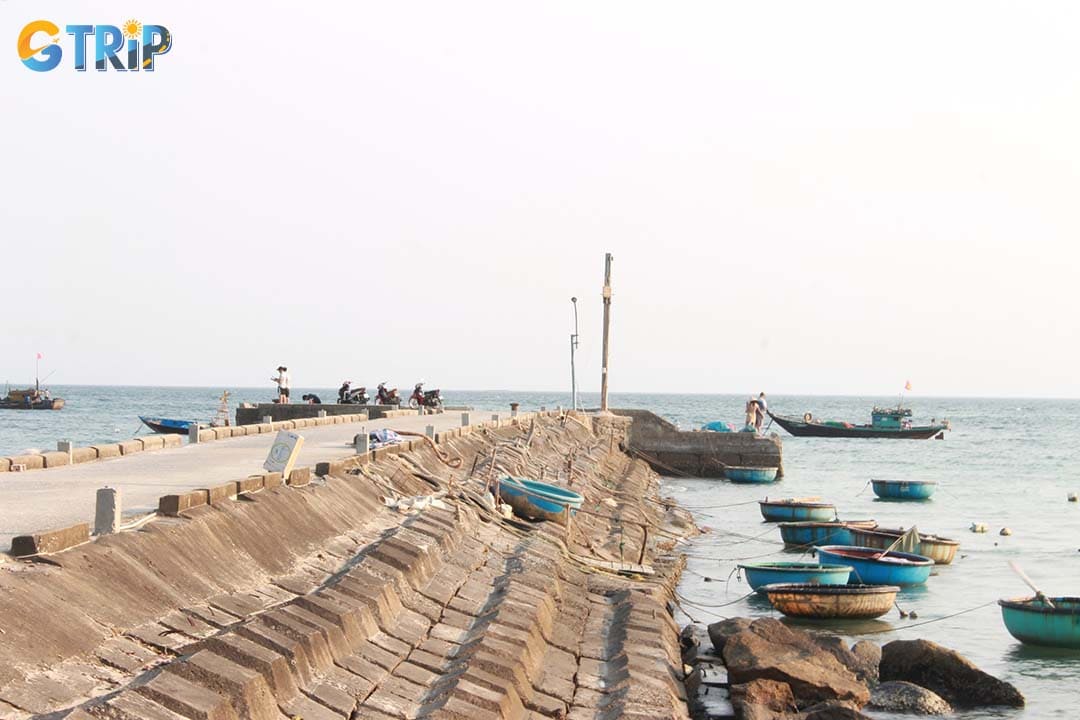
Getting to Bai Huong Pier, you can witness the local life here and feel the coastal rhythm
2. Take a boat trip to explore the Swiftlet Cave
From Bai Huong, it takes only about 15 minutes by wooden boat to reach the Swiftlet Cave, one of the highlights of Cham Islands. Sailing along the eastern side of Hon Lao Island, you’ll see dramatic cliffs rising from the sea. Here, flocks of swiftlets fly in and out of the cave, creating a vivid natural scene. Besides sightseeing, you’ll also learn about the traditional bird’s nest harvesting practiced by local fishermen.
Note: It’s recommended to go with a local fisherman’s boat for safety and a more authentic experience.
3. Experience a traditional basket boat ride
Basket boats are a familiar sight in Central Vietnam’s fishing villages. While not a thrilling activity, riding one is a unique and enjoyable experience. Sitting on the round boat as it gently sways with the waves, you can relax and admire the vast blue sea from a completely different perspective.
4. Go kayaking on the sea
If you enjoy light outdoor activities, kayaking is a great option. It doesn’t take long to learn, just a few minutes and you can paddle on your own. Gliding through clear blue water, weaving between anchored boats, or simply drifting along the waves gives you a strong sense of connection with nature. It’s also a fun group activity.
5. Discover local fishing village life
Bai Huong still preserves the simple and authentic lifestyle of a traditional fishing village. Waking up early to watch boats return, chatting with fishermen, or sitting under coconut trees watching locals mend fishing nets, all create a very real and memorable experience. The lack of commercialization is exactly what makes this place so charming.
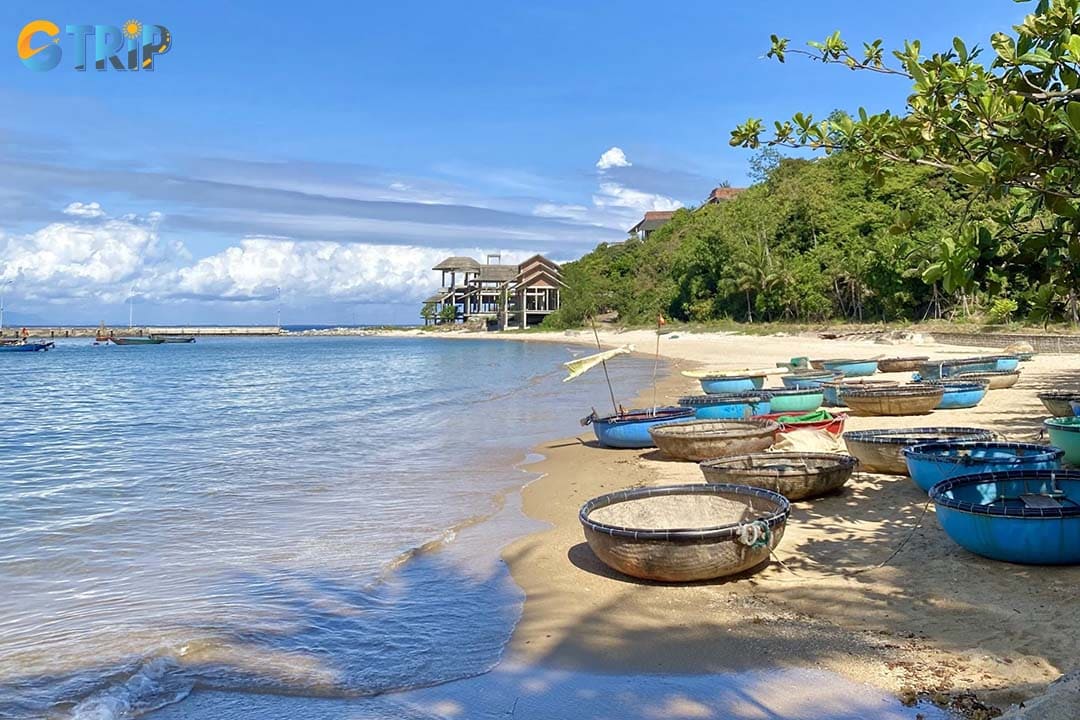
Besides discovering the local fishing life, you can try experiencing a traditional basket boat ride
6. Try night fishing and squid fishing
If you stay overnight, trying night fishing or squid fishing is highly recommended. Out on the quiet sea at night, casting your own line and waiting for a catch is surprisingly relaxing. If you’re lucky, you can catch fresh squid or fish and enjoy them right on the boat, a true island-style experience.
7. Visit the Ancestors’ Temple of the Swiftlet Nest Profession
Located in the center of Bai Huong, this temple dates back to the 19th century and is dedicated to the founders of the bird’s nest harvesting trade and local guardian deities. The temple features traditional architecture, including a three-entrance gate, a brick courtyard, and ancient trees that are hundreds of years old. Every year on the 10th day of the third lunar month, locals hold a grand ceremony to honor their ancestors and pray for favorable weather and a prosperous fishing season. Visiting during this time offers a deeper insight into local culture.
8. Visit Ngoc Huong Monastery
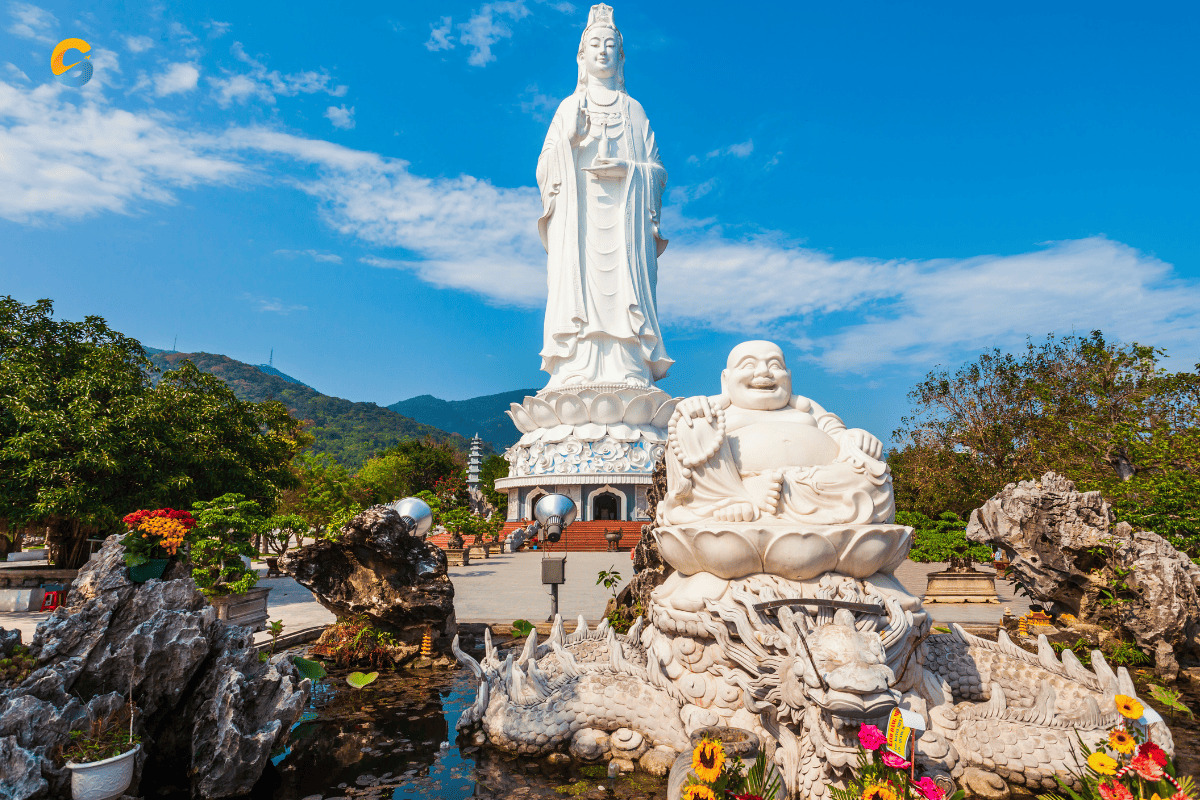
Ngoc Huong Monastery is a peaceful spiritual site in Bai Huong. Nestled against the mountains and facing the sea, it offers a calm and scenic atmosphere. Unlike many temples in the area, it follows the Theravada Buddhist tradition. The complex includes a reclining Buddha statue and several newly restored structures. Local fishermen often come here to pray for safety before heading out to sea, making it an important cultural landmark.
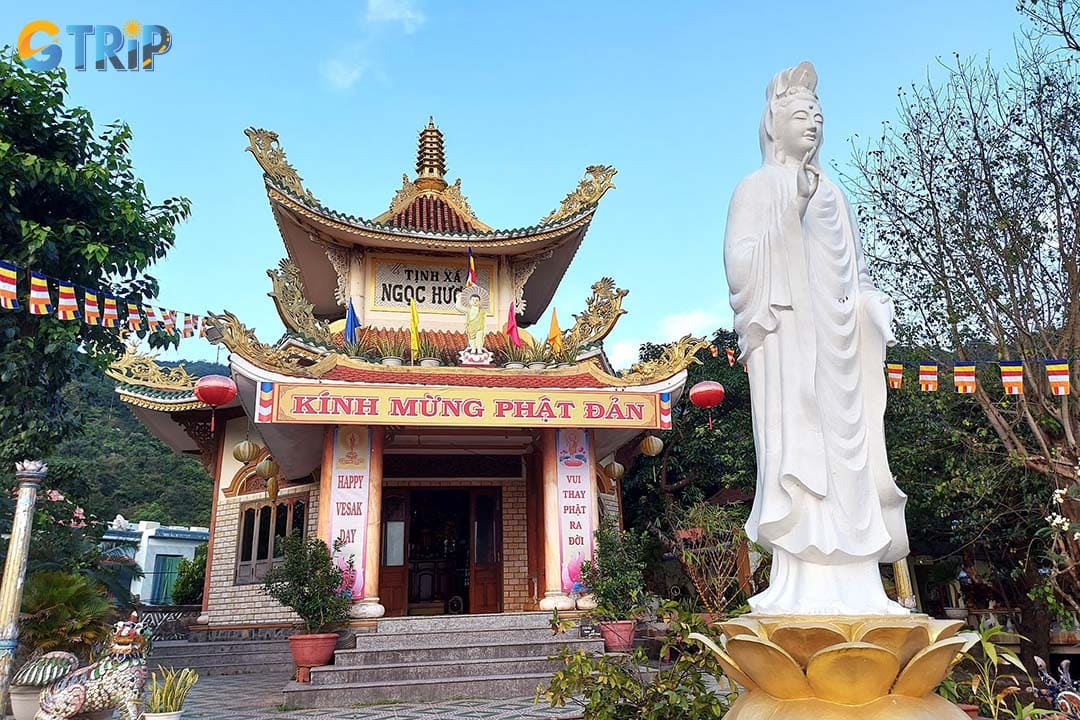
Ngoc Huong Monastery is a peaceful spiritual site in Bai Huong Village
9. Check in at the Heritage Banyan Tree
About 3 km from Bai Huong, along the coastal road, stands a giant banyan tree estimated to be around 600 years old. Recognized as a Vietnam Heritage Tree, it’s a great stop for nature lovers and photography enthusiasts exploring the island.
10. Enjoy local specialties
Food is an essential part of any trip to Bai Huong. Small seaside eateries offer a truly local dining experience with surprisingly rich flavors.
Some must-try dishes include: Stone crab, lobster, sea urchin, abalone, sun-dried squid,...
What makes them special is not just the ingredients, but the local cooking style that gives each dish a distinct regional flavor. Even a simple meal by the sea can become a memorable highlight of your trip.
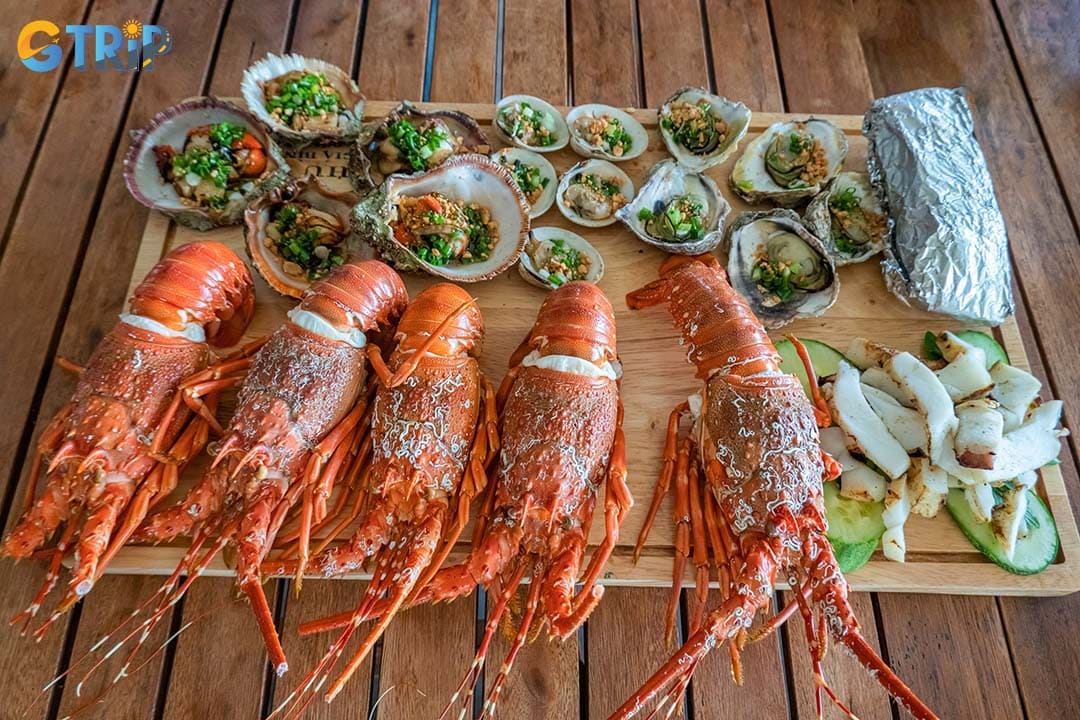
You should not miss fresh and delicious local seafood at Bai Huong Village
How to get to Bai Huong Village?
Getting to Bai Huong village is a multi-step journey that is part of the adventure itself. The final leg involves a sea crossing from Cua Dai Port in Hoi An. Here’s a breakdown of how to get there from major starting points.
From Da Nang International Airport to Cua Dai Port
From Da Nang International Airport, you need to travel south toward Hoi An to reach Cua Dai Port, the main departure point to Cham Islands.
- Distance: ~30 km
- Travel time: 45-60 minutes
- Routes: Vo Nguyen Giap → Lac Long Quan → Cua Dai Road
- Optimal option: Taxi or private car for convenience
This is the fastest and most comfortable option, especially if you have luggage or arrive on a tight schedule.
From Da Nang City center to Cua Dai Port
Getting from Da Nang City center to Cua Dai Port is easy, with scenic coastal routes along the way.
- Distance: ~28-30 km
- Travel time: 45-60 minutes
- Routes: Vo Nguyen Giap coastal road → Hoi An → Cua Dai
- Optimal option: Motorbike (flexible) or taxi (comfortable)
Traveling by motorbike is ideal if you want to enjoy the coastal views at your own pace.
From Hoi An Ancient Town to Cua Dai Port
Cua Dai Port is very close to Hoi An, making it the most convenient starting point for your trip.
- Distance: ~5 km
- Travel time: 10-15 minutes
- Routes: Cua Dai Road
- Optimal option: Bicycle, motorbike, or taxi
Staying in Hoi An helps you save time and easily catch early boats to the island.
From Cua Dai Port to Bai Huong Village (Bai Huong Beach)
From Cua Dai Port, you’ll first take a boat to Cham Islands, usually arriving at Bai Lang, the main village on the island. From there, you continue your journey to Bai Huong Village.
- Distance: ~15 km by sea + ~5 km on the island
- Optimal option: There are two main options to reach the island:
- Speedboat: The most popular choice, taking about 20 minutes from Cua Dai to Bai Lang. It’s fast, convenient, and ideal for day trips, though the price is higher.
- Wooden boat: A slower but more budget-friendly option, usually taking 60-90 minutes. This is a good choice if you prefer a more local and relaxed travel experience.
Once you arrive at Bai Lang, you can continue to Bai Huong in two ways:
- By boat: Around 15 minutes, suitable if you prefer staying on the water
- By motorbike: About 20 minutes via scenic coastal roads passing Bai Xep, Bai Chong, and Bai Bim
Overall, the most efficient route is taking a speedboat to Bai Lang, then transferring by boat or motorbike to Bai Huong.
Tip: It’s best to contact your homestay in advance to arrange transportation and avoid being overcharged.
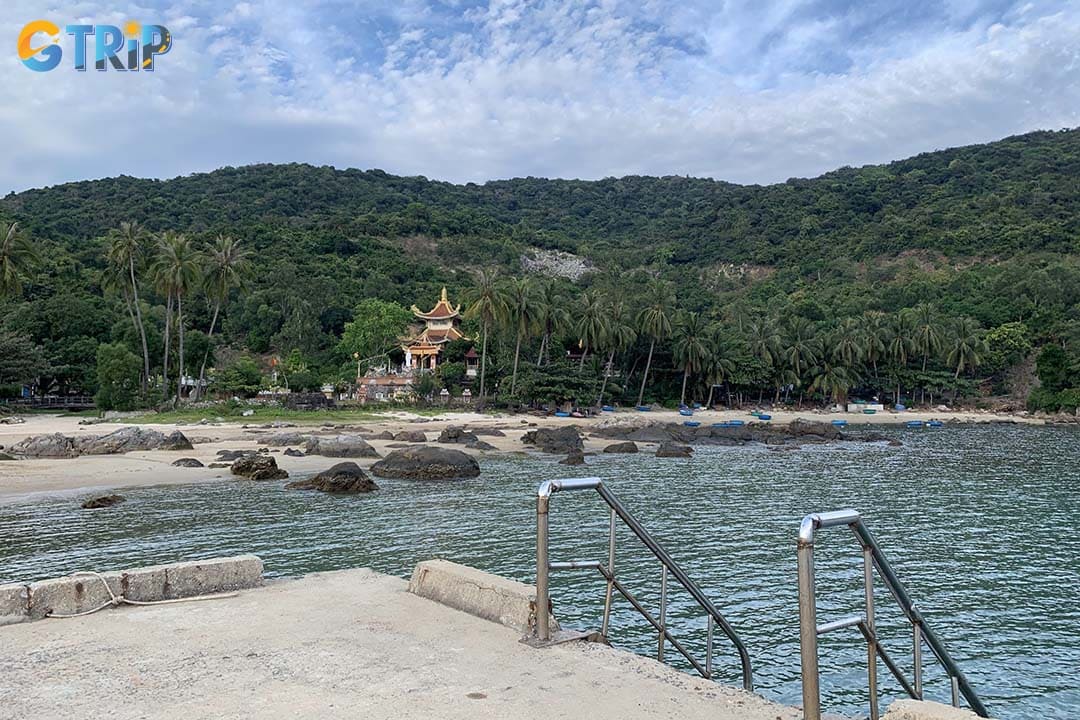
You have to reach Cua Dai Port first and then take a boat ride to Bai Huong Village on Cham Island
Nearby attractions to the Bai Huong Village
While Bai Huong is a destination in itself, it also serves as a peaceful base for exploring the other wonders of Hon Lao Island. You can easily hire a local boatman for a few hours to take you to these nearby sites. (If you're spending more time in the area, check out our complete travel guide to Hoi An).
- Bai Lang: This is the main and most populated village on the island. It’s more bustling than Bai Huong and is home to the main port, a lively market, the island’s primary clinic, and the ancient Hai Tang Pagoda.
- Hai Tang Pagoda: Built in 1758, this beautiful 300-year-old pagoda is a spiritual center for the islanders. It is dedicated to the Goddess of Mercy and other deities, worshiped by fishermen praying for safe voyages.
- Cham Ancient Well: Also known as the "Gieng Xom Cam", this fascinating freshwater well is said to be over 200 years old. Remarkably, it has never run dry, even in the driest seasons, and provides clean water for local residents.
- Bai Xep & Bai Chong: These are two of the most stunning beaches on the Cham Islands. Bai Xep is a wild, untouched beach known for snorkeling. Bai Chong is a larger, more organized beach with picturesque coconut trees and calm waters perfect for swimming and sunbathing.
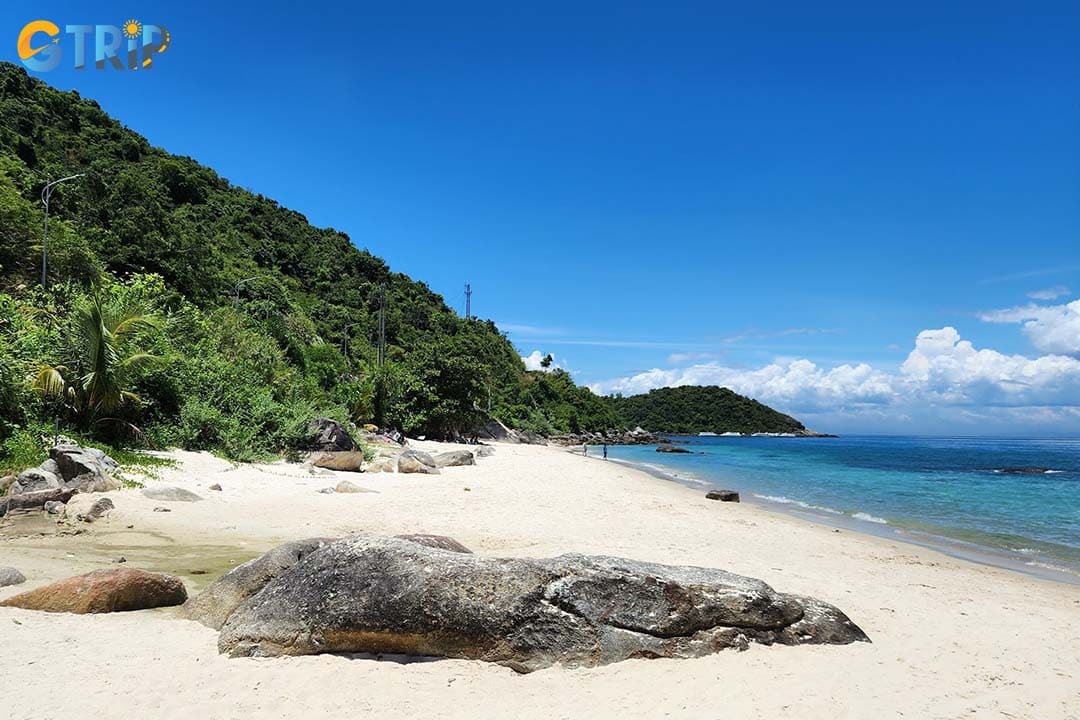
Nearby Bai Xep Beach is a wild, untouched beach known for snorkeling
Practical tips for visiting Bai Huong Village
To make your trip to Bai Huong smooth and enjoyable, a little preparation goes a long way. Since this is a small fishing village with limited facilities, keep these tips in mind before you go:
- Bring enough cash: There are no ATMs and card payments are rarely accepted. Prepare sufficient Vietnamese Dong (VND) for accommodation, meals, and boat transfers.
- Pack for sun and sea: The weather can be quite intense, especially around midday. Bring sunscreen (SPF 50+), a hat, sunglasses, light cover-ups, and swimwear if you plan to snorkel or swim.
- Travel light and practical: Avoid high heels or heavy accessories. Opt for comfortable shoes or sandals suitable for walking and beach activities.
- Respect local culture: Bai Huong is a traditional community. Dress modestly, especially when visiting places like Ngoc Huong Monastery or the Swiftlet Temple. Speak softly, and always ask before taking photos of locals.
- No plastic bags allowed: Cham Islands enforce a strict ban on single-use plastic bags. Bring reusable bags and be mindful of your waste during the trip.
- Book your stay in advance: Homestays are limited, particularly during peak season (April to August). Booking early helps secure better options and avoids last-minute hassle.
- Be prepared for simple facilities: Accommodation here is basic compared to mainland hotels. Expect simple rooms, possible shared bathrooms, and occasional power cuts during the day.
- Carry basic medicine: It’s a good idea to bring essentials like headache tablets, motion sickness pills, or allergy medicine, as pharmacies are limited on the island.
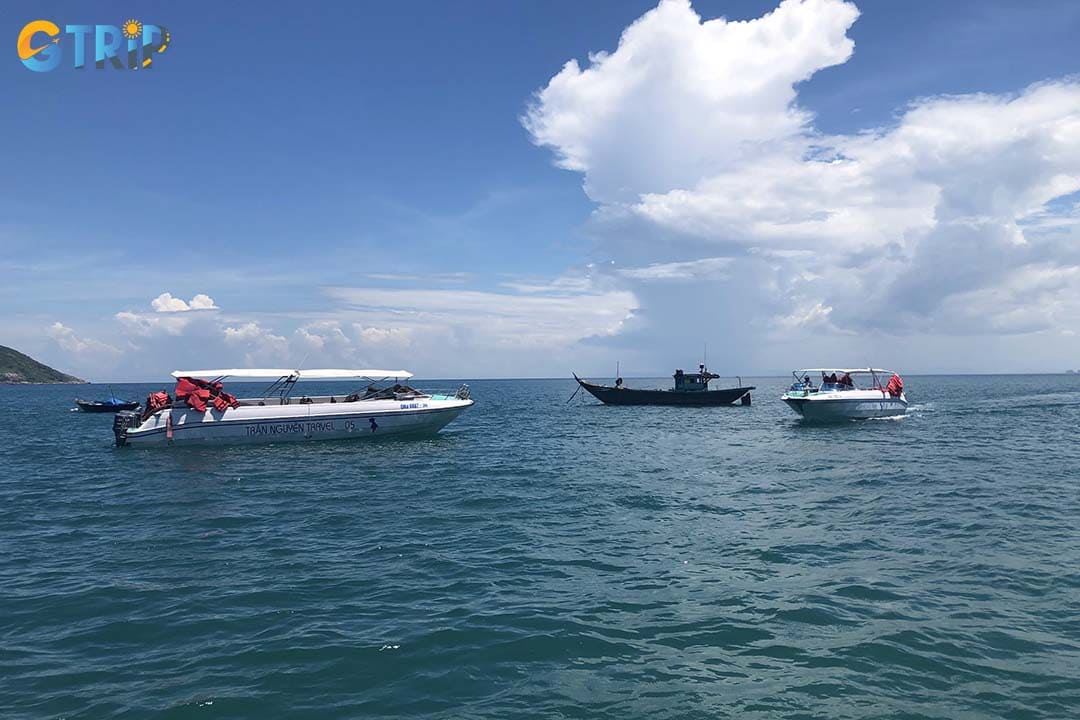
Remember practical tips to have a good trip to Bai Huong Village
Bai Huong village is a rare sanctuary that offers a genuine escape from the complexities of modern life. It’s a place to disconnect from technology and reconnect with nature, community, and a simpler, more meaningful way of living. The unique culture of its friendly residents, combined with the pristine natural beauty of the UNESCO Biosphere Reserve, creates an unforgettable travel experience. It reminds us of the importance of preserving both our environment and our cultural heritage for future generations to cherish. Ready for an unforgettable escape from the modern world? Let GTrip help you plan the perfect journey to Bai Huong village and the stunning Cham Islands.
Custom Your Journey

Other Attractions
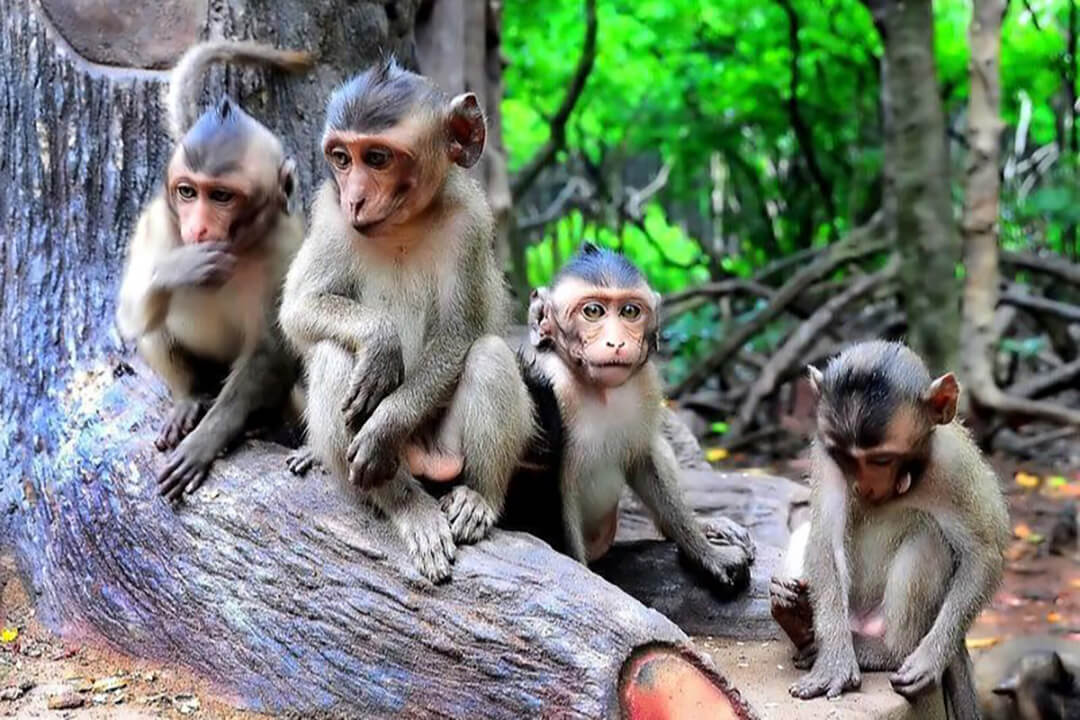
Can Gio Monkey Island in Ho Chi Minh City: Tickets, Things to Do & Travel Guide
Can Gio Monkey Island
Can Gio Monkey Island in Ho Chi Minh City offers a refreshing escape from the city’s buzzing motorbike chaos. Just a short distance from the center, Can Gio welcomes you with lush mangrove forests, winding waterways, and a fascinating history. Here, you can meet playful long-tailed macaques, drift through tranquil channels, and explore remnants of a wartime guerrilla base.
Can Gio Monkey Island in Ho Chi Minh City: Tickets, Things to Do & Travel Guide
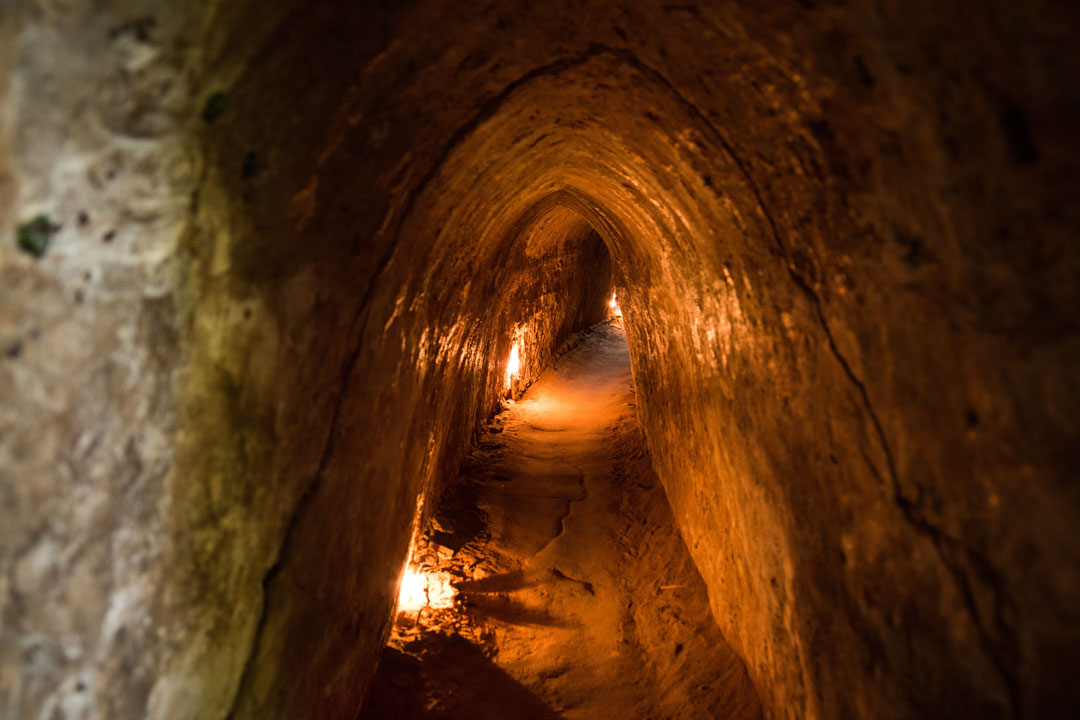
Cu Chi Tunnels: History, Architecture, Things To Do & Travel Guide
Cu Chi Tunnels
The Cu Chi Tunnels, located at TL15, Phu Hiep, Cu Chi District, Ho Chi Minh City, are a vast underground network of strategic passages, shelters, supply routes, and defensive traps.
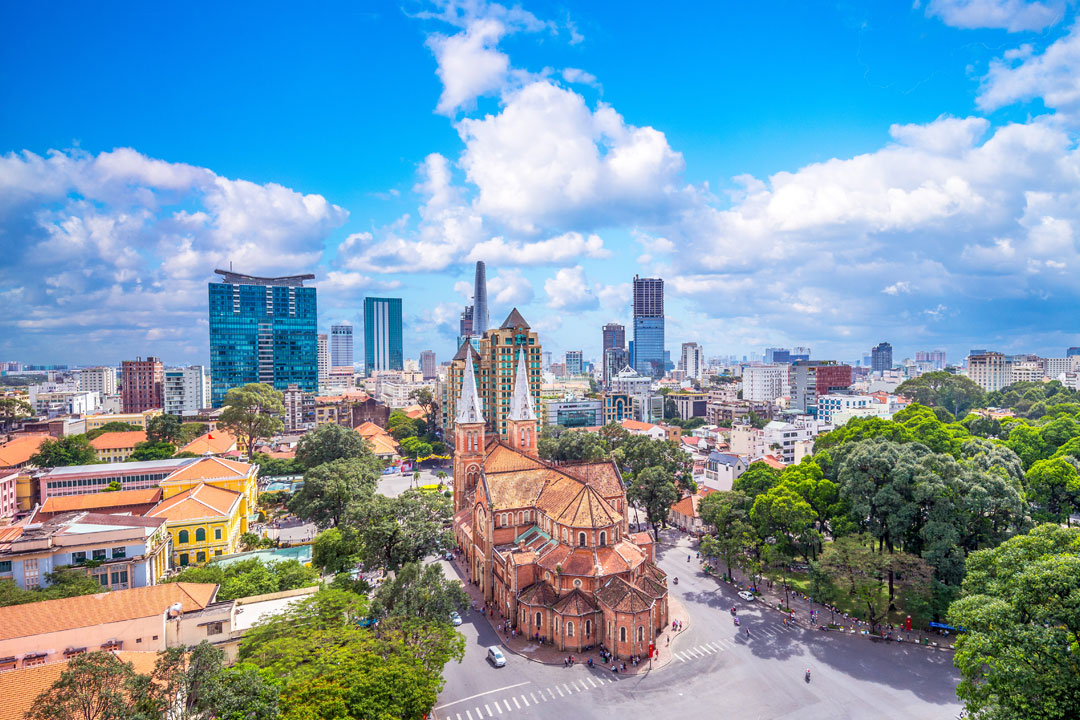
Ho Chi Minh City
Ho Chi Minh City, known as the "Pearl of the Far East," attracts both domestic and foreign tourists with its unique and diverse destinations.
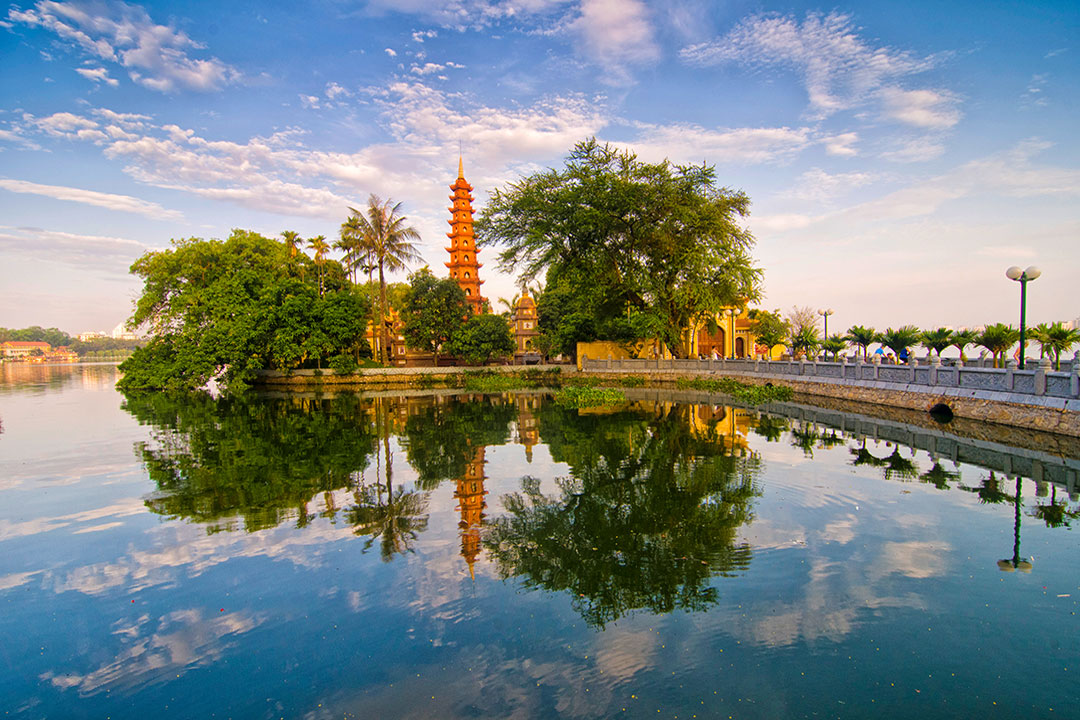
Tran Quoc Pagoda: History, Architecture, Significance & Travel Guide
Tran Quoc Pagoda
Nestled on the tranquil shores of West Lake, Tran Quoc Pagoda is the oldest Buddhist temple in Hanoi, with a history spanning over 1,500 years. Built in the 6th century under Emperor Ly Nam De, this sacred site reflects Vietnam’s Buddhist evolution while preserving its spiritual and architectural grandeur.