

Wednesday, October 14, 2026
Fujian Assembly Hall in Hoi An is a stunning testament to Chinese culture and architecture, nestled in the heart of Vietnam's most charming ancient town. A vibrant explosion of color, intricate design, and profound spiritual significance, this historic site is not just a landmark but a living storybook of Hoi An’s multicultural past. For travelers seeking to understand the soul of this UNESCO World Heritage site, a visit to the Fujian Assembly Hall, also known as Phuc Kien Assembly Hall, is an absolute must. This comprehensive guide from GTrip provides its rich history, mesmerizing architecture, practical tips, opening hours, and how to get there.
Table of Content
- Overview of the Fujian Assembly Hall in Hoi An
- What makes the Fujian Assembly Hall in Hoi An unique?
- History of Fujian Assembly Hall
- Architecture of the Fujian Assembly Hall in Hoi An
- Things to do at Fujian Assembly Hall in Hoi An
- How to get to Phuc Kien Assembly Hall in Hoi An?
- Nearby attractions to the Fujian Assembly Hall in Hoi An
- Practical tips for visitors
Overview of the Fujian Assembly Hall in Hoi An
The Fujian Assembly Hall stands as a monumental symbol of the Chinese community that helped shape Hoi An into a thriving international trading port. It was originally built as a gathering place for merchants and sailors from China’s Fujian province to socialize and connect. Over time, it evolved into a sacred temple dedicated to Thien Hau, the Goddess of the Sea, believed to protect travelers on dangerous ocean journeys. Known locally as the Phuc Kien Assembly Hall, it also functions as a pagoda dedicated to the revered general Guan Yu, earning it the additional name Ong Pagoda.
Where is Fujian Assembly Hall in Hoi An?
Address: No. 46 Tran Phu Street, Hoi An Ancient Town, Hoi An Ward (formerly Cam Chau Ward, Hoi An City, Quang Nam Province), Da Nang City
The Fujian Assembly Hall (Phuc Kien Assembly Hall) enjoys a prime location in the heart of the pedestrian-friendly ancient town, making it easy to find and effortless to include in any walking itinerary. Situated along Tran Phu Street, the main thoroughfare of the old quarter, it is just a short and pleasant stroll from iconic landmarks such as the Japanese Covered Bridge.
Thanks to its central position among lantern-lit streets and heritage houses, visitors can seamlessly combine a visit here with other highlights in the area. For travelers coming from nearby cities, it is located approximately 28 km from Da Nang and about 120 km southeast of Hue.
Opening hours and ticket prices
Planning your visit is straightforward, as the site maintains consistent hours and is part of the town's convenient ticket system.
- Opening hours: 8:00 AM - 6:00 PM daily
- Ticket price: Included in the Hoi An Old Town entrance ticket
To enter the Fujian Assembly Hall and other key heritage sites, you must purchase the Hoi An Old Town ticket. The standard ticket for foreigners costs 120,000 VND and grants you access to 5 of the 21 designated attractions. With its historical importance and breathtaking beauty, the Fujian Assembly Hall is one of the most popular and highly recommended choices for your five selections. Ticket booths are located at the main entrances to the Old Town.
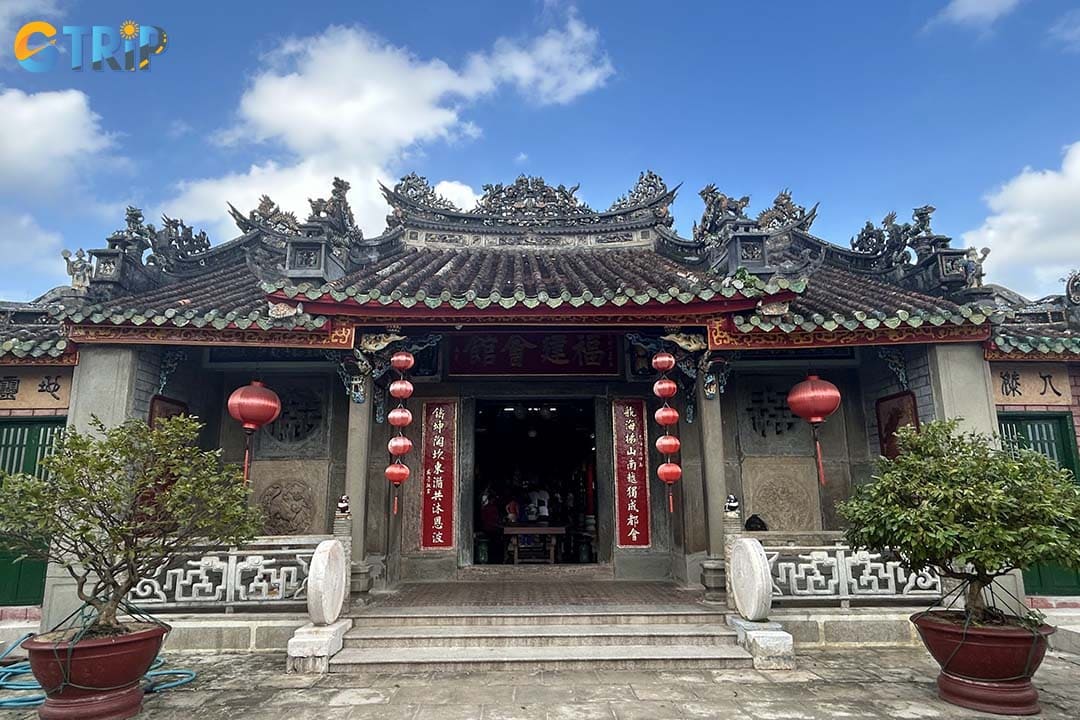
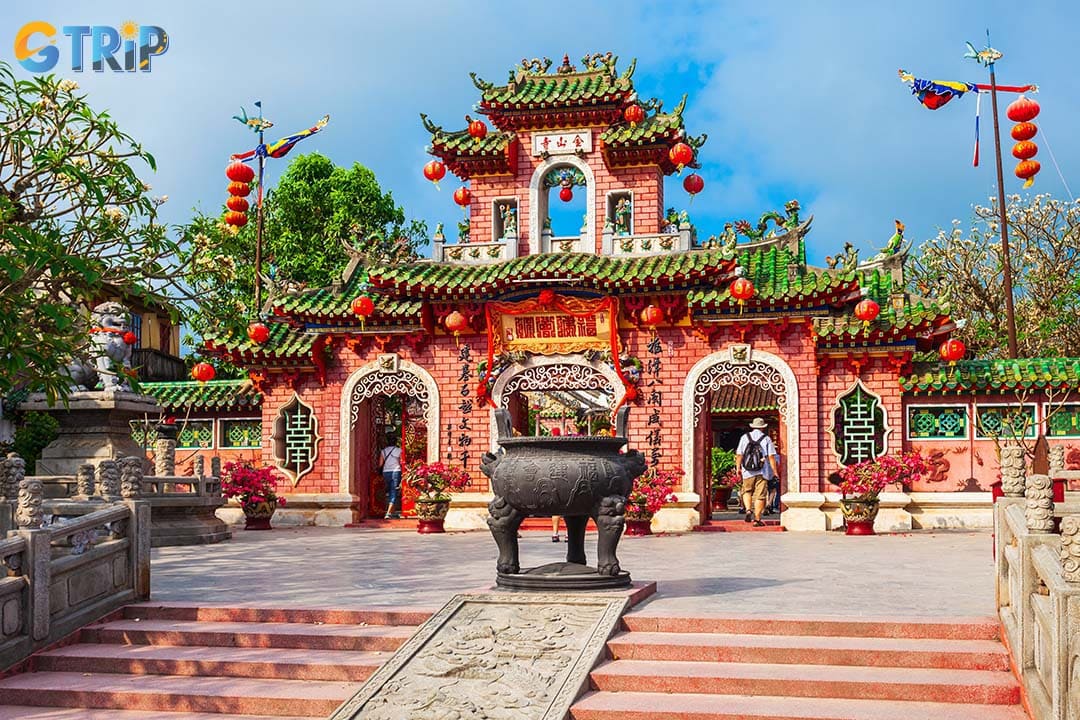
Fujian Assembly Hall in Hoi An stands as both a community hub and a spiritual sanctuary
What makes the Fujian Assembly Hall in Hoi An unique?
While Hoi An is home to several Chinese assembly halls, the Fujian Assembly Hall distinguishes itself with its sheer scale, vibrant artistry, and profound spiritual atmosphere. Its most iconic feature is the grand three-gated entrance, a masterpiece of traditional Chinese architecture adorned with intricate mosaics crafted from thousands of pieces of broken pottery and porcelain. Beyond this gate, serene courtyards unfold, filled with lush bonsai trees, ornate fountains, and statues of mythical creatures. It is this masterful blend of architectural grandeur and tranquil spirituality that sets it apart.
- Exquisite architecture: The hall is a perfect blend of traditional Chinese design principles and local Vietnamese craftsmanship, creating a style that is both familiar and unique to Hoi An.
- Spiritual significance: It remains an active place of worship, home to revered deities like Thien Hau, the Goddess of the Sea, who protected Fujianese sailors, and Guan Yu, the god of war, wealth, and righteousness.
- Community heritage: More than just a temple, it stands as a living museum that powerfully narrates the story of the Fujian Chinese community, their beliefs, and their immense contribution to Hoi An's legacy.
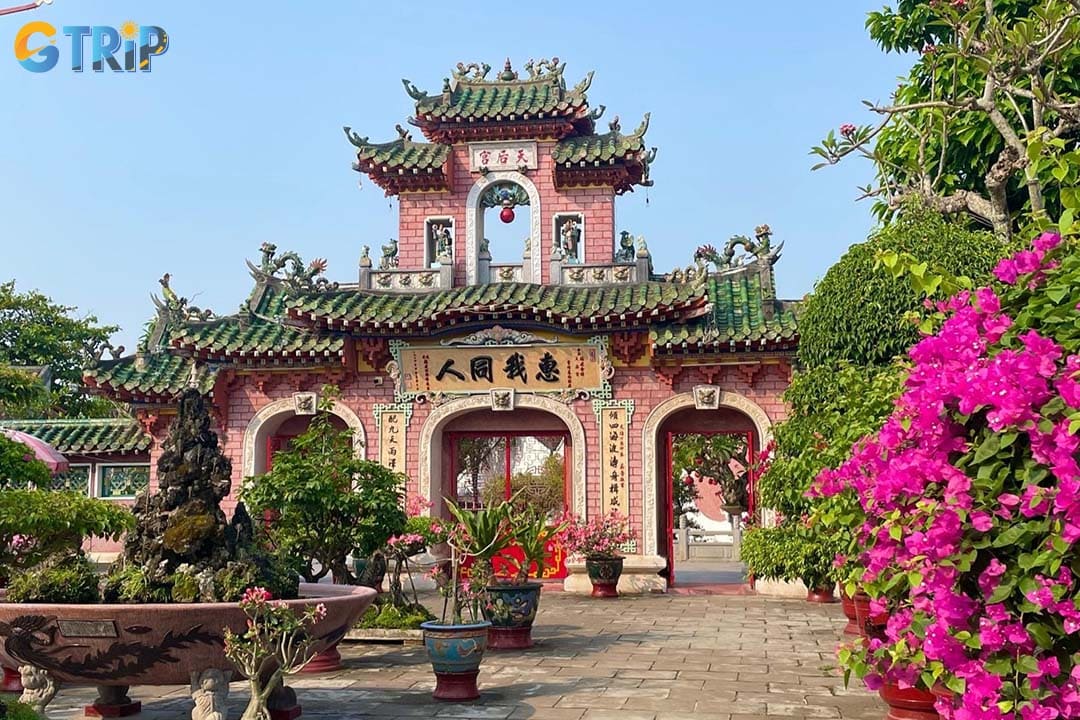
Fujian Assembly Hall has a perfect blend of traditional Chinese design principles and local Vietnamese craftsmanship
History of Fujian Assembly Hall
The Fujian Assembly Hall evolved from a simple Vietnamese temple into a grand Chinese sanctuary over several centuries. Explore the key milestones and legends that shaped its rich history and heritage through the timeline below:
- 16th century: The original foundation of this sacred site was a Vietnamese Buddhist temple named Kim Son Tu (Golden Mountain Temple). According to local folklore, residents found a Buddha statue washed ashore that was filled with gold and silver. This treasure was sold to purchase high-quality wood for the temple's construction, marking the very first spiritual presence on this land before it was transitioned to the Chinese community.
- 1697: A pivotal spiritual event occurred when a statue of Thien Hau Thanh Mau (the Goddess of the Sea) was discovered at the Hoi An estuary. Initially, a modest shrine was erected to house the statue and provide a place for merchants to pray for protection against ocean waves. This shrine gradually became a vital meeting point for the Fujian diaspora, who were among the earliest Chinese settlers in Hoi An.
- 1757: The Fujian community officially purchased the land and transformed the previous structure into the grand Fujian Assembly Hall seen today. By establishing this hall, the congregation created a majestic headquarters to worship their ancestors and the Goddess Thien Hau. This move solidified the hall's role as the most prominent social and religious hub for Fujian merchants in the Ancient Town.
- 17th century: The history of the hall is also deeply tied to the Six Generals (Luc Tanh Vuong Gia), who were military leaders loyal to the Ming Dynasty. After leading a rebellion against the Qing Dynasty and sacrificing their lives, they became revered figures. Because these generals were born in Fujian, their spirits were invited into the assembly hall to be honored alongside the goddess, representing the community's values of loyalty and bravery.
- 1970 and 1974: The Fujian Assembly Hall underwent two major restoration periods to maintain its magnificent and sophisticated Architecture. These efforts ensured that the intricate carvings and vibrant red colors remained well-preserved for future generations. The cultural significance of the site was further elevated in 2009 when the Mazu belief and customs were officially recognized as a UNESCO Intangible Cultural Heritage of Humanity.
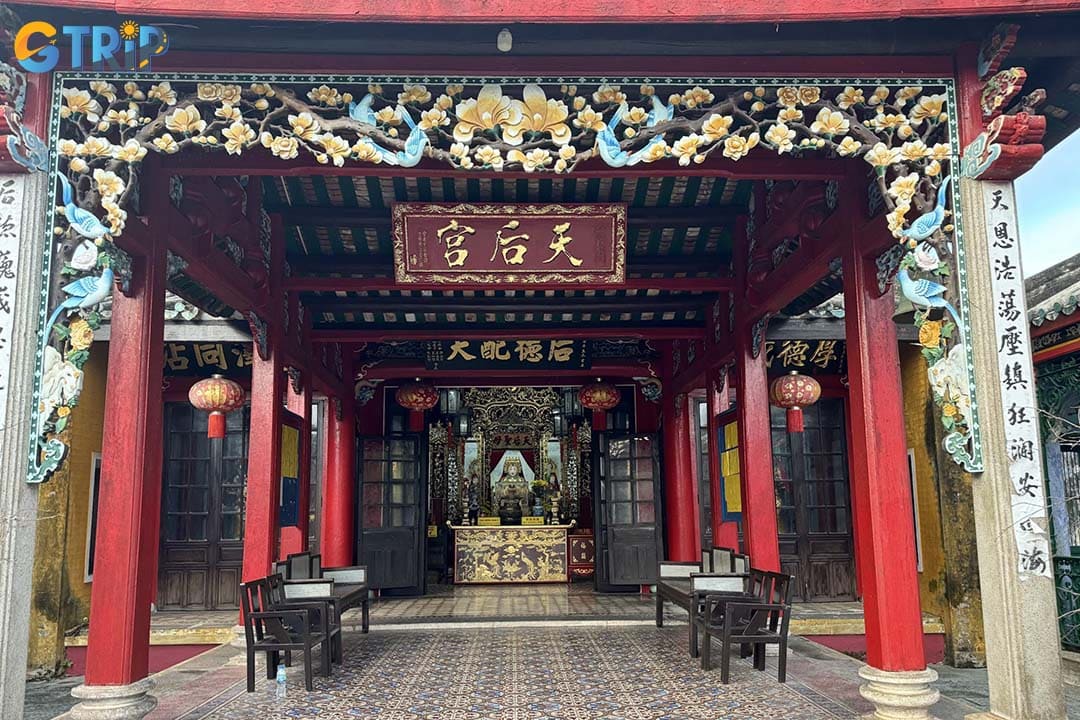
Fujian Assembly Hall has a rich history and heritage
Architecture of the Fujian Assembly Hall in Hoi An
Covering an area of 2,500 square meters, the Fujian Assembly Hall is a masterpiece of Hoi An architecture designed in the shape of the Chinese character "TAM". The layout follows a traditional sequence from the street entrance to the quiet back garden, featuring majestic buildings and detailed carvings. Explore the key sections of this grand complex through the highlights below:
The outer gate on Tran Phu Street
The outer gate is located right on the busy Tran Phu Street, serving as the first entrance to the complex. It features a single doorway with a traditional tiled roof and a name board displaying four Chinese characters. This is the primary spot where visitors need to show their Hoi An Ancient Town sightseeing ticket before entering the inner grounds.



The iconic three-arched gate (Tam Quan)
The Tam Quan Gate is the most famous architectural highlight of the Fujian Assembly Hall. Built with two storeys and three entrances representing heaven, earth, and human, this pink structure is a top instagrammable spot in Hoi An. The roof is covered in Yin-yang tiles and decorated with sophisticated porcelain inlays of winding dragons and phoenixes.
The main worshipping hall (Chanh dien)
As the spiritual center of the hall, the main hall is dedicated to Thien Hau Goddess (Mazu), the protector of seafarers. Her statue sits in the middle, accompanied by her two legendary guardians, Thien Ly Nhan and Thuan Phong Nhi. You will also find a detailed wooden boat model here, symbolizing the migration of the Fujian people to Vietnam.
The back worshipping hall (Hau dien)
The back hall is a sacred space where locals worship the six generals, the God of Wealth, and the 12 Midwives (Ba Mu). This area is famous for its large incense spirals hanging from the ceiling, which can burn for up to 30 days. Many visitors come here to pray for family health, prosperity, and the well-being of newborn babies.
The East and West houses
The East House and West house are two functional wings used for community meetings and historical exhibitions. Inside these rooms, you can see large "Happy" characters and various photographs documenting the activities of the Fujian community. There are also records of high-profile visits, including one from the former Chinese President Hu Jintao.
The four scenic courtyards
The Fujian Assembly Hall features four courtyards that connect the different buildings across a 2,500-square-meter area. The most notable feature is the carp jumping over the Dragon Gate statue, a symbol of luck and success in oriental culture. These open spaces are filled with ornamental trees, bonsai, and vibrant flowers like Bougainvillea, providing a peaceful atmosphere for tourists.
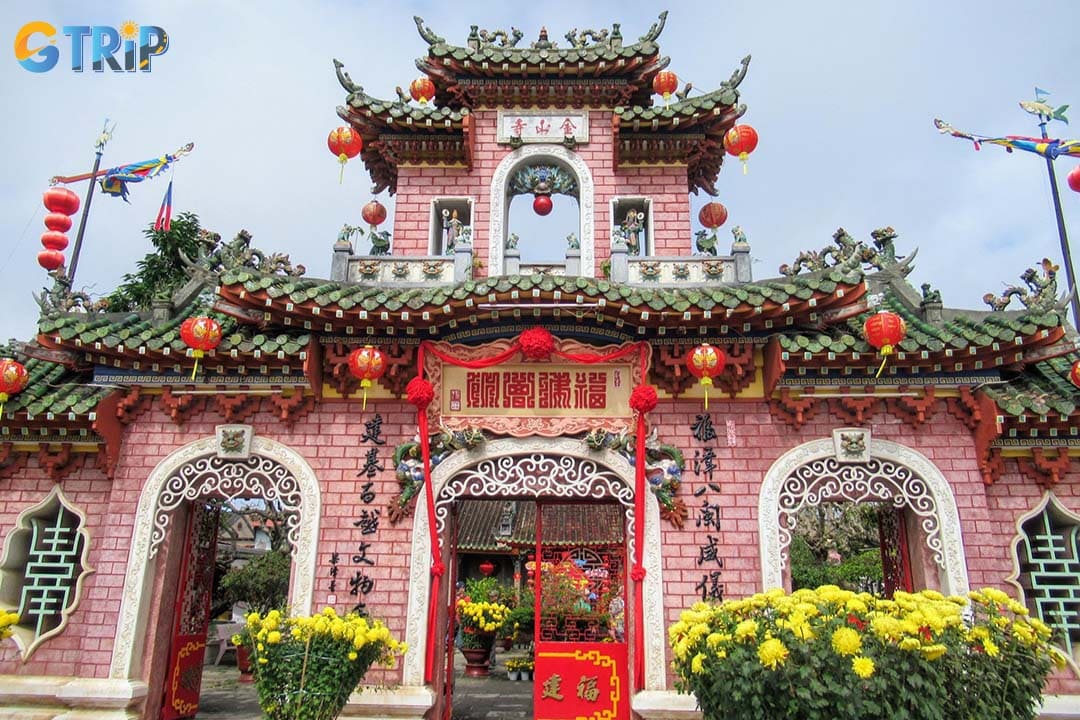
The architecture of the Fujian Assembly Hall in Hoi An follows the tradition of Chinese design
Things to do at Fujian Assembly Hall in Hoi An
Here are some activities that you can do when visiting the Fujian Assembly Hall.
1. Admire the sophisticated architecture and dragon fountain
Walking through the Tam Quan Gate is the first thing you should do to appreciate the porcelain inlays and the curved Yin-yang tile roof. This gate follows the "male left, female right" tradition and is only fully opened during major Festivals. Just inside, you will find a large garden featuring an elaborate Dragon Fountain and the Carp Jumping Over the Dragon Gate statue. Exploring the grounds in order from the gate to the back hall allows you to see the unique Chinese character "TAM" layout of the entire complex.
2. Pray for good fortune at the main and back halls
The main hall is a sacred space where you can pay respects to Thien Hau Goddess (Mazu), Avalokitesvara Bodhisattva, and the God of Wealth. If you are seeking blessings for your family or children, head to the Back Hall to worship the Six Generals, the 12 Midwives (Ba Mu), and the 3 Goddesses of Birth. Many locals believe this is a "pray for a wish" location, especially for pregnant women seeking a safe delivery or parents praying for the health of their newborn babies.
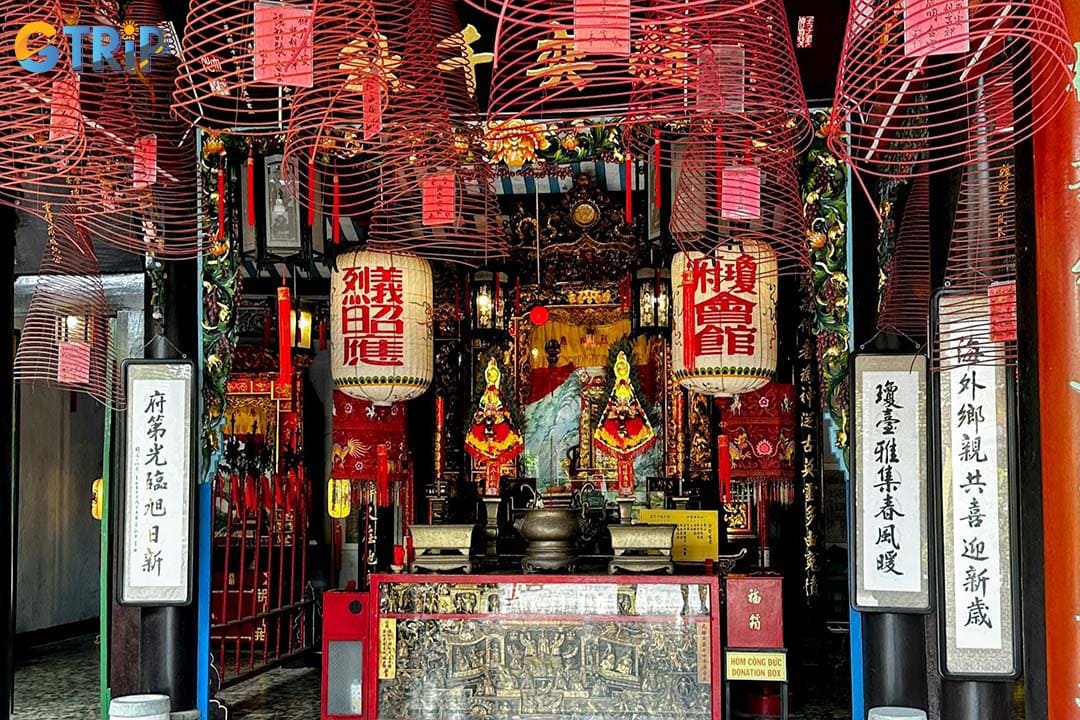
When visiting the hall, you should pray for good fortune and worship at the main and back halls
3. Make a wish with a giant incense spiral
Lighting a large incense spiral is one of the most popular spiritual activities at the Fujian Assembly Hall. These special incense coils can burn continuously for more than 30 days. You can write your personal information and heartfelt prayers on a yellow piece of paper and attach it to the spiral. It is believed that as the smoke rises, your wishes are carried to the gods. If the incense goes out, the hall staff will relight it to ensure your prayers remain sacred for the entire month.
4. Discover centuries-old historical artifacts
The hall serves as a museum preserving many valuable artifacts that reflect the history of the Fujian community in Hoi An. You can find ancient bronze bells, bronze drums, and ornate incense burners displayed throughout the buildings. Be sure to admire the 14 exquisite Horizontal Panels that are skillfully carved and gilded in gold. These treasures, along with the various statues of deities, provide a deep insight into the cultural and historical significance of the Chinese diaspora in Vietnam.
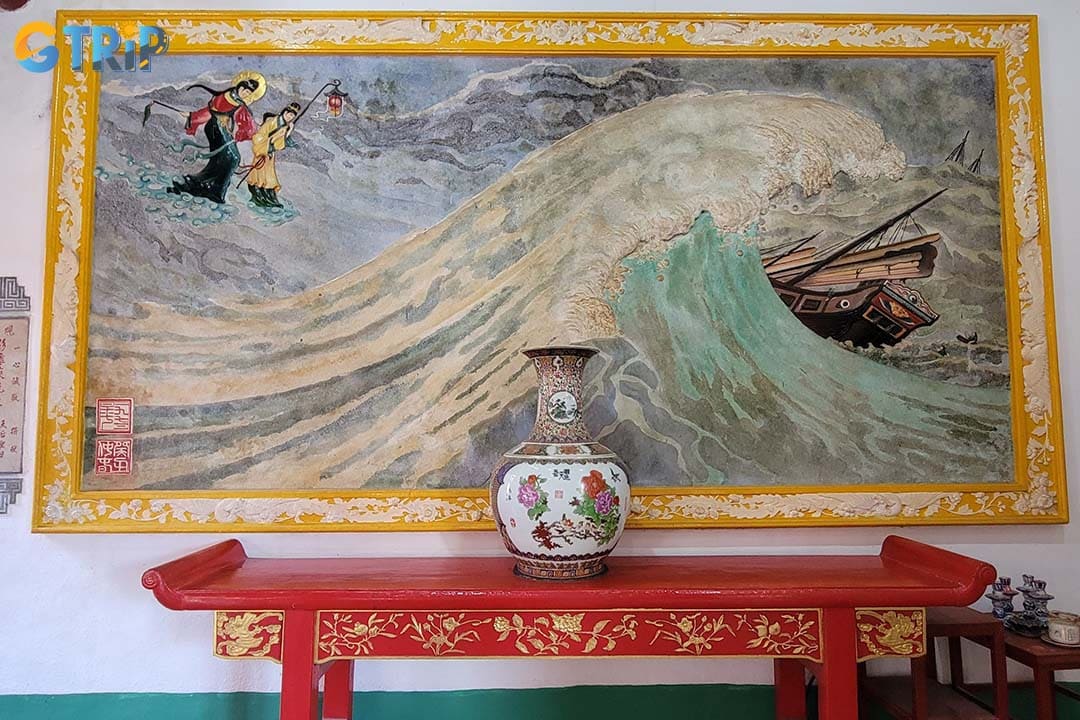
You can discover many historical artifacts around the hall
5. Join vibrant traditional festivals and ceremonies
To experience the true local Culture, you should visit during major lunar events. The largest celebration is The festival of Lady Thien Hau (March 23rd, lunar calendar), featuring rituals led by elders and offerings like roasted pig and steamed buns. Other significant dates include Nguyen Tieu Day (January 15th lunar), Luc Tanh Day (February 16th lunar) with ceremonial drumming, and Ba Mu Day (February 1st lunar). On the 2nd day of the 2nd lunar month, you can also witness the unique God of Wealth ceremony with traditional "tam sen" offerings.
How to get to Phuc Kien Assembly Hall in Hoi An?
The Fujian Assembly Hall is centrally located on Tran Phu Street, making it easily accessible from both within Hoi An and nearby Da Nang. Depending on your starting point, you can choose from various modes of Transportation like walking, cycling, or taking a taxi. Below are the specific directions and best travel options to help you reach this iconic landmark safely and conveniently:
From Da Nang International Airport
After landing at Da Nang International Airport, the most convenient way to reach the Fujian Assembly Hall is by booking a taxi or a private transfer. The drive takes you along the scenic coastal road directly to the edge of the Hoi An Ancient Town. Since the hall is located in a pedestrian-only zone, your driver will drop you off at the nearest accessible point, allowing for a short, pleasant walk to the site.
- Distance: 30 km
- Travel time: 45 - 55 minutes
- Routes: Coastal road via Truong Sa
- Optimal option: Taxi or private car for direct service
From Da Nang City center
Travelers starting from Da Nang City center or My Khe Beach can choose to ride a Motorbike for more flexibility or take a Taxi. The route along the Vo Nguyen Giap and Truong Sa coastal roads is well-paved and easy to navigate. If riding a motorcycle, you can park near the Hoi An Central Market and walk for 2 to 3 minutes to reach the hall on Tran Phu Street.
- Distance: 30 km
- Travel time: 45 - 60 minutes
- Routes: Vo Nguyen Giap - Truong Sa
- Optimal option: Motorbike for adventure or taxi for comfort
It’s easy to reach Fujian Assembly Hall from anywhere in Danang
From around Hoi An Ancient Town
If you are staying in central areas like Minh An, Son Phong, or Cam Pho, the best way to visit is by walking or using a bicycle. Many hotels provide free bikes or rentals for around 50,000 VND. Since Tran Phu Street is a pedestrian area during peak hours, usually from 9:00 to 11:30 AM and 3:00 to 9:30 PM, motorized vehicles are restricted, making it a peaceful zone for explorers.
- Distance: 1 - 2 km from most central hotels
- Travel time: 5 - 15 minutes
- Routes: Tran Phu Street
- Optimal option: Walking or bicycling to navigate pedestrian streets easily
Transportation options
There are several transportation methods to suit every traveler. Taxis are metered at 15,000 - 20,000 VND per kilometer, while electric cars are available for group trips. For a unique and slow-paced experience, you can hire a Rickshaw (cyclo) to penetrate the vibrant life of the Ancient Town. Additionally, luxury resorts often offer a free Shuttle Bus, and motorbike rentals are available at 150,000 - 250,000 VND per day.
- Private car/Transfer: Best for comfort and convenience, especially for airport transfers or families.
- Taxi/Ride-hailing (Grab, XanhSM): Widely available, affordable, and reliable for trips from Da Nang.
- Bicycle: Affordable and ideal for narrow alleys.
- Motorbike: A popular option for freedom and flexibility, but only recommended if you are confident with Vietnamese traffic.
- Shuttle bus: Convenient for guests staying at beach resorts.
- Bicycle/Walking: The ideal and most enjoyable way to explore once you are in Hoi An.
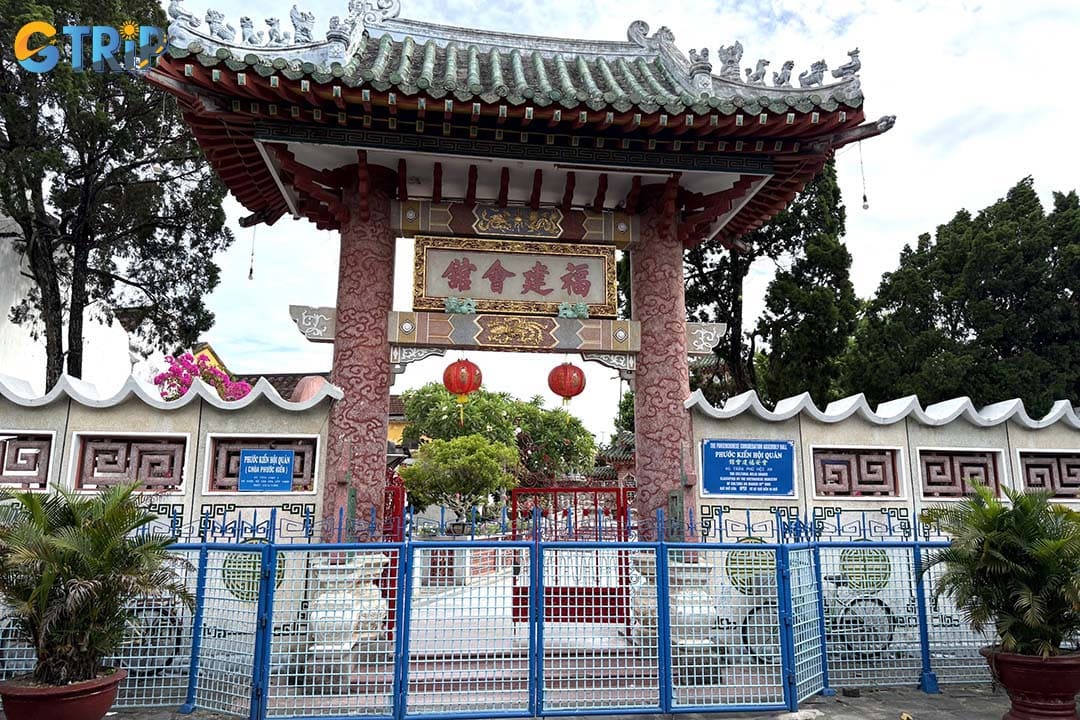
Getting to Phuc Kien Assembly Hall is easy by many means of transportation
Nearby attractions to the Fujian Assembly Hall in Hoi An
The Fujian Assembly Hall is surrounded by other essential Hoi An landmarks, making it easy to create a fantastic walking tour.
- Japanese Covered Bridge: This iconic 18th-century bridge is one of Hoi An’s most recognizable landmarks and a symbol of the city. It is located just a short five-minute walk away.
- Cantonese Assembly Hall: Situated on Tran Phu Street, this historic assembly hall is famous for its elaborate dragon sculptures. Its colorful courtyard and ornate details make it a memorable cultural stop.
- Tan Ky Old House: This beautifully preserved 18th-century merchant house reflects the architectural styles of old Hoi An. Inside, you can learn about the daily life and trading history of past generations.
- Hoi An Central Market: Located beside the Thu Bon River, this lively market captures the energy of local life. It is a great place to taste street food and shop for souvenirs.
- Museum of Trade Ceramics: This museum highlights Hoi An’s history as a major international trading port. Its collection features antique ceramics from across Asia and the Middle East.
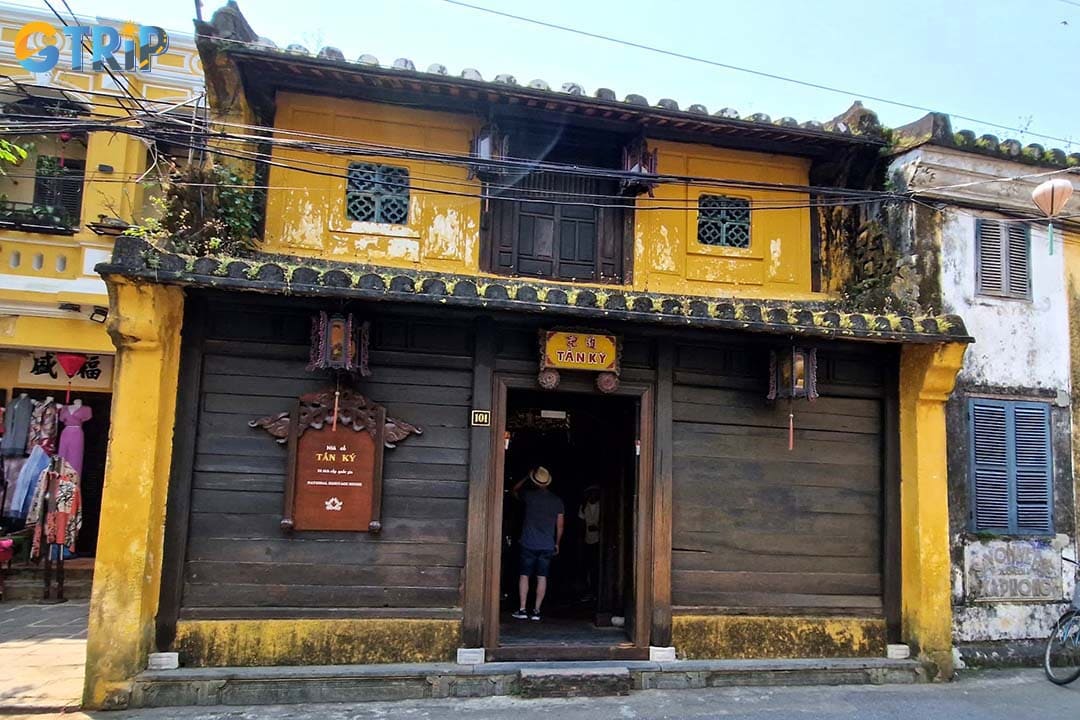
You can also visit the Tan Ky Old House for learning about the daily life and trading history of past generations
Practical tips for visitors
To make the most of your visit, keep these simple tips in mind.
- Dress code: As this is an active place of worship, it's important to dress respectfully. Ensure your shoulders and knees are covered before entering the main prayer halls.
- Best time to visit: To avoid the largest tour groups and the intense midday heat, plan your visit for early in the morning (8-9 AM) or later in the afternoon (4-5 PM).
- Buy the old town ticket: Remember that you need the combo ticket to enter. You can purchase this at an official ticket booth at any of the main entrances to the Ancient Town.
- Be respectful: This is a sacred site for many. Keep your voice at a respectful level, avoid touching the delicate artifacts, and be mindful of local people who are there to worship.
- Allow enough time: Don't rush your visit. Plan for at least 45-60 minutes to explore the entire complex, from the entrance gate to the rear courtyards, without feeling hurried.
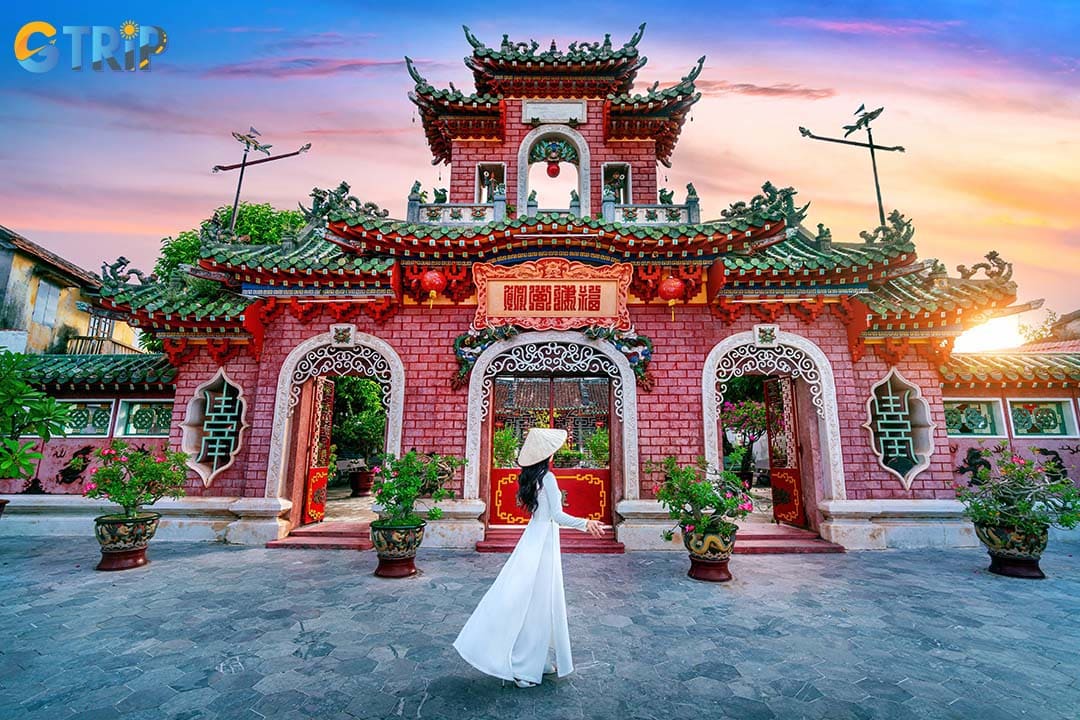
Remember practical tips to have a wonderful visit to the Fujian Assembly Hall in Hoi An
The Fujian Assembly Hall in Hoi An is far more than just a beautiful building. It is a profound cultural landmark that encapsulates the history, faith, and artistry of the people who built this town. It’s a place where every carved beam, ceramic dragon, and wisp of incense smoke tells a story of commerce, community, and devotion. With its breathtaking beauty and deep-rooted history, the Fujian Assembly Hall is more than just a tourist spot, it's the soul of Hoi An waiting to be discovered. We at GTrip hope this guide helps you create unforgettable memories on your visit.
Custom Your Journey

Other Attractions

Can Gio Monkey Island in Ho Chi Minh City: Tickets, Things to Do & Travel Guide
Can Gio Monkey Island
Can Gio Monkey Island in Ho Chi Minh City offers a refreshing escape from the city’s buzzing motorbike chaos. Just a short distance from the center, Can Gio welcomes you with lush mangrove forests, winding waterways, and a fascinating history. Here, you can meet playful long-tailed macaques, drift through tranquil channels, and explore remnants of a wartime guerrilla base.
Can Gio Monkey Island in Ho Chi Minh City: Tickets, Things to Do & Travel Guide
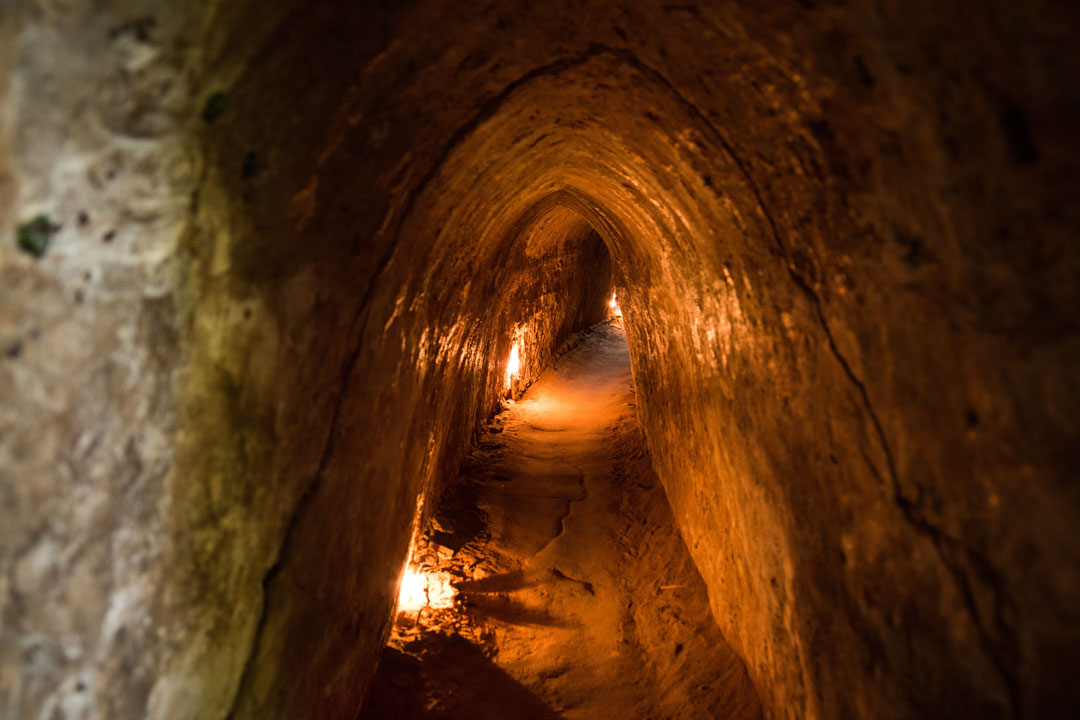
Cu Chi Tunnels: History, Architecture, Things To Do & Travel Guide
Cu Chi Tunnels
The Cu Chi Tunnels, located at TL15, Phu Hiep, Cu Chi District, Ho Chi Minh City, are a vast underground network of strategic passages, shelters, supply routes, and defensive traps.
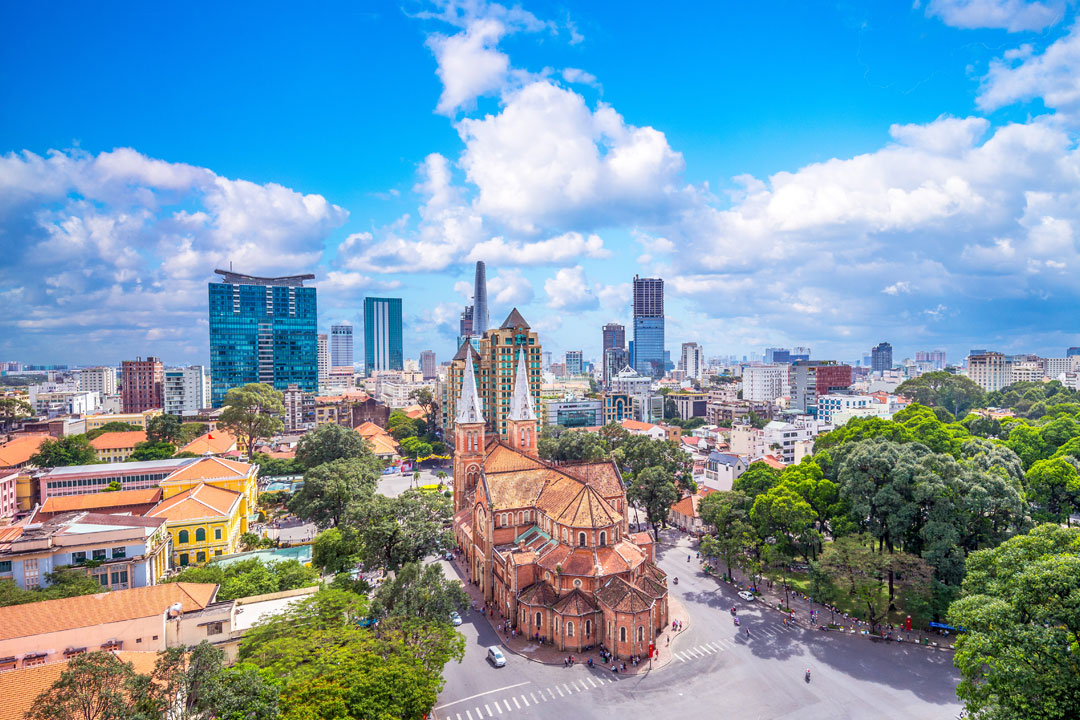
Ho Chi Minh City
Ho Chi Minh City, known as the "Pearl of the Far East," attracts both domestic and foreign tourists with its unique and diverse destinations.
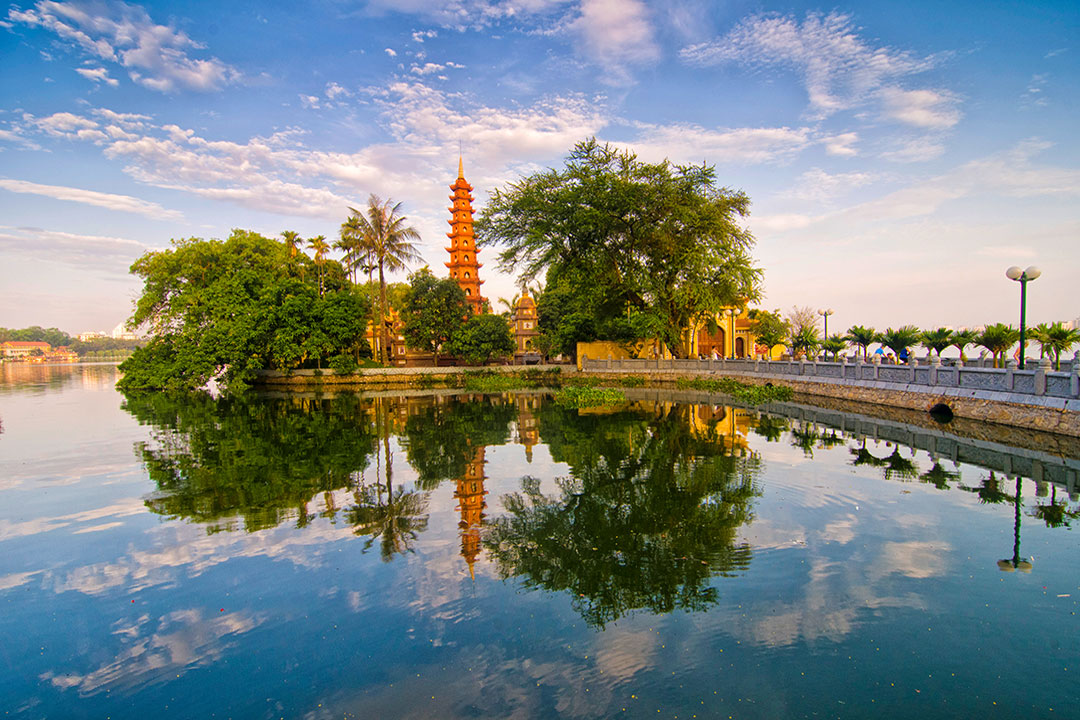
Tran Quoc Pagoda: History, Architecture, Significance & Travel Guide
Tran Quoc Pagoda
Nestled on the tranquil shores of West Lake, Tran Quoc Pagoda is the oldest Buddhist temple in Hanoi, with a history spanning over 1,500 years. Built in the 6th century under Emperor Ly Nam De, this sacred site reflects Vietnam’s Buddhist evolution while preserving its spiritual and architectural grandeur.