
Wednesday, October 14, 2026
Hai Tang Pagoda is the spiritual and cultural heart of Vietnam’s stunning Cham Islands, offering a serene escape steeped in centuries of history. Nestled on Hon Lao, the largest island in the archipelago, this ancient temple stands as a testament to the fishermen and traders who first sought solace and protection on these shores. It’s more than just a beautiful building, it’s a living piece of island heritage. In this comprehensive guide, we at GTrip will walk you through everything you need to know for a memorable visit.
Table of Content
Overview of the Hai Tang Pagoda on Cham Island
- Address: On Lao Island of Cham Islands, Tan Hiep Commune (formerly Hoi An City, Quang Nam Province), Da Nang City
- Opening hours: All day
- Entrance fee: Free
- Best time to visit: February to the end of August
Located about 15 km from Cua Dai Beach, Hai Tang Pagoda sits at the foot of a mountain on Hon Lao Island, overlooking the island’s only rice field. As the oldest Buddhist temple in the Cham Islands, it has served as the spiritual center of the local community for nearly 300 years.
Islanders and fishermen regularly visit the pagoda to pray to Buddha and sea deities for protection, guidance, and abundant catches. With its tranquil setting and well-preserved architecture, Hai Tang Pagoda offers a peaceful escape from the busy beaches and a deeper insight into local culture and beliefs.
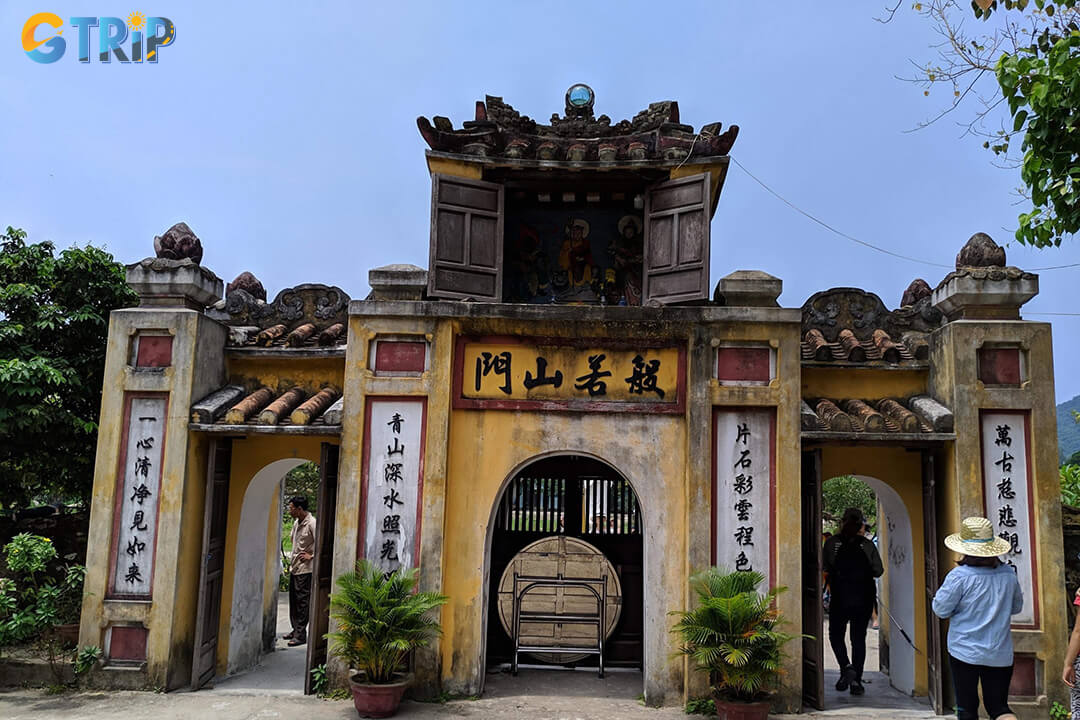
Hai Tang Pagoda offers a peaceful spiritual retreat with scenic views and deep cultural significance on Hon Lao Island
History of the Hai Tang Pagoda
Before diving into its architectural details, understanding the history of Hai Tang Pagoda helps reveal why this place holds such deep cultural and spiritual significance for the island. Over the centuries, the pagoda has gone through several key phases, shaped by natural events, local beliefs, and the rise of nearby trading routes.
| Phase | Content |
|---|---|
| Origins and early construction (1758) | Built in 1758 during the Canh Hung era, Hai Tang Pagoda is the oldest Buddhist temple in the Cham Islands. From its earliest days, it has served as a spiritual center for residents and fishermen, who came to pray for safety at sea and a prosperous life on the island. |
| Relocation after the 1848 typhoon | In 1848, a powerful typhoon severely damaged the original structure, forcing the pagoda to relocate about 200 meters from its initial site. The new location, at the foot of a mountain and facing open fields, was considered more favorable in terms of feng shui, offering both protection and harmony with nature. |
| Role during the Hoi An trading port era (16th-19th centuries) | From the 16th to 19th centuries, when Hoi An Ancient Town thrived as a major international trading port, merchant ships from China and Japan often stopped at Cham Island. Many traders visited Hai Tang Pagoda to pray for safe journeys and successful voyages. |
| Legends behind the Pagoda’s construction | According to local legend, a boat carrying wooden pillars from northern Vietnam was forced to stop at the islands due to a storm. After praying at a nearby temple, the sailors received a divine message that the wood was meant to build a pagoda on the island. Soon after, Hai Tang Pagoda was constructed using those very materials. |
| Preservation & National recognition | Despite nearly 300 years of history, Hai Tang Pagoda has retained much of its original charm and structure. An ancient bell in the pagoda, believed to date back to the Le dynasty, suggests that elements of the site may even predate its official construction. In 2007, the pagoda, along with several other sites on the islands, was recognized as a national cultural and historical heritage site of Vietnam. |
Architecture of the Hai Tang Pagoda
Hai Tang Pagoda features classic Central Vietnamese architecture, set in a prime feng shui location with mountains behind and open fields in front.
Tam Quan Gate (Cong Tam Quan)
The Tam Quan Gate is constructed of stone and brick in an ancient architectural style, offering a sense of simplicity and tranquility.
- Dimensions and structure: The massive gate stands 5 meters tall and 6 meters wide, featuring a main entrance and two side entrances with gracefully curved archways.
- Lotus pillars: A striking highlight of the gate is its four large pillars, which are intricately carved with elegant lotus motifs.
- Yin-Yang roof: The roof is covered with weathered yin-yang tiles, bearing the mossy marks of time and reflecting traditional Mahayana Buddhist aesthetics.
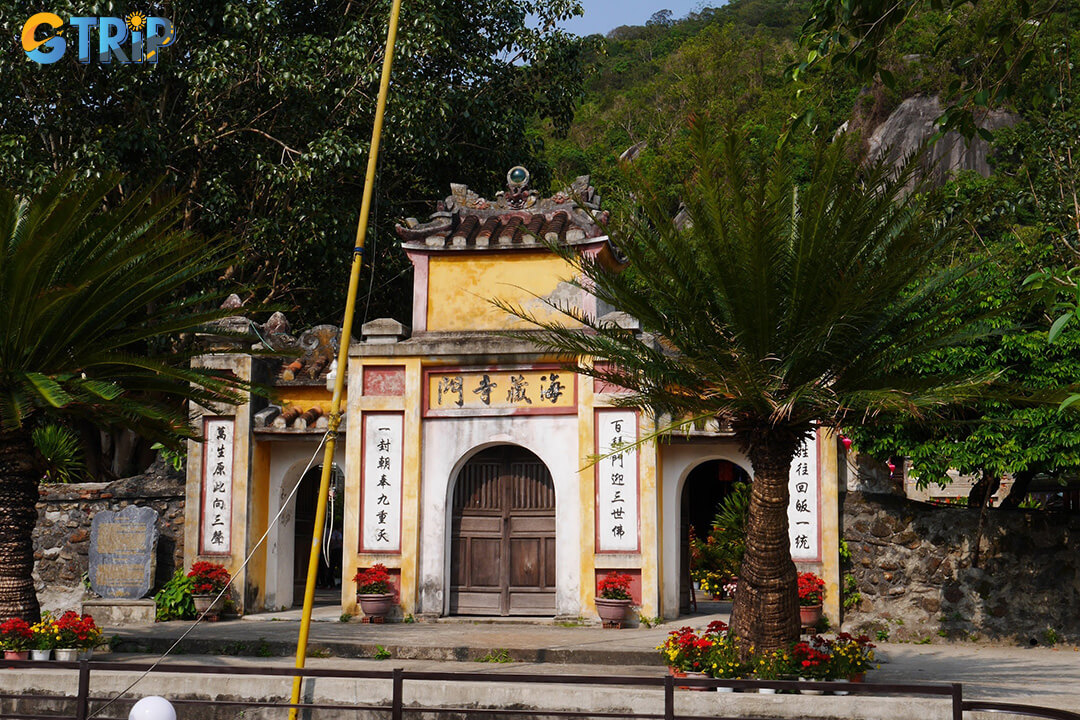
The Tam Quan Gate impresses with its ancient design, lotus-carved pillars, and yin-yang tiled roof, creating a serene and timeless entrance
Lotuspond and Lady Buddha Statue
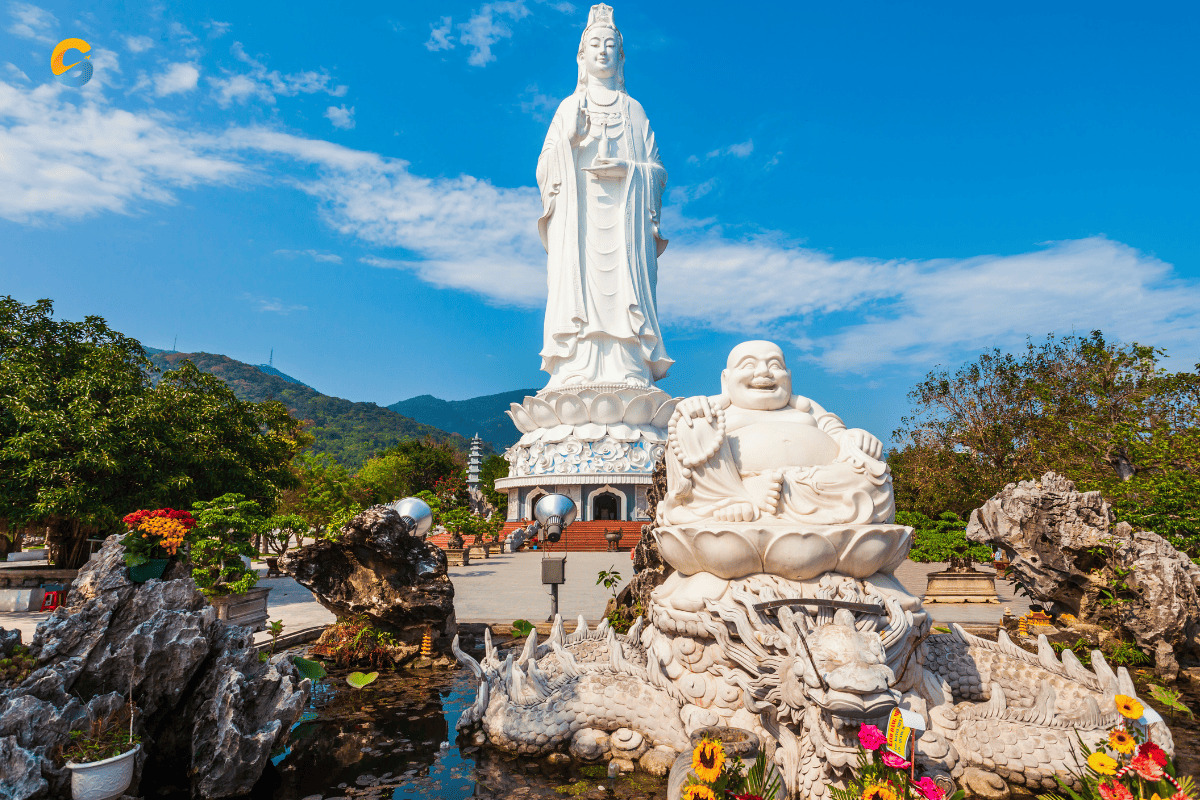
Stepping through the Tam Quan Gate and past the elegantly carved stone walls, visitors enter a serene courtyard. The centerpiece of this space is a small lotus pond featuring a 3.5-meter-tall statue of Lady Buddha (Goddess of Mercy).
The statue faces the East Sea, carrying a profound symbolic meaning: it represents the Goddess's boundless compassion, watching over the local fishermen and blessing them with safe voyages. If visiting during the summer, tourists will be captivated by the blooming lotus pond, which fills the air with a sweet fragrance and creates a deeply relaxing and peaceful atmosphere.

Main Hall
The Main Hall (Buddha Hall) is the largest structure in the pagoda, last renovated in 2002. It impresses visitors with its towering ironwood pillars, robust wooden truss system, and exquisitely carved details. The wooden doors are set back about 2.5 meters from the eaves, consisting of three sets of doors that separate the interior from the outside. The solemn worship space inside reflects a harmonious blend of beliefs and is divided into three main compartments:
- Buddhas of the three times: Placed in the central compartment, alongside the majestic statue of Shakyamuni Buddha seated on a lotus pedestal.
- Guan Gong and Zhou Cang: Enshrined in the right compartment, along with Guan Ping, representing loyalty and righteousness.
- Ksitigarbha Bodhisattva: Worshipped in the left compartment.
Unique wooden statues: A distinctive feature that sets Hai Tang Pagoda apart from modern temples is that almost all the statues in the main hall are crafted from wood. These ancient statues are as old as the pagoda itself. They are beautifully coated in traditional red lacquer and gilded with gold, perfectly preserving the masterful craftsmanship of ancient artisans.
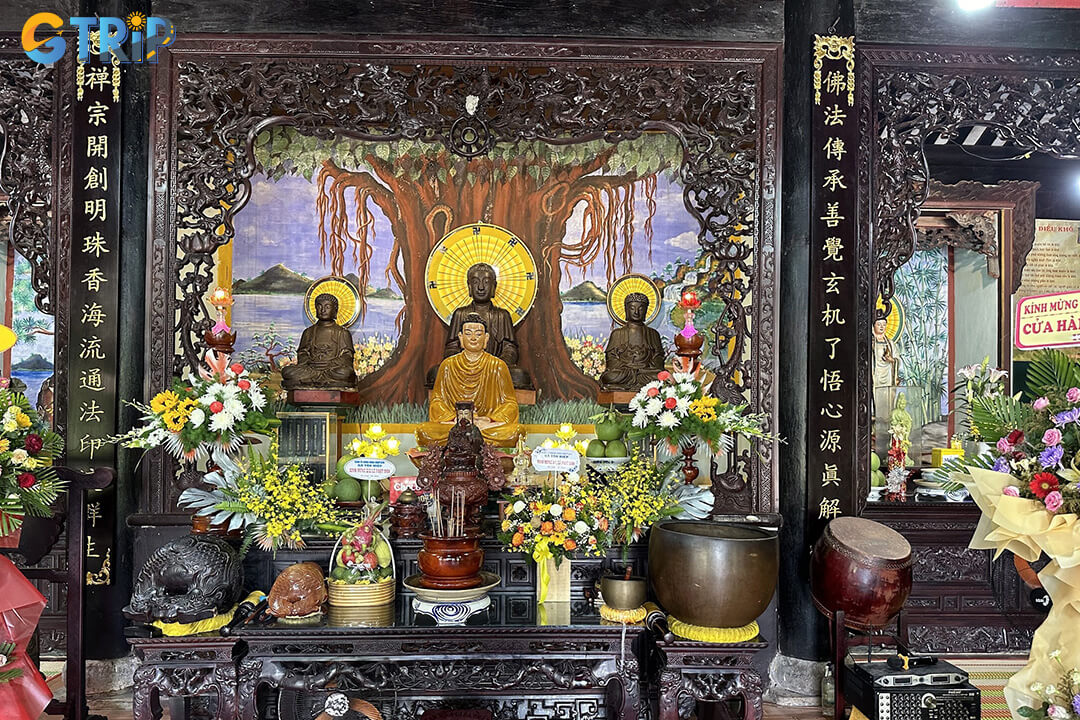
The Main Hall stands out with its grand wooden architecture, intricate carvings, and sacred statues, reflecting a rich blend of Buddhist traditions
Things to do at Hai Tang Pagoda
A visit to Hai Tang Pagoda is a tranquil experience that offers much more than just a photo opportunity, it is a chance to connect with the very soul of the island. Spending about an hour here allows you to fully appreciate its peaceful ambiance, architectural beauty, and profound historical depth.
1. Discover the unique "Four Nos" and local worship
Unlike most Buddhist temples in Vietnam, Hai Tang Pagoda is famous for its unique "Four Nos": no abbot, no resident monks, no burning of votive paper, and no electric lights (maintaining a pure, traditional atmosphere). Since the passing of Venerable Thich Hai Tang long ago, the pagoda has been respectfully managed by a local community committee.
Despite having no monks, it remains deeply sacred. You will often see islanders lighting incense and praying for safe voyages and good fortune. Visitors are welcome to respectfully participate, offering a moment of quiet reflection without the smoke of burning votive paper.
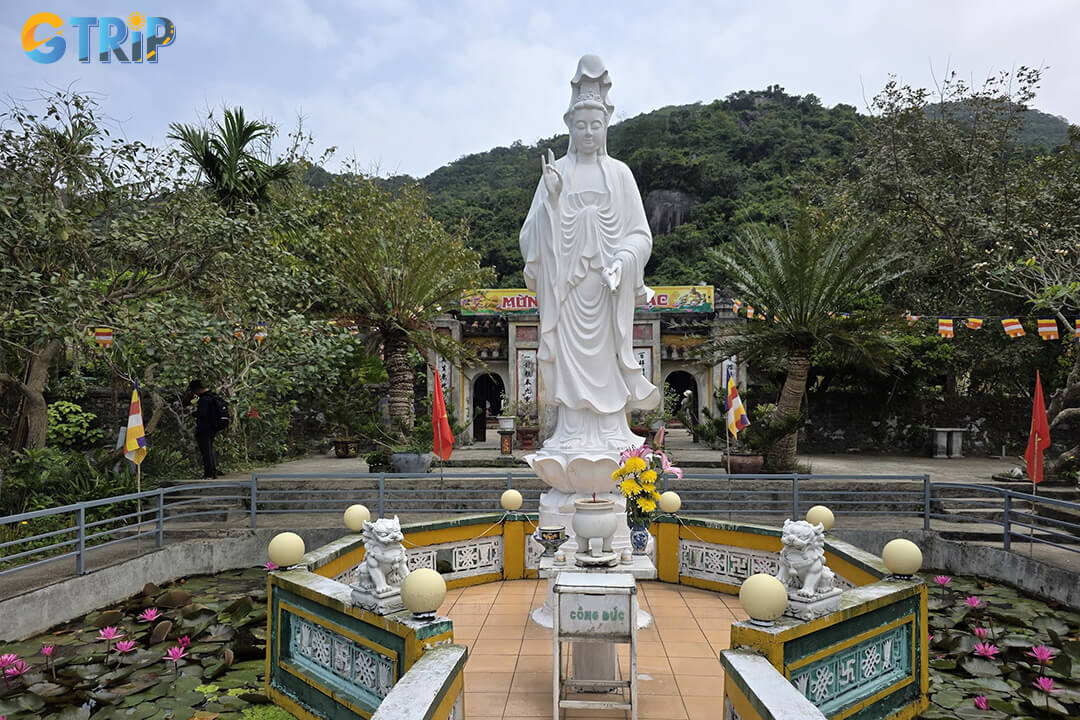
Hai Tang Pagoda is known for its unique “Four Nos”, offering a simple, monk-free sanctuary that preserves a peaceful and deeply spiritual atmosphere
2. Join traditional Buddhist festivals
If you want to experience the vibrant spiritual life of the coastal community, try to time your visit during one of the major annual festivals (dates are based on the Lunar Calendar):
- January 15th: Ceremony praying for peace.
- April 15th: Vesak/Buddha's Birthday.
- July 15th: Vu Lan Festival/Ghost Festival.
- February 19th, June 19th, and September 19th: Days honoring the Goddess of Mercy.
3. Explore the ancient architecture and artifacts
Take your time to admire the exceptional craftsmanship that has survived centuries of harsh island weather. Notice the intricate carvings in the ironwood pillars, the mythological creatures decorating the moss-covered yin-yang roof tiles, and the solemn expressions of the wooden statues.
The pagoda also serves as a living museum. You can admire ancient artifacts such as the massive bronze bell, centuries-old statues, and gilded lacquered panels. Reading the traditional inscriptions provides deep insight into the enduring values of the Cham Island community.
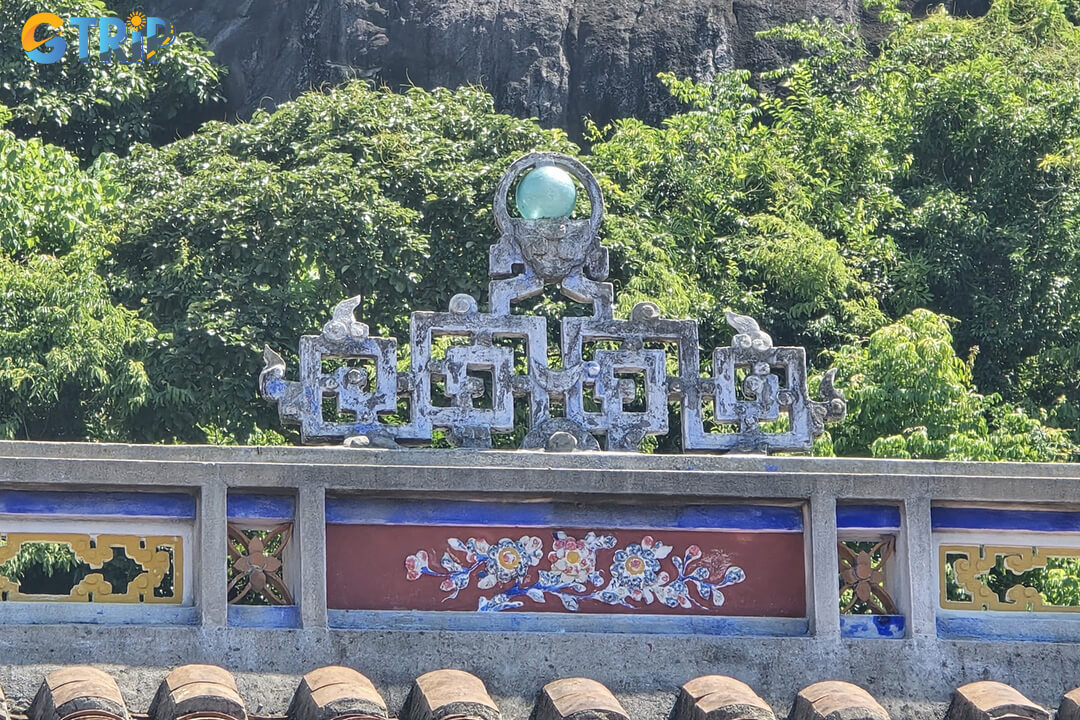
Admire centuries-old craftsmanship and artefacts that reveal the enduring cultural and spiritual heritage of Cham Island
4. Enjoy the serene atmosphere
Thanks to its secluded location and the absence of resident monks, the pagoda is an absolute haven of peace. Surrounded by lush greenery, mountain backdrops, and a large lotus pond, the courtyard is the perfect place to sit, breathe, and escape the midday heat. Here, the silence is profound, broken only by the chirping of birds, the rustling of leaves, and the gentle ocean breeze.
5. Capture stunning photographs
The traditional architecture set against the vibrant green mountain backdrop makes Hai Tang Pagoda incredibly photogenic. You can capture beautiful shots of the brightly colored Tam Quan Gate, the majestic Lady Buddha statue in the lotus pond, and the beautiful interplay of light and shadow in the tranquil courtyards.
Note: Remember to dress modestly and turn off the flash when taking photos inside the main hall to respect the sacred space.
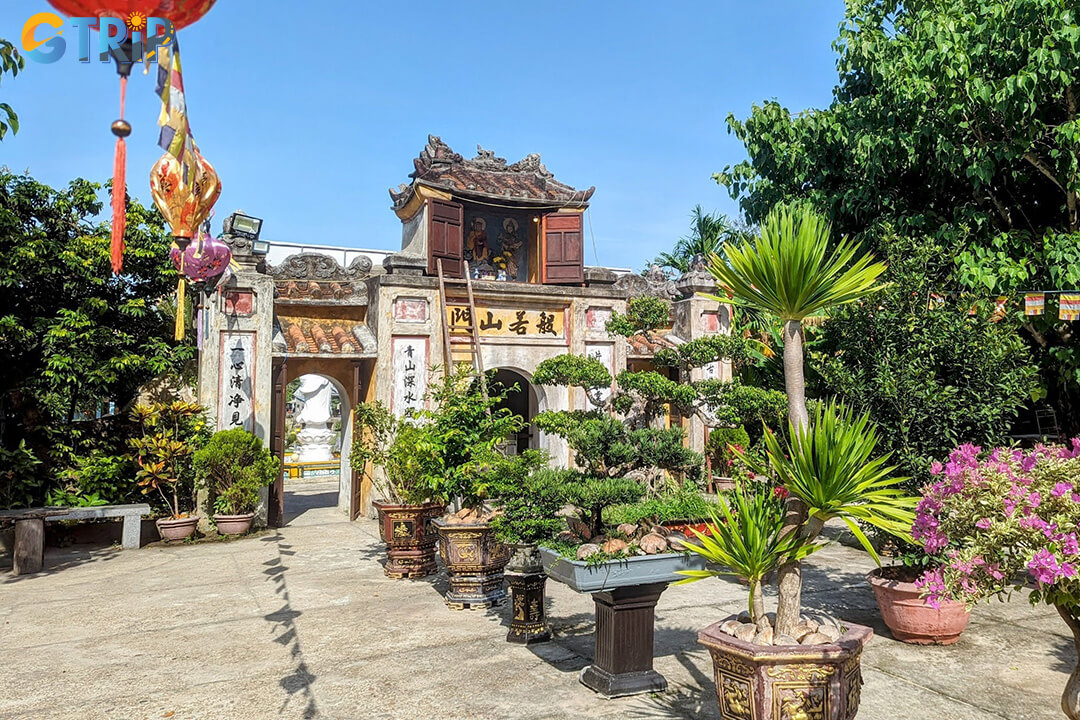
Hai Tang Pagoda is a photogenic gem, where vibrant architecture and serene mountain scenery create stunning photo opportunities
How to get to Hai Tang Pagoda on Cham Island?
Essentially, Hai Tang Pagoda is located on Cham Island, about 15km off the mainland coast. Therefore, to travel from Da Nang to the pagoda, visitors must complete a two-leg journey: an overland route followed by a waterway route.
From Da Nang International Airport
Start your journey directly upon arrival. You will need to travel south to Hoi An's port before catching a boat to the island.
- Distance: Approximately 45 km total (30 km overland + 15 km by sea).
- Travel time: Around 1.5 to 2 hours.
- Routes: Taxi or bus to Cua Dai Port -> Speedboat or wooden boat to Bai Lang Harbor -> Walk to the pagoda.
- Optimal option: Booking a direct taxi to Cua Dai Port, then taking a speedboat is the fastest and most convenient method for newly arrived travelers.
From Da Nang City center
The route from downtown Da Nang follows the same logic. You must first reach Cua Dai Port to board a vessel heading to the island's main fishing village.
- Distance: Approximately 45 km total.
- Travel time: 1.5 to 2 hours.
- Routes: Bus/taxi to Cua Dai Port -> Boat to Bai Lang Harbor -> Walk to the pagoda.
- Optimal option: Booking a full-package Cham Island day tour. This is the most hassle-free choice as it conveniently handles all land and sea transfers right from your hotel.
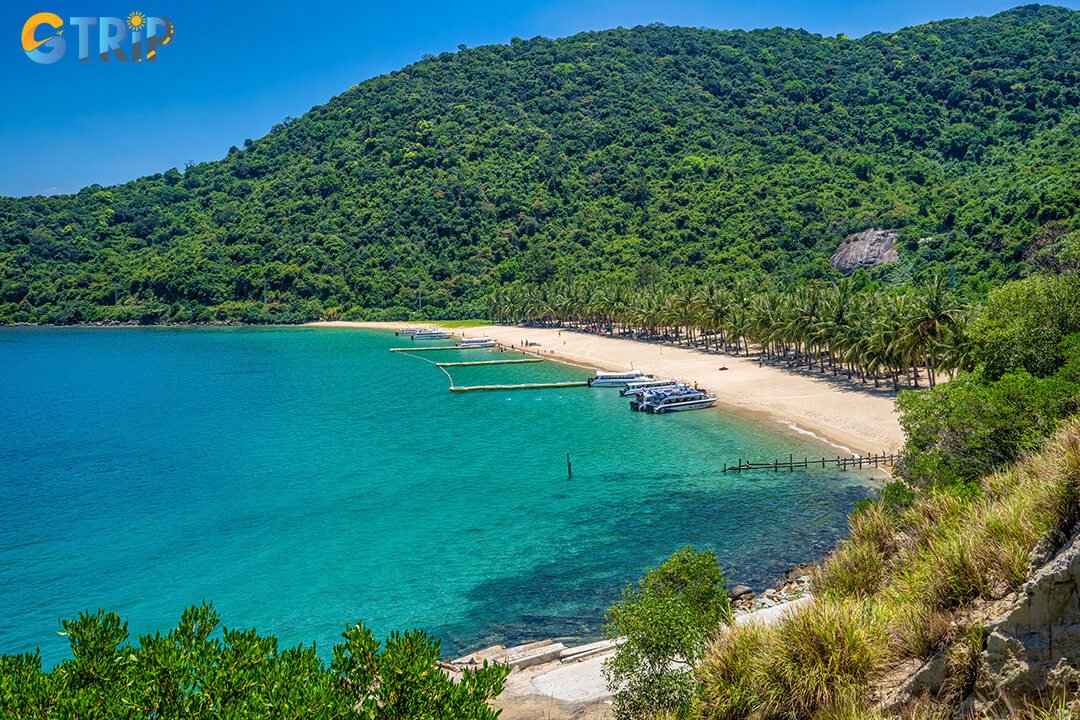
Reach Hai Tang Pagoda via Cua Dai Port with a combined road-and-boat journey, best done through a convenient full-package day tour
From around Cham Island
Once your boat docks at Bai Lang Harbor, getting to the pagoda is extremely straightforward since it is located right within this main village.
- Distance: About 300 to 500 meters from the wharf.
- Travel time: 5 to 10 minutes.
- Routes: Head towards Xom Cam Well, walk north past the football field, find an alley on the right, and cross the rice fields to reach the pagoda.
- Optimal option: Walking is absolutely the best way. It is completely feasible without a guide and lets you enjoy the peaceful village scenery.
Transportation options
Depending on your budget and time, you can choose the following transportation methods to complete your journey from the mainland to the pagoda:
- Speedboat: The fastest option for the sea crossing. It takes only 30 minutes and costs 450,000 VND (approx. $18) for a round-trip ticket.
- Wooden boat: A budget-friendly sea option at 100,000 VND (approx. $4) for a one-way ticket, but the ride takes over an hour.
- Motorbike taxi: Available near the Bai Lang wharf and Tan Hiep Market for a small fee if you prefer not to walk.
- Walking: Free, scenic, and highly recommended for the final stretch on the island.
Transportation options
To get from Cua Dai Pier to the Cham Islands, you have two primary choices, each offering a different experience. A key tip we always share is to choose the speedboat if your time is limited.
- Canoe/Speedboat: Faster (approx. 20 minutes), more expensive, and offers an exhilarating ride. This is the most popular tourist option.
- Wooden boat: Slower (about 2 hours), cheaper, provides a more authentic local experience, and departs early in the morning.
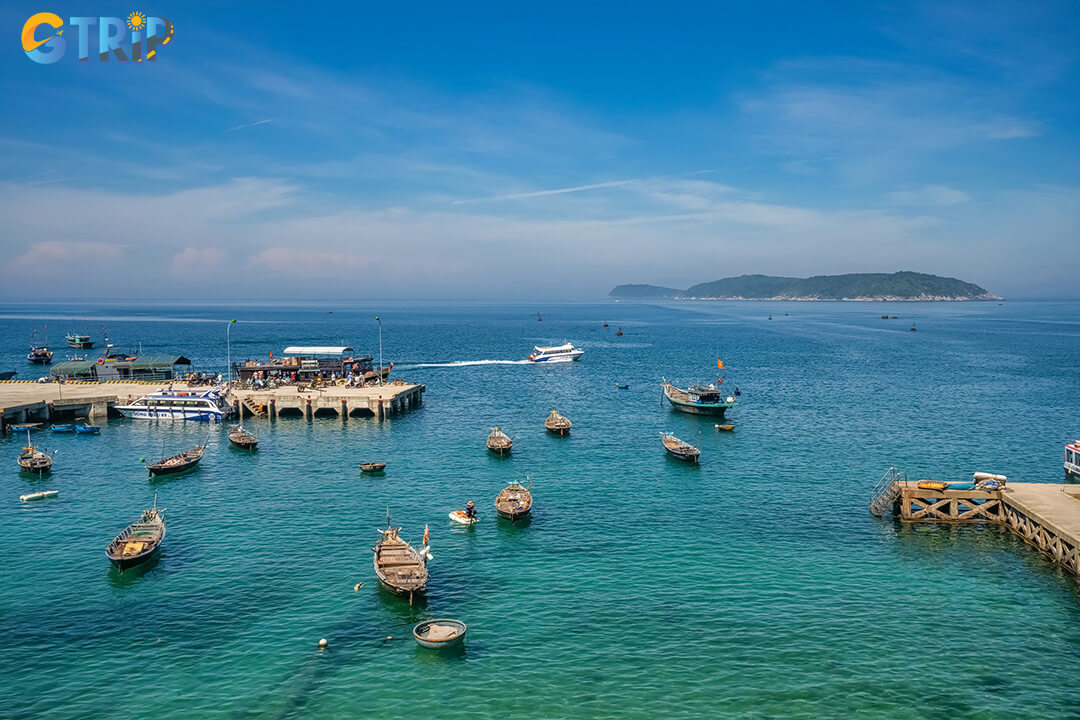
Choose between a fast speedboat for convenience or a slower wooden boat for a more authentic journey to Cham Islands
Nearby attractions to the Hai Tang Pagoda
Here are some nearby attractions to Hai Tang Pagoda. You can also visit them on the full Cham Island itinerary.
- Cham Ancient Well: Just a short walk from the pagoda, this 200-year-old freshwater well, also known as the "Gieng Xom Cam", never runs dry. Its unique circular design is built with slate stones and is considered a source of good luck.
- Tan Hiep Market: Located right at the pier, this bustling local market is where the island's daily life converges. You can buy incredibly fresh seafood, unique local snacks like Banh It La Gai (a sticky rice cake), and handmade souvenirs.
- Eo Gio: A stunning windy cliffside accessible via a short trek or motorbike ride. It offers breathtaking panoramic views of the turquoise sea and the entire eastern coastline of Hon Lao, making it a favorite spot for photographers.
- Bai Chong/Bai Xep Beaches: These are two of the most picturesque beaches on the island. They are famous for crystal-clear water, fine white sand, and swaying coconut groves, making them ideal for swimming, sunbathing, and snorkeling.
- Marine Protection Area: The waters around the Cham Islands are a protected marine park. Joining a tour for diving or snorkeling is the best way to witness the vibrant coral reefs and diverse marine life, such as clownfish, lionfish, and colorful sea stars.
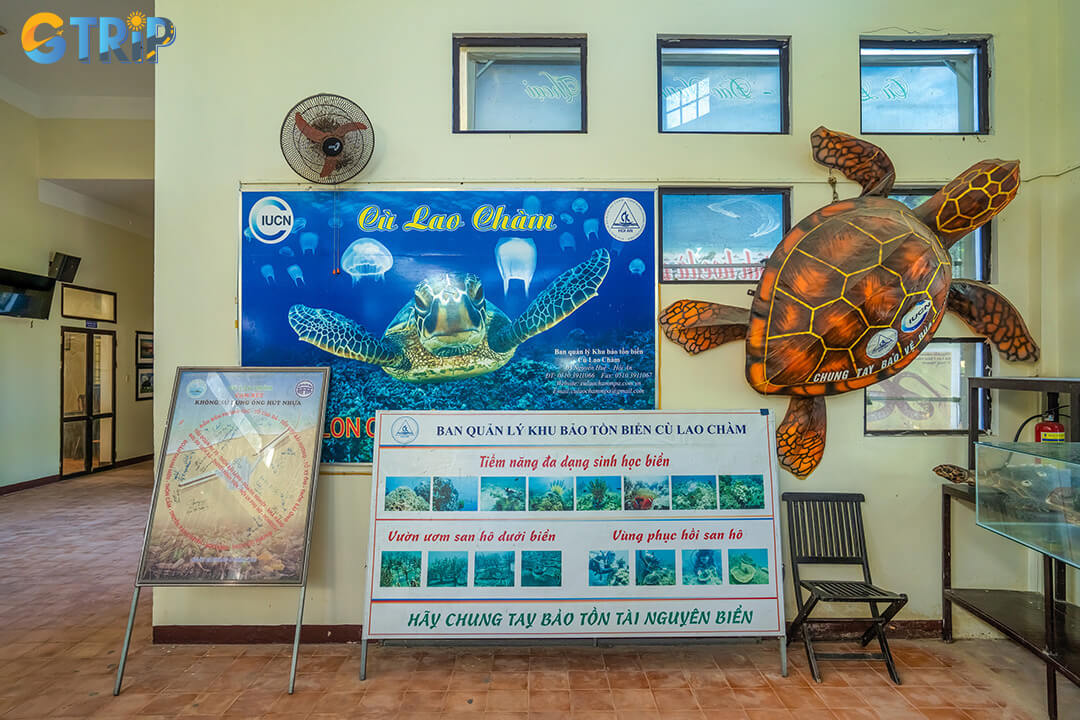
Explore nearby highlights like the Cham Ancient Well, Tan Hiep Market, Eo Gio, and pristine beaches for a fuller Cham Island experience
Practical tips for visitors when visiting the Hai Tang Pagoda
To ensure a smooth, comfortable, and respectful experience when visiting Hai Tang Pagoda and the Cham Islands, keep the following practical tips in mind:
- Dress respectfully: As the pagoda is a sacred place of worship, make sure to cover your shoulders and knees. Avoid wearing shorts, tank tops, or revealing clothing. Bringing a light scarf or sarong is a convenient and easy solution.
- Wear comfortable shoes: You will need to walk around 300 to 500 meters from the Bai Lang wharf across the village and rice fields to reach the pagoda, so good walking footwear is essential.
- Prepare for the weather: Sunny season (February to September): Bring a hat, sunglasses, sunscreen, and a reusable water bottle to stay hydrated, as the island gets quite hot around midday. Rainy season (October to January): Pack an umbrella or rain poncho, along with mosquito repellent.
- Bring plenty of cash: You should remember the things "Cash is king" on Cham Island. While large tour operators might accept cards on the mainland, local vendors, food stalls, and motorbike taxis on the island only accept Vietnamese Dong (VND).
- Book in advance: During the peak tourist season (April to August), boat tickets and island tours can sell out quickly. It is highly recommended to book your transportation at least a day in advance.
- Maximize your itinerary: Since exploring the pagoda itself doesn't take too long, it’s best to combine your visit with other nearby Cham Island attractions, such as the Champa Ancient Well and Tan Hiep Market.
- Hire a local guide: To fully appreciate the historical depth, architectural details, and spiritual stories of the pagoda, visiting with a knowledgeable local guide is highly recommended.
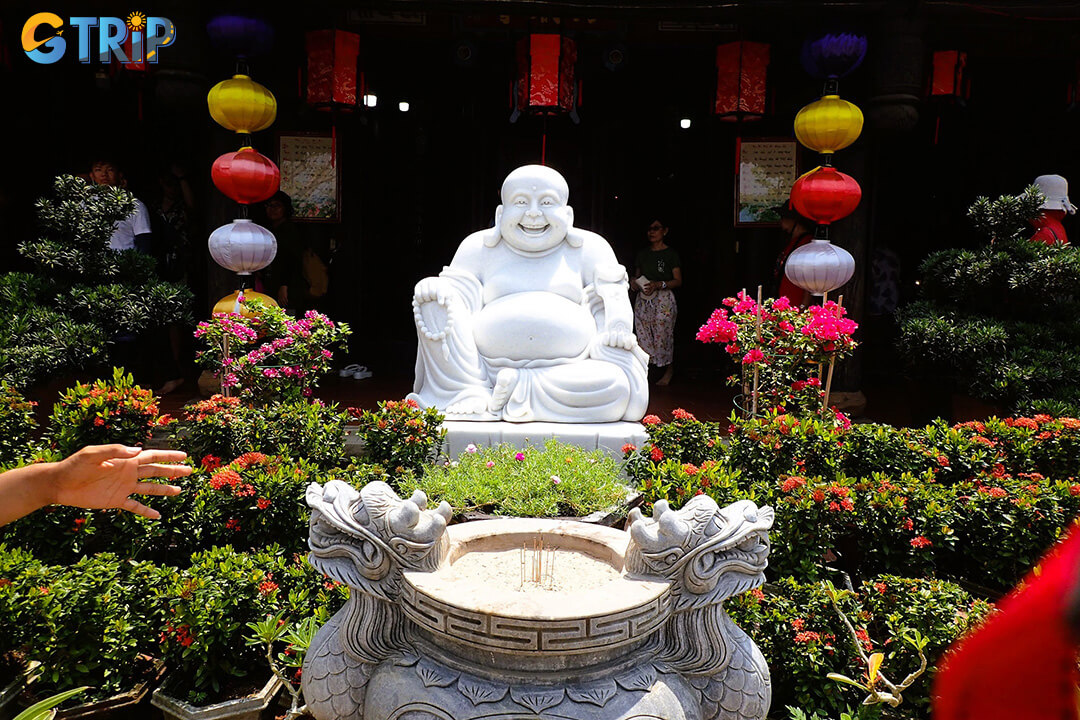
Prepare with modest attire, cash, and weather essentials, and plan to enjoy a smooth and respectful visit to Hai Tang Pagoda and Cham Islands
Hai Tang Pagoda is the enduring soul of the Cham Islands. A visit here offers a profound sense of peace and a direct connection to the islanders' centuries-old relationship with the sea. The gentle scent of incense, the ancient architecture, and the stories etched into its walls make it an unmissable stop. It reminds us that even in a tropical paradise known for its beaches and coral reefs, there is a deep spiritual heritage waiting to be discovered. It’s an experience that enriches any trip to this beautiful corner of Vietnam. You can also combine your visit with curated Hoi An tours that include Cham Islands excursions, cultural stops, and coastal experiences for a more complete journey. Let GTrip help you plan the perfect trip to the Cham Islands.
Custom Your Journey

Other Attractions

Can Gio Monkey Island in Ho Chi Minh City: Tickets, Things to Do & Travel Guide
Can Gio Monkey Island
Can Gio Monkey Island in Ho Chi Minh City offers a refreshing escape from the city’s buzzing motorbike chaos. Just a short distance from the center, Can Gio welcomes you with lush mangrove forests, winding waterways, and a fascinating history. Here, you can meet playful long-tailed macaques, drift through tranquil channels, and explore remnants of a wartime guerrilla base.
Can Gio Monkey Island in Ho Chi Minh City: Tickets, Things to Do & Travel Guide
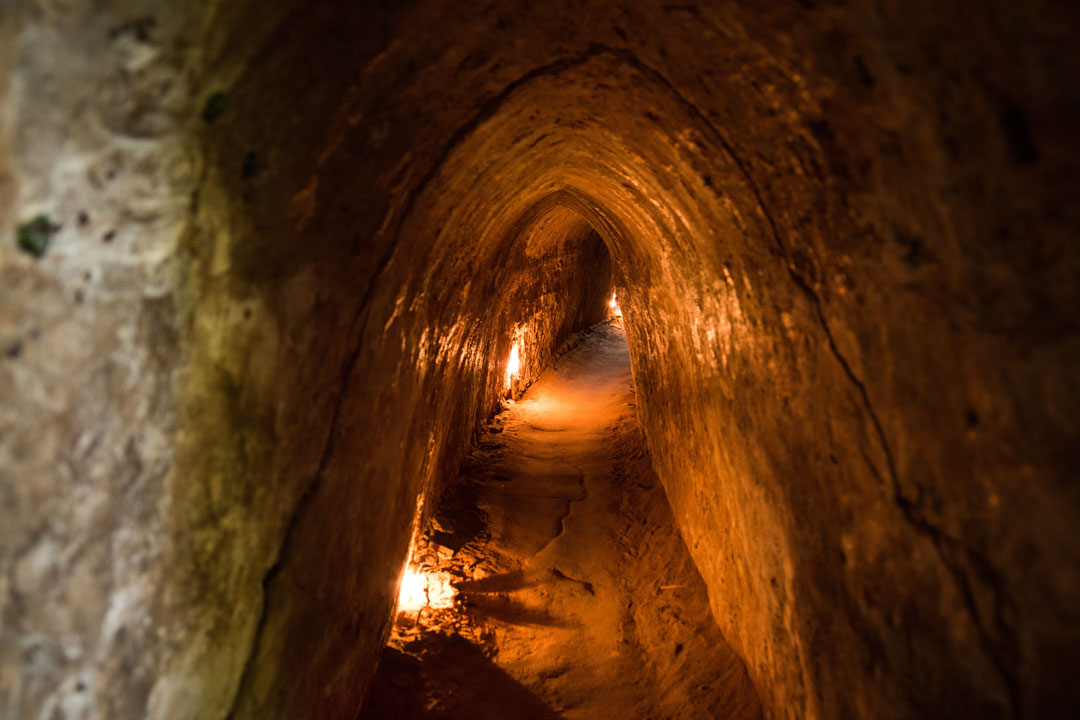
Cu Chi Tunnels: History, Architecture, Things To Do & Travel Guide
Cu Chi Tunnels
The Cu Chi Tunnels, located at TL15, Phu Hiep, Cu Chi District, Ho Chi Minh City, are a vast underground network of strategic passages, shelters, supply routes, and defensive traps.
Ho Chi Minh City
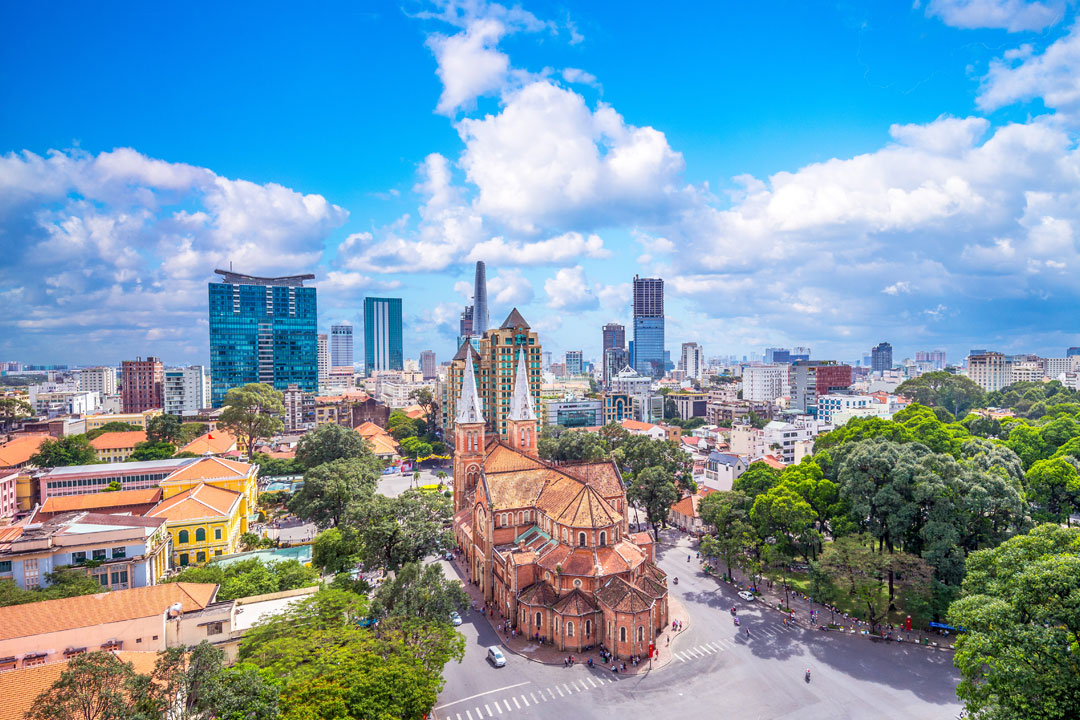
Ho Chi Minh City, known as the "Pearl of the Far East," attracts both domestic and foreign tourists with its unique and diverse destinations.
Tran Quoc Pagoda: History, Architecture, Significance & Travel Guide
Tran Quoc Pagoda
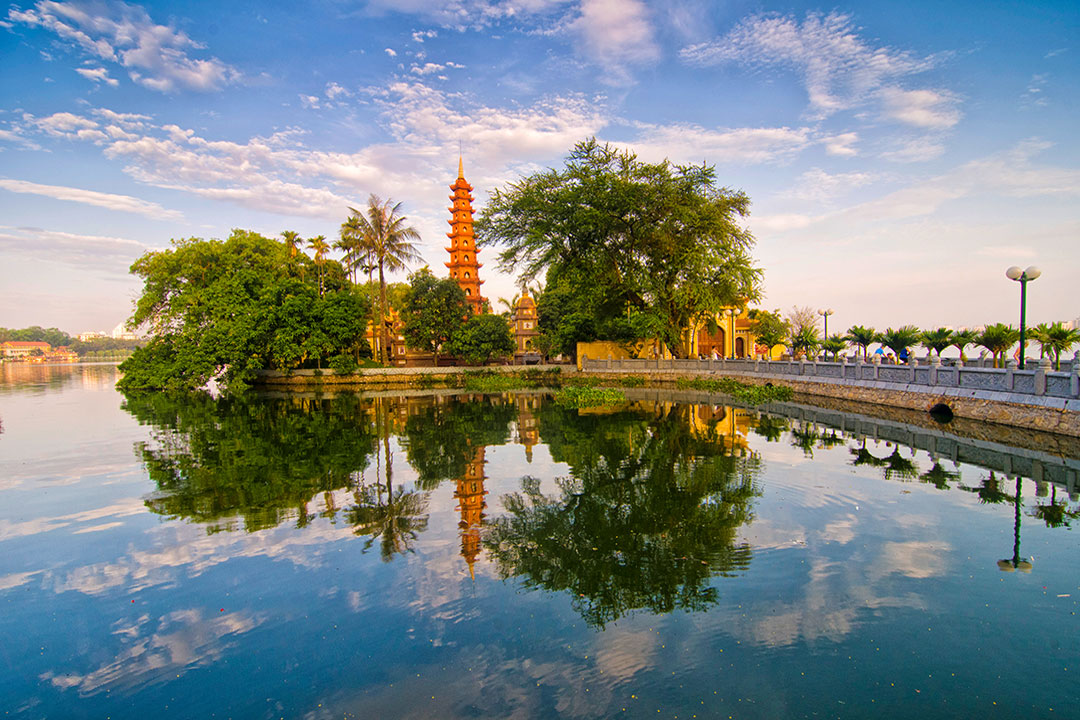
Nestled on the tranquil shores of West Lake, Tran Quoc Pagoda is the oldest Buddhist temple in Hanoi, with a history spanning over 1,500 years. Built in the 6th century under Emperor Ly Nam De, this sacred site reflects Vietnam’s Buddhist evolution while preserving its spiritual and architectural grandeur.