

Monday, October 19, 2026
Minh Huong Communal House Hoi An is a quiet historical landmark tucked along Tran Phu Street in the heart of Hoi An’s UNESCO-listed Ancient Town. Built by Chinese immigrants who later integrated into Vietnamese society, this centuries-old communal house offers a peaceful glimpse into the cultural roots that shaped the town. Though smaller and less visited than the famous Chinese Assembly Halls, its elegant architecture and historical significance make it a worthwhile stop. This GTrip guide covers its history, highlights, and practical tips for visiting.
Table of Content
- Overview of the Minh Huong Communal House Hoi An
- What makes the Minh Huong Communal House unique?
- History of the Minh Huong Communal House
- Architecture of the Minh Huong Communal House
- Things to do at Minh Huong Communal House
- How to get to Minh Huong Communal House?
- Nearby attractions to the Minh Huong Communal House
- Practical tips for visitors
Overview of the Minh Huong Communal House Hoi An
The Minh Huong Communal House, also known as Tuy Tien Duong Minh Huong, stands out for its unique role as a shared spiritual and community space in Hoi An’s Ancient Town. This communal house welcomed the entire Minh Huong community, serving as a place for worship, gatherings, and maintaining cultural traditions. Its quiet courtyard and traditional architecture offer visitors a peaceful contrast to the busier historic sites nearby.
Where is Minh Huong Communal House Hoi An?
Address: No. 14 Tran Phu Street, Hoi An Ancient Town, Hoi An Ward (formerly Minh An Ward, Hoi An City, Quang Nam Province), Da Nang City
Minh Huong Communal House is located on Tran Phu Street, right between the Trieu Chau Assembly Hall and the Hainan Assembly Hall. It is also close to Hoi An Market and the famous Banh Mi Phuong shop, making it easy to spot while exploring the lively heart of the Ancient Town.
Thanks to its central location, the communal house can be easily included in any walking itinerary through Hoi An. Many of the town’s major landmarks are just a short stroll away, allowing visitors to conveniently combine a stop here with other historic sites along Tran Phu Street.
Opening hours and ticket prices
Accessing the Minh Huong Communal House is straightforward and included in the Hoi An Old Town entrance ticket system. This system provides excellent value, allowing you to explore multiple heritage sites with a single ticket.
- Opening hours: 8:00 AM - 5:00 PM daily
- Ticket prices: The entrance is covered by the Hoi An Ancient Town combo ticket, which costs 120,000 VND for foreign adults
This ticket allows you entry to the ancient town and lets you choose 5 attractions to visit from a list of over 20 designated sites. You can purchase the ticket at official booths located at the main entrances to the ancient town.
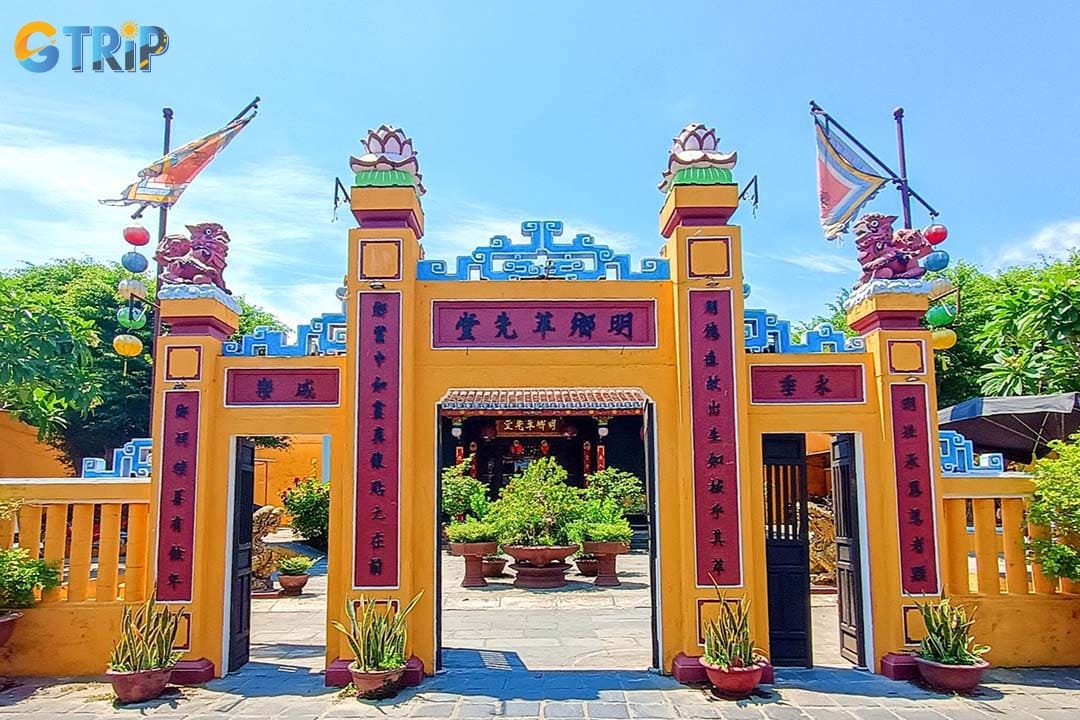
Minh Huong Communal House serves as a worship and gather place for Minh Huong community
What makes the Minh Huong Communal House unique?
What distinguishes the Minh Huong Communal House from other heritage sites in Hoi An is its specific role as a unifying center for a unique community. While the Fujian or Cantonese assembly halls served people from specific regions of China, this site was for all Minh Huong people, regardless of their origin province.
- A place of worship, honoring several important figures, such as ancestors of the Minh Huong people and the god of the north, Tran Vo Bac De.
- A true communal house, where the community gathered for official business, social events, and to support one another. It's a living piece of social history, not just a religious monument.
History of the Minh Huong Communal House
The story of the Minh Huong Communal House is woven into the very fabric of Hoi An’s trading past. It stands as a testament to the waves of migration and the enduring loyalty of the Ming dynasty descendants who once called this port home. Here are the key milestones that shaped this heritage site:
- 1644: Following the collapse of the Ming Dynasty in China, many loyalist officials and civilians fled to Southeast Asia. Hoi An became a crucial refuge where they could preserve their culture while starting anew.
- Late 17th Century: The Nguyen Lords officially permitted the establishment of "Minh Huong Village". This granted the community legal status to settle permanently and integrate into Vietnamese society.
- Around 1725: The communal house was originally built at 20 Phan Chu Trinh Street (now the Van Thanh Minh Huong Temple) to serve as a hub for ancestral worship and community gatherings.
- 1820: The structure was moved to its current prime location at 14 Tran Phu Street. Over the years, it underwent major restorations in 1849, 1905, 1953, 1970, and 2002 to maintain its architectural integrity.
- 1827: Emperor Minh Mang issued a royal decree changing the word "huong" in the community's name from "incense" to "village", officially recognizing them as permanent residents of the Vietnamese kingdom.
- 1993: Thanks to its unique historical and cultural value, the Minh Huong Communal House was officially recognized as a National Historic Cultural Relic.
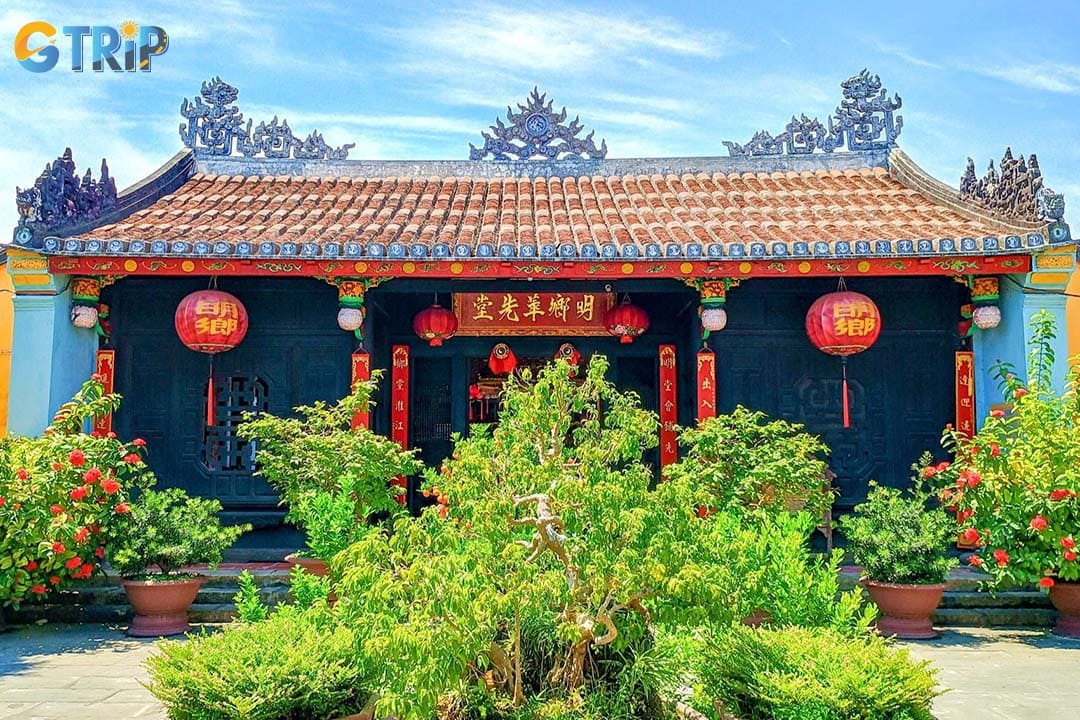
The history of Minh Huong Communal House Hoi An dates back to 17th century
Architecture of the Minh Huong Communal House
The communal house is a masterpiece of the famed Kim Bong Carpentry Village. It features the "Chu Quoc" (square) layout, creating a balanced and solemn space that harmonizes perfectly with traditional Feng Shui principles.


The three-arched gate
The entrance is a classic four-pillar gate, blending intricate woodwork with spiritual symbolism. It serves as a striking threshold between the busy street and the quiet sanctuary within:
- A splash of heritage yellow: Painted in the iconic Hoi An yellow, the gate symbolizes prosperity and catches the golden light of Central Vietnam beautifully.
- Inscriptions and couplets: Above the main entrance is a red wooden board featuring the name "Minh Huong Tuy Tien Duong." The surrounding columns are adorned with parallel sentences (couplets) expressing gratitude to the ancestors.
- Feng shui balance: A small courtyard with lush greenery sits right behind the gate. This "Wood" element is strategically placed to balance the "Fire" energy of the south-facing entrance, creating an immediate sense of calm.
The front hall
The front hall serves as the grand entrance to the worship area, showcasing the pinnacle of local woodcraft and housing the community's protector deities:
- Masterful carvings: The beams and door systems are breathtaking works of art by Kim Bong artisans, featuring high-relief carvings that are incredibly delicate.
- Protector deities: The Front Hall here hosts a dedicated altar for five guardian deities (from left to right): Kim Hoa Nuong Nuong (Protector of Childbirth), Thien Hau Thanh Mau (Goddess of the Sea), Duoc Vuong (God of Medicine), Bao Sanh Dai De (Protector of Life), and Phuoc Duc Chanh Than (God of the Earth).
- Historic plaque: Hanging high in the hall is the ancient "Minh Duc Duy Hinh" (Perfect Virtue) plaque, gifted by merchants to mark the end of the Qing dynasty era.
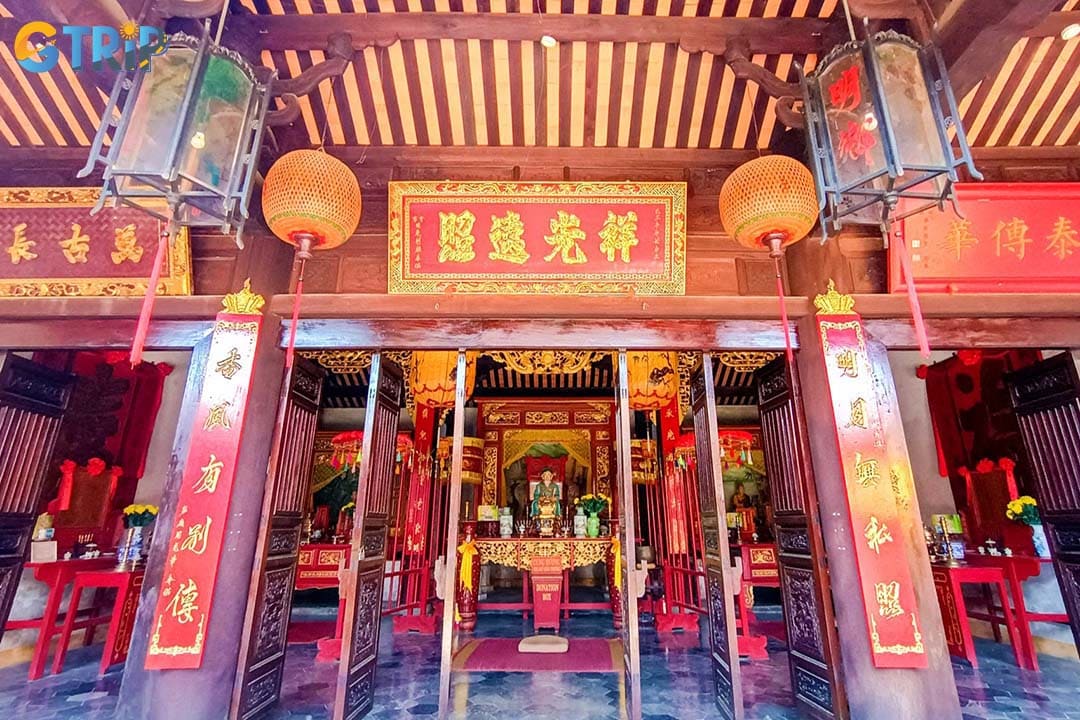
The front hall serves as the grand entrance to the worship area of Minh Huong Communal House
The main hall
Across the open courtyard lies the Main Hall, the heart and soul of the Minh Huong community. The dark wood sliding doors and the soft natural light filtering in create a mysterious, sacred atmosphere where ancestral spirits are honored:
- Thap Dai Lao (The Ten Elders): Dedicated to the first 10 families who arrived around 1644, including the Kong, Yan, Yu, Xu, Zhou, Huang, Zhang, Chen, Cai, and Liu families.
- Luc Tanh (The Six Families): Honoring the families who arrived in 1650, including the Wei, Zhuang, Wu, Shao, Xu, and Wu families.
- Tam Gia (The Three Families): Recognizing the families led by Hsi Kuo-hsiang, Wu Ting-kuan, and Chang Hung-Chi, who were instrumental in the early settlement.
The hall does not use statues. Instead, it holds 27 red spirit tablets representing the founding families and prominent figures who contributed to the community. Every year, descendants of about 60 families gather here to keep their ancestral traditions alive.
The side houses
Flanking the courtyard are the East and West wings, known as the "protective dragons" that complete the building's sturdy, enclosed structure:
- Functional spaces: The West wing serves as the administrative office for community records, while the East wing is used for gatherings and preparing offerings for major ceremonies.
- Ancient steles: These houses protect five ancient stone steles carved during the reigns of Emperors Minh Mang, Tu Duc, and Khai Dinh, detailing the hall's history and renovations.
- Antique collection: Visitors can also view a collection of ancient bronze bells, incense burners, and Chinese ceramics that have been meticulously preserved over centuries.
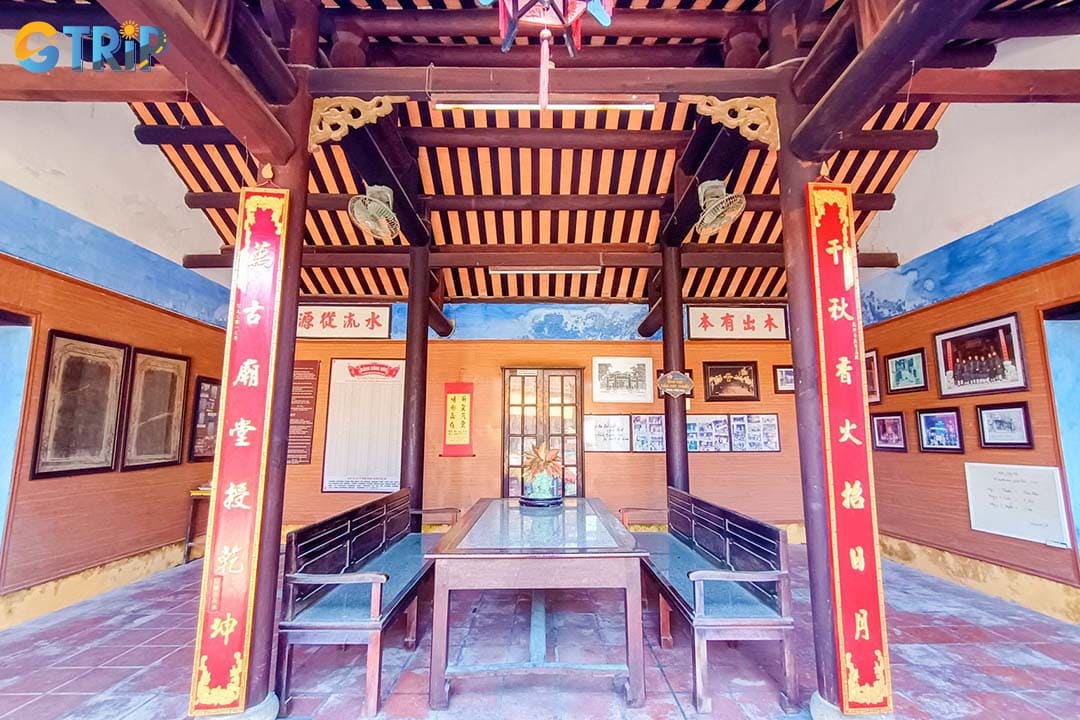
The side houses provide the functional spaces for the communal house
Things to do at Minh Huong Communal House
Visiting the Minh Huong Communal House offers much more than a quick look at an old building. It is an immersive dive into a unique cultural identity.
1. Admire the legendary Kim Bong woodwork
Take time to closely observe the pillars, beams, and roof structures crafted by artisans from the famous Kim Bong carpentry village. The detailed carvings of dragons, flowers, and symbolic patterns are not only decorative but also reflect centuries of craftsmanship passed down through generations. Each element showcases precision, balance, and cultural meaning that highlight the skill of Hoi An’s traditional woodworkers. This is a rare opportunity to witness authentic Vietnamese carpentry at its finest.
2. Trace the roots of the Minh Huong people
Spend time exploring the hall’s historical displays, including the 27 spirit tablets that honor the founding members of the Minh Huong community. Unlike typical Chinese assembly halls, this space tells the story of migrants who settled in Vietnam and gradually integrated into local society while preserving their heritage. The blend of Vietnamese and Chinese influences can be seen in both the architecture and spiritual practices. It offers a meaningful insight into cultural adaptation, identity, and loyalty across generations.
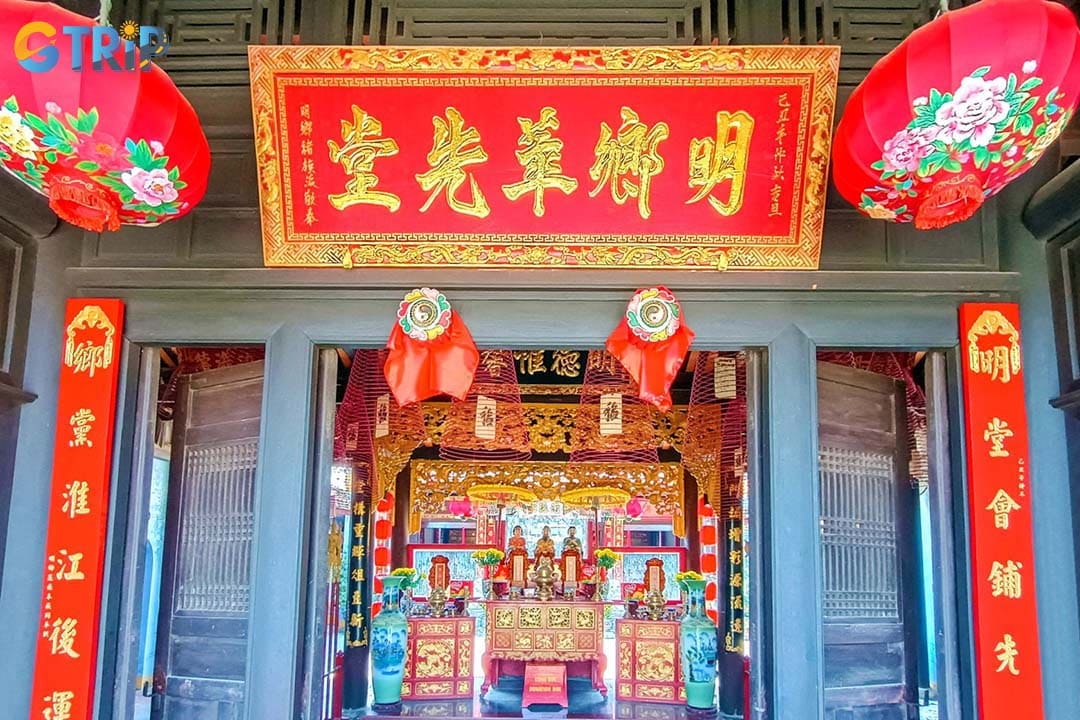
You can spend time exploring the hall’s displays to know more about the roots of the Minh Huong community
3. Capture the "Iconic Hoi An" aesthetic
With its vibrant yellow walls, aged wooden doors, and rows of red lanterns, the communal house perfectly captures the timeless charm of Hoi An. The combination of colors, textures, and natural light creates an ideal setting for photography lovers. Wearing a traditional ao dai can enhance the cultural feel of your photos while complementing the historic backdrop. Early morning or late afternoon light adds a soft glow, making every shot even more atmospheric.
4. Witness ancient rituals
To fully experience the spiritual atmosphere, consider visiting during important ceremonial days such as the Spring Ceremony or the 1st and 15th days of the lunar month. During these times, you can observe elders performing traditional rituals with incense, offerings, and prayers. These ceremonies reflect long-standing beliefs and community values that have been preserved over centuries. Watching them unfold provides a powerful connection to the living heritage of Hoi An.
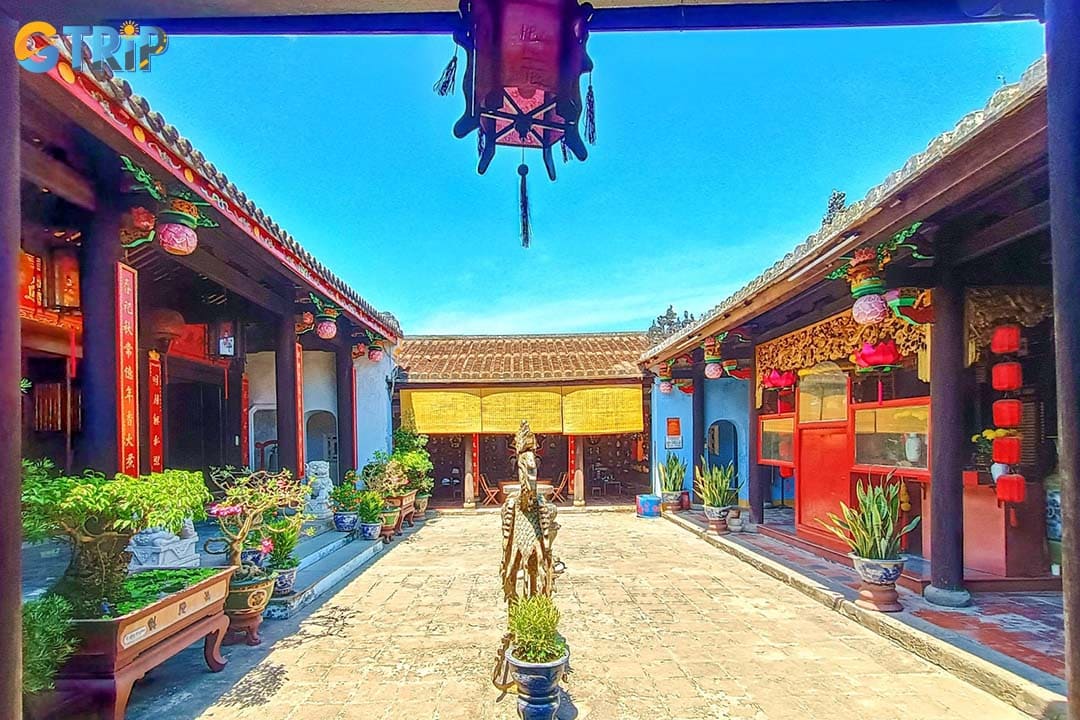
If you visit the communal house on special occasions like festivals, you can fully experience the festive atmosphere here
How to get to Minh Huong Communal House?
Located right on the main tourist stretch of Tran Phu Street, reaching the communal house is easy no matter where you are staying.
From Da Nang International Airport
After landing, the drive to Hoi An takes you along a scenic coastal road with refreshing sea breezes and views of the Marble Mountains.
- Distance: ~30 km
- Travel time: 45 - 60 minutes
- Routes: Airport -> Vo Nguyen Giap -> Truong Sa -> Lac Long Quan -> Hai Ba Trung -> Tran Phu
- Best way to go: A private car or taxi is the most comfortable way to handle luggage and avoid the heat
From Da Nang City center
Travelers coming from Da Nang City center have plenty of straightforward options to reach the heart of Hoi An.
- Distance: ~28 - 30 km
- Travel time: 40 - 50 minutes
- Routes: Dragon Bridge -> Ngu Hanh Son -> Le Van Hien -> DT607 -> Ly Thuong Kiet -> Tran Phu
- Best way to go: Rent a motorbike for an adventurous ride, or use the Grab app to secure a fixed-price car ride
From around Hoi An Ancient Town
Since the house is within the UNESCO heritage zone, walking or cycling is the most pleasant way to arrive while soaking in the local atmosphere.
- Distance: Within 1 km of most central hotels
- Travel time: 5 - 10 minute walk
- Routes: Head down Tran Phu Street, the hall is located near the Chaozhou Assembly Hall and the Hoi An Market
- Best way to go: Walking is best, as the area is restricted to motor vehicles during peak hours
Transportation options
You can choose your transport based on your style and the weather:
- Bicycle: The local favorite. Easy to park in small alleys nearby.
- Electric shuttle: Great for families, eco-friendly and keeps you cool while sightseeing.
- Ride-hailing/Taxi: Ideal if you are coming from a beach resort or during a sudden rain shower.
- Walking: Perfect for hopping between the market, the communal house, and nearby cafes.
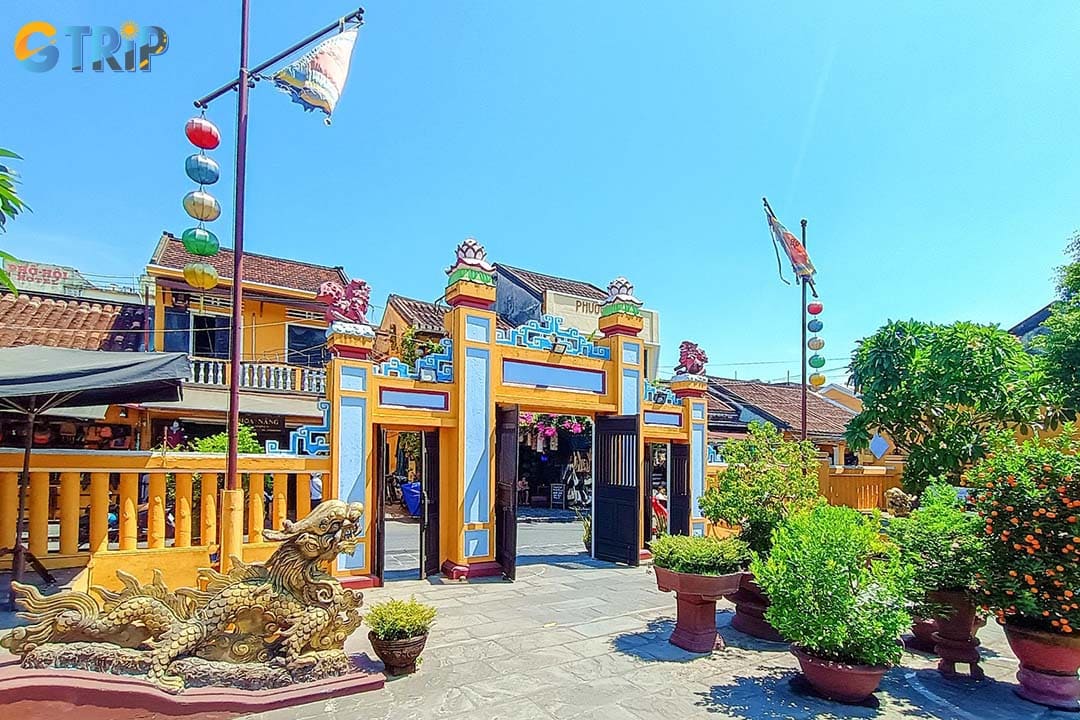
Reaching the Minh Huong Communal House is easy because of its location
Nearby attractions to the Minh Huong Communal House
The central location of the Minh Huong Communal House on Tran Phu Street puts you within a 5-minute walk of Hoi An's most iconic landmarks. You can easily create a walking tour that includes these must-see sites:
- Japanese Covered Bridge: Just a few steps away, this iconic 18th-century bridge is the undeniable symbol of Hoi An, featuring a small temple inside.
- Fujian Assembly Hall (Phuc Kien Assembly Hall): Located further down Tran Phu Street, this is one of the most famous and ornate assembly halls, known for its magnificent gate, dragon sculptures, and tranquil garden.
- Old House of Tan Ky: A perfectly preserved 18th-century merchant's home that beautifully showcases a blend of Vietnamese, Chinese, and Japanese architectural elements. It is located on Nguyen Thai Hoc Street, one block over.
- Hoi An Central Market: A short walk towards the river, this bustling market is a feast for the senses, offering a slice of local life, incredible street food, fresh produce, and souvenirs.
- Museum of Trade Ceramics: Housed in a beautifully restored wooden building, this museum showcases Hoi An's rich history as a major stopping point on the maritime Silk Road.
Practical tips for visitors
To make the most of your visit while respecting the local culture, keep these tips in mind:
- Dress respectfully: This is a sacred site. Ensure your shoulders and knees are covered (no tank tops or short skirts).
- Look, don't touch: To help preserve the site, please do not touch the ancient spirit tablets, steles, or wooden carvings.
- Flood season warning: From October to December, Hoi An can experience flooding. Check the local weather forecast if you are traveling during this time.
- Cash is king: While some shops take cards, ticket booths and small souvenir stalls around the hall usually prefer cash.
- Timing is everything: Visit early in the morning (around 8:00 AM) to avoid the midday heat and the larger tour groups.
- Support the heritage: Consider buying a small souvenir at the hall, the proceeds often go toward the ongoing maintenance and preservation of this historic family-run site.
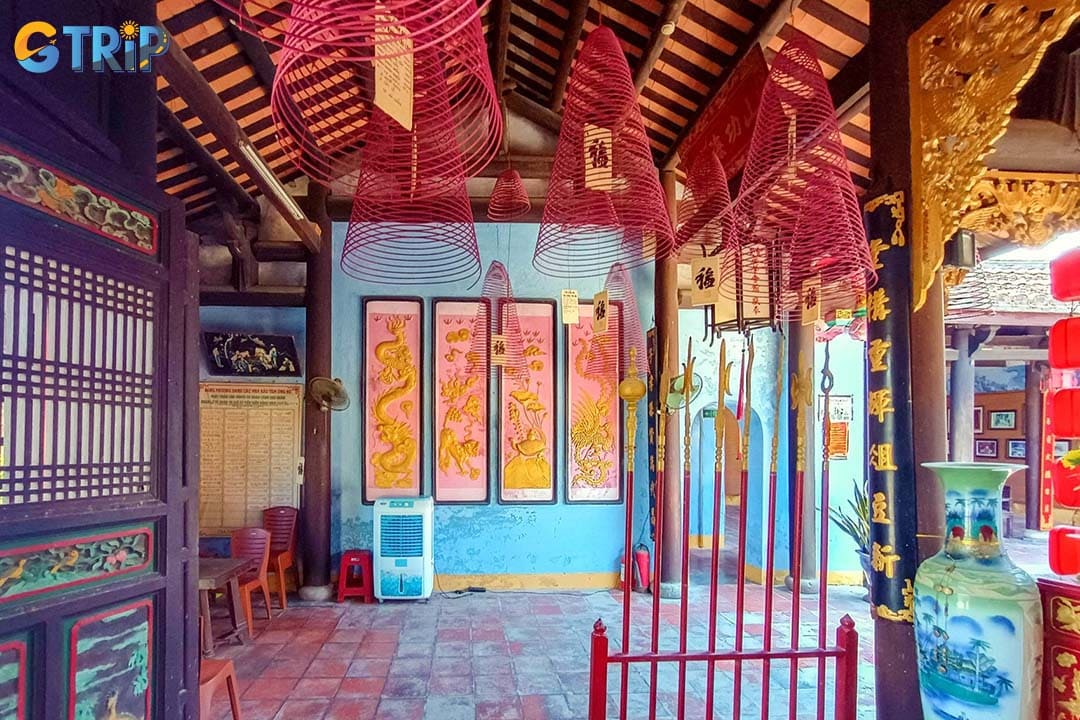
Remember practical tips to have a good trip to Minh Huong Communal House
The Minh Huong Communal House is more than just another historical stop in Hoi An. It is a quiet symbol of the town’s multicultural roots and the community that helped shape its history. With its understated architecture, peaceful atmosphere, and deep cultural meaning, the site offers visitors a more thoughtful perspective on the stories behind Hoi An’s famous lantern-lit streets. When planning your journey through Central Vietnam, consider exploring this hidden gem as part of your itinerary, along with nearby highlights on curated Da Nang tours from GTrip to fully experience the rich heritage of the region.
Custom Your Journey

Other Attractions

Can Gio Monkey Island in Ho Chi Minh City: Tickets, Things to Do & Travel Guide
Can Gio Monkey Island
Can Gio Monkey Island in Ho Chi Minh City offers a refreshing escape from the city’s buzzing motorbike chaos. Just a short distance from the center, Can Gio welcomes you with lush mangrove forests, winding waterways, and a fascinating history. Here, you can meet playful long-tailed macaques, drift through tranquil channels, and explore remnants of a wartime guerrilla base.
Can Gio Monkey Island in Ho Chi Minh City: Tickets, Things to Do & Travel Guide
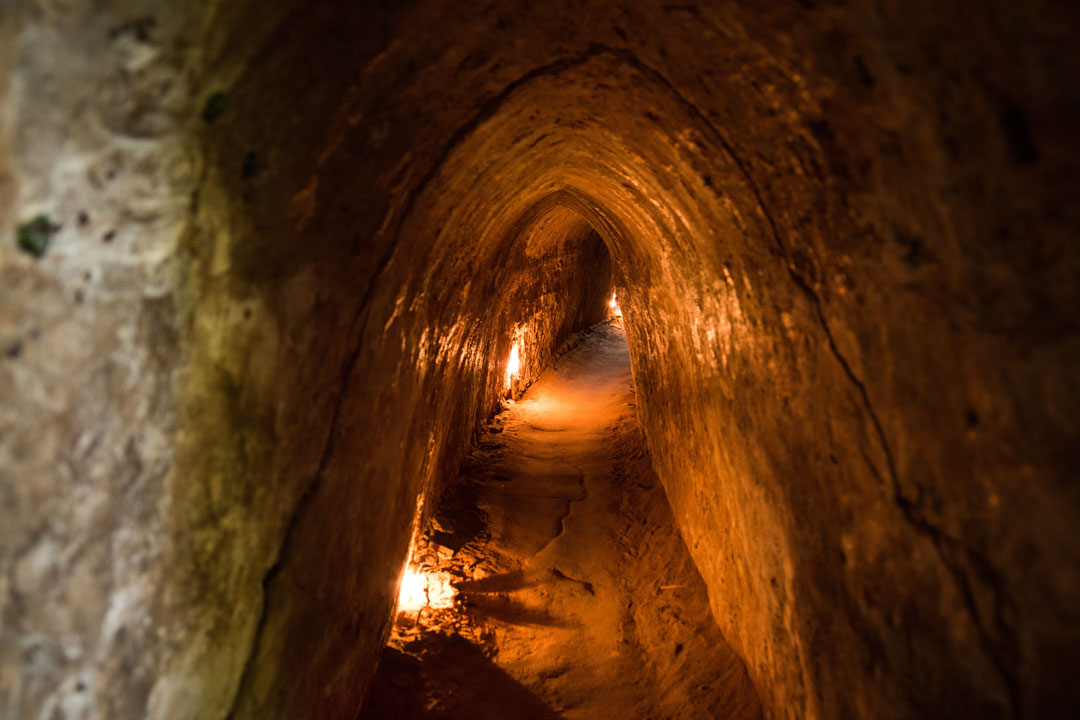
Cu Chi Tunnels: History, Architecture, Things To Do & Travel Guide
Cu Chi Tunnels
The Cu Chi Tunnels, located at TL15, Phu Hiep, Cu Chi District, Ho Chi Minh City, are a vast underground network of strategic passages, shelters, supply routes, and defensive traps.
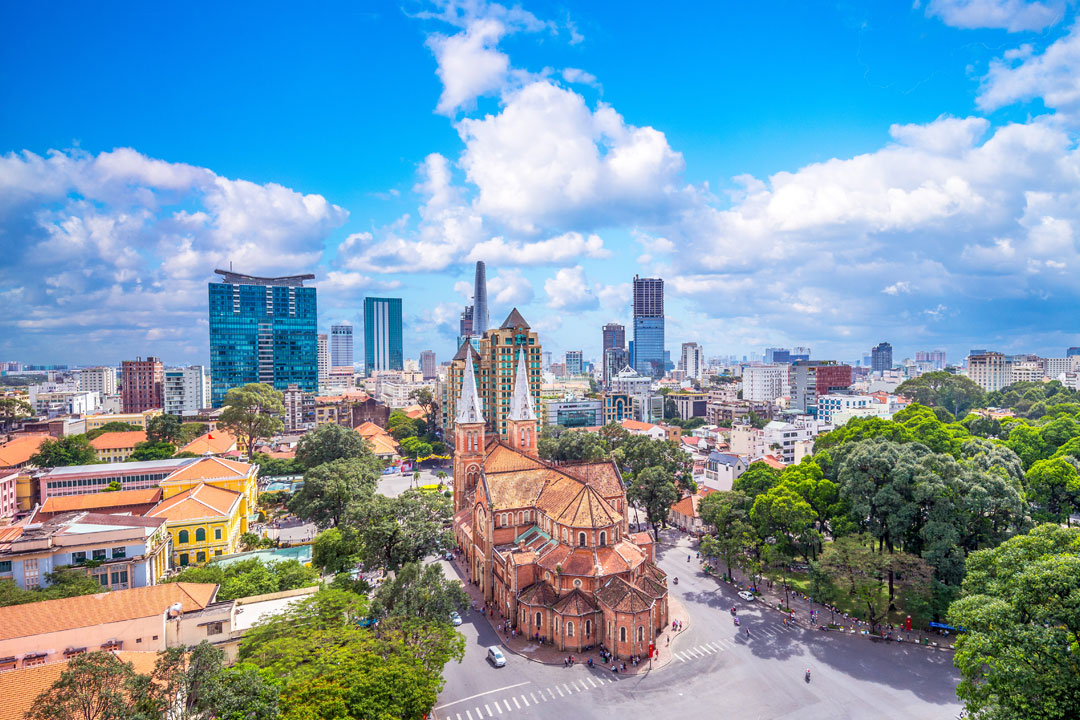
Ho Chi Minh City
Ho Chi Minh City, known as the "Pearl of the Far East," attracts both domestic and foreign tourists with its unique and diverse destinations.
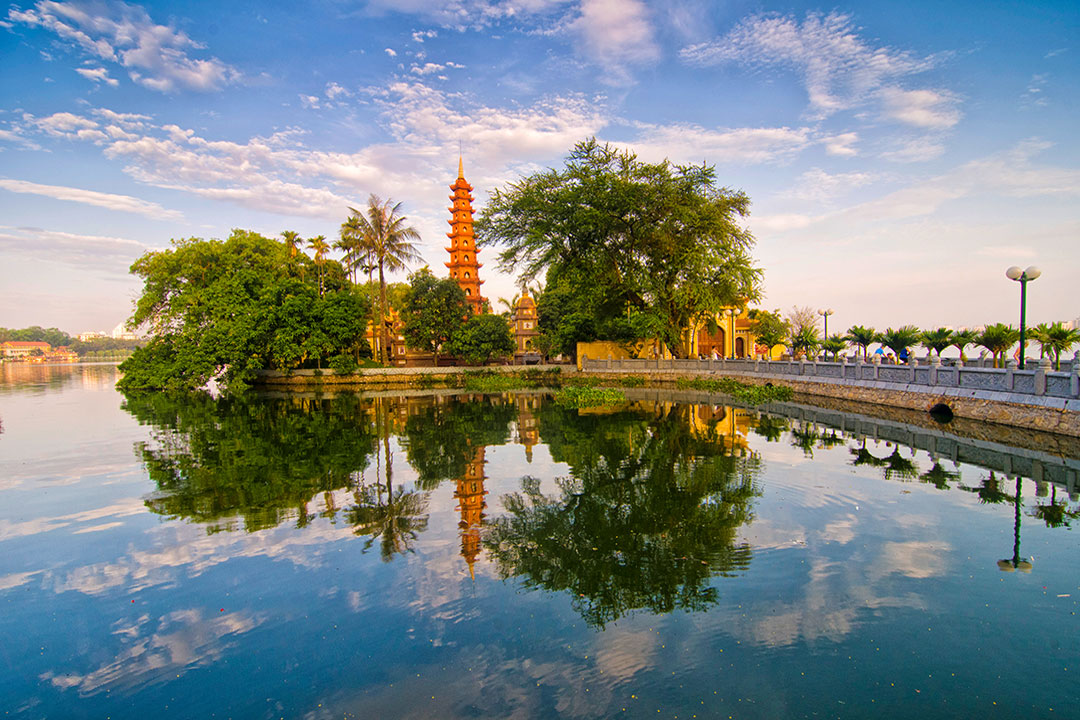
Tran Quoc Pagoda: History, Architecture, Significance & Travel Guide
Tran Quoc Pagoda
Nestled on the tranquil shores of West Lake, Tran Quoc Pagoda is the oldest Buddhist temple in Hanoi, with a history spanning over 1,500 years. Built in the 6th century under Emperor Ly Nam De, this sacred site reflects Vietnam’s Buddhist evolution while preserving its spiritual and architectural grandeur.