

Monday, October 19, 2026
Tran Family Chapel Hoi An is a remarkable testament to the history and traditions of one of Vietnam's most ancient towns. Stepping through its gates is like traveling back in time, offering a serene escape from the bustling streets and a deep dive into the soul of a Vietnamese family clan. This isn't just another old building. It's a living museum and a sacred space that has been carefully preserved for over two centuries. In this complete guide by GTrip, we'll walk you through everything you need to know to make your visit unforgettable. We will explore its significance, what makes its design so special, and how it fits into the broader cultural tapestry of Hoi An Ancient Town.
Table of Content
Overview of the Tran Family Chapel Hoi An
- Address: No. 21 Le Loi Street, Hoi An Ancient Town, Hoi An Ward (formerly Minh An Ward, Hoi An City, Quang Nam Province), Da Nang City
- Opening hours: 8:00 AM - 6:00 PM daily
- Entrance fee:
- Adults & children above 15 years old: 120,000 VND ($4.60)
- Smaller kids: Free
- Best time to visit: Early morning (8:00 AM - 9:00 AM) to enjoy the tranquility before tour groups arrive, or late afternoon (4:00 PM - 5:00 PM) when the light is soft and the crowds begin to thin.
The Tran Family Chapel, also known locally as Nha Tho Toc Tran or Tran Ancestral Hall, is one of the most significant and well-preserved ancestral worship houses in Hoi An. It was built as a place for descendants of the Tran clan to gather, pay homage to their ancestors, and preserve their familial traditions. The structure serves as both a place of worship and a residence for the clan’s head, offering a unique glimpse into the domestic and spiritual life of a prominent Vietnamese family over the past 200 years.
Its pristine condition and authentic atmosphere make it a key heritage site within the UNESCO World Heritage-listed Hoi An Ancient Town. Visitors are not just viewing artifacts; they are entering a space that continues to serve its original purpose, providing a profound connection to the past. The blend of rich history, exquisite architecture, and cultural importance makes it a must-visit for anyone seeking to understand the heart of Hoi An.
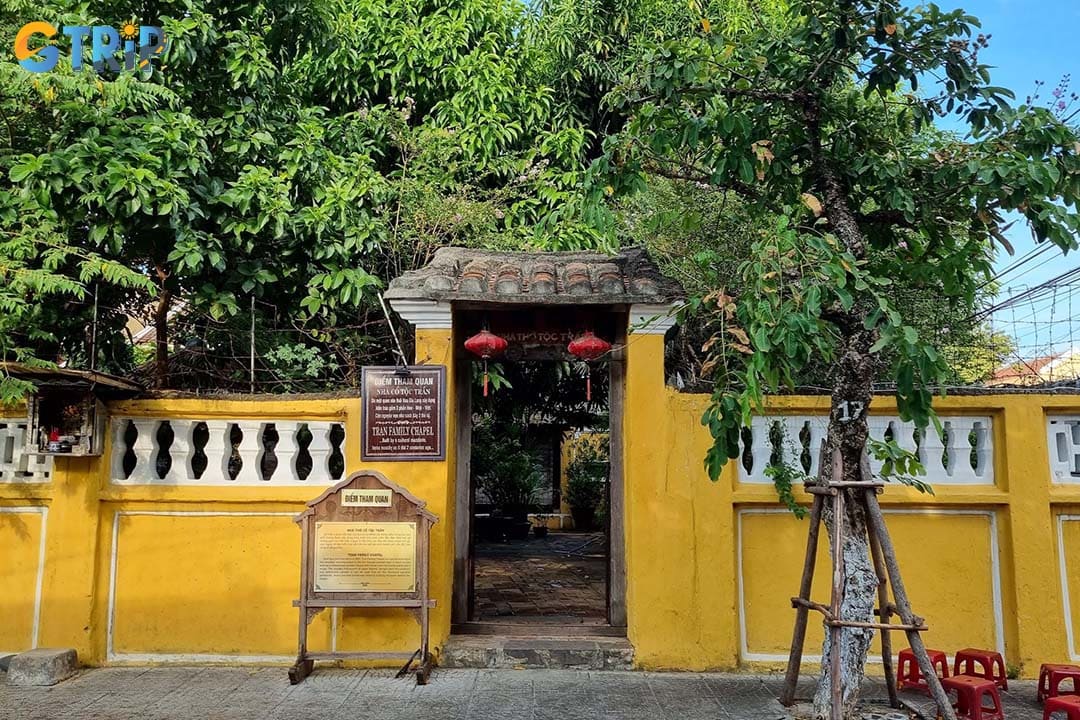
Tran Family Chapel is one of the most significant and well-preserved ancestral worship houses in Hoi An
History of the Tran Family Chapel Hoi An
The history of Tran Family Chapel Hoi An reflects the traditions of ancestor worship and the legacy of prominent families in the ancient trading port. Built in the early 19th century, the chapel preserves stories of the Tran clan and offers insight into the cultural and spiritual values that shaped Hoi An’s historic community.
- 1802: The Tran Family Chapel Hoi An was built by Tran Tu Nhac, a respected literature mandarin who served under Emperor Gia Long, the founder of the Nguyen Dynasty (1802-1945). Before departing on a diplomatic mission to China, he constructed this ancestral chapel as a sacred place for his family to honor their forefathers.
- 19th century: The chapel became an important spiritual center for the Tran clan in Hoi An. Over time, family members preserved the site along with many valuable artifacts, including historical documents, ceramics, and personal belongings associated with Tran Tu Nhac.
- Today: The chapel remains one of the best-preserved family ancestral houses in Hoi An Ancient Town, offering visitors a rare glimpse into traditional Vietnamese ancestor worship and the cultural values of prominent merchant families.
Architecture of the Tran Family Chapel Hoi An
The Tran Family Chapel Hoi An occupies an area of around 1,500 m², combining a traditional worship house with a tranquil garden in front. The main entrance faces west on Le Loi Street, symbolizing the direction of ancestors in Vietnamese spiritual beliefs, while a secondary gate opens toward Phan Chu Trinh Street. The worship hall features brick walls and a tiled roof without decorative mythical animals, creating a simple but dignified appearance.
Inside the main hall stands a central ancestral altar beneath a red-lacquered wooden board inscribed with Chinese characters meaning “Tran Family Ancestral Hall”. The interior also displays calligraphy boards, paintings, and historic objects. You can see a sword belonging to Tran Tu Nhac, traditional ink paintings, ceramics, and a genealogy book dating back to 1812.
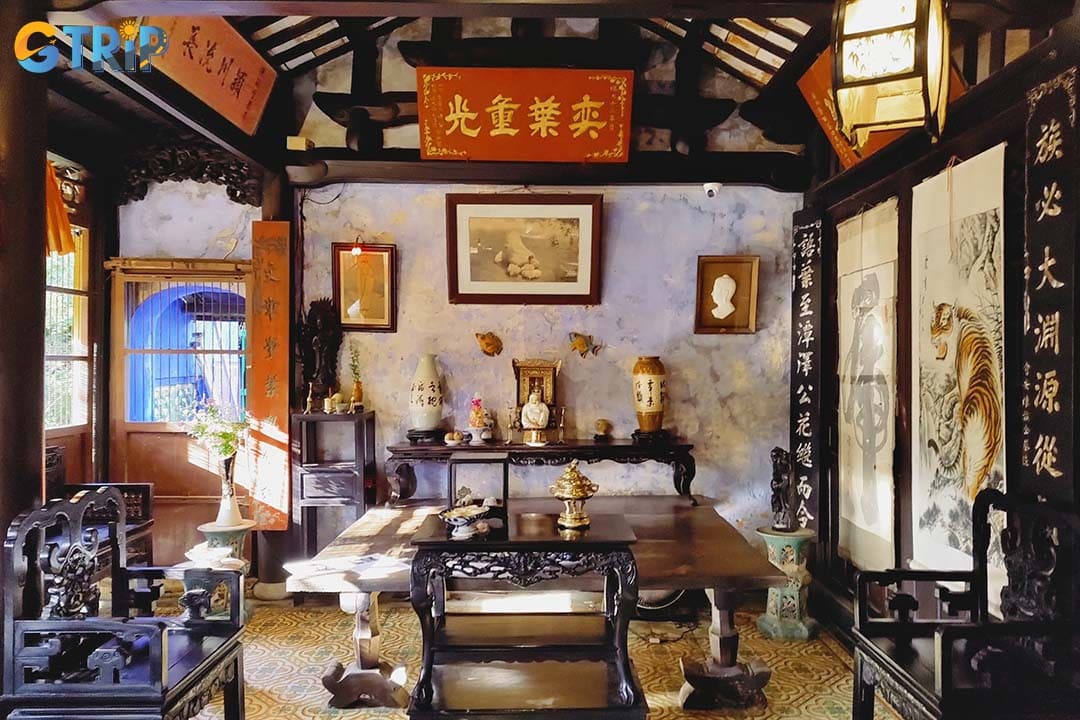
The Tran Family Chapel Hoi An occupies an area of around 1,500 m², combining a traditional worship house with a tranquil garden in front
Things to do at the Tran Family Chapel Hoi An
A visit to the Tran Family Chapel offers more than just a quick look at an old house. It’s an immersive cultural experience. To make the most of your time here, take a moment to engage with the finer details.
1. Listen to family stories at the ancestral altar
The Tran Family Chapel Hoi An isn’t just a temple. It’s a private home with over 200 years of history. The most meaningful thing to do is spend time at the main altar. If you're lucky, a member of the Tran family will be there to explain how they honor their ancestors. Look for the small wooden tablets, each one represents a past family member. It’s a rare chance to see how Vietnamese families keep their history alive today, rather than just reading about it in a book.
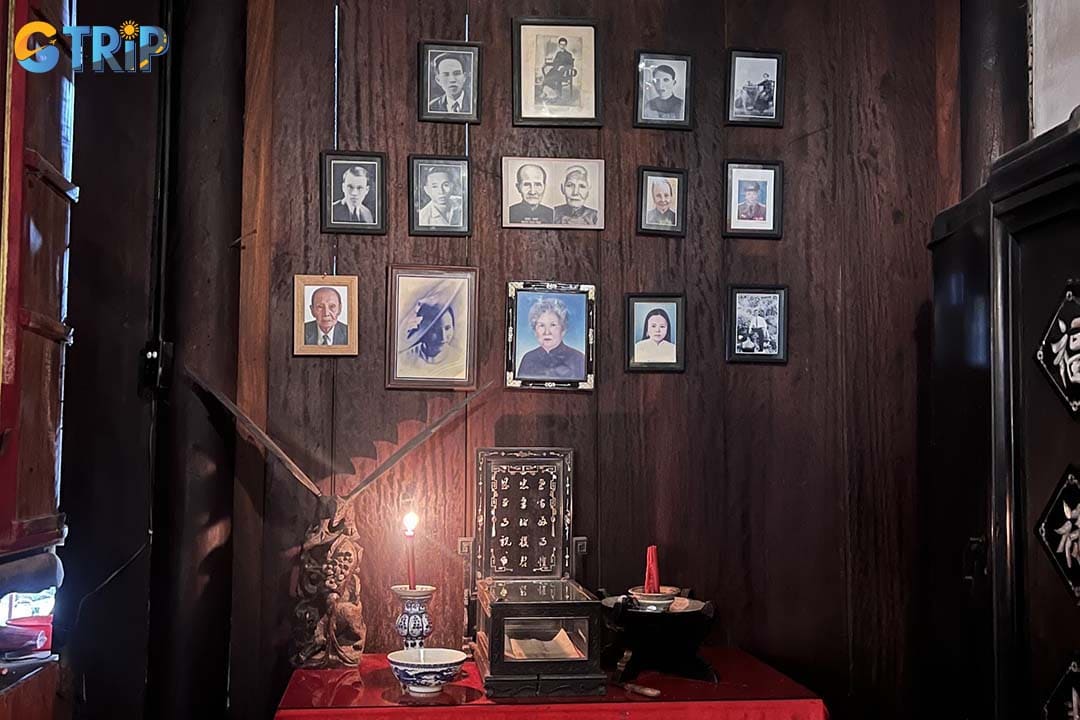
You can learn more about the Tran Family’s history and its stories



2. Spot the "triple-culture" architecture in the roof and garden
Keep your eyes peeled for a fascinating mix of styles. Look up at the wooden beams to see the "turtle-shell" design, a classic Hoi An feature. You’ll also notice Japanese-style supports and Chinese-style decorations. The house was built using Feng Shui principles to ensure good energy flows from the garden through the house. It’s like a puzzle of Asian architecture all gathered under one roof.
3. Step back in time in the family’s private museum
The drawing room feels like a mini-museum filled with "treasures" that have been passed down for generations. Take a close look at the glass cases to find ancient coins, delicate ceramics, and old family photographs. Don't miss the "Eight immortals crossing the sea" painting. It’s a famous piece of art that carries a message of bravery and success. These objects aren't just decorations. They are the actual belongings of the people who lived here centuries ago.
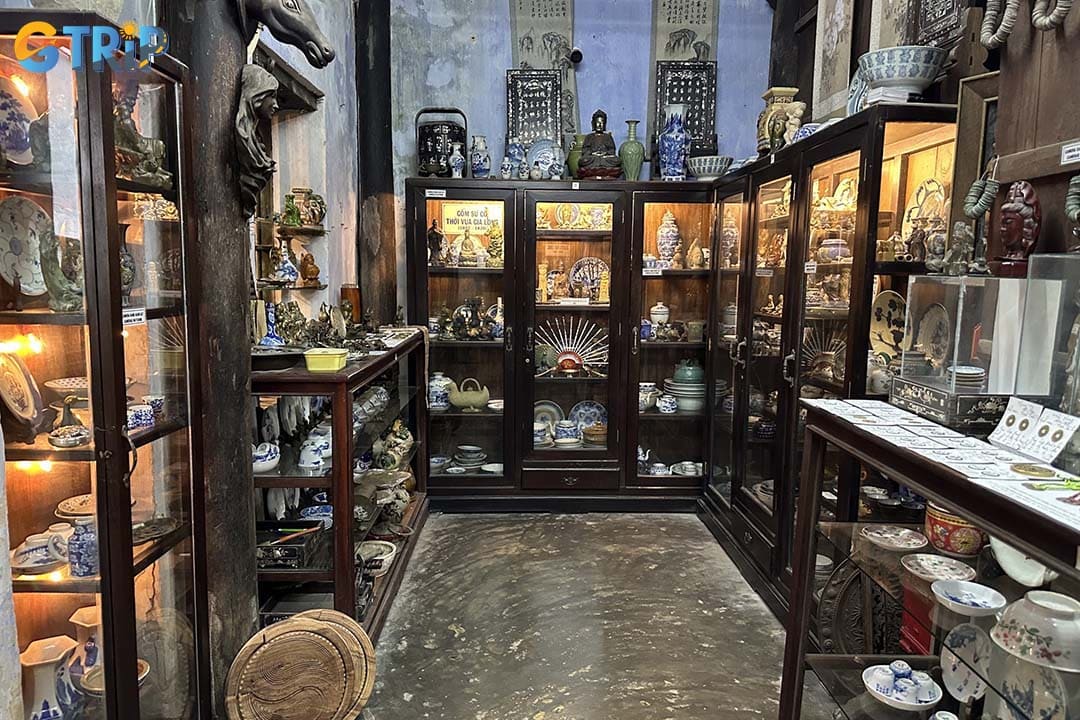
There are many "treasures" that have been passed down for generations in the mini museum of the chapel
4. Decode the symbolic carvings on the doors and pillars
If you look closely at the wooden carvings, you’ll see they aren't just random patterns. Many carvings show a "sword" and a "quill" (a pen) crossed together. This represents the family’s wish for their children to be successful in both martial arts and literature. Finding these little details makes the visit much more interesting, as you start to "read" the walls of the house like a storybook.
5. Relax in the Feng Shui garden and pose by the "Hoi An yellow" wall
After exploring the dark, cool interior, head to the courtyard garden. It’s a peaceful spot with century-old trees and quiet corners that feel miles away from the tourist crowds. Once you’re finished inside, make sure to walk to the outer wall on Phan Chu Trinh Street. This bright yellow wall is one of the most famous photo spots in Hoi An. It’s the perfect place to capture that classic "ancient town" look for your travel photos.
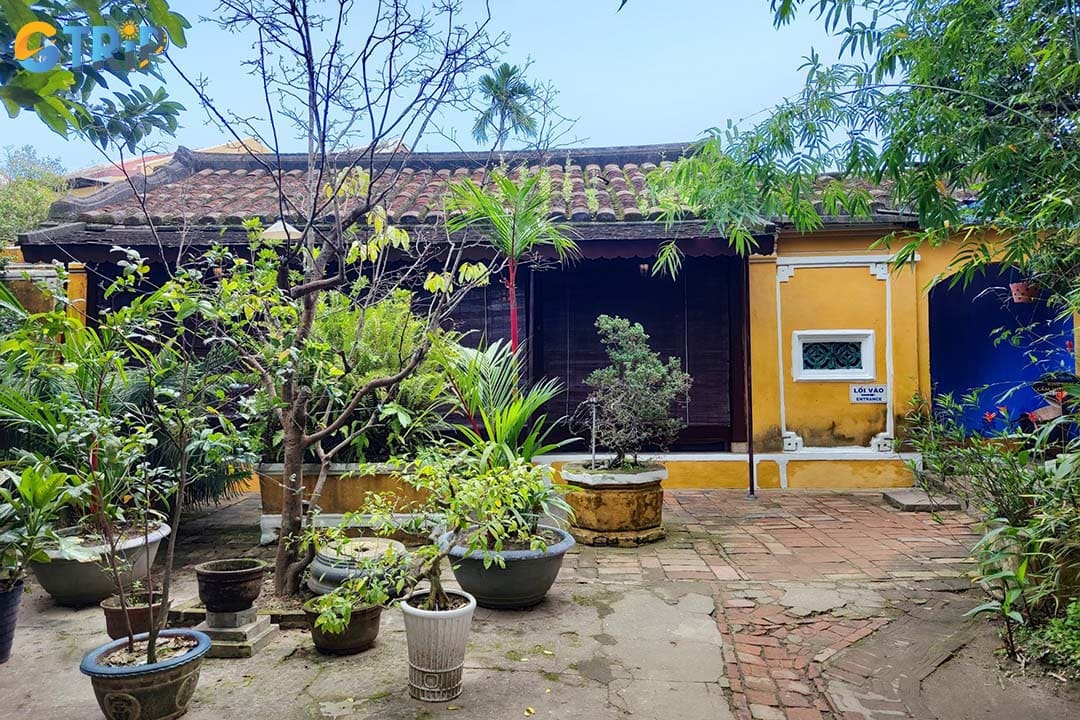
The garden is where you can relax in a green atmosphere after exploring the Tran Family Chapel
How to get to Tran Family Chapel Hoi An?
Tran Family Chapel is located at 21 Le Loi Street, Hoi An Ward, within the UNESCO-listed Hoi An Ancient Town. Because it sits inside the pedestrian zone, visitors often combine walking with other transport methods.
From Da Nang International Airport
Traveling from Da Nang International Airport to Tran Family Chapel Hoi An is convenient by taxi or private transfer.
- Distance: ~30 km
- Travel time: 45-60 minutes
- Routes: Airport → Vo Nguyen Giap coastal road → Lac Long Quan → Hai Ba Trung → Le Loi Street
- Optimal option: Taxi or private car for a direct and comfortable trip
From Da Nang City center
Visitors staying in Da Nang can reach Tran Family Chapel Hoi An via the scenic coastal route connecting the two cities.
- Distance: ~28-30 km
- Travel time: 45-60 minutes
- Routes: Vo Nguyen Giap → Lac Long Quan → Hai Ba Trung → Hoi An Ancient Town
- Optimal option: Motorbike or private car for flexibility and coastal views
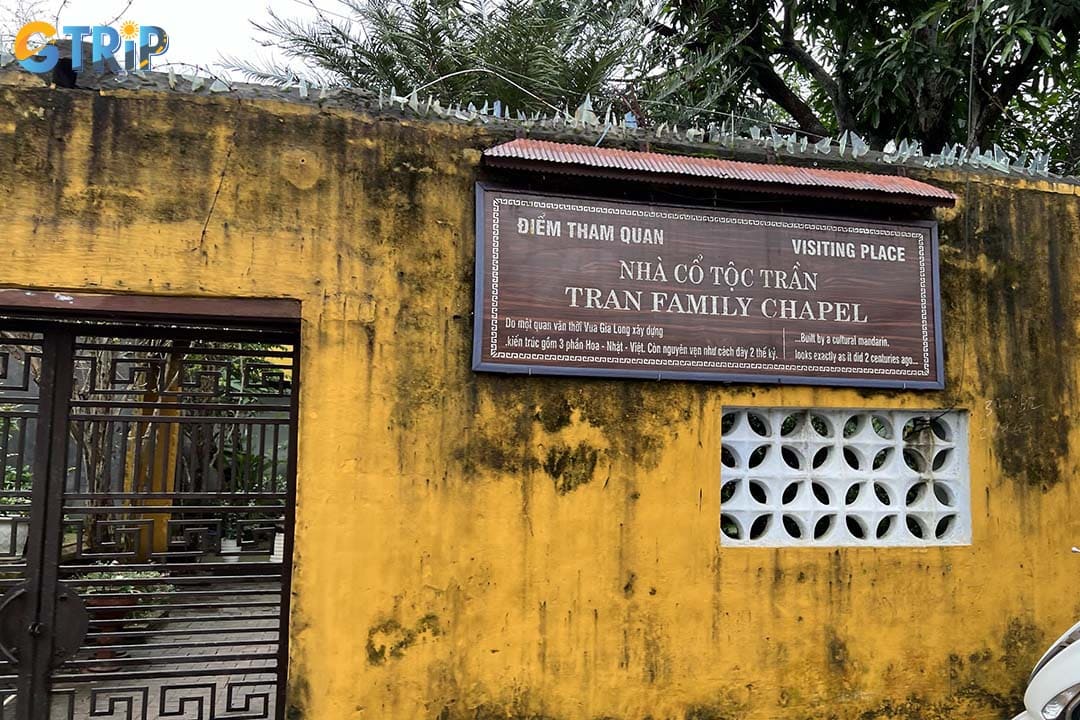
You can reach the Tran Family Chapel from many places
From around Hoi An Ancient Town
Because Tran Family Chapel Hoi An sits inside the historic district, most visitors reach it on foot.
- Distance: 300 m - 1 km depends on starting point
- Travel time: 5-15 minutes
- Routes: Walk along Le Loi Street from Tran Phu Street or Nguyen Thi Minh Khai Street
- Optimal option: Walking, as the ancient town is pedestrian-friendly
Transportation options
Visitors have several convenient ways to reach Tran Family Chapel Hoi An depending on their location.
- Walking: Best choice when already exploring Hoi An Ancient Town
- Bicycle: Popular option for short distances around the old town
- Motorbike: Flexible for travelers staying outside the historic center
- Taxi or private car: Comfortable option for visitors coming from Da Nang
- Cyclo: A traditional and relaxing way to explore Hoi An’s historic streets
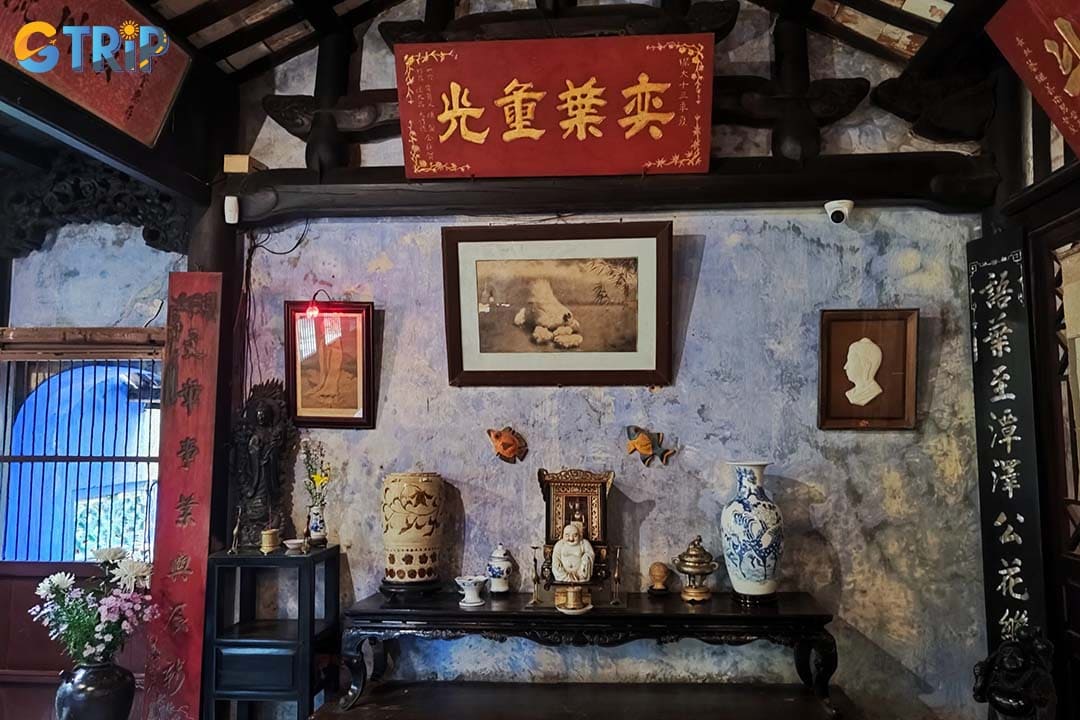
You should get to Tran Family Chapel on foot or park your vehicles outside the building
Nearby attractions to the Tran Family Chapel Hoi An
Located in the heart of the UNESCO-listed ancient town, Tran Family Chapel Hoi An is surrounded by many historical and cultural landmarks. Visitors can easily combine their visit with nearby temples, assembly halls, traditional houses, and local markets while exploring the charming streets of Hoi An.
Other nearby attractions in Hoi An
Several famous attractions are located within walking distance of Tran Family Chapel Hoi An, making it easy to include in a sightseeing route.
- Hoi An Central Market: A lively place to explore local food and daily life
- Fujian Assembly Hall: A beautifully decorated Chinese temple dedicated to Thien Hau Goddess
- Japanese Covered Bridge: The iconic historical landmark of Hoi An
- Quan Thang Ancient House: A well-preserved 18th-century merchant residence
- Hoi An Museum: A great place to learn about the town’s trading history
Other family chapels in Hoi An Ancient Town
Family ancestral chapels are an important part of Hoi An’s heritage. Within the ancient town, there are around 25 preserved family chapels, many located in quiet alleys. Notable examples include:
- Nguyen Tuong Family Chapel - 8/2 Nguyen Thi Minh Khai Street
- Hoang Family Chapel - 40 Tran Thu Street
- Ly Family Chapel - 84 Tran Thu Street
- Pham Family Chapel - 96 Tran Thu Street
- Lam Family Chapel - 120 Tran Thu Street
- Ta Family Chapel - 126 Tran Thu Street
- Vuong Family Chapel - 92 Bach Dang Street
- Tang Dieu Family Chapel - 44/12 Phan Chu Trinh Street
These chapels reflect the strong tradition of ancestor worship and clan identity in Vietnamese culture.
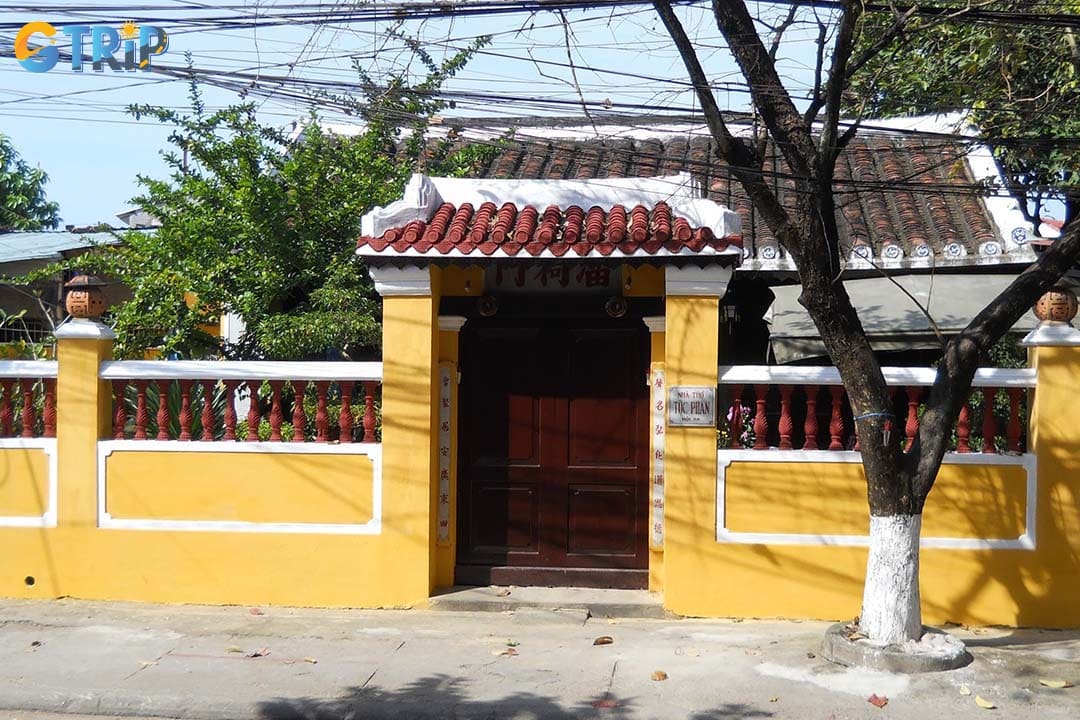
There are many other family chapels in Hoi An that you can visit if you want
Practical tips for visitors
Before visiting Tran Family Chapel Hoi An, it’s helpful to know a few practical tips to ensure a smooth and respectful experience. As the chapel sits inside the pedestrian-friendly ancient town, visitors often explore it while walking between nearby attractions, so planning ahead will help make the visit more enjoyable.
- Visitors need to buy a Hoi An Ancient Town ticket to enter heritage attractions in the area.
- Dress respectfully, especially when visiting religious or ancestral sites.
- Follow local rules and signs when exploring the chapel.
- Avoid touching historical artifacts or entering restricted areas.
- Wear comfortable shoes, as walking is the best way to explore the old town.
- In the dry season (February-August), bring sunscreen, a hat, and drinking water.
- In the rainy season (September-January), carry a raincoat or umbrella.
- Check flood conditions from October to December when visiting Hoi An.
- Bring cash for small purchases or tickets, as some places do not accept cards.
- Consider visiting with a local guide to better understand the history of the chapel and Hoi An’s cultural heritage.
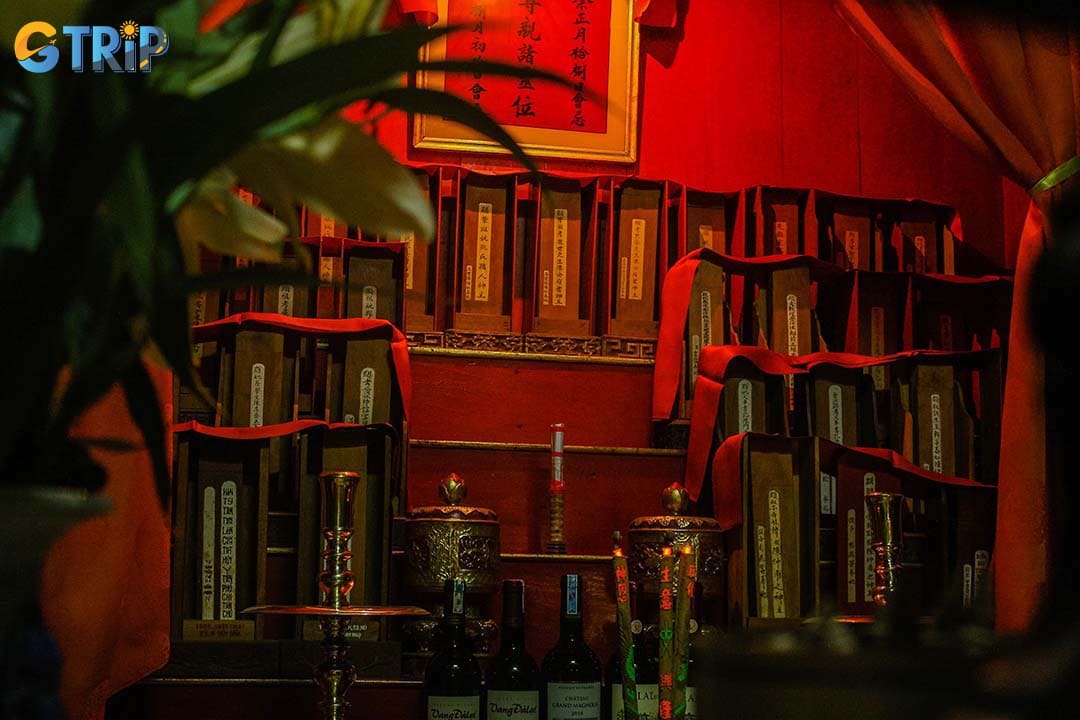
Remember practical tips to have a good time exploring the Tran Family Chapel Hoi An
The Tran Family Chapel Hoi An is far more than just a tourist attraction. It is a portal to the past and a living sanctuary of Vietnamese culture. Its beautifully preserved architecture, rich history, and the palpable sense of reverence make it an essential stop for any traveler seeking an authentic connection with Hoi An. By exploring this 200-year-old treasure, you gain a deeper appreciation for the importance of family, tradition, and artistry that defines this enchanting town. A visit here is not just about seeing, but about feeling the quiet, enduring spirit of generations. Ready to explore the timeless charm of Hoi An? Let GTrip help you craft the perfect Vietnamese adventure. Visit our site to discover more expert tours and in-depth travel guides.
Custom Your Journey

Other Attractions

Can Gio Monkey Island in Ho Chi Minh City: Tickets, Things to Do & Travel Guide
Can Gio Monkey Island
Can Gio Monkey Island in Ho Chi Minh City offers a refreshing escape from the city’s buzzing motorbike chaos. Just a short distance from the center, Can Gio welcomes you with lush mangrove forests, winding waterways, and a fascinating history. Here, you can meet playful long-tailed macaques, drift through tranquil channels, and explore remnants of a wartime guerrilla base.
Can Gio Monkey Island in Ho Chi Minh City: Tickets, Things to Do & Travel Guide
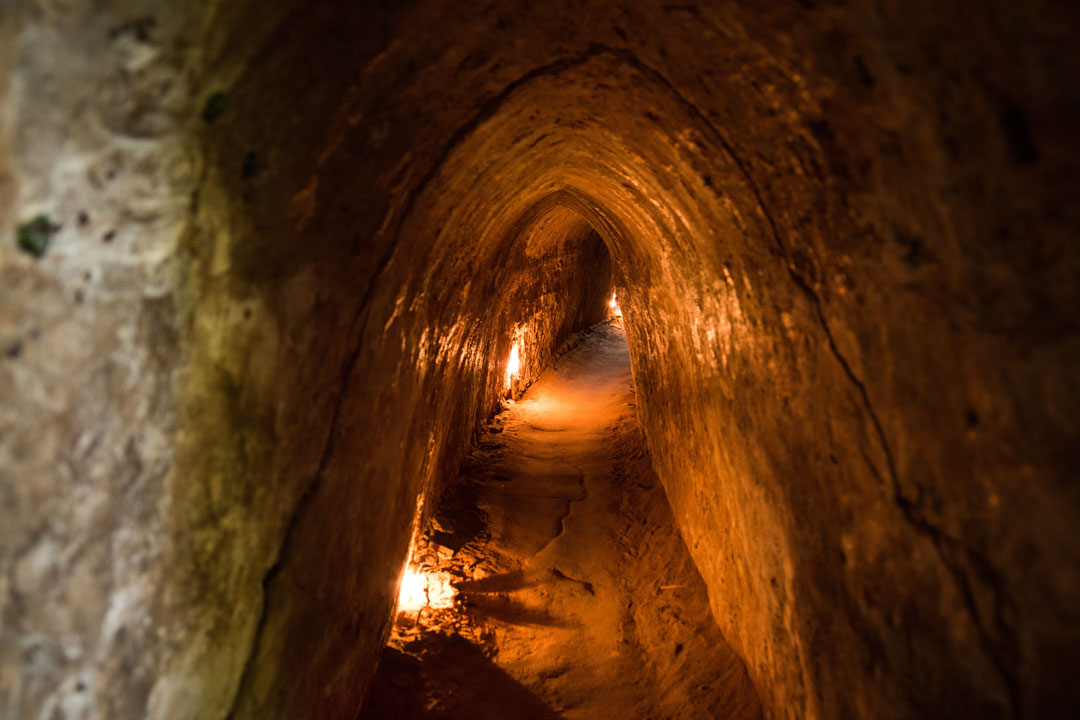
Cu Chi Tunnels: History, Architecture, Things To Do & Travel Guide
Cu Chi Tunnels
The Cu Chi Tunnels, located at TL15, Phu Hiep, Cu Chi District, Ho Chi Minh City, are a vast underground network of strategic passages, shelters, supply routes, and defensive traps.
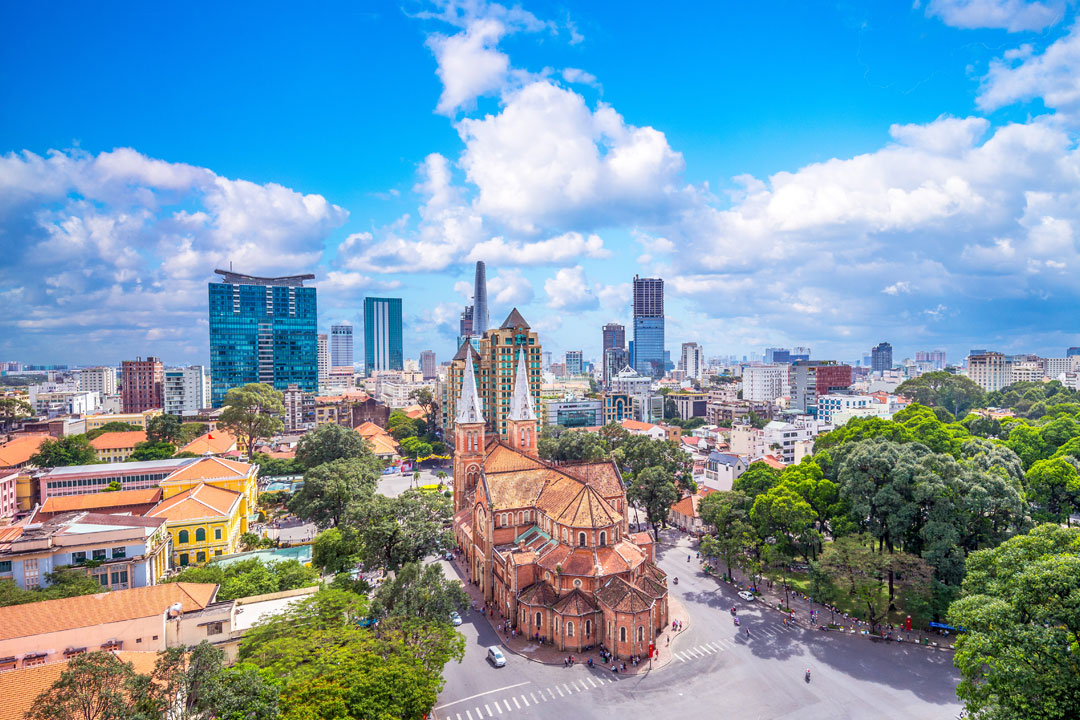
Ho Chi Minh City
Ho Chi Minh City, known as the "Pearl of the Far East," attracts both domestic and foreign tourists with its unique and diverse destinations.

Tran Quoc Pagoda: History, Architecture, Significance & Travel Guide
Tran Quoc Pagoda
Nestled on the tranquil shores of West Lake, Tran Quoc Pagoda is the oldest Buddhist temple in Hanoi, with a history spanning over 1,500 years. Built in the 6th century under Emperor Ly Nam De, this sacred site reflects Vietnam’s Buddhist evolution while preserving its spiritual and architectural grandeur.