Wednesday, December 31, 2025
Quan Thanh Emperor Worship Ceremony takes place annually on the 24th day of the 6th lunar month in Hoi An Ward, Da Nang City. Originating from the Chinese community in Hoi An, this ceremony has become an important cultural and spiritual tradition in the lives of local residents. Each year, the ceremony attracts worshippers and travelers alike, who come with GTrip to honor the virtues of Quan Thanh Emperor.
An overview of Quan Thanh Emperor and his worship in Vietnam
Quan Thanh Emperor's legacy of loyalty, righteousness, and virtue has left an enduring mark not only in China but also across East Asia, including Vietnam.
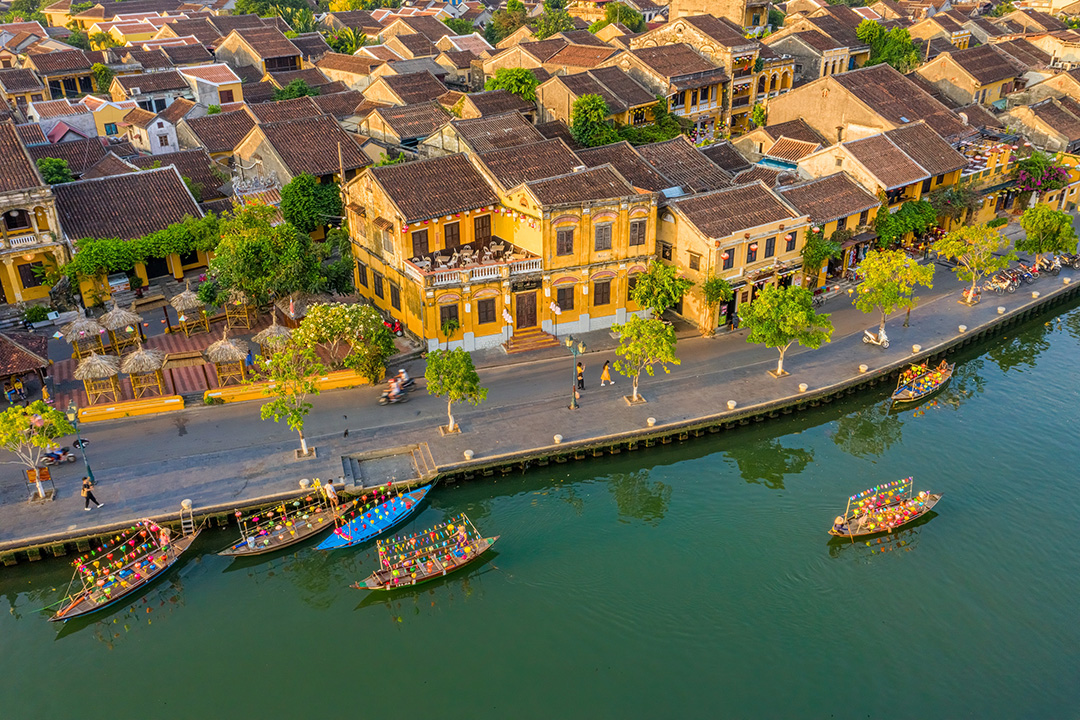


About Quan Thanh Emperor
Quan Thanh Emperor, also known as Guan Yu or Quan Cong, was a real general during the turbulent Three Kingdoms period in China. Renowned for his loyalty, righteousness, and virtuous character, Guan Yu became a symbol of moral integrity. According to legend, after his death, he manifested as a deity who aided the living, earning the grand title “Great Emperor Who Subdues Demons in the Three Realms and Protects Heaven Quan Thanh Emperor”. Temples dedicated to him were built widely, and his worship spread across Asia.
The tradition of worshiping Guan Gong in Vietnam
In Vietnam, the veneration of Quan Cong dates back centuries and became particularly prominent during the early Nguyen Dynasty. The court ordered the construction of temples in 23 provinces and granted imperial decrees to honor him. In Buddhist temples, Quan Cong was often worshiped alongside Buddha, symbolizing a protector and even considered a Bodhisattva figure.
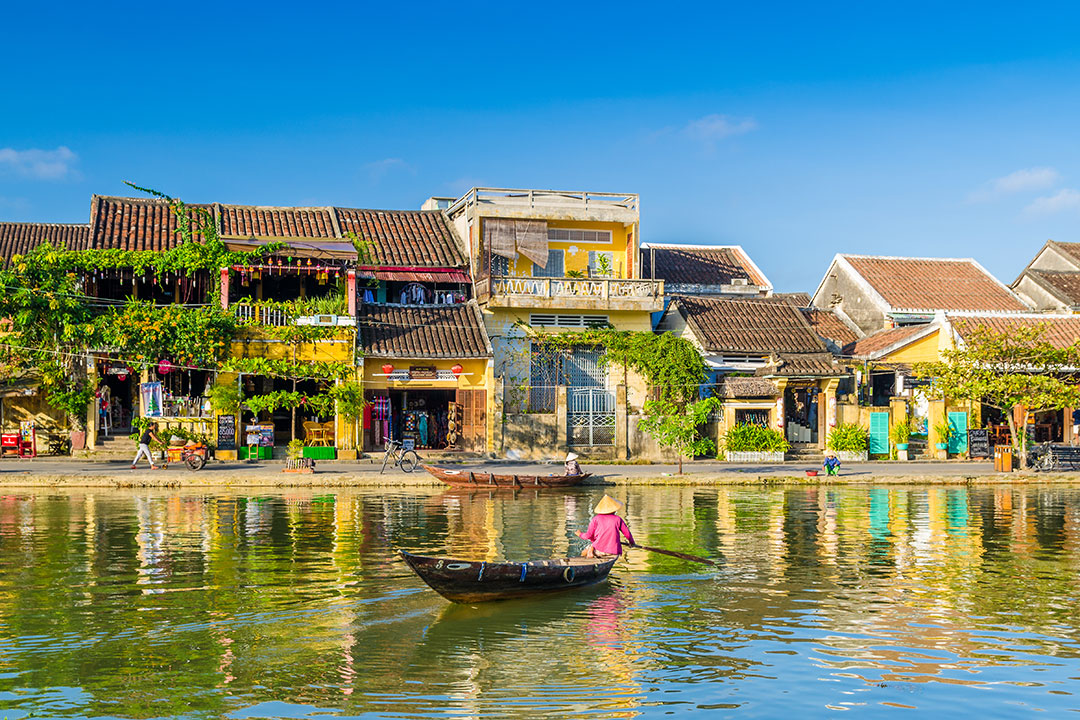
In Hoi An, the Quan Cong Temple, also known as Ong Pagoda, was founded by the Minh Huong community and Vietnamese residents before 1653. For the people of Hoi An, Quan Cong embodies the ideals of Loyalty, Trust, Righteousness, Integrity and principles seen as the highest virtues of humanity.
Because Hoi An was once a bustling trading port, the temple also served practical purposes. Merchants used it as a place to swear oaths, make commitments, or resolve disputes over debts and contracts. In this way, the Quan Cong Temple was not only a sacred spiritual space but also an “economic court”, ensuring fairness and justice while protecting the livelihoods of the townspeople. The worship of Quan Cong thus became deeply rooted in the cultural and economic life of Hoi An.
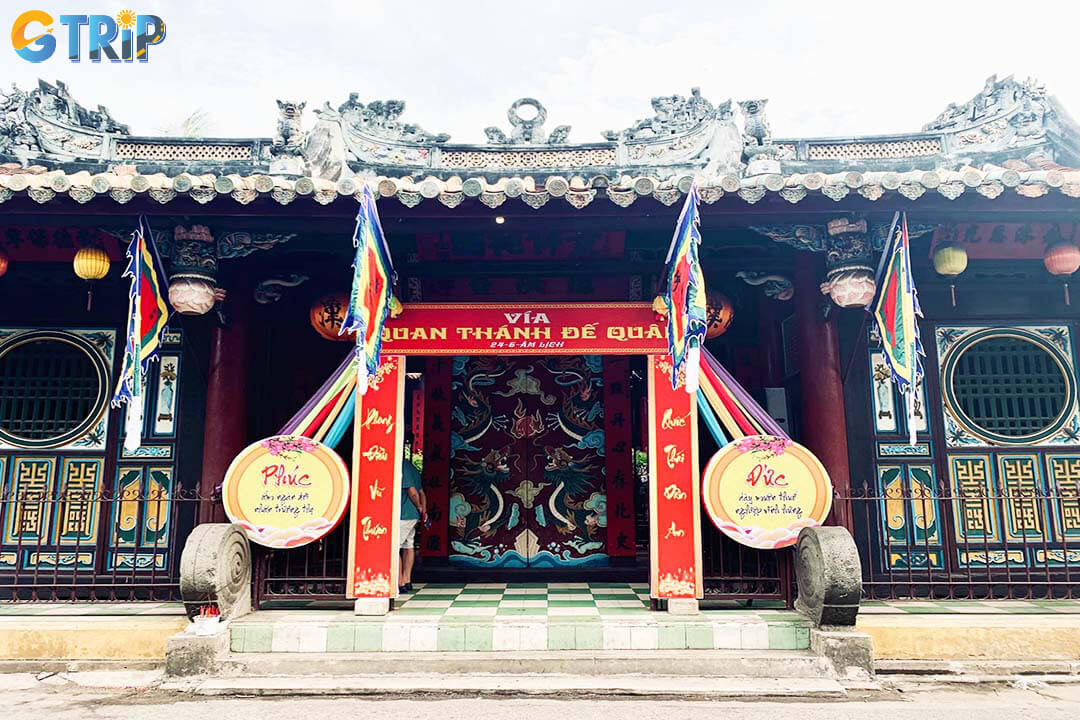
Quan Thanh Emperor is a revered figure in Hoi An, recognized as a saint by the local people
The Quan Thanh Emperor Worship Ceremony in Hoi An
Quan Thanh Emperor Worship Ceremony is celebrated annually on the 24th day of the 6th lunar month at Temple of Quan Cong located at 24 Tran Phu Street, Hoi An, which is now part of Da Nang City but historically belonged to Hoi An, Quang Nam Province.
Preparations for the main day
On the eve of the festival, the temple management committee decorates the temple grounds with colorful banners and flags representing the five elements. Two grand banners embroidered with the words “Hiep Thien Dai De, Quan Thanh De Quan” are hung at the main entrance. Each altar is carefully arranged with offerings of fresh fruits and flowers donated by the community.
In the past, preparations also included a ritual known as Gia quan Moc duc, a symbolic bathing and cleansing of the golden statue and sacred objects on the evening of the 23rd. Today, the practice has been simplified, but drums, gongs, incense, and candles still set the spiritual tone before the main ceremony begins.
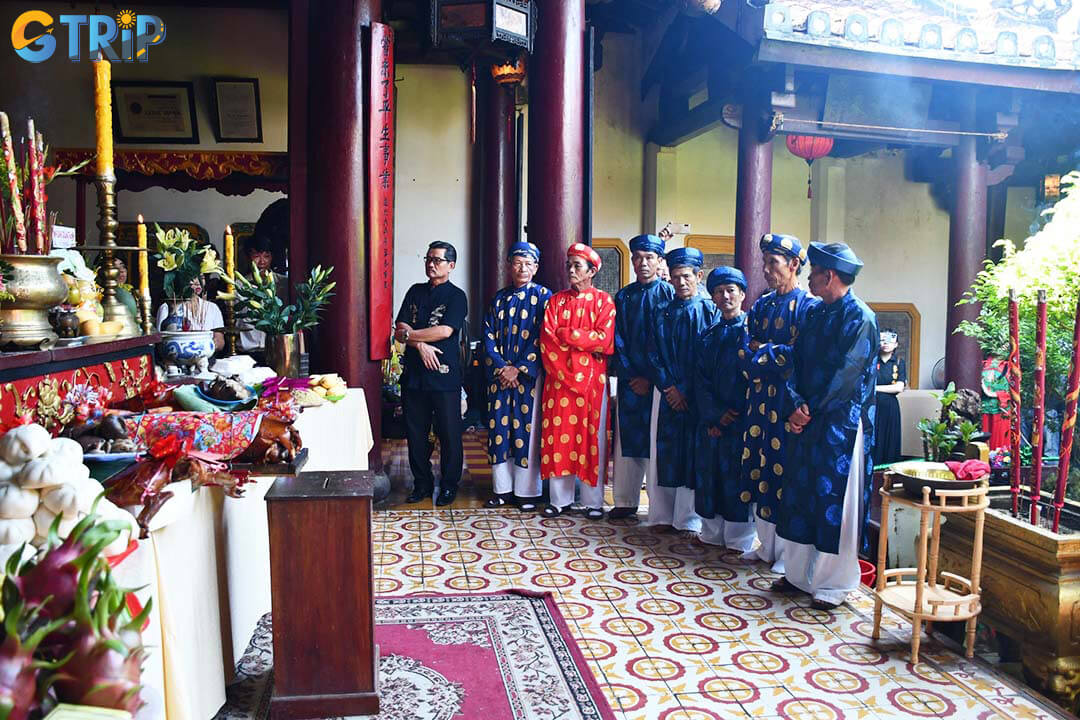
The ceremony has long been an important cultural event in the spiritual life of the locals in Hoi An
The main ceremony day
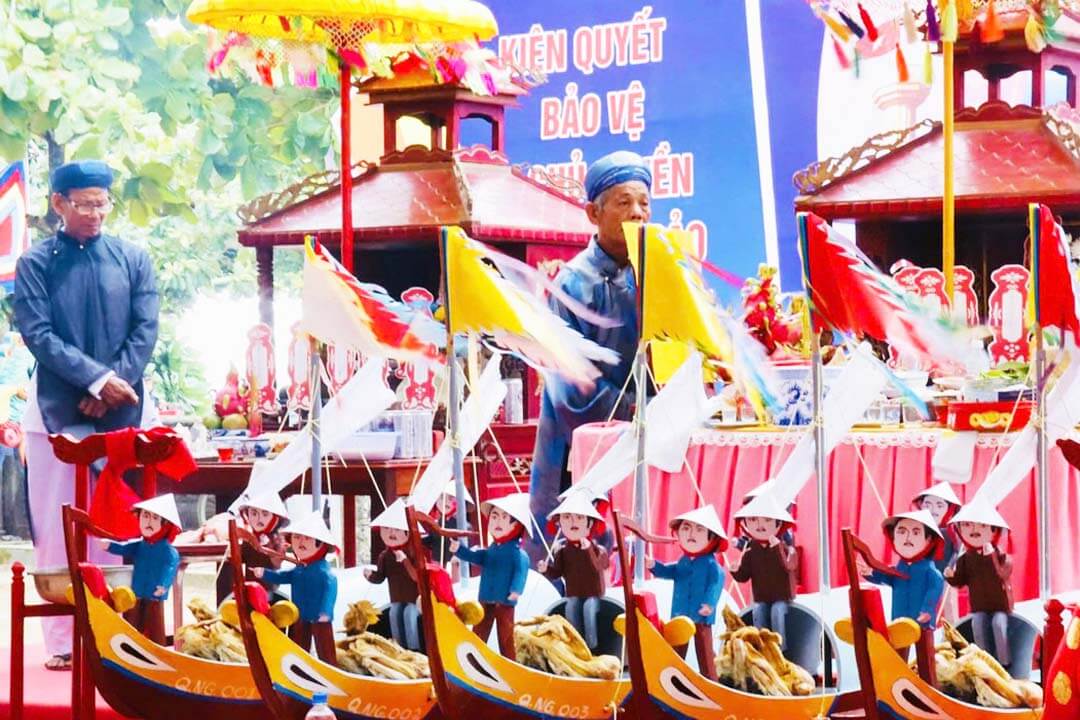
On the morning of the 24th, the temple comes alive with music, incense smoke, and the sound of ceremonial drums. Inside the main hall, offerings include a roasted pig, sticky rice, steamed buns, and fresh fruits. At the side altars dedicated to the White Horse, the Red Hare horse, Confucius, and local deities, more offerings are also placed.
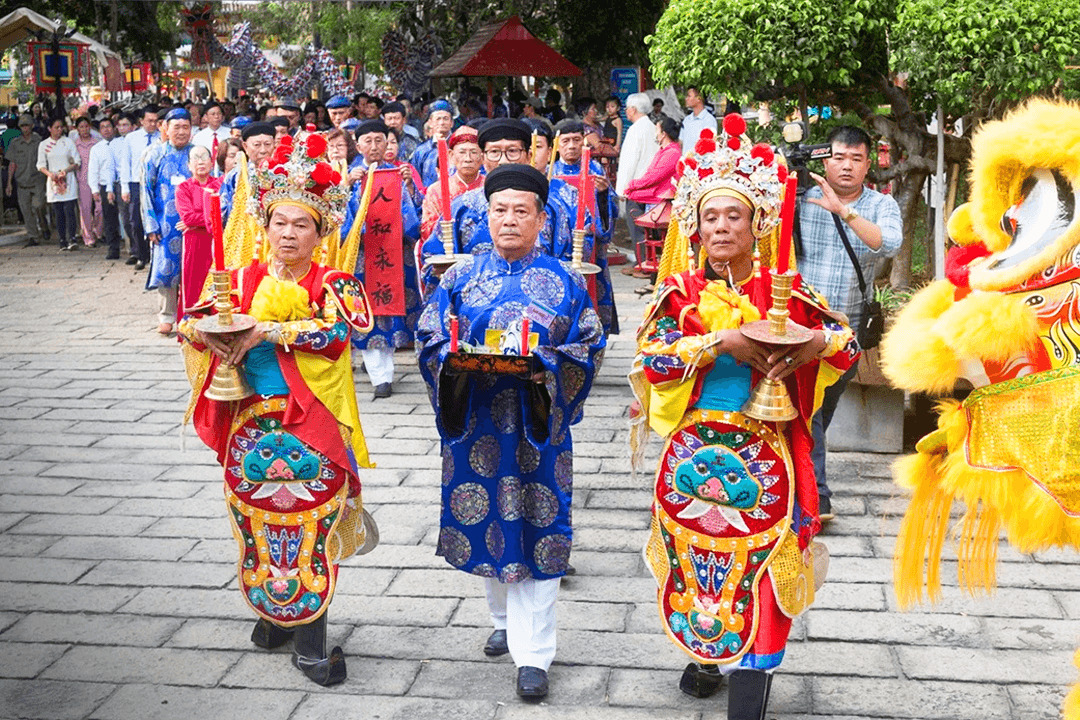
The organizing committee typically includes respected elders, ritual assistants, and ceremonial masters. The festival begins with the striking of gongs and drums, followed by classical music. The ceremonial team presents offerings in accordance with the instructions of the ritual leaders. The Chief Priest, dressed in traditional ceremonial attire, kneels and bows before the altar of Quan Cong, accompanied by solemn prayers.
A sacred ritual follows in which the prayer text, written in classical Chinese on yellow paper, is read aloud and later burned as an offering. Participants, including both locals and visitors, then bow together in reverence. The ceremony concludes with the burning of votive paper, symbolizing respect and devotion. Finally, a lively lion dance takes place, blessing the temple and bringing joy to the community. The lion troupe parades through the streets of Hoi An, filling the atmosphere with excitement.

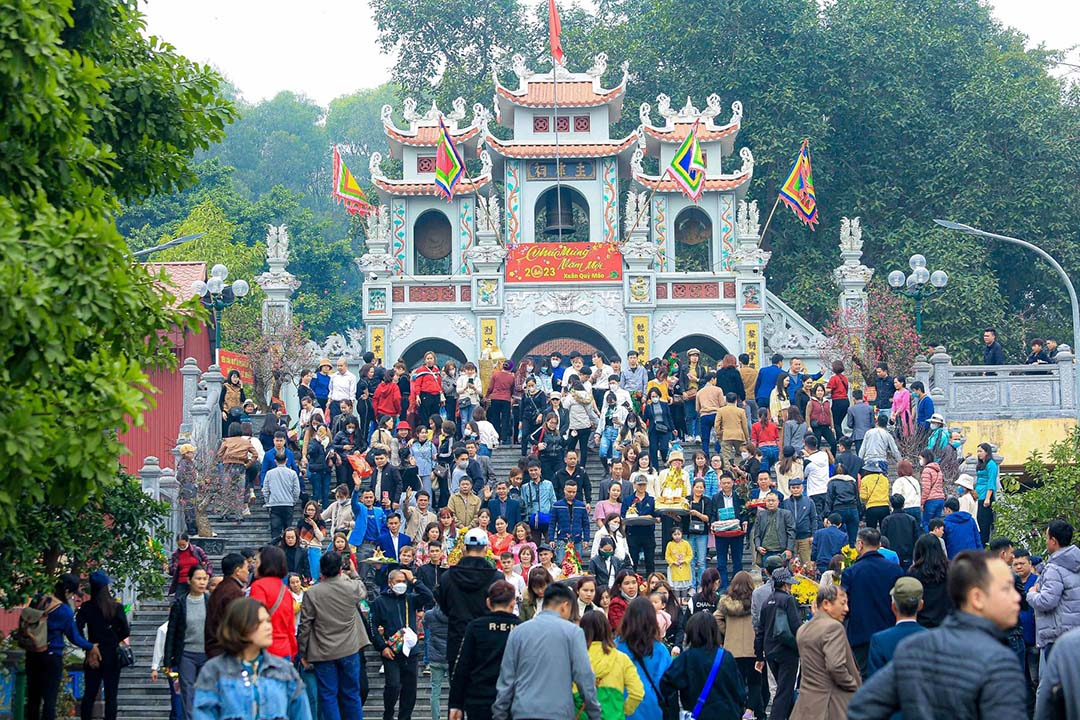
From early morning, locals and tourists have been bustling to Hoi An to participate in Quan Thanh Emperor Worship Ceremony
The significance of the ceremony
The Quan Thanh Emperor Worship Ceremony has been held for centuries and continues to this day because of its deep cultural and spiritual meaning. It represents the faith of the people in loyalty, justice, and righteousness while highlighting the intercultural exchange that characterized Hoi An as a historical trading port.
For merchants and townspeople, the festival was a way to pray for protection, good fortune, and fairness in business. For the wider community, it is an occasion to honor a legendary figure and uphold the moral values he symbolizes. Today, the festival remains an important cultural heritage, enriching the spiritual life of Hoi An’s residents while attracting visitors from across Vietnam and beyond.

The ceremony contributes to promoting the beauty of traditional celebrations in particular and the cultural heritage of Hoi An
Quan Thanh Emperor Worship Ceremony in Hoi An is a cultural tradition that connects past and present, faith and community. With its solemn rituals and vibrant performances, it offers travelers a unique insight into the spiritual life of the Ancient Town. Book your journey to Vietnam today and experience the vibrant festivals, sacred rituals, and cultural heritage that await you!