Wednesday, December 31, 2025
Every year, thousands gather under the moonlit sky in former Nam Dinh for one of Vietnam’s most spiritual and bustling traditional events: the Vieng Market Festival. Taking place right after Lunar New Year, this one-night-only fair is not only a marketplace but also a centuries-old ritual, where buying and selling are believed to bring blessings for the year ahead. With its sacred atmosphere, cultural depth, and vibrant trade, the festival offers a truly memorable experience while GTrip helps travelers understand what to expect and how to experience it respectfully.
Overview of the Vieng Market Festival 2026
The Vieng Market Festival is an annual event held only once a year in former Nam Dinh. Here, visitors don't need to worry about bargaining as usual, creating a unique cultural atmosphere at the beginning of the new year.
When and where does the festival take place?
The Vieng Market Festival takes place on the night of the 7th day and the early morning of the 8th day of the Lunar New Year, which falls around mid-February in 2026. The exact dates are 23rd-24th February in 2026. The festival is held in two main locations in Nam Dinh Province (now Ninh Binh Province): Vieng Market in Vu Ban Commune and Vieng Phu Day in Vu Ban Commune (formerly Kim Thai Commune, Vu Ban District). These sites are closely linked to significant historical and spiritual figures in Vietnamese culture, adding depth to the festival’s meaning.
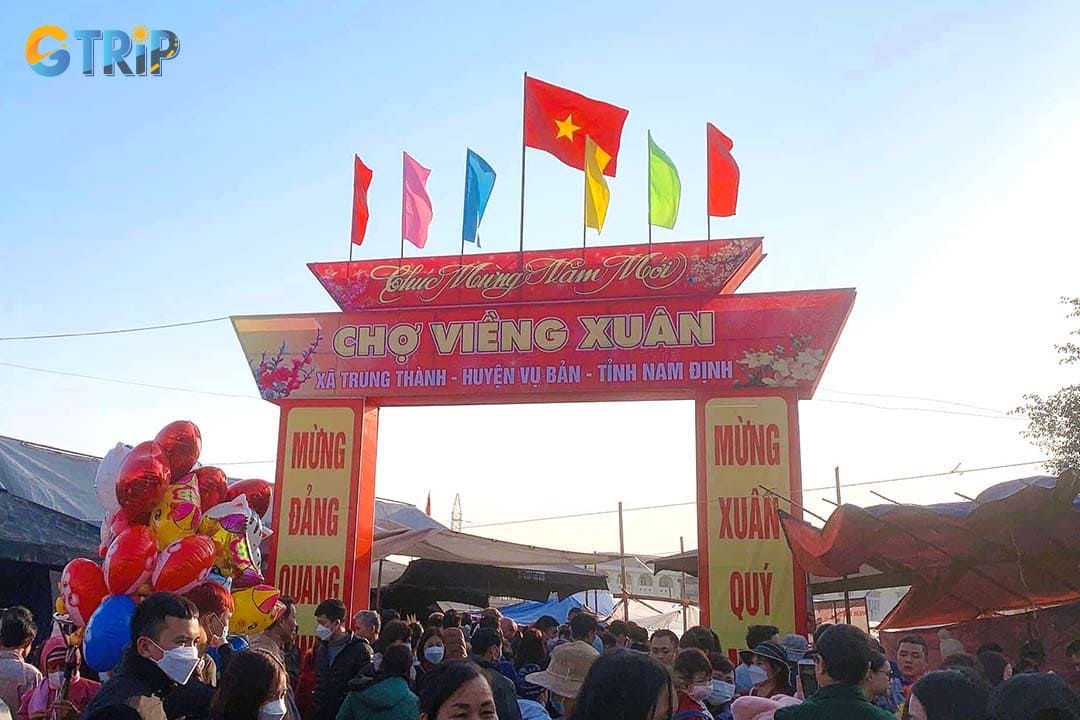
The Vieng Market Festival is a cultural event held only once a year in Nam Dinh
Origin of the Vieng Market Festival
The origins of the Vieng Market Festival are deeply intertwined with the historical legends and distinctive customs of Nam Dinh. According to local folklore, the market was established to commemorate the Tay Son army after their victory over the invading Qing forces in Thang Long (present-day Hanoi). On their return journey, the Tay Son generals stopped in Nam Dinh to host a celebration for the troops, during which the Vieng Market was born. Over time, it evolved into a symbolic marketplace where people “buy luck and sell misfortune”, seeking blessings and smooth fortune for the new year.
The word “Vieng” in the festival’s name has various interpretations. A common belief is that it is a local variation of the Vietnamese word “ve”, meaning “to return,” symbolizing reunion, homecoming, and community bonding. Another theory suggests that “Vieng” is a phonetic distortion of “vang” (gold), a symbol of nobility and prosperity. In this context, the term implies a prosperous and thriving market, with “gold” used metaphorically, as direct references to the royal-associated color were traditionally avoided out of respect.
Meaning of the Vieng Market Festival
At its core, Vieng Market is a spiritual market. Locals believe that whatever is bought or sold during this time is blessed with luck and protection. It’s not about profit or haggling. Transactions are symbolic, often made quickly and with minimal bargaining. The festival also serves as a way to pay respect to ancestors, ask for health and prosperity, and cleanse the misfortunes of the previous year. For many, it's a sacred occasion as much as a social gathering.
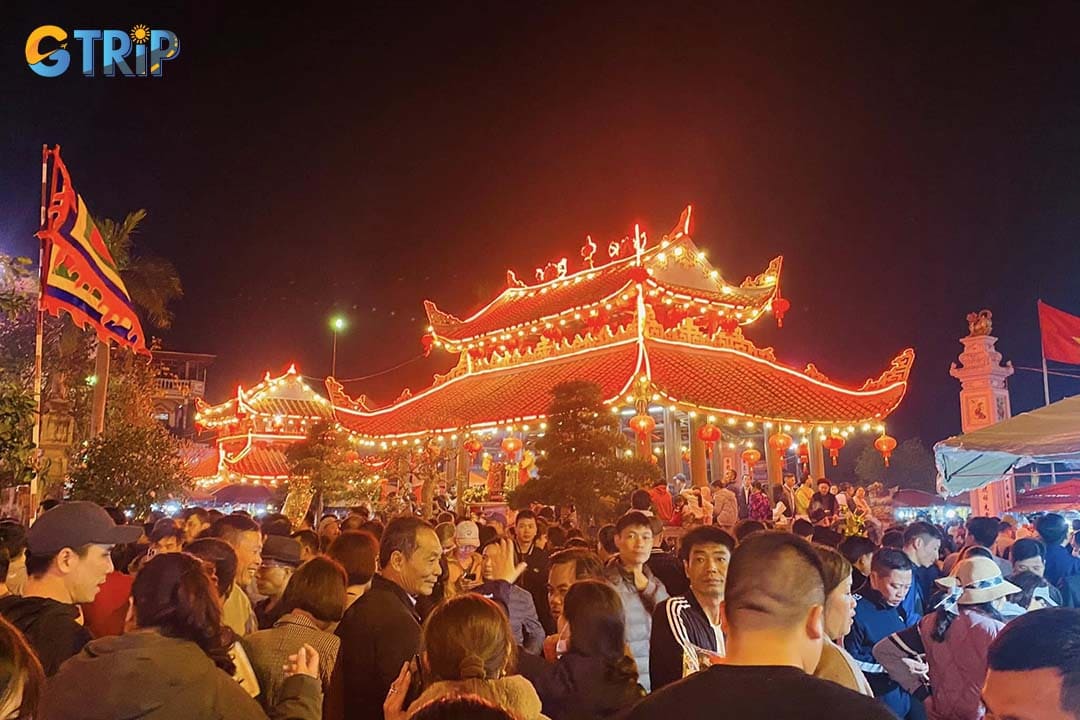
At its core, Vieng Market is a spiritual market
Activities of the Vieng Market Festival
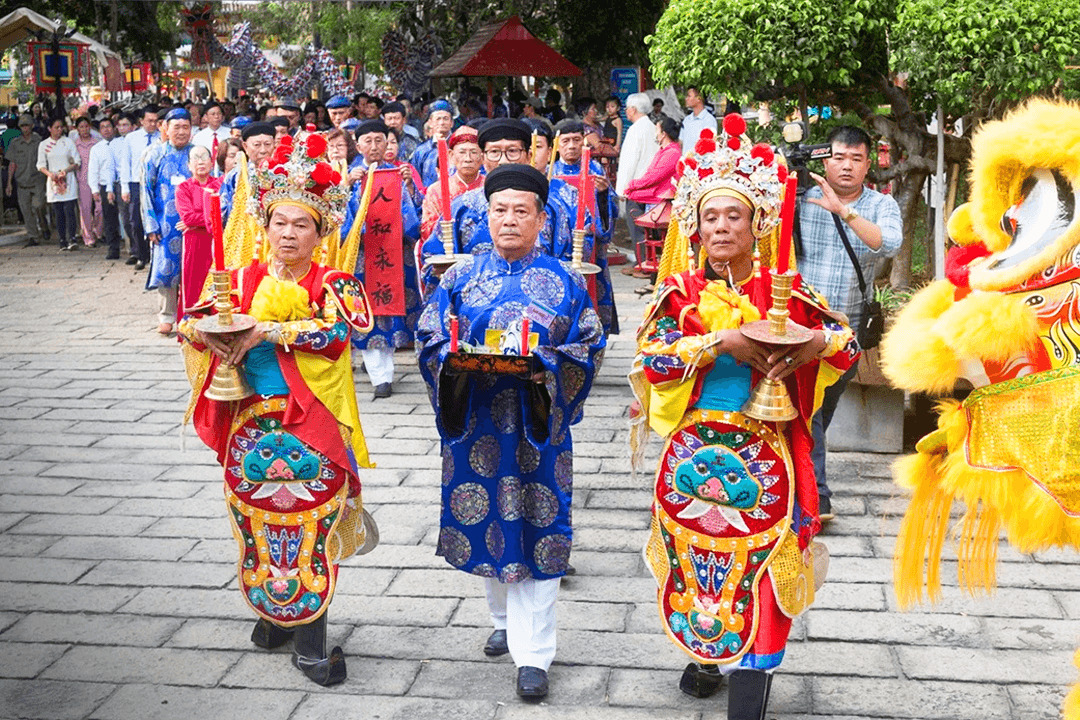
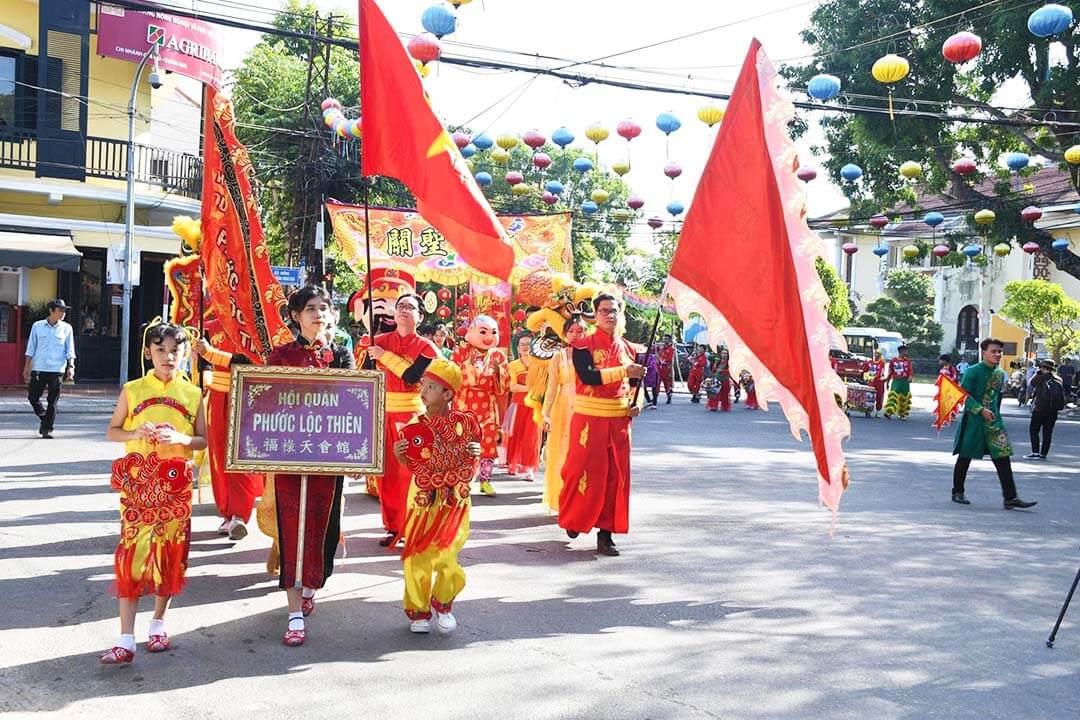
The Vieng Market Festival blends solemn rituals with vibrant cultural interaction, creating a unique space for both spiritual devotion and joyful celebration.
The special market of “buying luck, selling misfortune”
The heart of the festival is the one-night-only market, held on the night of the 7th and the early morning of the 8th day of the Lunar New Year. Here, people shop for symbolic items such as farming tools, bronze wares, antiques, seedlings, and local specialties like grilled beef, silky peanuts, and beef noodle soup. There’s no bargaining. Prices are accepted as-is. Transactions are quick, as the purpose is not commerce, but the spiritual act of welcoming luck and letting go of misfortune.
Temple visits and sacred sightseeing
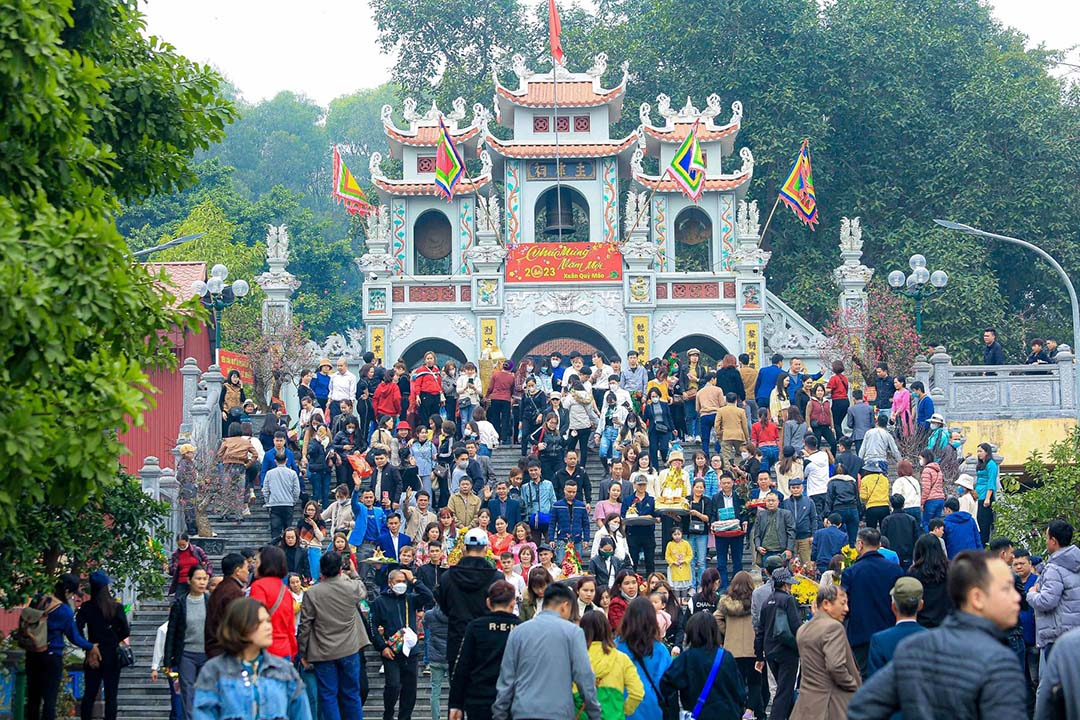
Many visitors take the opportunity to visit local temples, pagodas, and historic sites. Notable places include Dai Bi Pagoda, dedicated to Zen master Tu Dao Hanh; Phu Day Temple complex, honoring the Mother Goddess Lieu Hanh; and Giap Ba and Giap Tu temples. These spiritual stops allow participants to pray for peace, prosperity, and protection for their families as they enter the new year.
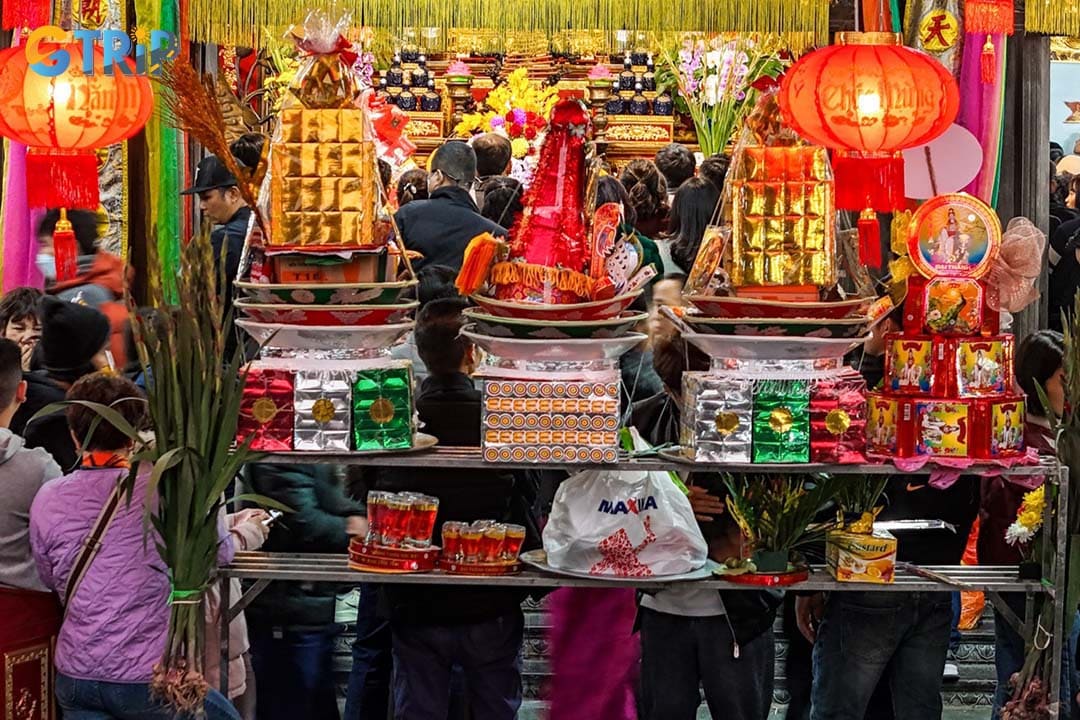
Many visitors take the opportunity to visit local temples, pagodas, and historic sites
Traditional games and folk performances
Folk games and artistic displays bring the festive spirit to life. Among the highlights is the Oi Loi performance, a wooden puppet ritual presented at Dai Bi Pagoda to pay homage to the deities. Other activities include traditional theater, folk singing, and various games that encourage community bonding and cultural preservation.
Culinary delights and cultural exchange
The festival is also a celebration of local food and hospitality. Attendees can sample Nam Dinh’s well-known delicacies, engage in conversations with residents, and share in the warm, welcoming energy that defines northern Vietnam’s springtime spirit. Through food, stories, and smiles, the Vieng Market becomes a bridge between generations and between guests and hosts.
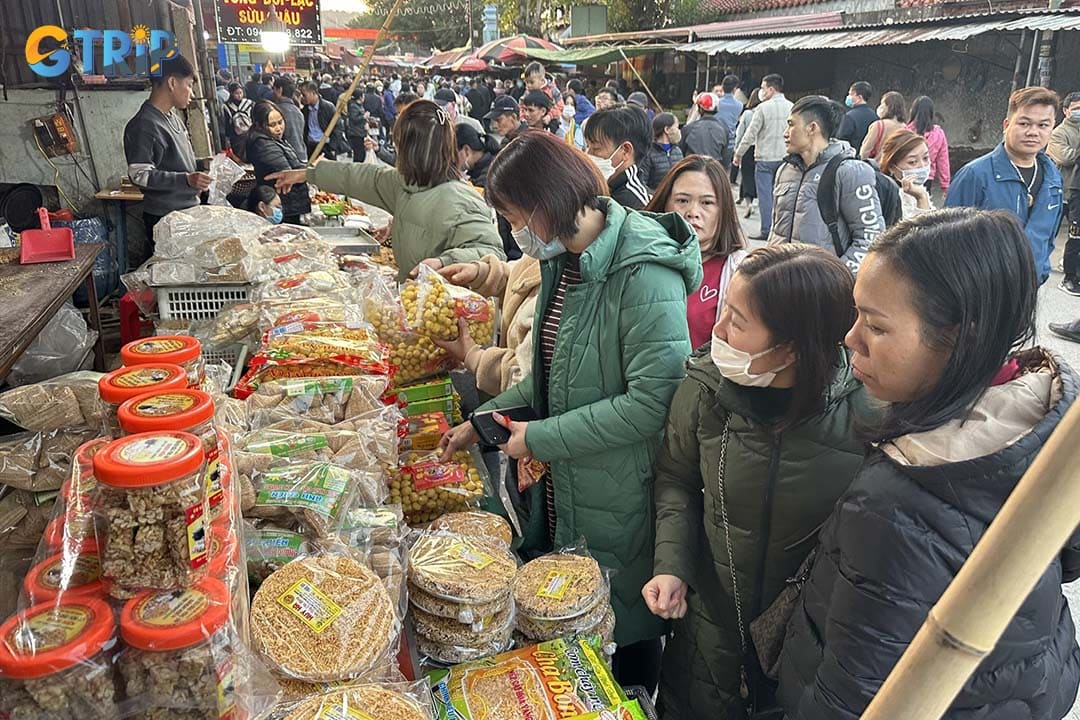
Attendees can sample Nam Dinh’s well-known delicacies, engage in conversations with local residents
Products to buy during the festival
The Vieng Market is a treasure trove of unique goods, blending traditional craftsmanship with local delicacies and symbolic purchases for good fortune.
A wide range of traditional and modern items
Stalls at the festival offer an extraordinary mix of products, such as essential farming tools like hoes, sickles, iron rakes, and machetes. Additionally, there are handmade household items such as bamboo baskets, wooden goods, and bronze utensils. You can also find antiques, imitation antiques, ceramics, traditional conical hats, and decorative items like bonsai trees and rare flowers. Alongside these heritage-rich goods, modern consumer products made by local businesses and craft cooperatives are also available, reflecting a fusion of past and present.
The iconic beef dishes and local specialties
Among all items, grilled beef and veal stand out as symbolic and must-have products of the festival. These meats are not only purchased to take home but also enjoyed on-site. People often gather around simple food stalls to savor bowls of traditional beef pho, hotpot dishes, or rare beef dipped in lime juice, all freshly prepared by locals. The food may not be fancy, but it carries an unforgettable, rustic flavor that reflects the sincerity and warmth of Nam Dinh's culinary tradition. Almost everyone who attends the festival brings home a piece of that taste, often in the form of fresh beef or veal cuts.
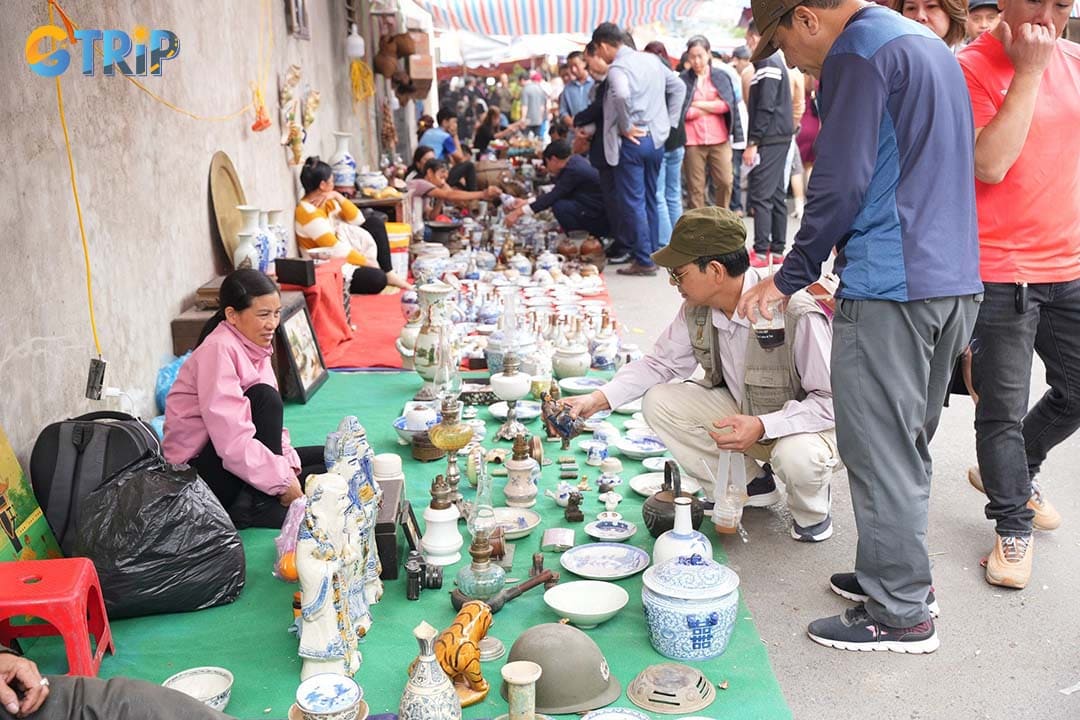
You can also find decorative items like bonsai trees and rare flowers
The Vieng Market Festival in 2026 will continue to reflect the deep spiritual and cultural soul of northern Vietnam. It is a night when tradition comes alive in the form of candles, prayers, songs, and simple exchanges. This festival offers an unforgettable journey into the heart of Vietnamese belief and community if you're seeking luck, cultural immersion, and a glimpse into Vietnam’s living heritage. Book Vietnam tours to experience the liveliness of this festival.