
Thursday, February 26, 2026
If you were to ask a local in Ho Chi Minh City to name a dish as iconic as Pho, you'd likely hear two words whispered with reverence: com tam. Welcome, fellow food adventurer, to the ultimate guide to Vietnamese broken rice. This is a symphony of textures and flavors served on a single plate, a cultural touchstone that tells the story of Vietnamese resilience and culinary genius. At GTrip, we believe that to truly know a country, you must eat its food, and com tam is a delicious history lesson you can't afford to miss.
Table of Content
- Why is Vietnamese broken rice a must-eat when traveling to Vietnam?
- Origin and history of com tam
- Why broken rice hits differently?
- Vietnamese broken rice across Vietnam
- Ingredients of a delicious plate of broken rice
- Where to find the best Vietnamese broken rice?
- How to order and eat broken rice like a local
- Frequently asked questions about Vietnamese broken rice
Why is Vietnamese broken rice a must-eat when traveling to Vietnam?
While Pho may be the globally recognized ambassador of Vietnamese soup noodles, com tam is the undisputed king of dry rice dishes in Southern Vietnam. It's a complete, hearty meal that hits every note on the flavor spectrum: smoky, sweet, savory, and fresh. Imagine the intoxicating aroma of lemongrass pork, vibrant toppings, and the perfect harmony of textures in every bite.
You get the fluffy, smoky tenderness of the grilled pork, the savory silkiness of a steamed egg meatloaf, the crispy, lacy edges of a fried egg, and the satisfying crunch of pickled vegetables. It’s a dish that showcases the Vietnamese flair for turning humble ingredients into a culinary masterpiece. What makes it even more essential is its affordability and accessibility. Com tam is the comforting, delicious dish that fuels daily life for millions and offers a true taste of authentic Vietnam. Planning your food tour? This dish should be at the very top of your list of what to eat in Vietnam.
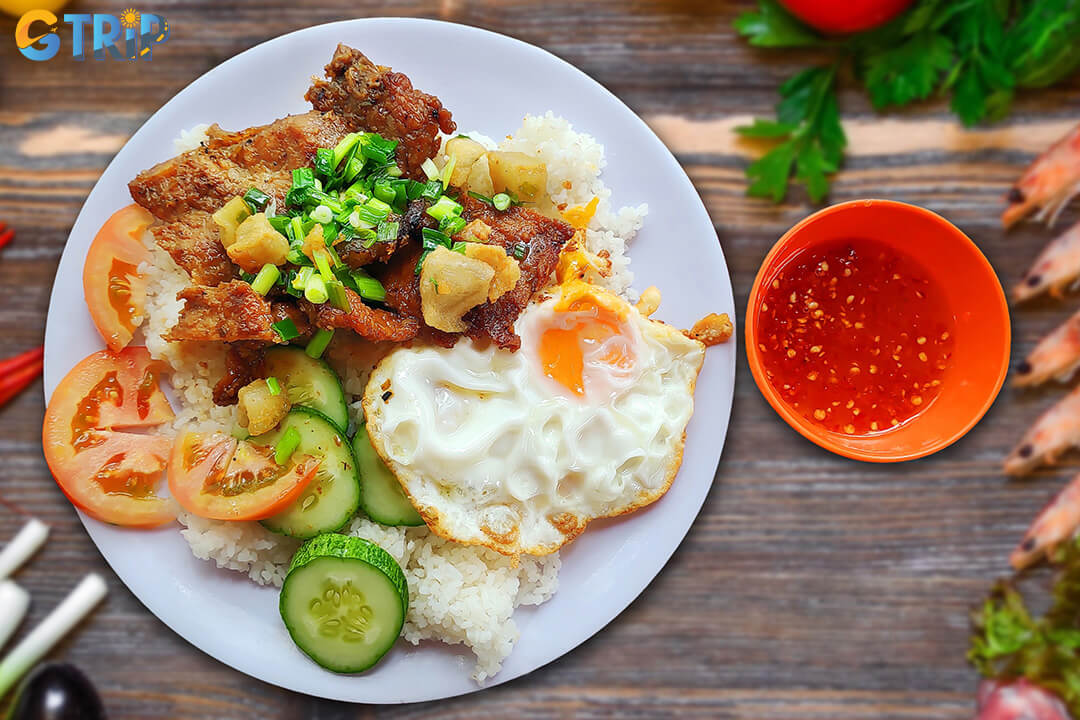
Com tam is Southern Vietnam’s iconic rice dish, delivering bold flavors, rich textures, and an authentic, affordable taste of everyday Vietnamese life
Origin and history of com tam
The story of com tam is a beautiful tale of resourcefulness rooted in the agricultural heartland of Vietnam, the Mekong Delta. Its origin isn't one of royal kitchens or grand celebrations, rather, it began as "the poor man’s rice". During the rice milling process, some grains would fracture and break. These "broken" grains were considered imperfect and couldn't be sold at market price. Instead of being discarded, thrifty farmers kept this rice for their own meals.
This humble farmers' lunch began its journey to stardom in the mid-20th century. Migrants brought their traditions to Saigon, and com tam soon became a staple on the city’s vibrant streets. Initially, it was a simple plate of broken rice served with a piece of grilled pork. Over time, as it grew in popularity and captivated the palates of the urban population, it evolved. Com tam stalls began competing to offer the most tempting plate, adding more and more elaborate toppings like shredded pork skin and a steamed egg meatloaf. It transformed from a simple rural staple into the beloved, multi-layered masterpiece of Saigon street food we know today.
Why broken rice hits differently?
You might wonder, "It's just rice, right? How different can it be?" The secret lies in the unique physical properties of the broken grains. Because the grains are fractured, they have more surface area and a different starch structure, allowing them to absorb flavors more readily than whole grains. When you drizzle that magical sweet and savory fish sauce over the top, each tiny piece of rice soaks it up like a sponge, ensuring every bite is infused with flavor.
Furthermore, the cooking method is key. Com tam is traditionally steamed, not boiled. This process results in a texture that is uniquely fluffy, a little drier, and more separate than regular boiled rice. Com tam creates the perfect neutral canvas and textural contrast for the juicy grilled meats, the savory egg toppings, and the wet, flavorful sauce that are spooned over it. It’s a foundation that doesn’t turn to mush, providing a delightful chew that complements the other components on the plate.
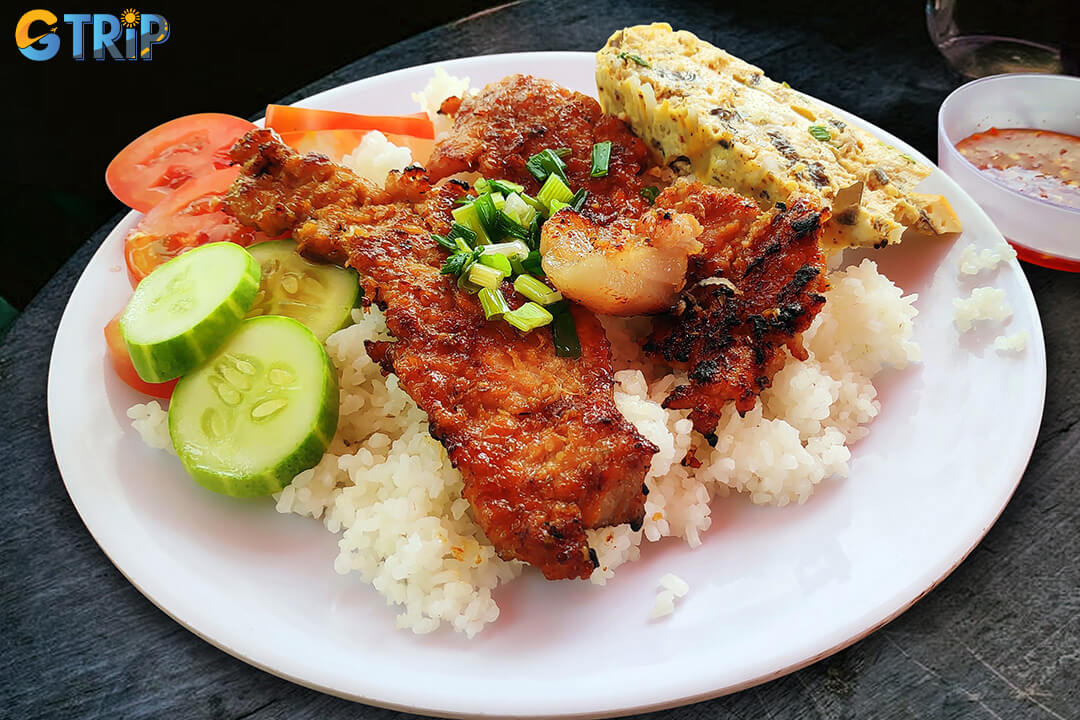
Broken rice absorbs sauce better and is steamed for a fluffy, slightly dry texture, making it the perfect base for flavorful toppings and fish sauce
Vietnamese broken rice across Vietnam
While its soul belongs to the South, com tam has journeyed across the country, with each region adding its own subtle twist.
Broken rice in Northern Vietnam
Com tam is a relative newcomer and is considered more of a specialty dish than a daily staple. You won't find it on every street corner as you would in Saigon. Here, the flavor profile is adapted to suit Northern tastes, which generally favor savory and subtle profiles over the pronounced sweetness of Southern cuisine. The fish sauce served alongside will be less sweet and more balanced, and the pork marinade might lean more on salt and garlic than sugar and honey.
Broken rice in Central Vietnam
Journeying to the central coast, in cities like Da Nang or Hue, you'll find com tam takes on another personality. Here, the dishes are often influenced by the region’s imperial past and a love for bold, spicy flavors. Portions tend to be smaller, and the accompanying fish sauce is noticeably saltier and spicier. It's often served with a fiery local chili paste that adds a powerful kick, catering to the local preference for heat. If you're exploring the central coast, be sure to check out our complete Da Nang travel guide for more local food secrets.
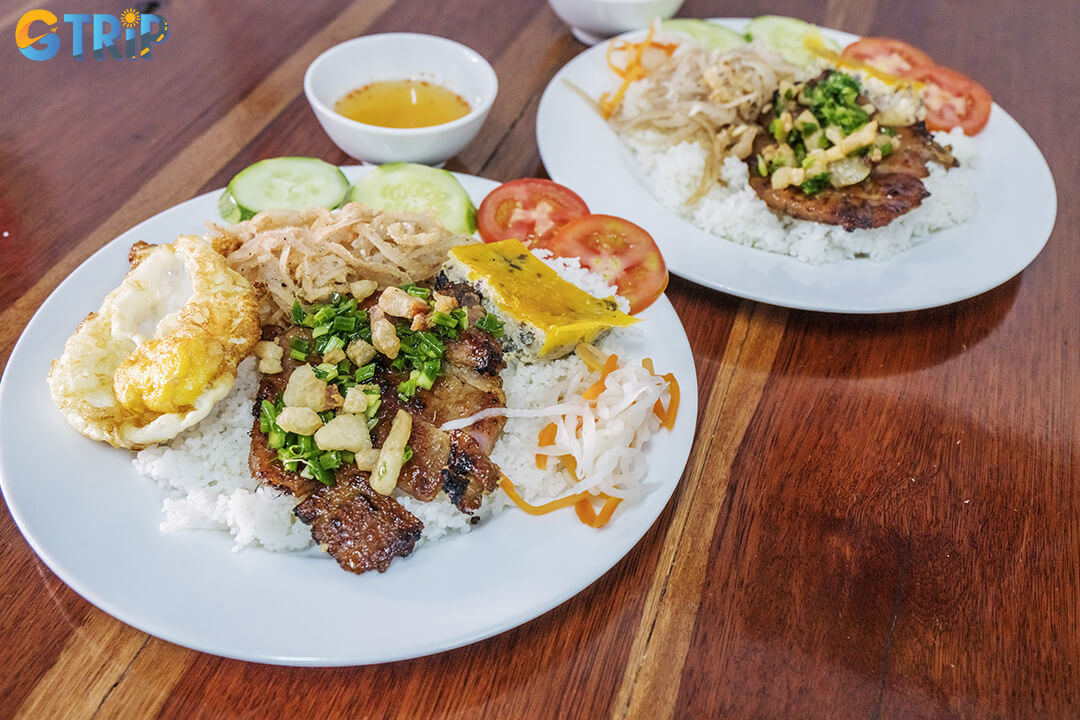
In Vietnam’s central coast, com tam features bolder, spicier flavors with smaller portions and saltier fish sauce influenced by imperial cuisine
Broken rice in Southern Vietnam
This is the homeland, the undisputed territory of com tam. In Saigon and the surrounding Mekong Delta, com tam is a way of life, available from early morning breakfast to late-night supper. It's here that the dish reaches its most glorious and iconic form. The signature of Southern-style com tam is its sweet and savory flavor profile. The pork is marinated in a mixture rich with honey, milk or sugar, creating a beautiful caramelization when grilled. Plates are often heaped generously with toppings and drizzled with a sweet, garlic-infused fish sauce, along with a liberal amount of shimmering scallion oil.
Beyond com tam in Saigon, each locality in the Mekong Delta adds its own character to this beloved dish, and Long Xuyen stands out with a distinctive interpretation that reflects the region’s rustic flavors and thoughtful preparation. While staying true to the Southern love for sweetness and abundance, com tam Long Xuyen refines the experience through finely broken rice and carefully sliced toppings. Deeply braised accompaniments add richness, creating a more delicate yet equally satisfying expression of this iconic meal.
Ingredients of a delicious plate of broken rice
A classic plate of "com tam suon bi cha" is a masterclass in balance. Each component plays a crucial role. Here are the all-stars of the dish:
1. Broken rice (Gao tam)
The foundation and the star of the show. This is the imperfect, fractured rice that gives the dish its name and unique texture. Steamed to fluffy perfection, it’s the perfect vehicle for all the delicious toppings.
2. Grilled pork chop (Suon nuong)
This is what draws you in from blocks away. The pork chop is marinated in a sublime mixture of lemongrass, garlic, honey, soy sauce, and fish sauce before being grilled over hot charcoal. This charcoal-grilled pork develops a smoky, caramelized crust while remaining incredibly tender and juicy on the inside. A good Suon nuong is the heart of a great com tam plate.
3. Shredded pork skin (Bi)
This topping provides a fantastic textural contrast. It consists of thin strips of cooked pork skin mixed with toasted rice powder. The result is a chewy, slightly crunchy, and nutty-tasting component that adds a delightful complexity to each mouthful.
4. Steamed egg and pork meatloaf (Cha trung)
This is a savory Vietnamese-style meatloaf or custard. It’s made from a mixture of ground pork, wood-ear mushrooms, and cellophane noodles, with a vibrant, golden salted duck egg yolk layer steamed on top. It's soft, savory, and wonderfully silky, providing a rich and comforting element that melts in your mouth.
5. Fried egg (Trung op la)
A simple but essential addition for many. Typically fried sunny-side up, the runny yolk acts as a rich, creamy sauce that coats the rice and meat when broken. It adds a layer of richness that ties everything together perfectly.
6. Sweet and savory fish sauce (Nuoc mam)
This is the soul of the dish, the liquid that brings everything to life. It's a carefully balanced concoction of fish sauce, sugar, water, and lime or vinegar, often with finely chopped garlic and chili. A good Nuoc cham should be a perfect harmony of sweet, salty, and sour.
7. Scallion oil (Mo hanh)
This is a critical flavor element. It's made by briefly heating chopped scallions in hot oil, which wilts them slightly and infuses the oil with their fresh, oniony aroma. Drizzled generously over the rice and meat, it adds a touch of richness, a beautiful sheen, and a burst of fragrance.
8. Pickles (Do chua)
To cut through all the richness, a small side of pickled carrots and daikon radish is essential. Their sweet and tangy crunch provides a refreshing contrast and cleanses the palate between bites, making the entire dish less heavy and more vibrant.
9. Garnish and broth (Rau va canh)
A perfect plate of com tam is often garnished with fresh cucumber and tomato slices. It's also commonly served with a small bowl of complimentary light broth, usually a simple vegetable soup, to help wash everything down.
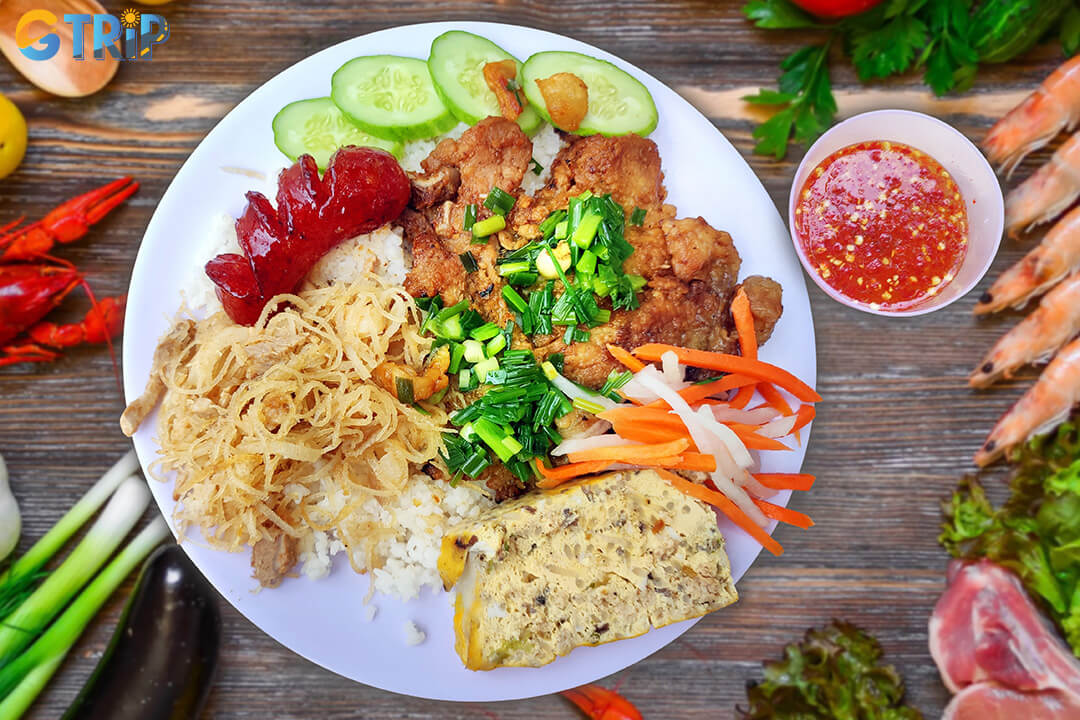
A classic com tam suon bi cha combines broken rice, smoky grilled pork, savory egg toppings and sweet fish sauce to create a perfectly balanced Vietnamese comfort dish
Where to find the best Vietnamese broken rice?
As the experts at GTrip, we've eaten our way across the country to find the spots that locals swear by. Here are our top recommendations for 2025.
Top 5 com tam local restaurants in Ho Chi Minh City
- Com Tam Ba Ghien:
- Address: 84 Dang Van Ngu, Phu Nhuan Ward (formerly Ward 10, Phu Nhuan District)
- Famous for: Its legendary, oversized grilled pork chop that hangs off the side of the plate. This is the place to go for a truly epic and satisfying meal.
- Com Tam Phuc Loc Tho:
- Address: Multiple locations (e.g., 236 Dinh Tien Hoang, Gia Dinh Ward (formerly Ward 1, Binh Thanh District))
- Famous for: Being a reliable, clean, and modern chain with consistently high-quality com tam available almost 24/7. It's a great "anytime" option for delicious and safe street food.
- Com Tam Thuan Kieu:
- Address: 114 Ton That Hiep, Phu Tho Ward (formerly Ward 13, District 11)
- Famous for: Its Cantonese-style glazed rib, which is incredibly tender and flavorful, offering a unique twist on the classic pork chop.
- Com Tam Moc:
- Address: 85 Ly Tu Trong, Ben Thanh Ward (formerly Ben Thanh Ward, District 1)
- Famous for: A more refined, slightly upscale com tam experience in a clean, vintage-inspired setting, perfect for a comfortable lunch in the city center.
- Com Tam Suon Que:
- Address: Multiple locations (e.g., 371 Nguyen Thuong Hien, Vuon Lai Ward (formerly Ward 11, District 10))
- Famous for: Specializing in long, tender pork ribs (Suon que) that are marinated and grilled to perfection, offering a different but equally delicious experience.
Explore more places to eat Com Tam in Ho Chi Minh City!!!
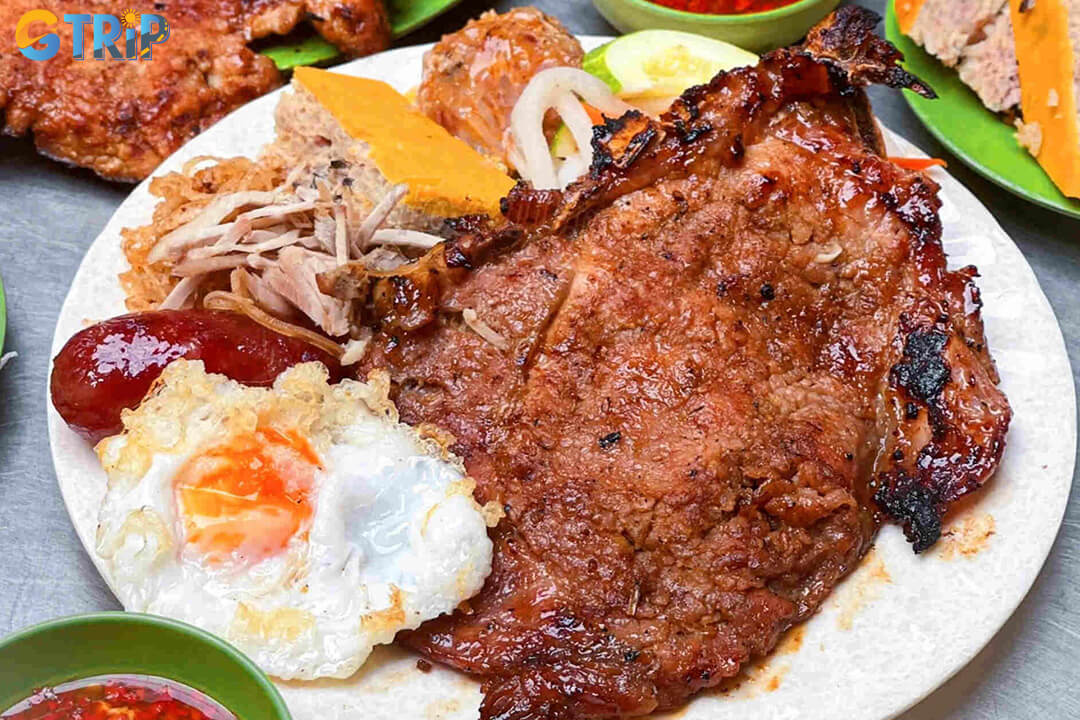
Ho Chi Minh City offers legendary com tam spots, from oversized grilled pork chops to refined, modern takes on this Southern Vietnamese classic
Top 5 com tam local restaurants in Da Nang City
- Com Tam 35 Ngo Quyen:
- Address: 35 Ngo Quyen, Son Tra Ward (formerly Tho Quang Ward, Son Tra District)
- Famous for: Being a local favorite known for its well-seasoned pork and very reasonable prices. It's a no-frills spot that delivers big on flavor.
- Com Tam Giao:
- Address: 70 Le Dinh Duong, Phuoc Ninh Ward (formerly Phuoc Ninh Ward, Hai Chau District)
- Famous for: Its tidy space and consistently delicious, Central-style com tam with a slightly saltier, spicier fish sauce.
- Com Tam Suon Trung Long Dao:
- Address: 97 Ong Ich Khiem, Hai Chau Ward (formerly Thanh Binh Ward, Hai Chau District)
- Famous for: As the name suggests, its perfectly cooked soft-yolk fried egg (long dao) that creates a divine sauce over the rice.
- Quan A Ty - Com Tam Suon Bi:
- Address: 105 Trung Nu Vuong, Phuoc Ninh Ward (formerly Binh Hien Ward, Hai Chau District)
- Famous for: A classic, old-school feel and a focus on the traditional suon bi cha combination done right.
- Com Tam Tai:
- Address: 100/1 Phan Chau Trinh, Phuoc Ninh Ward (formerly Phuoc Ninh Ward, Hai Chau District)
- Famous for: Tucked away in an alley, this spot is a hidden gem beloved by locals for its generous portions and flavorful grilled meats.
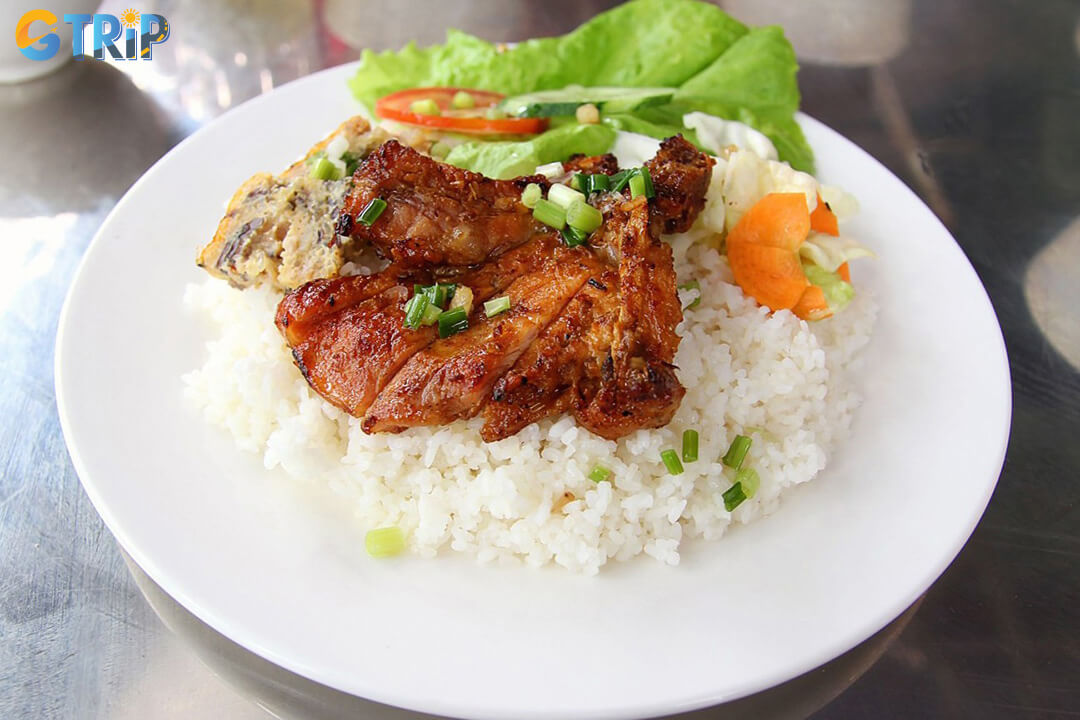
Da Nang’s com tam scene features affordable, local favorites known for well-seasoned pork, central-style sauces, and comforting traditional flavors
Top 5 com tam local restaurants in Hanoi
While com tam is a Southern dish, Hanoi has some excellent spots if you know where to look. If you love Northern food, you should also check out our guide to the best Pho in Hanoi.
- Com Tam Hanoi Angon
- Address: 91 Dang Van Ngu, Kim Lien Ward (formerly Trung Tu Ward, Dong Da District)
- Famous for: Bringing an authentic Southern taste to the capital, it's one of the most popular and well-known com tam chains in Hanoi.
- Com Tam 36:
- Address: 11 Phung Hung, Hoan Kiem Ward (formerly Hang Ma Ward, Hoan Kiem District)
- Famous for: A cozy atmosphere and a menu that sticks to the classics, executed well to please both Southern expats and curious Hanoians.
- Com Tam Anh Linh:
- Address: 58 Alley 165 Cau Giay, Cau Giay Ward (formerly Dich Vong Ward, Cau Giay District)
- Famous for: Its extremely affordable prices and a distinctly student-friendly vibe, making it a popular haunt for a quick, cheap, and tasty meal.
- Com Tam Phuong Anh:
- Address: Multiple locations (e.g., 119A6 Tran Huy Lieu, Giang Vo Ward (formerly Giang Vo Ward, Ba Dinh District)
- Famous for: Being a long-standing "Viet-Kieu" (overseas Vietnamese) style restaurant chain that offers a clean, air-conditioned environment and a wide menu including com tam.
- Tiem Com Tam Desembre:
- Address: 39 Nguyen Huu Huan, Hoan Kiem Ward (formerly Ly Thai To Ward, Hoan Kiem District)
- Famous for: Its prime location in the Old Quarter and a modern, Instagrammable presentation that appeals to tourists and younger locals.
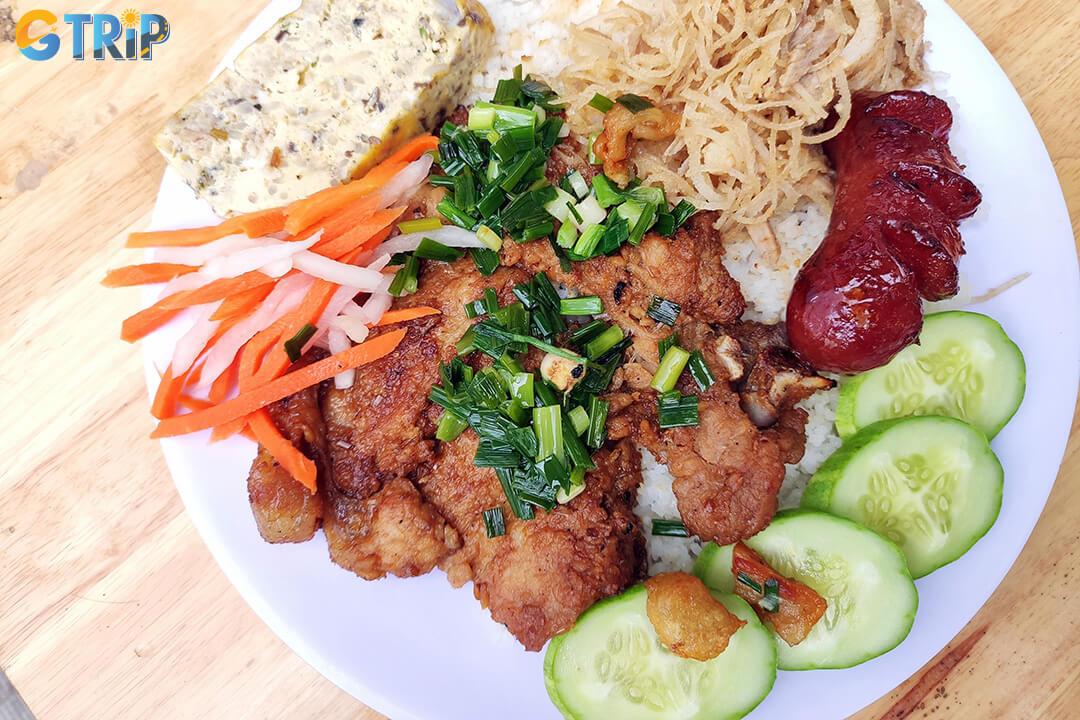
Hanoi offers several standout com tam spots, delivering authentic Southern flavors alongside modern and budget-friendly options in the capital
How to order and eat broken rice like a local
Ready for your first plate? Follow these simple steps to enjoy com tam like a pro.
- Point and choose: Most com tam stalls have all the delicious toppings displayed in a glass case. The easiest way to order is to simply point at what you want. Start with the rice (com) and the grilled pork (suon), then point to bi (shredded pork skin), cha (egg meatloaf), or trung op la (fried egg) to add them. A plate with everything is called "com tam suon bi cha op la".
- Use a spoon and fork: Forget chopsticks for this dish. The standard utensils are a spoon in your right hand and a fork in your left. The fork is used to hold down the meat and other toppings while you use the edge of the spoon to cut them into bite-sized pieces.
- Pour, don't dip: Your meal will come with a small bowl of Nuoc cham. The local way is to pour the sauce all over your rice and toppings, not to dip things into it. This ensures everything gets an even coating of that sweet and savory goodness. Be generous!
- Mix for the perfect bite: The magic of com tam is in the combination. Use your spoon to get a little bit of everything, some rice, a piece of pork, some bi, a bit of cha, and a sliver of pickled carrot, all in one glorious mouthful. This is the "perfect bite".
- Sip the broth: Don't forget the small bowl of complimentary broth (canh). It’s meant to be sipped between bites to cleanse your palate and moisten the meal.
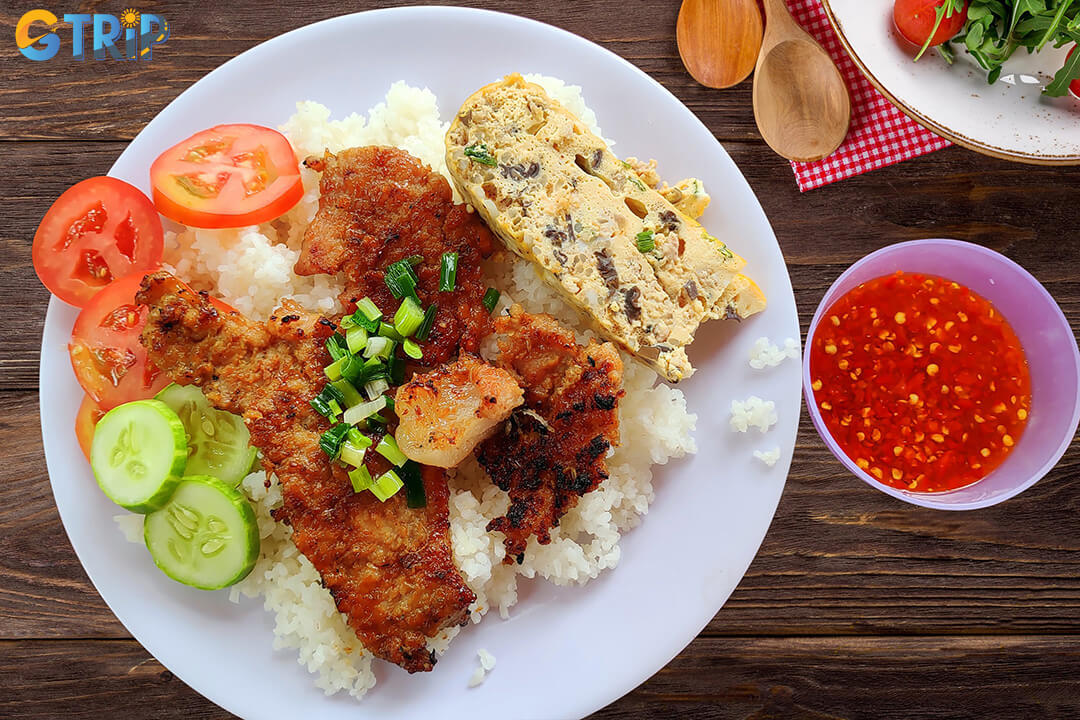
Enjoy com tam like a local by choosing your toppings, using a spoon and fork, pouring the sauce generously, mixing for the perfect bite, and sipping the broth between bites
Frequently asked questions about Vietnamese broken rice
To better understand why com tam is one of Vietnam’s most beloved everyday dishes. Let’s take a closer look at its origins, meaning, price, nutritional value, and popular variations through the questions below.
What is com tam?
Com tam, or Vietnamese broken rice, is a popular Vietnamese dish made from fractured rice grains. It is typically served with a variety of toppings, most famously a charcoal-grilled pork chop (Suon nuong), shredded pork skin (Bi), and a steamed egg meatloaf (Cha).
Why is it called broken rice?
It's called broken rice because the dish is made using rice grains that were fractured or "broken" during the milling process. These imperfect grains were once considered a lower-grade product and were eaten by farmers, but their unique texture and ability to absorb flavor have since made them a culinary treasure.
How much does a plate of com tam cost in Vietnam?
The price can vary based on the location (street stall vs. restaurant) and the number of toppings you choose. For 2025, you can expect the following prices:
- Street food stall: 45,000 - 70,000 VND ($1.80 - $2.80 USD) for a standard plate with a pork chop and one or two other toppings.
- Mid-range restaurant: 70,000 - 120,000 VND ($2.80 - $4.70 USD) for a plate in a more comfortable setting with potentially higher quality ingredients or larger portions.
Is Vietnamese broken rice healthy?
Com tam is a very complete and filling meal. It provides carbohydrates from the rice, protein from the meat and eggs, and some vegetables from the pickles and garnish. However, it can be high in calories, sodium, and fat, especially with the fried egg and scallion oil. For a healthier option, you can ask for less oil (it mo) and load up on the fresh cucumber and tomato sides.
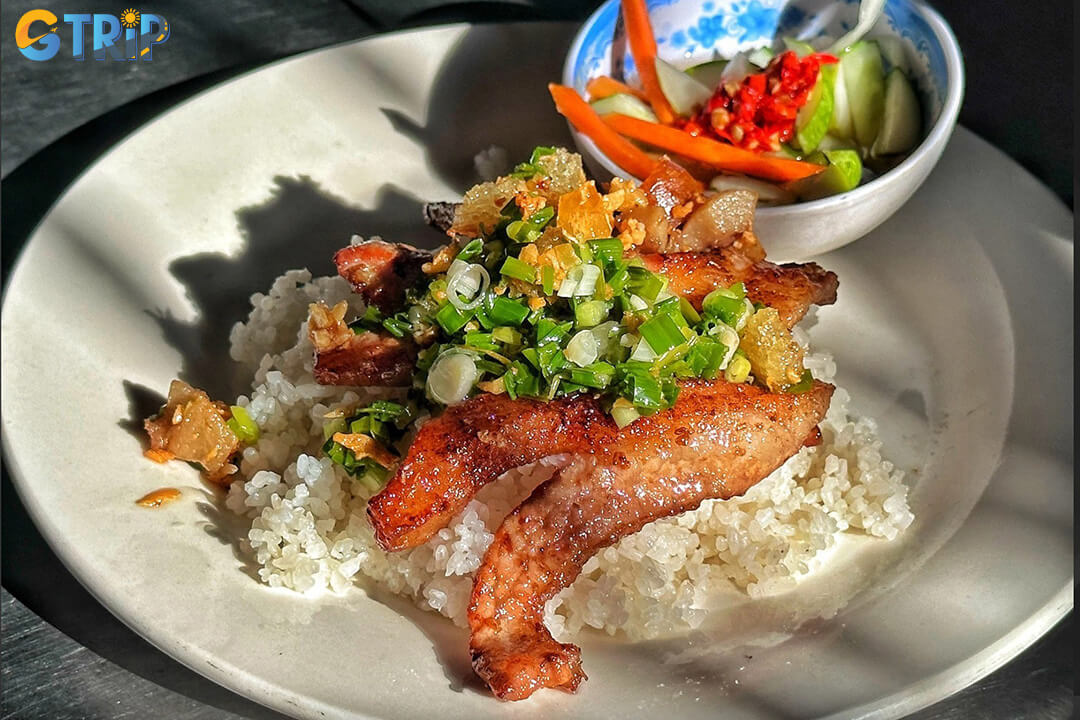
Discover what makes com tam irresistible, from its broken rice texture and savory toppings to its affordability and role in daily Vietnamese meals
Born from humble roots in the rice fields of southern Vietnam and elevated into a street food icon, com tam is Vietnam’s story served on a plate. It reflects creativity, resilience, and the ability to transform simplicity into something unforgettable. Now that you know the heart of com tam, it’s time to seek out your own favorite plate on your next GTrip adventure in Vietnam.