Thursday, May 14, 2026
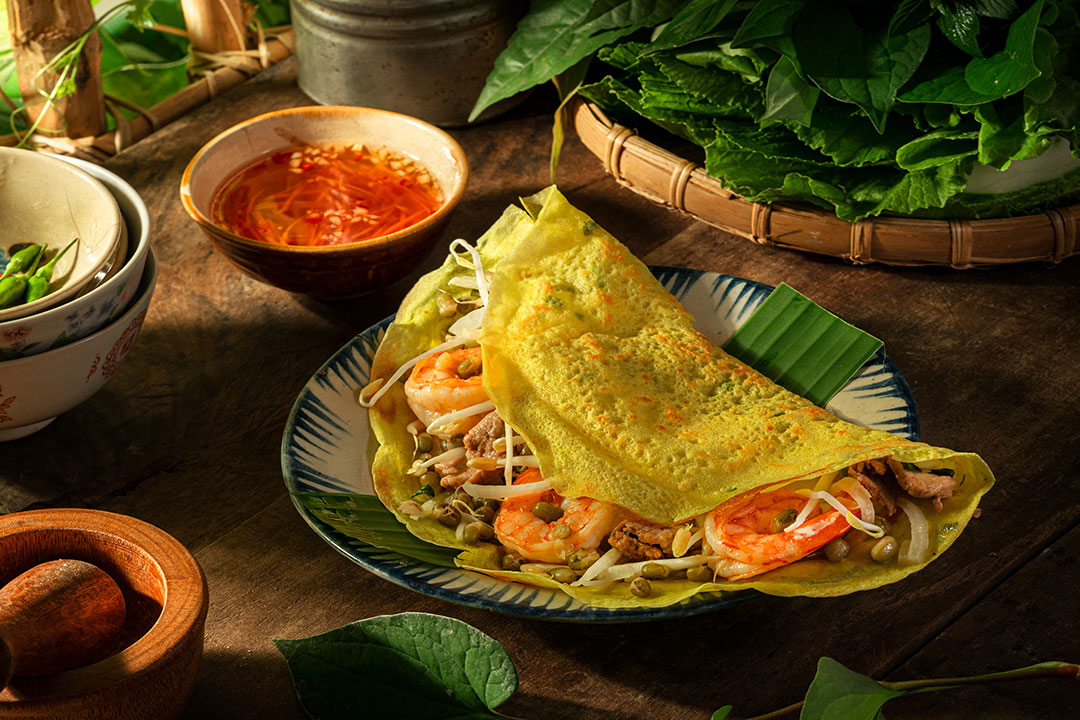
Vietnamese Sizzling Crepes (Banh Xeo) is a vibrant, crispy, and savory crepe that captures the essence of Vietnamese cuisine in one delicious bite. That unmistakable xeo xeo sound, the dramatic sizzle of rice batter hitting a hot, oiled skillet, is the opening act for one of the most delightful and interactive food experiences you can have in Vietnam. It's a dish that’s as much fun to eat as it is to listen to, a golden-yellow beacon of street food genius. Here at GTrip, we believe the best travel memories are made at the dining table. This guide is your ultimate passport to the world of Banh Xeo. We're going to dive deep into its fascinating history, explore the surprisingly distinct regional styles, and give you our insider list of exactly where and how to eat this incredible dish like a seasoned local. Get ready to roll!
Why is Banh Xeo a must-eat when traveling to Vietnam?
In a country overflowing with world-class dishes like pho and banh mi, what makes Banh Xeo an unmissable culinary experience? It's the sheer sensory overload. Long before you see it, you’ll hear its signature sizzle echoing from a street-side kitchen. Then, it arrives at your table: a massive, golden crepe, folded over a generous filling and steaming with an irresistible aroma.
But the real magic lies in the communal, hands-on process of eating it. This is a dish you attack with gusto, tearing off pieces, wrapping them with a mountain of fresh herbs, and dunking them into a flavorful sauce. The combination of the shatteringly crispy, slightly rich crepe, the savory filling, and the fresh, bright explosion of herbs is a textural masterpiece.
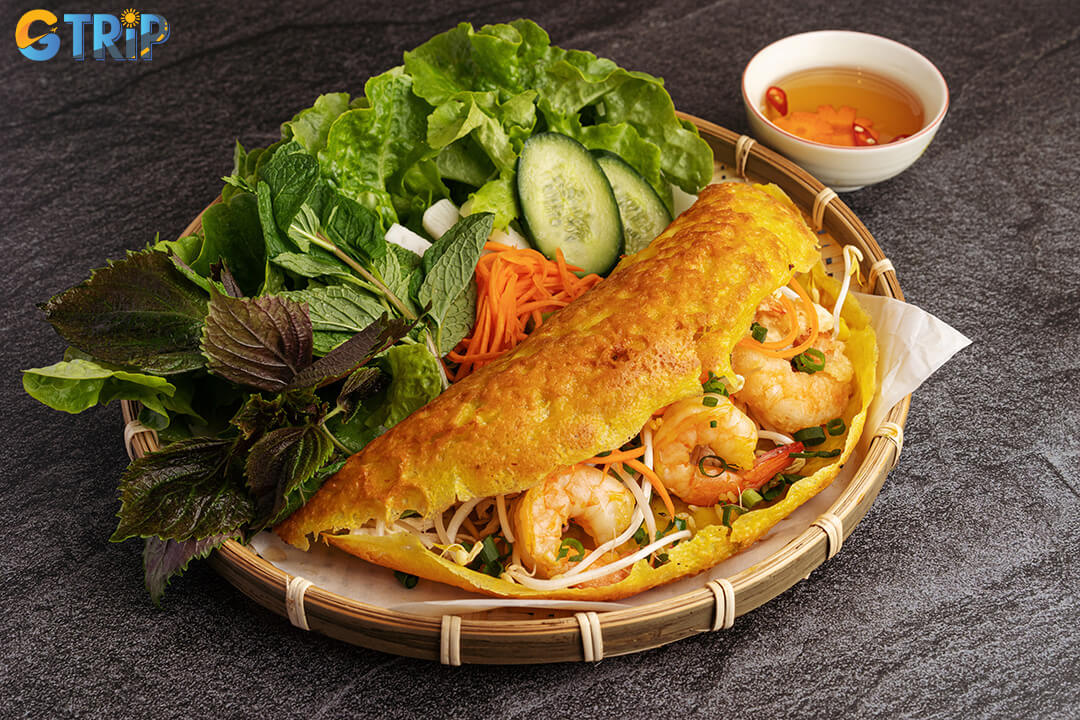
Banh Xeo is a must-try Vietnamese dish, loved for its sizzling crispy crepe, fresh herbs, and hands-on eating experience
Origin of Banh Xeo in Vietnam
To truly understand Banh Xeo, you need to journey back in time. While its exact beginnings are debated, the most widely accepted theory traces its origin to Central Vietnam during the Tay Son dynasty in the 18th century. It’s believed to be a uniquely Vietnamese creation, born from the agricultural abundance of the countryside.
Many travelers notice a visual similarity to French crepes, a relic of France's colonial influence. However, the comparison is only skin deep. While a crepe relies on wheat flour, eggs, and milk, Banh Xeo's soul is purely Vietnamese. It’s built on a foundation of rice flour, colored a brilliant yellow with turmeric, and contains no eggs or dairy. The cooking method, pan-frying to a crisp rather than a soft fold and the entire experience of wrapping it with herbs and dipping it in fish sauce.
3 regional variations of Banh Xeo
One of the most exciting things about traveling through Vietnam is discovering that Banh Xeo is not a single, uniform dish. It’s a diverse family of sizzling crepes, and its size, texture, and even its accompanying sauce can change dramatically as you move from south to north. Each region has perfected its own version, a proud reflection of local tastes and ingredients.
Southern style (Banh Xeo Mien Tay)
This is the rockstar of the Banh Xeo world, the version you’ve most likely seen in photos and on travel shows. The Southern style, particularly from the Mekong Delta, is a showstopper. We’re talking about a huge, plate-sized crepe, often so large it hangs over the edges of the dish.
The batter is enriched with thick coconut milk, which gives it a subtle sweetness and a wonderfully rich fragrance. It’s cooked to be incredibly thin and delicate, with lacey, ultra-crispy edges that shatter when you touch them. You’ll often find these giant beauties served in bustling, open-air garden restaurants, where the sound of sizzling woks provides a constant, mouth-watering soundtrack.
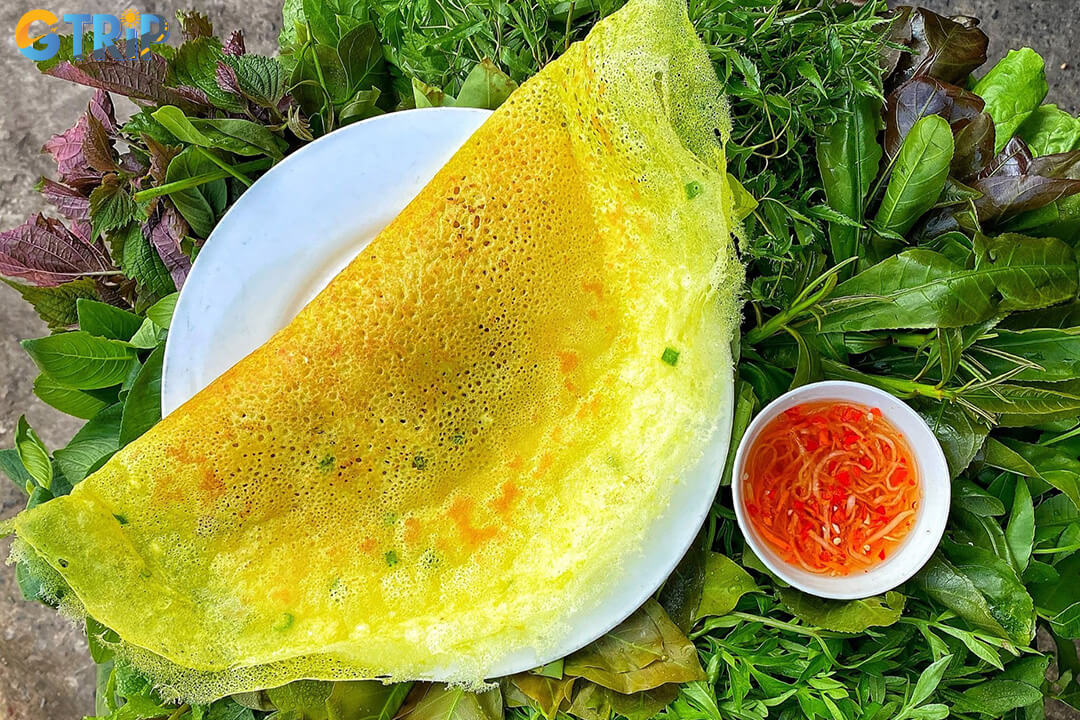
Southern-style Banh Xeo stands out with its giant, coconut-scented crepe and ultra-crispy edges, making it the most iconic and visually striking version
Central style (Banh Xeo Mien Trung)
Banh Xeo Mien Trung consists of two representative types: the traditional and Hue-style Banh Xeo, local also known as banh khoai, each offering its own distinctive qualities. Traditional Central-style Banh Xeo is typically small in size, with a thin, crispy crust and a simple filling of shrimp, pork, and bean sprouts. It is usually enjoyed wrapped in fresh herbs and vegetables, then dipped in a light yet rich dipping sauce.
Meanwhile, Hue-style Banh Xeo features a thicker, sturdier crust with a softer interior and a more abundant filling that may include shrimp, pork, sausage, and egg. The defining element of Hue-style Banh Xeo is its thick, savory, and flavorful dipping sauce (locally known as nuoc leo). This creates a bold taste that reflects the depth and character of Hue cuisine.

Northern style (Banh Xeo Mien Bac)
As you head north toward Hanoi, Banh Xeo becomes less common, but the local style is still distinct. It takes a middle ground in size larger than the Central version but smaller than the Southern behemoth. The batter is simpler, often omitting coconut milk for a purer, savory flavor.
One key difference is in the presentation. To make it more manageable as part of a larger meal with other dishes, Northern-style Banh Xeo is often cut into bite-sized pieces before being served. It's a practical adjustment that speaks to the more restrained dining culture of the capital.
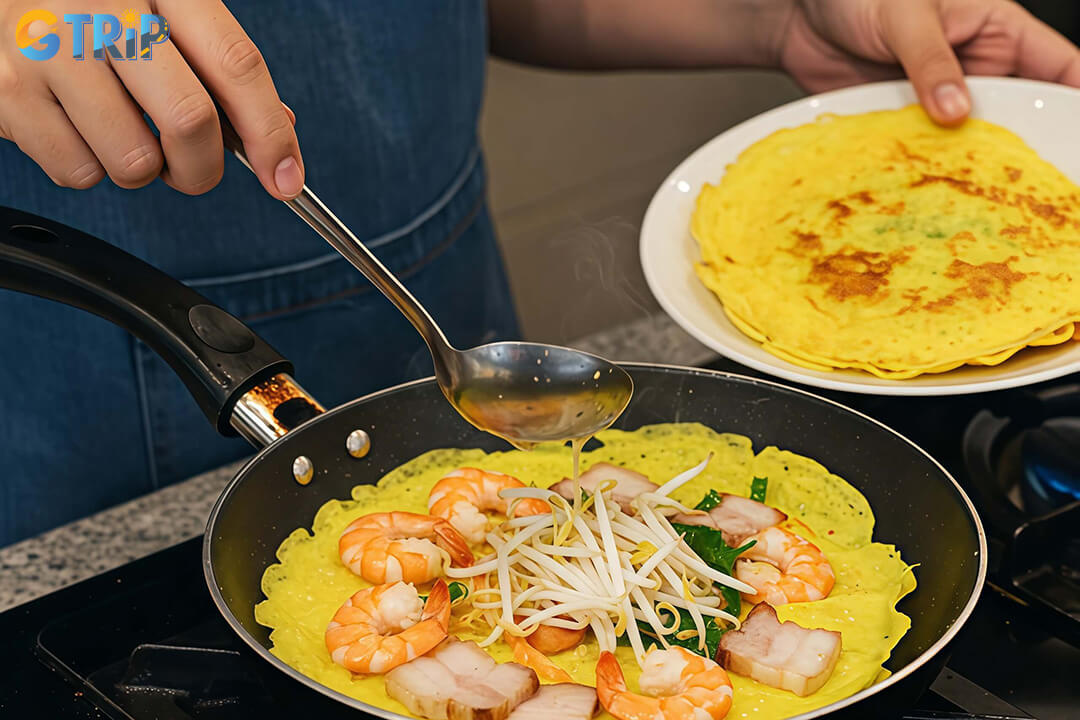
Northern-style Banh Xeo is simpler and moderately sized, featuring a savory batter without coconut milk and served cut into bite-sized pieces for easy sharing
Ingredients of Banh Xeo in Vietnam
The magic of Banh Xeo comes from the interplay of its four core components: the batter, the filling, the fresh greens, and the dipping sauce. Here’s how each element changes across the country.
Batter (pancake batter)
The foundation of any good Banh Xeo is its batter. It always starts with rice flour and water, but the additions are what define its regional character.
- Southern: The batter is made luxuriously rich and fragrant with the addition of coconut milk. It gets its vibrant, almost neon-yellow color from a healthy dose of turmeric. The goal is a batter that produces a crepe with super crispy edges and a slightly softer, chewier center.
- Central: Central-style batter is often simpler, sometimes omitting coconut milk entirely for a drier, extra-crunchy texture. The turmeric might be used more sparingly, resulting in a paler yellow color.
- Northern: This style features the most basic batter, typically just rice flour, water, turmeric, and scallions. It creates a crepe that is more savory and soft than its crispy southern counterpart.
Filling (main ingredients)
The fold of the crepe hides a treasure trove of savory ingredients:
- Southern: The classic combination features thinly sliced pork belly and whole shrimp, cooked until just tender. In some areas of the Mekong Delta, a unique variation includes minced duck meat with small bones, finely chopped and stir-fried until fully cooked, adding a richer and more distinctive flavor. Traditionally, mung beans and bean sprouts are added for texture and natural sweetness as they steam inside the folded crepe. However, in certain regions, these ingredients may be replaced with young coconut shoots and jicama, offering a lighter crunch and a subtly sweet, refreshing contrast.
- Central: Here, the fillings get more diverse and often reflect the coastal location. Alongside pork and shrimp, you might find fresh squid or even a whole quail egg cracked into the center of the crepe as it cooks. These additions highlight the Central region’s preference for bolder flavors while still maintaining a refined balance.
- Northern: The fillings are balanced and straightforward, typically consisting of the classic pork and shrimp duo without the addition of mung beans, keeping the focus simple. This simplicity reflects Northern Vietnamese cuisine, which values subtlety and natural taste over richness or heaviness.
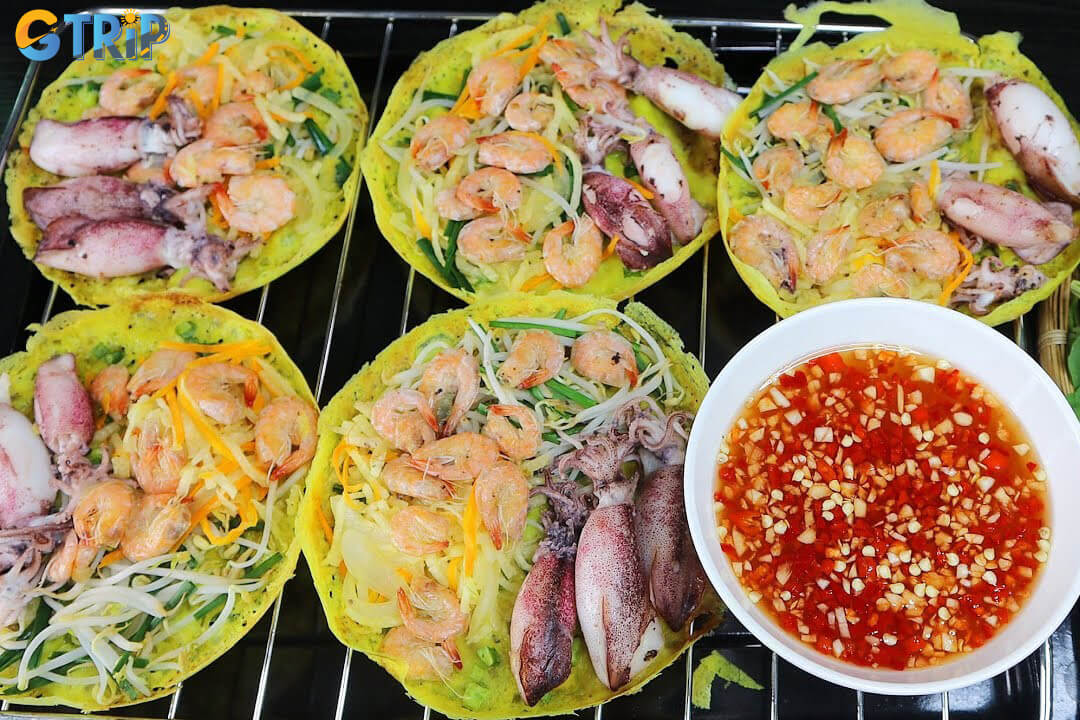
Banh Xeo fillings vary by region, ranging from hearty and diverse in the South and Central regions to simple and balanced in the North
Fresh herbs & greens
The plate of fresh greens is not a garnish, it's half the dish! The plate of fresh greens is not a garnish, it’s half the dish, bringing balance, freshness, and contrast to every rich, savory bite.
- Southern: Expect a generous assortment of fresh greens served alongside Banh Xeo. Common accompaniments include mustard greens, finely shredded green mango for a tangy crunch, and fish mint. In many rural areas, diners also enjoy a variety of wild leaves such as premna leaves and ambarella leaves slightly sour notes and reflect the region’s close connection to nature.
- Central: Banh Xeo Mien Trung is typically enjoyed with a selection of familiar yet distinctive accompaniments, including mustard greens, fish mint, finely shredded green mango, perilla leaves, and fresh bean sprouts. A defining feature is that the Banh Xeo is often wrapped in thin rice paper along with the herbs before dipping, creating a layered texture that balances freshness, crunch, and the rich nuoc leo dipping sauce.
- Northern: The accompanying herb plate is usually more modest, featuring a few essential greens like lettuce, cilantro, and mint.
Dipping sauce
This is the flavor bomb that ties everything together.
- Southern: The classic dipping sauce is a perfect balance of sweet, sour, and savory. It’s made with fish sauce, lime juice, sugar, and water, and is often loaded with finely chopped garlic and chili, creating a rich, sweet, and garlicky profile.
- Central: The dipping sauce here is much bolder. The dipping sauce is typically stronger, saltier, and spicier. But the real star is the aforementioned nuoc leo, a thick, opaque peanut-and-liver sauce that is deeply savory and unlike anything else in Vietnamese cuisine.
- Northern: The dipping sauce reflects the region's preference for more subtle flavors. It’s a lighter, milder version of dipping sauce, with a delicate balance of salt and sour.
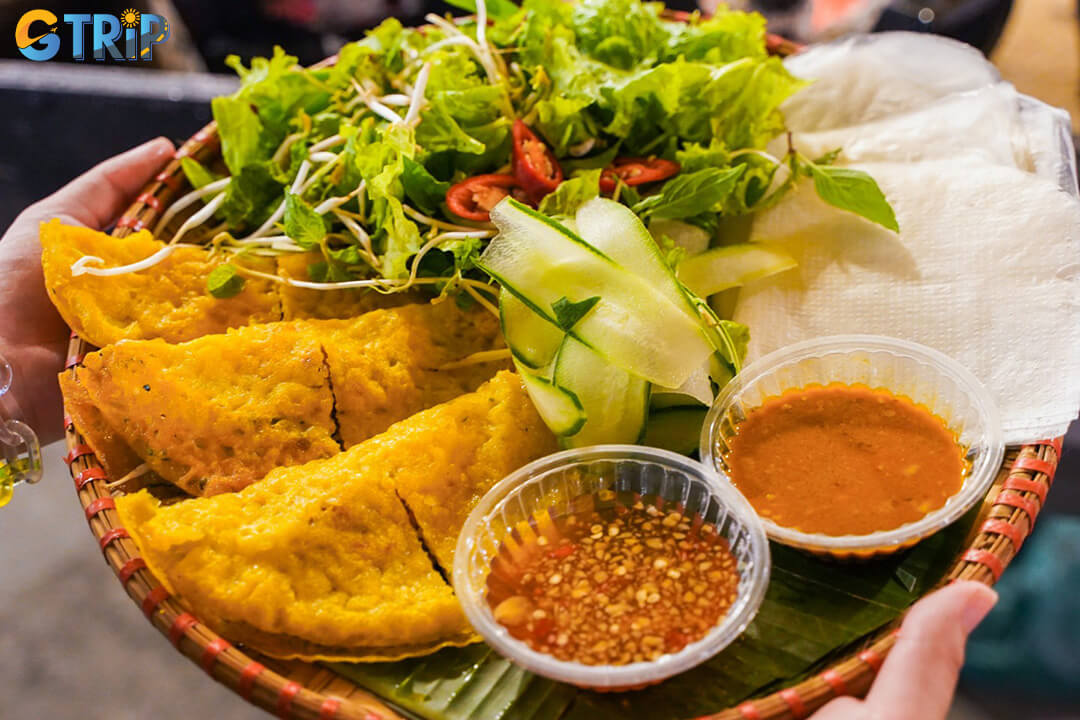
The dipping sauces vary by region, from the sweet-savory Southern fish sauce to the special dipping sauce in Central and the light, subtle Northern version
Where to find the best Banh Xeo?
Ready to hunt down the perfect sizzle? While you can find Banh Xeo all over Vietnam, certain eateries have become legends. Here are GTrip's top picks in the country's major cities.
Best place to eat Banh Xeo in Hanoi
- Banh Xeo Sau Phuoc: 74 Cau Dat, Hoan Kiem Ward (formerly Hoan Kiem District). A beloved local spot that serves a fantastic Central-style Banh Xeo, small and crispy, alongside other regional specialties like nem lui (lemongrass pork skewers).
- Banh Xeo Zon Zon: 25 Lo Duc, Hai Ba Trung Ward (formerly Pham Dinh Ho, Hai Ba Trung District). This modern eatery specializes in crispy crepes with a variety of fillings, offering a clean and comfortable environment to enjoy this street food classic.
- Huong Que - Banh Xeo & Bo Ne: 112A3 Giang Vo, Giang Vo Ward (formerly Ba Dinh District). A popular choice among students and locals, known for its reliably delicious and affordable Southern-style Banh Xeo.
- Quan An Ngon: 18 Phan Chu Trinh, Cua Nam Ward (formerly Cua Nam Ward, Hoan Kiem District). While a bit more tourist-oriented, this beautiful restaurant houses multiple food stalls in one courtyard, allowing you to try a good quality Northern-style Banh Xeo alongside other Vietnamese dishes.
- Banh Xeo Cau Giay: 167 Xuan Thuy, Dich Vong Ward (formerly Dich Vong Hau Ward, Cau Giay District). Tucked away in the Cau Giay District, this is a true local haunt famous for its consistently crispy crepes and bustling atmosphere.
Best place to eat Banh Xeo in Da Nang
- Banh Xeo Ba Duong: K280/23 Hoang Dieu, Phuoc Ninh Ward (formerly Binh Hien Ward, Hai Chau District). Tucked deep in an alley, this is the most famous Banh Xeo spot in Da Nang, renowned for its perfectly crispy crepes, savory pork skewers, and iconic dipping sauce (nuoc leo).
- Banh Xeo Tom Nhay Co Ba: 248 Trung Nu Vuong, Hoa Cuong Ward (formerly Binh Thuan, Hai Chau District). This spot’s name translates to "jumping shrimp" and they live up to it by using incredibly fresh shrimp in their savory, crunchy crepes.
- Quan Xuan: 4 Phan Tu, Ngu Hanh Son Ward, (formerly My An Ward, Ngu Hanh Son District). Located near the beach, this is a local favorite that serves fantastic Central-style Banh Xeo and a variety of other local rolls and BBQ.
- Ba Hong Banh Xeo Bo La Lot: 80 Le Do, Thanh Khe Ward (formerly Chinh Gian Ward, Thanh Khe District). This place is famous for two things: crispy Banh Xeo and grilled beef wrapped in piper lolot leaves (bo la lot). Get both for a perfect Central Vietnamese feast.
- Dai Nam Quan: 72 Do Quang, Thanh Khe Ward (formerly Vinh Trung Ward, Thanh Khe District). Known for serving their Banh Xeo with large, fresh rice paper sheets for wrapping, this is a clean and popular spot for families.
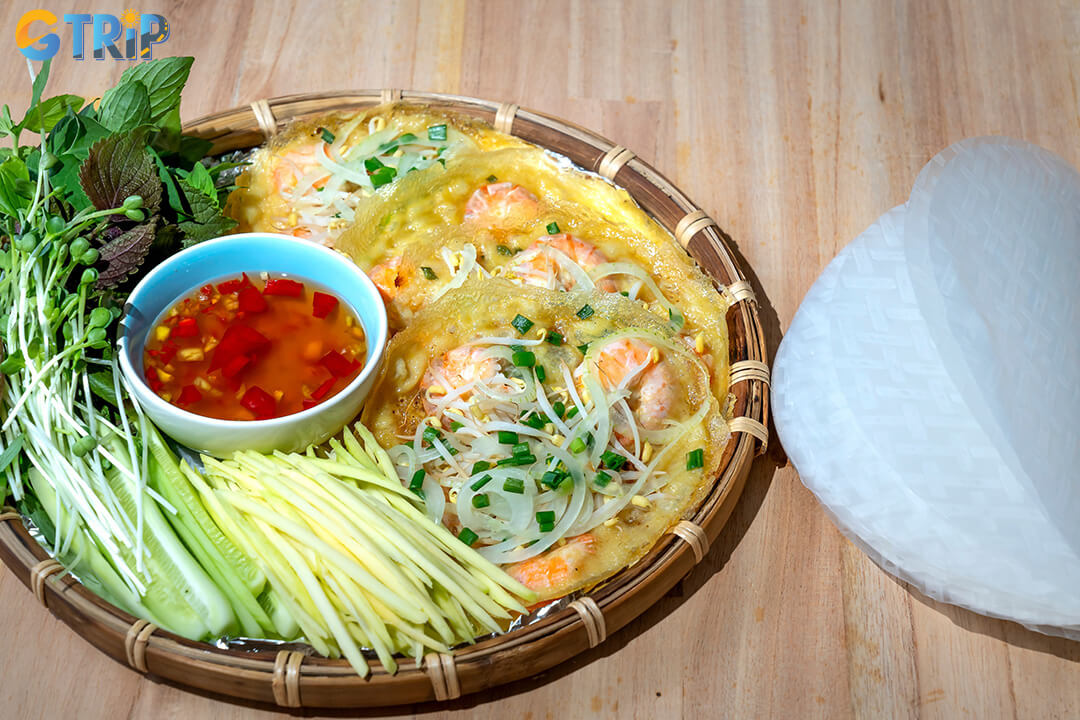
Central-style Banh Xeo famous alleyway spots and local favorites known for crispy crepes, fresh shrimp, iconic dipping sauce, and generous rice paper for wrapping
Best place to eat Banh Xeo in Ho Chi Minh City
- Banh Xeo 46A: 46A Dinh Cong Trang, Tan Dinh Ward (formerly Tan Dinh Ward, District 1). A legendary Ho Chi Minh City institution famous for its consistently crispy, classic Southern-style crepe in a bustling, old-school setting. It's a must-visit for any first-timer.
- An La Ghien: 74 Suong Nguyet Anh, Phuong Pham Ngu Lao, (formerly Cau Ong Lanh Ward, District 1). The name translates to "Eat and Get Addicted," and this chain serves a fantastic, super-crispy crepe with enormous herb platters in a modern, air-conditioned setting.
- Banh Xeo Muoi Xiem: 204 Nguyen Trai, Phuong Pham Ngu Lao, (formerly Cau Ong Lanh Ward, District 1). This restaurant chain prides itself on offering a huge variety of Banh Xeo, including versions with mushrooms, seafood, and other unique fillings.
- Banh Khot Co Ba Vung Tau: 40B Tran Cao Van, Xuan Hoa Ward (formerly Vo Thi Sau Ward, District 3). While famous for its mini banh khot crepes, this spot also serves an excellent classic Southern-style Banh Xeo that's worth the trip alone.
- Lang Nuong Nam Bo: 285/C145 Cach Mang Thang 8, Hoa Hung Ward (formerly Ward 12, District 10). For a truly local experience, head to this "Southern BBQ Village". They grill everything over charcoal, including a phenomenal, slightly smoky Banh Xeo cooked in the authentic Mekong Delta style.
Explore more top places to eat Banh Xeo in Ho Chi Minh City
How to eat Banh Xeo like a local
You’ve ordered your Banh Xeo, and it arrives in all its golden glory, flanked by a basket of herbs and sometimes dry rice paper. Don't be intimidated! Follow these five simple steps to assemble the perfect bite.
- Cut: Your crepe is huge, so you need to break it down. Use your chopsticks to break off a manageable piece of the crispy crepe, making sure to get a bit of the filling.
- Wrap: Take a large mustard leaf or lettuce leaf from the herb platter and lay it flat in your palm. If you have rice paper, place the leaf on top of the rice paper. Place your piece of Banh Xeo in the center.
- Add herbs: This is the key to balancing the richness of the fried crepe. Layer on a few leaves of fragrant herbs like mint, basil, and the distinctive, slightly peppery perilla leaf.
- Roll: Gently fold in the sides of the leaf and then roll the whole thing up tightly, just like you would a small spring roll. You want a compact, easy-to-handle package.
- Dip: The grand finale! Dunk your freshly made roll generously into the bowl of dipping sauce and take a bite. The combination of hot and cold, crispy and soft, savory and fresh is pure bliss.
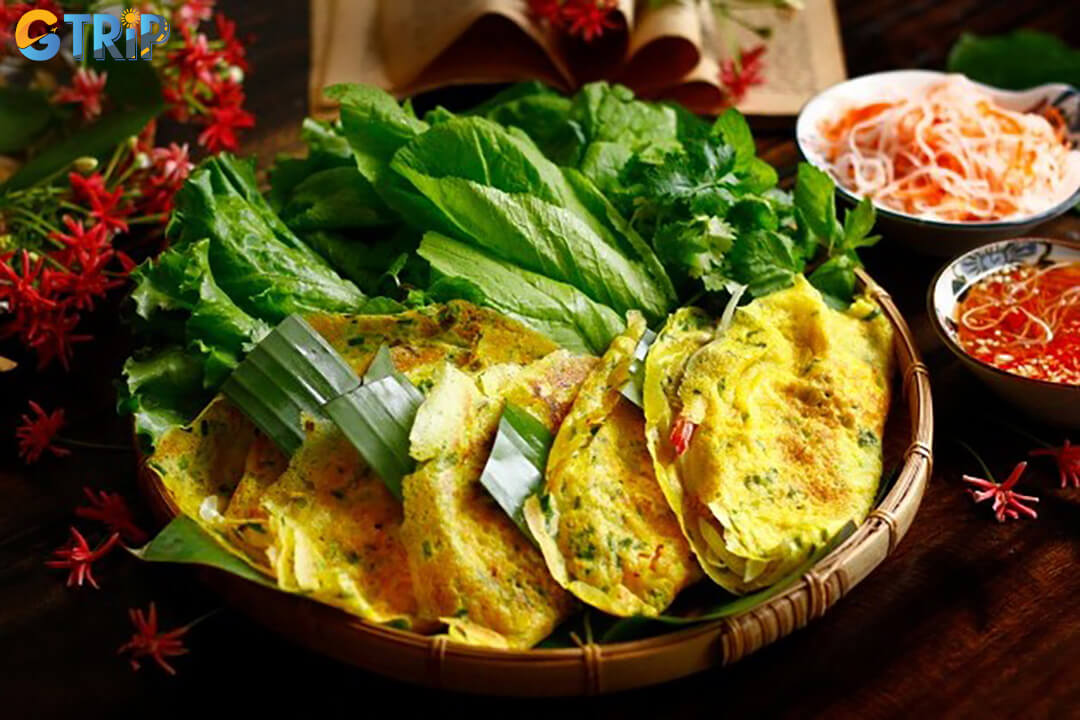
Eating Banh Xeo is a hands-on experience break off a piece, wrap it with herbs (and rice paper), roll it up, and dip it into the sauce for the perfect bite
Frequently asked questions about Banh Xeo
Before diving in, it’s natural to have a few questions about Banh Xeo, especially when it comes to health and how it’s meant to be eaten. Here are two common things first-time diners often wonder about.
Is Banh Xeo healthy?
While the crepe itself is fried, Banh Xeo can be a reasonably balanced meal thanks to the huge amount of fresh herbs and greens served with it. The raw vegetables, which are rich in fiber and vitamins, often outweigh the fried crepe, making it a surprisingly complete dish.
Can I eat the outer leaf?
Yes, absolutely! If your Banh Xeo is served with large lettuce or mustard green leaves, they are meant to be used as the primary wrapper instead of or in addition to rice paper. The large mustard greens are a Southern specialty and add a fantastic, spicy, peppery kick that cuts through the richness of the crepe.
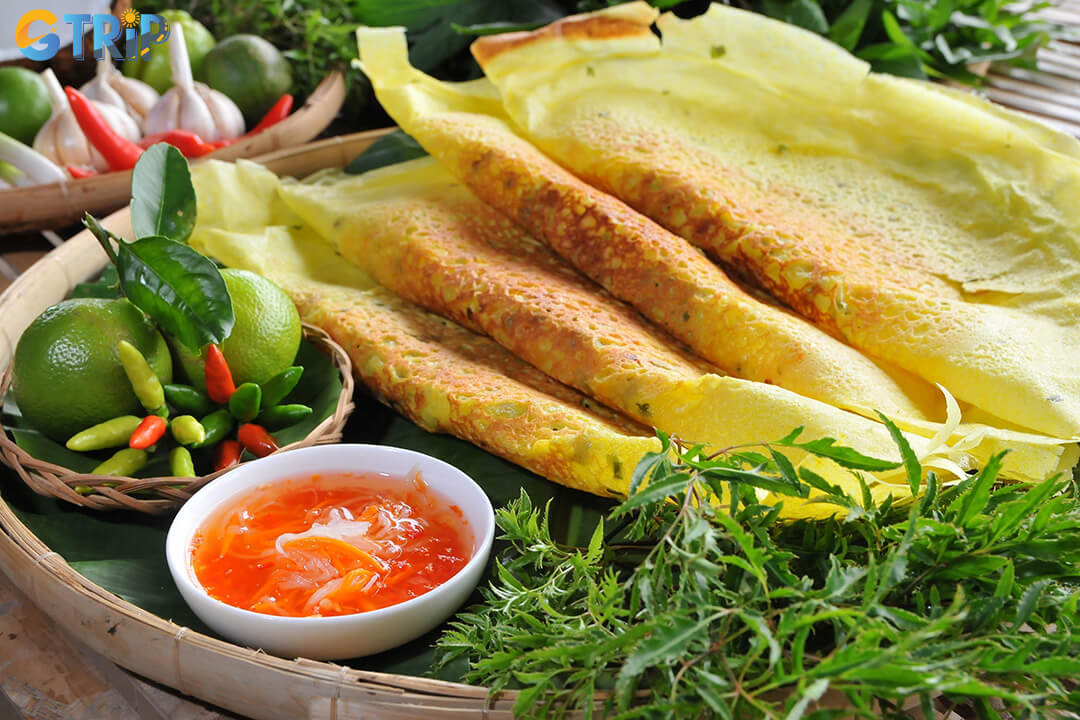
First-time Banh Xeo diners often ask about its healthiness and how to eat it properly, from balancing the fried crepe with fresh greens to using large leaves as edible wrappers
Banh Xeo is a symphony of sound, texture, and flavor that tells the story of Vietnam's diverse regions and rich agricultural heritage. It’s an interactive meal, a social tradition, and a culinary adventure all in one. We hope this GTrip - Vietnam Travel Agency guide empowers you to explore the different regional styles with confidence, to seek out the best local spots, and to master the art of the roll.