Wednesday, December 3, 2025
Former District 10 in Ho Chi Minh City is a vibrant, non-touristy hub brimming with an authentic local culture, incredible food scene, and hidden historical gems just waiting to be discovered. While most visitors flock to the bustling streets of former District 1, the real soul of Saigon pulses in neighborhoods like this one, offering a deeper, more rewarding travel experience. Unlike the tourist-centric city center, this guide from GTrip will take you deep into the heart of the real Saigon, revealing the best things to do, see, and eat like a local. District 10 is an essential destination for any traveler seeking authenticity. Get ready to explore a side of Ho Chi Minh City that few tourists ever see.
Table of Content
- Overview of former District 10 in Ho Chi Minh City
- How to get to former District 10 in Ho Chi Minh City
- Top 10 things to do in former District 10, Ho Chi Minh City
- 1. Visit the pagodas and temples in former District 10
- 2. Discover the Museum of Traditional Vietnamese Medicine (FITO Museum)
- 3. Explore Chi Hoa Communal House
- 4. Visit the Memorial Site of General Secretary Tran Phu
- 5. Watch a show at Hoa Binh Theater
- 6. Visit Ho Thi Ky Flower Market
- 7. Explore the food streets in former District 10
- 8. Stroll around Le Thi Rieng Cultural Park
- 9. Shop or hang out at Van Hanh Mall
- 10. Visit Nhat Tao Secondhand Market
- Practical tips for visiting District 10
Overview of former District 10 in Ho Chi Minh City
Location: Central area of Ho Chi Minh City, bordered by former Tan Binh District (north), former District 5 (south), former District 3 (east), and former District 11 (west).
District 10 in Ho Chi Minh City is geographically blessed, a centrally located urban district that serves as a crucial intersection bordering former District 3, District 5, District 11, and Tan Binh District. Despite its prime location, it has retained a distinctly local character, offering a refreshing contrast to the more internationalized District 1. This is where Saigonese life unfolds in its most genuine form in bustling markets, labyrinthine alleys packed with food vendors, and communal parks filled with families. The district is a microcosm of the city itself, a dynamic blend of old and new, where modern shopping malls stand just blocks away from century-old pagodas and hidden wartime relics. It’s the perfect place to immerse yourself in the everyday rhythm of Ho Chi Minh City.
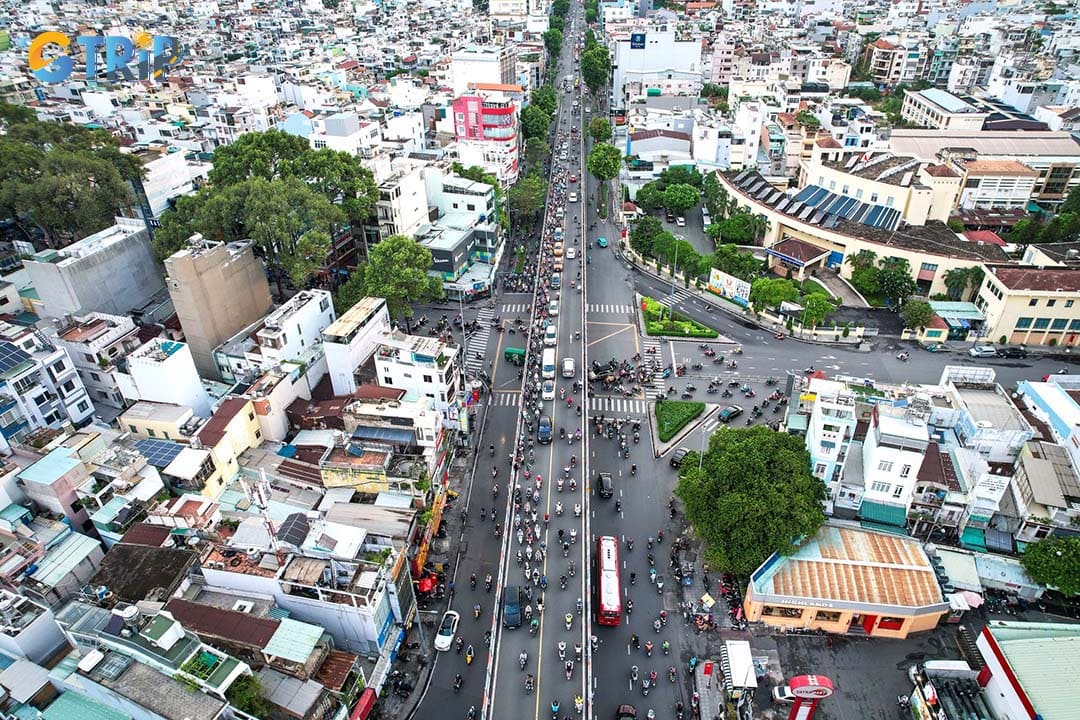
Former District 10 sits at the heart of Ho Chi Minh City, offering a lively blend of markets, alleyway eateries, community parks, modern malls, and historic pagodas
How to get to former District 10 in Ho Chi Minh City
Getting to District 10 from the main tourist hub of District 1 is simple and affordable. As it’s centrally located, the journey is relatively short, allowing you to easily make it a half-day or full-day excursion.
- Ride-hailing apps (Grab/XanhSM): This is the most convenient and highly recommended option. A car or motorbike ride from Ben Thanh Market in former District 1 will typically take 15-25 minutes, depending on traffic. The cost is very reasonable, usually ranging from 40,000 to 80,000 VND for a car.
- Taxi: A reliable alternative to ride-hailing. For a trustworthy service, stick to reputable companies like Vinasun (white with red and green stripes) or Mai Linh (green**)**. Ensure the driver uses the meter to avoid being overcharged. The fare will be slightly higher than using a ride-hailing app.
- Public bus: This is the most budget-friendly method, with tickets costing only a few thousand VND. However, navigating the bus system can be challenging for first-time visitors due to language barriers and complex routes. If you're feeling adventurous, use a bus mapping app like 'BusMap' to plan your journey.
Top 10 things to do in former District 10, Ho Chi Minh City
Former District 10 offers a diverse range of activities that provide a fascinating glimpse into the city's cultural fabric. Here are the top 10 must-visit spots.
1. Visit the pagodas and temples in former District 10
Former District 10 is home to some of Ho Chi Minh City’s most meaningful Buddhist landmarks, each offering a different window into the city’s spiritual and historical identity.
- Vietnamese National Buddhist Temple (Viet Nam Quoc Tu)
As one of the most significant Buddhist sites in Ho Chi Minh City, Viet Nam Quoc Tu stands as both a commanding and serene landmark. The temple was originally built in the 1960s and recently reconstructed into a magnificent modern spiritual center. It serves as the headquarters of the Vietnamese Buddhist Sangha and remains a place of active worship and pilgrimage.
The temple’s 13-story stupa, soaring 63 meters high, is its most striking feature, a symbol of the enduring spirit of Buddhism in Vietnam. Inside, colossal statues of Buddhas and Bodhisattvas inspire reverence within a vast ceremonial hall. Visiting during Vesak or Lunar New Year is particularly special, when thousands of lanterns light up the temple.
- Giac Ngo Pagoda
Compared to Viet Nam Quoc Tu’s grandeur, Giac Ngo Pagoda offers a more intimate and community-centered experience. It’s a place of worship and also a hub for Buddhist education and charity work, deeply connected to local life. The pagoda’s traditional Vietnamese architecture, complete with curved tiled roofs and dragon motifs, makes it a calming retreat. Visitors can witness daily prayers and even join public philosophy classes to gain insight into Buddhist thought in modern Vietnam.
- An Quang Pagoda
An Quang Pagoda is steeped in history, serving as the headquarters of the Unified Buddhist Church of Vietnam and a focal point of resistance during the 1960s Buddhist crisis. Visiting this site offers a glimpse into Vietnam’s turbulent modern past. Though modest in design, its historical depth is profound. The pagoda was central to organizing protests and symbolized spiritual strength amid political turmoil. Reading about the 1963 Buddhist crisis before your visit helps bring this solemn landmark to life.
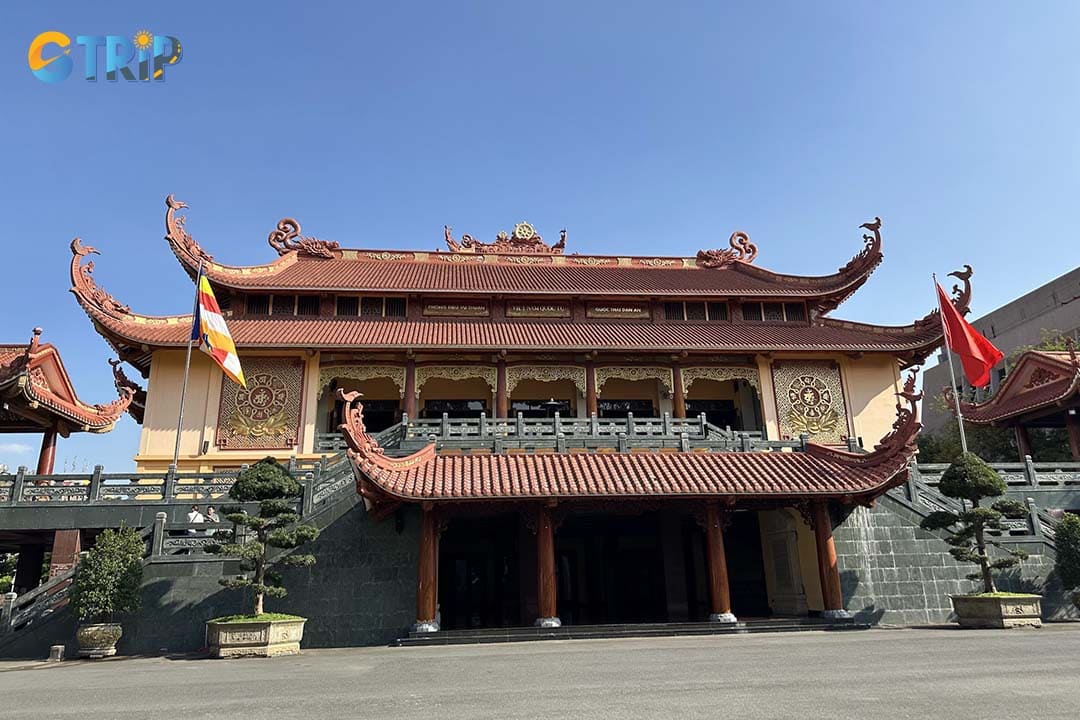
Vietnamese National Buddhist Temple (Viet Nam Quoc Tu) in District 10 stands as a commanding and serene landmark
2. Discover the Museum of Traditional Vietnamese Medicine (FITO Museum)
The FITO Museum is a hidden gem dedicated to the ancient art of traditional Vietnamese medicine. Housed in an ornate wooden building crafted from reclaimed traditional homes, the museum itself is a masterpiece. Inside are more than 3,000 artifacts, from herbal grinders to antique medical chests, that trace centuries of healing practices. A short documentary enriches the visit, and the top floor recreates an old pharmacy where guests can don traditional attire for photos.
3. Explore Chi Hoa Communal House
Amid the urban buzz, Chi Hoa Communal House preserves the soul of a traditional Vietnamese village. Serving both as a temple for the local guardian deity and a meeting hall for elders, it embodies centuries-old community values. Its sweeping roofs, dragon carvings, and intricate ceramic mosaics tell stories of folklore and devotion. The peaceful courtyard invites visitors to pause and reflect on Vietnam’s cultural roots.
4. Visit the Memorial Site of General Secretary Tran Phu
Dedicated to Tran Phu, the first General Secretary of the Indochinese Communist Party, this memorial site honors one of Vietnam’s most important revolutionary figures. The preserved home and memorial statue provide a moving tribute to his life and sacrifice at just 27 years old. While signage is mainly in Vietnamese, the site’s quiet dignity speaks volumes about the country’s path to independence.
5. Watch a show at Hoa Binh Theater
As one of Ho Chi Minh City’s largest performance venues, Hoa Binh Theater continues to be a cornerstone of the city’s entertainment scene. Hosting concerts, folk performances, and televised events, it’s a great place to experience Vietnamese culture live. Even from the outside, its grand architecture along 3 Thang 2 Street makes it a District 10 landmark. Checking its show schedule ahead of time ensures you won’t miss a memorable night.
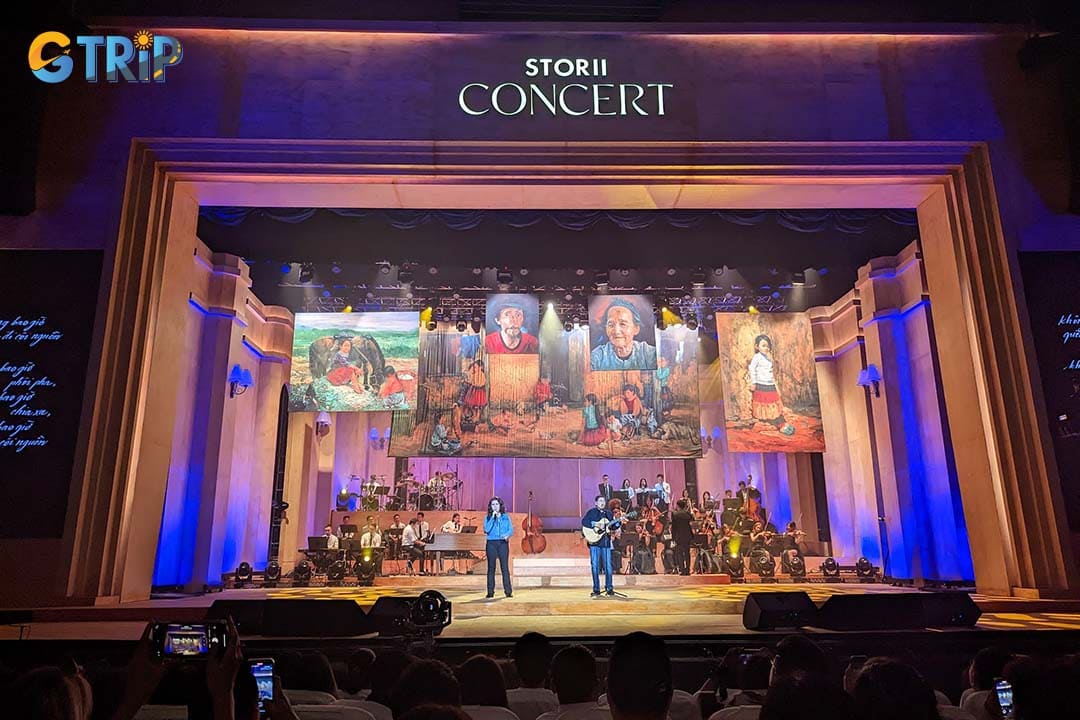
You should experience watching a show at Hoa Binh Theater
6. Visit Ho Thi Ky Flower Market
Bustling and colorful, Ho Thi Ky Flower Market is the city’s largest wholesale flower hub. In the early hours, florists from all over Saigon gather to trade roses, orchids, lilies, and tropical blooms in a flurry of motion and fragrance. Visiting between 2 AM and 6 AM offers the most authentic experience. Later in the morning, the market remains lively and perfect for photography.
7. Explore the food streets in former District 10
District 10 is arguably Ho Chi Minh City's food capital. Its streets and alleys transform into a massive, open-air restaurant every evening. Answering the question What to eat in District 10 is easy: everything. For a true hidden gems in Saigon experience, you must explore its legendary food streets.
- Nguyen Tri Phuong Street: This street is a paradise for lovers of hot pot (lau) and sweet dessert soups (che). You'll find dozens of restaurants specializing in different types of hot pot. After your meal, hop over to a che stall for a bowl of refreshing mixed sweet soup.
- To Hien Thanh Street: If you love seafood, this is your destination. The street is lined with seafood restaurants, known locally as quan oc (snail restaurants), that serve far more than just snails. Pick your fresh seafood, prawns, clams, scallops, crab, from the live tanks and have it grilled, steamed, or stir-fried with tamarind or chili salt.
- Su Van Hanh Street: This is a more modern food hub that perfectly blends tradition and trend. Here you'll find everything such as classic street food stalls serving banh xeo (sizzling pancakes), trendy milk tea shops, Korean BBQ joints, and Japanese restaurants. The long stretch near Van Hanh Mall is particularly popular with young people.
- Ba Hat Street: Known for its an vat (snacking) culture, Ba Hat offers a corridor of small-scale eateries and stalls. It's the perfect place to sample a variety of smaller dishes, such as bot chien (fried rice flour cakes), goi kho bo (green papaya salad with beef jerky), and various noodle dishes.
- Ho Thi Ky Food Street/Alley 52: By night, the area around the flower market transforms into one of the city's most vibrant food streets, famous for its strong Cambodian influence. Don't miss trying the Cambodian-style noodles (hu tieu Nam Vang), grilled beef skewers, and a unique snail sausage (cha oc). It's a must-do for things to do in District 10 at night.
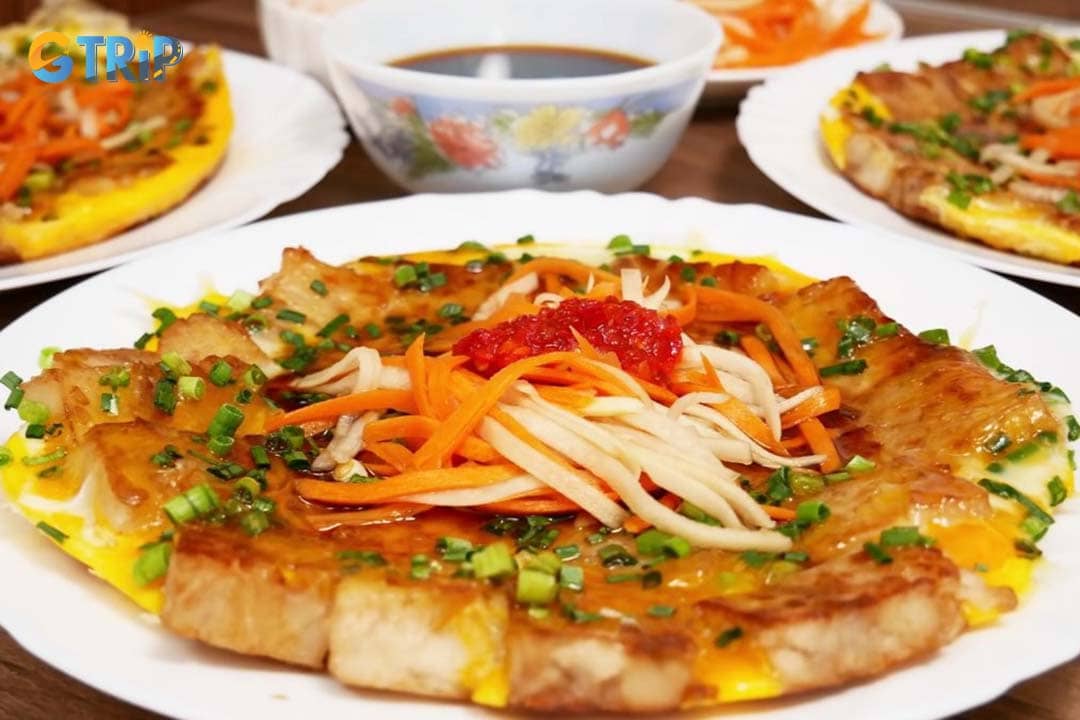
You can try bot chien (fried rice flour cakes) as a snack
8. Stroll around Le Thi Rieng Cultural Park
Le Thi Rieng Cultural Park offers a breath of fresh air in the middle of the city. Locals come here for morning jogs, tai chi, or evening gatherings around the lake. Families with children can also enjoy the park’s small amusement zone and water play area. Visit early morning or late afternoon to experience the park at its liveliest, when community exercise sessions fill the space with cheerful energy.
9. Shop or hang out at Van Hanh Mall
For a modern change of pace, Van Hanh Mall provides shopping, dining, and entertainment under one roof. A CGV cinema and a bustling food court make it a favorite hangout for locals. Spending an afternoon here reveals Saigon’s urban lifestyle and youth culture, a striking contrast to the district’s traditional landmarks.
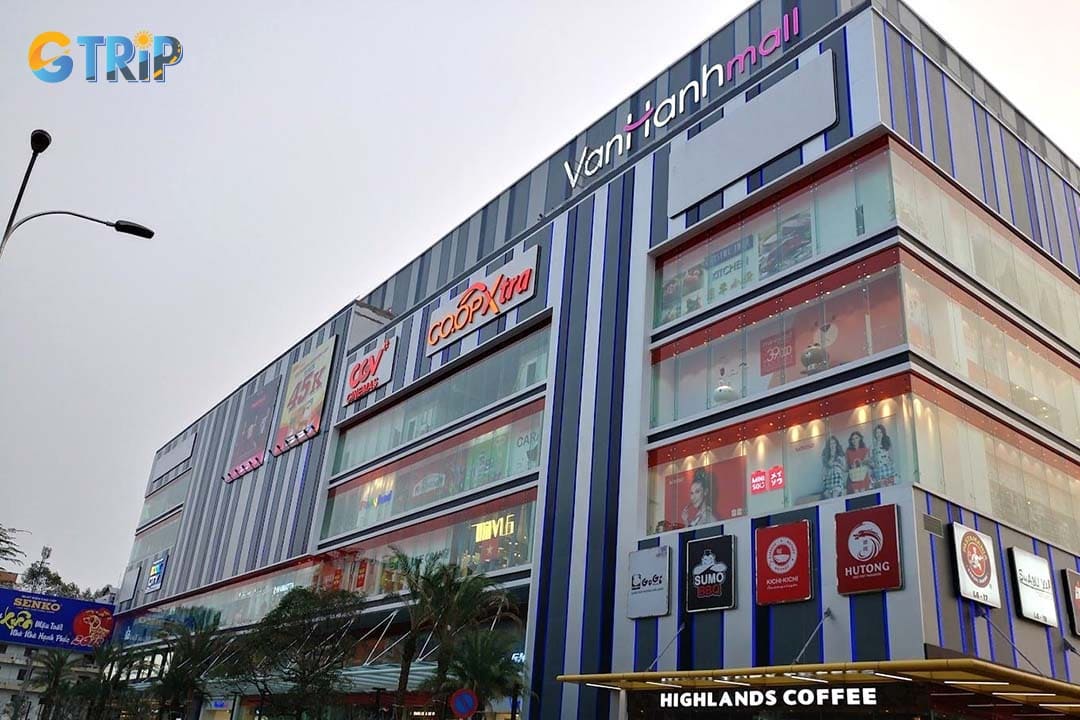
Van Hanh Mall is a must place to go if you want to go shopping or simply a relaxing time
10. Visit Nhat Tao Secondhand Market
Nhat Tao Market is a haven for electronics lovers. It’s a chaotic mix of stalls selling everything from old cameras and phone parts to obscure cables and circuit boards. Even if you’re not shopping, exploring its narrow lanes offers a glimpse into Saigon’s street trade culture, full of chatter, bargaining, and endless curiosity.
Practical tips for visiting District 10
A little preparation can go a long way in making your exploration of this authentic district smoother and more enjoyable. Is District 10 safe? Absolutely, but like any bustling urban area, it pays to be prepared.
- Wear comfortable shoes: You will be doing a lot of walking, especially if you plan to explore the winding alleys of the flower market and food streets. Prioritize comfort.
- Bring cash: Unlike in former District 1, many street food vendors, market stalls, and small shops in former District 10 do not accept credit cards. Carry a sufficient amount of Vietnamese Dong (VND) in small denominations.
- Be adventurous with food: The biggest reward of visiting District 10 is its food. Be open to trying new things from vendors that are crowded with locals, that’s always the best sign of quality.
- Learn a few words: Simple Vietnamese phrases, like "Cam on" (Thank you), "Xin chao" (Hello), and "Bao nhieu tien?" (How much is it?), are greatly appreciated and can enhance your interactions.
- Navigate with a map app: The district's network of streets and alleys can be confusing. Use Google Maps or a similar app on your phone to navigate, but don't be afraid to get a little lost. That's often where you'll find the best hidden gems.
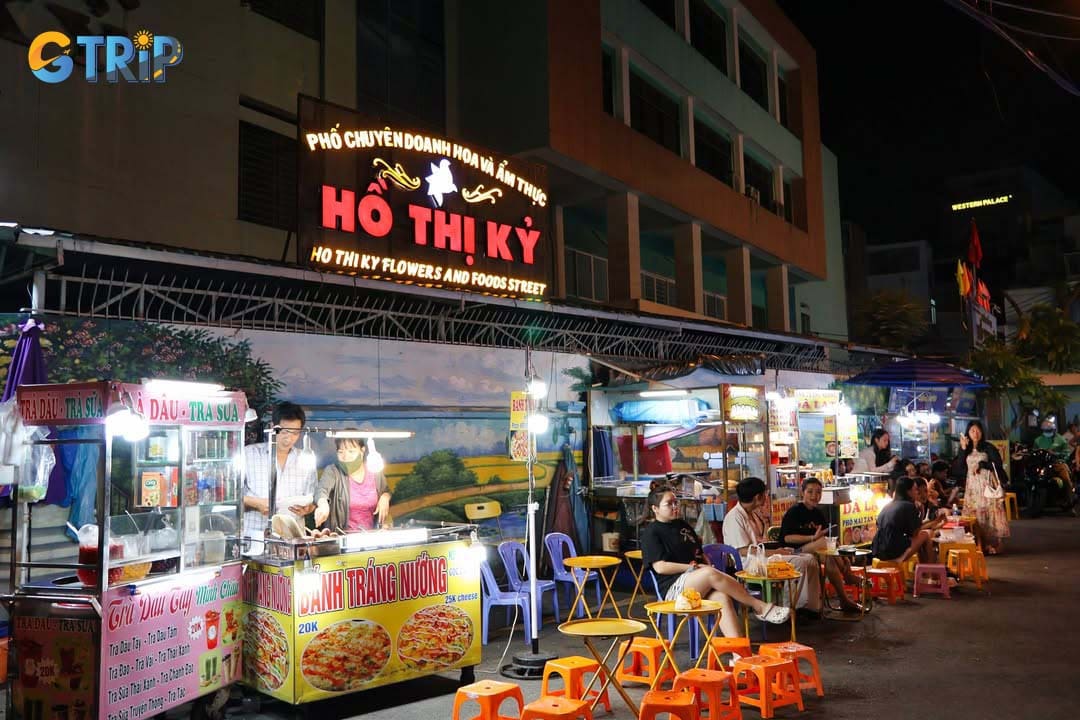
Remember above tips to have a complete trip to former District 10
Former District 10 in Ho Chi Minh City is the key to unlocking a side of the city that many visitors miss. You are rewarded with unparalleled culinary delights, rich cultural encounters, and a genuine connection to the soul of Saigon. This is where you'll find the city's real rhythm in the sizzle of a street-side wok, the fragrant scent of a thousand flowers, and the warm smiles of its residents. It represents the best of urban exploration: a chance to step away from the crowds and into a world of authentic experiences. Let GTrip be your guide to the hidden corners of Vietnam.