Friday, January 9, 2026
Former District 6 in Ho Chi Minh City offers a journey into the authentic heart of Saigon, far from the well-trodden tourist trail. This bustling enclave, a vital part of the city's larger Cholon (Chinatown), is a living museum of Chinese-Vietnamese culture. This is where the air is thick with the scent of traditional medicine, sizzling woks, and fragrant incense. It's a place of sprawling wholesale markets, hidden temples whispering ancient stories, and a food scene that will tantalize your taste buds at every turn. While other districts modernize at a breakneck pace, District 6 retains a raw, captivating charm. In this complete travel guide by GTrip, we'll uncover everything you need to know to explore the top attractions.
Table of Content
- Overview of former District 6 in Ho Chi Minh City
- How to get to the former District 6 in Ho Chi Minh City
- Top 16+ things to do in former District 6 in Ho Chi Minh City
- 1. Explore Binh Tay Market
- 2. Stroll around Hau Giang Flower Market
- 3. Taste authentic flavors at Minh Phung Street Food Area (Chinese cuisine)
- 4. Enjoy night dining at Phu Lam Food Street
- 5. Visit Giac Hai Pagoda
- 6. Discover the secret base of the Saigon - Gia Dinh Party Committee
- 7. Find peace at Thao Duong Buddhist Temple
- 8. Explore Tuyen Lam Ancient Pagoda
- 9. Visit the Chinese Assembly Halls
- 10. Step inside the secret printing tunnel
- 11. Discover Binh Tien Communal House
- 12. Pay respect at the tomb and temple of Mr. Pham Van Chi
- 13. Visit the broom-making hamlet
- 14. Walk the heritage architecture routes
- 15. Savor Saigon’s favorite broken rice at Com Tam Tuyet Cay Go
- 16. Observe craftsmanship at the Buddha statue casting village
- 17. Relax at Phu Lam Park
- Practical tips for visiting former District 6
Overview of former District 6 in Ho Chi Minh City
Location: Western Ho Chi Minh City
Geographically, former District 6 is located in the western part of Ho Chi Minh City, sharing borders with former District 5, District 8, District 11, Binh Tan District, and Tan Phu District. Its identity is closely tied to Cholon, Saigon’s vibrant Chinatown, which it shares and helps define together with former District 5. This area has been a center for commerce and Chinese culture for centuries. Today, it remains a dynamic hub where Cantonese, Teochew, and Hokkien influences are visible in the architecture, language, and, most notably, the cuisine. It’s a sensory overload in the best way possible, representing a more traditional and less-polished side of the city.
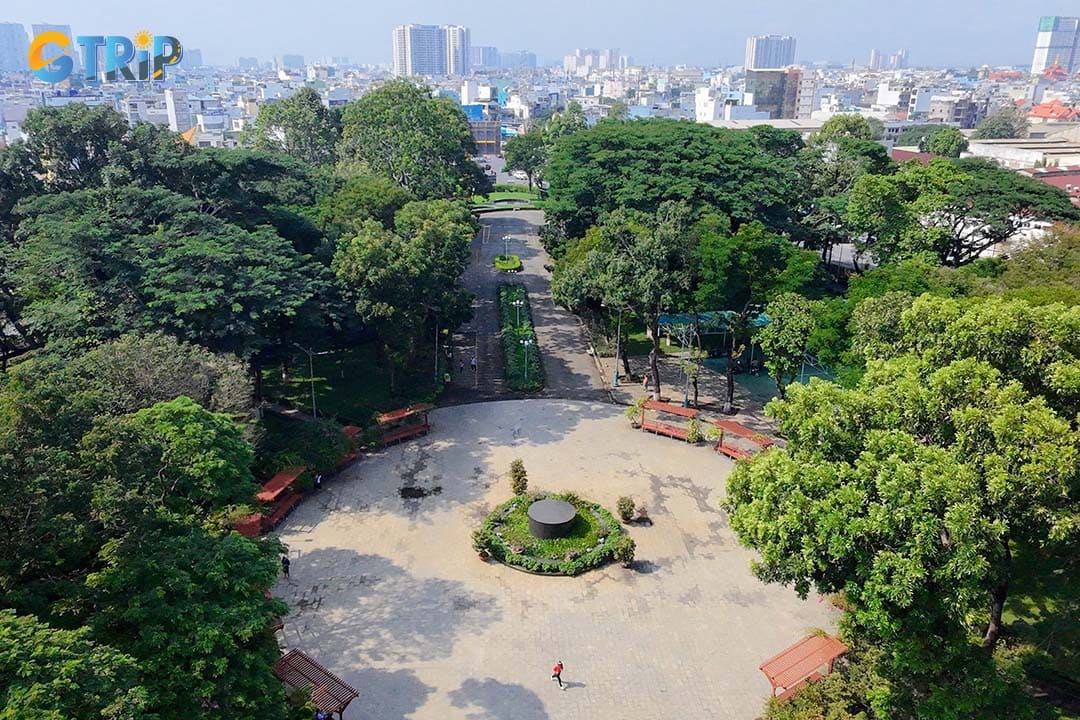
Located in western Ho Chi Minh City, former District 6 is a vibrant extension of Cholon, a historic Chinatown
How to get to the former District 6 in Ho Chi Minh City
Reaching former District 6 from central areas like former District 1 is straightforward. While it might feel a world away, it's only a short journey that opens up a completely different side of Saigon.
- Taxi/Ride-hailing app (Grab/XanhSM): This is the most convenient option for tourists. A ride from former District 1 typically takes 20-30 minutes, depending on traffic and is very affordable. Simply input "Binh Tay Market" as your destination to land in the heart of the area.
- Public bus: For the adventurous and budget-conscious traveler, a network of public buses connects the city. Bus route #01 is a popular and direct line that runs from Ben Thanh Market straight to Cholon Bus Station, right next to Binh Tay Market.
- Motorbike: If you are a confident and experienced rider, navigating to District 6 by motorbike offers the most freedom. It allows you to explore the narrow alleyways and stop wherever you please. Expect a 15-25 minute ride from the city center.
Top 16+ things to do in former District 6 in Ho Chi Minh City
Here are the top things to do that will immerse you in the local culture and history.
1. Explore Binh Tay Market
No visit to former District 6 is complete without immersing yourself in Binh Tay Market (Cho Lon). This is the commercial heart of Cholon and one of the largest, busiest markets in the city. Its magnificent exterior, a fusion of French and Chinese architectural styles, was financed by the French-Chinese businessman Quach Dam in the 1920s. Inside, the market is a dizzying labyrinth of stalls primarily focused on wholesale goods. You’ll see vendors selling a vast array of products, such as spices, dried seafood, textiles, traditional sweets, and kitchenware. The central courtyard, with its serene pond and garden, offers a surprising moment of calm amidst the commercial chaos.
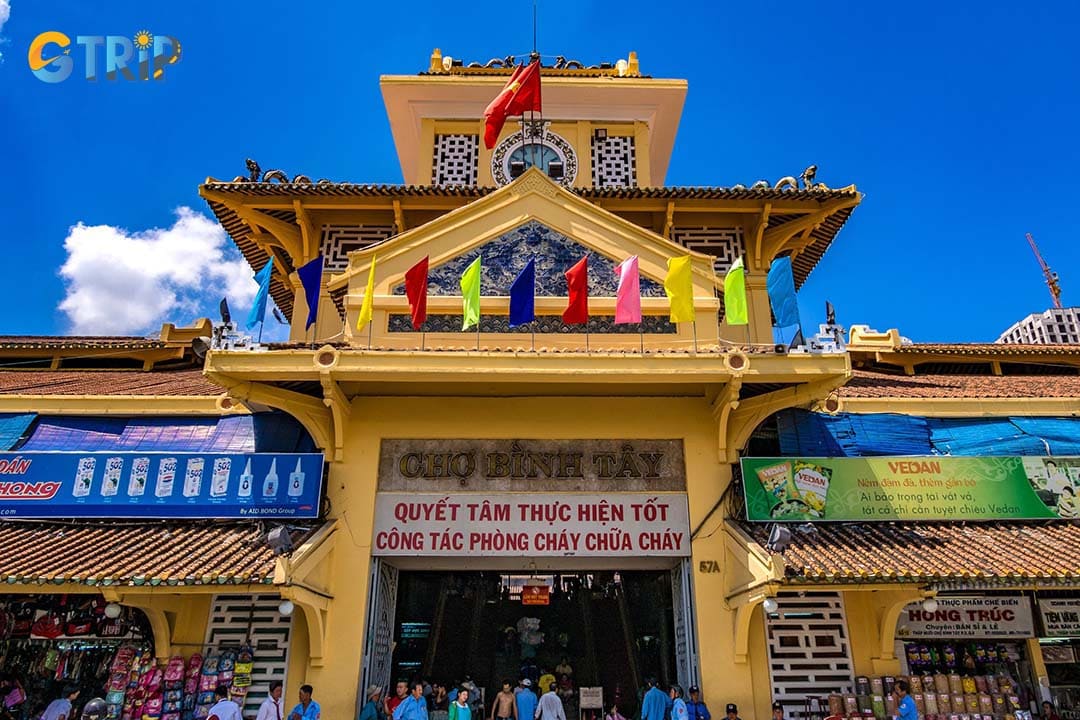
Binh Tay Market, the bustling heart of Cholo, impresses with its French-Chinese architecture and maze of stalls selling everything
2. Stroll around Hau Giang Flower Market
While Ho Thi Ky is HCMC’s most famous flower market, Hau Giang Flower Market offers a more local and less-crowded experience. It's an essential artery for the floral trade in the western part of the city. Walking through the market, especially in the early morning, is a feast for the senses. The air is perfumed with the scent of countless blossoms, from roses and lilies to chrysanthemums and lotus flowers. The market is particularly vibrant during the run-up to holidays, especially Tet (Vietnamese New Year). This is when the entire street transforms into a kaleidoscope of color as families come to purchase flowers and ornamental plants for good luck.
3. Taste authentic flavors at Minh Phung Street Food Area (Chinese cuisine)
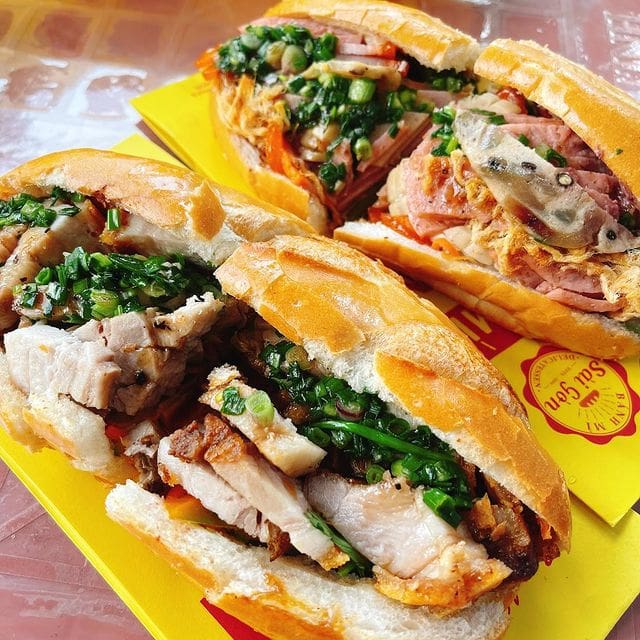
When the sun sets, Minh Phung Street transforms into a paradise for food lovers, celebrated for its strong focus on Chinese-Vietnamese cuisine. This isn't a single restaurant but a collection of street-side stalls and small eateries, each specializing in a few distinct dishes passed down through generations. You can wander from stall to stall, sampling a variety of authentic flavors. Expect to find delicious items like steaming baskets of dim sum, flavorful bowls of mi vit tiem (braised duck noodle soup), and savory hu tieu mi (pork and seafood noodle soup). The experience is about sitting on a small plastic stool and enjoying incredible food elbow-to-elbow with locals.
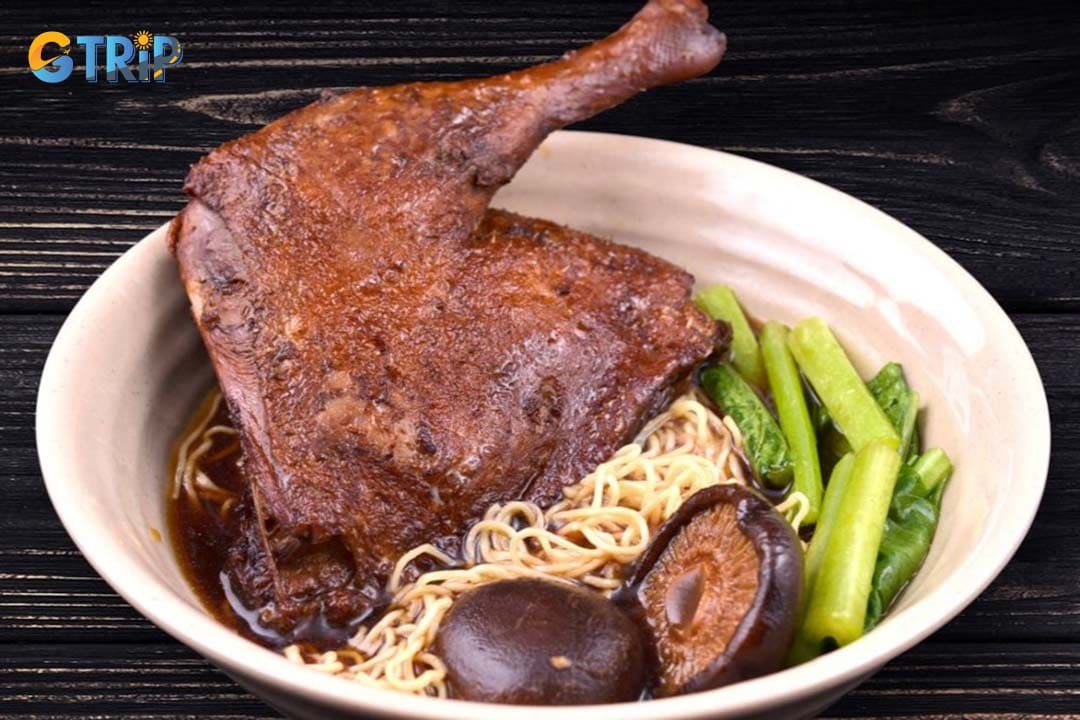
Minh Phung Street comes alive as a vibrant hub of Chinese-Vietnamese street food, where family-run stalls serve beloved dishes like dim sum, mi vit tiem, and hu tieu mi
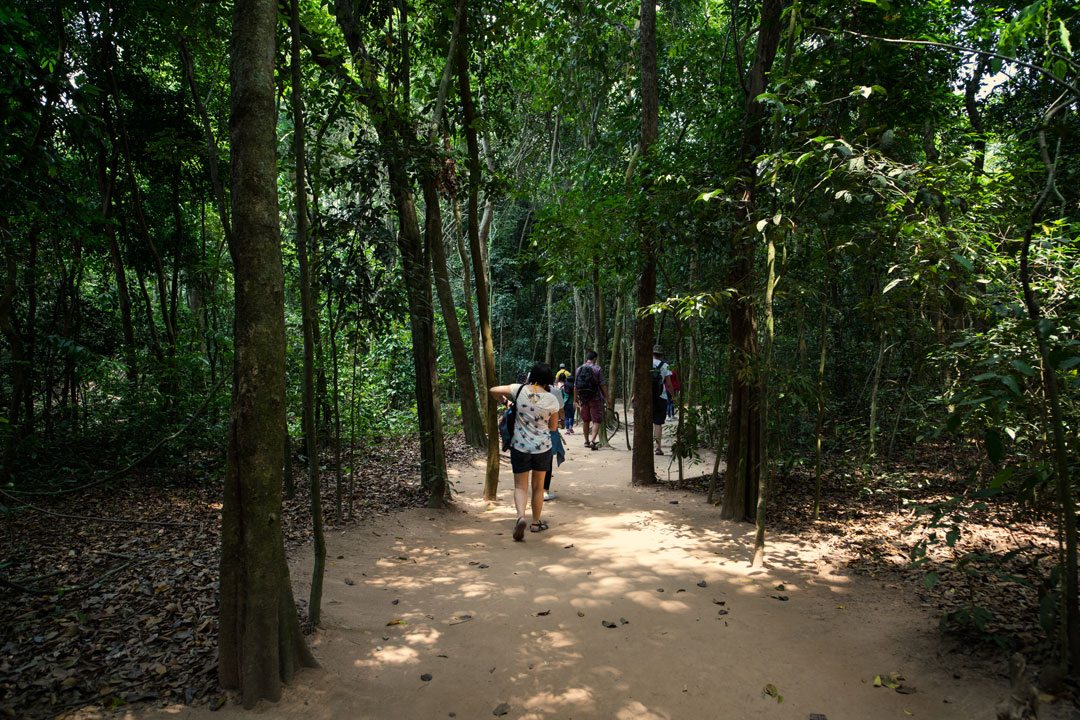
4. Enjoy night dining at Phu Lam Food Street
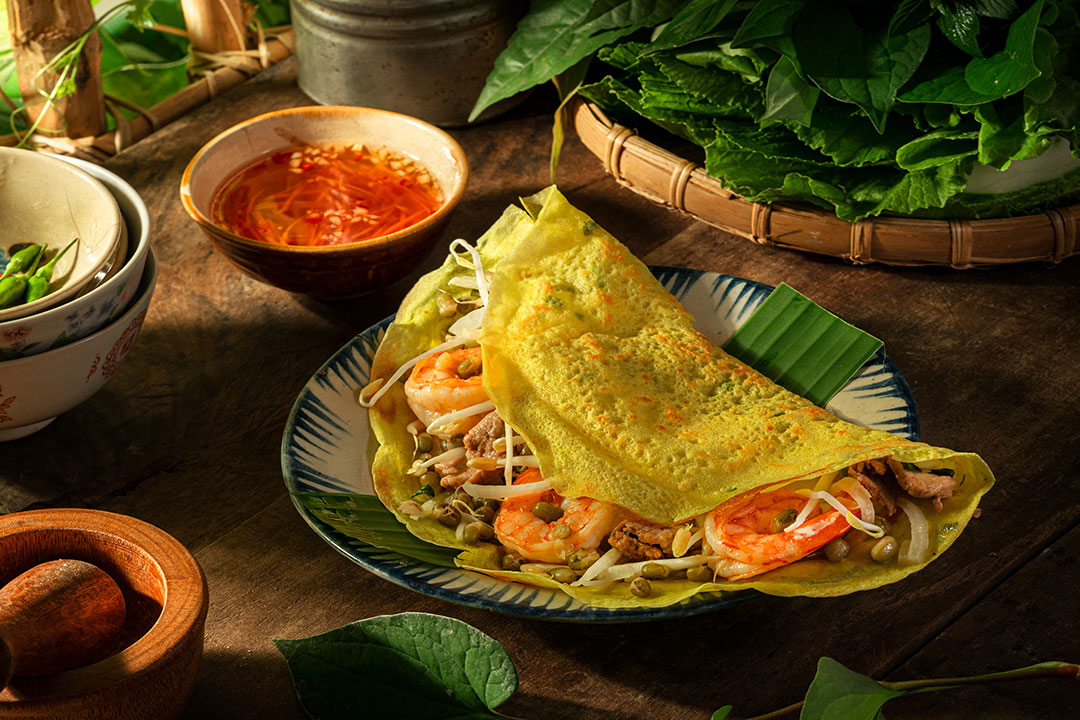
Phu Lam food street offers a different but equally tantalizing nighttime dining experience, with a stronger emphasis on classic Vietnamese street food. Popular with students and local families, this area around Phu Lam roundabout is a buzzing hub of activity after dark. The options are endless, showcasing a wide range of Vietnamese culinary delights. You can savor everything from banh xeo (crispy Vietnamese crepes) and bo la lot (grilled beef in wild betel leaves) to various types of snails (oc) and fresh seafood cooked to order. It's the perfect place to conduct your own food tour and discover your new favorite Vietnamese dish.
5. Visit Giac Hai Pagoda
Tucked away from the main thoroughfares, Giac Hai Pagoda (Chua Giac Hai) is a peaceful sanctuary, offering a quiet retreat from the surrounding hustle and bustle. As one of the oldest pagodas in the area, it exudes a palpable sense of history and devotion. The architecture features traditional curved roofs adorned with intricate ceramic dragons and mythical figures. Inside, the main hall is filled with the gentle aroma of incense and houses beautifully crafted statues of Buddha and Bodhisattvas. Visitors are welcome to walk the grounds, observe the quiet rituals of local worshippers, and enjoy a moment of serene contemplation.
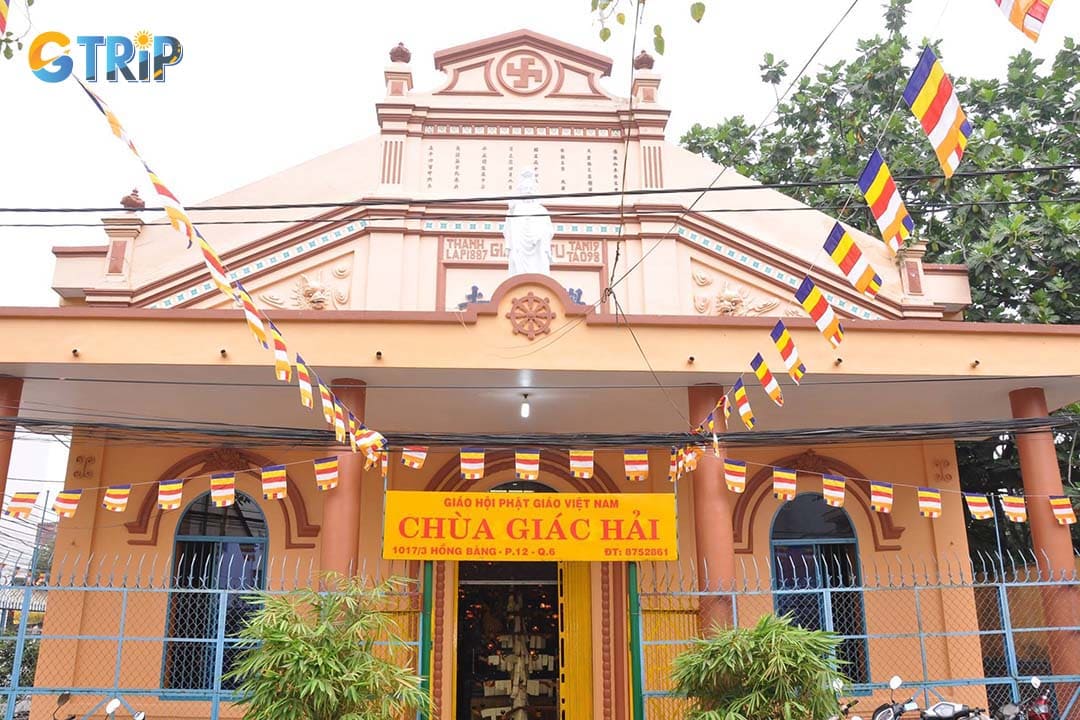
Giac Hai Pagoda is a tranquil haven and one of the district’s oldest temples, featuring graceful curved roofs, ornate ceramic details, and a peaceful interior
6. Discover the secret base of the Saigon - Gia Dinh Party Committee
Another invaluable historical gem, this site was a secret command post for the Saigon – Gia Dinh Party Committee during the war. From the outside, it looks like any other residential house in the neighborhood, a perfect camouflage that allowed key revolutionary leaders to meet, plan, and direct operations undetected. The house has been preserved to show how it was used, with hidden compartments and secret passages. A visit here illuminates the "other side" of the war, the urban guerrilla network that operated in secret throughout the city, playing a crucial role in historical events.
7. Find peace at Thao Duong Buddhist Temple
Thao Duong Buddhist Temple is another serene oasis that showcases the deep-rooted Buddhist faith of the local community. While perhaps not as grand as some pagodas, its charm lies in its intimate and authentic atmosphere. The temple is known for its tranquil courtyards, beautifully maintained bonsai trees, and the intricate details on its altars and statues. It’s a functioning place of worship, and visitors can often witness monks and laypeople engaged in prayer and chanting. This provides a genuine, un-touristy glimpse into the daily spiritual life of Saigon's Chinatown.
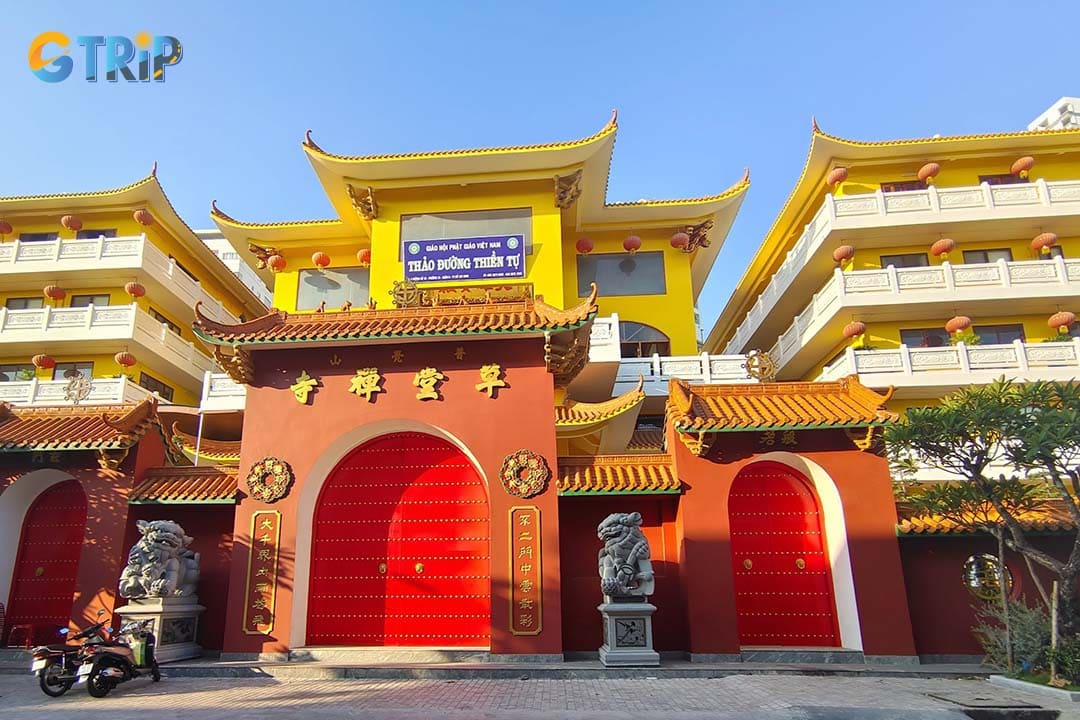
Thao Duong Buddhist Temple offers a peaceful glimpse into everyday spiritual life in Saigon’s Chinatown
8. Explore Tuyen Lam Ancient Pagoda
The term "ancient" is not used lightly for Tuyen Lam Ancient Pagoda (Chua Co Tuyen Lam). This pagoda has stood for over a century and a half, making it one of the most historically significant religious sites in the area. Its architecture and artifacts bear the marks of time, with weathered wood, faded murals, and statues that have been venerated for generations. The sense of history here is profound. Exploring its various halls and courtyards feels like stepping back in time, offering a direct connection to the spiritual heritage of the Chinese-Vietnamese community who built and have maintained this sacred space.
9. Visit the Chinese Assembly Halls
Like its neighbor former District 5, District 6 is home to several Chinese Assembly Halls. These magnificent structures were established by different Chinese dialect groups as centers for social, commercial, and spiritual life for their communities. They are characterized by their breathtakingly ornate architecture. It features sweeping tiled roofs, intricately carved stone and woodwork, and courtyards filled with the smoke from giant, spiraling incense coils. Each hall is a mini-museum of folk art and religious devotion, dedicated to a specific deity like Thien Hau, the Goddess of the Sea.
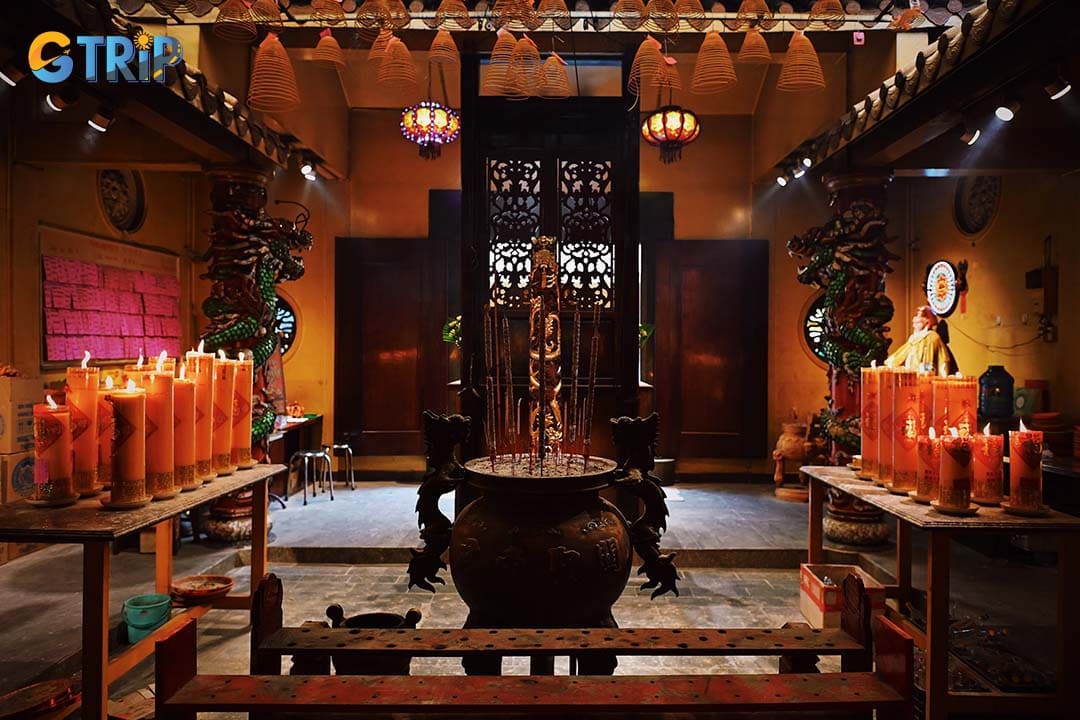
Discover District 6’s Chinese Assembly Halls, stunning architectural treasures that blend cultural heritage, folk art, and spiritual devotion in honor of deities
10. Step inside the secret printing tunnel
Hidden beneath an ordinary-looking house is a remarkable piece of Vietnam War history. This secret tunnel was used by the Viet Cong as a clandestine printing press to produce propaganda and revolutionary documents right under the nose of the old regime. It’s a testament to the ingenuity and resilience of the underground resistance movement in Saigon. Visiting the tunnel provides a powerful, tangible connection to the city's wartime past. The space is cramped and dimly lit, giving you a real sense of the covert conditions in which the printers operated. A visit here is a stark contrast to the bustling market life outside.
11. Discover Binh Tien Communal House
A communal house, or dinh, is the spiritual and social heart of a traditional Vietnamese community, and Binh Tien Communal House (Dinh Binh Tien) is a fantastic example. It's not a pagoda for Buddhist worship but a place dedicated to the village's guardian deity and a venue for community festivals and meetings. The structure is a masterpiece of traditional Vietnamese architecture, with dark, heavy timber beams and elaborate wood carvings depicting dragons, phoenixes, and scenes from folklore. Visiting the dinh offers a fascinating insight into the civic and spiritual beliefs that have structured Vietnamese society for centuries.
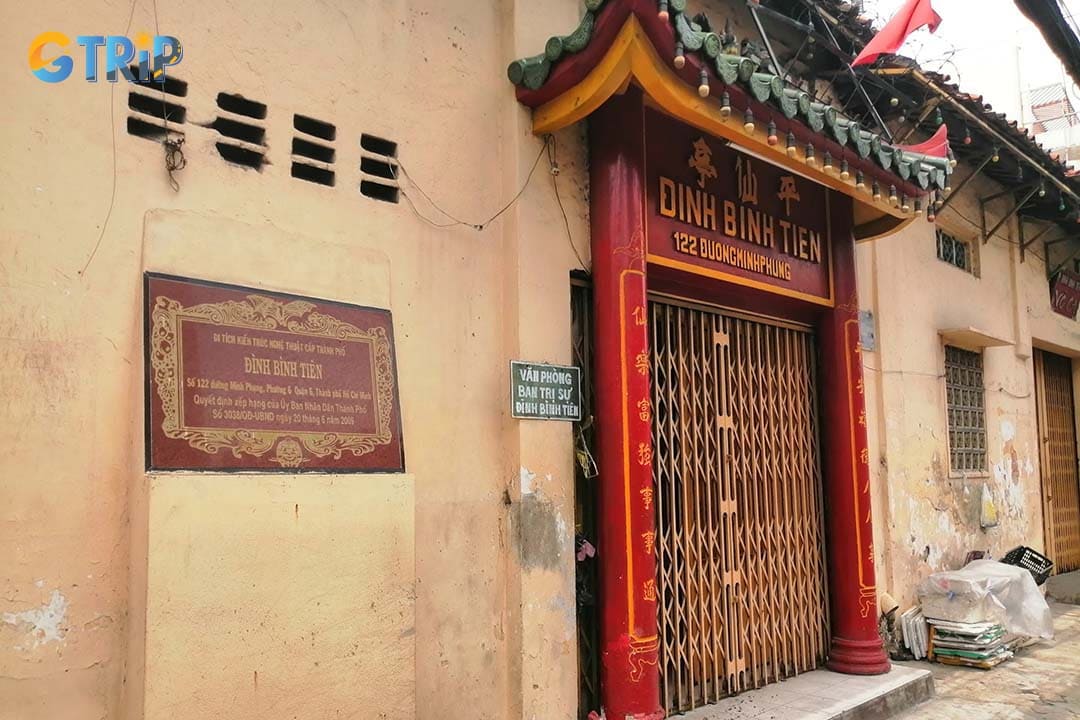
Discover Binh Tien Communal House, a beautifully preserved dinh in District 6 that showcases traditional Vietnamese architecture
12. Pay respect at the tomb and temple of Mr. Pham Van Chi
This site is dedicated to the memory of Pham Van Chi, a respected historical figure whose contributions were significant to the development of the area. The tomb and temple serve as a place of ancestor worship and a repository of local history. It may not be a grand monument, but its importance to the local community is immense. Visiting provides insight into the Vietnamese tradition of honoring historical figures and founding fathers who have shaped their community's identity. The site is likely a quiet, well-maintained space where locals come to pay their respects.
13. Visit the broom-making hamlet
On a stretch of Pham Van Chi Street and its surrounding alleys, you'll find Saigon's traditional broom-making hamlet. For decades, families here have practiced the craft of making brooms from natural grass (dot grass). The street is a photogenic scene of activity, with artisans sitting outside their homes, skillfully bundling, tying, and trimming the grass into finished brooms. The sight of hundreds of golden-yellow brooms stacked up to dry in the sun is a wonderful visual that harks back to an older, simpler Saigon. It’s a fantastic opportunity to see a traditional, non-mechanized craft that still thrives today.
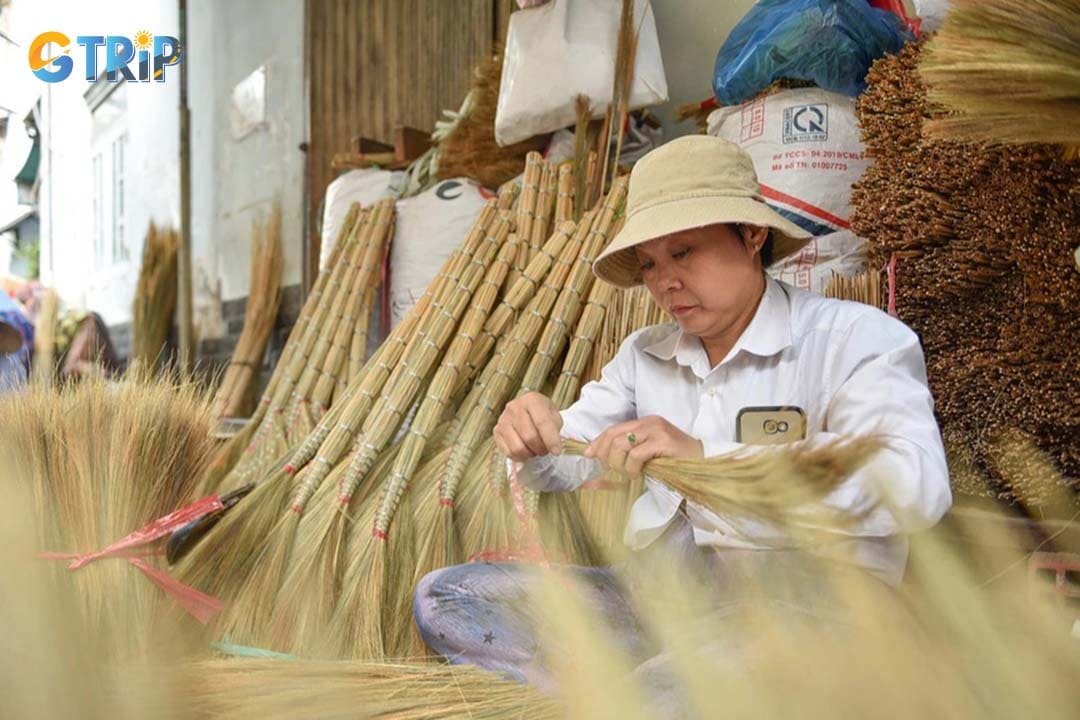
Explore Pham Van Chi Street’s traditional broom-making hamlet, where skilled artisans craft golden grass brooms by hand
14. Walk the heritage architecture routes
One of the best things to do in former District 6 is simply to walk and get lost. This area is a treasure trove of heritage architecture. Plan a self-guided walking tour and keep your eyes peeled for the fascinating blend of architectural styles. You’ll find weathered French colonial shophouses with their characteristic shutters and balconies, standing next to traditional Chinese-style buildings with ornamental tiled roofs and intricate ironwork. These buildings are not museum pieces. They are living spaces, housing families, shops, and workshops, offering a beautiful, unfiltered look at Saigon's past coexisting with its present.
15. Savor Saigon’s favorite broken rice at Com Tam Tuyet Cay Go
Com Tam, or broken rice, is a quintessential Southern Vietnamese dish, and Com Tam Tuyet Cay Go is one of the legendary spots in former District 6 to try it. Broken rice refers to the fractured rice grains that were traditionally cheaper, but have now become a beloved staple. This humble plate is elevated to culinary greatness with a symphony of toppings. A classic serving includes perfectly grilled pork chops (suon), shredded pork skin (bi), a savory steamed egg meatloaf (cha), and a fried egg (op la). The entire plate is brought together with sweet and savory fish sauce (nuoc mam) and a side of pickled vegetables.
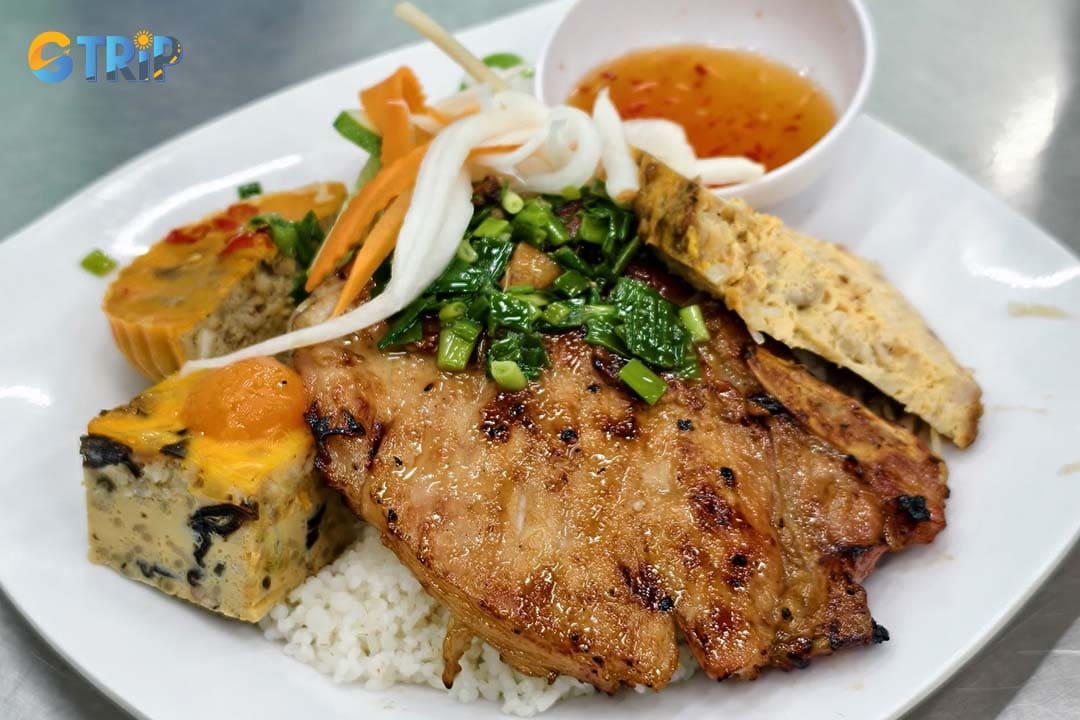
Savor Com Tam Tuyet Cay Go in former District 6, where fragrant broken rice is paired with grilled pork, steamed egg, and signature fish sauce for a true Saigon classic
16. Observe craftsmanship at the Buddha statue casting village
Former District 6 is home to a unique craft village that specializes in casting bronze statues, particularly of Buddha and other deities. This is not a tourist attraction but a collection of active, family-run workshops where you can observe a living tradition. Artisans use age-old techniques of wax molding and bronze casting to create stunning statues destined for temples and homes across the country. Watching the intense, skillful process, is a captivating experience and offers a profound appreciation for the artistry behind these sacred objects.
17. Relax at Phu Lam Park
Phu Lam Park is one of District 6’s largest and most popular green spaces, offering a refreshing escape from the surrounding urban streets. Centered around a scenic lake, the park is ideal for a leisurely walk, light exercise, or simply sitting under the trees to unwind. In the early mornings and late afternoons, locals gather here to jog, practice tai chi, or socialize, giving you a glimpse into everyday neighborhood life. It’s a relaxed, welcoming place where you can slow down and experience local life beyond the bustle of markets and workshops.
Practical tips for visiting former District 6
A bit of preparation will make your visit even more rewarding. This area feels refreshingly local and is far less tourist-oriented than central Saigon, so keeping a few practical tips in mind will help you get around comfortably and confidently.
- Wear comfortable shoes: You will be doing a lot of walking through markets and alleys, so comfortable footwear is essential.
- Bring cash: Many street food vendors and market stalls do not accept credit cards. Having small denominations of Vietnamese Dong (VND) is crucial.
- Bargain politely at markets: At places like Binh Tay Market, bargaining is expected. Do it with a smile and a respectful attitude.
- Be mindful of your belongings: Like any crowded urban area, it's wise to keep your phone, wallet, and camera secure, especially in bustling markets.
- Respect religious customs: When visiting pagodas, temples, and communal houses, dress modestly and be quiet and respectful of worshippers.
- Stay hydrated: The weather can be hot and humid. Carry a bottle of water with you as you explore.
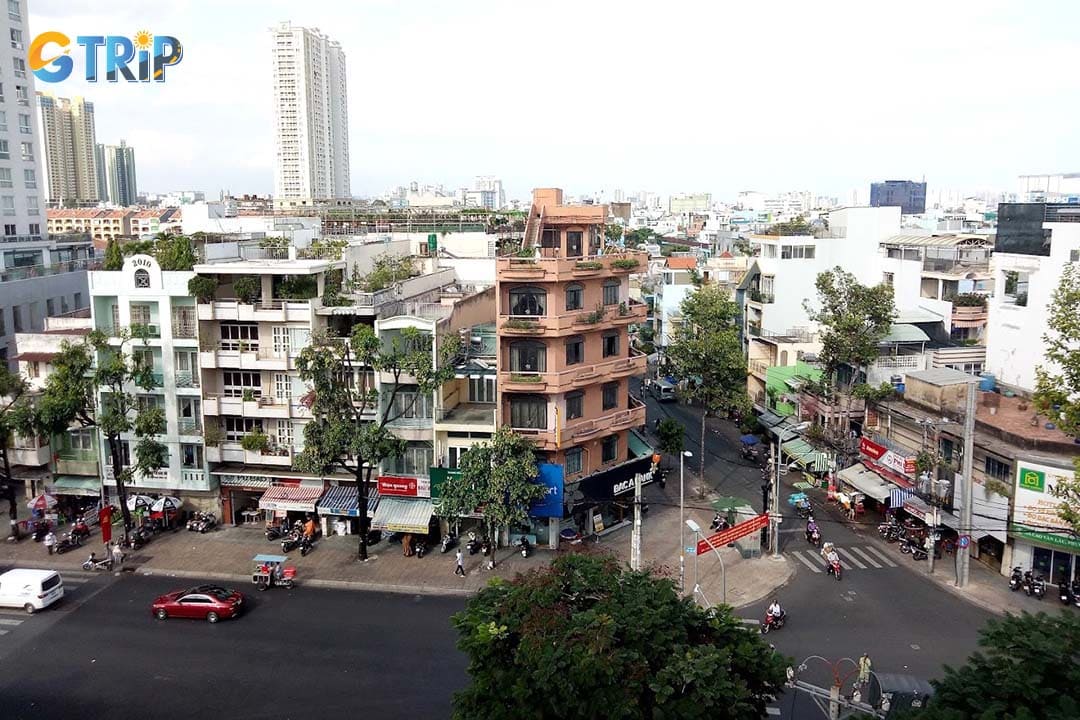
Remember the above tips to have a complete trip to District 6
Read more:
Former District 6 in Ho Chi Minh City is about life, trade, and tradition unfolding on every street corner. It's a challenge to the senses and a deep dive into the cultural soul of Ho Chi Minh City. It rewards the curious traveler with authenticity and unforgettable memories. This area offers a glimpse into a living history, seamlessly woven into everyday commerce and community life. Step off the beaten path and let GTrip guide you through the captivating streets of former District 6 on your next trip to Vietnam.