




Dec - 01 - 2025
Giac Lam Pagoda is a serene sanctuary and a timeless symbol of Ho Chi Minh City’s spiritual heritage. Stepping inside feels like escaping the bustle of modern Saigon to enter a realm of peace, wisdom, and artistry. As one of the city’s oldest Buddhist temples, it embodies Vietnam’s deep cultural and religious roots. For over three centuries, its sacred halls have stood as a beacon of faith and Buddhist learning. In this GTrip guide, we’ll explore its fascinating history, distinctive southern architecture, precious golden relics, and share practical tips to make your visit truly meaningful.
An overview of Giac Lam Pagoda
- Address: 565 Lac Long Quan Street, Bay Hien Ward (formerly Ward 10, Tan Binh District), Ho Chi Minh City
- Opening hours: 7:00 AM - 9:00 PM (daily)
- Entrance fee: Free of charge, though donations are welcome.
- Best time to visit: The best time to visit is in the early morning, to experience the temple at its most tranquil and possibly witness the morning chants of the resident monks. Alternatively, visiting during major Buddhist festivals like the Lunar New Year or the Vu Lan Festival offers a vibrant, culturally rich experience, though you should be prepared for large crowds.
Giac Lam Pagoda is not merely a tourist attraction, a breathing center of worship and a designated National Cultural and Historical Site. Its importance lies in its role as a spiritual anchor for the community and as a perfectly preserved example of southern Vietnamese architectural style. As you wander through its courtyards, the scent of burning incense mixes with the gentle sound of wind chimes. It creates an atmosphere of profound peace that starkly contrasts with the bustling Lac Long Quan Street just outside.
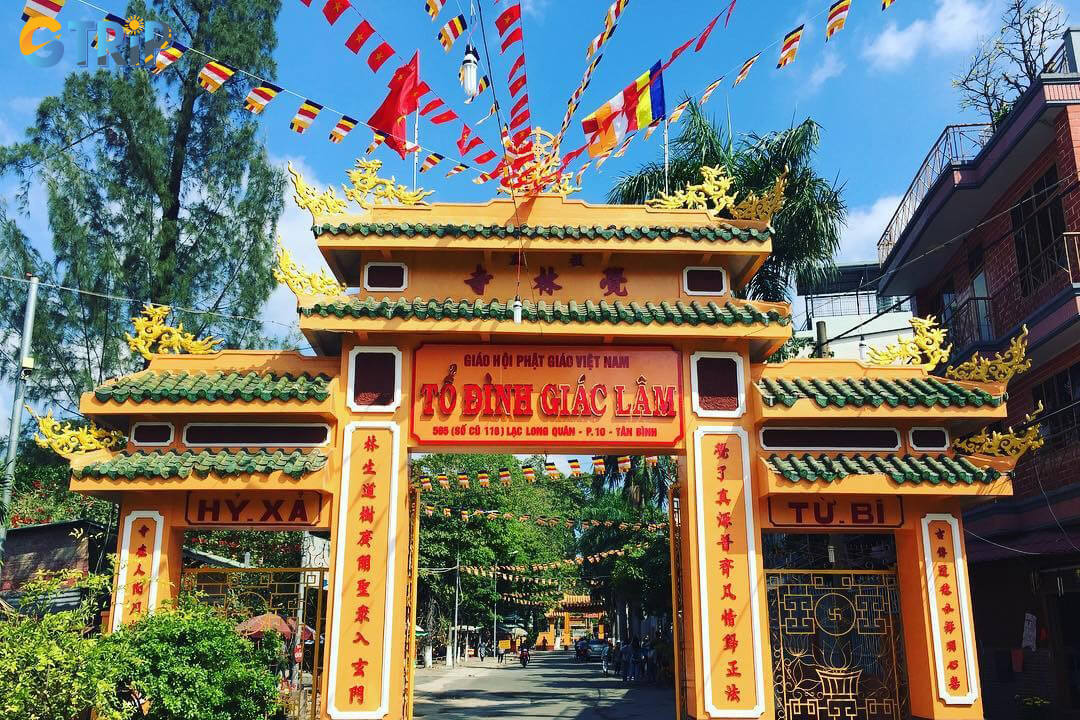
Giac Lam Pagoda is a serene cultural landmark open daily, offering a peaceful glimpse into southern Vietnam’s spiritual heritage
History of Giac Lam Buddhist Temple
| Year | Event |
|---|---|
| 1744 | In spring, under King Nguyen Phuc Khoat, the pagoda was built with contributions from local devotees. Initially, it was known by several names, including Cam Son, Son Can, and Cam Dem. |
| 1774 | Zen master Vien Quang renamed it Giac Lam Pagoda. It became a leading Buddhist center, attracting many followers and establishing its place in the region's religious landscape. |
| 1798 | After nearly half a century of construction, the pagoda was renovated, expanded, and its religious activities flourished, solidifying its role as a major spiritual hub. |
| 1827 | On the 3rd day of the twelfth lunar month, Zen master Vien Quang passed away, and Zen master Hai Tinh took over leadership, continuing the pagoda's legacy. |
| 1939 - 1945 | The pagoda underwent significant renovations. During this period, it also served as a clandestine refuge for many revolutionary activists fighting for Vietnam's independence. |
| 1953 | Giac Lam Pagoda received a sacred Bodhi tree sapling and a precious relic of the Buddha from Sri Lanka. These were later enshrined at the nearby Long Van Pagoda, further enhancing its spiritual significance. |
| 1988 | On November 16, Giac Lam Pagoda was officially recognized as a national cultural and historical site by the Vietnamese government. It is protecting its unique heritage for future generations. |
Architecture of Giac Lam Pagoda
The architecture of Giac Lam Pagoda is a masterclass in southern Vietnamese temple design. It beautifully blends spiritual symbolism with regional craftsmanship that has stood the test of time.
Distinctive Southern Vietnamese temple architecture
Giac Lam Pagoda exemplifies the traditional "Tam Chu" layout, a design principle commonly found in southern Vietnamese temples. The structure is composed of three main interconnected horizontal buildings arranged to form a large rectangle. This layout includes the main hall for worship, the lecture hall for sermons and study, and the monk quarters for daily life.
This interconnected design is a for practical purposes, it reflects a core tenet of Buddhist philosophy: the harmonious integration of worship, learning, and daily practice. As you move from one hall to the next, you are symbolically journeying through the essential components of the spiritual path. The seamless flow between the spaces creates a sense of unity and balance, a hallmark of southern Buddhist architectural traditions that prioritizes harmony with nature and human activity.
Giac Lam Pagoda follows the traditional “Tam Chu” layout, symbolizing the harmony of worship, study, and daily practice in southern Vietnamese Buddhist architecture
The grand twin-gate entrance of Giac Lam Pagoda
Constructed in 1945, the twin-gate entrance serves as a stunning introduction to the pagoda's rich cultural fusion. Standing guard at the corners are two magnificent guardian lions, whose artistic style is heavily influenced by Indian culture. These are fused with Naga serpent heads, mythical creatures typical of Khmer Buddhist art, creating a unique visual blend that speaks to the region's historical cross-cultural currents. The gate's base is carved in a distinctive kneeling style, adorned with intricate geometric relief patterns that add to its grandeur.
Above the gate, elegant Chinese characters narrate the legend of Prince O of the Tang Dynasty. One of the most fascinating features is the lack of a straight, direct path from this gate to the main hall. This is intentional, rooted in the spiritual belief that evil spirits can only travel in straight lines. By creating an indirect path, the entrance acts as a spiritual filter, ensuring that only positive energy and sincere pilgrims can enter the sacred space.
The three-entrance gate
Built in 1955 and facing south towards the bustling Lac Long Quan Street, the three-entrance gate is rich with symbolic meaning. The side pillars are beautifully adorned with carved couplets written in Chinese characters, offering blessings and wisdom to all who pass through. The most significant feature is that the central, largest gate is perpetually left open.
This welcoming gesture is a powerful symbol of the Buddhist path. It represents the Buddha's boundless compassion and the idea that spiritual guidance and enlightenment are available to all, regardless of their background, status, or beliefs. The open gate is an invitation to everyone who seeks refuge, peace, or knowledge, perfectly embodying the inclusive and sacred nature of the dharma. It’s a silent announcement that this is a place of sanctuary for all souls.
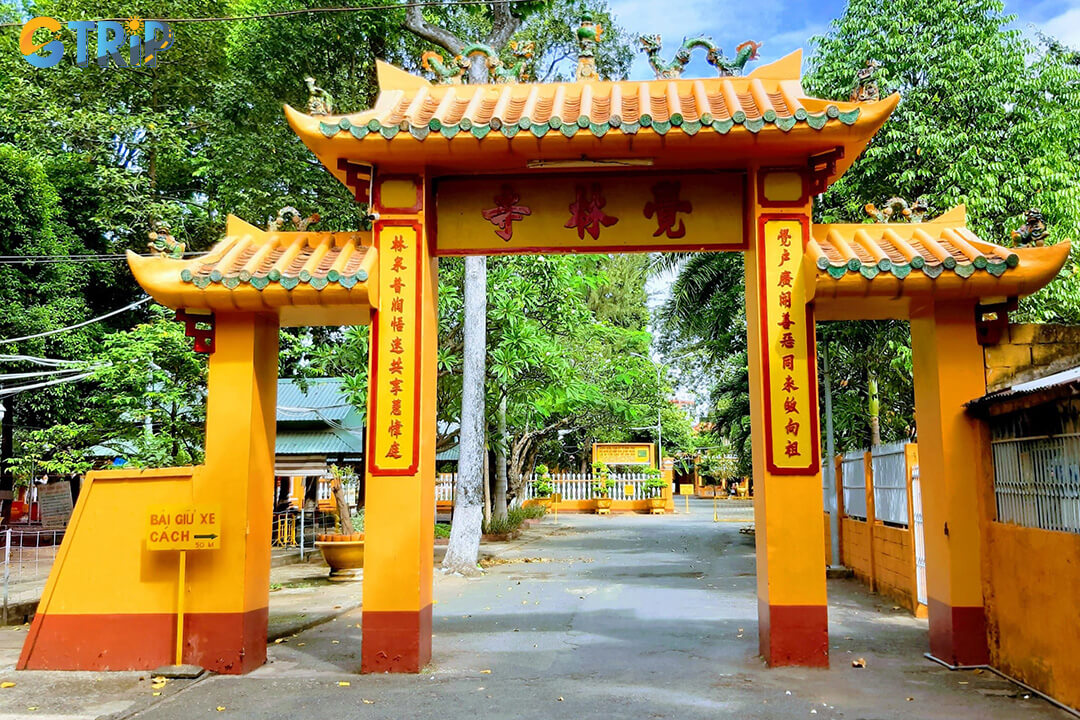
The three-entrance gate of Giac Lam Pagoda symbolizes the Buddha’s boundless compassion its always-open central gate welcoming all who seek peace
Traditional “Banh It” style roof
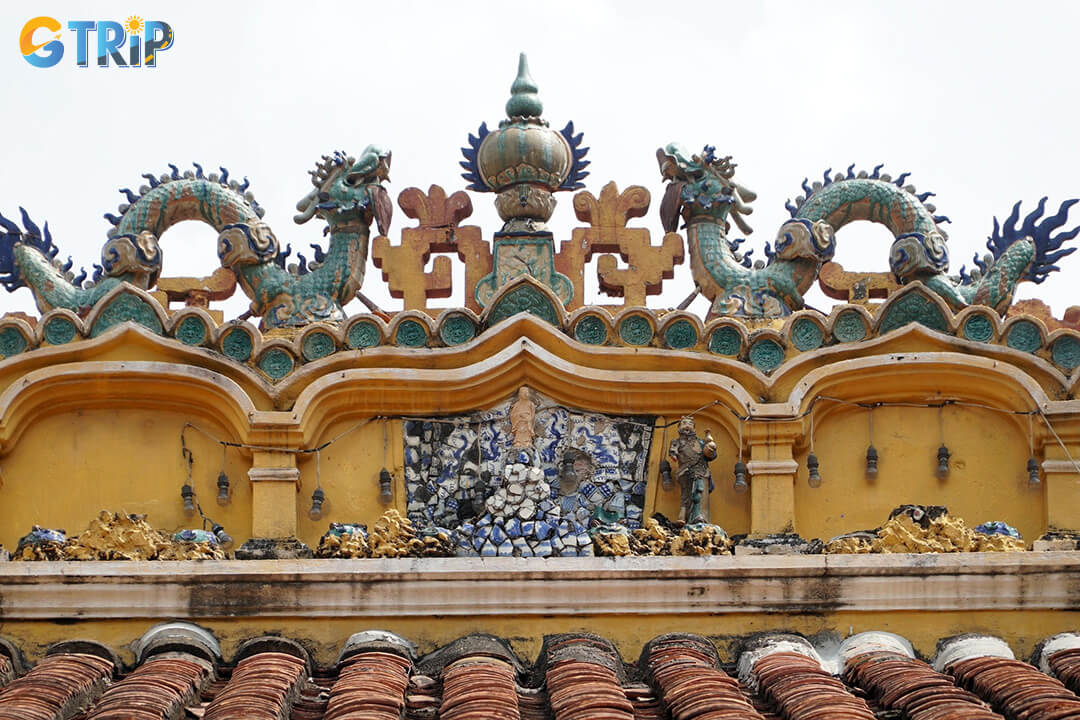
The roof of Giac Lam Pagoda is designed in the traditional “Banh It” style, a feature typical of southern Vietnam that gives the complex a humble and familiar impression. The name "Banh It" refers to a type of triangular sticky rice cake, and the roof's simple, unadorned slopes evoke that same sense of rustic charm. The roof consists of four main slopes with a straight ridge.
This style stands in stark contrast to the elaborate temple roofs common in northern Vietnam, which often feature dramatically curved eaves sweeping upwards towards the sky. The straight, grounded lines of the "Banh It" roof feel more subdued and connected to the earth. Adorning the roof's ridge is the classic emblem of “two dragons chasing a pearl”. This powerful symbol in Vietnamese culture represents the pursuit of wisdom by the forces of power and prosperity, adding a layer of solemnity and reverence to the otherwise modest structure.
Main hall
The main hall is the spiritual heart of Giac Lam Pagoda. It follows a traditional "one hall, two wings" layout and is supported by four main pillars known as the "Tu Tru". This area is a breathtaking showcase of devotion and artistry.
- Pillar system: The hall features 98 pillars in total, with four main “Tu Tru” pillars intricately carved and gilded with couplets depicting Buddhist teachings. These pillars, crafted from precious wood, are structural and are works of art, creating a forest of spiritual symbolism that guides the eye upward. The intricate wooden lattice doors and panels further demonstrate the exceptional skill of the artisans who built the pagoda.
- Buddha altars: The altars are organized in a specific, meaningful hierarchy. At the forefront is the Di Da altar, dedicated to Amitabha Buddha. Behind it is the Council altar, featuring statues of the pagoda's founders and past abbots. The rearmost and highest altar is the Tam Bao altar, which enshrines statues of the historical Buddha Sakyamuni, Bodhisattva Avalokiteshvara, and other revered figures.
- Roof ridge decoration: A unique and record-setting feature of the main hall is its roof ridge. It is adorned with an astonishing 7,450 decorative ceramic plates. These exquisite plates, originating from the renowned pottery village of Lai Thieu in Binh Duong province, create a shimmering, mosaic-like effect and hold the distinction of being the highest number of decorative plates on a temple roof in Vietnam.
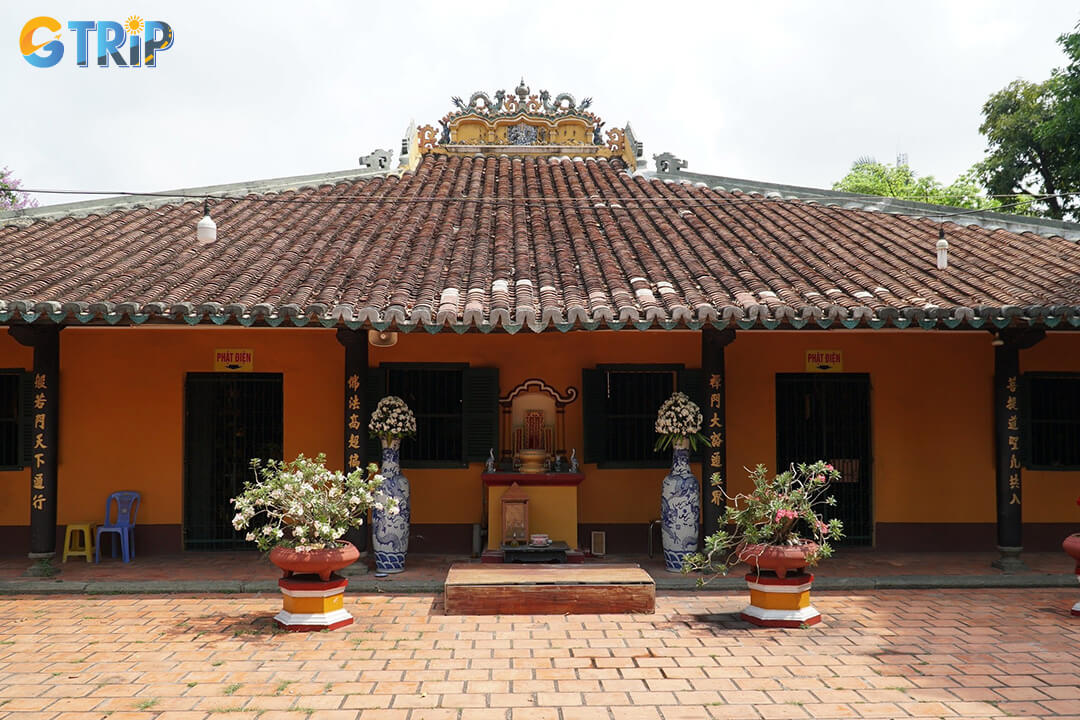
The main hall of Giac Lam Pagoda, with 98 carved pillars, layered Buddha altars, and a roof of 7,450 ceramic plates, embodies the temple’s spiritual and artistic grandeur
Behind the main hall
The areas behind the main hall are dedicated to honoring ancestors and continuing the pagoda's educational mission. Directly behind the main worship area is the Patriarch altar, a solemn space dedicated to honoring the lineage of abbots who have led Giac Lam Pagoda through its long history. Their portraits and memorial tablets are a tangible link to the pagoda's past leadership.
Opposite this altar is another dedicated to Buddha Chuan De, Amitabha, and the Ten Kings of Hell, whose depictions serve as a powerful reminder of the laws of karma. Further back is the lecture hall, designed with a roof similar to the main hall's. This space is used for major ceremonies, sermons, and community events. During the wars against the French and Americans, this hall served a dual purpose, secretly housing revolutionary cadres and acting as a base for intelligence operations within the city, adding a layer of patriotic history to its spiritual significance.
What to do at Giac Lam Pagoda?
Beyond its architectural splendor, Giac Lam Pagoda invites visitors to experience its living spiritual heritage. Within its grounds, centuries of history and devotion are carefully preserved.
Explore the relics and pagoda towers
One of the most visually striking features in the pagoda courtyard is the Hexagonal Stupa, also known as the Sarira Stupa. Originally started in 1970 and finally completed in 1994, this impressive seven-story tower stands 32.7 meters tall and houses a precious relic of the Buddha. Its modern, geometric design provides a fascinating contrast to the ancient architecture of the main temple.
Additionally, the grounds are home to three historic tomb towers dating from the early 19th to the 20th century. These serene and beautifully aged stupas are the final resting places of revered monks and abbots who dedicated their lives to the pagoda. Exploring these structures is not just an architectural tour, it is a walk through the pagoda's spiritual lineage, offering a tangible connection to the masters who shaped its history.
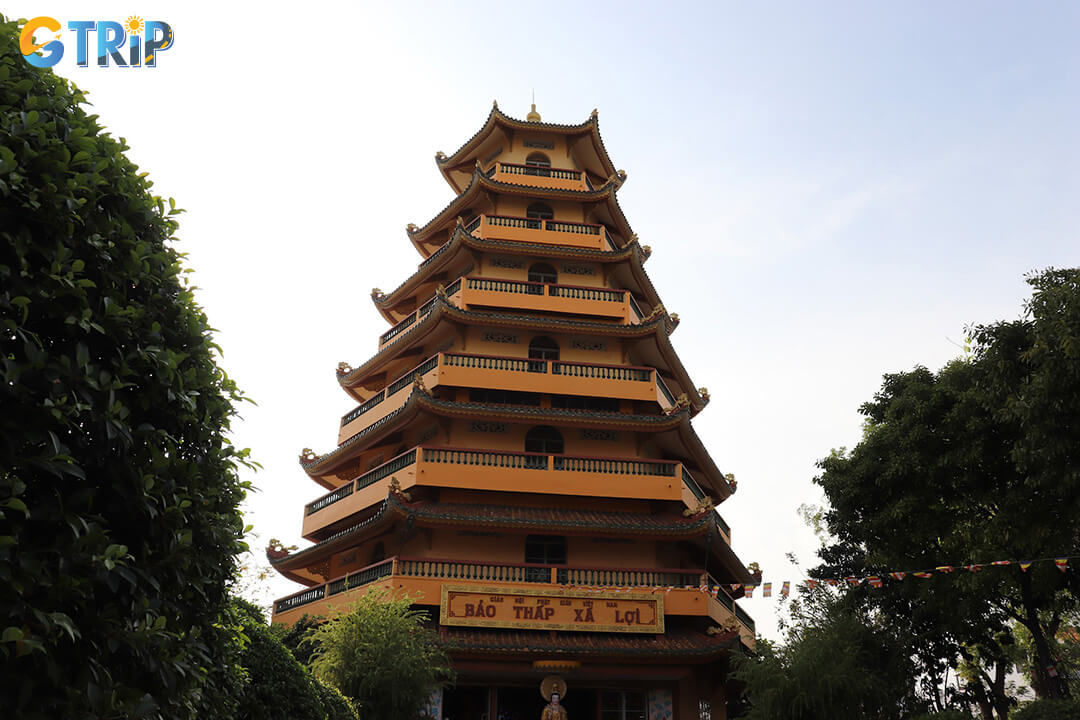
The 32.7-meter Hexagonal Stupa, completed in 1994, enshrines a sacred Buddha relic and stands beside historic tomb towers honoring generations of monks
Admire the ancient statues and carvings
Giac Lam Pagoda is a veritable museum of Southern Vietnamese Buddhist art. It preserves an incredible collection of 119 exquisite statues, many of which are centuries old and carved from jackfruit wood. Key highlights include the powerful set of the eighteen arhats lining the main hall, a serene bronze statue of the baby Buddha, and a depiction of the five sages.
Beyond the statues, the pagoda is filled with priceless artifacts, such as gilded couplets, intricately carved wooden altars, and devotional panels. These works of art are not mere decorations, they are invaluable historical documents that reflect the unique artistic and cultural development of Mahayana Buddhism in Southern Vietnam. Each carving tells a story, showcasing a style distinct from that found in other parts of Asia.
Participate in religious activities
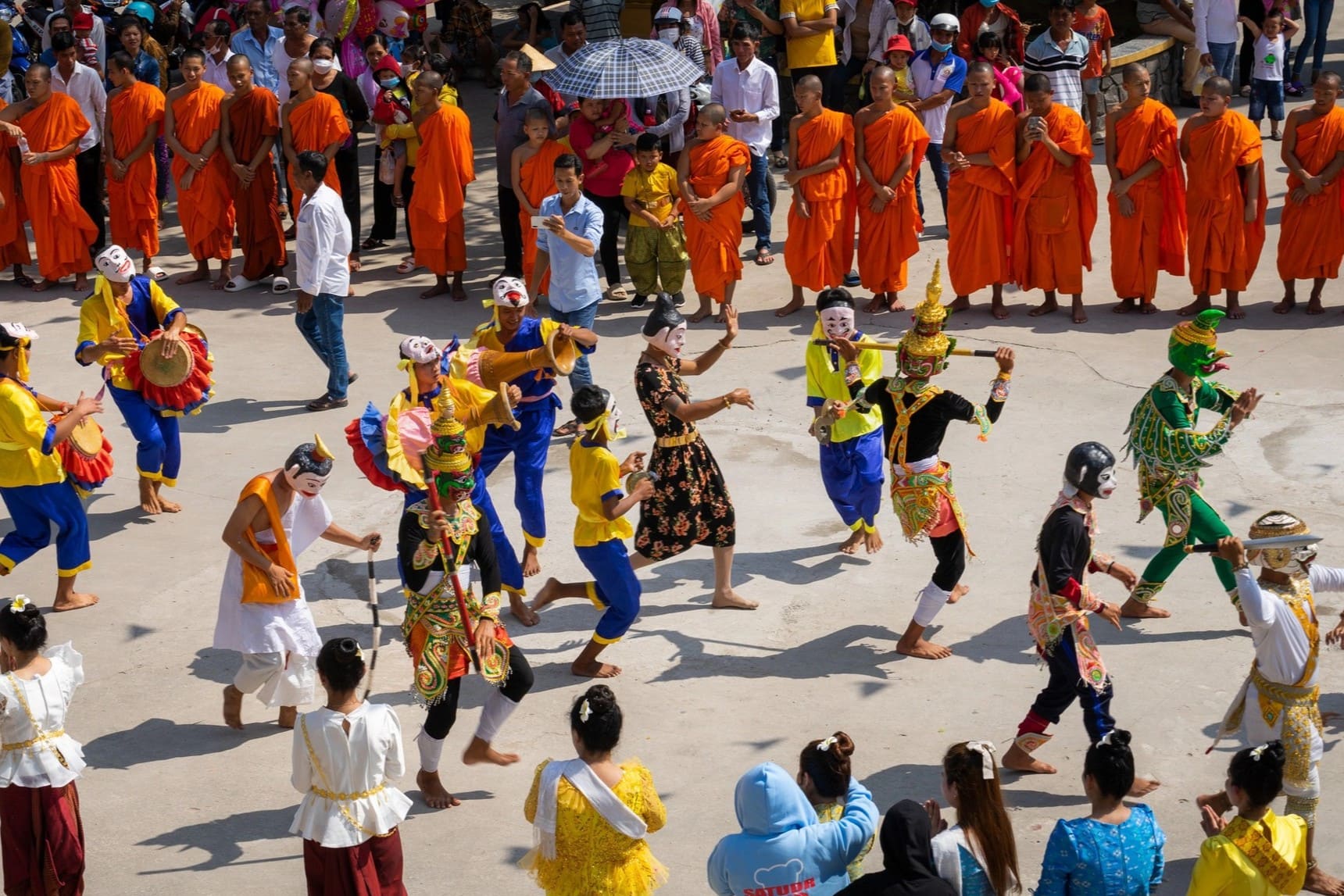
To truly understand Giac Lam Pagoda, engage with its spiritual pulse. During special occasions like the Vu Lan Festival or the first full moon of the lunar year, the pagoda comes alive. The air fills with the sound of chanting and the scent of thousands of incense sticks as large crowds come to pray for peace and prosperity.
Even on a regular day, visitors can participate in the local customs. You can offer incense at the various altars, make a quiet prayer for your loved ones, or seek blessings for a safe journey. For a deeper experience, quietly observing a chanting ceremony or meditating in the main hall offers a meaningful moment of reflection in this historic setting.
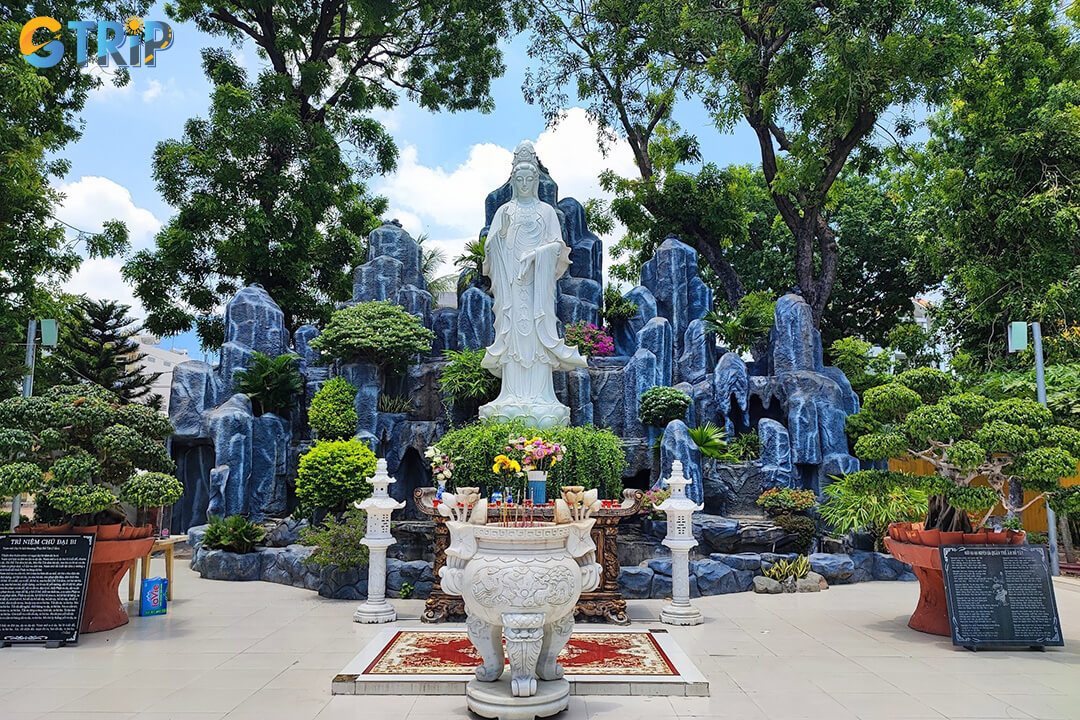
Join the pagoda’s spiritual rhythm to experience its living traditions of faith, reflection, and community
How to get to Giac Lam Pagoda in Saigon
Getting to Giac Lam Pagoda is straightforward, as it is located in the relatively central Tan Binh District. Here are the most convenient options:
- Ride-hailing apps: The easiest and most popular method is to use a ride-hailing app. Simply input "Giac Lam Pagoda" into Grab or XanhSM for a car or motorbike taxi that will take you directly to the entrance.
- Taxi: Reputable taxi companies like Vinasun (white with green and red stripes) or Mai Linh (green) are widely available. You can hail one from the street or have your hotel call one for you.
- Public bus: For the more adventurous traveler, public buses are a cheap and effective option. Bus routes such as numbers 148, 38, or 145 often have stops near the pagoda on Lac Long Quan Street. It's best to use a bus mapping app to confirm the latest routes and stop locations.
- Travel time: From central landmarks in former District 1, the journey typically takes 20-30 minutes, though this can vary significantly depending on Saigon's notorious traffic.
Giac Lam Pagoda is just 20 - 30 minutes from District 1 and easily reached by Grab, XanhSM, or taxis like Vinasun and Mai Linh
Other famous landmarks in Ho Chi Minh City
A visit to Giac Lam Pagoda can easily be combined with other fascinating sites to create a full day of exploration. Here are a few nearby attractions recommended by GTrip:
- Dam Sen Cultural Park: A massive amusement and water park, Dam Sen is a perfect destination for families or anyone looking to cool off and have some fun after a quiet morning of temple exploration. It offers a wide range of attractions from rollercoasters to a large lake and beautiful gardens.
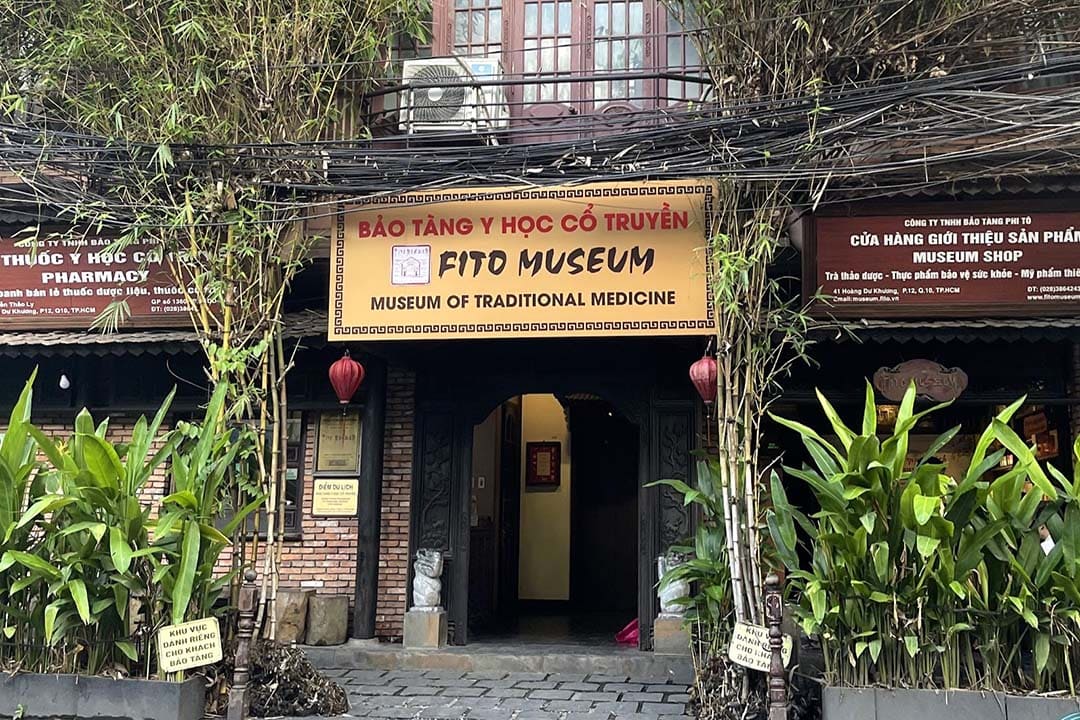
- Museum of Traditional Vietnamese Medicine (FITO): Housed in a stunningly restored building, this museum offers a deep dive into the history of traditional Vietnamese healing arts. It's a fascinating cultural counterpoint to the spiritual history of the pagoda and showcases a different side of Vietnam's rich heritage.
- Vietnamese National Buddhist Temple: For those interested in comparing temple architecture, a visit to Vinh Nghiem Pagoda is a must. It is a much more modern, grand-scale pagoda with Japanese influences, providing a striking contrast to Giac Lam's ancient, southern Vietnamese charm. Seeing both helps you appreciate the diversity of Buddhist architecture in Saigon.
- War Remnants Museum: While a bit further, this powerful and sobering museum is an essential visit for understanding Vietnam's modern history. The exhibits provide crucial context on the Vietnam War from a local perspective and offer a profound look at the country's resilience.
Practical tips for visiting Giac Lam Pagoda in Saigon
To ensure your visit is respectful and enjoyable, please keep these essential tips in mind. Remember, this is an active place of worship.
- Dress code: A strict dress code is enforced. Covering your shoulders and knees is mandatory for both men and women. It is a good idea to carry a scarf or shawl that you can use to cover up if you are wearing a sleeveless top or shorts.
- Behavior: Maintain a quiet and respectful demeanor throughout your visit. Walk quietly, speak in a hushed tone, and avoid loud conversations or laughter, especially inside the main hall where people are praying.
- Photography: Taking photos of the architecture and grounds is generally permitted. However, you must always be respectful when photographing monks or local devotees and should ask for permission before taking a close-up picture of a person. Never use a flash inside the prayer halls as it can damage the ancient artifacts and disturb worshippers.
- Donations: While the entrance is free, donations help with the upkeep of this historic site. If you choose to donate, please use the designated donation boxes placed discreetly around the pagoda. Avoid handing money directly to monks, as this is not customary.
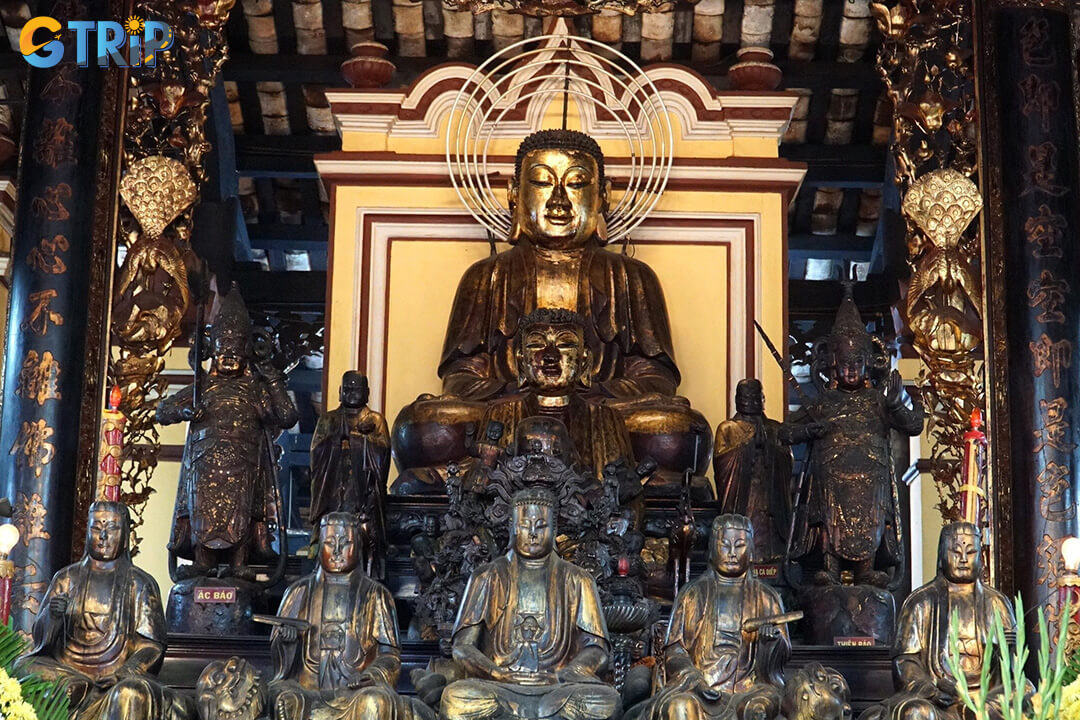
Respect local customs when visiting Giac Lam Pagoda dress modestly, keep quiet, avoid flash photography, and use donation boxes for contributions
A journey to Giac Lam Pagoda is an immersion into the history, art, and living spirituality that forms the bedrock of Ho Chi Minh City. Unique "Banh It" roof and sacred relics to the silent wisdom held within its ancient pillars, the pagoda offers a space for reflection and a deep appreciation for Vietnam's enduring culture. It stands as a timeless reminder that even in the most dynamic of cities, there are sanctuaries where peace and history are preserved for all who seek them. Ready to explore the spiritual heart of Vietnam? Let GTrip - Vietnam Travel Agency be your guide as you uncover the hidden gems and iconic landmarks of this incredible country. Your adventure awaits.