


Dec - 19 - 2025
Turtle Lake Saigon is the beating heart of Ho Chi Minh City's social life, a landmark steeped in fascinating history, and a must-visit destination for any traveler. Known to locals as Ho Con Rua, this unique roundabout is a convergence point for culture, food, and architecture. For tourists and visitors planning a trip, understanding its story is key to appreciating its vibrant modern-day energy. This GTrip guide is your definitive resource, covering its intricate past, architectural legends, the best things to see and do, and all the practical information you need. We'll delve into everything that makes Turtle Lake an essential stop on your Ho Chi Minh City itinerary, ensuring you experience it like a true local.
Where is Turtle Lake Saigon?
Location: The intersection of Pham Ngoc Thach, Tran Cao Van, and Vo Van Tan Streets, Xuan Hoa Ward (formerly District 3), Ho Chi Minh City
Turtle Lake is an iconic urban roundabout and public space centrally located in Ho Chi Minh City. Its official name is Cong Truong Quoc Te (International Square), but it is universally known by its more affectionate nickname, Turtle Lake (Ho Con Rua). The structure is not a natural lake but a large, man-made pond with fountains, surrounded by concrete walkways and crowned by an abstract floral-like monument.
You can find Turtle Lake at the intersection of Pham Ngoc Thach, Tran Cao Van, and Vo Van Tan Streets. This prime location places it at the crossroads of a bustling, modern former district, bridging the gap between the historical landmarks of former District 1 and the more local neighborhoods of former District 3. Today, it serves as one of the city's most popular rendezvous points. By day, students and office workers relax on its steps, and by night, it transforms into a vibrant open-air hub for young Saigonese, complete with a dazzling array of street food vendors and a buzzing social atmosphere.
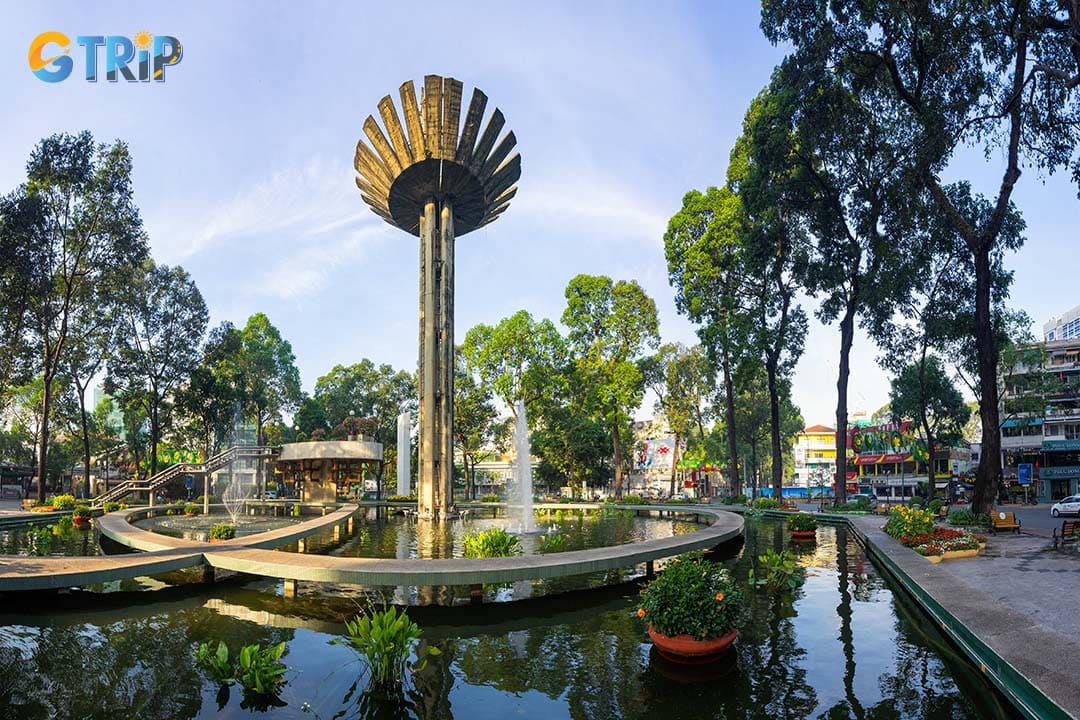
Turtle Lake Saigon, or Ho Con Rua, is a historic and cultural landmark at the heart of Ho Chi Minh City
Best time to visit Turtle Lake, Ho Chi Minh City
While you can visit Turtle Lake at any time of day, the evening and nighttime are undoubtedly the best times to visit. From around 6:00 PM onwards, the weather becomes cooler and more pleasant, the monument and fountains are often lit up, and the area buzzes with activity. This is when the street food vendors set up shop and crowds of local youth gather to socialize, eat, and relax. A daytime visit is also worthwhile for a quieter experience, better for appreciating the architecture and for photography without the crowds, but the true energetic spirit of Turtle Lake emerges after sunset.
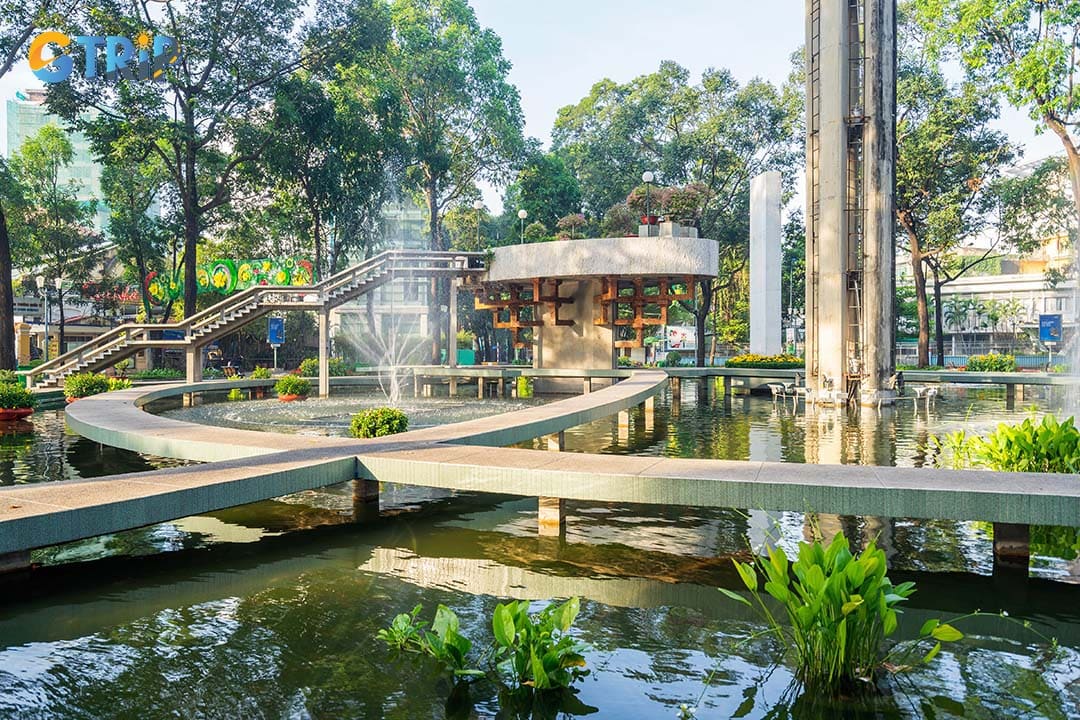
You can visit Turle Lake Saigon in the morning for the best experience
The history of Turtle Lake Saigon
The history of Turtle Lake Saigon is a complex tapestry that mirrors the city's own tumultuous past. Its story unfolds across several distinct historical periods.
| Period | Timeline | Event |
|---|---|---|
| Nguyen Dynasty | Early 19th century 1833 - 1835 | During the Nguyen Dynasty under Emperor Gia Long, this area was part of the massive Vauban-style Bat Quai Citadel, specifically housing the Khuyet Dyam Gate. After the Le Van Khoi uprising (1833 - 1835), Emperor Minh Mang ordered the citadel demolished and replaced with the smaller Phung Citadel. |
| French Colonial Period | 1859 1863 1878 1921 1930 | The French captured the Gia Dinh Citadel (the new name of Phung Citadel) and completely leveled it on March 8, 1859. In 1863, the first Governor’s Palace was built nearby, near today’s Turtle Lake. A water tower was erected in 1878 to serve the colonial administration and residents. After standing for over four decades, it was demolished in 1921, and the site was transformed into a small garden traffic circle known as Marechal Joffre Square. In 1930, a monument of three French soldiers was added at the center, symbolizing French colonial power in Indochina. |
| Republic of Vietnam Era | 1956
1970 - 1974 1972 | After independence, the French monument was removed in 1956 as part of the decolonization effort, leaving a small pond. The roundabout was renamed Chien Si Square (Soldiers’ Square). Between 1965 and 1967, architect Nguyen Ky redesigned the area into its current iconic form, later known as Turtle Lake. A major renovation from 1970 - 1974 introduced soaring concrete columns. They were shaped like a stylized lotus and a bronze turtle sculpture carrying a stone stele engraved with the names of nations recognizing South Vietnam. In 1972, it was officially renamed Cong Truong Quoc Te (International Square). |
| After 1975 | 1976 | Following the Fall of Saigon, the turtle statue and its stele were destroyed in a mysterious explosion in 1976. Despite their loss, the name “Turtle Lake” endured and became more popular than the official title. |
| Present day | The area is now a protected historical site and a popular social hub, surrounded by bustling cafes. Especially after dark, it comes alive with youthful energy, music, and street food, making it one of Saigon’s most vibrant gathering spots. |
The legend and architecture of Turtle Lake
Beyond its documented history, Turtle Lake is shrouded in a popular local legend tied deeply to Vietnamese spiritual beliefs and feng shui. This story provides a fascinating layer of meaning to its unique design.
Origins and local legends
A prevalent local legend suggests the lake's design was heavily influenced by feng shui principles intended to protect the nearby Independence Palace (now Reunification Palace). According to this tale, when the palace was being built, geomancers warned President Nguyen Van Thieu that its location sat upon a "dragon's tail", a powerful spiritual line or vein in the earth. While the "dragon's head" was at the palace, symbolizing power, its tail was restless and could flick, bringing instability and potential collapse to the government.
To counter this, a magical solution was devised. The Turtle Lake roundabout was constructed directly over the dragon's tail. The turtle, a sacred and powerful creature in Vietnamese culture symbolizing longevity and stability, was placed in the center. Its purpose was to act as a spiritual anchor, "pinning" the dragon's tail firmly to the ground to ensure the security of the presidency and the prosperity of the nation.
Architectural design and feng shui significance
The architectural elements of Turtle Lake are widely interpreted through the lens of feng shui, reinforcing the dragon's tail legend. The design's purpose was not merely aesthetic but deeply symbolic, intended to create a powerful spiritual shield.
The octagonal shape of the pond and its surrounding walkways are believed to represent a Bagua (Eight Trigrams) diagram. In feng shui, the Bagua is a powerful tool used for protection, balance, and warding off negative energy. The interlocking paths and central water feature create a complex geometric pattern that symbolically traps and neutralizes bad influences. The towering concrete structure in the center, which once held the bronze turtle at its base, served as the "pin" or "sword" in this spiritual diagram, driven into the dragon's tail. The turtle itself was the magical locking mechanism. While other hypotheses about the design's inspiration exist, none are as pervasive or culturally significant as this captivating feng shui legend.
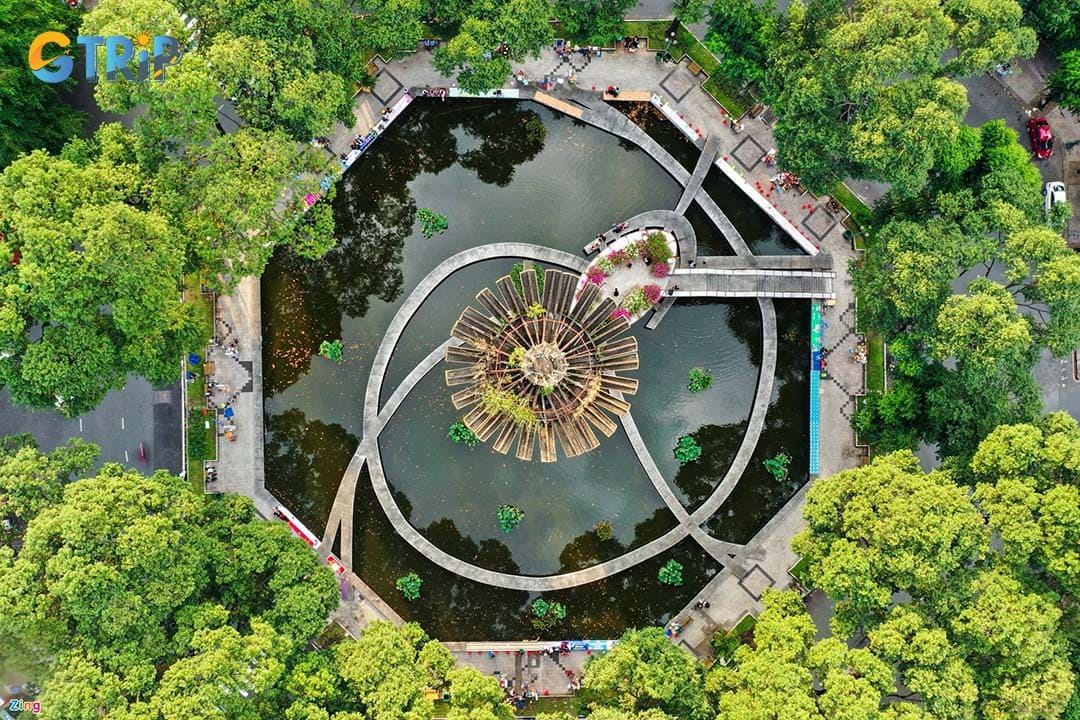
Turtle Lake’s architecture is often viewed through a feng shui perspective, with its symbolic design serving as both a visual masterpiece and a spiritual safeguard linked to the dragon’s tail legend
Top things to do at Turtle Lake, Ho Chi Minh City
Turtle Lake is more than a historical site. It's an active, living part of Ho Chi Minh City. For visitors, it offers a perfect snapshot of local life, with several key experiences you shouldn't miss.
Capture stunning photos
The lake is an incredibly photogenic landmark. Its unique layered, circular design, the central fountain (when active), and the mesmerizing chaos of the surrounding traffic circle create a dynamic backdrop for photographers. It's a popular spot for both daytime photos, where the intricate concrete work stands out, and nighttime photography.
Enjoy a variety of street food
One of the main draws of Turtle Lake is its phenomenal street food scene, which truly comes alive in the evening. The area transforms into an open-air food court, offering popular snacks. You can try banh trang nuong (grilled rice paper often called 'Vietnamese pizza'), bap xao (stir-fried corn with dried shrimp and butter), and refreshing tra tac (kumquat tea). Other favorites you'll find include fried fish balls, sweet soups (che), and various grilled skewers. Pulling up a small plastic stool and sampling these treats is a quintessential Saigonese experience.

There are many street food you can try in Turle Lake Saigon such as bap xao (stir-fried corn)
Relax at nearby cafes
The streets surrounding Turtle Lake are lined with numerous cafes, providing a perfect vantage point to observe the action. You can find everything from major chains to small, independent coffee shops. Sipping Vietnamese iced coffee from a second-floor cafe shops while watching the fluid chaos of motorbikes below is both relaxing and mesmerizing. It offers a front-row seat to the city's energetic pulse.
Explore the famous coffee culture nearby
Beyond the cafes with direct views of the lake, the surrounding area is a treasure trove for coffee lovers. This section is distinct from just sitting at a cafe. It’s about active exploration. Venture into the small alleys (hem) off streets like Pham Ngoc Thach and Tran Cao Van to discover hidden gems and specialty roasters. This area is also known for its "apartment cafes", where entire old residential buildings have been converted into multi-story hubs of unique and quirky coffee shops. Exploring these hidden spots allows you to discover a more intimate and local side of Saigon's world-renowned coffee culture.
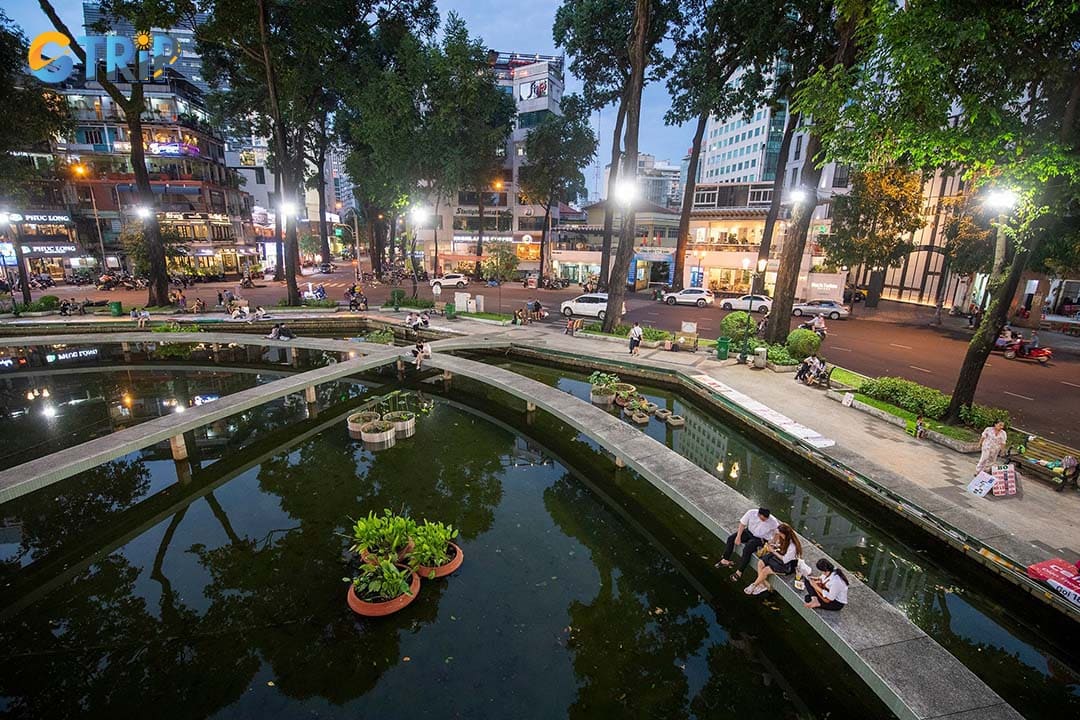
Remember to try ca phe sua da (Vietnamese iced coffee with condensed milk) to experience the coffee culture nearby
Famous attractions near Turtle Lake Saigon
Turtle Lake's central location makes it an excellent starting point for exploring some of Ho Chi Minh City's most famous landmarks.
Saigon Notre-Dame Cathedral Basilica (650m)
Saigon Notre-Dame Cathedral Basilica is one of the city’s most iconic architectural achievements from the French colonial era. Built with materials imported entirely from France, its striking red-brick facade and twin 58-meter-tall bell towers are an unmissable sight. It is an approximately 8–10 minute walk from Turtle Lake along Pham Ngoc Thach Street, making for a pleasant stroll.
Saigon Central Post Office (650m)
Located directly across from the Notre-Dame Cathedral, the Saigon Central Post Office is another stunning example of French colonial design. Its grand interior features a high, vaulted ceiling, old-fashioned telephone booths, and intricately painted historic maps of the region. It remains a fully functional post office and is an ~8-10 minute walk from the lake.
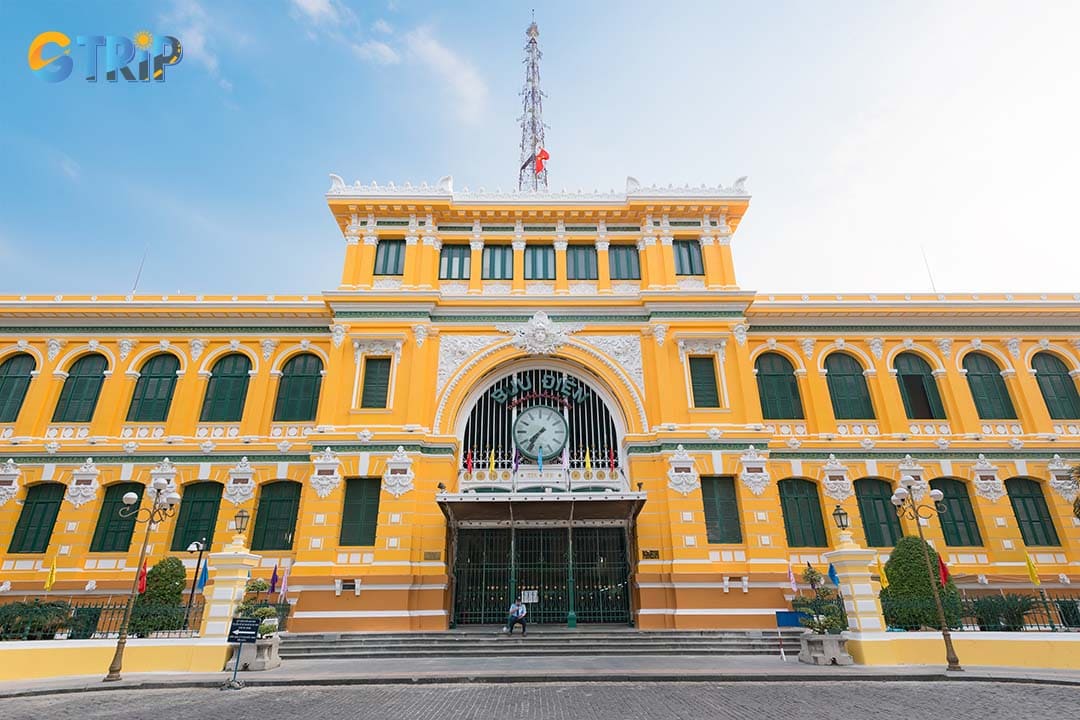
You can visit Saigon Central Post Office for more amazing experiences
Independence Palace (750m)
Independence Palace, also known as the Reunification Palace, is one of Vietnam’s most important historical landmarks. It served as the home and office of the President of South Vietnam during the Vietnam War. The palace feels frozen in time, famed for its grand 1960s architecture and for being the site where the war officially ended on April 30, 1975. The walk from Turtle Lake is straightforward and takes around 10 minutes.
War Remnants Museum (650m)
War Remnants Museum, located just a short walk from Turtle Lake, offers a powerful and sobering look at the Vietnam War from a Vietnamese perspective. The exhibits include photography, military equipment, and recreated prison conditions, providing a poignant and at times graphic insight into the brutal realities of the conflict. It is a necessary visit for anyone wanting to understand Vietnam’s modern history.
Ho Chi Minh City Museum (1.1 km)
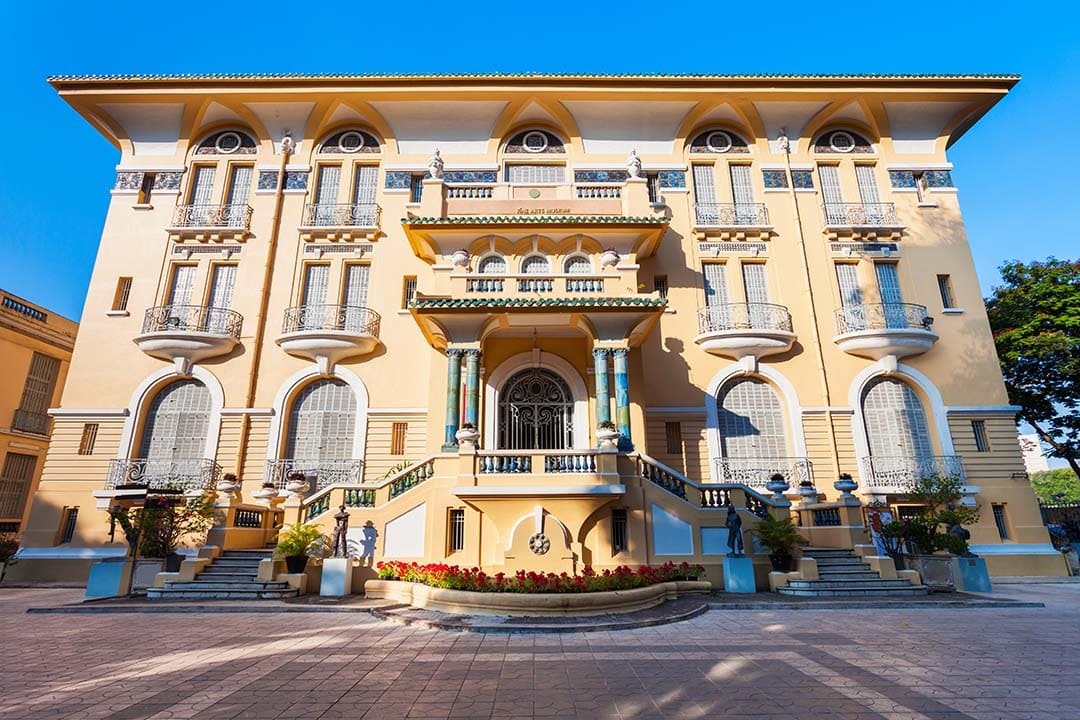
Ho Chi Minh City Museum is housed in a beautiful neoclassical building formerly known as the Gia Long Palace and covers the rich history of Ho Chi Minh City and its people. The exhibits showcase artifacts from the nation’s revolutionary struggles, along with displays on the city’s culture, geography, and commerce. It’s a slightly longer but still manageable walk of about 15 minutes.

Ho Chi Minh City Museum is a bit further from Turtle Lake Saigon but it’s worth a visit
How to get to Turtle Lake in Ho Chi Minh City
Thanks to its central location, getting to Turtle Lake (Ho Con Rua) is simple and convenient by various means of transport.
- By taxi or ride-hailing app (Grab/XanhSM): This is the easiest option for visitors. Simply enter “Ho Con Rua” or “Turtle Lake” in the app, and your driver will know exactly where to go.
- From Ben Thanh Market, the ride takes about 5 - 7 minutes (around 1.5 km) via Le Duan Street.
- From Notre-Dame Cathedral or Saigon Central Post Office, it’s a quick 3-minute drive or a 10-minute walk straight along Pham Ngoc Thach Street.
- By motorbike: For those confident navigating Saigon’s traffic, riding a motorbike is a fun and flexible choice.
- From Nguyen Hue Walking Street (in the former District 1), head north on Dong Khoi → turn left at Le Duan → continue until you reach the Pham Ngoc Thach intersection - Turtle Lake is right ahead.
- Parking is limited around the lake; look for paid parking areas on Tran Cao Van or Vo Van Tan streets (about 10,000 - 20,000 VND/hour).
- By bus: Several bus routes stop near Cong Truong Quoc Te (the official name of Turtle Lake), offering an affordable way to get there.
- Common routes: Bus 03, 150, 30, and 19 - all pass close to the intersection.
- The nearest bus stop is on Vo Van Tan Street, less than a 2-minute walk from the lake.
- On foot: If you are staying in the former District 1 or 3, Turtle Lake is easily walkable from many central landmarks.
- From Notre-Dame Cathedral, walk up Pham Ngoc Thach Street for about 700 meters (10 minutes).
- From Diamond Plaza or Book Street (Nguyen Van Binh), follow Le Duan toward the west, then turn right at Pham Ngoc Thach - you’ll see the circular lake ahead.
Walking here is pleasant, especially in the late afternoon when the weather cools down.
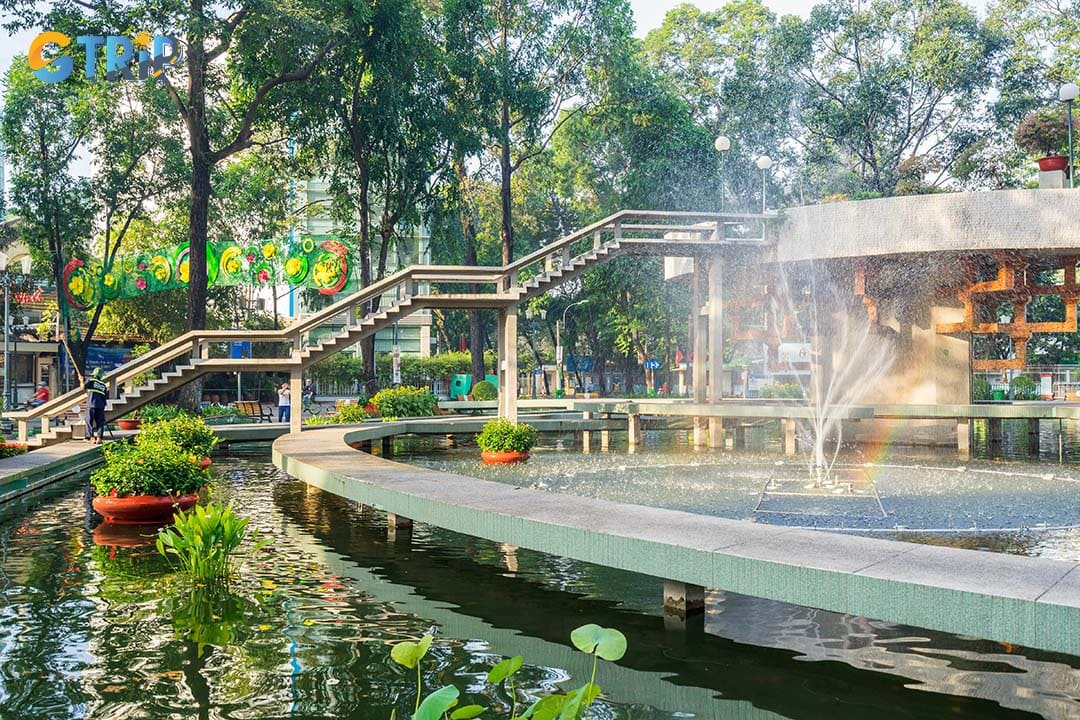
Getting to Turtle Lake Saigon is very simple
Useful tips for visiting Turtle Lake Saigon
To make the most of your visit, keep these practical tips from our GTrip experts in mind for a smooth and enjoyable experience.
- Visit in the evening: To experience the full, lively atmosphere with the best street food options and local crowds, plan your visit for after 6 PM.
- Bring cash: The vast majority of street food vendors and small drink stalls operate on a cash-only basis. Be sure to have a small-denomination Vietnamese Dong (VND).
- Watch your belongings: Turtle Lake is a safe but crowded public area. As with any bustling city spot, remain aware of your surroundings and keep your phone, camera, and wallet secure.
- Cross the street carefully: The roundabout has a continuous and heavy flow of traffic that can be intimidating. The key is to be predictable and walk at a steady pace. Watch how the locals do it and follow their lead.
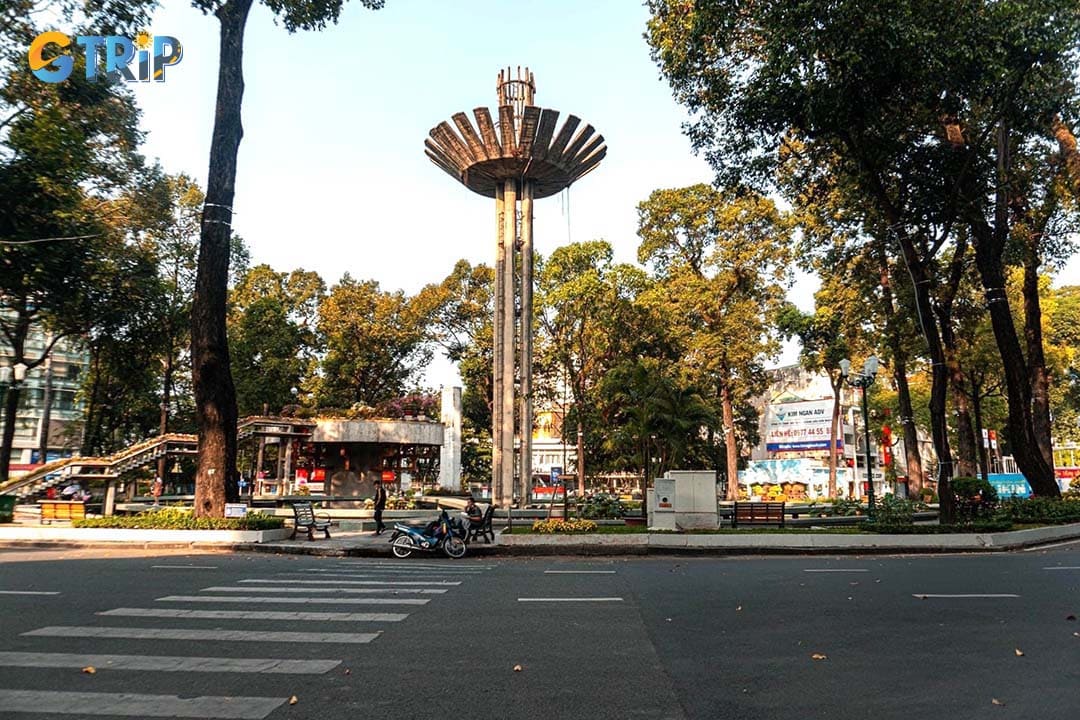
To experience the full, lively atmosphere with the best street food options around Turtle Lake Saigon, plan your visit for after 6:00 PM
Read more:
Turtle Lake Saigon is a quintessential Ho Chi Minh City experience, a place where history, legend, and modern urban life collide. It's more than just a landmark to photograph; it’s a space to participate in the city’s daily rhythm. Exploring its origins as a citadel gate and its mythical role as a dragon's anchor and its current status as a foodie paradise, you can know the story of Saigon. It’s a place of memory, energy, and connection. Turtle Lake is a stop you can't miss when visiting Ho Chi Minh City. For more insider guides to Vietnam, let GTrip be your companion on your next adventure.