
Saturday, May 30, 2026
Mong Bridge is a historic pedestrian bridge that offers one of the most iconic views in Ho Chi Minh City. Painted a distinctive shade of turquoise, this century-old structure stands as a beautiful testament to Saigon's past, gracefully connecting the modern urban bustle of former District 1 with the vibrant local life of former District 4. For travelers and locals alike, it’s more than just a crossing, it’s a destination for photography, a gathering spot for friends, and a front-row seat to the city's dynamic energy. As your experts in Vietnamese travel, GTrip has created the ultimate guide to this beloved landmark. This comprehensive article covers the bridge's fascinating history, its unique name, a detailed map of its location, the best activities to enjoy, and all the essential attractions nearby. By the end, you'll know everything you need to plan your visit.
Where is the Mong Bridge in Saigon?
Location: Spans the Ben Nghe Canal, connecting Vo Van Kiet Street (formerly District 1) with Ben Van Don Street (formerly District 4), Ho Chi Minh City.
Mong Bridge is a pedestrian bridge in the heart of Ho Chi Minh City, spanning the Ben Nghe Canal to connect former District 1 and former District 4. It provides a direct link between two major thoroughfares: Vo Van Kiet Street on the former District 1 side and Ben Van Don Street on the former District 4 side. Its central location makes it an easily accessible landmark for anyone exploring the city's core.
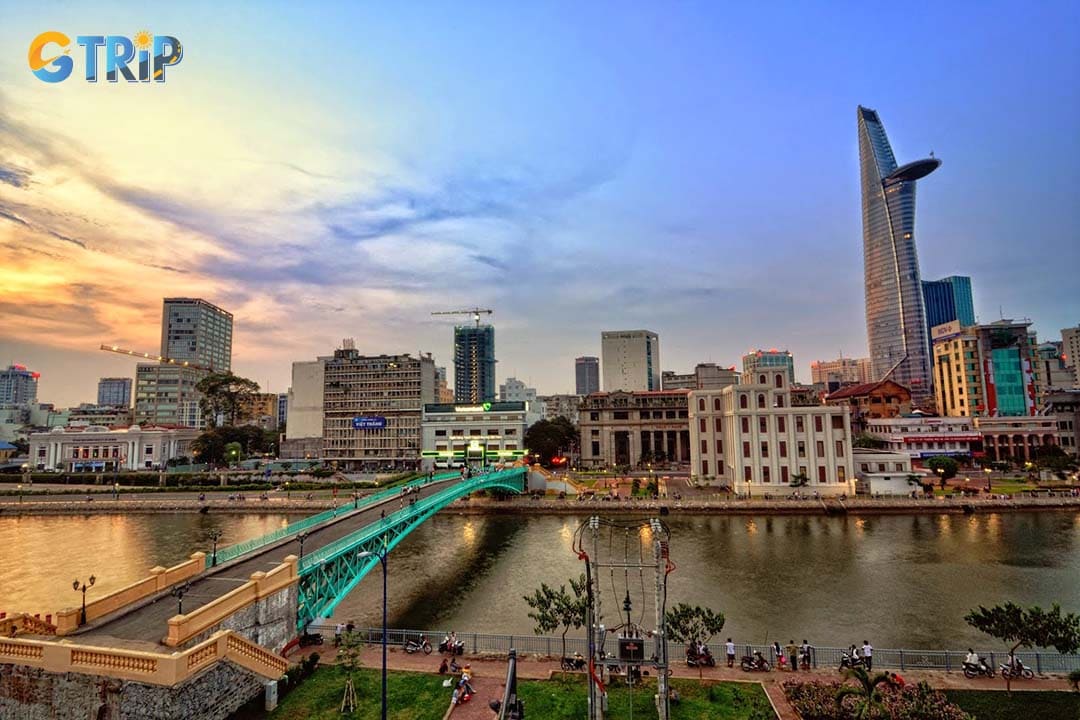
Mong Bridge is a centrally located pedestrian bridge in Ho Chi Minh City, connecting Vo Van Kiet Street with Ben Van Don Street across the Ben Nghe Canal
History of Mong Bridge - Saigon’s 100-year-old bridge
The history of Mong Bridge dates back to the late 19th century, making it one of the oldest bridges in Ho Chi Minh City. Constructed between 1893 and 1894 by the French transport company Messageries Maritimes, its original purpose was to facilitate travel between the city center and the major port of Khanh Hoi in former District 4. The bridge was initially built for both pedestrians and vehicles. While a direct link to Gustave Eiffel is a popular local legend, its design is more officially attributed to the French engineering firm Levallois-Perret. Its sturdy, riveted steel frame and classic arched design are prime examples of the French colonial architecture that once dominated Saigon.
The bridge has witnessed over a century of Saigon's history, surviving wars and immense urban development. Its most significant recent chapter occurred in the early 2000s during the construction of the Thu Thiem Tunnel and Vo Van Kiet highway. To make way for the project, the entire bridge was carefully dismantled, stored, and then painstakingly reassembled in its original location. This act of preservation underscores its immense cultural and historical value to the city, cementing its status as a cherished icon. Today, it serves exclusively as a pedestrian bridge, a living museum piece in the heart of a modern metropolis.
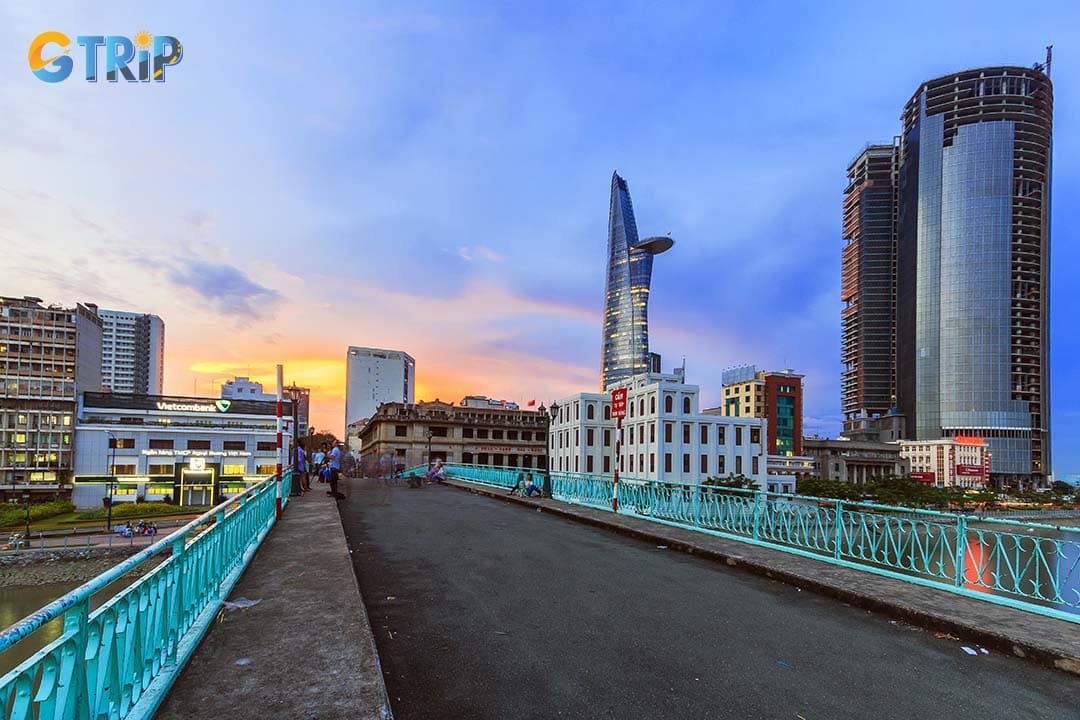
Mong Bridge, a century-old symbol of Saigon’s resilience and history, was meticulously dismantled and restored during major urban development
Why is it called Mong Bridge?
The bridge is called 'Mong' Bridge because its arched shape resembles a 'mong', the Vietnamese word for a comb or, more poetically, a rainbow. This descriptive name, "Cau Mong", was not its formal French title but a name given by local Saigonese people who saw its gentle curve reflected in the waters of the Ben Nghe Canal. Over time, this charming, intuitive local name became its official identity, completely replacing any colonial-era designation.
The name is a perfect example of how Vietnamese culture often names landmarks based on their physical appearance or a story associated with them. It adds a layer of local character and linguistic charm to the structure. So, when you stand back and admire its form, you're not just seeing a bridge, you're seeing the "comb" or "rainbow" that has been a part of the local lexicon for over a hundred years.
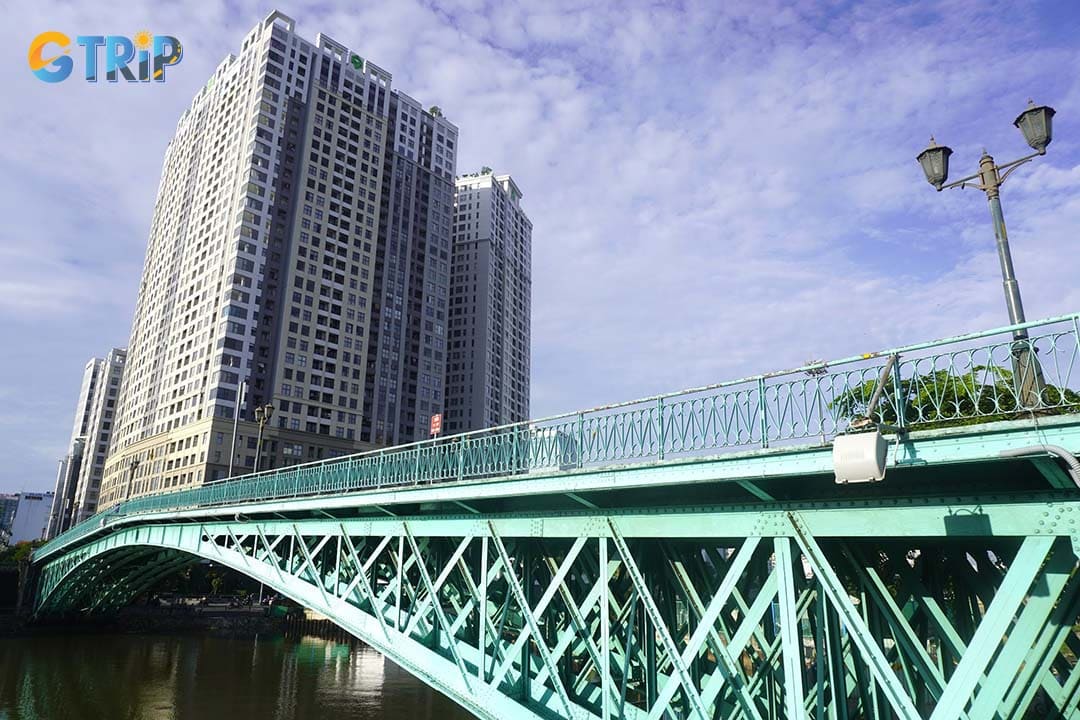
Mong Bridge earned its name from Saigon locals who likened its graceful arch to a “mong” or comb
Things to do around the Mong Bridge in Ho Chi Minh City
Mong Bridge has evolved into a vibrant social and cultural destination. The bridge and its immediate surroundings offer a fantastic slice of Ho Chi Minh City life, blending romantic views with authentic local experiences. Here are the best things you can do when you visit this iconic spot.
Take a walk and enjoy the city views
The primary activity on the Mong Bridge is to simply take a leisurely walk across its pedestrian-only deck. Free from the noise and chaos of motorbike traffic, you can stroll at your own pace and soak in the incredible urban panorama. The walkway provides a unique vantage point that perfectly captures the "old meets new" spirit of Ho Chi Minh City.
From the center of the bridge, you’ll get a spectacular, unobstructed view of the modern skyline, dominated by the lotus-shaped Bitexco Tower. Gazing down at the Ben Nghe Canal, you can watch traditional long-tail boats and commercial barges glide by, a scene that has remained unchanged for decades. This experience is especially magical at dusk, as the setting sun casts a warm glow over the city, or at night, when the surrounding skyscrapers and streetlights illuminate the water in a dazzling display.
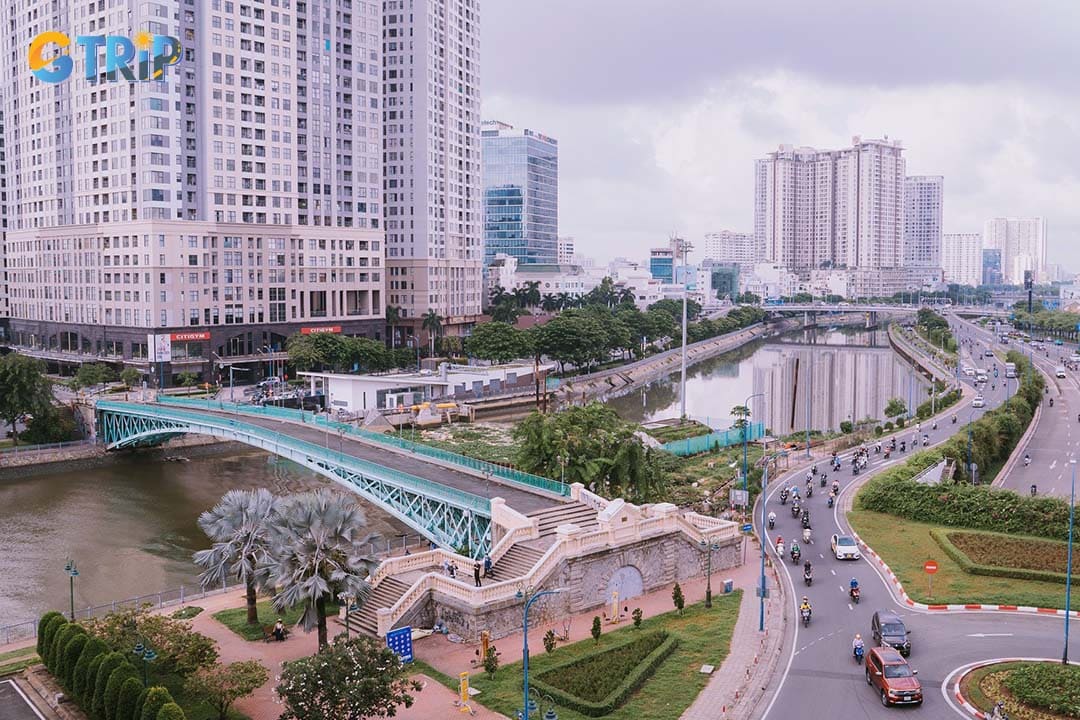
Take a peaceful walk across Mong Bridge to enjoy uninterrupted views of Ho Chi Minh City’s skyline
Capture stunning photos
Mong Bridge is renowned as one of Ho Chi Minh City's most photogenic spots due to its unique color and classic design. Its striking turquoise paint job, elegant arch, and intricate, riveted steel lattice provide a fantastic subject for photographers of all skill levels. The bridge itself serves as a beautiful frame for the city behind it, creating compelling compositions.
For the best shots, plan your visit during the "golden hours" of sunrise or sunset, when the soft, warm light enhances the bridge's color and creates dramatic shadows. Night photography is also extremely popular here. You can capture stunning images of the illuminated Bitexco Tower or create artistic light trails from the traffic on the adjacent roads. The bridge is a favorite location for everything from casual Instagram posts and travel diaries to professional pre-wedding photoshoots, a testament to its timeless visual appeal.
Taste Saigon street food
The area surrounding Mong Bridge transforms into a lively street food hub in the evening, offering a perfect opportunity to taste authentic Saigon snacks. The sidewalks of both Ben Van Don and Vo Van Kiet streets come alive with vendors cooking up a storm, their stalls illuminated by single light bulbs and surrounded by eager customers. The air fills with the tantalizing aromas of grilled meats and sizzling batter.
Here you can sample a wide variety of popular local snacks. They are banh trang nuong (often called "Vietnamese pizza", a grilled rice paper with egg and toppings), ca vien chien (fried fish balls), bo la lot (grilled beef in wild betel leaves), and bap xao (stir-fried corn with shrimp). For dessert or a drink, look for vendors selling fresh fruit smoothies (sinh to) or sweet soups (che). Grabbing a few different items and finding a spot to sit by the canal is a delicious and atmospheric way to end your day.
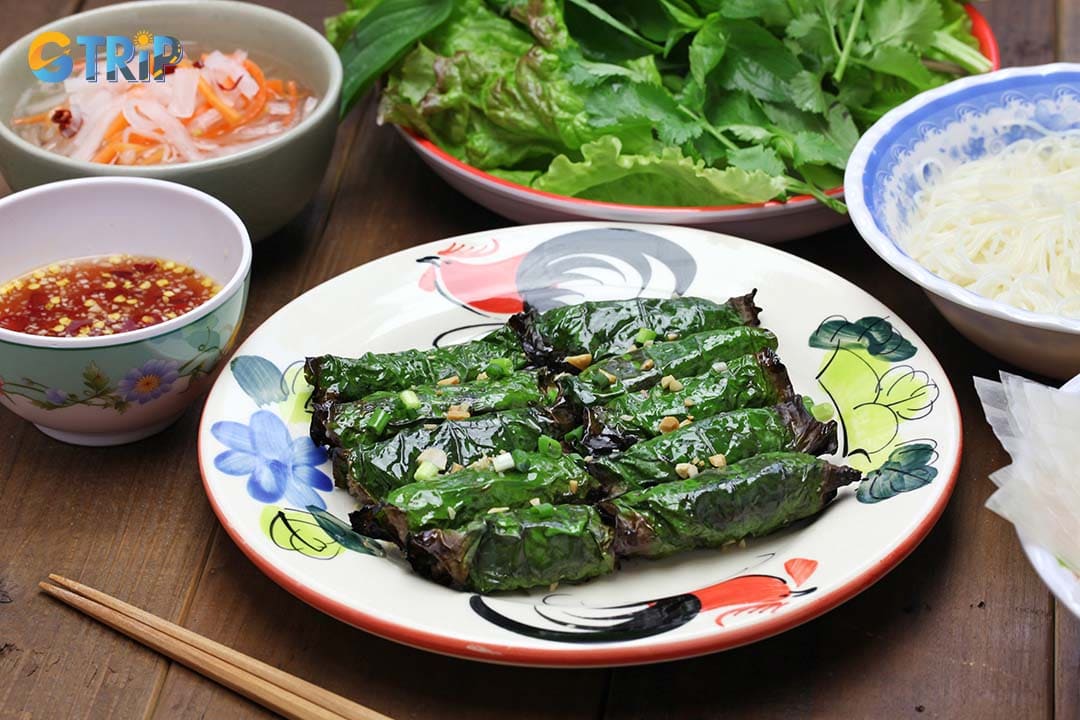
You can try bo la lot (grilled beef in wild betel leaves) near Mong Bridge
Sip coffee on the sidewalk
One of the most authentic local experiences you can have near Mong Bridge is enjoying 'ca phe bet' or sidewalk coffee. As evening approaches, small-scale vendors set up shop near the entrances to the bridge, especially on the former District 1 side. They lay out a few mats or provide tiny plastic stools, serving up classic Vietnamese coffee and other drinks for a very low price.
This isn’t a fancy cafe experience. It’s about embracing the local culture. Join the young Saigonese who gather here to chat, relax, and watch the city go by. Sipping a ca phe sua da (iced coffee with condensed milk) or tra tac (kumquat tea) on a low stool by the canal breeze is a quintessential Ho Chi Minh City experience. It's a simple, affordable, and incredibly memorable way to immerse yourself in the local rhythm of life.
When is the best time to visit the Mong Bridge?
The best times to visit Mong Bridge are late afternoon (around 4-5 PM) and evening (after 7 PM). Visiting in the late afternoon allows you to experience the bridge during the "golden hour", when the soft sunlight is perfect for photography and the temperature begins to cool down. You can watch the sunset paint the sky behind the city's skyline. The evening is arguably the most popular time. This is when the bridge and nearby buildings are beautifully illuminated, the air is cool, and the area buzzes with energy as locals gather to socialize, eat street food, and enjoy the views. A morning visit is also a great option if you prefer tranquility and want to take photos without the crowds.
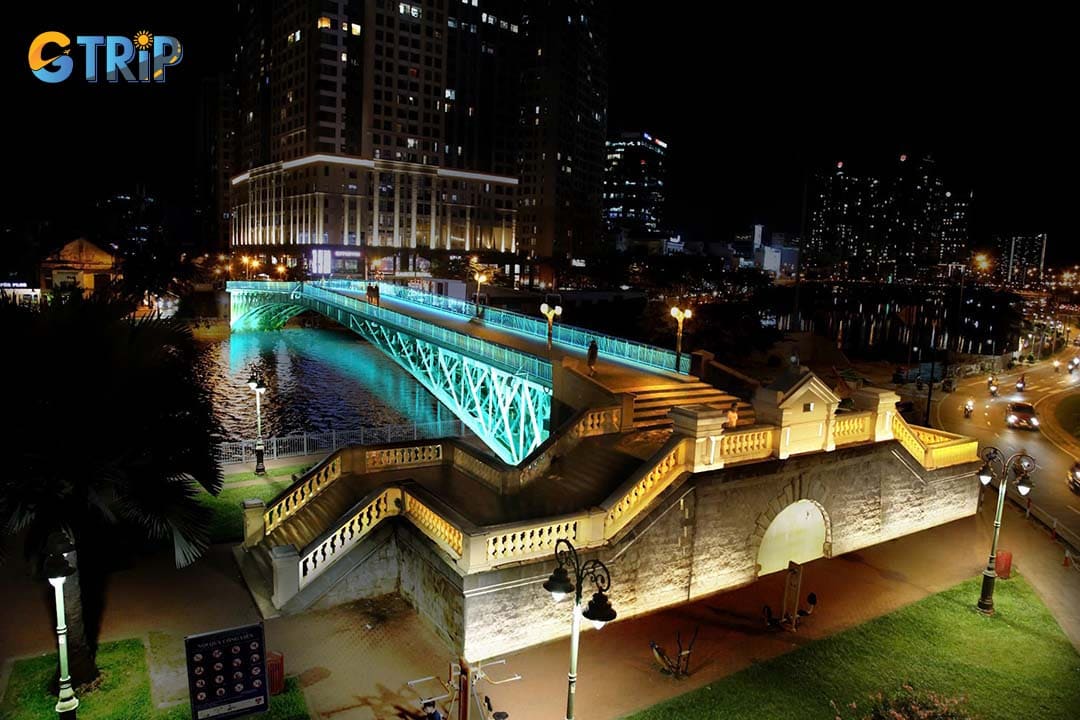
The best times to visit Mong Bridge are late afternoon and evening
How to get to Mong Bridge?
The easiest way to get to Mong Bridge is by using a ride-hailing app like Grab or XanhSM, or by taking a traditional taxi. Simply input "Mong Bridge" or "Cau Mong" as your destination, and the driver will know exactly where to go. If you are comfortable driving in the city's traffic, renting a motorbike is another convenient option. For those exploring on foot, the bridge is easily walkable from many of former District 1's main attractions. It’s a pleasant 10-15 minute walk from Nguyen Hue Walking Street or the Bitexco Tower.
What attractions are near Mong Bridge?
Being centrally located, Mong Bridge is within walking or a short taxi ride of many of Ho Chi Minh City's most famous attractions. This makes it a perfect stop on a larger sightseeing itinerary.
- Nha Rong Wharf (500m): Originally a major trading port, this is now a museum dedicated to Ho Chi Minh. It's just a short walk from the bridge and offers great photo opportunities of its own unique architecture.
- Bitexco Tower (700m): This iconic lotus-shaped skyscraper is clearly visible from Mong Bridge. Visitors can go to the Saigon Skydeck for a breathtaking panoramic city view.
- Ho Chi Minh City Museum of Fine Arts (800m): Housed in a stunning French Colonial building, this museum showcases Vietnamese art from historical to contemporary periods. It's a must-visit for art and architecture lovers.
- Nguyen Hue Walking Street (850m): A wide, pedestrian-only boulevard that is the heart of modern Saigon, lined with upscale cafes, flagship stores, and the famous Ho Chi Minh statue in front of City Hall.
- Bach Dang Wharf (1km): A bustling riverside area with a park, restaurants, and waterbus services. It is perfect for an evening stroll after visiting the bridge and offers a different perspective of the Saigon River.
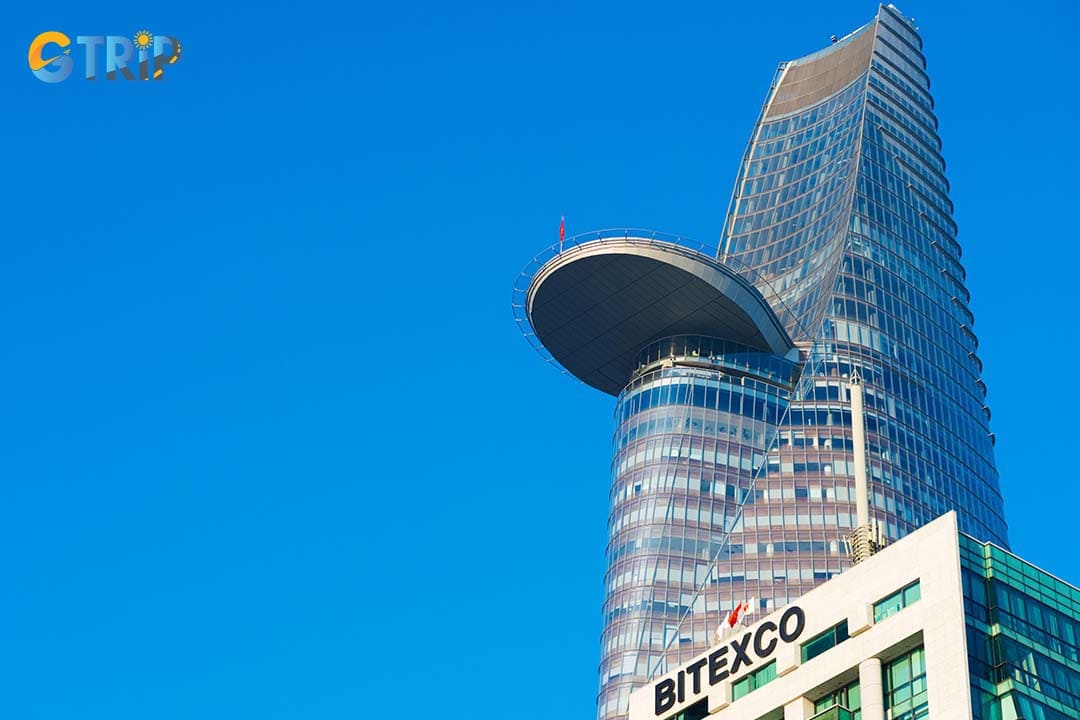
Bitexco Tower is an iconic lotus-shaped skyscraper that is clearly visible from Mong Bridge
Read more:
Mong Bridge in Ho Chi Minh City is more than a historic landmark. It’s a perfect spot to experience Saigon’s charm through stunning views, local coffee, and vibrant street life. This turquoise bridge captures the city’s timeless beauty. Plan your visit with GTrip to explore the Mong Bridge and nearby attractions like Bitexco Tower and Nha Rong Wharf with ease.
Custom Your Journey

Other Attractions
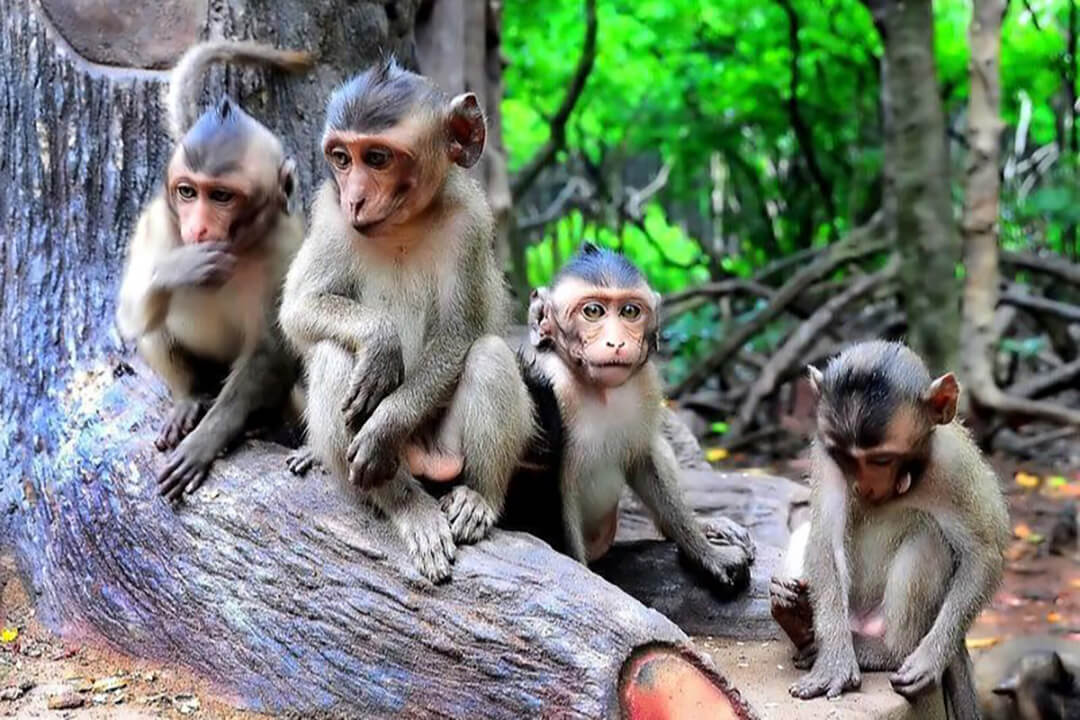
Can Gio Monkey Island in Ho Chi Minh City: Tickets, Things to Do & Travel Guide
Can Gio Monkey Island
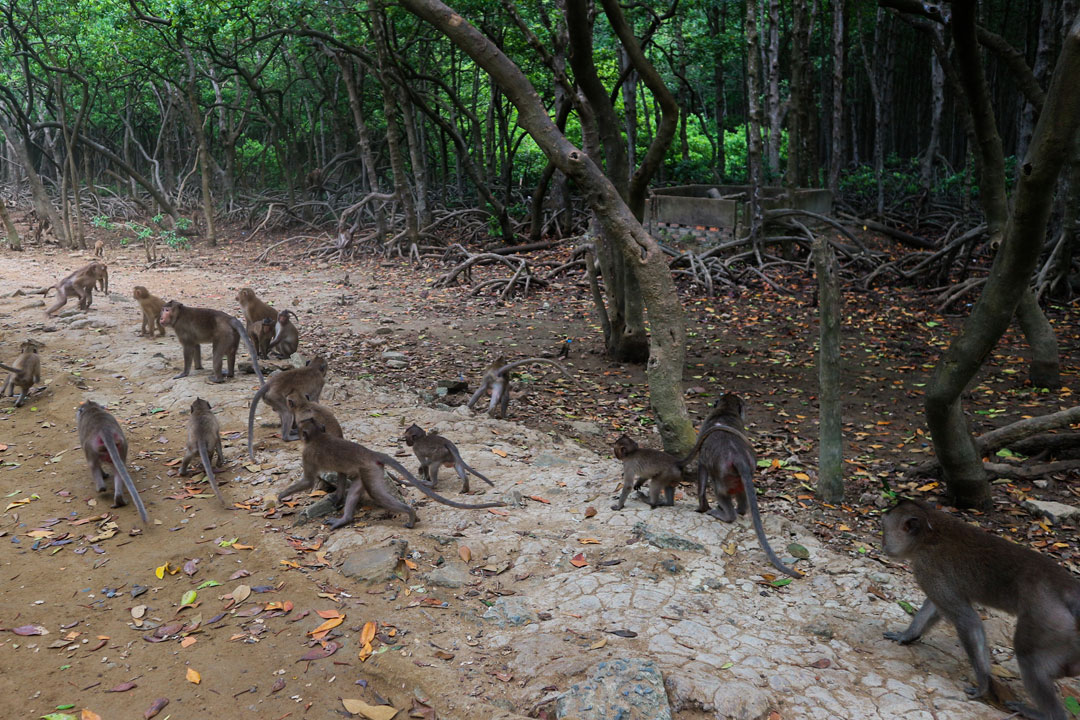
Can Gio Monkey Island in Ho Chi Minh City offers a refreshing escape from the city’s buzzing motorbike chaos. Just a short distance from the center, Can Gio welcomes you with lush mangrove forests, winding waterways, and a fascinating history. Here, you can meet playful long-tailed macaques, drift through tranquil channels, and explore remnants of a wartime guerrilla base.
Can Gio Monkey Island in Ho Chi Minh City: Tickets, Things to Do & Travel Guide
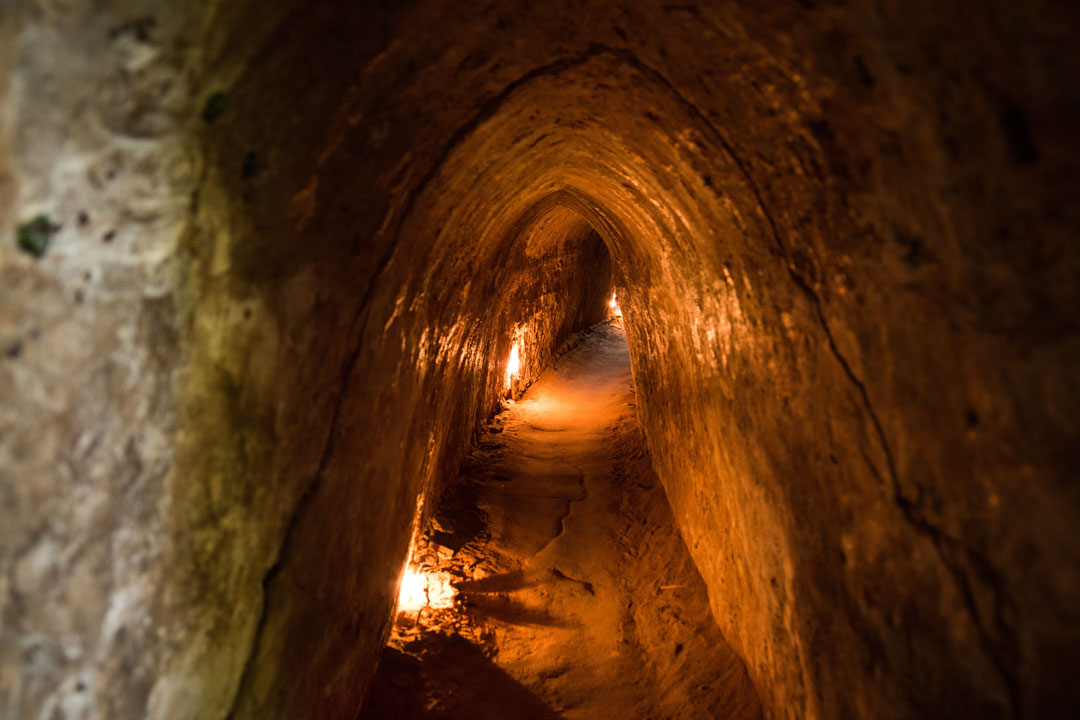
Cu Chi Tunnels: History, Architecture, Things To Do & Travel Guide
Cu Chi Tunnels
The Cu Chi Tunnels, located at TL15, Phu Hiep, Cu Chi District, Ho Chi Minh City, are a vast underground network of strategic passages, shelters, supply routes, and defensive traps.
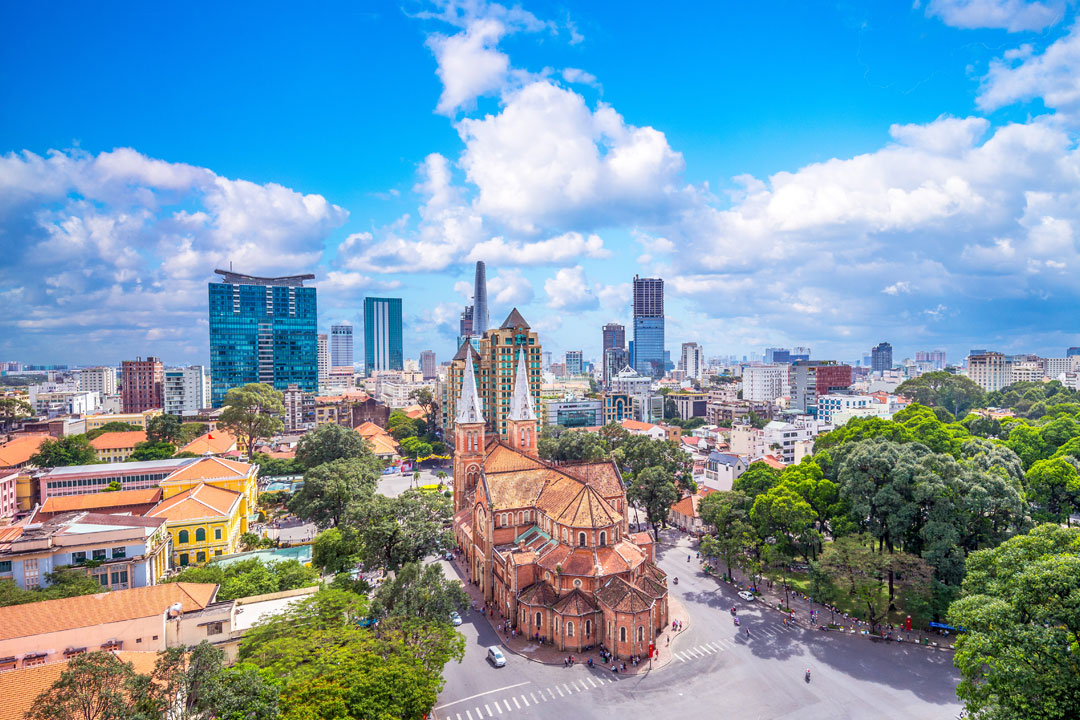
Ho Chi Minh City
Ho Chi Minh City, known as the "Pearl of the Far East," attracts both domestic and foreign tourists with its unique and diverse destinations.
Tran Quoc Pagoda: History, Architecture, Significance & Travel Guide
Tran Quoc Pagoda
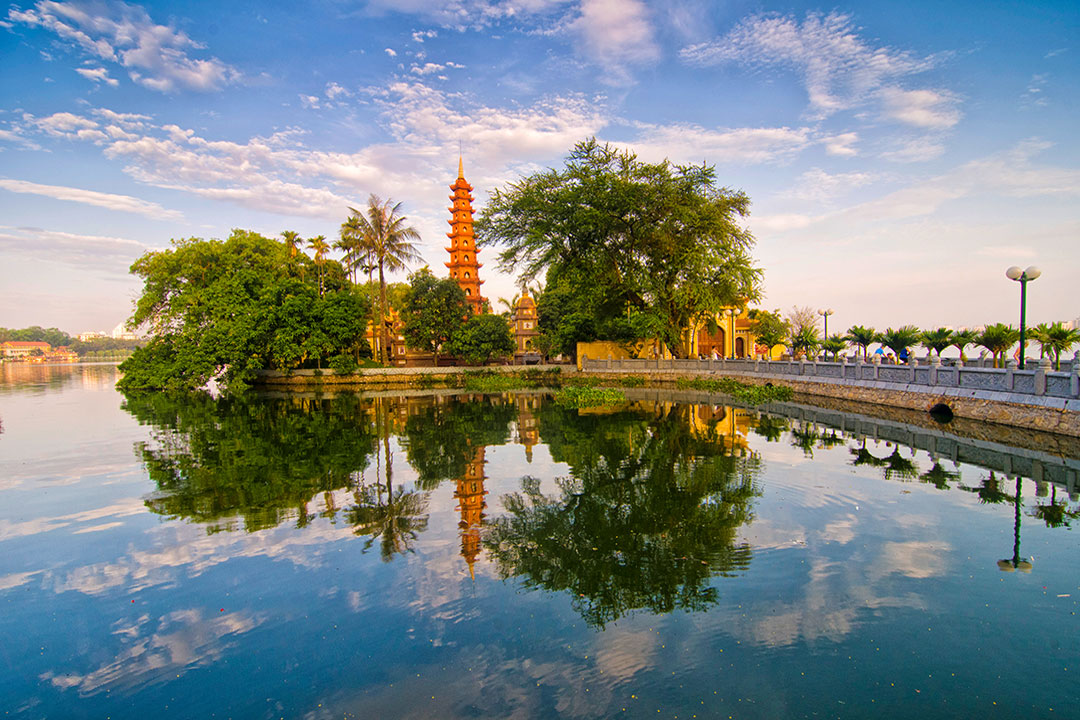
Nestled on the tranquil shores of West Lake, Tran Quoc Pagoda is the oldest Buddhist temple in Hanoi, with a history spanning over 1,500 years. Built in the 6th century under Emperor Ly Nam De, this sacred site reflects Vietnam’s Buddhist evolution while preserving its spiritual and architectural grandeur.