Tuesday, December 17, 2024
The Nam Hai Quan Am festival, colored with Buddhist culture, is one of the most important spiritual and cultural festivals, held yearly in Bac Lieu from the 22nd to the 24th of the third lunar month. Discover intriguing facts about this festival by reading the article.
Learn about Nam Hai Quan Am Temple
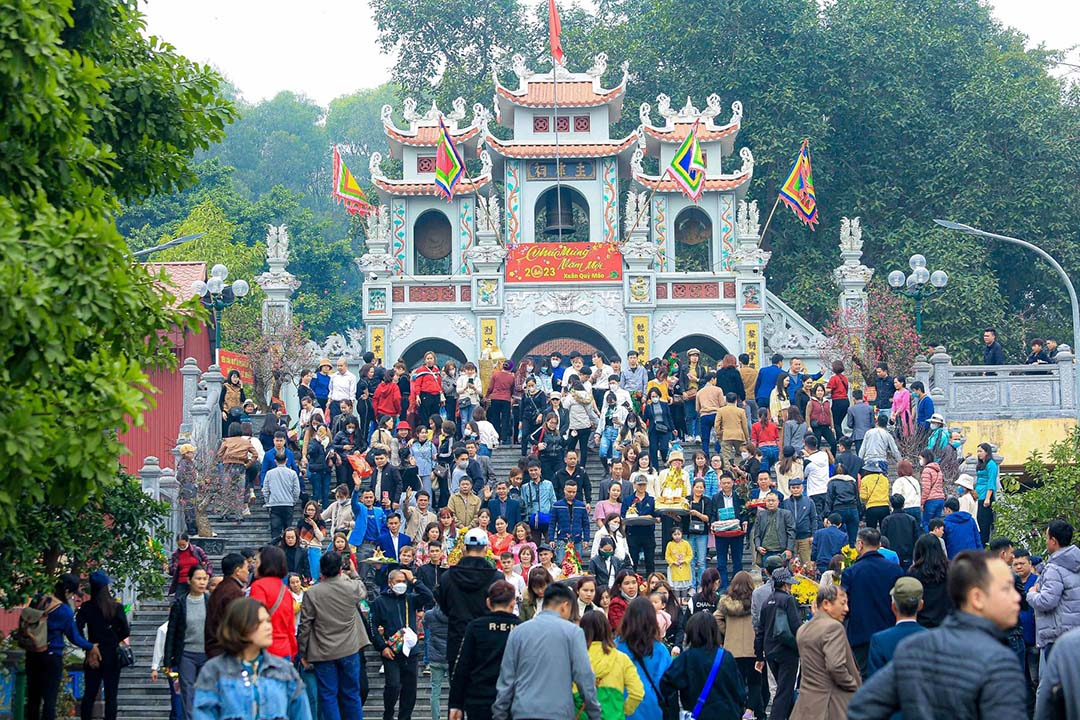
Quan Am Phat Dai, also known as Mother Nam Hai, is a 6-hectare island at the opening of the Nha Mat sea in Nha Mat ward, Bac Lieu city. Every year, thousands of pilgrims from all over the world come to this location to participate in the Quan Am Nam Hai festival.
The Quan Am Nam Hai Pagoda is around 8 kilometers from the heart of Bac Lieu. Originally, the pagoda was only a large residence composed of trees and leaves on a small piece of ground in a coastal area with many ponds, lagoons, and mud fields...
The placement of the monument has shifted over time owing to natural accretion, and it is now nearly kilometers from the sea. The government of Bac Lieu province granted permission to enlarge and level the ground on which the pagoda stands in 2004. As a result of the contributions of Buddhists and visitors from all over the world, a variety of artifacts have been erected in turn.
Quan Am Phat Dai was founded to address the religious requirements of Bac Lieu fisherman. The Northern Buddhism sect's Quan Am Phat Dai Pagoda features an 11m high statue of Bodhisattva Avalokitesvara towering majestically in the middle of an open space overlooking the East Sea.
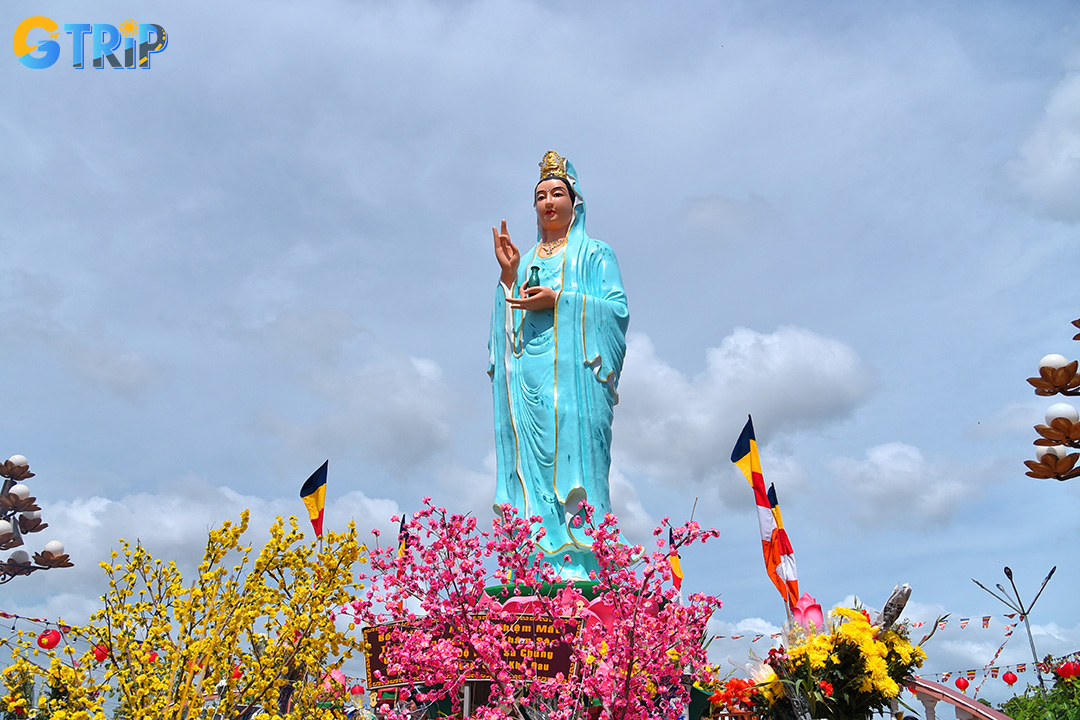
Quan Am Phat Dai was established to meet the religious needs of Bac Lieu fishermen.
Thien Thu Temple is dedicated to Thien Thu Quan Am (the principal deity). This is one of the various names for the Bodhisattva Avalokitesvara, commonly known as Avalokitesvara in Sanskrit. This Bodhisattva's statue has thousands of arms and thousands of eyes (heavenly hand, celestial eye). The temple is dedicated to the primary deity, Bodhisattva Ksitigarbha. This is a Bodhisattva specializing in the rescue of sentient souls from hell. There are other statues of Avalokitesvara Bodhisattva, Chuan De Vuong Bodhisattva, Diem Diem Vuong Bodhisattva, and others in these two electric buildings.
The heaven gate leads from the entry to the gate, followed by the Hang Long - Phuc Ho screen, the great hall with a 49m high pole, the statue of Quan Am sitting on an octagonal lotus, and the Thien Dien on the right. Thu, there is Puta Son in front, the Dia Tang Palace to the left of the statue, and the Temple of Tieu Dien Dai Si in front. A screen depicting Phuc Ho and 32 Bodhisattvas who save sentient beings stands in front of the ceremony yard. All of these elements work together to produce a majestic, religious, cultural, and spiritual space.
The heaven gate leads from the entrance to the gate, followed by the Hang Long - Phuc Ho screen, then the great hall with a 49m high banner, the statue of Quan Am sitting on an octagonal lotus, Thien Thu Palace on the right, in front of the Buddha Son, Dia Tang Temple on the left, and Tieu Dien Dai Si Temple in front. A screen depicting Phuc Ho and 32 Bodhisattvas who save sentient beings stands in front of the ceremony yard. All of these elements work together to produce a majestic, religious, cultural, and spiritual space.
Avalokitesvara's mother - Nam Hai's mother - is the one who always listens to the uncertainties, sorrows, and defends against all the storms of people's lives when on shore and at sea.
Indigenous peoples' and Buddhists' awe and reverence are rapidly permeating all living conditions, and it is a firm and fundamental belief in their life. The picture of Mother carrying a pitcher of nectar to save sentient beings became the basis for innumerable miraculous stories, spreading the belief of salvation and unbounded compassion in the hearts of children of the sea and Buddhists far and wide.
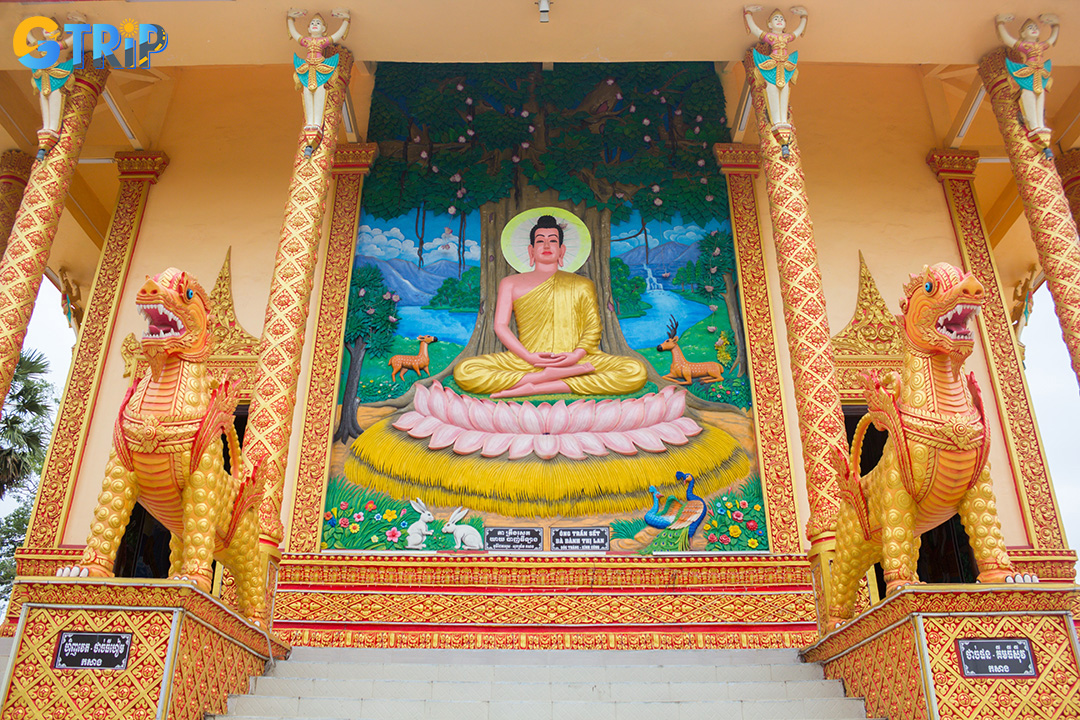
Thien Thu Temple is named after Thien Thu Quan Am.
Nam Hai Quan Am Festival
The festival's significance and the time it takes place
The Nam Hai Quan Am festival, colored by Buddhist culture, is one of the most famous spiritual and cultural festivals, held yearly in Bac Lieu from the 22nd to the 24th of the third lunar month.
The Nam Hai Quan Am Festival is a festival with a strong national religious identity, but it also has many colors of the Southern local culture, which has been created and nurtured for a long period in this country. Cultural festivals, beliefs, and folklore suit people's socio-cultural needs and spiritual lives.
Festival activities
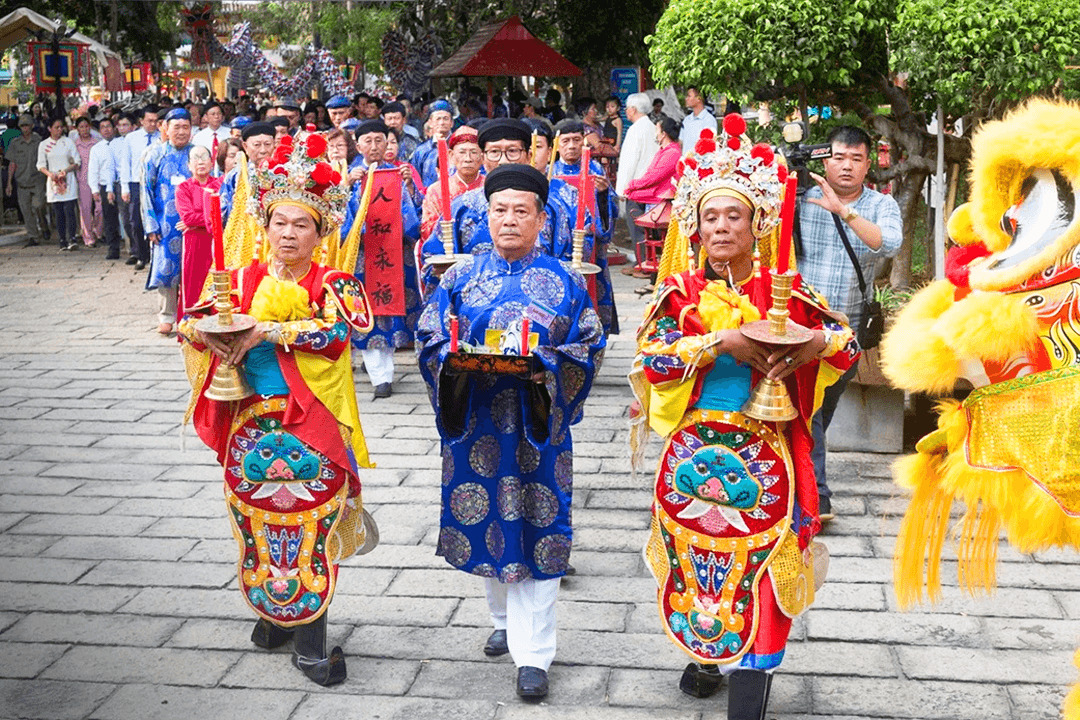
The first day of the festival is dedicated to opening rituals such as the flower vehicle parade, lion dance troupes, dragon dance performances, flower offering ceremony, naturalization ceremony, death... On this day, many pilgrims gather to worship Quan Am Nam Hai since it is claimed that Quan Am Nam Hai's protection is as big as the sea, comprehending the hearts of Buddhists.
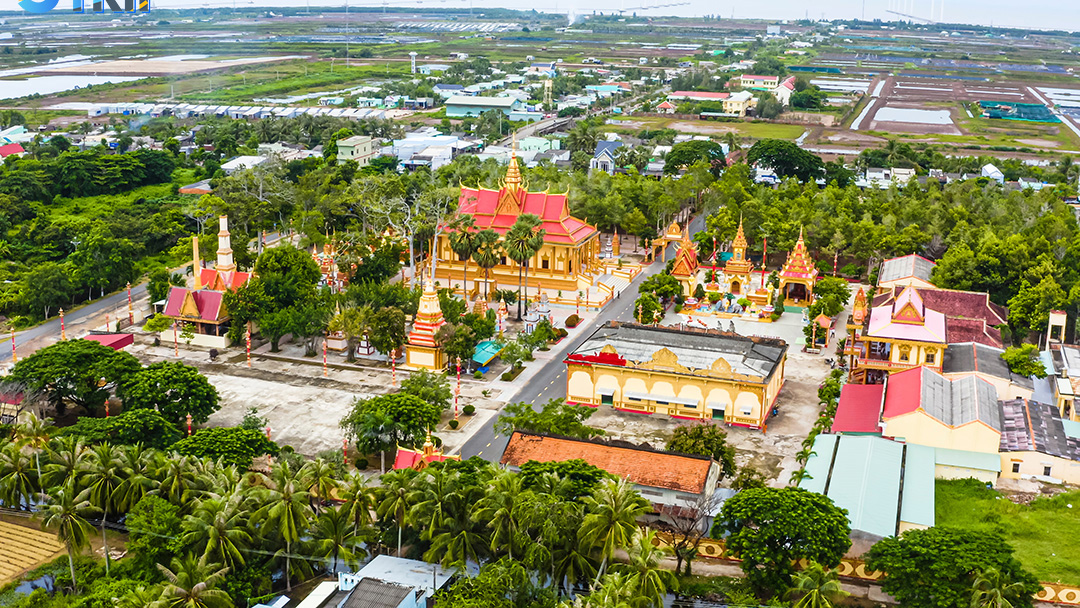 Quan Am Phat Dai is a 6-hectare island at the opening of the Nha Mat sea in Nha Mat ward
The ceremonies such as the burial ceremony, the peace ceremony, and the Dharma lecture continue on the second day. During the event, pilgrims can donate incense to the Quan Am Nam Hai statue. By the evening of the second day, there will be cultural activities and boi singing to serve people on the Quan Am Phat Dai campus.
The third and last day of the festival will see Buddhist monks and nuns, pilgrims and visitors take part in the closing ritual, which is a ceremony to pray for peace and release lotus lights instead of prayers. Following that, everyone will participate in the exhibition day with the content of introducing the land and Bac Lieu people before leaving Quan Am Phat Dai. Visitors are welcome to bring home beautiful and spiritually meaningful mementos from the Nam Hai Quan Am festival on this occasion.
Standing in front of the statue of Bodhisattva Avalokitesvara, I lighted a stick of incense and fervently prayed for good things and peace for everybody. Surely, we all sense that our souls are more serene. Quan Am Nam Hai Festival is a festival with a strong national religious identity, containing many hues of Southern local culture while also meeting the demands of local people's social culture and spiritual lives, as well as Buddhists.
If you visit this Bac Lieu provincial sacred temple, you will find a tranquil and serene location for yourself, as well as many unique and intriguing elements in the building and behavior as well as Buddhism. The Southwest region's culture, life, and people have a lot of intriguing things for you to discover. Join the Mekong Delta Tours right immediately to broaden your horizons.
>>> Read more:
Hue Traditional Craft Festival 2023