
Friday, October 23, 2026
Thich Quang Duc Monument in Ho Chi Minh City is a profound and solemn marker of a moment that shook the world. It stands as an eternal flame, symbolizing selfless sacrifice, the unwavering pursuit of peace, and a pivotal event in Vietnamese and global history. On the very corner where Buddhist monk Thich Quang Duc performed his act of self-immolation in 1963, this memorial now offers a space for reflection, remembrance, and understanding. It’s a site of immense emotional and historical weight, demanding a visit founded on respect and a desire to learn. This comprehensive GTrip guide provides everything you need to know for a meaningful visit. It covers the monument's poignant history, rich architectural symbolism, and practical tips for travelers wishing to honor a man whose quiet courage resonated across continents.
Table of Content
Overview of Thich Quang Duc Monument
- Location: at the intersection of Cach Mang Thang Tam and Nguyen Dinh Chieu streets, Xuan Hoa Ward (formerly District 3), Ho Chi Minh City
- Opening hours: As a public memorial park, this space is generally open 24/7 to visitors
- Entrance fee: Free
- Best time to visit: Early in the morning to enjoy the fresh air, or in the evening when the monument is illuminated, creating a solemn and impressive scene.
Thich Quang Duc Monument complex is a significant historical and cultural landmark located on the exact spot of the venerable monk's self-immolation. The monument has been designed as a peaceful "green oasis" amidst the relentless energy of Ho Chi Minh City. The park invites visitors to step away from the traffic and into a tranquil space dedicated to reflection on one of history's most powerful acts of protest.
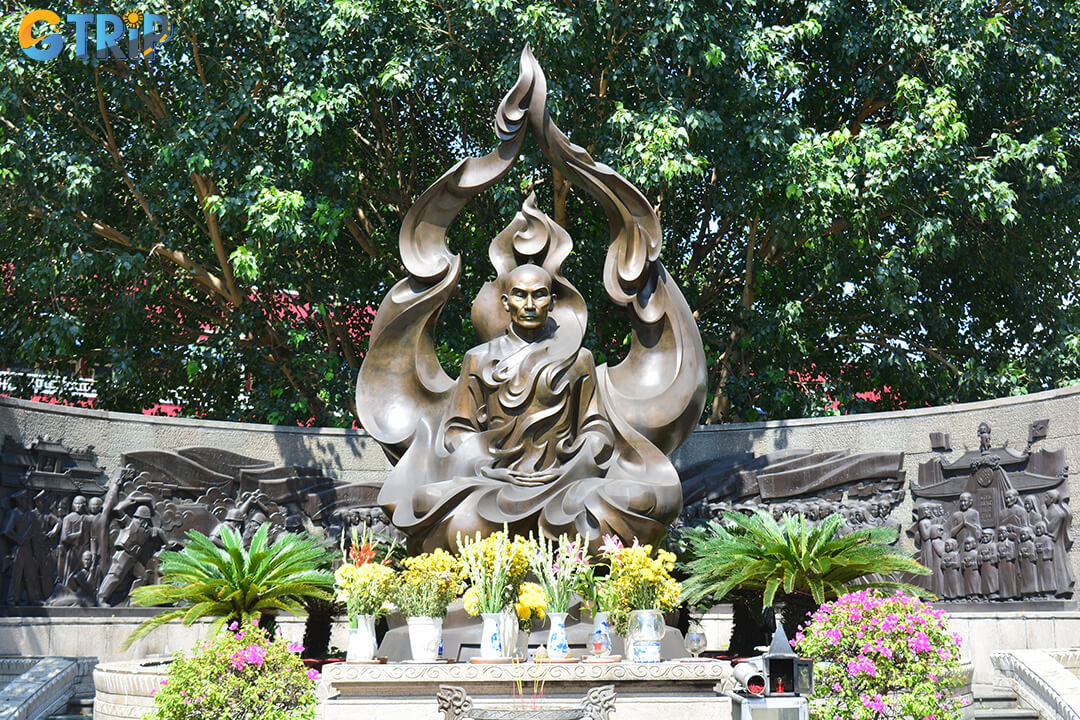
The Thich Quang Duc Monument is a peaceful memorial in central Ho Chi Minh City, honoring the monk’s historic act of courage and reflection
History of Thich Quang Duc Monument
The monument’s existence is inextricably linked to the Buddhist crisis of 1963 and the world-shaking event that occurred here. The story of its creation is a testament to the enduring memory of Thich Quang Duc's ultimate act of protest for religious freedom.
| Date/Period | Event |
|---|---|
| June 11, 1963 | At the intersection of Phan Dinh Phung and Le Van Duyet Streets (now Nguyen Dinh Chieu and Cach Mang Thang Tam), Venerable Thich Quang Duc self-immolated in a calm, lotus position to protest the oppressive policies of the Ngo Dinh Diem regime against Buddhists. The act was captured in a Pulitzer Prize-winning photograph by Malcolm Browne, which sent shockwaves globally. |
| Post-1963 | Buddhists built a small stupa on the nearby grounds of the Cambodian Embassy to commemorate him. |
| November 6, 2007 | The construction project for the Thich Quang Duc Monument Complex officially began. |
| September 18, 2010 | The monument was inaugurated, becoming an important cultural, historical, and spiritual landmark of the city. |
Architecture of Thich Quang Duc Monument
Spanning an area of nearly 2,000 square meters, the Thich Quang Duc Monument complex is a masterful blend of solemn art and urban park design. The layout draws visitors toward the main statue and historical relief, set amid a serene, peaceful landscape.
The Bodhisattva Thich Quang Duc Statue
The heart of the memorial is the 6-meter-high, 12-ton bronze statue of Bodhisattva Thich Quang Duc. It is a work of profound emotional power. The statue depicts the monk seated calmly in the lotus position, the traditional posture for meditation, even as he is engulfed in sculpted flames. This juxtaposition is the core of its message. His face is not one of agony but of serene determination. His hands are folded in his lap, and his posture is unbroken. The artists have masterfully captured an indomitable spirit, a quiet strength that transcends physical suffering. For visitors, the statue is not a depiction of death but a powerful representation of spiritual conviction and the ultimate sacrifice made in the name of compassion and justice.
The historical relief
Positioned directly behind the main statue is a monumental bronze alloy relief sculpture, measuring 12 meters long and 3 meters high. This stunning piece of art serves as a visual history book, summarizing the entire narrative of the 1963 Buddhist crisis. It is meant to be "read" from one end to the other. The relief begins by depicting peaceful protests by monks and civilians demanding religious equality. It moves on to show the brutal suppression by the Diem regime's forces, adding context to the desperation that led to the final act. The central panel dramatically illustrates the self-immolation itself, surrounded by horrified but reverent onlookers. The final scenes show the unity of the Vietnamese people in the aftermath, solidifying the movement. This relief transforms the abstract history of the buddhist crisis 1963 into a tangible, sequential story, ensuring that the context of Thich Quang Duc’s sacrifice is never forgotten.
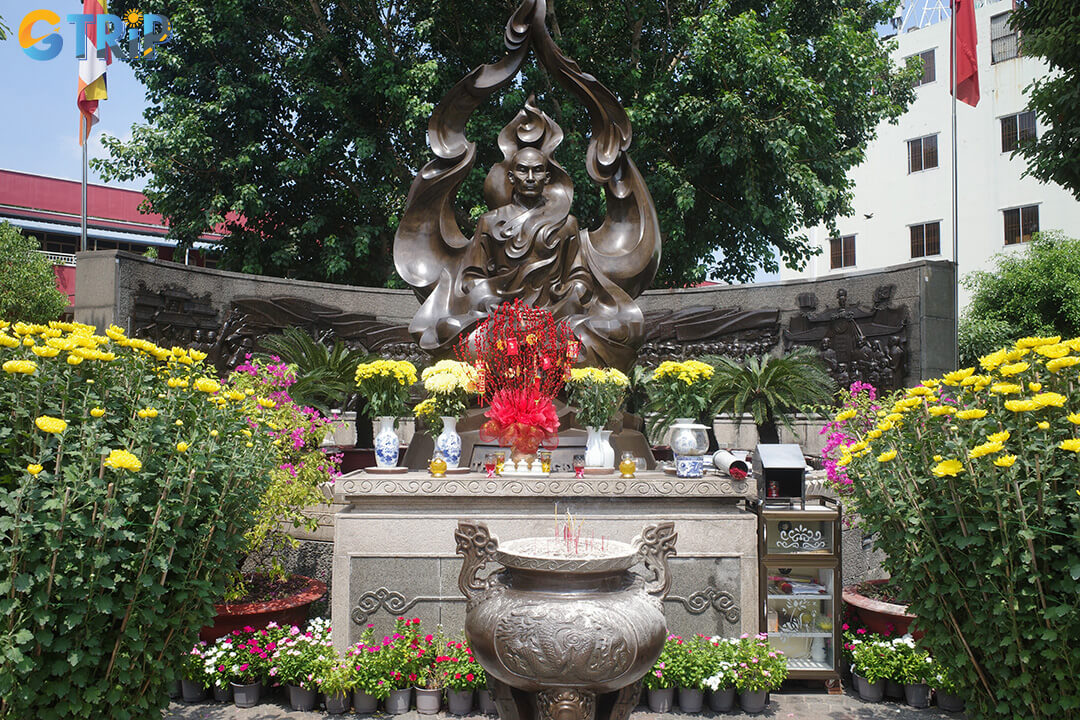
Behind the main statue, a 12-meter bronze relief portrays the 1963 Buddhist crisis and Thich Quang Duc’s enduring act of sacrifice
The park and lotus pond
A serene public park envelops the entire sculptural complex. Manicured lawns, stone walking paths, and mature trees create a buffer of tranquility against the city's noise. Central to the park's symbolism is a small, elegant lotus pond. In Buddhism, the lotus flower is a potent symbol representing purity, enlightenment, and spiritual awakening. It famously grows from murky waters to blossom immaculately above the surface, mirroring the path to enlightenment amidst worldly suffering. The inclusion of the lotus pond reinforces the spiritual dimension of Thich Quang Duc's act. It elevates the space from a mere historical site to a place of spiritual contemplation. The green space provides benches and quiet corners, inviting visitors to sit, reflect on the story they have just witnessed in bronze, and find a moment of peace.
Things to do at Thich Quang Duc Monument
While this is a solemn site, there are several meaningful ways to engage with the memorial and understand its deep historical and spiritual significance.
Offer incense and pay respects
In front of the main statue stands a large, ornate bronze urn, the central incense burner of the site. Following local custom, you can buy a small bundle of incense from a nearby vendor, light them, and place them in the urn as an act of reverence. This simple ritual connects you with Vietnamese traditions of honoring ancestors and heroes, allowing for a quiet, personal moment of reflection.
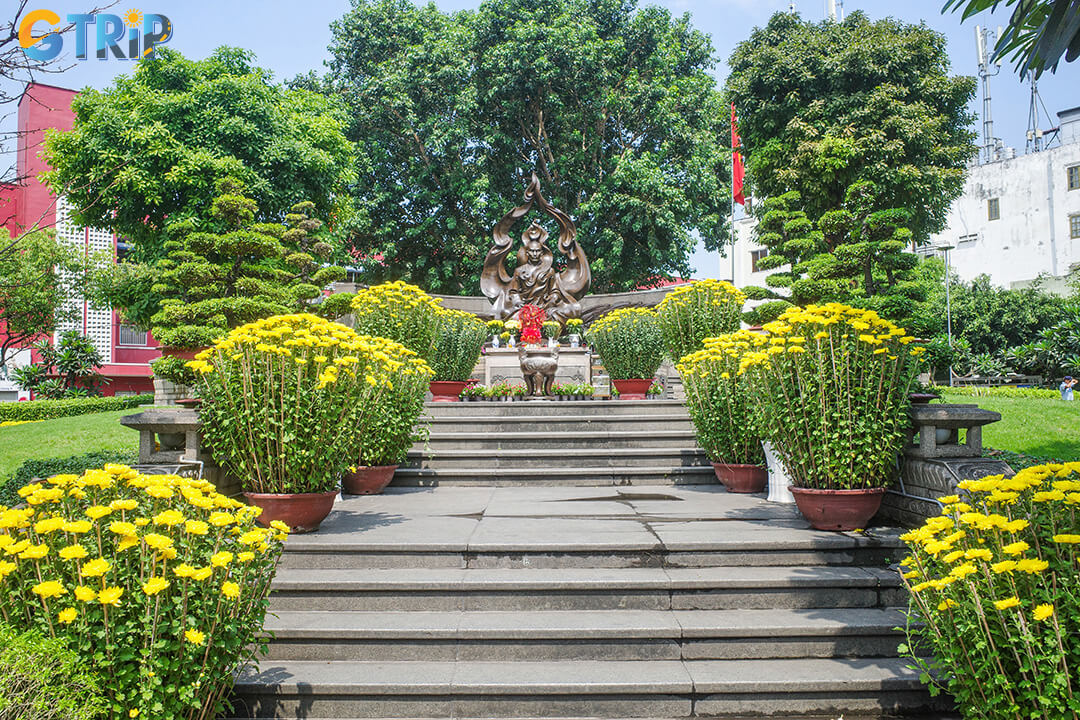
A large bronze incense urn before the statue invites visitors to light incense and pay quiet tribute, following Vietnam’s tradition of honoring revered figures
Learn history through sculptural art
Don’t just glance at the large bronze relief behind the statue take your time to walk along its detailed panels. The artwork narrates the sequence of events surrounding Thich Quang Duc’s self-immolation, from peaceful Buddhist protests to the tragic climax. Each section offers a powerful visual account of courage and conviction, helping visitors grasp the context and emotional depth behind this historic act.
Enjoy the peaceful atmosphere
Beyond its historical importance, the monument also serves as a serene public space. Shaded benches, flowering trees, and a small lotus pond create a calm environment for contemplation. It’s a place where you can momentarily step away from Saigon’s chaos, reflect on the resilience of faith, and quietly observe locals paying their respects. The tranquility here contrasts beautifully with the monument’s intense story, offering balance and perspective.
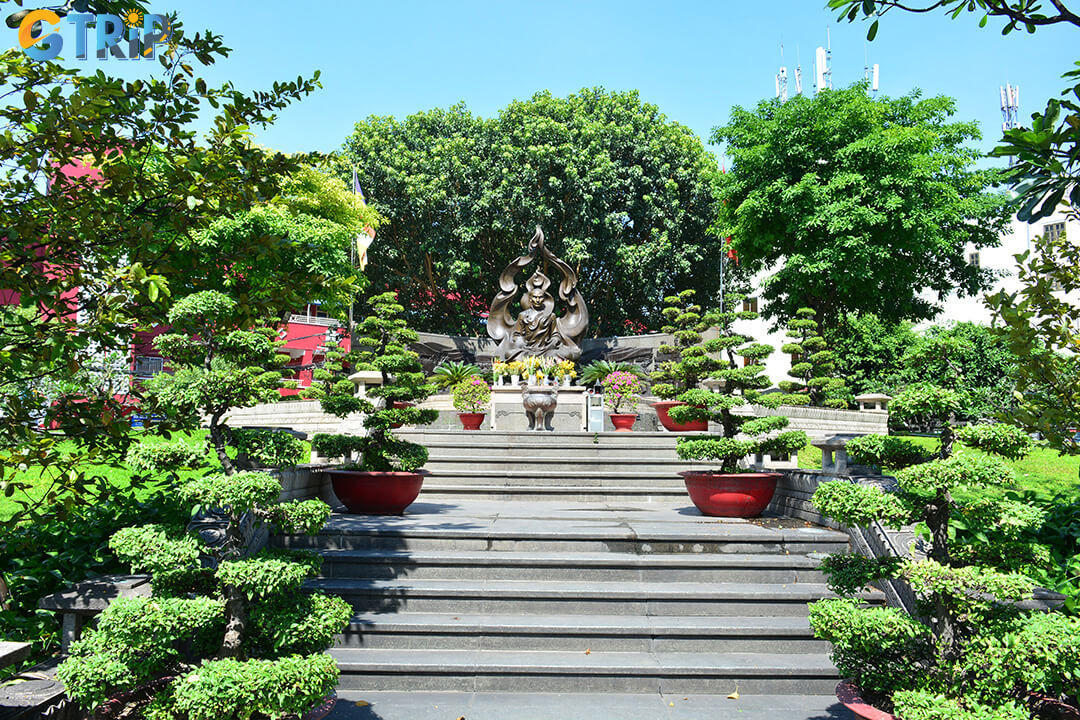
Beyond its history, the monument offers a peaceful retreat with shaded benches, flowering trees, and a lotus pond
How to get to Thich Quang Duc Monument
The monument’s central location in former District 3 makes it easily accessible from most tourist areas in Ho Chi Minh City. Here’s how you can get there:
- By taxi or ride-hailing app (Grab/XanhSM/Be): This is the most convenient and straightforward method for visitors. Simply input "Thich Quang Duc Monument" into the app. From the main tourist hub of former District 1 (e.g., near Ben Thanh Market or the Opera House), the ride typically takes about 10-15 minutes, depending on traffic. This method is affordable and eliminates any confusion with navigation.
- By bus: Ho Chi Minh City's public bus system is an economical way to travel. Several bus routes pass by or stop near the monument. Look for buses that travel along Cach Mang Thang Tam Street. Key bus lines that service this area include Bus No. 04, 150, and 30. Check a local bus app like "BusMap" for the most up-to-date routes and stop information from your specific location. The nearest bus stop is typically a very short walk from the memorial park.
- By motorbike: For those comfortable navigating the city's dynamic traffic, renting a motorbike is a popular option. You can navigate using Google Maps to the monument's intersection. Finding parking can be a challenge. Look for designated parking areas at nearby buildings or cafes. Be prepared to pay a small fee. Always wear a helmet and be cautious.
- Walking: If you are exploring other attractions in former District 3, the Thich Quang Duc Monument is very walkable. For instance, it’s approximately a 15-20 minute walk (about 1.5 km) from the War Remnants Museum. Walking allows you to experience the local street life and atmosphere of the former district at a slower pace.

Centrally located in former District 3, the Thich Quang Duc Monument is easily accessible by taxi, bus, motorbike, or on foot from key tourist areas in Ho Chi Minh City
Nearby attractions to the Thich Quang Duc Monument
Visiting the monument can be easily combined with other significant sites in former District 3 and the surrounding area. It creates a half-day or full-day itinerary focused on Vietnam's modern history.
- Xa Loi Pagoda: This is arguably the most important attraction to visit in conjunction with the monument due to its direct historical link. Xa Loi Pagoda was the main hub for the Buddhist protest movement in 1963. It was from here that Thich Quang Duc began his final procession on June 11th, and it was here that his body was returned for his funeral. The pagoda also famously held his unburned heart, which became a sacred relic of the movement. A visit here completes the story of the buddhist crisis 1963.
- War Remnants Museum: It offers a stark and moving look at the Vietnam War through the eyes of the Vietnamese. It displays military hardware, graphic photographs, and heartbreaking exhibits on the war's consequences. Visiting this museum after the monument provides a broader context for the turmoil and conflict that defined this era of Vietnamese history.
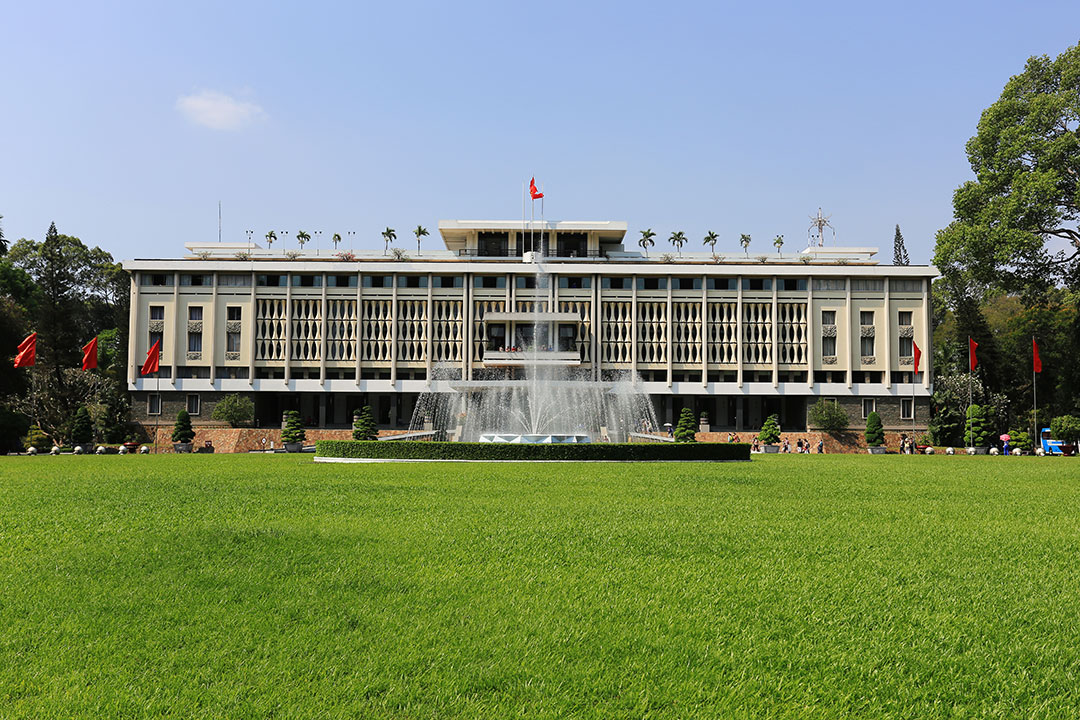
- Independence Palace (Reunification Palace): This was the home and office of the President of South Vietnam, including Ngo Dinh Diem, whose regime Thich Quang Duc protested against. The palace is frozen in time, preserved exactly as it was when North Vietnamese tanks crashed through its gates on April 30, 1975, ending the war. Seeing the seat of power that was the target of the Buddhist protests adds another layer of understanding to your visit.
- Tao Dan Park: If you are seeking a larger green space for relaxation after the emotional weight of the historical sites, Tao Dan Park is a fantastic option. It's a vast, beautifully landscaped park popular with locals for morning tai chi, bird-watching clubs, and strolls. It offers a pleasant contrast and a chance to observe the peaceful, contemporary daily life of Saigon.
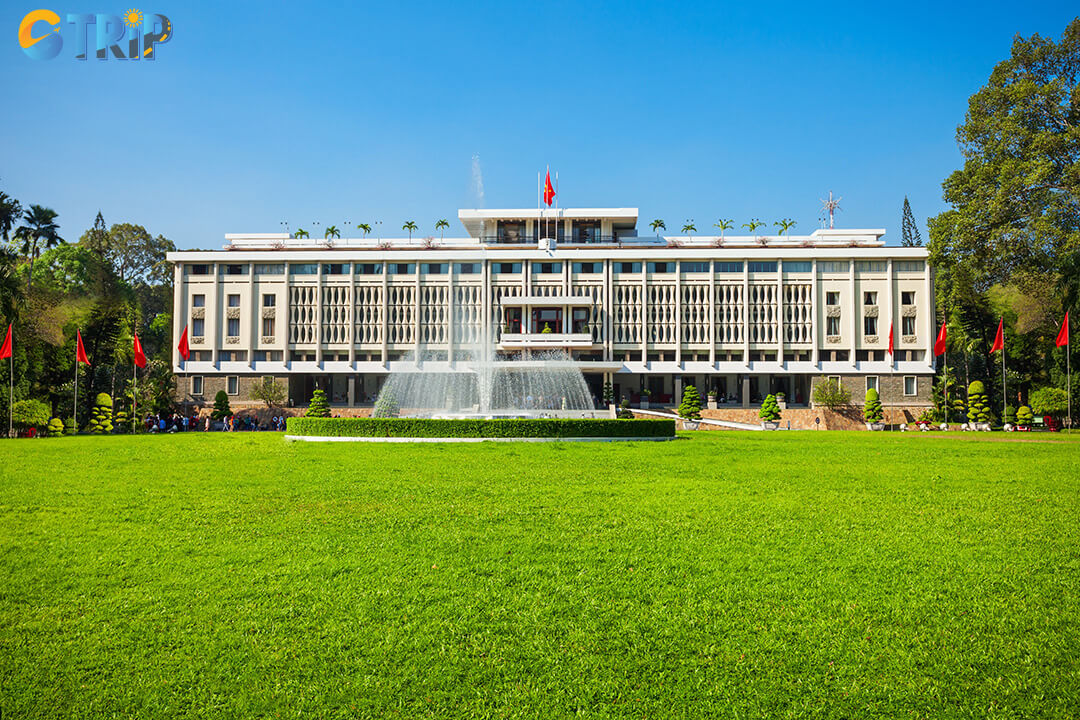
Pair your visit to the monument with nearby sites like Xa Loi Pagoda, War Remnants Museum, and Independence Palace, then relax at Tao Dan Park
Practical tips for visiting Thich Quang Duc Monument
To ensure your visit is respectful and meaningful, please keep the following tips in mind. This guidance applies to most visiting memorials in Vietnam.
- Attire: Even though it is an open, public park, this is a site of great reverence. Dress modestly by covering your shoulders and knees. This is a sign of respect for the monk and the sanctity of the memorial. Avoid wearing revealing clothing, swimsuits, or shirts with offensive slogans.
- Conduct: The monument's purpose is solemn remembrance. Maintain a quiet and respectful demeanor. Speak softly and avoid loud conversations or laughter. Do not run or engage in disruptive behavior. This is a place where locals come to pray and reflect, so be mindful of their space and practices.
- Preserve the environment: The park is beautifully maintained. Help keep it that way by disposing of any trash in the provided bins. Do not walk on the flowerbeds or disturb the lotus pond. The cleanliness of the space is part of what makes it a sanctuary.
- Photography: Taking photos is permitted, but it should be done with respect and discretion. Capture images of the monument and the art, but refrain from taking inappropriate selfies or casual, smiling poses. This is not the place for a playful photoshoot. Be mindful of others who are there to pray or reflect, and avoid using a flash in a way that might disturb them.
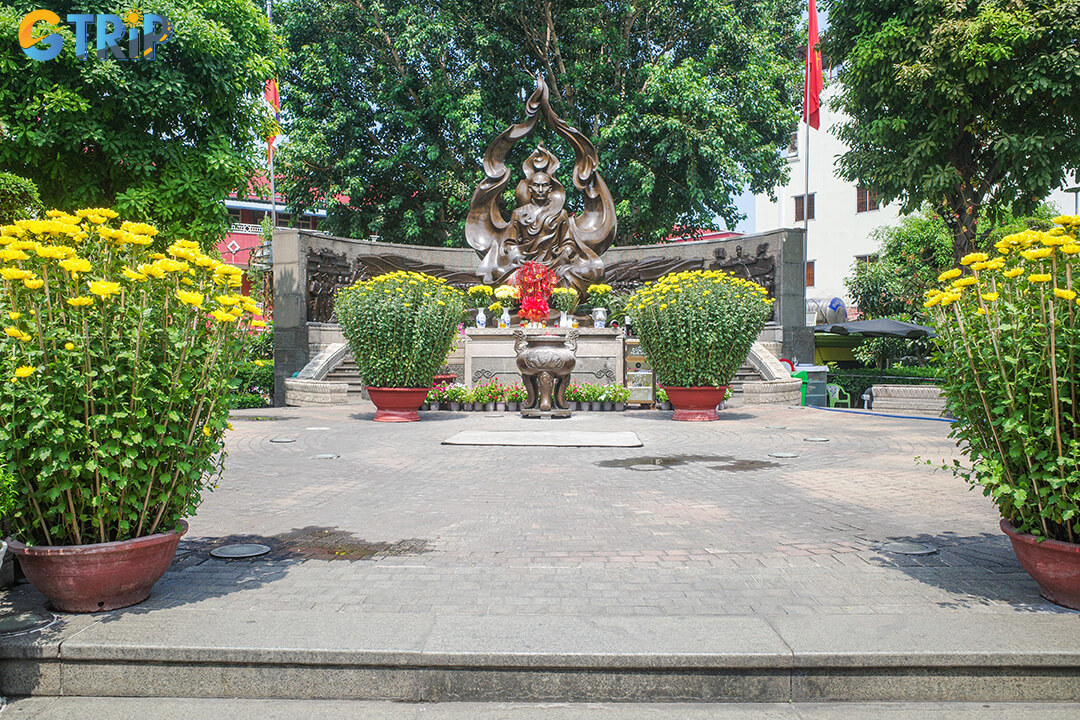
Follow local customs by dressing modestly, keeping a quiet, respectful demeanor, and photographing with discretion to honor the monument’s solemn purpose
Thich Quang Duc Monument is far more than a point on a tourist map, it is a place of profound historical and spiritual significance. It stands as a powerful testament to an individual's capacity to inspire change through an act of ultimate, selfless courage. The serene park, the poignant statue, and the detailed relief sculpture all combine to tell a story of struggle, sacrifice, and the unyielding human desire for freedom and peace. The monument’s message of non-violent resistance and indomitable spirit continues to resonate deeply today, in Vietnam but around the world. As you explore the vibrant streets of Ho Chi Minh City, let the story of the Thich Quang Duc Monument be a profound reminder of the nation's powerful history. For more immersive travel guides and experiences in Vietnam, explore GTrip's resources and make your journey unforgettable.
Custom Your Journey

Other Attractions
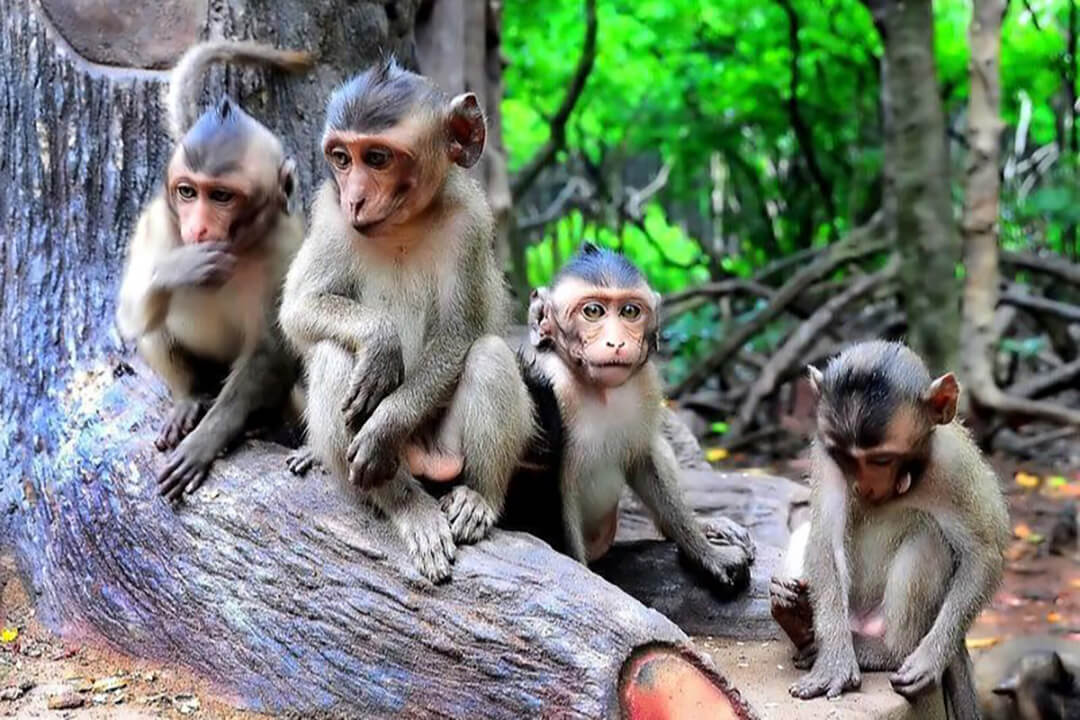
Can Gio Monkey Island in Ho Chi Minh City: Tickets, Things to Do & Travel Guide
Can Gio Monkey Island
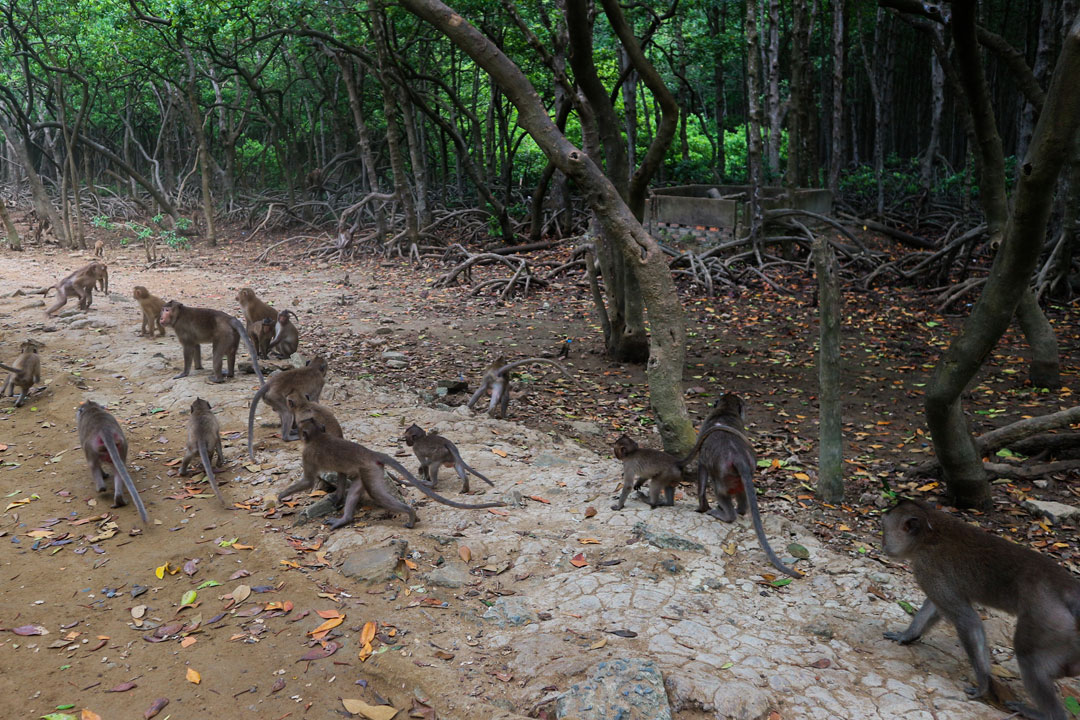
Can Gio Monkey Island in Ho Chi Minh City offers a refreshing escape from the city’s buzzing motorbike chaos. Just a short distance from the center, Can Gio welcomes you with lush mangrove forests, winding waterways, and a fascinating history. Here, you can meet playful long-tailed macaques, drift through tranquil channels, and explore remnants of a wartime guerrilla base.
Can Gio Monkey Island in Ho Chi Minh City: Tickets, Things to Do & Travel Guide
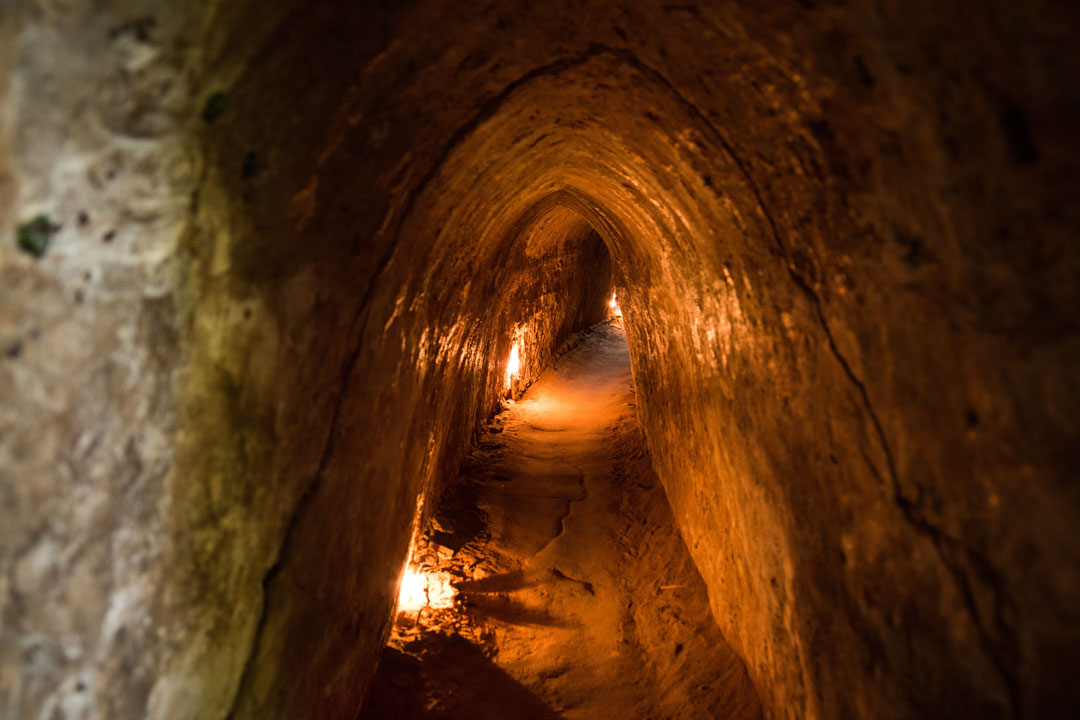
Cu Chi Tunnels: History, Architecture, Things To Do & Travel Guide
Cu Chi Tunnels
The Cu Chi Tunnels, located at TL15, Phu Hiep, Cu Chi District, Ho Chi Minh City, are a vast underground network of strategic passages, shelters, supply routes, and defensive traps.
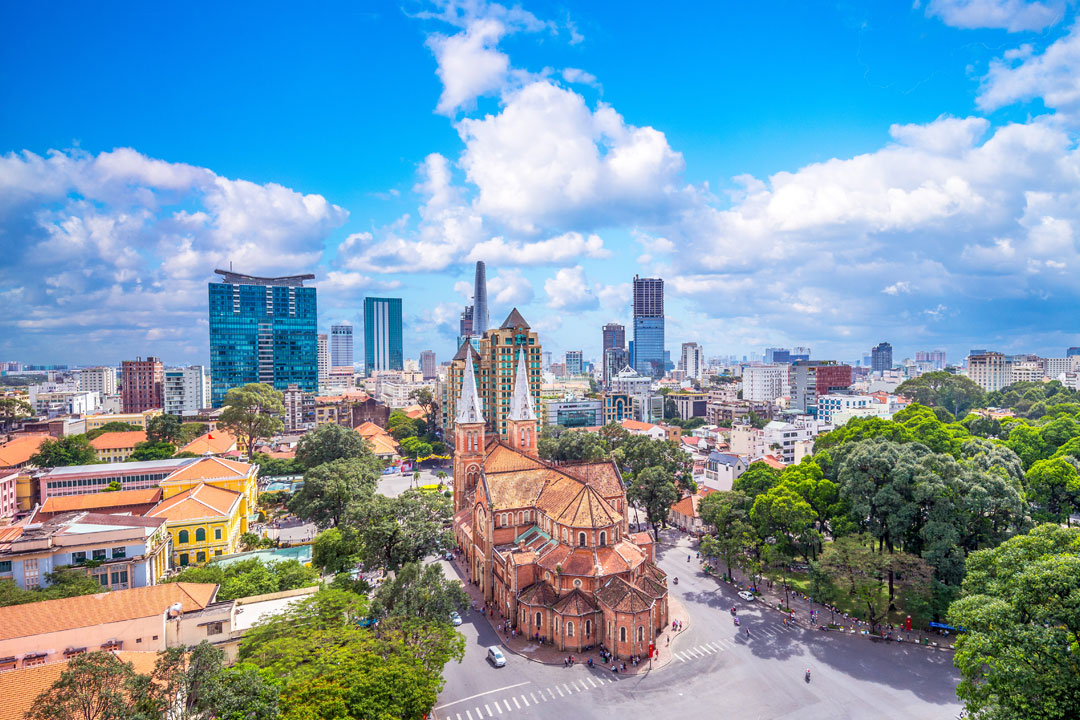
Ho Chi Minh City
Ho Chi Minh City, known as the "Pearl of the Far East," attracts both domestic and foreign tourists with its unique and diverse destinations.
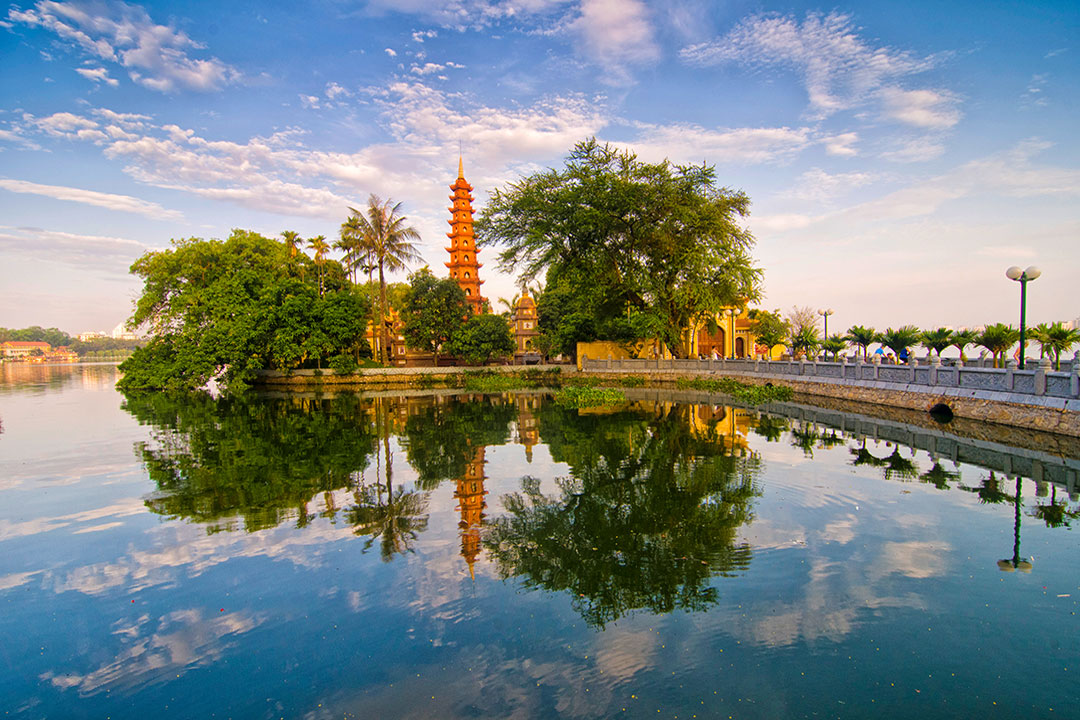
Tran Quoc Pagoda: History, Architecture, Significance & Travel Guide
Tran Quoc Pagoda
Nestled on the tranquil shores of West Lake, Tran Quoc Pagoda is the oldest Buddhist temple in Hanoi, with a history spanning over 1,500 years. Built in the 6th century under Emperor Ly Nam De, this sacred site reflects Vietnam’s Buddhist evolution while preserving its spiritual and architectural grandeur.