

Mar - 26 - 2026
Non Nuoc Pagoda is an ancient spiritual sanctuary carved into the heart of Da Nang’s legendary Marble Mountains. It is a place that takes you on a journey back in time, where breathtaking natural beauty meets profound history. Officially named Linh Ung Pagoda, this is the oldest of the three famous Linh Ung Pagodas in the city, offering a uniquely serene and historical experience compared to its modern counterparts. Nestled on the slopes of Thuy Son Mountain, it’s a place where stone steps whisper tales of dynasties and cave altars glow with an otherworldly light. This comprehensive GTrip guide will walk you through everything you need to know, from its fascinating history and intricate architecture to practical tips for an unforgettable visit.
An overview of Non Nuoc Pagoda in Da Nang
- Location: No. 8 Huyen Tran Cong Chua Street, Ngu Hanh Son Ward, Da Nang City (about 8 km southeast of the city center)
- Opening hours: 7:00 AM - 5:00 PM daily
- Entrance fee: This entrance ticket covers all attractions within the Thuy Son Mountain area, including Non Nuoc Pagoda
- Adults: 40,000 VND
- Students: 10,000 VND (student ID required)
- Children under 6 years old: Free
- Elevator ticket (optional, round trip): 30,000 VND per person
- Best time to visit:
- Best season: January to September (dry season, sunny, minimal rain, ideal for climbing and exploring)
- Best time of day: Early morning (7:00 AM - 9:00 AM) to avoid heat and crowds, late afternoon for cooler weather and a quieter atmosphere
Often called the Linh Ung Pagoda in Marble Mountains, Non Nuoc Pagoda is a designated National Historical and Cultural site. It stands on a low hill at the base of Thuy Son, the largest and most famous of the five Marble Mountains (Ngu Hanh Son). Its unique position, leaning against a sheer marble cliff and surrounded by ancient trees, makes it one of the most picturesque and tranquil spiritual sites in Vietnam.
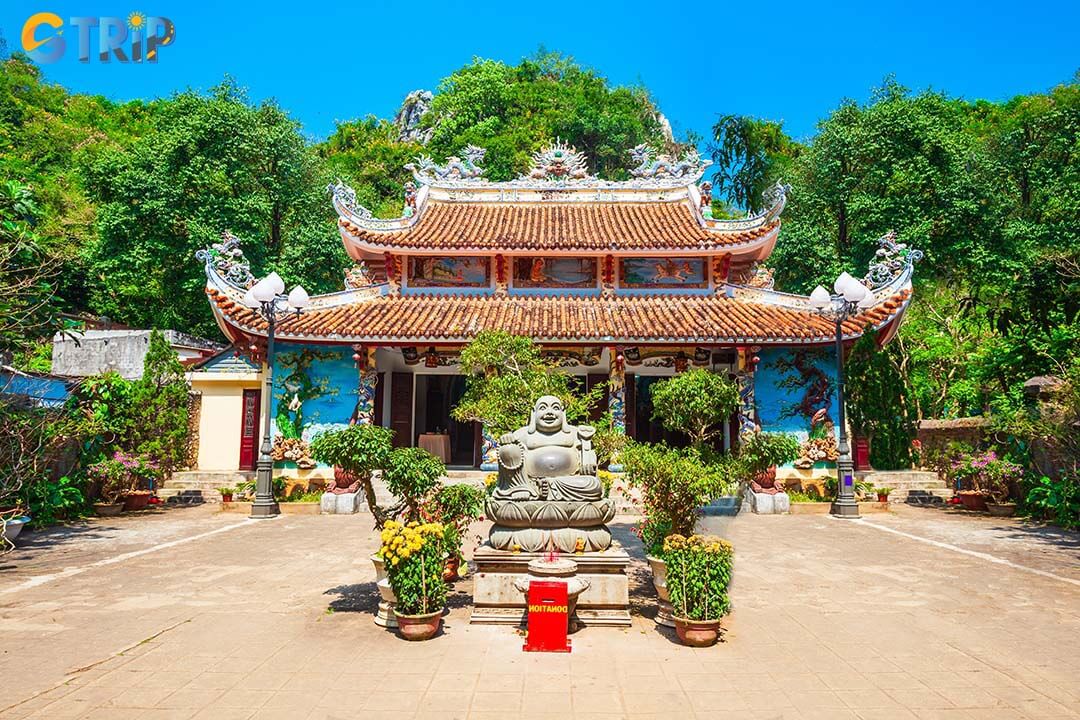
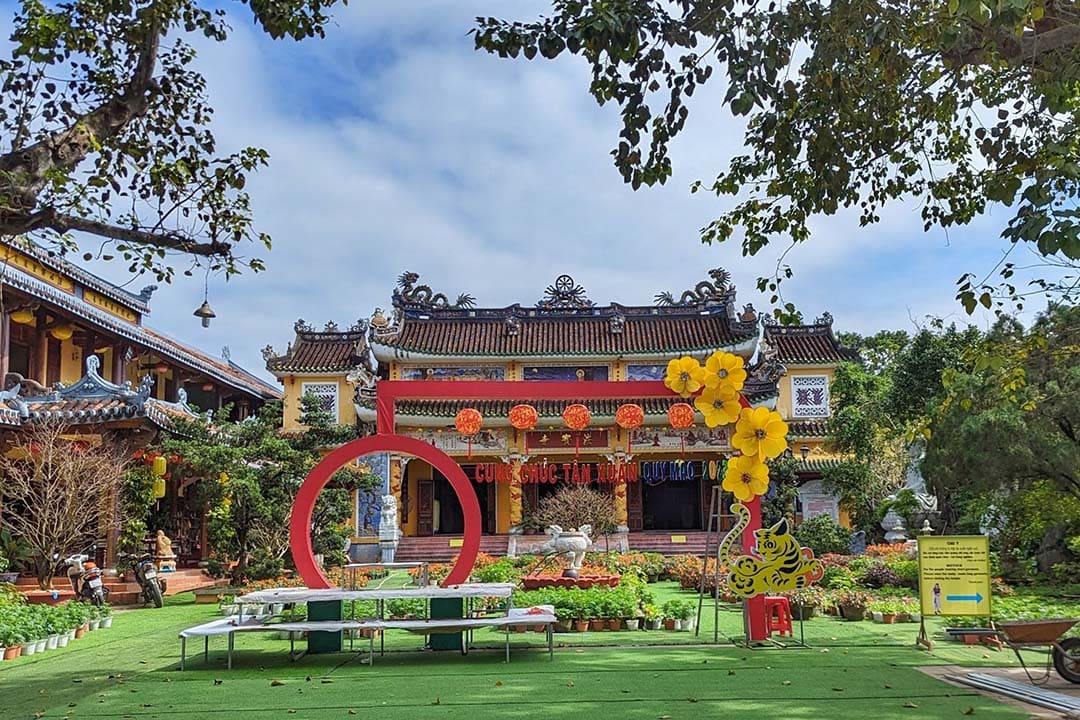
A nationally recognized pagoda nestled at the foot of Thuy Son Mountain, known for its serene cliffside setting within Da Nang’s Marble Mountains
History of the Non Nuoc Pagoda
The history of Non Nuoc Pagoda is as layered and fascinating as the mountain it inhabits. Founded in the 17th century during the late Le Dynasty, the pagoda was initially a small hermitage. It was greatly expanded and given the name Linh Ung Pagoda by Emperor Minh Mang of the Nguyen Dynasty in 1825. According to historical records, the Emperor visited the Marble Mountains and, captivated by their beauty and spiritual energy, ordered the reconstruction and renaming of the temple.
Over the centuries, the pagoda has been a witness to history, surviving wars and undergoing several restorations. It stands as a testament to the enduring nature of Buddhist faith in Vietnam. Unlike the newer Linh Ung Pagodas in Da Nang, this one is steeped in ancient history, with its structures reflecting the architectural styles and spiritual practices of past dynasties.
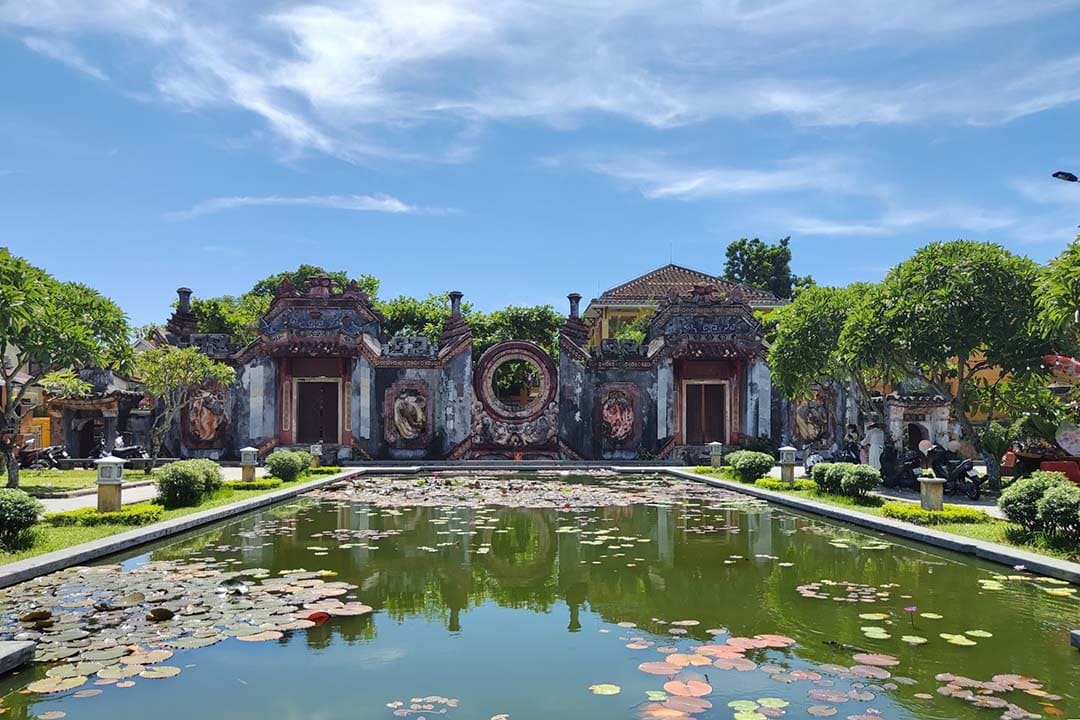
An ancient pagoda dating back to the 17th century, Non Nuoc Pagoda reflects centuries of Buddhist history and imperial influence
Architecture of Non Nuoc Pagoda
The architecture of Non Nuoc Pagoda is a masterful blend of traditional Vietnamese temple design and the natural landscape of Thuy Son Mountain.
Outer grounds
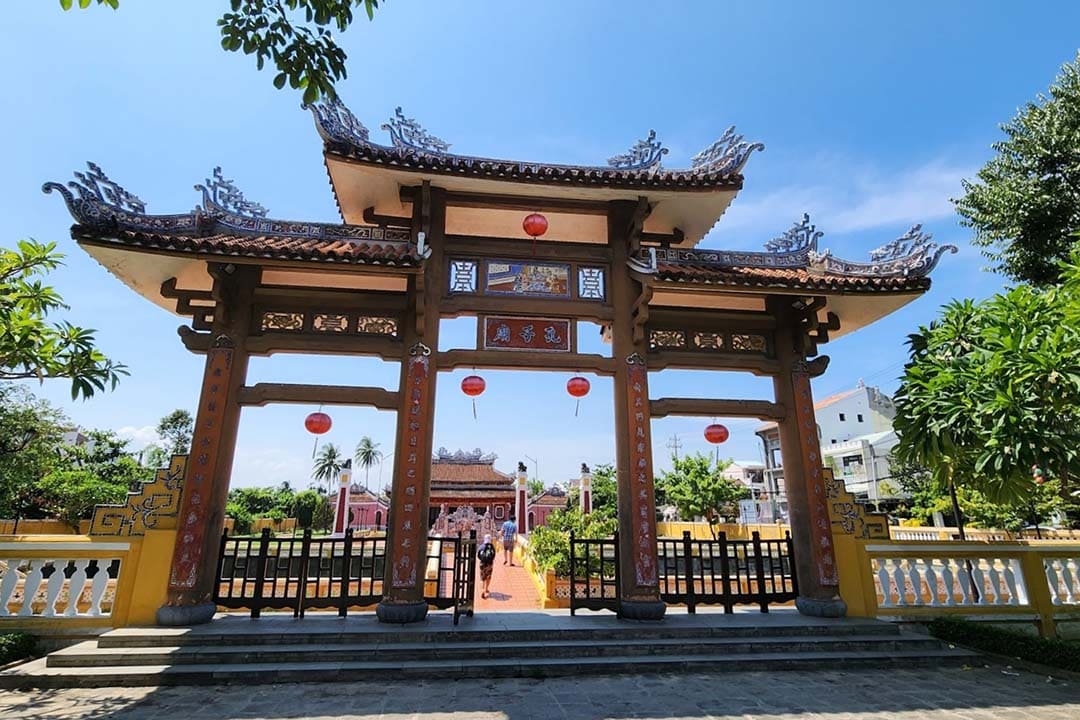
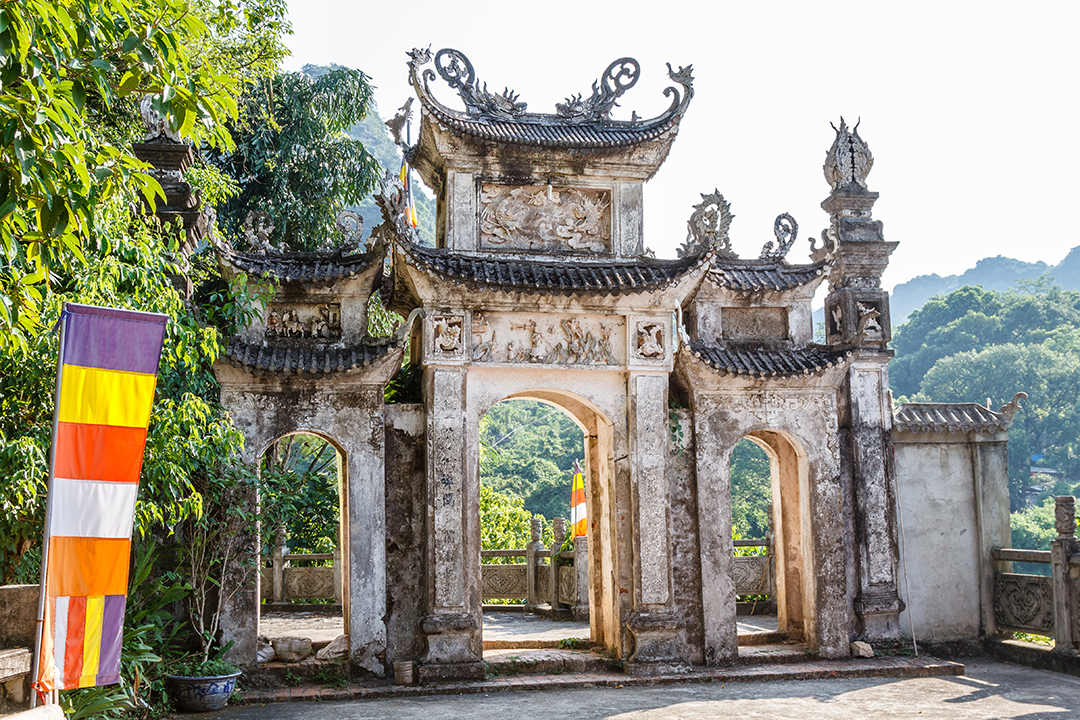
As you approach, you are greeted by the impressive Tam Quan Gate, a classic three-entrance structure with elegantly curved tiled roofs. The courtyard is a peaceful space, shaded by ancient frangipani and banyan trees. Flanking the paths, you will see solemn statues of the Arhats, the enlightened disciples of Buddha, each with a unique expression. The entire layout is designed to be in harmony with the surrounding environment, with the imposing marble cliff of Thuy Son serving as a dramatic natural backdrop. It creates an atmosphere of reverence and tranquility from the moment you step inside.
Main hall
The main worship hall is the spiritual core of the pagoda. Its interior is a showcase of intricate craftsmanship. In the center of the hall, a majestic altar holds the main triad of Buddhist deities, with a serene statue of Shakyamuni Buddha at its heart, flanked by Bodhisattvas. The hall is supported by sturdy ironwood columns adorned with detailed carvings of dragons and phoenixes. Look up to admire the horizontal lacquered boards and parallel sentences inscribed with golden Han - Vietnamese characters, telling stories and Buddhist teachings that have been preserved for centuries.
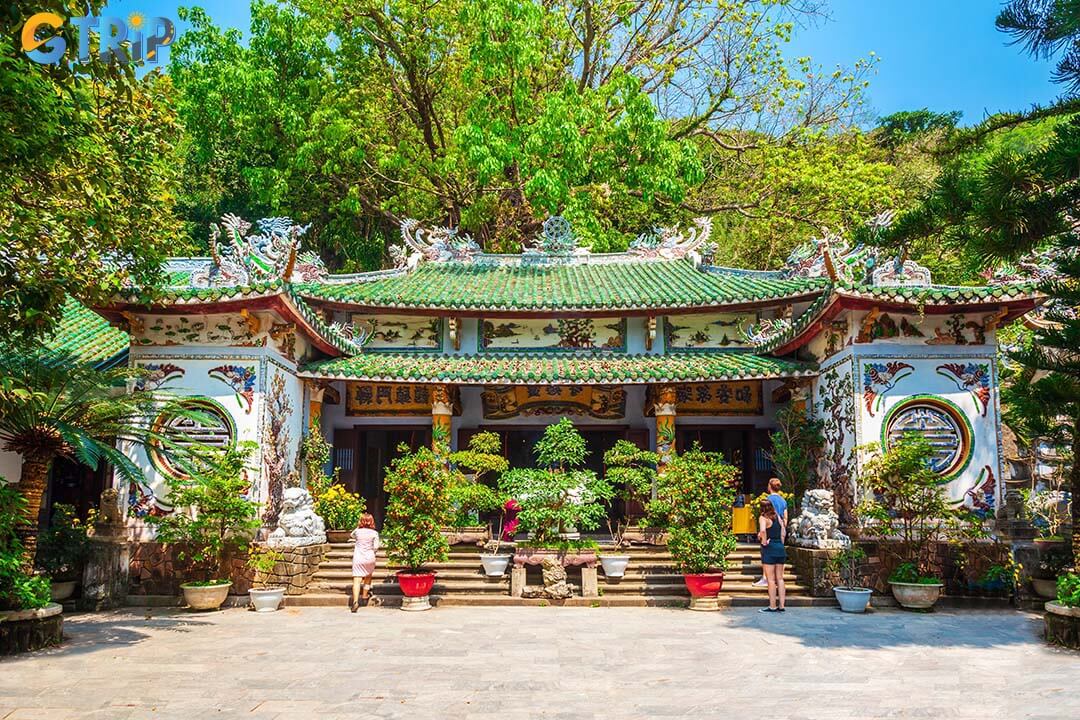
The main worship hall features a Shakyamuni Buddha altar, carved ironwood columns, and historic Han - Vietnamese inscriptions
Rear area of the pagoda
Behind the main hall, the pagoda complex seamlessly merges with the mountain itself. Here you will find the ancestral house, a quiet space dedicated to honoring the lineage of monks who have presided over the pagoda. A significant feature is the path that leads directly from the rear of the pagoda into a small, sacred cave. This grotto contains another altar, creating a powerful spiritual point where man-made devotion meets the raw, natural sanctity of the limestone mountain. This unique connection is a defining characteristic of the Marble Mountains Pagoda.
Sarira Stupa complex
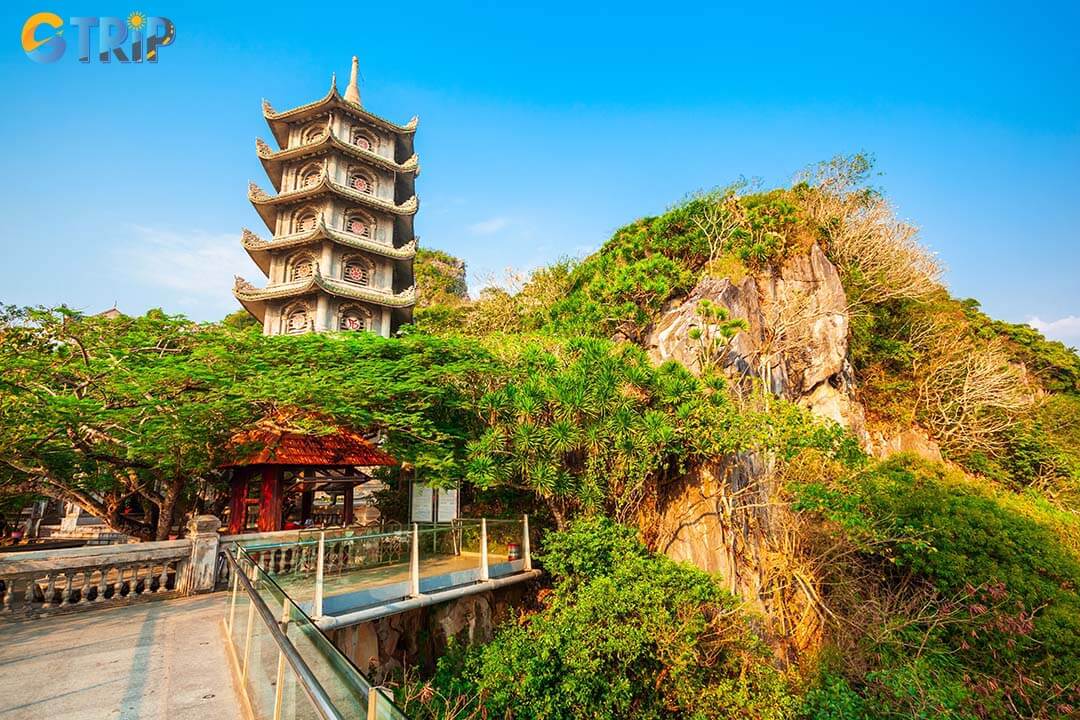
To the left of the main courtyard stands the impressive Xa Loi Tower (Sarira Stupa). This seven-story, hexagonal stupa was built in 1997 and is one of the most recognizable landmarks of the pagoda. A Sarira is a sacred, pearl-like relic found among the cremated ashes of enlightened Buddhist masters. This tower was constructed to house these precious relics, making it an object of immense veneration. Each of its seven tiers is adorned with a statue of Buddha, and its elegant design stands in beautiful contrast to the rugged mountain behind it.
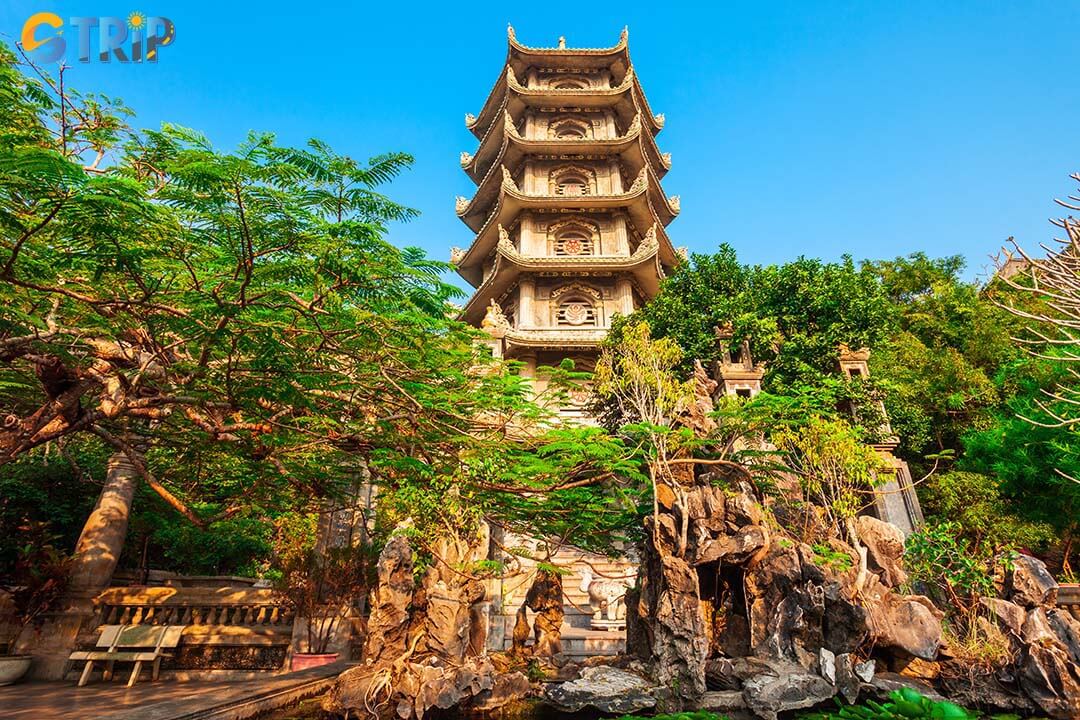
The seven-story Xa Loi Tower is a striking stupa built to enshrine sacred Buddhist relics, symbolizing deep reverence and spiritual purity
Top 8 things to do at Linh Ung Pagoda, Marble Mountains
A visit to the Linh Ung Pagoda in Marble Mountains, also known as Non Nuoc Pagoda is a rich experience offering a mix of spiritual reflection, historical discovery, and natural beauty.
1. Visit and worship at the pagoda
The primary purpose for many visitors is to engage in spiritual practice. You can join local devotees in offering incense at the main altar, a gesture of respect and prayer. Take a moment to sit quietly in the main hall, absorbing the sacred energy and listening to the faint sound of chanting or wind chimes. Worshipping here, on the hallowed ground of Thuy Son Mountain, is a deeply moving experience that connects you to generations of pilgrims who have sought peace and blessings at this very spot.
2. Admire the architecture and historical relics
Take your time to appreciate the pagoda’s remarkable artistic details. Observe the gracefully curved roofs decorated with dragon motifs, a classic element of Nguyen Dynasty architecture. Examine the ancient stone stele near the entrance, which chronicles the pagoda's history and renovations under Emperor Minh Mang. The intricate wood carvings, the aged stone statues, and the antique bronze bells are historical artifacts that tell the story of a bygone era.
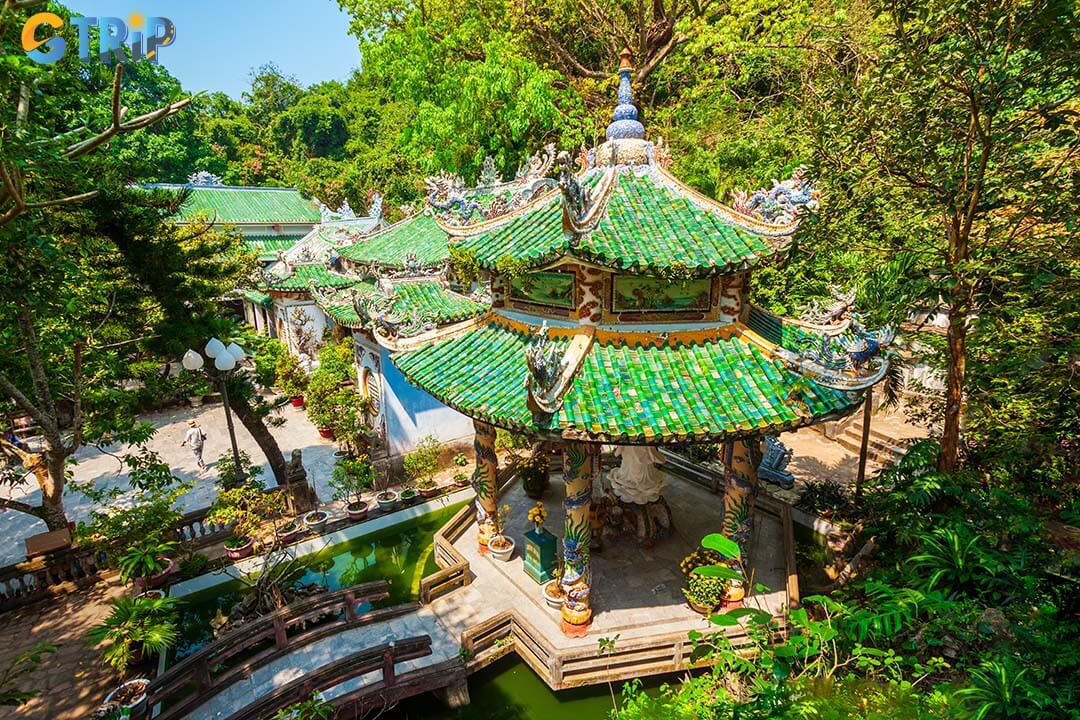
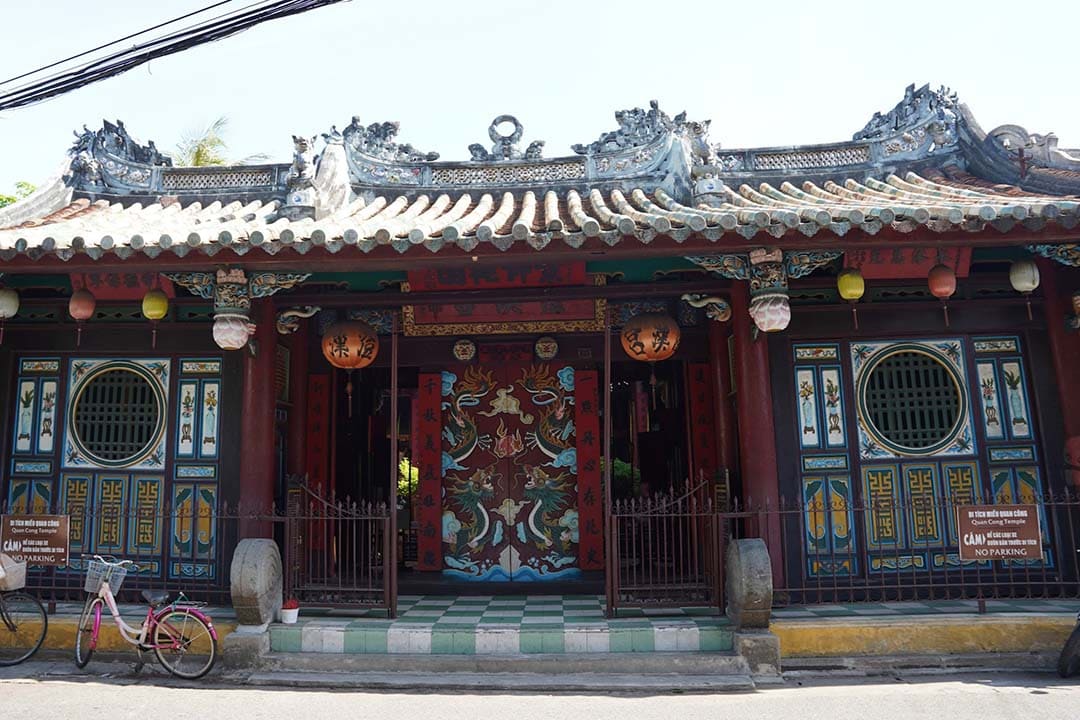
The pagoda’s artistic beauty shines through its dragon-adorned roofs, ancient stone stele, and timeworn carvings that reflect centuries of history and craftsmanship
3. Pray for love, luck, and peace
Non Nuoc Pagoda is a beloved destination for those seeking blessings. It is common to see locals and tourists alike praying for health for their families, success in their careers, and harmony in their relationships. The serene and positive energy of the pagoda makes it an ideal place for personal reflection and making wishes for the future. If you are Buddhist or not, the act of making a quiet wish in such a beautiful, spiritual setting is a meaningful experience.
4. Explore the sacred cave system
The pagoda serves as a gateway to the mystical caves of Marble Mountain. From the grounds, you can easily venture into the connected grottos where nature and faith intertwine. Inside these limestone chambers, you’ll discover hidden altars, statues of Buddha bathed in shafts of natural light filtering down from above, and formations that locals believe resemble mythical creatures. This exploration adds a sense of adventure and wonder to your spiritual journey.
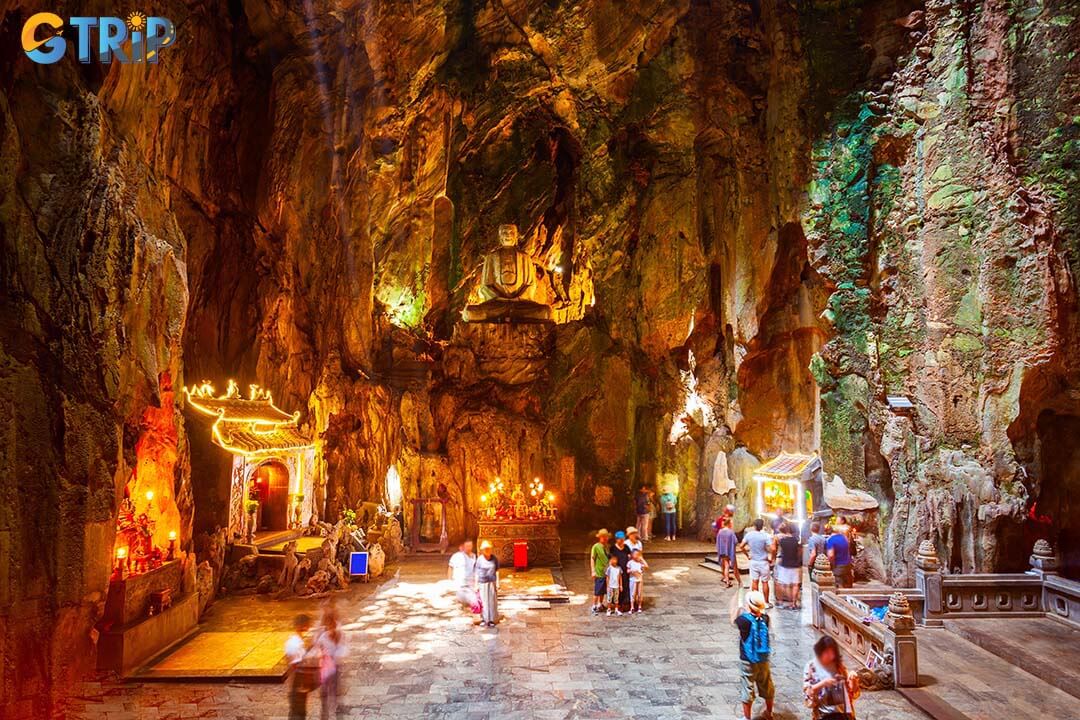
From the pagoda, visitors can explore nearby caves filled with hidden altars, natural light, and mystical limestone formations
5. Enjoy panoramic sea and mountain views
After exploring the pagoda, climb the nearby stone steps to reach scenic viewpoints. From spots like Vong Giang Dai (River Viewing Pavilion) and Vong Hai Dai (Sea Viewing Pavilion), you are rewarded with breathtaking panoramic views. Gaze out over the sweeping coastline of Non Nuoc Beach, the sparkling waters of the East Sea, and the other four marble "islands" rising from the coastal plain. It’s a perfect spot to rest, reflect, and appreciate Da Nang’s stunning landscape.
6. Photograph temples, statues, and natural scenery
This pagoda is a photographer's dream. Capture the beautiful symmetry of the Tam Quan Gate, the textures of the ancient stone statues, and the vibrant colors of the pagoda's roof against the grey marble cliff. The interplay of light and shadow, especially inside the caves, creates dramatic and atmospheric shots. Frame your photos with the gnarled branches of ancient trees to add a sense of timelessness to your images of this historic site.
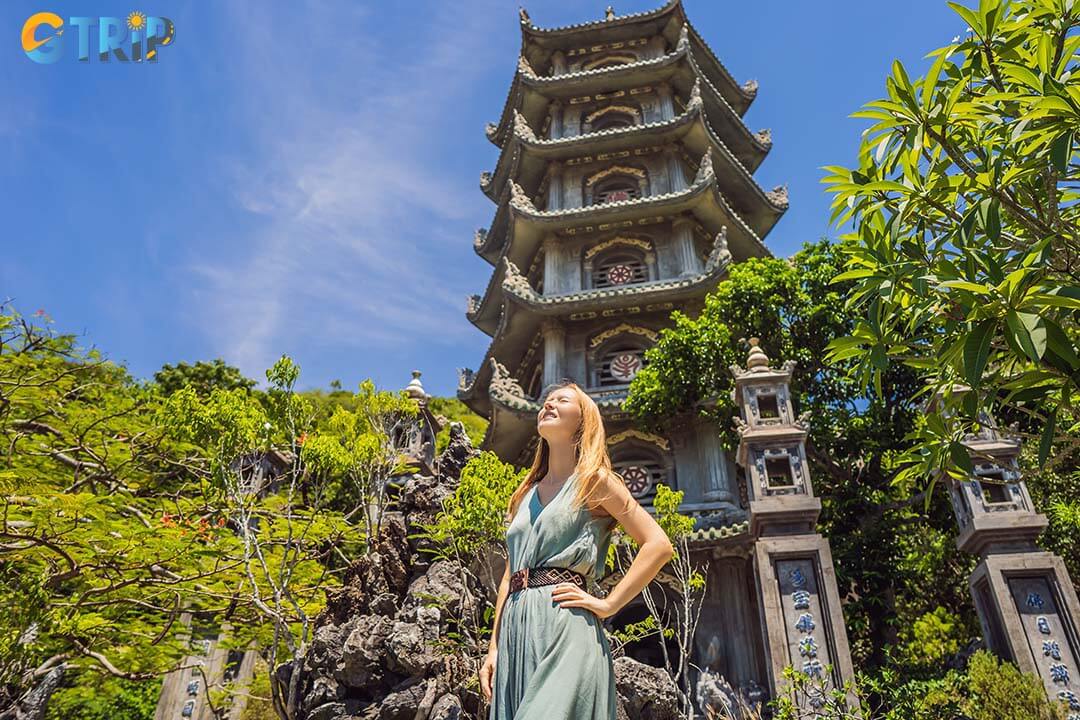
A paradise for photographers, the pagoda offers striking symmetry, ancient stone details, dramatic cave lighting, and stunning contrasts against the marble cliffs
7. Visit nearby religious sites
Your ticket for Ngu Hanh Son grants you access to more than just Non Nuoc Pagoda. A short walk or climb from the pagoda, such as the ancient Tam Thai Pagoda, the awe-inspiring Huyen Khong Cave with its colossal Buddha Statue. Exploring these sites together provides a complete picture of the spiritual and cultural significance of the Marble Mountains.
8. Relax in a peaceful, contemplative setting
In a bustling city like Da Nang, Non Nuoc Pagoda offers a precious pocket of tranquility. Find a stone bench in the shade of a Bodhi tree, close your eyes, and simply listen to the gentle breeze and the distant sound of the ocean. It's an opportunity to disconnect from the noise of daily life and reconnect with yourself in a place of profound peace. This is one of the most rewarding and simple things to do at Non Nuoc Pagoda.
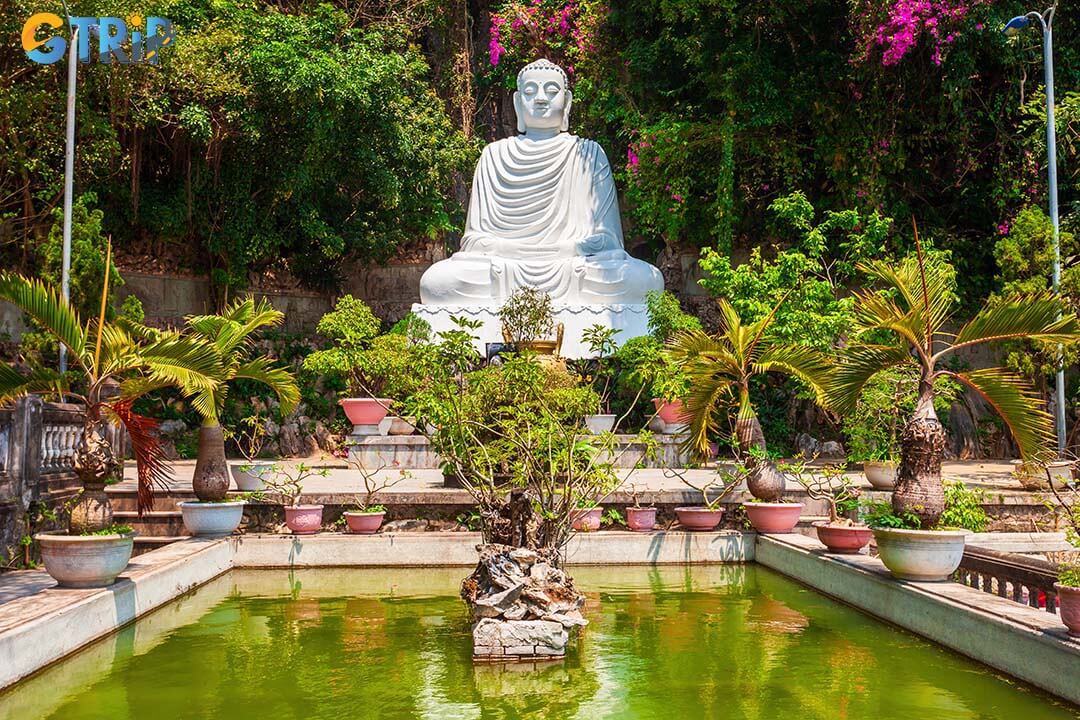
A serene escape from the city, Non Nuoc Pagoda invites visitors to slow down, breathe deeply, and find inner peace amid nature and sacred surroundings
How to get to Non Nuoc Pagoda in Da Nang
Getting to the pagoda is straightforward, as it's a major landmark in Da Nang, located just a 15-20 minute drive from the city center.
- By motorbike/car: Renting a scooter is a popular and flexible way to explore.
- Route 1 (via Vo Nguyen Giap): From Dragon Bridge, head towards the beach and take Ngo Quyen Street. Follow the main coastal road, which becomes Vo Nguyen Giap and then Truong Sa. Turn right onto Huyen Tran Cong Chua Street. This leads you to Gate 2 of Marble Mountains, the closest entrance to Non Nuoc Pagoda.
- Route 2 (via Le Van Hien): From Dragon Bridge, take Ngu Hanh Son Street, which becomes Le Van Hien Street. Drive straight and turn left onto Huyen Tran Cong Chua Street. This route leads to Gate 1, which requires a slightly longer walk to the pagoda.
- By taxi or ride-hailing app: This is the most convenient option. Simply input "Non Nuoc Pagoda" or "Marble Mountains" into apps like Grab/Be/Xanh SM, and your driver will take you directly there.
Nearby attractions to Non Nuoc Pagoda
Your visit can easily be expanded into a full-day adventure by exploring these fantastic nearby sites.
- Marble Mountains (Ngu Hanh Son): The pagoda is part of this larger complex of five limestone and marble hills, each filled with caves, tunnels, and temples waiting to be discovered.
- Huyen Khong Cave: Explore this spectacular, cathedral-like cave with a giant Buddha statue illuminated by natural light from a large opening in the ceiling.
- Am Phu Cave (Hell Cave): Take a fascinating and slightly spooky journey through this cave, which depicts the Buddhist vision of hell and the path to heaven's salvation.
- Tam Thai Pagoda: Visit another of the area's oldest pagodas, located higher up on Thuy Son Mountain and also commissioned by Emperor Minh Mang.
- Non Nuoc Stone Carving Village: Wander through the 400-year-old craft village at the mountain's base to see skilled artisans transform marble into stunning sculptures.
- Non Nuoc Beach: Just across the road lies this beautiful, quiet stretch of white sand, perfect for relaxing after your mountain exploration.
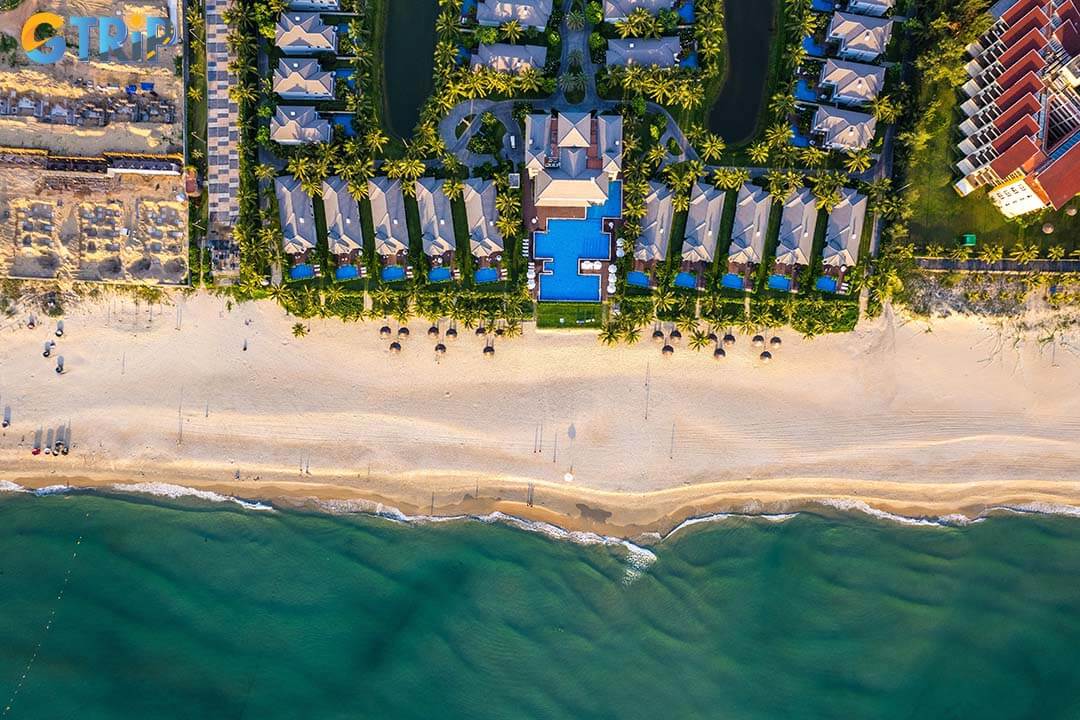
Non Nuoc Pagoda is an ideal base for exploring Marble Mountains, nearby caves, historic pagodas, and Non Nuoc Beach in one day
Practical tips for visitors when visiting Linh Ung Pagoda in Marble Mountains
To ensure a smooth and respectful visit, keep these tips from GTrip in mind.
- Dress respectfully: This is a sacred site. Ensure your shoulders and knees are covered. Avoid wearing shorts, short skirts, or tank tops.
- Wear comfortable shoes: You will be doing a lot of walking and climbing on uneven stone steps. Sturdy sneakers or walking shoes are essential.
- Stay hydrated: Da Nang’s climate can be hot and humid. Bring a bottle of water to stay hydrated throughout your visit.
- Be mindful of the elevator: The elevator is a great help, but its operating hours are limited (7:00 AM to 5:00 PM). Don't get caught on the mountain after it closes.
- Non Nuoc Pagoda entrance fee: Remember that the 40,000 VND ticket is for the entire Thuy Son Mountain area, not just the pagoda itself.
- Show respect: maintain a quiet voice, refrain from littering, and follow all posted rules.
FAQs about Non Nuoc Pagoda
Here’s a clear, polished version with improved flow and grammar while keeping your meaning intact:
How many Linh Ung Pagodas are there in Da Nang?
Three famous pagodas in Da Nang share the name Linh Ung Pagoda. Their locations distinguish them:
- Linh Ung Pagoda on Son Tra Peninsula (home to the giant Lady Buddha statue)
- Linh Ung Pagoda at Ba Na Hills
- Linh Ung Pagoda at Marble Mountains, which is historically and commonly known as Non Nuoc Pagoda
What makes Non Nuoc Pagoda different from the other two Linh Ung Pagodas?
Non Nuoc Pagoda is fundamentally different in three key ways. First, it is by far the oldest, with roots in the 17th century. Second, it is integrated into a natural mountain and cave system, giving it an ancient, mystical atmosphere that the other, more modern constructions lack. Finally, its historical significance and classic architecture provide a more traditional and intimate spiritual experience.
Why do foreign visitors often get confused about Linh Ung Pagoda in Da Nang?
The confusion arises because three separate, famous pagodas all share the name "Linh Ung". Tourists often hear about "Linh Ung Pagoda" and mistakenly think it refers to only one place, usually the famous Lady Buddha on the Son Tra Peninsula. To avoid confusion, it is helpful to remember that Non Nuoc Pagoda is the specific historical name for the ancient Linh Ung Pagoda located at the magnificent Marble Mountains.
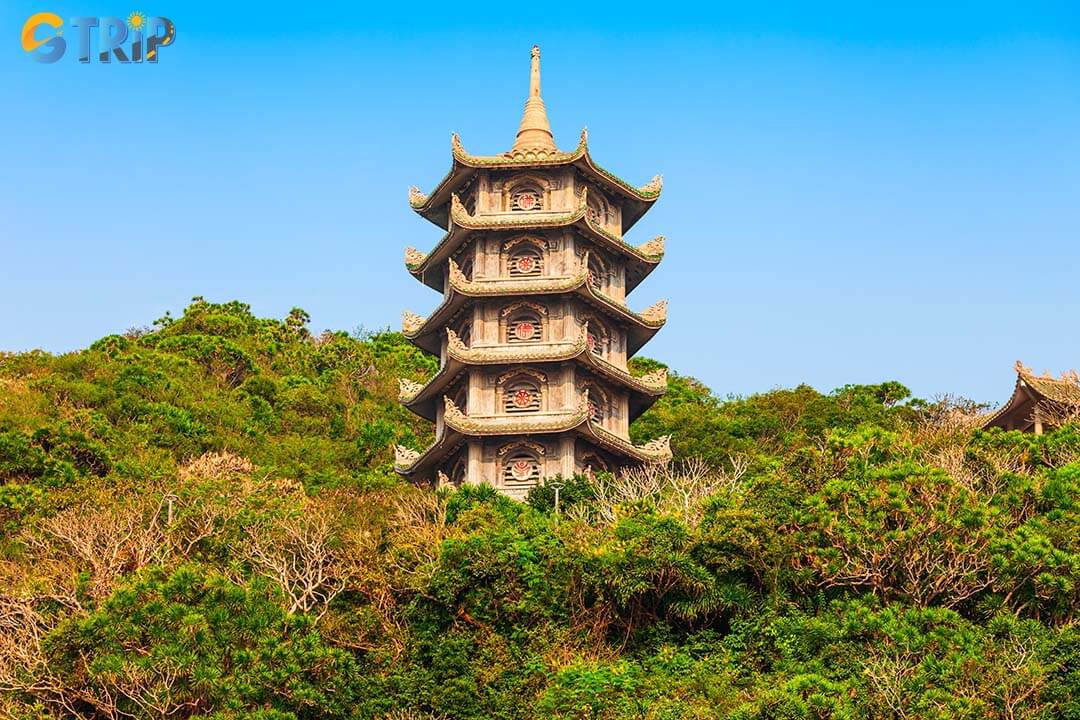
The name “Linh Ung Pagoda” refers to three different sites in Da Nang, so visitors often confuse them with Non Nuoc Pagoda
Non Nuoc Pagoda is a destination that captures the soul of Da Nang. It’s where spiritual devotion, dynastic history, and stunning natural artistry converge. A visit here offers a profound sense of peace and a deep connection to Vietnam’s rich cultural tapestry. You’ll leave with beautiful photos and a lasting feeling of tranquility. To make the most of your trip, consider joining one of the curated Da Nang tours that include the Marble Mountains, helping you explore the area more deeply with local insights and seamless planning. We at GTrip hope this guide helps you plan an unforgettable journey to this spiritual heart of the Marble Mountains.