

Jan - 30 - 2026
Quan The Am Pagoda is a sacred and visually striking spiritual site at the foot of Marble Mountains in Da Nang City. The temple is a place where nature's artistry and human devotion merge, creating a sanctuary of profound peace and cultural significance. Known for its magnificent cave system and the vibrant Quan The Am Festival, the pagoda offers a unique journey into Vietnam's spiritual heart. As your trusted travel expert, GTrip has crafted this comprehensive guide to cover every aspect of your visit.
An overview of Quan The Am Pagoda in Da Nang
- Location: 48 Su Van Hanh Street, Ngu Hanh Son Ward, Da Nang City
- Opening hours: 6:00 AM - 9:00 PM daily (During major holidays and the annual festival, the pagoda is open all day)
- Entrance fee: Free
Quan The Am Pagoda is a revered Buddhist temple located on Kim Son, one of the five elements that form the Marble Mountains complex. Unlike the more visited pagodas on the main Thuy Son, Quan The Am Pagoda offers a more secluded and contemplative atmosphere, centered around a remarkable natural cave.
The pagoda's origin story is deeply rooted in spirituality. Its founding was inspired by a dream experienced by the Venerable Thich Phap Nhan. In his vision, he saw Quan The Am manifest within a sacred grotto at the base of Kim Son. Following this profound dream, he explored the mountain and discovered the Hoa Nghiem Cave, where a stunning stalactite naturally formed in the perfect likeness of the Bodhisattva. This discovery led to the establishment of the pagoda in 1957, with the sacred cave as its spiritual centerpiece.
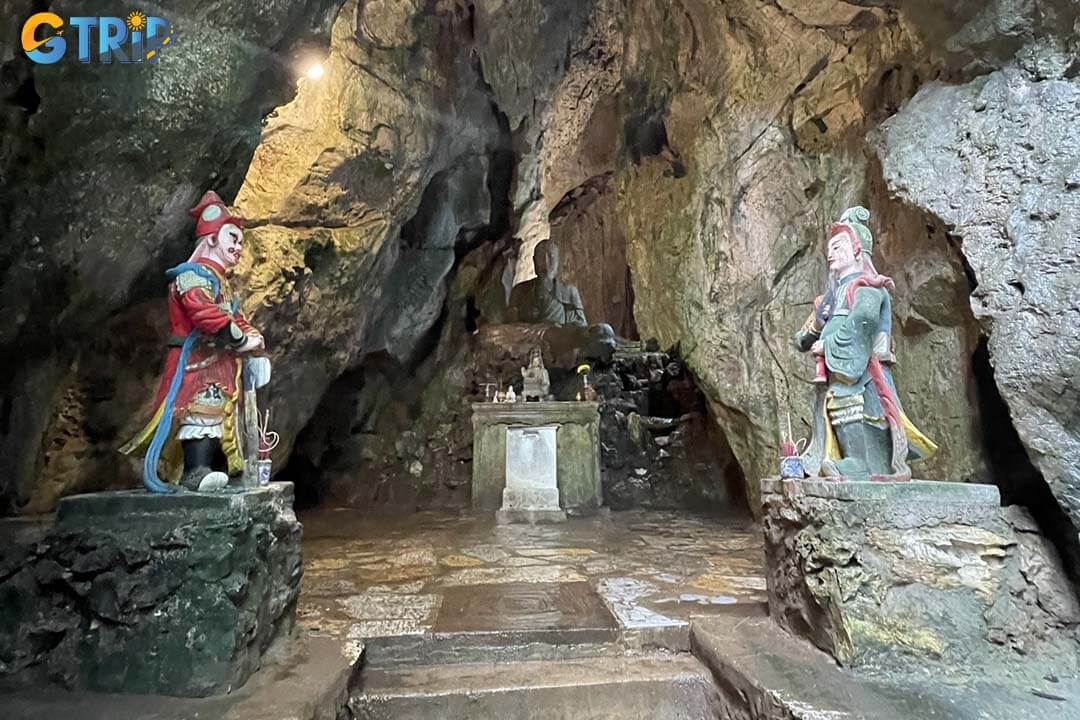
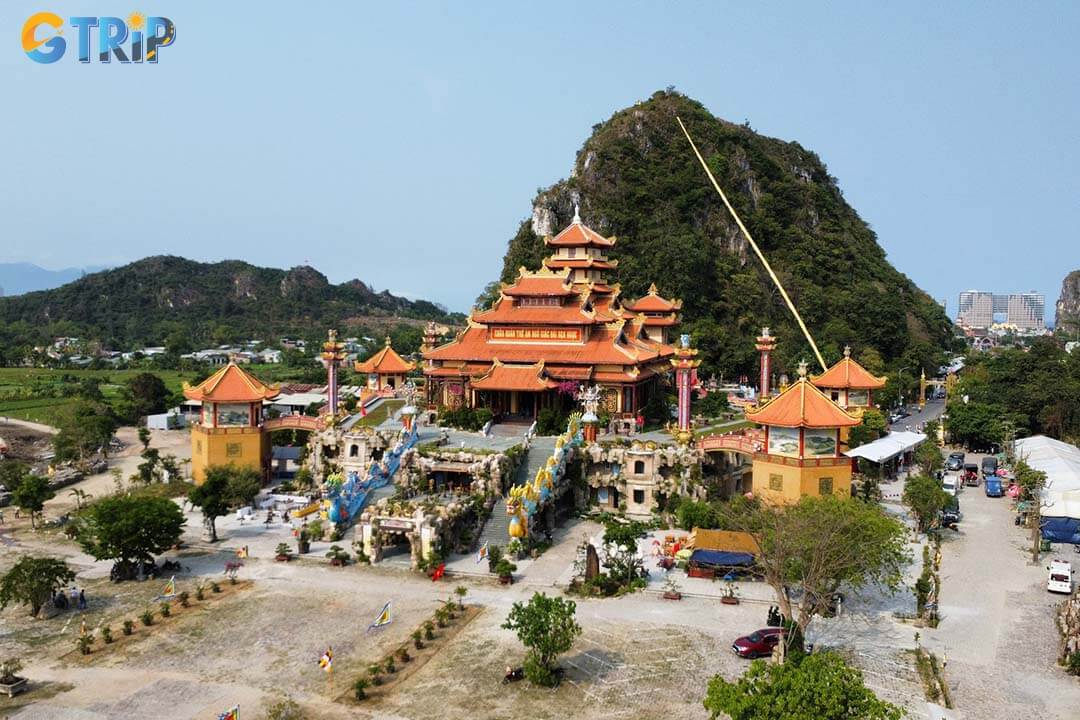
Quan The Am Pagoda on Kim Son Mountain, a serene Buddhist temple in Da Nang renowned for its sacred cave and tranquil atmosphere
Best time to visit Quan The Am Pagoda in Da Nang City
Choosing the right time to visit Quan The Am Pagoda ensures you can fully appreciate its serene beauty and spiritual atmosphere. GTrip recommends planning your visit based on the time of day and the season.
- Ideal time of day: The best time to visit is early morning (6:00 AM - 9:00 AM) or late afternoon (4:00 PM - 6:00 PM). During these hours, you will experience the most peaceful atmosphere, avoid the large tour groups, and escape the intense midday heat, especially during the summer.
- Best season: The dry season, from February to August, is the ideal time to travel to Da Nang. This period offers sunny skies and pleasant weather, making it perfect for exploring the pagoda and the wider Marble Mountains complex without the disruption of rain.
- Quan The Am Festival: For a vibrant cultural experience, visit during the Quan The Am Festival, held annually on the 19th day of the second lunar month. This is when the pagoda truly comes alive with prayer ceremonies, processions, and festive activities. Be prepared for very large crowds during this time.
For the best experience, visit Quan The Am Pagoda in the early morning or late afternoon during the dry season (February - August)
History of the Quan The Am Pagoda in Da Nang
The history of Quan The Am Pagoda is relatively recent but rich with spiritual significance. The pagoda was founded in 1957 by the Venerable Thich Phap Nhan. The catalyst for its construction was a prophetic dream in which the Quan The Am (Bodhisattva of Compassion) appeared to him within a mystical cave at the foot of Kim Son. Compelled by this vision, the venerable monk explored the area and discovered what is now known as Hoa Nghiem Cave.
Inside this natural grotto, he found a remarkable sight: a pure white stalactite that had naturally formed into a standing figure, closely resembling Quan The Am holding a sacred water vase. This miraculous formation was seen as a divine sign. The formation stands approximately 1.75 meters tall, a perfect human scale, creating an immediate and powerful connection for worshippers. Taking this as a mandate from the heavens, Venerable Thich Phap Nhan established the pagoda directly in front of the cave, dedicating it to the worship of Quan The Am. The pagoda quickly became an important spiritual center for local Buddhists and a site of pilgrimage, intrinsically linked to the natural sanctity of the Marble Mountains.
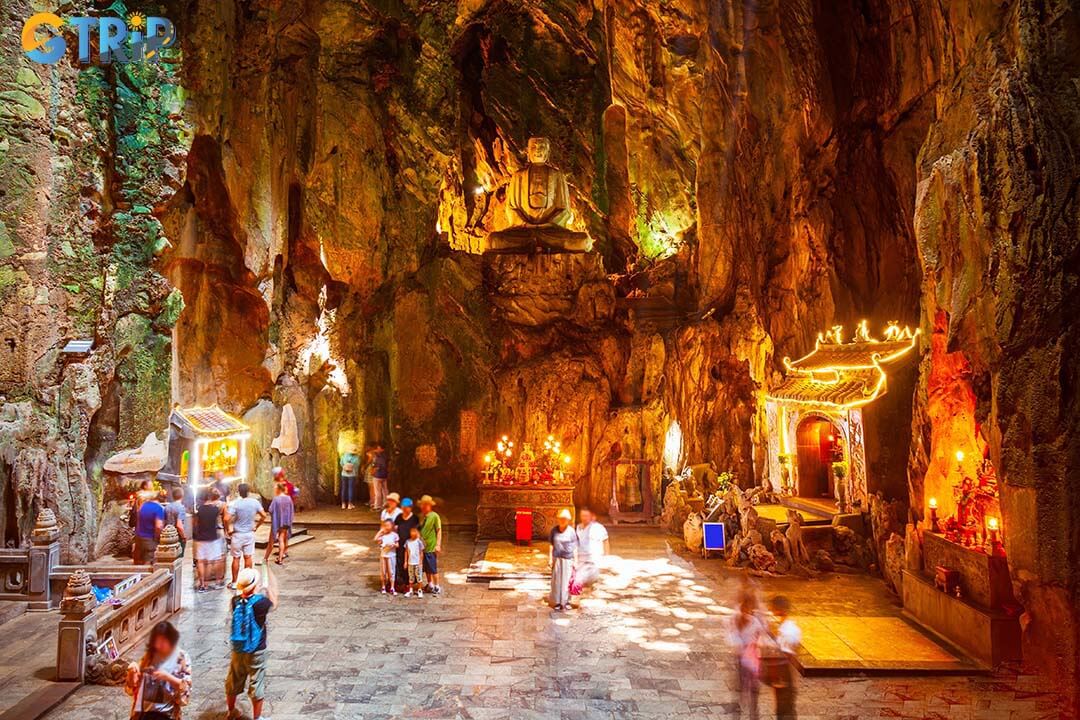
Quan The Am Pagoda was built around a natural cave where a stalactite resembling the Quan The Am was discovered, making it a landmark of the Marble Mountains
Architecture of Quan The Am Pagoda in Da Nang
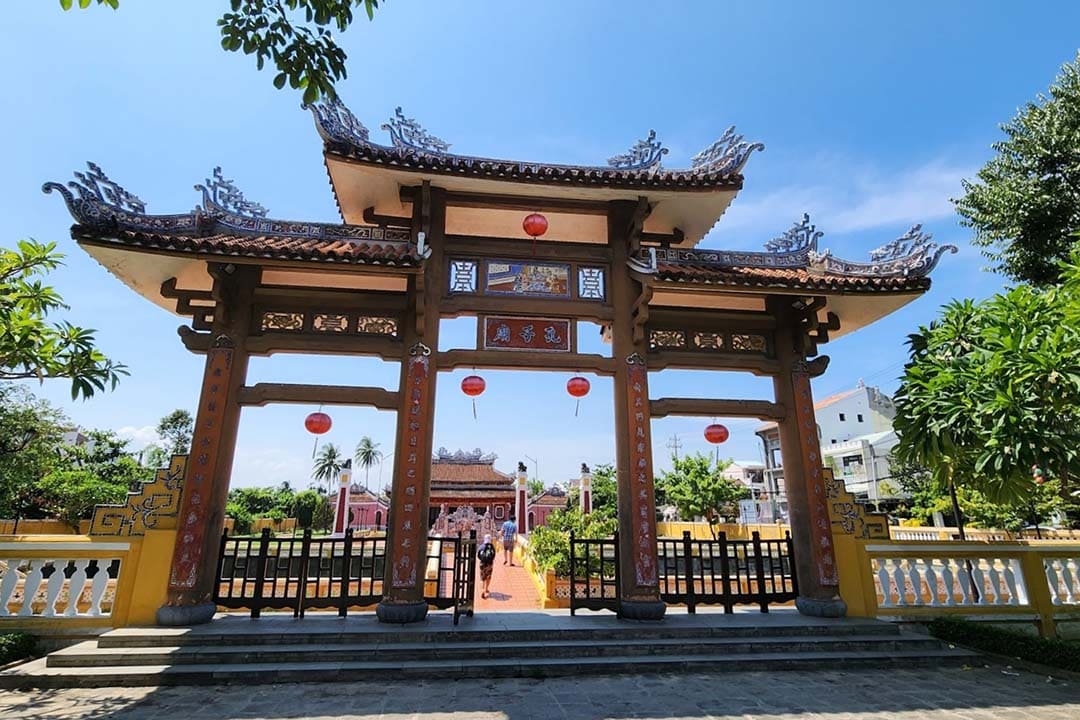
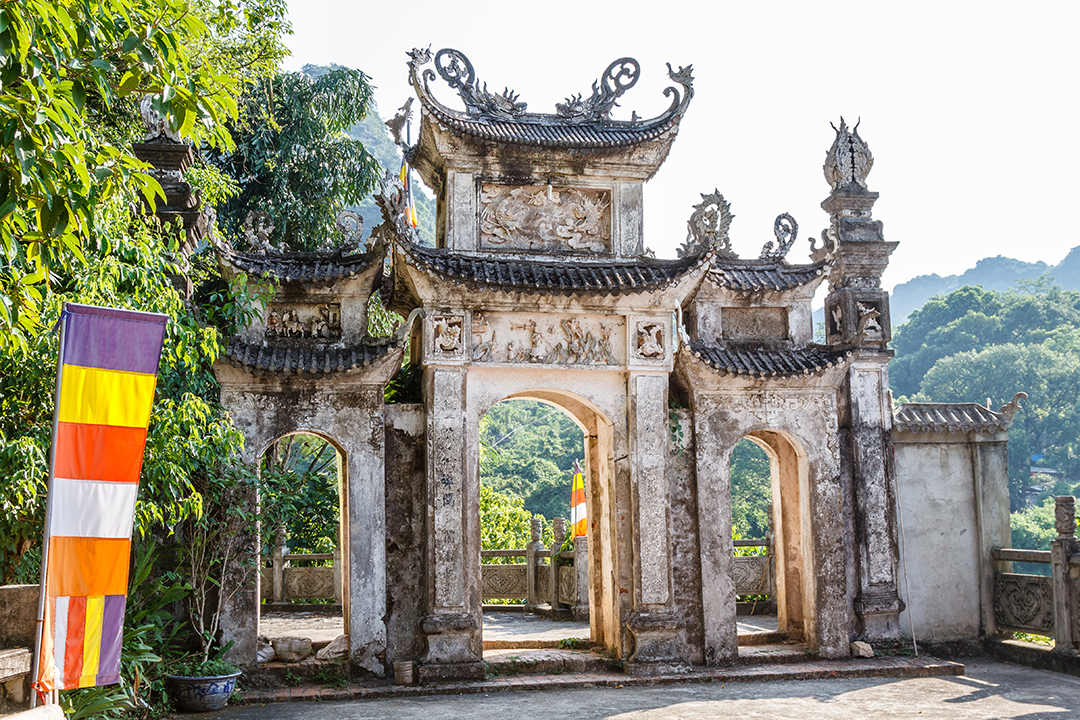
The architecture of Quan The Am Pagoda is a harmonious blend of traditional Vietnamese temple design and the raw, natural beauty of its mountain setting. Unlike freestanding structures, the pagoda is built directly against the cliff face of Kim Son, integrating the mountain itself as a core architectural element. The main triple-gated entrance, adorned with curved, tiled roofs featuring carved dragons, welcomes visitors into a tranquil courtyard. This courtyard is a space for contemplation, dotted with ancient trees, ornamental plants, and statues of various Buddhist figures.
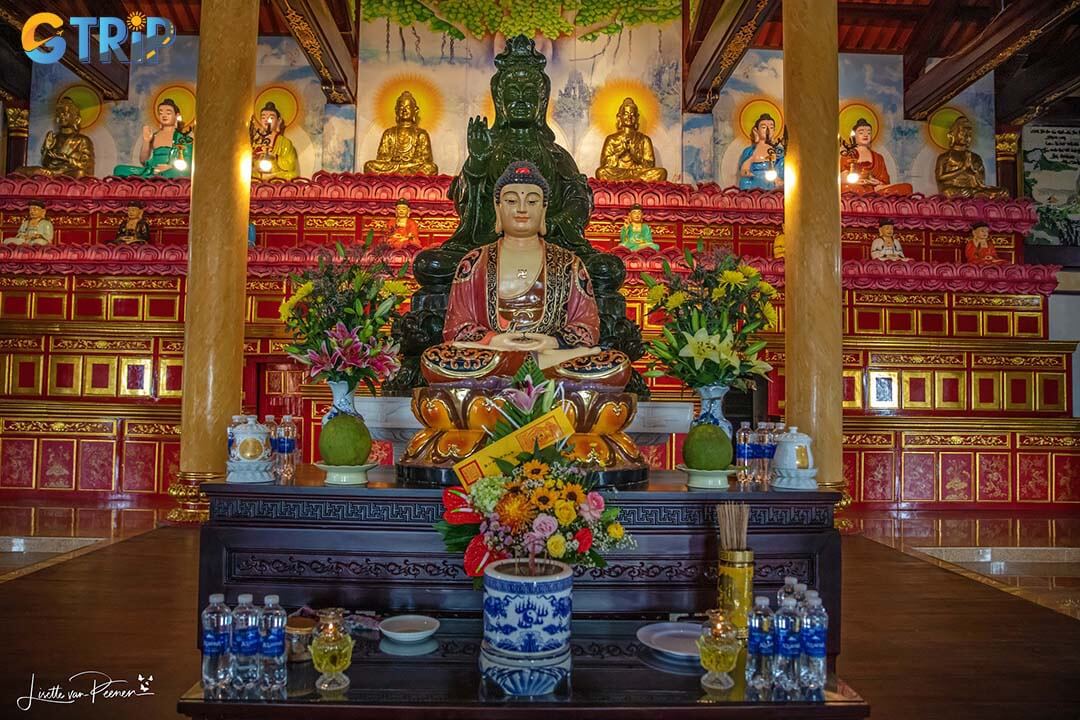
The main hall follows traditional design principles with a multi-tiered roof and intricate woodwork. Inside, the hall is calm and reverent, housing the primary altars for worship. However, the most unique architectural feature is its relationship with the Hoa Nghiem Cave. The pagoda acts as a gateway to this sacred grotto, and the design intentionally leads visitors from the man-made structures of the courtyard and hall into the mystical, natural temple within the mountain. The harmony between human-made spaces and the natural cave shapes the pagoda’s essence, uniting spiritual devotion with geological beauty.
Quan The Am Pagoda seamlessly combines traditional temple design with its cliffside setting, leading visitors from peaceful courtyards into the sacred Hoa Nghiem Cave
Cultural and spiritual significance of Quan The Am Pagoda Da Nang
Quan The Am Pagoda holds immense cultural and spiritual significance for the people of Da Nang and Buddhists across Vietnam. Its primary importance lies in its dedication to Quan The Am, the bodhisattva of great compassion. Devotees believe that praying to Quan The Am can alleviate suffering, grant peace, and offer protection, especially for those who work at sea, a vital part of Da Nang's local economy. The natural statue within Hoa Nghiem Cave is considered particularly potent, drawing pilgrims who come to pray for health, happiness, and prosperity.
Beyond its religious role, the pagoda is a custodian of cultural heritage. The annual Quan The Am Festival is recognized as one of Da Nang's 15 largest cultural events, attracting tens of thousands of people. It is a time when folk traditions, religious rites, and community celebrations merge, reinforcing cultural identity and national values. The pagoda serves as a symbol of peace and a center for Buddhist teachings, preserving spiritual traditions for future generations. For visitors, it offers a deep insight into the spiritual life of Central Vietnam and its profound connection to the natural landscape.
Things to do at Quan The Am Pagoda in Da Nang
A visit to Quan The Am Pagoda is a multi-layered experience, offering opportunities for spiritual reflection, cultural discovery, and exploration of natural wonders. Here is what you must see and do to make the most of your visit.
1. Explore the Quan The Am Pagoda grounds in Da Nang
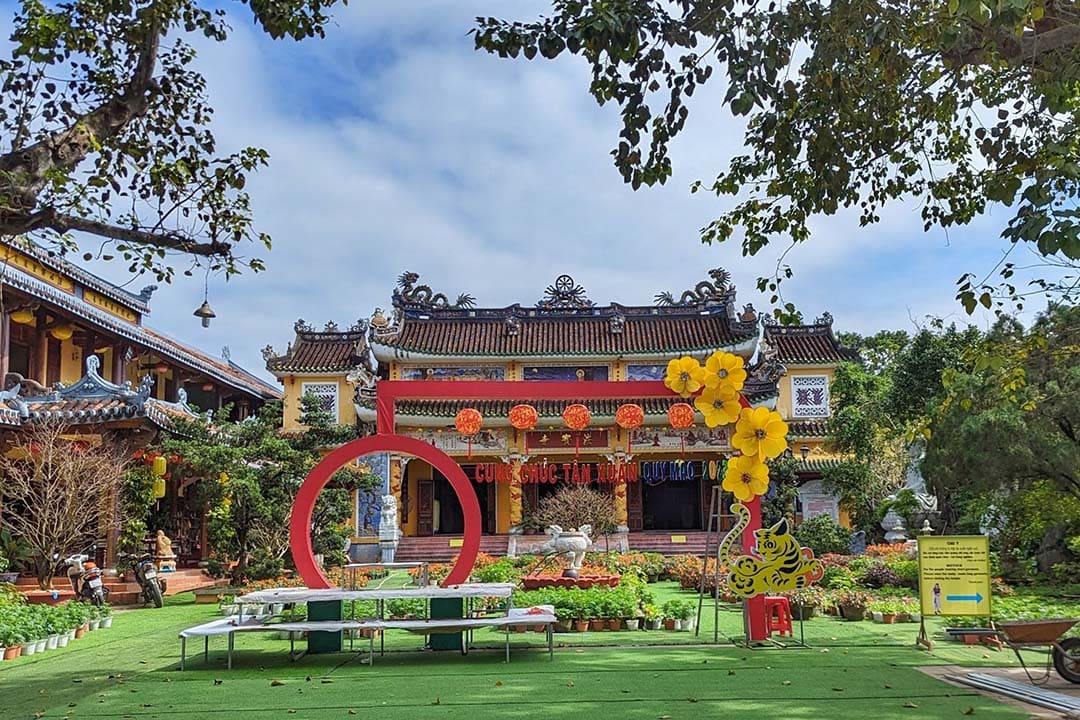
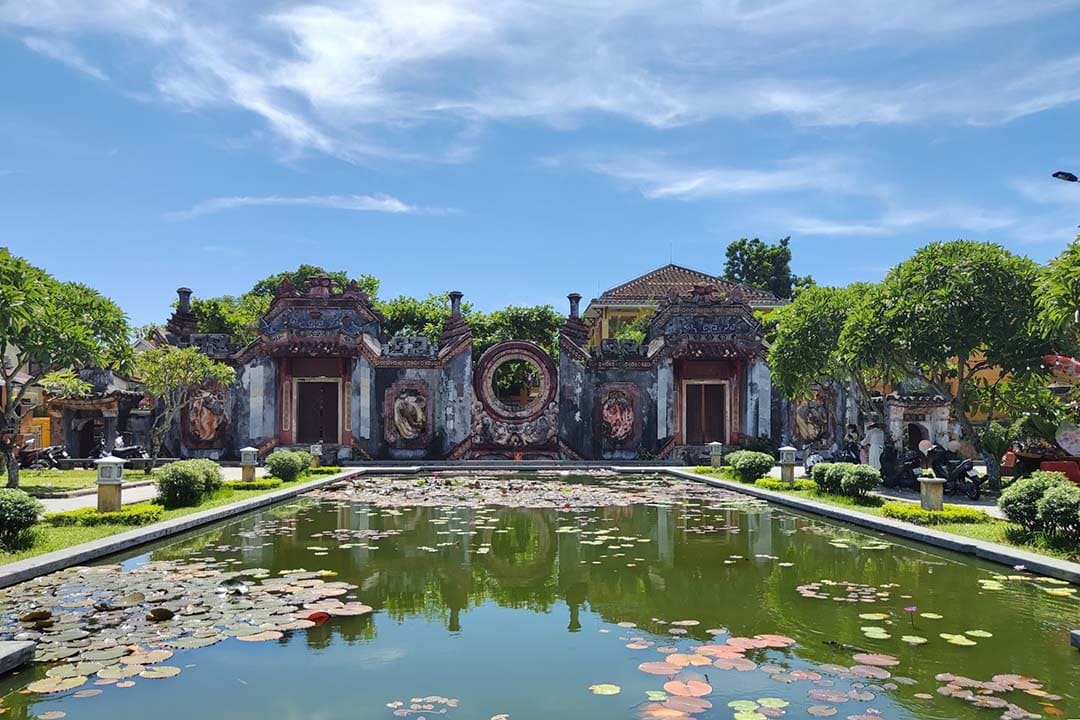
Before venturing into the famous cave, take the time to explore the pagoda's serene grounds. The moment you step through the traditional tam quan gate, you are transported to a world of peace. The main courtyard is meticulously maintained, featuring carefully sculpted bonsai trees, a tranquil lotus pond, and statues of Arhats (enlightened disciples of Buddha) lining the pathways. The air is often filled with the gentle scent of burning incense and the soft sound of wind chimes. The architecture itself is a highlight, with its gracefully curved roofs decorated with mosaic dragons and phoenixes. Find a quiet bench under the shade of a Bodhi tree and simply absorb the tranquil atmosphere. It is the perfect way to begin your spiritual journey here.
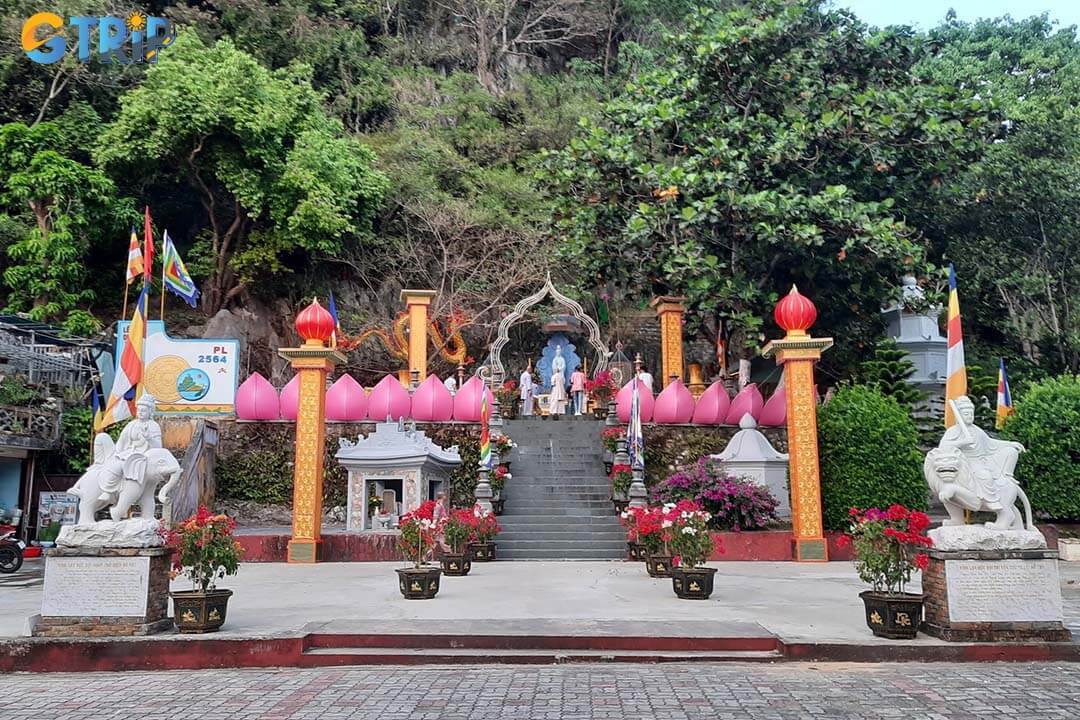
Step through the tam quan gate to discover tranquil courtyards filled with bonsai trees, lotus ponds, Arhat statues, and incense-scented air beneath beautifully curved
2. Explore Quan The Am Cave - Marble Mountains Grottoes
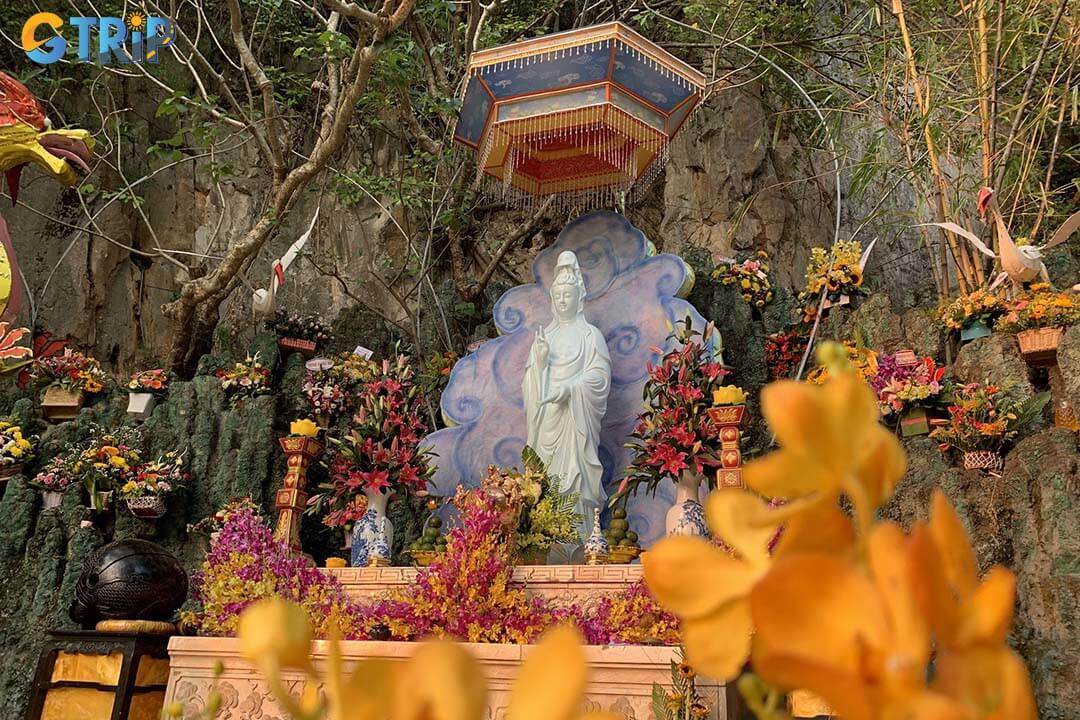
The absolute highlight of a visit to Quan The Am Pagoda is discovering Quan The Am Cave (Hoa Nghiem Cave). This natural grotto is the very reason the pagoda exists. As you step from the bright courtyard into the cave's mouth, you are immediately enveloped in a cool, mystical ambiance. The cave is surprisingly deep, with a path leading you further into the mountain's heart. The main chamber houses the revered natural stalactite statue of Quan The Am, which stands serenely on a lotus-shaped pedestal. The figure is illuminated, creating a powerful and ethereal focal point for prayer and meditation. As you explore deeper, you will find smaller altars nestled into rock crevices and other fascinating limestone formations. The play of light and shadow, combined with the echoing silence, makes exploring this sacred grotto a truly unique and memorable experience.
3. Participant Phap Hoi Hall - Collection of Buddhist artifacts
Located on the pagoda grounds, the Phap Hoi Hall functions as a small museum, a treasure trove of Buddhist history and art. This hall houses a remarkable collection of hundreds of ancient artifacts that tell the story of Buddhism in the region. Visitors can admire a diverse array of items, including bronze Buddha statues from different historical periods, intricate ceramic works, ancient bells, and precious ritual objects. Many of these relics were unearthed in the Marble Mountains area or salvaged from ancient shipwrecks off the coast of Central Vietnam. The collection provides invaluable insight into the region's rich spiritual and cultural heritage, making it a must-see for anyone interested in history and archaeology.
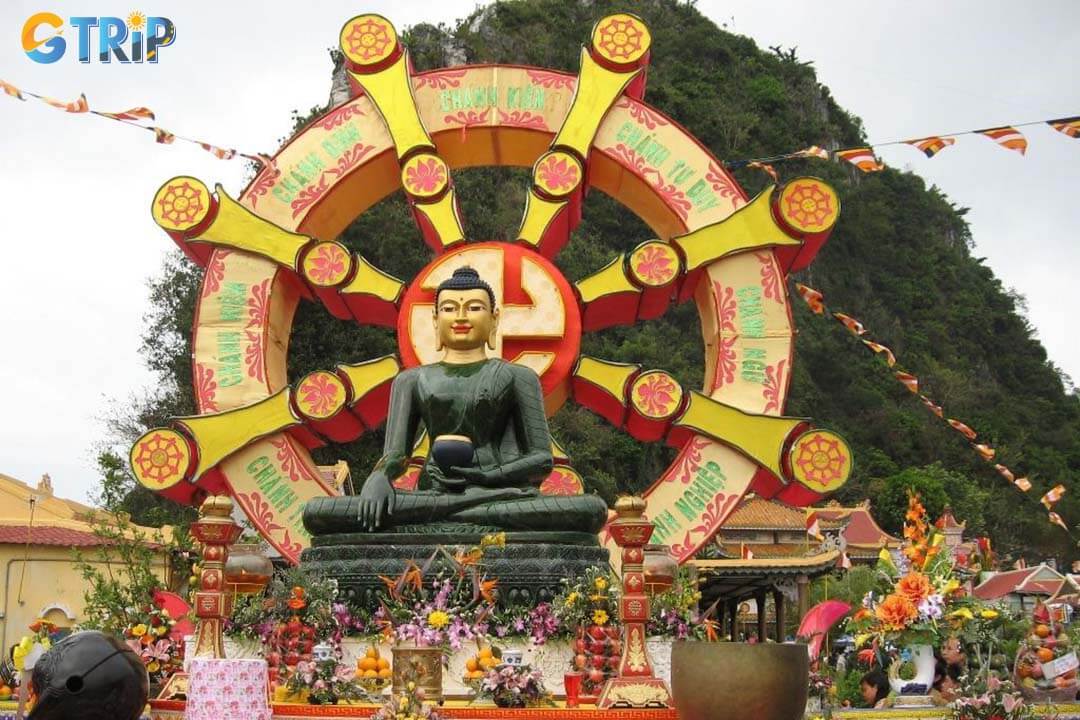
Phap Hoi Hall is a small museum displaying ancient Buddhist artifacts discovered in the Marble Mountains and nearby coastal areas
4. Admire Quan The Am Statue
Beyond the sacred cave statue, the pagoda also features a magnificent outdoor Avalokiteshvara statue on its grounds. This white stone statue, significantly larger than its counterpart in the cave, overlooks the courtyard and greets all who enter. Depicted in a classic pose, holding a vase of pure water to sprinkle upon the world and wash away suffering, the statue is a masterpiece of religious art. Its compassionate and gentle expression embodies the spirit of the bodhisattva. This statue is a central icon of the pagoda, attracting pilgrims seeking blessings and tourists and photographers who come to admire its serene beauty and symbolic power.
5. Enjoy Quan The Am Pagoda Festival
Quan The Am Pagoda Festival is one of Da Nang's most significant cultural and spiritual events, officially recognized as a national intangible cultural heritage. Held annually on the 17th and 19th days of the second lunar month, the festival turns the serene pagoda into a lively hub of devotion, drawing thousands of pilgrims and visitors.
Rituals of the festival
The festival is defined by a series of solemn and deeply meaningful Buddhist rituals that pray for national peace, prosperity, and the well-being of all people. Key ceremonies include:
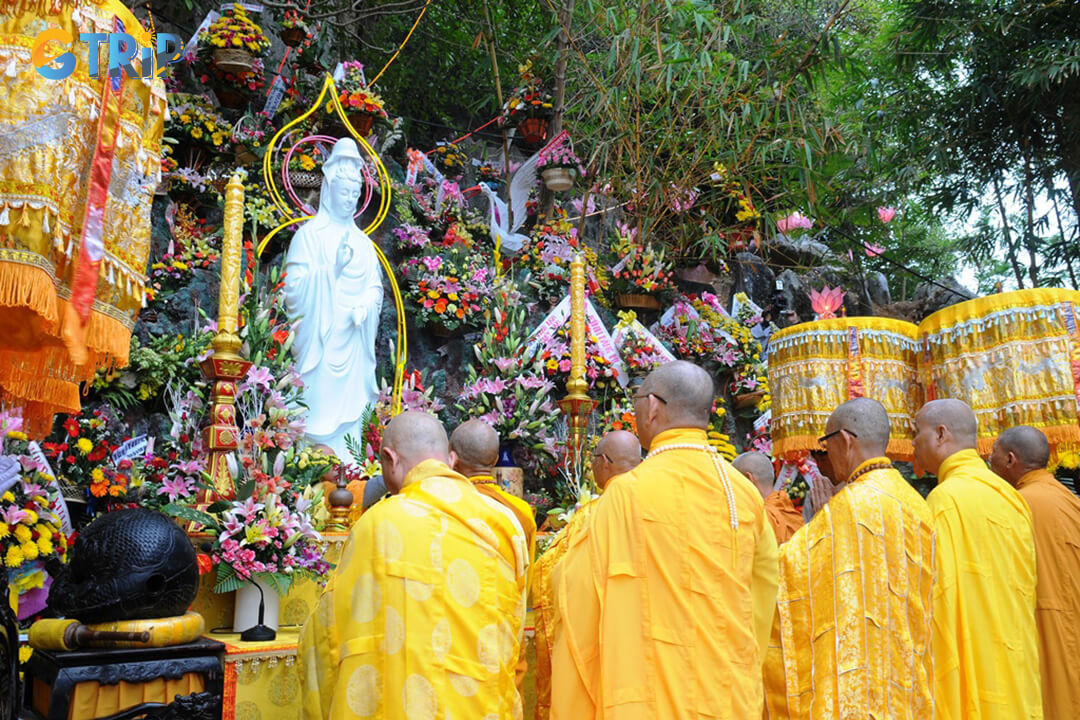
- Light procession: The festival kicks off on the evening of the 17th with a spectacular procession. Monks, nuns, and devotees carry lanterns and torches in a parade, accompanied by palanquins, lion dances, and dragon dances. This ritual symbolizes the dispelling of darkness with the light of Buddhist wisdom.
- Scripture ceremony: Early on the morning of the 19th, a grand ceremony is held to pray for peace for the nation and prosperity for its people. Monks chant sacred scriptures, creating a powerful and resonant spiritual atmosphere.
- Offering ceremony: Following the prayers, a ceremony is conducted to make offerings to honor ancestors and wandering souls, embodying the Buddhist principle of compassion for all beings.
- Buddhist teachings: Throughout the morning, senior monks deliver sermons and teachings about the life and virtues of Avalokiteshvara Bodhisattva, as well as topics related to Vietnamese national culture and ethics.
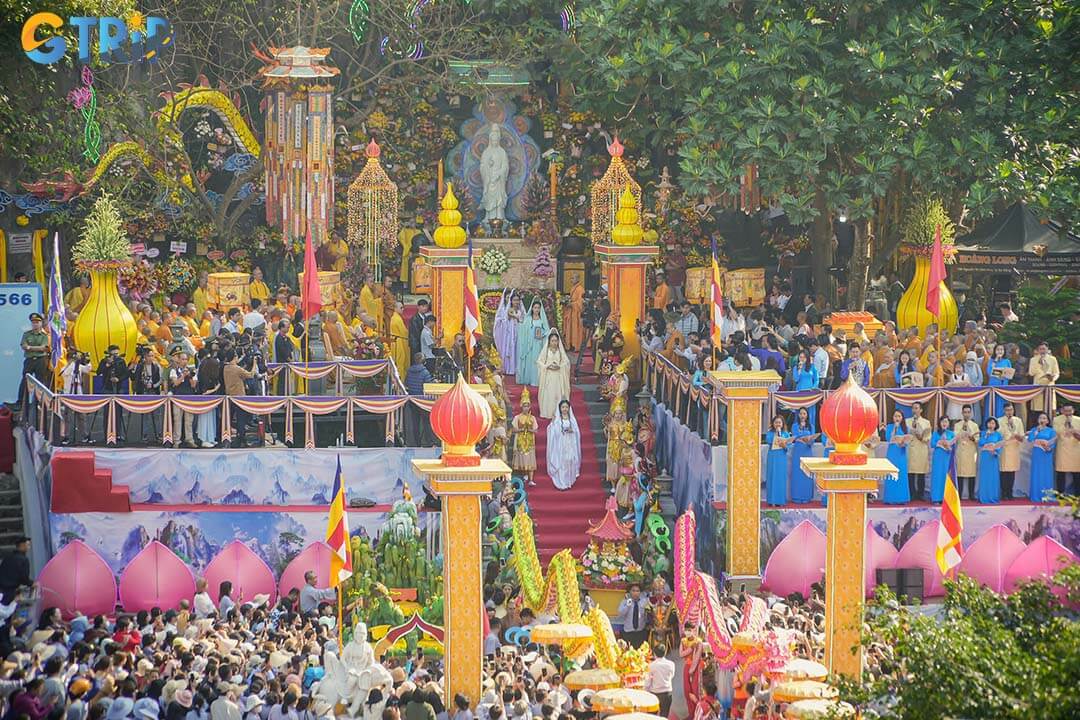
- Statue procession: Around 10:00 AM on the 19th, a statue of Quan The Am is placed on a beautifully decorated palanquin and paraded around the Marble Mountains area. This procession is especially significant for the local fishing communities, who pray for safe and bountiful voyages at sea.
Cultural activities of the festival
Alongside the solemn rituals, the festival is a lively celebration filled with traditional cultural activities that engage the entire community. Festival-goers can enjoy a wide range of events:
- Floating lanterns: A beautiful spectacle where thousands of candle-lit paper lanterns are released onto the nearby Co Co River, carrying with them a wish for peace and good fortune.
- Traditional performances: The festival grounds come alive with captivating folk opera (Tuong) performances, traditional 'Four Beasts' dances (Dragon, Qilin, Turtle, Phoenix), and folk song recitals.
- Competitions & Games: Fun and engaging activities include thrilling boat races on the Co Co River, human chess competitions, and vegetarian cooking contests that showcase creative Buddhist cuisine.
- Art & Exhibitions: Visitors can also enjoy calligraphy demonstrations, art exhibitions, and photo displays that celebrate the beauty of the Marble Mountains and the cultural heritage of Da Nang.
Quan The Am Festival features sacred rituals such as lantern processions, scripture chanting, offerings, teachings, and a Quan The Am statue parade
How to get to Quan The Am Pagoda in Da Nang
Quan The Am Pagoda is conveniently located within the Marble Mountains complex, about 9 kilometers southeast of Da Nang's city center. Reaching the pagoda is straightforward with several transportation options available.
- Taxi / Ride-hailing: The easiest and most convenient way to get there. Services like Grab and the all-electric Xanh SM taxis are widely available in Da Nang and Hoi An. The journey from Da Nang city center takes about 15-20 minutes and costs from 100,000 VND to 150,000 VND. From Hoi An, the trip is about 20-25 minutes and costs from 250,000 VND to 300,000 VND.
- Rented transport (motorbike/car): For more flexibility, renting a vehicle is an excellent option. Motorbike rentals are very popular and affordable, with prices starting from 120,000 VND per day. Car rentals are also available from around $30 USD per day. Navigate using Google Maps to "Chua Quan The Am" on Su Van Hanh Street. There are several paid parking lots near the entrance of the Marble Mountains.
- Local bus: This is the most budget-friendly option. Bus route number 1 (Da Nang Bus Station to Hoi An Bus Station) runs along the main coastal road. Ask the driver to drop you off at Marble Mountains. From the bus stop, it is a short 5-10 minute walk to the pagoda. The fare is very cheap, but be aware that buses can be slower and less frequent than other options.
Quan The Am Pagoda sits about 9 km southeast of Da Nang and is easily reached by taxi or ride-hailing, rented motorbike or car, or budget-friendly local bus routes
Nearby attractions to the Quan The Am Pagoda in Da Nang
Your visit to Quan The Am Pagoda is the perfect opportunity to explore the other wonders of the Marble Mountains and their surroundings.
- Marble Mountains: Quan The Am Pagoda is part of this larger complex. After your visit, explore Thuy Son. It is home to a network of caves, grottoes, and several other important pagodas. You can climb the stone steps or take the elevator for a fee.
- Tam Thai Pagoda: Located on Thuy Son, this is one of the oldest and most important National Historic pagodas in the region, dating back to the 17th century. It features beautiful architecture and offers panoramic views.
- Linh Ung Pagoda in Marble Mountains: Not to be confused with the famous Linh Ung Pagoda on Son Tra Peninsula, this ancient pagoda is also nestled within the caves of Thuy Son and is an essential stop on any tour of the mountain.
- Non Nuoc Stone Carving Village: Situated at the foot of the Marble Mountains, this centuries-old artisan village is where local craftspeople create stunning marble sculptures. It’s a fascinating place to watch artisans at work and purchase a unique souvenir.
- Nam Son Pagoda in Da Nang: Located a short drive away (about 15-20 minutes), Nam Son Pagoda offers a stunning contrast with its grand, modern, and meticulously landscaped design inspired by traditional architecture. It is known for its incredible symmetry and photogenic scenery.
Quan The Am Pagoda is ideally located for exploring the Marble Mountains, nearby historic pagodas, and Non Nuoc stone carving village
Practical tips for visitors when visiting Quan The Am Pagoda
To ensure a smooth, respectful, and enjoyable visit to Quan The Am Pagoda, keep these GTrip travel tips in mind.
- Dress code: Wear respectful clothing that covers your shoulders and knees. This is a sacred place of worship. Avoid shorts, short skirts, and tank tops. If needed, you can often borrow a sarong at the entrance of major pagodas.
- Footwear: Wear comfortable walking shoes or sandals. You will be doing a fair amount of walking, and the floors inside the cave can be damp and slippery. Shoes that are easy to slip on and off are convenient, as you may need to remove them before entering certain halls.
- Respectful behavior: Maintain a quiet and respectful demeanor. Speak softly, avoid loud conversations, and do not shout. Refrain from touching the ancient artifacts, altars, or the natural statue inside the cave.
- Hydration: Bring a bottle of water, especially if visiting during the hotter months. Staying hydrated is essential as you explore the grounds and nearby mountains. There are small shops nearby where you can purchase drinks.
- Photography: Photography is generally permitted in the outdoor areas and inside the main cave, but be mindful. Refrain from using flash photography, especially around people who are praying. Always check for signs prohibiting photos before entering specific prayer halls.
FAQs about Quan The Am Pagoda in Da Nang
Before planning your visit, it’s helpful to clear up some common questions and misconceptions surrounding Quan The Am Pagoda in Da Nang. The section below answers frequently asked questions to help you better understand the pagoda’s identity, location, and what to expect when visiting.
How many Quan The Am (Avalokiteshvara) Pagodas were in Da Nang City?
Before 2024, Da Nang City officially had one primary Quan The Am Pagoda, the one located at the Marble Mountains, which is the subject of this guide. However, following an administrative expansion in 2024, parts of Quang Nam Province, the historic Quan The Am Pagoda in Hoi An is now also under Da Nang's jurisdiction. Thus, there are now two notable pagodas with this name in the greater Da Nang area.
Is Quan The Am Pagoda in Da Nang the same as Quan The Am Pagoda in Hoi An?
No, they are two distinct and separate temples. The Marble Mountains' Quan The Am Pagoda is a larger complex famous for its cave and grand annual festival. Quan The Am Pagoda in Hoi An's Ancient Town, while now administratively part of greater Da Nang, is a smaller, historic temple serving the community within the old town. They are located about 20 kilometers apart and offer very different visitor experiences.
Is Quan The Am Pagoda suitable for non-religious visitors?
Yes, absolutely. While it is a significant spiritual site, the pagoda is extremely popular with all travelers. Its unique setting, combining traditional architecture with a stunning natural cave, makes it a fascinating destination for anyone interested in culture, history, and natural beauty. Visitors can freely and respectfully explore the site, admire the art and architecture, and enjoy the peaceful atmosphere without needing to participate in any religious activities.
This FAQ about Quan The Am Pagoda helps visitors understand its location, distinctions, and appeal to both spiritual and non-religious travelers
Quan The Am Pagoda is a vibrant testament to the enduring harmony between faith, nature, and culture in Da Nang City. The pagoda offers a rich tapestry of experiences, blending the mystical depths of its sacred cave, the peaceful calm of its courtyards, and the vibrant energy of its annual festival. It is a place to find peace, to marvel at natural wonders, and to connect with the deep spiritual heritage of Vietnam. If you are a devoted pilgrim or a curious explorer, a visit to this remarkable sanctuary within the Marble Mountains is an essential part of any Da Nang itinerary. Let GTrip guide you on an unforgettable journey to this and many other incredible destinations.