




Jan - 23 - 2026
If you're searching for a serene escape from the bustling streets of Saigon, the historic Tan Xa Palace, the oldest house in Saigon, offers a journey back in time. Tucked away in the vibrant Xuan Hoa Ward, this cultural landmark is often missed by mainstream travel guides, making it a true hidden gem. For travelers seeking authentic history and breathtaking art, a visit is an essential part of any Ho Chi Minh City itinerary. This GTrip visitor guide covers everything you need to know to explore the palace. Get ready to discover one of the most enchanting historic sites in Ho Chi Minh City.
Overview of Tan Xa Palace in Ho Chi Minh City
- Address: 180 Nguyen Dinh Chieu Street, Xuan Hoa Ward (formerly District 3), HCMC
- Opening hours:
- Weekday mornings: 8:00 AM - 12:00 PM
- Sundays: 8:00 AM - 4:00 PM
- Best time to visit: Early morning for quiet exploration and observing local religious practices
Tan Xa Palace, also known as the Archbishop's Palace in Ho Chi Minh City, is not a grand royal residence but a beautifully preserved assembly hall and temple. Unlike other major Ho Chi Minh City attractions, it remains an active place of local worship, providing an authentic glimpse into the spiritual life of the city. Its blend of intricate design and tranquil atmosphere makes it one of the most unique cultural landmarks in Vietnam.
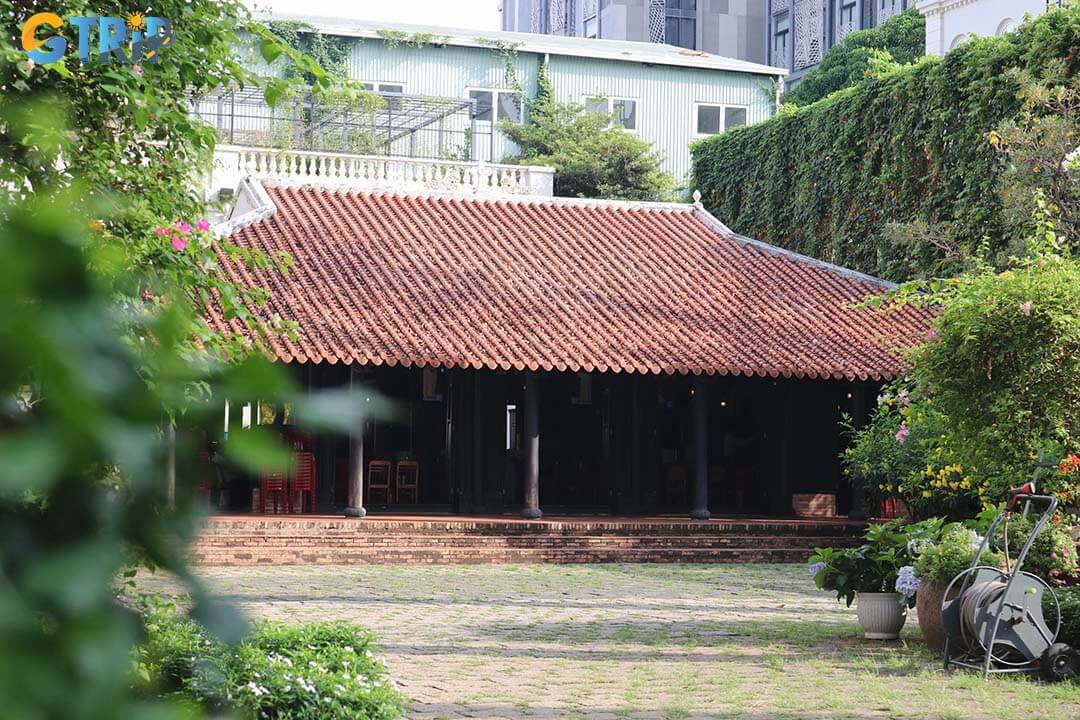
Tan Xa Palace is a preserved historic hall and active place of worship in Ho Chi Minh City, offering a rare glimpse into the city’s spiritual and cultural heritage
History of Tan Xa Palace
The relationship between King Nguyen Anh and Ba Da Loc grew increasingly close in 1790. At this time, the king commissioned the construction of a bamboo house with a thatched roof on the right bank of the Thi Nghe Canal. The building served as the residence of Ba Da Loc and as a place where he instructed Prince Nguyen Phuc Canh. Although the structure was very modest, missionary Lestrade referred to it as the Bishop’s “residence”. In 1799, King Nguyen Anh ordered the residence to be rebuilt using wood and roofed with tiles. Following the death of Bishop Pigneau de Behaine on October 9, 1799, the building served as lodging for the missionary priest Liot from 1799 to 1811. In 1819, author John White recorded that the former bishop’s residence had been converted into a military storage facility.
After the treaty in 1862, Emperor Tu Duc transferred ownership of the wooden, tile-roofed building to Bishop Dominique Lefebvre (1844 - 1864). The first bishop of the Western Cochinchina Diocese (the predecessor of today’s Archdiocese of Ho Chi Minh City) was to use the episcopal residence. Following Bishop Lefebre’s death, missionary Colombert remained there, supporting pastoral visits to the Thi Nghe and Cau Bong parishes and administering sacraments to the Catholic community. In 1864, the building was relocated to missionary-owned land, now the Ho Chi Minh City Department of Foreign Affairs on Alexandre de Rhodes Street. In 1897, scholar Truong Vinh Ky referred to this wooden, tile-roofed structure as Tan Xa Palace.
In 1911, a permanent episcopal residence was constructed at what is now Nguyen Dinh Chieu Street. Bishop Mossard (1899 - 1920) subsequently relocated the wooden, tile-roofed building to this site for use as a chapel. In 1962, Archbishop Paul Nguyen Van Binh authorized the replacement of several deteriorated wooden walls with brick, and in 1980, reinforced some decayed columns. By 2011, however, the historic chapel showed severe structural deterioration, with sections collapsing, indicating that partial restoration or reinforcement was no longer feasible. Consequently, together with the Archbishop’s Residence Management Board, undertook a comprehensive restoration in line with the building’s original historic architecture.
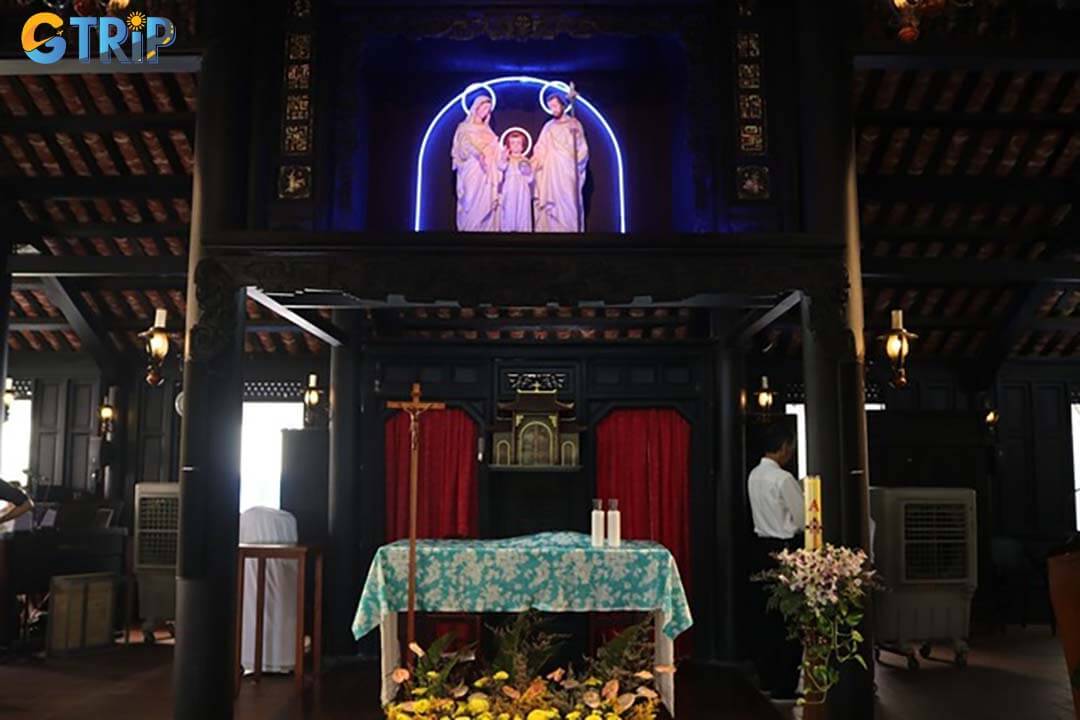
Tan Xa Palace began as Bishop Ba Da Loc’s residence and later evolved into a restored historic chapel and cultural landmark in Ho Chi Minh City
Architectural highlights of Tan Xa Palace
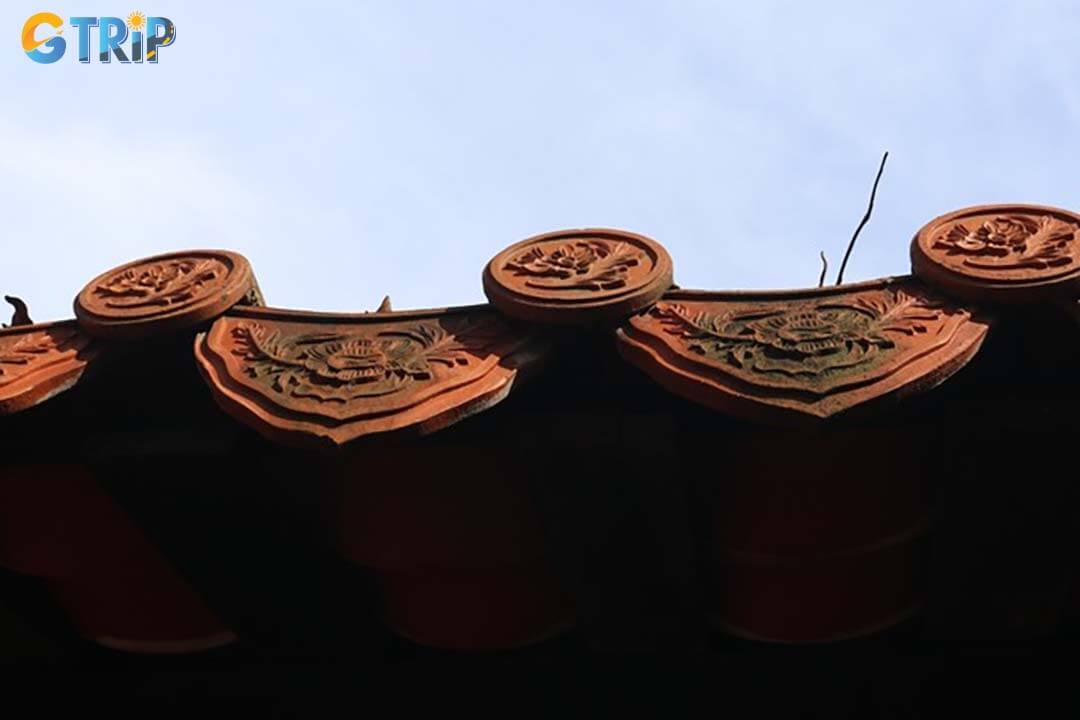
Tan Xa Palace, Sai Gon's oldest wooden house, built circa 1789 by King Gia Long for Bishop Pigneau de Behaine, masterfully fuses Vietnamese ruong architecture with Catholic sanctity. This nail-free marvel, crafted from rare hardwoods via mortise-and-tenon joints, features a three-bay structure with sweeping yin-yang tiled roofs adorned by dragon bas-reliefs flanking a central cross. Elevated on hewn stone pedestals against floods, its latticed shutters and vermilion beams create serene interiors bathed in dappled light.
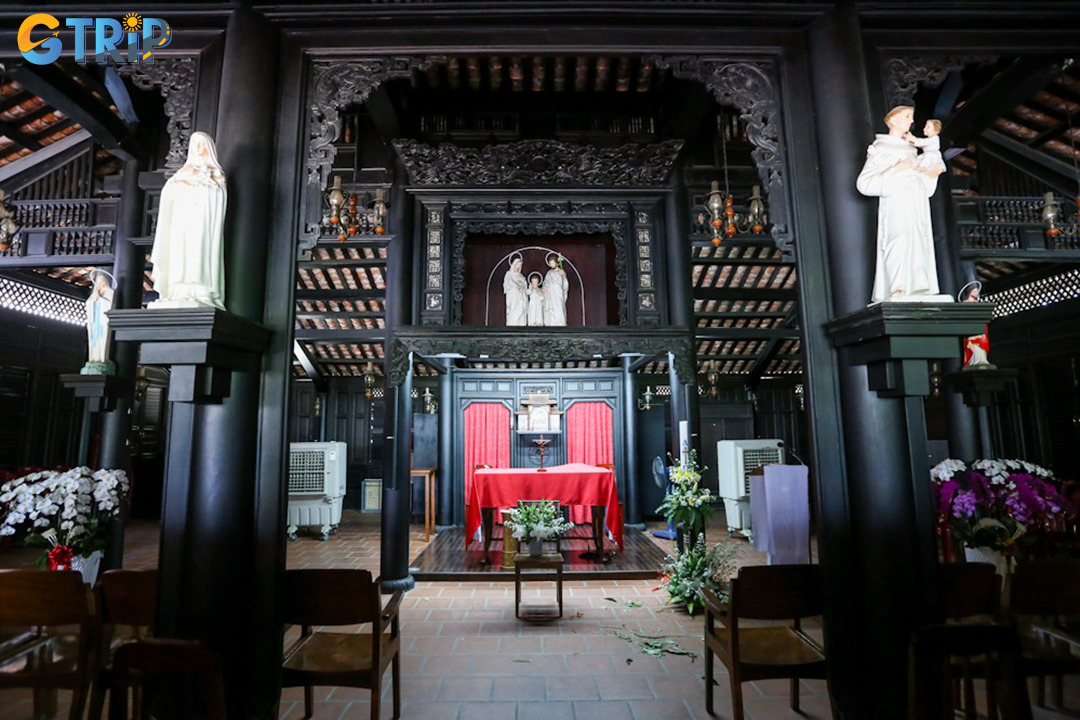
Inside the chapel-like core, a Vietnamese-style altar anchors worship with Catholic icons: Christ statues, Virgin Mary figures, crucifixes, and paired couplets amid floral carvings. No pagan idols here, post-1900 adaptations emphasize Eucharistic rituals amid polished floors and soaring rafters, evoking imperial humility blended with faith's quiet grandeur. This timeless edifice endures as a cultural bridge.
Things to do at Tan Xa Palace
A visit to Tan Xa Palace offers more than sightseeing, with simple activities that help you connect with its peaceful atmosphere and cultural significance.
Take your time to explore and enjoy the tranquil atmosphere
Tan Xa Palace offers a calm, reflective space that feels removed from the busy streets nearby. Take time to walk slowly through the courtyard and interior halls, allowing yourself to absorb the quiet atmosphere and subtle details of the surroundings. The scent of incense, soft natural light, and balanced layout create a peaceful setting ideal for short breaks, contemplation, or simply slowing down during a city itinerary. Rather than rushing through, a relaxed pace helps you better appreciate the spiritual character and historical presence of the palace.
Observe local religious practices during the morning
Mornings are an ideal time to witness local worship activities at Tan Xa Palace. You may see residents offering incense, praying quietly, or preparing small ritual items, giving insight into everyday spiritual life in the city. Observing respectfully from a distance allows visitors to understand how the palace continues to function as a living religious site rather than just a historic monument. Keeping quiet and following the flow of local visitors helps maintain the sacred atmosphere and creates a more meaningful experience.
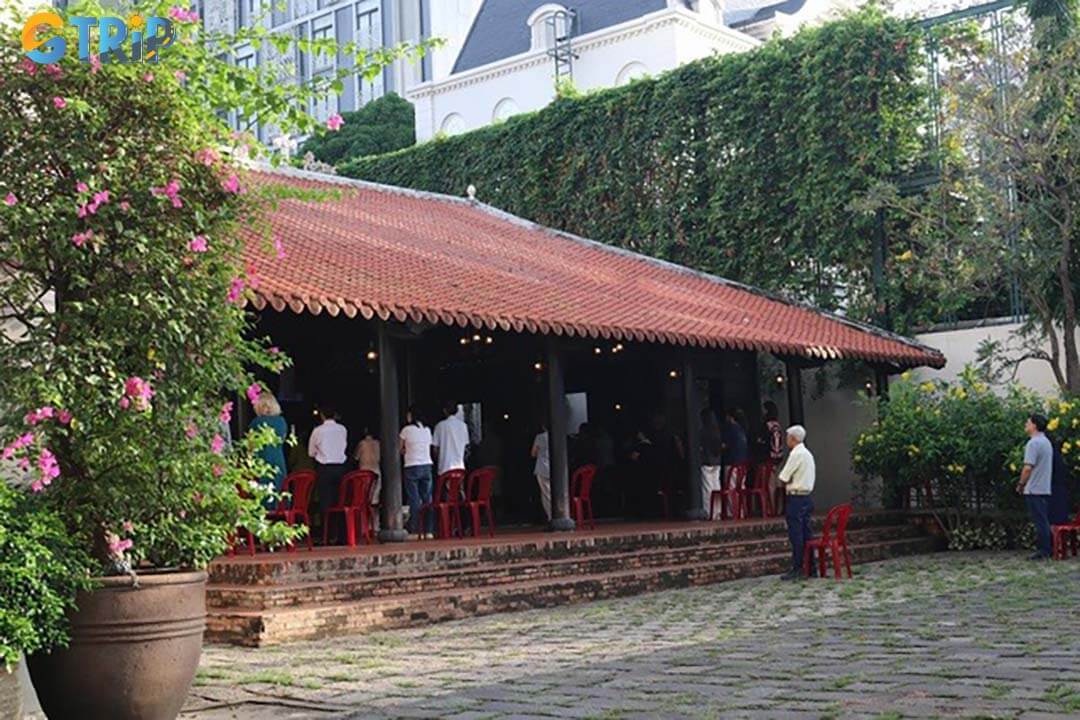
Mornings at Tan Xa Palace offer a peaceful chance to observe local worship and experience its role as a living spiritual site in the city
Photograph architectural details and the historic interior
Tan Xa Palace features many visually striking details that reflect traditional design and craftsmanship. The space is rich with subtle photo opportunities, highlighted by carved wooden details, decorative roof structures, altars, and time-worn interior finishes. Natural light filtering through doorways and windows enhances textures and colors, especially in the early hours. Focus on details rather than people, and avoid using flash to respect the setting. Thoughtful photography helps capture both the architectural beauty and the calm spirit of the palace.
How to get to Tan Xa Palace in Ho Chi Minh
Located centrally in the former District 3, reaching Tan Xa Palace is straightforward.
- By ride-hailing app (Grab/XanhSM/Be): This is the easiest method. Simply enter "Tan Xa Palace" or the address "180 Nguyen Dinh Chieu" into the app. The ride from for Xuan Hoa Ward typically takes 10 - 15 minutes, depending on traffic.
- By taxi: Most taxi drivers will know the street, but it's always helpful to have the address handy to show them.
- By public bus: Several bus routes service the area around Nguyen Dinh Chieu street. Check local bus apps for the most current routes, but buses #05 and #152 often pass nearby.
- On foot: If you are exploring the area, the palace is a short walk from other key attractions. It's about a 5-minute walk from the War Remnants Museum.
Tan Xa Palace is easily accessible in former District 3 by ride-hailing services, taxi, bus, or a short walk from nearby attractions such as the War Remnants Museum
Places to visit near Tan Xa Palace
Tan Xa Palace is located in the heart of Ho Chi Minh City, making it easy to explore several major attractions nearby. Most of these sites can be reached on foot or with a short ride, fitting well into a half-day city walk or a flexible sightseeing plan.
- War Remnants Museum (200 m): A well-known museum presenting Vietnam’s wartime history through exhibitions, photographs, and artifacts.
- Independence Palace (800 m): A historic landmark associated with key events at the end of the Vietnam War and the former presidential residence.
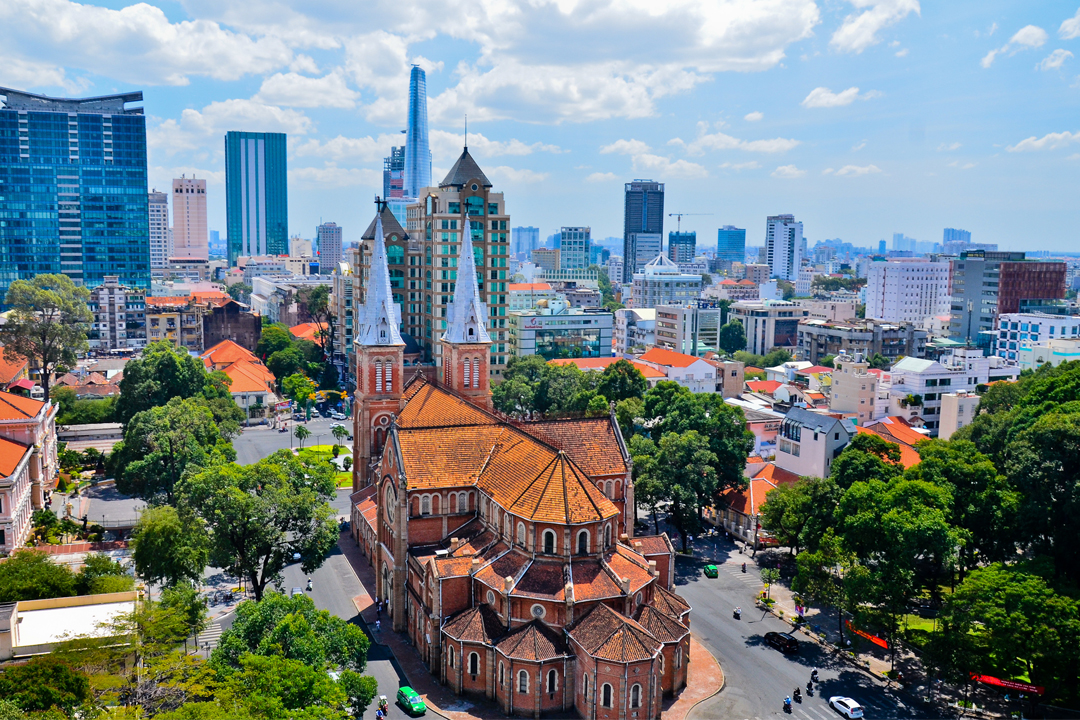
- Notre Dame Cathedral of Saigon (1.2 km): A French colonial-era cathedral noted for its red-brick facade and twin bell towers.
- Saigon Zoo & Botanical Gardens (2 km): One of the oldest zoos in Southeast Asia, offering a green, open space in the city center.
Practical tips for you when visiting Tan Xa Palace
To ensure a smooth and respectful visit, keep these simple tips in mind.
- Dress modestly and behave respectfully: This is an active place of worship, so clothing should cover shoulders and knees, and visitors should keep noise to a minimum.
- Visit early in the morning: Arriving early allows for a quieter experience and the chance to observe daily religious rituals.
- Bring a camera or phone: The palace features detailed carvings, roof tiles, and interior decor that are worth capturing.
- Combine with nearby attractions: Its central location makes it easy to visit the War Remnants Museum or Independence Palace on the same day.
- Check opening hours in advance: Visiting times are limited, so confirming schedules beforehand helps avoid inconvenience.
For a respectful and rewarding visit to Tan Xa Palace, dress modestly, arrive early, stay quiet, check opening hours in advance, and consider visiting nearby attractions
Read more:
Tan Xa Palace is a portal to a bygone era of Saigon. It offers a rare combination of exquisite beauty, living history, and profound peace that stands in stark contrast to the dynamic energy of modern Ho Chi Minh City. While it may not have the scale of other major landmarks, its charm lies in its authenticity and the intricate stories carved into every wooden beam and ceramic tile. For the curious traveler, history buff, or anyone seeking a moment of reflection, a visit is a rewarding and unforgettable experience. Curated by GTrip - Vietnam Travel Agency, this hidden heritage site is a gentle reminder of the city’s quiet soul. Don’t miss the chance to discover Saigon beyond the crowds at the beautiful Tan Xa Palace.