
Sunday, October 11, 2026
Khanh An Monastery, affectionately known as the "Little Japan" of Saigon, is a breathtaking escape from the city's relentless energy. Tucked away in a quieter corner of Ho Chi Minh City, this stunning pagoda is a portal to a world of serenity, unique architectural beauty, and incredible photo opportunities. For travelers seeking a blend of spiritual calm and cultural discovery, this monastery offers a truly unique experience. Whether you're an avid photographer looking for the best photo spots in Ho Chi Minh, a seeker of peace on a spiritual retreat in Ho Chi Minh City, or a culture enthusiast eager to explore beautiful landmarks, Khanh An will captivate you. In this complete guide, your friends at GTrip will walk you through everything you need to know to plan the perfect visit to this architectural gem.
Overview of Khanh An Monastery
- Address: 1055/3D National Highway 1A, An Phu Dong ward (formerly District 12), Ho Chi Minh City
- Opening hours: Generally open to visitors during the daytime
- Entrance fee: Free
- The best time to visit is on weekdays, when the peaceful atmosphere is ideal for enjoying and taking beautiful photos. It's best to avoid weekends, holidays, or full-moon days as the monastery can be very crowded with pilgrims.
Situated on a lush 6,000-square-meter campus, Khanh An Monastery is both a historic landmark and a popular spiritual attraction. With its unique architecture inspired by the Northern Zen (Mahayana) school of Buddhism, it strongly resembles traditional Japanese temples. As a result, it attracts many Buddhists and tourists for worship, meditation retreats, and photography. Its tranquil atmosphere and striking design make it a standout former District 12 pagoda.
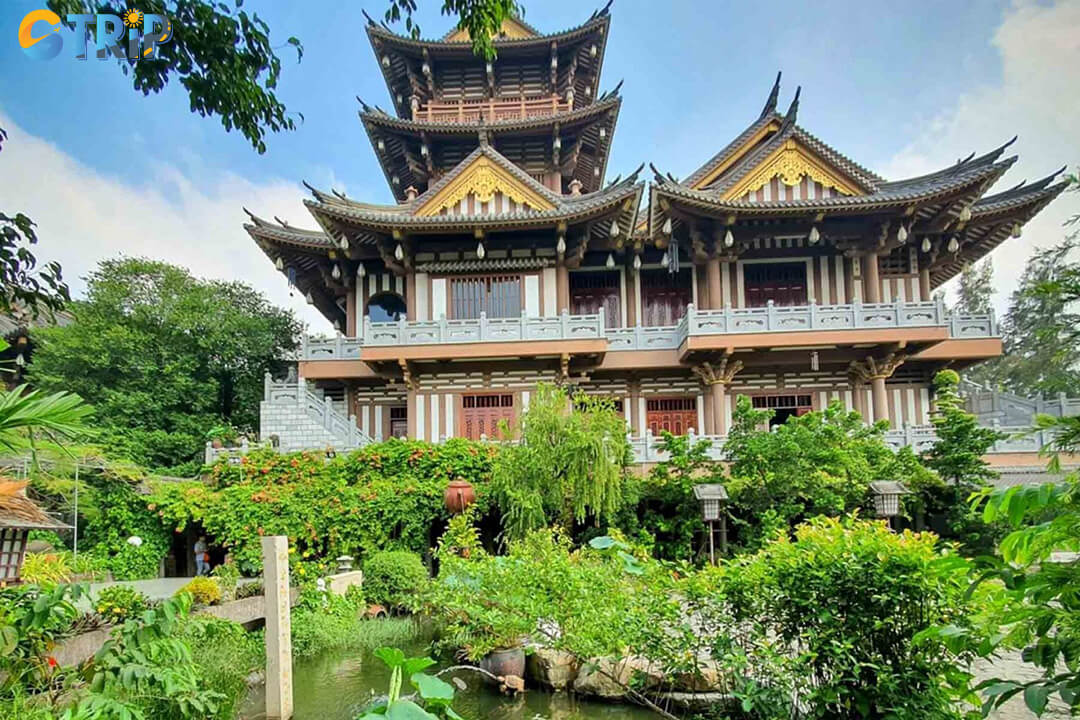
A tranquil spiritual landmark on a lush 6,000 m² campus, Khanh An Monastery is famed for its Northern Zen–inspired architecture, peaceful atmosphere, and photogenic
History of Khanh An Monastery
Khanh An Monastery has a heroic history tied to the nation’s resistance against the French, making it not just a religious site but a symbol of national pride. Its journey from a simple shrine to a recognized city-level historical-cultural relic is a testament to its enduring legacy.
| Period | Key event |
|---|---|
| 1905 | Founder Thich Tri Hien established a small thatched shrine for his practice, laying the foundation for the monastery. |
| 1939 - 1945 | The pagoda became a crucial revolutionary base, serving as a meeting place for the first Party cell in An Loc Dong and a shelter for revolutionary soldiers. |
| 1945 - 1954 | During the French Resistance, the pagoda was a site for producing rudimentary weapons like grenades and mines for the National Guard. |
| 1980 - 2001 | The pagoda was repaired by locals after the war. In 2001, it underwent a major reconstruction and was officially named Khanh An Monastery. |
| 2007 | The Ho Chi Minh City People's Committee recognized the monastery as a city-level historical-cultural relic and scenic spot. |
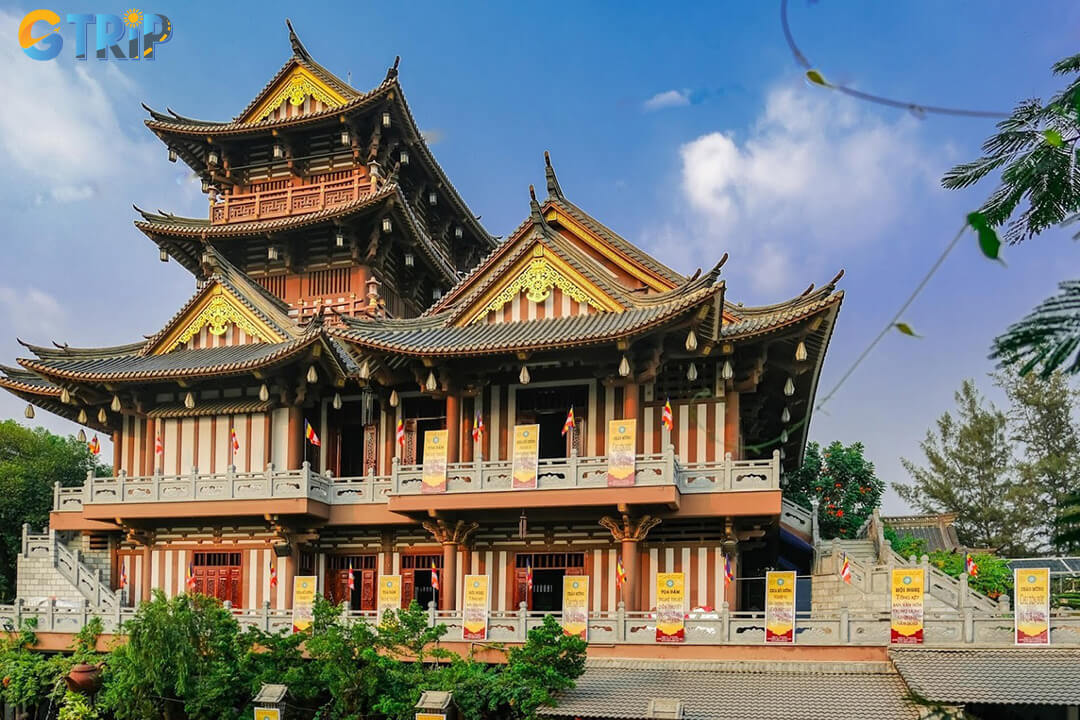
A site of historic significance, Khanh An Monastery supported Vietnam’s revolutionary movement and is now a recognized cultural relic of Ho Chi Minh City
The unique architecture of Khanh An Monastery
Although often compared to a Japanese-style pagoda in Saigon, Khanh An Monastery’s architecture is rooted in the ancient design of Vietnamese pagodas. Following the Northern Zen (Mahayana) tradition, it shares aesthetic similarities with Buddhist structures in Japan, China, and Korea, giving it a distinct and graceful appearance.

Overall style
Stepping into the monastery grounds, you're immediately struck by an atmosphere of profound solemnity and elegance. The architecture is predominantly wooden, featuring a warm and harmonious color palette of deep red, pristine white, and earthy gray. A distinctive feature that sets it apart is the style of its roofs. The gently curved tiled roofs sweep gracefully upwards, but they lack the ornate dragon and phoenix motifs that are common in imperial-era Vietnamese architecture. This deliberate simplicity creates a refined and stately beauty, focusing the mind on spiritual contemplation rather than ostentatious decoration. The entire complex feels cohesive and meticulously planned, inviting visitors to wander and admire the masterful craftsmanship that permeates every building and pathway.
The "Hall of Awakening"
The "Hall of Awakening" stands as the majestic centerpiece of Khanh An Monastery. This is the main ceremonial hall, constructed almost entirely from rich, dark wood, and it is here that daily chanting and major religious services take place. To reach its entrance, you ascend a flight of stone steps, each surface exquisitely carved with delicate lotus patterns, symbolizing purity and enlightenment. Above, the multi-layered, dark brown tiled roof creates an impressive silhouette against the sky, its elegant curves drawing the eye upward. Decorative lanterns hang around the hall and from the eaves, casting a soft, warm glow in the late afternoon and enhancing its sacred, mystical ambiance.
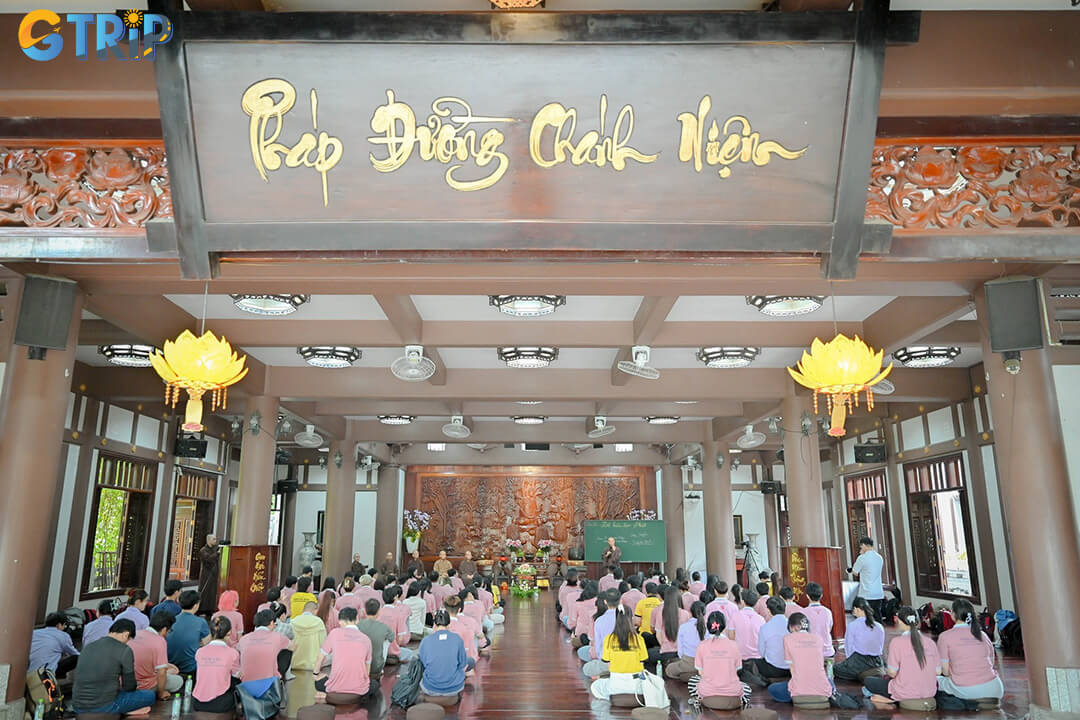
The “Hall of Awakening” is the monastery’s central wooden ceremonial hall, marked by lotus-carved steps, layered tiled roofs, and softly glowing lanterns
Monks' and guests' quarters
Next to the main hall, the monks' and guests' quarters are the most photographed building and the one that most strongly evokes a Japanese aesthetic. Its bold, red-painted wooden walls create a stunning visual contrast with the lush greenery of the surrounding gardens. The building is crowned with a soaring, multi-tiered yellow spire that pierces the sky, a beacon of spiritual aspiration. The rich red color, dark wooden beams, intricate window lattices, and distinctive roofline remind many visitors of the iconic temples in Kyoto or Nara. This striking combination makes it one of the most memorable parts of the Khanh An Monastery experience.
Things to do at Khanh An Monastery
A visit to Khanh An Monastery offers a peaceful and memorable experience right in the heart of Saigon. Beyond its visual splendor, the monastery is a living, breathing center for spiritual practice and community, offering a range of activities for every type of visitor.
Worship and architectural sightseeing
For those seeking a moment of quiet reflection, the monastery provides the perfect sanctuary. Visitors can enter the serene "Hall of Awakening" to offer incense, bow in respect to the Buddha, and absorb the tranquil energy of the space. Afterwards, take your time strolling through the meticulously maintained grounds. Follow the stone pathways, admire the koi ponds, and let your eyes wander over every architectural detail. The fresh air, scented incense, and lush greenery create a deep sense of calm, helping you shed city stress and feel refreshed and centered.
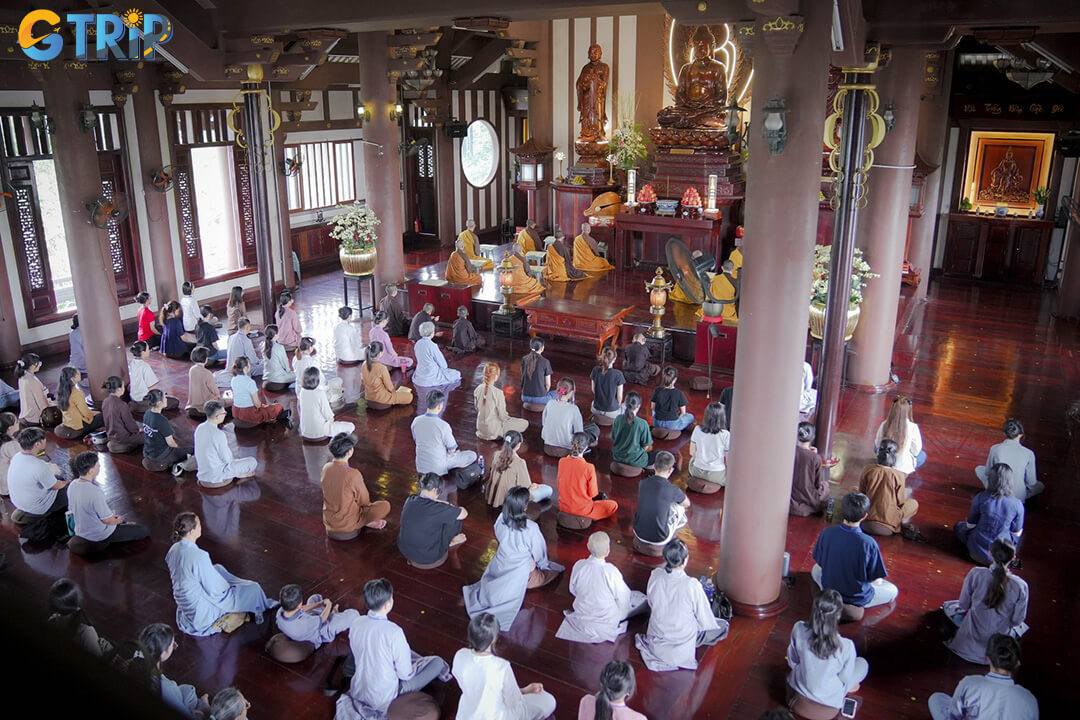
Find a peaceful escape by offering incense in the “Hall of Awakening” and wandering the monastery’s koi ponds, stone paths, and tranquil, green-filled grounds
Check in at photogenic spots
For photography enthusiasts, Khanh An Monastery is a true paradise and one of the best photo spots in Ho Chi Minh. The entire complex is a canvas of beautiful compositions waiting to be captured. The area around the main hall, with its dramatic curved roofs and symmetrical lines, is a classic shot. Don't miss the long, open-air corridors lined with beautiful fabric lanterns; the interplay of light and shadow here is simply magical.Get creative and focus on the details: the intricate texture of the unique hexagonal wooden lampposts scattered throughout the campus and the reflection of the pagodas in the calm waters of the ponds. Notice how the sunlight filters through the carved wooden screens, adding depth and atmosphere to your shots. Every corner offers a new perspective and a new story to tell through your lens.
Participate in retreats and dharma talks
The monastery is a tourist attraction and also an active center for Buddhist learning and practice. For those interested in a deeper spiritual retreat in Ho Chi-Minh City, the monatery regularly hosts meditation retreats, such as the popular "Be Present for Each Other" and "Live with Awakening" courses. These events provide a wonderful opportunity to learn mindfulness techniques and find inner balance away from the distractions of daily life. Furthermore, the esteemed Abbot, Thich Tri Chon, often holds dharma talks, sharing profound wisdom and practical life experience with the public. Participating in these activities is a fantastic way to gain insight into Buddhist philosophy and connect with a community dedicated to personal growth and compassion.
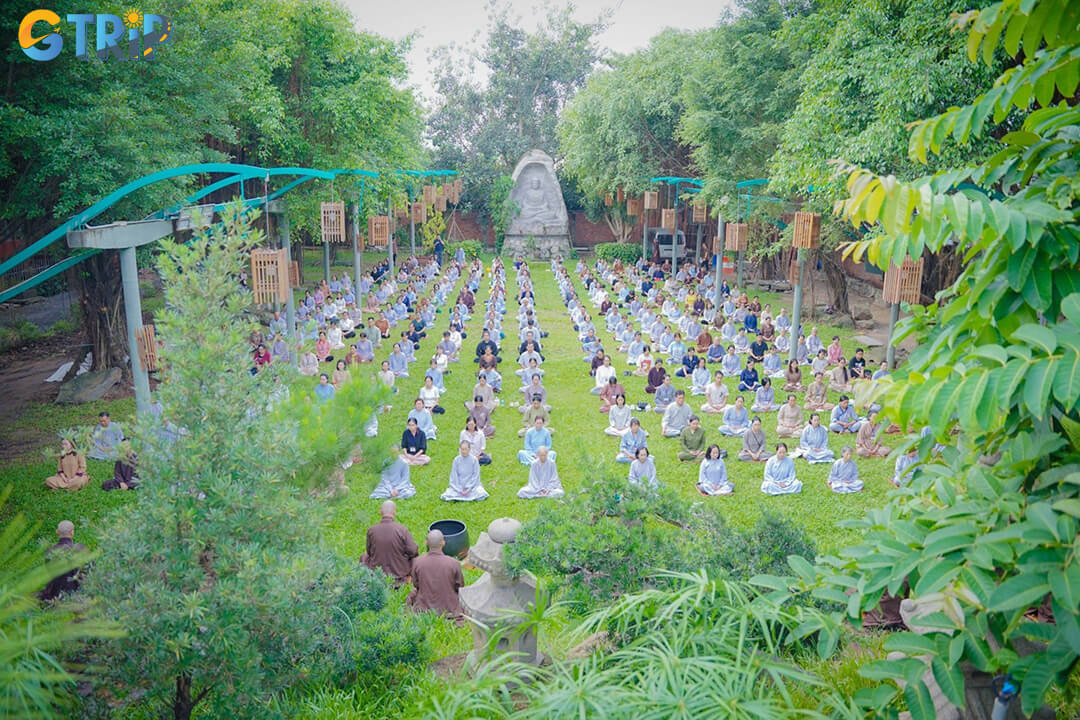
Experience deeper Buddhist practice through meditation retreats and dharma talks at this active monastery, offering mindfulness, wisdom, and a supportive spiritual community
How to get to Khanh An Monastery
Finding this serene pagoda is quite straightforward. The monastery is situated on National Highway 1A, a major thoroughfare, making it convenient to reach by various means of transport.
- By motorbike/car: You can easily navigate using Google Maps. From the Go Vap Roundabout, a common landmark, you can take Nguyen Oanh Street and follow the signs towards National Highway 1A. Another common route is from the An Suong Intersection, heading along National Highway 1A. The key landmark to look for is the Nga Tu Ga Overpass. The monastery is located near the intersection of National Highway 1A and Vo Thi Thua street, with a clear entrance gate.
- By bus: For a more local experience, several public bus routes pass near the monastery. Look for bus lines 33, 60-1, 61-3, and 61-8, which all have stops within a reasonable walking distance of the entrance.
Other famous temples in Ho Chi Minh City
Here is a concise overview of other famous temples in Ho Chi Minh City, highlighting the features that attract visitors:
- Xa Loi Pagoda: Known as the first modern-style pagoda in the city, it impresses visitors with its large bell tower, beautiful golden Buddha statue, and serene garden setting. Its history as a Buddhist activism center adds cultural richness.
- Thien Hau Pagoda: Located in the Chinatown area, this temple is famous for its beautifully intricate Chinese architecture, including detailed wood carvings and hanging incense coils. It is dedicated to the sea goddess and attracts many worshippers and tourists.
- Vinh Nghiem Pagoda: This large pagoda combines traditional northern Vietnamese architecture with modern building materials. It offers a peaceful atmosphere and a spacious complex that hosts many Buddhist activities.
- Phap Hoa Pagoda: Though located slightly outside the city center, this pagoda is well-known for its role in the development of Vietnamese Buddhism. Its quiet, spiritual environment draws many visitors.
- Hoang Phap Pagoda: Known for its beautiful traditional Vietnamese temple design, this pagoda attracts visitors with its peaceful gardens, elegant rooflines, and spiritual significance to the local Buddhist community.
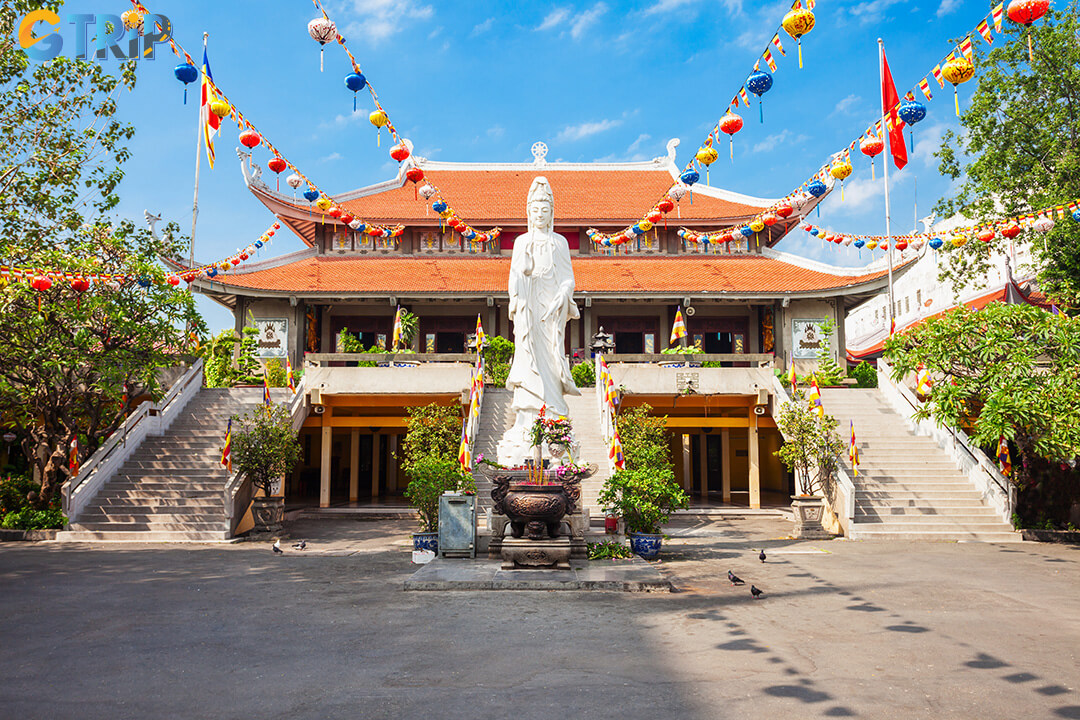
A quick overview of notable temples in Ho Chi Minh City, showcasing their unique architecture, cultural significance, and spiritual appeal to visitors
Practical tips for visiting Khanh An Monastery
To ensure your visit is respectful and enjoyable for both you and the resident monastics, please keep these simple guidelines in mind. Observing proper etiquette is a key part of the experience at any sacred site.
- Dress modestly: This is a place of worship. When deciding what to wear to a pagoda, opt for polite, conservative clothing that covers your shoulders and knees. This shows respect for the solemn environment and the local culture. Avoid shorts, miniskirts, and tank tops.
- Maintain order: The monastery is a sanctuary of peace. Walk softly, speak in a low voice, and avoid joking or talking loudly, especially when inside the main hall or other areas of worship where people may be praying or meditating.
- General hygiene: Help maintain the pristine beauty of the grounds. Be conscious of keeping the area clean and always dispose of any trash in the designated bins located throughout the monastery campus.
- Photography: You are welcome to take photos in the outer campus to capture its beauty. However, when inside the ceremonial halls, photography should be limited or avoided entirely. If you do take a photo, do so silently and without using a flash.
- Respect the rules: Pay attention to any signboards and regulations posted by the monastery. As a sign of respect, do not touch ritual objects, Buddha statues, or other sacred items without explicit permission.
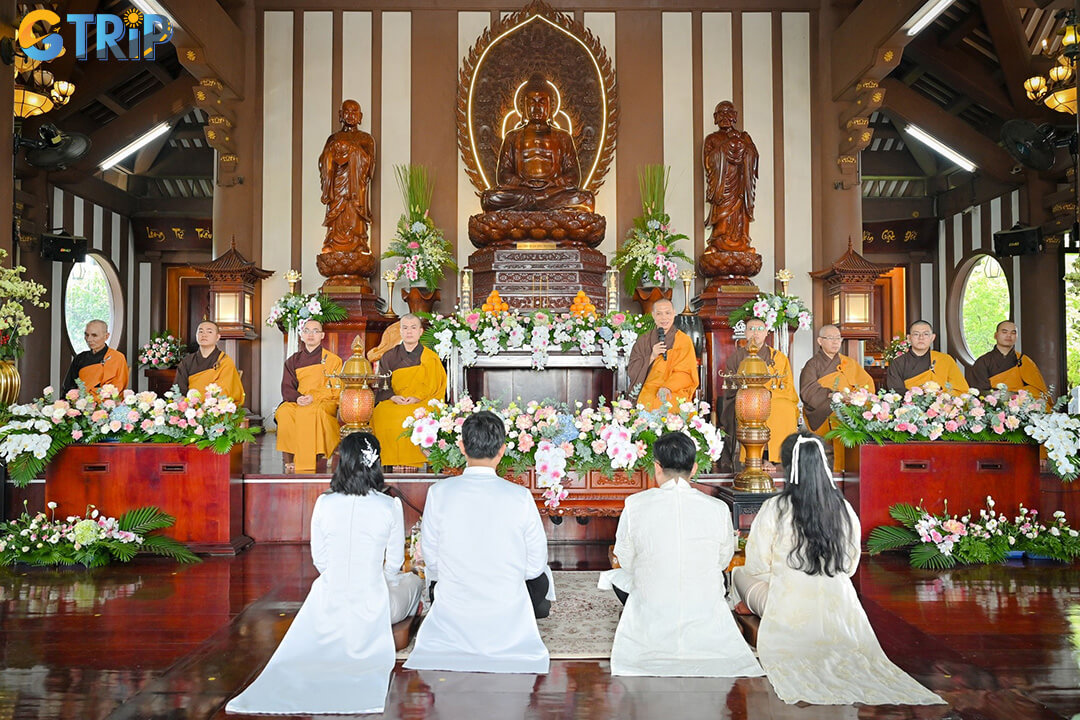
Essential etiquette tips to help you visit Khanh An Monastery respectfully and enjoyably while honoring its sacred atmosphere
Khanh An Monastery is an experience that soothes the soul and delights the senses. It stands as a powerful testament to the fact that profound peace and stunning beauty can be found even within the sprawling metropolis of Ho Chi Minh City. This remarkable former District 12 pagoda offers a unique blend of history, culture, and spirituality, making it an unmissable gem for any traveler. If you meditate in the main hall, spend a morning capturing its beauty, or join a weekend retreat, you’ll leave with renewed calm and lasting memories. We hope this guide from GTrip - Vietnam Travel Agency helps you discover the serene beauty of Khanh An Monastery on your next trip to Saigon.
Custom Your Journey

Other Attractions

Can Gio Monkey Island in Ho Chi Minh City: Tickets, Things to Do & Travel Guide
Can Gio Monkey Island
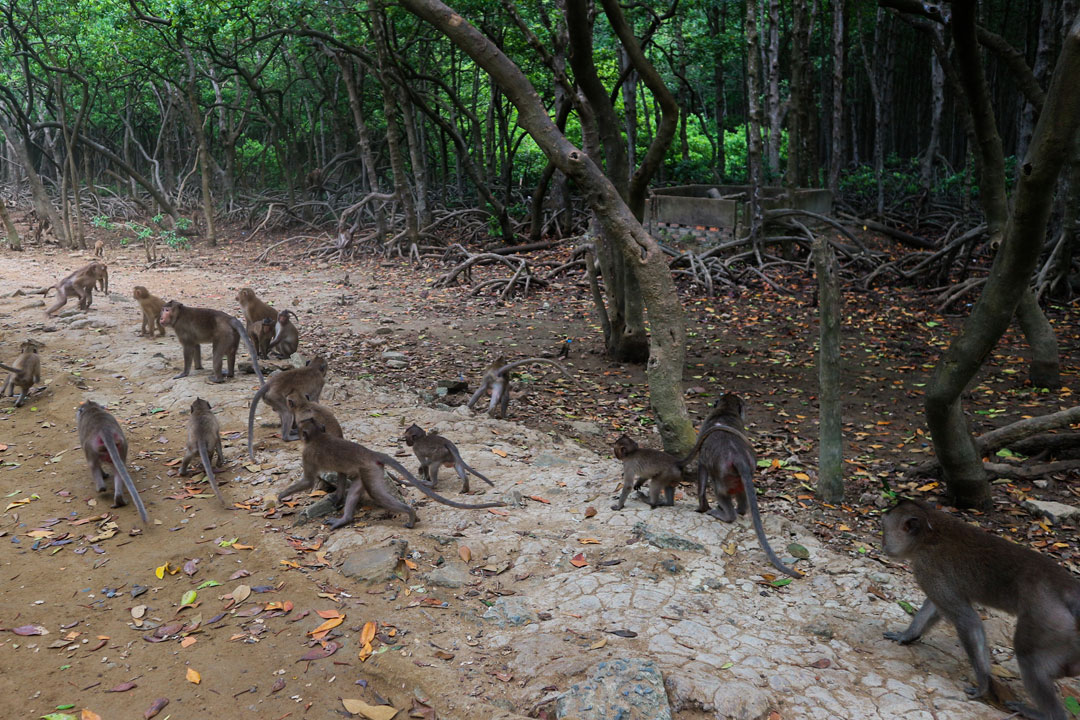
Can Gio Monkey Island in Ho Chi Minh City offers a refreshing escape from the city’s buzzing motorbike chaos. Just a short distance from the center, Can Gio welcomes you with lush mangrove forests, winding waterways, and a fascinating history. Here, you can meet playful long-tailed macaques, drift through tranquil channels, and explore remnants of a wartime guerrilla base.
Can Gio Monkey Island in Ho Chi Minh City: Tickets, Things to Do & Travel Guide
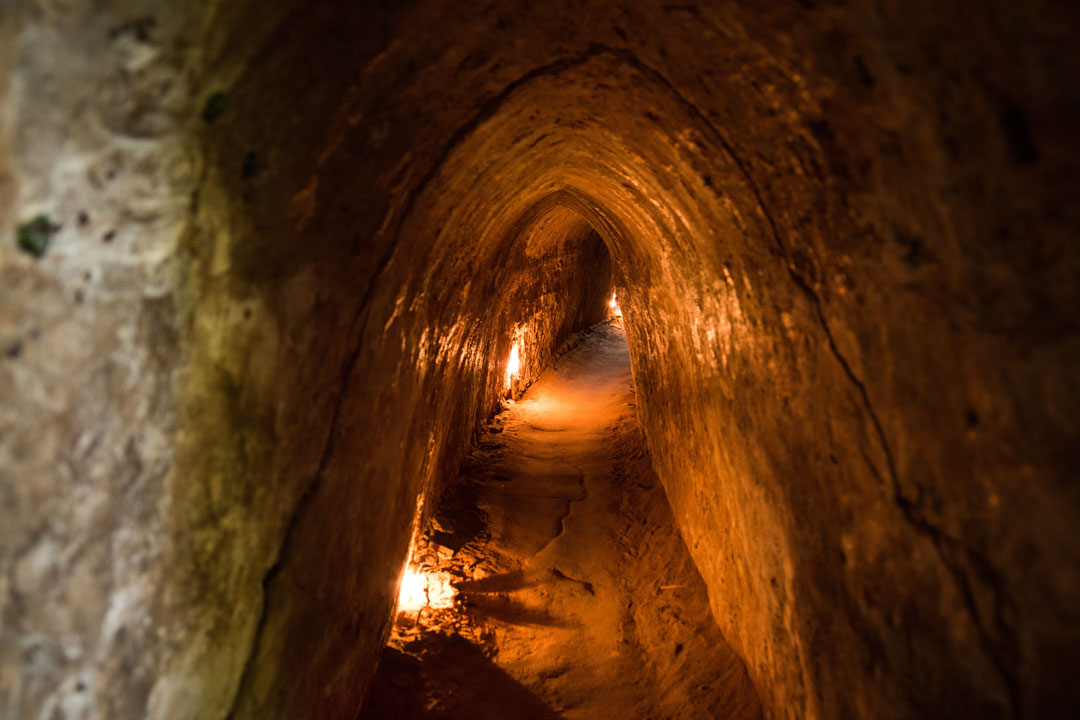
Cu Chi Tunnels: History, Architecture, Things To Do & Travel Guide
Cu Chi Tunnels
The Cu Chi Tunnels, located at TL15, Phu Hiep, Cu Chi District, Ho Chi Minh City, are a vast underground network of strategic passages, shelters, supply routes, and defensive traps.
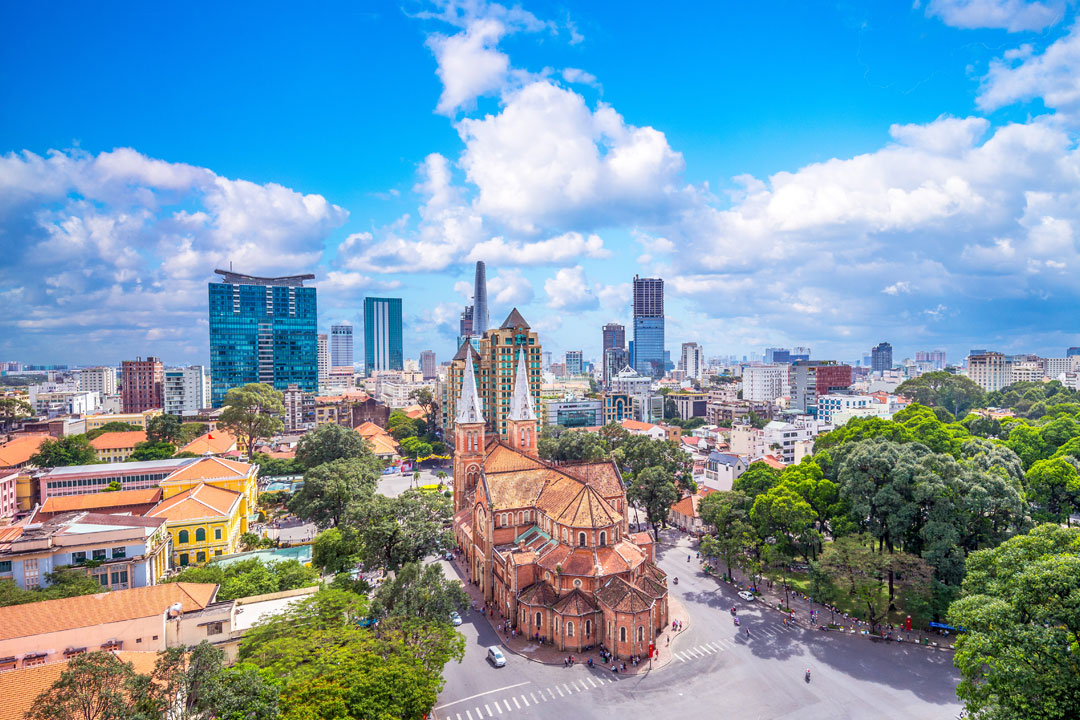
Ho Chi Minh City
Ho Chi Minh City, known as the "Pearl of the Far East," attracts both domestic and foreign tourists with its unique and diverse destinations.
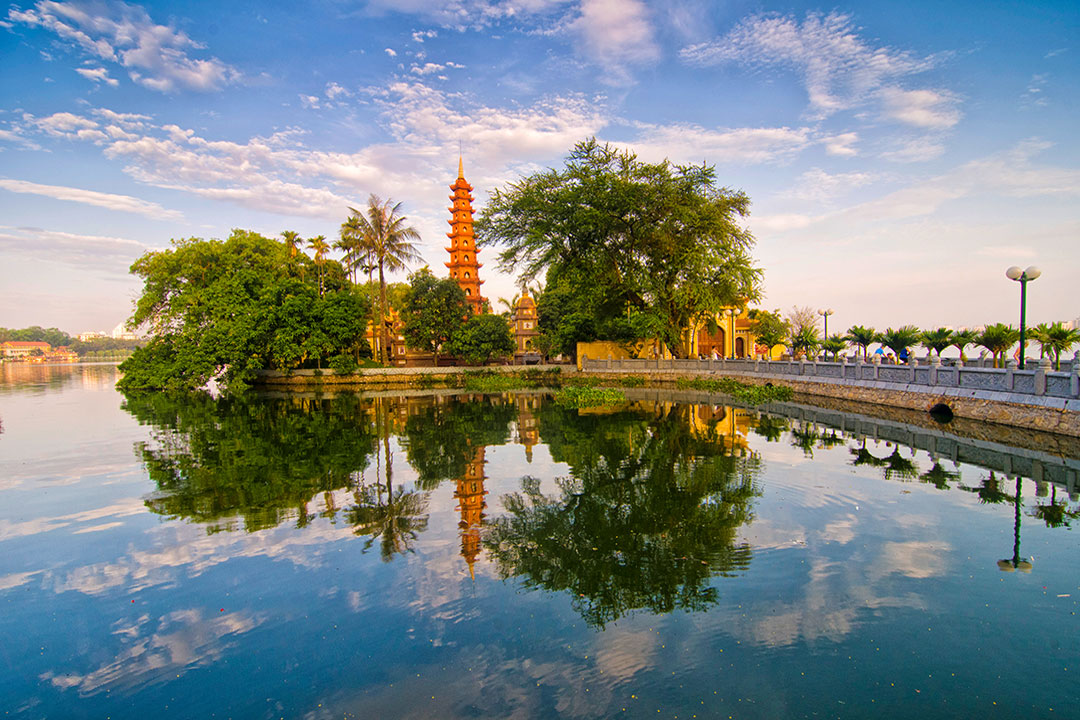
Tran Quoc Pagoda: History, Architecture, Significance & Travel Guide
Tran Quoc Pagoda
Nestled on the tranquil shores of West Lake, Tran Quoc Pagoda is the oldest Buddhist temple in Hanoi, with a history spanning over 1,500 years. Built in the 6th century under Emperor Ly Nam De, this sacred site reflects Vietnam’s Buddhist evolution while preserving its spiritual and architectural grandeur.