

Feb - 10 - 2026
Tam Thai Pagoda is a historic Buddhist sanctuary perched on Water Mountain, the highest peak of the Marble Mountains in Da Nang. With over 400 years of history, the pagoda blends sacred architecture, royal Nguyen Dynasty heritage, and stunning natural scenery. More than a sightseeing stop, it offers a meaningful glimpse into Central Vietnam’s spiritual and cultural roots. In this GTrip guide, you’ll find essential insights into its history, architecture, surrounding caves, and practical tips to plan a memorable visit.
An overview of the Tam Thai Pagoda in Da Nang
- Location: 81 Huyen Tran Cong Chua St, Ngu Hanh Son Ward (formerly Hoa Hai ward, Ngu Hanh Son District), Da Nang City
- Opening hours: 7:30 AM - 5:00 PM, daily
- Entrance fee: Free entry to Tam Thai Pagoda, Water Mountain ticket: 40,000 VND per person
Tam Thai Pagoda dates back to the 17th century and is regarded as one of Da Nang’s most historically important Buddhist sites. Positioned high on Water Mountain (Thuy Son), the tallest and most prominent peak of the Marble Mountains (Ngu Hanh Son), the pagoda occupies a naturally commanding and symbolic location. Its name, often understood as “three celestial levels”, alludes to this elevated setting above the surrounding valleys and caves. Officially recognized as a Special National Monument, Tam Thai Pagoda has long been a place of worship and reflection. It draws visitors who come to admire its heritage and experience the calm, contemplative atmosphere unique to this sacred mountain setting.
Best time to visit Tam Thai Pagoda
To make the most of your visit to this spectacular site, timing is key. Here’s our expert advice on when to go:
- Best time of year: The dry season in Da Nang, which runs from February to August, is the ideal time to visit. During these months, you'll experience sunny skies and minimal rain, making the climb and exploration much more pleasant.
- Best time of day: Early morning (7:30 AM to 9:00 AM) is the best time to explore Tam Thai Pagoda. You’ll avoid the worst of the midday heat and the largest tourist crowds, allowing for a more peaceful and personal experience.
- Special occasions: For a unique cultural experience, consider visiting during the Avalokiteshvara Festival, held annually on the 19th day of the second lunar month at the Marble Mountains.
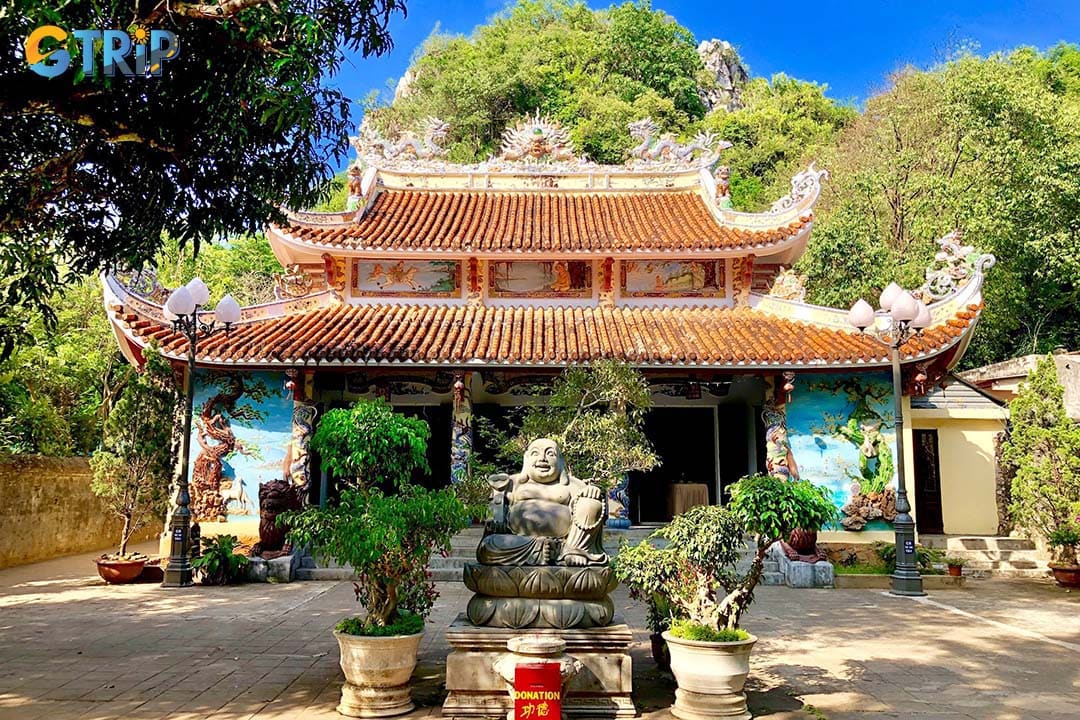
Dating back to the 17th century, Tam Thai Pagoda is one of Da Nang’s most important Buddhist sites, revered for its history, sacred setting, and serene atmosphere
History of the Tam Thai Pagoda
The history of Tam Thai Pagoda reflects centuries of faith, royal influence, and endurance. From its humble origins as a small thatched shrine, it gradually evolved under the patronage of the Nguyen Lords and Kings, especially King Minh Mang, into a nationally significant monument. Beyond its spiritual role, the pagoda also witnessed pivotal historical periods, serving as a refuge and gathering place during times of conflict, which firmly anchors it in Vietnam’s cultural and historical legacy.
| Year / Period | Historical events |
|---|---|
| Before the 17th century | A Buddhist temple already existed at the present site of Tam Thai Pagoda, though its exact construction date remains unknown. |
| 1695 | Thich Dai San (Shi Dashan), a Chinese monk invited by Lord Nguyen Phuc Chu, stayed at Tam Thai Pagoda. At that time, the pagoda was only a thatched structure. His diary described the mountain’s caves, rock formations, exotic trees, and wildlife. |
| 1825 | King Minh Mang visited the Marble Mountains and ordered Tam Thai Pagoda to be rebuilt in brick. He also commissioned 156 stone steps, bronze bells, and Buddha statues, later granting it the status of a national pagoda. |
| Early 19th century | The pagoda became associated with the legend “Gia Long promised, Minh Mang built”, reflecting a vow made by King Gia Long and later fulfilled by his son. |
| Around 1835 | Princess Ngoc Lan, sister of King Minh Mang, came to Tam Thai Pagoda and became a nun. Her story, linked to a famous unfinished poem, remains historically unconfirmed. |
| 1885-1886 | Nguyen Duy Hieu, a leader of the Nghia Hoi Quang Nam resistance against French colonists, used the pagoda as a meeting place before being captured and executed by the French. |
| 1907 | The pagoda was reconstructed with donations from local monks and Buddhists and has largely retained this form since then. |
| 1965-1969 | During the Vietnam War, the surrounding area was used as a hiding place by Viet Cong forces. |
| 1990 | Tam Thai Pagoda was officially recognized as a National Cultural Heritage Site of Vietnam. |
| 1995 | The largest renovation in its history was carried out. No major restoration has been needed since. |
| 2010 | Japanese Buddhist monks presented a replica of a Lady Buddha painting to the pagoda, reflecting historic Vietnam-Japan cultural ties dating back to the 16th century. |
| December 2018 | Tam Thai Pagoda was upgraded to a Special National Monument, acknowledging its outstanding cultural, historical, and spiritual value. |
Architecture of Tam Thai Pagoda
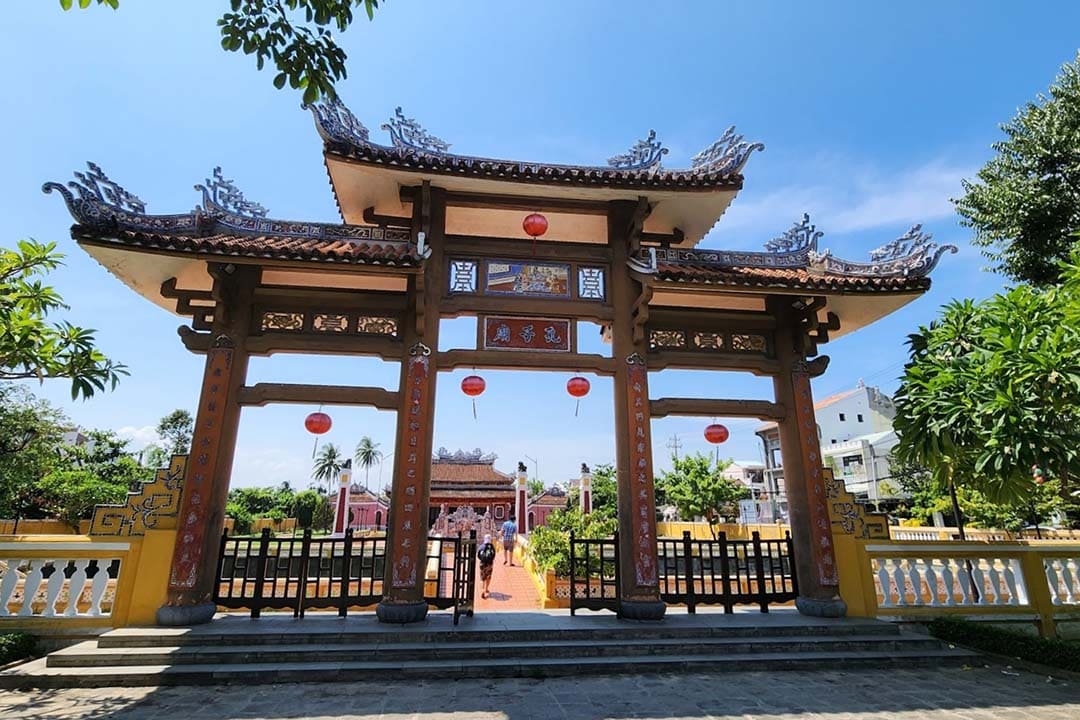
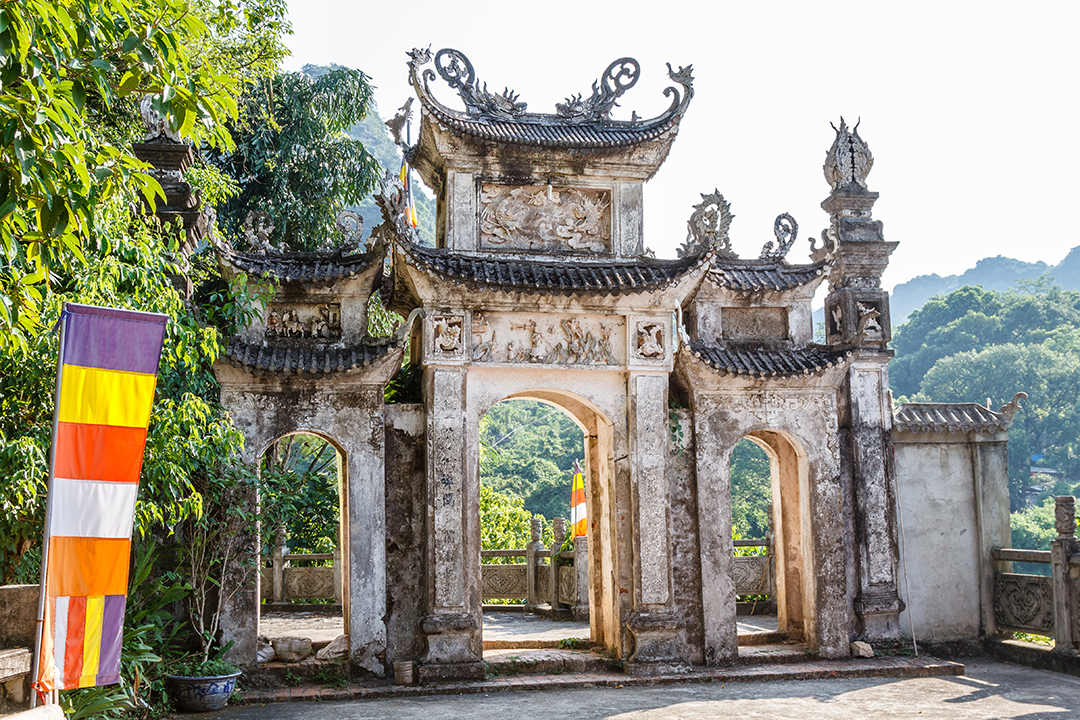
The architecture of Tam Thai Pagoda is a masterful example of traditional Vietnamese Buddhist design, crafted to exist in perfect harmony with its mountainous surroundings. The structure is accessed through a three-entrance gate, a classic feature where the central gate is reserved for monks and dignitaries, while the two side gates are for laypeople. The design of the main pagoda complex is said to follow the shape of the Chinese character for "King" (王), a symbolic nod to its royal patronage.
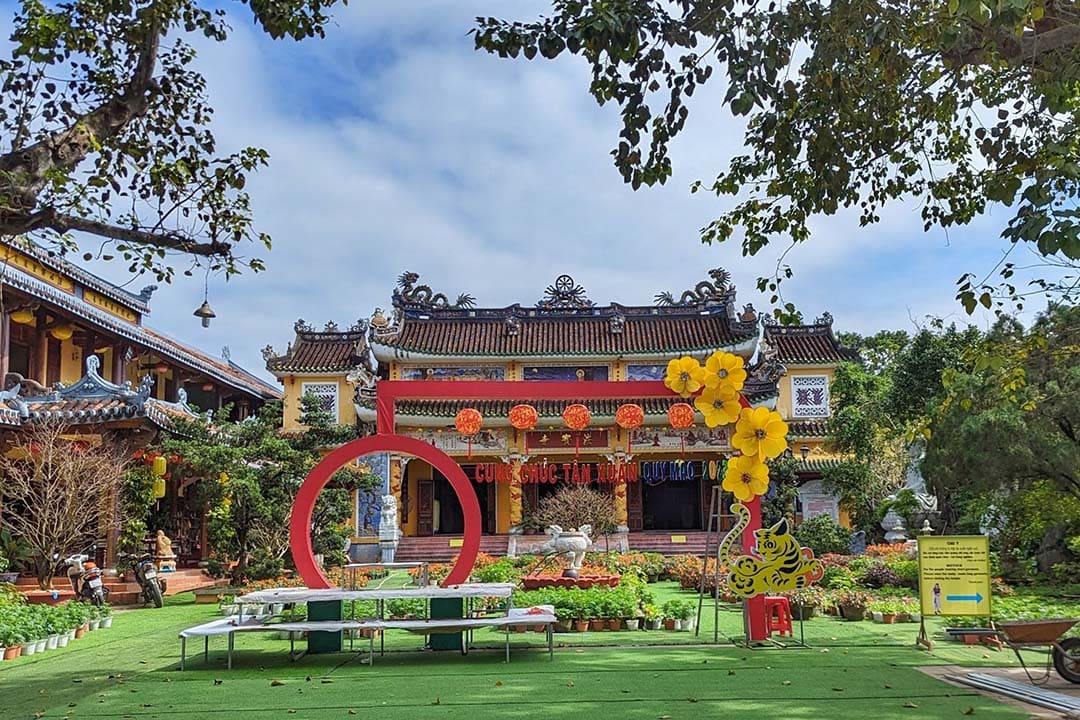
Inside, the central sanctuary exudes a powerful sense of peace and reverence. The main altar is dedicated to Amitabha Buddha, who is flanked by exquisite statues of the Bodhisattvas Avalokiteshvara and Mahasthamaprapta. The pagoda is crowned with traditional curved tile roofs adorned with dragon motifs, and its sturdy brick walls have withstood centuries of weather and war. Every element reflects a deep connection to both Buddhist philosophy and the natural world.
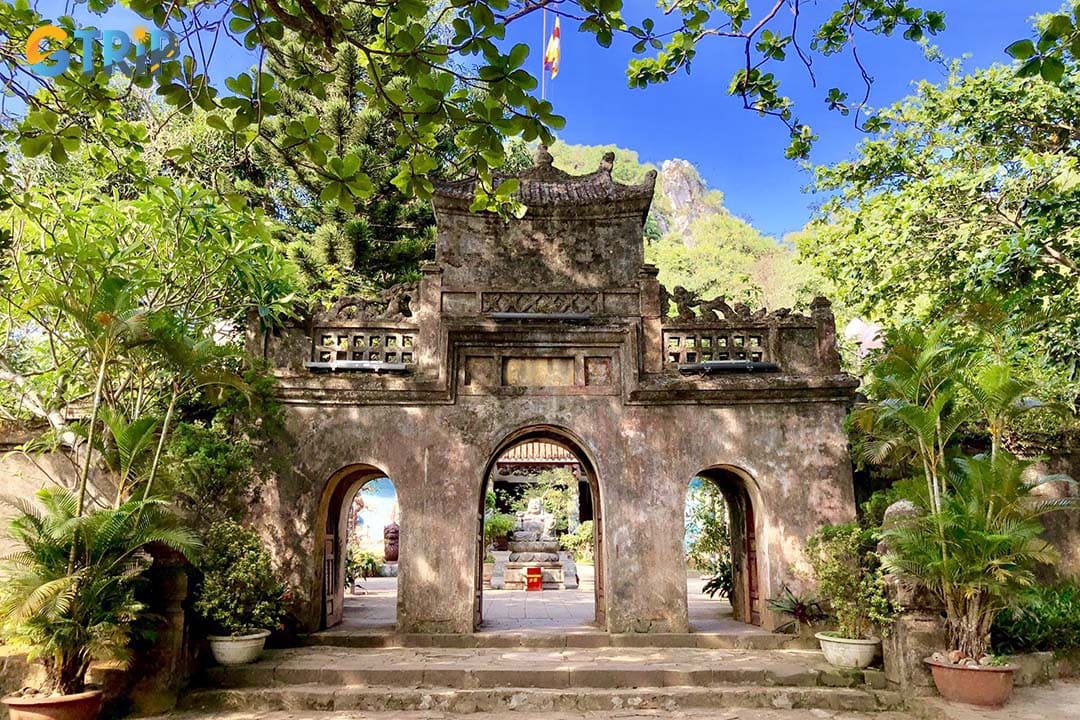
Tam Thai Pagoda features traditional Vietnamese Buddhist architecture, with a three-entrance gate, serene Buddha statues, and curved dragon-adorned roofs
Cultural and spiritual significance of Tam Thai Pagoda
Tam Thai Pagoda is far more than an architectural marvel. It is a profound symbol of Vietnam's spiritual and cultural heritage. As a Special National Monument, its importance is officially recognized by the state, highlighting its deep connection to the nation's history, particularly the Nguyen Dynasty. For centuries, it has been a primary center for Buddhism in Central Vietnam, serving as a place of worship, meditation, and pilgrimage for both monks and the public.
The pagoda's true significance lies in its role as a living spiritual sanctuary. Locals and visitors from across the country come here to pray for health, happiness, and good fortune. The blend of royal history, religious devotion, and its stunning location on Water Mountain creates a unique atmosphere of sanctity and awe. To visit the Tam Thai Pagoda is to connect with a lineage of faith that has been preserved for over 400 years. It is an essential destination for anyone seeking spiritual insight and a deeper understanding of Vietnamese culture.
Things to do at Tam Thai Pagoda
A visit here offers a rich tapestry of experiences, such as architectural admiration and spiritual reflection.
1. Admire the architecture of Tam Thai Pagoda
Take your time to appreciate the pagoda's masterful design. The first thing you'll notice is the ancient-style three-entrance gate, which stands as a solemn welcome. As you walk through the courtyards, observe how the various halls and shrines are arranged in the symbolic shape of the character for "King" (王).
Pay close attention to the details, such as the intricate carvings on the wooden beams and the elegant, curved tile roofs that appear to float against the sky. The deliberate use of natural materials like stone and wood helps the structure blend seamlessly into the marble cliffs of the mountain, creating a beautiful fusion of man-made art and nature.
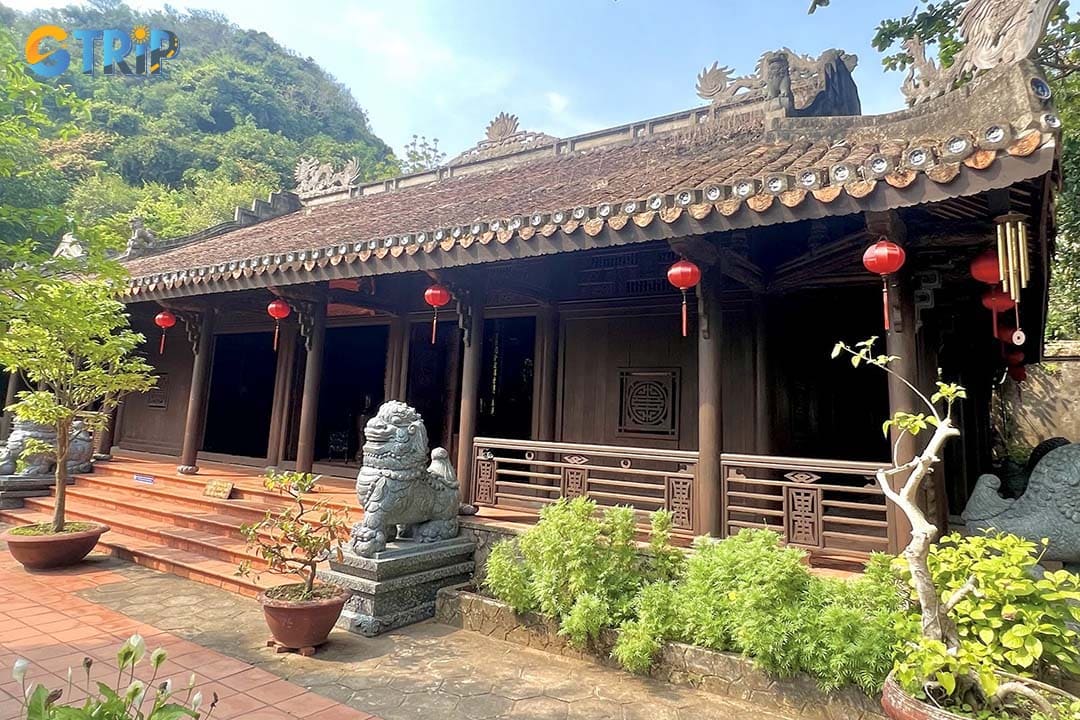
Take time to admire the three-entrance gate, and the intricate carvings and curved tile roofs
2. Observe Buddhist worship and religious practices
Tam Thai Pagoda is an active place of worship, offering a rare and authentic glimpse into local spiritual life. As you explore, you will likely see monks chanting sutras or local devotees quietly praying before the altars. The air is often filled with the gentle scent of burning incense, a common offering made to show respect and send prayers to the heavens.
This is a powerful opportunity to experience the serene and devout atmosphere of a Vietnamese Buddhist site. Please remember to be respectful during your visit. Keep your voice low, move slowly, and avoid using flash photography, especially when people are praying. Observing these simple acts of reverence allows you to be a welcome guest in this sacred space.
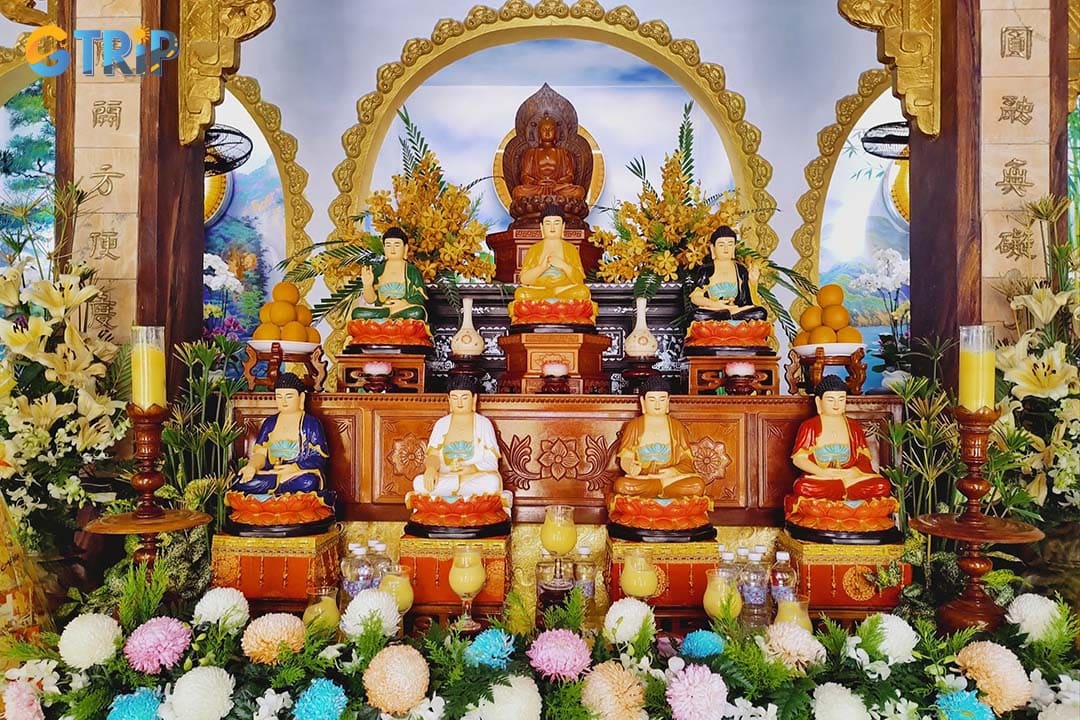
Tam Thai Pagoda remains an active place of worship where you can witness monks chanting and devotees praying amid the scent of incense
3. Discover royal relics and historical artifacts
The pagoda is a treasure trove of artifacts that tell the story of its royal past. One of the most significant relics is a large bronze bell, cast in 1825 by order of King Minh Mang. This bell is a beautiful object and a symbol of the king's direct patronage and the pagoda's status as a national religious site.
Another priceless artifact is a stone plaque, also from the era of King Minh Mang, which officially designates the pagoda as a national treasure. The sanctuary also houses precious Buddha statues and other historical items that have been preserved for centuries. These royal relics offer a direct connection to the Nguyen Dynasty and the emperors who helped shape the pagoda's legacy.
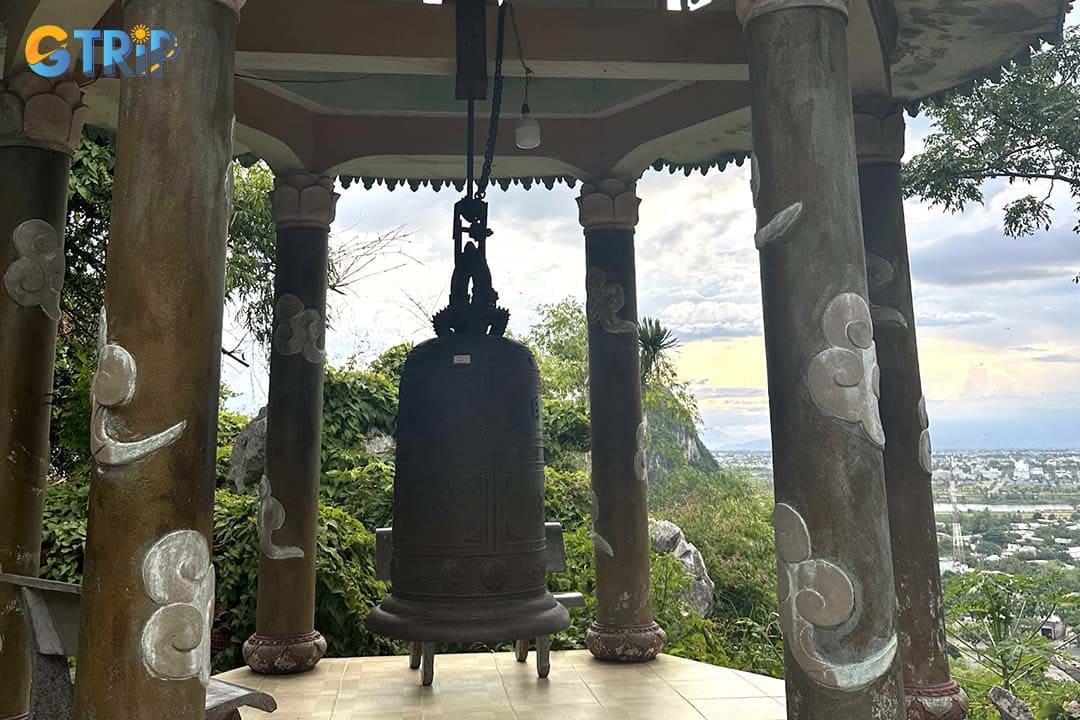
The pagoda preserves invaluable royal relics, including a large bronze bell cast in 1825 under King Minh Mang and a stone plaque from the same era
4. Enjoy panoramic views from the pagoda
One of the greatest rewards for climbing Water Mountain is the spectacular panoramic view from the grounds of Tam Thai Pagoda. From this elevated vantage point, you can gaze out over the surrounding landscape and appreciate the unique geography of Da Nang.
The view encompasses the other marble peaks of the Marble Mountains, the sprawling city of Da Nang in the distance, and the pristine, sandy coastline of Non Nuoc Beach. The combination of mountain, city, and sea is truly breathtaking. Finding a quiet spot to simply sit and absorb the scenery is an essential part of the Tam Thai Pagoda experience.
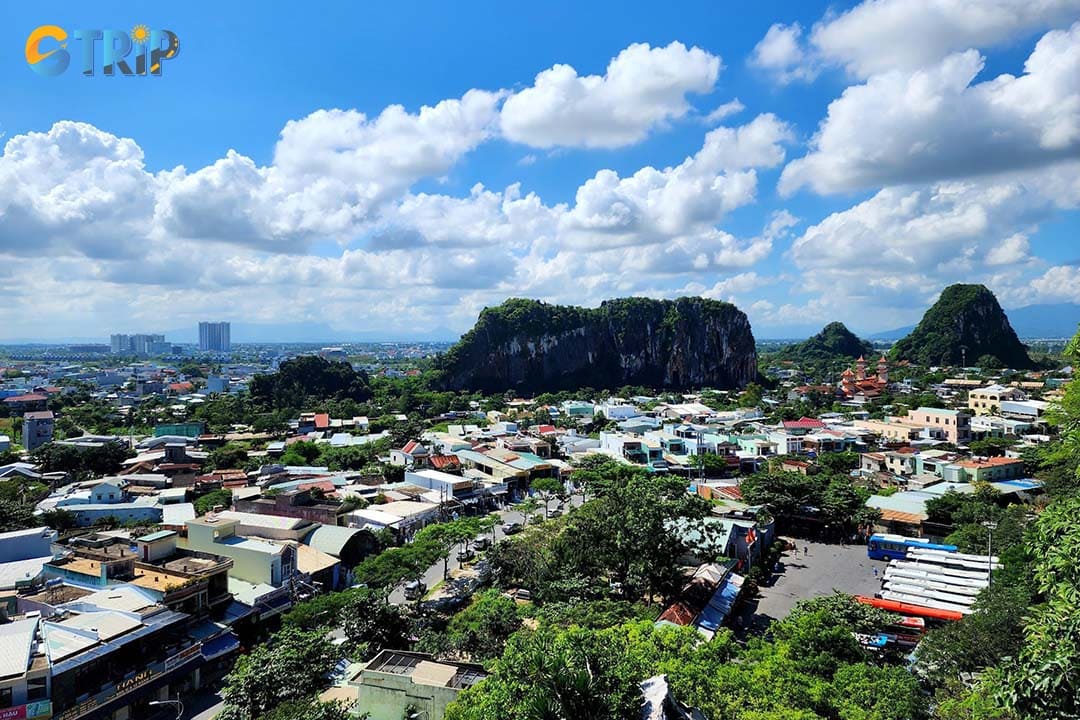
From the pagoda, you can enjoy the panoramic view of the surrounding landscape
5. Explore heritage trees and local legends
The natural environment of Tam Thai Pagoda is as much a part of its identity as its buildings. The courtyards are shaded by ancient, sprawling trees, some of which are hundreds of years old. Look for the massive banyan trees with their complex aerial roots and the fragrant frangipani (plumeria) trees, whose blossoms are often used as temple offerings.
The pagoda is also steeped in local folklore, including the unconfirmed but romantic tale of Princess Ngoc Lan, King Minh Mang's sister. Legend tells that she took refuge here as a nun after a personal tragedy. These stories and the ancient trees add a layer of mystique and wonder to the site, connecting it to the land and its people.
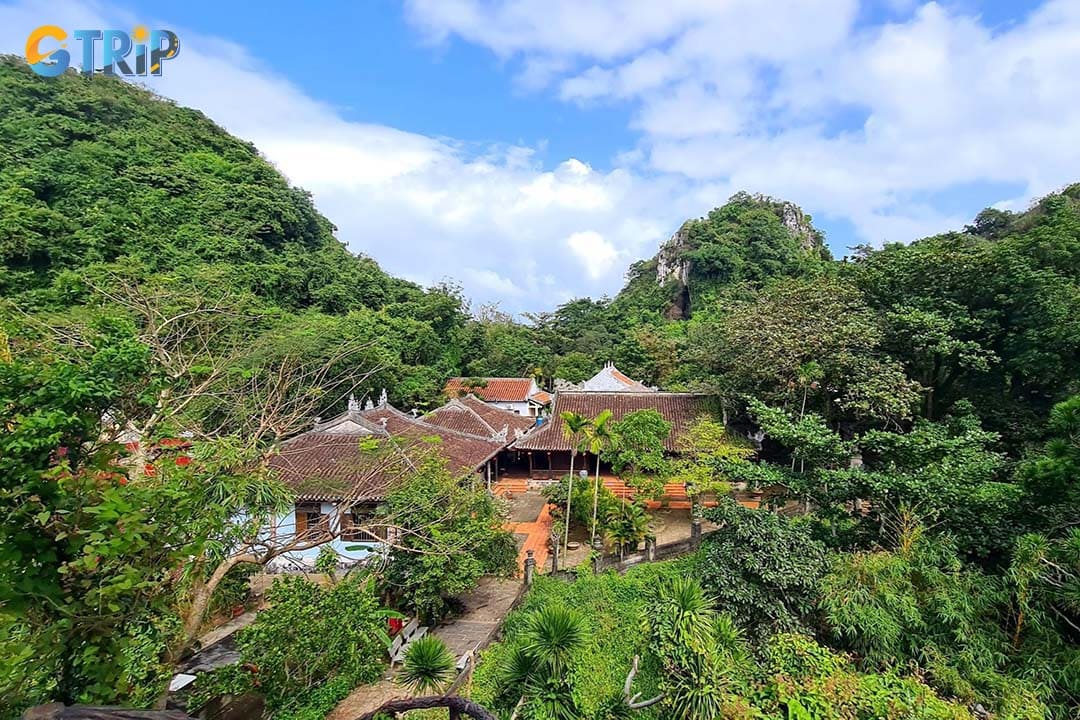
Ancient banyan and frangipani trees shade Tam Thai Pagoda, while local legends like the tale of Princess Ngoc Lan add a sense of mystique
6. See the Burial Towers of Buddhist Monks
Located near the main pagoda complex, you will find several stupas, which are burial towers for esteemed Buddhist monks who have served at the pagoda. These towers are a traditional way to honor the lineage of spiritual leaders and preserve their memory.
One of the most notable is the tomb of Abbot Thich Tu Tri, a prominent figure in the pagoda's history. These stupas are not just tombs but monuments of reverence, often featuring intricate designs and inscriptions. Taking a moment to see them provides deeper insight into the continuity of Buddhist practice at Tam Thai Pagoda and the respect given to its abbots.
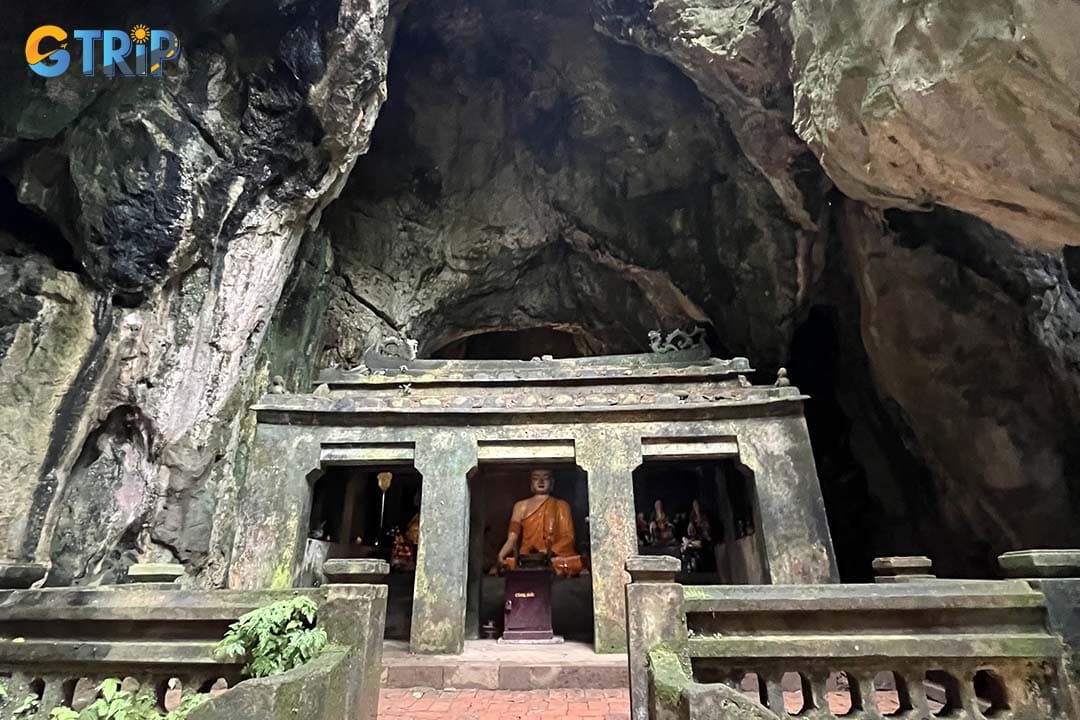
Near the main pagoda, a series of stupas honor revered monks such as Abbot Thich Tu Tri, offering insight into the pagoda’s spiritual lineage
How to get to Tam Thai Pagoda
Tam Thai Pagoda is conveniently located in the Marble Mountains, about 10 kilometers southeast of Da Nang's City center. Getting there is straightforward with several options available:
- Motorbike: For flexibility, rent a motorbike for approximately 150,000 - 180,000 VND per day. You can take one of two main routes: the scenic coastal route via Vo Nguyen Giap - Truong Sa - Non Nuoc, or the more direct city route via Le Van Hien - Non Nuoc.
- Bus: The Da Nang-Hoi An bus (Route #1) is a very affordable option. It runs every 20 minutes until about 5:30 PM and stops directly in front of the Marble Mountains. The fare is around 25,000 VND.
- Taxi/Ride-hailing: Using a taxi or a ride-hailing app like Grab/Be/Xanh SM is the most comfortable and convenient option, especially for families or groups. The ride from the city center is quick and hassle-free.
Nearby attractions to the Tam Thai Pagoda in Da Nang
Your visit to the pagoda is also an opportunity to explore the rich collection of natural and cultural sites within and around the Marble Mountains.
Attractions within Water Mountain (Thuy Son), Marble Mountains
Tam Thai Pagoda is just one jewel on Water Mountain. After your visit, be sure to explore the other interconnected caves and pagodas:
- Linh Ung Pagoda (Non Nuoc Pagoda): An ancient pagoda near the base, not to be confused with the Linh Ung Pagoda on Son Tra Peninsula.
- Huyen Khong Cave: The largest and most spectacular grotto, with a giant Buddha statue illuminated by natural light from a hole in the ceiling.
- Am Phu Cave (Hell Cave): A fascinating and graphic depiction of the Buddhist concept of hell and redemption.
- Tang Chon Cave: A cave containing several shrines and a natural skylight.
- Van Thong Cave: A narrow, chimney-like cave that leads to a viewpoint.
- Linh Nham Cave: A smaller, tranquil grotto.
- Heaven Gate (Cong Troi): A natural "gate" in the rock offering great views.
- Thuong Thai Peak: The highest point on Water Mountain, offering the best panoramic views.
- Xa Loi Tower: A multi-tiered Buddhist stupa.
- Vong Giang Dai (River Watching Pavilion): A pavilion with views over the Co Co River.
- Vong Hai Dai (Ocean Watching Pavilion): A pavilion with views of the sea.
- Non Nuoc Stone Carving Village: Located at the foot of the mountain, this 400-year-old craft village is famous for its marble sculptures.
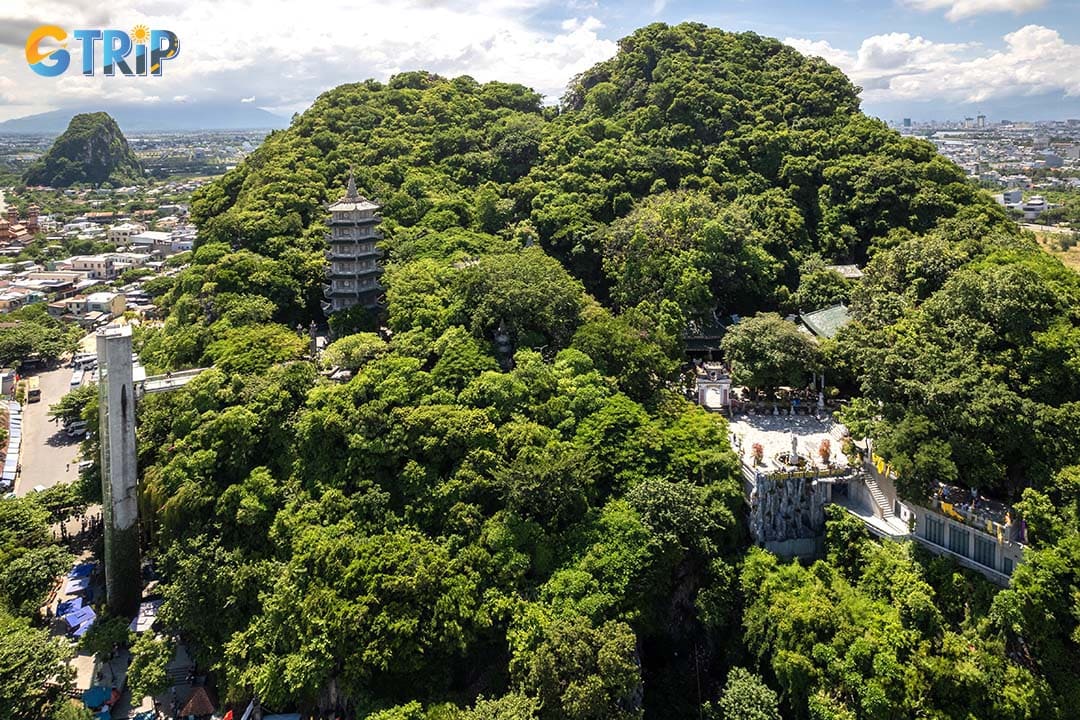
There are many attractions on Water Mountain that you can explore after visiting Tam Thai Pagoda
Nearby attractions around the Marble Mountains
The area surrounding the Marble Mountains also boasts several fantastic attractions worth visiting:
- Non Nuoc Beach (1 km): A beautiful, clean beach with soft white sand, perfect for relaxing after your mountain exploration.
- Son Thuy Beach (2 km): Another lovely and often quieter stretch of coastline just north of Non Nuoc Beach.
- Tan Tra Beach (3 km): A serene beach area known for its calm waters and local seafood restaurants.
- K20 Revolutionary Base (4.5 km): A historical site where local revolutionaries hid in secret bunkers during the Vietnam War.
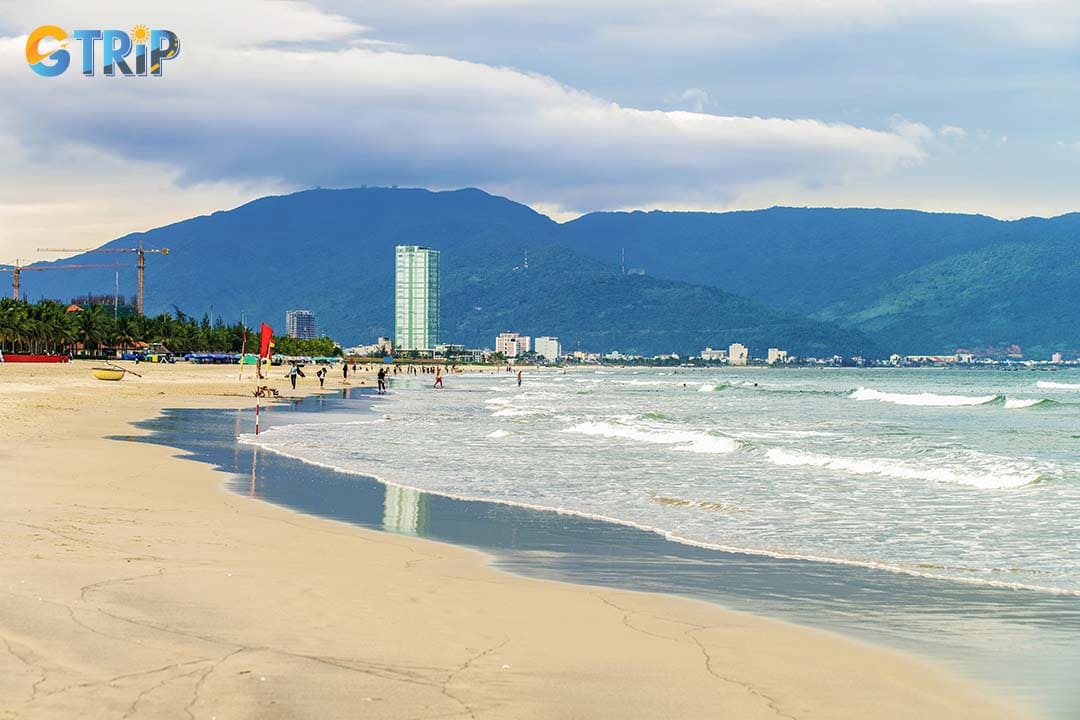
If you want to change the environment, you can go to the nearby beach
Practical tips for visitors when visiting the Thai Tam Pagoda
To ensure a smooth and enjoyable visit to Tam Thai Pagoda and the Marble Mountains, keep these practical tips in mind:
- Dress code: This is a sacred site, so please dress respectfully. Cover your shoulders and knees before entering the pagoda's main sanctuary.
- Footwear: You will be doing a lot of walking and climbing stairs. Wear comfortable, sturdy shoes with a good grip.
- Bring water: It can get very hot and humid, especially during the climb. Bring plenty of water to stay hydrated.
- Elevator option: For those with limited mobility or who wish to save energy, there is an elevator available to ascend Water Mountain for a small fee (15,000 VND one way). You will still need to walk to reach the various caves and pagodas.
- Time management: To fully appreciate Tam Thai Pagoda and the main attractions on Water Mountain, allot at least 2-3 hours for your visit.
FAQs
Is there an entrance fee for Tam Thai Pagoda?
No, there is no separate fee to enter Tam Thai Pagoda itself. However, the pagoda is located inside the Marble Mountains scenic area (on Water Mountain), which requires an entrance ticket. The fee is 40,000 VND per person, which gives you access to the pagoda and most of the caves on the mountain.
How long does it take to climb to Tam Thai Pagoda?
The climb to Tam Thai Pagoda is relatively short. From the base of Water Mountain, it takes approximately 15-20 minutes to walk up the stone steps to the pagoda's entrance. If you choose to take the elevator up the mountain, the walk to the pagoda from the elevator's exit point is only about 5-10 minutes.
Is Tam Thai Pagoda suitable for children and the elderly?
The site can be challenging for very young children and the elderly due to the numerous stone steps. However, it is still manageable. Using the elevator can significantly reduce the physical exertion required to reach the main level where the pagoda is located. The pathways around the pagoda itself are relatively flat, but exploring the nearby caves will involve more stairs.
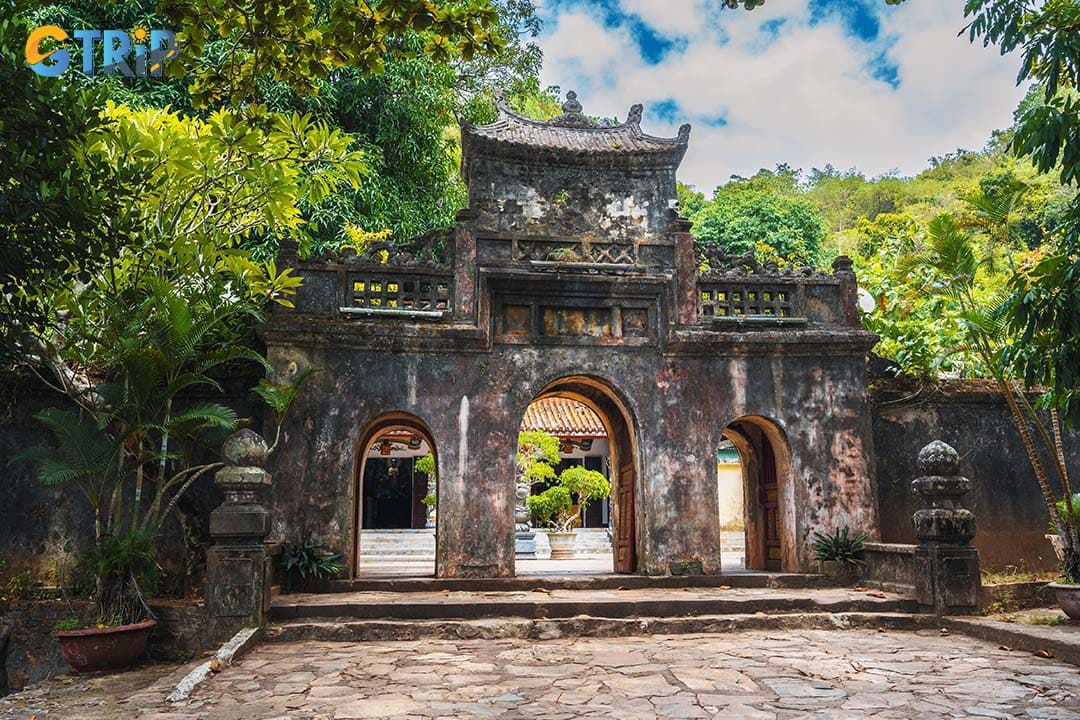
It is free to visit Tam Thai Pagoda, but you have to pay an amount of money to enter the mountain
A journey to Tam Thai Pagoda is a journey into the heart of Da Nang’s history, spirituality, and natural splendor. The pagoda offers a profound and peaceful escape. It stands as a powerful reminder of Vietnam's enduring faith and rich cultural tapestry, captivating all who make the climb. As you stand in its ancient courtyard, you’re not just a tourist, you are a witness to centuries of devotion. Ready to explore this historical gem? Let GTrip help you plan your unforgettable journey with our curated Da Nang Tours, designed to reveal the city’s most meaningful cultural landmarks.