

Feb - 26 - 2026
Floating on a quiet tributary of the Vam Sat River, Phu Chau Floating Temple, local also known as Chua Mieu Noi, is one of Ho Chi Minh City’s most unique spiritual sites. Reached only by boat, the temple offers a peaceful escape from the city’s busy streets, with ornate carvings, colorful dragons, and a calm riverside setting. In this guide, GTrip shares the temple’s history, architectural highlights, and practical tips to help you plan a smooth and meaningful visit.
Overview of Phu Chau Floating Temple in Ho Chi Minh City
- Address: on Vam Thuat River, An Nhon Ward (formerly Ward 5, Go Vap District), Ho Chi Minh City
- Opening hours: Daily until 5:00 PM (extended until 8:00 PM on special occasions like Lunar New Year and full-moon days)
- Entrance fee: Free (Due to its location on the river, visitors must take a boat to enter the temple. Round-trip boat fare is 15,000 VND/person and motorbike parking fee is 10,000 VND)
- Best time to visit: Year-round, with Lunar New Year and full-moon days being the most vibrant, featuring colorful decorations, traditional ceremonies, and a lively spiritual atmosphere.
Phu Chau Floating Temple is located on a small, lush islet in the middle of the Vam Thuat River. Surrounded by water, the only way to reach it is by taking a short, scenic boat ride, which is an integral part of the experience. The temple is a stunning example of traditional Vietnamese and Chinese architectural styles, adorned with countless colorful mosaic pieces that glitter in the sunlight. Its peaceful atmosphere provides a welcome respite from the city's energy. It’s a place where locals come to pray for luck, health, and happiness, and where visitors can quietly observe and appreciate the deep-rooted spiritual traditions of Vietnam.
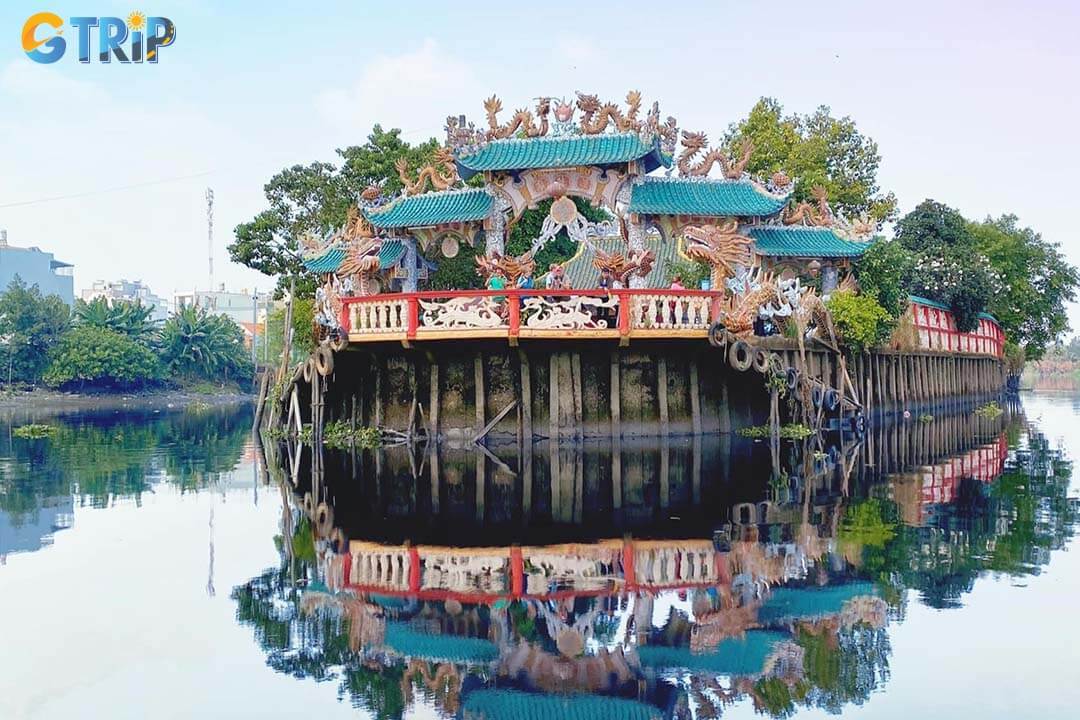
Phu Chau Floating Temple sits on a small islet in the Vam Thuat River, offering a peaceful spiritual retreat with vibrant traditional architecture amid
History of Phu Chau Floating Temple
Submerged in local legend and history, the story of Phu Chau Floating Temple dates back over 300 years, to the Nguyen Dynasty, under the reign of the Gia Long Emperor. According to local lore, a fisherman was casting his nets in the Vam Thuat River when he pulled up the body of a woman. Deeply moved, he gave her a proper burial on the small, uninhabited islet in the middle of the river. He built a small shrine to honor her spirit, and soon, other locals began visiting to pray. Over time, the shrine gained a reputation for its spiritual power, and visitors reported that their prayers were being answered.
As its fame grew, the humble shrine was gradually expanded and embellished with contributions from grateful devotees and the wider community. Major renovations in the 20th century transformed it into the magnificent structure seen today. Despite these modernizations, the temple has retained its sacred essence and its deep connection to the river and the local community. It was officially recognized as a city-level historical and cultural relic in 2004, solidifying its status as a cherished landmark in Ho Chi Minh City.
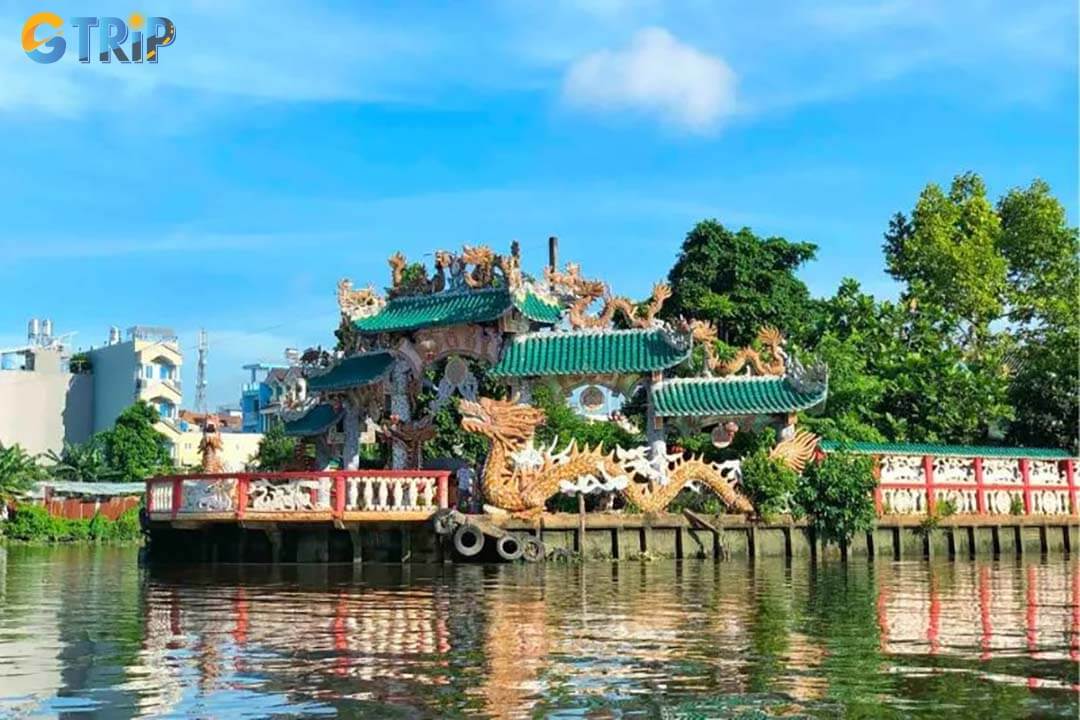
Founded over 300 years ago during the Nguyen Dynasty, Phu Chau Floating Temple evolved from a humble riverside shrine into a revered spiritual landmark
Architectural highlights of Phu Chau Floating Temple
Approaching the temple by boat is an architectural reveal like no other. The structure seems to rise magically from the water, a kaleidoscope of color and intricate detail. Its design is a masterful fusion of Vietnamese and Chinese influences, packed with symbolism and artistry at every turn.
Exterior of Phu Chau Floating Temple
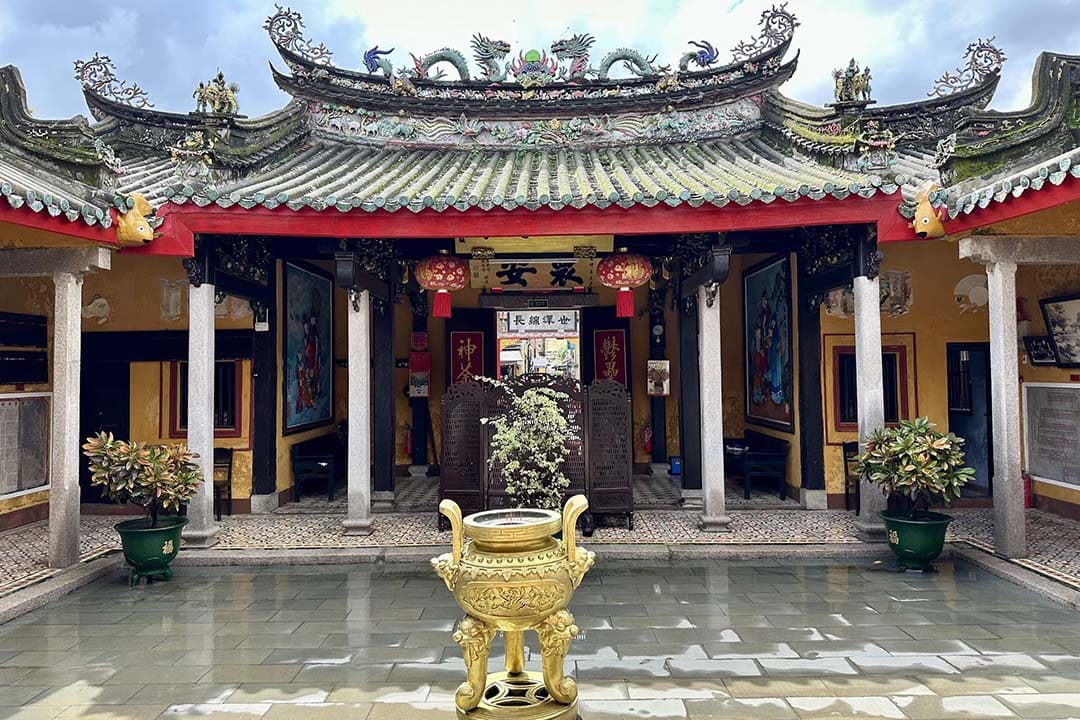
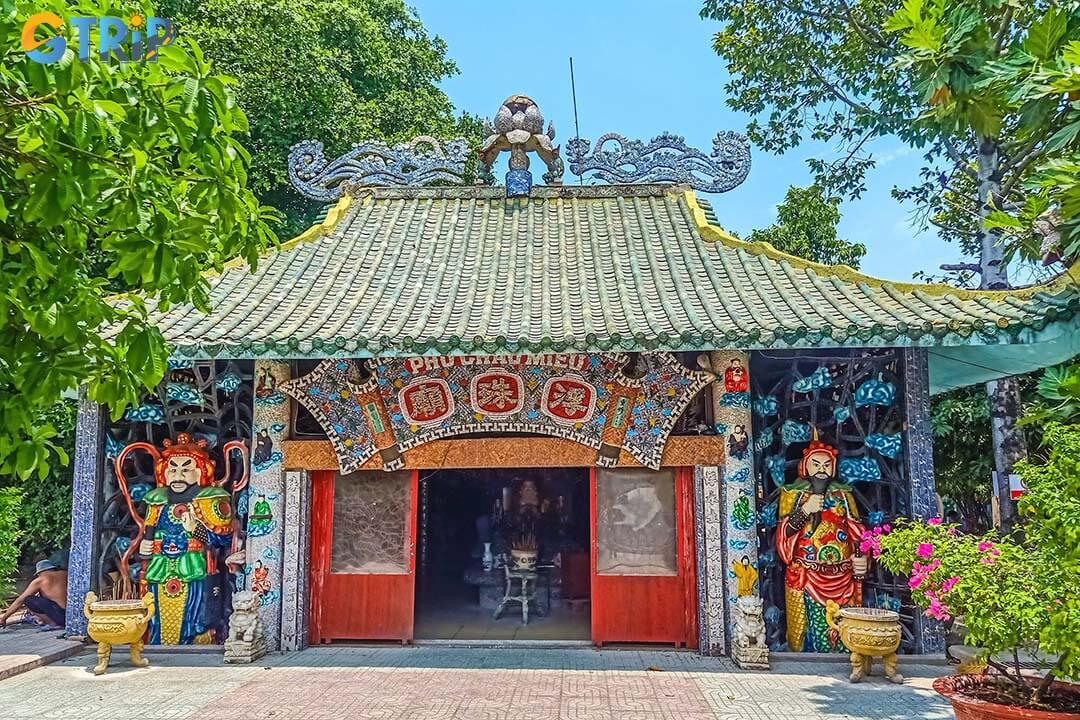
The exterior of Phu Chau Floating Temple is a feast for the eyes. The entire structure is adorned with thousands of pieces of colorful porcelain and ceramic tiles, meticulously arranged to form breathtaking mosaics. Dominating the rooflines and gateways are countless statues of dragons and phoenixes, powerful symbols of prosperity, power, and good fortune in East Asian culture. These mythical guardians twist and soar, their scales shimmering in the sun. The temple’s bright yellow, green, and red hues stand out brilliantly against the lush greenery of the islet and the calm brown water of the river.
Interior of Phu Chau Floating Temple
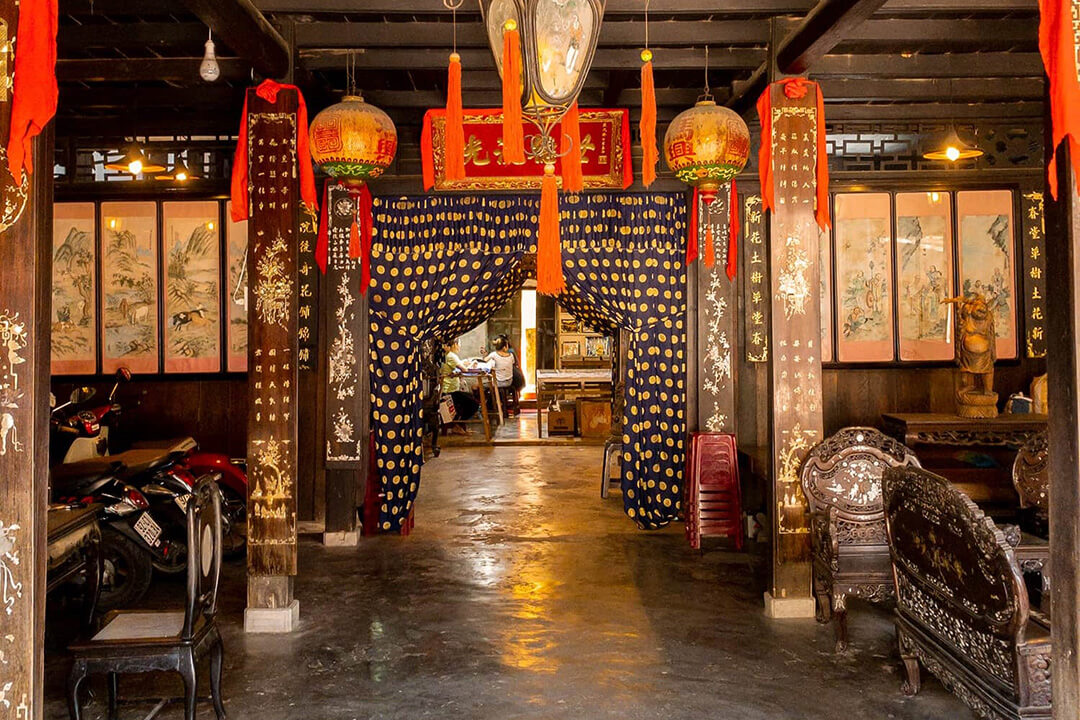
Stepping inside, the atmosphere shifts from dazzling to deeply spiritual. The air is thick with the fragrant scent of burning incense, and intricate woodwork replaces the vibrant mosaics. The halls are filled with exquisitely carved wooden panels, altars, and statues gilded in gold. Look up to see ceilings adorned with elaborate patterns and lanterns casting a soft, reverent glow over the sacred spaces. Every corner holds a story, and the sheer density of detail reflects the immense devotion poured into the temple over generations, creating a serene and solemn ambiance perfect for reflection.
Inside Phu Chau Floating Temple, fragrant incense, gilded altars, and intricate wood carvings create a serene, sacred atmosphere that invites quiet reflection
Explore the sacred space and worship at Phu Chau Floating Temple
Phu Chau Temple is a sacred site honoring multiple deities, reflecting a syncretic blend of Taoism, Buddhism, and Vietnamese folk religion. This fusion is common in Southern Vietnam, where different belief systems coexist harmoniously. Worshippers come here to pray for a wide range of blessings, from good health and business success to safe travels and family harmony. The temple is divided into three main areas, each with its unique spiritual focus.
Main hall
Main hall is the spiritual heart of the temple. It is primarily dedicated to the Five Elements Holy Mothers, a group of powerful goddesses representing the five fundamental elements of the universe: metal, water, fire, earth, and wood. In Taoist and folk beliefs, they are believed to govern the forces of nature and are prayed to for balance, protection, and prosperity. Alongside them are altars for other revered figures. Lady Chau Doc (Ba Chua Xu) is a prominent deity from the Mekong Delta, known for granting wishes and protecting the region. Altars dedicated to Quan Cong, the God of War symbolizing loyalty and righteousness, are prominently displayed. Another altar honors Bao Cong, the legendary judge who represents justice and integrity. The hall is further enriched by statues of Lady Kim Mau (the Golden Mother) and Dia Mau (the Earth Mother). In addition, the Dragon God and various Guardian Spirits are worshipped here, believed to protect and safeguard the sacred grounds.
Front hall
Located at the entrance, front hall is more aligned with Buddhist traditions. It houses a prominent shrine for Maitreya Buddha, the "Laughing Buddha" who represents happiness and future prosperity. You will also find an altar for Shakyamuni Buddha (the historical Buddha) and Quan Am Chuan De (a form of Avalokiteshvara Bodhisattva, the goddess of mercy). The hall is lined with statues of the Eighteen Arhats, the original disciples of Buddha who have achieved enlightenment. This mix of deities creates a welcoming space for followers of different traditions.
Middle hall
This central space is dedicated to a beloved figure from classic Chinese literature: The Great Sage Equal to Heaven (Te Thien Dai Thanh), better known as the Monkey King, Sun Wukong. He is worshipped as a powerful deity who can overcome obstacles and provide protection. The altar is surrounded by intricately carved wooden panels depicting scenes from his legend, including celestial maidens presenting him with peaches of immortality. The detailed craftsmanship here is particularly noteworthy, creating an atmosphere that is both serene and theatrically solemn.
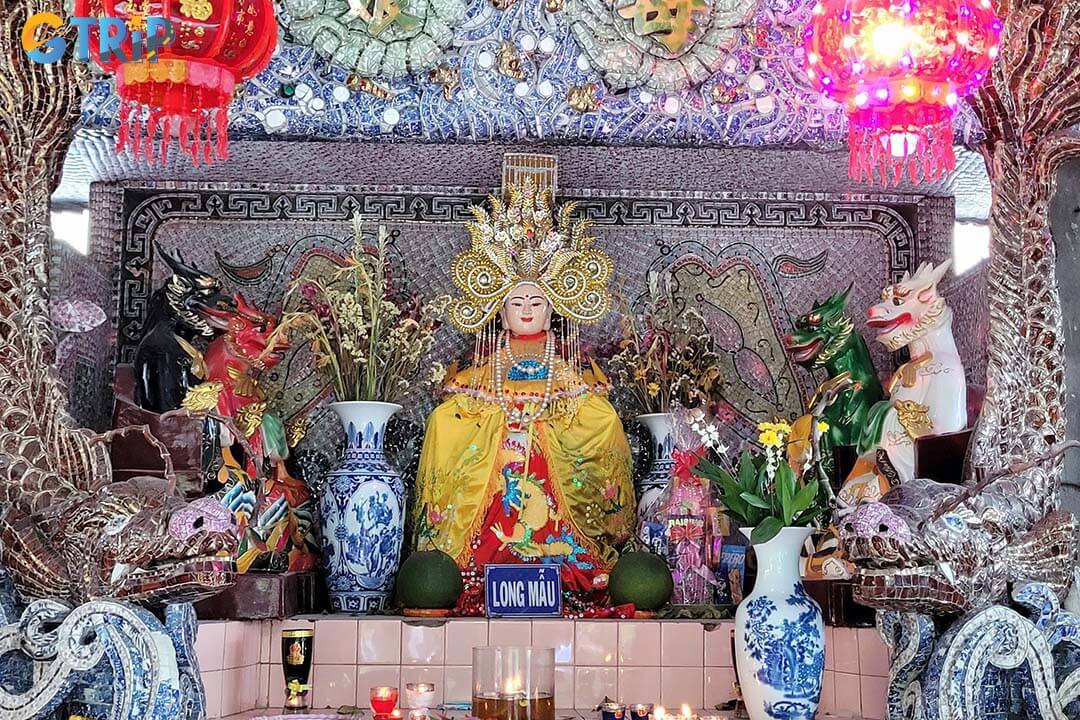
Phu Chau Temple reflects a harmonious blend of Taoism, Buddhism, and Vietnamese folk beliefs, with multiple deities worshipped across three sacred halls
Things to do at Phu Chau Floating Temple
Beyond its spiritual significance, a visit to Phu Chau Temple is a multi-sensory journey filled with peaceful moments and fascinating discoveries. Here are the top things to do to make the most of your trip.
1. Admire the unique architecture of Phu Chau Floating Temple in the former Go Vap District
Take your time to truly appreciate the incredible artistry of the temple. The sheer density of detail is astounding. As you walk around, look closely at the mosaic dragons snaking along the roof ridges, each scale is a unique piece of porcelain. Notice the phoenixes perched at the corners, symbolizing grace and virtue. These aren't just decorations, they are sacred protectors. The temple offers endless details to discover the narrative scenes depicted in ceramic and the fierce expressions of the guardian statues at the entrance.
2. Enjoy the tranquil atmosphere inside Phu Chau Floating Temple
One of the most profound experiences at the temple is the feeling of complete peace that washes over you. After the short boat ride separates you from the urban clamor, the temple's interior offers a sanctuary of calm. Find a quiet corner to sit and observe. Listen to the soft murmur of prayers, the gentle lapping of the river against the islet, and the distant, muffled sounds of the city. It’s a meditative experience that allows you to connect with the spiritual pulse of Saigon.
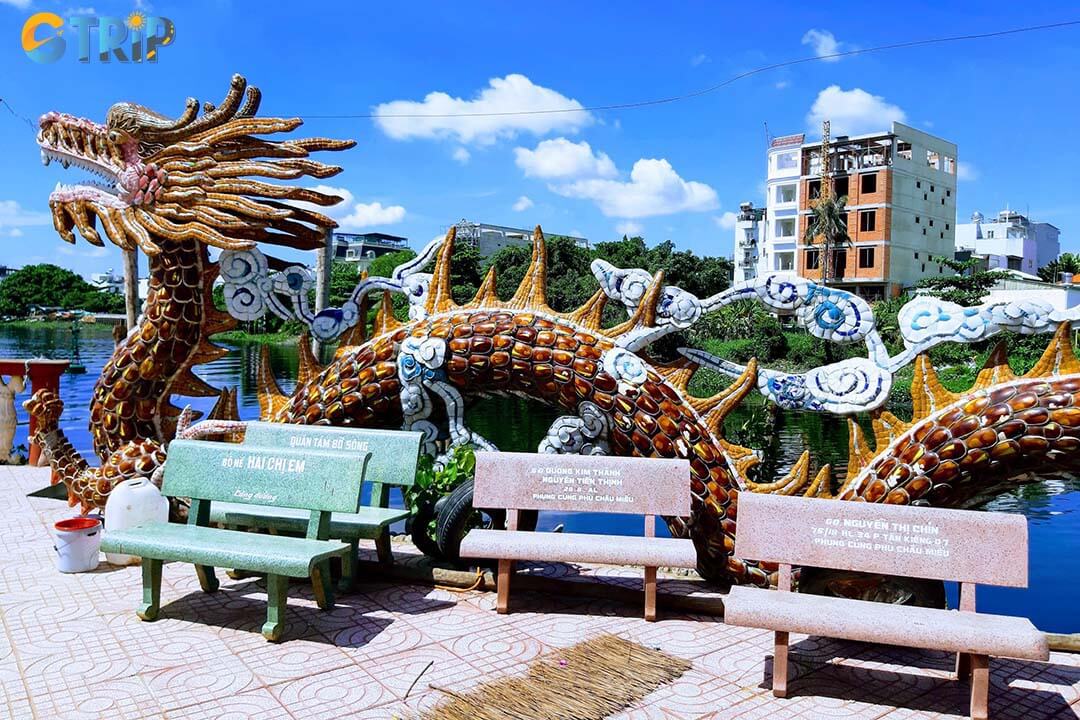
A visit to Phu Chau Temple offers a rare moment of calm, where the river, quiet prayers, and sacred space create a deeply meditative escape from the city
3. Stroll through the lush, green temple grounds of Phu Chau Floating Temple
The islet itself is a miniature park. Encircling the vibrant temple are surprisingly lush grounds filled with tropical plants, shady trees, and manicured gardens. This green space provides a beautiful, natural contrast to the riot of color on the temple’s facade. Follow the stone pathways around the islet. You’ll find benches perfectly positioned for you to sit and enjoy the river breeze while watching boats glide by. This tranquil garden setting enhances the feeling of being in a secluded oasis, making your visit to Phu Chau Floating Temple a truly refreshing escape from city life.
4. Visit the turtle pond in the front courtyard of Phu Chau Floating Temple
In the front courtyard, you will find a pond teeming with turtles. In Vietnamese culture, as in much of Asia, the turtle is a sacred animal symbolizing wisdom, longevity, and endurance. It is one of the four sacred animals (along with the dragon, phoenix, and unicorn) and is deeply associated with heaven and earth. Visitors often pause here to watch the turtles swim lazily or sun themselves on the rocks. Observing them is considered a peaceful and meditative part of the temple visit, a living reminder of the timeless values the temple represents.
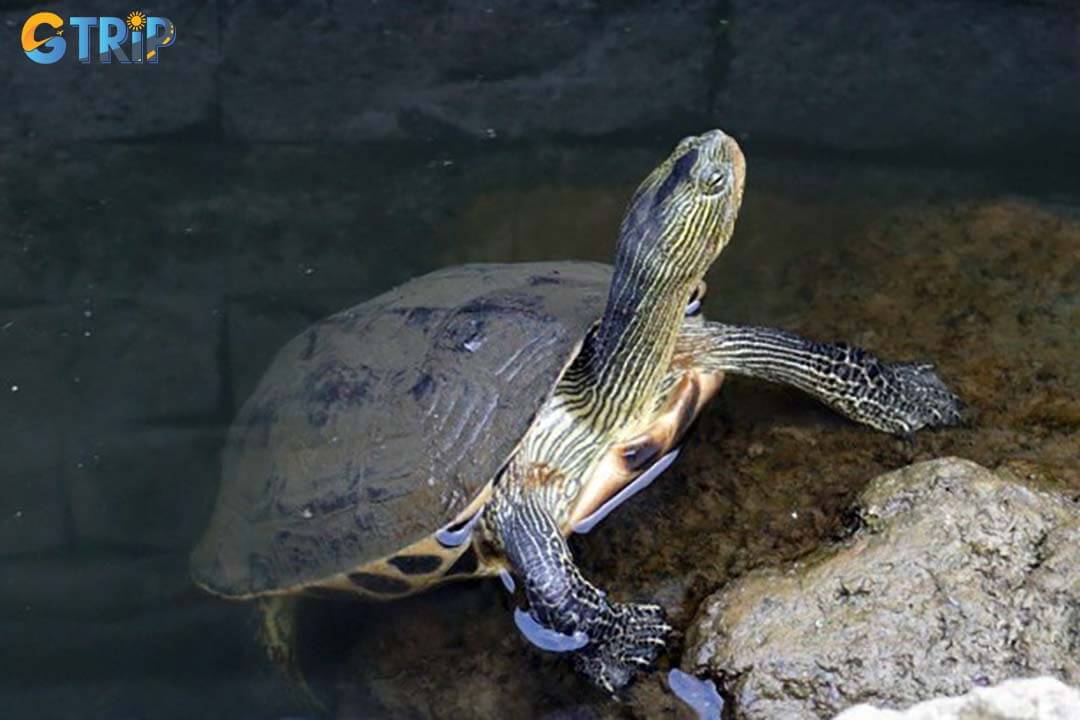
The turtle pond in the front courtyard symbolizes wisdom and longevity, offering visitors a quiet, meditative moment as they observe these sacred creatures in a serene setting
5. Participate in the 'release of life' ritual on special religious days
If you visit on a full-moon day or during a major festival, you may witness the beautiful 'release of life' ritual, known as phong sinh. This Buddhist practice involves releasing captive animals, usually fish or birds, back into their natural habitat. Devotees believe this act of compassion generates positive karma, or merit, leading to a long life and good fortune. Small vendors near the boat dock often sell small fish or turtles for this purpose. Observing or participating in this gentle ritual offers a deep insight into the local beliefs about life, freedom, and spiritual merit.
6. Join vibrant cultural and spiritual festivals
Although the temple is usually calm, it becomes lively and colorful during major lunar festivals. The most important occasions include the first full moon of the lunar year, the seventh-month full moon (Vu Lan Festival), and the second-month full moon. During these celebrations, the temple is decorated with lanterns and ceremonial ornaments, and large numbers of worshippers gather to pray and take part in traditional rituals. Visiting at this time offers a rare chance to experience Vietnam’s spiritual life in an authentic and festive setting.
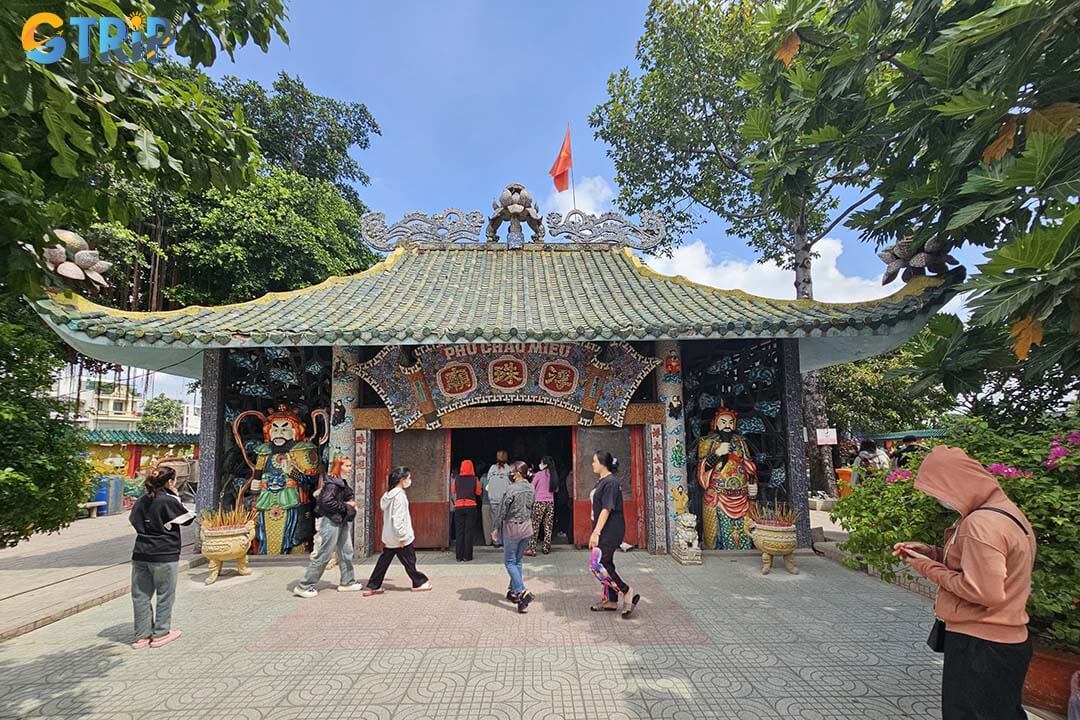
During festivals, Phu Chau Temple comes alive with lanterns, rituals, and crowds of worshippers, offering an authentic glimpse into Vietnam’s vibrant spiritual traditions
How to get to Phu Chau Floating Temple
Reaching this hidden gem involves a two-part journey: first by land to the boat dock, then by water to the temple islet. While it may sound complicated, it’s a straightforward and enjoyable adventure. Getting to the boat dock is easiest with a ride-hailing app like Grab/Xanh SM/Be. The alleyways leading to the river are too narrow for cars. Set your destination to "Phu Chau Mieu Go Vap" or "Mieu Noi Phu Chau" on your map app. Your driver will likely drop you off at the entrance of a larger street, and you’ll walk the final few meters.
- Use Google Maps to locate Phu Chau Floating Temple in Go Vap (Phu Chau Mieu Go Vap) and follow the recommended route for a motorbike.
- The main path involves traveling along Nguyen Thai Son Street, passing Nhu Lai Buddhist Temple, then turning left onto Tran Ba Giao Street. Proceed to the end of alley 26 to find the main boat dock.
- Upon arrival in the designated alley, you will find locals directing you to park your motorbike (for a small fee) and board a small motorboat. The round-trip boat fare is very affordable and is paid directly to the boat operator. The ride itself takes only a few minutes but offers lovely views of the temple as you approach.
Other famous pagodas in Ho Chi Minh City
Besides the enchanting Phu Chua Floating Temple with its mystical beauty on the water, Ho Chi Minh City boasts many other renowned pagodas
- Vinh Nghiem Pagoda: It stands as an iconic seven-story tower, the tallest in southern Vietnam, inspired by Japanese stupas. Surrounded by lush greenery and majestic Buddha statues, it offers a tranquil retreat from the city’s bustling urban life.
- Jade Emperor Pagoda: The pagoda impresses with its ancient Chinese architecture and is dedicated to the Jade Emperor, featuring hundreds of vivid deity statues. Encircled by turtle ponds and swirling incense, it offers a colorful and immersive spiritual experience.
- Thien Hau Pagoda: Located in Saigon’s Chinatown (Cholon), the pagoda honours the goddess Mazu, who protects fishermen, alive with vibrant festivals and the folk beliefs of the Chinese community.
- Giac Ngo Pagoda: This represents modern Vietnamese Buddhism, with expansive grounds, ancient bodhi trees, and meditation classes, providing a serene space for reflection amid the rush of daily life.
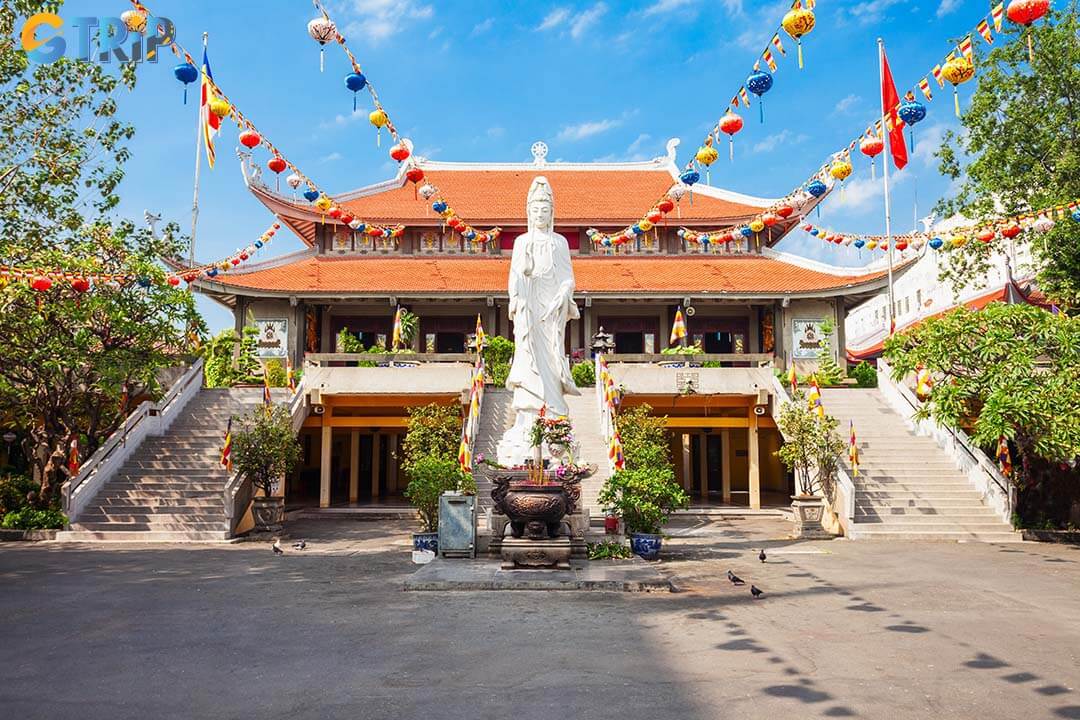
Beyond Phu Chau Floating Temple, Ho Chi Minh City features many famous pagodas, each showcasing unique architecture and deep Buddhist traditions
Practical tips for your visit to the temple
To ensure a smooth and respectful visit, keep these practical tips in mind. The temple is an active place of worship, so being a considerate visitor is key to a positive experience for everyone.
- Dress respectfully: This is a sacred site. Wear clothing that covers your shoulders and knees. Avoid shorts, short skirts, and tank tops.
- Bring cash: While the temple entrance is free, you will need small amounts of Vietnamese Dong (VND) for the boat ride, motorbike parking, and any small offerings or donations you wish to make.
- Photography etiquette: Taking photos of the architecture is welcome, but be mindful of people who are praying. Avoid using flash indoors and ask for permission before taking close-up pictures of individuals.
- Be mindful of worshippers: Speak softly and walk calmly. Give people space as they perform their rituals and make offerings.
- Boat safety: The boats are simple, and the ride is short, but always remain seated and keep your hands inside the boat.
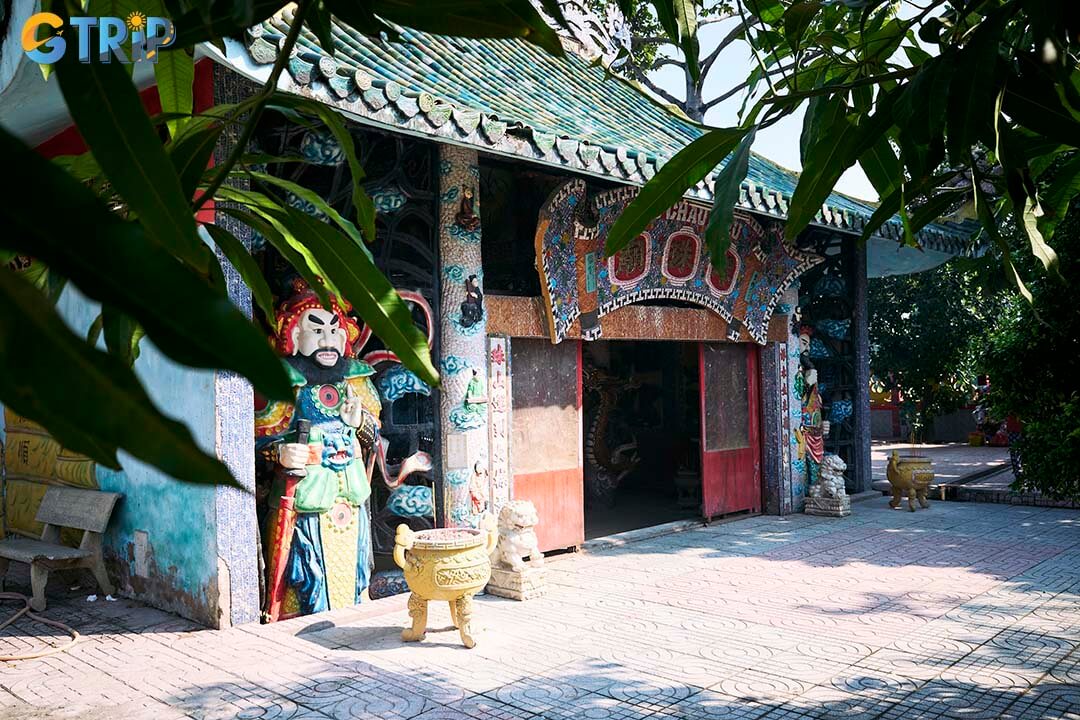
To ensure a smooth and respectful visit, dress modestly, bring small cash for transport and offerings, follow photography etiquette, stay mindful of worshippers
Read more:
A visit to the Phu Chau Floating Temple offers a peaceful escape into the spiritual heart of Ho Chi Minh City. A short boat ride across the Vam Thuat River takes you away from the city’s busy streets to a tranquil sanctuary filled with faith, artistry, and centuries-old traditions. As part of a Ho Chi Minh City tour, this hidden gem provides an authentic cultural experience that reveals a quieter, more soulful side of the city, one well worth adding to your travel itinerary with GTrip - Vietnam Travel Agency.