


Apr - 04 - 2026
An Hoi Bridge is one of the most recognizable night-time landmarks in Hoi An, where colorful lantern lights reflect across the river and create a lively, romantic atmosphere. Connecting the historic Old Town with the bustling An Hoi Islet, the bridge is more than just a pedestrian crossing. It is a social hub, a favorite photo spot, and a gateway to the town’s evening energy. In this guide, GTrip shares everything you need to know to plan your visit, such as location, timing, and practical tips for enjoying Hoi An after dark.
Overview of An Hoi Bridge in Da Nang City
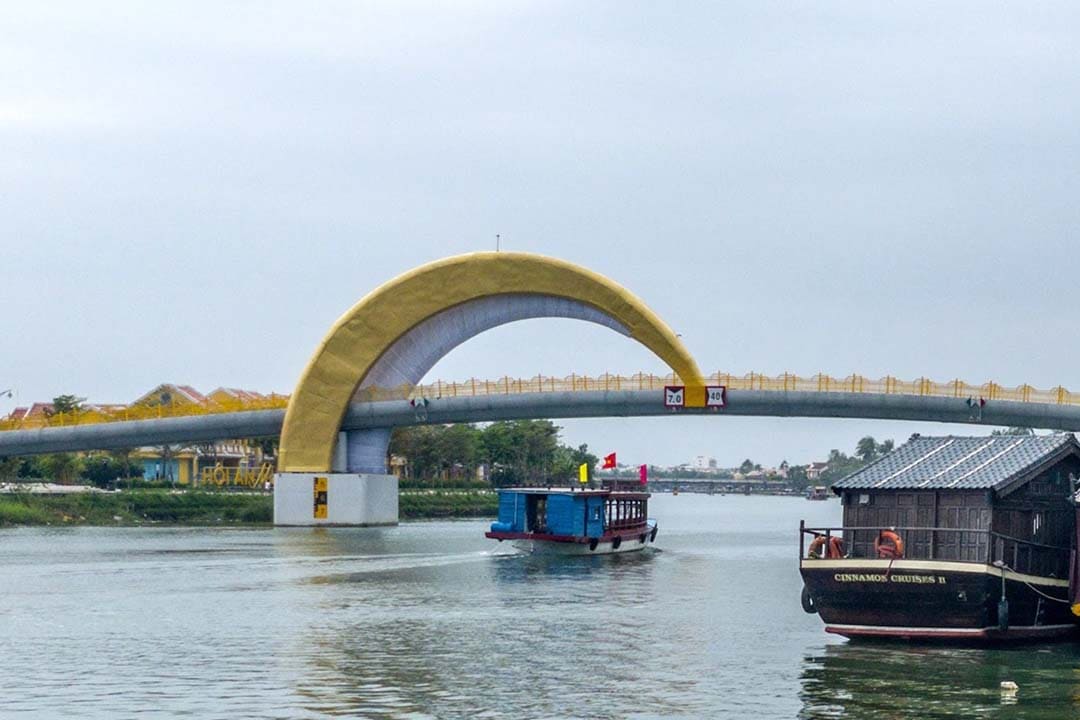
An Hoi Bridge, also known as the “Bridge of Lights” and the “Hoi An Lantern Bridge”, plays an important role in shaping Hoi An’s evening atmosphere. Especially once the lantern-style lights are turned on, and the riverside becomes lively with visitors and street activities.
Where is the An Hoi Bridge?
Location: Chau Thuong Van Street, Hoi An Ward (formerly Minh An Ward, Hoi An City, Quang Nam Province), Da Nang City
An Hoi Bridge spans a branch of the Thu Bon River, linking the historic Old Town with An Hoi Islet, making it easily accessible on foot from most central attractions in Hoi An. The bridge's location is strategically perfect, acting as a portal between two areas experiences. On its southern end, you are firmly planted in the ancient world of the Old Town, with its centuries-old architecture, quiet alleyways, and historical assembly halls. A short walk across the river via the bridge transports you to the northern side of An Hoi Island, a bustling epicenter of modern entertainment. Here you'll find the famous night market, a strip of lively bars and restaurants, and a constant, festive buzz, making the bridge an essential artery for anyone exploring Hoi An after dark.
When is the best time to visit An Hoi Bridge?
The best time to visit An Hoi Bridge is after sunset, when the lantern lights are turned on and the riverside atmosphere becomes more vibrant. The period just after sunset, often called the blue hour, offers the most beautiful contrast between the deep blue sky and the warm lantern glow. Lights are typically on from around 6:00 PM to about 9:30 or 10:00 PM. For a quieter experience, weekday evenings are preferable, while weekends tend to be more crowded with both tourists and locals.
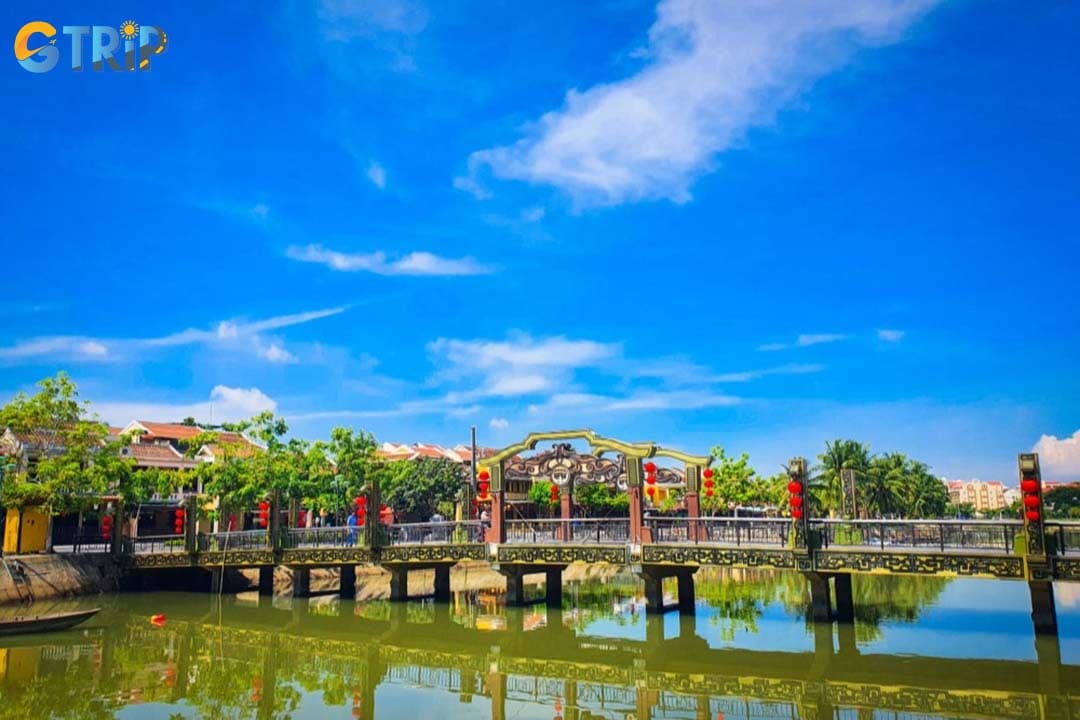
An Hoi Bridge’s location is perfect for checking in there
What makes An Hoi Bridge unique?
An Hoi Bridge may not be an ancient monument, but it stands out as one of the most atmospheric spots in Hoi An Old Town. What makes it special is not its age or grand architecture, but the immersive experience it creates at night when the entire riverside glows with color and movement.
- Nicknamed “Bridge of Lights” by travelers thanks to its vibrant lantern decorations and multi-colored illumination after sunset.
- Prime lantern-viewing location overlooking the Hoai River, where floating candle lanterns and glowing facades create postcard-worthy scenes.
- Key connection point between the Old Town and An Hoi Island, making it a natural gathering spot in the evening.
- Surrounded by cultural highlights, including night markets, traditional performances, and lantern boat rides, within walking distance.
- Photogenic central logo spot featuring the Hoi An emblem, a favorite check-in point for visitors.
Rather than impressing with historic carvings or ornate structures, An Hoi Bridge is unique for its lively ambiance, visual spectacle, and role as the glowing gateway to Hoi An’s nightlife.
History of An Hoi Bridge
An Hoi Bridge takes its name from An Hoi Island, a 26-hectare islet located on the Thu Bon River. The bridge was built to connect the historic mainland quarter with the island, which has gradually developed into a lively cultural and commercial area.
The bridge crosses the Hoai River, a small branch of the Thu Bon River that flows through the heart of Hoi An Old Town, a UNESCO World Heritage Site. Although only about 1.5 kilometers long, the Hoai River has long played an important role in the town’s trading history. Its name “Hoai”, is often associated with nostalgia and homesickness, reflecting the multicultural roots of Hoi An, once a busy international port welcoming merchants from Japan, China, and Europe.
On the southern side, the bridge aligns with Chau Thuong Van Street, named after Chau Thuong Van (1856 - 1908), a local patriot from Minh Huong Village. During the French colonial period, his house near the central market served as a gathering place for anti-French activists. He was later arrested and imprisoned, eventually passing away in Hue. The street name preserves his legacy, adding another historical layer to the bridge’s surroundings. Though the bridge itself is relatively modern compared to centuries-old landmarks nearby, its location places it within a deeply historic urban landscape shaped by migration, trade, and cultural exchange.
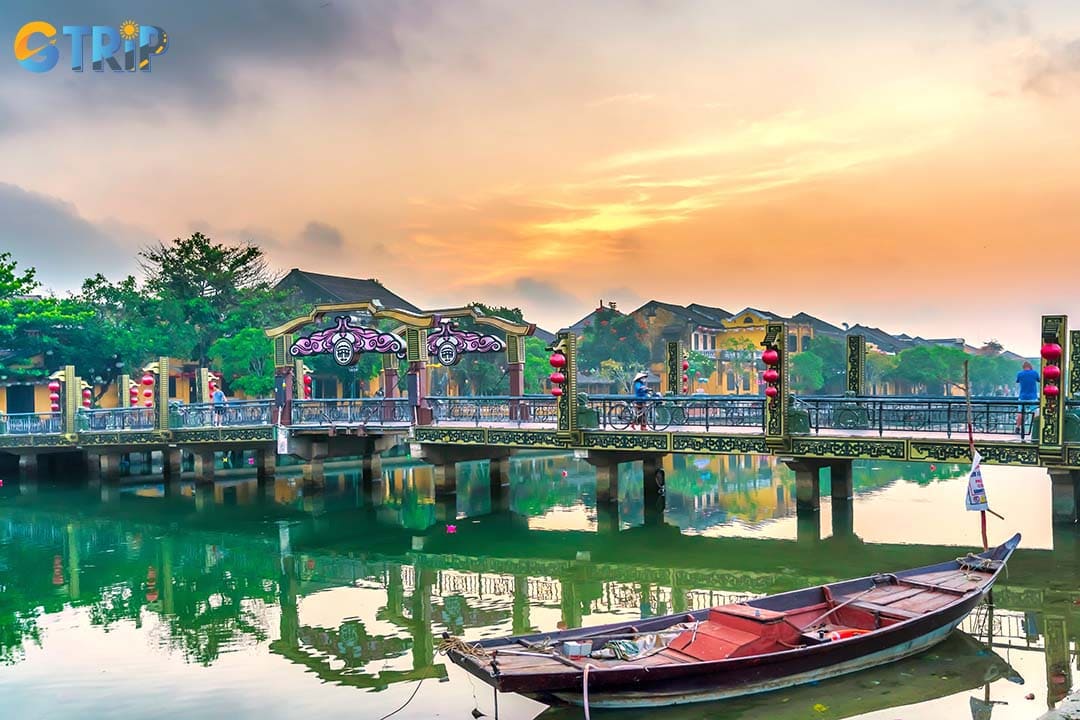
An Hoi Bridge was built to connect the historic mainland quarter with the island
Structure of An Hoi Bridge
An Hoi Bridge is modest in scale, measuring approximately 50 meters in length and 5 meters in width. Its design is simple and functional, created primarily as a pedestrian connection between the Old Town and An Hoi Island.
Unlike the iconic Japanese Covered Bridge, An Hoi Bridge does not feature a roof or elaborate wooden carvings. Instead, it has a contemporary structure that blends quietly into its surroundings. The bridge’s openness allows visitors to enjoy unobstructed views of the Hoai River and the lantern-lit streets on both sides.
What truly defines its visual identity is the nighttime decoration. The bridge is illuminated with colorful lanterns and decorative lighting, earning it the nickname “Bridge of lights”. In the center of the bridge, visitors will find the Hoi An city logo featuring the silhouette of the Japanese Covered Bridge along with a traditional bat motif, a symbol of happiness and good fortune in Asian decorative art.
As part of the pedestrian zone of Hoi An Old Town, the bridge is reserved for walkers and cyclists during specific hours, helping preserve its relaxed atmosphere. Its compact size, open structure, and lantern glow make it less about grand architecture and more about experience. This serves as a scenic viewing platform in the middle of one of Vietnam’s most charming heritage towns.
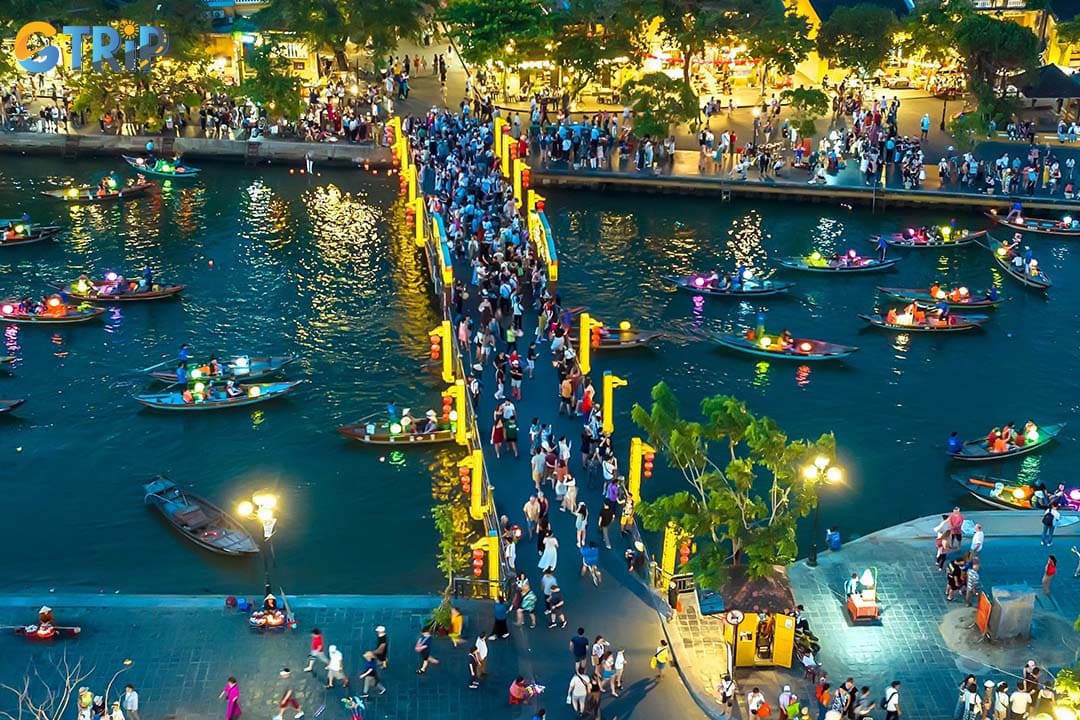
An Hoi Bridge is considered the “Bridge of lights” because it is illuminated with colorful lanterns and decorative lighting, which are bright at night
Things to do at An Hoi Bridge
Located between Hoi An Old Town and An Hoi Island, An Hoi Bridge is more than just a crossing point. In the evening, it becomes one of the liveliest spots in town, where lights, culture, and local life blend. Here are the best things you can do when visiting.
1. Walk across and admire the lantern-lit scenery
As twilight settles, the bridge ignites with hundreds of silk lanterns in every shade of red, gold, pink, and purple. Walking its length feels like stepping into a living postcard.
- Gaze at candle-lit flower lanterns drifting gently on the Hoai River below
- Admire mirror-like reflections of glowing heritage houses shimmering on the water
- Feel the cool evening breeze while the distant hum of street musicians and laughter drifts over from the Old Town
This simple walk remains one of the most accessible and romantic ways to experience Hoi An's world-famous nighttime ambiance, no ticket required, just an open heart.
2. Take photos at the Hoi An logo in the center of the bridge
Smack in the center of the bridge stands the proud Hoi An City logo. It is a stylized silhouette of the famous Japanese Covered Bridge framed by the traditional bat (fu) motif that symbolizes happiness and good fortune.
This is prime photo territory because you get:
- A perfectly symmetrical tunnel of glowing lanterns stretching in both directions
- Unobstructed river vistas on either side
- That instantly recognizable "I was in Hoi An" marker for your travel album
- Arrive around blue hour (just after sunset) for softer light and fewer crowds.
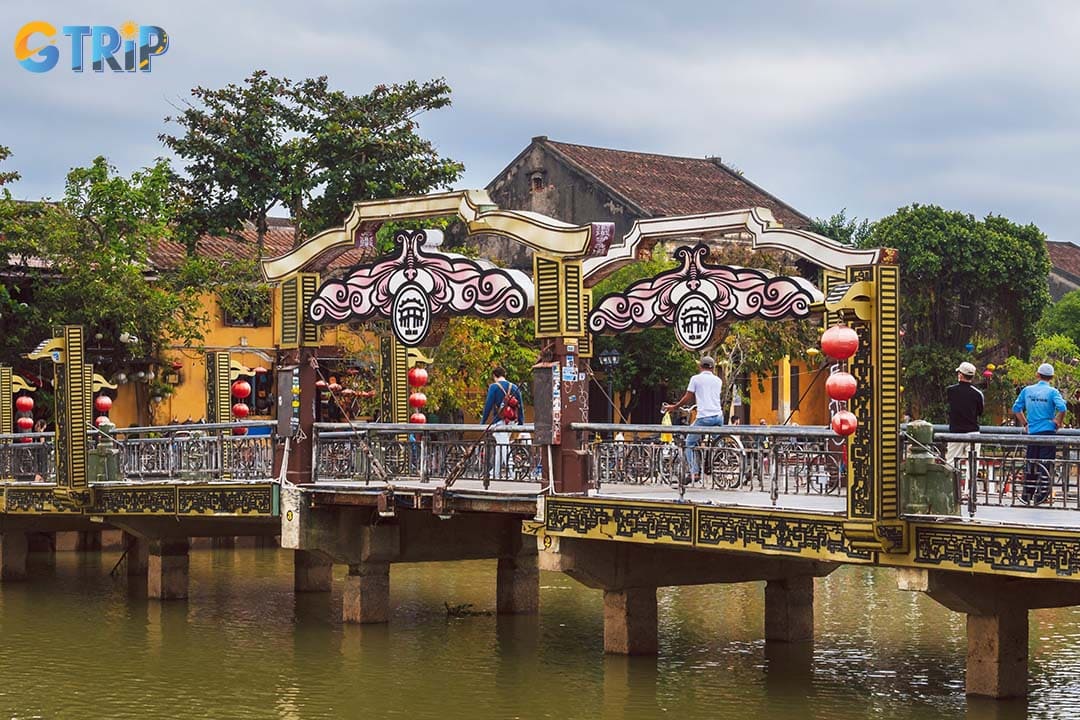
The Hoi An City logos are in the center of the bridge, so you can take photos of them and you
3. Visit Hoi An Night Market
Once you reach the An Hoi Island side, you're literally steps away from the lively Hoi An Night Market (also known as Nguyen Hoang Night Market). The bridge serves as the shimmering entrance. Cross it and the market's buzz instantly envelops you. Wander the lantern-hung stalls to:
- Hunt for handmade silk lanterns, embroidered bags, wooden carvings, and affordable souvenirs
- Sample local street food favorites like cao lau, banh mi, chicken rice, and che (sweet dessert soup)
- Soak up the festive energy of families, backpackers, and locals bargaining under strings of colorful lights
4. Buy tickets to explore Hoi An Old Town
Conveniently located at the southern (Old Town) end of An Hoi Bridge is a small ticket booth selling the official Hoi An Ancient Town entrance ticket. The price for international visitors is 120,000 VND. Buying here is super practical if you plan to dive straight into the heritage core after enjoying the bridge views.
This single ticket grants access to five key heritage sites, including:
- The iconic Japanese Covered Bridge
- Cantonese Assembly Hall
- Tan Ky Old House
- Phung Hung Old House
- Quan Thang Ancient House
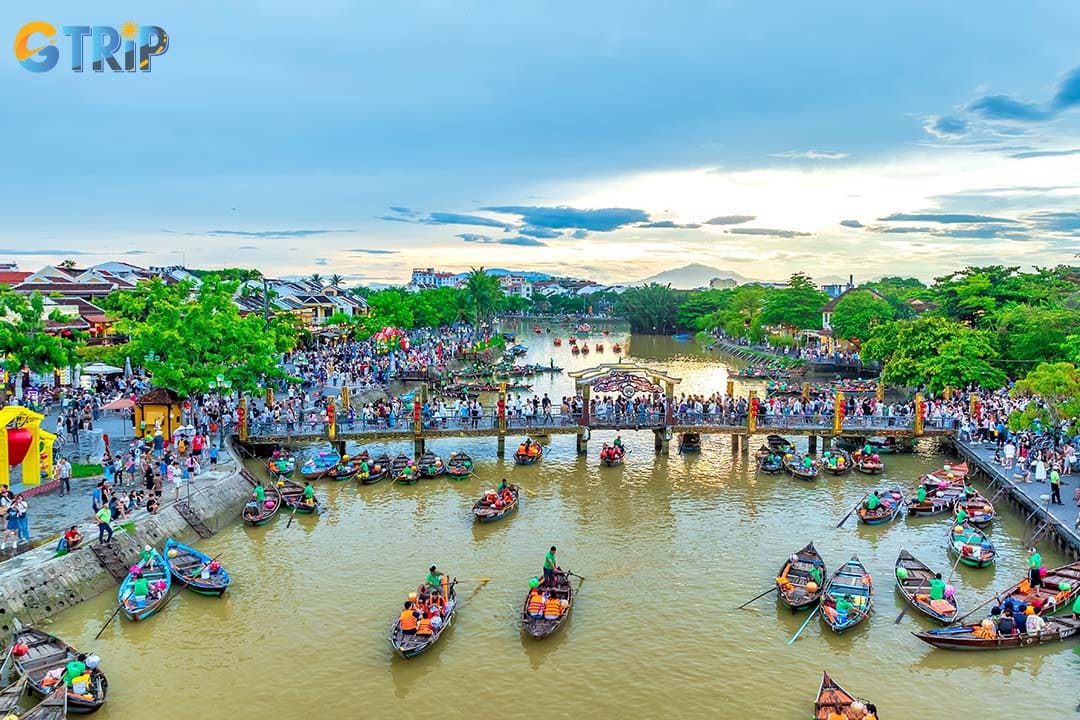
You definitely have to wander round and explore Hoi An Ancient Town
5. Take a lantern boat ride on the Hoai River
Right along the riverbanks near both ends of the bridge, local boat operators offer short, affordable nighttime rides (usually 150,000 - 200,000 VND for 15 - 20 minutes, shared or private). This gentle boat experience is hands-down one of Hoi An's most magical and memorable activities after dark. Drift slowly while you:
- Release your own candle-lit flower lantern onto the water (a beautiful ritual for making wishes)
- Glide past rows of glowing heritage shophouses and under strings of lanterns
- Capture cinematic photos of the illuminated Old Town skyline reflecting on the river
6. Watch Bai Choi folk performances
Near the northern end of the bridge (Old Town side), an open-air stage comes alive most evenings with Bai Choi. It is a UNESCO-listed Intangible Cultural Heritage of Humanity since 2017.
This lively Central Vietnamese folk art blends:
- Call-and-response singing
- Poetic riddles
- Interactive card-matching games (like a musical bingo)
Sit on small bamboo mats among locals, enjoy the live musicians and performers in traditional attire, and feel the warmth of community spirit. It's a rare chance to experience genuine Vietnamese culture up close.
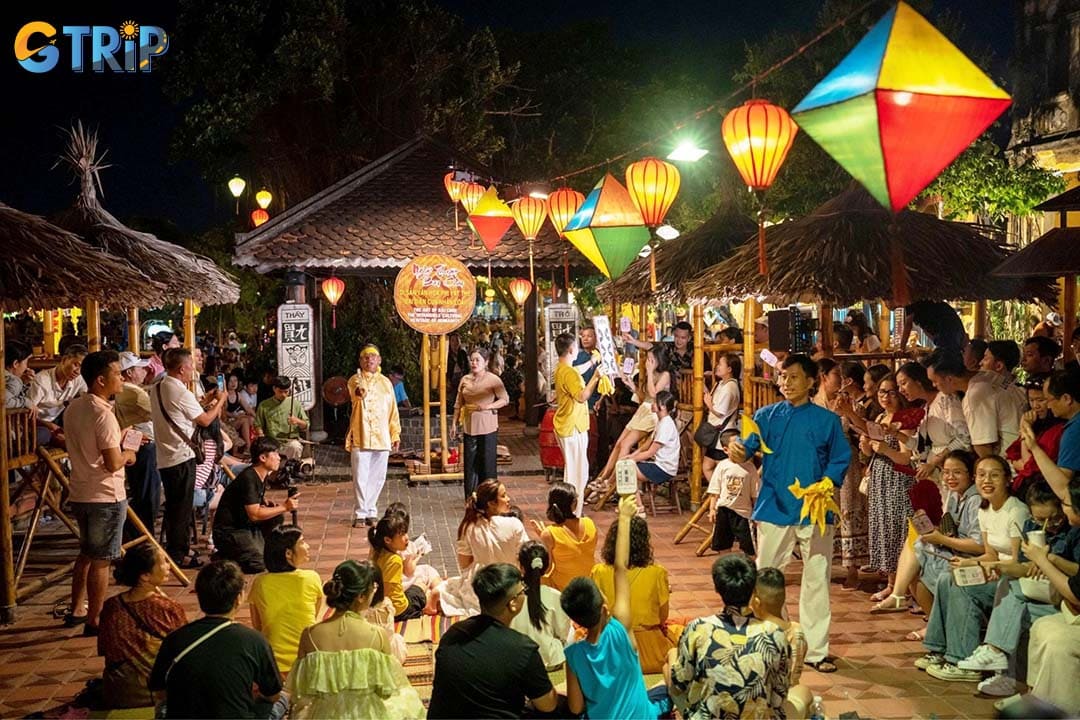
For a culture-lover, you can watch Bai Choi folk performances
7. Buy handmade paper lanterns
As you stroll, keep an eye out for elderly vendors carrying baskets of delicate paper lanterns. These affordable beauties (often just 20,000-50,000 VND) are perfect for:
- Releasing on the river during your boat ride
- Taking home as a lightweight, meaningful souvenir
- Joining in the lantern tradition spontaneously
Even if you only admire them glowing in the baskets, they add an extra layer of romance to the bridge's atmosphere. From photography lovers to culture seekers and foodies, An Hoi Bridge packs an incredible amount of Hoi An's nighttime soul into one compact, lantern-drenched location. Cross it once, and you'll understand why travelers keep returning. It's not just a bridge. It's where the ancient town truly comes alive after dark.
How to get to An Hoi Bridge
An Hoi Bridge is located on Chau Thuong Van Street, Minh An Ward, inside the pedestrian zone of Hoi An Old Town.
From around Hoi An Ward
If you are staying within central Hoi An, the bridge is easily accessible on foot or by bicycle.
- Distance: 300m-2 km (5-15 minutes) from former Minh An, Cam Pho, Son Phong, Cam Nam, and Cam Kim areas
- Route: Head toward Hai Ba Trung Street → walk south to the river → turn right onto Chau Thuong Van Street
- Access note: Motorbikes allowed before 9:00 AM & 11:30 AM-3:30 PM; otherwise park near Phap Bao Pagoda and walk 5-7 minutes
- Best choice: Walking or cycling for the most convenient and scenic experience
Note: Minh An, Cam Pho, Son Phong, Cam Nam, and Cam Kim have now been administratively merged into Hoi An Ward.
From Da Nang International Airport
The airport is about 30 km north of Hoi An, with travel time around 45-60 minutes.
- Distance: ~30 km
- Route: Vo Nguyen Giap coastal road → Truong Sa → enter Hoi An → Hai Ba Trung Street → Old Town area
- Parking: Near Phap Bao Pagoda during pedestrian hours
- Best choice: Private car or airport transfer for comfort after arrival
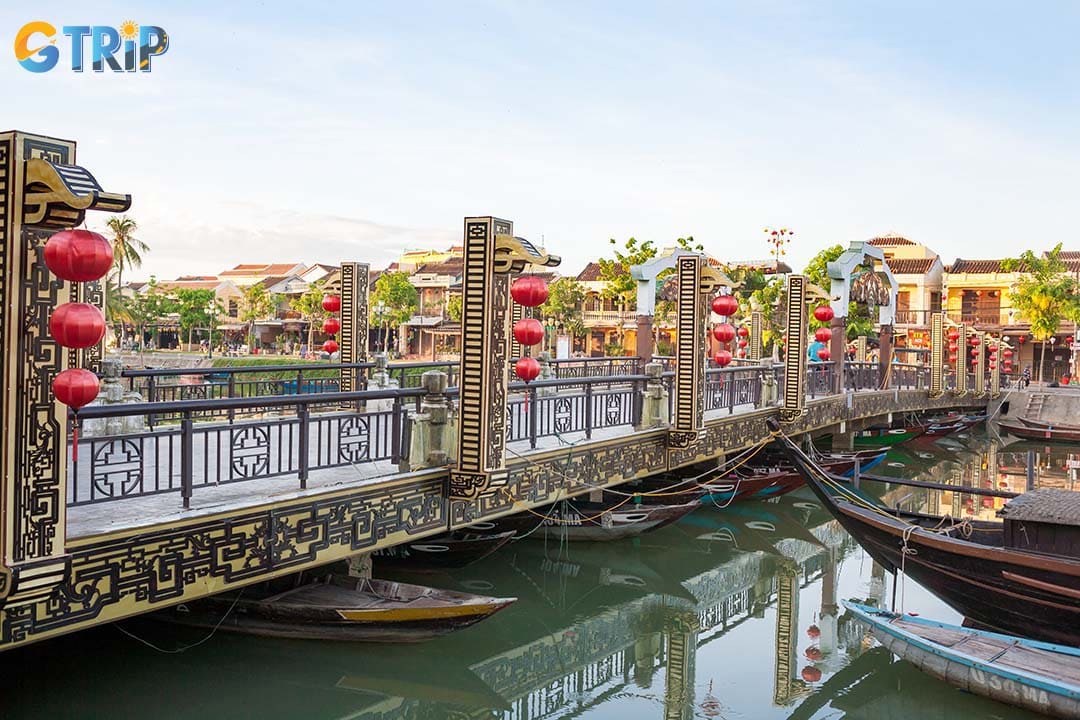
You can get to the An Hoi Bridge easily by many means of transport
From Da Nang City center
- Traveling from downtown Da Nang offers a scenic coastal drive before reaching Hoi An.
- Distance: 28-30 km (45-60 minutes)
- Route: Vo Nguyen Giap → Truong Sa coastal road → Hai Ba Trung Street in Hoi An
- Final access: Walk into the pedestrian zone if arriving during restricted hours
- Best choice: Motorbike for flexibility, or private car for convenience
Transportation options
Depending on where you are coming from and your travel style, there are several convenient ways to reach An Hoi Bridge. Here are the most practical options to consider:
- Walking/Cycling: Best for visitors staying in central Hoi An.
- Motorbike: Flexible and affordable; follow coastal route from Da Nang.
- Private car/Taxi: Convenient for families or airport transfers.
- Ride-hailing apps: Widely available between Da Nang and Hoi An.
Note: Traffic restrictions apply within the Old Town pedestrian zone at certain hours.
Other attractions near An Hoi Bridge Da Nang
The An Hoi Bridge’s central location means you are just a short stroll from many of Hoi An’s most famous landmarks.
- Hoi An Night Market (1-2 minutes walk): Located just across the bridge on An Hoi Island. It is a lively evening market filled with street food, souvenirs, and colorful lantern displays.
- Hoai River (~100m): This is the main lantern boat ride area of Hoi An. The most popular departure point is right beside the bridge.
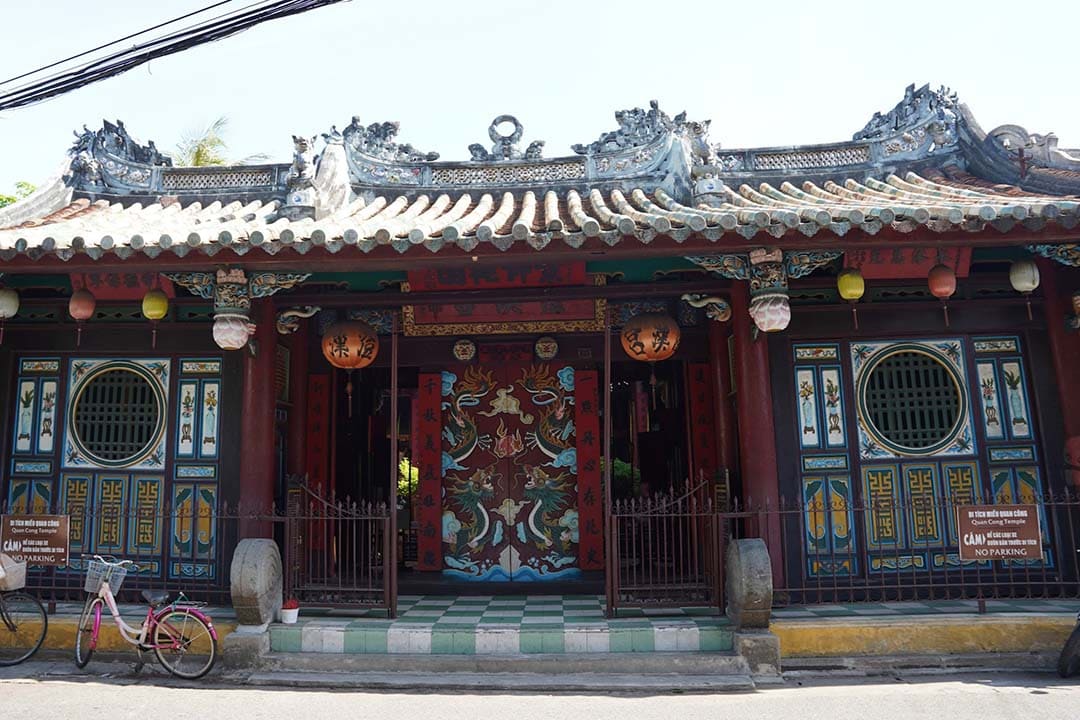
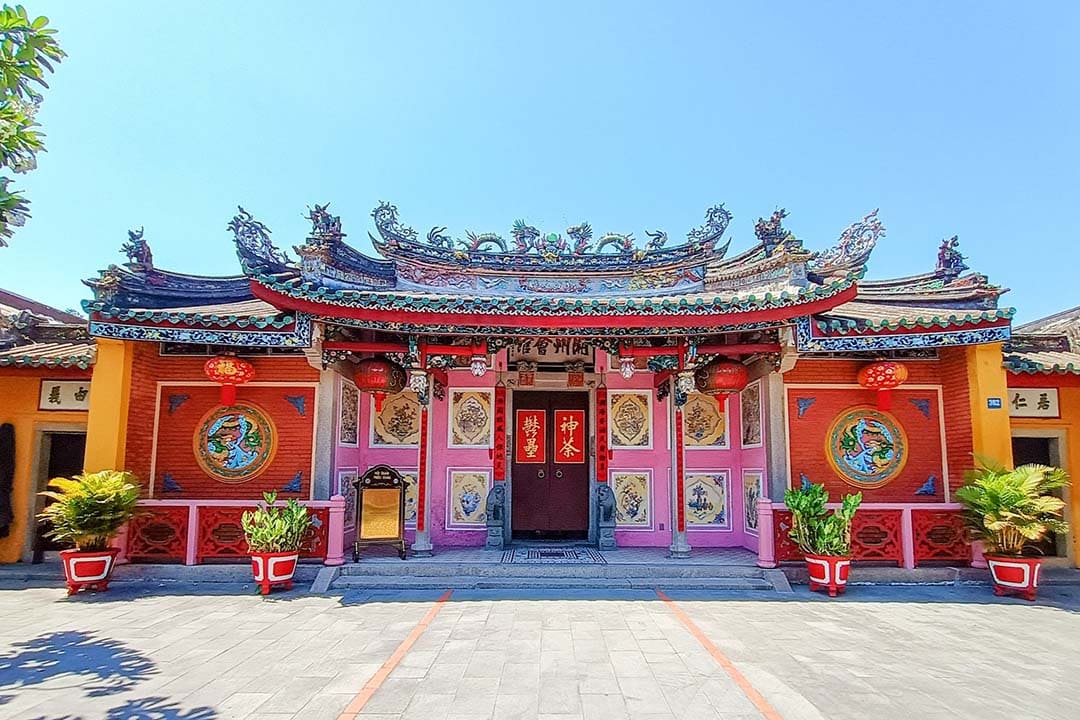
- Cantonese Assembly Hall (~350m, 5 minutes walk): A beautifully decorated historic meeting hall built by the Cantonese community. Its intricate carvings and peaceful courtyard make it a fascinating cultural stop.
- Japanese Covered Bridge (~400m, 5-7 minutes walk): This iconic 18th-century bridge is one of Hoi An’s most recognizable landmarks. The ornate wooden structure symbolizes the town’s historic connection with Japanese traders.
- Tan Ky Old House (~450m, 6-8 minutes walk): A beautifully preserved 200-year-old merchant house located in the heart of the Old Town. Its architecture reflects a blend of Vietnamese, Chinese, and Japanese influences.
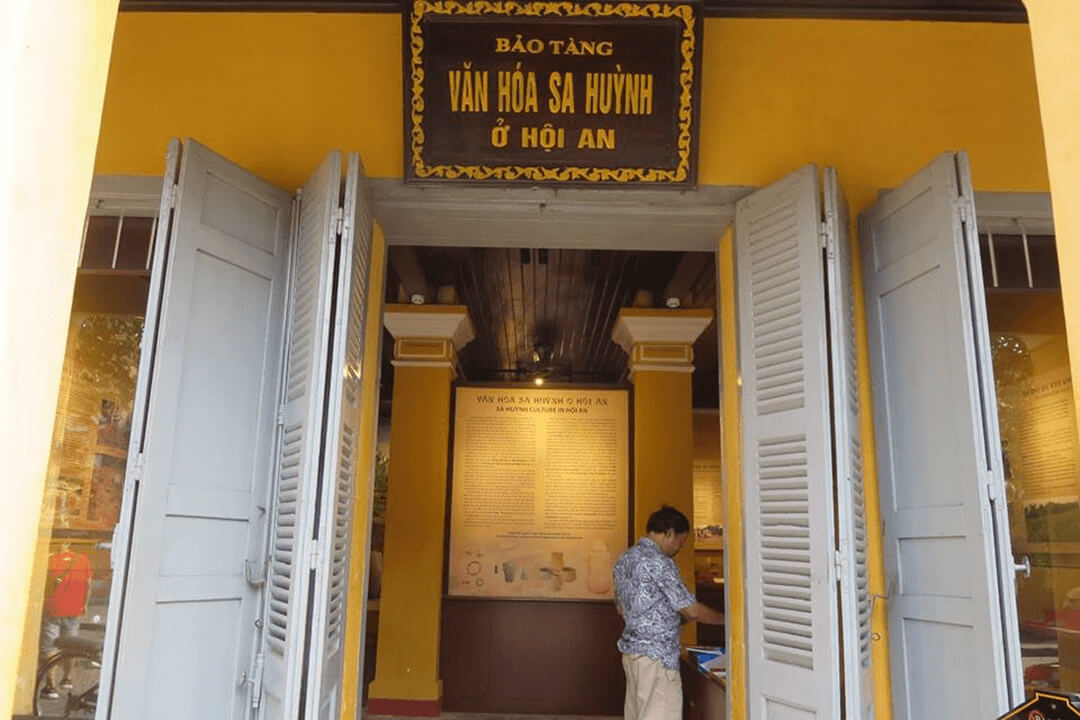
- Museum of Sa Huynh Culture (~450m, 6-8 minutes walk): This museum displays artifacts from the ancient Sa Huynh civilization. The exhibits help visitors understand the earliest history of the Hoi An region.
- Phung Hung Old House (~500m, 7-8 minutes walk): A historic trading house that has been maintained by generations of the same family. Its design combines Vietnamese, Japanese, and Chinese architectural styles.
- Fujian Assembly Hall (~700m, 8-10 minutes walk): The largest and most elaborate assembly hall in Hoi An. It features ornate gates, colorful dragon decorations, and a temple dedicated to the sea goddess Mazu.
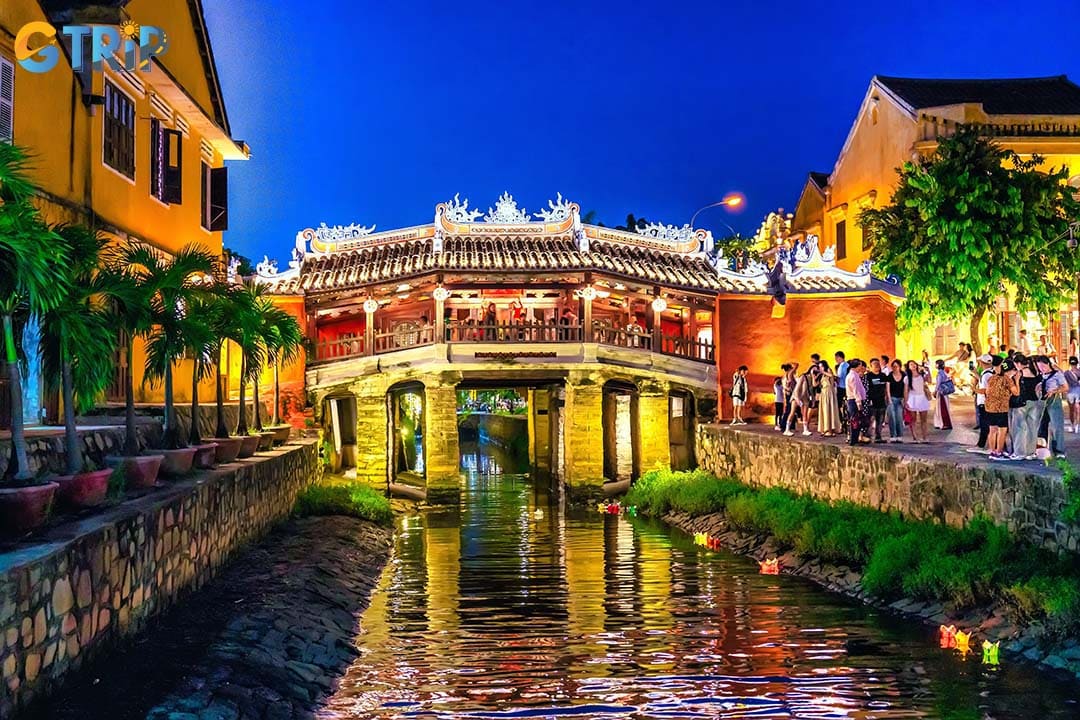
Japanese Covered Bridge is another famous bridge in Hoi An that you should visit
Tips for visiting An Hoi Bridge
Here are some tips for you when visiting the bridge.
- Wear comfortable shoes: You'll be doing a lot of walking around the Old Town, which has cobblestone and uneven pavement.
- Be prepared for crowds: especially on weekends and during peak tourist season (February-April). The bridge can get very congested.
- Keep an eye on your belongings: In crowded areas, it's always wise to be mindful of your wallet, phone, and camera.
- Have small cash on hand: You will need small denominations (VND) for buying paper lanterns, street food, or negotiating a boat ride. Most small vendors do not accept credit cards.
- Check the pedestrian-only hours: The Old Town restricts motorized traffic in the evenings (typically 3:30 PM - 9:30 PM). Plan your transport accordingly and be prepared to park outside the zone and walk in.
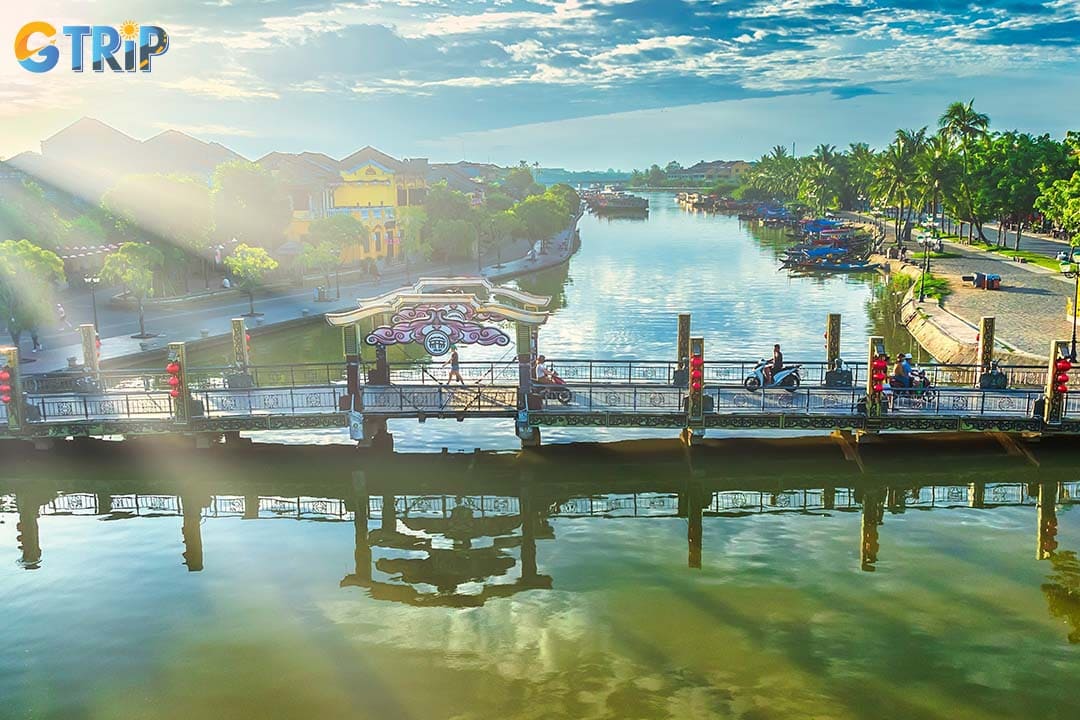
There are some tips for visiting An Hoi Bridge comfortably that you should bear in mind
The An Hoi Bridge is far more than just a way to cross the river. It is the beating heart of Hoi An after dark. It’s a place where history and modernity, tranquility and festivity, all converge in a dazzling display of light. Standing on this bridge, you are a participant in the nightly ritual that makes Hoi An so unforgettable. Here at GTrip, we believe travel is about creating these magical moments. We encourage you to find your spot on the An Hoi Bridge, take a deep breath, and let the captivating spirit of Hoi An wash over you.