





Apr - 02 - 2026
The Hainan Assembly Hall in Hoi An is one of the Ancient Town's most poignant and architecturally distinct heritage sites. While it may not be as famous as some of its counterparts, this hall holds a quiet power and a deeply moving story that sets it apart. It’s a place where history isn't just displayed, it's felt. As your trusted travel companions at GTrip, we've explored every corner of Hoi An to bring you the definitive guide to this hidden gem. We'll walk you through its solemn history, intricate design, and all the practical details you need for a memorable visit.
Overview of the Hainan Assembly Hall in Hoi An
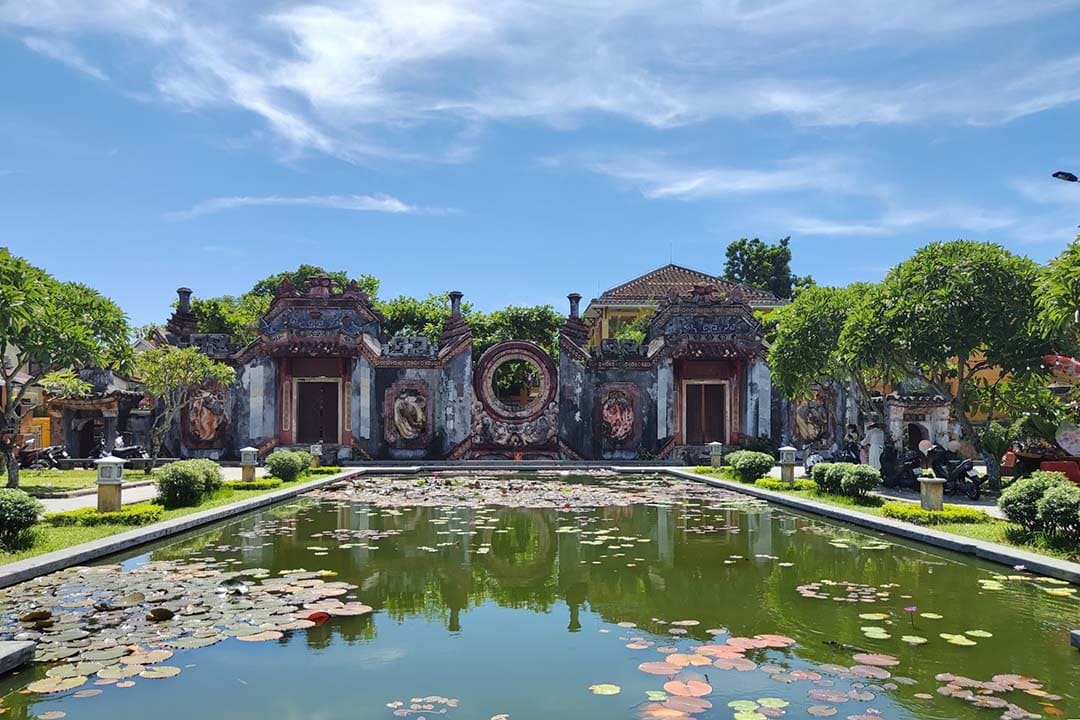
The Hainan Assembly Hall (also known as the Hai Nam Assembly Hall or Quynh Phu Hoi Quan) offers a serene escape and a profound glimpse into the lives of Hoi An's past communities. Built later than many of the other famous assembly halls, it possesses a unique character and a somber origin story tied to a tragic maritime event. The Hainan Assembly Hall serves a dual purpose: it’s a community center for people with roots in Hainan, China, and, more importantly, a memorial. As you step through its ornate gate, you leave the cheerful, lantern-lit streets behind and enter a space of quiet contemplation, rich with symbolism and intricate artistry. It stands as a testament to the resilience, faith, and camaraderie of the Hainanese traders who made Hoi An their home.
Where is Hainan Assembly Hall in Hoi An?
Address: No. 10 Tran Phu Street, Hoi An Ancient Town, Hoi An Ward (formerly Cam Chau Ward, Hoi An City, Quang Nam Province), Da Nang City
The Hainan Assembly Hall sits right in the heart of Hoi An Ancient Town, making it one of the easiest cultural landmarks to visit while exploring the old quarter on foot. Located along Tran Phu Street, the main heritage artery lined with temples, old houses, and museums, it naturally fits into any walking itinerary. From here, you’re only a few minutes away from other iconic stops such as the Japanese Covered Bridge and the Cantonese Assembly Hall.
For travelers coming from outside the city, Hoi An is well connected to major destinations in Central Vietnam. The town lies about 28 km south of Da Nang, home to the region’s international airport, and approximately 120 km south of Hue, the former imperial capital. This convenient positioning makes it easy to plan a half-day visit or include Hoi An as part of a broader Central Vietnam itinerary.
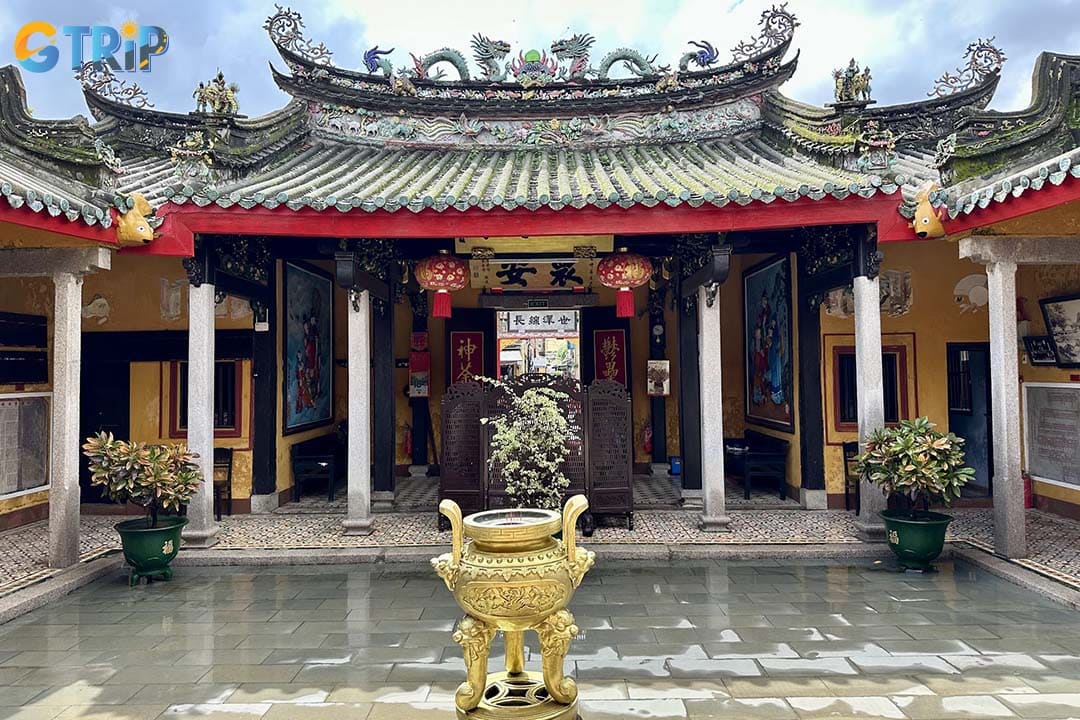
Hainan Assembly Hall is a community center for people with roots in Hainan, China, and a memorial
Opening hours and ticket prices
- Opening hours: 8:00 AM - 5:00 PM, daily
- Ticket price: 120,000 VND (approx. $5 USD) for the Hoi An Ancient Town combo ticket
To explore the Hainan Assembly Hall and other historical treasures, you'll need to purchase the Hoi An Ancient Town entrance ticket. This is a combo ticket that grants you access to the general walking streets of the old town and allows you to choose five heritage sites to visit from a list of over 20 options. The Hainan Assembly Hall is one of these wonderful choices. You can buy the ticket at official booths located at the main entry points to the Ancient Town. Be sure to hold onto your ticket, as you'll need to present it at the entrance of each site you choose to visit.
What makes the Hainan Assembly Hall in Hoi An unique?
While Hoi An is famous for its collection of Chinese assembly halls, the Hai Nam Assembly Hall offers a truly distinct experience. Its uniqueness lies not just in its beautiful architecture, but in the solemn and specific purpose for which it was built. It is less a celebration of commercial success and more a powerful act of remembrance.
- A tragic origin: The hall is primarily a memorial dedicated to 108 Hainanese merchants who were wrongly identified as pirates and tragically killed in 1851. This somber history gives the site a poignant atmosphere you won't find elsewhere.
- More recent construction: Built in 1875, it is one of the "younger" assembly halls in Hoi An. This results in an architectural style that feels both traditional and slightly more modern compared to its centuries-old neighbors.
- Focus on remembrance: The central altar here is dedicated to the 108 martyred traders, with their ancestral tablets serving as the spiritual heart of the building.
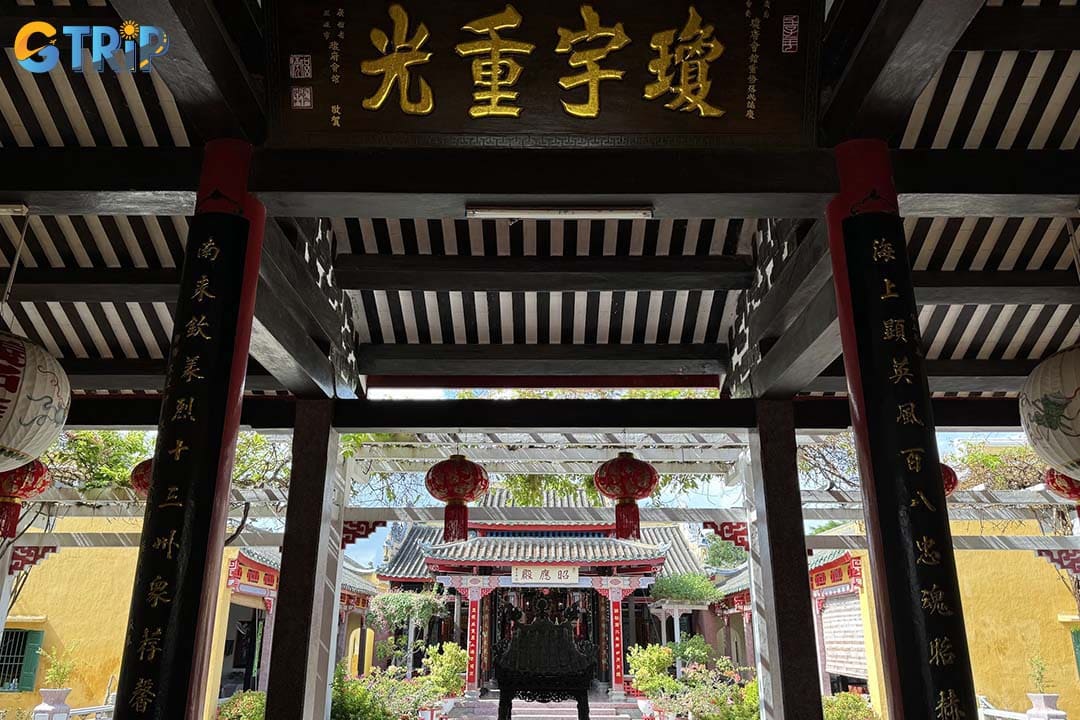
Hainan Assembly Hall is one of the "younger" assembly halls in Hoi An
History of the Hainan Assembly Hall in Hoi An
The Hainan Assembly Hall is a unique cultural site that stands as a tribute to the Hainanese community in Hoi An. Originally built as a communal "embassy" for merchants to gather and pray, it is most famous for its tragic and touching origin story involving 108 Hainanese martyrs. This site is not just a building. It is a place of justice and remembrance that was eventually recognized by the Vietnamese royalty.
- 1851: A tragic event occurred when a ship carrying 108 Hainanese merchants was mistaken for a pirate vessel and sunk by coastguards. After King Tu Duc investigated and cleared their names as innocent traders, they were honored as protective deities.
- 1875: The Hainan Assembly Hall was officially built by the Hainanese community to worship these 108 martyrs (known as the 108 Brothers) and serve as a communal meeting house.
- 1931 & 1971: The hall underwent two major large-scale restorations to preserve its grand architecture.
- June 15th (Lunar calendar): This is the hall's most important annual festival, featuring offerings of roast pig and goat, traditional Hainanese prayers, and vibrant lion dances to pray for peace and prosperity.
- December 23, 2016: On Vietnam Cultural Heritage Day, the hall officially opened its doors as a tourist destination for international and local visitors to explore.
Architecture of the Hainan Assembly Hall in Hoi An
Spanning an impressive 3,000 square meters, the Hainan Assembly Hall is one of the largest and most majestic Chinese structures in Hoi An. It stretches all the way from Tran Phu Street to Phan Chu Trinh Street, showcasing a sophisticated layout designed by master artisans.
The entrance gate
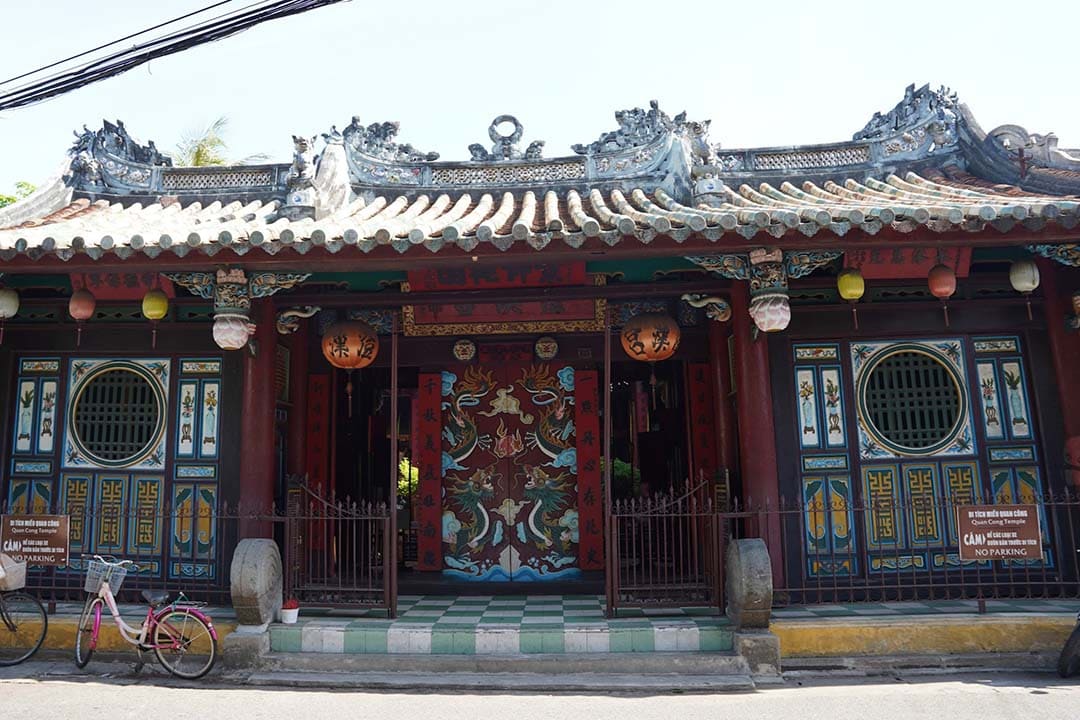
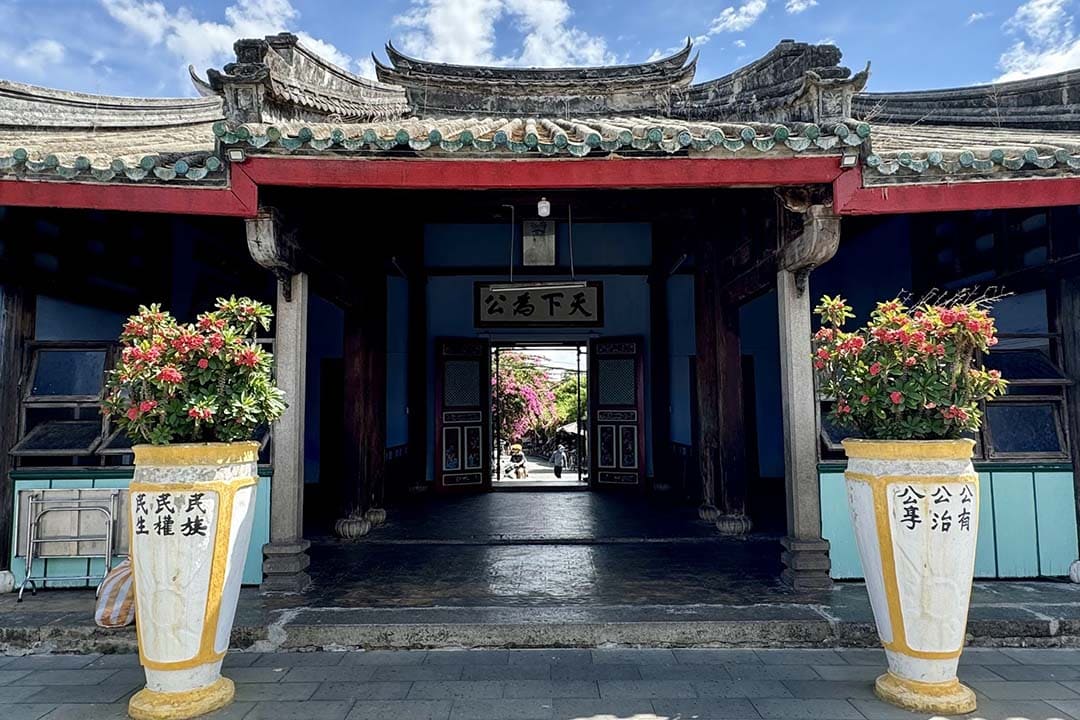
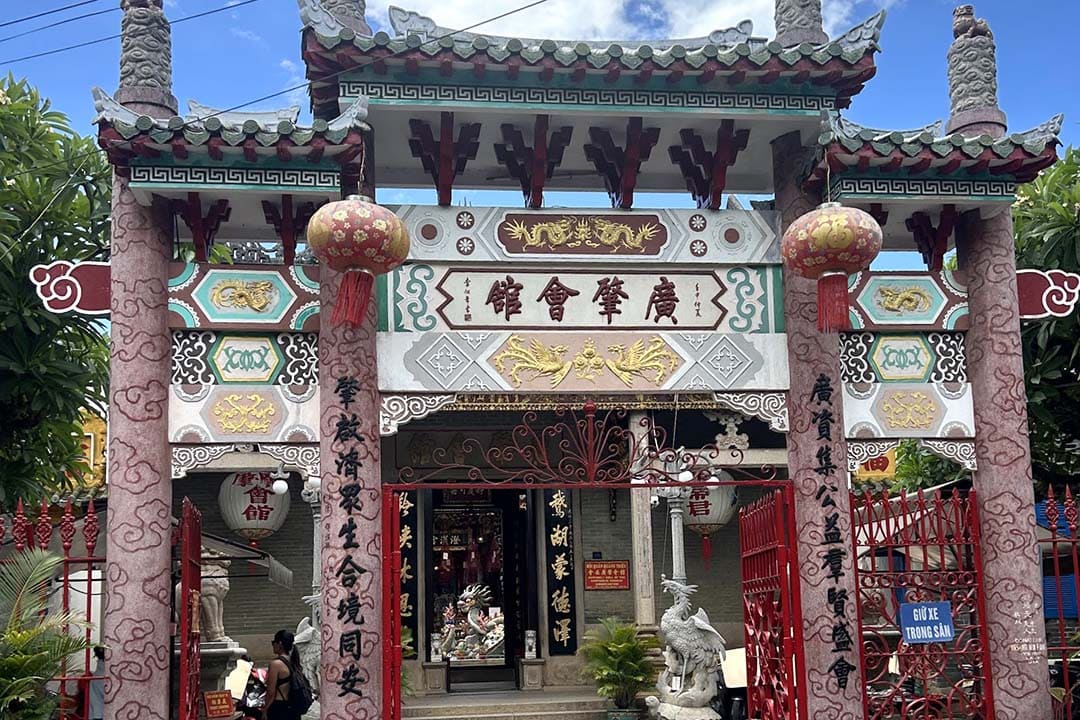
The gate here is quite different from other halls in town. Instead of the usual three-door setup in a single row, the side doors have been moved forward and to the sides. This creates a "double-layered" entrance that adds a sense of grandeur. Above the central door, a large board displays four Chinese characters meaning "Hainan Assembly Hall of the Chinese People".
The two courtyards and side houses
Once inside, you are greeted by a peaceful courtyard filled with bonsai trees and blooming flowers. The East and West houses flank the yard, providing space for community gatherings. On the walls, you will find two famous artworks: a reproduction of "Along the River During the Qingming Festival" (often called the "Mona Lisa of China") on the left, and a vibrant painting of the historic Hoi An port on the right.
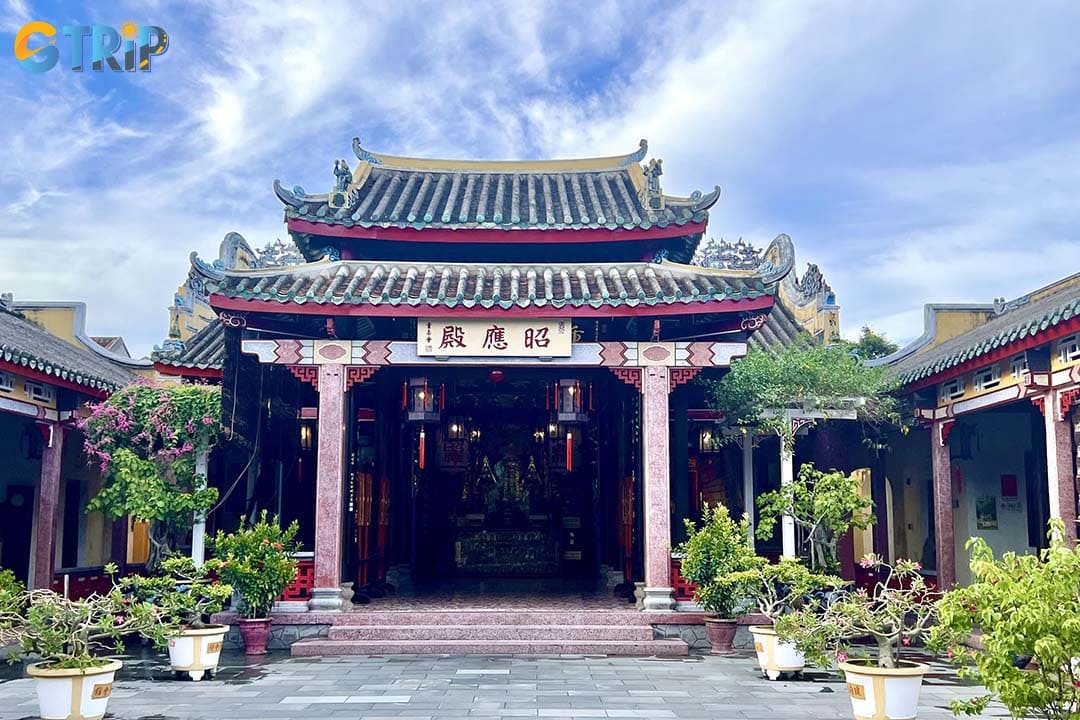
The courtyard of the hall is filled with bonsai trees and blooming flowers
The main temple
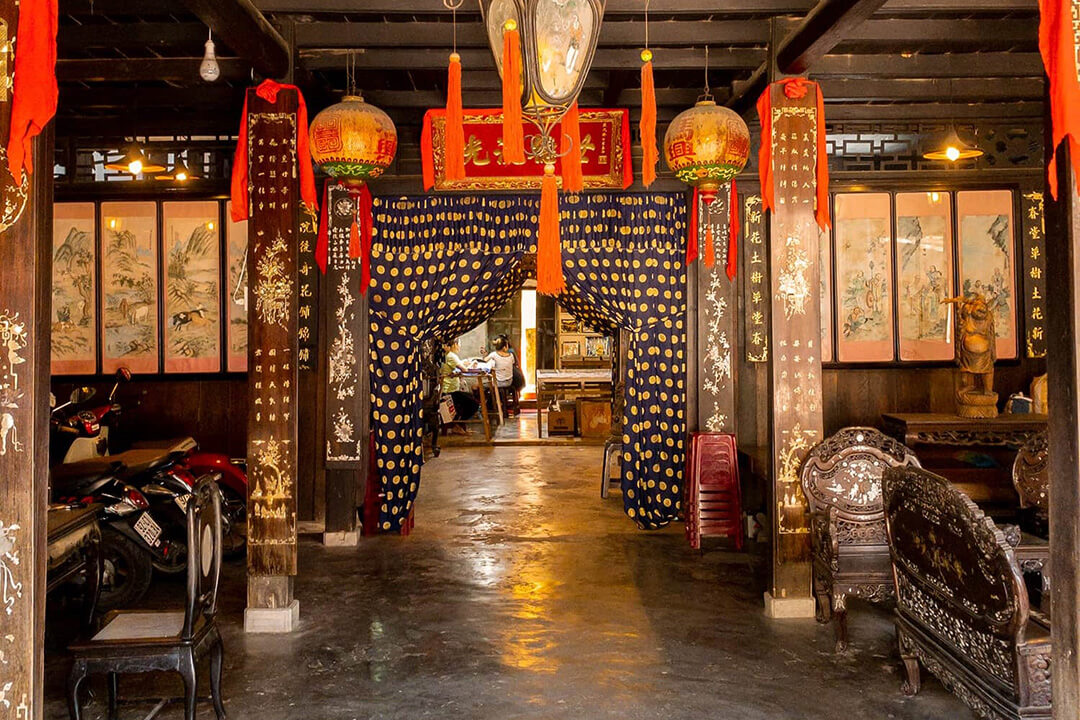
The Main Temple is the heart of the site, featuring a front pavilion with four pillars and double-layered roof tiles. Inside, the 108 tablets of the martyrs sit at the center, flanked by the God of Wealth and the community ancestors' altar. The most stunning feature here is the intricately carved wooden altar base, a masterpiece by Kim Bong Village carpenters that depicts life in the three realms: heaven, earth, and water.
Things to do at Hainan Assembly Hall in Hoi An
Make the most of your visit by experiencing the artistic and spiritual highlights of this historic site:
1. Discover the legend of the 108 martyrs
Take a moment to learn about the 108 "Brothers" honored here. Unlike other temples that worship mythical gods, this hall commemorates a real group of innocent traders. Seeing the 108 wooden tablets on the altar is a moving experience that connects you deeply to the maritime history of the region.
2. Admire the "Mona Lisa of China" painting
One of the most unique things to do here is to study the massive wall painting on the left. This reproduction of a Song Dynasty masterpiece captures thousands of tiny details of ancient city life during the Qingming Festival. It’s a fascinating window into the past that art lovers should not miss.
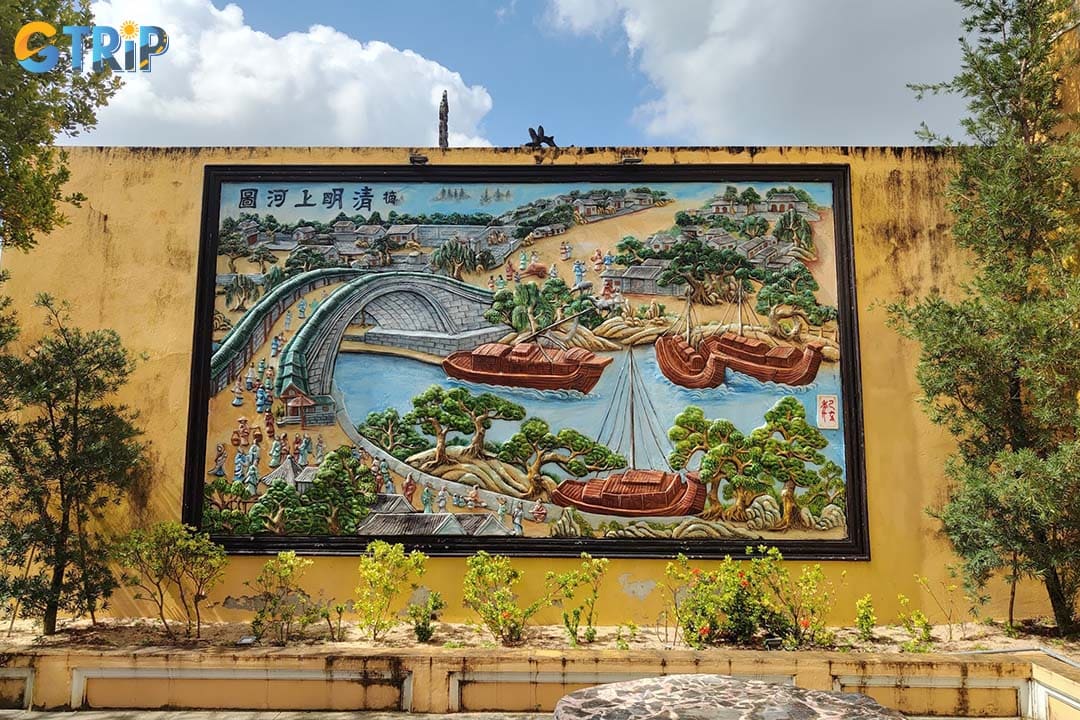
The “Mona Lisa of China” massive wall painting is where you should not miss
3. Witness masterful woodcarvings
The woodwork in this hall is considered some of the best in Hoi An. Look closely at the central altar base to see incredibly detailed carvings of animals, plants, and courtly life. These were created by the famous Kim Bong artisans and represent the peak of Vietnamese-Chinese craftsmanship.
4. Attend the annual festival (Seasonal)
If your visit falls on the 15th day of the 6th lunar month, you can witness the hall's most important festival. The event is filled with traditional rituals, offerings of roast pig and goat, and vibrant lion dances, offering a rare look into Hainanese cultural traditions.
How to get to Hainan Assembly Hall in Hoi An?
Located at the end of the historic Tran Phu Street, reaching the Hainan Assembly Hall is quite easy regardless of where you are staying. Here is how you can navigate your way to this magnificent landmark.
From Da Nang International Airport
Most travelers arriving at the airport take a direct private car or taxi to Hoi An. The route usually follows the beautiful coastline, offering a pleasant introduction to the region before you reach the Ancient Town.
- Distance: ~30 km
- Travel time: 45 - 55 minutes
- Routes: Coastal road via Vo Nguyen Giap and Lac Long Quan streets
- Optimal option: Private car for comfort and convenience
From Da Nang City center
Whether you are staying near the Dragon Bridge or My Khe Beach, getting to Hoi An is a straightforward drive. You can easily find a ride or drive yourself to the edge of the pedestrian zone near the hall.
- Distance: 25 - 30 km
- Travel time: 40 - 50 minutes
- Routes: Coastal route for the best views
- Optimal option: Motorbike for solo travelers or Grab/taxi for groups
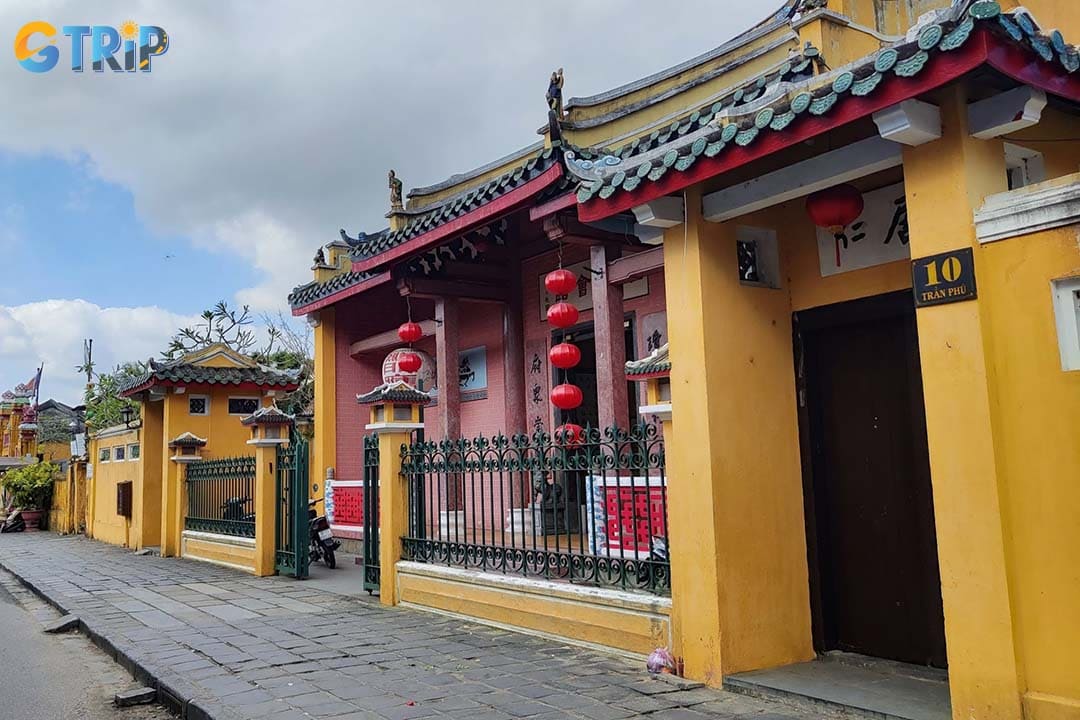
You can get to the Hainan Assembly Hall in Hoi An easily from anywhere in Danang
From around Hoi An Ancient Town
If you are staying in central areas like Minh An or Cam Chau, the hall is just a pleasant stroll or a quick bike ride away. It is located near the Hoang Dieu - Tran Phu intersection, close to many local shops and cafes.
- Distance: Within 1 - 2 km from most central hotels
- Travel time: 5 - 15 minutes
- Routes: Tran Phu Street or walking through the Ancient Town
- Optimal option: Walking or cycling is highly recommended
Transportation options
There are many ways to reach the hall. Unlike some other parts of the Old Town, motorbikes are often allowed right up to the front gate of Hainan Assembly Hall, where you can find parking. Taxis and electric cars can drop you off at the Hoang Dieu intersection, which is just a few steps away from the entrance.
- Walking/Cycling: Best for exploring the nearby streets and shops
- Motorbike: Convenient, as you can park very close to the gate
- Electric car: A great eco-friendly choice for families staying a bit further away
- Private car / Taxi / Grab: Most comfortable, convenient, and fastest option. Door-to-door service directly to your hotel. Fixed prices are available if booked in advance.
- Shuttle bus: A good middle-ground option. Cheaper than a private car but more comfortable than the local bus. Many services run between Da Nang airport/city and Hoi An hotels.
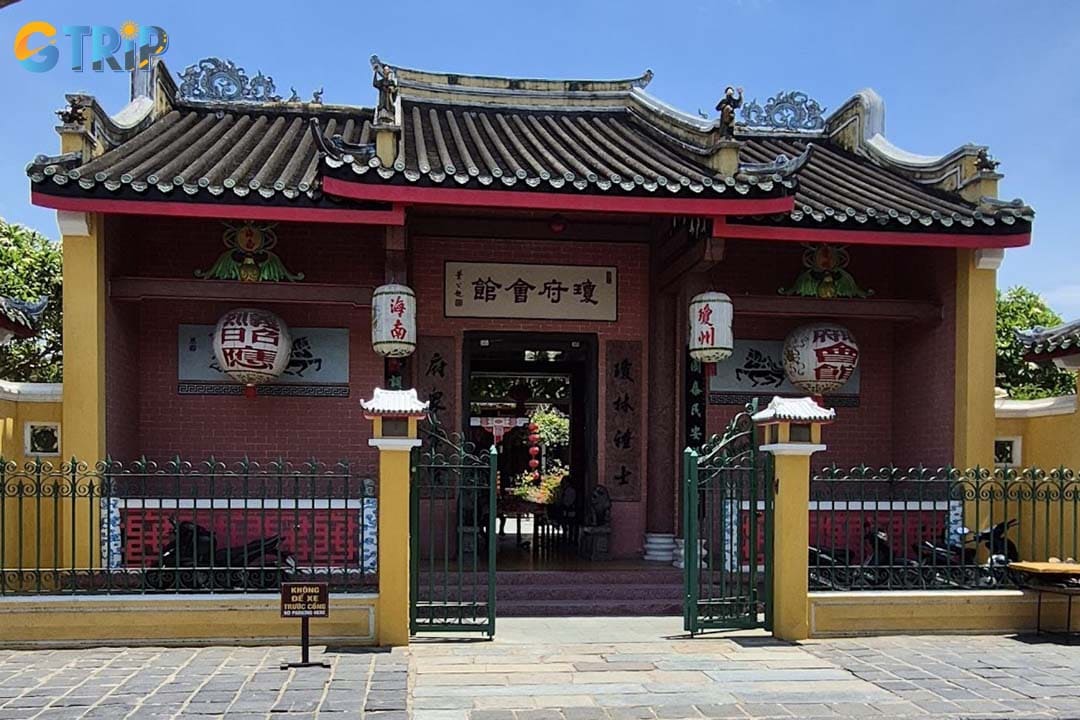
You can reach the Hainan Assembly Hall by many means of transport
Nearby attractions to the Hainan Assembly Hall in Hoi An
One of the best things about the Hainan Assembly Hall's location is its proximity to many of Hoi An’s other top sights. You can easily spend a full day exploring this small, concentrated area of the Ancient Town on foot. After your visit, here are some must-see attractions just a few steps away:
- Japanese Covered Bridge: Arguably Hoi An’s most iconic landmark. This beautiful 18th-century bridge features a small temple inside and is a symbol of the town.
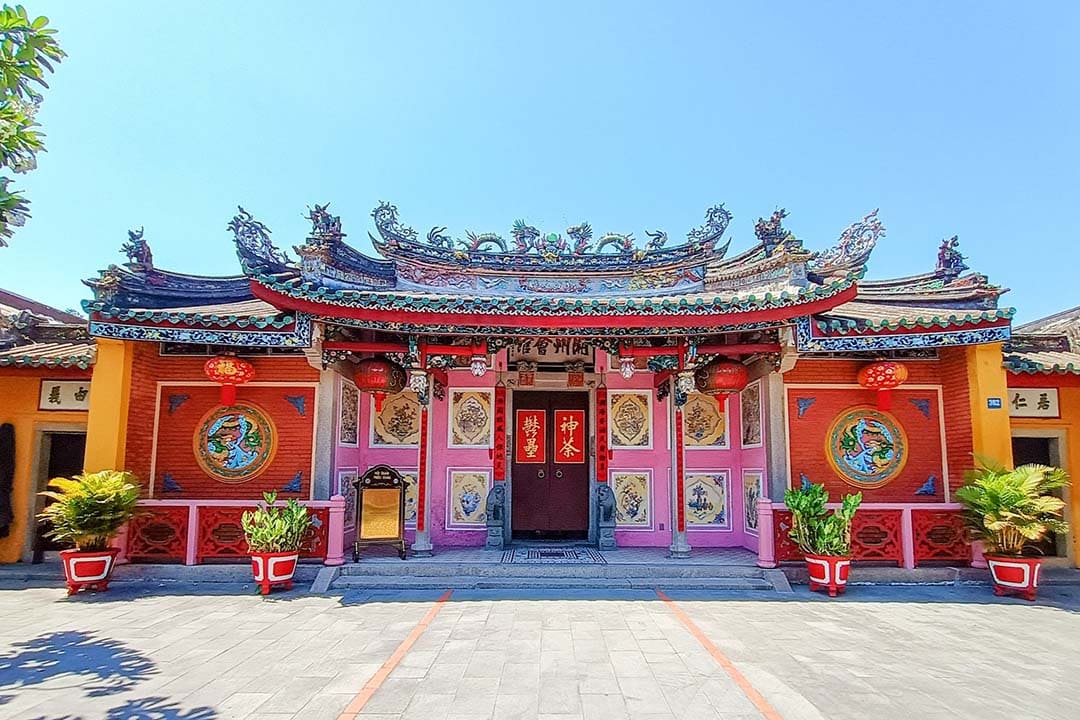
- Cantonese Assembly Hall (Quang Trieu): Located just down the street, this is one of the most ornate and colorful assembly halls, famous for its magnificent dragon fountain and detailed carvings.
- Phuc Kien (Fujian) Assembly Hall: The largest and most grand of the assembly halls. Its impressive triple-arched gate and lavishly decorated courtyards and altars are a feast for the eyes.
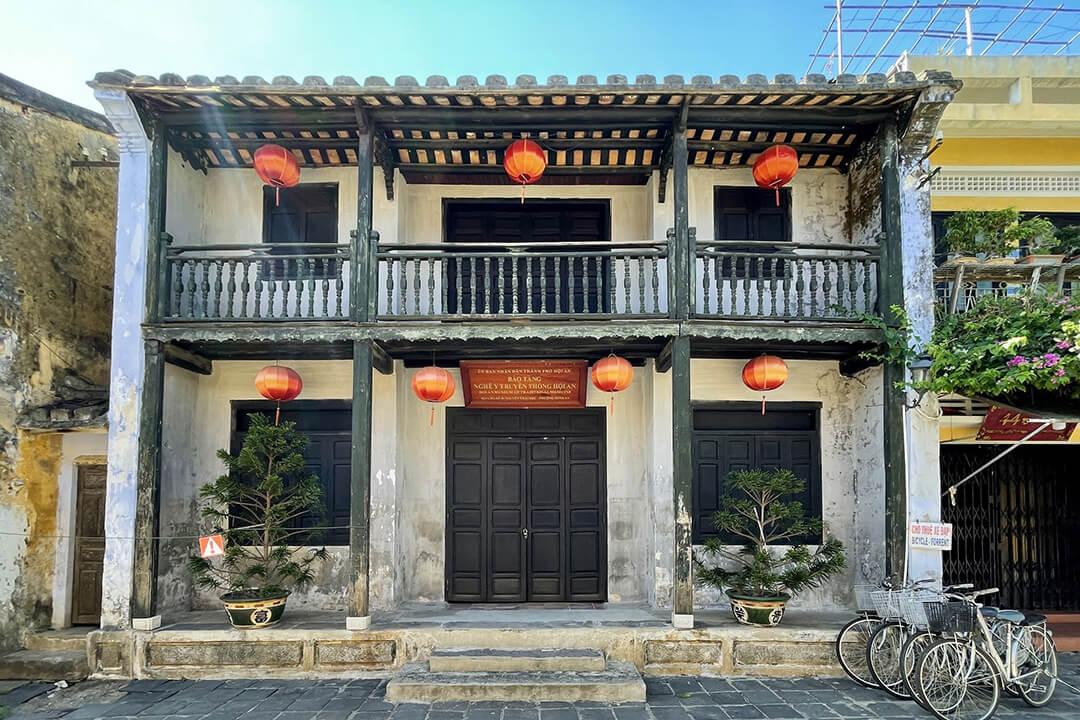
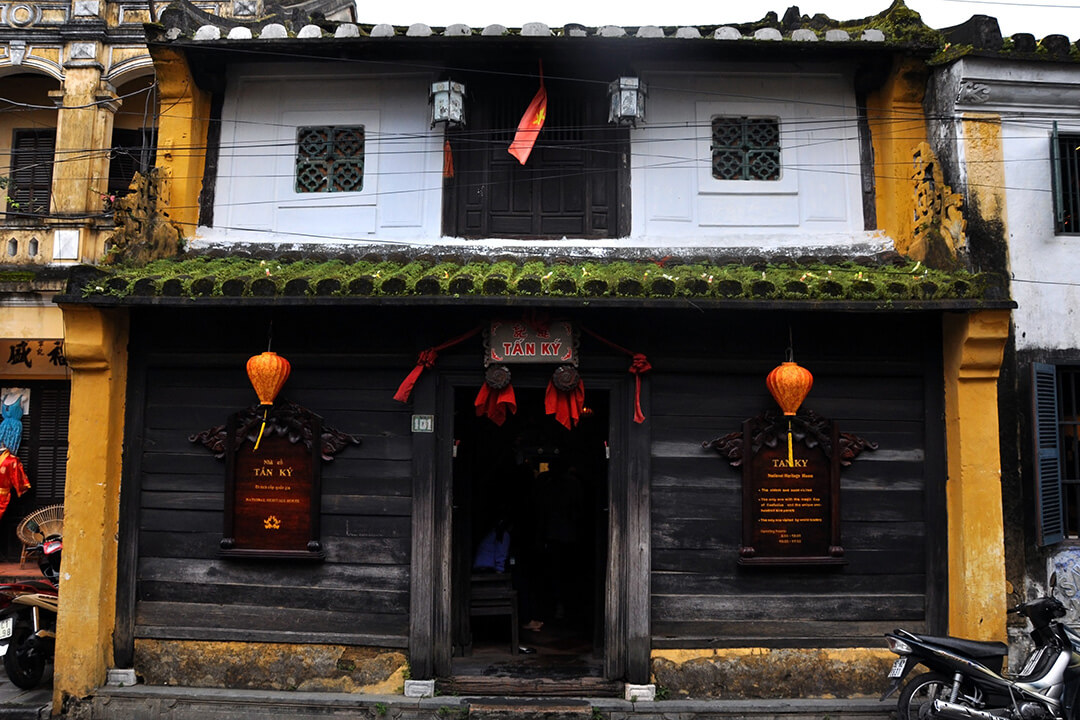
- Tan Ky Old House: A perfectly preserved 18th-century merchant’s home that showcases a unique blend of Vietnamese, Chinese, and Japanese architectural styles.
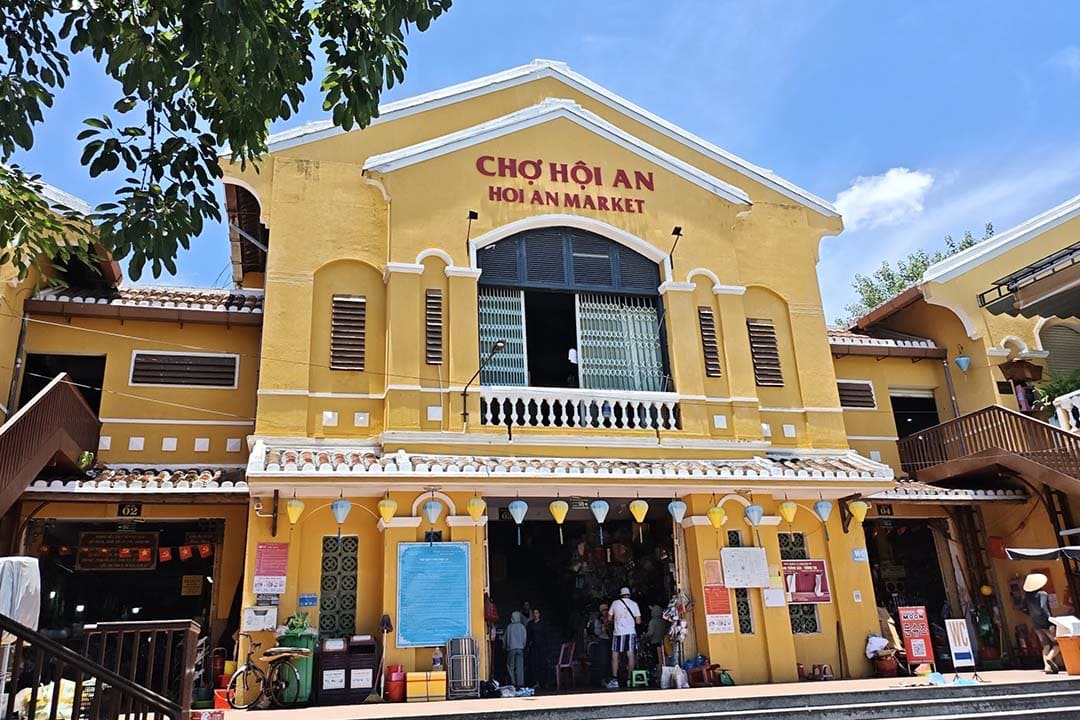
- Hoi An Central Market: A vibrant, bustling market where you can experience local life, sample delicious street food, and shop for souvenirs, spices, and fresh produce. It's a sensory explosion.
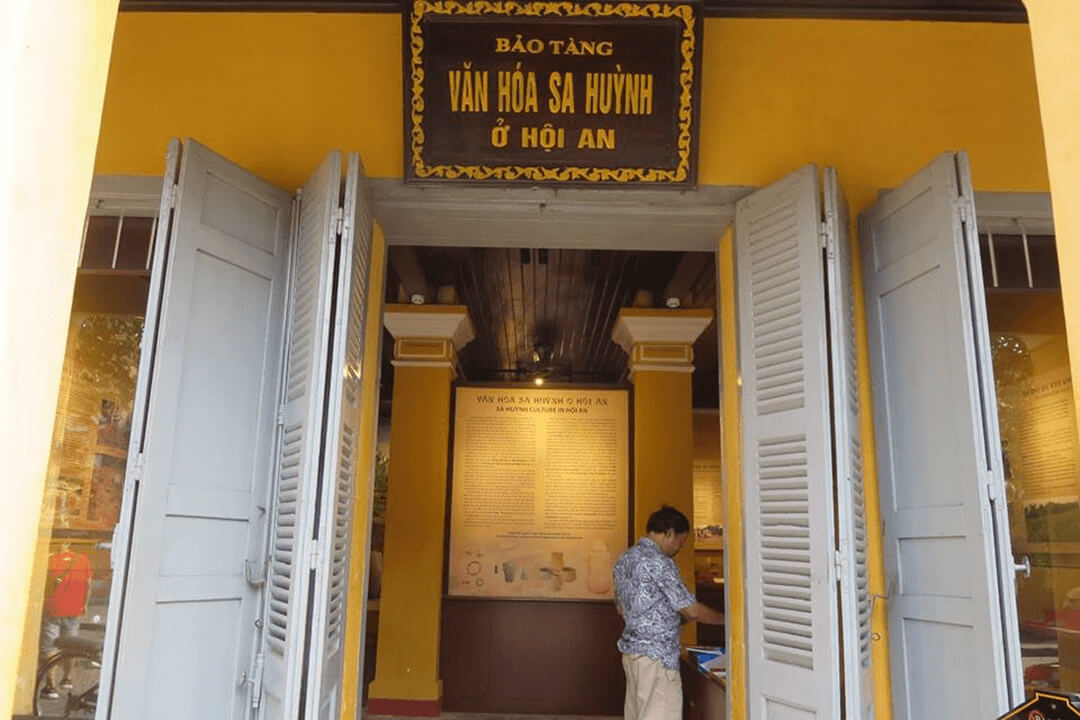
- Museum of Sa Huynh Culture: For history buffs, this museum displays artifacts from the Sa Huynh people, the earliest settlers in the Hoi An region, dating back over 2,000 years.
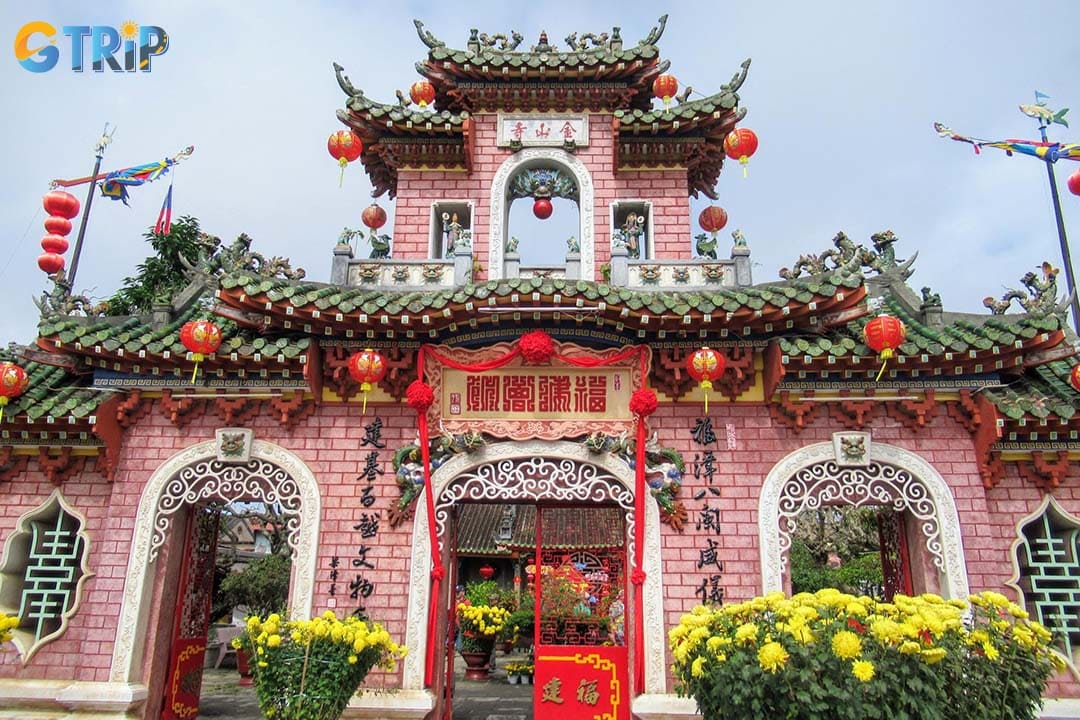
The hall is near many Hoi An’s other top sights that you can try visiting
Travel tips for visiting the Hainan Assembly Hall
To ensure a smooth and respectful visit to this sacred site, here are some practical tips to keep in mind:
- Buy your ticket first: You need a general Hoi An Ancient Town sightseeing ticket to enter the hall. The nearest ticket booth is located at the intersection of Hoang Dieu and Tran Phu streets, just a few steps away.
- Dress respectfully: This is a place of worship. Please wear clothing that covers your shoulders and knees. Avoid see-through fabrics or revealing outfits. Wearing a traditional Vietnamese ao dai is highly encouraged and looks beautiful in photos.
- Prepare for the weather: Be sure to check the forecast. Bring sunscreen, a hat, and plenty of water for the dry season (February to August), or carry a rain poncho and umbrella during the rainy season (September to January). You should keep in mind that floods can occur between October and December.
- Respectful etiquette: Before entering the inner temple, please remove your hat, sunglasses, and rain poncho. Photography is allowed, but please keep your voice low to respect the quiet atmosphere.
- Bring cash: Most ticket booths and local street vendors near the hall do not accept credit cards. Having Vietnamese Dong (VND) on hand is essential for tickets and small purchases.
- Comfortable shoes: Since you will be walking on old paved streets, comfortable shoes or sandals are a must for exploring the hall and the surrounding Ancient Town.
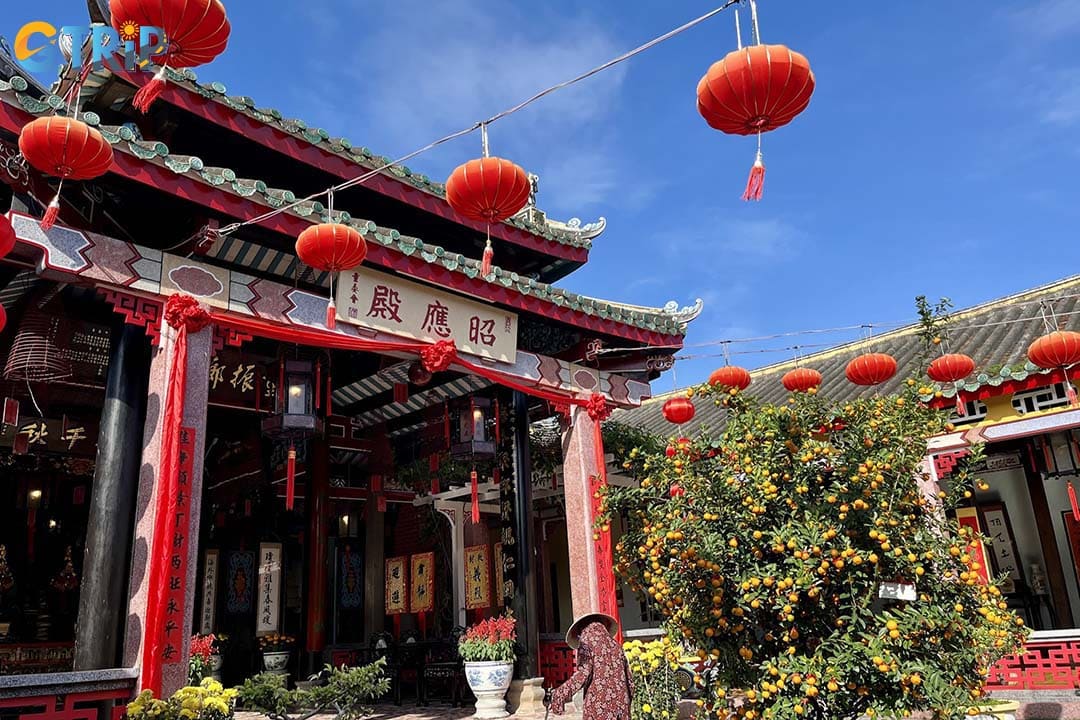
Remember travel tips to have a good journey to Hainan Assembly Hall in Hoi An
The Hainan Assembly Hall in Hoi An is far more than just another beautiful building in a town full of them. It is a keeper of stories, a monument to a tragic past, and a testament to the enduring spirit of community. Its quiet, contemplative atmosphere provides a welcome contrast to the lively energy of Hoi An’s streets, offering a space for reflection. By taking the time to understand its history and appreciate its subtle beauty, you connect with a deeper, more poignant layer of this incredible town. As you continue your journey through Vietnam, remember that GTrip is here to guide you to the most authentic and memorable experiences. For more insider tips and comprehensive guides, be sure to check out our other articles on traveling in this amazing country.