



Apr - 02 - 2026
Trung Hoa Assembly Hall in Hoi An, also known as Duong Thuong Assembly Hall, is a captivating testament to the rich cultural tapestry of this UNESCO World Heritage Site. Standing as one of the most significant and historic Chinese assembly halls, it offers a serene and profound glimpse into the lives of the Chinese merchants who helped shape Hoi An's golden era. The Trung Hoa Assembly Hall holds a unique place in the city's history as the first common meeting house for all Chinese communities. Its understated beauty and deep historical roots make it an unmissable stop for discerning travelers. In this complete guide by GTrip, we'll explore the hall's fascinating history, unique architecture, and provide all the practical information you need.
Overview of the Trung Hoa Assembly Hall in Hoi An
The Trung Hoa Assembly Hall serves as a "common house" for Chinese immigrants from various regions to gather, socialize, and support one another. Beyond its official title, it is also known as Chua Ong Bon, Hoi Quan Trung Hoa, Ngu Bang Assembly Hall (referring to the five congregations), or Le Nghia Pagoda. As a spiritual sanctuary, Thien Hau Holy Mother (Thien Hau Thanh Mau) is the main deity worshipped here. She is the Goddess of the Sea who protects merchants and sailors on their long voyages. This blend of social and spiritual functions makes the hall a cornerstone of Hoi An’s multicultural heritage.
Where is Trung Hoa Assembly Hall in Hoi An?
Address: 64 Tran Phu Street, Hoi An Ancient Town, Hoi An Ward (formerly Minh An Ward, Hoi An City, Quang Nam Province), Da Nang City
The Trung Hoa Assembly Hall is conveniently located in the very heart of the ancient town, making it an easy addition to any walking tour. Situated on one of the main thoroughfares, it is just a short stroll from other iconic landmarks, such as the Japanese Covered Bridge and the Hoi An Central Market.
Opening hours and ticket prices of Trung Hoa Assembly Hall*
- Opening hours: 7:00 AM - 11:00 AM and 2:00 PM - 4:00 PM
- Ticket prices: Free
Visitors can explore Trung Hoa Assembly Hall daily from early morning until late afternoon, making it easy to include in a walking itinerary around Hoi An Ancient Town. Unlike several other assembly halls in the heritage zone, this site does not require a separate entrance fee. You can freely step inside to admire its architecture, altars, and peaceful courtyard. While visitors are required to have a general Hoi An Ancient Town sightseeing ticket to enter the heritage zone, the Trung Hoa Assembly Hall itself does not require an entry coupon or any additional fee. You can freely step inside to admire its architecture, altars, and peaceful courtyard without worrying about your ticket count.
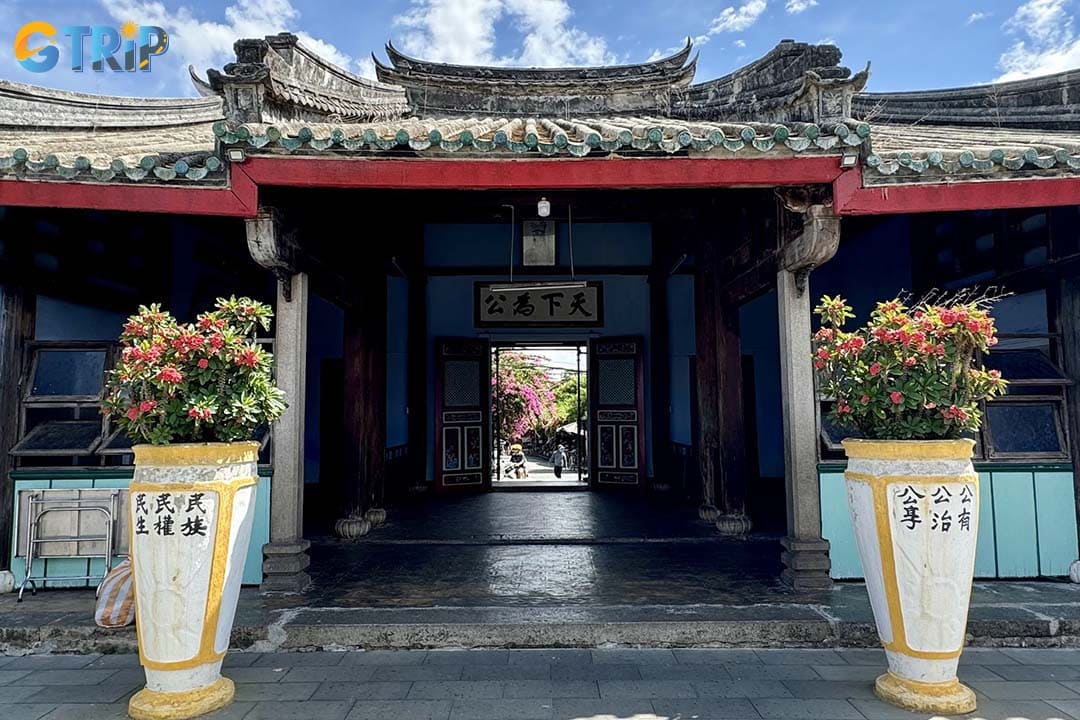
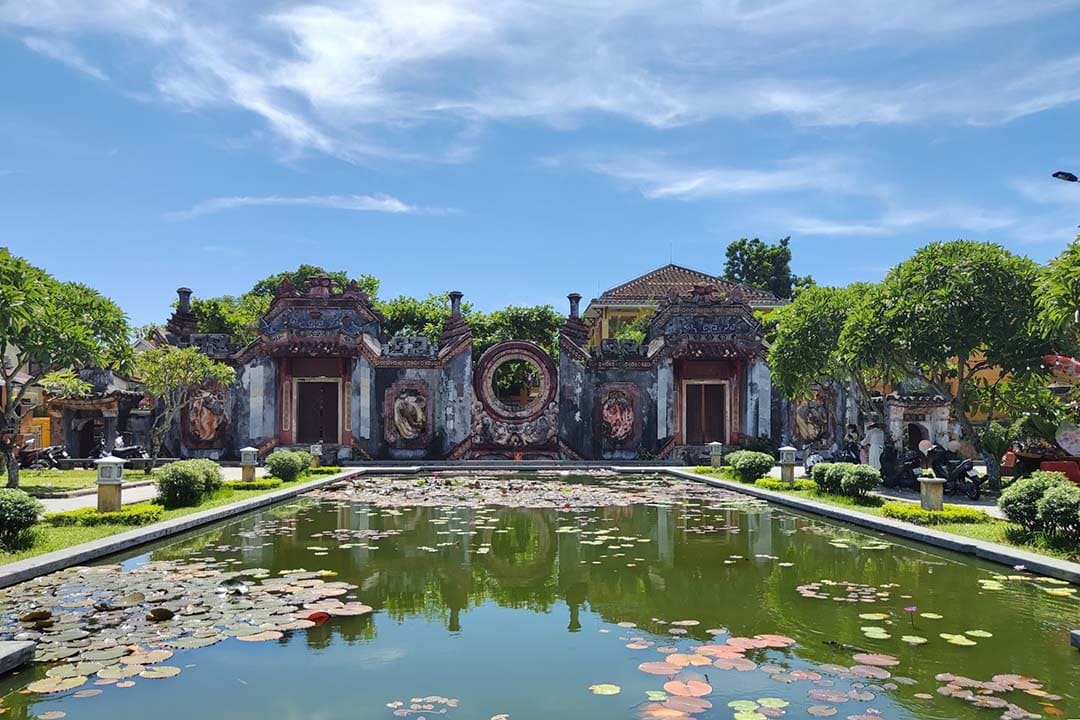
Trung Hoa Assembly Hall or Chinese Assembly Hall in Hoi An serves as a "common house" for Chinese immigrants from many regions
What makes the Trung Hoa Assembly Hall in Hoi An unique?
While Hoi An boasts several impressive assembly halls, the Trung Hoa Assembly Hall holds a special distinction as the earliest of its kind. Its founding predates the establishment of other halls dedicated to specific dialect groups, making it the original meeting point for all Chinese nationals in Hoi An. This shared history gives it a unique character and a powerful sense of historical authenticity.
- The original "common house": Before specific dialect groups built their own grand halls, this was the central hub for all Chinese merchants (Fujian, Cantonese, Teochew, Hainan, and Hakka).
- The "blue" landmark: Unlike the typical yellow buildings of Hoi An, the walls of this hall's main entrance are blue, making it stand out as a unique photo spot.
- Living heritage: It is not just a relic of the past, it currently serves as the "Chinese Culture and Etiquette Center", where young generations come to learn their traditional language and values.
History of the Trung Hoa Assembly Hall
The Trung Hoa Assembly Hall is a special landmark that tells the story of the Chinese community in Hoi An. More than just a temple, it served as a "shared home" for merchants from five different regions of China: Fujian, Cantonese, Teochew, Hainan, and Hakka. For centuries, this has been a place where people gathered to help each other in business, celebrate their culture, and pass down traditions to the next generation.
- Before 1741: The hall was originally built under the name "Duong Thuong Assembly Hall". It was the primary meeting spot for Chinese merchants who had moved from southern China to Hoi An to start new lives.
- 1744: A stone stele (memorial board) was carved during this year, recording how businessmen used the hall to network and support one another in their trade.
- 1855: The building underwent its first major restoration to preserve its intricate design and structure.
- 1928: The site was officially renamed the "Trung Hoa Assembly Hall" (the Assembly Hall of Chinese Congregations). It was also during this year that the building was renovated again, giving it much of the look you see today.
- May 4-5, 1968: During the war, the area behind the hall was the site of a daring mission. Two local guerrillas, Tong Van Suong and Do Trong Huong, disguised themselves as soldiers to carry out a surprise attack. Both tragically lost their lives during the battle.
- 1970: To honor their bravery, both men were officially named heroes. Today, you can find a memorial board on the back wall of the hall, and local schools and streets are named after them.
- 1990 - 1991: After being briefly used as a bamboo workshop, the building was returned to the Chinese community. In October 1991, it opened as a school to teach Chinese language and etiquette to local children. This is why many locals call it "Le Nghia Pagoda" (The Pagoda of Etiquette).
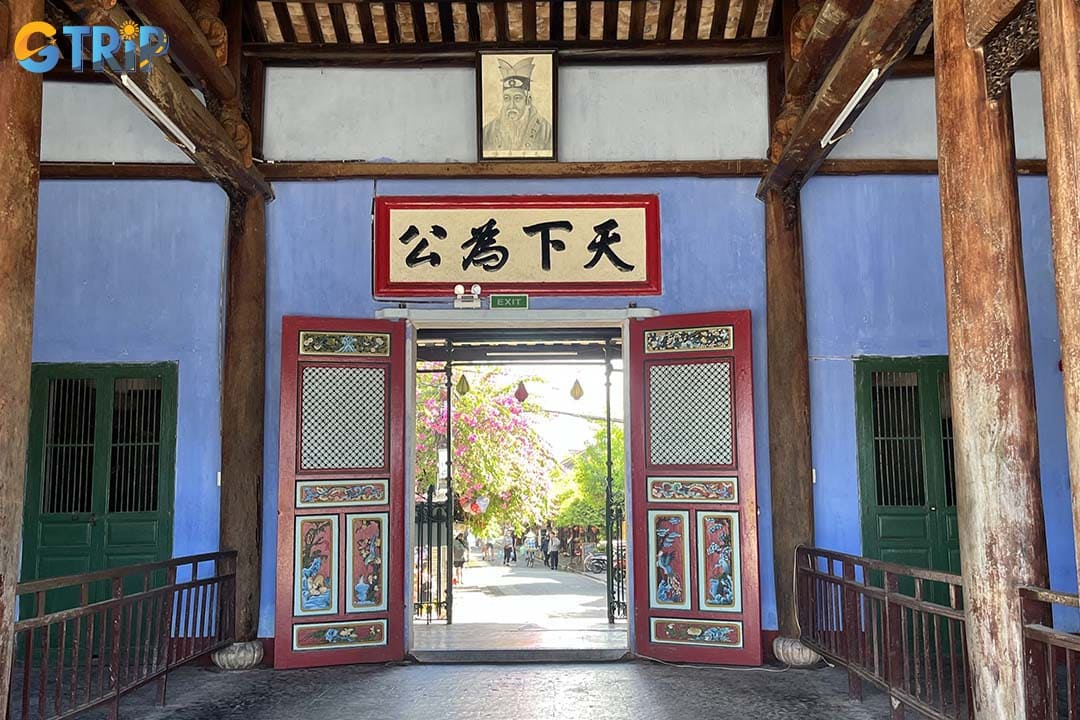
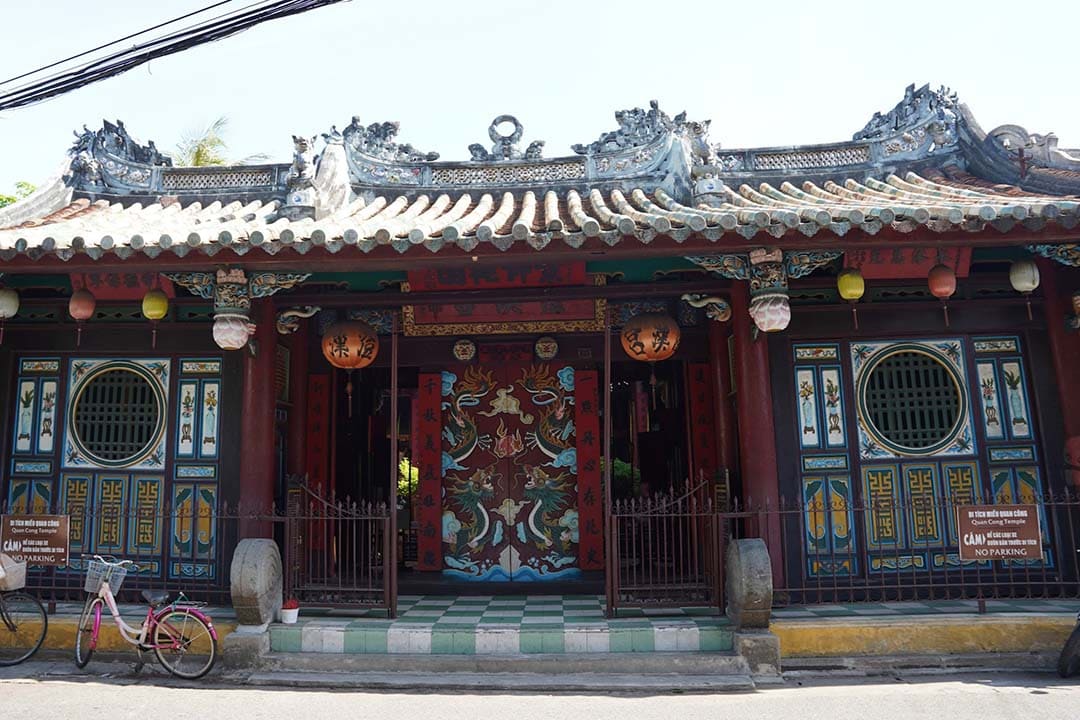
The history of the Trung Hoa Assembly Hall in Hoi An starts from the 18th century
Architecture of the Trung Hoa Assembly Hall
Covering a large area of 1,160 square meters, the Trung Hoa Assembly Hall is a beautiful blend of spiritual space and community life. The layout is easy to explore, consisting of a colorful entrance, two side houses, a grand main temple, and a surprisingly lively back courtyard.
The entrance gate
The first thing you’ll notice is the bright blue walls of the entrance, a unique look compared to the typical yellow buildings found elsewhere in Hoi An. You will need to walk up a few steps to enter because the hall was built on higher ground to stay safe from the town's seasonal floods. While there are three gates, usually only the middle one is open. Look up to see the four Chinese characters that mean "Assembly Hall of Chinese congregations", which also carries a deeper message: "A world shared by all".
The East and West houses
Once you pass through the front gate, you’ll find yourself in a large, peaceful courtyard filled with potted plants like pomegranates, apricot blossoms, and bougainvillea. Flanking this yard are the East and West Houses. These two buildings serve as the "living rooms" of the hall, used for welcoming guests, holding community meetings, and storing equipment for local festivals.
The main temple
This is the heart of the assembly hall. Before you step inside, there is an open-air pavilion with wooden chairs where visitors can sit and enjoy the quiet.
- The deities: Inside the dimly lit, incense-filled room, you’ll see the Goddess of the Sea (Mazu) in the center, with the God of Wealth on her left and Quan Cong (symbolizing loyalty) on her right. You’ll also spot a red wooden ship model and the two famous "Door Gods", one who can see everything and one who can hear everything.
- The craftsmanship: Look closely at the wooden pillars and ceilings. They are covered in incredibly detailed carvings of heavenly life and holy animals. These were all handcrafted by the master carpenters of Hoi An’s famous Kim Bong Village, whose traditional skills are still protected by UNESCO today.
The back courtyard
Behind the main temple is a large open space that feels very different from the quiet prayer area. This yard is often used as a basketball court where local kids play in their free time. Surrounding the yard are classrooms where the younger generation still comes to study the Chinese language and traditional etiquette. With its old Champa (frangipani) trees and local students, this area is a wonderful reminder that the hall is still a living part of the Hoi An community.
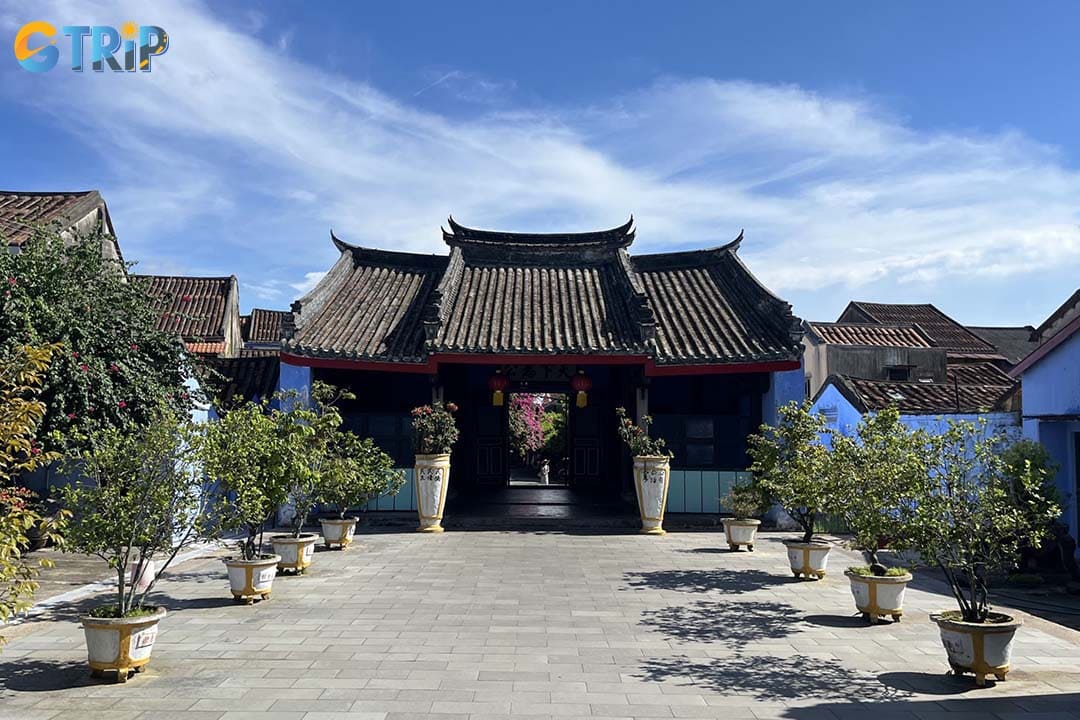
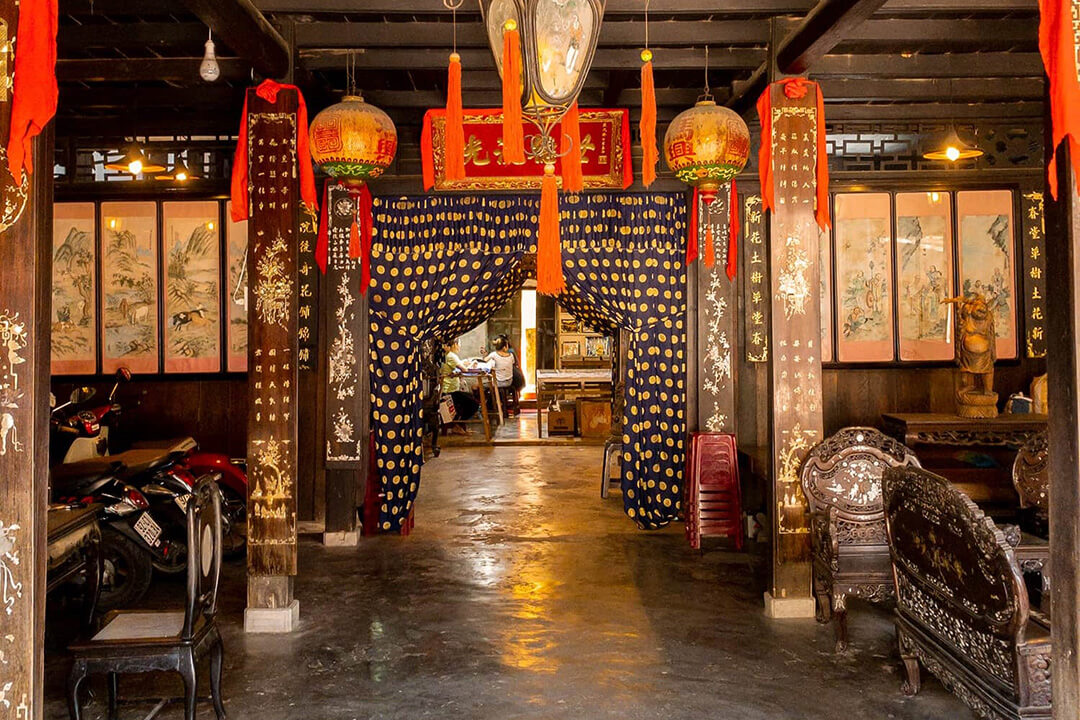
Trung Hoa Assembly Hall has a beautiful blend of spiritual space and community life
Things to do at Trung Hoa Assembly Hall in Hoi An
Beyond its ancient wooden doors, the Trung Hoa Assembly Hall offers more than just a quick look at history. Here are the best ways to fully experience the culture and atmosphere of this unique landmark:
1. Capture photos with the iconic blue walls
Unlike the typical yellow-walled buildings of Hoi An, this assembly hall stands out with its vibrant blue entrance. It is one of the most photographed spots in the Old Town. The colorful gate and the sun-drenched courtyard filled with bougainvillea provide a perfect backdrop for your travel photos.
2. Pray for safe travels and prosperity
Step inside the main temple to experience the spiritual side of Hoi An. You can burn a coil of incense and pray to Thien Hau Goddess (the Goddess of the Sea) for a safe journey, or seek blessings from the God of Wealth for business success. The peaceful atmosphere, filled with the scent of incense, offers a quiet moment of reflection away from the busy streets outside.
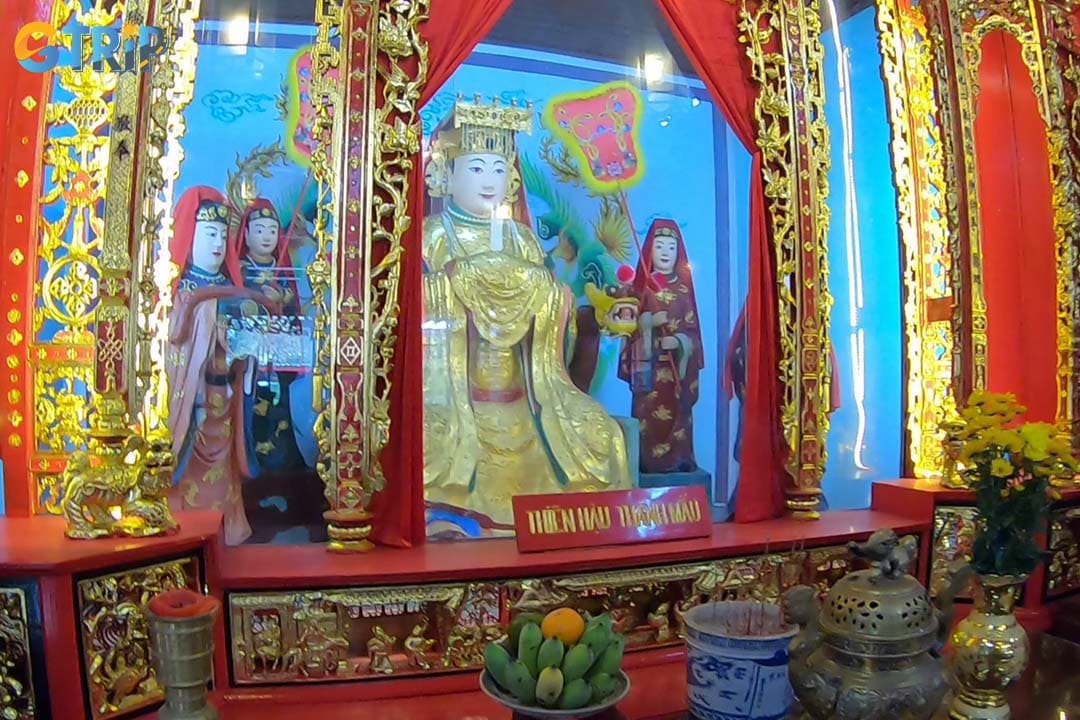
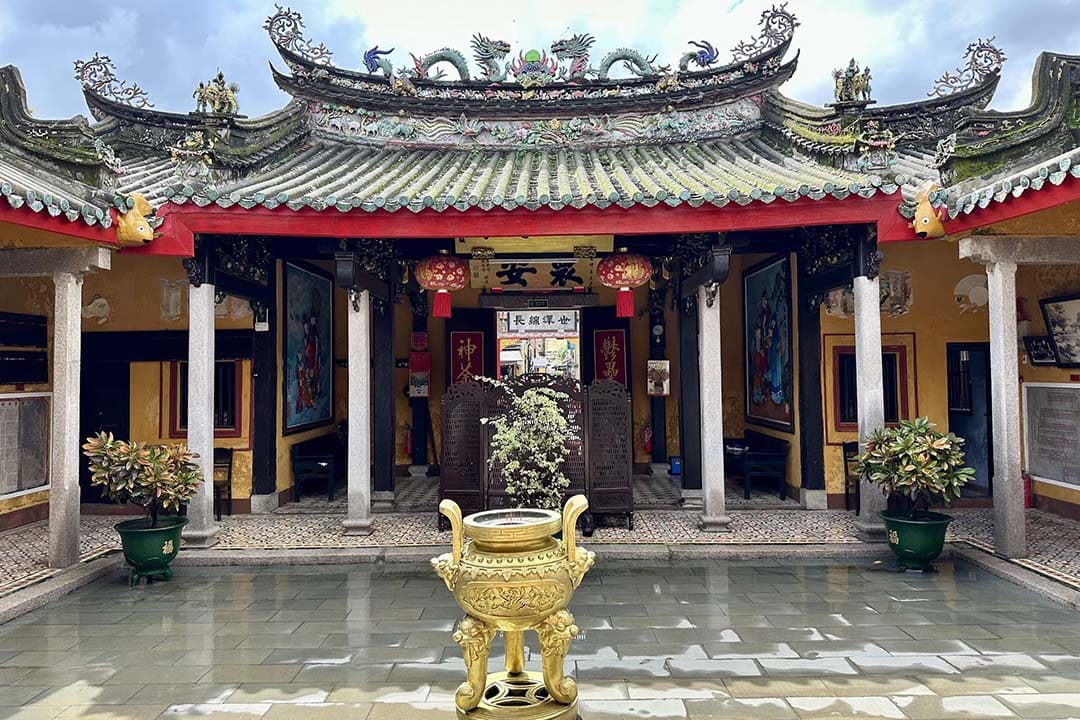
The main hall is where visitors come to pray and make offerings for good fortune
3. Admire the masterpieces of Kim Bong carpentry
Take a close look at the intricate wood carvings on the pillars and altars. These are the works of the famous Kim Bong Village artisans. You can spend time spotting details of imperial life, mythical animals, and delicate flowers carved into the wood. Don’t forget to look up at the wooden boards to find the "shared world" motto, which reflects the inclusive spirit of the five Chinese communities.
4. Discover the story of local heroes
Walk to the back wall of the temple on Phan Chu Trinh Street to find a special memorial board. Here, you can learn about the "Lady Pagoda victory" and the two local heroes, Tong Van Suong and Do Trong Huong. It’s a rare chance to see how a site of ancient heritage also played a significant role in Vietnam's modern history.
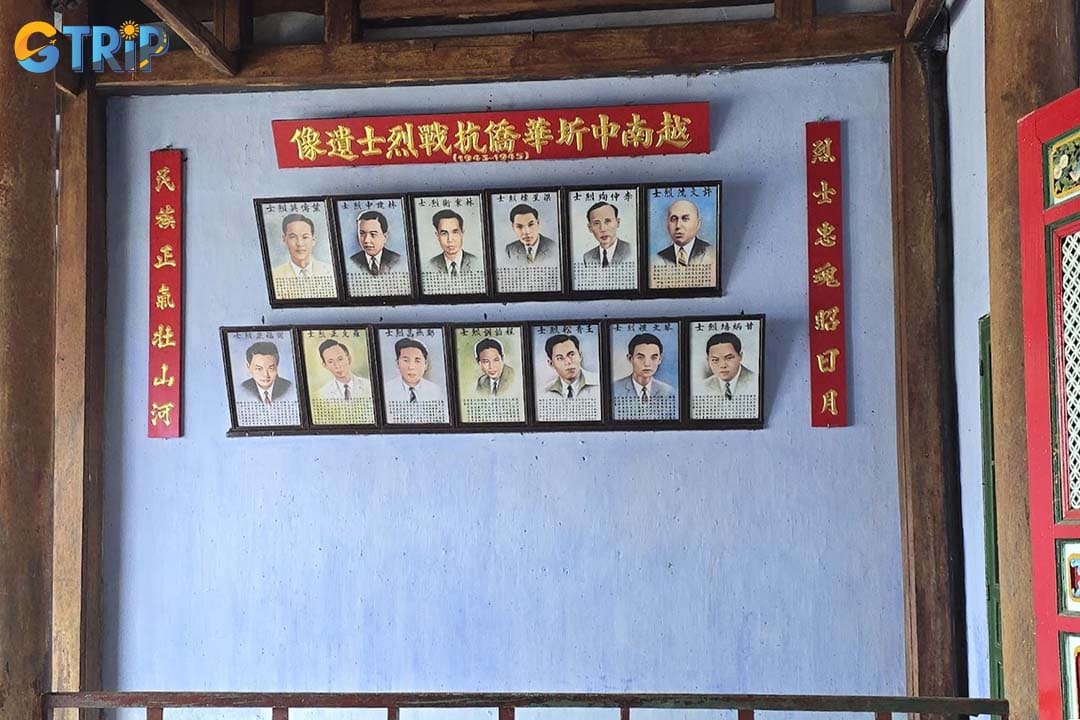
You can discover the stories about local heroes
5. Observe the "living heritage" in the back courtyard
Head to the rear of the assembly hall to see its modern-day role as a center for education. You might see local children playing basketball or students attending classes at the Chinese Culture and Etiquette Center. Watching the younger generation learn their ancestral language amidst ancient Champa trees is a beautiful way to see how history and modern life coexist in Hoi An.
6. Attend the vibrant the Festival of Lady Thien Hau (Seasonal)
If you are lucky enough to visit on the 23rd day of the 3rd lunar month, you can witness the most important and solemn event of the year: the festival of Thien Hau Holy Mother. Since she is the main protector of almost all Chinese communities in Hoi An, this celebration is a significant local event. The assembly hall fills with energy and traditional rituals, and even the nearby Fujian Assembly Hall becomes bustling with travelers and locals coming to pray. It’s a wonderful opportunity to experience the town's spiritual heartbeat and see the community come together in colorful devotion.
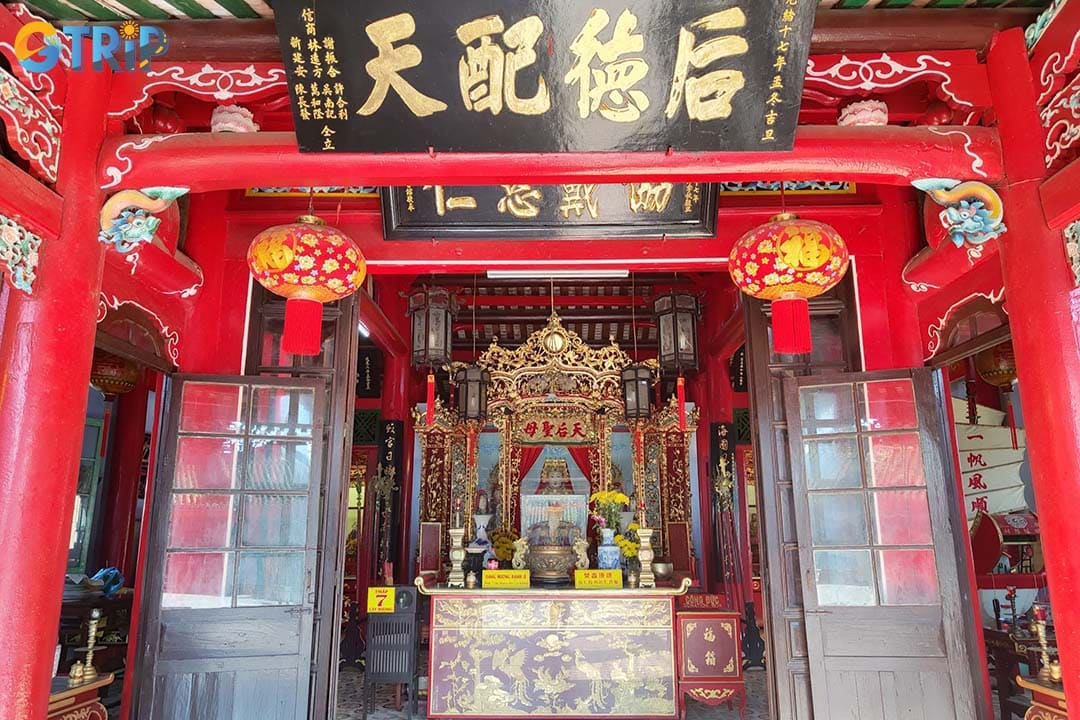
If you visit the hall on the 23rd day of the 3rd lunar month, you can witness the festival of Thien Hau Holy Mother
How to get to Trung Hoa Assembly Hall in Hoi An?
Located at 64 Tran Phu Street, right in the heart of Hoi An’s vibrant pedestrian area, reaching the Trung Hoa Assembly Hall is a breeze. Here are the best ways to navigate your journey to this historic landmark.
From Da Nang International Airport
Most travelers landing at the airport head straight to Hoi An via the scenic coastal road. Once you reach the edge of the Ancient Town, the Trung Hoa Assembly Hall is just a short walk away. Since the hall is in a pedestrian-only zone during peak hours, your driver will drop you off at a nearby entry point.
- Distance: Approximately 30 km
- Travel time: 45 - 55 minutes
- Routes: Coastal road via Vo Nguyen Giap and Lac Long Quan streets
- Optimal option: Private car or taxi for a direct, comfortable transfer with luggage
From Da Nang City center
Reaching the assembly hall from Da Nang city center is straightforward and offers beautiful ocean views along the way. You will arrive at the outskirts of the Old Town before walking to 64 Tran Phu Street.
- Distance: 25 - 30 km
- Travel time: 40 - 50 minutes
- Routes: The coastal route is the most recommended for its beauty and simplicity
- Optimal option: Motorbike for a fun road trip or Grab/Taxi for a hassle-free journey
From around Hoi An Ancient Town
If you are staying within Hoi An, getting to the hall is very convenient. Located on the main street of the walking area, it is easily accessible on foot or by bike. Just keep in mind that Tran Phu Street closes to motorized vehicles from 9:00 - 11:30 AM and 3:00 - 9:30 PM daily.
- Distance: Within 1 - 2 km from most local hotels
- Travel time: 5 - 15 minutes
- Routes: Tran Phu Street or the riverside roads
- Optimal option: Walking or cycling is the best way to soak in the atmosphere
Transportation options
There are several ways to reach the hall depending on your preference. Within the Old Town, traditional cyclos offer a relaxed experience for those who prefer not to walk. If you are coming from further communes, taxis and electric cars are widely available. For those on motorbikes, parking at the Hoi An Central Market is a great choice during walking hours, as it is only a 3-minute walk from the entrance.
- Walking/Cycling: Most popular and flexible for the pedestrian zone
- Cyclo: A classic Hoi An experience, perfect for a slow-paced sightseeing trip
- Taxi/Electric car: Widely available and offer a good balance of cost and convenience
- Motorbike: Ideal for independent travelers, rental is around 150,000-250,000 VND per day
- Shuttle bus: Many companies offer shared shuttle services from Da Nang, which is a budget-friendly option
- Private car: The most comfortable and hassle-free option, perfect for families or those with luggage
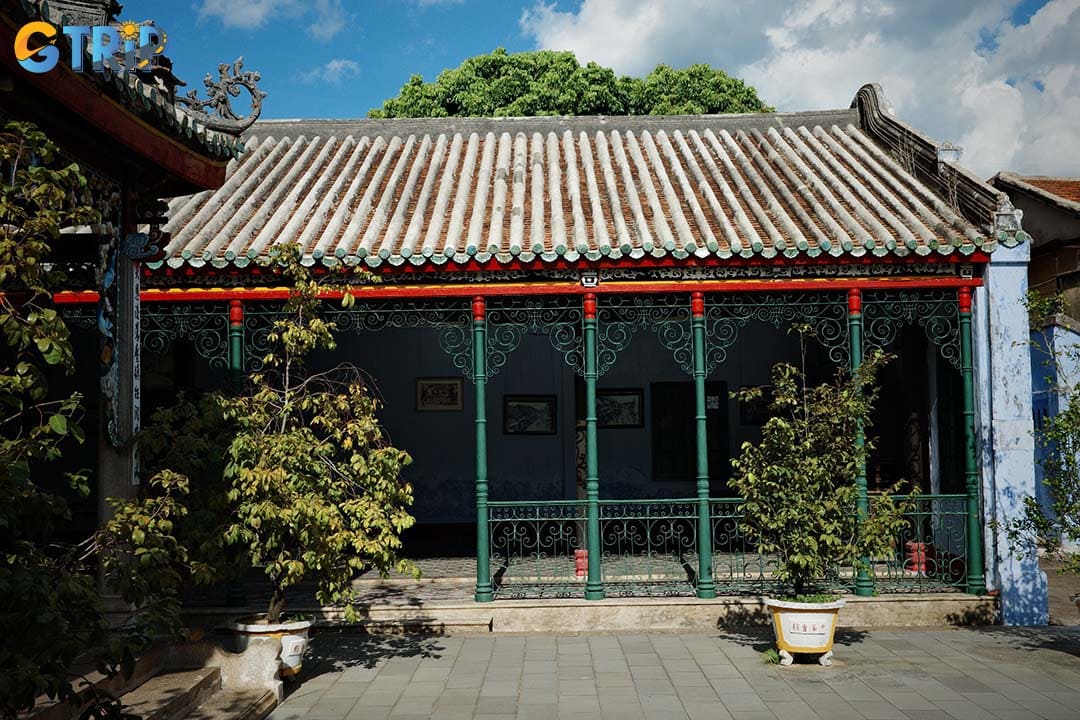
You can get to Trung Hoa Assembly Hall by many means of transportation
Nearby attractions to the Trung Hoa Assembly Hall in Hoi An
The Trung Hoa Assembly Hall's central location makes it the perfect starting point for exploring the best of Hoi An Ancient Town. All of the following attractions are within a 5-10 minute walk.
- Japanese Covered Bridge: This iconic 18th-century bridge is the most recognizable symbol of Hoi An. It features a small temple inside and stands as a must-see landmark in the ancient town.
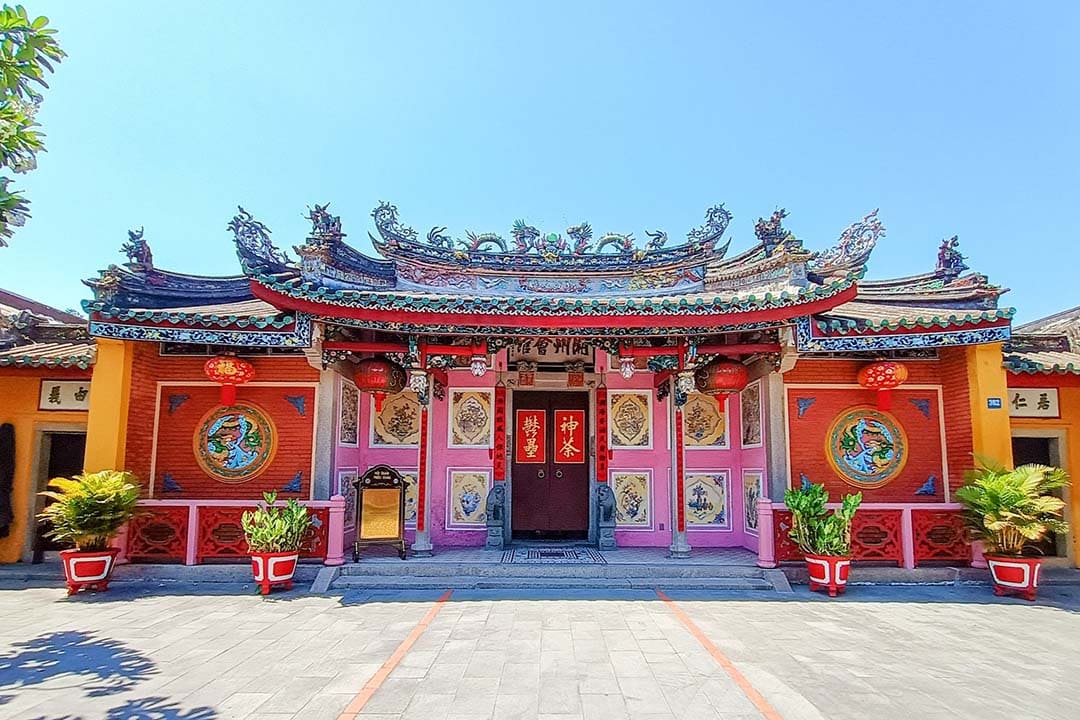
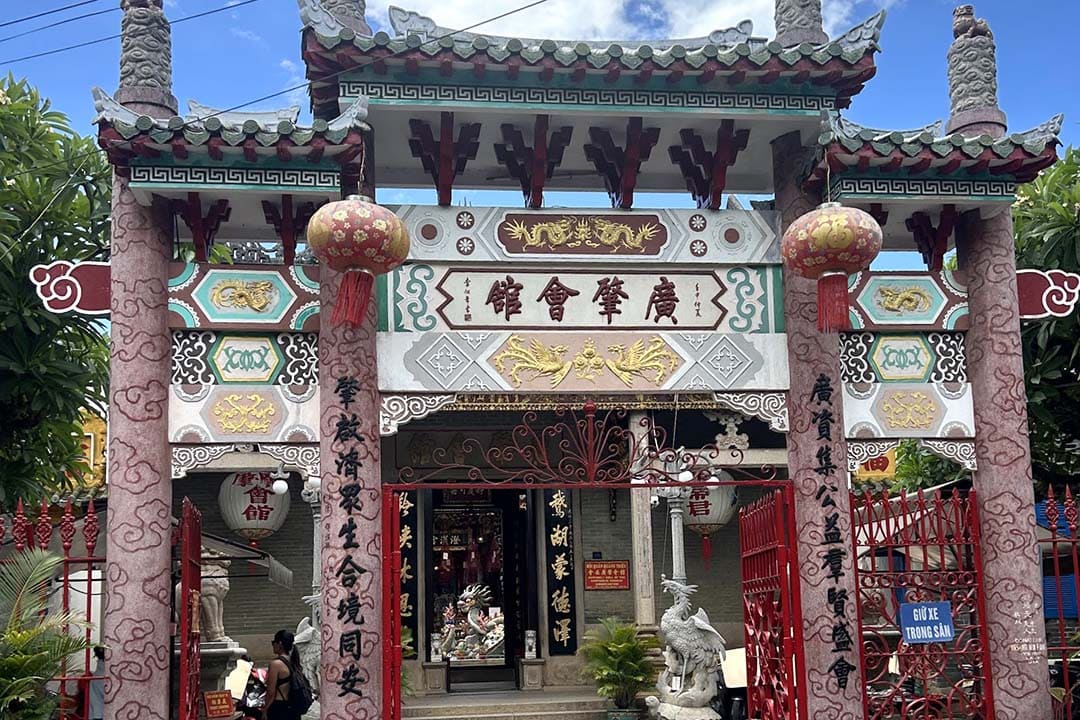
- Fujian Assembly Hall (Phuc Kien): Located just a few doors away, this is the largest and most visually striking assembly hall in Hoi An. It is famous for its elaborate entrance gates and detailed dragon-themed carvings.
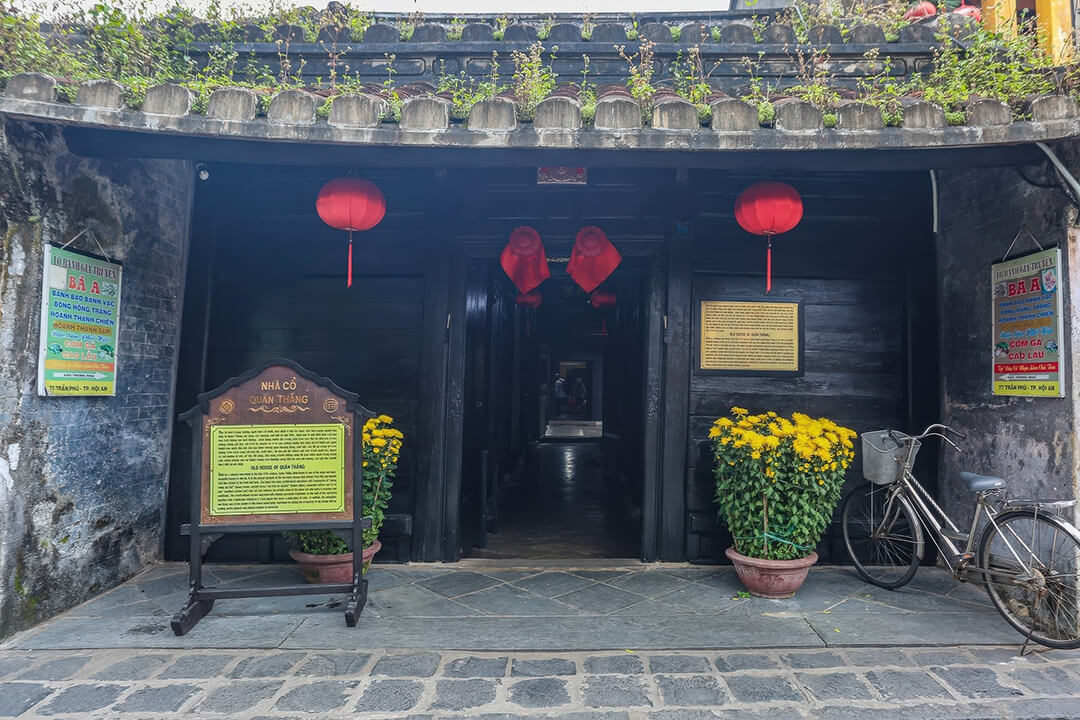
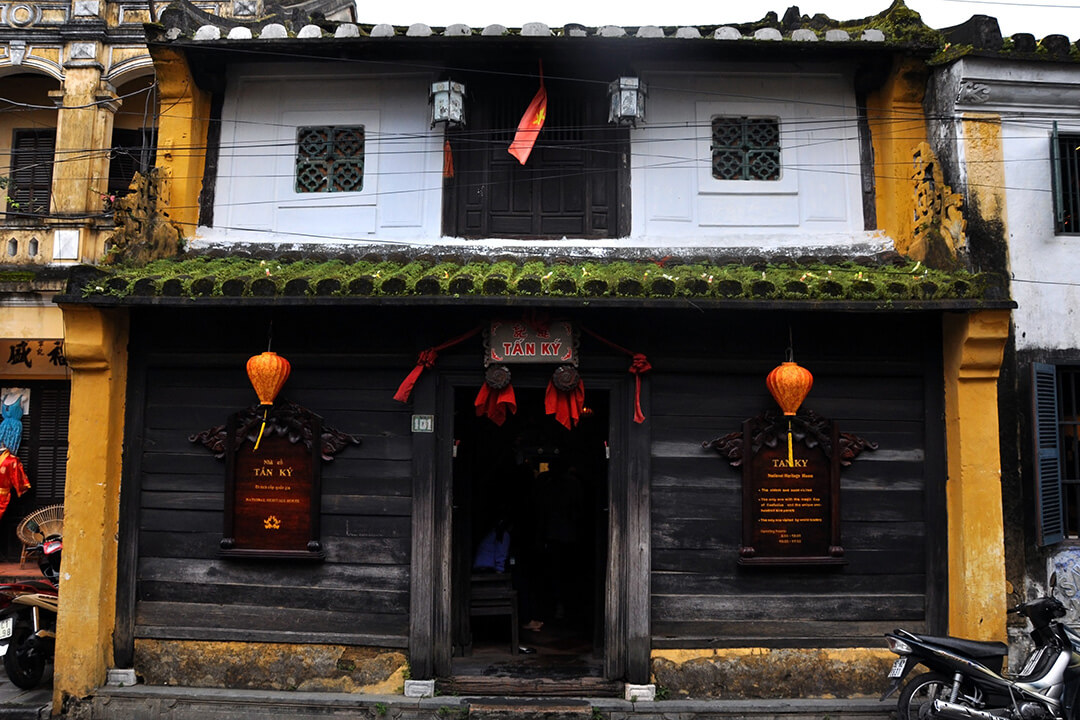
- Tan Ky Old House: This well-preserved 18th-century merchant house reflects the rich trading history of Hoi An. Its architecture blends Japanese, Chinese, and Vietnamese design elements.
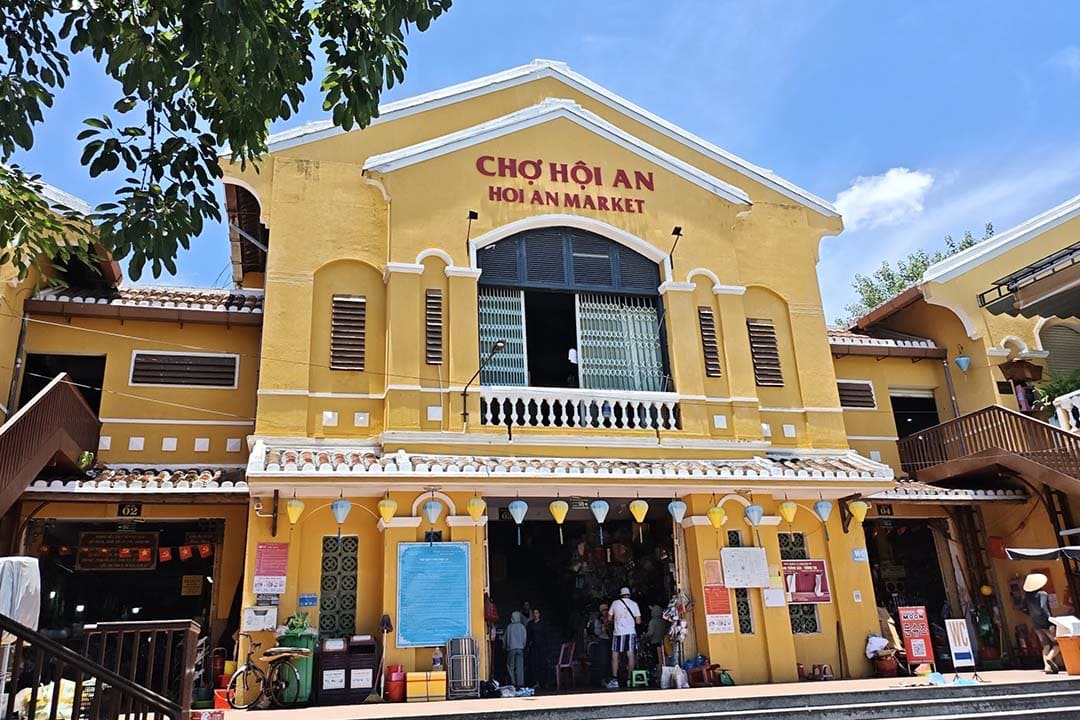
- Hoi An Central Market: This lively market is a vibrant center of daily life in Hoi An. You can explore traditional stalls, enjoy the colorful atmosphere, and sample local street food.
- Cantonese Assembly Hall: This historic hall is known for its vivid reliefs depicting scenes from Chinese mythology. It also features a striking dragon fountain crafted from pottery.
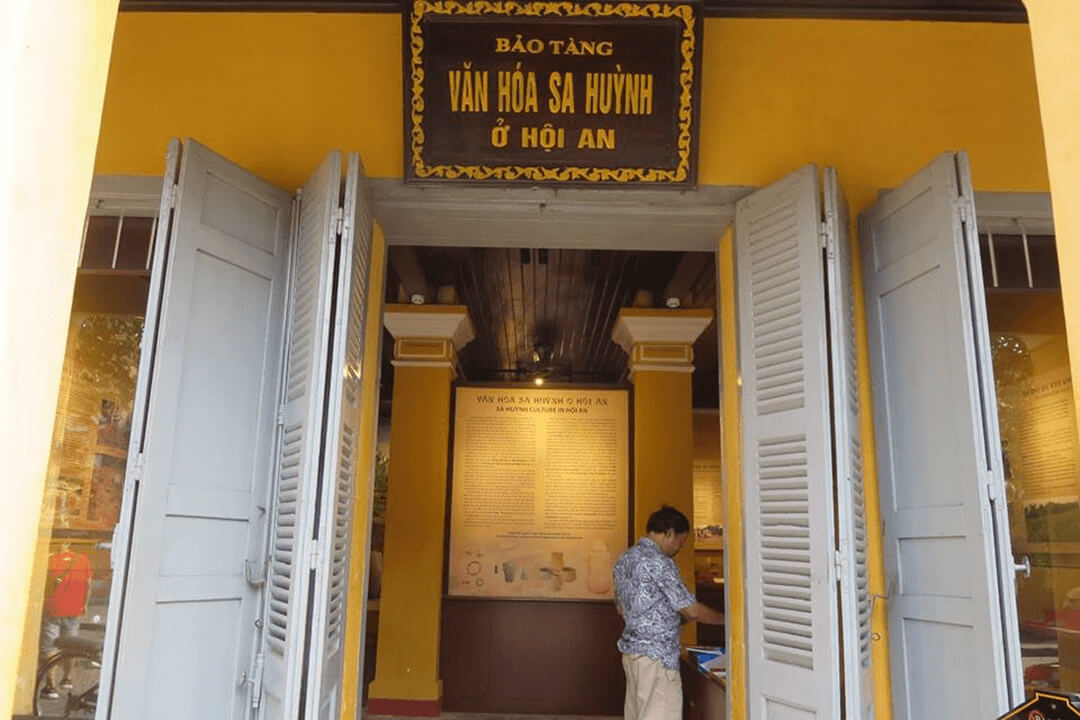
- Hoi An Museum of History and Culture: Housed inside an old pagoda, this museum presents the historical development of Hoi An. Its exhibits cover periods from the ancient Sa Huynh culture to the town’s prosperous trading port era.
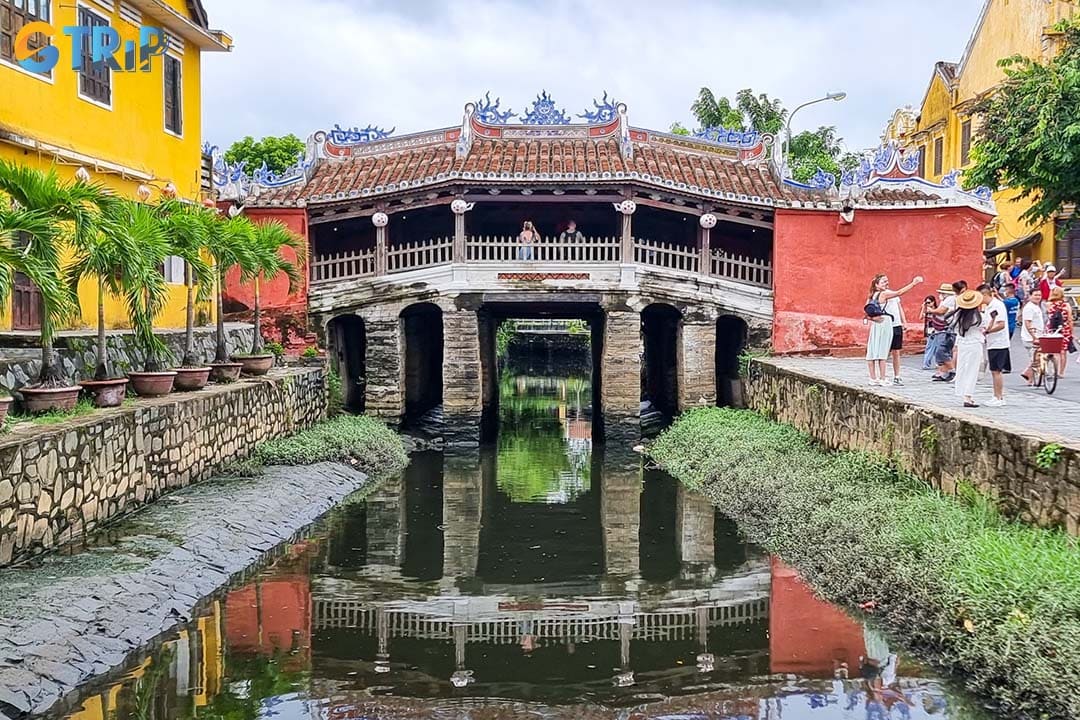
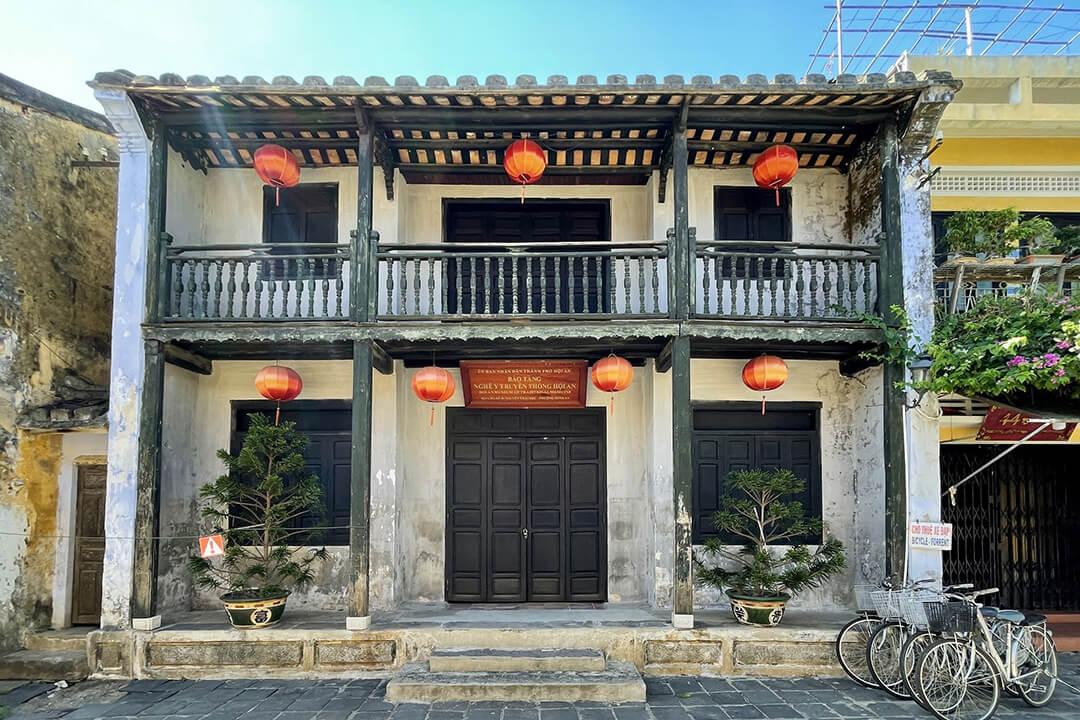
You can explore many famous nearby attractions in Hoi An
Travel tips for visiting the Trung Hoa Assembly Hall in Hoi An
To have a smooth and respectful visit to this historic site, it helps to keep a few things in mind. Since the assembly hall is both a sacred place of worship and a beautiful piece of heritage, a little preparation will help you enjoy the atmosphere to the fullest.
- Entry is free: Remember, there is no separate fee for this hall. It is a great value stop on your itinerary.
- Dress modestly: As this is a functioning temple, please wear clothing that covers your shoulders and knees. Avoid tank tops, short skirts, or see-through fabrics. If you are wearing shorts on a hot day, you can use a large scarf or sarong to wrap around yourself before entering.
- Respectful manners: Before entering the indoor worship areas, please remove your hat, sunglasses, and rain poncho. While photography is allowed and everyone is welcome, it is best to keep your voice low to respect those who are praying.
- Traditional style: Many visitors choose to wear the Vietnamese Ao Dai when visiting. It is a very respectful choice and looks wonderful against the bright blue walls of the hall.
- Prepare for the weather: Be sure to check the forecast before heading out, bring sunscreen, a hat, and plenty of water for the dry season (February to August), or carry a rain poncho and umbrella during the rainy season (September to January), keeping in mind that floods can occasionally occur between October and December.
- Comfortable footwear: Exploring the Old Town is best done on foot. Make sure to wear comfortable walking shoes or sandals, as you will likely be doing a lot of walking between the different historic sites.
- Bring cash: Many ticket booths and small shops in the area do not accept credit cards. It is always a good idea to carry some Vietnamese Dong (VND) for your tickets and small purchases.
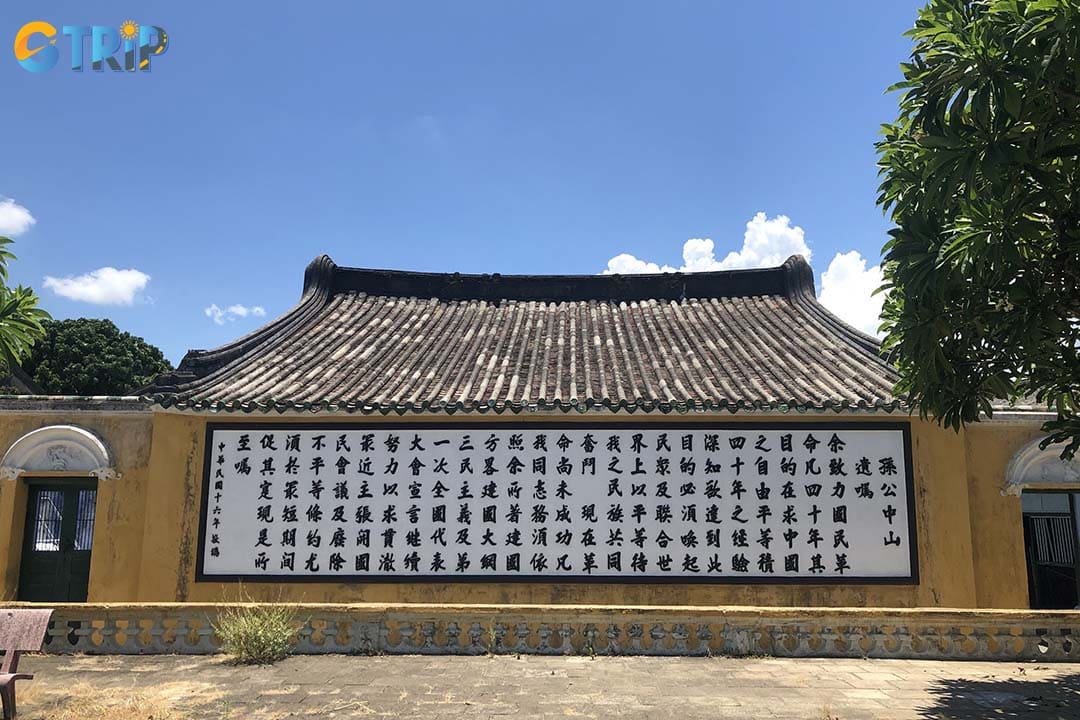
Remember practical tips to have a good trip to Trung Hoa Assembly Hall in Hoi An
The Trung Hoa Assembly Hall in Hoi An is more than just a beautiful building. It is a living monument to a time of cultural exchange and communal spirit. It tells the story of the first Chinese pioneers who braved the seas and found a new home, laying the groundwork for the vibrant, multicultural town we admire today. Its quiet courtyards and incense-filled halls offer a peaceful retreat and a profound connection to the past. With its profound history and tranquil beauty, the Trung Hoa Assembly Hall offers a unique glimpse into the soul of Hoi An. We hope this guide from GTrip helps you create unforgettable memories on your journey.