



Apr - 02 - 2026
Quan Cong Temple Hoi An is a vibrant crimson sanctuary nestled in the heart of the ancient town, a testament to centuries of spiritual devotion and cultural exchange. Better known to locals as Chua Ong or Ong Pagoda, this architectural gem is more than just a beautiful building. It's a living piece of history dedicated to a legendary Chinese general. It stands as a powerful symbol of loyalty, integrity, and justice, values that have resonated with the people of Hoi An for generations. The temple offers a profound glimpse into the spiritual soul of this UNESCO World Heritage site. In this comprehensive guide, GTrip will walk you through everything you need to know to make your visit unforgettable.
Overview of the Quan Cong Temple Hoi An
The Quan Cong Temple Hoi An, or Ong Pagoda, is one of the most culturally significant spiritual sites within Hoi An Ancient Town. Constructed in the 17th century, it is dedicated to the esteemed Chinese General Quan Cong (Quan Van Truong), a historical figure revered for his unwavering loyalty, righteousness, and martial prowess. For the local community, especially those with Chinese heritage, the temple is not just a relic of the past but an active place of worship. Residents and business owners frequently visit to pray for success, safety, and justice, making it a vital and vibrant hub of spiritual and cultural life in Hoi An.
Where is Quan Cong Temple Hoi An?
Address: No. 24 Tran Phu Street, Hoi An Ancient Town, Hoi An Ward (formerly Minh An Ward, Hoi An City, Quang Nam Province), Da Nang City
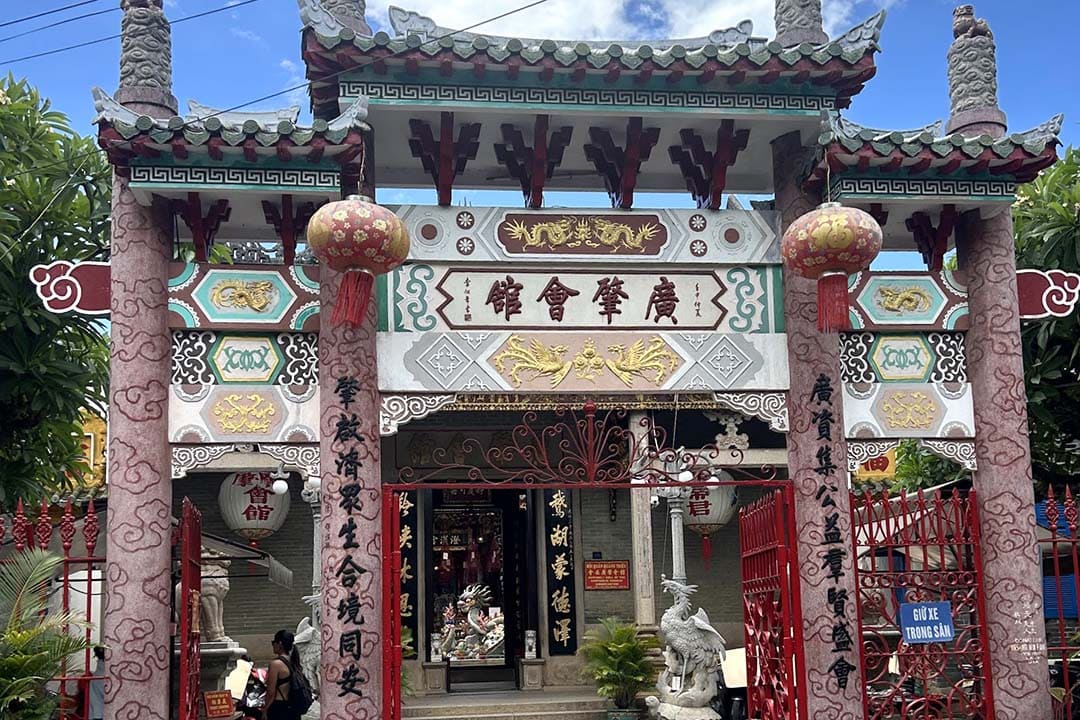
Quan Cong Temple is conveniently located right in the center of Hoi An Ancient Town, making it an easy spot to include in any walking tour of the area. You will find its striking red facade and ornate roof on the bustling Tran Phu Street, surrounded by yellow-walled shophouses and other historic attractions. Its central position means it's just a short stroll from other key landmarks like the Japanese Covered Bridge and the Fujian Assembly Hall.
Opening hours and ticket prices
To visit the Quan Cong Temple, you will need to purchase the Hoi An Old Town combo ticket. This ticket is the standard entry pass for the heritage area and allows you to choose five sites to visit from a list of over 20 attractions, including ancient houses, assembly halls, museums, and temples. The Quan Cong Temple is one of these premier sites. You can purchase the ticket at official booths located at the main entrances to the Ancient Town.
- Opening hours: 7:00 AM - 6:00 PM daily
- Ticket prices: The site is visited using the Hoi An Old Town combo ticket, which costs 120,000 VND for foreign adults. This ticket grants access to 5 attractions.
Best time to visit Quan Cong Temple Hoi An
The best time of day to visit Quan Cong Temple is early in the morning, right after it opens at 7:00 AM. This allows you to experience the serene atmosphere before the midday heat and the arrival of large tour groups. For the best weather, plan your trip during Hoi An’s dry season, which typically runs from February to August. If you want to witness the temple at its most vibrant, visit during the full moon of each lunar month or during a festival day. This is when the air is thick with incense and the halls are filled with local worshippers.
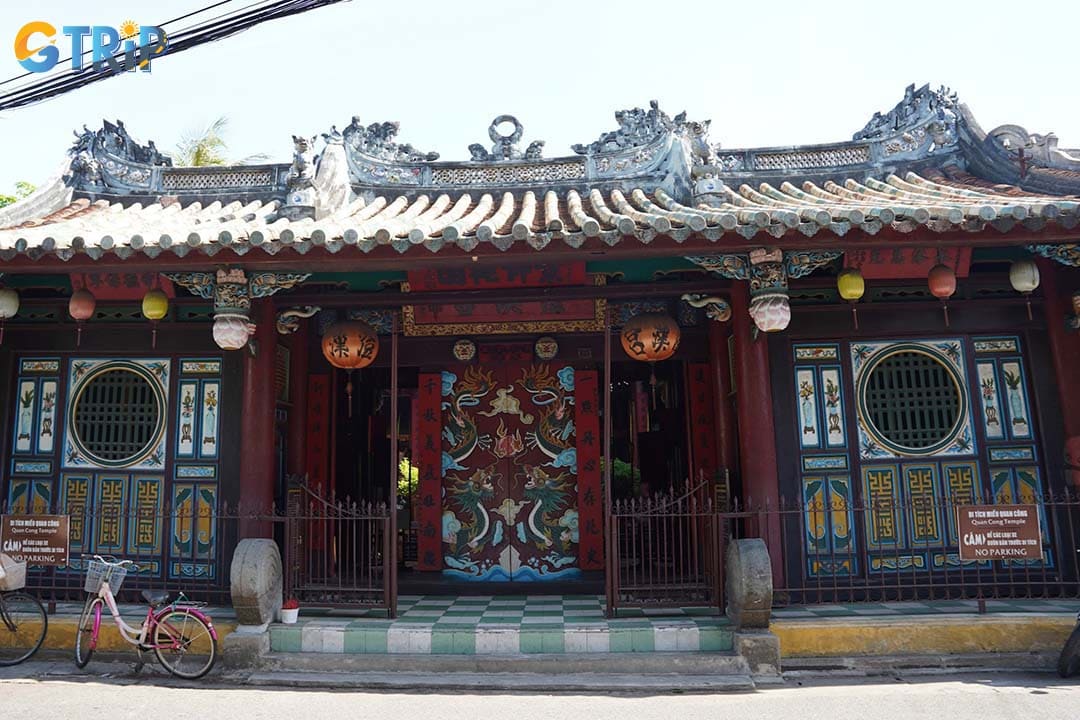
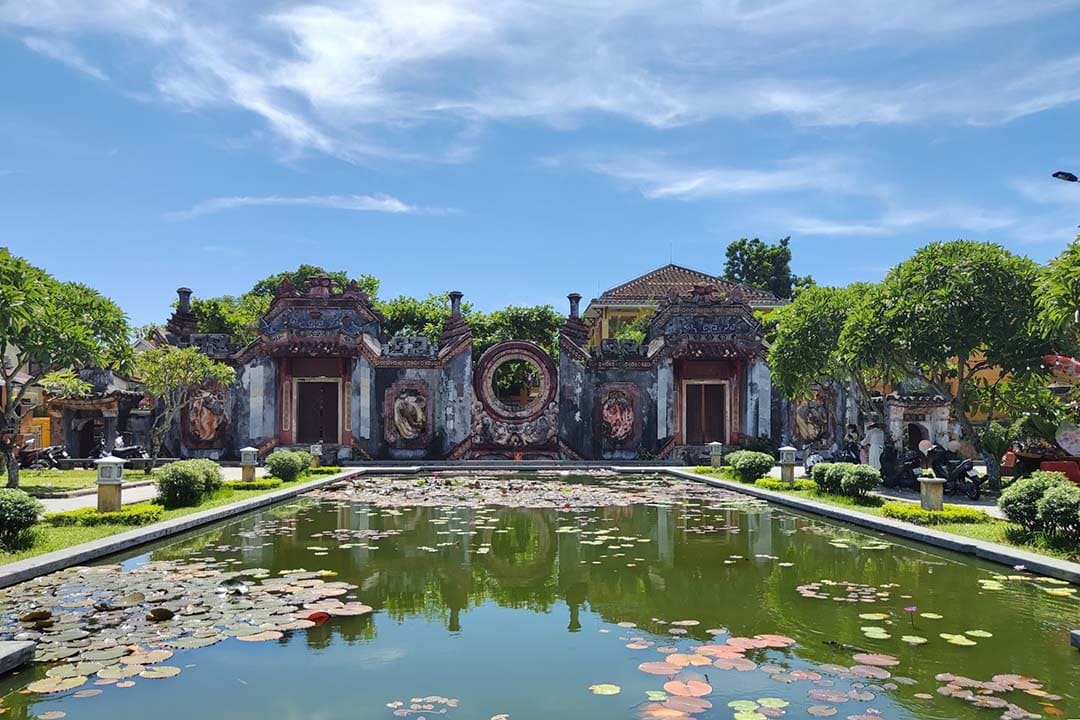
Quan Cong Temple, located in the center of Hoi An, is one of the most culturally significant spiritual sites
What makes the Quan Cong Temple Hoi An unique?
Quan Cong Temple stands out as a spiritual anchor and an architectural masterpiece that defines the heritage of Hoi An. Unlike other clan-based assembly halls, this temple serves as a universal sanctuary where merchants historically gathered to swear oaths of integrity, making it the ultimate symbol of business trust in the ancient port.
- Exclusive dragon door eyes: It features the town's only dragon-faced "door eyes", a unique protective symbol not found in any other local heritage site.
- Vast document collection: The temple preserves 15 ancient stone steles, the largest collection in Hoi An, providing a rich written history of the town.
- Artistic mastery: Every pillar and beam showcases the peak of Kim Bong carpentry, complemented by life-sized statues of the legendary "Red hare" horse.
History of the Quan Cong Temple
The history of Quan Cong Temple (also known as Ong Pagoda) is closely linked to the development of the Chinese community in Hoi An. More than just a place of worship, it is a symbol of bravery, loyalty, and business integrity.
- Before 1653: Quan Cong Temple was officially built by Chinese settlers in Hoi An as a spiritual sanctuary.
- 1753: The oldest stone stele was carved, recording a major renovation and confirming that the temple was already over 100 years old at that time.
- 1753 - 1966: The temple underwent six major renovations (in 1753, 1783, 1827, 1864, 1904, and 1966) while successfully maintaining its original architectural soul.
- Present: It is recognized as a National Historic and Cultural Site and has become an iconic cultural destination that you shouldn't miss when visiting the Ancient Town.
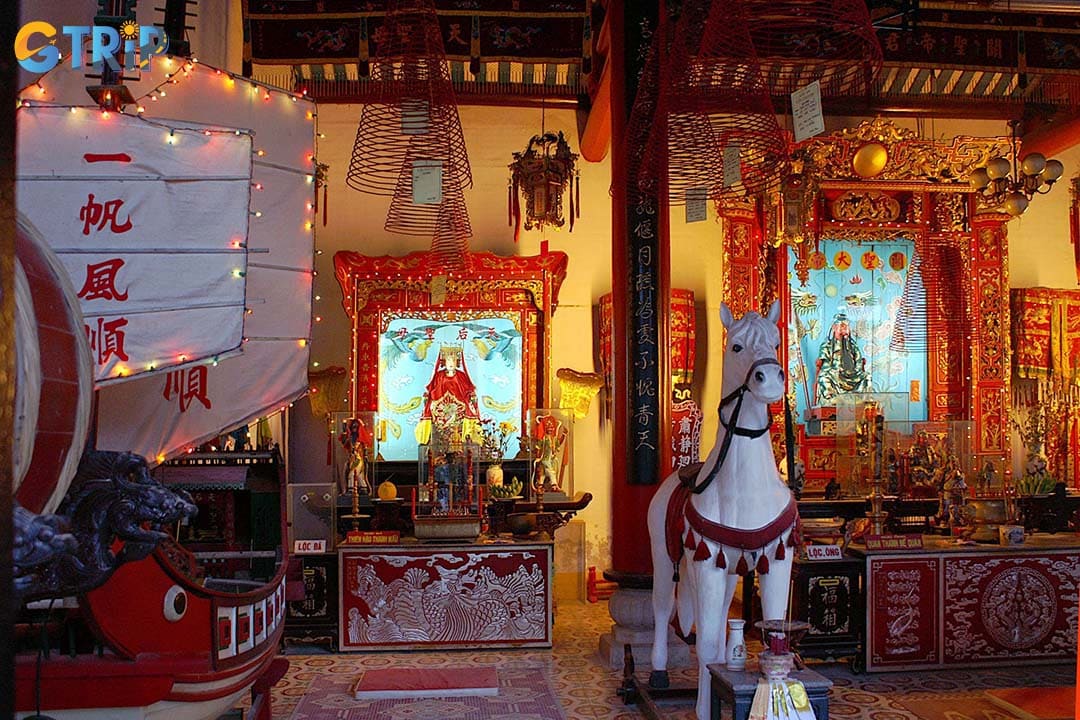
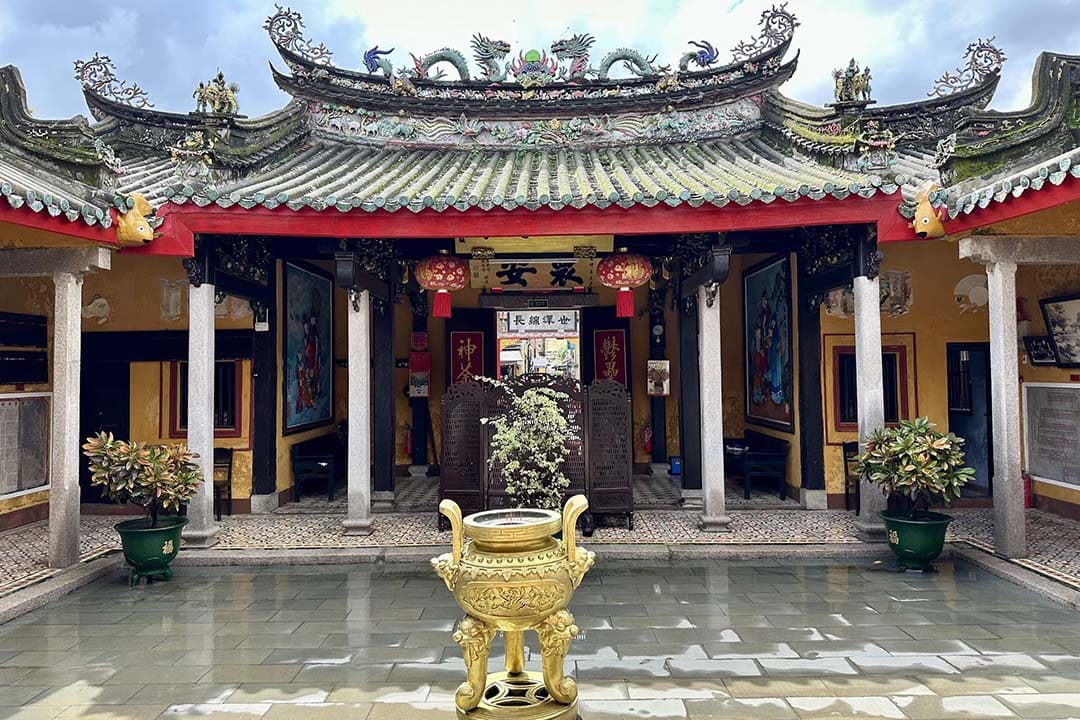
The history of Quan Cong Temple Hoi An starts from the 17th century
Architecture of the Quan Cong Temple
The temple’s architecture is a masterful blend of Chinese craftsmanship and local identity, creating a space that is both vibrant and deeply respectful in every detail.
Exterior & the symbolic gate
The temple faces the Thu Bon River with a colorful facade. The most unique highlight is the pair of "door eyes" shaped like dragon faces. This is the only place in Hoi An where you will find this specific style among over 20 different types of door eyes, designed to ward off evil spirits. The main gate, featuring a painting of "Two dragons fighting for a pearl" amid blue clouds, is a favorite photo spot for many travelers.
Front hall
Stepping through the gate, you will enter the front hall, which features a "skywell" (an open-air courtyard) that brings in natural light and a goldfish pond that creates a sense of peace. This area displays ancient horizontal lacquered boards, vertical couplets, and intricate wood carvings created by master artisans of the past.
Main sanctuary
This is the most sacred area, housing the majestic statue of General Quan Cong. He is depicted with his iconic red face, bright eyes, and a dragon-embroidered robe. Beside him are statues of his adopted son, Quan Ping (white face), and his loyal protector, Zhou Cang (black face). In front of the altar stand two life-sized statues of the legendary "Red Hare" and a white horse, both famous for accompanying the General into battle.
Side sections
The corridors on both sides hold a massive amount of historical data, including 15 ancient stone steles, the largest collection found in any Hoi An monument. This area also displays precious artifacts, royal certificates, and ancient bronze bells, helping visitors understand the temple's long history of development and restoration.
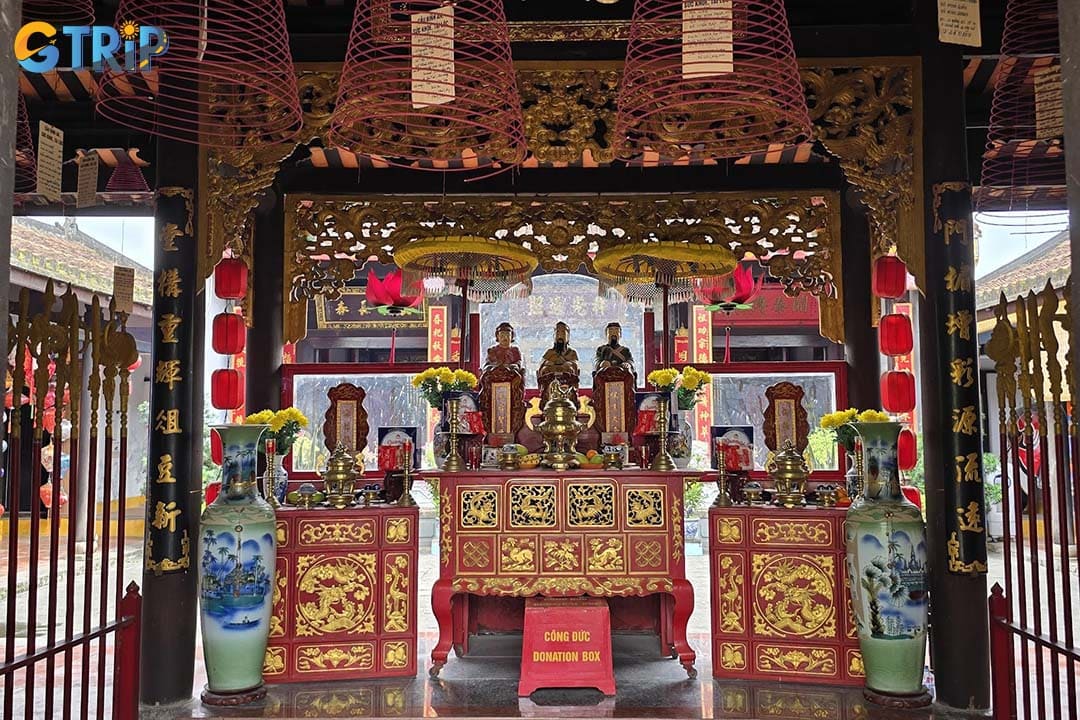
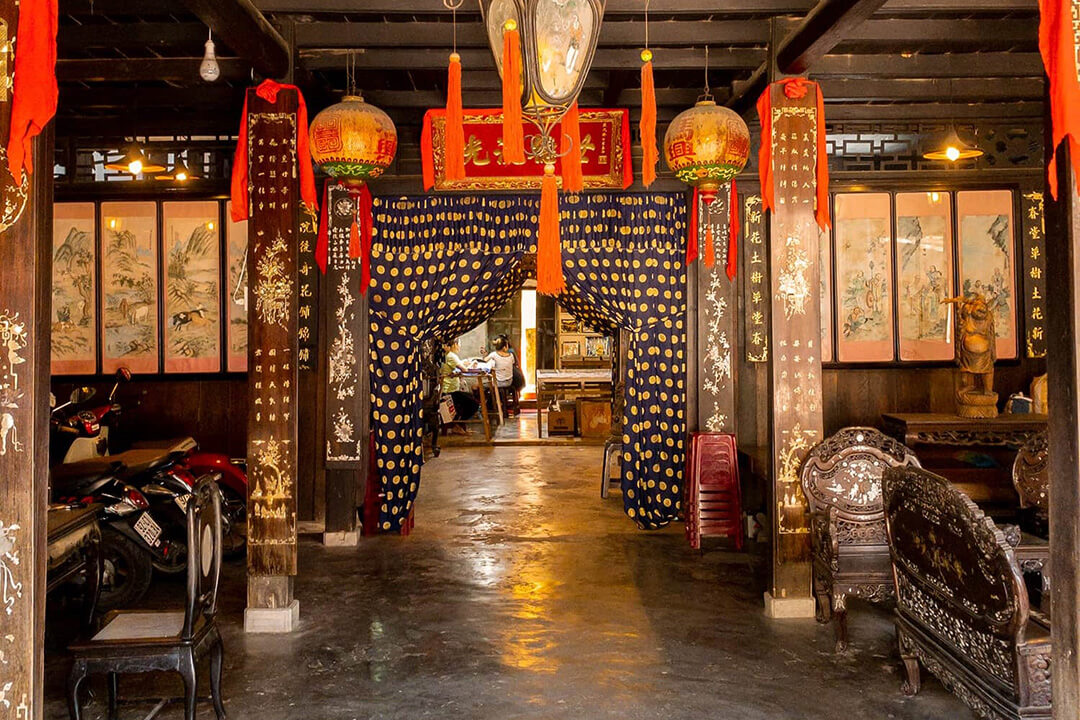
The Quan Cong Temple’s architecture is a masterful blend of Chinese craftsmanship and local identity
Things to do at Quan Cong Temple in Hoi An
Visiting Quan Cong Temple Hoi An (Ong Pagoda) is more than a quick sightseeing stop. It’s a chance to step into a world of ancient legends, spiritual traditions, and cultural symbols that have shaped Hoi An for centuries.
1. Pray for success and integrity
For centuries, Ong Pagoda has been an important spiritual sanctuary for merchants and traders. Many visitors come here to light incense and pray at the main altar, asking for success and prosperity. Business owners often seek blessings for smooth partnerships and good fortune while honoring the spirit of honesty in trade. Even if you are not involved in business, the quiet space filled with the scent of incense offers a peaceful moment for reflection and personal wishes for strength and balance in life.
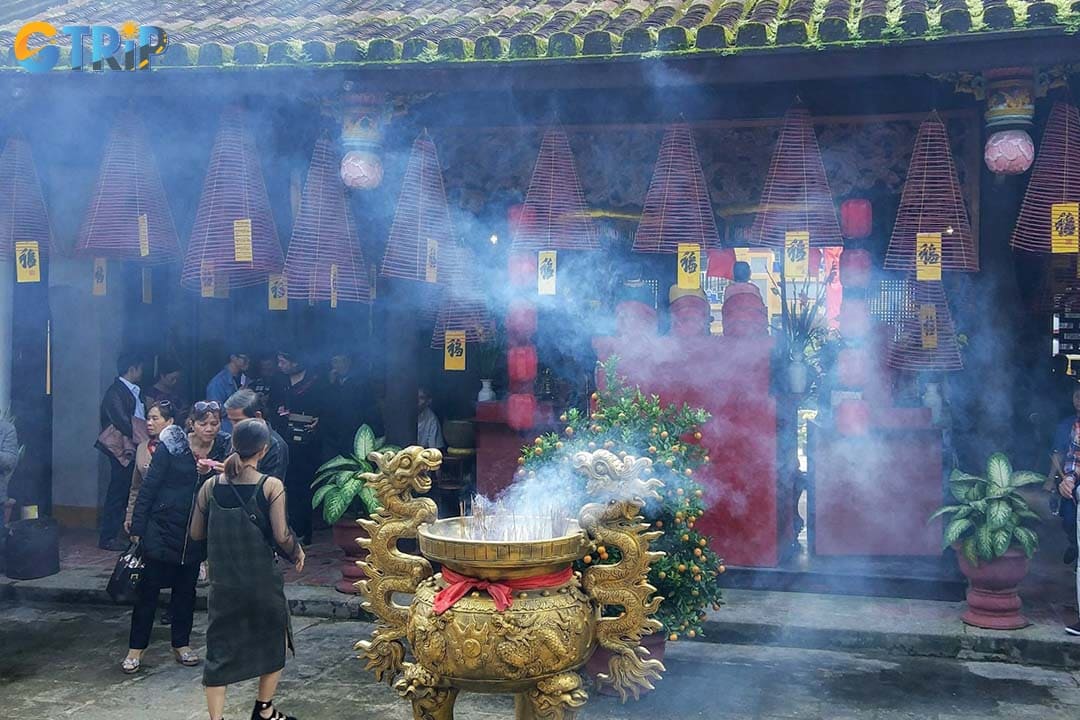
Quan Cong Temple is an important spiritual sanctuary for merchants and traders
2. Discover the unique dragon “door eyes”
Hoi An is famous for its traditional “door eyes”, but the pair at this temple is truly special. Before entering, take a moment to look closely at this symbolic feature on the main gate.
- A rare design: While most buildings in Hoi An have simple octagonal door eyes, this temple features a striking pair carved in the shape of a dragon’s face.
- Spiritual protection: According to local beliefs, these “eyes” guard the temple, warding off negative energy and protecting the sacred space inside.
3. See the legendary red hare horse
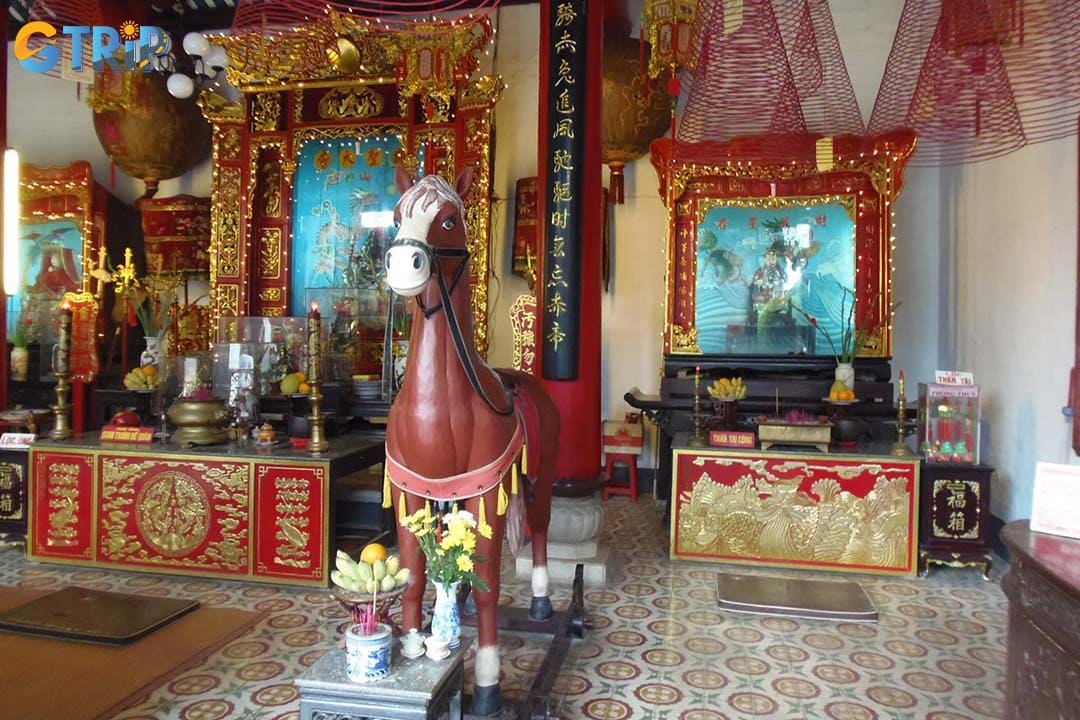
Inside the courtyard, you’ll find life-sized statues of the famous war horses associated with Quan Cong, bringing stories from the classic novel Romance of the Three Kingdoms to life.
- Red hare horse: The legendary red horse known for its incredible speed and absolute loyalty to its master.
- Loyal guardians: Look for the statues of Zhou Cang, with his distinctive dark face, and Guan Ping, standing respectfully beside the altar. They represent loyalty and devotion to their lord.
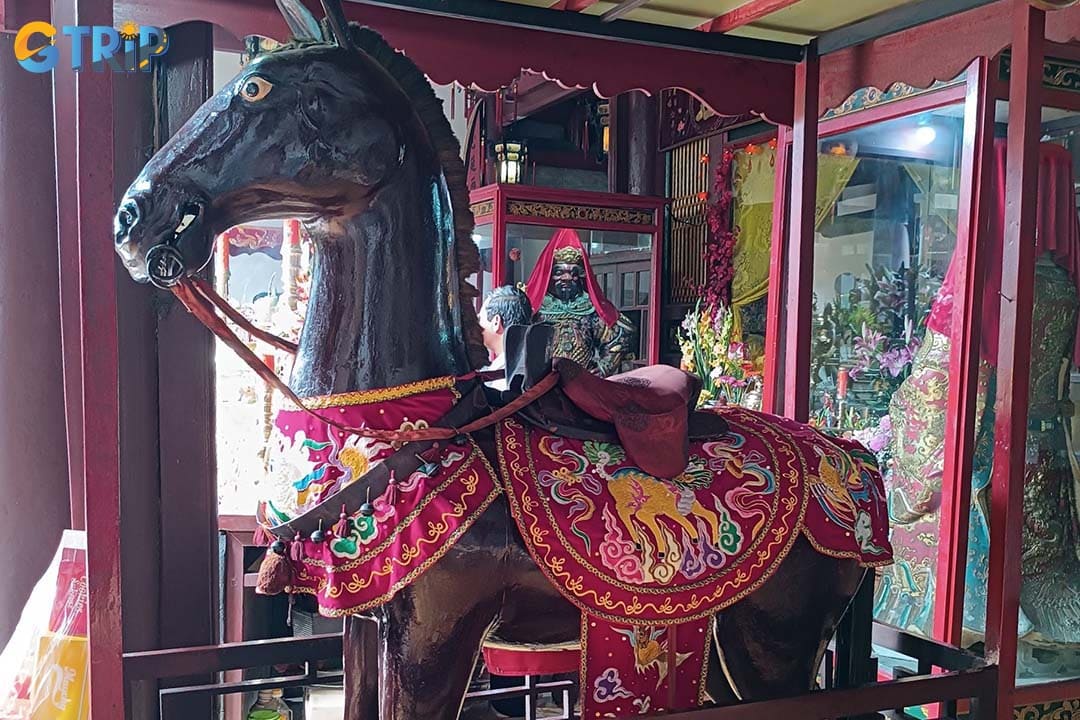
You can find the life-sized statue of the red hare horse inside the courtyard
4. Take photos at a photogenic heritage site
With its vibrant colors and aged textures, Ong Pagoda is also one of the most photogenic spots in Hoi An’s Ancient Town. The bright yellow exterior walls create a classic backdrop that reflects the town’s iconic style. Inside, sunlight streams through the open courtyard, lighting up the koi pond and highlighting the intricate wooden carvings throughout the temple. For an even more memorable photo, many visitors choose to wear a traditional ao dai, which adds an elegant and timeless touch to the setting.
5. Experience the vibrant Quan Cong Festival
If your visit falls on the 24th day of the sixth lunar month, you may witness the most important celebration of the year at the temple.
- Traditional rituals: Watch members of the local Chinese community perform ceremonial offerings, read ancient prayers, and present traditional gifts to honor Quan Cong.
- Lion dances and festivities: The festival often includes lively lion dances and music, turning the usually quiet temple into a colorful and energetic celebration.
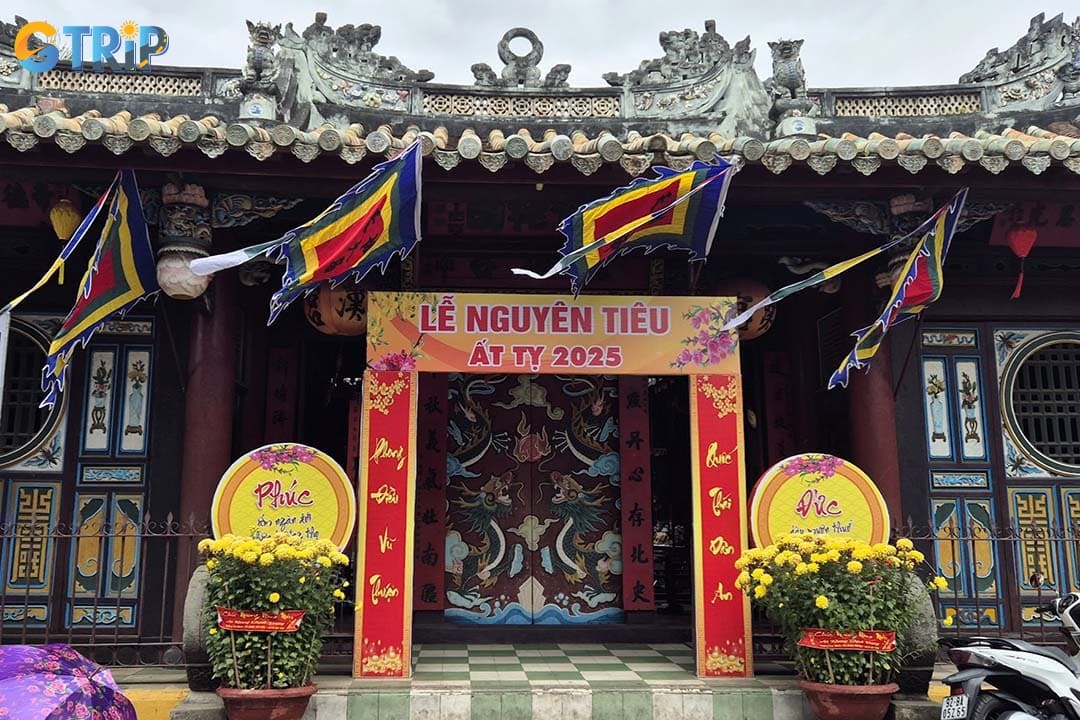
Visitors can experience Quan Cong Festival on the 24th day of the sixth lunar month and other festivals at Quan Cong Temple
How to get to Quan Cong Temple in Hoi An?
Getting to the temple is very convenient as it is located at 24 Tran Phu Street, the main road of Hoi An Ancient Town.
From Da Nang International Airport
The journey from Da Nang Airport to the temple offers a beautiful view of the Vo Nguyen Giap coastal road. You will feel the transition from a modern city to the peaceful, ancient space of Hoi An.
- Distance: 30 km.
- Travel time: 45 - 60 minutes.
- Routes: Vo Nguyen Giap -> Truong Sa -> Lac Long Quan -> Hai Ba Trung -> Tran Phu.
- Optimal option: A taxi or private transfer is the most comfortable way to avoid the heat and keep your luggage safe.
From Da Nang City center
From the center of Da Nang, you can easily reach the temple via the main roads connecting the two cities. The route is very straightforward and easy to find.
- Distance: 28 km.
- Travel time: 40 - 50 minutes.
- Routes: Dragon Bridge -> Le Van Hien -> DT607 -> Ly Thuong Kiet -> Tran Phu.
- Optimal option: Rent a motorbike for a flexible trip, or book a car via the Grab app to know the fare in advance.
From around Hoi An Ancient Town
The temple is very close to other famous landmarks like the Japanese Covered Bridge and Hoi An Market, making it easy to combine your sightseeing.
- Distance: Less than 1 km from most central points.
- Travel time: 5 - 10 minutes walking.
- Routes: Walk along Tran Phu Street toward the Hoi An Market.
- Optimal option: Walking or cycling is the best way to enjoy the quiet, smoke-free environment of the Ancient Town.
Transportation options
Depending on your needs, you can choose from various flexible ways to visit:
- Bicycle: A favorite for tourists, perfect for exploring small alleys and seeing the town at a slow pace.
- Walking: The best way to explore the connected heritage sites around the temple.
- Cyclo (Rickshaw): A charming, leisurely way to see the sights of the Old Town.
- Electric shuttle (E-taxi): Ideal for families. It’s breezy and eco-friendly.
- Ride-hailing/Taxi: Convenient if you are staying at a beach resort or need a quick ride at night.
- Motorbike rental: A popular option for independent travelers wanting to explore Hoi An and its surrounding countryside.
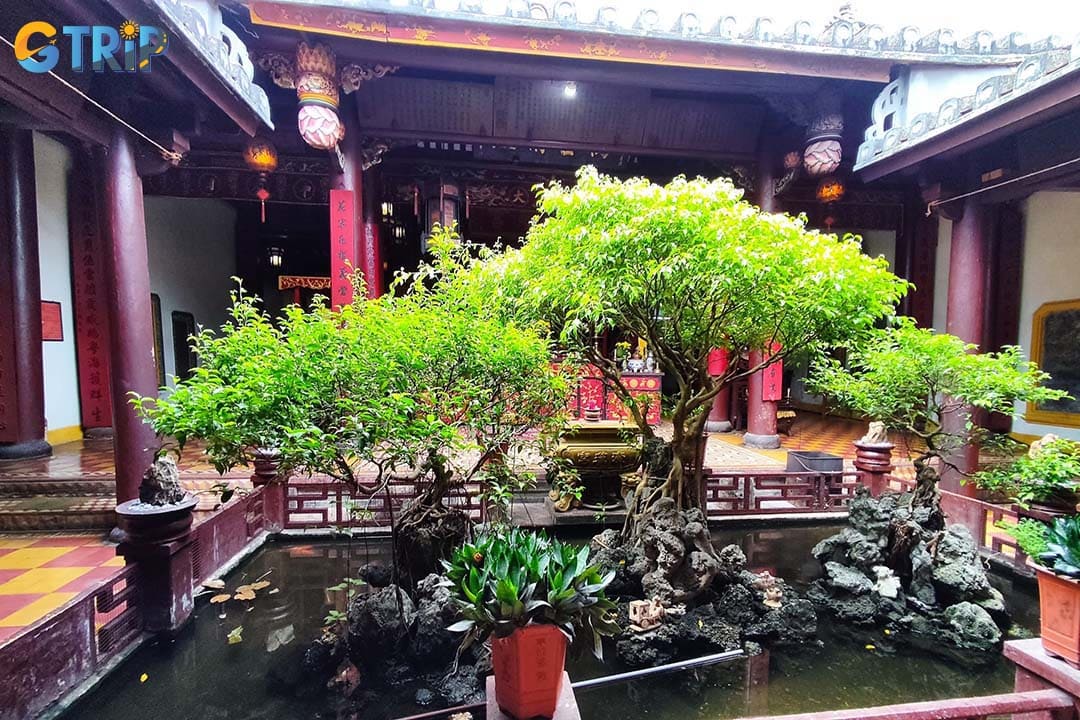
As Quan Cong Temple is located on the main road in Hoi An, it’s easy to get there
Nearby attractions to the Quan Cong Temple Hoi An
Because of its central location, Quan Cong Temple is the perfect starting point for exploring other major attractions in Hoi An Ancient Town, just a few minutes' walk away.
- Japanese Covered Bridge: The Japanese Covered Bridge is one of the most recognizable landmarks in Hoi An and dates back to the late 16th century, when it was built by the Japanese community living in the town. The wooden bridge features a small temple dedicated to the Taoist deity Tran Vo Bac De, making it both an architectural icon and a spiritual symbol of the city.
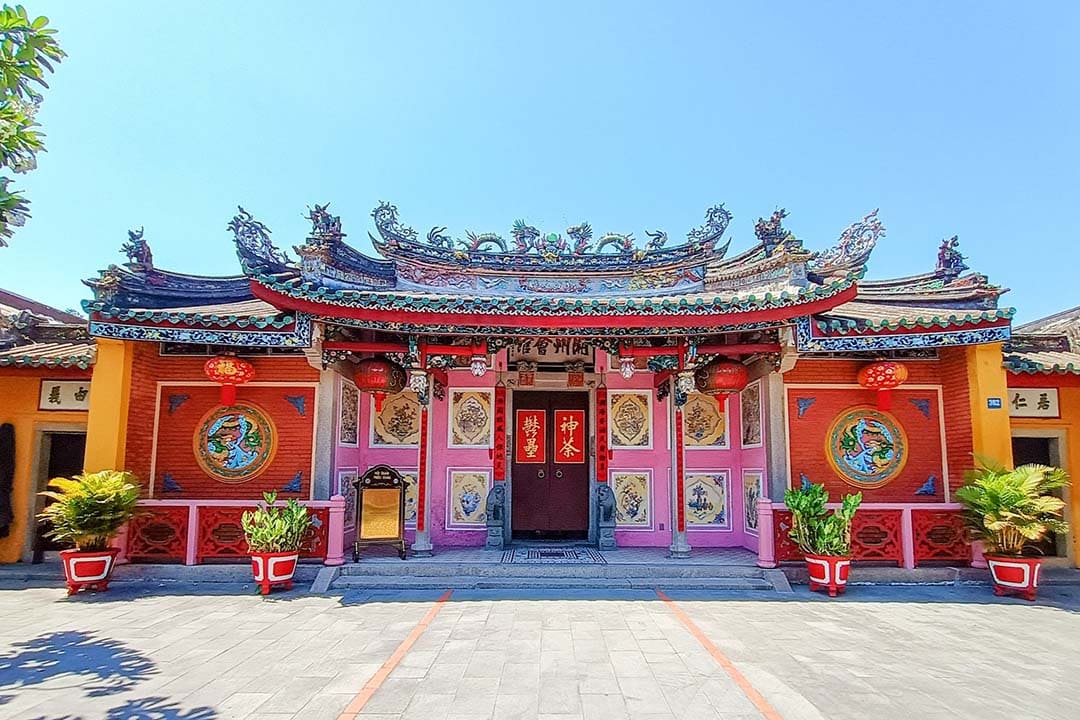
- Fujian Assembly Hall (Phuc Kien): The Fujian Assembly Hall is considered one of the most magnificent assembly halls in Hoi An, famous for its ornate entrance gate, colorful decorations, and impressive courtyard. Originally built by Chinese merchants from Fujian province, the hall was used for community gatherings and worship, especially honoring the sea goddess Thien Hau.
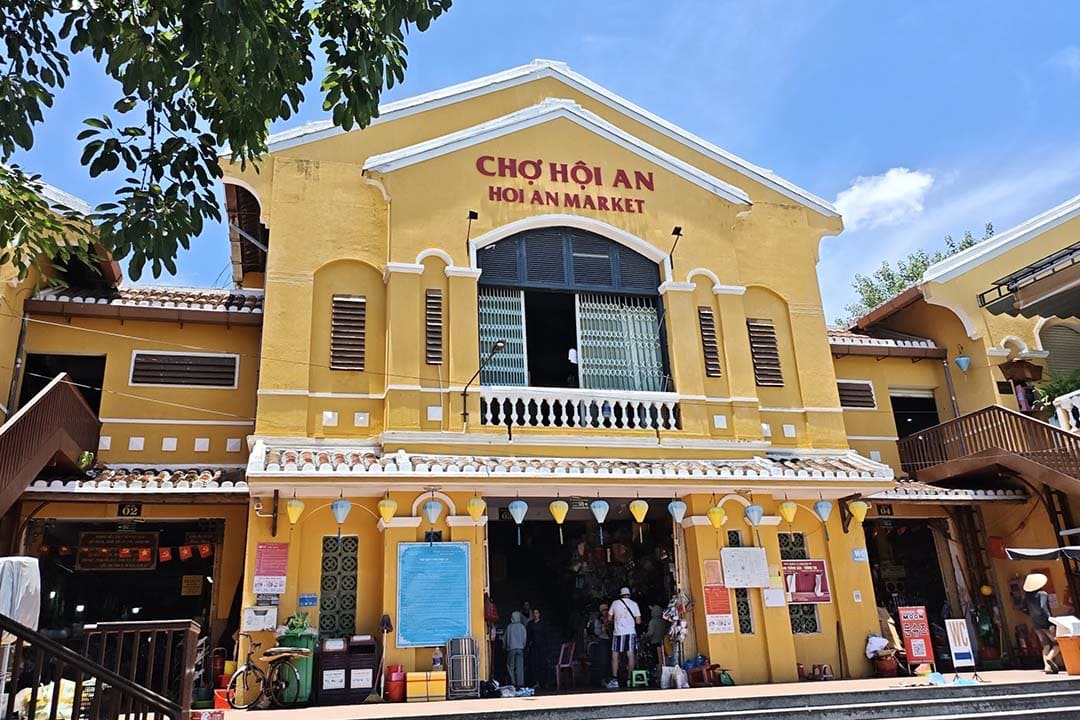
- Hoi An Central Market: Hoi An Central Market is a lively marketplace located along the banks of the Thu Bon River, where locals gather daily to trade fresh produce, seafood, spices, and handmade goods. The market is also a fantastic place to experience authentic Vietnamese street food, with many stalls serving local specialties such as cao lau and banh mi.
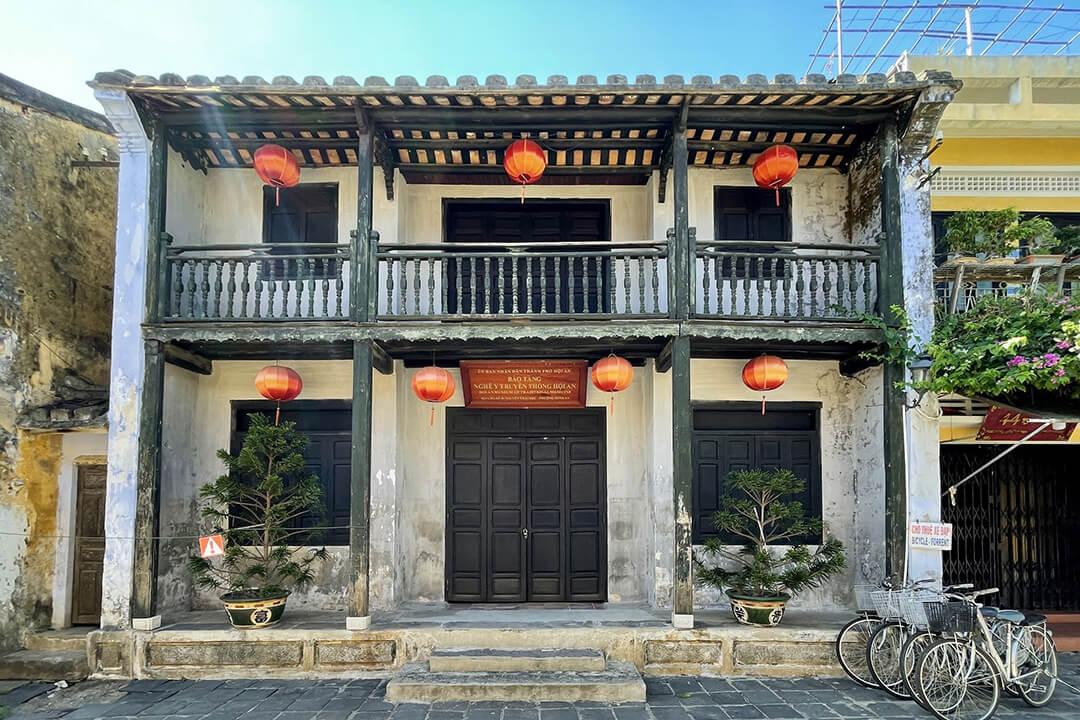
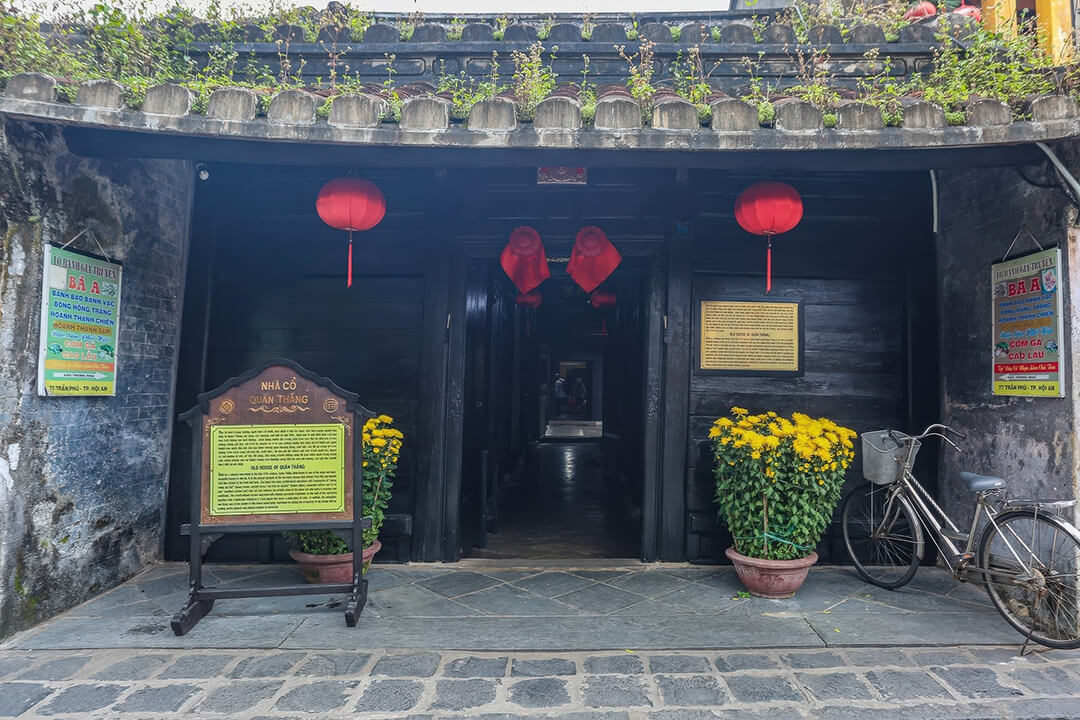
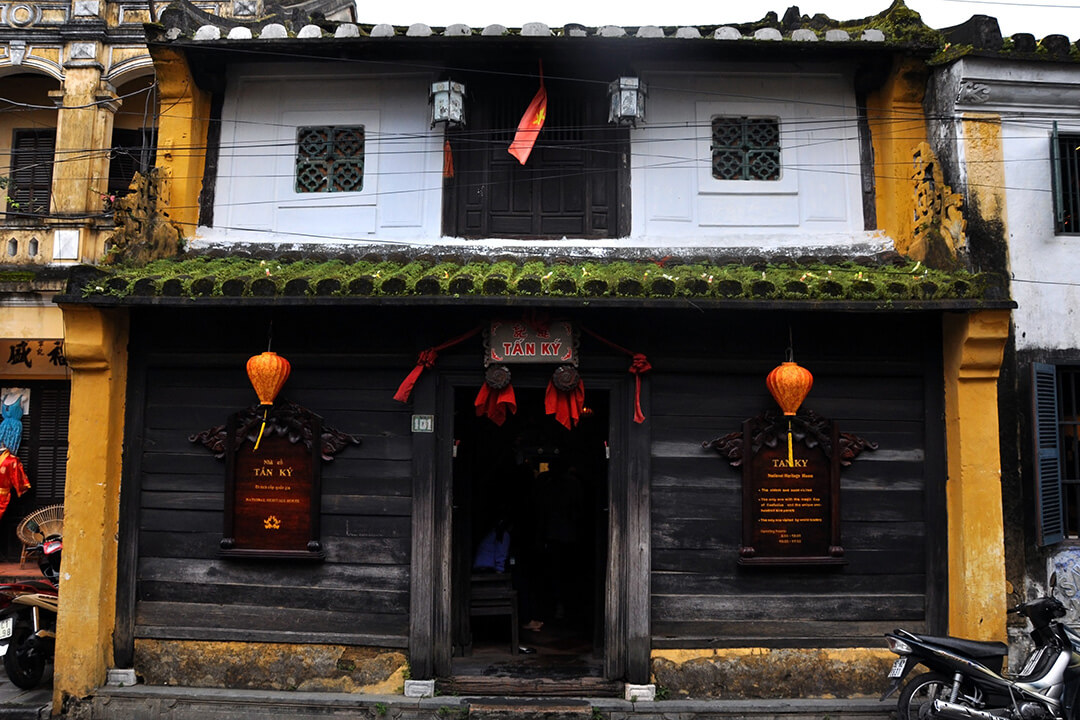
- Tan Ky Old House: Tan Ky Old House is one of the best-preserved merchant houses in Hoi An, offering a glimpse into the prosperous trading era of the 18th century. The house beautifully combines Vietnamese, Chinese, and Japanese architectural elements, reflecting the multicultural influences that shaped Hoi An’s history.
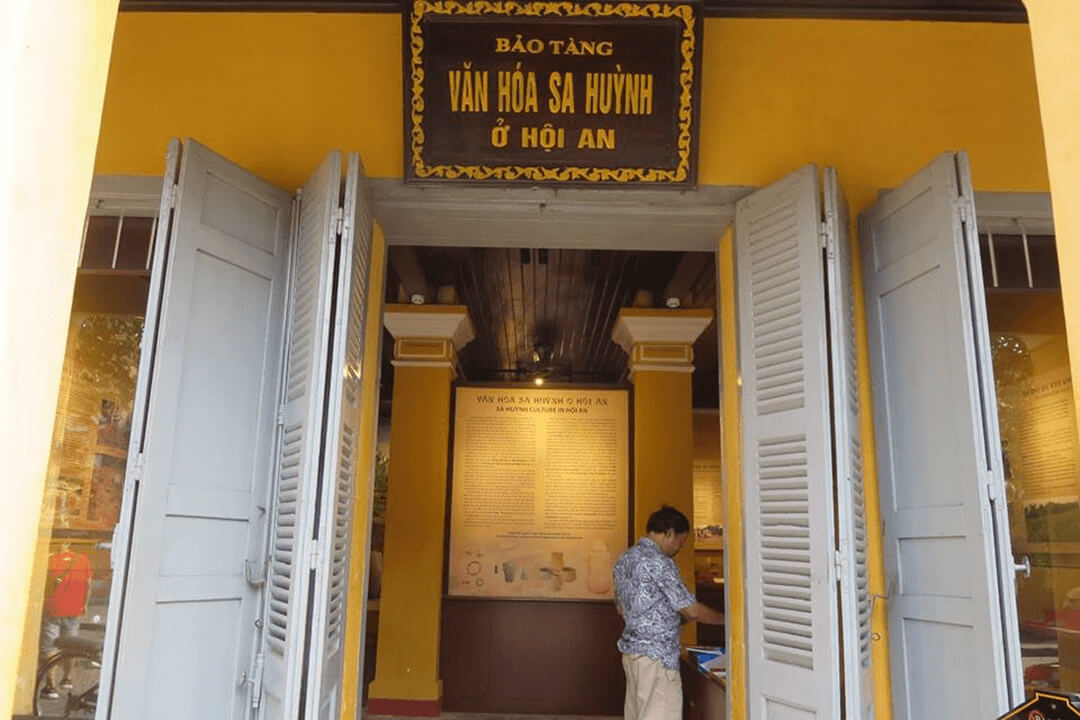
- Museum of Sa Huynh Culture: The Museum of Sa Huynh Culture displays an impressive collection of archaeological artifacts that belonged to the ancient Sa Huynh civilization. These exhibits reveal fascinating details about the earliest known inhabitants of the Hoi An region, whose culture flourished more than 2,000 years ago.
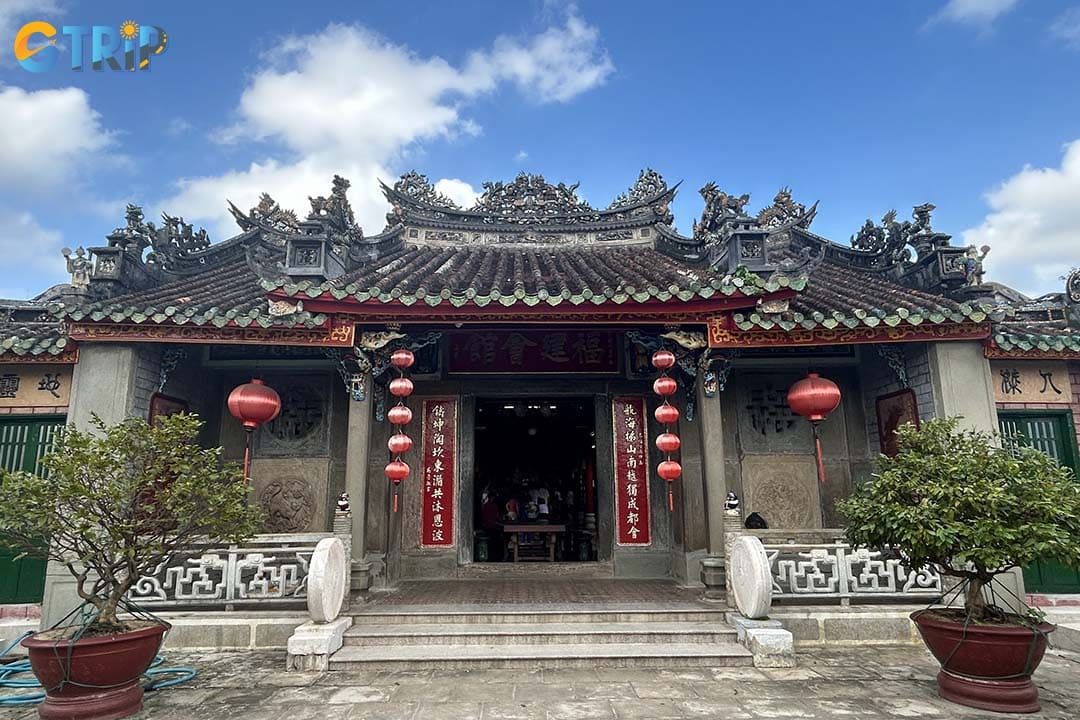
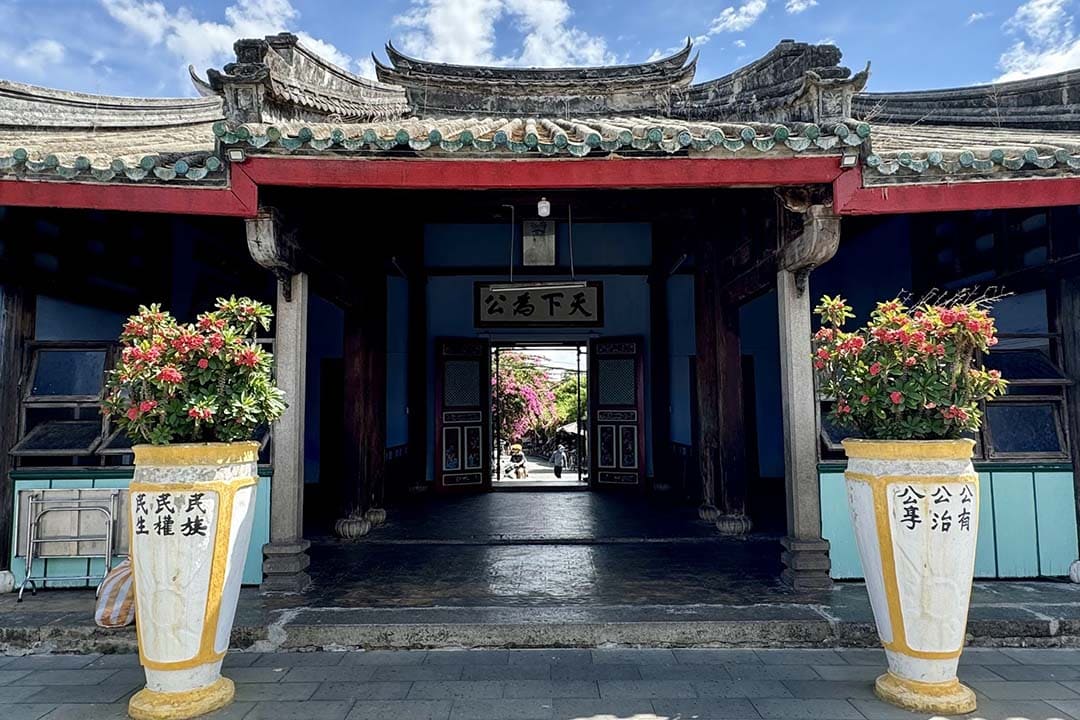
There are some nearby assembly halls that you can visit after exploring the temple
Practical tips for visitors
To ensure your visit is smooth and respectful, please keep these practical tips in mind:
- Entrance ticket: You need to buy a Hoi An Ancient Town ticket (120,000 VND for 5 sites) to enter the temple. The nearest ticket booth is at the Tran Phu - Le Loi intersection.
- Proper attire: As this is a sacred place, please wear respectful clothing that covers your shoulders and knees. Wearing an Ao Dai is a great idea for beautiful souvenir photos.
- Traditional entrance: According to custom, you should enter through the two side gates and avoid using the middle gate (which is reserved for deities and VIPs).
- Maintain solemnity: Avoid laughing too loudly, do not smoke or chew gum, and never touch the statues or ancient spirit tablets.
- Prepare cash: Many ticket booths and small souvenir shops around the temple do not accept card payments, so it is best to carry some cash.
- Best time to visit: Early morning (around 8:00 AM) is when the temple is most peaceful and the natural light through the skywell is best for photos.
- Weather note: If visiting during the rainy season (October - December), check the weather forecast frequently, as the Ancient Town can flood deeply.
Remember the practical tips to have a good trip to Quan Cong Temple
Quan Cong Temple Hoi An is far more than just another historical landmark. It's a bridge to the past and a window into the spiritual heart of this enchanting town. Its majestic architecture tells stories of maritime trade and cultural fusion, while its sacred altars continue to offer solace and hope to the community today. Standing inside, with the scent of incense in the air and centuries of history surrounding you, you gain a deeper appreciation for the values of loyalty, honor, and community that have shaped Hoi An. We hope this guide helps you plan an unforgettable visit. For more curated Vietnam travel experiences, explore GTrip's custom tours to make your journey seamless and filled with discovery.