




Mar - 28 - 2026
Tan Ky Old House stands as the soul of Hoi An Ancient Town, a living museum that has defied time for over two centuries. Crossing its threshold transports you from the vibrant modern streets into a timeless sanctuary where history whispers through hand-carved beams and polished stone floors. As Vietnam’s first National Heritage Site in the "Ancient House" category, this architectural masterpiece offers an intimate look at the legacy of the town's elite merchants during its golden trading era. If you are a history enthusiast or a curious explorer, this landmark is a non-negotiable stop on your itinerary. Dive into this GTrip comprehensive guide to discover its storied past, architectural secrets, and essential visitor tips for a seamless journey.
Overview of the Tan Ky Old House Hoi An
The Tan Ky Old House is celebrated as one of the most exquisite and well-preserved examples of a 19th-century merchant's residence in Hoi An. For over seven generations, it has been the cherished home of the Le family, who have meticulously maintained its original structure and priceless artifacts. Its historical importance and excellent preservation made it the first old house in Hoi An to be recognized as a National Heritage Site in 1990.
Where is Tan Ky Old House?
Address: No. 101 Nguyen Thai Hoc Street, Hoi An Ancient Town, Hoi An Ward (formerly Minh An Ward, Hoi An City, Quang Nam Province), Da Nang City
The Tan Ky Old House is conveniently located in the heart of Hoi An's pedestrian-friendly Ancient Town, making it easily accessible for visitors exploring the area. Situated on Nguyen Thai Hoc Street, it sits just one block from the scenic Thu Bon River and is a short walk from other major landmarks, including the iconic Japanese Bridge. Its central position makes it a natural and effortless addition to any walking tour of the old town.
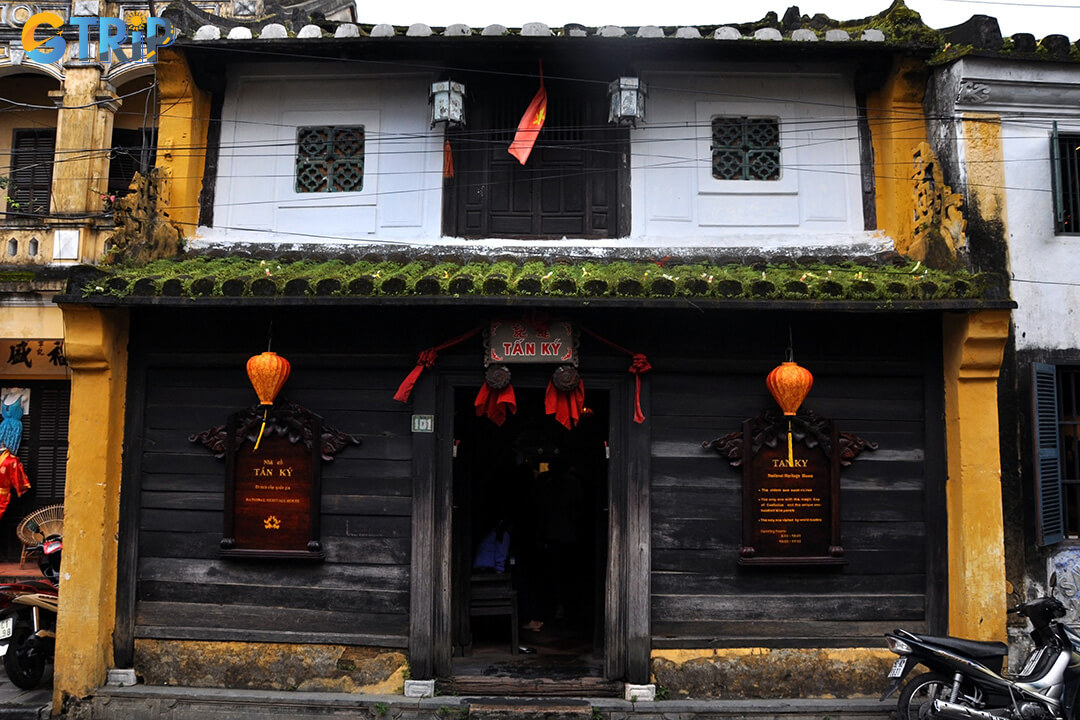
Tan Ky Old House sits in the heart of Hoi An Ancient Town on Nguyen Thai Hoc Street, just steps from the Thu Bon River and the iconic Japanese Bridge
Opening hours and ticket prices
To visit the Tan Ky Old House, you must purchase the Hoi An Old Town entrance ticket. This combo ticket is a fantastic value, as it provides access not just to one, but to five different heritage sites of your choosing from a list of over 20 attraction. You can purchase the ticket at official counters located at the main entrances to the Ancient Town. Once you have your ticket, you simply present it at the entrance of Tan Ky Old House, where one of your five passes will be stamped.
- Opening hours: 8:00 AM - 5:30 PM, daily
- Ticket price: The Tan Ky Old House is visited using the Hoi An Old Town entrance ticket, which costs 120,000 VND for international visitors. This ticket grants access to 5 heritage sites of your choice.
What makes the Tan Ky Old House unique?
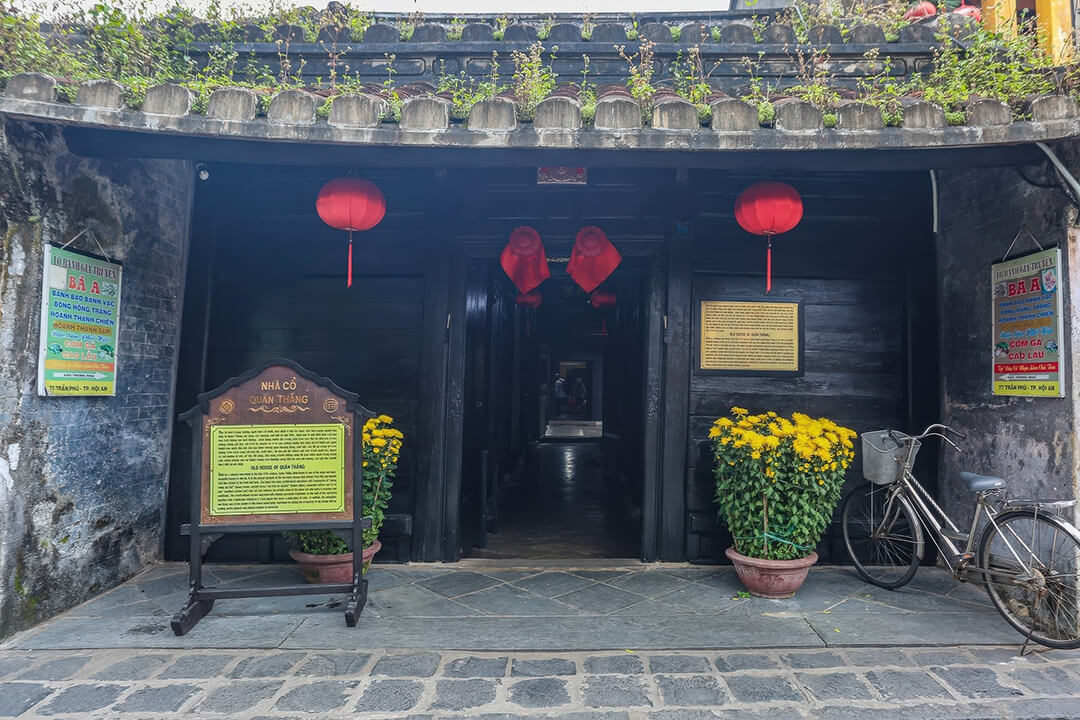
The Tan Ky Old House stands out from other historic homes in Hoi An due to its remarkable state of preservation and its status as a continuously inhabited private residence. Unlike a static museum, it feels alive with the history of the seven generations of the Le family who have called it home. This unbroken lineage has ensured the house remains an authentic testament to the past, filled with original furniture and family heirlooms passed down through the centuries.
- It is the first house in Hoi An to be designated a National Heritage Site.
- It showcases a harmonious and rare blend of Vietnamese, Japanese, and Chinese architectural styles.
- It has never undergone a major renovation, retaining its original materials and design integrity.
- It contains invaluable artifacts, including parallel sentences written by famous calligraphers.
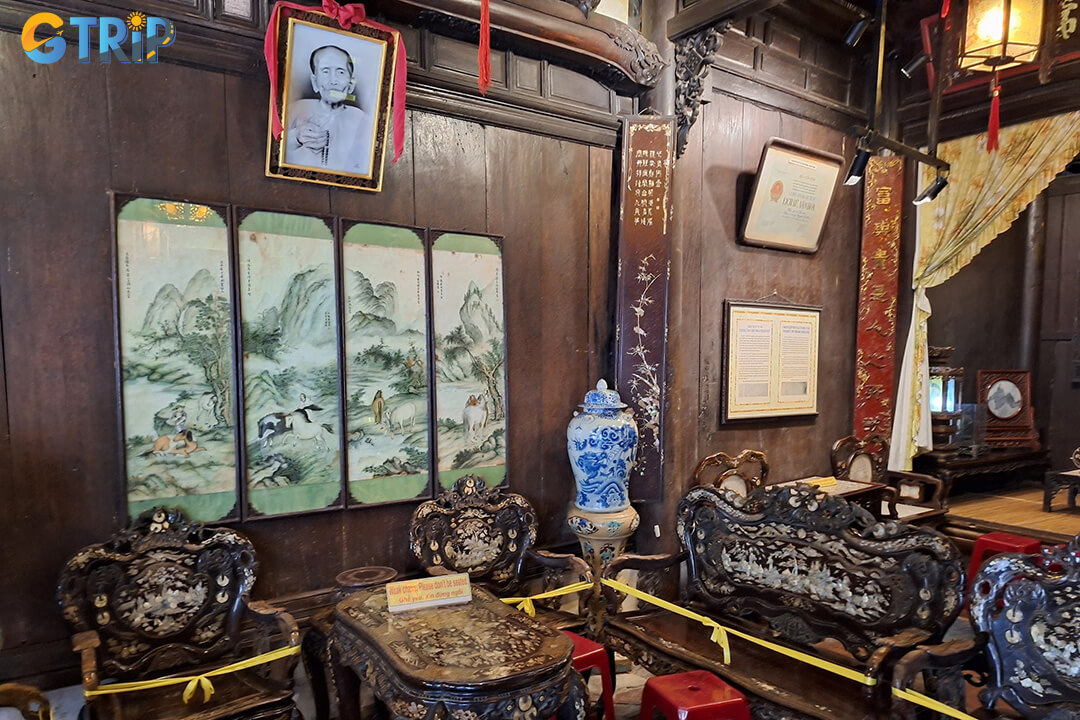
Tan Ky Old House stands out for its remarkable preservation, long family heritage, and unique blend of Vietnamese, Japanese, and Chinese architecture
History of the Tan Ky Old House
Stepping into Tan Ky Old House is like taking a walk back in time to the golden age of Hoi An. As one of the most well-preserved merchant houses in the ancient town, it has stood as a silent witness to over two centuries of history, surviving both the elements of nature and the shifting tides of commerce.
- 1741: The house was built and has since served as the home for seven generations of the Le family. Its name, "Tan Ky" (meaning "prosperous business"), was chosen by the second generation to reflect their successful agricultural trade.
- Late 18th century: During Hoi An's golden era as a bustling international port, the house's location was ideal for commerce. Its front opened to Nguyen Thai Hoc Street for shopfront activities, while the back faced the Hoai River on Bach Dang Street, making it easy to load and unload goods from trade boats.
- 1964: A historic flood submerged the entire first floor of the house. Remarkably, the structure stood firm against the water's force. Today, visitors can still see the markers on the pillars indicating the peak water levels from various flood years.
- 1985 & 1990: The house was honored as the first old house in Hoi An to be recognized as a National Historical-Cultural Site in 1985. By 1990, it became an integral part of the UNESCO World Heritage designation for Hoi An Ancient Town.
Architecture of the Tan Ky Old House
What truly sets Tan Ky apart is its "architectural cocktail" design, which beautifully fuses the artistic styles of three different nations. Every beam, tile, and carving carries a deeper meaning, reflecting the spiritual and cultural values of the merchants who once lived here.
A masterpiece of three cultures
The house is a stunning blend of Vietnamese, Chinese, and Japanese styles. You will find "Triple-beam" structures representing Heaven, Earth, and Humans, alongside Chinese tubular house layouts and traditional Vietnamese 3-compartment designs. This harmonious combination reflects Hoi An’s role as an international trading port where cultures met and influenced one another. Every architectural detail tells a story of cultural exchange that shaped the town centuries ago.
Built without a single nail
One of the most mind-blowing facts about Tan Ky is that it was constructed entirely using mortise and tenon joints. Not a single metal nail was used. This traditional technique allowed the wooden structure to expand and contract with the weather without weakening the building. Thanks to the legendary skills of Kim Bong Village carpenters, the house remains rock-solid after nearly three centuries.
Premium and durable materials
To withstand the humid climate and floods, the house was built with high-quality ironwood (Lim) for the frames and jackfruit wood for the doors. The floors are laid with Bat Trang bricks, which keep the house cool in summer and warm in winter, while Thanh Hoa stone bases protect the wooden pillars from rotting. These carefully selected materials help the house endure Hoi An’s seasonal flooding and tropical weather. Their durability has played a key role in preserving the building for generations.
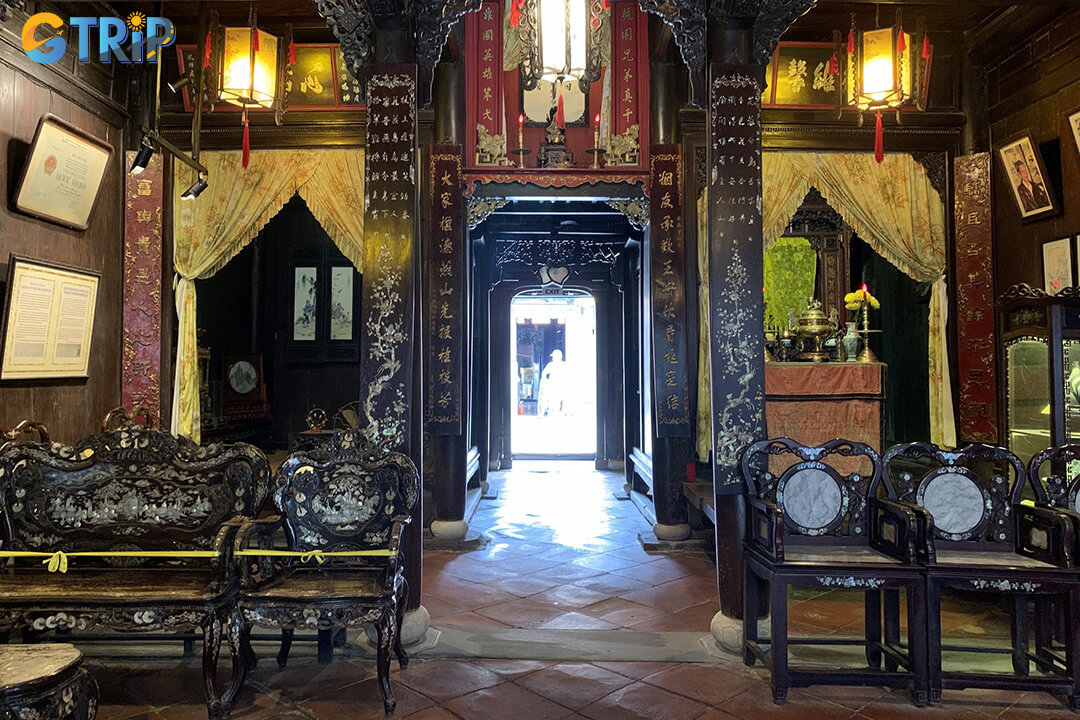
Built with durable materials like ironwood frames and Thanh Hoa stone bases, the house was designed to withstand Hoi An’s humid climate and seasonal floods
Things to do at Tan Ky Old House Hoi An
Visiting Tan Ky is about discovering hidden treasures and ancient philosophies. The house showcases priceless antiques alongside interactive corners for modern travelers, offering many fascinating details to explore within this compact yet culturally rich space.
Admire the "Confucius cup"
Beyond its distinctive ancient architecture, Tan Ky Old House also fascinates visitors with a collection of valuable antiques, each associated with its own historical story. Among them, the most remarkable artifact is a unique bowl in Vietnam often referred to as the “Confucius cup”, which carries a profound philosophical meaning.
According to historical records, the cup dates back around 550-600 years and has been preserved by the Le family for more than 200 years. At first glance, the cup appears simple in design, but it features a special mechanism: when pouring water, it should only be filled to about 80% of its capacity. If filled beyond that level, the water will automatically drain out. This clever principle reflects an ancient teaching that encourages people to practice moderation, maintain self-control, and keep balance and clarity in life.
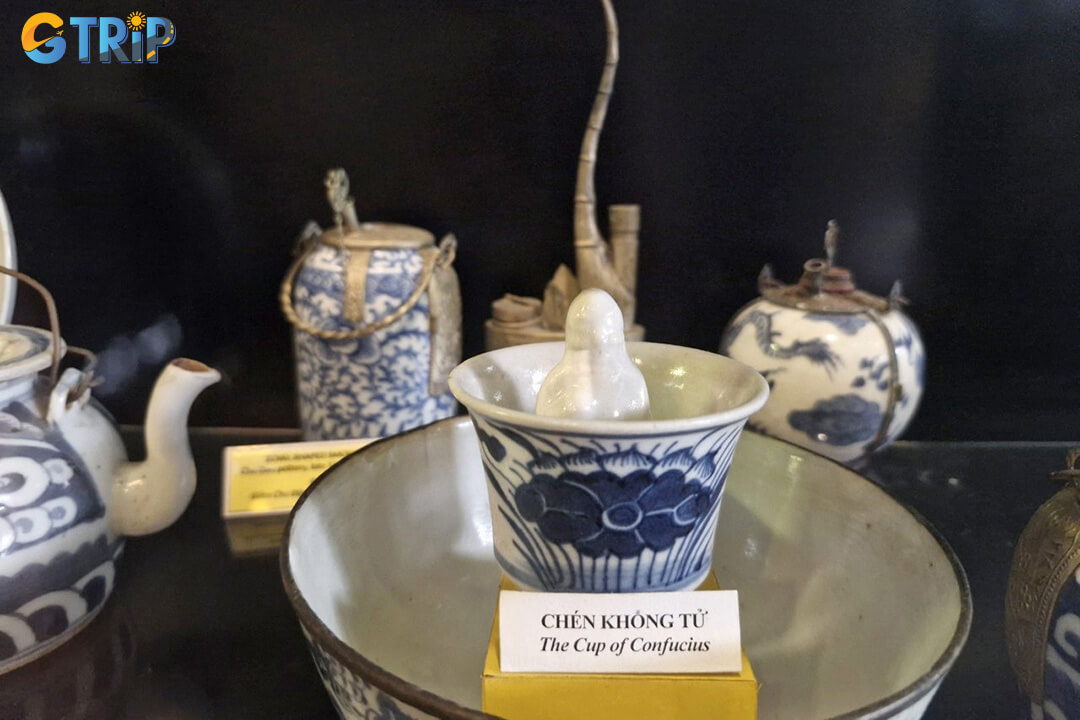
Tan Ky Old House also features rare antiques, including the unique “Confucius cup”, a centuries-old artifact symbolizing the ancient philosophy of moderation
See centuries-old antiques
Inside the house, visitors can explore a fascinating collection of centuries-old antiques that reflect the lifestyle of a prosperous merchant family in ancient Hoi An. The displays include beautifully crafted ceramic pieces, traditional calligraphy scrolls, antique furniture, and decorative wooden carvings. Many of these items were once used in daily life or brought by traders during the period when Hoi An was a bustling international port. These artifacts not only add historical depth to the house but also offer insight into the cultural exchanges and trading activities that shaped Hoi An’s heritage.
Take a nice photo in Tan Ky Old House
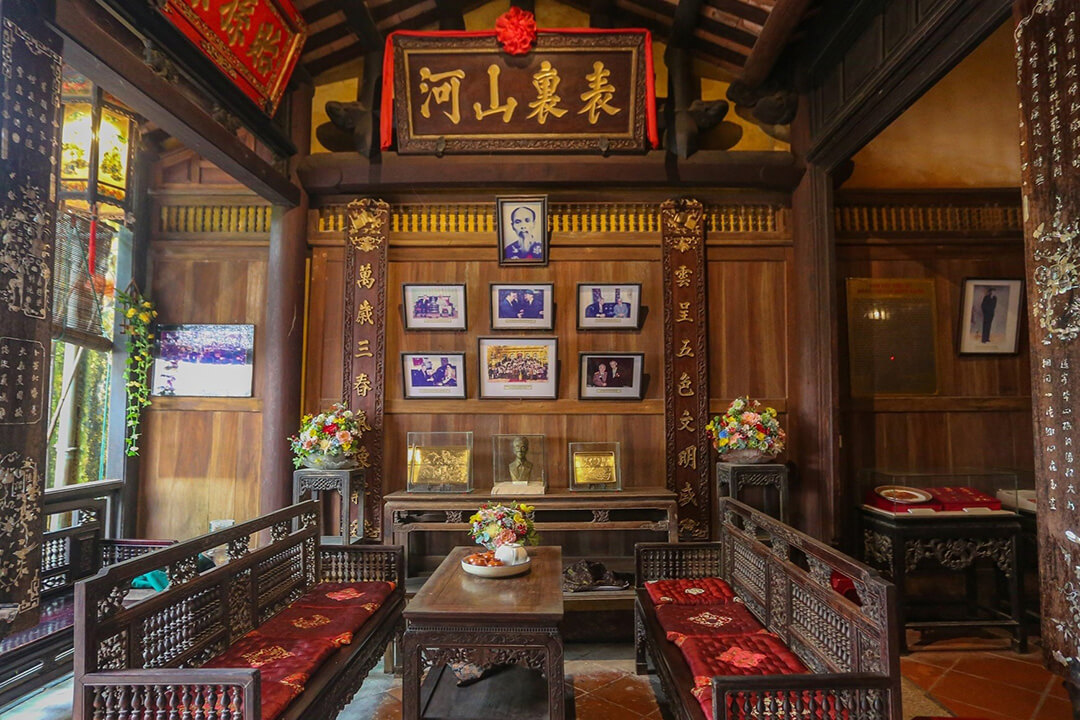
Taking photos at Tan Ky Old House is a wonderful experience for those who appreciate the timeless charm of Hoi An. With its warm wooden interiors, ancient pillars, and soft natural light filtering through the open courtyard, the house provides a perfect backdrop for classic and atmospheric photos. Visitors often capture pictures beside the wooden doorways, along the old corridors, or near the antique displays to highlight the historical character of the space. Wearing traditional clothing such as an ao dai or vintage-style outfits can make the photos even more elegant and culturally authentic.
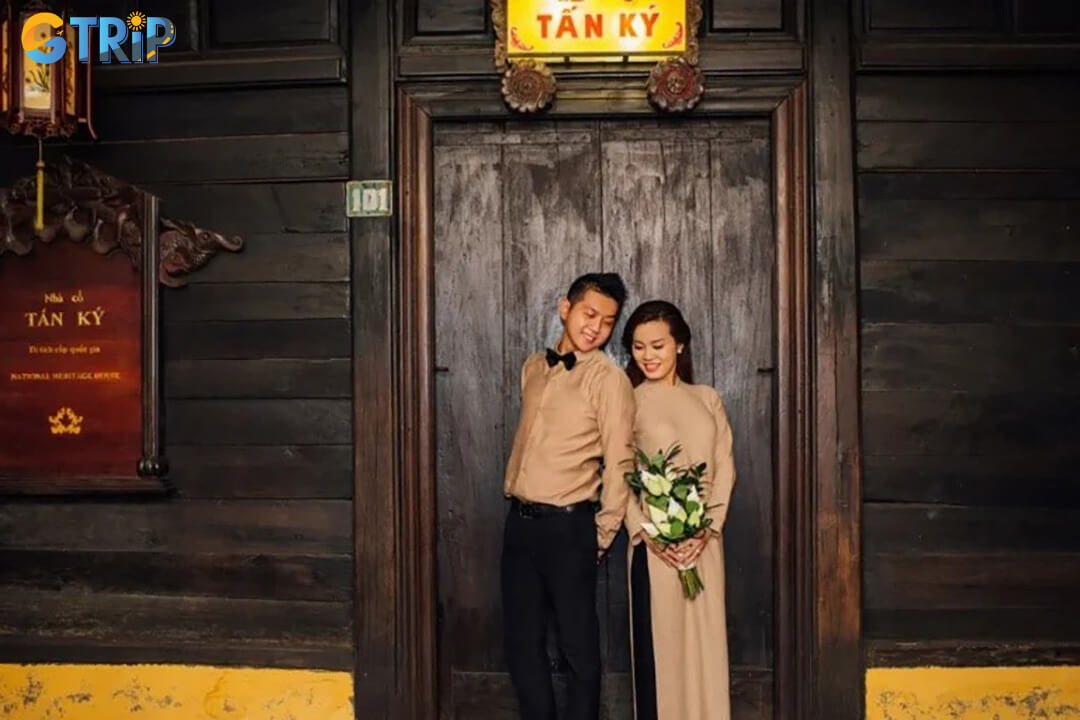
Tan Ky Old House offers a beautiful setting for photos with its warm wooden interiors, and soft natural light that highlights the timeless charm of Hoi An
How to get to Tan Ky Old House?
Located right in the heart of the pedestrian zone at 101 Nguyen Thai Hoc Street, Tan Ky Old House is incredibly accessible. If you are staying in the bustling city of Da Nang or already enjoying the slow pace of Hoi An, getting here is a straightforward and scenic journey.
From Da Nang International Airport
If you are arriving by air, the journey to Hoi An is quite scenic. Once you exit the airport, you can head south via the coastal road to reach the ancient town where the house is located.
- Distance: Approximately 30 km
- Travel time: 45-60 minutes
- Routes: Vo Nguyen Giap coastal road or Lac Long Quan road
- Optimal option: A private car or taxi is the most comfortable choice after a flight
From Da Nang City center
Travelers staying in Da Nang can easily make a day trip to Tan Ky Old House. The roads are well-paved and offer a smooth ride through the outskirts of the city.
- Distance: About 25-30 km
- Travel time: 50-60 minutes
- Routes: National Highway 1A or the coastal route
- Optimal option: Renting a motorbike for an adventurous ride or booking a Grab car for convenience

Tan Ky Old House is about 25-30 km from Da Nang, making it an easy 50-60 minute trip by motorbike or car via National Highway 1A or the coastal route
From around Hoi An Ancient Town
Since Tan Ky Old House is located within the pedestrian zone, getting there is part of the fun of exploring the town.
- Distance: Within 1-2 km of most central hotels
- Travel time: 5-15 minutes
- Routes: Walking through the ancient streets
- Optimal option: Walking is best as the area often restricts motorized vehicles during peak hours
Transportation options
There are several ways to suit every budget. If you want to save money or travel in style, you have plenty of choices to reach this historical gem.
- Bus: Route #1 from Da Nang to Hoi An
- Taxi/Ride-hailing: Safe and quick, services like Grab/XanhSM are widely available in Da Nang, with fixed-price rides to Hoi An
- Motorbike: Flexible and cheap, with rentals around 120,000 VND/day
- Bicycle: Perfect for a slow-paced ride through the local alleys of Hoi An
Nearby attractions to the Tan Ky Old House
Once you've visited the Tan Ky Old House, you're perfectly positioned to explore the other treasures of Hoi An Ancient Town, all just a short walk away.
- Japanese Bridge: Just a 2-minute walk away, this iconic 18th-century bridge is a symbol of Hoi An, featuring a small temple inside and intricate carvings. Its lantern-lit appearance at night makes it one of the most photographed landmarks in the Old Town.
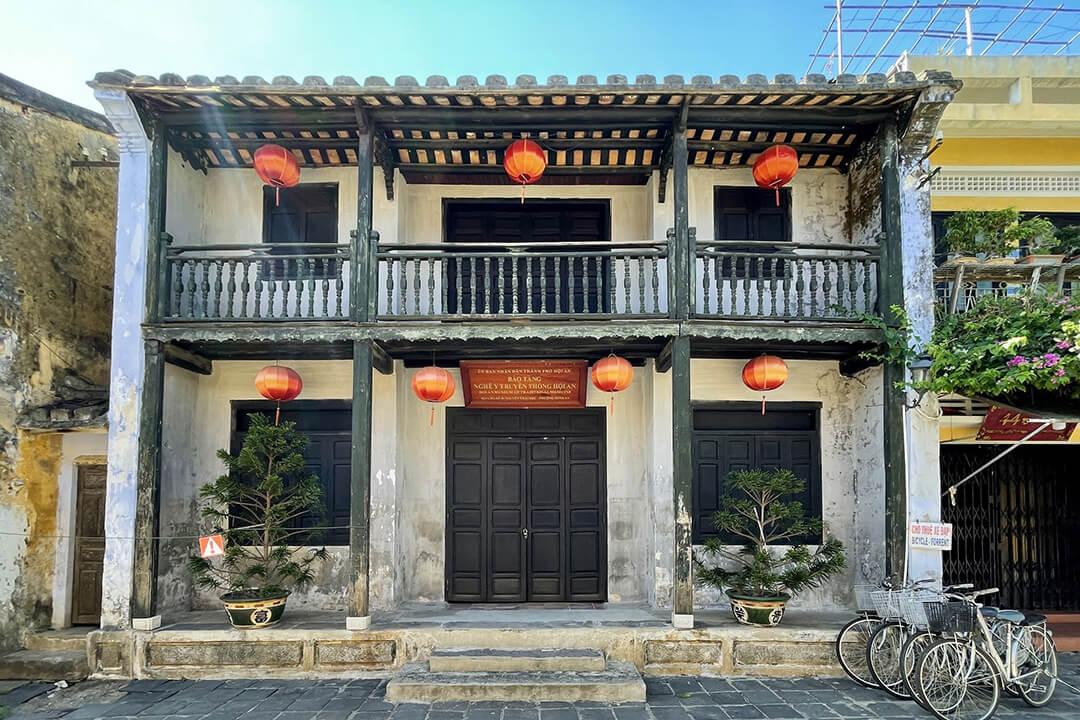
- Phung Hung Old House: Located next to the Japanese Bridge, this two-story house is another beautiful example of a traditional merchant's home, blending Vietnamese, Japanese, and Chinese styles. Visitors can explore its wooden interior and learn about the life of wealthy trading families in Hoi An centuries ago.
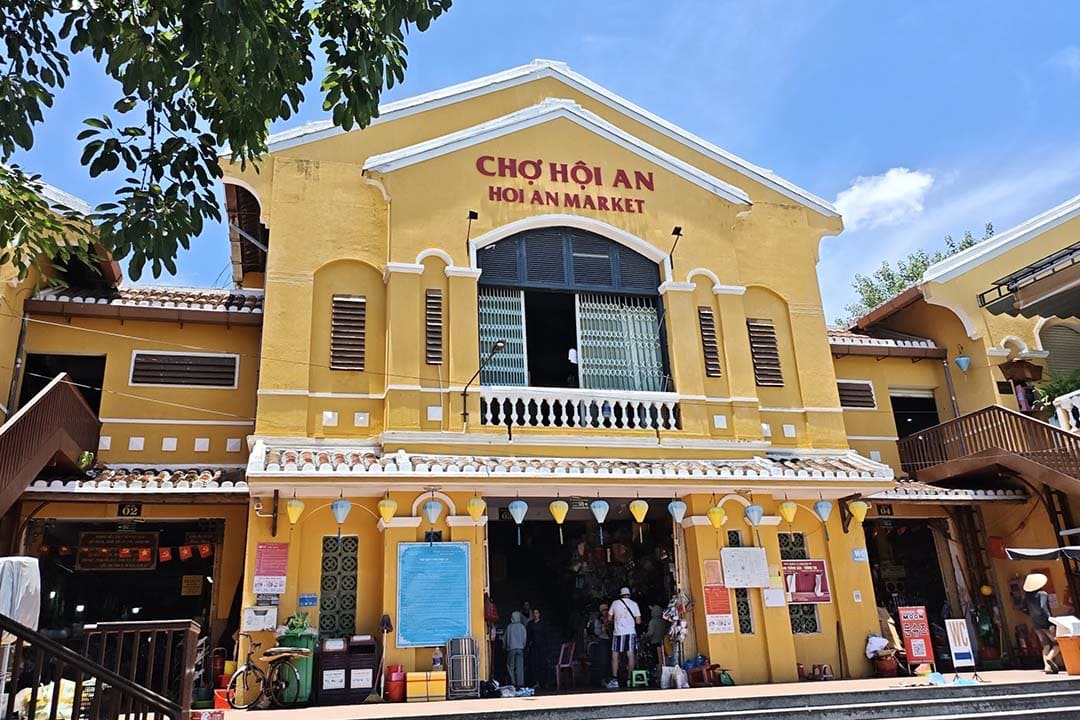
- Hoi An Central Market: A vibrant, bustling market on the banks of the Thu Bon River where you can experience local life, shop for fresh produce, and sample delicious street food. It is also a great place to try local specialties such as cao lau and banh mi.
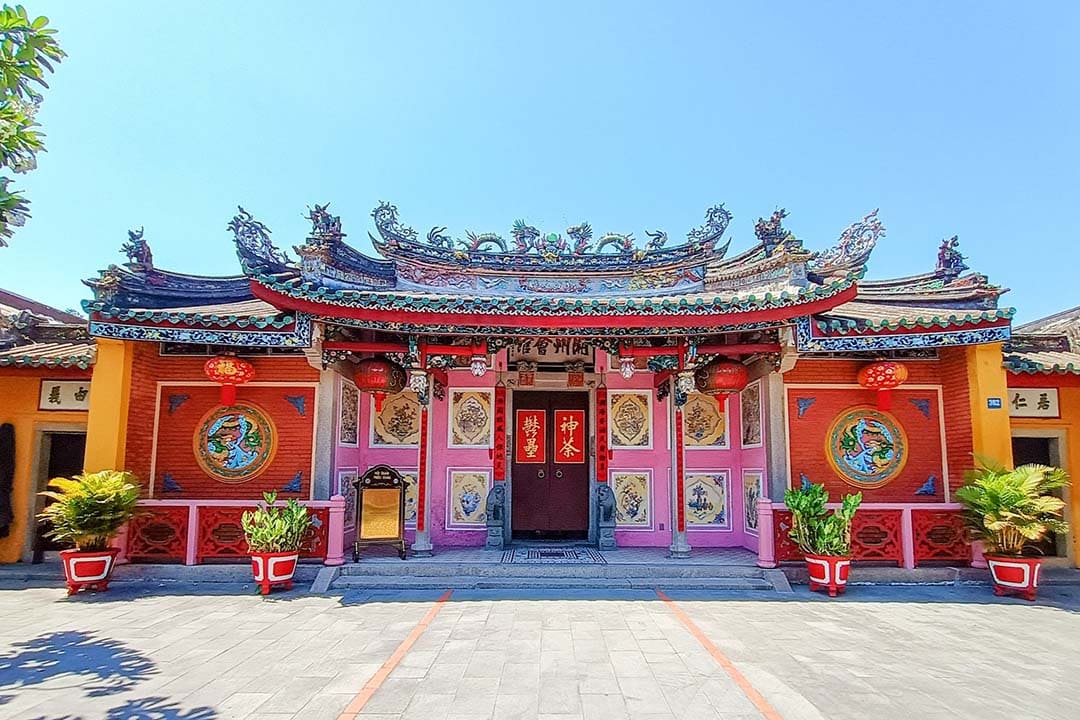
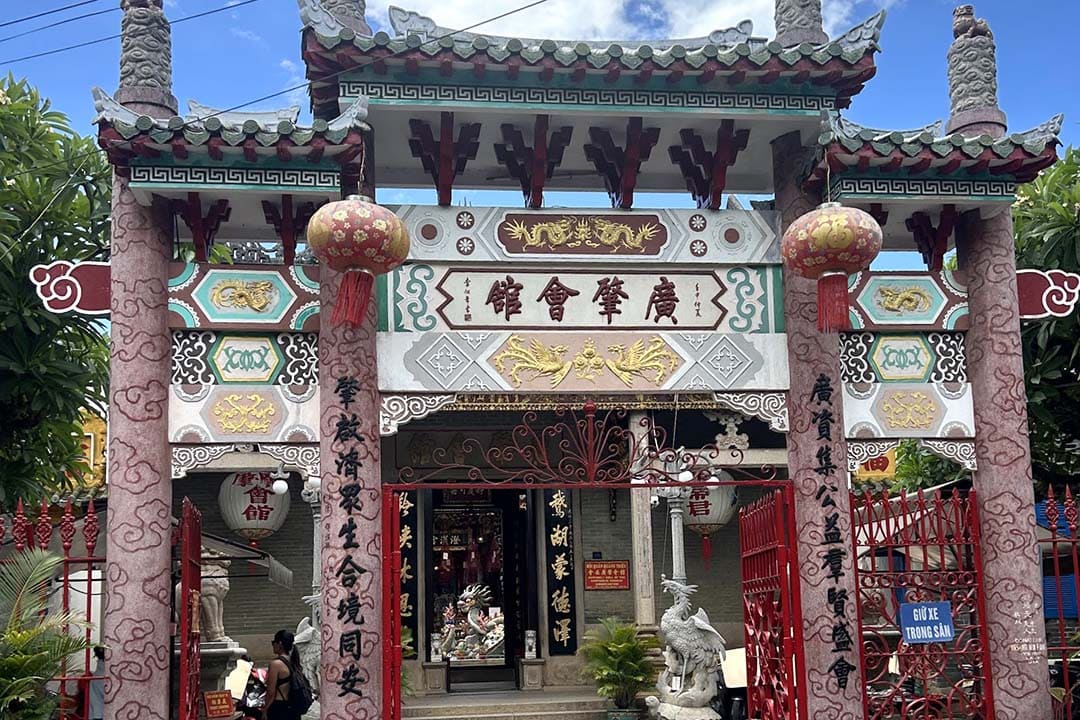
- Fujian Assembly Hall: The most famous of Hoi An's assembly halls, this ornate building was a social and spiritual center for the Fujian Chinese community and features stunning gates, statues, and courtyards. The hall is especially admired for its elaborate decorations and colorful dragon sculptures.
- Hoi An Night Market: Located across the An Hoi Bridge, this market comes alive after sunset with hundreds of colorful lanterns, food stalls, and souvenir shops. The lively atmosphere and glowing lantern displays make it a must-visit evening destination in Hoi An.

After visiting Tan Ky Old House, travelers can easily explore many nearby highlights of Hoi An Ancient Town
Practical tips for visitors when visiting Tan Ky Old House
To make the most of your visit to the Tan Ky Old House, keep these practical tips in mind.
- Visit in the morning: Arrive early around opening time (8:00 AM) to explore the house before the large tour groups arrive and the day gets hotter.
- Wear respectful attire: As the Tan Ky Old House is both a historical monument and a private residence, it's courteous to dress modestly. Avoid revealing clothing.
- Listen to the guides: Family members often provide brief tours. Their personal stories and explanations of key features like the Confucius cup add immense value to the visit.
- Be mindful of your surroundings: The house is filled with priceless antiques. Be careful with your bags and movements to avoid accidentally bumping into artifacts.
- Wear comfortable shoes: You will be doing a lot of walking around the Ancient Town, so comfortable footwear is essential.
- Have your ticket ready: Keep your Hoi An Old Town ticket handy, as you will need to present it at the entrance for stamping.
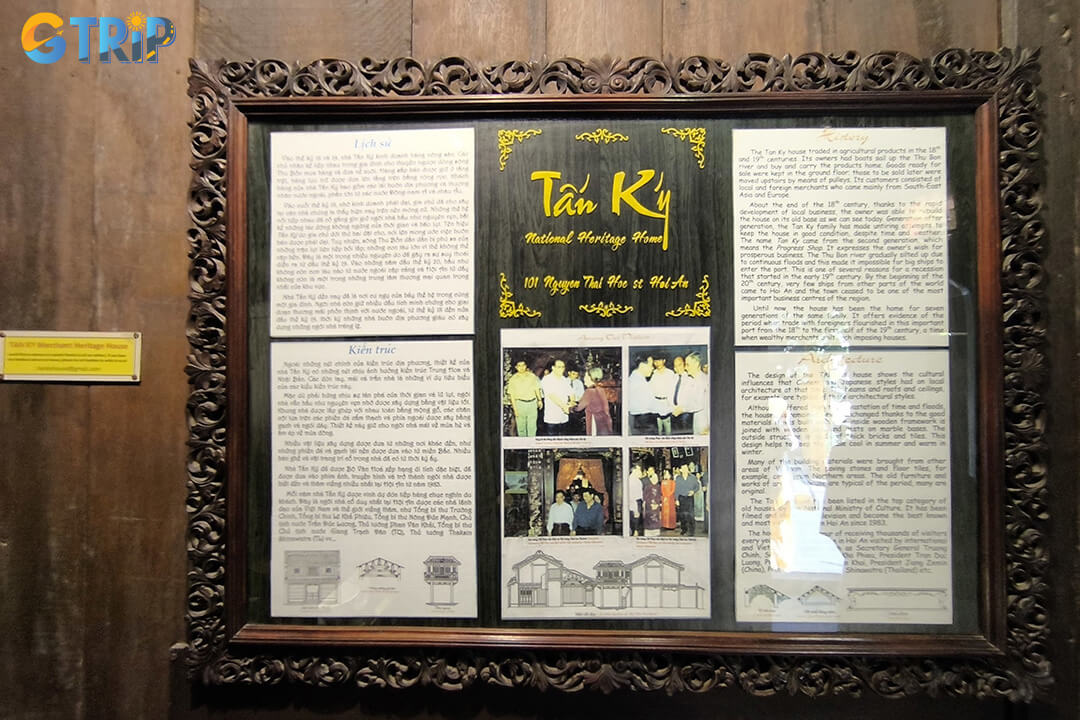
To fully enjoy Tan Ky Old House, visit early, dress respectfully, listen to the guides, and be mindful of the historic artifacts inside
A journey to the Tan Ky Old House is more than just a sightseeing stop, it is a profound connection to the cultural soul of Hoi An. Its beautifully preserved architecture, the tangible history etched into its walls, and the enduring legacy of the family who calls it home make it an unforgettable experience. This living museum captures the essence of a bygone era, offering a quiet, elegant counterpoint to the vibrant energy of the surrounding streets. By stepping inside, you are not just observing history, you are stepping into it. To make your Central Vietnam adventure even more seamless, you can also explore a variety of Da Nang tours alongside your Hoi An itinerary. For a smooth trip in Hoi An, consider booking GTrip’s reliable transport services so you can focus on enjoying the town’s timeless charm.