



Mar - 28 - 2026
Quan Thang Ancient House is one of Hoi An’s best-preserved merchant homes, quietly reflecting the town’s prosperous trading era. Located on Tran Phu Street, this 17th-century residence offers an intimate glimpse into the life of a wealthy Chinese-Vietnamese family. The ancient house is showcased through intricate wood carvings and harmonious East Asian design. In this GTrip guide, you’ll discover its historical background, standout architectural features, and practical visiting tips, everything you need to explore Hoi An Ancient Town with ease.
Overview of the Quan Thang Ancient House
As one of the most refined old houses in Hoi An, Quan Thang Ancient House is not only a historical landmark but also an easy stop to include in your walking itinerary. Before exploring its intricate carvings and cultural significance, it’s useful to get familiar with its location and basic visitor details to plan your trip more efficiently.
Where is Quan Thang Ancient House Hoi An?
Address: No. 77 Tran Phu Street, Hoi An Ancient Town, Hoi An Ward (formerly Minh An Ward, Hoi An City, Quang Nam Province), Da Nang City
Quan Thang Ancient House enjoys a prime location right in the heart of the action. It is situated on Tran Phu Street, one of the main arteries of Hoi An Ancient Town, a designated UNESCO World Heritage Site. This central positioning means it’s just a short, pleasant stroll from other key attractions like the Japanese Covered Bridge and the Fujian Assembly Hall. Its easy accessibility makes it a perfect stop for any tourist exploring the charming, pedestrian-friendly streets of the old town on foot.
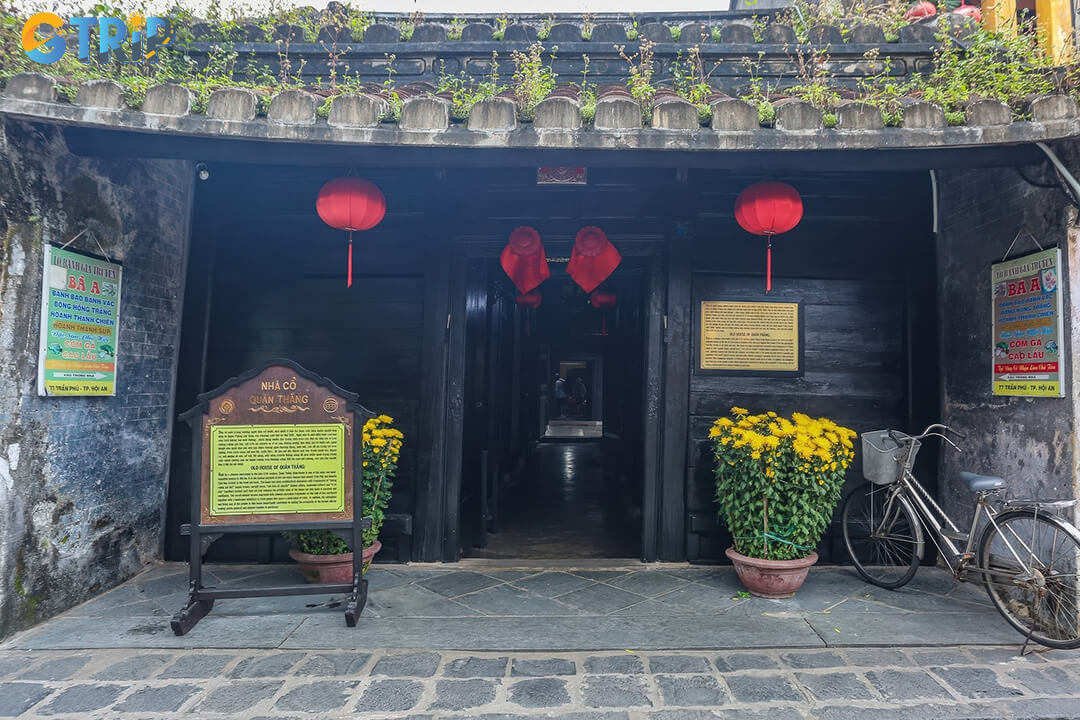
Quan Thang Ancient House is centrally located on Tran Phu Street, making it an easy stop while exploring Hoi An Ancient Town on foot
Opening hours and ticket prices of the house
- Opening hours: 9:30 AM - 6:00 PM, daily
- Ticket price: 120,000 VND for the Hoi An Ancient Town combo ticket (valid for international visitors)
A visit to the Quan Thang Ancient House is managed through the town's efficient and affordable sightseeing system. The house is one of the 21 designated heritage sites you can visit, and access is included in the Hoi An combo ticket. This ticket is a fantastic value, allowing you to choose and enter five different sites from the list, letting you tailor your own historical tour. You can purchase the ticket at official booths located at the main entrances to the Ancient Town.
What makes the Quan Thang Ancient House unique?
Among the many old merchant houses in Hoi An, Quan Thang stands out for its rare level of artistic precision and architectural integrity. It was one of the earliest homes in the ancient town built from formal architectural drawings, a sign of careful planning and refined aesthetic vision rather than purely vernacular construction.
- Designed from formal blueprints: Unlike many traditional tube houses built by experience alone, Quan Thang followed detailed architectural plans, reflecting forward-thinking design for its time.
- Exquisite wood carvings: Beams, columns, walls, and ancestral altars are covered in intricate motifs that remain remarkably well preserved.
- Crafted by Kim Bong masters: The woodwork was created by artisans from the famed Kim Bong carpentry village, known for centuries of elite craftsmanship.
- Chinese-Vietnamese fusion style: The house harmoniously blends classical Chinese spatial layout with refined Vietnamese carpentry techniques. It is creating a distinctive cultural landmark within the Hoi An Ancient Town.
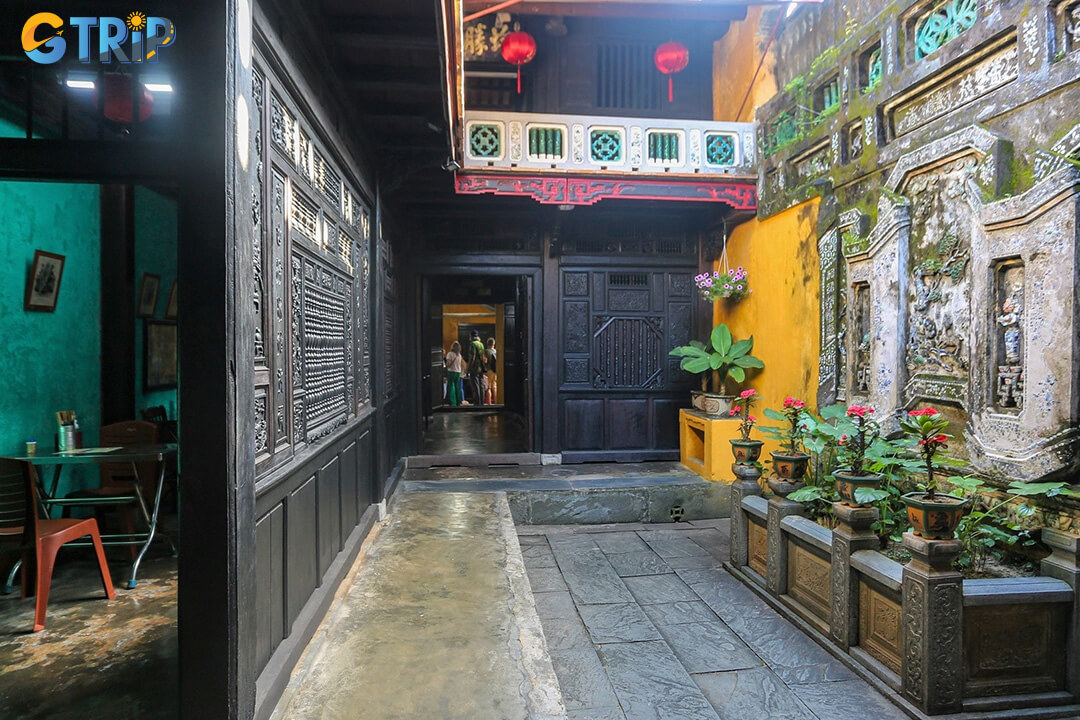
Quan Thang Ancient House stands out for its meticulous design, intricate wood carvings, and harmonious blend of Chinese and Vietnamese architectural styles
History of the Quan Thang Ancient House
Stepping through the threshold of Quan Thang Ancient House is like opening a book on Hoi An’s golden age. To truly appreciate its value, let’s look at the historical milestones that have shaped this residence over the centuries.
- Late 18th century: The house was originally built by a Chinese captain and merchant named Quan Thang. During this era, Hoi An was a bustling international port, and the house served as a busy trading hub for local products and traditional medicine.
- The 19th century: The structure underwent significant refinements, incorporating the signature architectural styles of the Huaxia region (China). It became a symbol of the wealth and success of the merchant class in the port town.
- Present day: Now over 150 years old (with the family lineage spanning over 300 years), the house remains remarkably intact. It is still home to the owner’s descendants, who have successfully preserved both the physical heritage and the secret recipe for Hoi An’s famous "White Rose" dumplings.
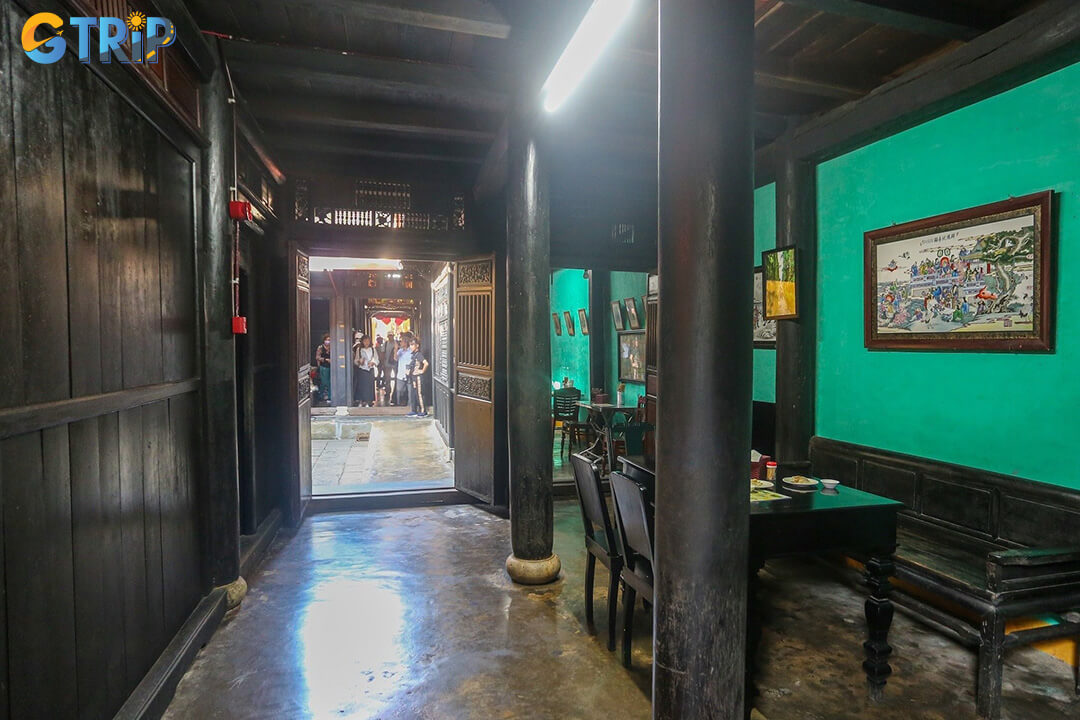
Quan Thang Ancient House reflects Hoi An’s prosperous trading past, preserving centuries of history, architecture, and family heritage
Architecture of the Quan Thang Ancient House
More than just a place to live, this house is considered a masterpiece of Oriental design. Its unique charm comes from a thoughtful combination of artistic woodwork, cultural symbols, and a layout perfectly built to suit the local climate.
The masterpiece of Kim Bong Carpentry Village
Every wooden surface in the house is a work of art. The intricate carvings on the beams, shutters, and furniture were handcrafted by the elite artisans of Kim Bong Carpentry Village. You will see realistic patterns of flowers, leaves, and daily life scenes that showcase the peak of Vietnamese woodcraft during the Nguyen Dynasty.
The symbolic "door eyes" and folding panels
Above the main entrance, you will notice two wooden "eyes" decorated with yin-yang symbols and red silk. Locals believe these eyes guard the house against bad luck. Below them are flexible wooden panels called "Thuong song ha ban". These can be fully removed to transform the front hall into a wide-open shopfront or closed tight for security.
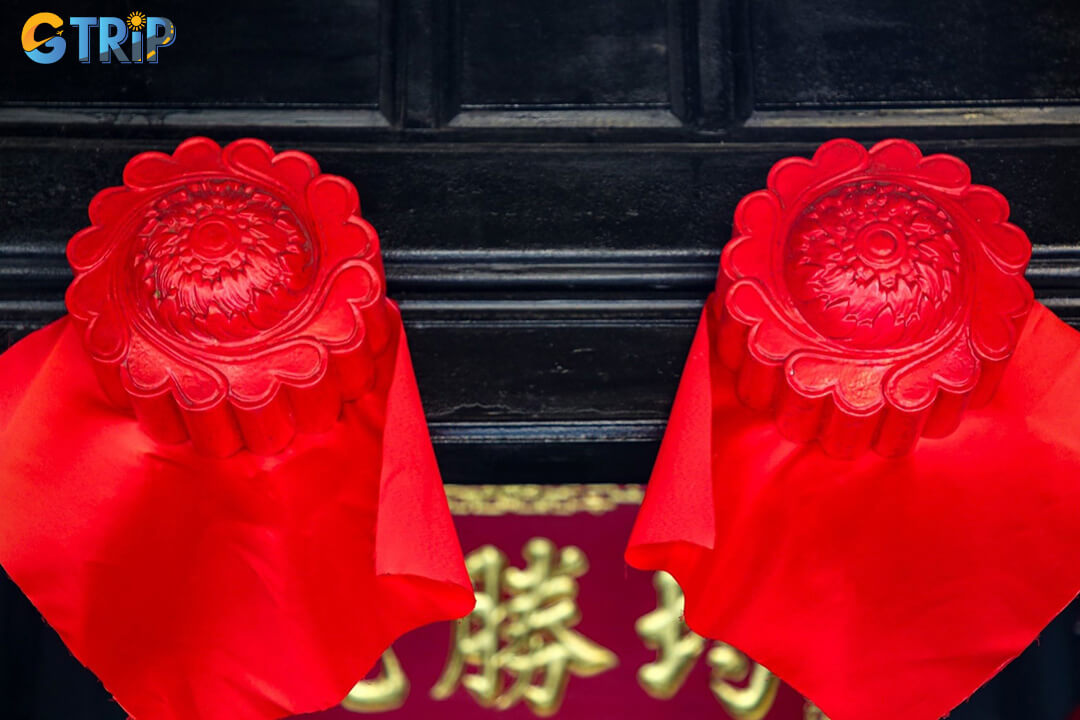
The entrance features symbolic wooden “door eyes” and removable panels that reflect traditional beliefs and the flexible design of Hoi An merchant houses
The traditional tube house layout
The house is a classic example of a "tube house", narrow at the front but stretching nearly 300 square meters deep. It cleverly connects two main streets: the front entrance on Tran Phu Street was for welcoming customers, while the back exit on Nguyen Thai Hoc Street led directly to the river wharf.
The skylight and open courtyard
In the heart of the house lies a beautiful courtyard that acts as a natural "lung". This open space allows sunlight to flood the interior and creates a breeze that keeps the house cool in the summer and warm in the winter. The walls surrounding this area are often decorated with exquisite Chinese porcelain shards, ornamental plants, and small fish ponds.
Things to do at Quan Thang Ancient House
While the architecture might draw you in, the authentic experiences found within these walls are what will make your visit truly memorable. Here is how you can fully immerse yourself in the house's living heritage.
Watch the crafting of white rose dumplings
This is the most unique experience at Quan Thang Ancient House. You can sit and watch the family members meticulously mold "Banh Vac" from rice flour and shrimp. Each dumpling is shaped like a delicate white flower. Watching the rhythmic, skilful hands of the locals gives you a real sense of Hoi An’s living heritage.
Explore the merchant’s private collection
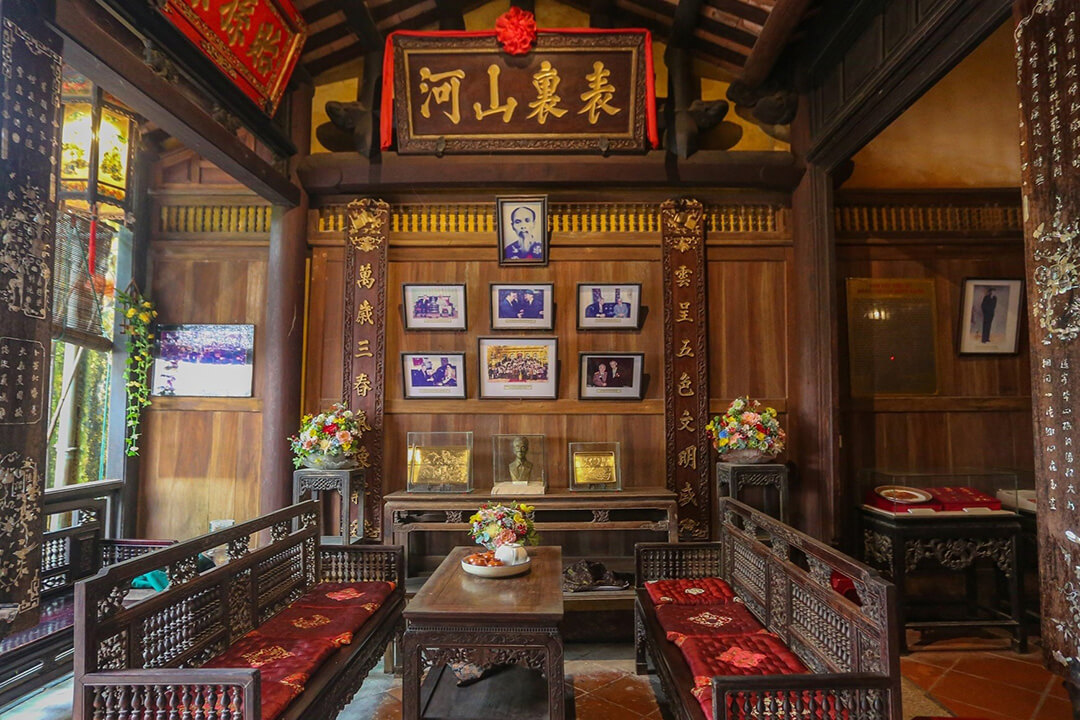
Walking deeper into the house feels like stepping back 200 years. You can admire a massive collection of antiques, including horizontal lacquered boards and parallel sentences written in gold. These items aren't just for show, they tell the story of the family's prestige and their deep-rooted spiritual beliefs.
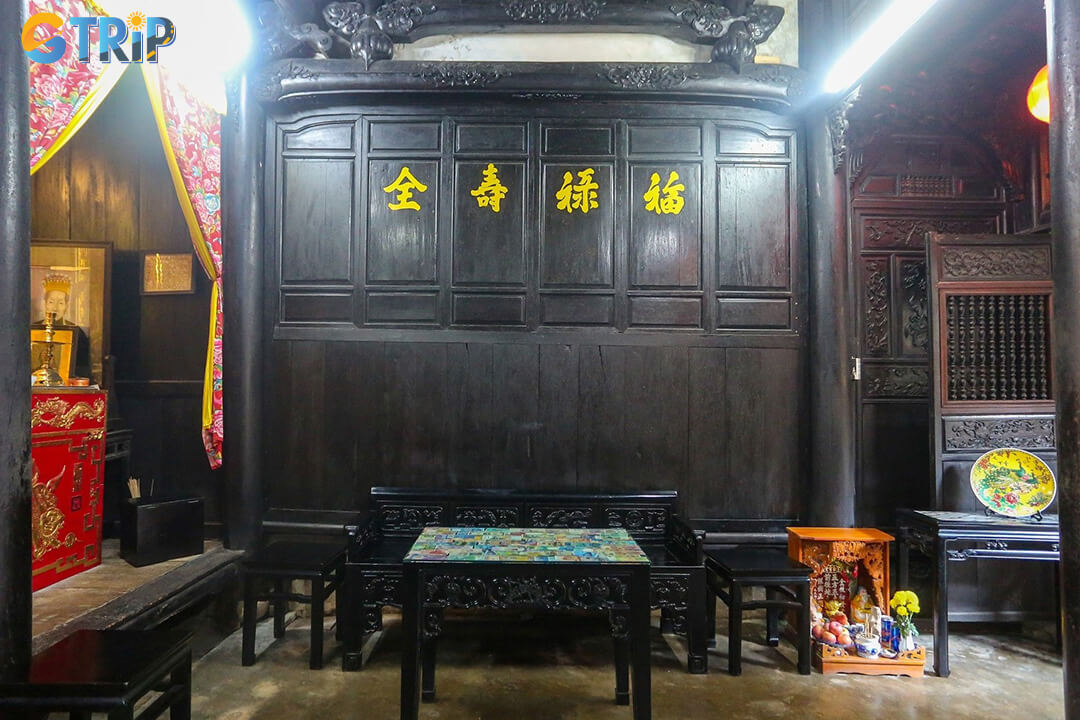
Inside the house, a rich collection of antiques and gold-inscribed plaques reflects the family’s heritage and long-standing traditions
Relax in a quiet heritage space
Unlike the busy modern restaurants outside, Quan Thang Ancient House offers a peaceful atmosphere. You can request a serving of freshly steamed dumplings and enjoy them right in the ancient dining area. It is a wonderful way to slow down, appreciate the history, and feel the soul of Hoi An away from the tourist crowds.
How to get to Quan Thang Ancient House?
Located at No. 77 Tran Phu Street, the house is very easy to find once you are in or near Hoi An Ancient Town. If you are coming from a nearby city or just a few blocks away, here is the best way to plan your journey.
From Da Nang City center
If you are staying in Da Nang, heading to Hoi An is a perfect day trip. The roads are wide and well-paved. Traveling by scooter is a favorite for those who love the sea breeze, while taxis provide a cool, air-conditioned alternative during the hot midday hours.
- Distance: 28 km
- Travel time: 45 minutes
- Routes: Le Van Hien Street is the most direct path to the outskirts of Hoi An.
- Optimal option: Renting a scooter for flexibility or a Grab car for convenience.

Traveling from Da Nang to Hoi An is an easy 28 km trip, taking about 45 minutes by scooter or car
From Da Nang International Airport
The airport is the most common arrival point for travelers. The drive to Hoi An is quite scenic, following the coastal road that connects the two cities. You can easily book a private car or a high-quality shuttle bus right at the terminal.
- Distance: 30 km
- Travel time45 - 60 minutes
- Routes: Follow Vo Nguyen Giap Street along the coast or take the inland Lac Long Quan route.
- Optimal option: Private car or Grab for comfort and luggage space.
From around Hoi An Ancient Town
Since the house is located in the heart of the pedestrian zone, you cannot drive motorized vehicles directly to the door during certain hours. The best way to reach 77 Tran Phu Street is on foot, allowing you to soak in the atmosphere of the old streets.
- Distance: Less than 1 km from most central hotels
- Travel time: 5 - 10 minutes
- Routes: Walk down Tran Phu Street (the main road of the Ancient Town).
- Optimal option: Walking or riding a bicycle for a classic Hoi An experience.

Quan Thang Ancient House is best reached on foot within Hoi An’s pedestrian zone, just a short 5-10 minute walk from most central hotels
Transportation options
Hoi An restricts motorbikes during pedestrian hours, so plan to access the Old Town on foot or by light transport.
- Bicycle: Around 30,000 VND/day, easy to move around and park near the entrance
- Walking: The most convenient option within the pedestrian zone
- Cyclo: Slow-paced ride, suitable for short sightseeing trips
- Car/Taxi: Drop-off at the edge of the Old Town, then walk 5 - 10 minutes
Nearby attractions to the Quan Thang Ancient House
Once you have visited Quan Thang, you are perfectly positioned to explore many of Hoi An’s other famous landmarks. The combo ticket encourages you to see more, and these are all within a few minutes' walk:
- Japanese Covered Bridge: Hoi An's most iconic landmark and a symbol of the city, this beautiful 18th-century bridge is located just a few minutes down Tran Phu Street. Its distinctive roofed design reflects the cultural influence of the Japanese community, who once lived in Hoi An.
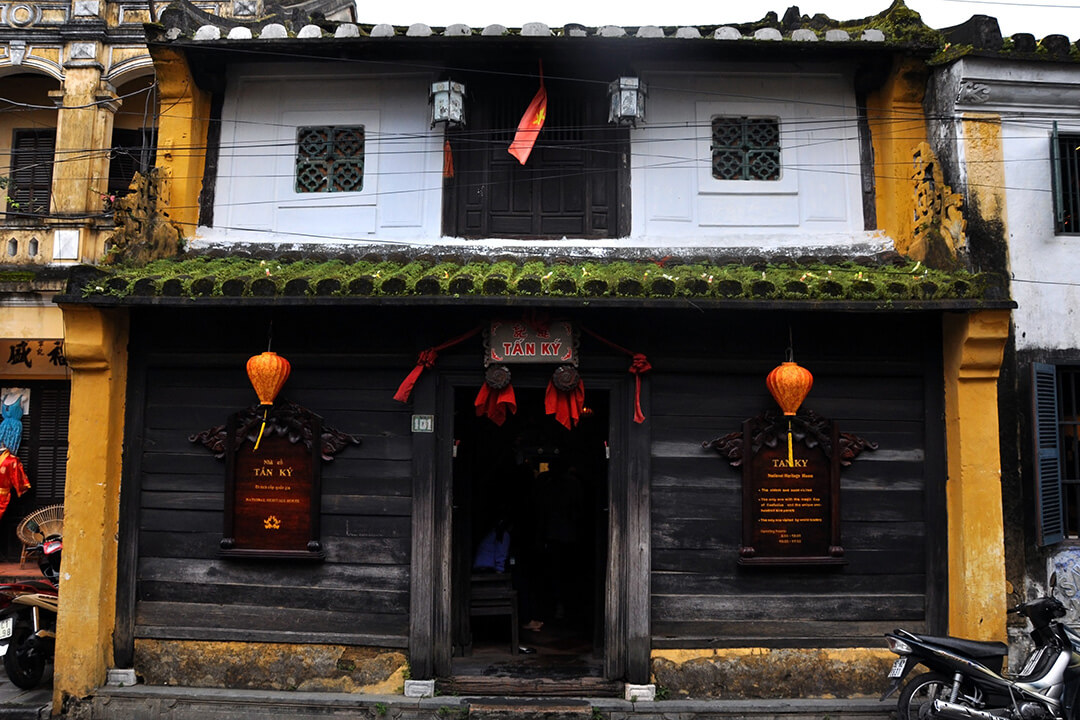
- Tan Ky Old House: Another beautifully preserved merchant's home located on Nguyen Thai Hoc Street. Visiting both Tan Ky and Quan Thang offers a fascinating point of comparison in architecture and family history. The house also preserves many original antiques that illustrate the prosperous trading era of the town.
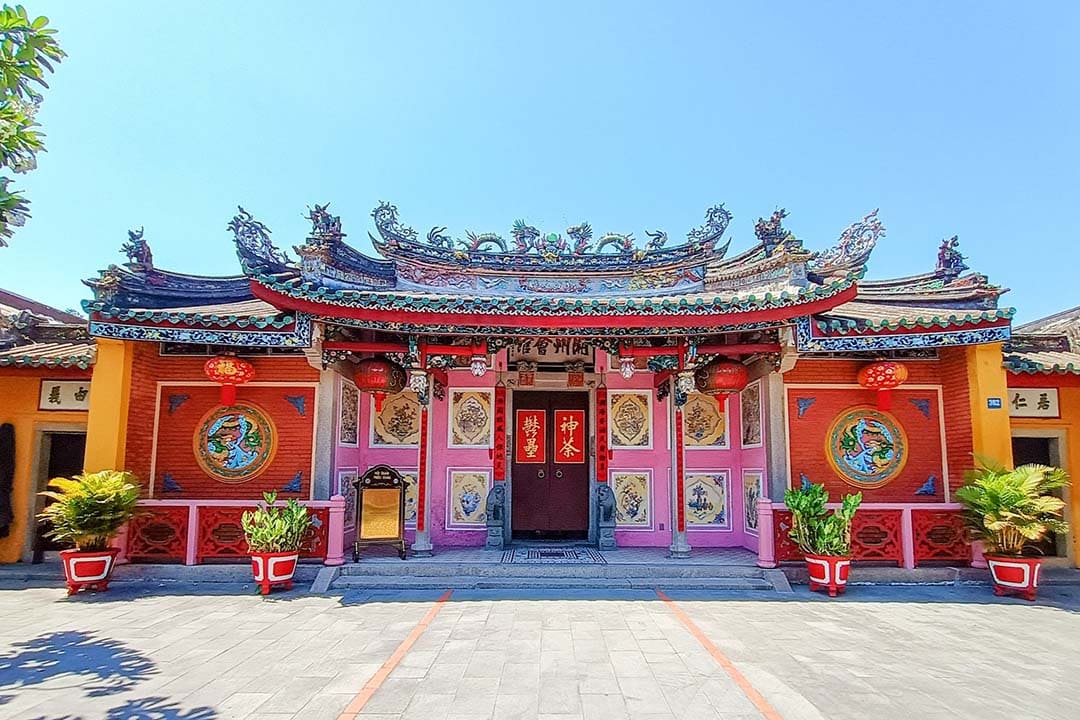
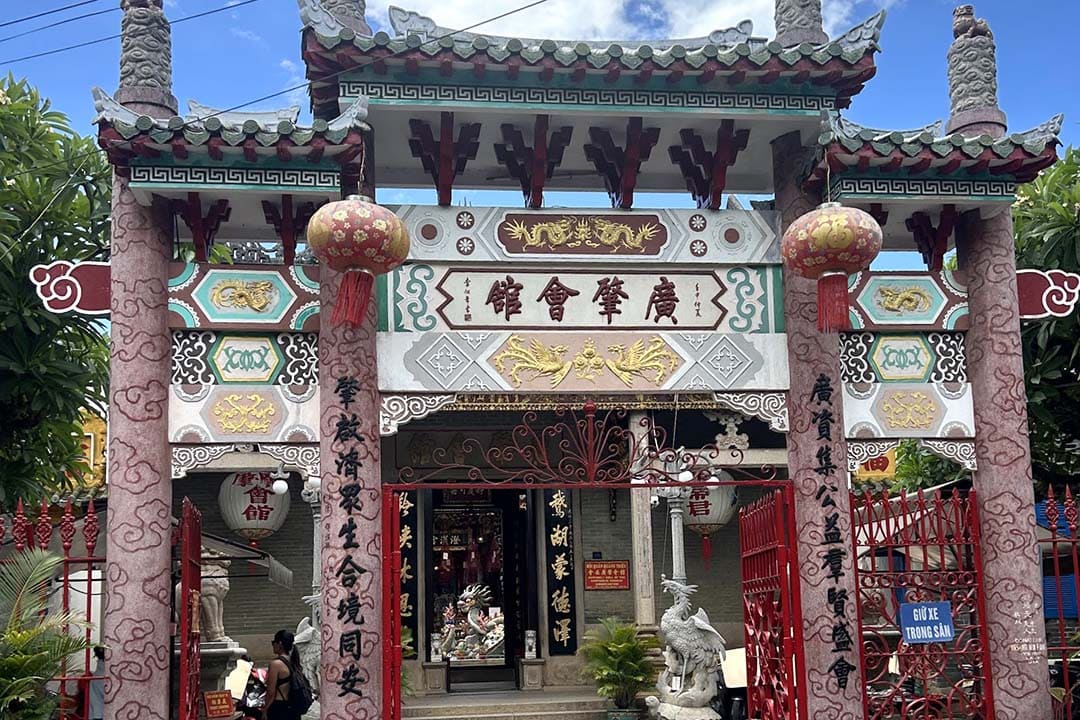
- Fujian Assembly Hall: A stunning example of a Chinese congregational hall, this site boasts ornate gates, vibrant statues, and peaceful courtyards dedicated to the goddess of the sea. Its colorful decorations and detailed carvings make it one of the most impressive cultural sites in Hoi An.
- Cantonese Assembly Hall: Another magnificent assembly hall known for its spectacular dragon statues and intricate carvings, showcasing the wealth of the Cantonese community. The impressive stone dragon fountain at the entrance is one of its most photographed features.
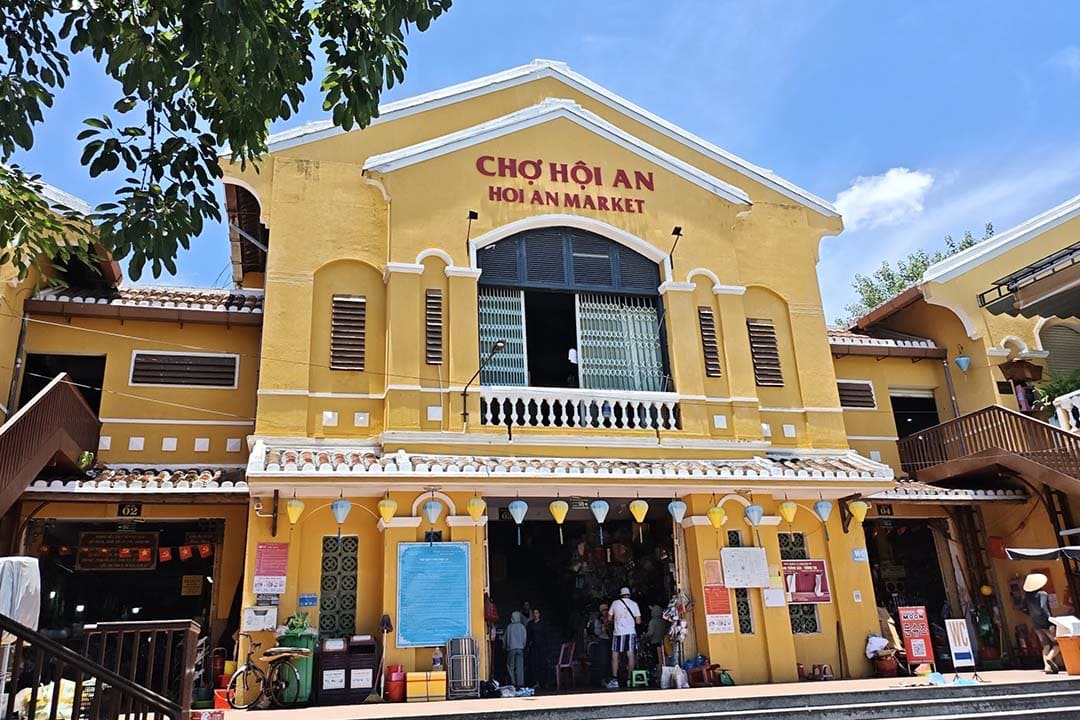
- Hoi An Central Market: A bustling, vibrant riverside market where you can experience authentic local life, shop for souvenirs, and sample delicious Hoi An street food. It is especially lively in the morning when locals gather to buy fresh seafood and produce.
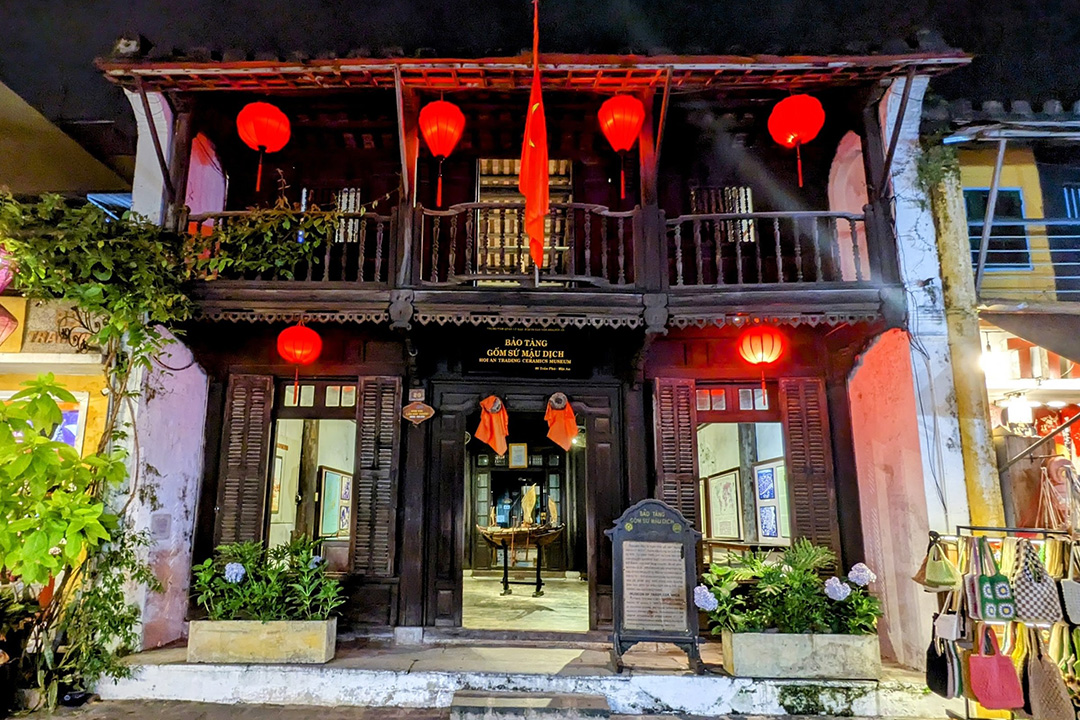
- Museum of Trade Ceramics: Located just a short walk away, this museum is housed in a restored wooden house and showcases the history of Hoi An as a major port on the international ceramics trade route. The exhibits feature ceramics from many countries that once traded with Hoi An centuries ago.

Quan Thang Ancient House is surrounded by many of Hoi An’s top attractions, all just a short walk away in the ancient town
Practical tips for visitors when visiting Quan Thang Ancient House
To ensure a smooth and respectful visit, keep these tips from the GTrip team in mind:
- Best time to visit: Plan your visit for the early morning or late afternoon. This will help you avoid the midday heat and the largest tour groups, allowing for a more peaceful experience.
- Dress code: As this is a heritage site and a private family residence, respectful attire is recommended. You should choose clothes that cover your shoulders and knees to show respect.
- Footwear: You will be doing a lot of walking around Hoi An Ancient Town, so comfortable shoes are a must. You may be asked to remove them before entering certain areas of the house.
- Respect the property: The house and its contents are hundreds of years old and irreplaceable. Please refrain from touching the delicate wooden carvings, furniture, and artifacts.
- Combine your visit: Make the most of your Hoi An combo ticket. Plan to visit Quan Thang Ancient House along with 4 other nearby sites to get the best value and a comprehensive look at Hoi An's history.
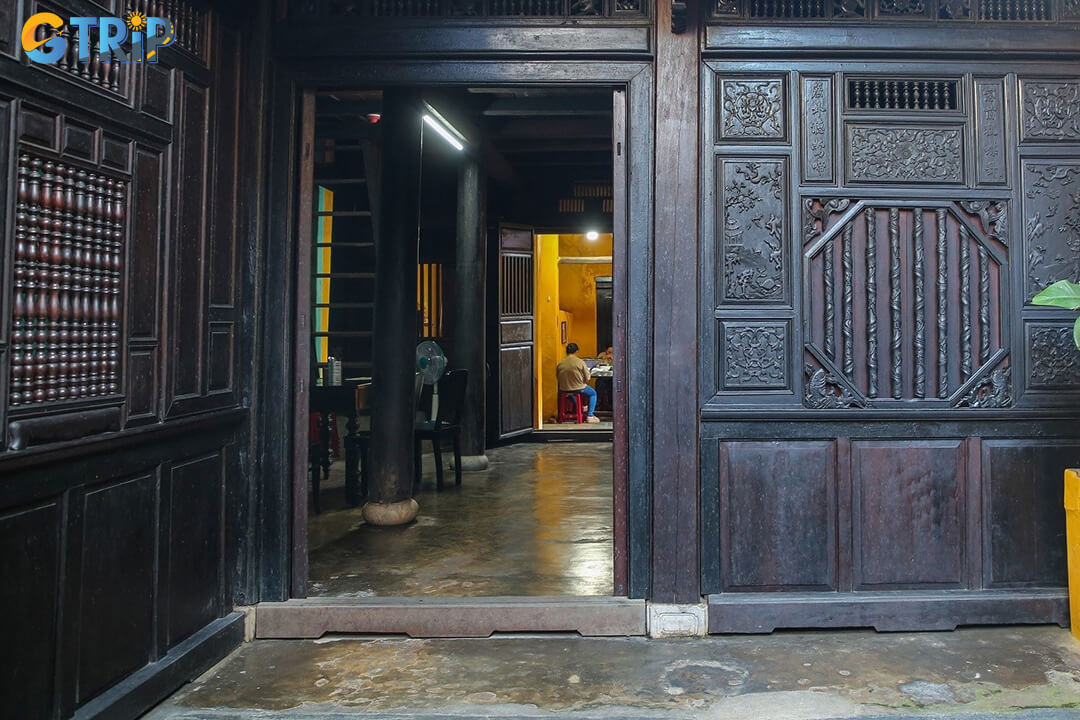
Visit Quan Thang Ancient House early, dress respectfully, and plan your itinerary to make the most of your Hoi An combo ticket
Quan Thang Ancient House is a living story carved in wood, a precious link to a bygone era of prosperity and cultural exchange. Its exquisite architecture, rich history, and the palpable sense of family legacy make it an unmissable stop on any Hoi An itinerary. Though less crowded than nearby sites, its artistic and historical value make it a must-visit for travelers. A visit to Quan Thang allows you to do just that. GTrip hopes this guide helps you plan your journey, and we invite you to explore the timeless beauty of Hoi An.