



Mar - 26 - 2026
The Museum of Trade Ceramics is a cultural treasure chest nestled in the heart of Hoi An, offering a fascinating glimpse into the town's golden era as a vibrant international trading hub. Housed in a beautifully restored 19th-century wooden house, this museum is more than just a collection of old pottery, it is a narrative told in porcelain, clay, and glaze. It chronicles the centuries when merchants from across Asia and the Middle East sailed the "Silk Road of the Sea" to trade goods in this very port. For anyone looking to understand the soul of Hoi An beyond its beautiful lanterns and yellow-walled streets, this museum is an essential stop. In this comprehensive guide, GTrip provides everything you need to know for a memorable visit, such as its unique artifacts and rich history to practical details like ticket prices, location, and travel tips.
Overview of Museum of Trade Ceramics
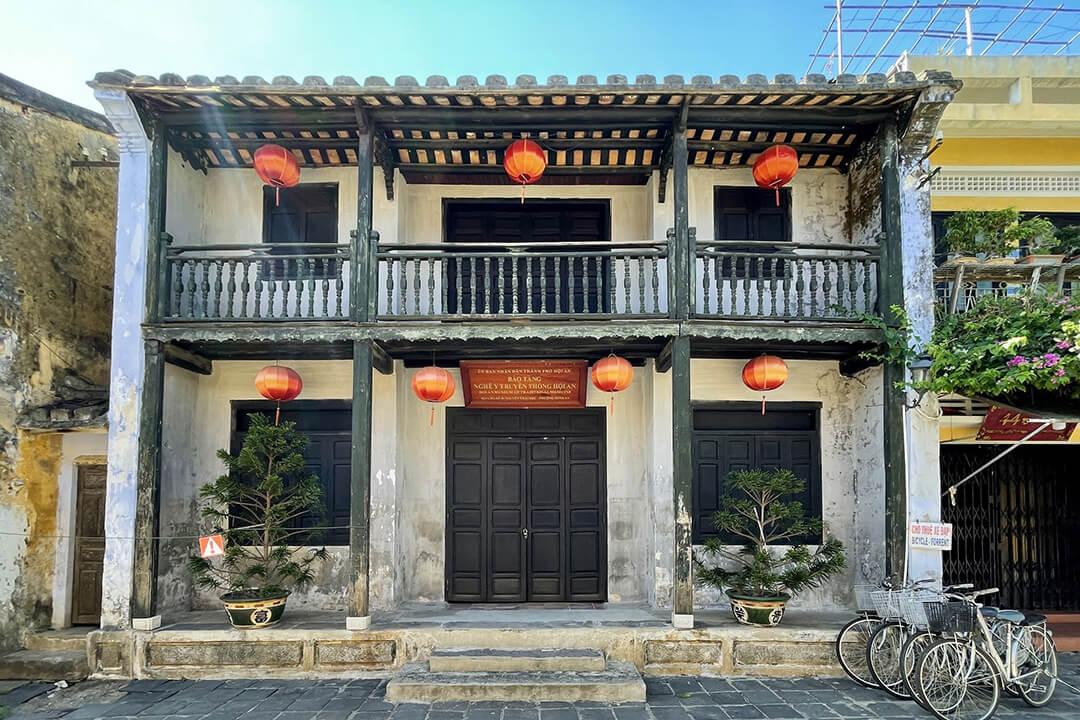
The Museum of Trade Ceramics is one of Hoi An’s key cultural sites, showcasing the region’s ceramic trade from the 8th to 18th centuries. Housed in a traditional two-story wooden home, the museum displays hundreds of artifacts that reflect Hoi An’s vibrant history as a global trading port.
Where is the Museum of Trade Ceramics?
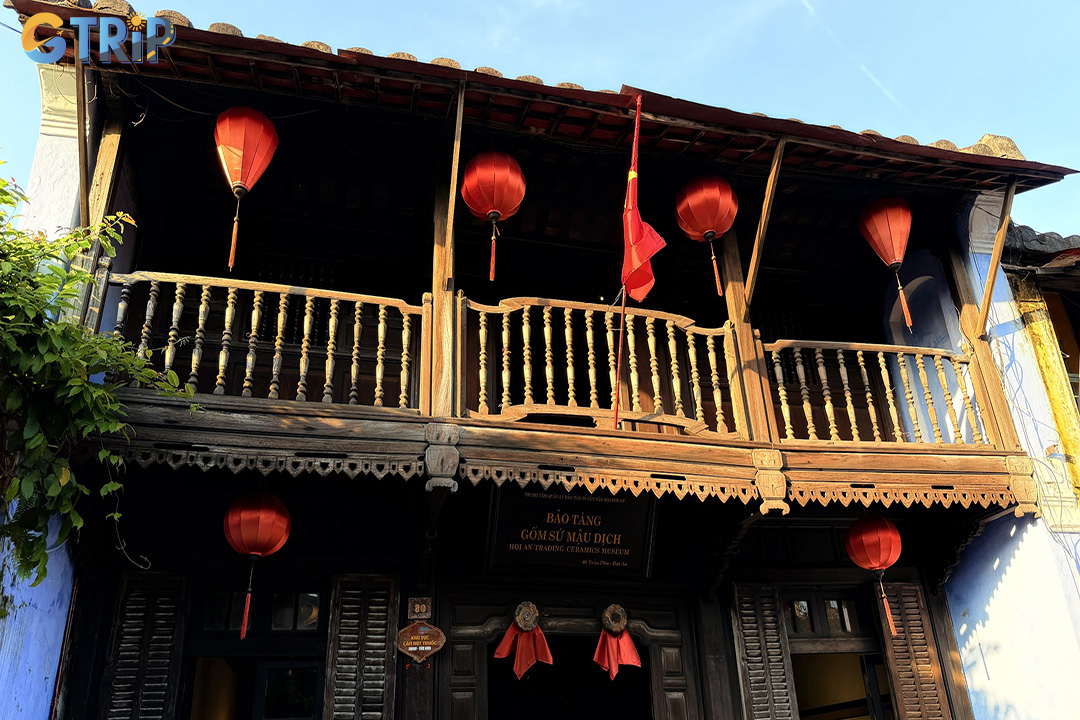
Address: 80 Tran Phu Street, Hoi An Ward (formerly Minh An Ward, Hoi An City, Quang Nam Province), Da Nang City
The Museum of Trade Ceramics is conveniently located on one of the main thoroughfares of Hoi An's UNESCO-listed Ancient Town. Its central position makes it an easy and accessible stop while you explore the other historic attractions in the pedestrian-friendly core of the city.
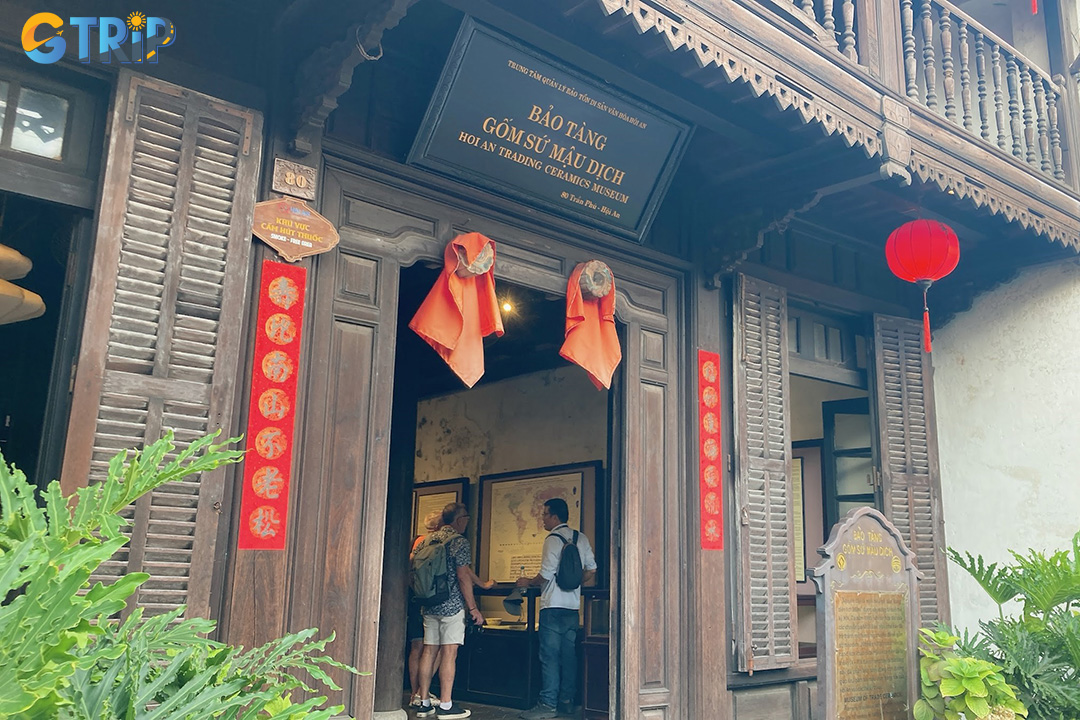
The Museum of Trade Ceramics is a convenient and easily accessible stop as you explore the city’s historic, pedestrian-friendly streets
Opening hours and ticket prices
Accessing the Museum of Trade Ceramics is straightforward and is managed through the integrated ticketing system for the Hoi An Ancient Town. This system provides excellent value, allowing you to explore multiple heritage sites with a single ticket.
- Opening hours: 7:00 AM - 9:00 PM, daily (closed on the 15th day of each month)
- Ticket price: Entrance is included in the Hoi An Old Town ticket.
The ticket costs 120,000 VND for foreign visitors and 80,000 VND for domestic visitors. This combo pass grants you access to 5 different attractions from a list of over 20 designated sites, including old houses, assembly halls, and other museums.
What makes the Museum of Trade Ceramics unique?
The Museum of Trade Ceramics stands out for its focused narrative and historical significance. It is a tangible record of international relations and economic history, showcasing Hoi An's crucial role on the maritime Silk Road. The building itself is a prime example of traditional Hoi An architecture, allowing visitors to step back in time.
- Priceless artifacts: The collection includes over 430 ceramic artifacts dating from the 8th to the 18th centuries.
- Global connections: The exhibits feature ceramics from diverse origins, including China, Japan, Thailand, and even the Middle East, proving Hoi An's global reach.
- Historical context: The museum provides invaluable context for understanding how Hoi An flourished as a major Southeast Asian trading port.
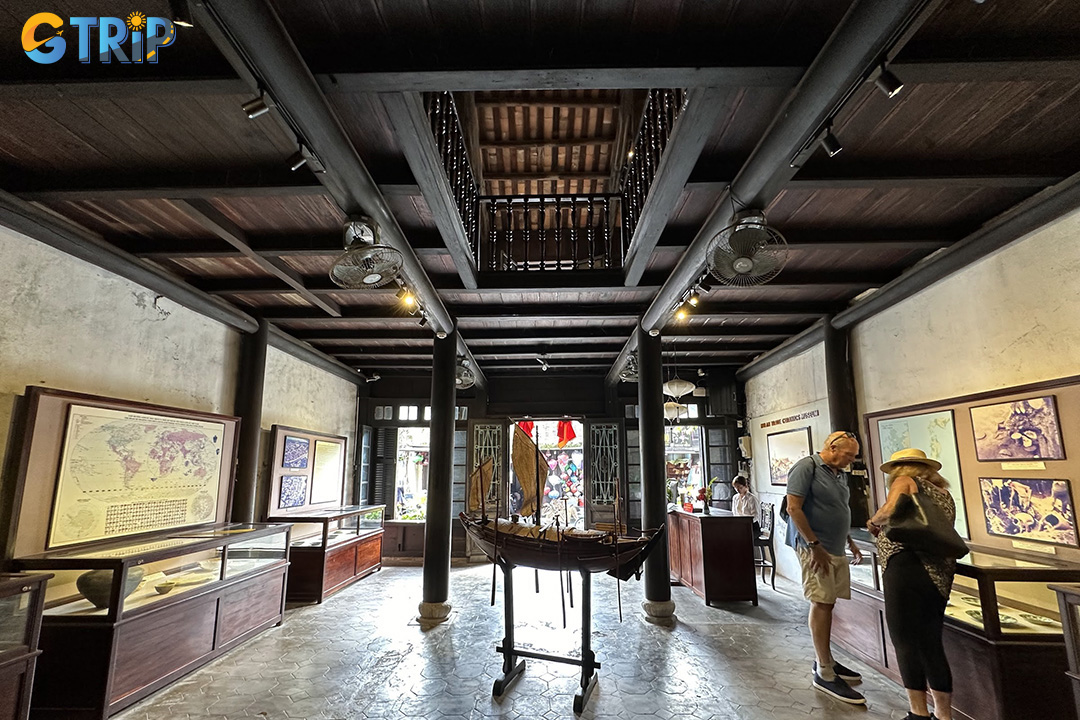
A fascinating museum that highlights Hoi An’s vital role on the Maritime Silk Road through its historic architecture
History of the Museum of Trade Ceramics
The ancient house at 80 Tran Phu Street has an impressive historical journey. This building was once named Rue du Pont de Japonnais during the French colonial period and Cuong De Road in the later stage. Although the exact date of construction remains a mystery, the earliest records of the house appeared in 1848, during the reign of King Tu Duc. In 1915, the house came under the ownership of Mr Thai Thuan Thang’s family until 1992.
A major turning point occurred in 1993 when the Hoi An government purchased the property. With dedicated financial and technical support from Japanese experts, the house underwent a systematic restoration and functional conversion. In 1995, the Museum of Trade Ceramics officially opened, becoming a sanctuary for historical pieces of a bustling commercial gateway that connected Vietnam to the world for centuries.
Unique architecture of the Museum of Trade Ceramics
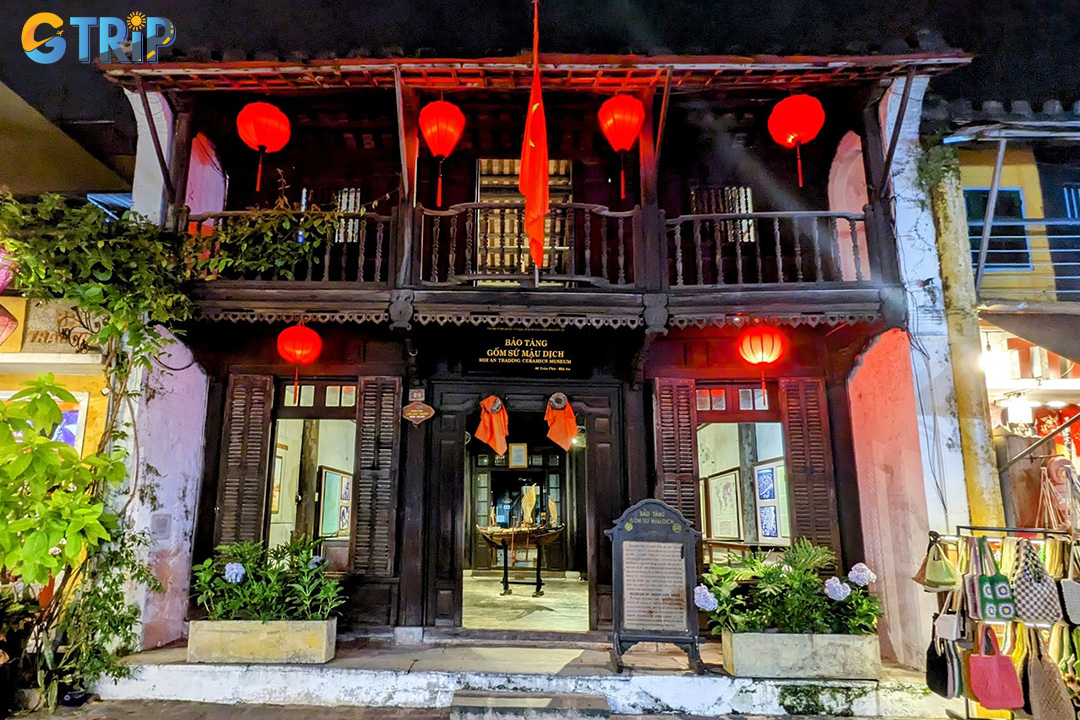
Overall, the museum features the traditional "tube house" style of Hoi An, measuring 30 meters long and 7 meters wide. The two-story structure consists of sturdy brick walls, moss-covered yin-yang tiled roofs, and luxurious wooden interiors. Beyond its functional utility, the residence holds deep spiritual significance with an ancestor altar, a God of Wealth shrine, and a pair of "door eyes" guarding the family's harmony. Here are five architectural highlights not to be missed:
- Traditional wooden design: The building perfectly recreates the 19th-century living space of a merchant with dark timber beams and meticulously carved wooden frames.
- Multicultural fusion: Visitors can easily recognize the blend of elegant Japanese joinery, intricate Chinese artistry, and the airy, open layout characteristic of Vietnamese architecture.
- The courtyard system: The central courtyard not only provides ventilation and natural light but is also a clever architectural solution that allows the house to "breathe" in a tropical climate.
- Intricate carvings: The patterns on the door frames and wooden partitions all carry symbolic meanings for prosperity, luck, and longevity.
- Multifunctional structure: The ground floor was dedicated to display and commerce, while the second floor served as private living quarters, reflecting the practical lifestyle of the ancient merchant class.
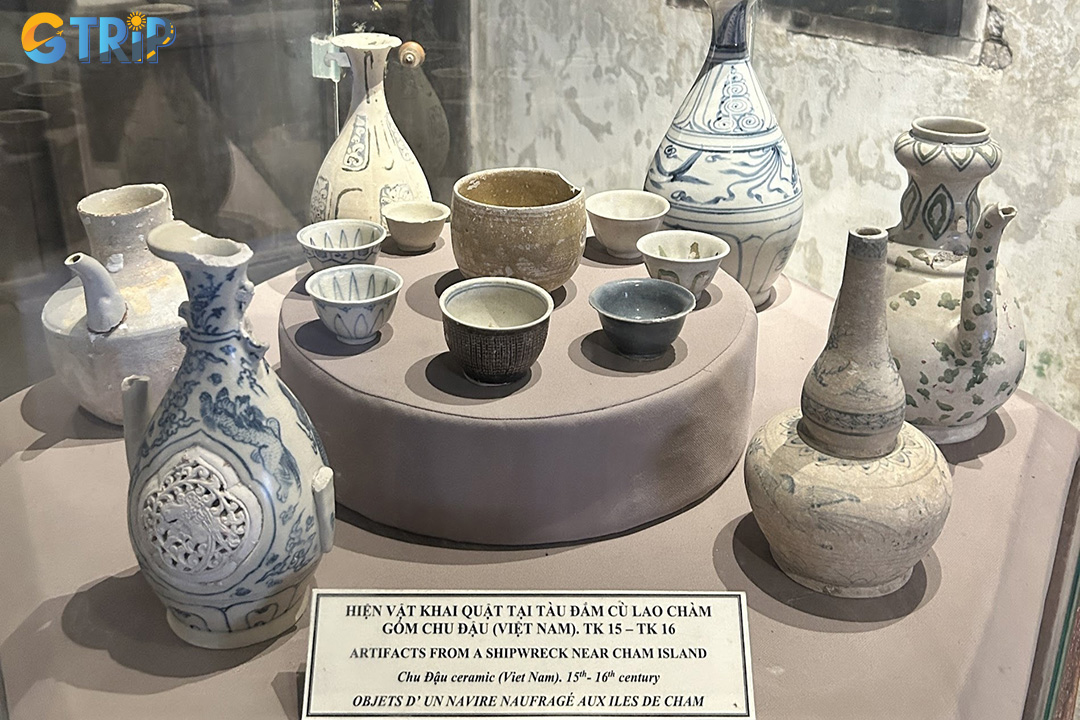
A beautifully preserved 19th-century tube house that blends Vietnamese and Japanese influences, showcasing traditional merchant architecture
Exhibition spaces at the museum
The museum currently showcases nearly 370 unique ceramic artifacts, collected from archaeological excavations on land or salvaged from shipwrecks in the deep waters around Hoi An.
On the ground floor
The ground floor space focuses on highlighting Hoi An's role as a bustling international trading port during the 17th and 18th centuries. This was once a place of exchange for not only ceramics but also spices, silk, bird’s nests, and agarwood.
- A Precious Historical Painting: A replica of the 17th-century painting "Voyage to Trade in Jiaozhi" depicts in detail the journey of Japanese merchant ships to Hoi An to visit the Nguyen Lords, affirming the strong diplomatic ties of that era.
- The Ghe Bau Model: This is a legendary sailboat of the Quang Nam region, masterfully recreated by artisans from Kim Bong Carpentry Village, symbolizing the seafaring prowess of ancient people.
Notably, the ground floor also introduces the Cham Island Shipwreck. This was the largest underwater archaeological excavation in Vietnam (1997-2000), recovering more than 240,000 precious artifacts from the 15th century.
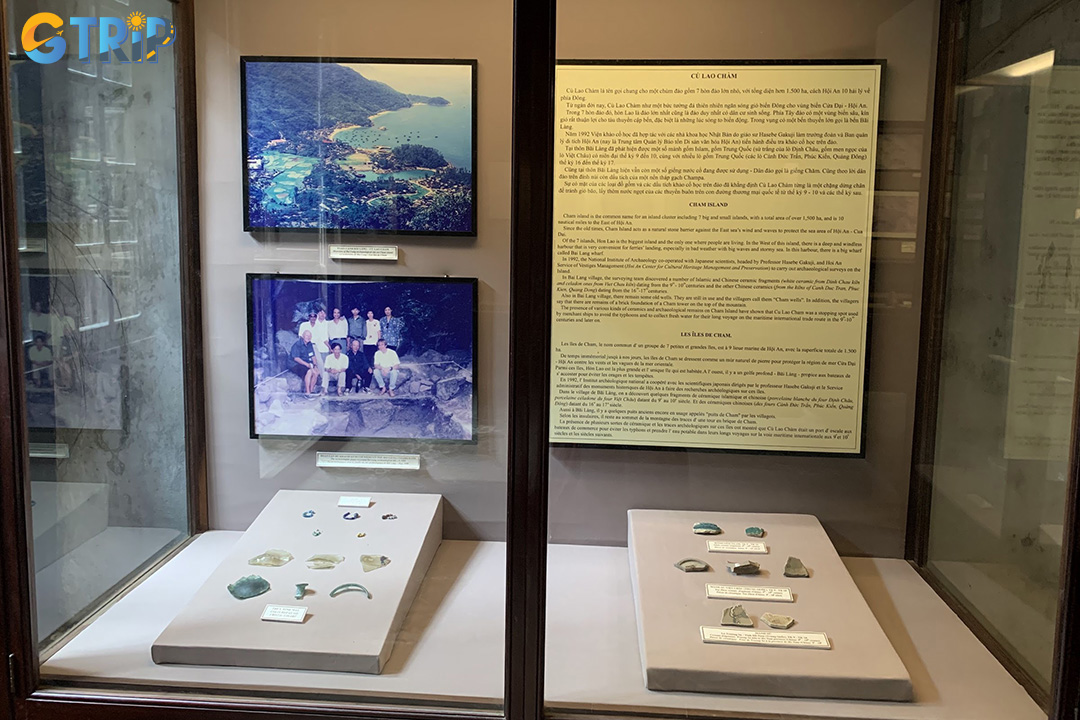
The ground floor vividly recreates Hoi An’s golden age as a 17th-18th century trading port, showcasing historic paintings, and legendary ship models
On the second floor
The second floor displays collections discovered at famous heritage sites around Hoi An, such as the Chaozhou Assembly Hall or Cam Pho Communal House. The presence of ceramics in every corner of daily life proves that it was once the most essential and popular commodity in ancient society. From the balcony on this floor, visitors can take in the view of the weathered yin-yang rooftops layered together, feeling the slow and peaceful rhythm of the Ancient Town through beautiful commemorative photos.
Things to do at the Museum of Trade Ceramics
Visiting the Museum of Trade Ceramics is not just about viewing static artifacts, you can engage in inspiring cultural experiences:
Trace history along the "Maritime Silk Road"
You can trace history along the legendary Maritime Silk Road as you explore the museum’s exhibits. Don’t just walk through, linger by the ancient maps and documents to envision an era when Hoi An was the center connecting Asian and European civilizations. You will gain a deeper appreciation of how small ceramic fragments once crossed oceans and helped shape world trade history.
Admire rare multinational ceramic masterpieces
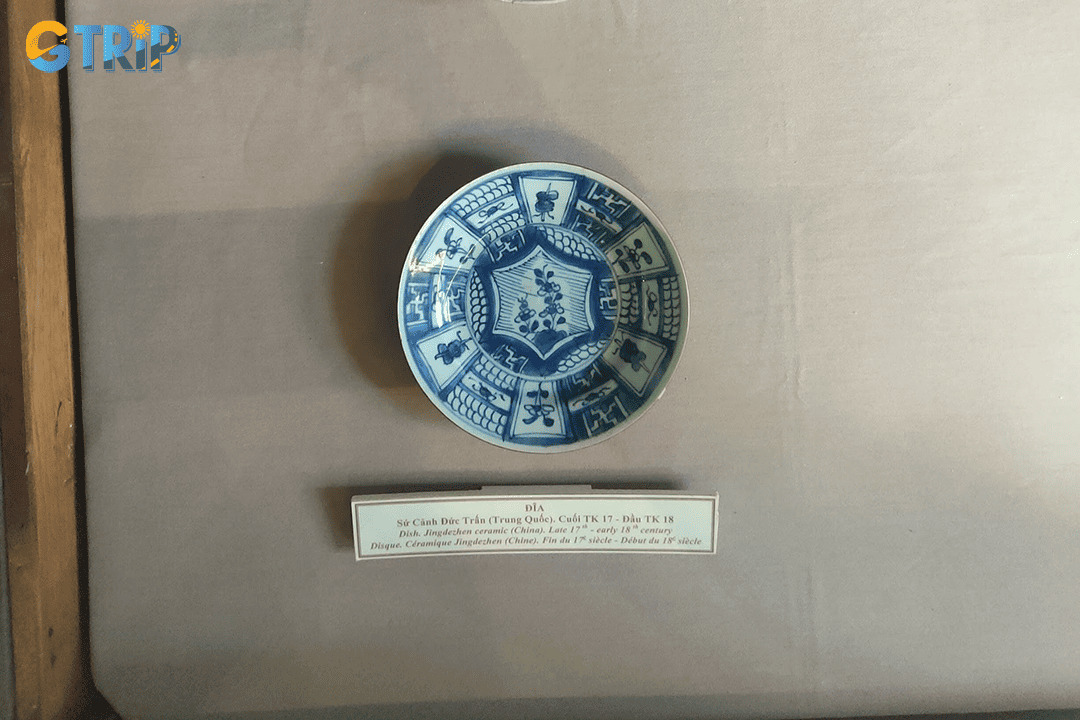
You will have the chance to admire rare multinational ceramic masterpieces up close. Take the time to observe the sophistication of nearly 400 artifacts, from vibrant Japanese Imari ware and high-quality Chinese blue-and-white porcelain to distinctive pottery from the Middle East. Each piece stands as a testament to the artistic and technical excellence achieved between the 9th and 19th centuries.
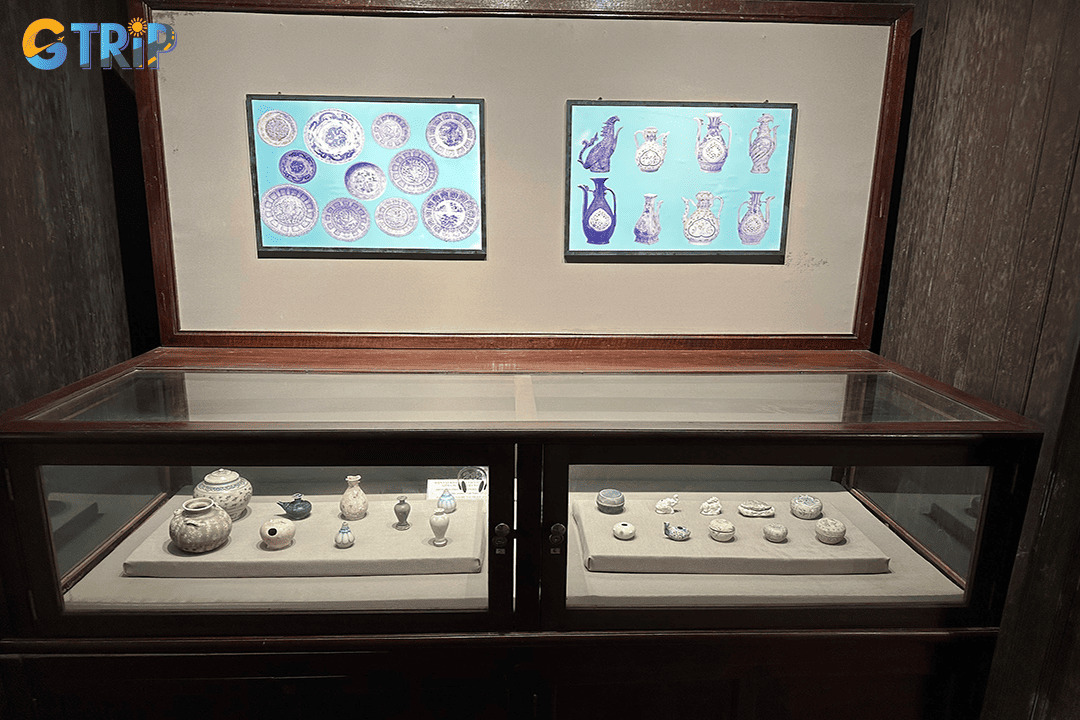
An impressive collection of nearly 400 multinational ceramic masterpieces showcasing the artistic brilliance of Asia and the Middle East from the 9th to 19th centuries
Listen to trading legends through "Storytelling tours"
You can bring the artifacts to life by joining storytelling tours led by knowledgeable local guides. Through their engaging narratives, tales of shipwrecks beneath the sea and the rise of prominent merchant families unfold like scenes from a historical film. You will come away with a richer understanding of the daily lives and ambitions of Hoi An’s ancient residents.
Combine your visit with a culinary journey nearby
You can easily extend your cultural exploration with a culinary journey around the museum area. After your visit, take a stroll through nearby streets and sample local specialties connected to the town’s trading past, such as cao lau, mi quang, or white rose dumplings. This experience allows you to taste the living heritage of Hoi An.

Enhance your museum visit with a nearby culinary adventure, savoring local specialties that reflect Hoi An’s rich trading heritage
Hunt for heritage-inspired souvenirs
You can conclude your visit by searching for heritage-inspired souvenirs in the nearby handicraft shops. Browse carefully and select meaningful gifts such as antique-style ceramic vases, silk lanterns, or finely crafted wood carvings. These keepsakes will help you carry a piece of Hoi An’s timeless charm home.
How to get to Museum of Trade Ceramics?
The Museum of Trade Ceramics is centrally located at 80 Tran Phu Street, right within the pedestrian-friendly streets of Hoi An Ancient Town. Depending on if you are traveling from neighboring cities or staying within the local area, there are several convenient ways to reach this historic site.
From Da Nang International Airport
Visitors can easily reach the museum from the airport by car or motorbike. The journey typically follows the scenic coastal road, providing a straightforward route to the heart of Hoi An. Upon arrival at the edge of the Ancient Town, a short walk through the pedestrian zone will lead you to the museum.
- Distance: ~30 km
- Travel time: 40 - 45 minutes
- Routes: Da Nang Airport -> Coastal Road -> Hai Ba Trung St -> Ly Thuong Kiet St -> Le Loi St
- Optimal option: Private car or taxi for a comfortable and direct transfer
The museum is easily accessible from Da Nang Airport via a scenic 40-45 minute drive to Hoi An’s Ancient Town, followed by a short walk through the pedestrian streets
From Da Nang City center
Traveling from Da Nang city center is very popular among tourists, offering flexible options like self-driving or booking a private transfer. The route is simple and well-paved, allowing travelers to enjoy the coastline before entering Hoi An's historic streets. Parking is available near the Tran Family Chapel for those riding scooters.
- Distance: ~30 km
- Travel time: 45 - 50 minutes
- Routes: City Center -> Coastal Road -> Hoi An Ancient Town -> Le Loi St -> Tran Phu St
- Optimal option: Motorbike for flexibility or private car (round trip starts from 700,000 VND)
From around Hoi An Ancient Town
If you are staying within Hoi An, getting to the museum is quick and convenient. Since the museum is located at 80 Tran Phu Street within the pedestrian-only zone, most visitors prefer eco-friendly transport methods to reach the town's perimeter before walking to the site.
- Distance: Short range
- Travel time: 5 - 30 minutes
- Routes: Le Loi St -> Tran Phu St
- Optimal option: Bicycle or walking to enjoy the atmosphere of the pedestrian zone
Transportation options
A variety of transportation means are available to suit different needs. Visitors can choose from private cars, taxis, electric cars, or hotel shuttle buses. For a more local experience, hiring a minivan, riding a bicycle, or renting a scooter are excellent choices. Note that motorbikes must be parked outside the pedestrian zone.
- Private car: The most comfortable and hassle-free option.
- Taxi/Grab: Widely available and reasonably priced.
- Shuttle bus: A budget-friendly choice with regular departures from Da Nang.
- Motorbike: Ideal for experienced riders who want flexibility and adventure.
- Bicycle/Walking: Required for accessing the museum’s direct entrance on Tran Phu St
Visitors can choose from various transport options making it easy and flexible to reach the museum in Hoi An’s pedestrian zone
Other attractions near Museum of Trade Ceramics
Your Hoi An Old Town ticket allows you to visit several other heritage sites. Since the Museum of Trade Ceramics is centrally located, you can easily walk to other iconic attractions within minutes.
- Japanese Covered Bridge: The undisputed symbol of Hoi An, this 18th-century bridge is just a short walk away. You can admire its unique architecture and learn about the cultural exchange between Japanese and Vietnamese communities that shaped the town’s history.
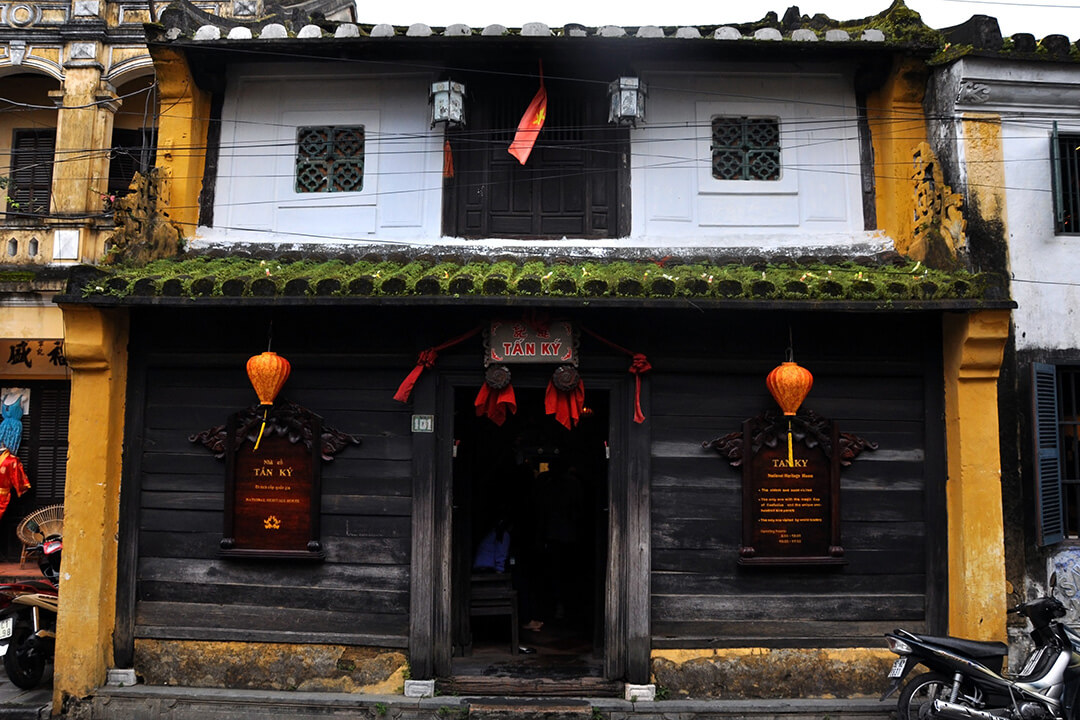
- Tan Ky Old House: A perfectly preserved 200-year-old merchant's house offering insights into the lives of Hoi An's wealthy traders. Visitors can explore its original furnishings and discover how generations of one family maintained this remarkable heritage home.
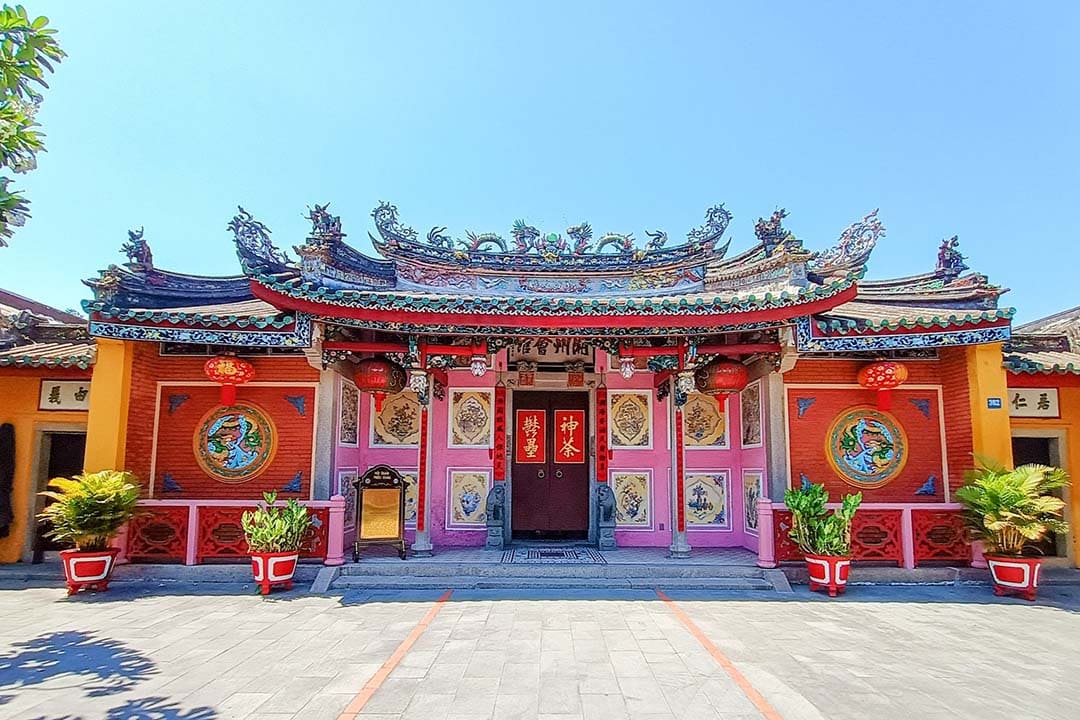
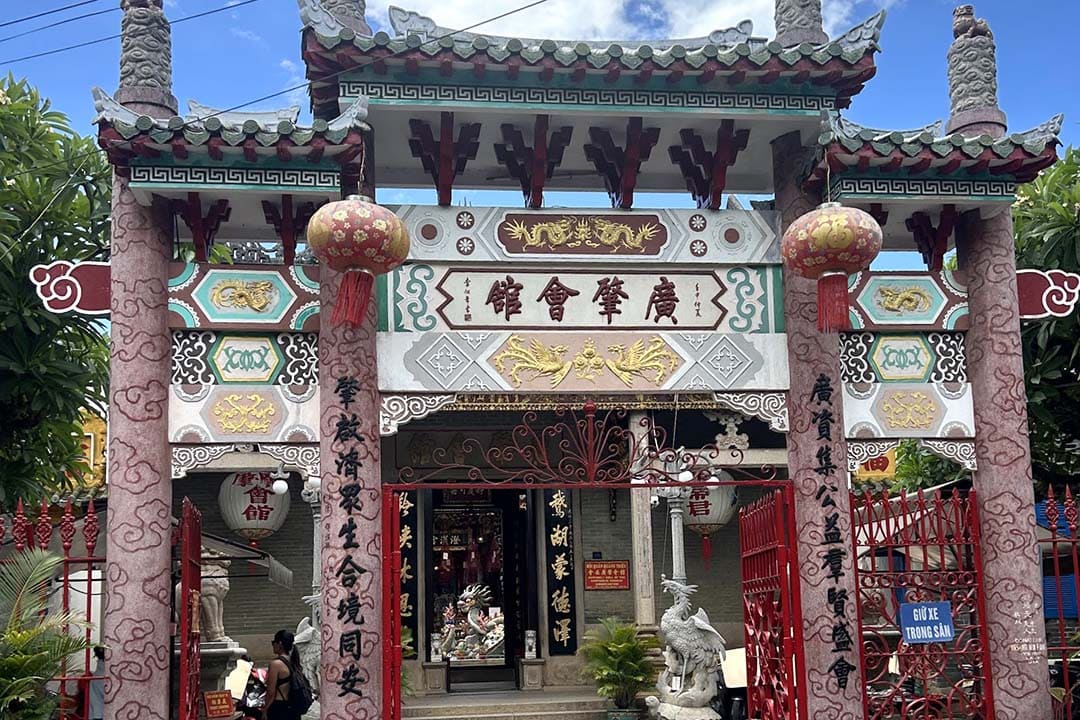
- Fukian Assembly Hall: The most impressive of the Chinese assembly halls, adorned with elaborate carvings, statues, and a stunning main gate. Inside, you will find a peaceful courtyard and richly decorated altars that reflect the spiritual life of the Chinese community in Hoi An.
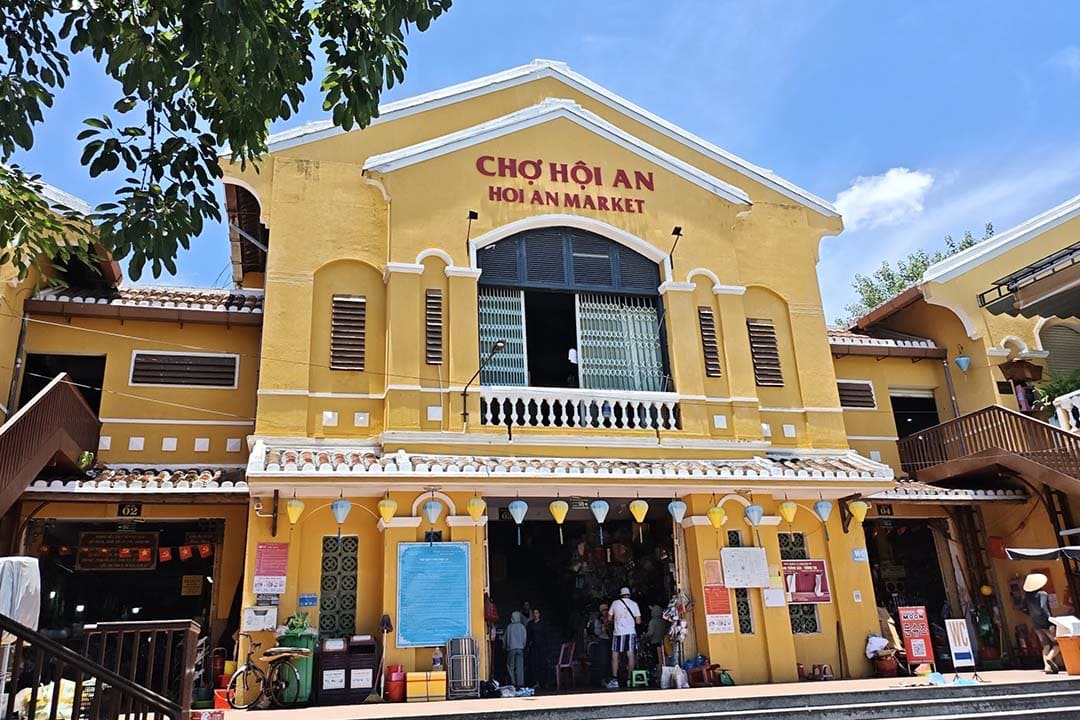
- Hoi An Central Market: A bustling, vibrant market where you can experience local life, sample delicious street food, and shop for souvenirs. As you wander through the lively stalls, you will feel the authentic energy and flavors that define everyday life in this ancient town.
Tips for visiting the Museum of Trade Ceramics
To make your visit complete and meaningful, please keep the following in mind:
- Protect the artifacts: Strictly avoid touching the artifacts to preserve this heritage for future generations.
- Ideal timing: It is best to arrive early in the morning to enjoy the quiet atmosphere and avoid the crowds.
- Attire & mobility: Prioritize breathable clothing and comfortable flat shoes, as the ancient wooden floors require gentle movement.
- Baggage: Carry small, compact bags for easy movement within the narrow "tube house" space.
- Mindful etiquette: Maintain a quiet environment and speak softly so as not to disturb the solemn atmosphere of the museum.
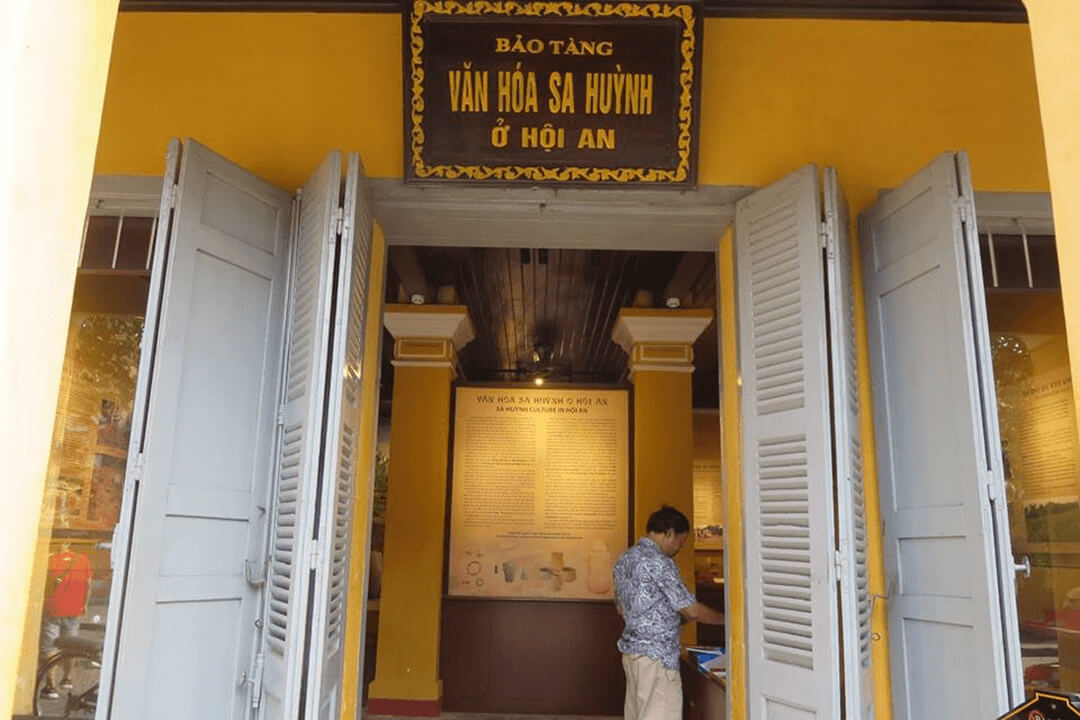
- Expand your itinerary: Don't forget to combine your visit with nearby museums, such as the Museum of Sa Huynh Culture, for a more comprehensive view of Hoi An's history.
Plan with respectful etiquette, comfortable attire, and early arrival to fully enjoy a meaningful and seamless museum experience
The Museum of Trade Ceramics is far more than just a collection of pottery, it's a vital storyteller, preserving the legacy of Hoi An's glorious past as a cosmopolitan center of commerce. It provides a quiet, reflective space to connect with the history that shaped this enchanting town. By adding this cultural gem to your itinerary, you will gain a deeper appreciation for the rich heritage that lies beneath the surface of Hoi An's lantern-lit charm. For more expert travel guides and tips, trust GTrip to help you explore the best of Vietnam.