



Mar - 31 - 2026
The Cantonese Assembly Hall in Hoi An is more than just a heritage site. It's a vibrant tapestry of history, art, and spirituality woven into the heart of Vietnam's most enchanting town. Known locally as Quang Trieu Assembly Hall or the evocative Ong Pagoda, this architectural gem stands as a testament to the powerful influence of the Chinese merchant community that once thrived here. For travelers seeking to understand the soul of Hoi An beyond its lantern-lit lanes, a visit to this hall is an essential experience. In this definitive GTrip guide, we’ll walk you through everything you need to know, such as its storied past and breathtaking architecture to practical tips that will make your visit unforgettable. Consider this your one-stop resource for exploring one of Hoi An’s most dazzling cultural treasures.
Overview of the Cantonese Assembly Hall in Hoi An
The Cantonese Assembly Hall in Hoi An (Hoi Quan Quang Dong in Vietnamese) serves as a vital historical and spiritual landmark within the Ancient Town. Its alternative names, Quang Trieu Assembly Hall and Ong Pagoda, are used interchangeably by locals and visitors alike. The name "Quang Trieu" directly refers to Guangzhou (Canton) Prefecture in China, the ancestral home of the community that built it. "Ong Pagoda", on the other hand, affectionately translates to "Pagoda of the Lord", a clear reference to its principal deity: the revered Chinese General Guan Yu (Quan Cong in Vietnamese). A towering figure in Chinese culture, he is worshipped as a symbol of loyalty, integrity, and righteousness. This dual role as both a community center and a sacred place of worship makes it a fascinating site to explore.
Where is the Cantonese Assembly Hall?
Address: No. 176 Tran Phu Street, Hoi An Ancient Town, Hoi An Ward (formerly Minh An Ward, Hoi An City, Quang Nam Province), Da Nang City
Nestled in the very core of Hoi An's UNESCO-listed Ancient Town, the Cantonese Assembly Hall in Hoi An is remarkably easy to find. This prime location places it directly on one of the town's main arteries, Tran Phu Street, a bustling thoroughfare lined with yellow-walled shophouses, art galleries, and cafes. It is just a stone's throw from other major attractions, situated conveniently between the iconic Japanese Covered Bridge and the Hoi An Central Market. This makes it a natural and seamless stop on any walking tour of the old town.
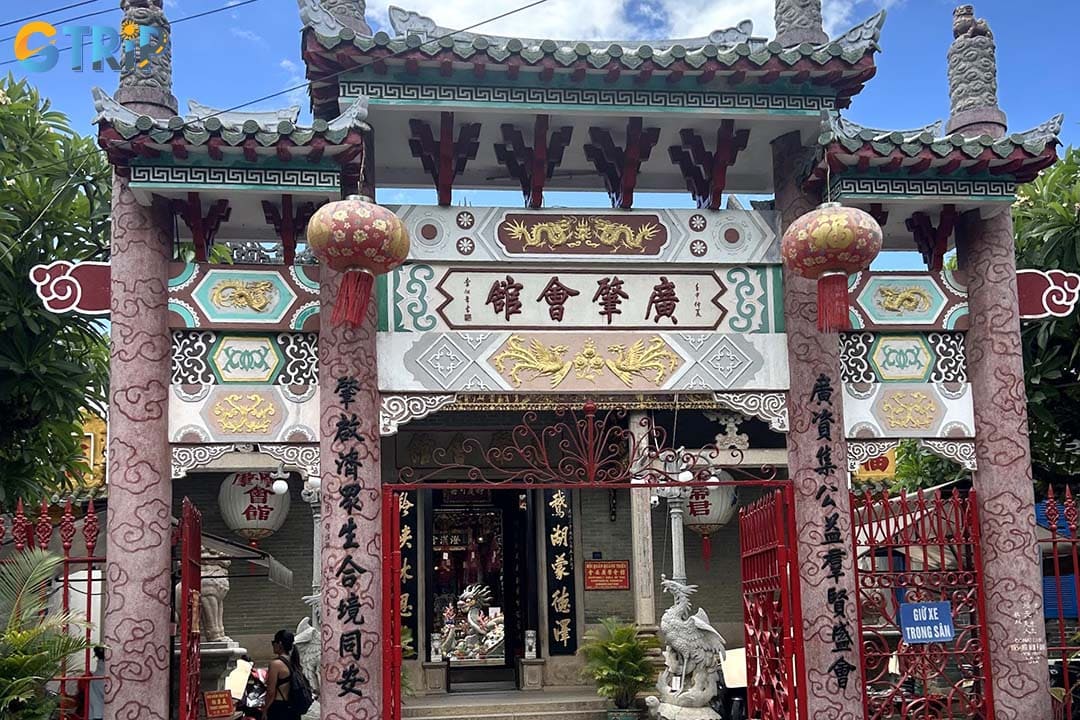
Cantonese Assembly Hall in Hoi An is as known as Quang Trieu Assembly Hall and Ong Pagoda
Opening hours and ticket prices
- Opening hours: 7:00 AM - 6:00 PM, daily
- Ticket price: Included in the Hoi An Ancient Town combo ticket (120,000 VND for international visitors)
Unlike a standalone museum, the Cantonese Assembly Hall entrance fee is part of a package deal. To explore the heritage sites within the old town, visitors are required to purchase the Hoi An Old Town entrance ticket. This combo ticket costs 120,000 VND (approximately $5 USD) and grants you access to five different attractions from a list of over 20 designated sites. You can choose the Cantonese Assembly Hall as one of your five stops. This ticket is valid for the duration of your stay and is essential for a comprehensive cultural experience.
What makes the Cantonese Assembly Hall in Hoi An unique?
While Hoi An is home to several beautiful Chinese assembly halls, the Cantonese Assembly Hall possesses a distinct character that sets it apart. Its uniqueness stems from a powerful combination of artistic execution, specific dedication, and a palpable sense of history.
- Masterful ceramic mosaics: The hall is a spectacle of ceramic art. Every surface is alive with intricate mosaics crafted from broken pottery, creating a vibrant, almost three-dimensional effect that tells ancient stories.
- Dedication to Guan Yu: Unlike other halls that might focus on sea goddesses or clan ancestors, this hall's primary focus is the deified warrior General Guan Yu. This gives it a unique atmosphere of martial virtue, loyalty, and justice.
- A living storybook: The architecture itself is a narrative. The combination of grand stone columns, rich and dark woodwork, and brilliantly colored decorative elements creates an impressive example of traditional Cantonese design principles.
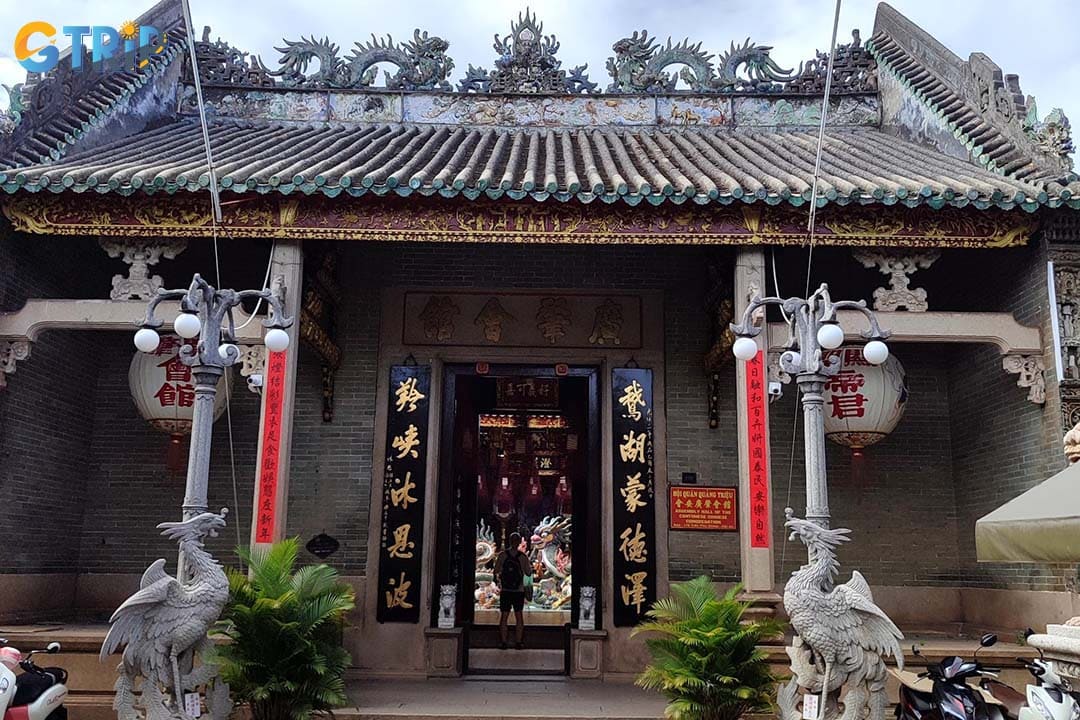
The Cantonese Assembly Hall in Hoi An has its own uniqueness that attracts many visitors
History of the Cantonese Assembly Hall in Hoi An
The Cantonese Assembly Hall remains a lasting symbol of settlement, unity, and spiritual life for the Cantonese Chinese community in Hoi An. Its historical journey can be traced through the following milestones:
- 1885: The assembly hall was officially constructed by 18 merchants from Guangzhou (China) on the vibrant Tran Phu Street. It is also known as Quang Trieu Assembly Hall or Ong Pagoda.
- 15th - 19th centuries: As Hoi An flourished as a major trading port, the hall served as a communal hub where Cantonese migrants gathered, supported one another in trade, and maintained cultural traditions in their new homeland.
- Before 1911: The hall was originally dedicated to Thien Hau (Mazu), the sea goddess protecting sailors and merchants, reflecting the maritime nature of their livelihood.
- 1911: The community expanded the spiritual space by formally honoring Confucius, emphasizing the values of education, ethics, and Confucian philosophy.
- From 1915 onward: Guan Gong (Quan Vu) became the principal deity worshipped in the main sanctuary. This highlights the virtues of loyalty, righteousness, and integrity. Qualities deeply respected among merchants of the time.
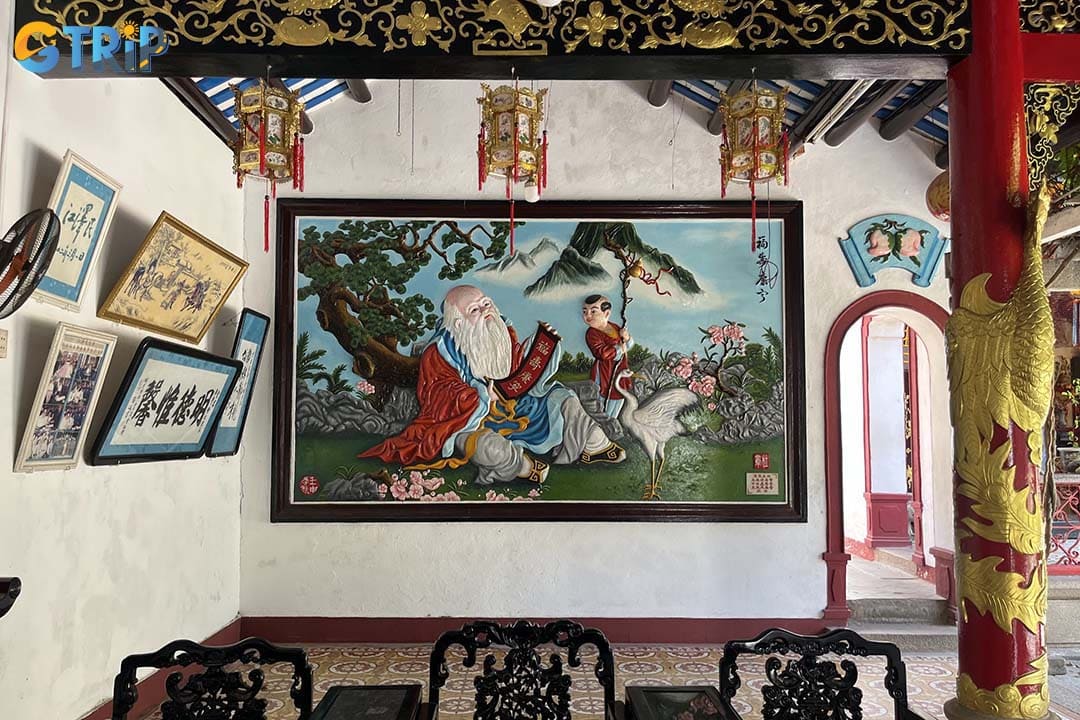
The history of Cantonese Assembly Hall starts from 19th century
Architecture of the Cantonese Assembly Hall in Hoi An
Covering approximately 1,700 square meters, the Cantonese Assembly Hall includes an outer gate, inner gate, front courtyard, main sanctuary, and a rear garden. It stands as one of the largest and most visited Chinese architectural complexes in Hoi An. Notably, many structural components were crafted in China, transported by sea, and assembled on site. The layout follows the Chinese character “Guo” (囯), creating an enclosed courtyard design with a triple-arched entrance and a spacious garden adorned with bonsai trees.
Outer gate (First gate)
The outer gate reflects traditional Chinese architectural aesthetics, featuring three entrances and four pillars resting on gourd-shaped bases. It is crowned with three-layered roofs and a plaque engraved with four Chinese characters meaning “Cantonese Assembly Hall”. Situated near a street junction at the end of a path leading toward the river, it marks the ceremonial entrance.
Between the two gates lies a small courtyard with a pair of stone guardian lions, stone benches, and frangipani trees. Visitors are required to present their entrance tickets here before proceeding further.
Inner gate (Second gate)
The inner gate is built of brick and topped with tiled roofing, decorated with dragon motifs facing the sun. Unlike the outer gate, it has a single entrance flanked by stone phoenix statues. A name board inscribed with four Chinese characters and two vertical lacquered-and-gilded panels adds a striking visual accent. The red wooden doors feature circular handles shaped like dragon heads.
Under the eaves, intricate wooden carvings depict royal scenes, mandarins, courtly life, floral motifs, and mythical creatures. These works were commissioned by Chinese merchants and executed by artisans from Kim Bong Carpentry Village.
Immediately beyond the gate are two large murals illustrating scenes from the 14th-century Chinese historical novel Romance of the Three Kingdoms:
- On the right: the “Oath of the Peach Garden”, where Liu Bei, Guan Yu, and Zhang Fei pledge brotherhood in defense of the Han dynasty.
- On the left: Guan Yu escorting Liu Bei’s wives across enemy territory, demonstrating courage and unwavering loyalty.
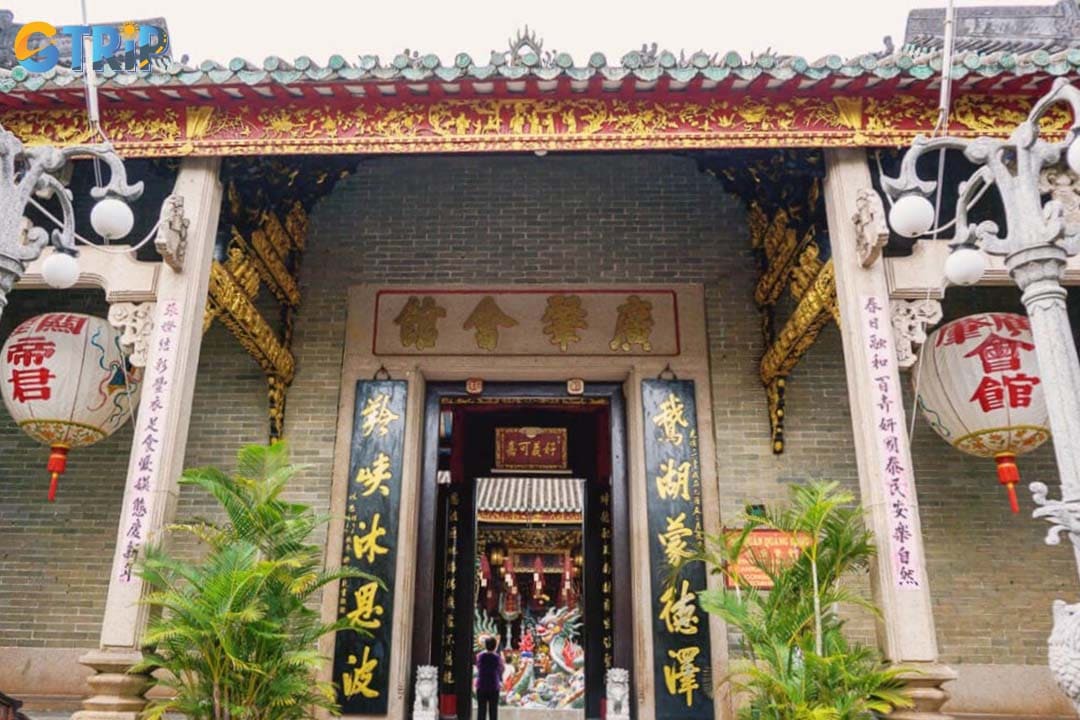
The Cantonese Assembly Hall has an outer gate, inner gate, front courtyard, main sanctuary, and a rear garden
Front courtyard
Stepping inside, visitors encounter a fountain centerpiece featuring a majestic dragon sculpture inspired by the legend of the carp transforming into a dragon. The statue is decorated with colorful ceramic and glass fragments and stands in a pond filled with golden carp. Two side corridors on the east and west connect the front hall to the main sanctuary. The surrounding walls are embellished with vibrant decorative panels.
Main sanctuary
The main sanctuary is spacious and houses three altars:
- The central altar is dedicated to Guan Gong and his legendary horse, Red Hare.
- The right altar honors Phuoc Duc Chanh Than (the Earth God).
- The left altar worships Tai Bach Tinh Quan (the God of Wealth).
The bronze statue of Guan Gong, about 40 centimeters tall, portrays him with a red face, seated solemnly while holding a weapon, his foot resting upon a turtle. Surrounding the main figure are numerous statues donated by devotees, particularly merchants. Two life-sized horse statues, one white and one red, symbolize Guan Gong’s battle steeds. Like many other assembly halls in Hoi An, large spiral incense coils hang overhead, and wooden ship models are displayed as offerings.
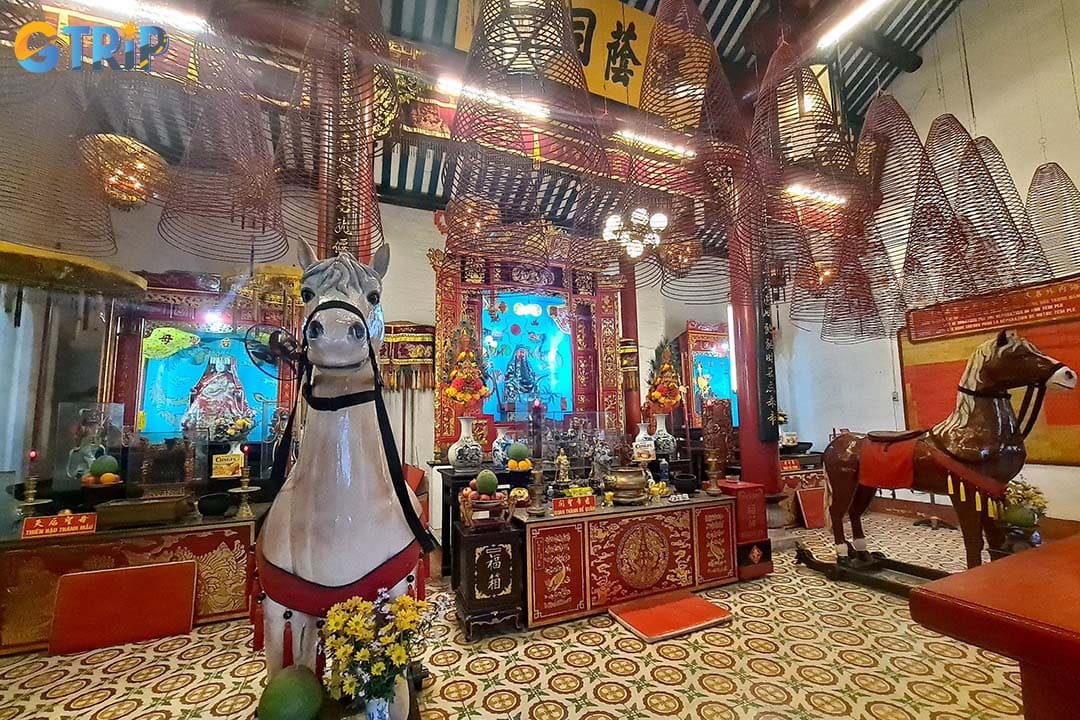
The spacious main sanctuary is where visitors pray and worship
East house & West house
The two side halls are furnished with reception tables and chairs. A large “Double Happiness” character hangs prominently alongside photos of community events, antiques, and paintings of Chinese myths like “The Eight Immortals Crossing the Sea”. These spaces also provide visitors with a place to rest before continuing their exploration.
Rear garden
Behind the main sanctuary lies a shaded garden filled with ancient trees, ornamental plants, and stone statues. Access is via narrow pathways on either side of the sanctuary. A large mural on the rear wall depicts “Three Visits to the Thatched Cottage”, where Liu Bei repeatedly seeks Zhuge Liang’s advice, symbolizing sincerity and determination in seeking talent.
At the center of the garden stands the statue of the “Five Rams”, referencing a legend from Guangzhou, the ancestral homeland of the Cantonese community. According to folklore, during a severe drought, five deities rode five differently colored goats to deliver rice to the people. After departing, the goats turned into stone, giving Guangzhou the nickname “City of Five Rams”. A dynamic dragon sculpture inlaid with vivid green ceramics further enhances the sacred and historic ambiance of the garden, providing a striking focal point within the tranquil setting.
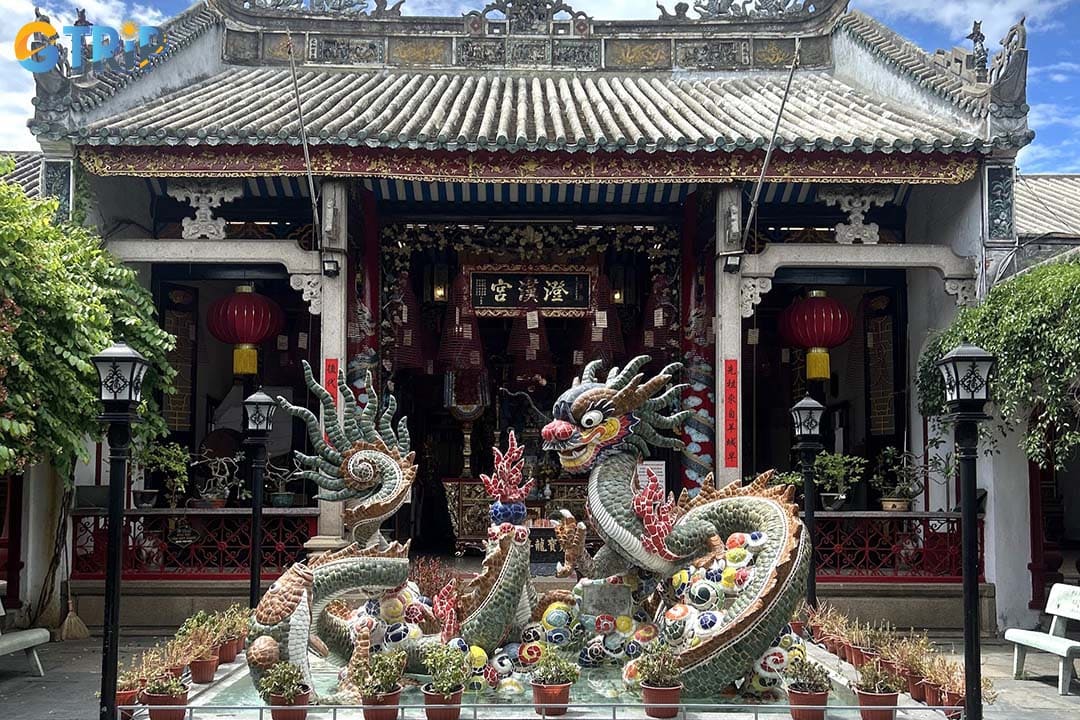
At the garden lies a statue of a legend from Guangzhou, the ancestral homeland of the Cantonese community
Top 8 things to do at the Cantonese Assembly Hall in Hoi An
Located at 176 Tran Phu Street, the Cantonese Assembly Hall (also known as Hoi Quan Quang Dong) is one of the most famous architectural gems in Hoi An Ancient Town. Built in 1885 by Chinese merchants, this site offers a deep dive into history, art, and spirituality. Here are the best things to do when you visit:
1. Admire the sophisticated Cantonese architecture
The first thing that strikes visitors is the unique architectural style that blends stone and wood seamlessly. You can explore the three-gate entrance (Cong Tam Quan) and the main hall, which features heavy stone pillars and intricate carvings. This structure is a testament to the skilled craftsmanship of ancient Cantonese artisans and remains one of the most well-preserved heritage sites in Vietnam.
2. Witness the masterpiece Mosaic Dragon Statue
In the center of the courtyard, you will find a magnificent winding Mosaic Dragon Statue around a fountain. This masterpiece is skillfully crafted from thousands of pieces of broken ceramics and porcelain. The dragon represents power and nobility in Oriental culture, making it the most iconic spot for visitors to admire and appreciate the artistic precision of the builders.
-17749207586jUqU.jpg)
Mosaic Dragon Statue around a fountain is a masterpiece that you should not miss
3. Discover rare antiques and historical treasures
The Cantonese Assembly Hall serves as a small museum preserving many valuable artifacts. During your tour, you should look for:
- A pair of rare Celadon Vases with exquisite glazes.
- A massive Bronze Incense Burner standing 1.6 meters tall and 0.6 meters wide.
- Four large Horizontal Lacquered Boards gilded in gold.
- Documents and costumes related to the daily life of the Cantonese community in Hoi An centuries ago.
4. Immerse yourself in the spiritual atmosphere with incense spirals
One of the most serene experiences is looking up at the ceiling to see giant incense spirals hanging from the rafters. These incense coils can burn for several days, filling the air with a faint, meditative scent. Visitors often write their wishes on a small piece of red paper and attach it to the incense, hoping for health and prosperity for their families.
5. Pay respects to General Guan Yu
The central altar of the hall is dedicated to Guan Yu (Quan Cong), a legendary general from the Three Kingdoms period. He is worshipped as a symbol of loyalty, integrity, and bravery. Taking a moment to observe the solemn statues and learning about his virtues will help you understand the core values of the Chinese diaspora in Hoi An.
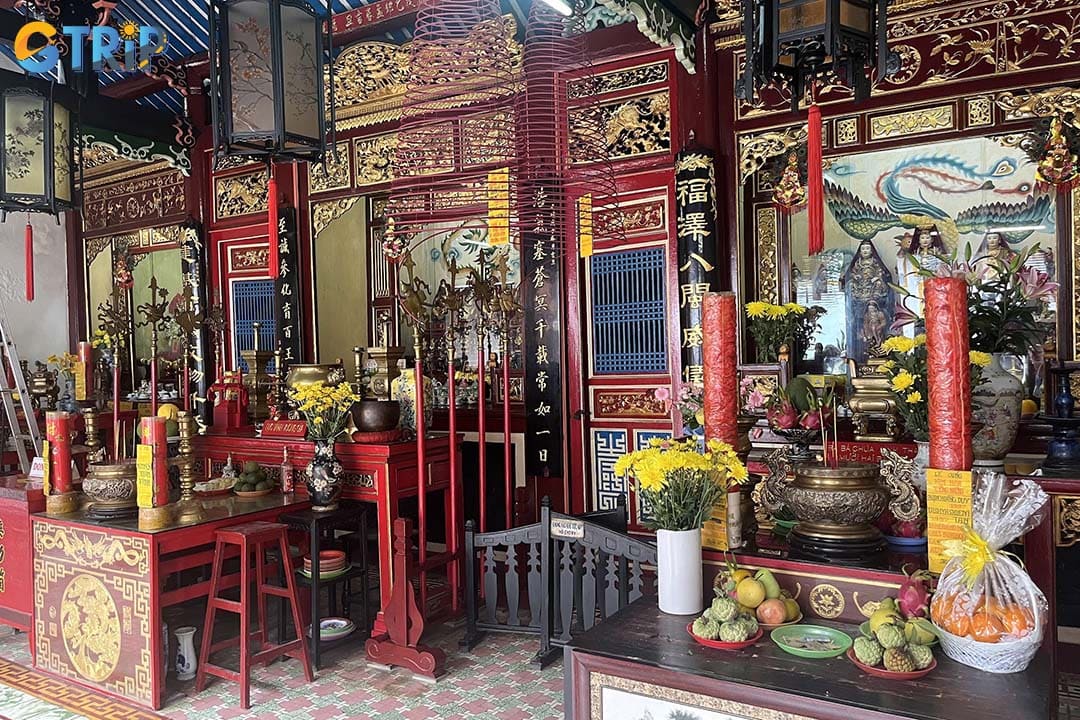
Paying respect to General Guan Yu and worshiping at the hall are essential when getting there
6. Experience vibrant traditional festivals
If you visit at the right time, you can witness the most important cultural events of the local community:
- Nguyen Tieu Festival (First full moon of the lunar year): This festival features traditional rituals to pray for a peaceful and prosperous new year.
- Guan Yu Festival (24th day of the 6th lunar month): This is the largest annual event at the assembly hall, attracting crowds of locals and tourists who come to offer incense and celebrate the anniversary of Guan Yu.
7. Explore the artistic wall paintings and reliefs
Don't forget to examine the walls decorated with vivid Wall Paintings and ceramic reliefs. Most of these artworks depict scenes from the classic novel Romance of the Three Kingdoms. These murals are decorative and serve as educational tools, reflecting the cultural exchange and the preservation of Chinese heritage within the Vietnamese landscape.
8. Capture stunning nostalgic photos
With its vibrant red colors, ancient mossy walls, and ornate details, the Cantonese Assembly Hall provides a perfect backdrop for photography. You can take photos at the grand entrance, the dragon fountain, or the quiet corridors because each corner tells a story. It is a must-visit spot for those who want to capture the nostalgic beauty of Hoi An Ancient Town.
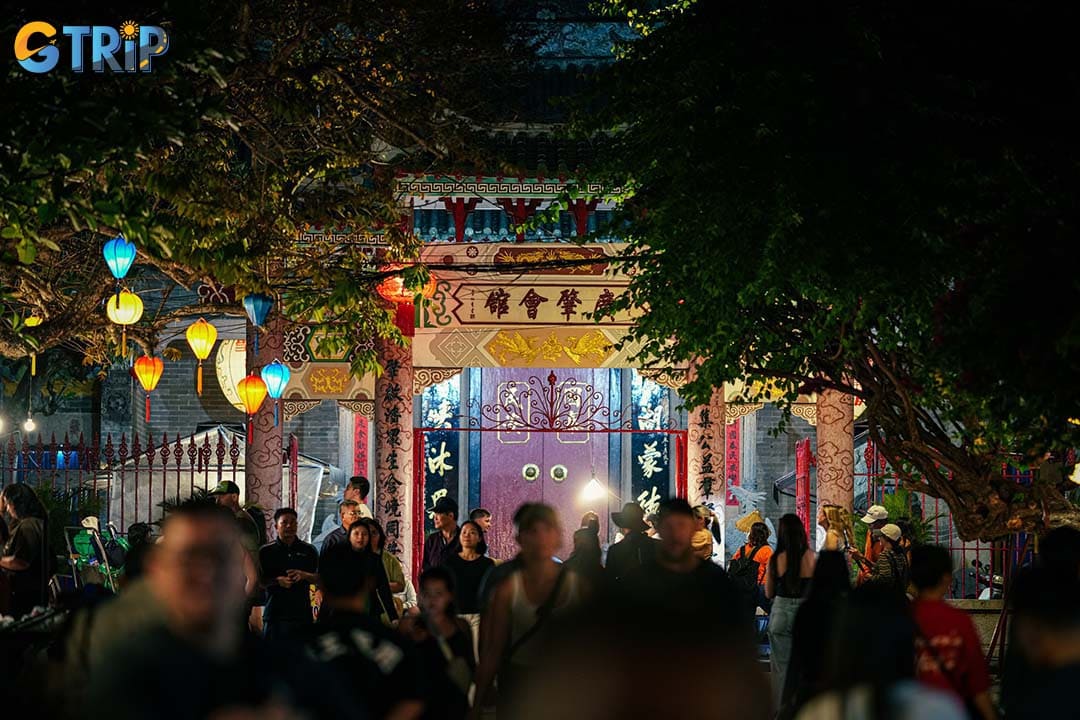
You can take stunning nostalgic photos of the hall because of its details
How to get to Cantonese Assembly Hall in Hoi An?
The Cantonese Assembly Hall is a symbol of the historical trade connection between China and Vietnam and also a masterpiece of traditional architecture and art. Stepping through its gates, you will find a peaceful sanctuary filled with intricate carvings, sacred altars, and stories from the past.
From Da Nang International Airport
Upon arriving at Da Nang International Airport, the most convenient way to reach the Cantonese Assembly Hall is by booking a taxi or a private car. This allows you to travel directly to the edge of the Hoi An Ancient Town without worrying about navigation. Most drivers are familiar with the route via the scenic coastal road, providing a smooth start to your journey.
- Distance: Approximately 30 km
- Travel time: 45 - 55 minutes
- Routes: Vo Nguyen Giap - Truong Sa - Hai Ba Trung
- Optimal option: Taxi or private car for maximum convenience and luggage space
From Da Nang City center
Travelers staying in Da Nang City center or near My Khe Beach can choose from various budget-friendly options. Riding a motorbike is popular for those seeking adventure and flexibility. Alternatively, the local bus no.1 is a very affordable choice for backpackers, running frequently between the two cities and offering a glimpse into the local life during the transit.
- Distance: 30 km
- Travel time: 45 - 60 minutes
- Routes: Le Van Hien or the coastal road via Truong Sa
- Optimal option: Motorbike for scenic views or bus to save costs
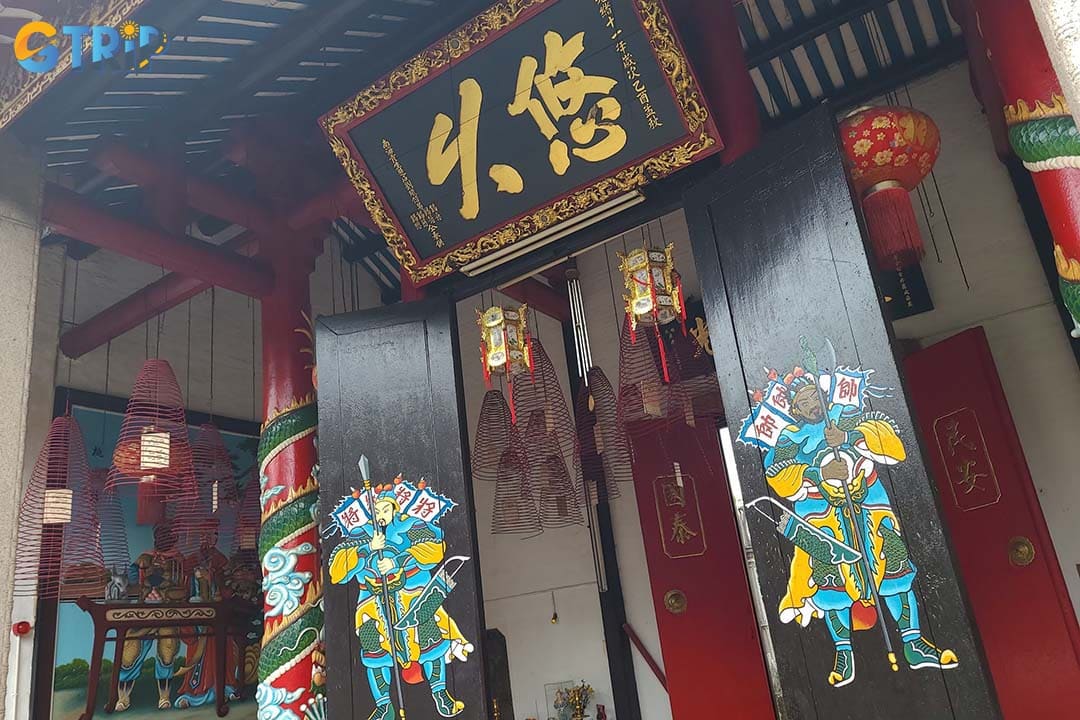
Getting to the Cantonese Assembly Hall in Hoi An is not a big problem
From around Hoi An Ancient Town
The Cantonese Assembly Hall is located at 176 Tran Phu Street, right in the heart of the Hoi An Ward. Since cars and motorbikes are banned from the Ancient Town during peak hours, visitors should park their vehicles at Phap Bao Pagoda and walk about 350 meters to the site. Exploring on foot or by bicycle allows you to appreciate the vibrant atmosphere of the historic streets.
- Distance: Within 1 - 2 km from most central hotels
- Travel time: 5 - 15 minutes
- Routes: Hai Ba Trung and Tran Phu Street
- Optimal option: Walking or biking to easily navigate the pedestrian zones
Transportation options
There are several ways to commute between Da Nang and Hoi An, ranging from luxury private cars to local public transit. Each mode of transport offers a different price point and level of convenience. Here is a quick breakdown of your available choices:
- Private car/Taxi: Reliable and available 24/7, best for comfort, convenience, and luggage transfer, especially when arriving from Da Nang.
- Ride-hailing app: A cost-effective and easy way to book a car or motorbike taxi for trips between Da Nang and Hoi An.
- Bus: Economic and suitable for solo travelers
- Motorbike: Ideal for adventurous travelers on a budget (100,000 - 250,000 VND per day) who want the flexibility to explore at their own pace.
- Bicycle: The quintessential Hoi An experience. Perfect for leisurely exploring the Ancient Town and its surroundings.
- Cycle: A noteworthy feature for penetrating the vibrant life of Hoi An
- Walking: An absolute must. It is the only way to truly experience the heart of Hoi An and access all its heritage sites.
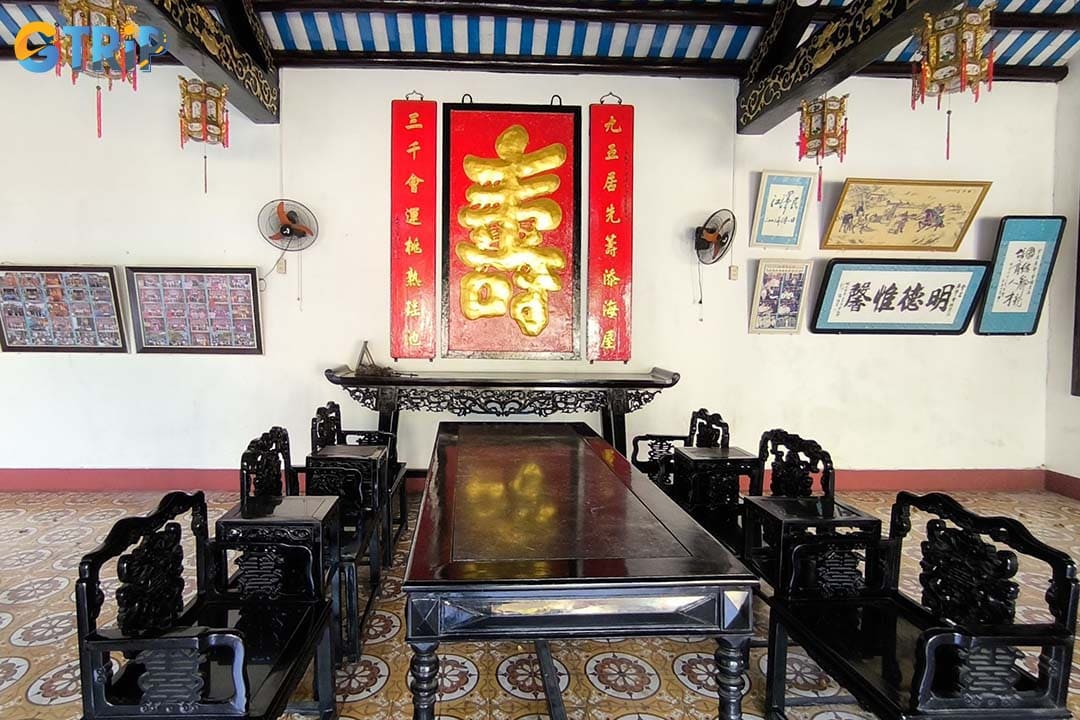
You can reach the Cantonese Assembly Hall by many ways of transportation
Nearby attractions to the Cantonese Assembly Hall in Hoi An
One of the best parts about visiting the Cantonese Assembly Hall is its proximity to other world-class attractions. You can easily craft a half-day walking tour including these unmissable sites:
- Japanese Bridge Hoi An (Japanese Covered Bridge): Hoi An's most iconic symbol and a marvel of 17th-century architecture, this historic bridge is just a few minutes' walk away.
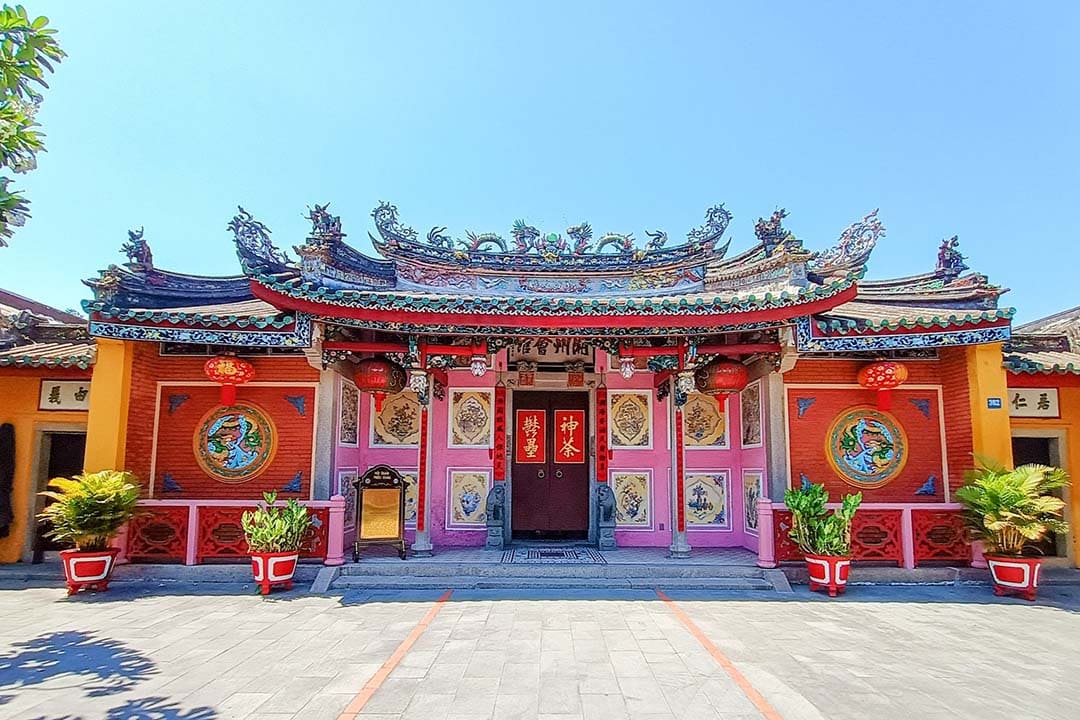
- Fujian Assembly Hall: Explore another of the great Chinese assembly halls in Hoi An, famous for its magnificent triple-arched gate and vibrant, pink-hued brickwork.
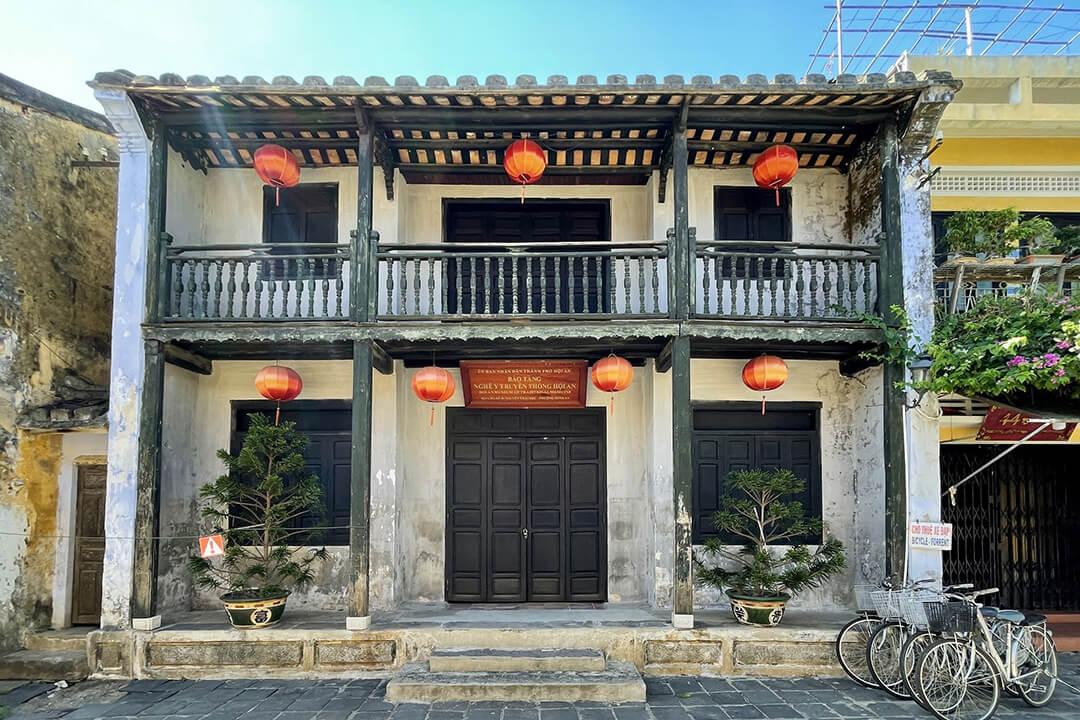
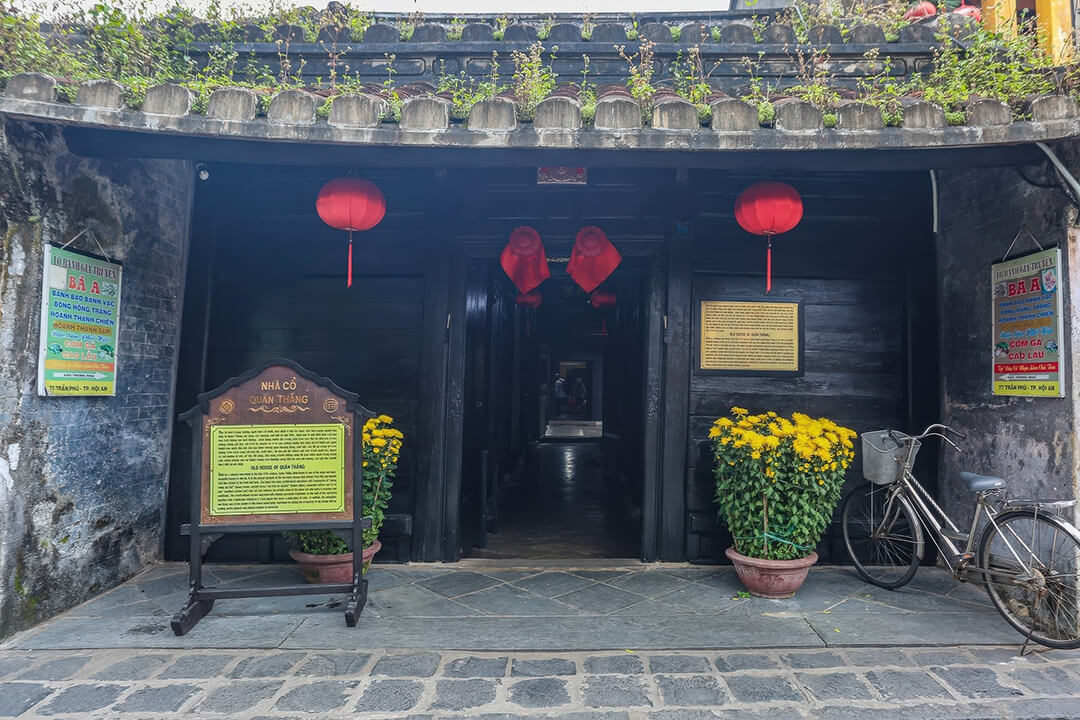
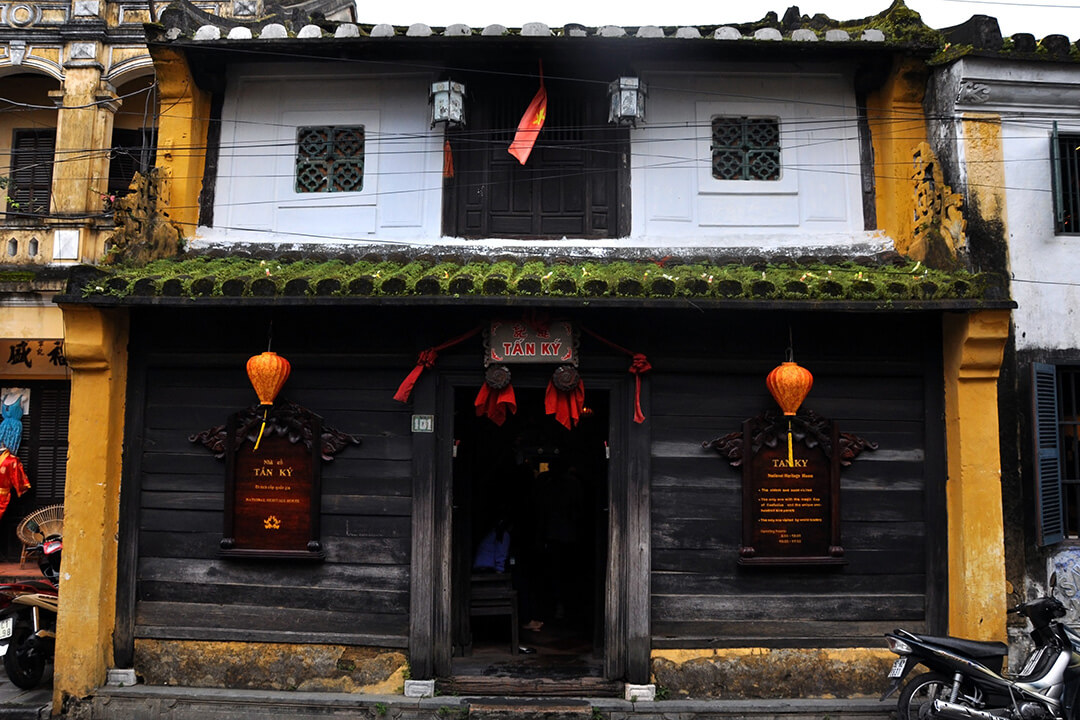
- Old House of Tan Ky: Step back more than 200 years in time at this perfectly preserved merchant's home, which showcases a unique blend of Vietnamese, Chinese, and Japanese architectural styles.
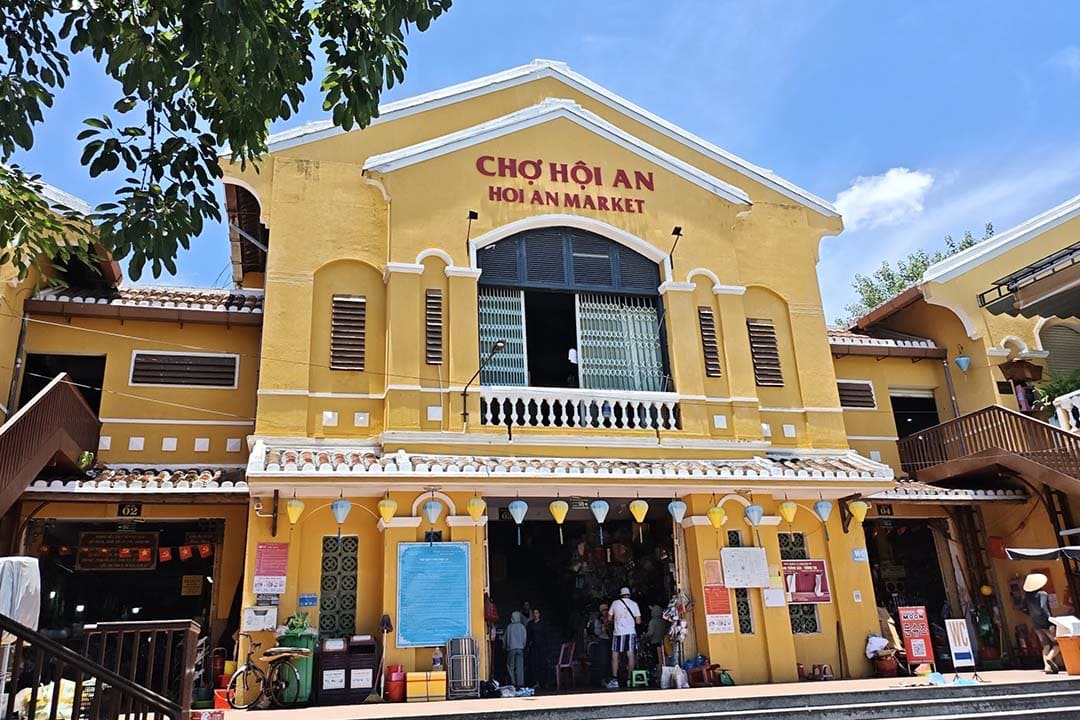
- Hoi An Central Market: Immerse yourself in the bustling energy of local life at this vibrant market located on the banks of the Thu Bon River, and be sure to sample some delicious Vietnamese street food.
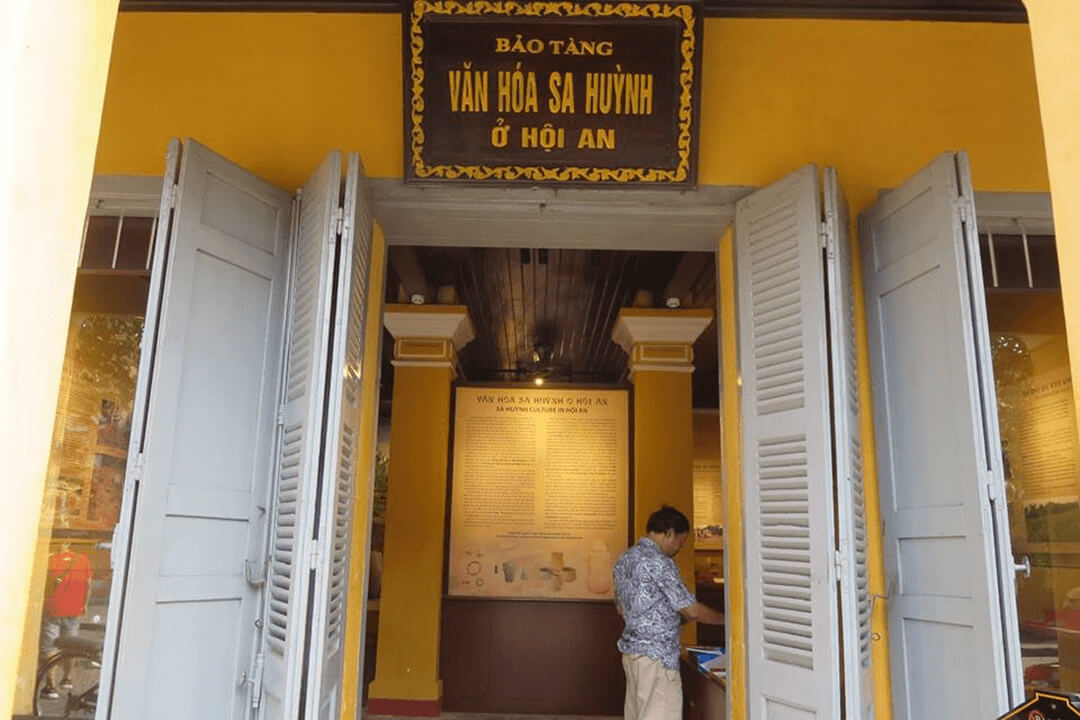
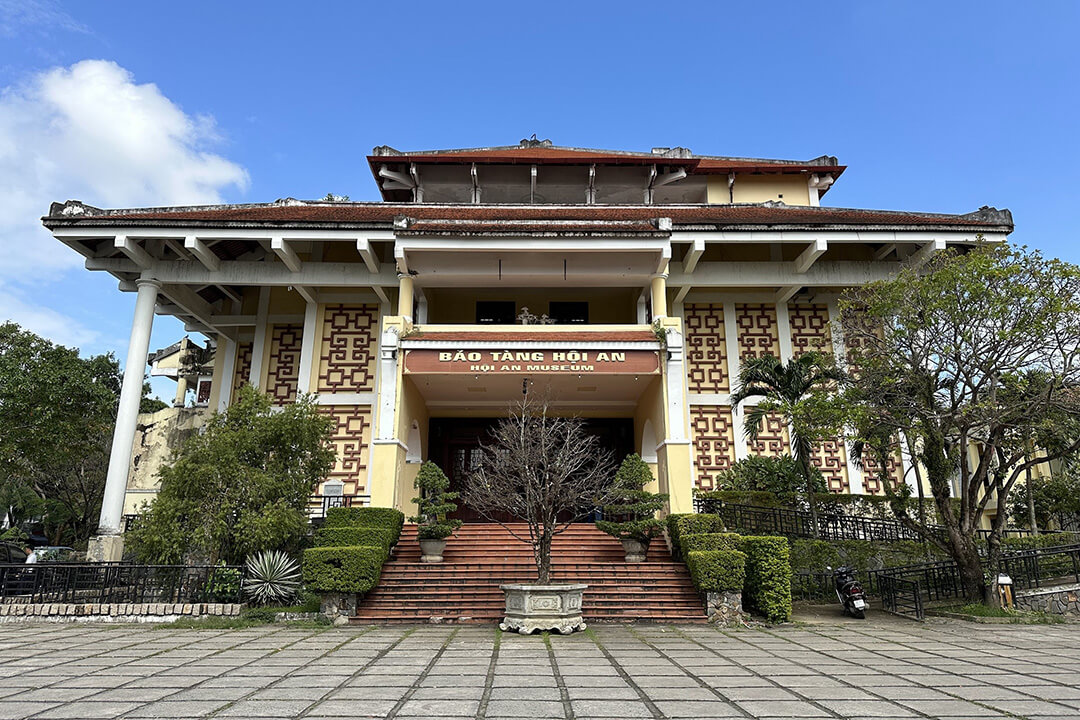
- Museum of Sa Huynh Culture: Discover the ancient history of the region by exploring artifacts from the Sa Huynh civilization, the earliest settlers in the area, dating back over 2,000 years.
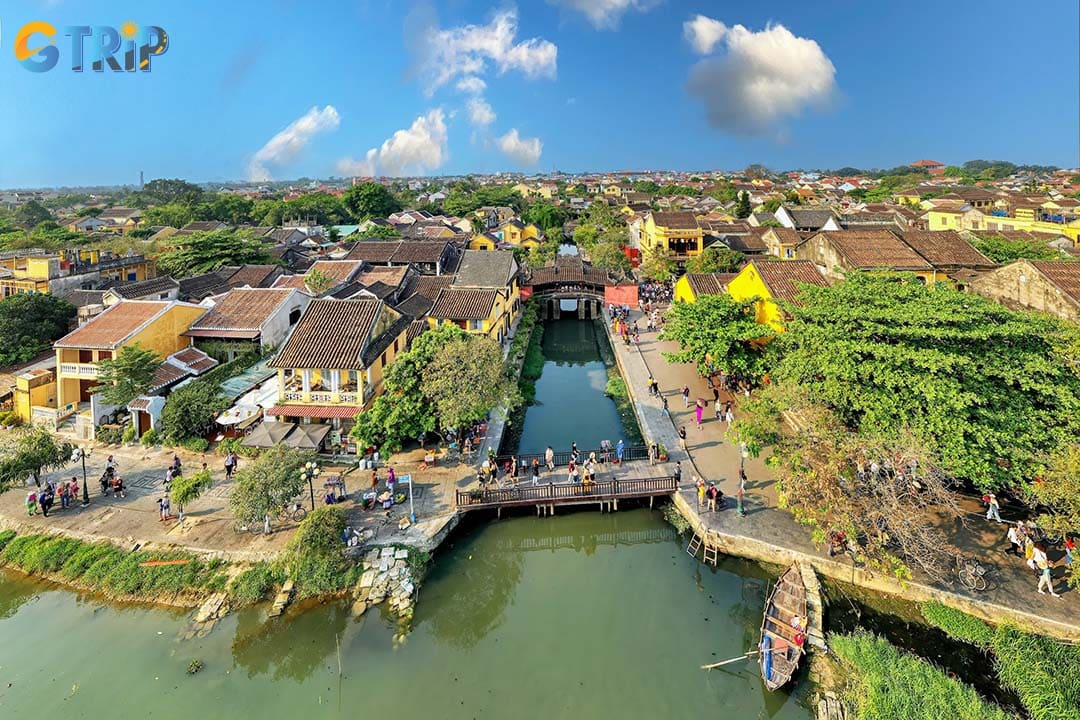
There are many nearby attractions in Hoi An that you can visit after exploring the hall
Useful tips for visiting the Cantonese Assembly Hall in Hoi An
To ensure a smooth and respectful visit to the Cantonese Assembly Hall, be mindful of local customs and Hoi An’s weather. Dressing appropriately and staying comfortable for walking will enhance your experience in the Ancient Town. Keep these practical tips in mind:
- Entrance tickets: You must purchase a sightseeing ticket for the Hoi An Ancient Town (120,000 VND for adults) at nearby booths such as the Japanese Covered Bridge, Ba Mu Temple, or An Hoi Bridge.
- Dress code: As this is a place of worship, wear respectful clothing that covers your shoulders, navel, and knees; avoid see-through fabrics or revealing outfits like tank tops and short skirts.
- Traditional attire: Wearing the Vietnamese traditional Ao Dai is highly recommended for its elegance and suitability for the ancient atmosphere.
- Dry season prep: From February to August, bring sun cream, a hat, sunglasses, and a bottle of water to stay hydrated under the Hoi An sun.
- Rainy season prep: From September to January, carry a rain poncho or umbrella and wear waterproof shoes; be extra cautious about potential flooding from October to December.
- Footwear: Walking is the primary way to explore the area, so make sure to wear comfortable shoes or sandals that can handle a lot of movement.
- Cash and payments: Always carry enough VND cash for entry fees and small expenses, as many local vendors do not accept international cards.
- Cultural etiquette: Before entering the inner worship buildings, remember to remove your hat, cap, sunglasses, and rain poncho to show respect to the gods.
- Photography: The hall is a top Instagrammable spot, so bring a Smartphone or camera, and consider booking a private photographer for professional memories.
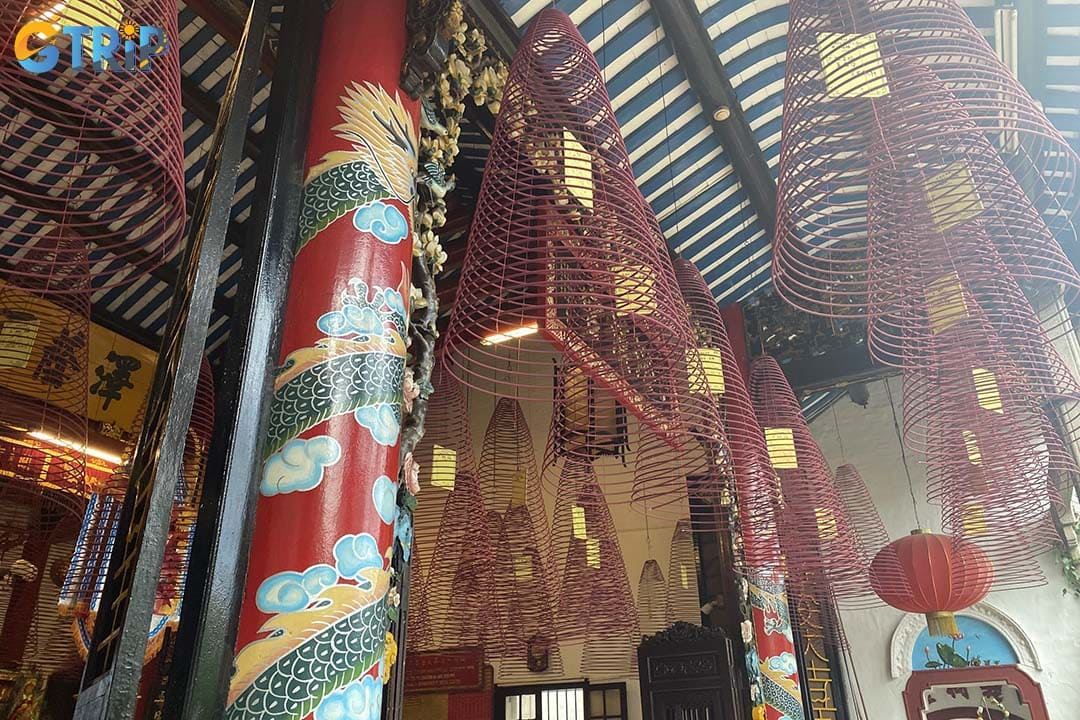
Remember the practical tips to have a great trip to the Cantonese Assembly Hall in Hoi An
Cantonese Assembly Hall in Hoi An is far more than just another stop on a tourist itinerary. It's a profound cultural immersion. This magnificent structure is a vibrant story of commerce, faith, and artistry, capturing the very essence of Hoi An's multicultural soul. Every corner reveals a piece of history waiting to be admired. It stands as a proud and beautiful monument, a must-see for any traveler wanting to connect with the deeper history of this incredible town. Book a Hoi An tour with GTrip to have the greatest moments there.