


Mar - 31 - 2026
Teochew Assembly Hall in Hoi An is a stunning testament to the artistry and cultural heritage of the Chinese community that settled in this ancient port town. While smaller than some of its counterparts, this hall is an intricate jewel box of history, spirituality, and masterful craftsmanship that often captivates visitors more than any other. This is the only guide you will need to plan your visit, covering its rich history, explaining its unique architecture, detailing ticket prices, and opening hours. In this GTrip guide, we'll walk you through everything you need to know to fully appreciate a visit to the Trieu Chau Assembly Hall, one of Hoi An's most exquisite cultural treasures.
Overview of the Teochew Assembly Hall in Hoi An
Often referred to by locals as Trieu Chau Assembly Hall, the Teochew Assembly Hall is a sacred space where merchants and business owners come to pray for luck and prosperity. A fascinating local tradition involves entrepreneurs symbolically "borrowing money" from the deities for good fortune, which they then repay at the end of the year if their business thrives. Alongside General Ma Vien, the hall is also dedicated to the God of Wealth and the God of Virtue (Phuc Duc Chinh Than). To help you plan your visit, here are the essential details regarding its location and entry.
Where is Teochew Assembly Hall in Hoi An?
Address: No. 362 Nguyen Duy Hieu Street, Hoi An Ancient Town, Hoi An Ward (formerly Cam Chau Ward, Hoi An City, Quang Nam Province), Da Nang City
The Teochew Assembly Hall (Trieu Chau Assembly Hall) is conveniently located within the pedestrian-friendly core of the UNESCO World Heritage Site. This places it slightly away from the most crowded central streets, offering a more tranquil experience. The hall is situated approximately 28 kilometers south of Da Nang City and its international airport, and about 120 kilometers south of the former imperial capital of Hue. It is a perfect destination within a broader Central Vietnam itinerary.
Opening hours and ticket prices
- Opening hours: 8:00 AM - 6:00 PM daily
- Ticket prices: 120,000 VND (approx. $5)
To enter, visitors must purchase the Hoi An Old Town combo ticket. This ticket grants you access to the Ancient Town and allows you to choose five heritage sites to visit from a list of over 20. You can visit the Chinese Assembly Halls, old houses, and the Japanese Covered Bridge. The Teochew Assembly Hall is one of the available options.
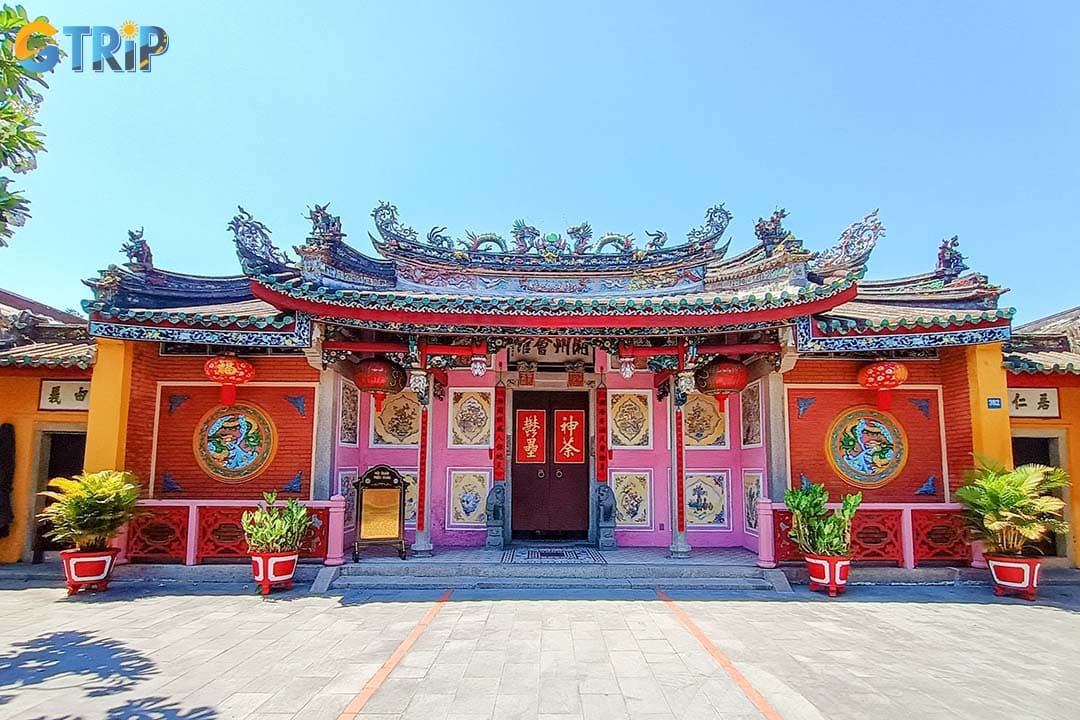
The Teochew Assembly Hall is where visitors come to pray for good luck
What makes the Teochew Assembly Hall in Hoi An unique?
While Hoi An is home to several magnificent Chinese assembly halls, the Teochew Assembly Hall offers a uniquely refined and artistic experience. Its distinction lies not in its size, but in the breathtaking quality of its craftsmanship. What truly sets it apart is its masterful wood carvings. The hall is widely regarded by art historians and locals as containing the most intricate and sophisticated woodwork in all of Hoi An. Where other halls might impress with scale or vibrant paint, the Teochew Hall mesmerizes with detail.
- Unparalleled woodwork: The main doors, structural beams, and altars feature incredibly detailed three-dimensional carvings depicting mythological creatures and scenes from Chinese folklore.
- Porcelain mosaics: The roof and walls are adorned with elaborate porcelain pieces, creating a textured and colorful facade that tells stories through its imagery.
- Spiritual focus: It is dedicated to General Phuc Ba (Ma Yuan), a deity believed to control the winds and waves, who was revered by the seafaring Teochew merchants for guaranteeing safe passage on their trading voyages. The Teochew Assembly Hall in Hoi An is one of the most artistic and culturally rich landmarks in the ancient town. Built by merchants from the Teochew region, this site is famous for its breathtaking woodcarvings and porcelain decorations that have been preserved for nearly two centuries.
History of the Teochew Assembly Hall
The history of this hall is deeply connected to the maritime trade of Hoi An and the spiritual beliefs of the sailors who crossed the seas to find a new home in Vietnam.
- Before 1845: The hall was constructed by the Teochew community as a spiritual center and a place for members to support one another in business.
- 1887, 1970, and 1991: Significant restorations were carried out during these years to preserve the intricate artwork and structure of the hall.
- 1988 - 1990: For a short period, the building was used as a workshop for a state-run wool carpet cooperative.
- 1989: Archeologists discovered a treasure trove of ancient ceramics and coins dating from the 15th to the 20th centuries buried beneath the hall.
- 16th day of the first lunar month: This remains the most important date of the year for the hall, marking the "Spring Festival" when the community gathers for traditional rituals.
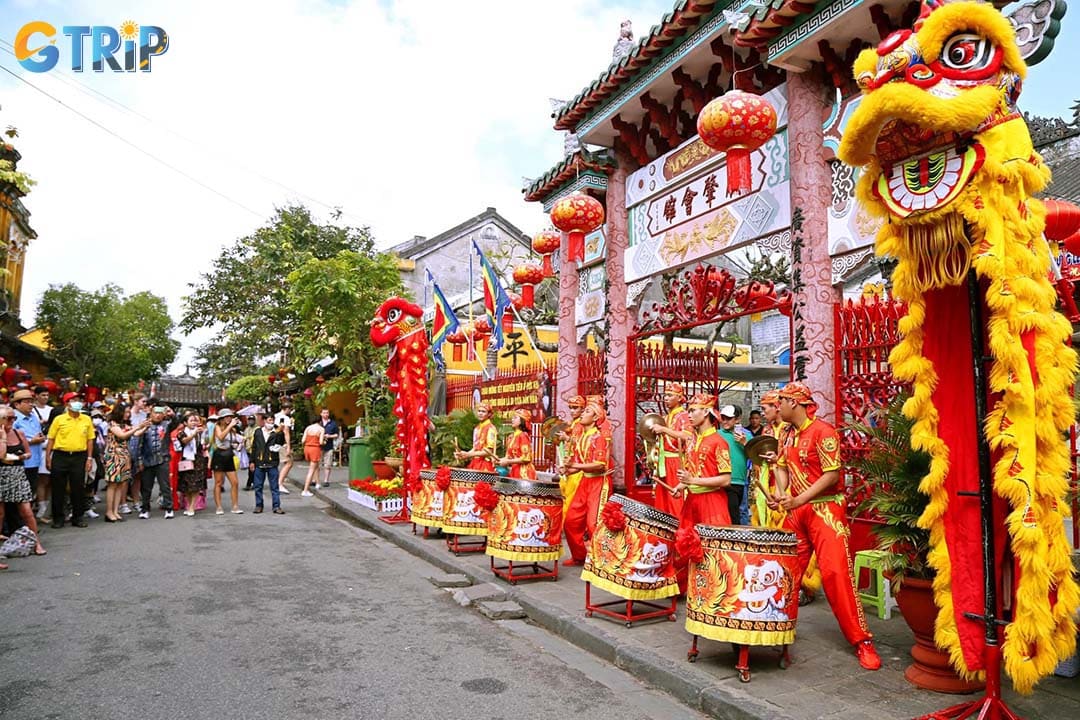
The Teochew Assembly Hall in Hoi An is one of the most artistic and culturally rich landmarks in the ancient town
Architecture of the Teochew Assembly Hall
The architecture of the Teochew Assembly Hall in Hoi An is a stunning example of regional style, featuring detailed woodcarvings and colorful porcelain mosaics.
The entrance gate
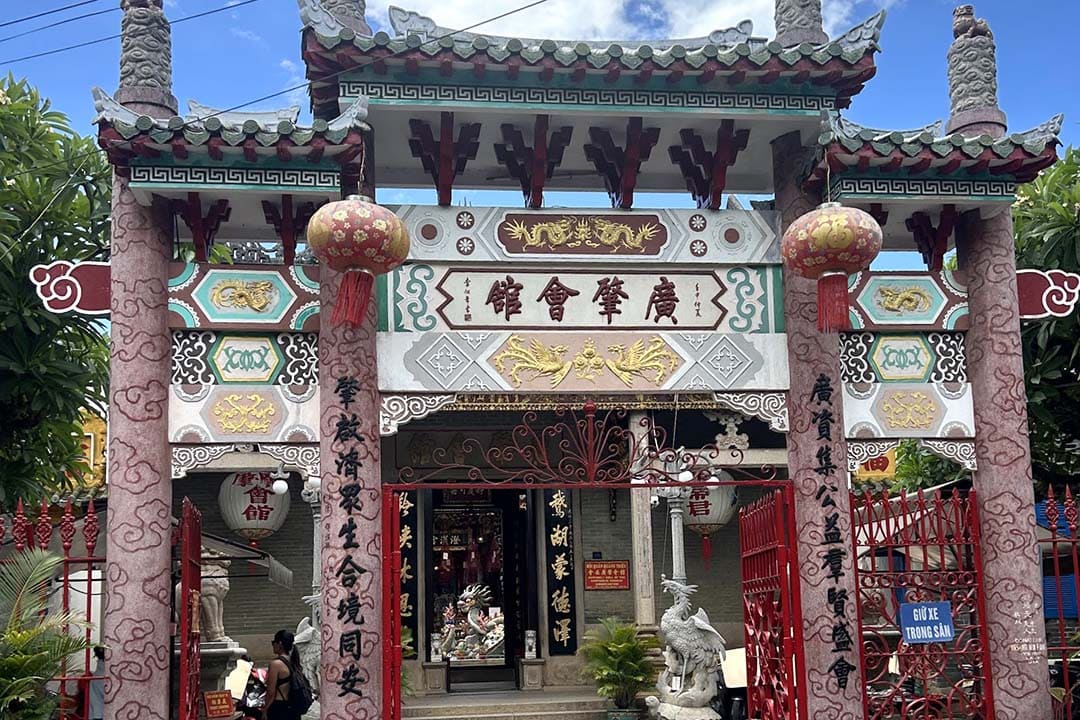
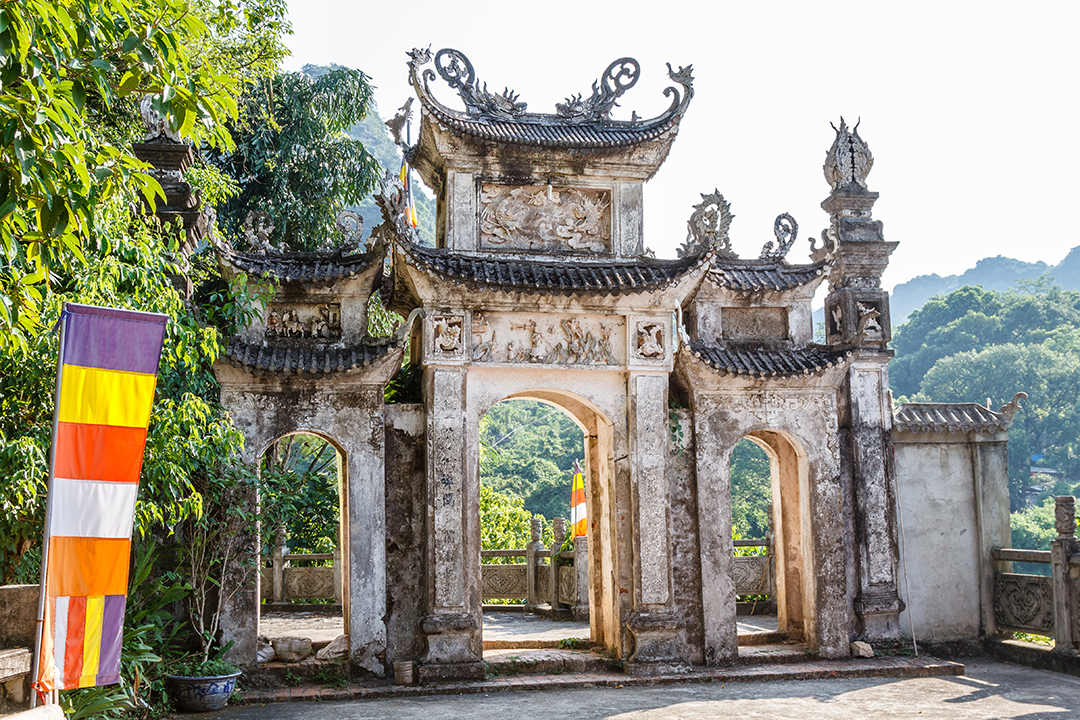
The gate is a work of art, featuring three tiled roofs and ironwork with "carp" motifs, a symbol of luck in Chinese culture. Above the main entrance, a large board displays characters identifying it as the "Assembly Hall of the Teochew Chinese People".
The front hall
After crossing a small yard, you reach the front hall, which is protected by two majestic stone lions. The red wooden doors are marked with the names of two guardian gods, Shen Shu and Yu Lei. The roofs and walls are decorated with vibrant mosaics of ragon and flowers made from broken porcelain.
The inner courtyard
Inside the courtyard, you can find large wall paintings on both sides. On the right, a painting depicts "Prosperity in the house", while the left side features the three gods of longevity, wealth, and happiness.
The main temple
The heart of the building is dedicated to Ma Vien (General Fubo), a deity believed to calm the waves and protect sailors. A unique architectural detail on the roof is the "Carp turning into a dragon" motif, symbolizing success and perseverance.
The east and west houses
These side buildings serve as functional spaces for the community. They are used for meetings, resting, or preparing offerings for major festivals and communal events.
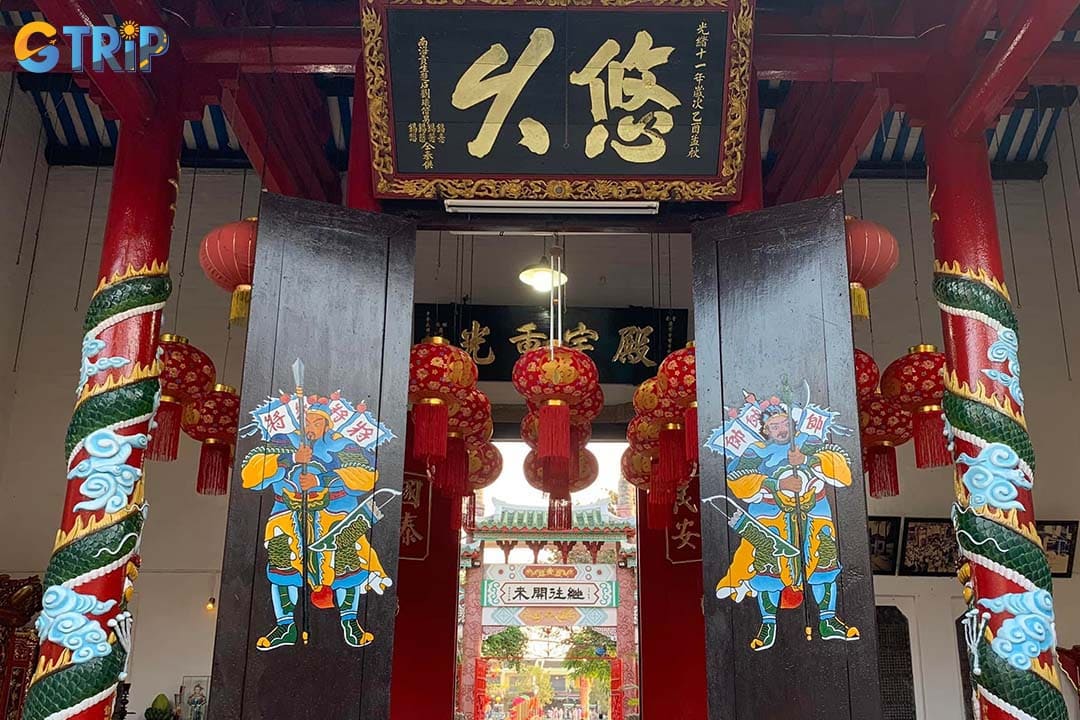
The Teochew Assembly Hall contains woodcarvings and colorful porcelain mosaics
Things to do at Trieu Chau Assembly Hall in Hoi An
A visit to this assembly hall is a journey into fine art and local traditions.
1. Admire the intricate porcelain art
Take time to look closely at the roofs and eaves. The vibrant mosaics were created by carefully assembling thousands of tiny porcelain fragments. Up close, the craftsmanship reveals remarkable detail and patience from the artisans who built the temple.
2. Pray for a smooth journey
Many travelers follow local custom by lighting incense here. The temple is dedicated to the “General of the waves”, a guardian believed to protect sailors and merchants at sea. It is a peaceful place to pause, reflect, and wish for safe travels and good fortune.
3. Discover the "Carp to dragon" symbols
Look for the carp motifs carved and decorated throughout the hall. They represent the famous legend of a carp that transforms into a dragon after overcoming great obstacles. The story symbolizes perseverance, success, and personal transformation.
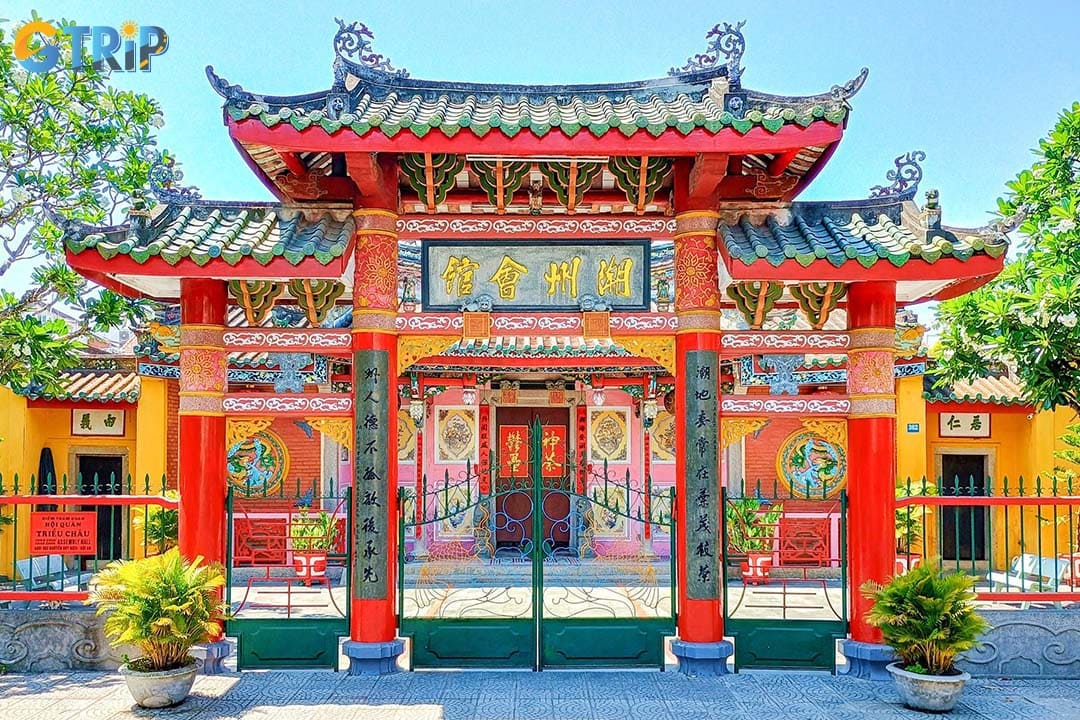
You should take time to have a closer look at the details of architecture and arts of the hall
4. Capture traditional travel photos
The hall’s red wooden doors, gold carvings, and stone guardian lions create a striking visual setting. Many photographers consider it one of the most beautiful cultural backdrops in Hoi An. Wearing a traditional ao dai here can make your photos even more memorable.
5. Join the Nguyen Tieu Festival (Seasonal)
If you visit shortly after Lunar New Year, you may witness the lively Nguyen Tieu Festival held on the 16th day of the first lunar month. During this time, the hall becomes a center of celebration with ceremonies, offerings, and community gatherings. It is a wonderful opportunity to experience local traditions at their most vibrant.
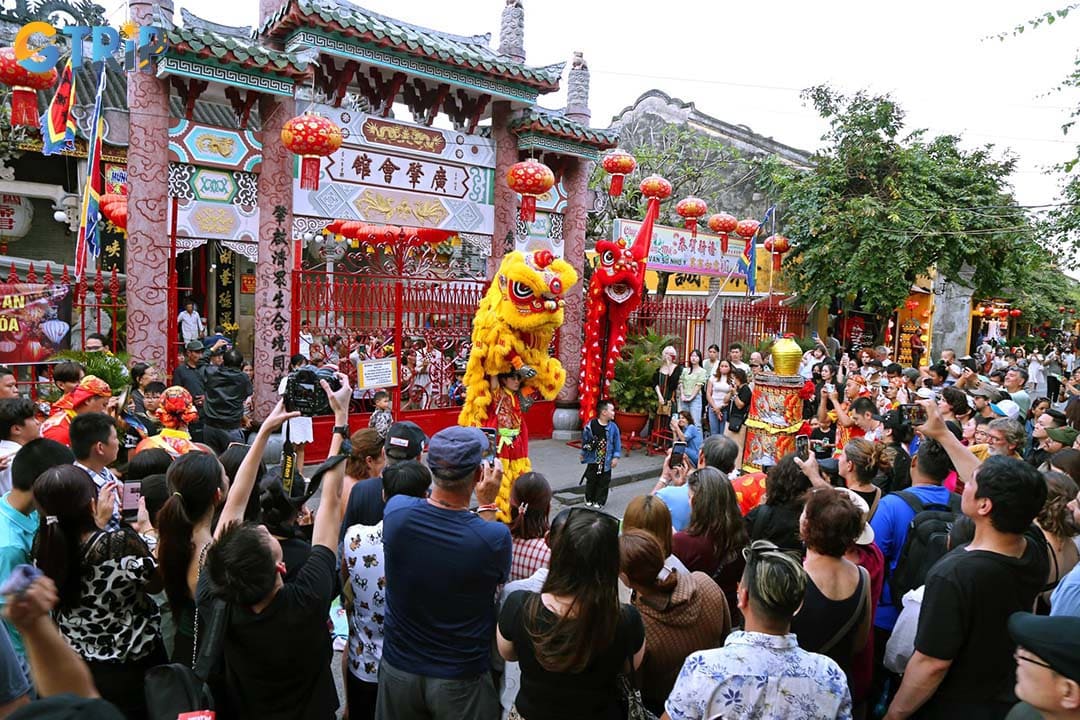
You can attend the festival at Teochew Assembly Hall to enjoy the vibrant atmosphere of cultural festival
How to get to Teochew Assembly Hall in Hoi An?
Reaching the Teochew Assembly Hall in Hoi An is easy as it is located near the town center. Here are the most convenient ways to navigate your journey.
From Da Nang International Airport
Travelers landing at the airport can reach the assembly hall via a smooth drive south. The route typically follows the coastline, providing a scenic introduction to Central Vietnam. Since the hall is located on a street that allows vehicles, your driver can drop you off right at the entrance gate.
- Distance: Approximately 30 km
- Travel time: 45 - 55 minutes
- Routes: Vo Nguyen Giap and Lac Long Quan coastal roads
- Optimal option: Private car or taxi for a direct, comfortable transfer
From Da Nang City center
If you are starting from Da Nang City, the trip to the hall is straightforward and well-paved. Many independent travelers enjoy riding along the ocean to reach the edge of Hoi An. The street where the hall is located, Nguyen Duy Hieu, is accessible to motorbikes throughout the day.
- Distance: 25 - 30 km
- Travel time: 40 - 50 minutes
- Routes: The coastal road (Truong Sa) is the simplest route to follow
- Optimal option: Motorbike for flexibility or Grab/Taxi for convenience
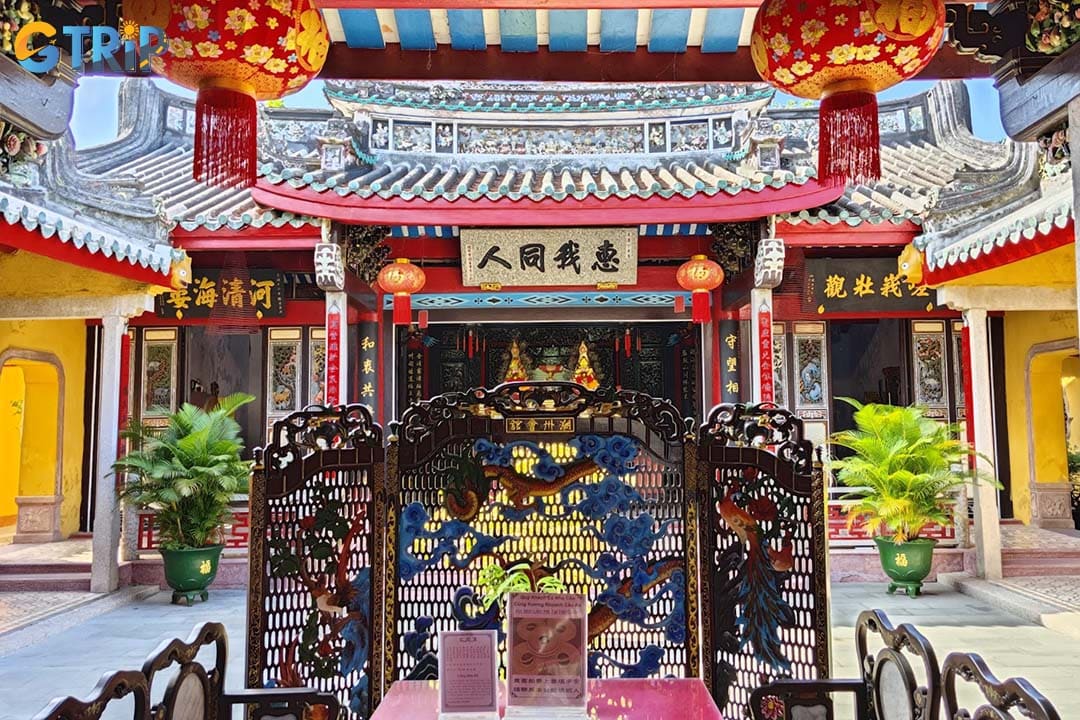
The Teochew Assembly Hall is easily accessible from anywhere in Da Nang
From around Hoi An Ancient Town
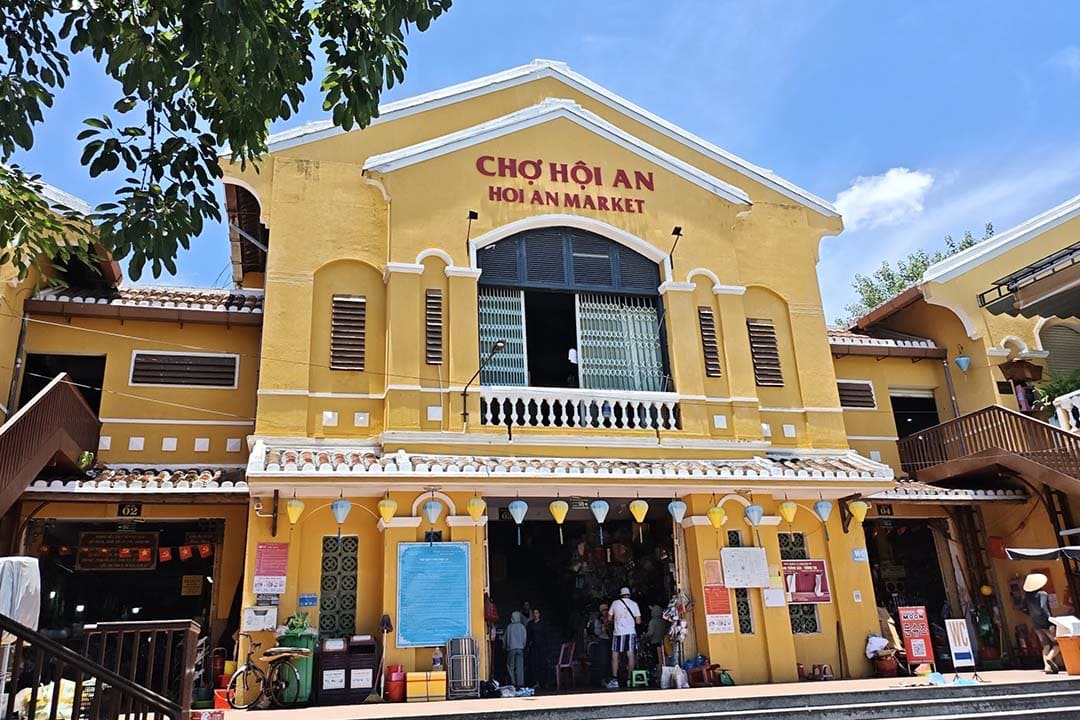
The hall is located at 236 Nguyen Duy Hieu Street, which is at the eastern end of the historical district. If you are staying in central Hoi An, you can easily reach the site in just a few minutes. It is a perfect stop after visiting the nearby Hoi An Market.
- Distance: Within 1 - 2 km from most local hotels
- Travel time: 5 - 10 minutes
- Routes: Nguyen Duy Hieu Street or Hoang Dieu Street
- Optimal option: Walking or cycling to enjoy the local atmosphere
Transportation options
Choosing the right transport depends on your style. Bicycles are highly recommended for exploring the narrow streets surrounding the hall. Unlike other parts of the Old Town, motorbikes are permitted on this road, and parking is often available on the sidewalk. For a more relaxed experience, a cyclo ride can take you directly to the gate.
- Bicycle: Easy to park and perfect for the town's flat terrain.
- Motorbike: Convenient for direct access; parking is usually free on the sidewalk.
- Cyclo: A traditional and leisurely way to see the sights.
- Electric car: Good for groups staying at beach resorts or further communes.
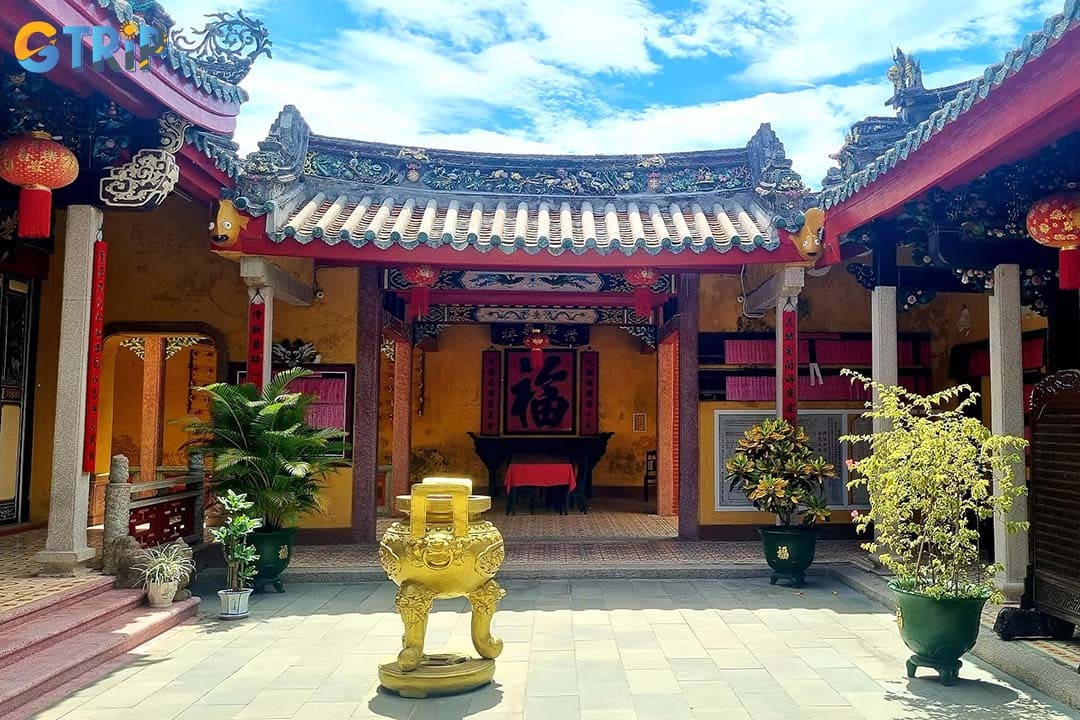
Getting to Teochew Assembly Hall by many transportation helps it attract more visitors
Nearby attractions to the Teochew Assembly Hall in Hoi An
The Teochew Assembly Hall is surrounded by a wealth of historical and cultural sites, all within easy walking distance. After your visit, consider exploring these other key attractions:
- Fujian Assembly Hall (Hoi Quan Phuc Kien): The largest and most famous of the Chinese assembly halls, known for its grand scale, beautiful gardens, and dragon fountain.
- Cantonese Assembly Hall (Hoi Quan Quang Dong): A stunningly vibrant hall celebrated for its colorful ceramic sculptures, detailed reliefs, and a large, impressive dragon statue in the main courtyard.
- Japanese Covered Bridge: The iconic symbol of Hoi An, this 17th-century bridge features a small temple inside and is a must-see landmark.
- Hoi An Central Market: A chaotic and exhilarating market located on the banks of the Thu Bon River where you can find fresh produce, local street food, and souvenirs.
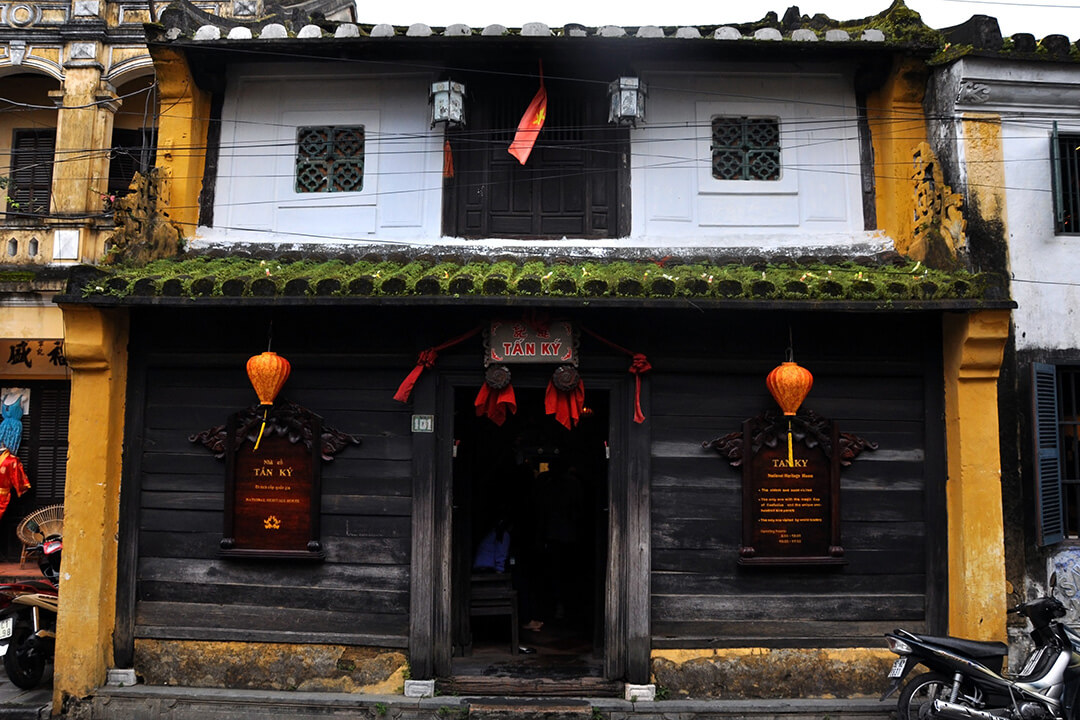
- Old House of Tan Ky: A beautifully preserved 18th-century merchant’s home that showcases a unique blend of Vietnamese, Chinese, and Japanese architectural styles.
- Precious Heritage Art Gallery Museum: A captivating gallery by French photographer Rehahn, showcasing powerful portraits and traditional costumes of Vietnam's 54 ethnic groups.
- Quan Cong Temple: A small but significant temple dedicated to a revered Chinese general, symbolizing loyalty, integrity, and justice.
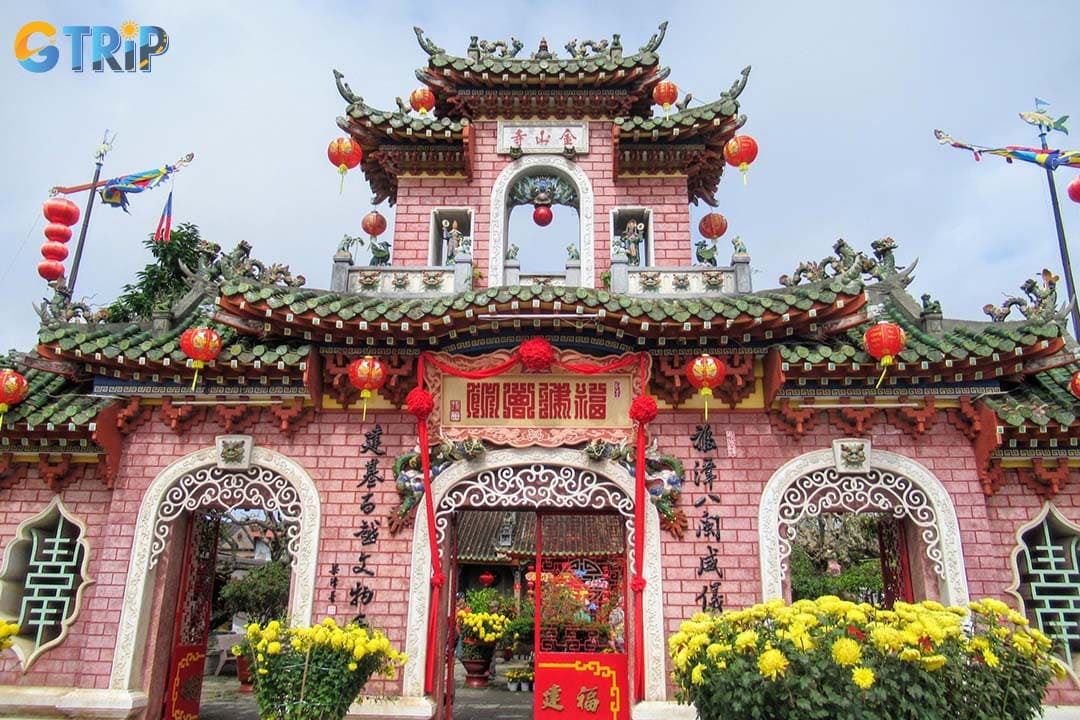
There are many nearby halls that you can visit after exploring the Teochew Assembly Hall
Travel tips for visiting the Teochew Assembly Hall in Hoi An
To make the most of your visit to the Teochew Assembly Hall in Hoi An, a little preparation goes a long way. Since the hall is both a sacred place of worship and a delicate historical site, keeping these practical tips in mind will ensure your experience is respectful, comfortable, and stress-free.
- Ticket info: You will need to buy a general Hoi An Ancient Town ticket (120,000 VND) to enter. The closest ticket booth is at the corner of Hoang Dieu and Tran Phu streets.
- Dress code: This is a sacred temple. Please wear clothing that covers your shoulders and knees. Avoid see-through fabrics or revealing outfits.
- Respectful manners: Remember to remove your hat and sunglasses before entering the main worship area. Photography is allowed, but try to keep your voice low.
- Weather prep: For the dry season (Feb-Aug), bring sunscreen and water. For the rainy season (Sep-Jan), bring an umbrella and check for flood updates if traveling between October and December.
- Bring cash: Most ticket booths and local street vendors only accept Vietnamese Dong (VND).
- Ao dai photos: The vibrant red and gold backdrop is ideal for photos. You can easily find Ao Dai rental shops nearby to enhance your experience.
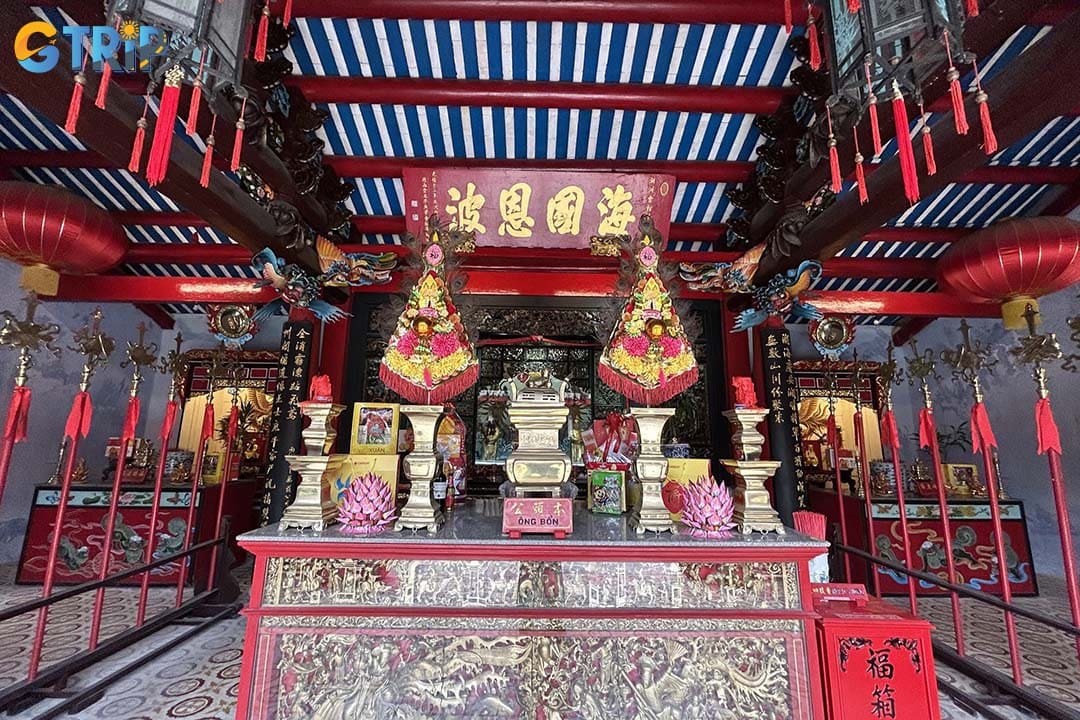
Remember practical tips to have a good trip to Teochew Assembly Hall in Hoi An
The Teochew Assembly Hall in Hoi An is far more than just another stop on a tourist itinerary. It is a profound cultural statement. For those who appreciate fine art, intricate detail, and stories etched in wood and stone, it is an unmissable destination. Its jaw-dropping woodwork and serene atmosphere provide a quieter, more contemplative experience compared to some of the larger, more crowded halls. By stepping through its gates, you are stepping into a legacy of faith, community, and artistic mastery that defines the spirit of Hoi An. Ready to explore the wonders of Hoi An? Let GTrip help you plan the perfect journey to this timeless town.