





Mar - 28 - 2026
Duc An Old House is one of the most fascinating and well-preserved heritage sites in the heart of Hoi An Ancient Town. While other ancient houses draw crowds for their architectural grandeur alone, Duc An offers a deeper, more compelling story as a former bookstore and a secret hub for Vietnam's early 20th-century revolutionaries. It's not just a home frozen in time, it's a living museum that whispers tales of patriotism and intellectual ambition. In this complete GTrip guide, we'll walk you through everything you need to know about this historical treasure, such as history and unique architecture, practical details like ticket prices and how to get there.
Overview of the Duc An Old House
Duc An Old House is a prominent historical landmark, often regarded as a vital part of the Hoi An Ancient Town experience. To help you easily find and explore this centuries-old residence, here is the essential information regarding its central location and the visiting regulations you need to know.
Where is Duc An Old House Hoi An?
Address: No. 129 Tran Phu Street, Hoi An Ancient Town, Hoi An Ward (formerly Minh An Ward, Hoi An City, Quang Nam Province), Da Nang City
The Duc An Old House is conveniently located on the primary historical street of the ancient town, making it impossible to miss on a walking tour. Its central position means you can easily integrate it into any Hoi An itinerary. Tran Phu Street is the main east-west thoroughfare in the old town, famous for its concentration of assembly halls, museums, and ancient houses. You will find Duc An situated between other major points of interest, easily accessible on foot.
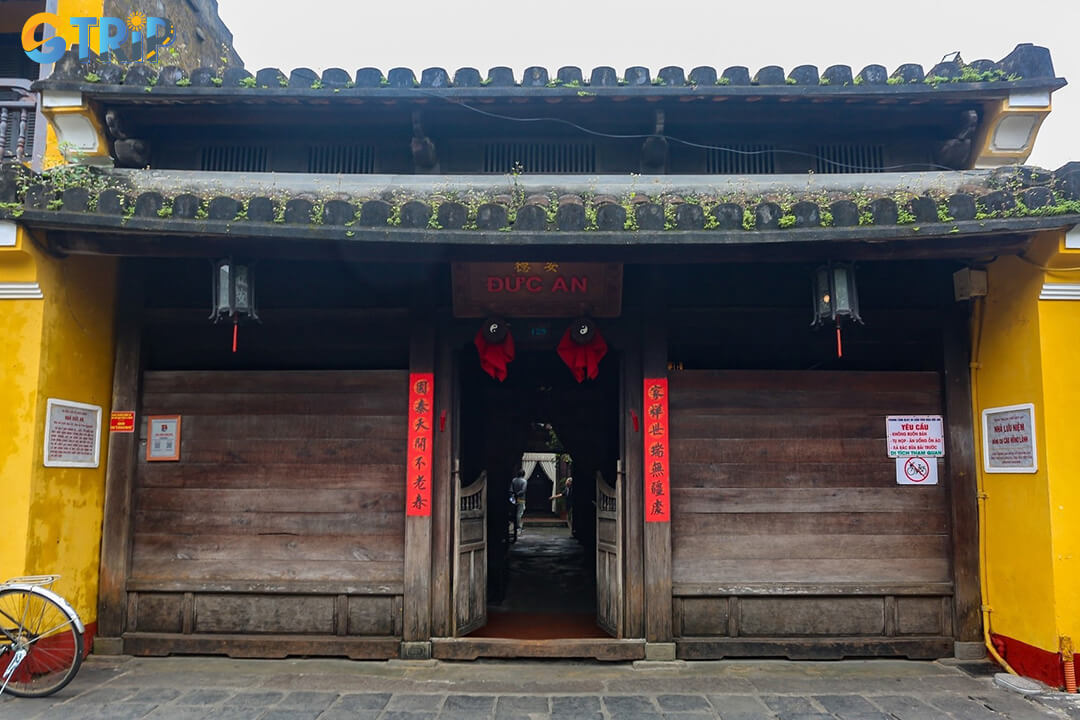
Duc An Old House is centrally located on Tran Phu Street, making it an easy stop while exploring Hoi An Ancient Town on foot
Opening hours and ticket prices of the house
Accessing the Duc An Old House is straightforward and part of the official Hoi An Ancient Town sightseeing system. Here are the essential details for planning your visit:
- Opening hours: 9:30 AM - 5:30 PM, daily
- Ticket prices: The entrance is included in the Hoi An Ancient Town combo ticket.
The Hoi An Old Town entrance ticket is mandatory for international tourists exploring the designated heritage sites. This combo ticket costs 120,000 VND per person and grants you access to five different attractions from a list of over 20 sites. The Duc An Old House is one of the choices, and you simply present one of your five ticket stubs at the entrance for admission.
What makes the Duc An Old House unique?
While Hoi An is filled with beautiful old houses, Duc An possesses a unique character that sets it apart. It’s not just a beautifully preserved building but an active historical site with a story that resonates with Vietnam’s national identity. Its distinctiveness comes from its rare blend of commercial, domestic, and political history under one roof.
- Continuous family heritage: It has been owned and lived in by the same family for eight generations, offering an authentic, unbroken line of history.
- A revolutionary bookstore: Its most significant role was as the Duc An bookstore, a front for the anti-colonial Duy Tan movement founded by Phan Boi Chau, making it a site of national historical importance.
- Preserved artifacts: The interior still contains original items from its time as a bookstore and apothecary, including antique wooden book cabinets, Chinese medicine chests, and historical family heirlooms.
- Living history: Unlike a sterile museum, you can feel the life lived within its walls, as family members still reside on the property, preserving its spirit.
Duc An Old House is a unique heritage site in Hoi An, known for its eight-generation family legacy and its historic role in Vietnam’s revolutionary movement
History of Duc An Old House in Hoi An
In 1830, during the reign of King Minh Mang, the Phan family ancestors built this house. Named "Duc An", which translates to "preserving ethics for peace", it has served as the ancestral place of worship and home for eight generations of the Phan family for over 190 years.
In the late 19th century, the house became the Duc An Bookstore, the only shop in Quang Nam at the time specializing in Han Nom books and stationery. It became a renowned meeting hub for famous patriots such as Huynh Thuc Khang and Tran Quy Cap. It helped spread progressive ideologies through the works of Chinese reformers Kang Youwei and Liang Qichao.
In 1908, following the failure of the anti-tax movement, the house transitioned into a Traditional Chinese Medicine pharmacy. However, it remained the "heart" of the patriotic movement in Hoi An. Between 1925 and 1926, the pharmacy was a secret repository for revolutionary publications like "Viet Nam Hon" (The Soul of Vietnam), "Chuong Re", and "Tan The Ky". It helped to awaken political consciousness across all social classes.
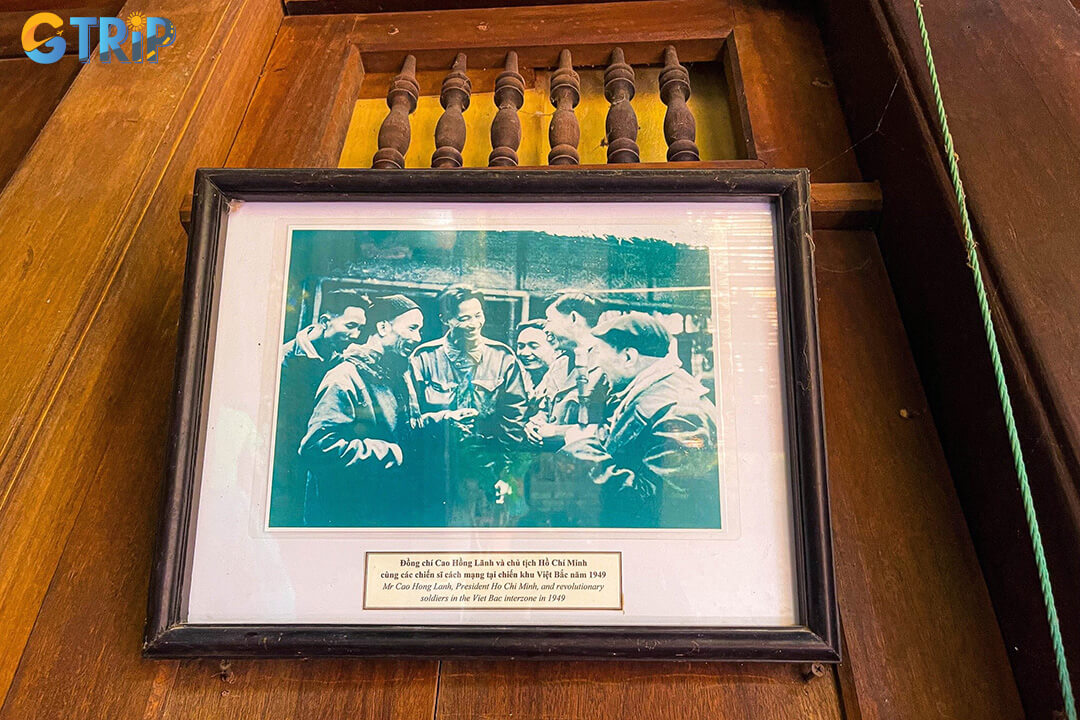
In October 1927, at this very house, Mr. Cao Hong Lanh chaired the founding meeting of the Vietnam Revolutionary Youth League of Hoi An. By early 1930, Duc An House was chosen as the venue to discuss and prepare for the establishment of the Quang Nam Provincial Communist Party branch on March 28, 1930.
From 1931 to 1934, the French colonialists intensified their suppression of revolutionary movements, making activities at the house extremely difficult. After a raid in 1934, Mr. Cao Hong Lanh was sentenced to 15 years in prison in absentia. His brother, Phan Nam, then took over the management of the house, continuing to preserve the family’s architectural and historical legacy.
Between 2008 and 2010, following a major restoration and the passing of Mr. Cao Hong Lanh, the house officially opened to tourists on February 2, 2010. Today, also known as the Cao Hong Lanh Memorial, it has welcomed nearly 2 million visitors and stands as a vital cultural and historical symbol of Hoi An Ancient Town.
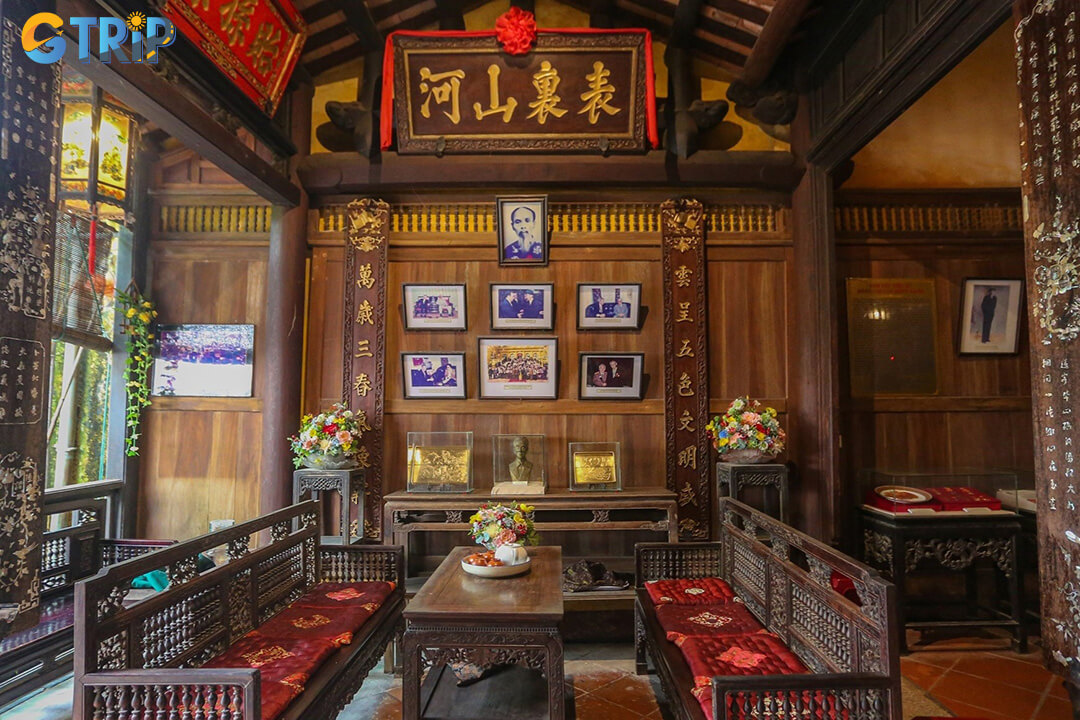
Duc An Old House, built in 1830, is a historic family residence in Hoi An that played an important role in Vietnam’s patriotic and revolutionary movements
Unique architecture of Duc An Old House
Duc An Old House is a quintessential example of the "tube house" architecture typical of 19th-century Hoi An. The house is 7 meters wide and 39 meters deep, stretching from Tran Phu Street all the way to the riverbank. Despite its sturdy system of wooden columns and beams, the interior remains airy and bright thanks to an open-flow design with no dividing walls and a central skylight system.
Central entrance
The main entrance features a flexible four-panel door design, including smaller front panels and larger rear ones. The most distinctive feature is the two "door eyes" carved in the shape of daisies with a yin-yang symbol in the center, adorned with red silk to ward off bad luck. Flanking the entrance are "ban khoa" doors, long, removable wooden panels that allow the owner to switch easily between an open business space and a secure, private residence.
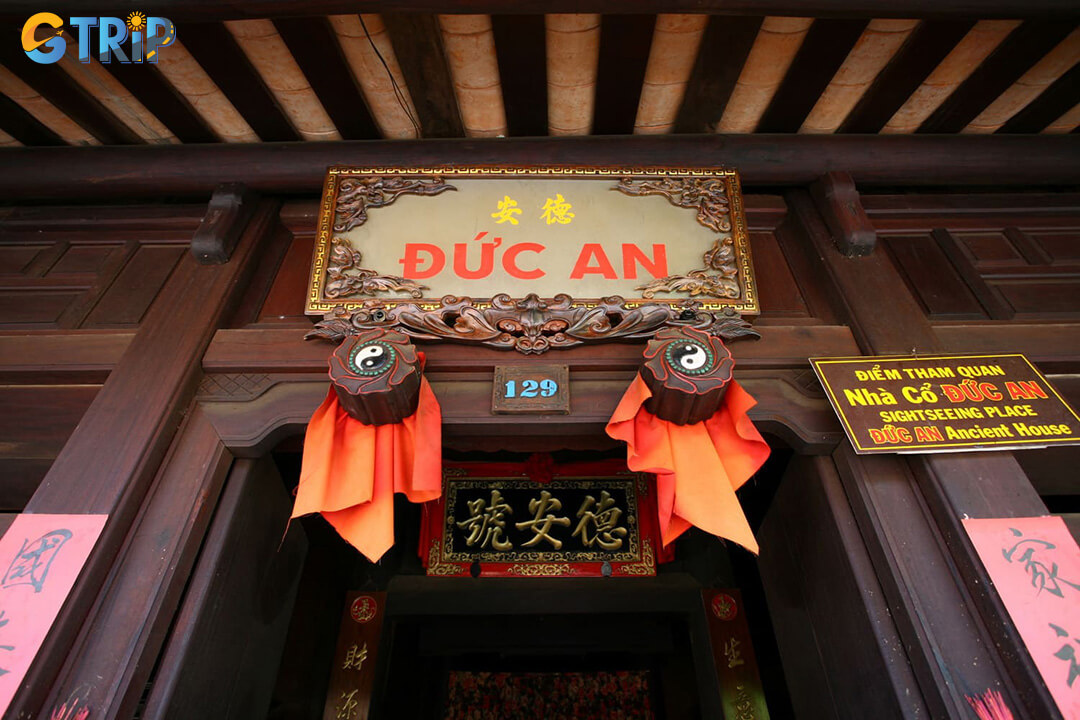
The main entrance features traditional four-panel doors, symbolic “door eyes” and removable wooden panels that reflect classic Hoi An merchant house design
First compartment
Once a bustling commercial area, this section still houses artifacts from the bookstore and pharmacy era. Visitors can admire antique glass-enclosed bookshelves and a traditional wooden medicine cabinet. These items are more than just decorations; they tell the story of the bookstore's golden age. The wooden table where physicians once sat to take pulses and write prescriptions is now used as a ticket-checking area.
Second compartment
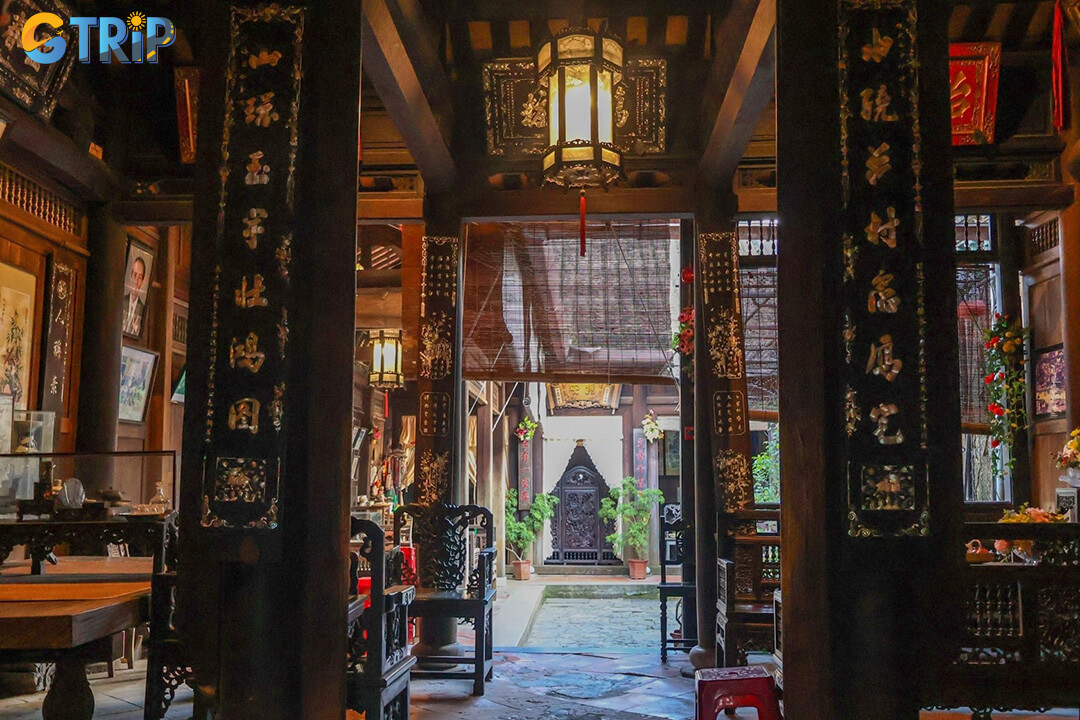
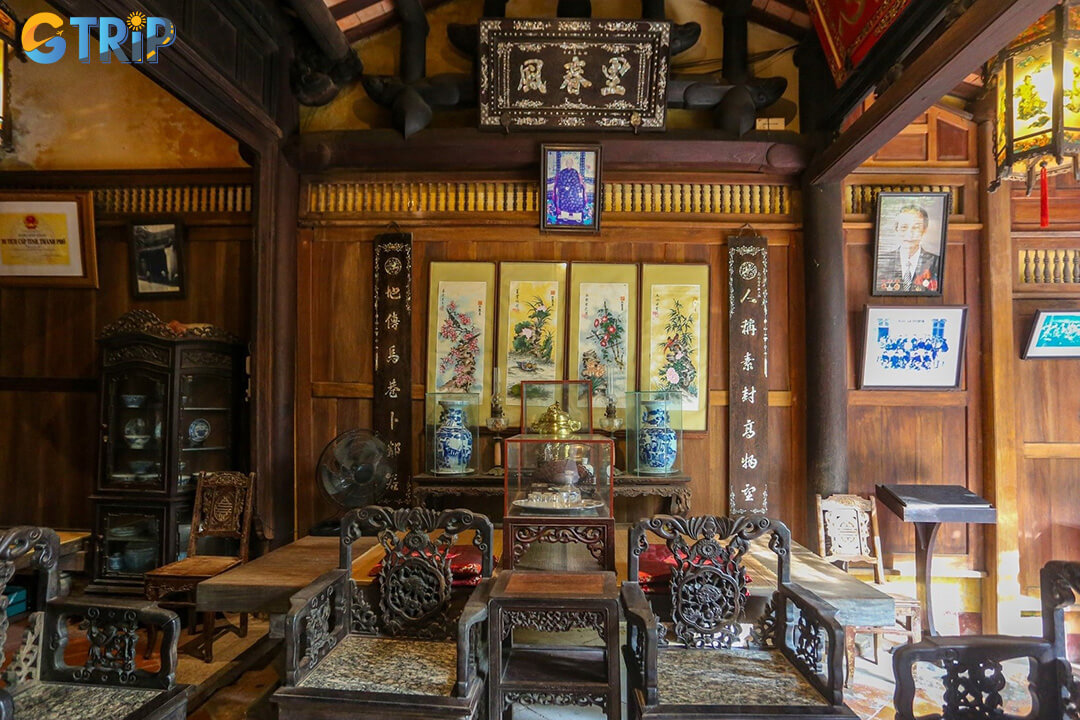
This is the most formal space, used as a living room and place of worship, marked by the "Phan Tong Duong" plaque and an altar to Guan Yu. The interior is exceptionally refined, featuring vertical boards inlaid with mother-of-pearl, some of which display poems by the revolutionary scholar Tran Quy Cap. Most of the woodwork, from the furniture to the red-lacquered and gold-trimmed horizontal plaques, was custom-made by the master craftsmen of Kim Bong Carpentry Village.
The main hall serves as a formal living and worship space, showcasing refined woodwork, mother-of-pearl inlays, and traditional plaques crafted by Kim Bong artisans
Third compartment
This section harmoniously blends architecture with nature, divided into an open-air courtyard on the right and a veranda on the left. The courtyard features a low floor for drainage, decorated with miniature limestone mountains, bonsai trees, and shaded by a lush Rangoon creeper trellis. The opposite veranda displays four traditional bird-and-flower paintings and serves as a memorial area for Mr. Cao Hong Lanh, where his personal belongings and revolutionary photos are respectfully preserved.
Fourth compartment
Historically reserved for the men of the family, the fourth compartment exudes a quiet, classical beauty. The entrance is decorated with a wooden plaque shaped like a scroll and a bat motif symbolizing happiness and fortune. Inside, you will find long wooden chairs, an antique bed, and sets of "carp and flower" paintings (symbolizing wealth) alongside ink-wash landscape paintings. Beyond this area lies the family’s private living quarters and a wooden staircase leading to the upper floor.
The fourth compartment features classic wooden furniture and symbolic decorations, reflecting the traditional private living space of the Phan family
Top 7 things to do at Duc An Old House
Visiting Duc An Old House is more than just a sightseeing stop, it is an immersive journey into the intellectual and revolutionary soul of Hoi An.
1. Admire the rare "door eyes" and ancient architecture
Begin your visit by observing the "door eyes" above the main entrance. These daisy-shaped carvings are a spiritual symbol unique to Hoi An, believed to guard the household. Once inside, take your time to appreciate the "tube house" layout and the masterful woodwork crafted by Kim Bong artisans. The flexible “ban khoa” doors alongside the intricate mother-of-pearl inlays reveal the remarkable craftsmanship of the 19th century.
2. Step back in time at the historic bookstore and pharmacy
Explore the first compartment to see the authentic wooden cabinets that once held progressive Han Nom books and traditional Chinese herbs. This house was a "cradle" for revolutionary thought, where famous patriots gathered. Standing among these centuries-old artifacts, you can almost feel the atmosphere of the early 20th century when intellectuals met here to discuss the future of the nation.
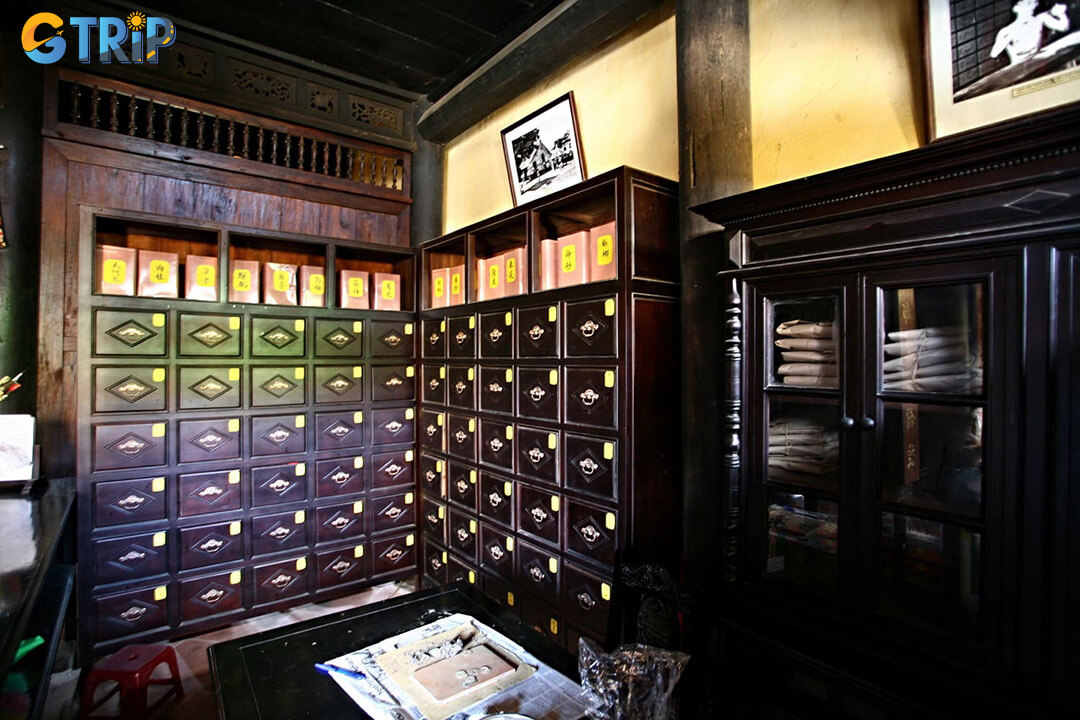
The first compartment preserves original wooden cabinets and artifacts, reflecting its past as a revolutionary bookstore and meeting place for patriotic scholars
3. Visit the Cao Hong Lanh Memorial Area
Dedicated to the life of the revolutionary leader Cao Hong Lanh, this section displays personal belongings, documents, and rare photographs. It is a quiet, respectful space where you can learn about his significant contributions to Vietnam’s history. The blend of a family home and a historical memorial gives Duc An a much more intimate feel than other museums.
4. Relax by the inner courtyard (Skylight)
Take a moment to rest at the third compartment’s veranda. The open-air courtyard, with its miniature landscapes and lush Rangoon creeper flowers, offers a peaceful escape from the busy streets outside. This is the perfect spot to feel the natural ventilation of the house and observe how Hoi An residents lived in harmony with nature.
5. Savor a famous "Mot" herbal tea at the front
Right at the doorstep of Duc An Old House, you can find the famous Mot Hoi An tea stall. Known for its refreshing herbal flavor and beautiful presentation with a lotus petal, it is the most iconic drink in the town. Grabbing a cup of tea while admiring the vintage facade of the house is a "must-do" experience for any traveler.

Just outside Duc An Old House, Mot Hoi An offers its famous herbal tea, a refreshing and iconic drink enjoyed by many visitors in the ancient town
6. Capture vintage photos in traditional ao dai
The deep brown wood tones, golden horizontal plaques, and natural light from the skylight provide a stunning backdrop for photography. Wearing a traditional Vietnamese ao dai while posing among the antique furniture or in the bird-and-flower painted corridor creates a beautiful setting for photos. These moments capture the timeless elegance and true essence of ancient Hoi An.
7. Pick up a meaningful souvenir
Before leaving, browse through the small souvenir selection offered by the family. By purchasing a local item here, you are directly contributing to the ongoing preservation of this 190-year-old heritage site. It helps the 5th and 6th generations of the Phan family maintain this historic gem for future visitors.

Visitors can browse small souvenirs offered by the family, helping support the preservation of this 190-year-old heritage house
How to get to Duc An Old House?
Duc An Old House is located at 129 Tran Phu Street, right in the heart of Hoi An Ancient Town. As a prominent heritage site, it is highly accessible whether you are coming from Da Nang or staying within the local area. Depending on your starting point and preferred style of travel, you can choose from the following convenient routes:
From Da Nang International Airport
Da Nang International Airport is the primary gateway for travelers visiting Hoi An, situated about 30km from the house. Upon landing, you can easily secure a transfer to the ancient town. The most popular route follows the scenic coastal roads, offering a pleasant introduction to the region’s landscape before arriving at the pedestrian-friendly outskirts of Hoi An.
- Distance: Approximately 30 km
- Travel time: 45 - 60 minutes
- Routes: Coastal road via Vo Nguyen Giap - Truong Sa or via National Highway 1A
- Optimal option: Private car or taxi for a direct and luggage-friendly transfer
From Da Nang City center
If you are staying in Da Nang City center, getting to 129 Tran Phu is straightforward. The journey is well-serviced by various local transport means. If you prefer the thrill of a motorbike ride or the convenience of a shuttle, the road to Hoi An is well-paved and easy to navigate, connecting the modern city to the historic charm of the old town.
- Distance: Around 30 km
- Travel time: 45 - 60 minutes
- Routes: Da Nang - Hoi An coastal road or through the former Dien Ban District
- Optimal option: Motorbike for flexibility or a tourist shuttle bus for cost-effectiveness

Traveling from Da Nang to 129 Tran Phu in Hoi An is easy, with a 30 km journey taking about 45-60 minutes via coastal or inland routes
From around Hoi An Ancient Town
Since Duc An Old House is situated on Tran Phu, it is extremely close to other major attractions like the Japanese Covered Bridge. Most visitors staying in local villas or hotels can reach the house within minutes. Please note that the house is located inside the walking zone where motorized vehicles are restricted during specific hours.
- Distance: Within 1 - 2 km from the town center
- Travel time: 5 - 15 minutes
- Routes: Walk along Tran Phu street or cycle via Hai Ba Trung street
- Optimal option: Walking or cycling to enjoy the atmospheric streets of the heritage site
Transportation options
Accessing the house involves adhering to Hoi An’s pedestrian rules. Motorized vehicles are prohibited from 9:00 - 11:30 AM and 3:00 - 9:30 PM. During these times, visitors must park their vehicles at designated lots outside the ancient town.
- Walking/Cycling: The only permitted options during pedestrian-only hours
- Motorbikes/Scooters: Allowed outside restricted hours; otherwise, use nearby parking lots
- Taxi/Electric car: Drop-off at the nearest accessible point outside the walking zone
- Parking: Available at Phap Bao Pagoda or public lots at the town's entrances
- Private car: The most comfortable and hassle-free option, perfect for families or groups. You can book this in advance through your hotel or a travel agent.
- Taxi/Ride-hailing: Services like Grab are widely available and offer a competitive, fixed price, removing the need for haggling.
- Shuttle bus: Several companies run shuttle services between Da Nang hotels/airport and Hoi An. They are a good mid-range option.
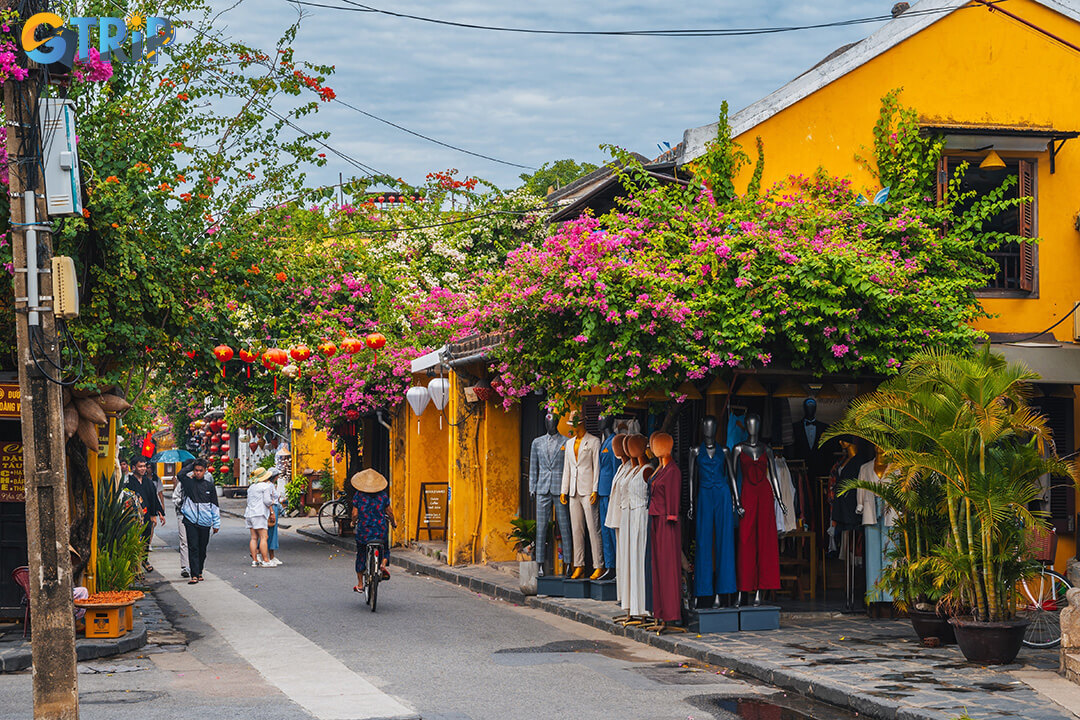
Visitors can reach Duc An Old House by walking or cycling during pedestrian hours, with parking and drop-off points available outside Hoi An Ancient Town
Nearby attractions to the Duc An Old House
The Duc An Old House’s prime location on Tran Phu Street puts you within a few minutes' walk of many of Hoi An’s most famous landmarks. Here are some key attractions to visit nearby:
- Japanese Covered Bridge: A 5-minute walk west on Tran Phu Street. This iconic 18th-century bridge is the symbol of Hoi An, featuring a small temple inside. Its unique design reflects the cultural influence of the Japanese community who once lived here.
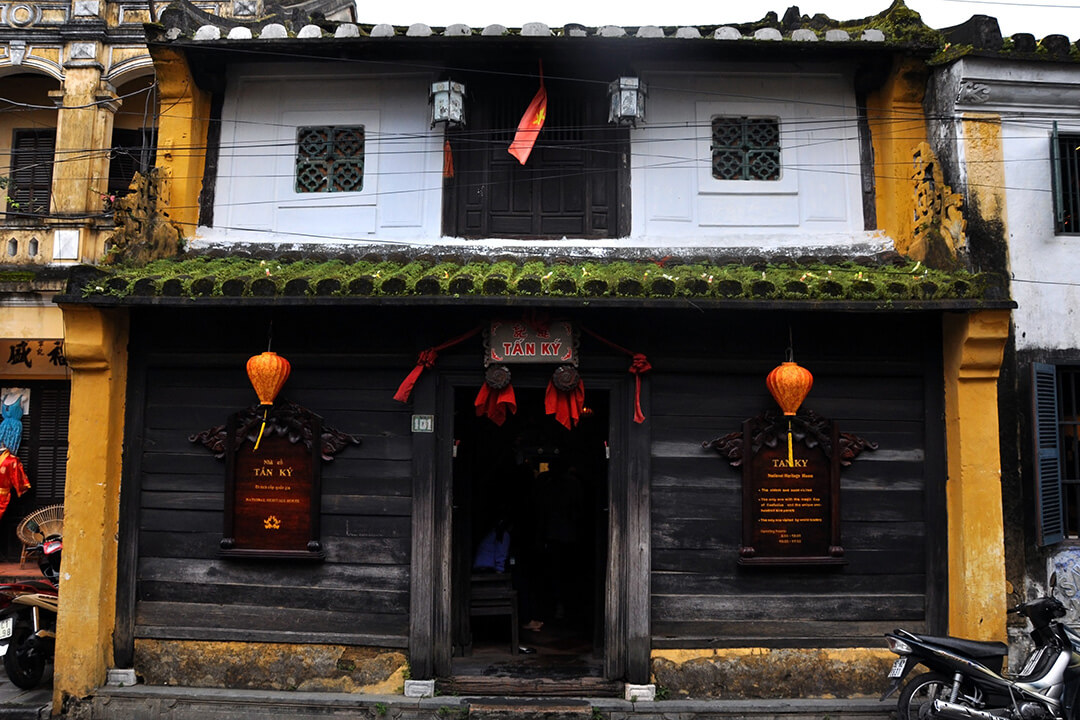
- Tan Ky Old House: Just a 3-minute walk away on Nguyen Thai Hoc Street. This is one of the most famous and beautifully decorated old houses in Hoi An, offering a great point of comparison with Duc An. The house also preserves many original antiques and architectural details from the merchant era.
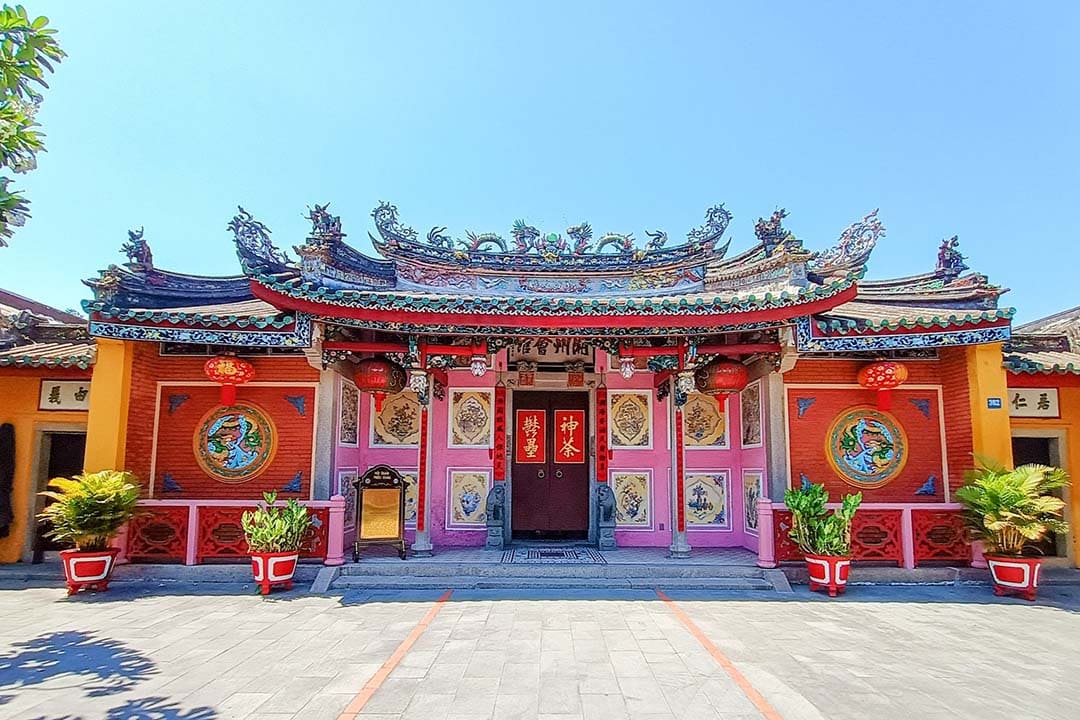
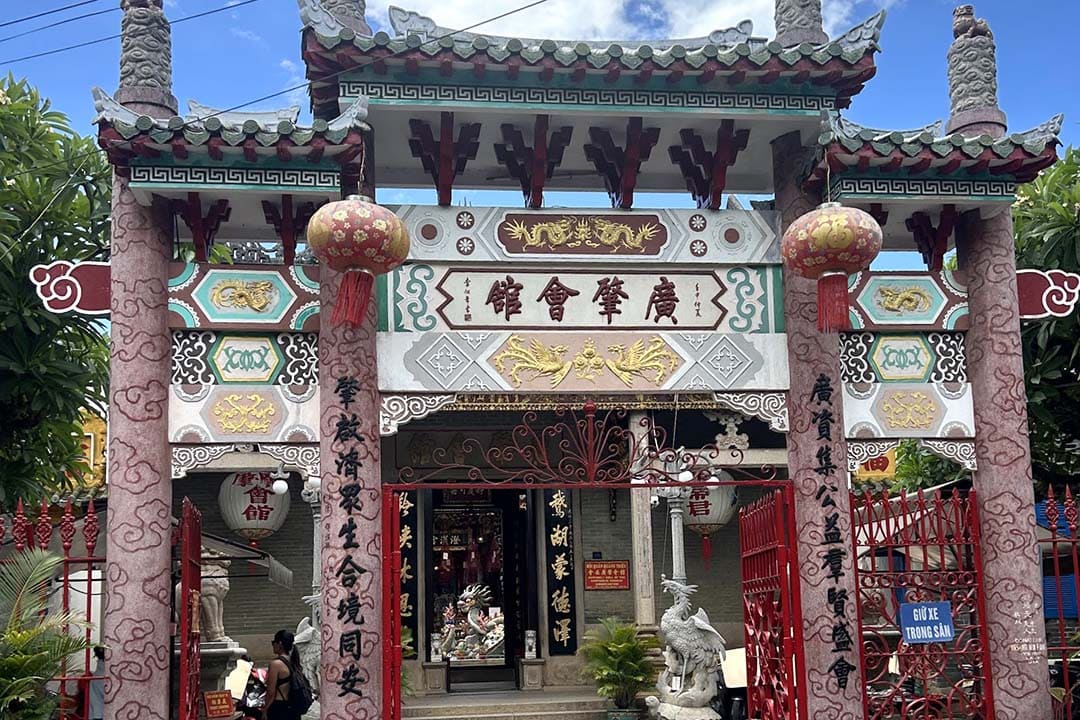
- Phuc Kien Assembly Hall: Located a 2-minute walk east at 46 Tran Phu Street. This is the largest and most ornate of the Chinese Assembly Halls, dedicated to the sea goddess Mazu. Its colorful gates, dragon sculptures, and peaceful courtyard make it a popular cultural landmark.
- Cantonese Assembly Hall: A 4-minute walk west at 176 Tran Phu Street. It's known for its stunning stone dragon fountain and elaborate decorations. The hall was originally built by Cantonese merchants as a place for community gatherings and worship.
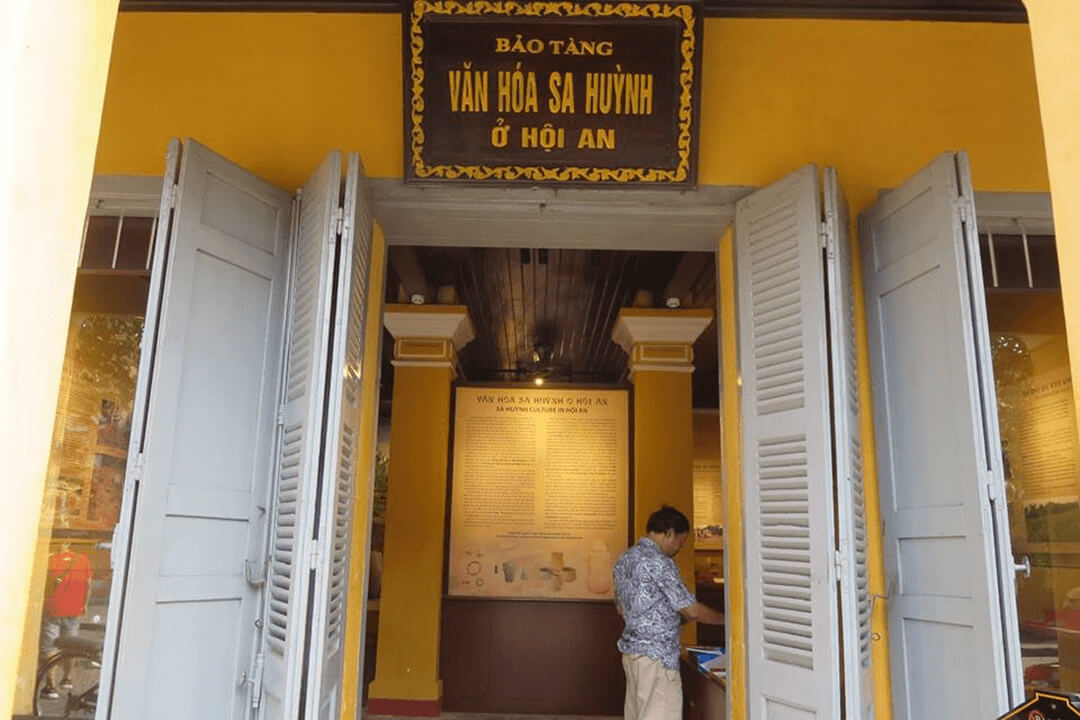
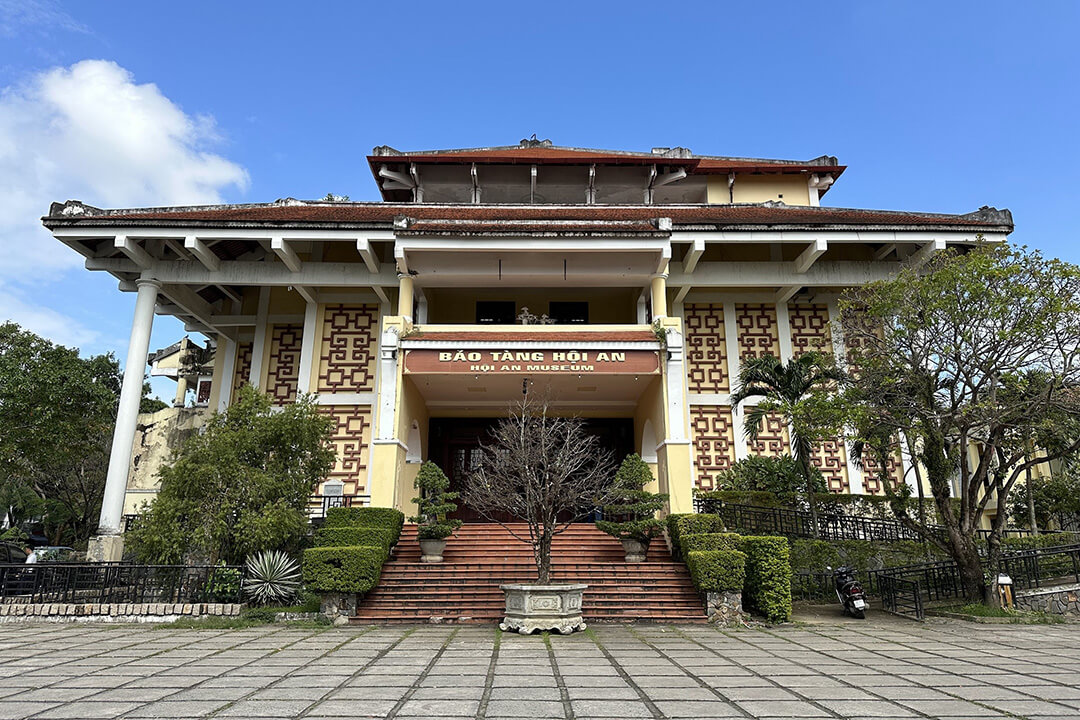
- Museum of Sa Huynh Culture: Also on Tran Phu Street, this museum showcases artifacts from the ancient "Sa Huynh" people who inhabited the region over 2,000 years ago. It offers valuable insights into one of the earliest cultures in central Vietnam.
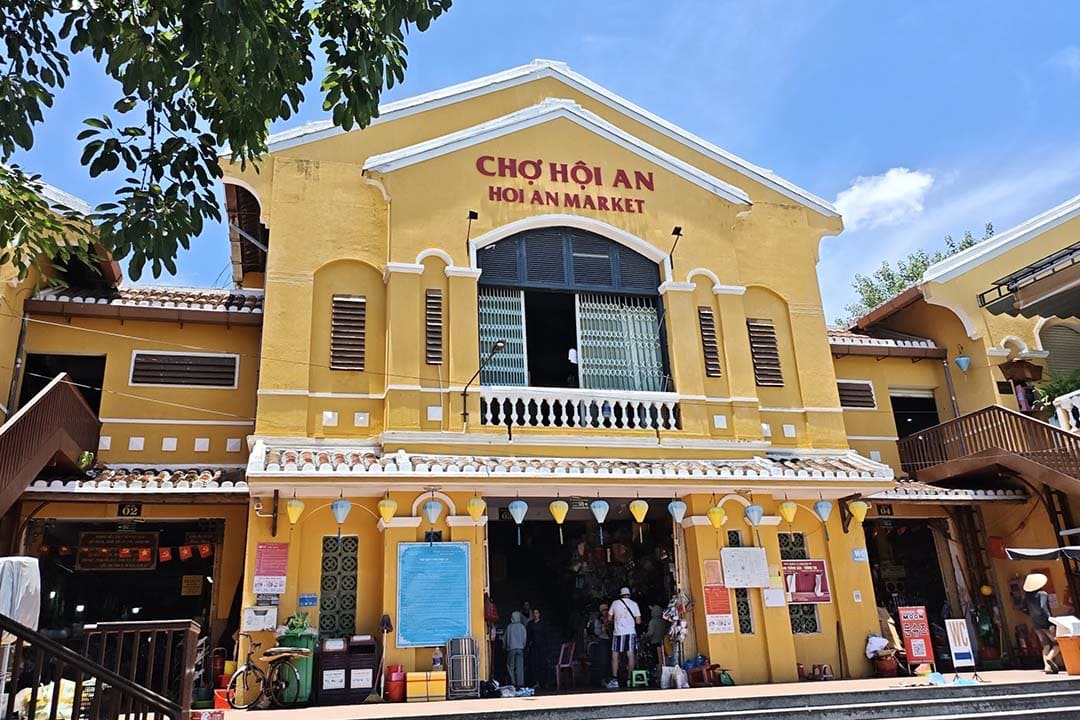
- Hoi An Central Market: A vibrant, bustling market located about a 10-minute walk away, where you can experience local life, shop for souvenirs, and try delicious street food. The market is especially lively in the morning when locals come to buy fresh produce and seafood.

Duc An Old House is ideally located on Tran Phu Street, within a short walking distance of many of Hoi An’s most famous attractions
Practical tips for visitors when visiting Duc An Old House
To ensure your journey through the ancient cultural spaces of Hoi An is seamless and fulfilling, please keep the following tips in mind. Understanding the ticketing rules, dressing appropriately, and preparing for the weather will help you have a memorable experience while showing respect for the local heritage.
- Entry tickets: Visitors must purchase a general sightseeing ticket for the Hoi An Ancient Town heritage zone at authorized booths. The fee is 120,000 VND for adults and children over 15.
- Appropriate attire: While there is no strict dress code for the house itself, you should wear polite and modest clothing when visiting temples or assembly halls within the town. Wearing a traditional Vietnamese ao dai is highly encouraged to honor the heritage site.
- Preservation awareness: To maintain the integrity of the site, please do not touch the artifacts or antiques and avoid entering the family's private living areas.
- Dry season tips (February - August): The weather can be quite hot. You should prepare sunscreen, a wide-brimmed hat, sunglasses, and carry a bottle of water to stay hydrated.
- Rainy season tips (September - January): Bring an umbrella or raincoat and wear waterproof shoes. Be sure to check the weather forecast, as the old town often experiences flooding between October and December.
- Transport and payment: Comfortable walking shoes or sandals are recommended, as exploring on foot is the best way to see the town. Carry enough cash for tickets and small purchases, as many small shops do not accept credit cards.
- Support and guidance: Visiting with a local guide is recommended to gain deeper insights into the house's history. You might also consider buying souvenirs directly at the house to support the family in maintaining and preserving this historic monument.
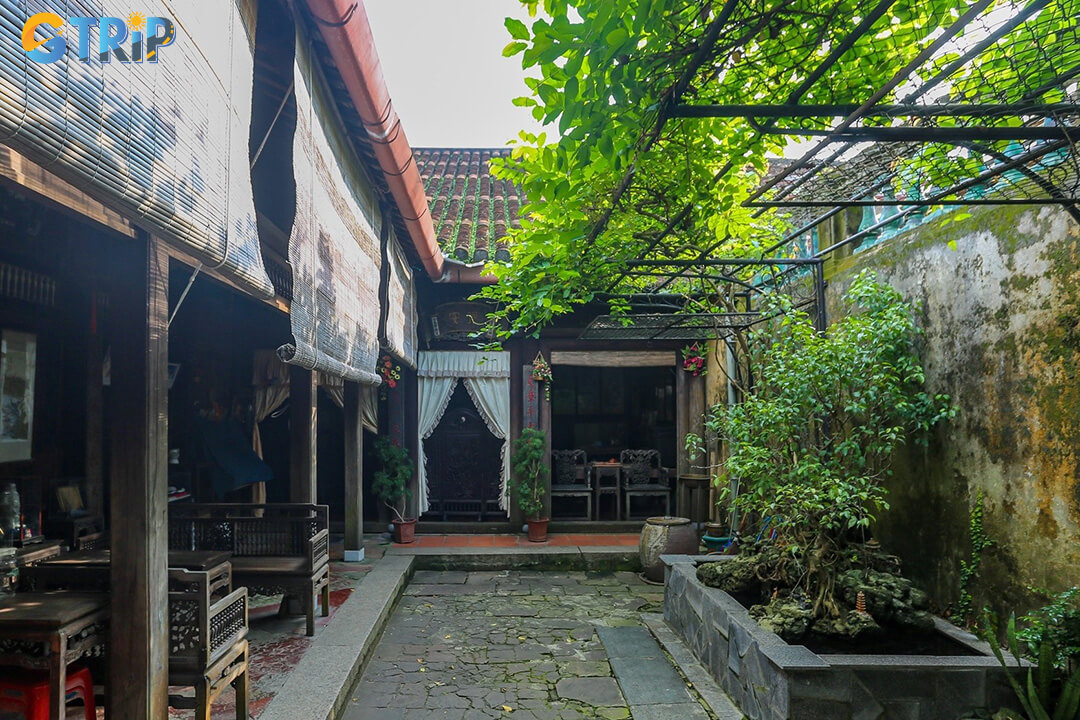
Plan your visit with a heritage ticket, modest attire, and weather preparation to enjoy Hoi An’s historic sites comfortably and respectfully
Duc An Old House is far more than just another stop on a tourist trail, it is a profound journey into the heart and mind of Vietnam. Its beautifully preserved architecture provides a window into the past, while its history as a revolutionary hub tells a powerful story of courage and intellectual defiance. It stands as a powerful reminder that Hoi An's soul is built not just on trade, but on culture, knowledge, and an unbreakable patriotic spirit. A visit here offers a quiet, contemplative experience that will enrich your understanding of this incredible town. Let GTrip help you plan the rest of your incredible journey through Vietnam.