



Apr - 02 - 2026
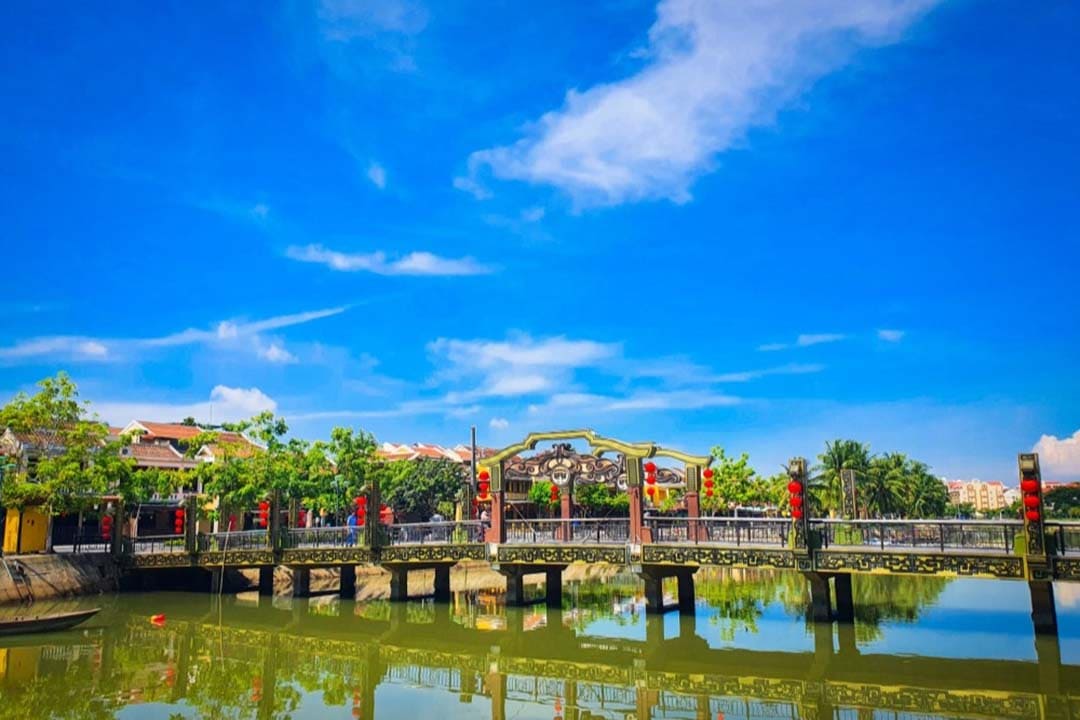
Ba Mu Temple Hoi An stands as one of the ancient town's most captivating and photogenic landmarks, a stunning fusion of history and modern reverence. While many visitors stumble upon its magnificent gate by chance, this beautifully restored site is a destination in its own right. It offers a tranquil escape and the perfect backdrop for your travel photos. Once a major religious complex, its surviving entrance is now a beloved open-air attraction, affectionately known as the "reflection temple" or the "famous gate in Hoi An". This ultimate guide from GTrip contains everything you need to know for a perfect visit. We'll delve into its fascinating history, explore its intricate architecture, and provide practical tips on how to get there, the best times to visit, and how to capture that flawless photo.
Overview of the Ba Mu Temple Hoi An
The Ba Mu Temple, or Chua Ba Mu in Vietnamese, is a testament to Hoi An's layered history. The name 'Ba Mu' translates to 'The Twelve Midwives', celestial deities from Vietnamese and Chinese folklore who are believed to bless families with children and oversee their development from birth. Though the main sanctuary no longer stands, the temple's soul lives on through its breathtakingly ornate entrance gate, the Tam Quan. Today, the site functions as both a cherished piece of heritage and a meticulously designed public space, making it one of the most popular and completely free attractions in Hoi An Ancient Town.
Where is Ba Mu Temple Hoi An?
Address: No. 675 Hai Ba Trung Street, Hoi An Ancient Town, Hoi An Ward (formerly Minh An Ward, Hoi An City, Quang Nam Province), Da Nang City
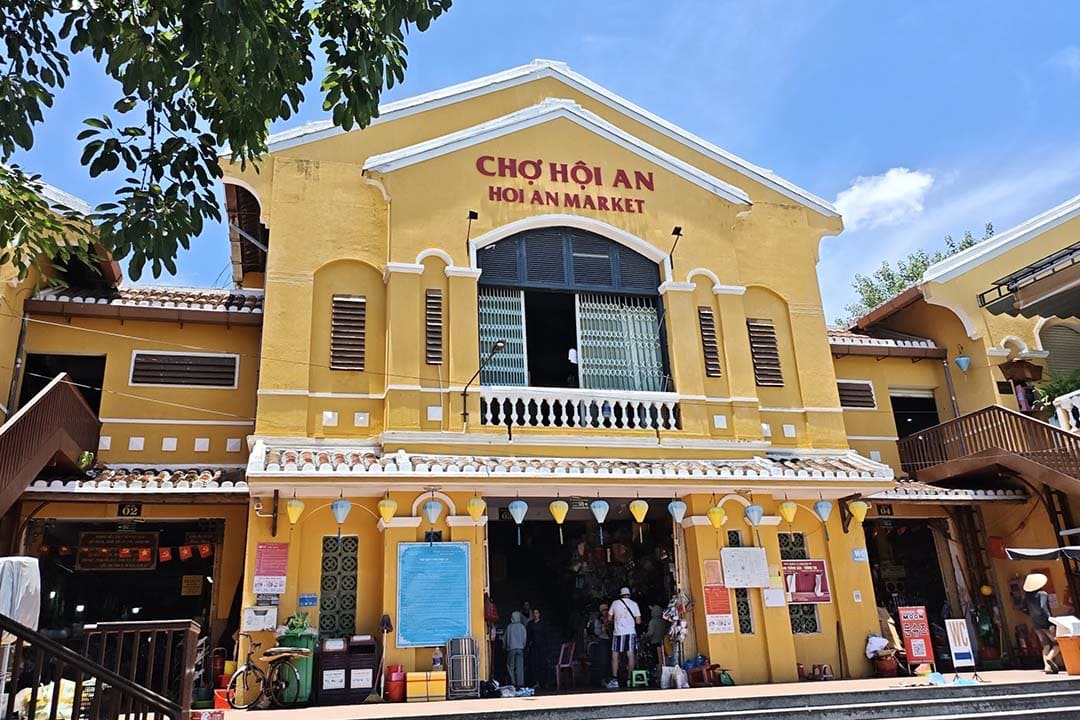
The temple is conveniently located right in the heart of Hoi An, making it an effortless addition to any walking tour of the Ancient Town. You will find it on one of the main streets just outside the primary pedestrian-only zone. Situated on Hai Ba Trung Street, the temple is just a few minutes walk from iconic sites like the Japanese Covered Bridge and the bustling Hoi An Central Market. Its prime location ensures it is easy to find and access.
Opening hours and ticket prices
- Opening hours: All day, allowing you to visit at any time of the day or night.
- Ticket prices: Free
One of the most common questions visitors have is about the entrance fee and visiting times. The good news is that this beautiful site is one of the most accessible in Hoi An.
Best time to visit Ba Mu Temple Hoi An
To make the most of your visit, timing is key, especially if you're a keen photographer. We recommend visiting in the early morning, between 7:00 AM and 9:00 AM. During these hours, the light is soft and golden, the crowds are minimal, and you can capture stunning, unobstructed photos of the gate and its reflection. The late afternoon also offers a beautiful "golden hour" glow. Visiting in the evening provides a different atmosphere entirely, as the gate is beautifully illuminated, creating a serene and romantic ambiance perfect for a quiet moment of reflection.
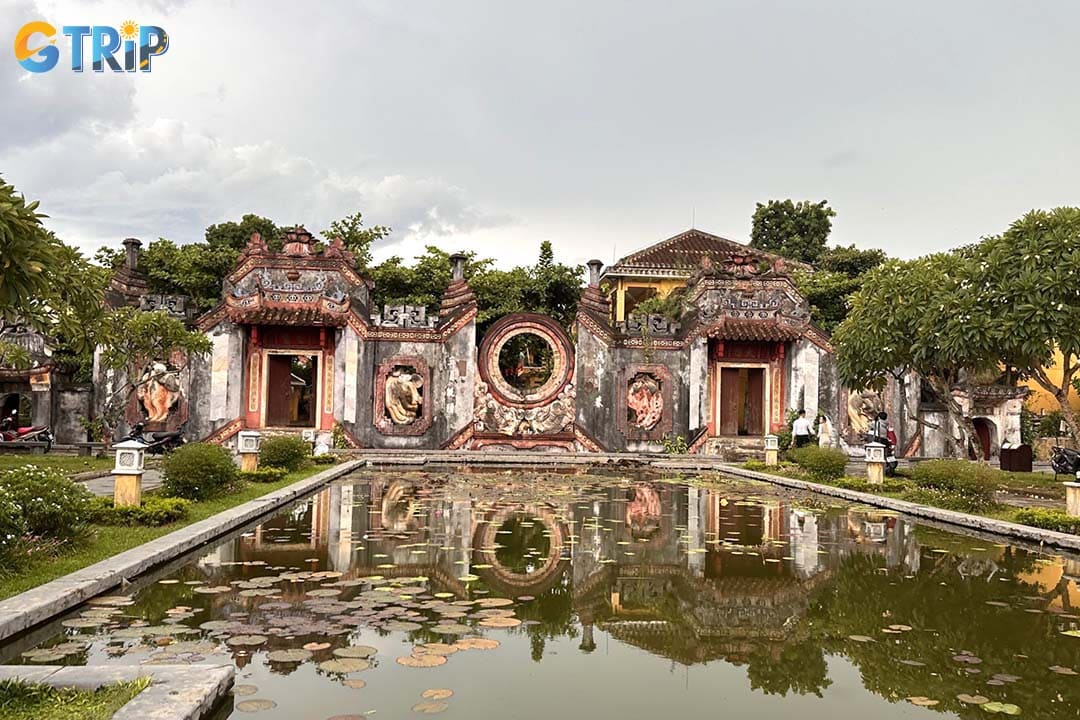
Ba Mu Temple Hoi An is a testament to Hoi An's layered history
What makes Ba Mu Temple in Hoi An unique?
Ba Mu Temple stands out as a unique landmark because it honors goddesses who protect childbirth and children, rather than the military heroes or wealthy merchants typically found in other temples. Unlike the towering gates of traditional assembly halls, the entrance here is designed like an unfurled "Cuon thu" (an ancient scroll), symbolizing wisdom and the preservation of history. The peaceful park and lotus pond out front create a stunning mirror effect, making it one of the most photogenic heritage spots in town.
- Unique deities: It is the only site dedicated entirely to the 12 goddesses of childbirth and protection for children.
- Scroll-shaped gate: Features a rare horizontal architectural style designed to look like an open scroll.
- Mirror reflection: The lotus pond in front provides a perfect symmetrical reflection of the gate, ideal for photography.
Understanding the Twelve Midwives
The worship of the Twelve Midwives (Ba Mu) is a fascinating folk belief reflecting the gratitude of parents toward the deities who guard a child’s birth and early development. According to local folklore, each of these twelve goddesses is assigned a specific responsibility, meticulously caring for every stage from conception to the child's first steps:
- Tran Tu Nuong: Oversees the birthing process.
- Van Tu Nuong: Takes care of pregnancy.
- Lam Cuu Nuong: Responsible for conception.
- Luu That Nuong: Shapes the baby’s physical form as male or female.
- Lam Nhat Nuong: Guards the fetus in the womb.
- Ly Dai Nuong: Supports the mother during labor.
- Hua Dai Nuong: Manages the "opening of flowers" (dilation for birth).
- Cao Tu Nuong: Cares for the mother and baby during the confinement period.
- Tang Ngu Nuong: Specifically protects newborn babies.
- Ma Ngu Nuong: Teaches the baby how to be held and comforted.
- Truc Ngu Nuong: Watches over the baby while they are in the cradle.
- Nguyen Tam Nuong: Supervises and witnesses the safe arrival of the child.
In addition to these twelve, families also honor the "Three Fairies" who assist the Midwives. Traditionally, locals prepare colorful offerings on special milestones, when the baby is 3 days old, one month old, 100 days old, and on their first birthday, to pray for health and happiness.
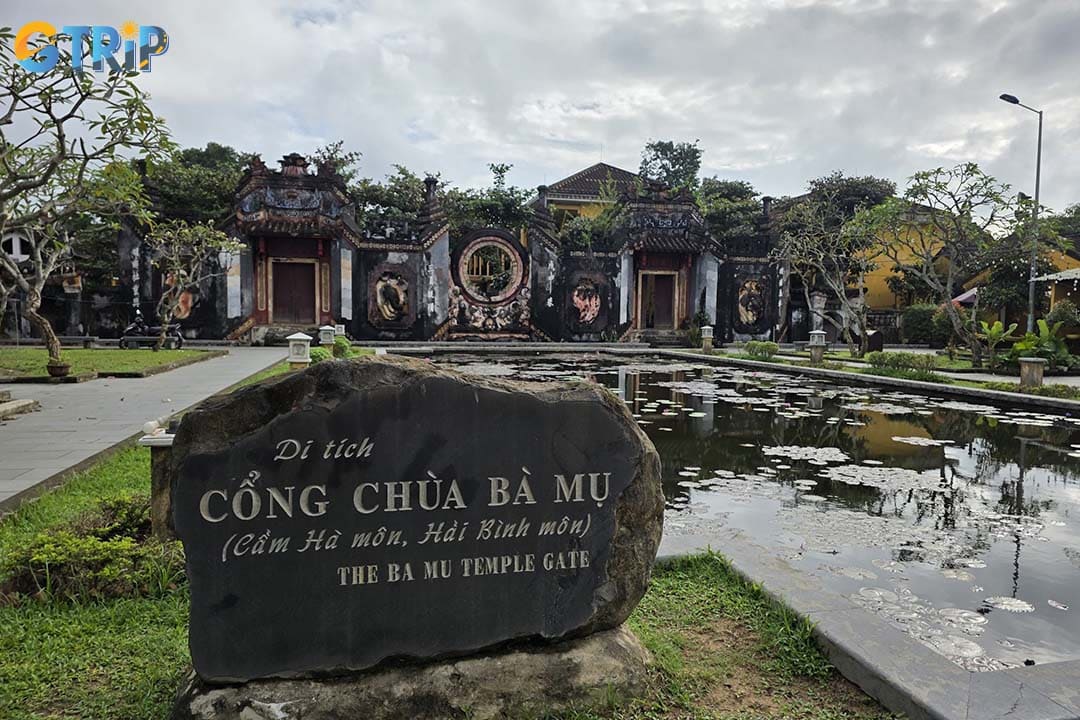
Ba Mu Temple is famous because it honors goddesses who protect childbirth and children
History of Ba Mu Temple Hoi An
Ba Mu Temple is more than just a beautiful structure; it is a witness to 400 years of Hoi An's ups and downs. Originally, this site was a massive complex consisting of two parallel temples, each with its own entrance:
- Cam Ha Cung (Left side): Dedicated to the God of Medicine, the Supreme Sovereign, and 36 famous generals. The main deity here is believed to control water monsters that cause annual flooding.
- Hai Binh Cung (Right side): Dedicated to the Goddess of the Sea (Thien Hau) and the Twelve Midwives (Ba Mu). Thien Hau is the protector of sailors and merchants on their sea voyages.
Locals traditionally called Cam Ha Cung "Uncle Pagoda" and Hai Binh Cung "Midwives Pagoda". Over time, "Ba Mu Temple" became the common name for the entire complex. The name "Cam Hai" is also a combination of the first words of the two temples. Here are the most important milestones in its history:
- 1626: The temple was originally named "Cam Hai Nhi Cung," founded by the Chinese community.
- 1686: Historical records suggest the temple was moved to its current location on Hai Ba Trung Street to better serve the growing local community.
- 1922: Under the reign of King Khai Dinh, the temple underwent a major restoration, recorded as the final large-scale renovation of the feudal era.
- 1930: French researchers recognized the temple’s artistic value and officially listed it as one of the top heritage monuments of the Indochina Federation.
- 2018: After decades of damage from wars and time, a massive restoration project was completed, reopening the iconic gate and the new lotus park to the public.
Architecture of Ba Mu Temple Hoi An
The architecture of the Ba Mu Temple Gate is a beautiful mix of philosophy and art. Its design is based on the "Three-realm" theory (Heaven - Earth - Human), illustrating the connection between the physical world and the divine. The unique horizontal scroll shape feels much softer and more welcoming than traditional sharp-edged gates.
At the center of the structure is a large circular opening representing the full moon, symbolizing "Heaven" and the concept of completeness. Instead of a standard three-door gate (Tam Quan), this design features four small side entrances which, when combined with the central circle, form two sets of symbolic "Triple Gates". Decorated with colorful porcelain mosaics and surrounded by a still water pond, the gate creates a peaceful balance that perfectly captures the spiritual essence of old Hoi An.
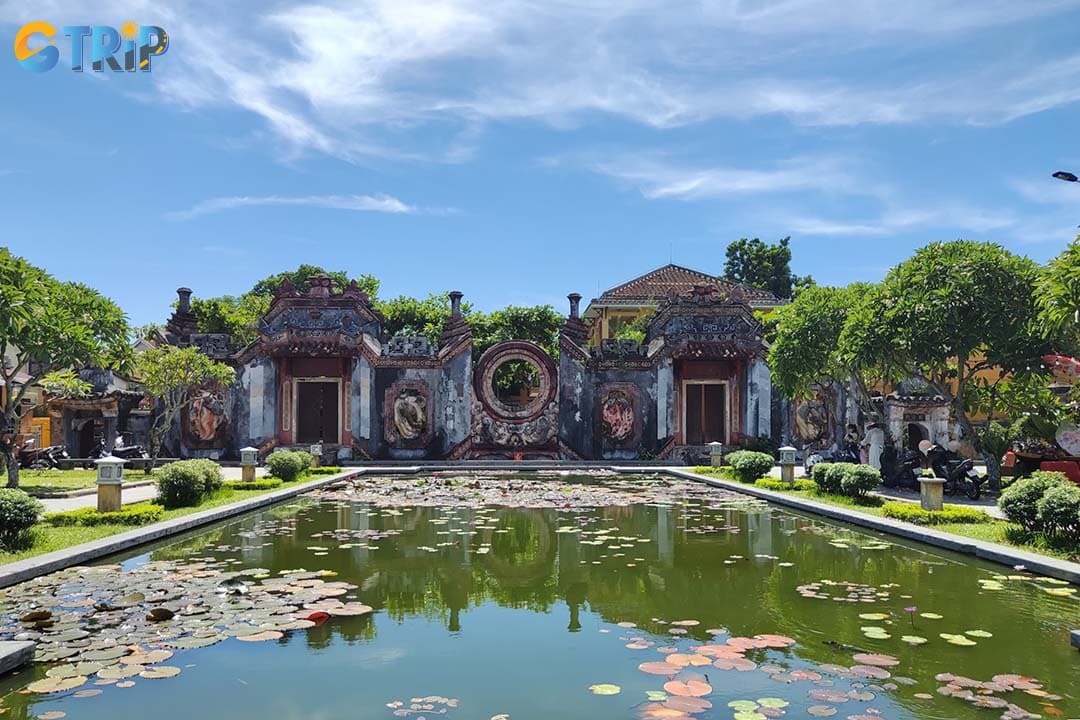
The architecture of the Ba Mu Temple Gate is a beautiful mix of philosophy and art
Things to do at Ba Mu Temple in Hoi An?
Visiting Ba Mu Temple is more than just standing in front of an old gate. It’s an opportunity to immerse yourself in an artistic space where history meets modern aesthetics. Here are the best activities you shouldn't miss.
1. Capture "million-view" photos at the reflection pond
The rectangular lotus pond right in front of the gate is more than just a landscape feature. It acts as a giant mirror, creating perfect symmetry for the monument. By standing on the opposite side of the pond, you can capture the full reflection of the vibrant yellow gate and the blue sky in the still water. This combination creates a deep, artistic, and peaceful photo.
For the clearest shots, try to visit early in the morning when the light is soft and the water hasn't been disturbed by crowds. This is the perfect time to catch the first rays of sunlight hitting the vintage yellow walls. The morning quiet will help you get those "million-view" photos that truly capture the heritage vibe of Hoi An.
2. Discover the unique architecture and the story of the 12 Midwives
Once you've got your perfect photos, take some time to look closer at the rare architectural details. This is where you begin your journey into the spiritual life of ancient Hoi An through meaningful symbols:
- Admire the "scroll" gate: Notice the horizontal shape of the gate. It isn't tall and pointy but soft, like an open scroll, symbolizing wisdom and historical records.
- The central moon: The large circle in the middle represents the full moon and completeness. You can learn about the 12 Midwives, the protective goddesses of children, who represent a deep family culture shared by both Vietnamese and Chinese communities here.
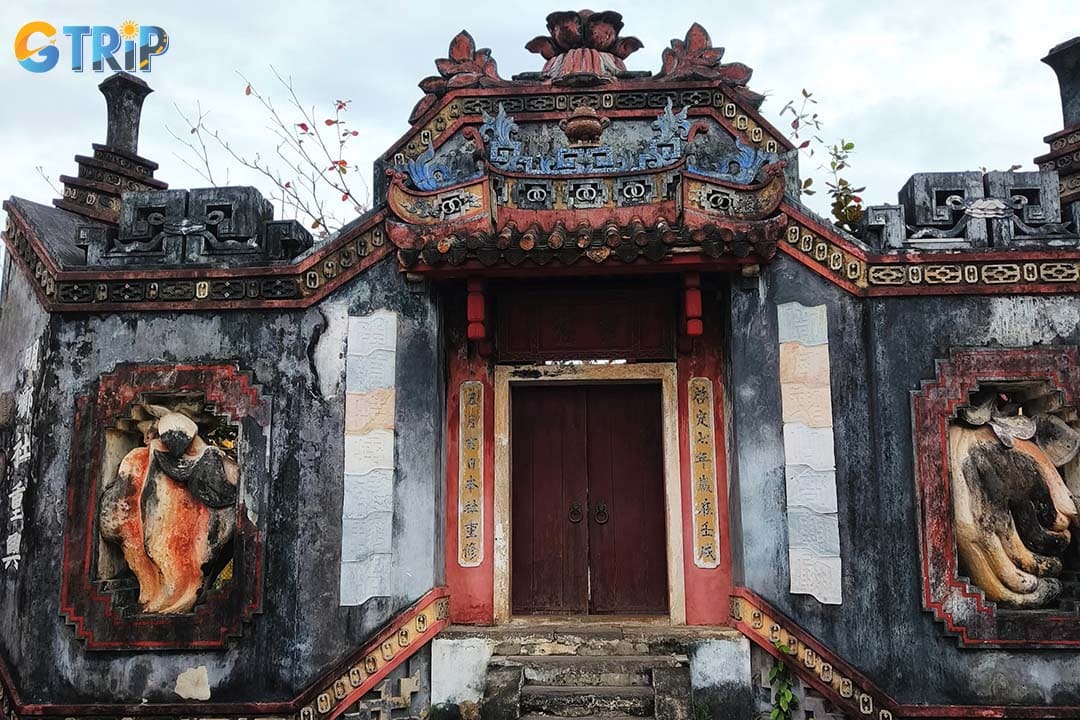
After taking photos of the gate, you should look closer for the details of the architecture
3. Wear an Ao Dai to blend into the heritage
The gate of Ba Mu Temple has long been considered the "national backdrop" for traditional Vietnamese costumes. The time-worn yellow walls, yin-yang roof tiles, and porcelain carvings perfectly highlight the vibrant colors of an 'Ao Dai'. Everything blends perfectly with the temple's ancient setting, helping you transform into a graceful "muse" within the heritage site.
Along with your Ao Dai, don't forget to bring accessories like a traditional conical hat (non la) or a small paper fan to add extra elegance to your photos. Wearing a national costume while standing in front of a 400-year-old monument is not just about aesthetics. It’s a way to show respect for Hoi An's long-standing cultural values.
4. Enjoy the magical beauty of the site at night
When night falls, Ba Mu Temple puts on a completely different look. It becomes much more romantic and magical under warm golden lights. The artistic lighting highlights the ancient yellow walls and colorful porcelain details, reflecting beautifully on the lotus pond. This is the perfect time to experience a gentle, quiet side of Hoi An, away from the noisy crowds of the Hoai River area.
Walking around the park in the evening, you’ll feel your soul lighten up as you watch the glowing lights dance on the water. The daytime bustle is gone, replaced by the sound of the breeze and the faint scent of lotus and lilies. This is truly the best time for those looking for a peaceful and nostalgic moment in the heart of the ancient town.
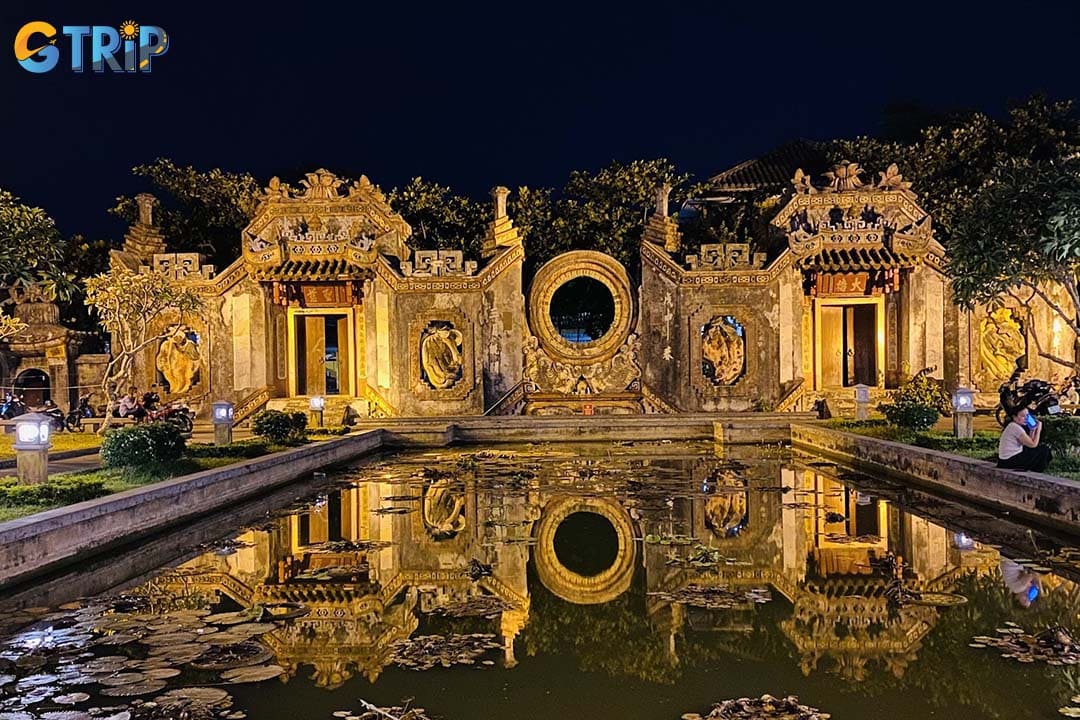
The temple becomes magical at night under the warm golden lights
5. Relax in the park and enjoy coffee with a heritage view
After a long walk exploring every corner of the ancient town, the park area around Ba Mu Temple is the perfect "recharge station". With its airy design, clean stone benches, and open space, you can sit back, breathe in the scent of lotus, and watch the slow pace of local life. This is a peaceful little corner where you can step away from the crowds and enjoy a very private side of Hoi An.
Right across from the pond, you'll find charming little cafes with a direct view of the iconic scroll-shaped gate. There’s nothing better than sipping a Vietnamese iced milk coffee while listening to soft music and admiring the ancient monument from a distance. This relaxing experience helps you recharge for your next journey while offering a very "artistic" way to appreciate the architecture from a wider, more peaceful perspective.
How to get to Ba Mu Temple?
The Ba Mu Temple Gate is located at 675 Hai Ba Trung Street, a prime spot right in the heart of Hoi An's Ancient Town. Reaching this heritage site is incredibly convenient with a variety of transportation options. Below is a detailed guide to help you plan the quickest and easiest route to visit this iconic "ancient scroll" monument.
From Da Nang International Airport
Traveling from the airport to Hoi An is quite easy via the coastal road, offering a smooth trip with sea views and convenient access to the Ancient Town.
- Distance: 30 km
- Travel time: 45 - 60 minutes
- Route: Vo Nguyen Giap -> Truong Sa -> Lac Long Quan -> Hai Ba Trung
- Best option: A private car or taxi is best for comfort and keeping your luggage safe
From Da Nang City center
The road from the city center is very straight and easy to follow. You will pass through peaceful countryside and small villages before reaching the historic yellow houses of Hoi An.
- Distance: 28 km
- Travel time: 40 - 50 minutes
- Route: Dragon Bridge -> Le Van Hien -> DT607 -> Hai Ba Trung
- Best option: Motorbike for an adventurous feel or Grab car for convenience
From around Hoi An Ancient Town
Since the temple gate is right in the pedestrian zone, you can easily walk or bike there from any central attraction.
- Distance: Within 1 km of the central market
- Travel time: 5 - 10 minutes walking
- Route: Walk north along Hai Ba Trung Street from the riverfront
- Best option: Walking is the most enjoyable way to explore this area
Transportation options
Hoi An is a town meant for "slow travel", so there are several eco-friendly ways to reach the gate:
- Walking: The only way to truly explore the nearby heritage alleys.
- Bicycle: The standard way to get around because most hotels offer them for free.
- Cyclo: For a classic Vietnamese experience, hire a cyclo. The driver will pedal you right to the temple entrance at a relaxed pace.
- Electric shuttle: A great, breezy choice for families who want to avoid walking in the sun.
- Taxi/Ride-sharing: If you're staying further outside the town center, a Grab car or taxi is a quick and efficient way to get there.
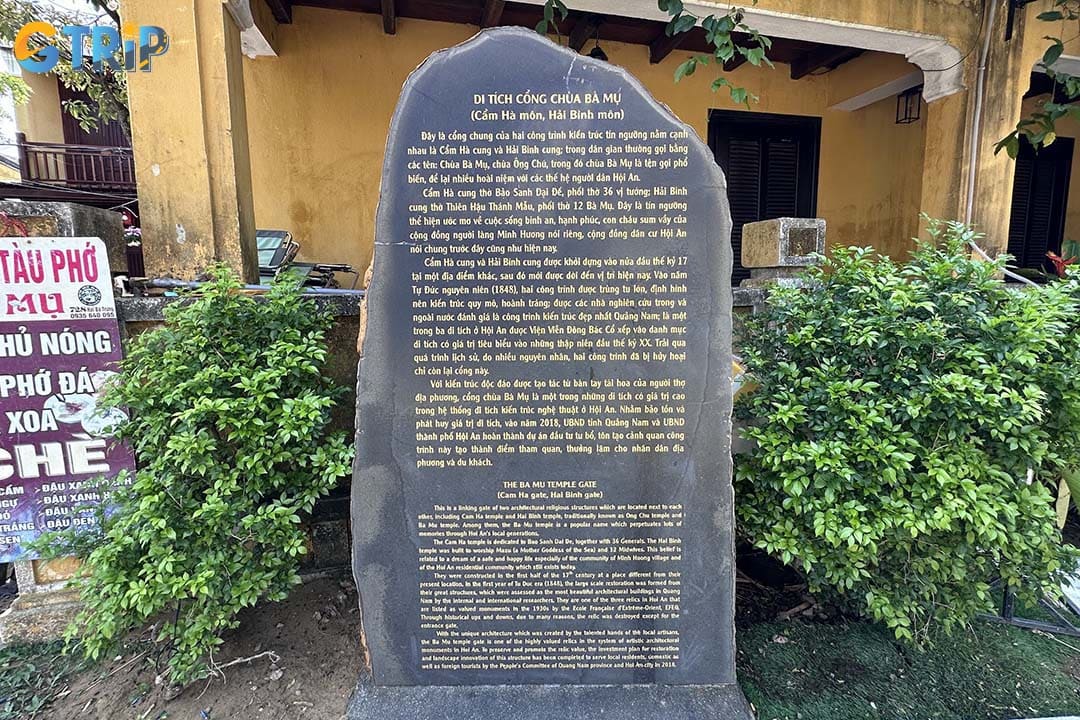
The Ba Mu Temple is located at accessible address in Hoi An, so it’s convenient to reach there
Nearby attractions to the Ba Mu Temple Hoi An
Ba Mu Temple's central location makes it the perfect starting point or stop on a wider tour of Hoi An's most famous sites. All of these are within a 5-10 minute walk.
- Japanese Covered Bridge: The Japanese Covered Bridge is Hoi An’s most iconic landmark and a symbol of the ancient town’s rich cultural heritage. Built centuries ago, the elegant wooden bridge features a small temple inside and beautifully reflects the blend of Japanese, Chinese, and Vietnamese influences in Hoi An.
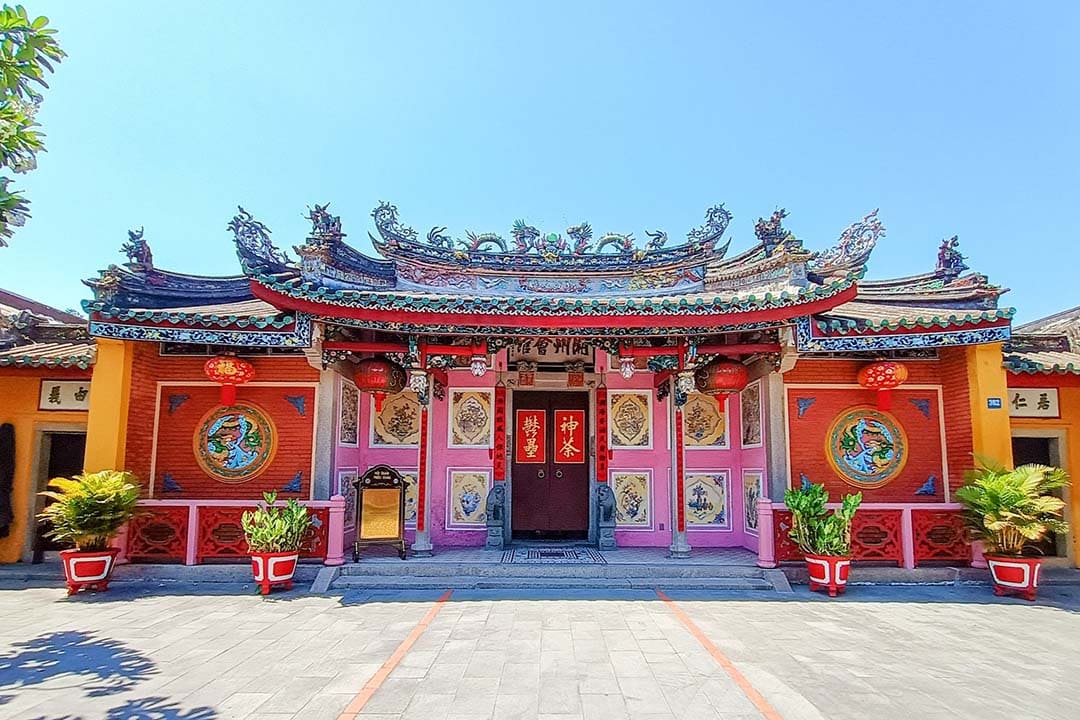
- Phuc Kien Assembly Hall: Phuc Kien Assembly Hall is one of the most impressive Chinese assembly halls in Hoi An, renowned for its ornate gate, vibrant statues, and intricate carvings. The hall is dedicated to the sea goddess Mazu and features peaceful courtyards where worshippers come to pray for safety and good fortune.
- Old House of Tan Ky: The Old House of Tan Ky is a beautifully preserved 200-year-old merchant residence that showcases the prosperous trading history of Hoi An. Recognized as a UNESCO heritage site, the house offers insight into the lifestyle and architecture of wealthy trading families from centuries ago.
- Hoi An Central Market: Hoi An Central Market is a lively and colorful marketplace located along the banks of the Thu Bon River. The bustling market offers a glimpse into daily local life while providing a great place to shop for fresh produce, handmade souvenirs, and delicious Vietnamese street food.
- Quan Cong Temple: Quan Cong Temple is a historic temple dedicated to the revered Chinese general Quan Cong, who symbolizes loyalty and integrity. The temple is admired for its impressive statues, detailed artwork, and tranquil atmosphere that reflects centuries of cultural and spiritual traditions.
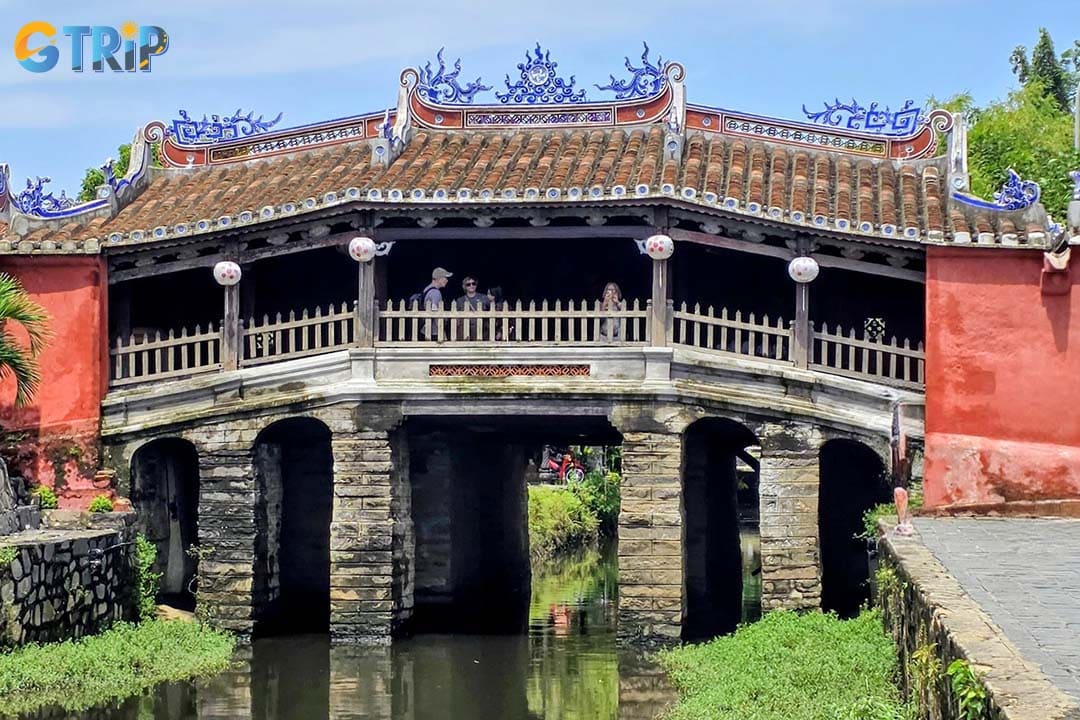
Near the temple, there is a famous Japanese Covered Bridge that you should not miss
Practical tips for visitors
To have a perfect trip to Ba Mu Temple and grab those "million-view" photos, keep these practical tips in mind:
- Visiting the gate and the park is completely free, though you should carry your general Ancient Town entry ticket if you plan to visit other nearby heritage sites.
- Currently, there is no active worshipping hall inside, so this is primarily a sightseeing and photography spot rather than a place for prayer.
- For the best "reflection" shots on the pond, try to arrive early in the morning when the water is still.
- Wear comfortable shoes, as the surrounding streets are paved with old stones and are pedestrian-only.
- Please respect the monument by not climbing on historical walls or throwing trash into the lotus pond.
- There are public restrooms located on the side of the park area for visitors' convenience.
- Check the weather if you visit between October and December, as heavy rains can occasionally cause local flooding on the streets.
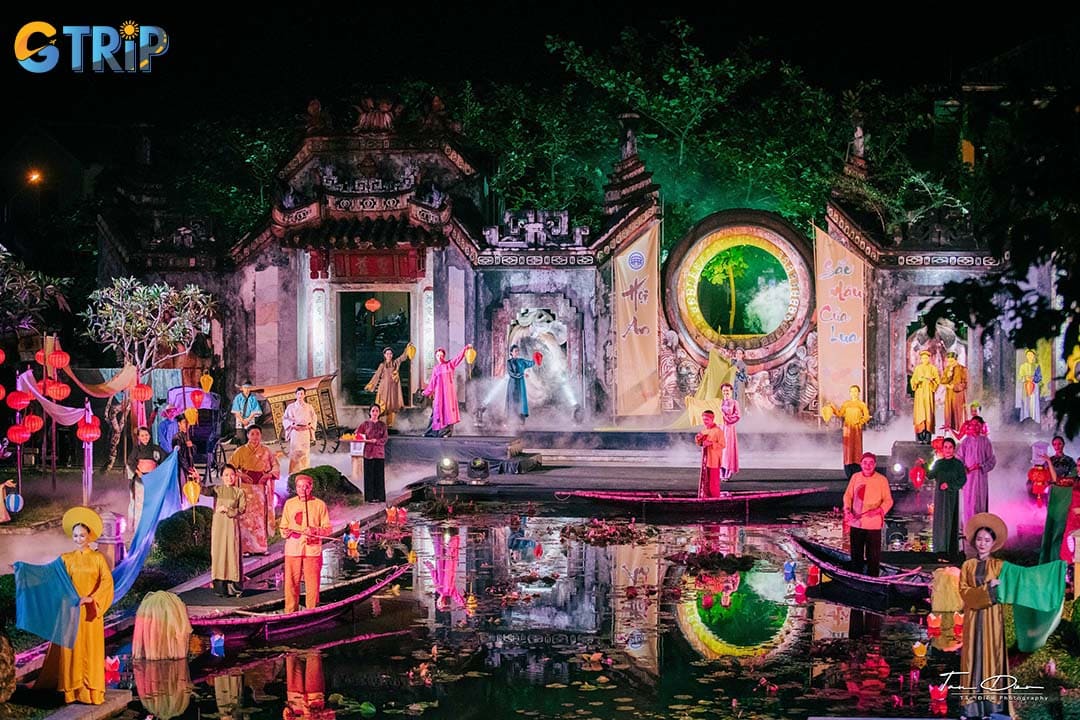
Remember practical tips to have a good trip to Ba Mu Temple Hoi An
Ba Mu Temple Hoi An is more than just a pretty backdrop. It's a story of survival and a celebration of artistry. It proves that even a fragment of history, when preserved with care and intention, can become a city's treasure. Its transformation from a forgotten ruin into one of Hoi An’s most beloved free attractions is a testament to the town's spirit. This stunning gate offers a moment of beauty and tranquility. As you plan your journey through Vietnam's most charming town, be sure to add this unforgettable spot to your GTrip itinerary. Let us help you plan the perfect adventure to explore all the wonders Hoi An has to offer.