

Apr - 03 - 2026
Phap Bao Pagoda Hoi An is a serene spiritual haven nestled just outside the bustling core of Hoi An's Ancient Town, offering a profound glimpse into the daily religious life of Central Vietnam. While many visitors flock to the town's famous assembly halls and ancient houses, this active Buddhist temple provides a unique and tranquil counterpoint, a place for quiet reflection and cultural discovery. It’s an essential stop for travelers seeking to connect with the soul of Hoi An beyond its vibrant lantern-lit streets. As your trusted travel experts at GTrip, we’ve put together a complete guide covering its history, highlights, directions, and essential tips, everything you need for a meaningful and smooth visit.
Overview of the Phap Bao Pagoda Hoi An
Before diving into the rich details, let's cover the essential information you need for planning your visit. Here are the key details about the pagoda's location, opening hours, and entrance fees.
Where is Phap Bao Pagoda Hoi An?
Address: No. 673 Hai Ba Trung Street, Hoi An Ancient Town, Hoi An Ward (formerly Minh An Ward, Hoi An city, Quang Nam Province), Da Nang City
Phap Bao Pagoda is conveniently located just a short walk from the main tourist areas of Hoi An Ancient Town. Situated on one of Hoi An's main thoroughfares, the pagoda is incredibly accessible. It lies just north of the pedestrian-only zone of the Ancient Town, making it an easy addition to any walking or cycling tour. Its location provides a perfect, peaceful transition from the commercial energy of the town center to a more local, residential atmosphere.
Opening hours and ticket prices
- Opening hours: 7:00 AM - 9:00 PM, daily
- Ticket prices: Free
Phap Bao Pagoda is a welcoming spiritual destination for both locals and international tourists exploring the heart of Hoi An. Unlike many other historical landmarks within the Ancient Town that require an entrance fee, this pagoda is open to the public completely free of charge. Visitors are encouraged to admire the intricate architecture and participate in daily spiritual activities during its generous operating hours. The pagoda accommodates all schedules throughout the week.
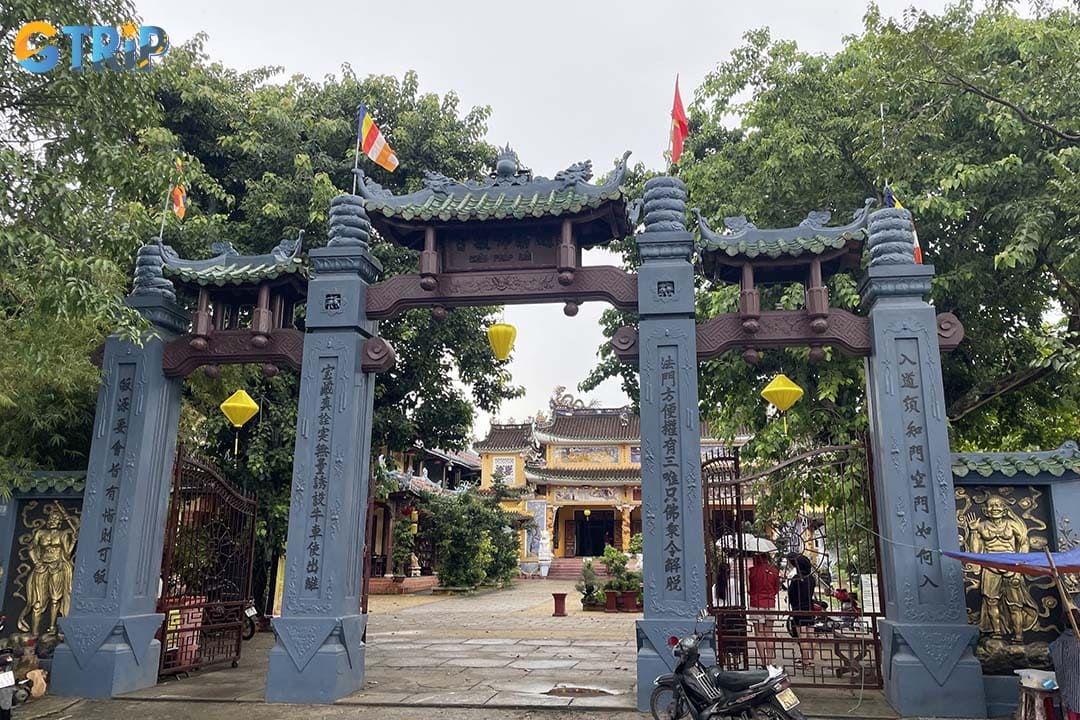
Phap Bao Pagoda offers a serene atmosphere among the bustling Hoi An Ancient Town
What makes the Phap Bao Pagoda Hoi An unique?
In a town filled with historical sites, Phap Bao Pagoda stands out for its vibrant, living spirituality. Unlike some of the assembly halls that feel more like museums, this is a working temple and an active center for Hoi An’s Buddhist community. It offers a genuine, un-curated look into local religious life, providing a peaceful retreat from the often-crowded streets just a block away. The air here is thick with tranquility and the gentle scent of incense.
- A blend of old and new: While rooted in tradition, the pagoda has been beautifully restored, resulting in a clean, elegant blend of classic Buddhist architecture and more modern construction techniques.
- Impressive bronze statues: The main hall houses three magnificent bronze statues of the Amitabha Buddha and his attendant Bodhisattvas, which are a central focus for prayer and admiration.
- Active community hub: It serves as an important site for local festivals, prayer sessions, and Buddhist teachings, making it a living, breathing part of Hoi An's cultural fabric.
History of the Phap Bao Pagoda Hoi An
The history of Phap Bao Pagoda is a fascinating journey that mirrors the resilience and development of Vietnamese Buddhism. Below are the key milestones that shaped the temple into the spiritual landmark it is today:
- 1934 - 1935: Monks Thich Don Hau and Thich Mat Nguyen arrived from Hue to establish local Buddhist associations, initially operating at a borrowed temple belonging to Sir Trinh Van Dang.
- 1936: Local Buddhists raised funds to buy the current land and built the pagoda, then named Tinh Hoi Pagoda (or Pagoda of the Provincial Buddhist Association).
- 1942: To be more organized, Monk Thich Dong Chon was invited and appointed as the first official leading monk.
- 1955 - 1972: Monk Thich Tri Minh was appointed as the head. He was a prominent figure who famously wanted to self-immolate in 1963 to protest the Buddhist crisis, similar to Thich Quang Duc.
- 1967: The temple was officially renamed Phap Bao Pagoda, named after the founding monk of the Chuc Thanh Zen sect.
- 1998, 2000, 2008: The pagoda underwent several major restorations to preserve its original charm and ensure structural strength.
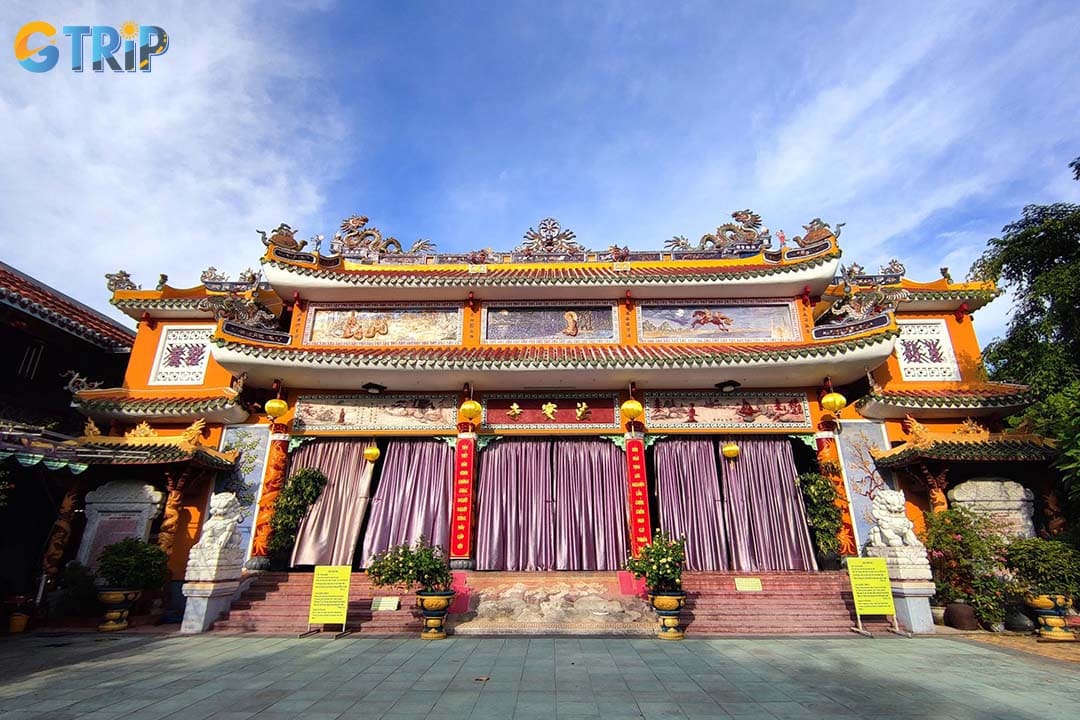
Phap Bao Pagoda offers a genuine, un-curated look into local religious life, providing a peaceful retreat
Architecture of the Phap Bao Pagoda Hoi An
The architecture of Phap Bao Pagoda is a masterclass in Central Vietnamese Buddhist style, blending tradition with spiritual symbolism. You can explore these prominent structural highlights:
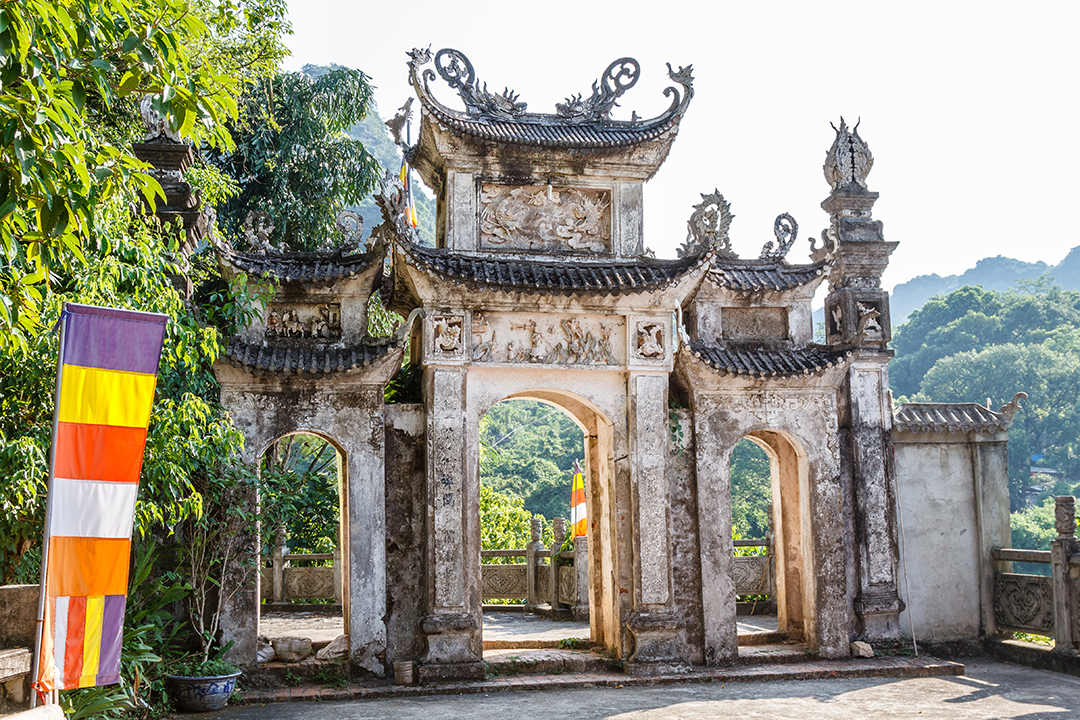
Three-arched entrance gate
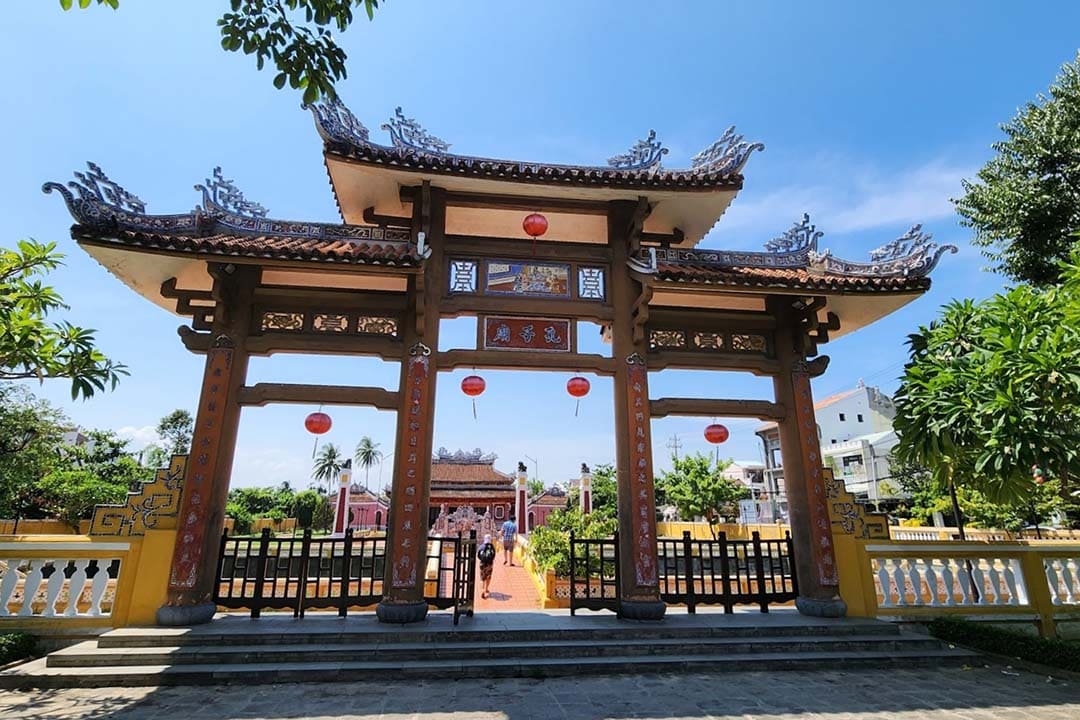
The three-arched entrance gate is a classic symbol of Buddhist architecture. It serves as a beautiful gateway that leads visitors from the bustling Hai Ba Trung Street into a serene atmosphere featuring a lotus pond and lush greenery.
Main Buddha hall
The main Buddha Hall is used to worship the "Three Lives Buddhas", including Sakyamuni, Amitabha, and Maitreya. On the roof ridges, you can see intricate carvings of dragons and phoenixes, which are two of the four holy animals in Vietnamese traditional culture.
Monk’s house
The monk's house is a dedicated space for the clergy to reside and practice. This area maintains a quiet, private atmosphere, reflecting the minimalist and devoted lifestyle of the monks who serve the pagoda.
Gardens and statues
The pagoda grounds are spacious and adorned with various types of greenery and statues of Bodhisattvas like Avalokitesvara and Mahasthamaprapta. The blend of ancient craftsmanship and peaceful gardens provides a soothing environment for all visitors.
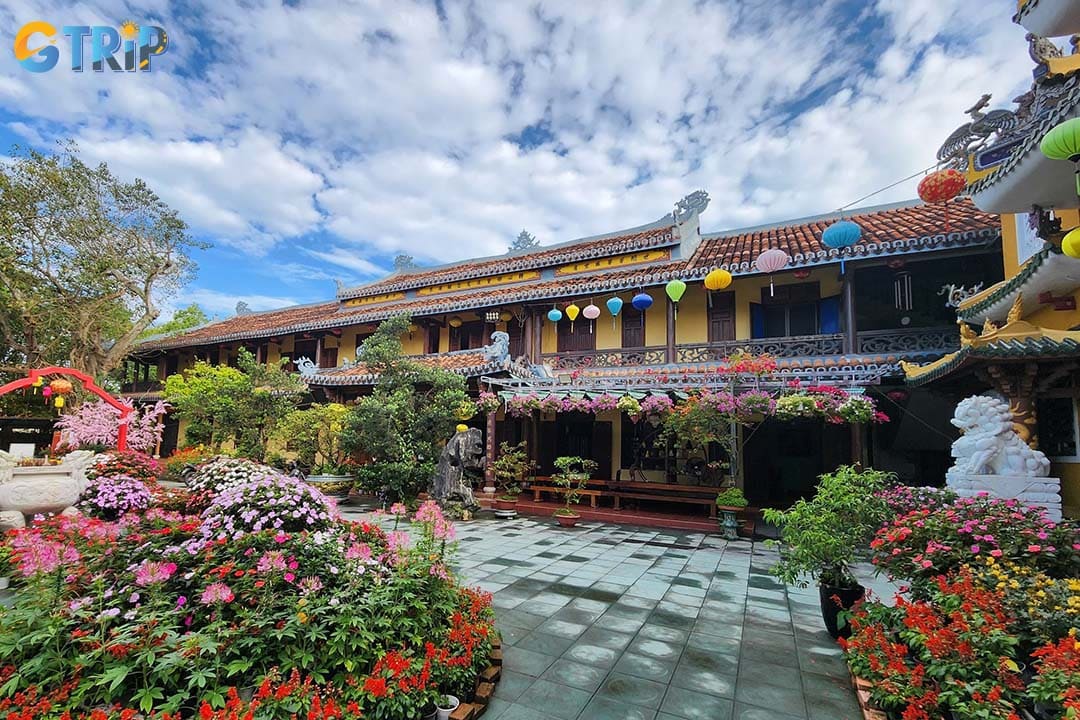
The architecture of Phap Bao Pagoda is a masterclass in Central Vietnamese Buddhist style
Things to do at Phap Bao Pagoda Hoi An
From admiring intricate spiritual designs to engaging in local cultural traditions, here are the top activities you can experience during your visit.
1. Admire the nostalgic Vietnamese architecture
You can take time to explore the pagoda’s elegant two-story structure, where traditional Vietnamese design elements are carefully preserved alongside subtle modern restoration. The curved roofs, wooden details, and decorative carvings reflect the craftsmanship of local artisans and the spiritual meaning behind every structure. Surrounding gardens, lotus ponds, and open courtyards enhance the peaceful setting, creating a perfect balance between nature and architecture. This tranquil environment also makes it an ideal spot for photography, especially during the soft golden hours of early morning or late afternoon.
2. Explore spiritual and cultural activities
Each day, you can observe or take part in daily rituals such as lighting incense, making offerings, and saying quiet prayers alongside local worshippers. These simple yet meaningful practices offer insight into the spiritual rhythm of life in Hoi An. For a deeper connection, you can join meditation sessions or retreats occasionally organized at the pagoda, which focus on mindfulness and inner peace. Visiting during major celebrations like Buddha’s Birthday adds another layer of experience, as the temple becomes lively with decorations, ceremonies, and community gatherings.
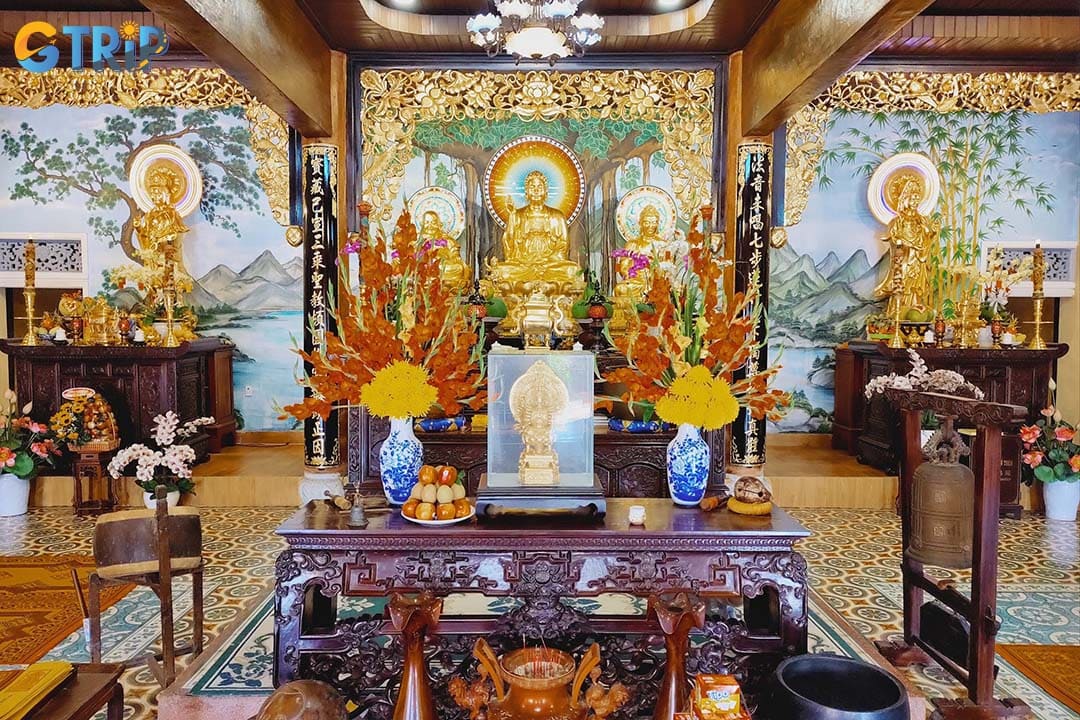
You can observe or take part in daily rituals such as lighting incense, making offerings, and saying quiet prayers
3. Learn about Vietnamese Buddhism
Phap Bao Pagoda serves as a living introduction to Vietnamese Buddhism, especially for those new to the religion. You can observe how locals prepare offerings such as fruit, flowers, and incense, each carrying symbolic meanings related to respect, gratitude, and devotion. The statues, altars, and layout of the pagoda reflect important teachings and beliefs, helping you better understand Buddhist philosophy in a real-world context. As you walk through the space, you will gain a deeper appreciation of how spirituality is integrated into daily life in Vietnam.
4. Appreciate the bonsai garden
The courtyard is home to a beautifully maintained bonsai garden, featuring trees that have been shaped and nurtured over many years. Each bonsai represents patience, balance, and harmony, which are key principles in both art and Buddhist philosophy. The miniature landscapes create a quiet, contemplative atmosphere that invites you to slow down and reflect. Spending time here offers a calming contrast to the busy streets of Hoi An, making it one of the most peaceful corners of the pagoda.
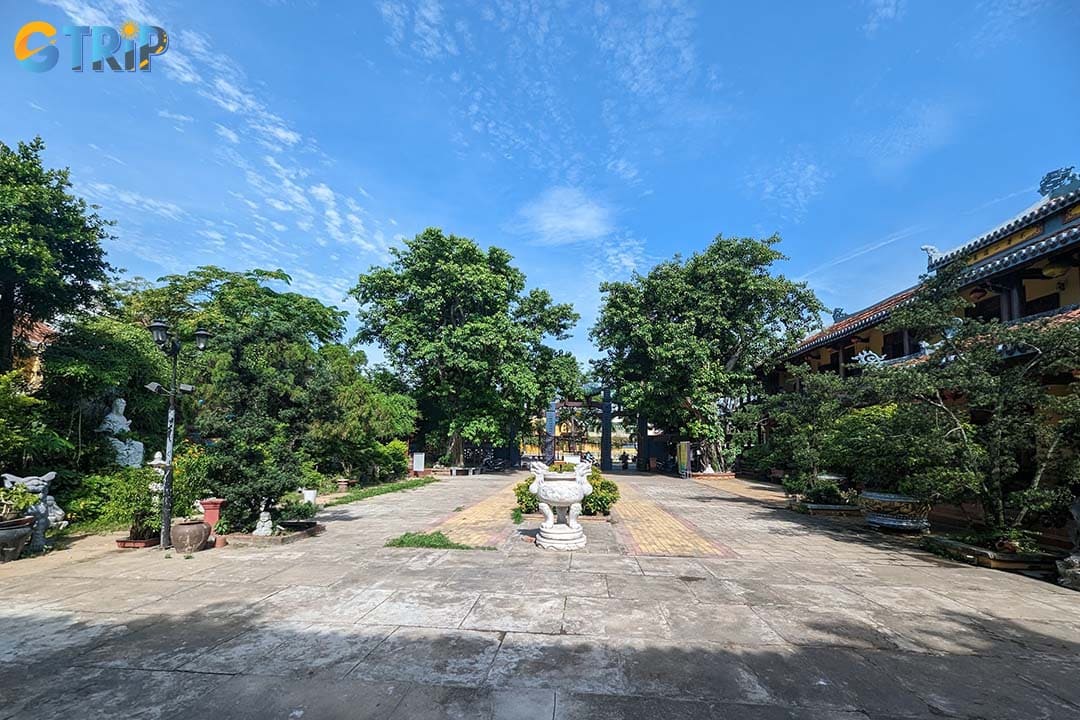
The courtyard is home to a beautifully maintained bonsai garden that you should take time admiring
How to get to Phap Bao Pagoda Hoi An?
Thanks to its strategic location, reaching Phap Bao Pagoda is simple.
From Da Nang International Airport
Reaching Phap Bao Pagoda from Da Nang International Airport is a straightforward journey of about 30 kilometers to the south. After exiting the airport, travelers can enjoy a scenic drive through modern Da Nang before entering the tranquil atmosphere of Hoi An.
- Distance: Approximately 30 km
- Travel time: 45 - 60 minutes
- Routes: Airport → Duy Tan St → Vo Nguyen Giap coastal road → Hai Ba Trung St
- Optimal option: Private car or Taxi for a hassle-free transfer with luggage
From Da Nang City center
Starting from Da Nang City center offers great flexibility. Even if you are staying near the Han River or the coastline, the route to the pagoda is easy to navigate, following the beautiful beach road that connects the cities.
- Distance: 28 km
- Travel time: 45 minutes
- Routes: City center → Vo Van Kiet St → Vo Nguyen Giap St → Hai Ba Trung St
- Optimal option: Motorbike for sightseeing or Grab/Taxi for convenience
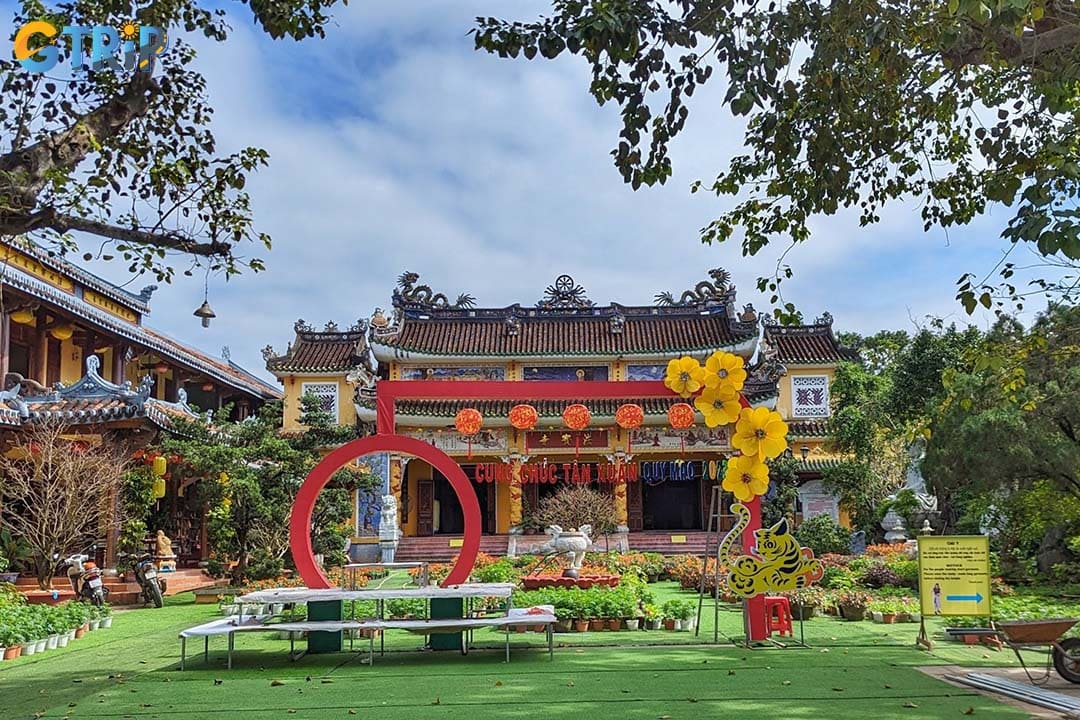
Getting to Phap Bao Pagoda is easy because of its strategic location
From around Hoi An Ancient Town
Since the pagoda is located at 673 Hai Ba Trung Street, it is exceptionally easy to reach if you are staying in the town center. The pagoda sits conveniently just outside the strictly pedestrian-only streets.
- Distance: Under 1 km
- Travel time: 5 - 10 minutes
- Routes: Head straight on Phan Chu Trinh St then turn onto Hai Ba Trung Street
- Optimal option: Walking or cycling to fully enjoy the local atmosphere
Transportation options
There are several ways to reach this spiritual landmark depending on your preference. While cars and buses are banned from entering the area directly, the pagoda remains highly accessible by smaller vehicles or local transport.
- Private Car / Transfer: The most comfortable and stress-free option, especially from Da Nang. GTrip offers reliable private transfers with professional drivers.
- Taxi / Ride-hailing: Widely available in both Da Nang and Hoi An. Apps like Grab are popular and easy to use.
- Motorbike: Renting a bike (120,000 VND/day) offers the most flexibility.
- Bicycle: The most eco-friendly way to navigate Hoi An’s heritage area.
- Cyclo: A traditional way to experience the town's slow pace.
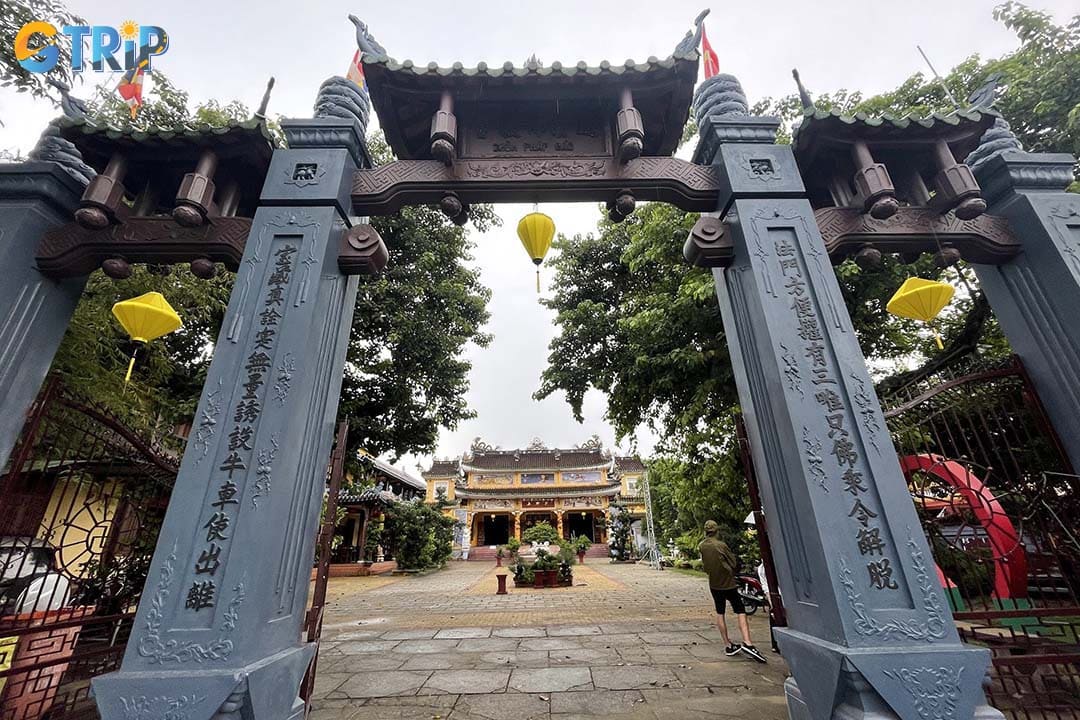
You can reach Phap Bao Pagoda by many transport options
Nearby attractions to the Phap Bao Pagoda Hoi An
Phap Bao Pagoda's excellent location means you are just minutes away from Hoi An's most iconic landmarks. After your peaceful visit, you can easily continue your exploration at these nearby sites:
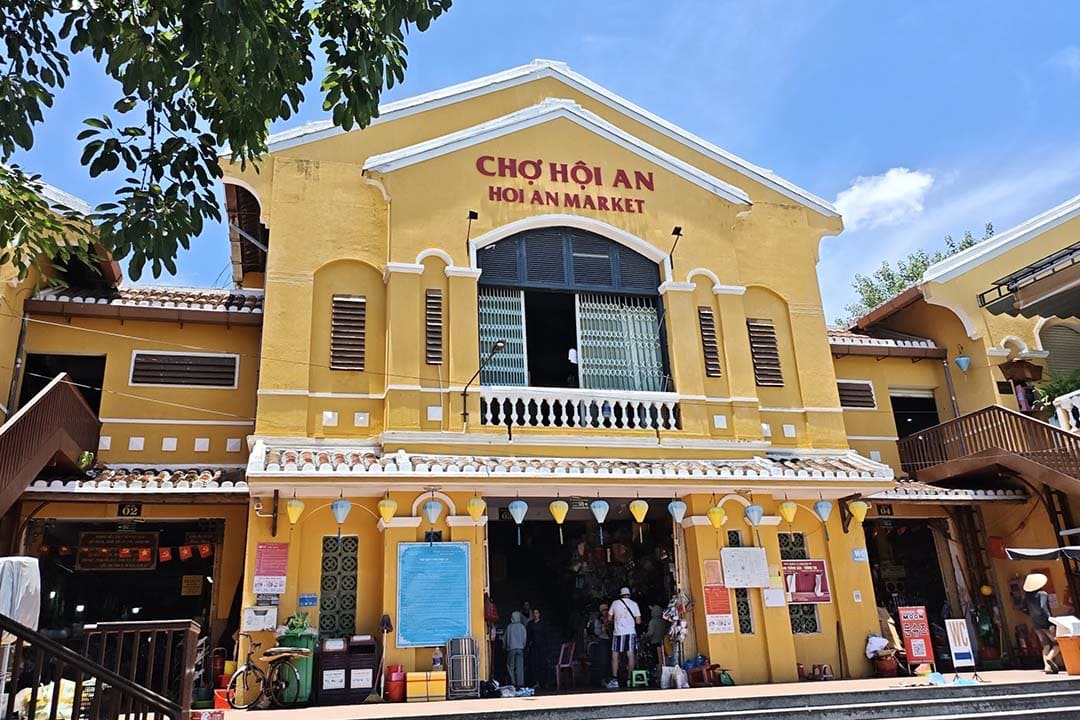
- Hoi An Market: Just a few blocks away, this bustling central market is a feast for the senses. Explore stalls selling fresh produce, local street food, spices, and souvenirs. It's a fantastic place to experience local life.
- Japanese Covered Bridge: The undeniable symbol of Hoi An, this 18th-century bridge is a beautiful piece of architecture with a small temple inside. It’s a must-see and only a 10-15 minute walk from the pagoda.
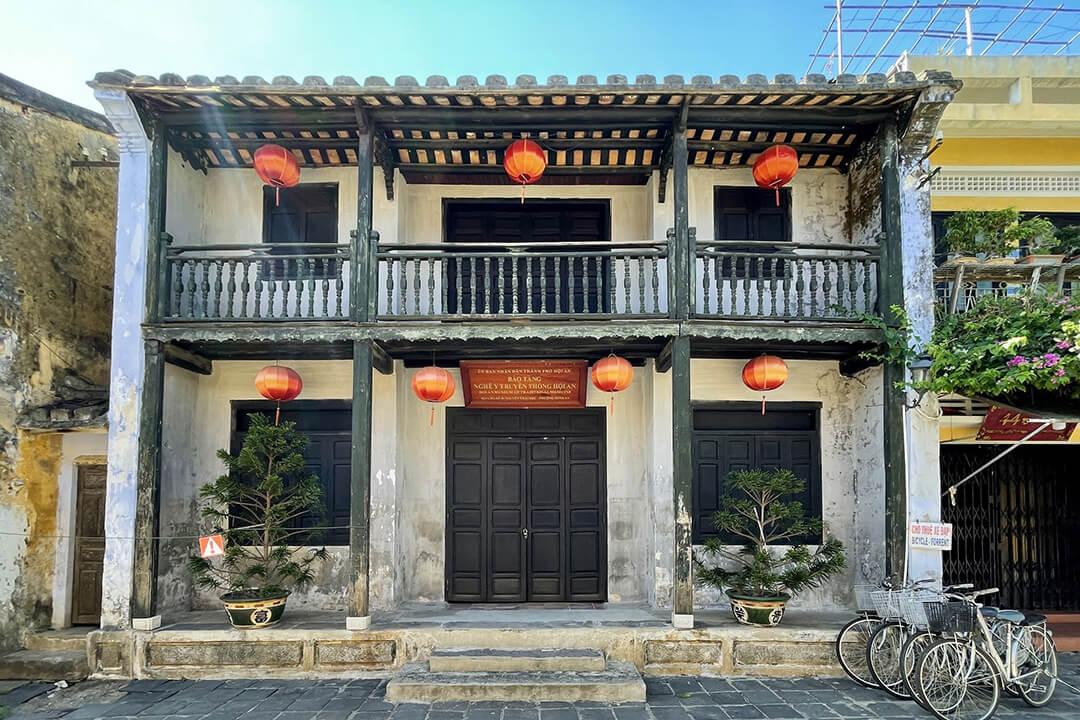
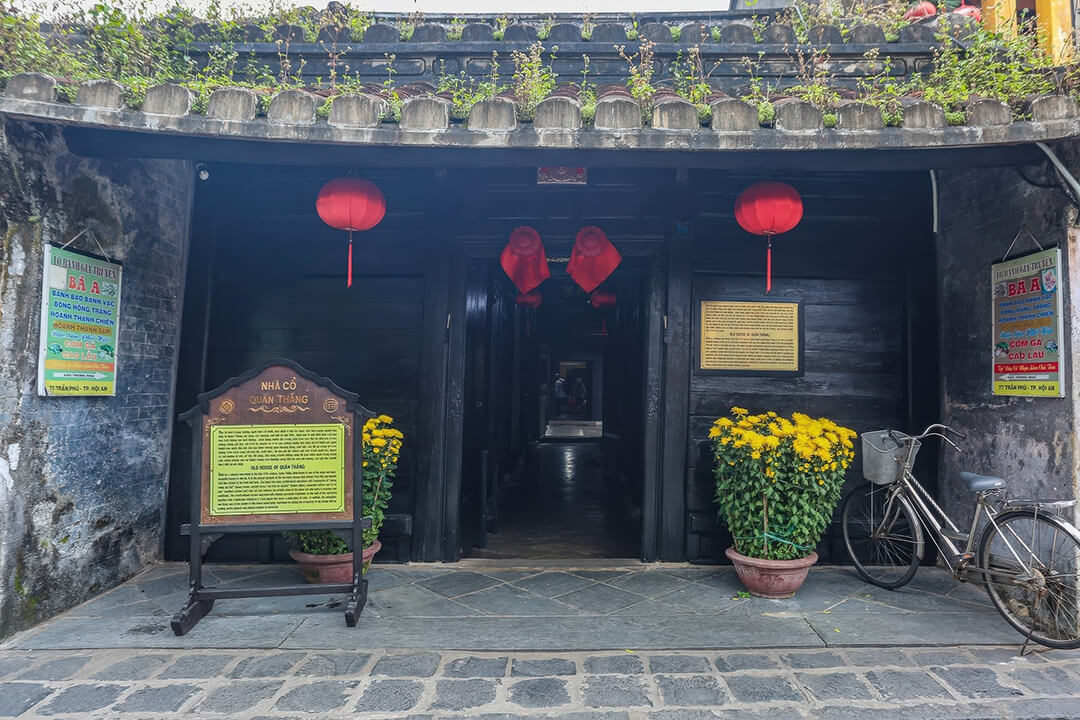
- Tan Ky Old House: A perfectly preserved 200-year-old merchant's house, Tan Ky offers a fascinating look into the lives of Hoi An's wealthy traders. It showcases a unique blend of Vietnamese, Chinese, and Japanese architectural styles.
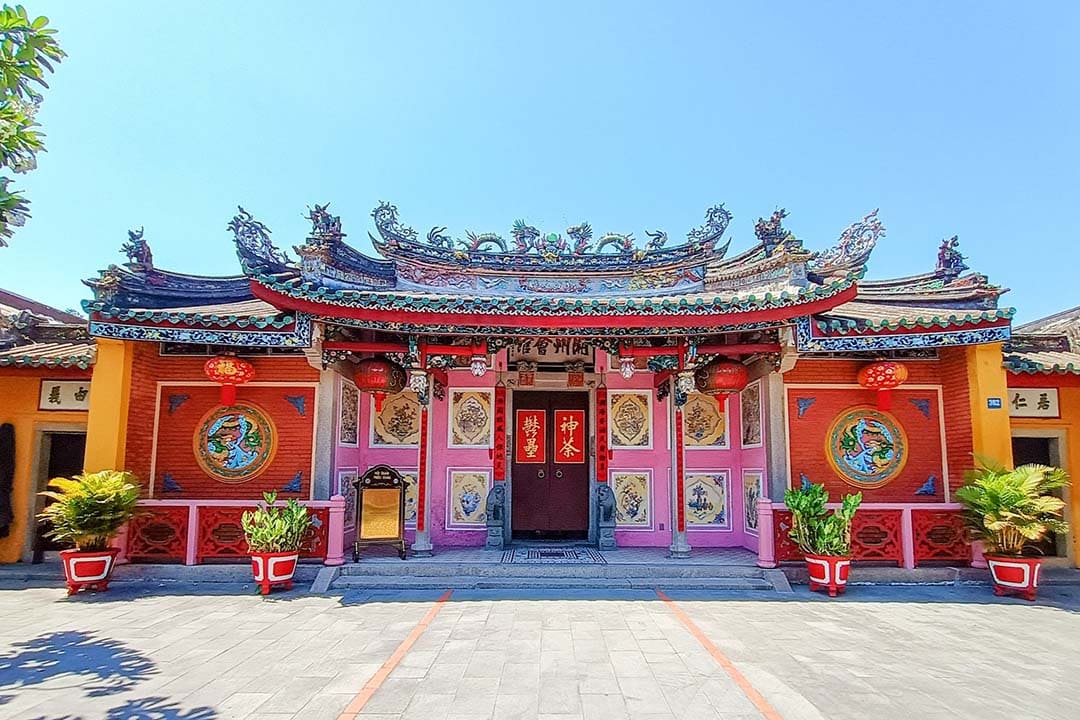
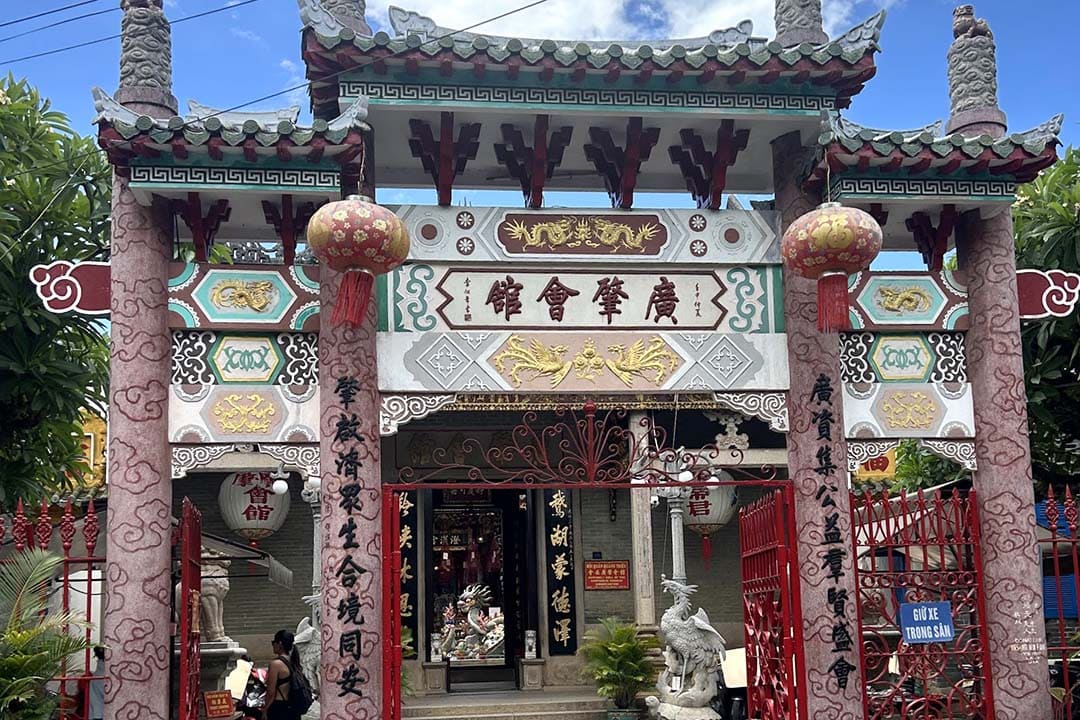
- Fukian Assembly Hall (Phuc Kien Assembly Hall): One of the most opulent and famous assembly halls in Hoi An. Dedicated to the sea goddess Mazu, it features stunning gates, a grand courtyard, and intricate statues.
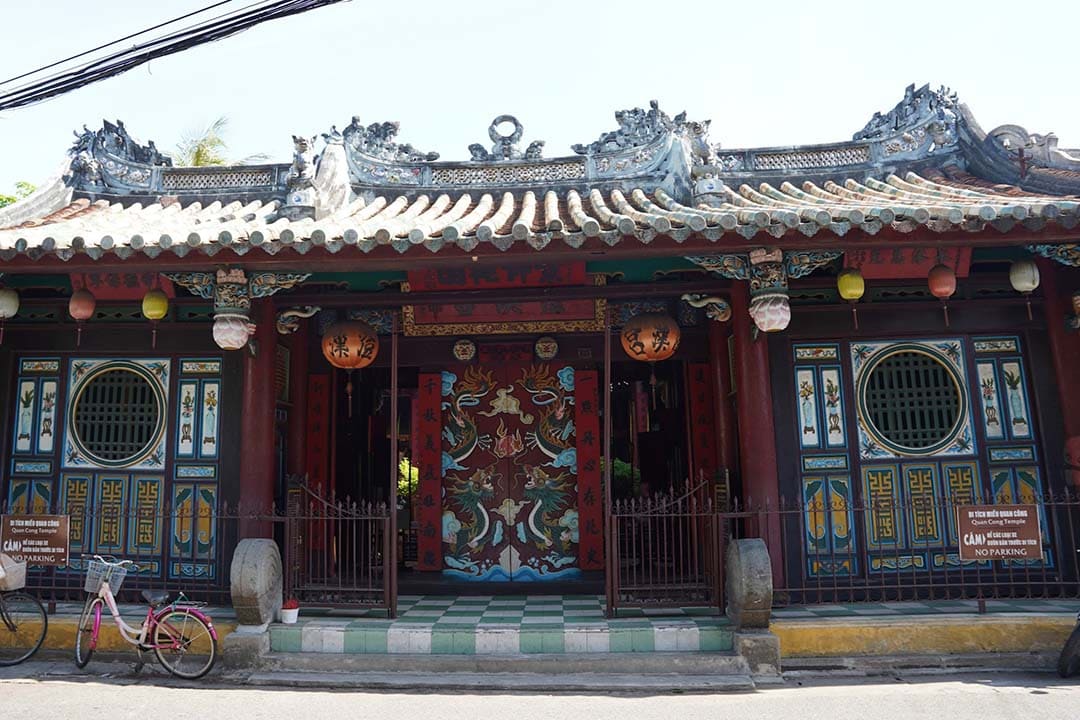
- Quan Cong Temple: Founded in 1653, this small but richly decorated temple is dedicated to a revered Chinese general. It’s known for its impressive statues and detailed woodwork.
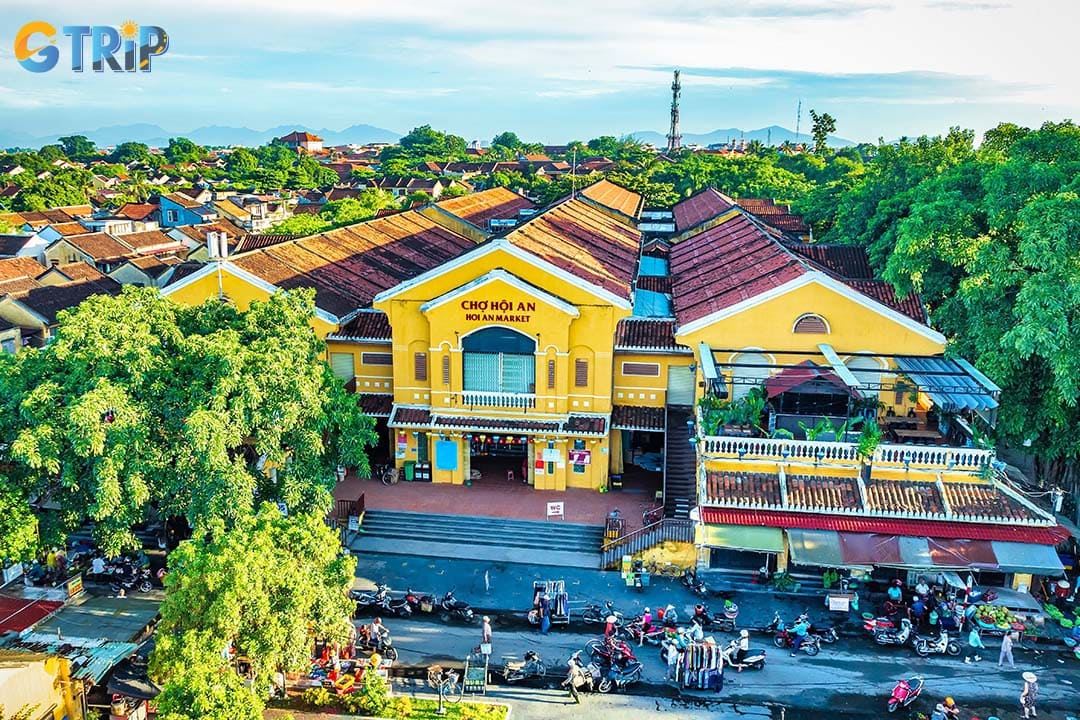
After visiting Phap Bao Pagoda, you can explore Hoi An Market which is nearby to buy things you need and try some local dishes
Tips for visiting Phap Bao Pagoda Hoi An
To ensure a smooth and respectful visit to this sacred Buddhist site, please keep the following practical advice and local insights in mind:
- Admission & Dress code: Entry is completely free. However, visitors must wear respectful clothing. If needed, you can borrow long robes for free behind the entrance gate (near the big tree) to cover up before entering the worship buildings.
- Privacy & respect: Please do not enter the monks' houses or other private areas, which are usually marked with signs. Keep your voice low and avoid making loud noises to respect those praying and meditating.
- Lunar schedule: On the 1st and 15th days of each lunar month, many locals gather here to pray and listen to chanting, offering a unique cultural experience.
- Seasonal prep: Bring sun cream, a hat, and water during the dry season (Feb - Aug). During the rainy season (Sep - Jan), carry a raincoat or umbrella and wear waterproof shoes.
- Resting: There are chairs around the lake in front of the pagoda where you can sit, cool down, and enjoy the calm energy of the temple grounds.
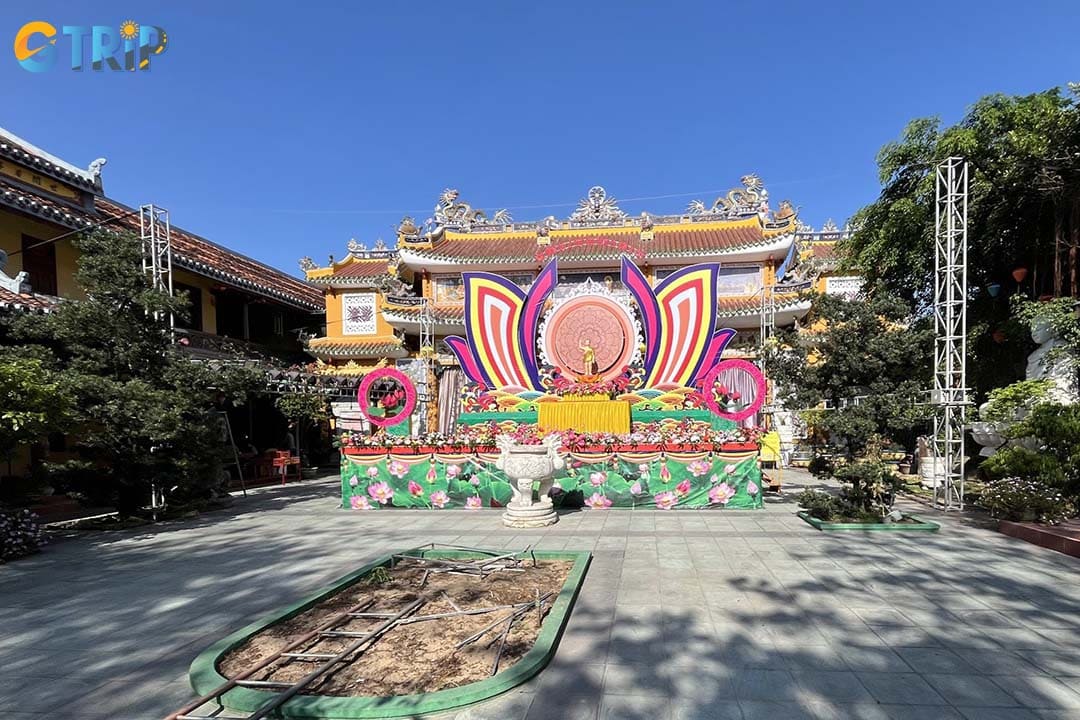
Remember practical tips to have a good trip to Phap Bao Pagoda Hoi An
A visit to Phap Bao Pagoda Hoi An offers more than just a photo opportunity. It provides a moment of genuine connection and quiet contemplation in one of Vietnam's most beloved towns. It’s a place where the spiritual heart of Hoi An beats strongly, welcoming all who enter with a message of peace and serenity. By stepping through its gates, you are not just seeing a landmark but experiencing a living piece of local culture. Its blend of stunning architecture, rich history, and tranquil atmosphere makes it an unmissable stop on any Hoi An itinerary. Ready to explore the spiritual treasures and ancient streets of Hoi An? Let GTrip help you plan the perfect journey, with comfortable transport and expert local insights to make your Vietnamese adventure unforgettable.