



Apr - 07 - 2026
The Cam Pho Confucius Temple is a quiet historical landmark in Hoi An that many travelers overlook while exploring the bustling Ancient Town. Dedicated to the revered philosopher Confucius, the temple once served as a place honoring scholarship and learning in the local community. Today, it offers visitors a peaceful space to discover Hoi An’s intellectual heritage and traditional values. In this GTrip guide, you’ll learn about the temple’s history, architecture, key things to do, and practical tips for planning your visit.
Overview of the Cam Pho Confucius Temple
- Address: No. 32 Hung Vuong Street, Hoi An Ancient Town, Hoi An Ward (formerly Cam Pho Ward, Hoi An City, Quang Nam Province), Da Nang City
- Opening hours: Morning to evening
- Entrance fee: Free
- Best time to visit: The ideal time to visit is in the early morning between 7:00 AM and 9:00 AM to avoid the midday heat and experience the tranquil grounds with few other people. Visiting during a local festival can also offer a unique cultural experience, though it will be more crowded.
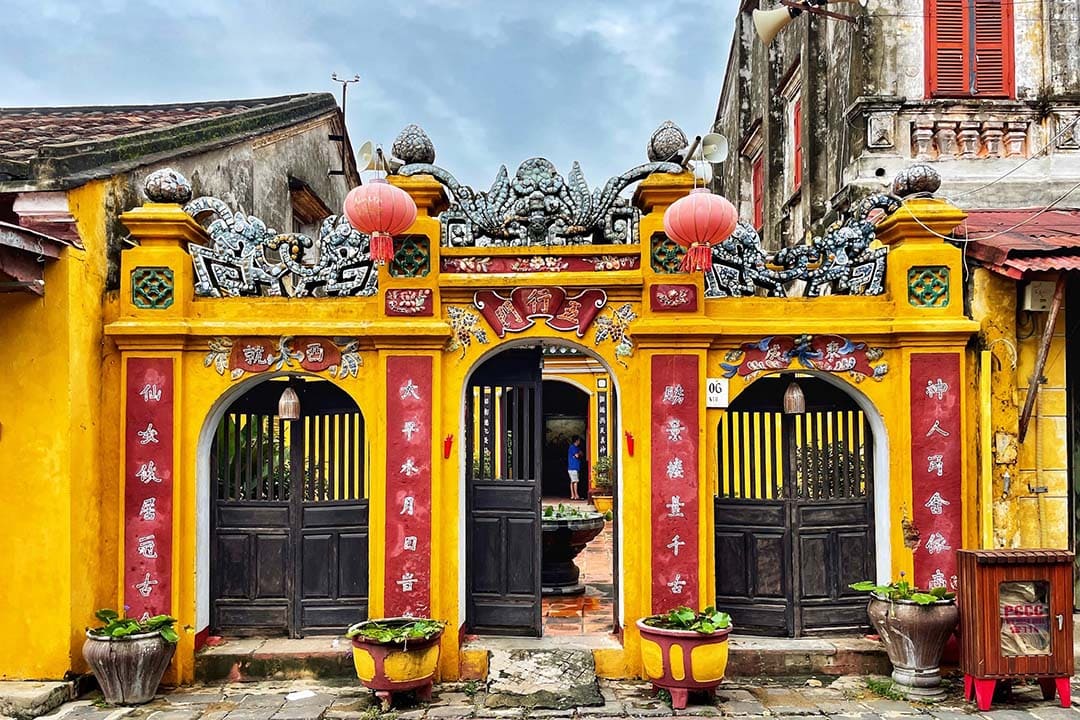
Often referred to by its Vietnamese name, Van Thanh Mieu Cam Pho, Cam Pho Confucius Temple is a monument to education and scholarly achievement. Unlike the bustling assembly halls within the Ancient Town, the Cam Pho Confucius Temple provides a serene atmosphere for reflection. It was established as a place to honor Confucius and distinguished Vietnamese scholars, serving as a hub for academic ceremonies and the celebration of knowledge for centuries. Its location just outside the main tourist zone makes it a perfect escape for those looking to experience a more contemplative side of Hoi An.
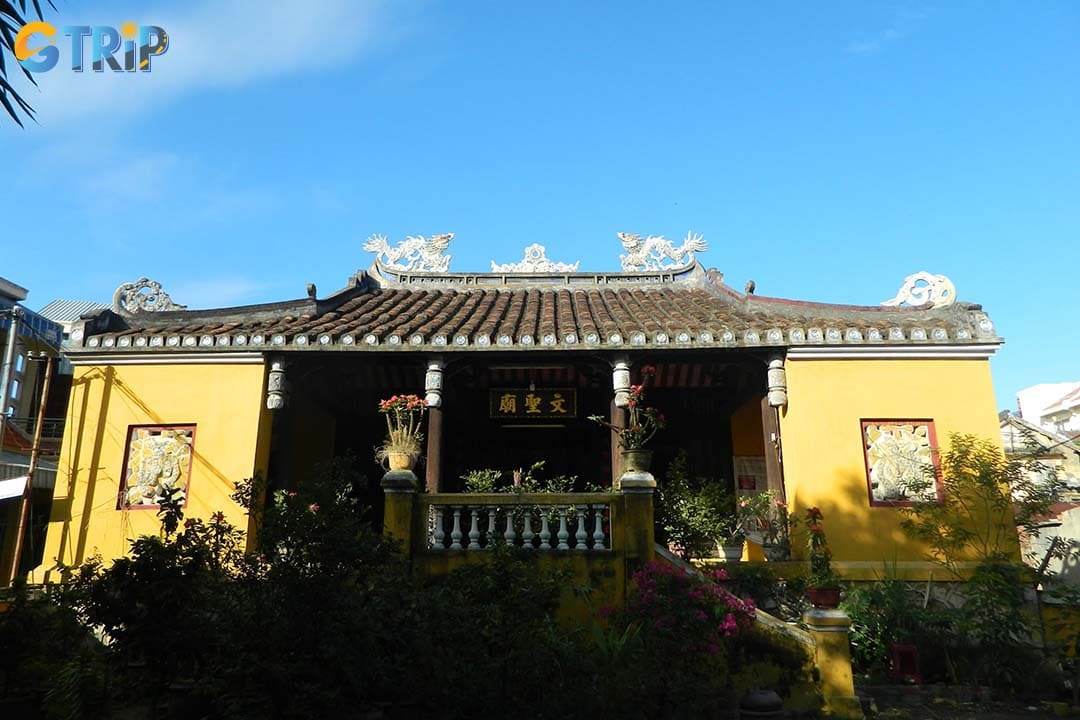
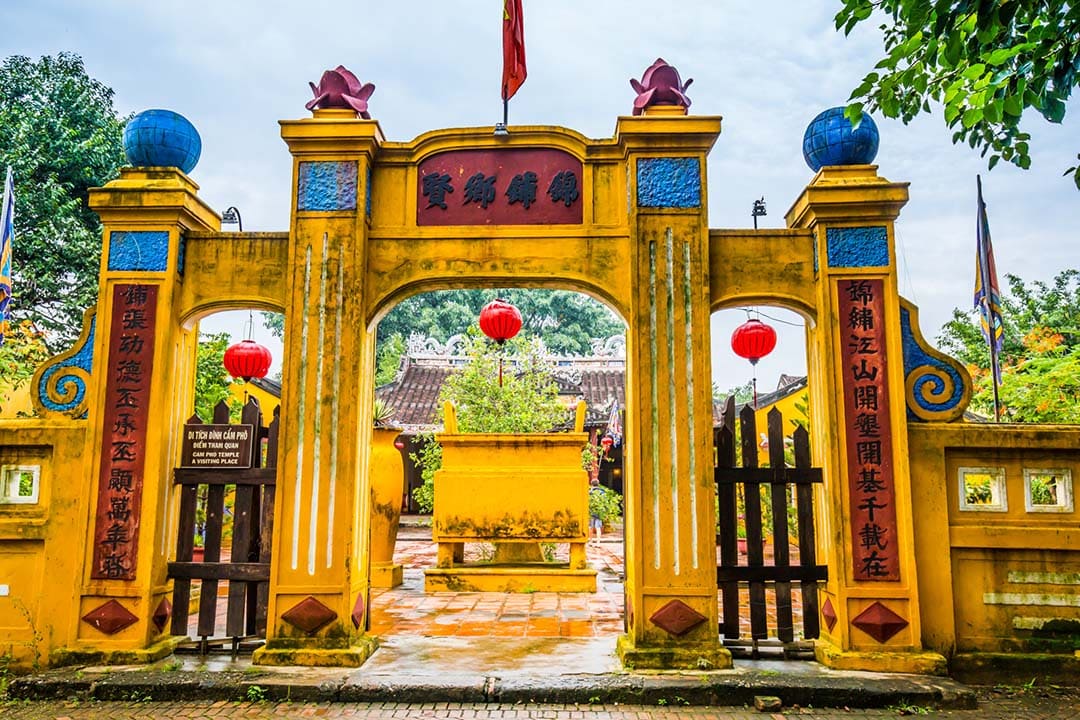
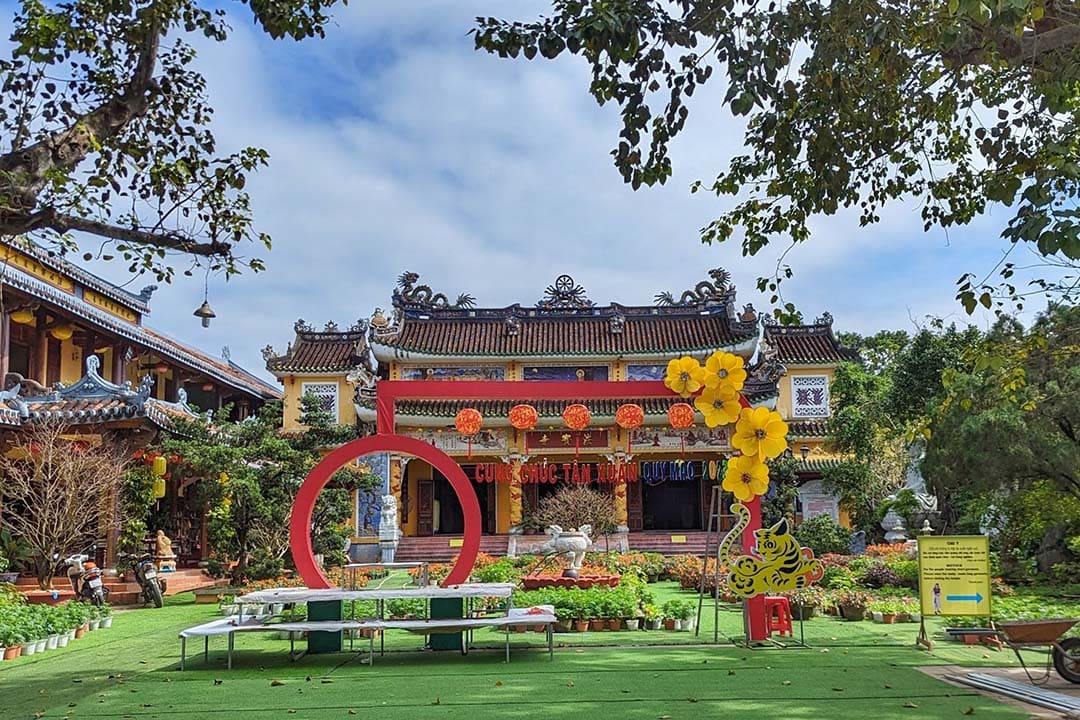
Cam Pho Confucius Temple offers a serene atmosphere for reflection and honor for Confucius and distinguished Vietnamese scholars
History of the Cam Pho Confucius Temple
The history of the Cam Pho Confucius Temple is deeply rooted in the village's desire to honor scholarly achievements and promote education. While the exact date of its original construction remains a mystery, the temple stands as a vital spiritual landmark for the people of Tu Le hamlet.
- The feudal period: The temple was established to worship Confucius, the Four Sages, the Ten Sages, and his 72 disciples. Uniquely, it also honors local villagers from Cam Pho who passed the prestigious royal examinations during Vietnam's feudal era.
- 1871: During the reign of King Tu Duc, the temple underwent a significant restoration to preserve its structural integrity and spiritual importance within the village.
- 1913: Another major renovation took place under the reign of King Duy Tan, ensuring the temple remained a centerpiece for Confucian teachings in Hoi An.
- 1929: A notable lacquer board was gifted to the temple by Nguyen Tuong Long (also known as the famous novelist Hoang Dao), a member of the influential Nguyen Tuong family.
- 1994: The most recent restoration was completed, maintaining the temple's beauty for modern visitors and researchers.
Architecture of the Cam Pho Confucius Temple
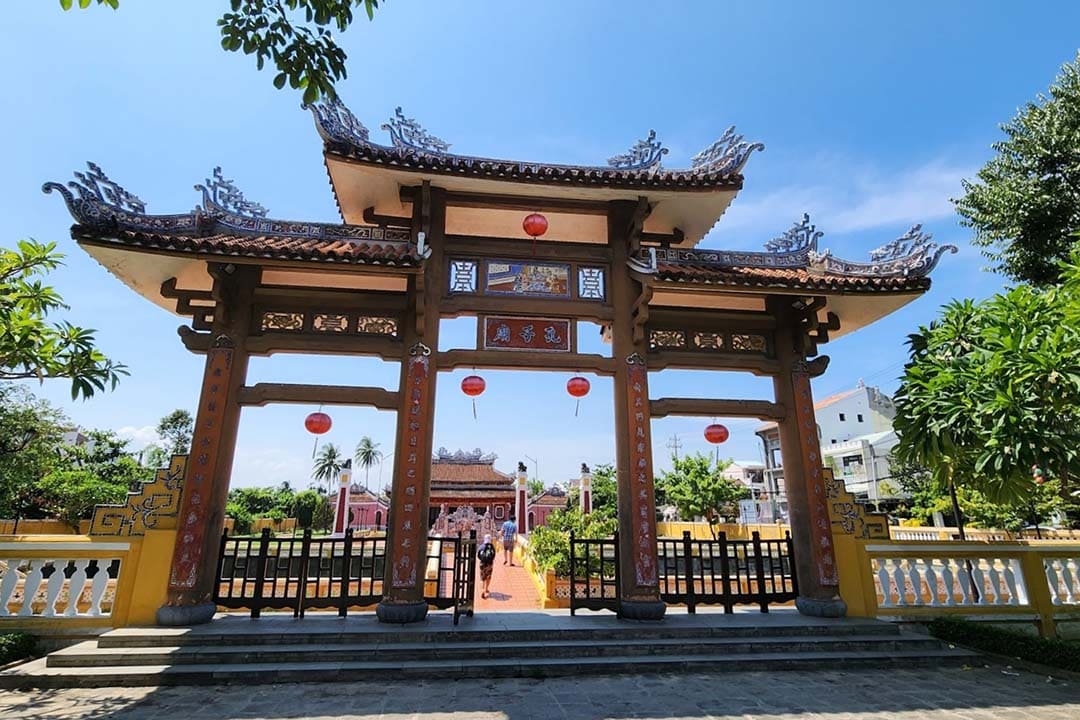
Facing south toward Hung Vuong Road, the Cam Pho Confucius Temple boasts a traditional layout consisting of an entrance gate, a spacious courtyard, and a main worshipping hall. The entrance gate is particularly distinctive, featuring four sturdy columns topped with lotus carvings. Above the central entrance, a board proudly displays the temple's name in Chinese characters, flanked by parallel sentences painted on the pillars.
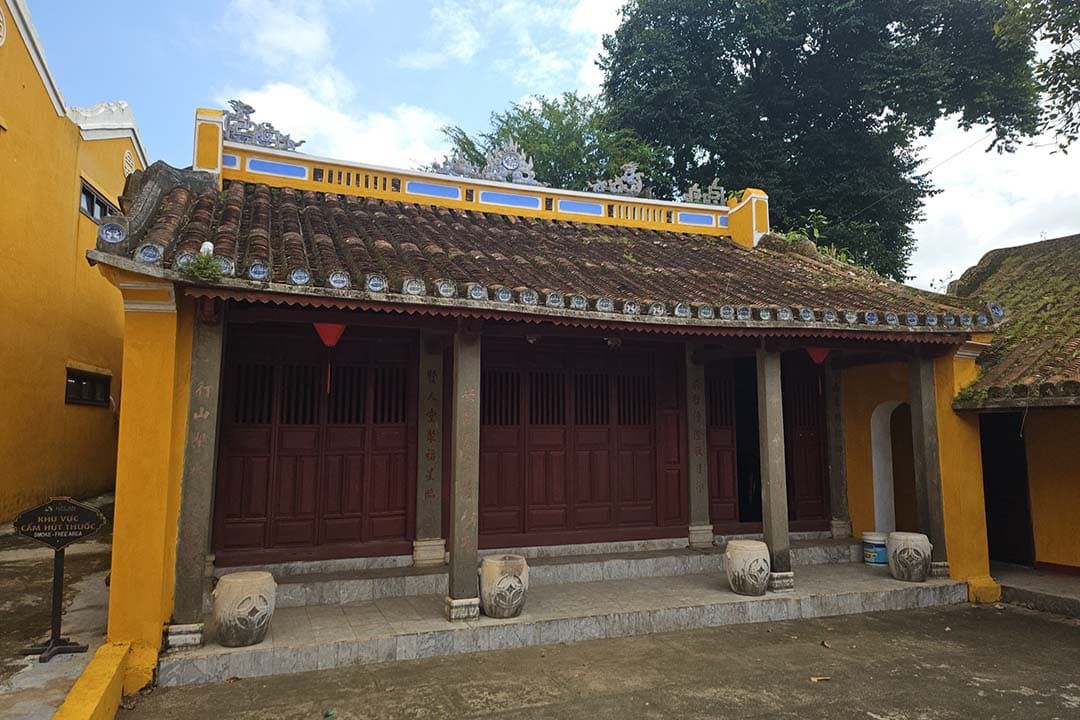
The worshipping hall is built on an elevated foundation higher than the courtyard. It is divided into three main departments and two side rooms, creating a solemn space for rituals. The interior is adorned with historical lacquer boards and traditional ornaments that reflect the profound influence of Confucianism on local architectural aesthetics.
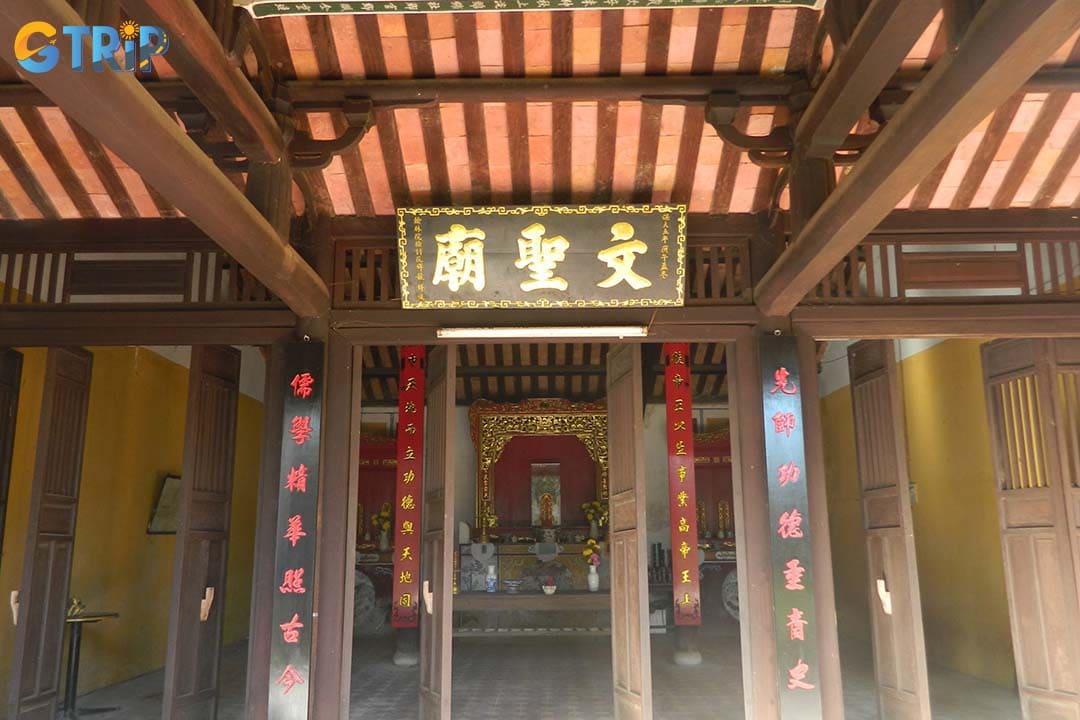
The Cam Pho Confucius Temple has a traditional layout including an entrance gate, a spacious courtyard, and a main worshipping hall
Things to do at Cam Pho Confucius Temple Hoi An
Visiting the Cam Pho Confucius Temple offers a unique perspective on the educational and philosophical traditions that once shaped Hoi An. Unlike the more crowded attractions in the Ancient Town, this quiet temple provides visitors with a chance to explore the town’s scholarly heritage and local community history. Here are some meaningful activities to include during your visit.
1. Admire the classic Confucian architecture
One of the highlights of the Cam Pho Confucius Temple is its elegant architectural layout, which reflects traditional Confucian design principles. The structure follows a symmetrical arrangement that emphasizes harmony and order, key values in Confucian philosophy. Visitors will notice decorative elements such as lotus-topped pillars, wooden beams, and traditional Chinese calligraphy panels that convey philosophical teachings and moral virtues. The slightly elevated main hall adds a sense of importance to the worship space and creates a balanced view across the courtyard. For photography enthusiasts, the temple’s quiet surroundings and historical details provide opportunities to capture architectural textures, cultural motifs, and the tranquil atmosphere.
2. Learn about the Four Sages and local scholars
Inside the temple, visitors can discover the stories behind the figures honored here. The shrine pays tribute to the Four Sages of Confucianism, including Confucius and other influential philosophers who shaped East Asian educational traditions. Their teachings emphasized morality, social harmony, and the importance of education values that historically influenced Vietnamese society as well.
In addition to these famous thinkers, the temple also commemorates local scholars and intellectuals from Hoi An who contributed to education and culture in the region. Information boards in both English and Vietnamese provide background on these figures, helping visitors understand how Confucian ideals influenced learning and academic achievement in central Vietnam.
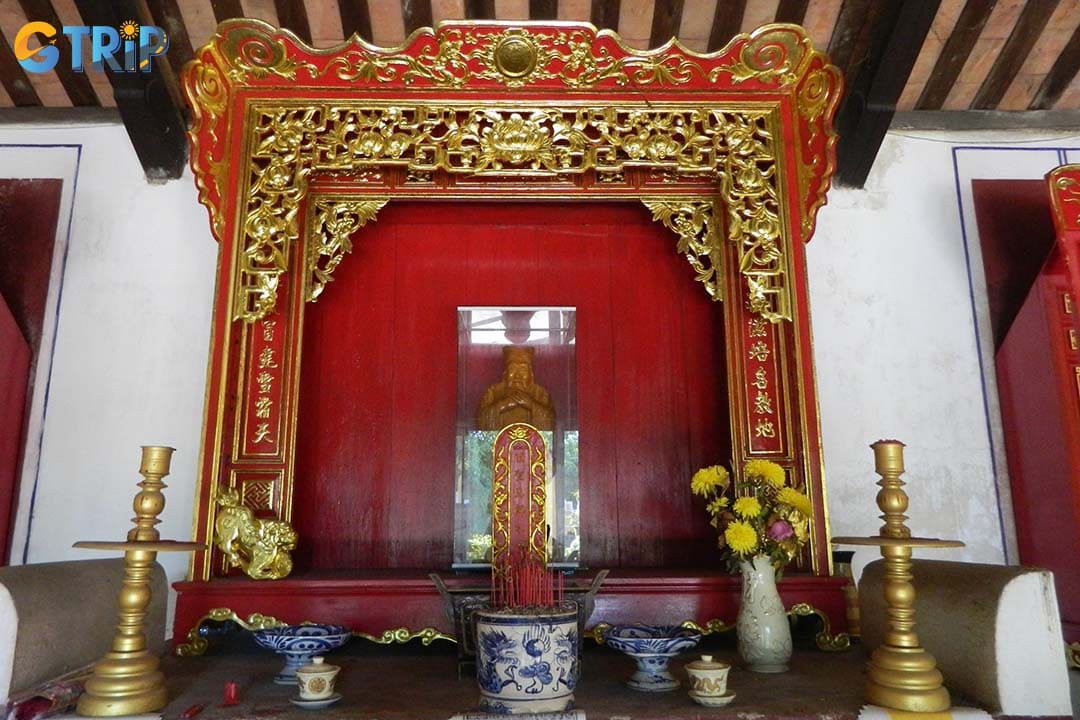
You can learn more about the Four Sages of Confucianism and local scholars inside the temple
3. Participate in traditional Spring and Autumn ceremonies
If your visit coincides with important ceremonial dates, you may have the chance to witness traditional rituals held at the temple. The most significant events take place on the 16th day of the 2nd lunar month (Spring Ceremony) and the 16th day of the 8th lunar month (Autumn Ceremony).
During these ceremonies, local residents gather to honor Confucius, the Four Sages, and respected scholars through offerings, incense burning, and ritual prayers. The ceremonies are modest but meaningful, reflecting the enduring respect for knowledge and education within the local community. Observing these rituals provides visitors with a rare opportunity to see a living cultural tradition that is not widely known among tourists.
4. Enjoy a quiet cultural stop away from the crowds
Another rewarding activity is simply spending time in the calm environment of the temple. Compared with popular attractions like assembly halls or ancient houses, Cam Pho Confucius Temple receives far fewer visitors. This makes it an ideal place to pause, relax, and reflect while exploring the ancient town.
Visitors can walk slowly through the courtyard, observe the details of the shrine, and appreciate the peaceful atmosphere. For travelers interested in history, philosophy, or cultural heritage, this hidden temple offers a more intimate and thoughtful experience within the vibrant setting of Hoi An.
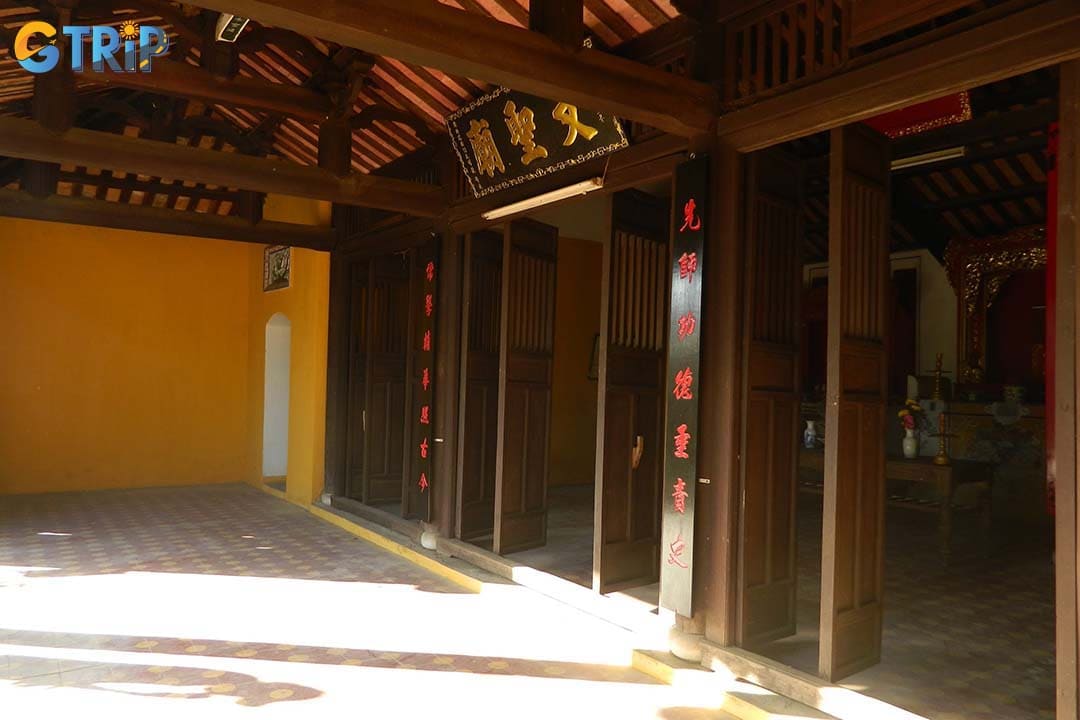
Visitors can enjoy the peace and calm environment when visiting the Cam Pho Confucius Temple
How to get to Cam Pho Confucius Temple?
Reaching the temple is very convenient due to its location on a main road just outside the central walking district. Here are the best ways to get there from various starting points.
From Da Nang International Airport
Travelers arriving at the airport can take a direct route south along the coastline to reach Hoi An. The temple is located at 32 Hung Vuong Street, which is easily accessible by cars and shuttle buses arriving from Da Nang.
- Distance: Approximately 30 km
- Travel time: 45-60 minutes
- Routes: Lac Long Quan Street or the Da Nang-Hoi An coastal road
- Optimal option: Private car or taxi for a comfortable door-to-door transfer
From Da Nang City center
Starting from the city center of Da Nang allows for a flexible journey via highway or the coastal road. This is a popular route for those who want to explore the outskirts of Hoi An before entering the ancient core.
- Distance: 30 km
- Travel time: 45 minutes
- Routes: Le Van Hien Street or the main Vo Nguyen Giap coastal road
- Optimal option: Riding a motorbike for an adventurous and scenic trip
From around Hoi An Ancient Town
Since the temple is located in Cam Pho Ward, it is extremely close to the heart of the Ancient Town. It is situated in the buffer zone, making it a perfect addition to a walking or cycling tour of the town.
- Distance: Less than 1 km from the Japanese Covered Bridge
- Travel time: 5-10 minutes
- Routes: Hung Vuong Street
- Optimal option: Walking or cycling to enjoy the local atmosphere
Transportation options
The Cam Pho Confucius Temple is not located within the pedestrian-only zone, meaning motorized vehicles can access the gate at any time of day. This provides more flexibility compared to sites in the deep center.
- Private car/Taxi/Ride-hailing: Pros include comfort, air-conditioning, and direct service. Cons are that it is the most expensive option.
- Motorbike/Scooter: Ideal for budget travelers and those wanting freedom to explore. However, it requires confidence in navigating Vietnamese traffic and is not recommended for beginners.
- Bicycle: The perfect mode of transport for exploring locally within Hoi An. Many hotels offer free or cheap bicycle rentals.
- Shuttle bus: A cost-effective option for traveling between Da Nang and Hoi An. Several companies offer comfortable shuttle services with multiple daily departure times.
- Walking/Cycling: Best for those staying within Hoi An city.
- Motorbike: You can park for free on the pavement directly in front of the temple.
- Cyclo: A traditional and relaxing way to see the town while heading to the temple.
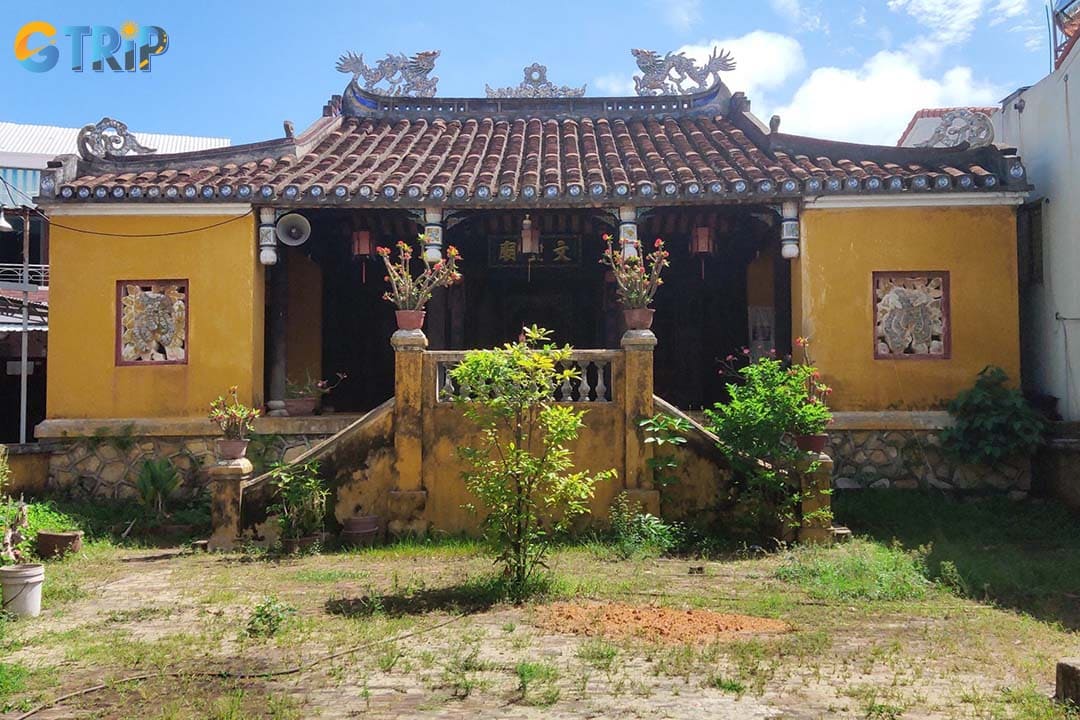
You can get to the Cam Pho Confucius Temple by many means of transportation
Nearby attractions to the Cam Pho Confucius Temple
One of the best things about the Cam Pho Confucius Temple is its proximity to other major Hoi An landmarks. You can easily combine your visit with a tour of these famous sites.
- Japanese Covered Bridge: The Japanese Covered Bridge is an iconic symbol of Hoi An, featuring a unique roofed design and a small temple inside. It historically connected the Japanese and Chinese communities, making it both a cultural and architectural landmark.
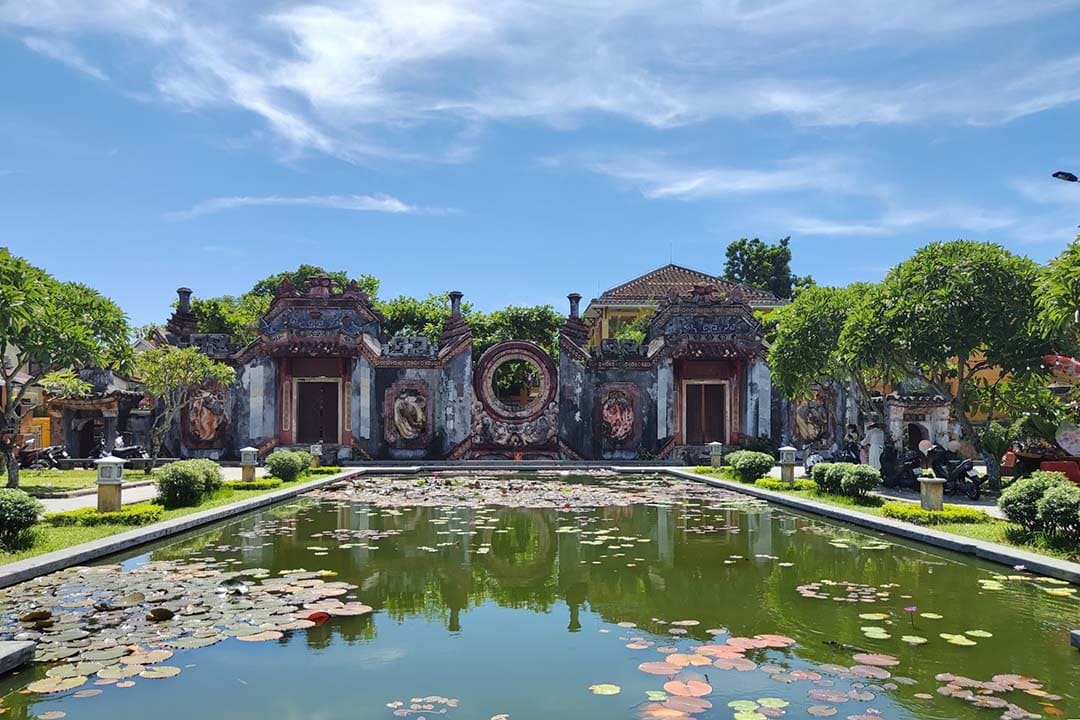
- Fujian Assembly Hall (Phuc Kien): Fujian Assembly Hall is a striking example of traditional Chinese architecture, originally built as a gathering place for the Fujian community. It is known for its ornate gates, intricate dragon sculptures, and peaceful courtyard dedicated to spiritual worship.
- Hoi An Central Market: Hoi An Central Market is a lively marketplace located along the Thu Bon River, filled with local vendors and daily activity. It is an ideal place to experience authentic local life while enjoying street food and shopping for fresh produce or souvenirs.
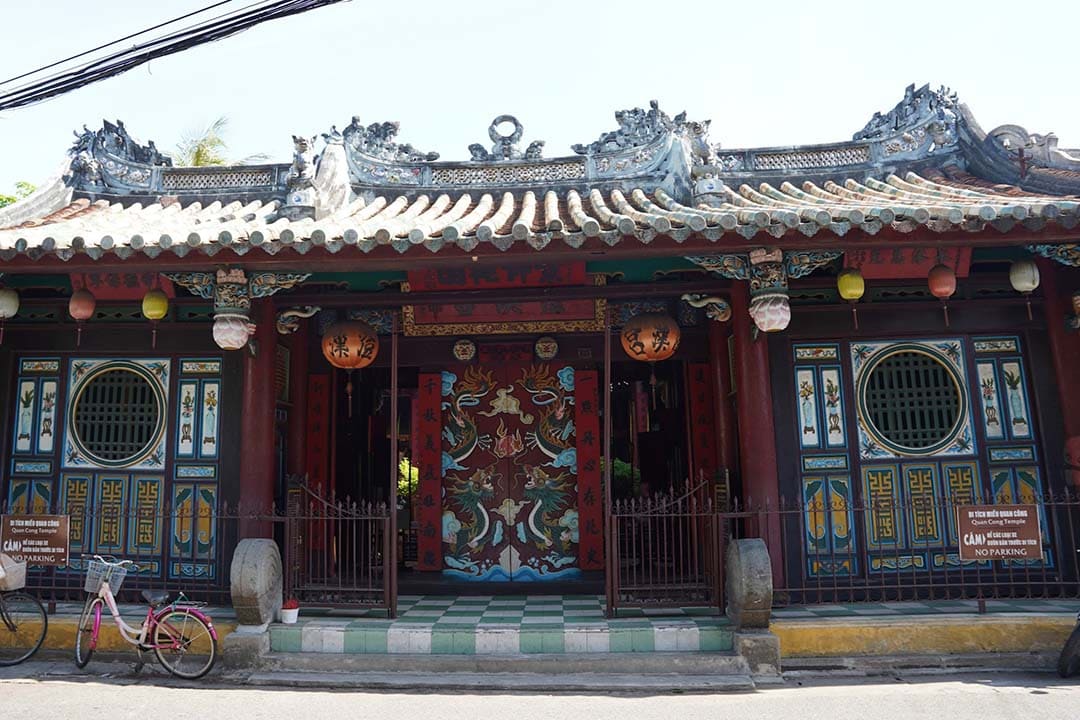
- Quan Cong Temple: Quan Cong Temple is dedicated to a respected Chinese general who symbolizes loyalty, integrity, and justice. The temple stands out with its vibrant red-and-gold decor and impressive statues that reflect deep cultural and spiritual significance.
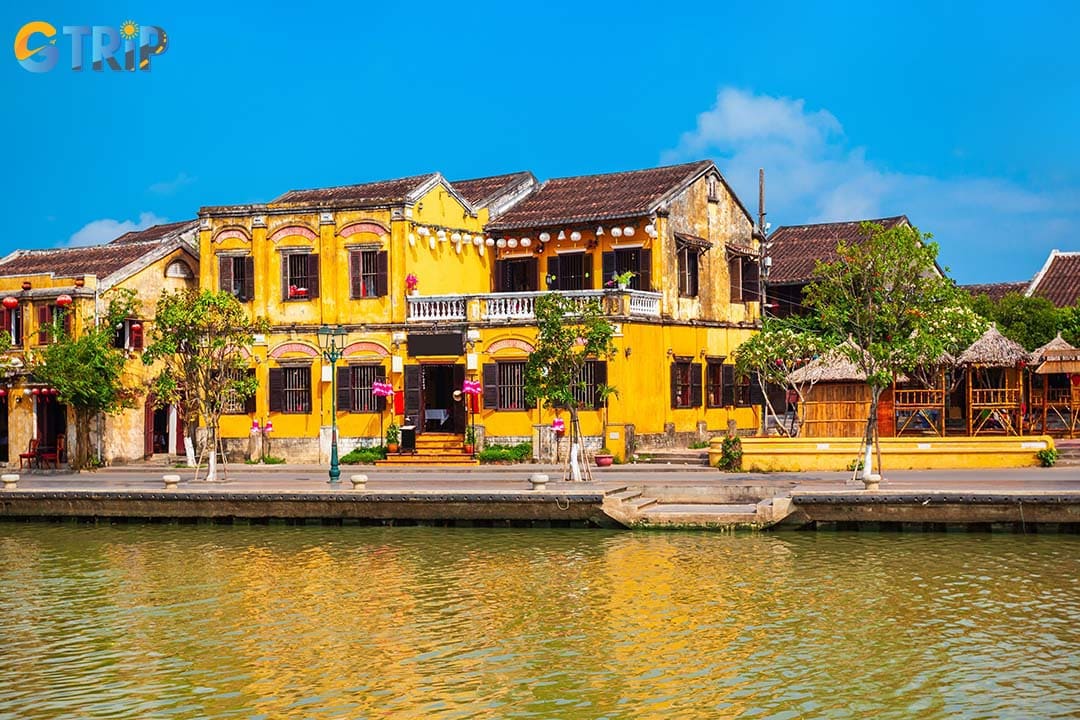
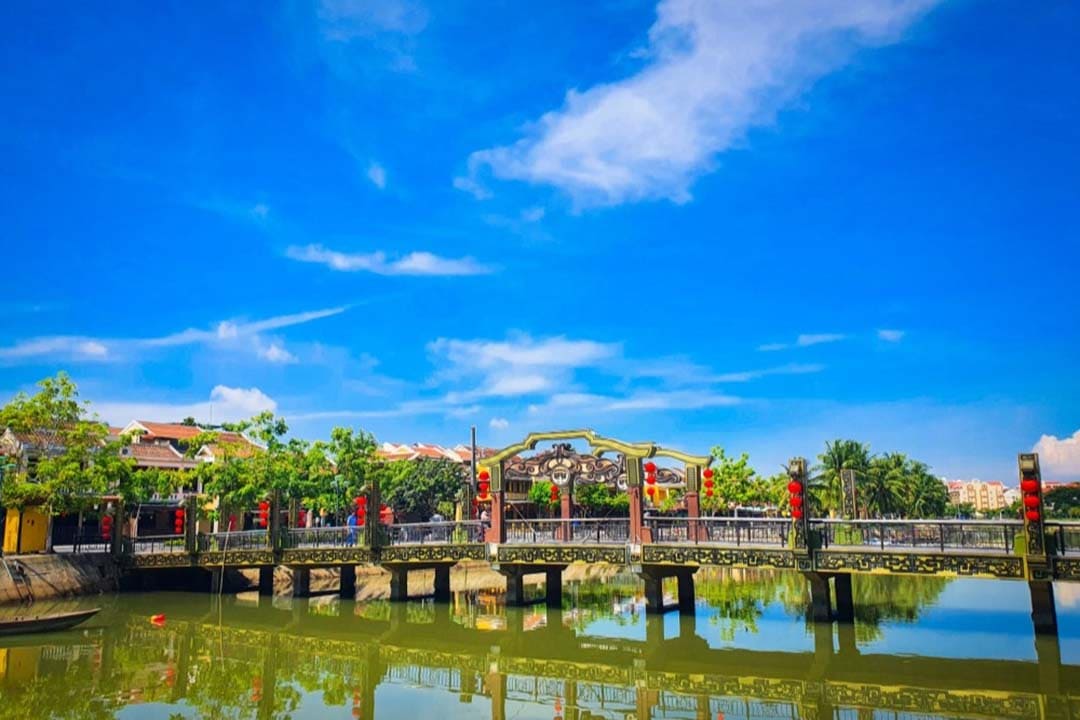
Hoi An Ancient Town offers many places to visit and interesting activities to do
Practical tips for visitors
To ensure a smooth and respectful visit to the Cam Pho Confucius Temple, please keep the following tips in mind:
- Entry ticket: A valid Hoi An Ancient Town entry ticket (120,000 VND) is required to visit this site.
- Dress code: While there is no strict regulation, wearing modest clothing or an Ao Dai is highly recommended to show respect.
- Photography: Turn off your camera flash when taking photos inside the hall to preserve the antiquities.
- Rules: Smoking, eating, and drinking are strictly prohibited inside the temple area.
- Weather: Bring sun cream and water during the dry season (Feb-Aug), carry a rain poncho and check for floods between October and December.
- Cash: Always carry cash for the entry fee and local souvenirs as many spots do not accept cards.
- Guide: For a deeper understanding of the Chinese inscriptions and history, consider hiring a local guide.
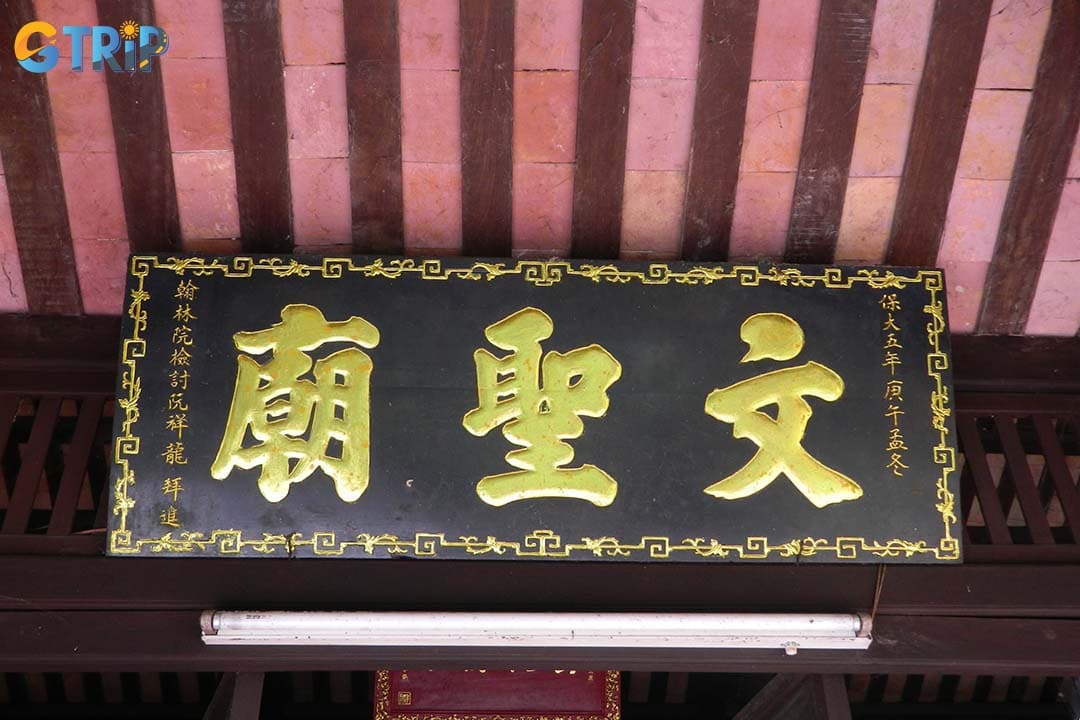
Remember practical tips to have a good visit to Cam Pho Confucius Temple
The Cam Pho Confucius Temple is a portal to the intellectual soul of Hoi An. It stands as a silent monument to the enduring power of knowledge, discipline, and reverence. While the vibrant lantern-lit streets of the Ancient Town capture the heart, this tranquil temple captures the mind, offering a peaceful counterpoint to the city’s lively energy. Its free entrance, stunning architecture, and profound history make it an essential stop for any traveler looking to gain a deeper understanding of Vietnamese culture. With this guide from GTrip, you're now ready to explore the serene and historic grounds of the Cam Pho Confucius Temple and uncover one of Hoi An’s most precious hidden gems.