



Apr - 06 - 2026
Diep Dong Nguyen House is a hidden gem in Hoi An, blending the elegance of a historic merchant residence with the charm of a private antique museum. Tucked within the atmospheric lanes of the Hoi An Ancient Town, it preserves generations of trade heritage through its architecture and rare collectables. In this GTrip guide, you’ll discover its history, standout design features, entrance details, and practical tips, everything you need for a meaningful and well-prepared visit.
Overview of the Diep Dong Nguyen House Hoi An
Among the many heritage buildings in the old quarter, the Diep Dong Nguyen House holds a vast collection of antiques and centuries-old stories. To help you plan your visit to this historic landmark, here are the essential details regarding its location and entry requirements.
Where is Diep Dong Nguyen House Hoi An?
Address: No. 58 Nguyen Thai Hoc Street, Hoi An Ancient Town, Hoi An Ward (formerly Minh An Ward, Hoi An City, Quang Nam Province), Da Nang City
Situated in the heart of Hoi An Ancient Town, the Diep Dong Nguyen House is incredibly accessible. Nguyen Thai Hoc Street runs parallel to the main thoroughfare of Tran Phu Street and is a bustling artery of the old quarter, famous for its art galleries, tailor shops, and historic buildings. Its central location means you can easily walk to it from other major attractions like the Japanese Bridge or the Central Market, making it a convenient stop on any walking tour of Hoi An.
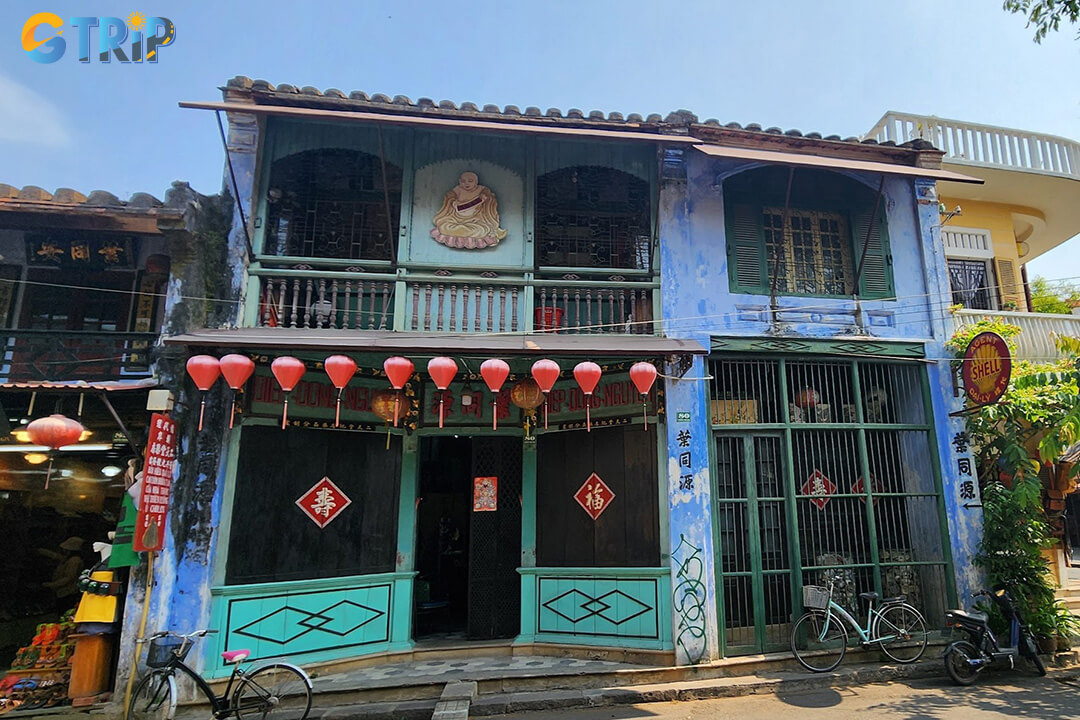
Diep Dong Nguyen House is centrally located on Nguyen Thai Hoc Street, making it an easy stop while exploring Hoi An Ancient Town on foot
Opening hours and ticket prices of the house
- Opening hours: 8:00 AM - 12:00 PM & 2:00 PM - 4:30 PM (daily)
- Ticket price: The visit is included in the Hoi An Old Town combo ticket, which costs 120,000 VND for foreign visitors
You do not purchase a separate ticket for the Diep Dong Nguyen House. Instead, access is granted via the Hoi An Ancient Town combo ticket. This ticket allows entry into the old town and lets you choose five heritage sites to visit from a list of over 20 attractions, which include ancient houses, assembly halls, museums, and the Japanese Bridge. Simply present your ticket at the entrance, and a staff member will clip one of your five passes.
What makes Diep Dong Nguyen House unique in Hoi An?
What sets the Diep Dong Nguyen House apart from other famous old houses in Hoi An is its dual identity. It is both a well-preserved 19th-century merchant house and a private museum, offering visitors two distinct experiences:
- Discover a well-preserved 19th-century merchant house showcasing the architectural blend of Vietnamese, Chinese, and Japanese influences.
- Explore a private collection of ceramics and antiques gathered over decades, reflecting Hoi An’s history as a vibrant international trading port.
History of the Diep Dong Nguyen House
In 1856, Mr. Diep Ngo Xuan settled in Hoi An and opened a traditional Chinese medicine shop named “Diep Dong Xuan” on Tran Phu Street. His business quickly became well known, helping establish the Diep family as respected members of the local merchant community. As the family’s prosperity grew in the late 19th century, they built the current residence at 80 Nguyen Thai Hoc Street, designed to function both as a family home and a commercial space.
In the early 20th century, the founder’s grandson inherited the business and renamed it “Diep Dong Nguyen”. He expanded the shop’s offerings beyond medicine to include popular imported goods such as kerosene, French fabrics, and luxury jewelry. Today, the house is still inhabited by the 5th generation of the Diep family. The current patriarch, Mr. Diep Gia Tung (Mr. Sung), has transformed the residence into a private museum preserving thousands of artifacts from Hoi An’s trading past.
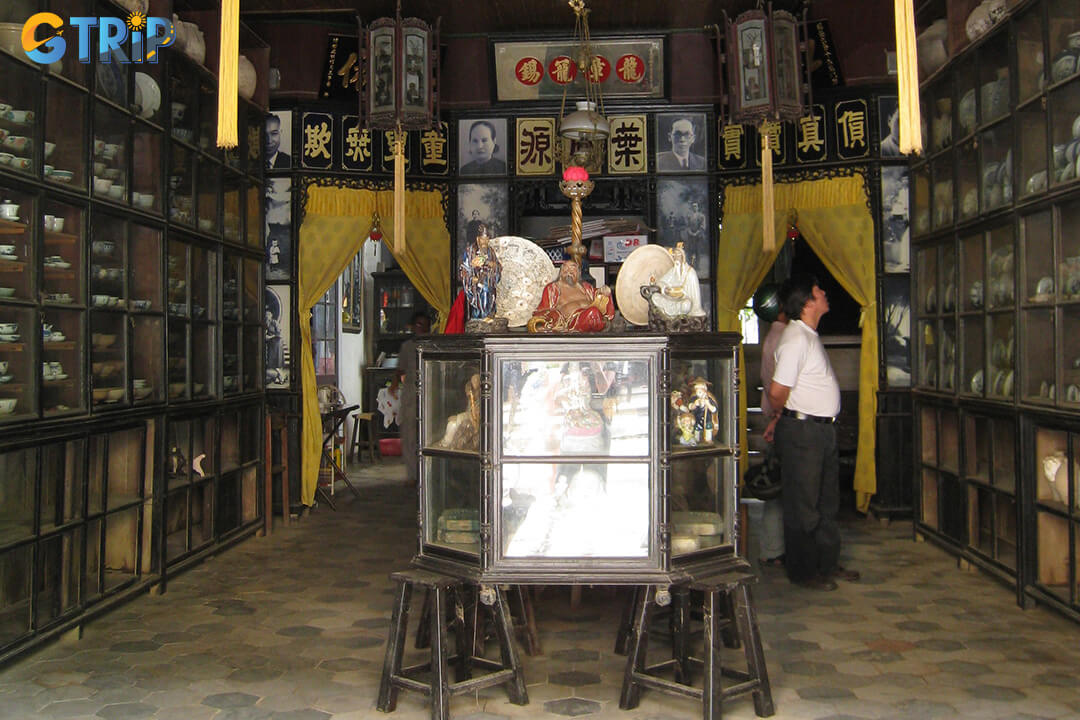
Diep Dong Nguyen House reflects Hoi An’s merchant heritage, preserving generations of family history and artifacts from the town’s vibrant trading past
Architecture of the Diep Dong Nguyen House
Unlike many other ancient houses that have been heavily renovated, Diep Dong Nguyen remains a "frozen" piece of 19th-century history.
The iconic turquoise facade
The most striking feature of the house is its vibrant turquoise blue exterior, a rare departure from the classic "Hoi An Yellow". The facade is framed by dark wooden shutters and a small glass display case holding a Buddha statue, which has served as the business's official spiritual symbol for over a century.
Functional design for commerce
The architectural logic of the house was built around trade. A notable feature is the "open-floor" system between the ground and first levels, equipped with a manual pulley. This allowed the family to lift heavy crates of medicine or silk directly from the shop floor to the secure storage area above, a common trait of successful 19th-century merchant houses.
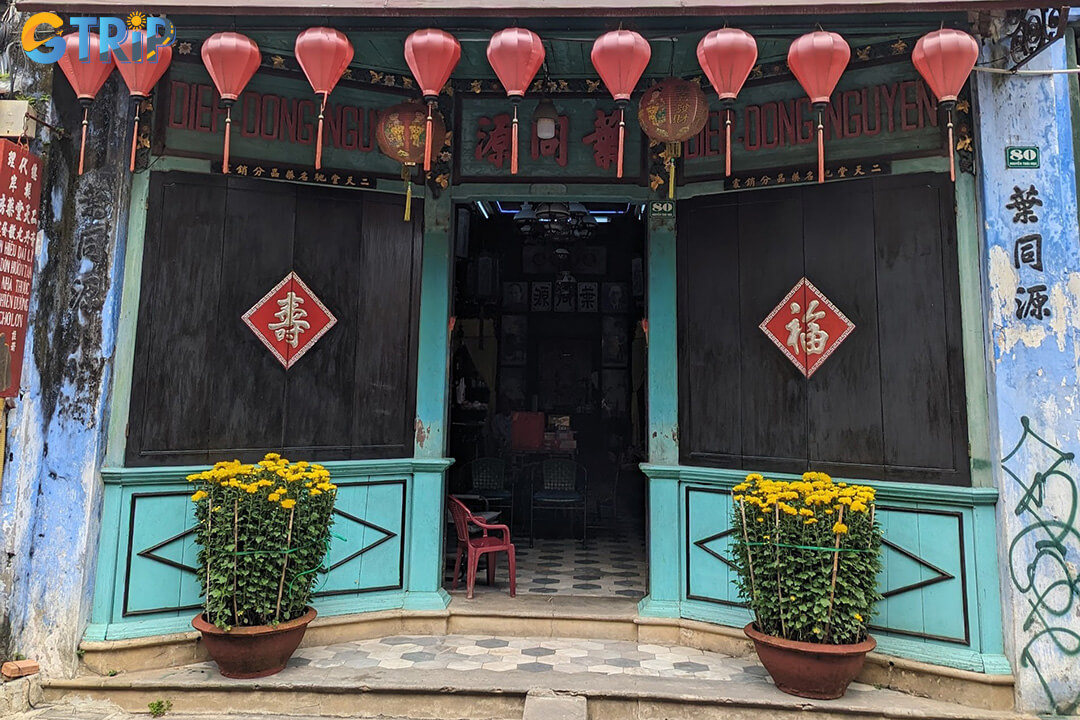
The house features a clever pulley system that allowed merchants to lift goods between floors, reflecting the practical design of 19th-century trading houses
Traditional two-story tube structure
The house is a textbook example of Hoi An’s "tube" architecture, long and narrow with a deep interior. It features a solid wooden frame made of precious timbers, providing strength to support the heavy tiled roof. The layout is divided into multiple sections, separated by open spaces to maximize airflow and natural light.
The exhibitions at Diep Dong Nguyen House
The house is effectively split into two distinct gallery spaces, each focusing on a different aspect of the family’s vast collection.
The ground floor: A treasury of coins and ceramics
The first level, which once served as the bustling shopfront, is now a dedicated gallery for numismatics and trade ceramics. Here, you will find a chronological display of Vietnamese coins dating back to the 10th-century Dinh Dynasty, alongside rare currency from China and Japan. The glass cabinets along the walls are filled with everyday trade ceramics, including blue-and-white porcelain and 12th-century Chu Dau Pottery, showcasing the items that once flowed through Hoi An port.
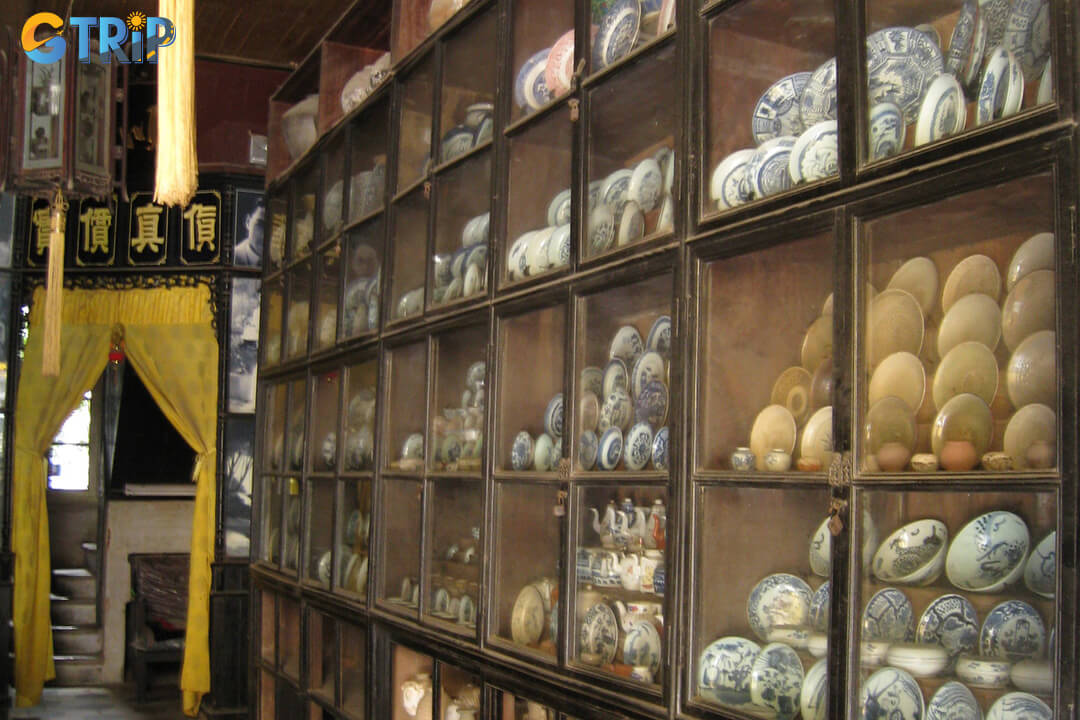
The ground floor now displays a collection of historic coins and trade ceramics, illustrating Hoi An’s vibrant commercial exchanges from the 10th century onward
The upper floor: Imperial relics and intellectual heritage
Climbing the narrow wooden stairs leads you to the more private and prestigious collection. This floor preserves high-value artifacts, including official seals (an chuong) used by ancient mandarins and merchant guilds. You will also find the royal desk of King Bao Dai and the vanity table of Empress Nam Phuong. Surrounding these royal relics is an extensive library of Han-Nom documents, genealogy books, and rare Chinese calligraphy scrolls that highlight the family’s intellectual status.
Things to do at Diep Dong Nguyen House
Visiting this house is not just a sightseeing stop. It is an interactive journey through the personal history of a prominent merchant family.
1. Meet the guardian of the collection
One of the most rewarding experiences is chatting with Mr. Sung, the 5th-generation owner. He is a passionate collector who sees himself as a custodian of history rather than a businessman. Hearing him explain why the family refuses to sell any artefacts even when offered high prices provides a deep understanding of the Vietnamese value of "remembering the source".
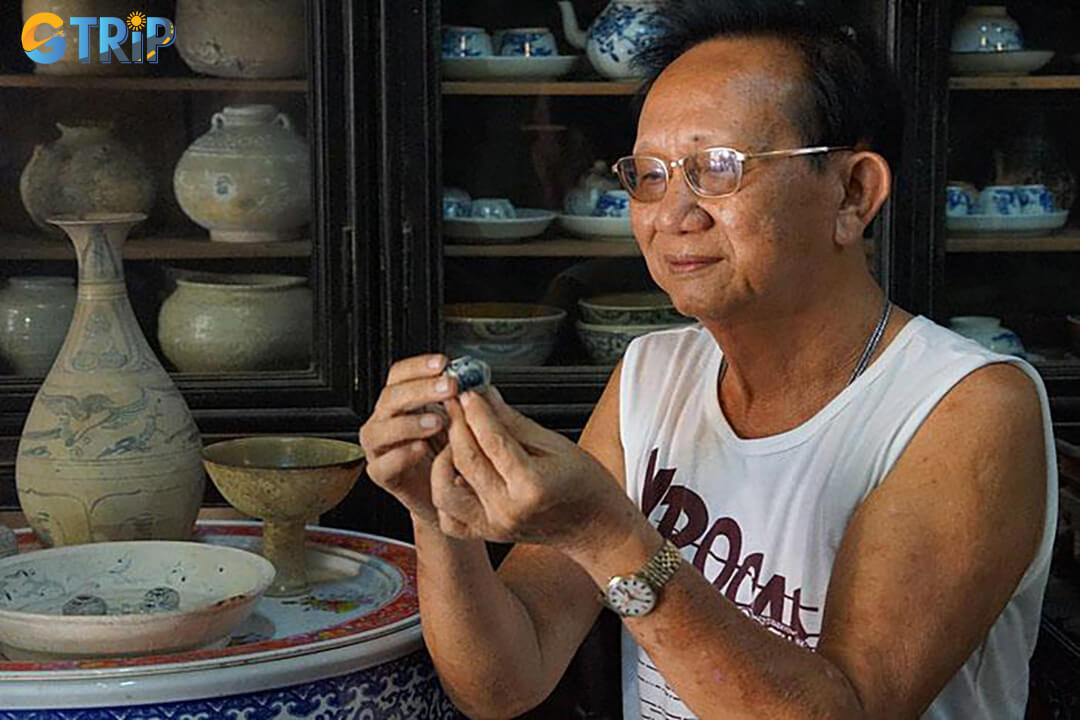
Visitors can also meet the 5th-generation owner, Mr. Sung, whose passion for preserving family history brings the house’s heritage to life
2. Analyze the evolution of Hoi An through photography
The house holds an extraordinary archive of black-and-white photographs taken between 1920 and 1960. Spending time looking through these images allows you to see the "then and now" of the town. You can spot familiar street corners and see how the community lived, dressed, and traded during the early 20th century.
3. Learn about the unique "Buy-In Only" philosophy
Take a moment to observe the sheer volume of items added to the collection by each generation. You can learn about the family’s tradition of only acquiring new pieces to preserve for the future, never selling them for profit. This philosophy has kept the collection intact through wars and floods, making it one of the most complete private archives in Vietnam.
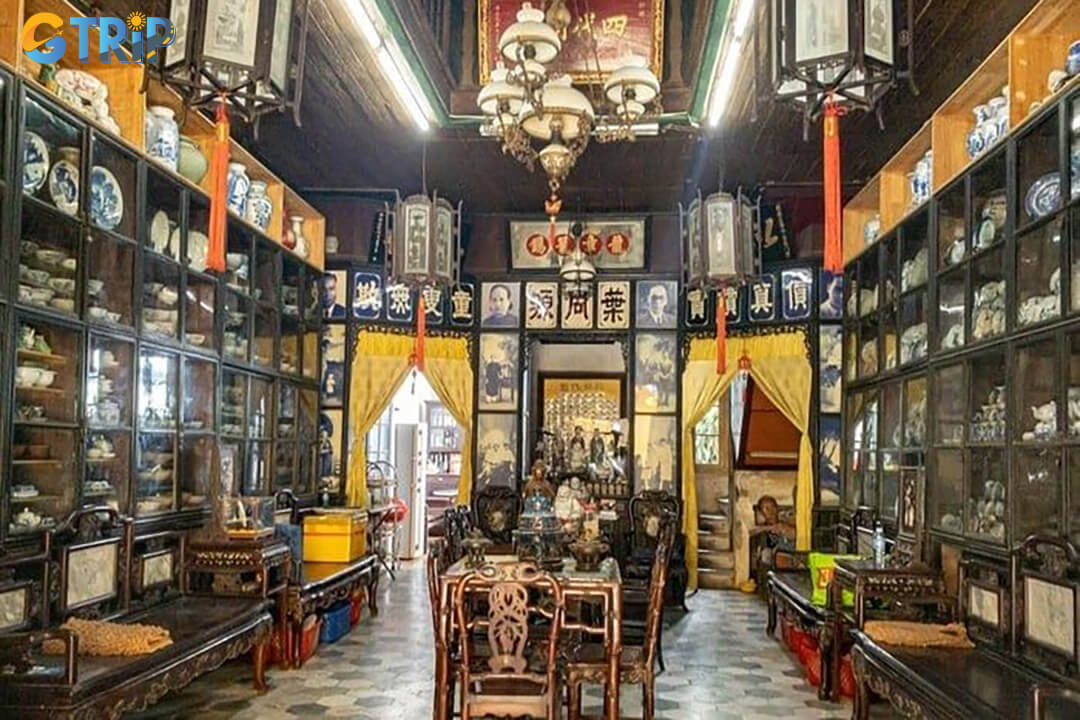
The house also showcases a vast family collection preserved across generations, reflecting a tradition of protecting heritage rather than selling it for profit
How to get to Diep Dong Nguyen House?
Located at 58 Nguyen Thai Hoc Street, the house is very easy to find once you are in or near Hoi An Ancient Town.
From Da Nang International Airport
After arriving at the airport, the most comfortable way to reach the house is by private car or shuttle. The route takes you along the beautiful coastal road, passing by modern resorts before entering the historic atmosphere of Hoi An.
- Distance: 30 km
- Travel time: 45 - 60 minutes
- Routes: Vo Nguyen Giap coastal road or Lac Long Quan Street.
- Optimal option: Private car or Grab for comfort and space.
From Da Nang City center
If you are staying in Da Nang, you can easily take a taxi or rent a scooter for a day trip. The drive is quite pleasant and offers a clear transition from Da Nang to the rustic charm of the ancient town.
- Distance: 25 km
- Travel time: 45 minutes
- Routes: Le Van Hien Street or the coastal highway.
- Optimal option: Scooter for flexibility or a Grab car for convenience.

Traveling from Da Nang to Hoi An is easy, with a pleasant 25 km journey that takes about 45 minutes by scooter or taxi
From around Hoi An Ancient Town
If you are already in the old town, the house is just a short walk away. Since it is located on Nguyen Thai Hoc Street, which is a pedestrian-only zone during peak hours, you can enjoy a stroll past art galleries and tailor shops to reach the turquoise facade.
- Distance: Less than 1 km.
- Travel time: 5 - 10 minutes walking.
- Routes: Walk along Nguyen Thai Hoc Street (parallel to Tran Phu Street).
- Optimal option: Walking or cycling.
Transportation options
To preserve the heritage environment, motorized vehicles are restricted during the "pedestrian hours". Bicycles are highly recommended as they allow you to park easily near the entrance. If you prefer not to walk, a traditional cyclo ride is a fantastic way to arrive in style at the house's doorstep.
- Private car: The most comfortable and convenient option. You can book in advance for a fixed price, with door-to-door service. Ideal for families or groups with luggage.
- Ride-hailing /Taxi: Ride-hailing services like Grab/XanhSM are widely available and offer competitive pricing. Taxis are also plentiful but may be slightly more expensive.
- Shuttle bus: Several companies operate shuttle buses between Da Nang and Hoi An. This is a budget-friendly option, though it operates on a fixed schedule.
- Bicycle: Widely available for rent at 30,000 VND/day.
- Walking: The best way to soak in the street’s historic details.
- Cyclo: A romantic and slow-paced option for sightseeing.
- Motorbike: Park at the designated lots at the edge of the old quarter before walking in.

Due to pedestrian-hour restrictions in Hoi An Ancient Town, visitors usually reach the house on foot, by bicycle, or by cyclo after parking outside the heritage zone
Nearby attractions to the Diep Dong Nguyen House
The central location of the Diep Dong Nguyen House on Nguyen Thai Hoc Street places it within a few minutes' walk of Hoi An’s most iconic landmarks. Here are some nearby attractions you can easily visit:
- Japanese Bridge Hoi An: Hoi An's most famous landmark, a beautiful 18th-century bridge featuring a small temple inside. Its unique covered design reflects the cultural influence of the Japanese community in Hoi An’s trading past.
- Tan Ky Old House: A flawlessly preserved merchant's house, recognized as a National Heritage site, showcasing a beautiful blend of architectural styles. It also contains many original antiques that highlight the prosperity of Hoi An’s merchant families.
- Phuc Kien Assembly Hall: An ornate and stunningly decorated assembly hall built by the Fujian Chinese community, dedicated to the sea goddess Mazu. The colorful gates, dragon sculptures, and peaceful courtyard make it one of the most impressive sites in the ancient town.
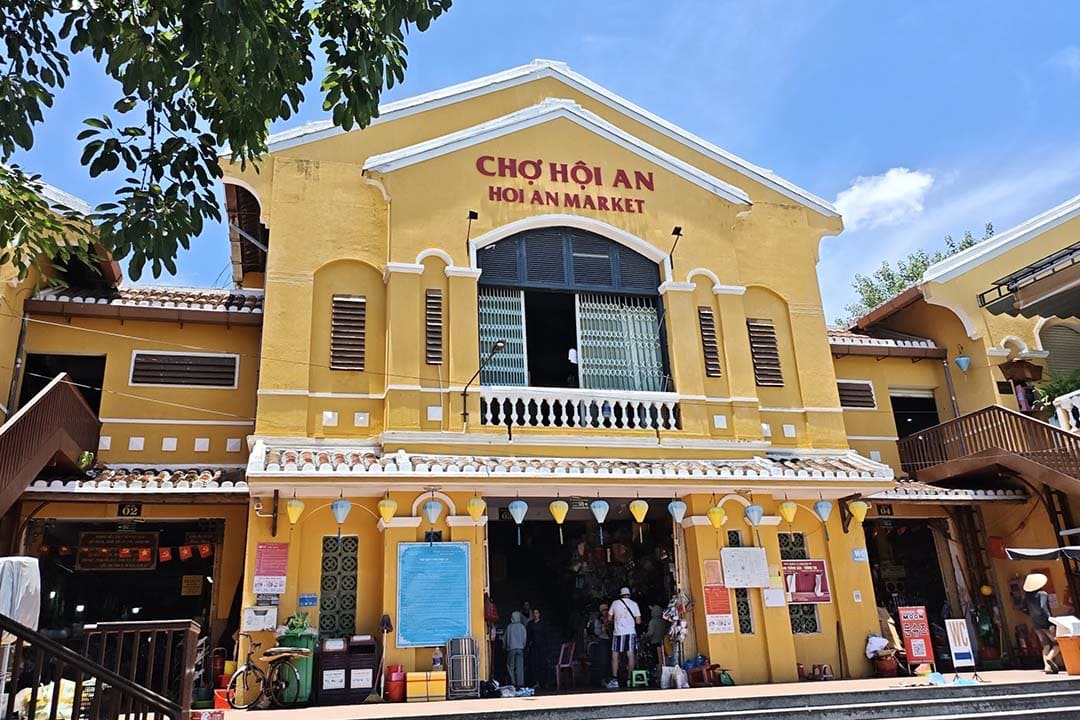
- Hoi An Central Market: A vibrant, bustling market where you can experience local life, shop for souvenirs, and sample delicious Hoi An street food. It is especially lively in the early morning when locals gather to buy fresh seafood and produce.
- Museum of Trade Ceramics: Located in another beautifully restored wooden house, this museum displays a collection of pottery and ceramics that trace Hoi An's history as a major trading port. Many artifacts here were traded between Hoi An and countries across Asia and Europe centuries ago.
- Sa Huynh Culture Museum: Showcases artifacts from the ancient Sa Huynh civilization, which predated the Cham Kingdom, offering a deep dive into the region's earliest history. The exhibits provide valuable insights into the lifestyle and culture of one of Central Vietnam’s earliest communities.
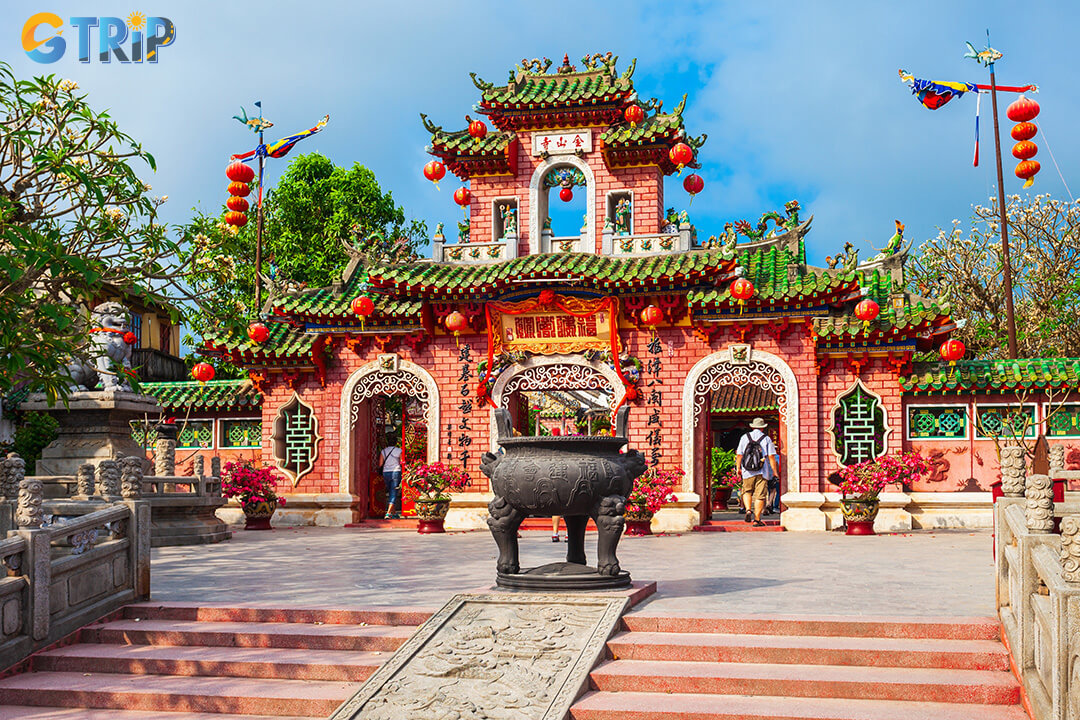
Thanks to its central location, Diep Dong Nguyen House is just a short walk from many of Hoi An’s most famous cultural and historical attractions
Practical tips for visitors when visiting the Diep Hong Nguyen House
To ensure a smooth and respectful visit to the Diep Dong Nguyen House and the rest of the Ancient Town, keep these practical tips in mind:
- Buy the combo ticket: The Hoi An Old Town combo ticket offers the best value, granting access to five different attractions for one price.
- Visit in the morning or late afternoon: The house is less crowded during these times, allowing you to explore the narrow spaces and appreciate the details more comfortably.
- Dress respectfully: As this is a private family residence and a historical site, modest attire is appreciated. Cover your shoulders and knees.
- Be careful with the antiques: The collections are priceless and fragile. Please refrain from touching any of the artifacts on display.
- Wear comfortable shoes: You will be doing a lot of walking around Hoi An's pedestrian-only streets, so comfortable footwear is a must.
- Be quiet and considerate: The family still lives in the back of the house, so maintain a quiet and respectful demeanor during your visit.
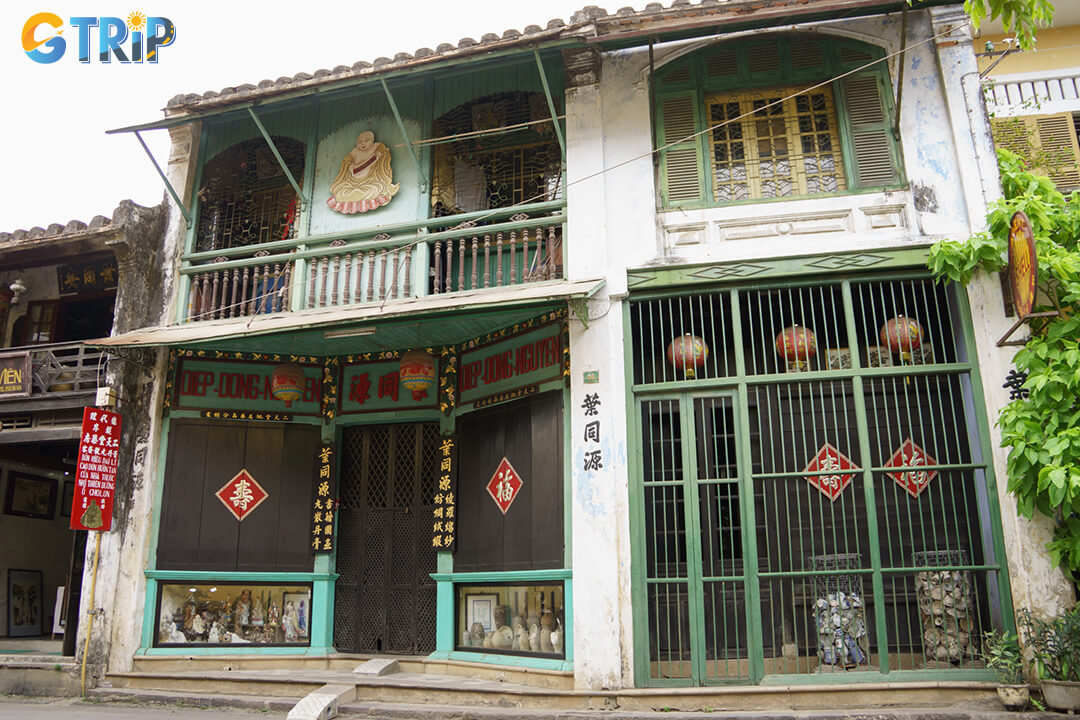
Remember to buy the Hoi An combo ticket, dress respectfully, and be mindful of the priceless antiques and the family still living there
Diep Dong Nguyen House is far more than just another old building in Hoi An. It is a time capsule, a private art gallery, and a living family home all in one. Its unique blend of stunning architecture and a truly personal collection of antiques provides an intimate and unforgettable look into the soul of this ancient port city. By showcasing not just the structure but the passions of the family within it, the house offers a story that resonates with history lovers and casual tourists alike. It is a testament to the enduring spirit of Hoi An. When planning your journey, make sure this remarkable house is on your itinerary. For more insider guides and travel inspiration in Vietnam, explore the world with GTrip.