



Apr - 06 - 2026
Hy Hoa Temple Hoi An is a quiet spiritual site hidden in the heart of the ancient town. While many visitors pass its modest entrance on Nguyen Thai Hoc Street, few step inside to discover the peaceful courtyard and centuries-old heritage preserved within. More than just a historic temple, it reflects the spiritual traditions that have shaped Hoi An for generations. This GTrip guide explores its history, architecture, and essential tips to help you plan a meaningful visit.
Overview of the Hy Hoa Temple Hoi An
- Address: No. 06 Nguyen Thai Hoc Street, Hoi An Ancient Town, Hoi An Ward (formerly Minh An Ward, Hoi An City, Quang Nam Province), Da Nang City
- Opening hours: 8:00 AM - 5:00 PM daily
- Entrance fee: Free
- Best time to visit: The best times to visit are early in the morning (8:00 AM - 10:00 AM) when the temple is at its quietest, or in the late afternoon (3:00 PM - 5:00 PM) as the light softens.
The Hy Hoa Temple is an active place of worship that offers a quiet, contemplative escape from the vibrant energy of Hoi An Ancient Town. Dedicated to the Five Elements, it represents a core belief in Vietnamese cosmology focused on balance and harmony. One of its most important roles is to clarify a common point of confusion for travelers.
Many visitors mistakenly refer to it as the "Marble Temple", confusing it with the famous Marble Mountains (Ngu Hanh Son) located between Hoi An and Da Nang. The temple's proper Vietnamese name is Mieu Ngu Hanh Ha, which translates to the Lower Five Elements Temple. The name connects it spiritually to the Five Elements philosophy, not to the physical marble of the mountains. Knowing this distinction is key to understanding its true identity and significance.
History of the Hy Hoa Temple Hoi An
The history of Hy Hoa Temple Hoi An reflects the deep spiritual traditions and community life of the ancient town. Built by local residents in the 19th century, the temple originally served a small neighborhood of craftsmen and traders before gradually becoming an important communal religious site. Over time, it has remained closely connected to the daily spiritual practices of Hoi An’s merchants and local families.
- 19th century: Hy Hoa Temple Hoi An was built by residents of the Hy Hoa quarter in Minh Huong commune, an area near today's Hoi An Central Market. Many locals at that time specialized in producing paper calendars and joss paper used in religious ceremonies and festivals.
- Later period: Over time, the temple was transferred from a private community shrine to a communal religious site serving the wider neighborhood. It gradually became an important spiritual place for traders and residents in the ancient town.
- Today: The temple remains active in local religious life. Two major ceremonies are held each year: a non-vegetarian ritual on the 21st day of the second lunar month and a vegetarian ceremony on the 14th day of the seventh lunar month. On every 1st and 15th day of the lunar month, merchants and shop owners often come to pray for prosperity and good business.
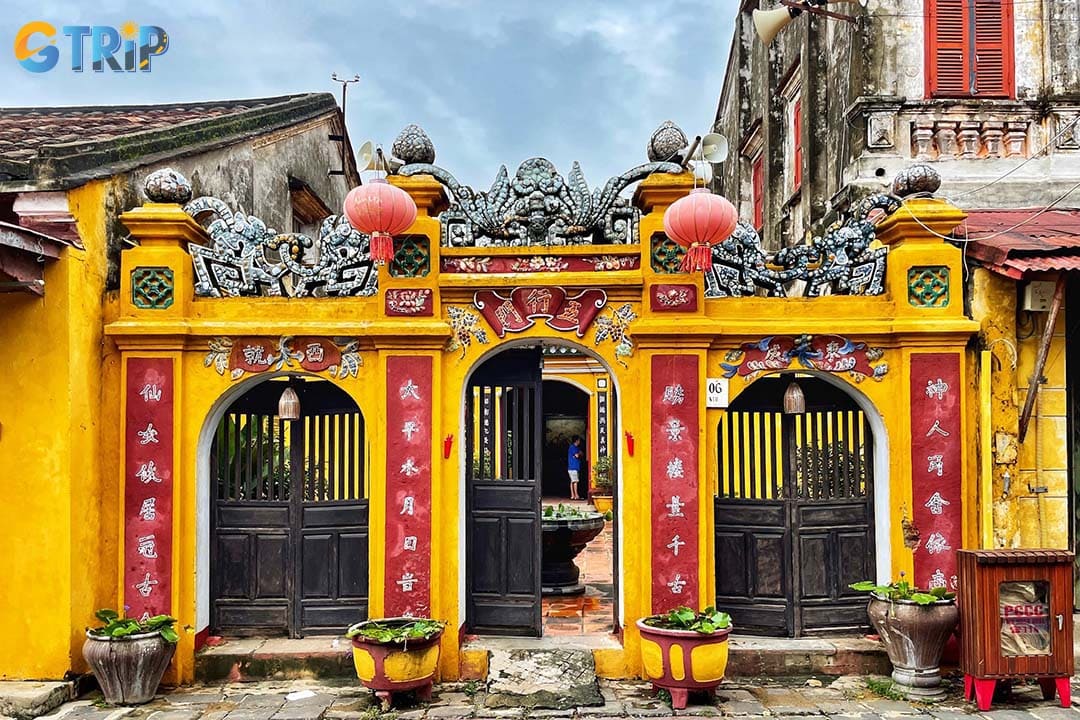
The Hy Hoa Temple, also known as Marble Temple, is an active place of worship
Architecture of the Hy Hoa Temple Hoi An
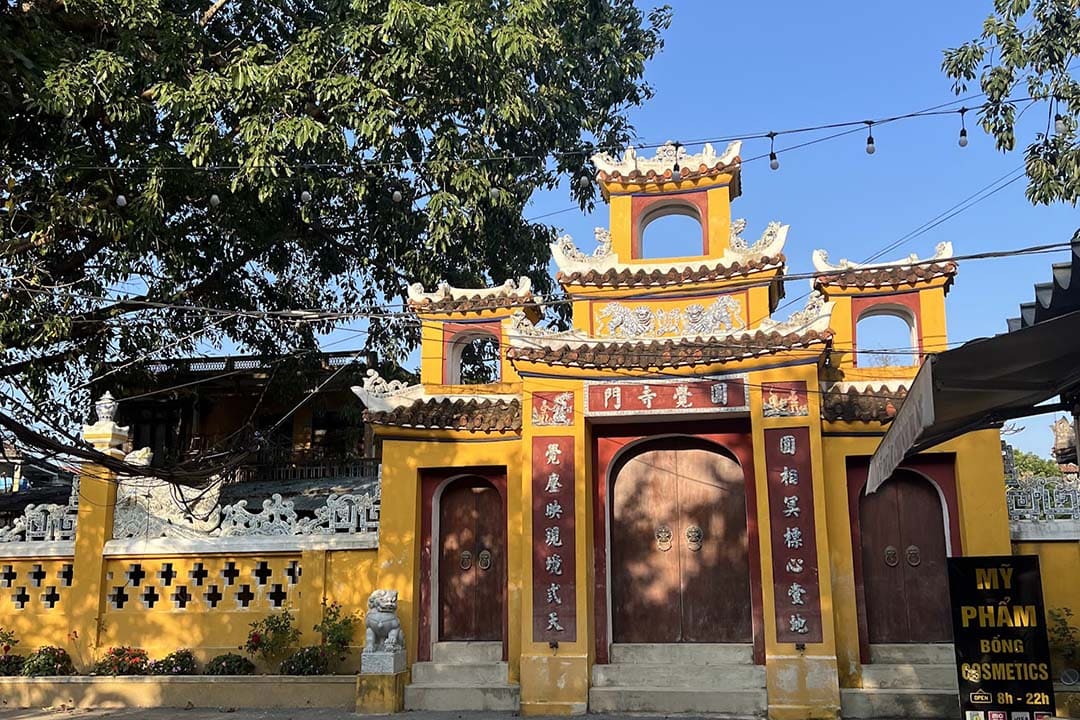
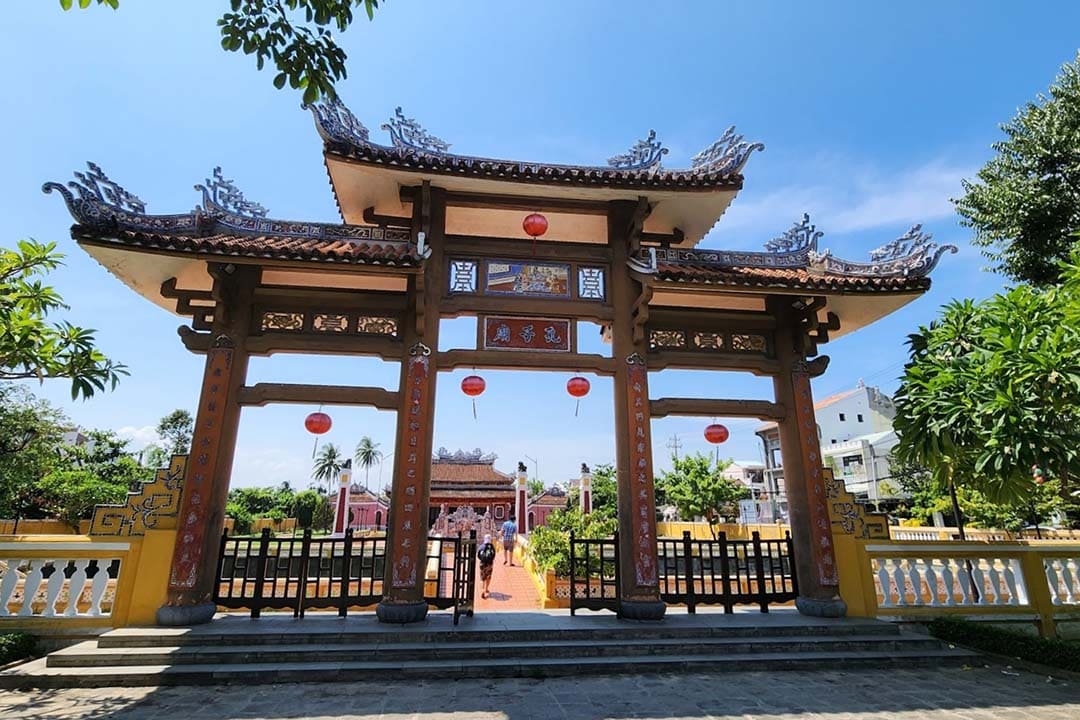
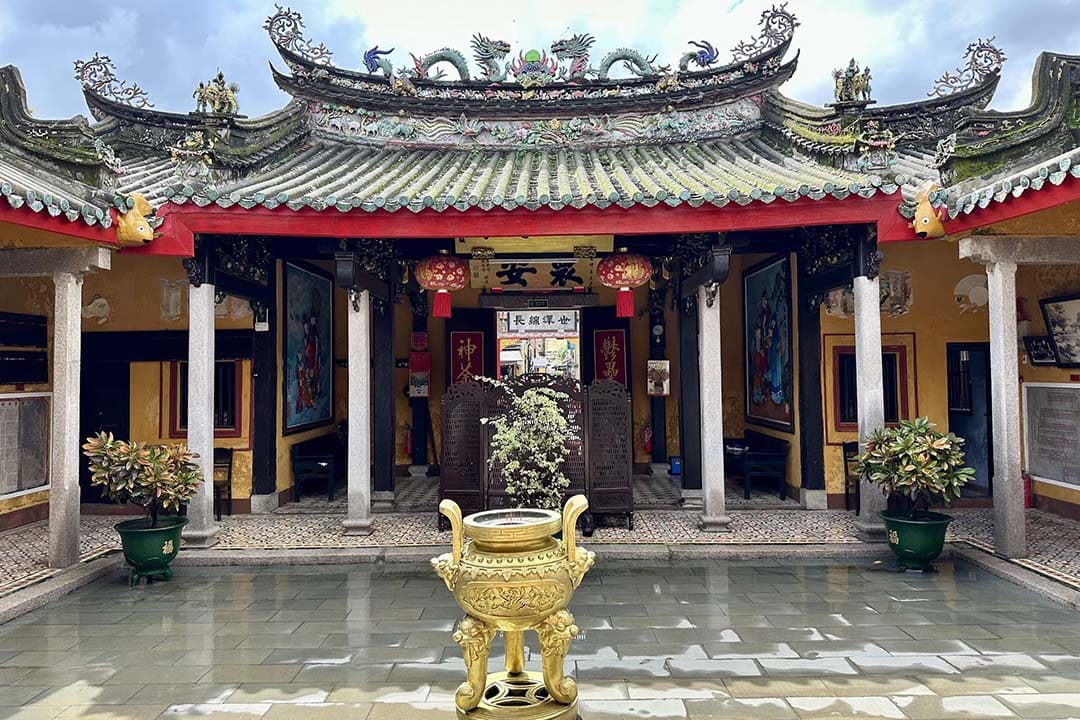
Hy Hoa Temple Hoi An follows a traditional temple layout with several connected structures arranged along a central axis. The complex begins with a triple gate featuring four entrances, with Chinese characters above the main gate meaning “Five Elements Gate”. Parallel calligraphy couplets are carved on the columns.
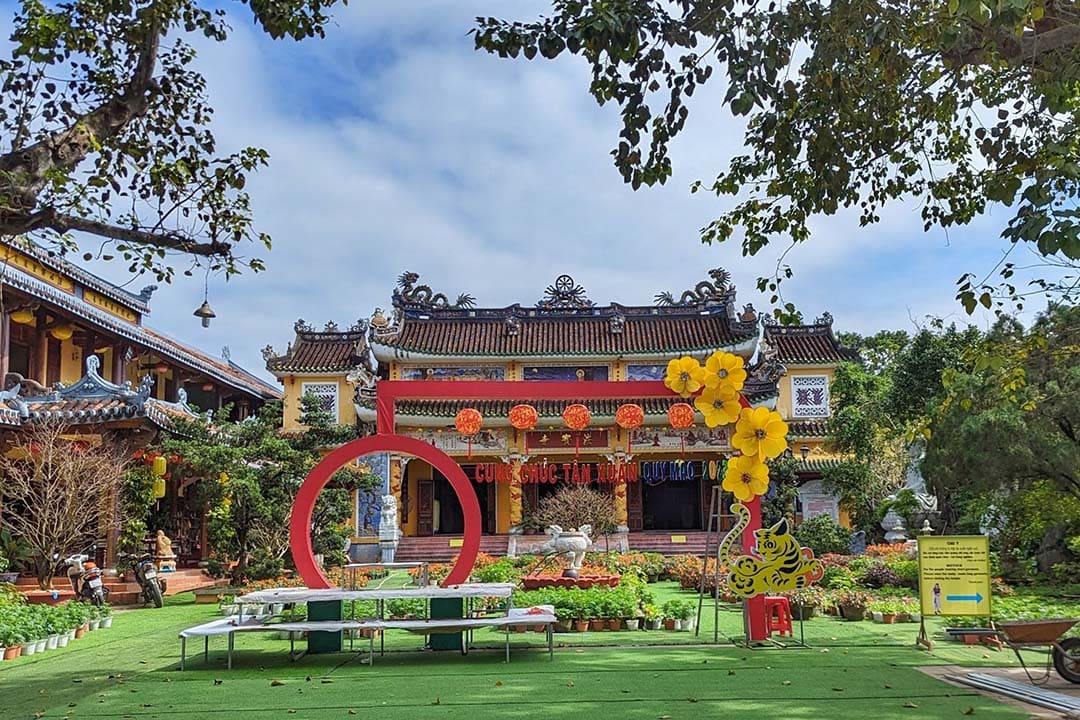
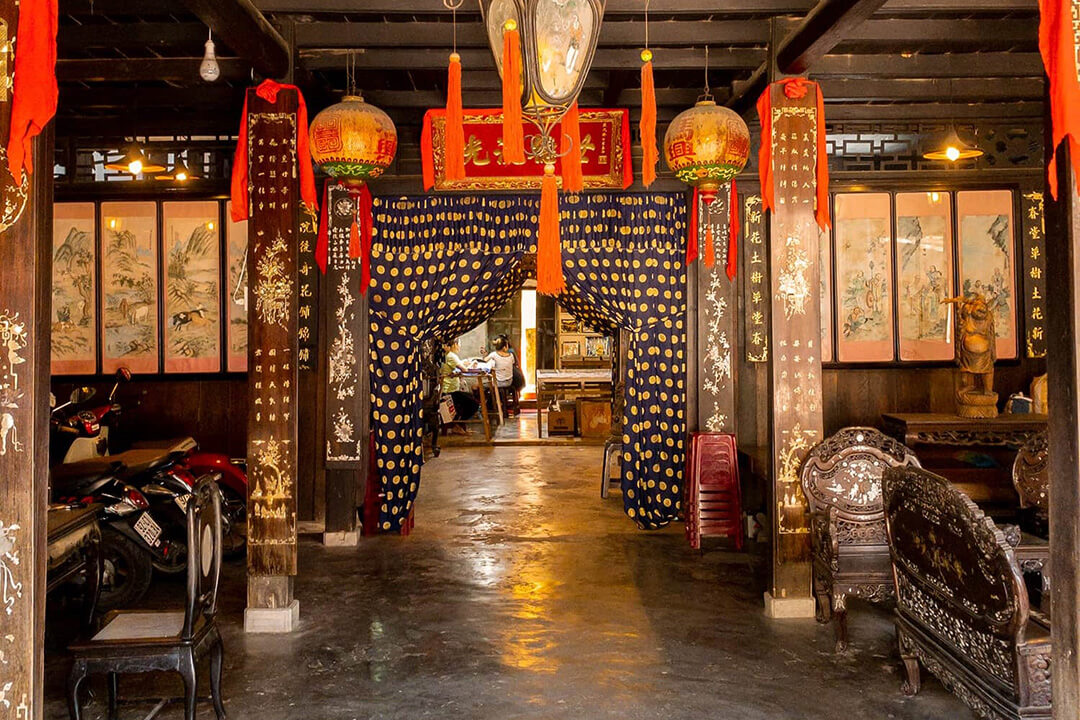
Beyond the gate lies the front yard, followed by the main worship hall. The hall has a tiled roof decorated with two dragons facing a sun symbol, a classic motif in Vietnamese temple architecture. Inside are altars dedicated to the Five Elements Goddesses (water, wood, metal, fire, and earth), along with Thien Y Ana Goddess, martyrs, and other folk deities.
Behind the hall stands the wooden back house with three compartments, famous for intricate carvings crafted by artisans from Kim Bong Carpentry Village. The temple complex also includes a traditional freshwater well, restored in 2019.
Things to do at Hy Hoa Temple Hoi An
A visit to the Hy Hoa Temple offers a rich cultural experience that goes far beyond a quick look. To truly appreciate this sacred space, we recommend engaging with it mindfully. Here are some of the best things to do at Hy Hoa Temple to make your visit unforgettable.
1. Marvel at the intricate woodwork by Kim Bong craftsmen
Don’t just walk through the gate, stop and look up. The temple is a showcase of Hoi An’s famous woodcarving heritage. Take a moment to find the "Luong Long Tranh Chau" (two dragons chasing a pearl) on the roof and the delicate floral patterns on the doors. These weren't made by just anyone. They were hand-carved by masters from the nearby Kim Bong carpentry village. It’s like visiting a free art gallery of traditional Vietnamese craft.
2. Discover the meaning of the "Five Elements" altar
The heart of the temple is the central altar dedicated to the Five Elements: metal, wood, water, fire, and earth. Instead of just seeing a colorful display, try to identify the five tablets representing these elements. In local belief, keeping these five in balance brings harmony to the world and success to business. It’s a great way to understand the spiritual "DNA" of the people living in the ancient town.
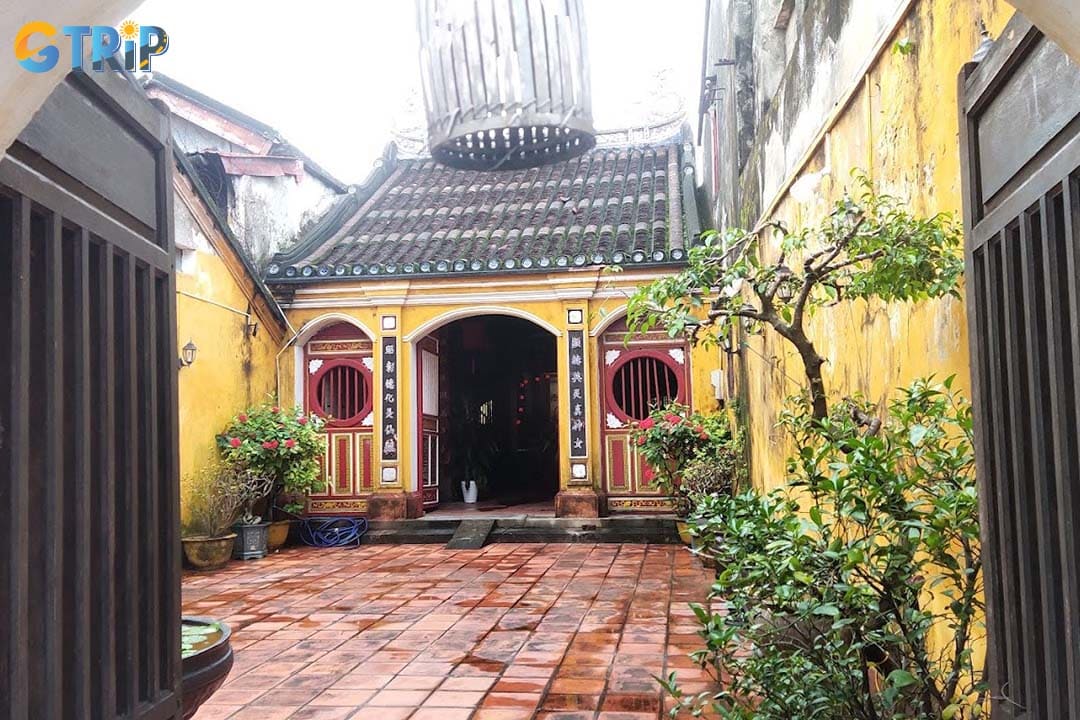
You should discover the meaning of the “Five Elements” altar at Hy Hoa Temple
3. See how local traders keep traditions alive
Hy Hoa isn't just a museum because it’s a "living" temple. If you visit on the 1st or 15th day of the lunar month, you’ll see local shopkeepers and traders coming in to offer fruit, flowers, and incense. Watching them pray for a lucky month of business gives you a much deeper connection to Hoi An than just buying souvenirs on the street. Just remember to observe quietly from a distance.
4. Take a "peaceful break" in the hidden courtyard
Hoi An’s main streets can get very crowded and loud. Hy Hoa Temple serves as a perfect "hidden escape". Spend 10 or 15 minutes sitting in the quiet courtyard or on a bench inside. Take a deep breath of the incense-scented air and enjoy the silence. It’s the best spot in town to clear your head and recharge your energy before heading back to the busy markets.
5. Capture the moody, old-world vibes with your camera
The temple is a dream for photographers because of its dark wood, golden details, and "yin-and-yang" roof tiles. Look for the way sunlight filters through the entrance to create beautiful shadows on the floor. To be a respectful traveler, avoid using a flash and try to capture the "small details", like a single incense stick burning or the texture of the ancient mossy walls, rather than just taking selfies.
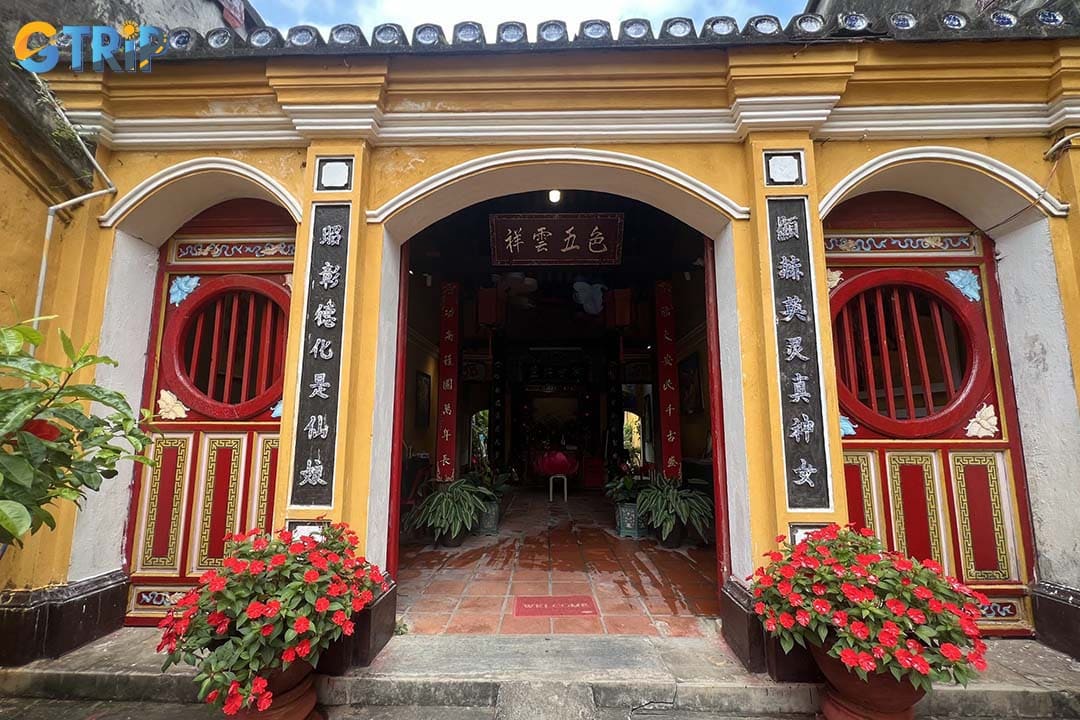
The temple is an ideal place for photographers who love the vintage and old vibe
How to get to Hy Hoa Temple Hoi An?
Hy Hoa Temple is located at 06 Nguyen Thai Hoc Street, Minh An Ward, within the UNESCO-listed Hoi An Ancient Town. Because the area is partly pedestrianized during the day, visitors usually combine walking with other transportation methods.
From Da Nang International Airport
Traveling from Da Nang International Airport to Hy Hoa Temple Hoi An is straightforward and commonly done by taxi or private car.
- Distance: ~30 km
- Travel time: 45-60 minutes
- Routes: Vo Nguyen Giap Street → Lac Long Quan Street → Hai Ba Trung Street → Hoi An Ancient Town
- Optimal option: Taxi or private transfer for convenience and direct access to Hoi An
From Da Nang City Center
Visitors staying in Da Nang can easily reach Hy Hoa Temple Hoi An by road along the coastal route connecting the two cities.
- Distance: ~28-30 km
- Travel time: 45-60 minutes
- Routes: Coastal road Vo Nguyen Giap → Lac Long Quan → Hai Ba Trung → Nguyen Thai Hoc Street
- Optimal option: Private car, taxi, or motorbike for flexibility and scenic coastal views
From aground Hoi An Ancient Town
Hy Hoa Temple Hoi An is located inside the historic district, making it easily accessible from nearby attractions.
- Distance: 300 m - 1 km depending on starting point
- Travel time: 5-15 minutes
- Routes: Walk along Nguyen Thai Hoc Street or Tran Quy Cap Street toward Hoi An Central Market
- Optimal option: Walking, as most streets in the ancient town are pedestrian-friendly
Transportation options
Visitors can choose several transportation options to reach Hy Hoa Temple Hoi An depending on their starting point.
- Walking: Best option when already inside Hoi An Ancient Town
- Bicycle: Popular for exploring short distances around the town
- Motorbike: Flexible for travelers coming from nearby areas
- Taxi or private car: Comfortable choice for trips from Da Nang
- Cyclo or electric shuttle: A traditional and relaxing way to explore the ancient streets
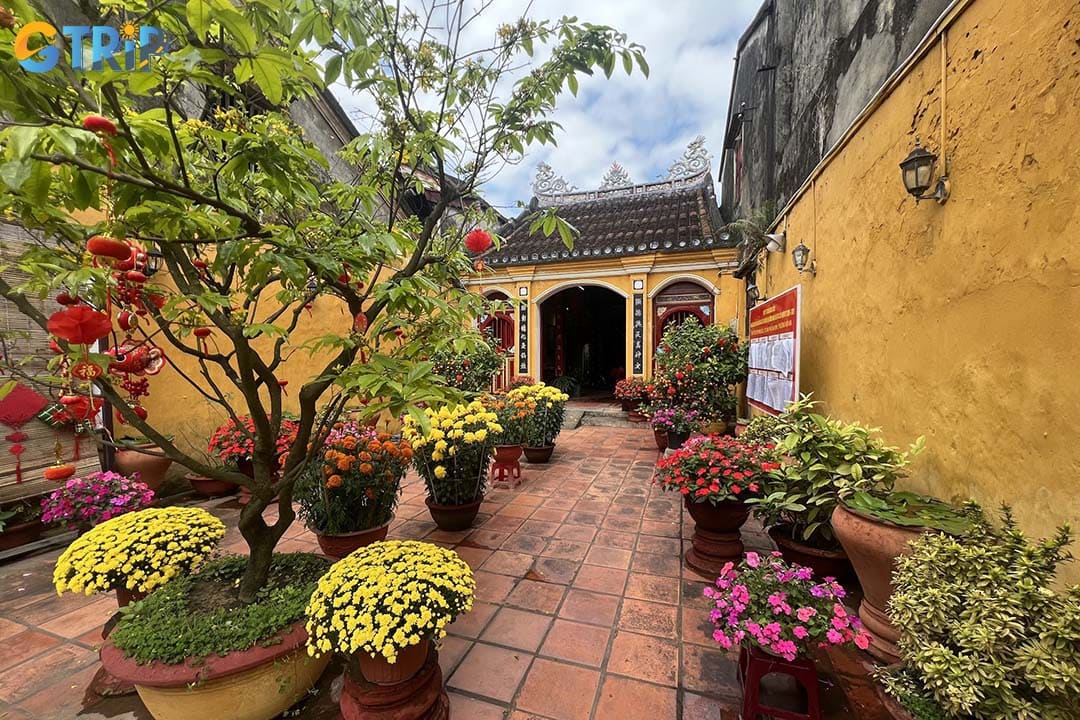
You can reach Hy Hoa Temple from different places by many means of transportation
Nearby attractions to the Hy Hoa Temple Hoi An
Hy Hoa Temple’s central location means it's surrounded by some of Hoi An's most iconic landmarks. You can easily combine your visit with a tour of these other fascinating sites, all within a few minutes' walk.
- Japanese Bridge Hoi An (Japanese Covered Bridge): Hoi An's most famous icon, this 18th-century bridge features a temple inside and is a stunning example of Japanese architecture.
- Tan Ky Old House: A beautifully preserved 200-year-old merchant's house that showcases a unique blend of Japanese, Chinese, and Vietnamese architectural styles.
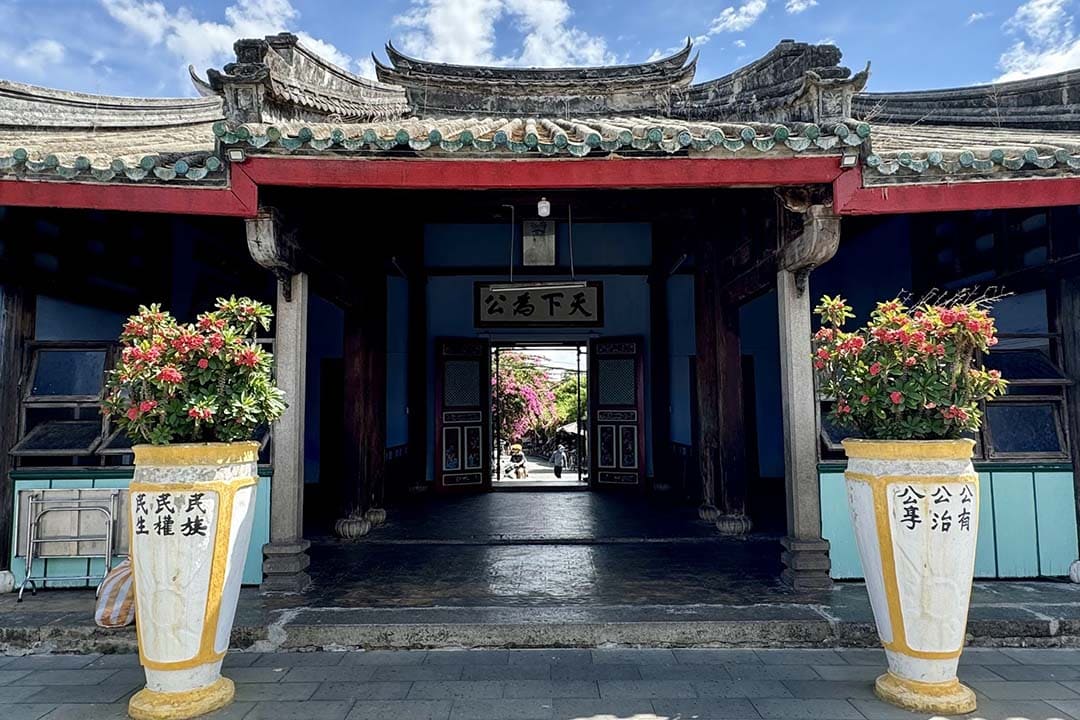
- Fujian Assembly Hall (Phuc Kien Assembly Hall): The most impressive of Hoi An's assembly halls, with a grand gate, vibrant statues, and serene courtyards dedicated to the sea goddess Mazu.
- Cantonese Assembly Hall (Quang Dong Assembly Hall): A brightly colored and ornate hall featuring a stunning ceramic dragon fountain and detailed carvings depicting scenes from Cantonese opera.
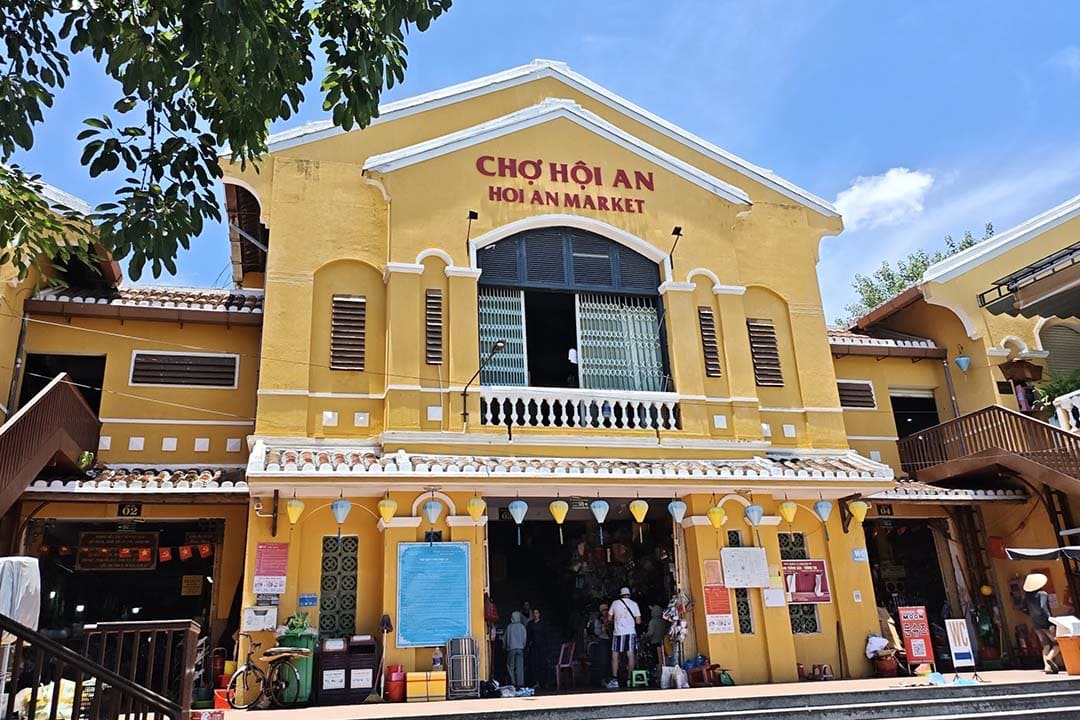
- Hoi An Central Market: A vibrant, bustling market where you can experience local life, sample delicious street food, and shop for souvenirs and fresh produce.
- Museum of Sa Huynh Culture: This small museum houses a fascinating collection of artifacts from the ancient "Sa Huynh" civilization, which inhabited the region over 2,000 years ago.
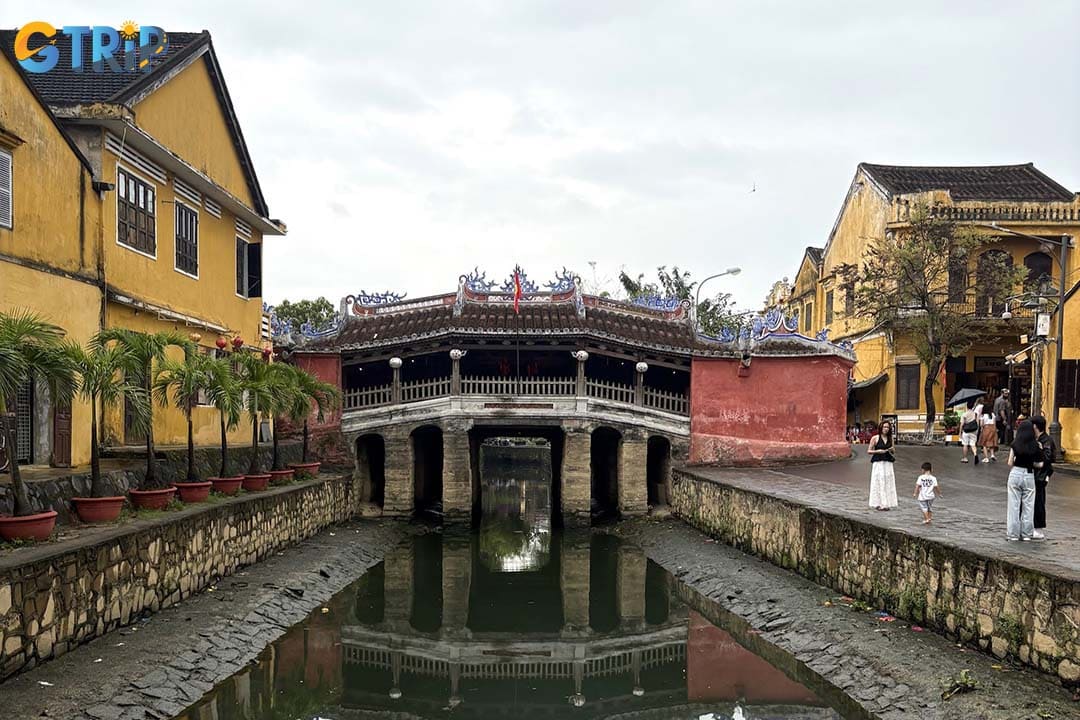
You should not miss the famous icon of Hoi An Town, which is the Japanese Covered Bridge
Practical tips for visitors
Before visiting Hy Hoa Temple Hoi An, it’s helpful to know a few practical tips to make your experience smoother. Since the temple is located inside the UNESCO-listed Hoi An Ancient Town, visitors usually combine it with other nearby attractions while exploring the pedestrian-friendly streets. Preparing for the weather, respecting local customs, and planning your visit at the right time will help you fully enjoy this peaceful cultural site.
- Visitors must purchase a Hoi An Ancient Town ticket to access heritage sites in the area.
- Dress respectfully, especially when visiting temples or assembly halls.
- Follow signs and local rules inside the temple and avoid entering restricted areas.
- Do not touch historical artifacts or altars in the worship hall.
- Wear comfortable shoes because exploring the ancient town usually involves walking.
- In the dry season (February-August), bring sunscreen, a hat, and drinking water.
- In the rainy season (September-January), prepare a raincoat or umbrella.
- Check weather updates during the flood season from October to December.
- Bring cash for tickets, parking, and small purchases as some places may not accept cards.
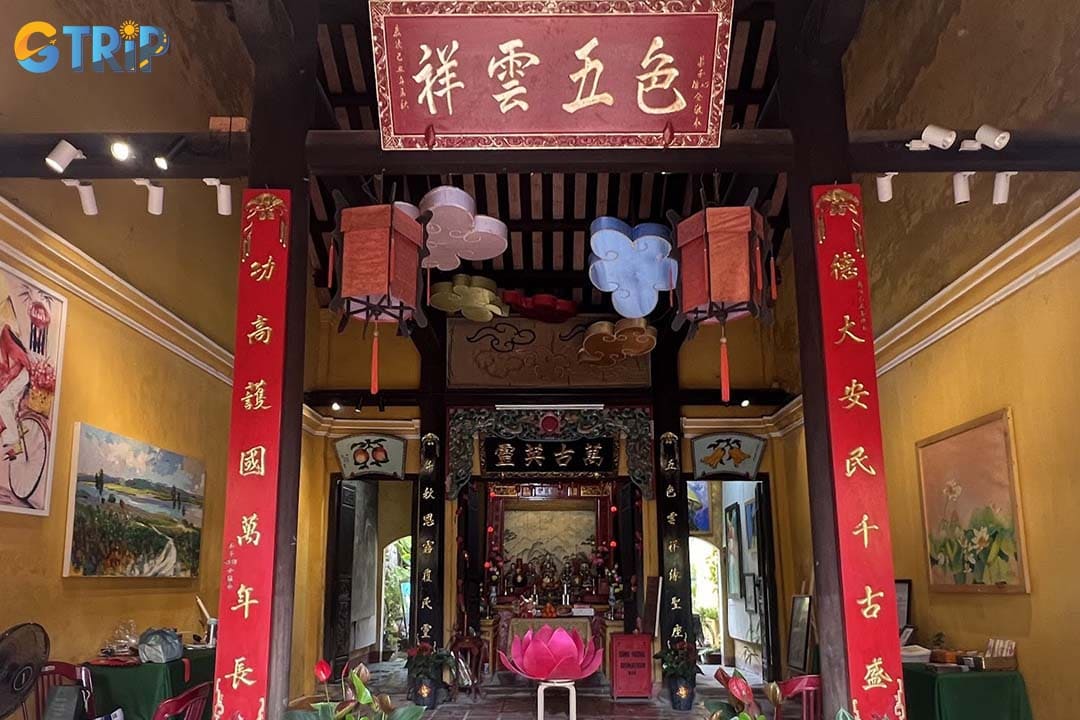
Remember practical tips to have a great trip to Hy Hoa Temple in Hoi An
Hy Hoa Temple Hoi An offers a quiet window into the spiritual heart of the ancient town. Away from the busy streets and crowded attractions, this historic sanctuary invites visitors to slow down, reflect, and experience the traditions that have shaped Hoi An for centuries. Its intricate architecture, deep historical roots, and peaceful atmosphere make it a rewarding stop for travelers seeking a more authentic side of the city. If you're planning to explore Central Vietnam, be sure to add Hy Hoa Temple Hoi An to your itinerary. If you're wandering through the historic streets of Hoi An or joining one of the nearby Da Nang tours, GTrip is here to help you discover the cultural treasures and hidden stories that make this region truly unforgettable.